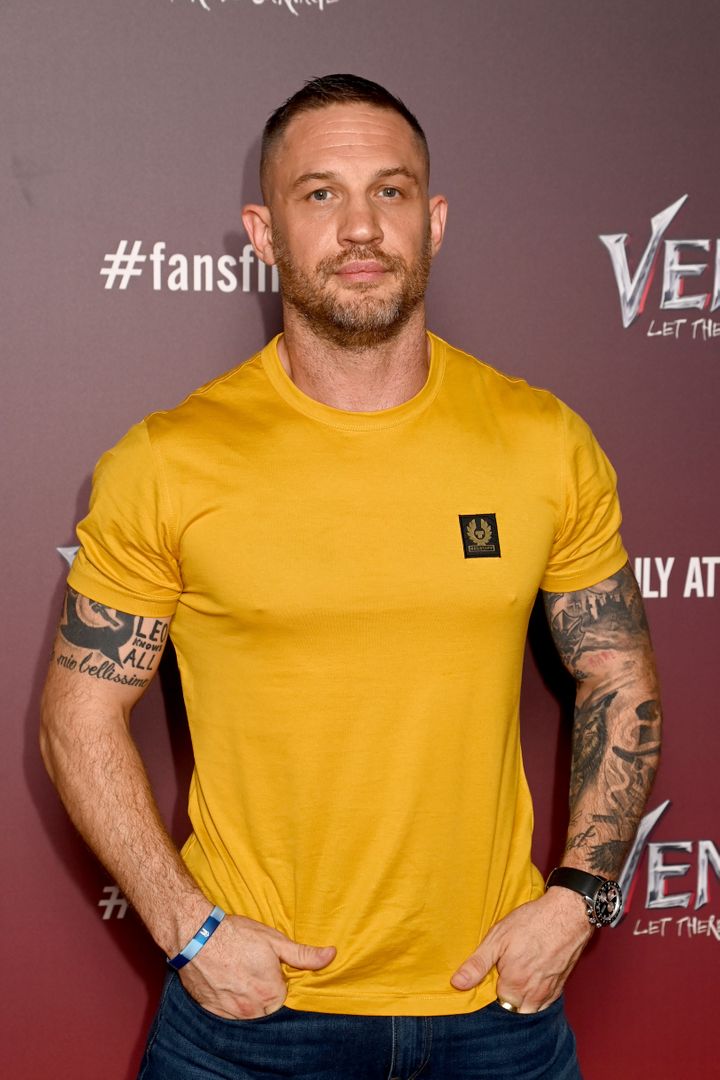
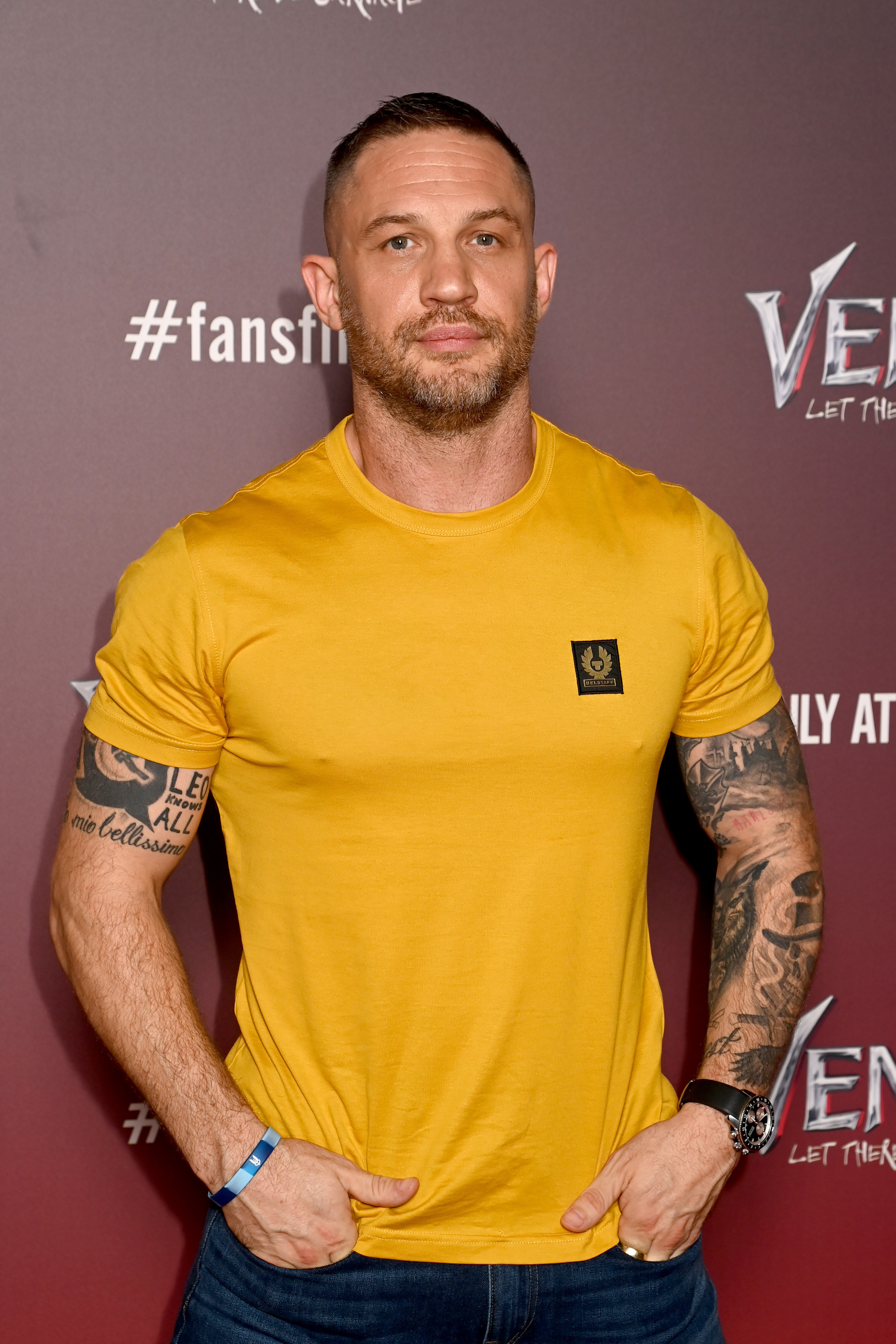
Not content with being a handsome movie star, brilliant bedtime story reader and cute dog owner, Tom Hardy has just gone and won not one, but two gold medals in a Brazilian jiu-jitsu tournament.
The Venom star took to the mat at the Open Jiu-Jitsu Championship at Aldersley Leisure Village in Wolverhampton on Saturday, a charity event organised by REORG, which the British actor is a trustee of.
REORG teaches those with life-altering injuries or those who are suffering from PTSD and depression the Brazilian version of the martial art.
","type":"video","meta":{"url":"https://www.youtube.com/watch?v=YcGzZVKkHps","type":"video","version":"1.0","title":"Tom Hardy Competing in BJJ Tournament","author":"Jiu Jitsu World","author_url":"https://www.youtube.com/channel/UCMO3Na-zqyzDEx-gfYHUkAQ","provider_name":"YouTube","description":"Hollywood star Tom Hardy was recently seen competing at blue belt in a local BJJ tournament and not only did he manage to win gold in the Master 2 82kg division in both gi and no gi, but he was also caught on camera locking up a tight armbar.\n\nFOLLOW US:\nFacebook: https://www.facebook.com/JiuJitsuWorldYT\nInstagram: https://www.instagram.com/JiuJitsuWorldYT\n\nLike and subscribe to our channel for more!","thumbnail_url":"https://i.ytimg.com/vi/YcGzZVKkHps/maxresdefault.jpg","thumbnail_width":1280,"thumbnail_height":720,"cache_age":86400,"options":{"_start":{"label":"Start from","value":"","placeholder":"ex.: 11, 1m10s"},"_end":{"label":"End on","value":"","placeholder":"ex.: 11, 1m10s"},"_cc_load_policy":{"label":"Closed captions","value":false},"click_to_play":{"label":"Hold load & play until clicked","value":false}}},"fullBleed":false,"flags":[],"enhancements":{},"options":{"theme":"news","device":"desktop","editionInfo":{"id":"uk","name":"U.K.","link":"https://www.huffingtonpost.co.uk","locale":"en_GB"},"slideshowAd":{"scriptTags":[],"otherHtml":""},"slideshowEndCard":{"scriptTags":[{"attribs":{},"scriptBody":"\r\n (function(){\r\n var c = document.getElementById(‘taboola-endslate-thumbnails’);\r\n c.id += ‘-‘ + Math.round(Math.random()*1e16);\r\n \r\n var taboolaParams = {\r\n loader: \"//cdn.taboola.com/libtrc/aol-huffingtonpost/loader.js\",\r\n mode: \"thumbnails-b\",\r\n container: c.id,\r\n placement: \"Endslate Thumbnails\",\r\n target_type: \"mix\"\r\n };\r\n \r\n if (typeof window.modulousQueue === \"function\") {\r\n \twindow.modulousQueue.add(function(){ doTaboola(taboolaParams); });\r\n } else {\r\n \tdoTaboola(taboolaParams);\r\n }\r\n }());\r\n"}],"otherHtml":"
TikTok user Jiu-Jitsu Geoff was at the event and shared a series of videos of the 44-year-old actor in action.
“Tom Hardy dominating REORG Open taking double gold. Won every match by submission, the man is a killer,” he captioned the clips.
“Tom Hardy out here ripping people’s arms and legs off,” he jokingly added.
Advertisement
Tom also made one young fan’s day when he took time out to meet him (and his mum).
Carla Frost took her six-year-old son to the venue with the hope of meeting their hero.
Speaking to the Express and Star, she said: “I received a message that he was in our town competing in a Jiu-jitsu tournament, drove down, walked in, asked for him and was told he had just left.
“My son then burst into tears. The lovely lady from REORG decided to just check. The next thing I know this lovely man is walking across the sports hall to us.
“He instinctively scooped my son into a hug and proceeded to just make his year.
“He’s so kind and thoughtful. So surreal! My son has grown up hearing me talk about how talented and brilliant this man is.
“He loves Venom so this is something I know he will always remember.”
Tom Hardy
Dave J Hogan via Getty Images
As well as winning gold medals, Tom has been busy preparing for the third Venom movie, a year after the second film in the franchise raked in $500million at the box office, despite being panned by critics.
Advertisement
They might want to choose their words carefully next time after seeing Tom in action on the mat.
Coldplay have been joined by a whole host of guests on their current Music Of The Spheres world tour, including Kylie Minogue, Craig David and Natalie Imbruglia. But the band’s penultimate gig at Wembley Stadium featured a surprise guest that was slightly more leftfield.
Steve Coogan’s comedy character rocked up to lend his vocal errrm, talents to Kate Bush’s Running Up That Hill, much to the delight slash bemusement of the thousands of fans packing out the stadium.
Alan, who was wearing a red Snow Patrol jacket (amazing), also treated everyone to a rendition of ABBA’s Knowing Me, Knowing You, obviously.
Advertisement
Addressing the stadium crowd, Alan said: “Running up hills, up roads – it’s all cardiovascular. Not sure about running up buildings, unless you’re Spider-Man – excellent humour!
“Chris, what do you think the song’s about, because it can’t just be about running?” he asked.
The Coldplay frontman replied it was about overcoming problems, to which Alan said: “It’s a metaphor, got it.”
He ended his Wembley performance shouting: “Make sure you wear the correct footwear, goodnight and aha!”
Advertisement
Alan Partridge singing Running up that Hill with Coldplay was not on my 2022 bingo card.
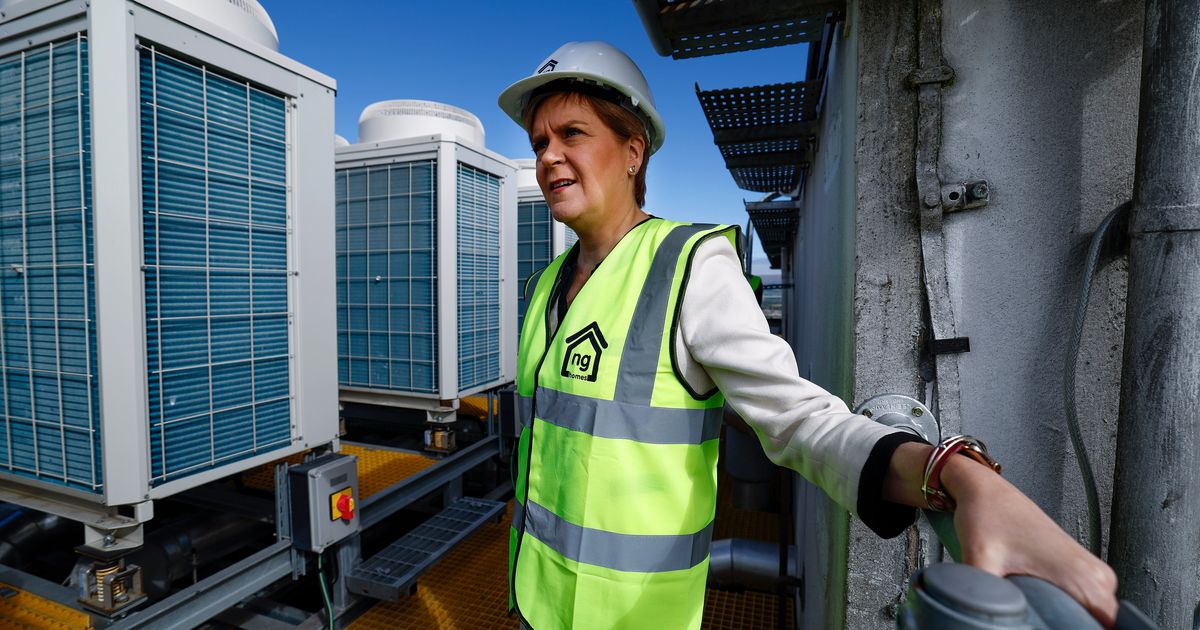
Nicola Sturgeon has said renationalising energy firms should be kept “on the table” to combat the deepening cost of living crisis.
Scotland’s first minister said the energy price cap rise, due to be announced on Friday, should not “be allowed to go ahead”, as she warned it would push families into “destitution and devastation”.
Advertisement
Sturgeon said the country faces a “looming disaster” with energy bills as she prepares to convene a summit of major energy suppliers Scottish Power, OVO Energy and E.ON next week.
The current price cap is set at £1,971 but is expected to reach £3,576 in October and will gradually rise to more than £4,000 by the new year before peaking at £6,000 by April.
Speaking on BBC Scotland’s The Sunday Show, Sturgeon said: “This further increase in people’s energy bills can’t be allowed to go ahead because it is making it impossible for people to provide the basics for themselves and their families, but it is also continuing to fuel inflation, which, of course, is causing the problem in the first place.
“I want to make sure that the Scottish government, working with energy companies, other stakeholders in Scotland, that we are genuinely doing everything we can at our own hand to help here.”
Advertisement
The first minister said she wanted renationalisation to be kept on the table but warned that the Scottish government did not have the power to do this itself.
“I want us to come together to call on the UK government to take the action only it can take,” she said.
“There is a looming disaster that is already unfolding but it is going to get worse.
“This is going to cause destitution and devastation, this will cause loss of life if real action is not taken to stem this crisis.”
Under Brown’s plan, the energy price cap would be scrapped and new, lower prices would be negotiated with the companies. Those who are not able to arrange lower prices should be bought into public ownership “as a last resort”.
Advertisement
Chris Philp, the former technology minister who is backing Liz Truss for the Tory leadership, criticised proposals to freeze the price cap as way to ease pressure on struggling households.
“Obviously, there’s nothing for free in life,” he told Times Radio. “And if Labour are planning to freeze the price cap for an extended period that will ultimately have to be paid for probably in the form of higher taxes.”
Asked whether higher taxes on energy firms could fund a potential price cap freeze, Philp replied: “I don’t think it’s wholly going to be funded by energy companies because there isn’t enough efficient profit to do that.
“And of course, we have already introduced a windfall tax that amounts to 5 billion pounds a year on energy companies. That was two and a half times bigger than the windfall tax Labour had proposed a few weeks beforehand.”
He added: “What I think is most important is two things: firstly, to get through this winter, which the emergency budget will make sure we do.
“And secondly, put the country on the right footing in the medium term, which means firstly, lower taxes to promote growth, which I strongly believe in, because growth will ultimately increase wages and produce more tax yields, and to fund public services like health and education.”
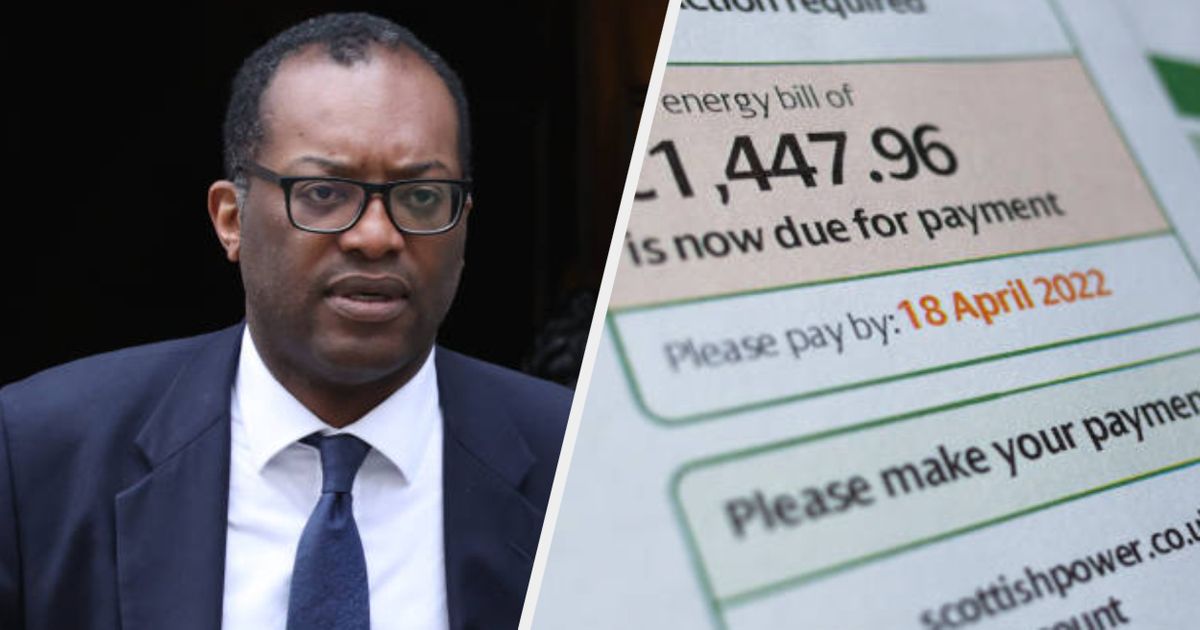
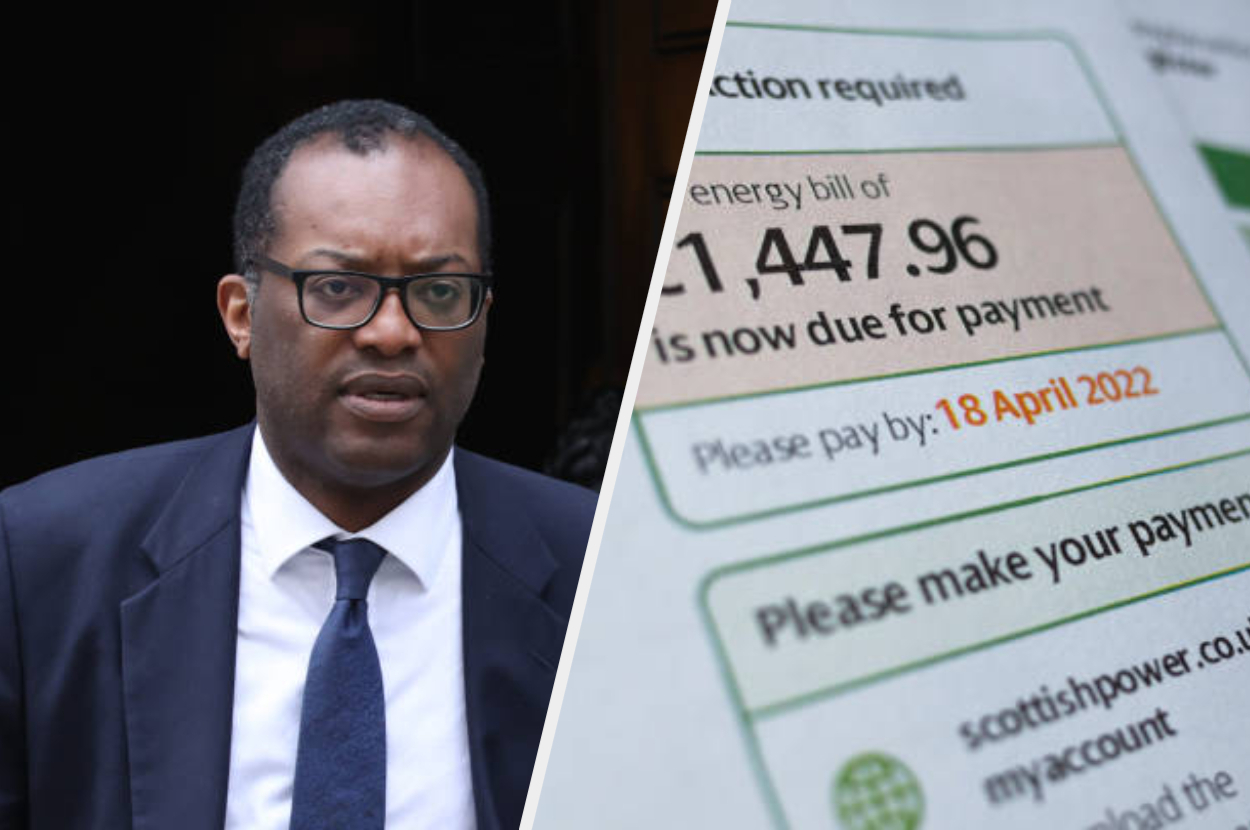
People struggling with the rising cost of living will receive more help this winter, a Cabinet minister has suggested.
Business secretary Kwasi Kwarteng, who is backing Liz Truss in the Tory leadership contest, said the government was “working on options for the new prime minister”.
Advertisement
In an article for the Mail on Sunday, Kwarteng said he understood the “deep anxiety” rising prices were causing.
“As winter approaches, millions of families will be concerned about how they are going make ends meet,” he added.
“But I want to reassure the British people that help is coming.”
Kwarteng said Truss, who is currently the favourite to replace Boris Johnson as prime minister, “will look at what more can be done to help families”.
However, he said it was “entirely reasonable not to detail the exact shape of that support until she has all the information to hand”.
Advertisement
The government is under pressure to act as inflation hit a 40-year high of 10.1 per cent this week, largely owing to a spike in the price of household staples.
And projections from experts have found that the energy price cap, currently at £1,971 a year, could rocket to £6,000 next April.
Energy consultancy Auxilione said the cap is expected to reach £3,576 in October, rising to £4,799 in January, and finally hitting £6,089 in April.
Labour has vowed to freeze the price cap at its current level while Truss has said she would temporarily scrap green levies on energy bills to bring them down.
Both leadership rivals have also said they will study proposals from the Treasury over how to bring bills down for families.
One such option to help struggling households, reported by the Sun on Sunday, is to allow GPs to write prescriptions to knock money off energy bills for those most in need.
The GP would verify through a consultation whether the patient needed help and if they did, money could be made available via the local council or in the form of a voucher for gas and electricity.
In response, Labour’s shadow health secretary Wes Streeting said the Conservatives had “lost the plot on the cost of living and haven’t got a clue about the level of pressure on the NHS”.
The Conservatives have lost the plot on the cost of living crisis and haven’t got a clue about the level of pressure on the NHS.
Labour already has the right prescription for dealing with rising energy bills. We need a Labour government to deliver it.https://t.co/KbXCuUxKwU
Elsewhere, Kwarteng said shoring up the UK’s energy independence was vital for Truss, saying she would look at building more nuclear power stations and allowing fracking to take place where local communities approve.
The business secretary poured cold water on the idea of further windfall taxes, saying the country instead needed to “incentivise investment in domestic oil and gas for our own energy security”.
“I appreciate windfall taxes are sometimes popular. But popularity won’t keep the lights on.”
The launch date for the new series of Strictly Come Dancing has been announced – and we don’t have long to wait for this year’s celebs to take to the dance floor.
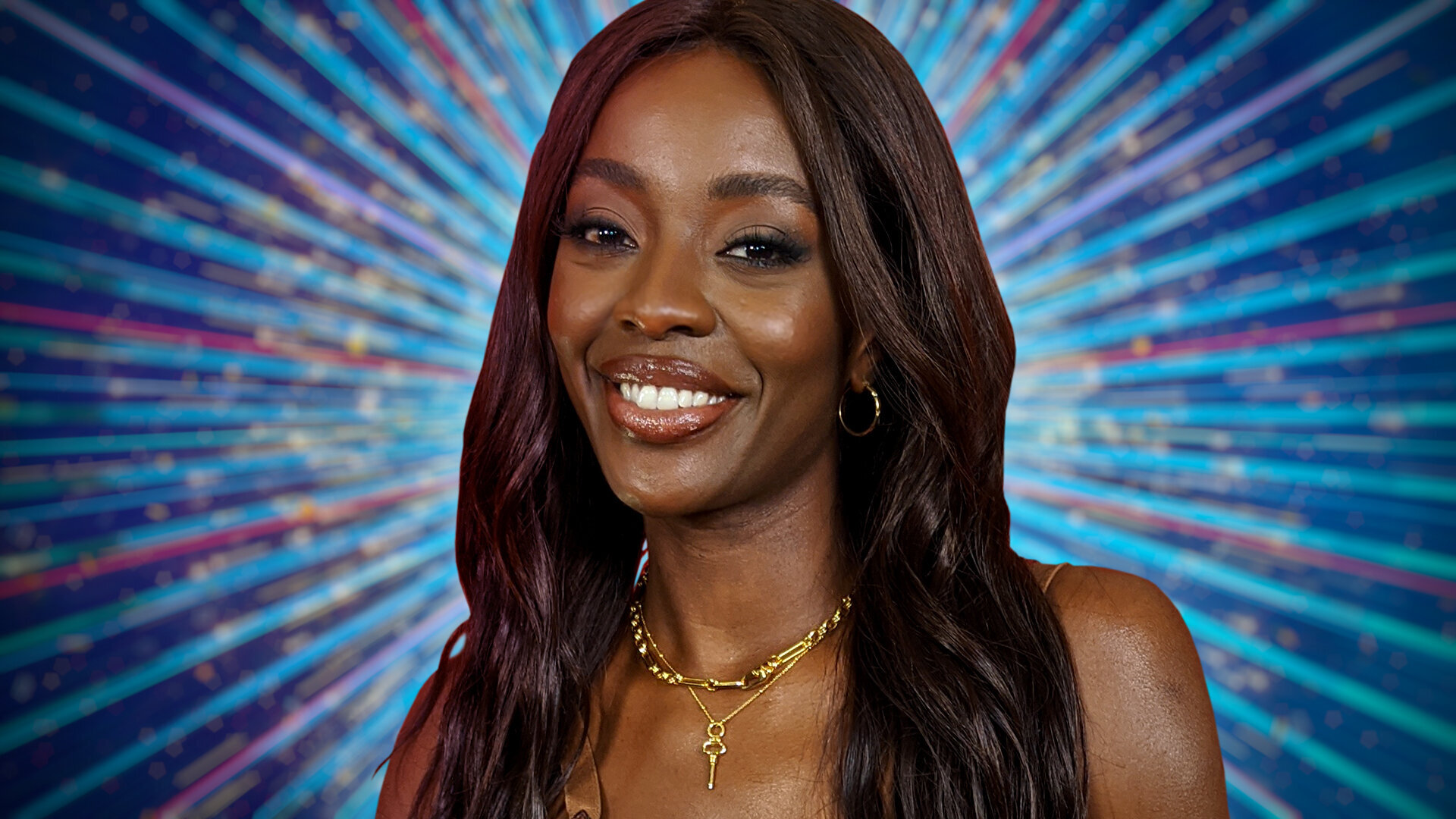
Former contestant and TV presenter AJ Odudu announced that Strictly will return to BBC One on 17 September on Saturday’s edition of The Big Breakfast.
The 34-year-old, who was forced to withdraw from the final of the dancing competition last year after suffering a torn ligament said: “We do have the exclusive that the launch of Strictly Come Dancing 2022 is going to be September 17. How exciting.”
Advertisement
AJ Odudu made the announcement on Saturday’s edition of The Big Breakfast.
BBC via PA Media
Professional dancer Johannes Radebe, who was a guest on the Channel 4 morning show, said: “It is exciting, everyone else is waiting for it, we know we can’t face winter without Strictly so I am happy it is back on our screens.”
The launch show is expected to reveal which professional dancer will be paired up with each celebrity contestant.
Strictly hosts Claudia Winkleman and Tess Daly
Karwai Tang via Getty Images
Advertisement
The new series of the BBC’s flagship entertainment show will see 15 contestants including TV presenter Helen Skelton, EastEnders actor James Bye, singer Fleur East and former England footballer Tony Adams.
Ted Lasso actress Ellie Taylor will also take to the floor, alongside Paralympic swimming gold medallist Ellie Simmonds, actor Will Mellor, Loose Women star Kaye Adams and Coronation Street actress Kym Marsh.
Bros singer Matt Goss, Kiss radio host Tyler West, Britain’s Got Talent finalist Molly Rainford, comedian and actress Jayde Adams, Radio 2’s Richie Anderson and Wildlife cameraman and presenter Hamza Yassin complete the 2022 line-up.
The Strictly judges
BBC/Guy Levy
Head judge Shirley Ballas is set to return for the 20th series of the BBC show alongside Anton Du Beke, Craig Revel Horwood and Motsi Mabuse.
Advertisement
Claudia Winkleman and Tess Daly will also resume their roles as the show’s hosts.
The last series of Strictly was won by Rose Ayling-Ellis with professional partner Giovanni Pernice.
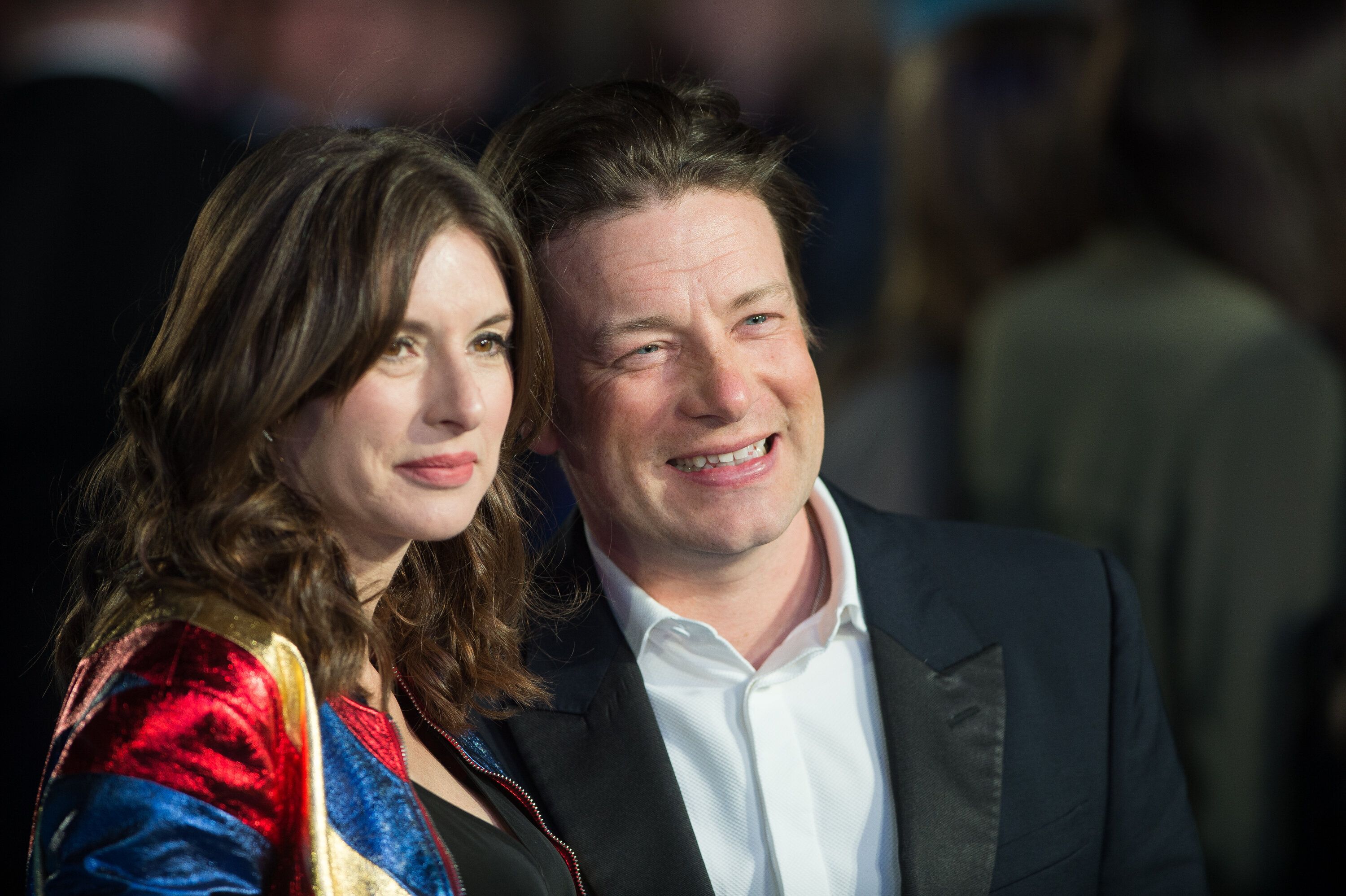
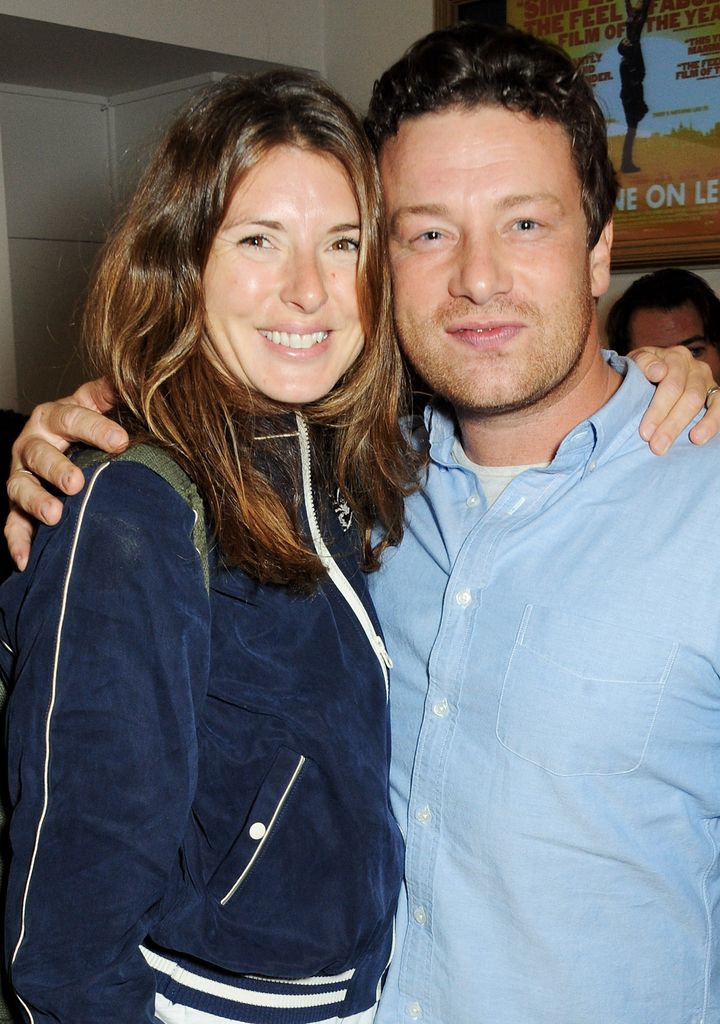
The TV chef hailed the mum-of-five as “an absolute superstar”, revealing the 47-year-old has been “really affected” by the virus.
He told the Daily Mail Weekend magazine: “She’s had bad Covid and long Covid so she’s been really affected by it, sadly.
“She’s okay but still not what she wants to be. It’s been two years, she finds it deeply scary.”
Jools and Jamie Oliver
Samir Hussein via Getty Images
Advertisement
Jamie explained they had seen specialist medical professionals but have been unable to solve her symptoms as the condition is still being learnt about.
“We’re all over Harley Street like a rash but no one really knows anything. The data on long Covid is still piling in. She’s been an absolute superstar,” he said.
There are 1.8million Britons estimated to have long Covid, according to the latest figures from the Office for National Statistics.
This month, experts from King’s College London said there appears to be three “subtypes” of the condition, each with their own set of symptoms including, fatigue, brain fog, shortness of breath, muscle ache and heart palpitations.
Advertisement
David M. Benett via Getty Images
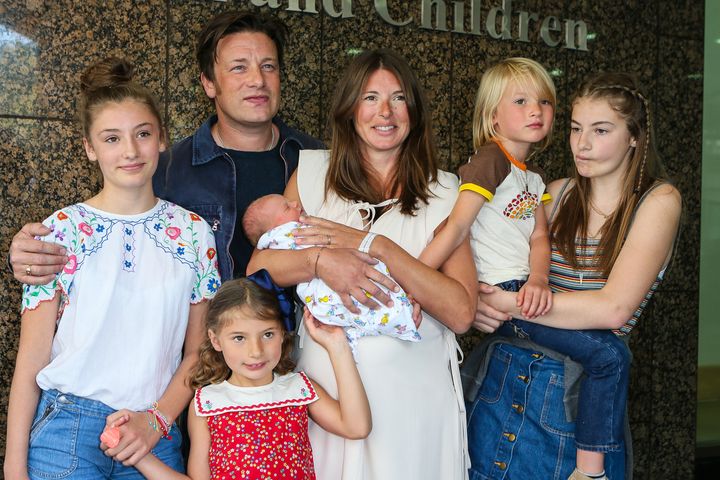
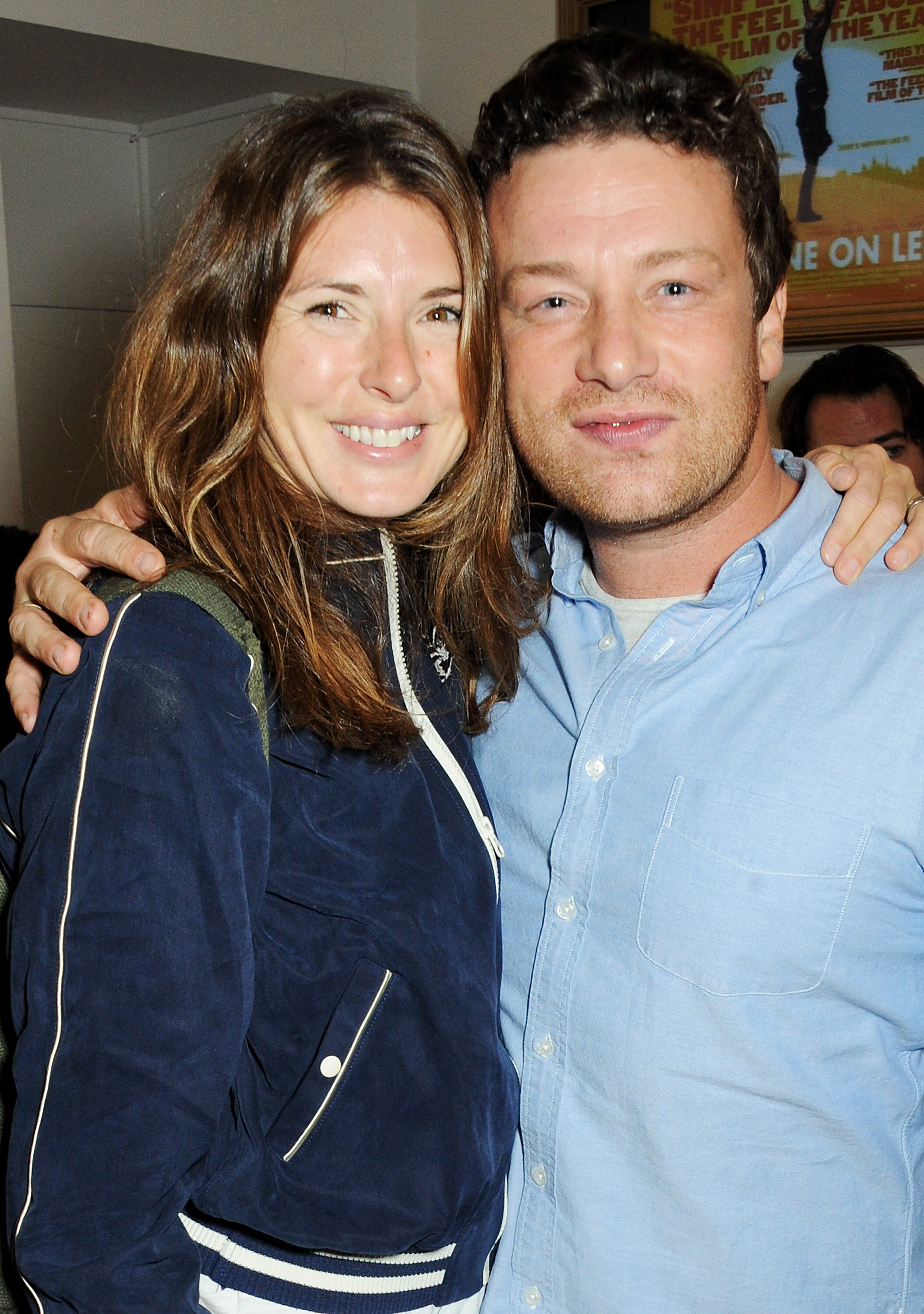
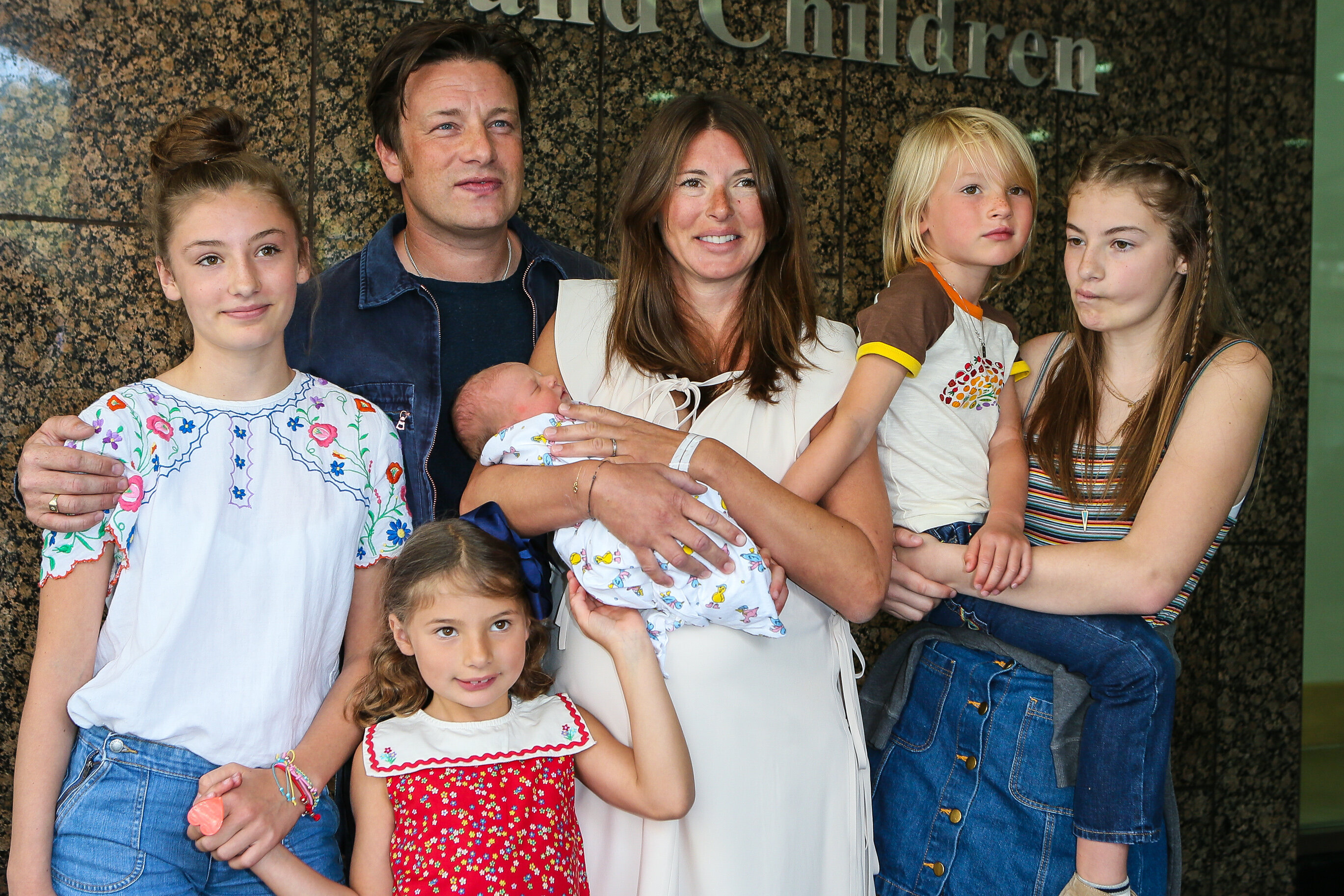
Jamie and Jools have been married for 22 years and have five children together.
Speaking about his relationship, the TV chef said: “Me and Jools have been together since we were 18.
“We went to London with nothing but dreams and aspirations. Luckily, we were able to solidify our relationship before it all kicked off. Then we did it together. It was exciting.
“When I first started going out with Jools, she was like, ‘I’ll never be able to have kids.’ She had polycystic ovaries. But here we are with five.”
The couple are parents to Poppy, Daisy, Petal, Buddy and River.
Jamie Oliver, Jools Oliver and their family pictured in 2016.
Ian Lawrence via Getty Images
Advertisement
Oliver added: “I haven’t done teenage boys yet but I found teenage girls very hard. I tried to be an on-point dad, I’d give myself nine out of 10 for effort.
“The the minute they get to 13, you’re dumped. You’re outside looking in. All you want is a few hugs a day and to be appreciated but there’s a lot of chemistry going on.
“You never get the kid back after 13, they completely change. Just when you start to get them back, they’re off to university. So it’s like a bereavement.”
In 2020, Jools revealed she had had a miscarriage during lockdown and the couple have spoken openly in the past about losing “five little stars in the sky”.
The VERY serious news was announced on Twitter on Friday evening…
Advertisement
The 39-year-old Canadian actor is best known for his portrayal of David Rose in the award-winning Schitt’s Creek, which he co-created with his father Eugene, who also plays his dad in the much-loved series.
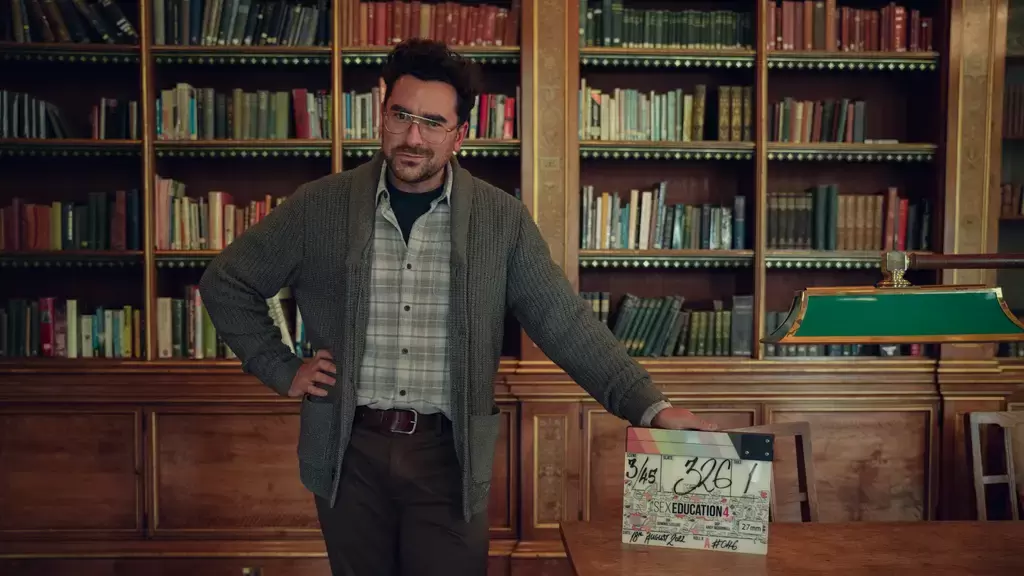
Dan will play Thomas Molloy, a famous author and Maeve Wiley’s US course tutor at an Ivy League college, in the Netflix series.
News of his casting has gone down a treat with fans of both shows…
this casting announce is a fanfiction that i wrote
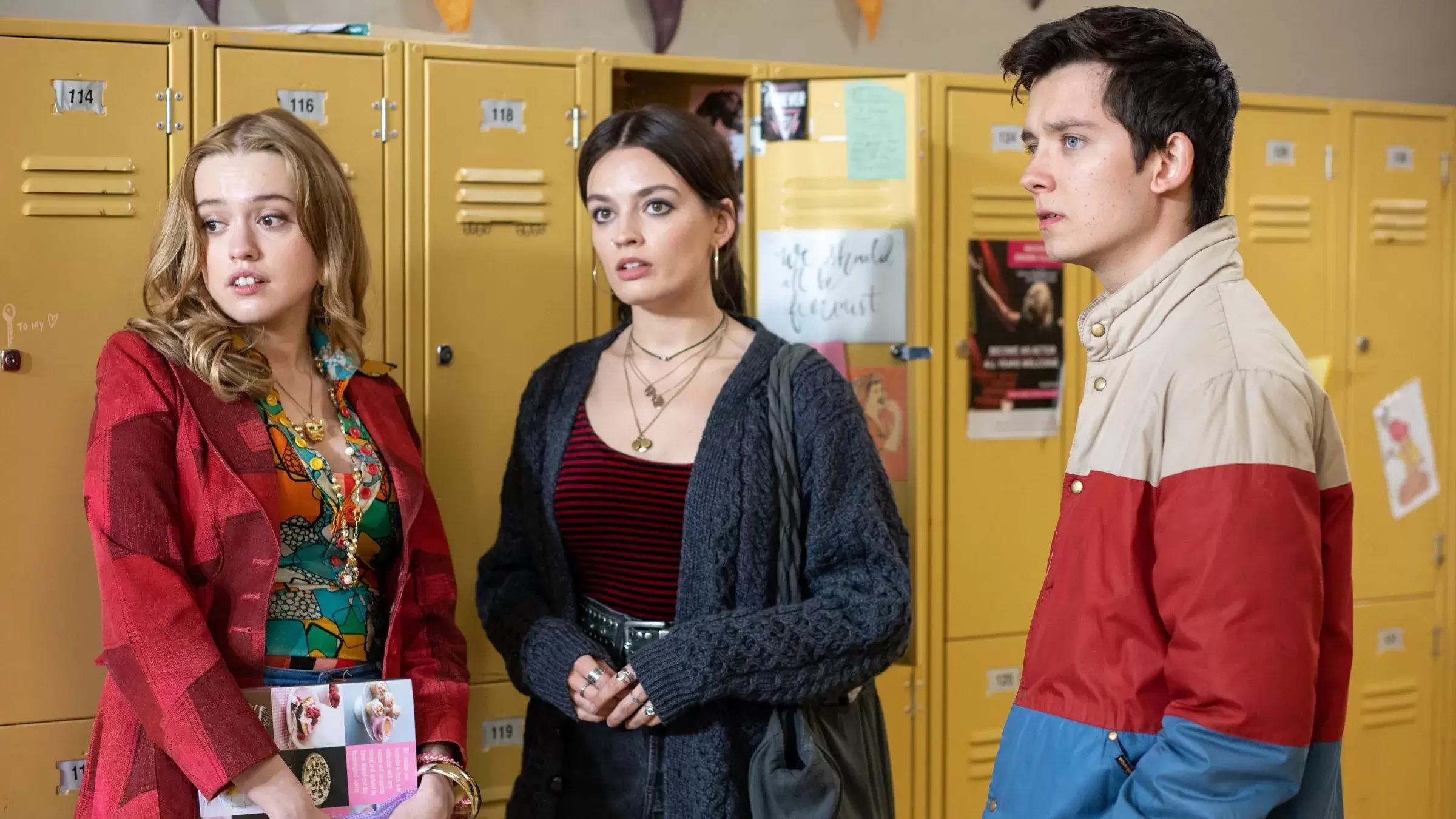
Sex Education follows the lives of the students, staff and parents of the fictional Moordale Secondary School as they face a variety of teenage dilemmas, including relationships, sexual identity and sexual assault.
Asa Butterfield, Gillian Anderson, Aimee Lou Wood, Emma Mackey and Connor Swindells will also make their highly-anticipated return.
Dan Levy as Thomas Molloy in Sex Education
Filming of series four is currently under way in Wales and will continue until 2023.
The new season will begin shortly after the closure of Moordale Secondary as Otis and Eric face their first day at Cavendish Sixth Form College.
Advertisement
Otis is nervous about setting up his new sex clinic, whilst Eric is praying they will not be losers again.
The Sex Education cast
However Cavendish is a culture shock for all the Moordale students as they come face to face with the college’s progressive students.
The Moordale students are shocked to find daily yoga in the communal garden, a strong sustainability focus and a group of teenagers who are popular for being kind.
Alongside Dan, the cast will also welcome Doctor Who star Thaddea Graham and Marie Reuther, best known for her role in 2021 TV series Kamikaze.
Advertisement
Newcomers Felix Mufti, Anthony Lexa, Alexandra James, Reda Elazouar, Bella Maclean and Imani Yahshua will all also make their Sex Education debuts.
From claims about how Russia is managing the “information” war to unexpected events on the frontline, here are the major developments from the last week.
The plant is under Russian control but still has Ukrainian technicians operating it, and Kyiv wants to take it back.
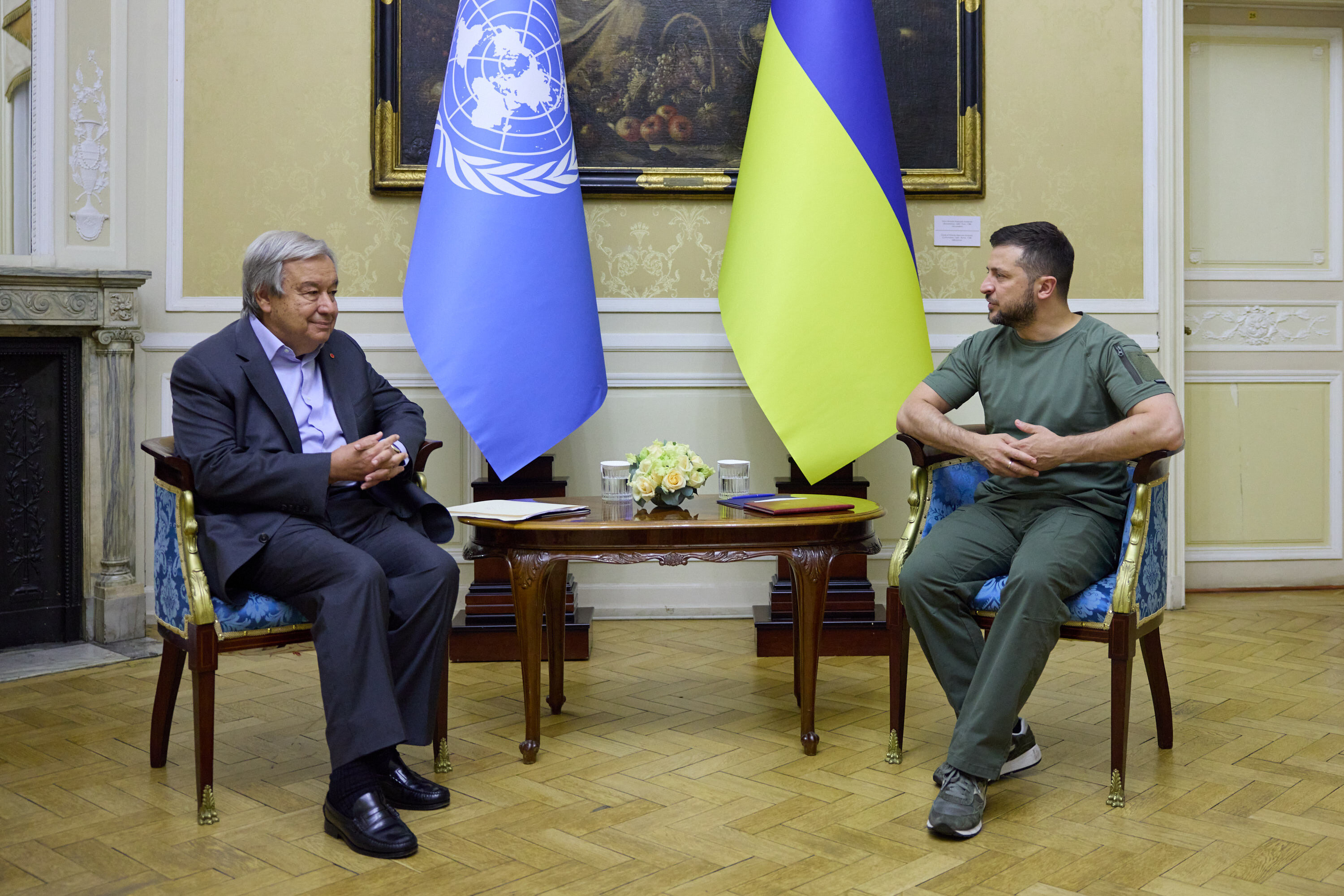
Guterres said he was “gravely concerned” about the ongoing fighting in the area, claiming: “Any potential damage to Zaporizhzhia is suicide.”
Turkish leader Recep Tayyip Erdogan was also at the meeting, and expressed his fears on Thursday that there would be “another Chernobyl” by the nuclear power plant if fighting continued.
Advertisement
Ukraine and Russia have been trading blame over the attacks around the nuclear plant in recent weeks, with Zelenskyy claiming that Moscow was responsible for “deliberate” heavy artillery fire over the plant.
Moscow has rejected calls to demilitarise the area (calling it “unacceptable”) despite pleas from Guterres, Erdogan and Zelenskyy.
Ukrainian staff still at the plant also claim the area has become “the target of continuous military attacks”. Kyiv believes Russia wants to disconnect the nuclear complex’s power from the grid too, and could be planning a “provocation” by the plant.
Zelenskyy has warned that “the world is on a verge of nuclear disaster”, in case the plant is hit during battle, and he lashed out at “Russia’s irresponsible actions and nuclear blackmailing”.
Erdogan was also reportedly considering setting up a negotiation between Zelenskyy and Russian president Vladimir Putin, but the Ukrainian president said Moscow must withdraw troops first.
Advertisement
A Russian diplomat sparked hopes on Friday that Putin could allow nuclear inspectors to check on the plant next month, to secure its safety.
Zelenskyy with Guterres
Anadolu Agency via Getty Images
2. The 25th cargo ship left Ukraine
The world’s bread basket, as Ukraine is often dubbed, was able to export its grain supply to other countries once again back in July.
It came after a surprise deal was struck between Ukraine and Russia, following months of Moscow blockading Ukrainian ports.
Although there initial fears that the agreement would be short-lived and the food crisis in various parts of the world would continue, the 25th cargo ship left Ukraine on Thursday.
Advertisement
Guterres praised the agreement during his visit to Ukraine this week, and called for more compromise between Ukraine and Russia.
“I appeal for this to continue and for them to overcome all obstacles in a spirit of compromise and permanently settle all difficulties.”
3. Putin ‘losing’ information war
On Thursday, Jeremy Fleming, the head of the UK’s GCHQ’s intelligence service wrote in The Economist: “So far, president Putin has comprehensively lost the information war in Ukraine and in the West.
“Although that’s cause for celebration, we should not underestimate how Russian disinformation is playing out elsewhere in the world.”
He claimed that Russia’s online plans have fallen short. Despite Moscow’s attempts to destroy and deface Ukrainian government systems, GCHQ said it has been able to intercept and warn Ukraine of such attacks ahead of time.
Advertisement
4. Kharkiv explosion
Kharkiv, Ukraine’s second largest city, continues to be the subjected to heavy artillery, months after Russia tried – and failed – to capture it.
Seventeen people were killed and 42 injured in two separate Russian attacks this week, one on Wednesday and one on Thursday.
Zelenskyy said the attack on Wednesday night was a “devious and cynical strike on civilians with no justification” and was the latest evidence Russia was targeting civilians to destroy Ukraine.
The Ukrainian president promised: “We cannot forgive. We will avenge it.”
The city’s mayor Ihor Terekhov said: “Russian troops shell Kharkiv with such hatred, with such aggressiveness, such cynical destruction of the city occurs because Kharkiv does not give up, Kharkiv is a Ukrainian city that continues to live.”
But, Russia’s “most expensive plane” was reportedly shot down over Kharkiv this week by the Ukrainian forces.
Advertisement
In #Kharkiv province, #Ukraine‘s military shot down the recent (2018 year of manufacturing) & most expensive Russian multi-role jet Su-30CM which costs $50 mln. The pilot ejected & disappeared. (Photos shared by Ukr. journo Andrei Tsaplienko via Unian news website) pic.twitter.com/bKbGWUgs0j
Videos circulated on social media of large explosions in the Russian occupied Crimea peninsula on Thursday.
The area was taken over by Russian forces back in 2014, so it was widely believed that the fires and explosions stemmed from Ukrainian fire.
The Ukrainian defence ministry did not confirm any involvement, but joked about how many explosions in the occupied land were caused by “careless smokers”.
Advertisement
At least four explosions were detected near the airbase of Belbek, near Crimea’s largest city of Svastopol.
Mikhail Razvozhayev, Russian installed governor of Sevastopol, said there were not injuries or damage from the blasts.
This was just one of several attacks this week – further explosions were detected by a major airbase and munitions depot.
Zelenskyy also hinted that more attacks could be on the way, saying he hoped Russians would realise Crimea is “not a place for them”.
More things blowing up at military sites in Crimea, where the Russian defense ministry admits “a fire took place” and “munitions detonated” near the village of Maiske – without explaining how.
If you’ve never had an orgasm, it’s easy to feel like your body is defective. But the reality is, there are many things that can contribute an inability to orgasm and plenty of ways to address it – it’s not hopeless!
According to Sadie Allison, a sexologist, author and founder of sex toy retailer TickleKitty, being “anorgasmic,” as it’s sometimes called, could be attributed to “inhibitions in the bedroom, cultural or religious beliefs that make it hard to mentally relax, medical conditions or taking medications, sexual hang-ups from past experiences, and relationship or intimacy issues.”
Advertisement
Past trauma, subconscious feelings of shame or fear, body discomfort, anxiety or even just lack of knowledge about anatomy can also be factors in anorgasmia.
“One of the main reasons, however, is a lack in education around sexual anatomy, arousal and response, pleasure and the clitoris,” Allison adds. “Unfortunately they don’t teach this important information in school. But the good news is, this is something that can be practiced and learned with success!”
But how exactly should you go about learning and practicing if you’ve never had an orgasm? Below, Allison and other sex therapists share their advice.
First, recognise that there’s nothing wrong with you
If you’ve never had an orgasm, it’s important to understand that you are not alone and there’s nothing wrong with you. This is a not-uncommon experience, especially for people with vulvas.
In fact, studies suggest that roughly 10% of women have never had an orgasm, and 50% do not experience orgasm during sexual intercourse.
Advertisement
“You are not broken,” says Kate Balestrieri, a sex therapist and founder of Modern Intimacy. “Orgasms and pleasure can be complex, layered, and unpredictable, especially if you have less experience with sex that you enjoy. Refrain from judging or shaming yourself if you have not yet experienced an orgasm.”
Try getting to know your body
“Most people will find their first orgasm through self pleasuring vs. with a partner,” says sex and relationship coach Keeley Rankin. “This is because being with a partner offers a whole new complex dynamic. And while potentially sexy and fun, for folks who are looking for an orgasm, it is typically more stress inducing.”
Instead, start with your own body, by yourself. Explore which zones are your hot spots and get comfortable masturbating.
“Choose a place where you feel you have privacy and make yourself comfortable,” advises Nazanin Moali, a sex therapist and host of the Sexology podcast.
She recommends building psychological arousal by reading or listening to sexually explicit or romantic content, whatever turns you on.
Advertisement
Miki Onigiri / EyeEm via Getty Images
Sex therapists recommend spending time by yourself getting to know your body.
“When you feel aroused, I recommend that you start with a body scan from head to toe and make a note of all the sensations in your body,” Moali says.
Consider gently massaging lotion all over your body. Take deep breaths in and out to release any tension.
“Start with touching and caressing your face and neck and explore different types of strokes,” she advises. “The goal for the first few times is to get to know different sensations in your body. Set the intention to get to know your body and explore it without putting any pressure. When you are ready, slowly move to your genital area and pay attention to the types of stroke that feel good.”
You can use your fingers or a vibrator or other sex toy in your exploration. Familiarise yourself with lots of different sensations.
Advertisement
Remove the focus on orgasm as the goal
“I initially take orgasm off the table as a goal,” says sex therapist and psychologist Megan Fleming. “The goal is getting back to the basics of giving and receiving pleasure. The pressure of having an orgasm as a goal is often a big part of what inhibits their arousal response.”
Rather than concentrating on having an orgasm, try to focus on the pleasure of arousal, connection with your body or your partner’s body, creativity and general enjoyment.
“Re-conceptualise your expectations for sex,” Balestrieri says. “So many people organise themselves around penetration and orgasm being the pinnacle and goal for pleasure. But that perpetuates a performative experience of sex and limits the countless other opportunities for pleasure that can increase the likelihood of an orgasm. Changing the goal from having an orgasm to experiencing pleasure and fun can paradoxically make orgasms more accessible.”
“There is no magic pill for finding an orgasm. It is often a deep dive into your own sexuality, emotional wounds, psychological blocks, beliefs, as well as learning new skills.”
– Keeley Rankin, sex and relationship coach
Get cliterate
“The sexual encounters we see depicted in film primarily depict penetrative sex,” says Zoë Ligon, a sex educator and founder of Spectrum Boutique. “And while some people can orgasm through penetration alone, the vast majority of people need external stimulation or external stimulation paired with internal stimulation in order to achieve orgasm. We as a culture ignore clitoral stimulation, as well as the time that is needed to build up arousal in order to achieve orgasm.”
Advertisement
She hopes society will continue to move away from penetrative intercourse as the standard definition of “sex” and seeks to educate people with vulvas and their partners about the importance of the clitoris – the small erogenous organ with highly sensitive nerve endings – in reaching orgasm.
“Become cliterate,” echoes Allison. “If you’re still learning where your clitoris is, or how to pleasure it, this is your starting point. The clitoris has about 8,000 nerve endings and is the main epicentre of orgasm creation. While there are other types of orgasms like G-spot, penetrative, anal, they are more advanced, so consider exploring those after you become your own clitoral expert.”
Advocate for your pleasure
When it comes to sex with a partner, good communication is crucial. Everyone is different, so don’t be shy in sharing how you like you like to be touched.
“Don’t be afraid to tell your partner what feels good and what doesn’t,” advises Kimberly Resnick Anderson, a sex therapist and assistant professor of psychiatry at UCLA School of Medicine. “You’d be surprised what a conversation about sexual preferences and fantasies can accomplish. If you are too embarrassed to talk to your partner about sex, you are missing out on an opportunity to increase your sexual satisfaction.”
Of course, the conversation can be uncomfortable, especially with a new partner, but having an open dialogue will bring you closer.
Advertisement
“Orgasm is about surrendering to the moment, to your body’s pleasure, and to another person,” says Jenni Skyler, a sex therapist and director of The Intimacy Institute. “If you are with a new partner, trust is still developing, and thus surrendering to a new person can be tricky.”
Whatever you do, don’t fake an orgasm, or stop doing it if you’ve already developed that habit.
“At times, women fake orgasms in an attempt to please their partner,” Moali says. “However, through this, you are also sending the wrong information to your partner about what works for you. Instead, focus on slowing down and getting curious about what types of touches feel good in your body. Spending more time engaging in foreplay will help you build enough arousal, thereby shortening the arousal gap between you and your partner.”
Mikhail Reshetnikov / EyeEm via Getty Images
Don’t be afraid to experiment with different sex toys, erotica and more.
Keep experimenting
Never stop trying new things, from techniques to toys. Resnick Anderson suggested vocalizing as a tip to facilitate orgasm.
“Research has shown that expressing sounds of pleasure during sex can increase capacity for orgasm,” she explains. “Women are also more likely to climax during coitus if they can control the speed, depth, and angle of penetration with positions like cowgirl or reverse cowgirl.”
Advertisement
Resnick Anderson also recommends trying different kinds of porn, like more female-friendly videos or erotic writing. Even something as simple as keeping your socks on might make you feel more comfortable and relaxed.
“Activate as many senses as possible,” she adds, noting that some people struggle to get out of their heads and into their bodies. “The more sensations one experiences at the same time, the easier it is to connect to your body. Tantalise your senses by engaging your hearing, vision, tastebuds, sense of smell, and sense of touch all at once. When our brains are busy listening, smelling, tasting, seeing, and touching, it’s easier to ignore intrusive or anxious thoughts.”
Invest in a new vibrator or other sex toys for solo or partnered sex. Try a lubricant. And pay attention to the different kinds of sensory experiences that give you pleasure, or even turn you on.
“Don’t limit yourself to what you think should turn you on, and instead give yourself permission to explore a full range of fantasies or erotic material, so you can learn what your body responds to,” Balestrieri says. “Refrain from judging yourself. Fantasies are just fantasies and do not say anything about your character. Often, fantasies give us access to an emotional or sensory experience that we can’t (and may not even want to) experience in real life. Think of fantasies and sex as play, and let yourself colour with vibrance.”
Seek professional help
If you’re concerned about your inability to orgasm, you may also consider seeking professional help.
“First and foremost, go to a sexual medicine specialist to ensure nothing physically going on – hormone issues, pelvic pain, tissue issues,” advises sex therapist and educator Nicoletta Heidegger. “Not just a regular [gynaecologist] or urologist – someone who has specialised training in sexual medicine and sexual functioning.”
Advertisement
If there are no discernible medical issues, she recommended then reaching out to a sex therapist, sex coach or sexological bodyworker to continue your journey.
There are also a number of apps, books other resources that might be useful. Heidegger recommended Come as You Are and Becoming Cliterate by Laurie Mintz. Ligon is a fan of Girls & Sex by Peggy Orenstein.
“Check out the app OMG Yes, Beducated, or Vanessa Marin’s Finishing school,” Heidegger says. “With many other topics like driving or changing a tire, we learn, and practice or take classes. There is no shame in this not coming naturally – pun intended. You may need practice, help, tools, education, and support, which is totally OK.”
It can also be helpful to talk to a mental health professional about any negative feelings or past experiences around sex.
“Address any shame you feel about sex,” Balestrieri says. “Shame – unless it’s part of your kink – is an inhibiting experience. It makes us feel small and unworthy, and when it comes to pleasure and the permission one gives themselves to feel pleasure, shame is a huge barrier to orgasm.”
Advertisement
Be patient
“I explain right away to my clients that this is often a long journey ― not to scare anyone, but to create realistic expectations for what they can expect,” Rankin said. “There is no magic pill for finding an orgasm. It is often a deep dive into your own sexuality, emotional wounds, psychological blocks, beliefs, as well as learning new skills.”
Patience is key. Be prepared to spend a lot of time with your body and try to remain relaxed and optimistic. Focus on the fun exploration and in-the-moment sensations.
“Stay positive and be patient,” Allison said. “Don’t be discouraged or feel something is wrong with you. Sometimes it could simply be a new rubbing technique or vibrator that surprises you with that special sensation, or even a new partner that brought that special something. Hang in there and enjoy as you explore and try new things. Remember, it’s a journey, not a race. And you’re so worth it!”
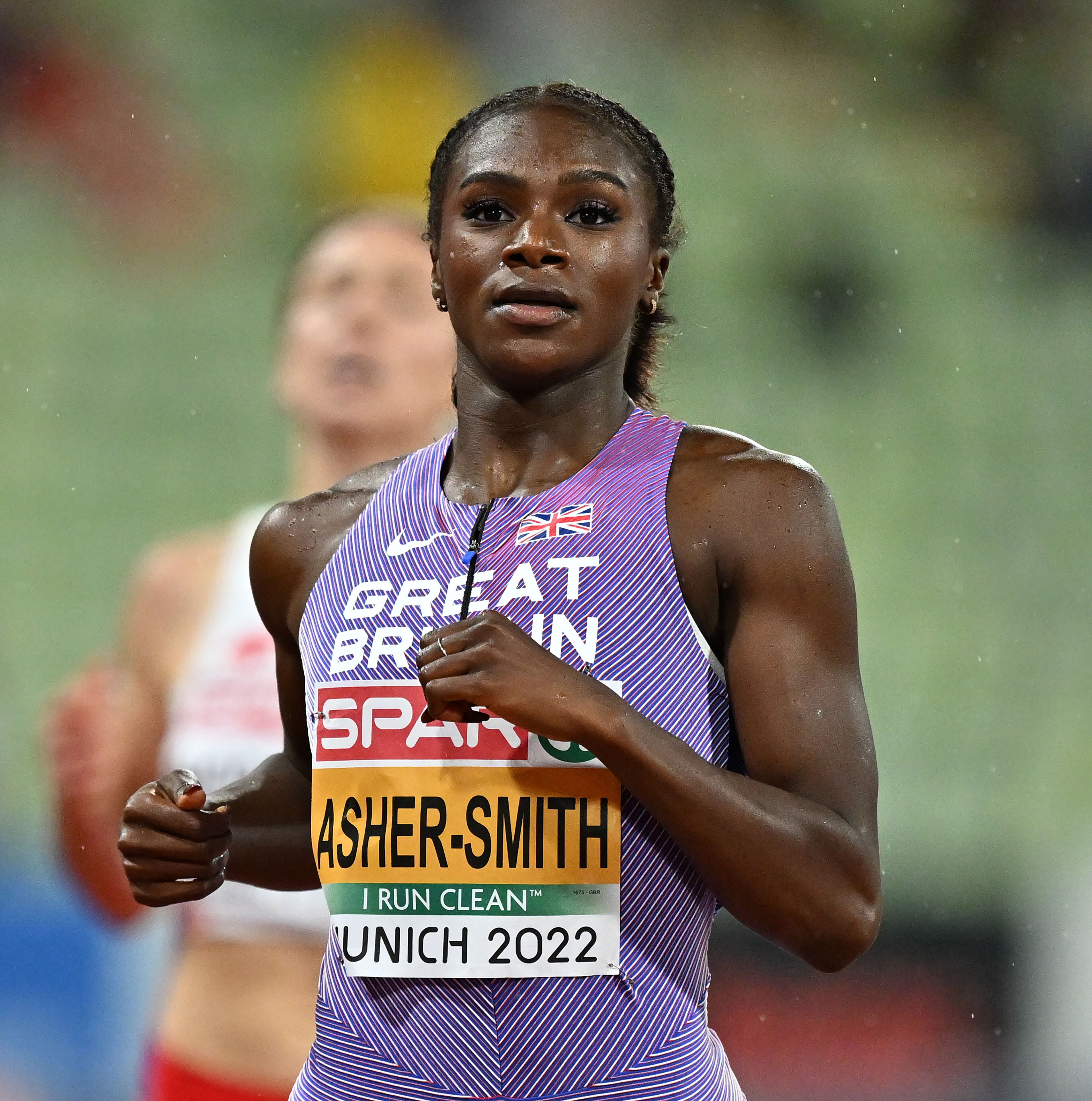
Sprint superstar Dina Asher-Smith has revealed the cramps she experienced in her calf earlier this week, causing her to finish last in a 100m race at the European Championships, were down to her period – and we can relate.
When asked about what happened, the 26-year-old responded: “It was just ‘girl stuff’. It’s just frustrating. It’s one of those things. It’s a shame because I’m in really good shape and I was really looking to come and run fast.”
Advertisement
True to form, a few days later she returned to the track and qualified for the 200m final.
She has now called for more research into how periods impact performance from a sports science perspective, “because it’s huge”.
“People don’t always talk about it either,” she said. “Sometimes you see girls that have been so consistent and there’s a random dip and behind the scenes they’ve been really struggling. Everybody else will go ‘What’s that? That’s random’.
“So we could just do with more funding. I feel if it was a men’s issue there would be a million different ways to combat things.”
Advertisement
We’ve all got stories like this. A colleague reveals she had her first period while sitting her GCSE exams and honestly thought she was going to die. Needless to say, she struggled to perform to the best of her ability.
I’ve had moments where the ability to do even the most basic of tasks – let alone run a race or sit an exam – have been completely obliterated by my menstrual cycle.
One memory instantly comes to mind: commuting home from work on the tube and having to get off several stops early because I was doubled over in so much pain and there were no seats available.
Hot, nauseous and unable to stand up straight, I made it to a bench on the platform and sat there for some time before my boyfriend turned up in a taxi to take me home. So yes, I tip my hat to Dina for even finishing the race.
Wherever you turn, women and people who menstruate are dealing with periods – and we agree with Dina, it’s time sports bodies invested heavily in research.
Tennis star Heather Watson previously told HuffPost UK how she quietly handles her period, which makes her feel bloated and low on energy when she’s on the court: “I really don’t think there’s much you can do when you’re on your period before a game except be strong and deal with it as best you can, because that’s what we all do on a monthly basis.”
Advertisement
She’s previously taken the contraceptive pill to delay her period during big tournaments. But even taking the pill can sometimes backfire or cause unwanted side effects.
Speaking to HuffPost UK, British synchronised swimmer Isabelle Thorpe revealed there have been a few occasions “when it’s gone wrong and I’ve bled for longer than I expected”.
British runner Eilish McColgan was also prescribed the pill after experiencing, what she described for a BBC column as, “excruciating cramps every month to the point where my body would go into a fever and start vomiting”. She recalled having a full day in bed “feeling like death” and then waking up the next day like nothing had happened.
But being on the pill made her feel “rotten,” she said, and it impacted her emotionally.
“It still fascinates me that a large majority of women struggle with their menstrual cycles every month, and yet no one seems to have the answers. Even now, the research in regards to sport, especially, is sparse,” wrote McColgan.
Dr Sarah Zipp, an expert in menstrual health and sport, and associate professor at Mount St Mary’s University, in Maryland, says we now need to see more research into the area. “The menstrual cycle has enormous impacts on physical health, performance, etc.,” she tells HuffPost UK.
“The body experiences many changes throughout the cycle, it goes beyond just coping with symptoms of menstruation. Yet we have relatively little research on the impact of menstrual cycles, which is pretty shocking given that there is sport science research into just about anything that might provide the tiniest performance advantage.”
She says the lack of research is in line with “the overall absence of research on women’s health” more broadly.
Dr Camilla Mørk Røstvik, a historian of menstruation at the University of Aberdeen and University of St Andrews, agrees “there needs to be more research into every facet of the menstrual cycle”.
“Many of us are trying to do that through, for example, the Society for Menstrual Cycle Research (established 1970), the Menstruation Research Network and more,” she says.
Advertisement
But these areas are woefully underfunded. “Asher-Smith is so right, and I’d add that we need proper funding too,” she continues.
“It’s a frustration, because there is clearly an interest amongst the public, just not amongst funding bodies or sponsors (yet).”
If you’d like to share how periods have impacted your performance in sport or at work, please tweet us: @huffpostuklife and we may include some of the tweets in this article.