What Happy Vs Unhappy Married Couples Bring Up Most In Sex Therapy

About 20% of Brits say they feel somewhat sexually incompatible with their partners; a factor you might think determines their levels of happiness.

But speaking to HuffPost UK, sex therapist and intimacy coach Leigh Norén said that “oftentimes unhappily married couples and happily married couples bring up the same sorts of issues in sex therapy”.

What tends to be different, though, is how they present and the causes behind their concerns.

What do happy vs unhappy married couples bring up most in sex therapy?

Both groups often come in to discuss “mismatched libidos, erectile unpredictability and orgasm issues,” the sex therapist said, “but the sexual problems affect the couples in different ways”.

Among happy couples, there might still be a lot of physical, but non-sexual, affection, she added.

They’ll also have, “A lot of emotional connection. But it’s no longer translating into sex for various reasons.

“For instance, they might feel more like roommates than lovers because their identities have become enmeshed. They act like a collective and do everything with one another, as opposed to being two individuals who have chosen to live together and have both separate and joint lives.”

Meanwhile, for unhappy married couples, “mismatched libidos or a sexless marriage might have come about because of different views of sex, or because one partner is responsible for the mental load and has started to feel resentful. When sex has become a chore for one of the partners, it can quickly escalate into high conflict or avoidance.

“When that avoidance becomes the norm, it moves from avoiding sex to avoiding anything that could ‘send the wrong signal’, so physical intimacy lessens over time, leading eventually to the erosion of emotional intimacy, too”.

How you talk about sex matters, too

It’s not just the topics themselves that matter, Norén told us. How you talk about sex can reveal a lot, too.

“Oftentimes, unhappily married couples struggle communicating at all about sex, just as they might do about other things in their relationship. There’s often a sense of one of the partners being ‘in the right’, and the other being ‘in the wrong’ about how they function sexually,” she said.

“Perhaps the high desire partner says stuff like ‘it’s not normal to never want sex’, and the partner with low desire says ‘all you care about is sex’… Fundamentally, the unhappy couples aren’t on the same team, whereas the happily married ones tend to be more on the same team.”

Happily married couples tend to find communication a lot easier and less likely to follow rigid scripts about what a “good” sex life should look like, she continued.

Though it’s not always that black and white, she added: “whenever any couple comes to sex therapy, there is usually a part of the sexual problem that is negatively affecting the relationship”.

How can I improve my relationship and communication around sex?

It sounds a little obvious, Norén said, but talking openly about sex with your partner is “usually one of the first and best steps to take if you want a happier marriage and sex life.

“Just like the rest of us, our sexuality evolves over time, meaning what once turned your partner on might not anymore, and as we age, our genitals tend to get less sensitive.”

Letting things fester can cause resentment and blame.

Educating yourself about sex can help, too. “We know surprisingly less than we think we do about things like how libido really works, and common sexual difficulties in relationships and why they come about. The more we know, the less likely we are to spin into anxiety over it, and the more likely we are to solve it quicker.”

And lastly, the sex therapist said, don’t be afraid to try something new.

″Step out of your comfort zone from time to time. For instance, yes, you may love oral sex, but what happens if you try something else that feels slightly intimidating but also exciting?

“You’ll likely find it infuses a bit of humour into your sex life, a bit of vulnerability that can be really gratifying, and a bit of spice that can make you more aroused,” the expert advised.

Share Button

When’s It OK For Kids To Play Out Alone? An Expert Shares 4 Questions To Answer

Gaining independence is a crucial part of growing up – but at what point are kids ready to go it alone and play outside without you watching their every move?

In contrast to those who won’t let their kids go anywhere alone, there are a number of parents who are taking a more laidback approach and parenting “like it’s the 90s”, giving their kids the freedom to play out unsupervised.

I can see the appeal. We lived in a quiet cul-de-sac growing up and I was allowed to play out with our neighbours’ kids – we knew we had to stay in the street, or in one another’s homes. As we got older, we were allowed to venture a bit further afield. It gave my parents a break, and it made me feel like I was capable and trusted.

Nowadays I live on a relatively quiet street on the outskirts of a major city. There’s not much traffic, we’re near a park, but I’m not sure at what point I’d feel comfortable letting my kids go it alone (admittedly they’re both way too young, but it’s something I’ll have to consider in the years to come!).

Gail Sayles, a Childline practitioner, suggests there isn’t really an age when kids are ready for that next level of independence. Instead, it depends on the child and the situation.

“What matters most is whether your child feels ready, and whether you feel confident letting them take that step. If either of you isn’t quite there yet, that’s a sign they may need a bit more time,” she tells HuffPost UK.

What are the signs they’re ready?

Obviously, babies, toddlers and very young children should never be left alone because they can’t keep themselves safe.

The law doesn’t specify an age when parents can leave a child on their own, but it’s an offence to leave a child alone if it places them at risk.

Sayles notes parents are in the “best position” to judge whether their child is ready to head outdoors on their own, “because you know how they usually behave when you’re not with them”.

It can help to ask yourself a few practical questions to help make this decision:

  • Can they remember important information like their name and address?
  • Do they stick to agreed timings?
  • Do they behave responsibly when you’re not with them?
  • Would they know what to do if plans changed unexpectedly?

The expert advises parents to talk through different scenarios with their child – for example, what they’d do if they hurt themselves or felt uncomfortable. “These conversations can be reassuring for both of you and help build confidence,” she says.

And if you’re unsure whether they’re ready for this next step, you can always start small. Let them play in a nearby area, go out for a short period of time, or spend time with certain friends you trust – this can be a good way to see how they manage, adds Sayles, while still keeping things safe.

What to tell your child before they venture out alone

If you’ve decided your child is ready to go it alone, there are a few important things to address first.

They should be able to share their full name and address and have access to phone numbers for at least two trusted adults.

They should also know what to do in an emergency, including where they could go for help – for example, a shop, library or approaching a police officer or shop staff.

It’s also crucial they feel confident crossing roads safely and know that they should never go anywhere with anyone, even someone they know, without checking with a parent or carer first.

My child’s not ready. What do I tell them?

If you don’t feel your child is ready to venture out alone, Action For Children suggests explaining which skills you’d want them to have first, and then making a plan together to help them learn those skills – that way, they won’t feel like you’re simply shutting them down.

Share Button

Laneige Juice Pop Box Lip Tint Review: Pricey, But 100% Worth It

We hope you love the products we recommend! All of them were independently selected by our editors. Just so you know, HuffPost UK may collect a share of sales or other compensation from the links on this page if you decide to shop from them. Oh, and FYI – prices are accurate and items in stock as of time of publication.

If you’re remotely interested in lip tints, listen up – because I’d bet my bottom dollar that I’ve found your new favourite.

K-beauty brand Laneige launched its Juice Pop Box Lip Tints in the UK in March, to a decent amount of fanfare online.

Well, I’m here to tell you that the hype is very much warranted.

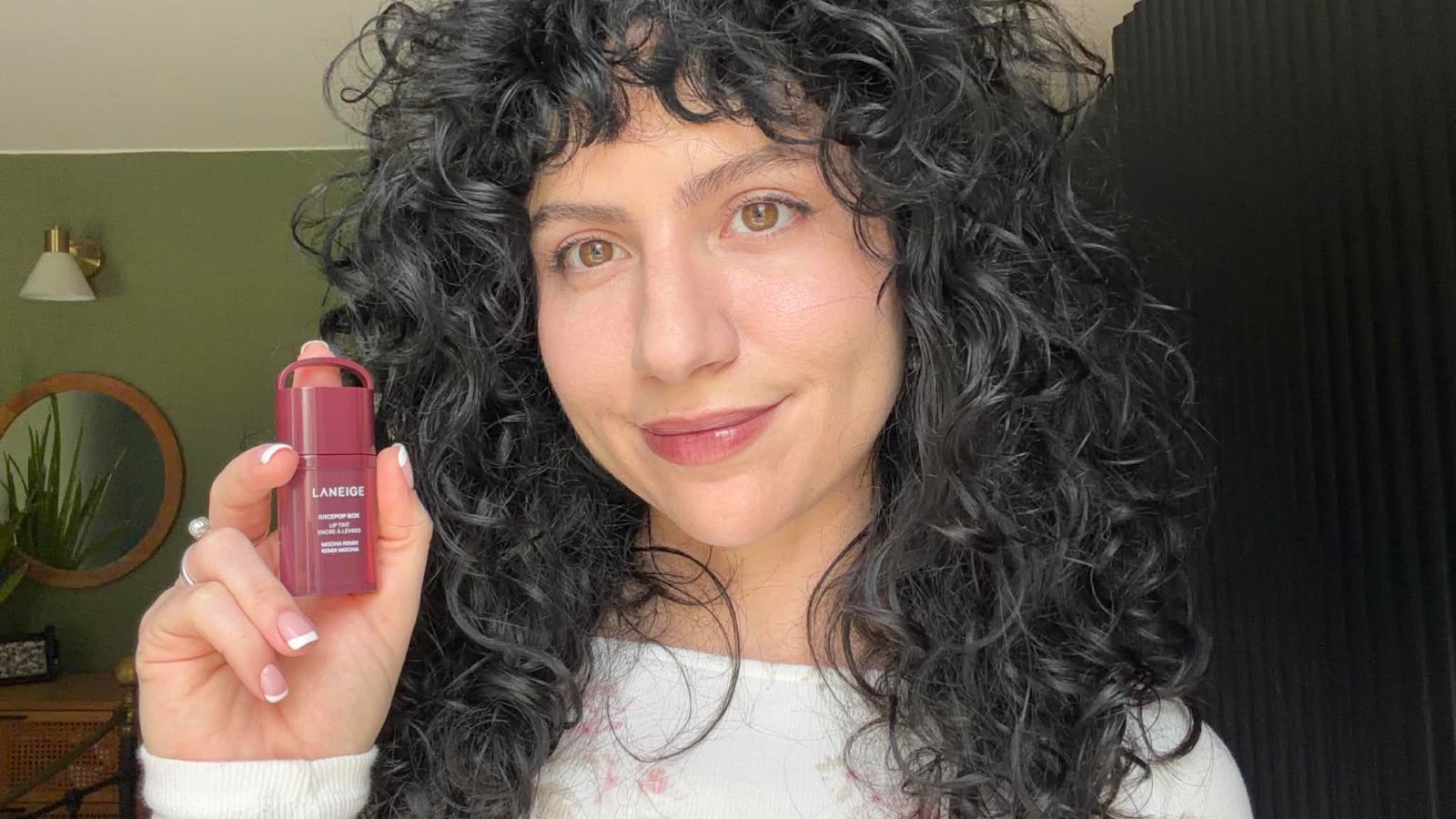
I tried the shade Mocha Remix, a semi-sheer plummy brown. While at first it goes on quite thinly, looking a bit like a wine-stain (only more chic), if you layer it up, it soon builds to a much deeper colour.

This is ideal for me, since it means I can wear it differently depending on my mood.

Its staying power is seriously impressive – you can couple a few layers of it, eat a good meal, and forget about it for hours before you notice your lip colour hasn’t budged.

Unlike lots of other lip products I’ve tried in my time, you can apply it on the go without looking with total ease.

Aidan trying the Laniege tip tint

And what’s more, it feels super nourishing on the lips, thanks to the ‘Water-Oil Remix Technology’, polypeptide, and ceramides boosting the tint’s moisturising and firming formula.

My only minor critique is that, after spending most of the day wearing it, the colour tends to sink into the natural creases in my lips, and I like to add a quick layer of some clear lip balm to even things out again.

But all in all, between the lovely shade, the tint’s versatility, and how very easy it is to use, it’s an ideal option for everyday wear.

At £20, it’s not the most budget-friendly buy in the entire world, but it’s very far from the most expensive too.

Further to that, in my humble opinion, it’s worth every penny.

Share Button

How Would 2026’s ‘Super El Niño’ Impact The UK?

This year, multiple weather experts have predicted an El Niño by midsummer.

Some think it could even become a “super El Niño”.

But what does that mean, and how could it affect the UK?

<div class="js-react-hydrator" data-component-name="Twitter" data-component-id="3036" data-component-props="{"itemType":"rich","isLiveblogEmbed":false,"index":4,"contentIndexByType":2,"contentListType":"embed","code":"

El Niño forming by May, potentially becoming strong by August — new ECMWF seasonal modeling.

By the numbers:

• 22% chance of a super El Niño by August
• 80% chance of a strong event
• 98% chance of a moderate event

That’s according to data from 50 ensemble members. pic.twitter.com/LDOogrRcEC

— Ben Noll (@BenNollWeather) March 6, 2026

","type":"rich","meta":{"author":"Ben Noll","author_url":"https://twitter.com/BenNollWeather","cache_age":86400,"description":"El Niño forming by May, potentially becoming strong by August — new ECMWF seasonal modeling.By the numbers:• 22% chance of a super El Niño by August• 80% chance of a strong event• 98% chance of a moderate eventThat’s according to data from 50 ensemble members. pic.twitter.com/LDOogrRcEC— Ben Noll (@BenNollWeather) March 6, 2026\n\n\n","options":{"_hide_media":{"label":"Hide photos, videos, and cards","value":false},"_maxwidth":{"label":"Adjust width","placeholder":"220-550, in px","value":""},"_theme":{"value":"","values":{"dark":"Use dark theme"}}},"provider_name":"Twitter","thumbnail_height":1204,"thumbnail_url":"https://pbs.twimg.com/tweet_video_thumb/HCugY2raUAEXnyp.jpg:large","thumbnail_width":1955,"title":"Ben Noll on Twitter / X","type":"rich","url":"https://twitter.com/BenNollWeather/status/2029901123948323276","version":"1.0"},"flags":[],"enhancements":{"fonts":{"primary":{},"accent":{},"caption":{}}},"fullBleed":false,"options":{"theme":"life","device":"desktop","editionInfo":{"id":"uk","name":"U.K.","link":"https://www.huffingtonpost.co.uk","locale":"en_GB"},"originalEdition":"uk","isMapi":false,"isAmp":false,"isMobile":false,"isAdsFree":false,"isVideoEntry":false,"isEntry":true,"isMt":false,"entryId":"69df859de4b0f26bda62eb00","entryPermalink":"https://www.huffingtonpost.co.uk/entry/el-nino-impact-uk_uk_69df859de4b0f26bda62eb00","entryTagsList":"united-kingdom,climate-change,weather","sectionSlug":"lifestyle","deptSlug":null,"sectionRedirectUrl":null,"subcategories":"","isWide":false,"isShopping":false,"headerOverride":null,"noVideoAds":false,"disableFloat":false,"isNative":false,"commercialVideo":{"provider":"custom","site_and_category":"uk.lifestyle","package":null},"isHighline":false,"vidibleConfigValues":{"cid":"60afc140cf94592c45d7390c","disabledWithMapiEntries":false,"overrides":{"all":"60b8e525cdd90620331baaf4"},"whitelisted":["56c5f12ee4b03a39c93c9439","56c6056ee4b01f2b7e1b5f35","59bfee7f9e451049f87f550b","5acccbaac269d609ef44c529","570278d2e4b070ff77b98217","57027b4be4b070ff77b98d5c","56fe95c4e4b0041c4242016b","570279cfe4b06d08e3629954","5ba9e8821c2e65639162ccf1","5bcd9904821576674bc55ced","5d076ca127f25f504327c72e","5b35266b158f855373e28256","5ebac2e8abddfb04f877dff2","60b8e525cdd90620331baaf4","60b64354b171b7444beaff4d","60d0d8e09340d7032ad0fb1a","60d0d90f9340d7032ad0fbeb","60d0d9949340d7032ad0fed3","60d0d9f99340d7032ad10113","60d0daa69340d7032ad104cf","60d0de02b627221e9d819408"],"playlists":{"default":"57bc306888d2ff1a7f6b5579","news":"56c6dbcee4b04edee8beb49c","politics":"56c6dbcee4b04edee8beb49c","entertainment":"56c6e7f2e4b0983aa64c60fc","tech":"56c6f70ae4b043c5bdcaebf9","parents":"56cc65c2e4b0239099455b42","lifestyle":"56cc66a9e4b01f81ef94e98c"},"playerUpdates":{"56c6056ee4b01f2b7e1b5f35":"60b8e525cdd90620331baaf4","56c5f12ee4b03a39c93c9439":"60d0d8e09340d7032ad0fb1a","59bfee7f9e451049f87f550b":"60d0d90f9340d7032ad0fbeb","5acccbaac269d609ef44c529":"60d0d9949340d7032ad0fed3","5bcd9904821576674bc55ced":"60d0d9f99340d7032ad10113","5d076ca127f25f504327c72e":"60d0daa69340d7032ad104cf","5ebac2e8abddfb04f877dff2":"60d0de02b627221e9d819408"}},"connatixConfigValues":{"defaultPlayer":"16b0ecc6-802c-4120-845f-e90629812c4d","clickToPlayPlayer":"823ac03a-0f7e-4bcb-8521-a5b091ae948d","videoPagePlayer":"05041ada-93f7-4e86-9208-e03a5b19311b","defaultPlaylist":"2e062669-71b4-41df-b17a-df6b1616bc8f"},"topConnatixThumnbailSrc":"https://img.connatix.com/4f977cde-102d-499d-af5f-36efff39e7ec/1_th.jpg?crop=629:354,smart&width=629&height=354&format=jpeg&quality=60&fit=crop","customAmpComponents":[],"ampAssetsUrl":"https://amp.assets.huffpost.com","videoTraits":null,"positionInUnitCounts":{"buzz_head":{"count":0},"buzz_body":{"count":0},"buzz_bottom":{"count":0}},"positionInSubUnitCounts":{"article_body":{"count":6},"blog_summary":{"count":0},"before_you_go_content":{"count":0}},"connatixCountsHelper":{"count":1},"buzzfeedTracking":{"context_page_id":"69df859de4b0f26bda62eb00","context_page_type":"buzz","destination":"huffpost","mode":"desktop","page_edition":"en-uk"},"tags":[{"name":"United Kingdom","slug":"united-kingdom","links":{"relativeLink":"news/united-kingdom","permalink":"https://www.huffingtonpost.co.uk/news/united-kingdom","mobileWebLink":"https://www.huffingtonpost.co.uk/news/united-kingdom"},"url":"https://www.huffingtonpost.co.uk/news/united-kingdom/"},{"name":"Climate Change","slug":"climate-change","links":{"relativeLink":"news/climate-change","permalink":"https://www.huffingtonpost.co.uk/news/climate-change","mobileWebLink":"https://www.huffingtonpost.co.uk/news/climate-change"},"relegenceSubjectId":978658,"section":{"title":"News","slug":"news"},"topic":{"title":"Climate Change","slug":"climate-change","overridesSectionLabel":false},"url":"https://www.huffingtonpost.co.uk/news/climate-change/"},{"name":"weather","slug":"weather","links":{"relativeLink":"news/weather","permalink":"https://www.huffingtonpost.co.uk/news/weather","mobileWebLink":"https://www.huffingtonpost.co.uk/news/weather"},"relegenceSubjectId":983981,"section":{"title":"News","slug":"news"},"topic":{"title":"Weather","slug":"weather","overridesSectionLabel":false},"url":"https://www.huffingtonpost.co.uk/news/weather/"}],"isLiveblogLive":null,"isLiveblog":false,"signInUrl":"https://login.huffpost.com/login?dest=https%3A%2F%2Fwww.huffpost.com%2Fentry%2Fel-nino-impact-uk_uk_69df859de4b0f26bda62eb00%3Fhp_auth_done%3D1","cetUnit":"buzz_body","enableIncontentPlayer":false,"bodyAds":["

\r\n\r\n HPGam.cmd.push(function(){\r\n\t\treturn HPGam.render(\"inline-1\", \"entry_paragraph_1\", false, false);\r\n });\r\n\r\n","

\r\n\r\n HPGam.cmd.push(function(){\r\n\t\treturn HPGam.render(\"inline\", \"entry_paragraph_2\", false, false);\r\n });\r\n\r\n","

\r\n\r\n HPGam.cmd.push(function(){\r\n\t\treturn HPGam.render(\"inline-2\", \"entry_paragraph_3\", false, false);\r\n });\r\n\r\n","

\r\n\r\n HPGam.cmd.push(function(){\r\n\t\treturn HPGam.render(\"inline-infinite\", \"repeating_dynamic_display\", false, false);\r\n });\r\n\r\n"],"adCount":0,"midArticleAdPartner":null},"isCollectionEmbed":false}”>

El Niño forming by May, potentially becoming strong by August — new ECMWF seasonal modeling.

By the numbers:

• 22% chance of a super El Niño by August
• 80% chance of a strong event
• 98% chance of a moderate event

That’s according to data from 50 ensemble members. pic.twitter.com/LDOogrRcEC

— Ben Noll (@BenNollWeather) March 6, 2026

What is an El Niño?

An El Niño happens when the surface of the Pacific Ocean heats up by 0.5°C or more.

During a super El Niño, though, temperatures rise by 1.5-2°C, professor emeritus of Geophysical and Climate Hazards at UCL, Prof Bill McGuire, told HuffPost UK previously.

During both regular and “super” El Niños, extreme weather events like drought and flooding are much more common.

“Broadly speaking, the bigger the El Niño, the greater its impacts on the world’s weather,” Prof Bill McGuire said.

El Niños can also heat up the world as a whole. The 2023-24 El Niño heralded record-breaking temperatures across the globe in 2024.

“The cost of weather disruption caused by the super El Niños of 1982-83 and 1997-98 has been calculated as being in the trillions of dollars,” Prof McGuire added.

Usually, the most immediate results are seen in countries on or near the Pacific, like Australia, Indonesia, Peru, Ecuador, and the Philippines.

How would an El Niño impact the UK?

In the short term, the effects of El Niños tend to reach us a little later than those in the middle of the event.

It might make our summers a little hotter. It could also make our winters a lot colder, though that’s not a given.

But Prof McGuire said the longer-term impacts might be more significant here, even though the UK’s experience of El Ninos typically “lags” behind other countries’.

“A super El Niño later this year is likely to see the global average temperature rise since pre-industrial times smashed again, and it wouldn’t be a surprise to see both this year and next breaching the 1.5°C dangerous climate change guardrail,” he said.

That would affect the UK, as experts have cautioned that going over 1.5°C of global warming could lead a million more square miles of permafrost to thaw.

That might mean sea levels could rise from one to three feet by the end of the century, devastating coastal communities. That may bring about mass displacement and conflict.

Though the UK might not see the most extreme results of the possible super El Niño the fastest, the weather phenomenon could have truly global consequences.

Share Button