Perez Hilton’s Family Say Celebrity Blogger Is Receiving Inpatient Treatment

Perez Hilton is receiving inpatient treatment two weeks after he was hospitalised following a mental health episode in which he appeared to self-harm during a TikTok livestream.

On Sunday evening, a fresh update was posted on Perez’s blog, attributed to his family, in which they said: “To everyone who has reached out, checked in, and kept Perez and our family in your thoughts, THANK YOU!

“At this time, Perez remains hospitalised and is receiving the medical care he needs. His treatment is continuing in an inpatient setting under the care of a dedicated team of medical and mental health professionals.”

They also shared that Perez’s team will begin updating his celebrity blog from this week onwards while he continues his recovery.

“For now, Perez’s health remains the priority as his team keeps the site active and moving forward,” they added.

Earlier this month, police officers were called to Perez’s home in Miami in the wake of a TikTok livestream in which he was apparently seen self-harming.

The former Celebrity Big Brother housemate – whose legal name is Mario Lavandeira – was subsequently taken to a nearby hospital for medical attention.

“Perez’s condition remains serious but stable,” his family said last week. “He experienced significant blood loss and sustained additional injuries that will require surgery in the coming days.

“His treatment and recovery will be a long process. We are grateful that Perez was able to spend time with his mother and sister yesterday.

“As our family remains focused on Perez’s treatment and recovery, we also need the space and privacy to care for everyone affected by this situation.”

Before that, the family had said their “highest priority” was helping Perez’s children – aged 13, 11 and eight – “begin to heal from what they experienced” following the episode.

They noted that his children, niece and sister had all been at Perez’s home before the livestream got underway, but “immediately fled to protect the children from witnessing any further trauma” when it “became clear that Perez was experiencing a severe mental health crisis and harming himself”.

Share Button

Researchers Say It’s Time To Ask A Different Question About Dementia

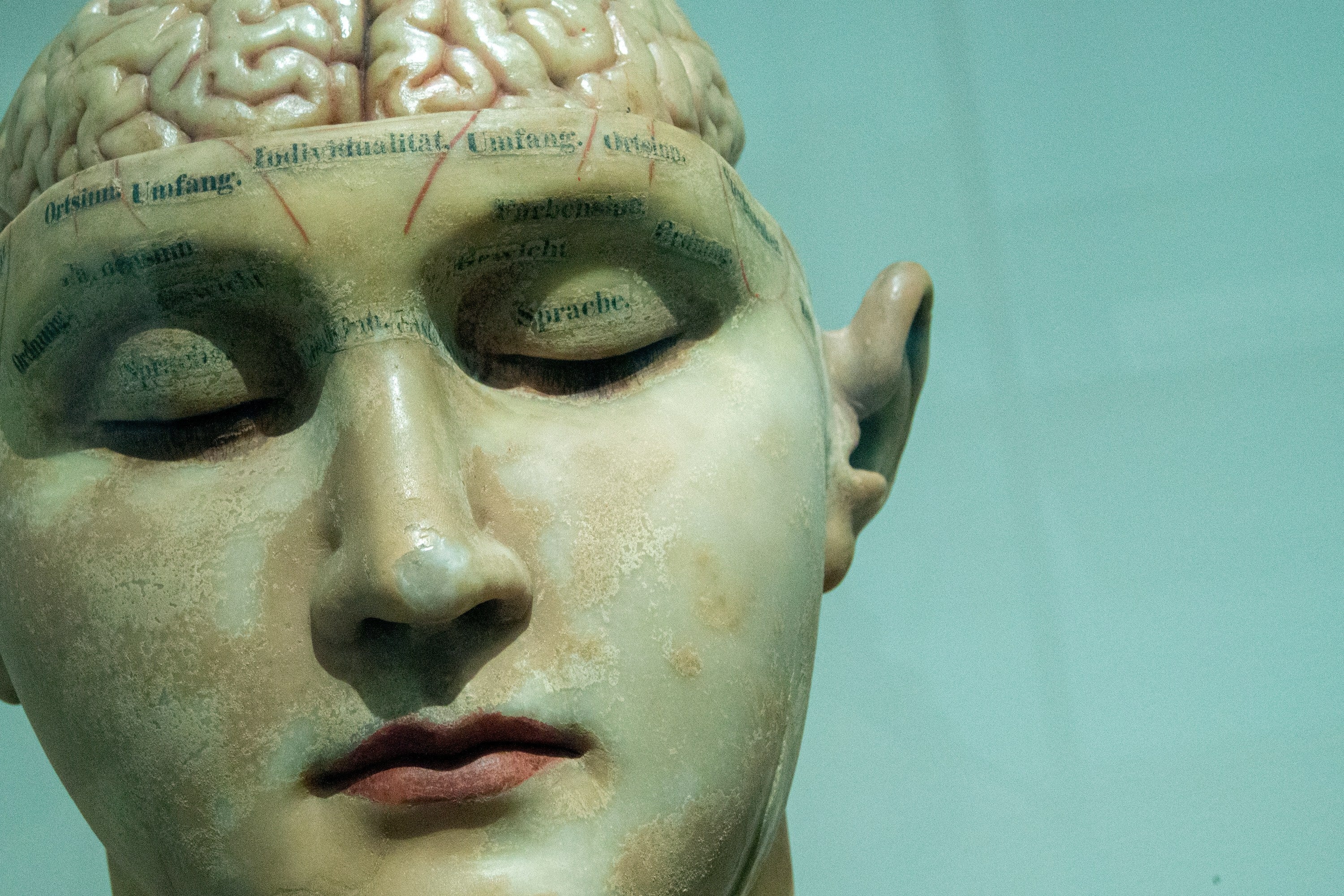
When we think of dementia, symptoms like memory loss and confusion might spring to mind. And that’s completely reasonable – dementia is a condition that progressively affects memory and thinking.

But researchers think there are other parts to the picture.

People with dementia can have periods of “paradoxical lucidity”, or moments when a long-term dementia patient’s brain seems to briefly snap back to what it once was. Carers say moments like these are common.

They can last for minutes or hours and may make a dementia patient’s loved one feel as if, for a while at least, the “fog lifted”.

Dr Heather E. Whitson, a professor of neuroscience, the director of the Duke Ageing Centre, and co-director of the Duke/UNC Alzheimer’s Disease Research Centre, said: “I really think that a lot of what we learn about these dramatic episodes could have bearing on better cognition and better outcomes throughout the disease.”

She is one of many academics who’ll join the Lucidity in Alzheimer’s and Dementia (LEAD) Network.

What is LEAD Network?

The upcoming project, due to start this autumn, aims to create a standard definition of lucidity, understand how it affects caregivers and families, and work out the mechanisms behind lucid periods.

Some reports suggest that triggers like music may help to induce these states of clarity among dementia patients. But the team behind LEAD Network want more hard science to explain what’s really going on during clearer spells.

It’s even hoped that working out why lucidity happens in dementia could help researchers find ways to protect us from the condition, and even recover memories.

“We’ve spent decades focused on preventing dementia and treating dementia,” Whitson stated. “This research asks a different question: What allows moments of preserved function to emerge, even in the setting of advanced disease?”

Researchers think periods of lucidity could mean functional parts of the brain remain – it may be a question of access

Lucidity among long-term dementia patients may have to do with what’s been called the brain’s “substrate”, or the hidden, underlying part of the brain that still seems capable of regular, or better-than-usual, function.

Dr Whitson said that the times when a person with advanced dementia is able to remember a loved one or sing every chorus of a song “suggest there is still some preserved substrate there. It means that a profound part of their self – which dementia took away – is still there”.

Maybe research like the one she and others are set to undertake could make accessing that “substrate” more predictable and reliably possible.

The professor claimed, “Neuroscientists often frame cognitive resilience as your mind’s ability to hang on to a capacity even though there is brain damage.

“But lucid episodes tell us that even when a capacity seems as if it’s lost, it may not be lost forever.”

Share Button

As A Teen, I Wrote A Famous Musician A Fan Letter. 23 Years After His Death, I Finally Got A Response

When I was 17 years old, I wrote Elliott Smith a fan letter.

It was the year 2000, and I was a high school senior in Dallas. I had never written a fan letter to anyone, but I felt connected to Elliott, despite the fact that we didn’t really have that much in common.

He was, after all, a man in his 30s who had tattoos and wore an assortment of black band tees, while I was a teenage girl who shopped at Abercrombie & Fitch. He sang about drinking and drugs; I hadn’t even tried my first beer.

He had the aura of a defiant nonconformist, while I was a pleaser and overachiever, writing for the school paper, singing in the choir, and joining an endless stream of extracurriculars and clubs to pad my college applications.

But Elliott seemed like the quiet type, and so was I, with high social anxiety and low self-esteem. He seemed like an outcast, and I often felt out of place and lonely in the Texas suburb where I grew up, even with family and friends around me.

He seemed sad; I was a bit sad too.

But what really mesmerised me most about Elliott was his vulnerability. He laid himself so bare in his music, and when I listened to his songs, it felt like reading a diary. It wasn’t just the lyrics – it was his soft singing style, his careful finger-picking, the way he layered vocal tracks so tenderly. I felt like I knew him, like I was a friend he trusted with his secrets.

I wanted to reach out to Elliott to thank him, and convey how important his music was to me. I found an address for his record label, Kill Rock Stars, in the liner notes of one of his CDs, and I mailed the letter. And then I waited.

Months passed, and no response. Maybe I sent it to the wrong address, I thought. I never really expected to hear back, but I did wonder if he even got it.

Graduation came and went. I headed off to college. Elliott didn’t release any new albums.

And in 2003, he died violently and tragically at the age of 34.

The subject line read “Fwd: Elliott Smith biography.” My former boss had passed along a message that was sent to my old work email – the one associated with my maiden name, which no one had called me in years. It was 2023, and I had recently turned 40.

The email was from a writer named Jamie Fisher, who said she was working on a biography about Elliott Smith.

“I’m wondering if you’re the same Kirby Van Amburgh who wrote a fan letter to him around 2000,” she wrote. “His family still has the letter, and I was wondering whether you got a response.”

I sucked in my breath. This means Elliott got my letter! I thought. He must have read it, right? And if he kept it, maybe it meant something to him.

I responded to Jamie immediately. Even though I hadn’t gotten anything from Elliott, she still wanted to talk to me, so we set up a time to chat on the phone the next week.

Before our phone call, Jamie also sent me a photo of my letter to Elliott. It was handwritten on notebook paper, both sides. In the letter, I wrote that I was a 17-year-old girl who had bought all of his CDs.

I think your music is really addictive. It’s so original and creative. I’ve never heard anything like it.

I shared that I liked to play the piano and guitar and sing. I told him that he was an inspiration to me, that listening to his music encouraged me to create my own style.

I try to write my own songs and make them as unique and personal to me as your work is to you.

But I didn’t want to be a musician as a career, I said.

I want to be a writer.

I praised him some more and said that even if my letter never reached him, it was OK.

You are worth the time it took to write this, and you’ll keep kicking ass.

I told him he was incredible and thanked him. I signed it with a “Sincerely.”

If Elliott did in fact read the letter, I could see why he kept it. I’m sure it was refreshing to get something so wholesome.

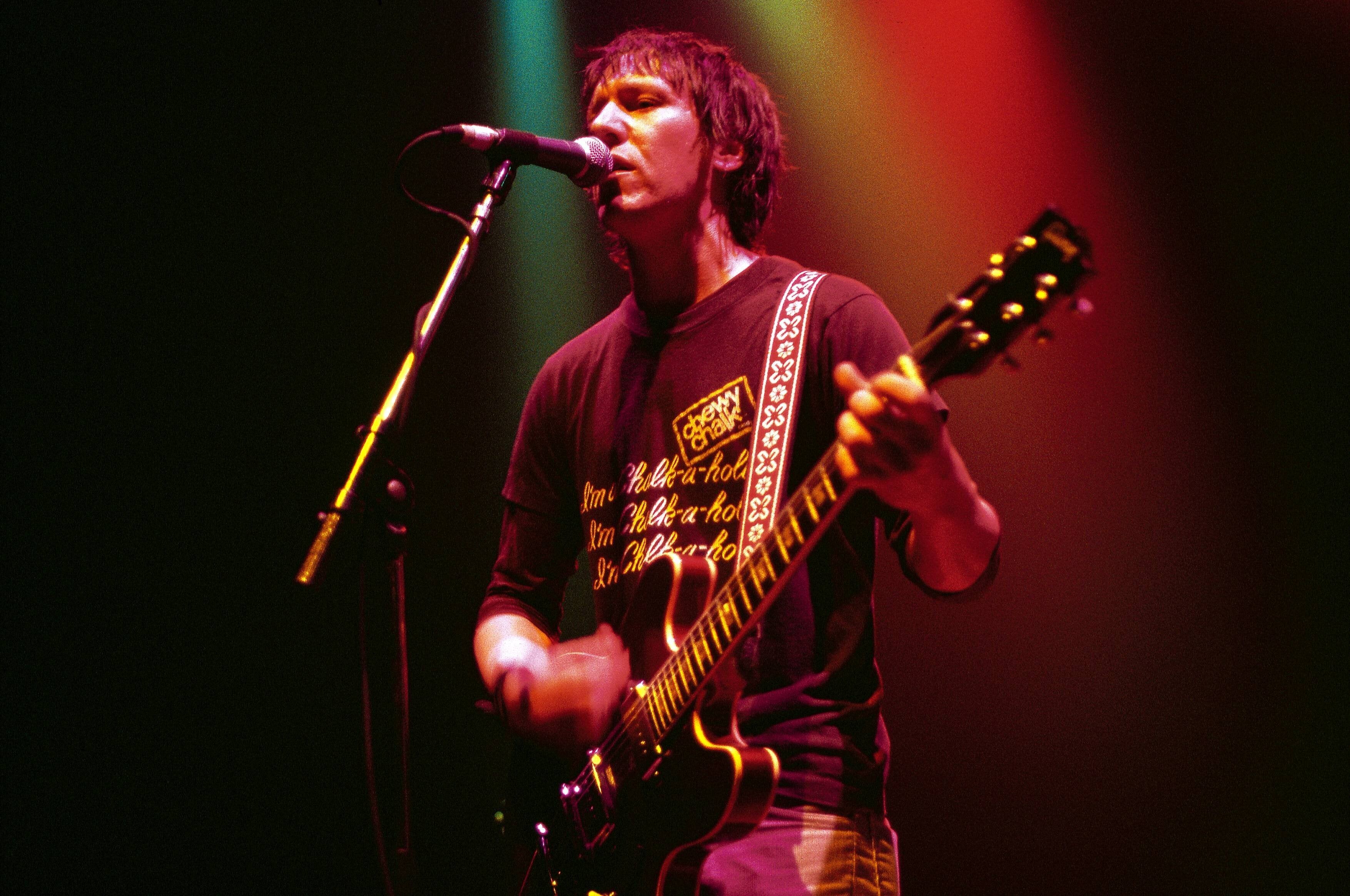
Elliott Smith.

C Brandon via Getty Images

Elliott Smith.

In the days that followed, I went up into the attic and pulled out my old high school diaries, skimming the pages for mentions of Elliott. I had written about him several times: I journalled about buying my first Elliott Smith CD and hearing the spidery notes of Speed Trials trickling through the speakers of my Magnavox boombox. And I wrote about my letter, saying, “I hope he gets it. I hope he likes it!”

When we finally got on the phone, Jamie asked if I had continued with my writing or music, and I told her about my winding career path: I was a teacher for several years, then worked at a nonprofit for the next decade. I had dabbled in freelance writing here and there, but it never went anywhere. At one point, I wrote a novel for kids, but it was never published.

I told her I had recently transitioned to a job as a writer for a market research company, which I really enjoyed because I got to write every day, albeit in a different way than I envisioned when I was 17.

I talked about my songwriting and how I was in a musical duo with my friend Todd in the early aughts. We put out an EP, some singles, and even a couple of music videos, filmed in Todd’s backyard. It was all just for fun, but it was also a bit stressful sharing my songs and putting myself on display like that.

I explained that creative writing – both on paper and in music – was emotionally difficult for me. Unlike writing for business, when I wrote anything personal, I felt an intense fear of being exposed. I put so much of myself in my fiction, essays, poems and songs. I was terrified of releasing them for public consumption because any rejection of my creative work felt like a rejection of me as a person. Perhaps that’s why I was so in awe of Elliott: he shared so much of himself in his art, in a way that I never quite could.

After a while, Jamie paused and said that she didn’t reach out to me just because of the book. There was another reason.

“Elliott wrote you a response.”

I literally burst into tears.

He did? I choked out. Jamie started crying too.

She said that Elliott’s letter was in the box with my letter. She didn’t know why he never sent it. Maybe he didn’t have a stamp and then forgot about it. At any rate, it was there, waiting to be found.

Jamie read the letter to me over the phone.

Dear Kirby, I read your letter and it made me happy – thanks.

Elliott wished me success with my writing, whatever success meant to me personally. He talked about his love of reading and recommended an author he was really into at the moment, Mikhail Bulgakov. He shared that he sometimes secretly wished he was a writer instead of a musician, as his music so often diverged from mainstream tastes.

He thanked me for adding a little brightness to his day.

I’m glad you see creativity in yourself, the world needs as much of it as it can get, so go out and kick ass!

He signed it with a heart.

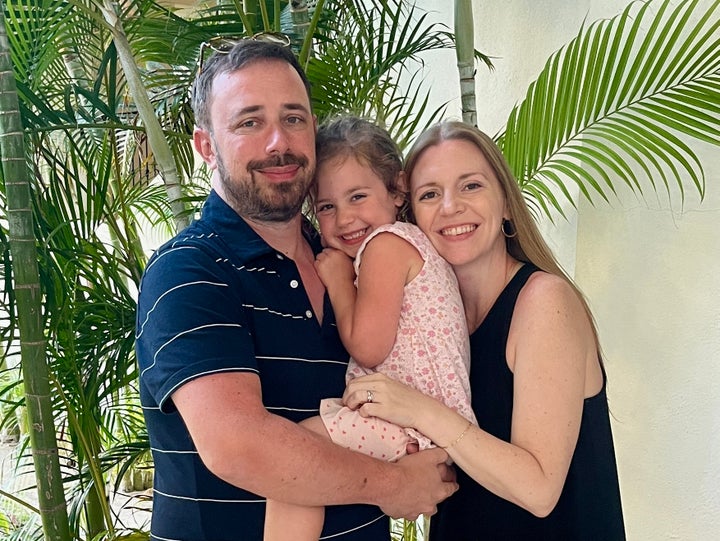
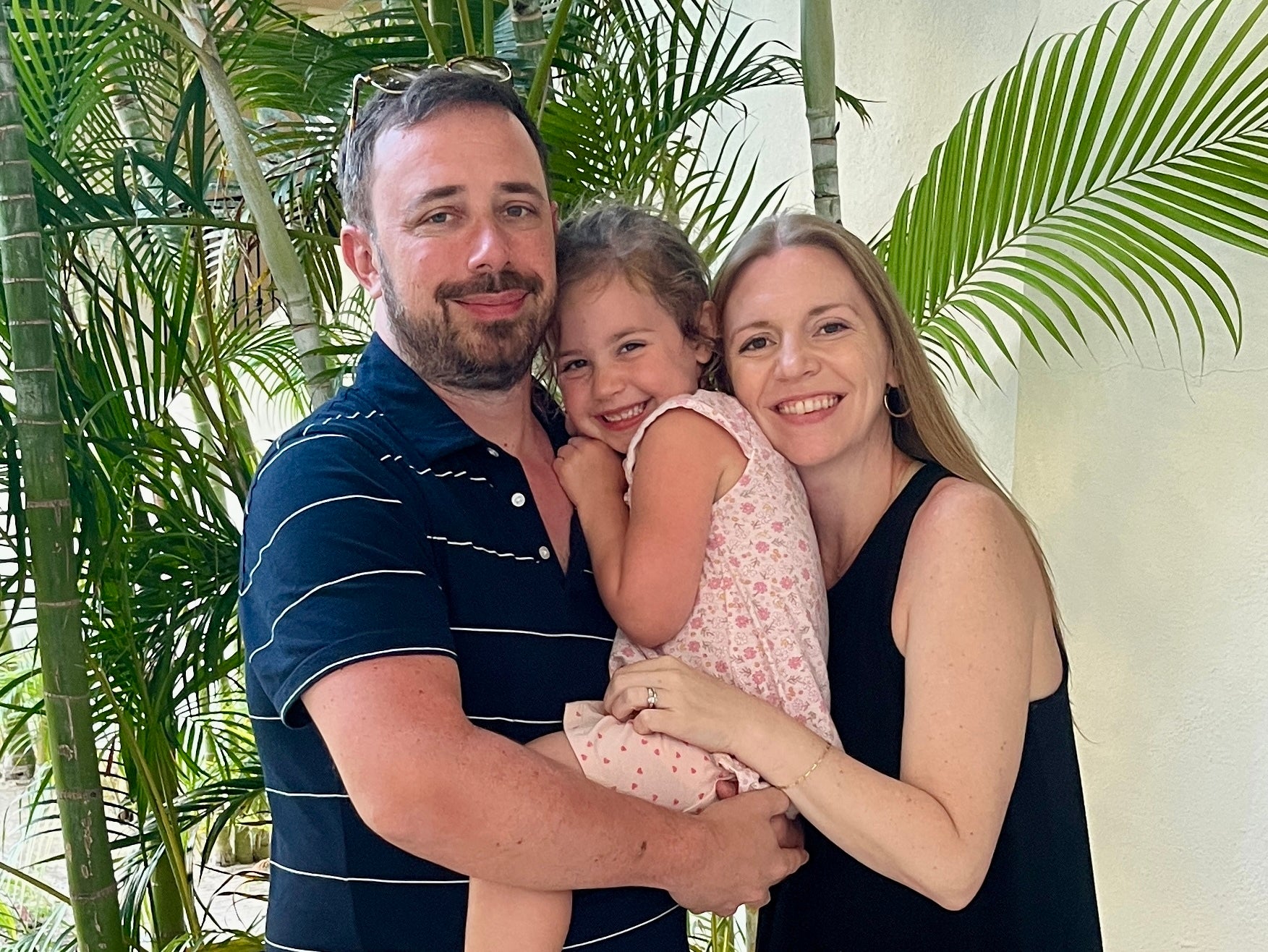
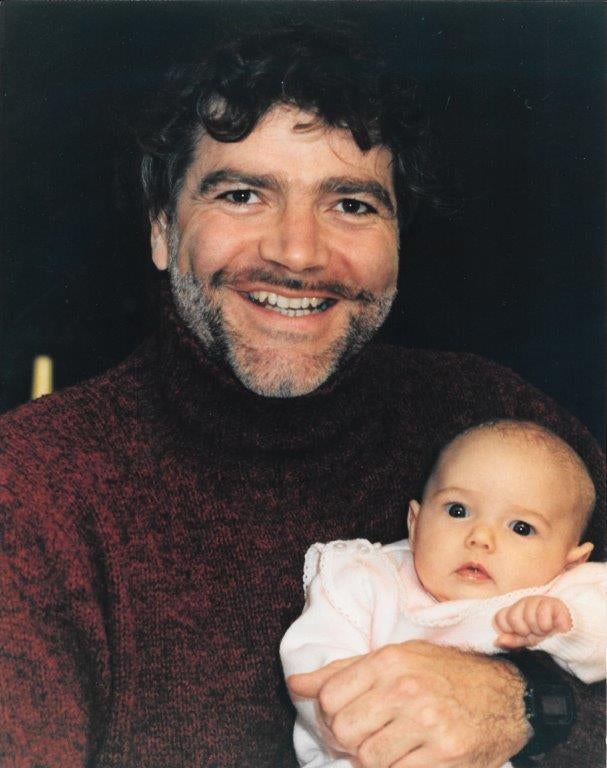
The author with her husband and daughter (2025).

Photo Courtesy Of Kirby Rock

The author with her husband and daughter (2025).

After my call with Jamie, I felt a surge of inspiration. Since having my daughter three years earlier, I had stopped going to my writing group, and I hadn’t written a song or even played my instruments in a long time. But now I felt the urge to return to my writing and music, even if for no other purpose than bringing me joy.

In the months that followed, I brought my guitar down from the attic. I played Old MacDonald Had A Farm for my daughter over and over, building the calluses back up on my fingers. I wrote her an original song about handwashing, Scrubbly Bubs and Bubs and Scrubs (which was well received). Last year, along with my husband and two other dads, I played a three-song acoustic set of Raffi covers for our kids’ class at school. It was thrilling to see them laughing and clapping and dancing, a crowd of generous and adoring fans.

I rejoined my writing group. I wrote a little book about potty training for my daughter (which was less well received). I revisited a short story about alien abduction that I had initially drafted and abandoned several years earlier. I wrote a bad poem about the lizards on my back porch. I wrote this essay. Now I write and write and continue to write.

After I told one friend about Jamie’s call, he asked if I was upset that I never got the letter when I was a teen. I said no. Strangely, I was almost thankful that Elliott never sent the letter. It felt like his words were meant for me at age 40, not age 17. I received his encouragement when I really needed it – not when I was already full of excitement and hope and possibility, but later in life, when I needed to be reminded of the spark inside of me.

I wrote to Elliott years ago to thank him. And in a way, I wrote this to thank him again.

Nobody Broke Your Heart, an intimate biography of Elliott Smith by Jamie Fisher, will be released by Penguin Random House on Aug. 25.

Do you have a compelling personal story you’d like to see published on HuffPost? Find out what we’re looking for here and send us a pitch at pitch@huffpost.com.

Share Button

I Added A Baking Staple To My Chickpeas, And It Made Them Silkier And Creamier Than Ever

I’ve been banging on about the merits of slow cookers, especially during a heatwave, all summer.

Even though they’re usually associated with stodgy winter dishes, their lower temperature and enhanced insulation mean they don’t warm your kitchen up as much as you’d expect.

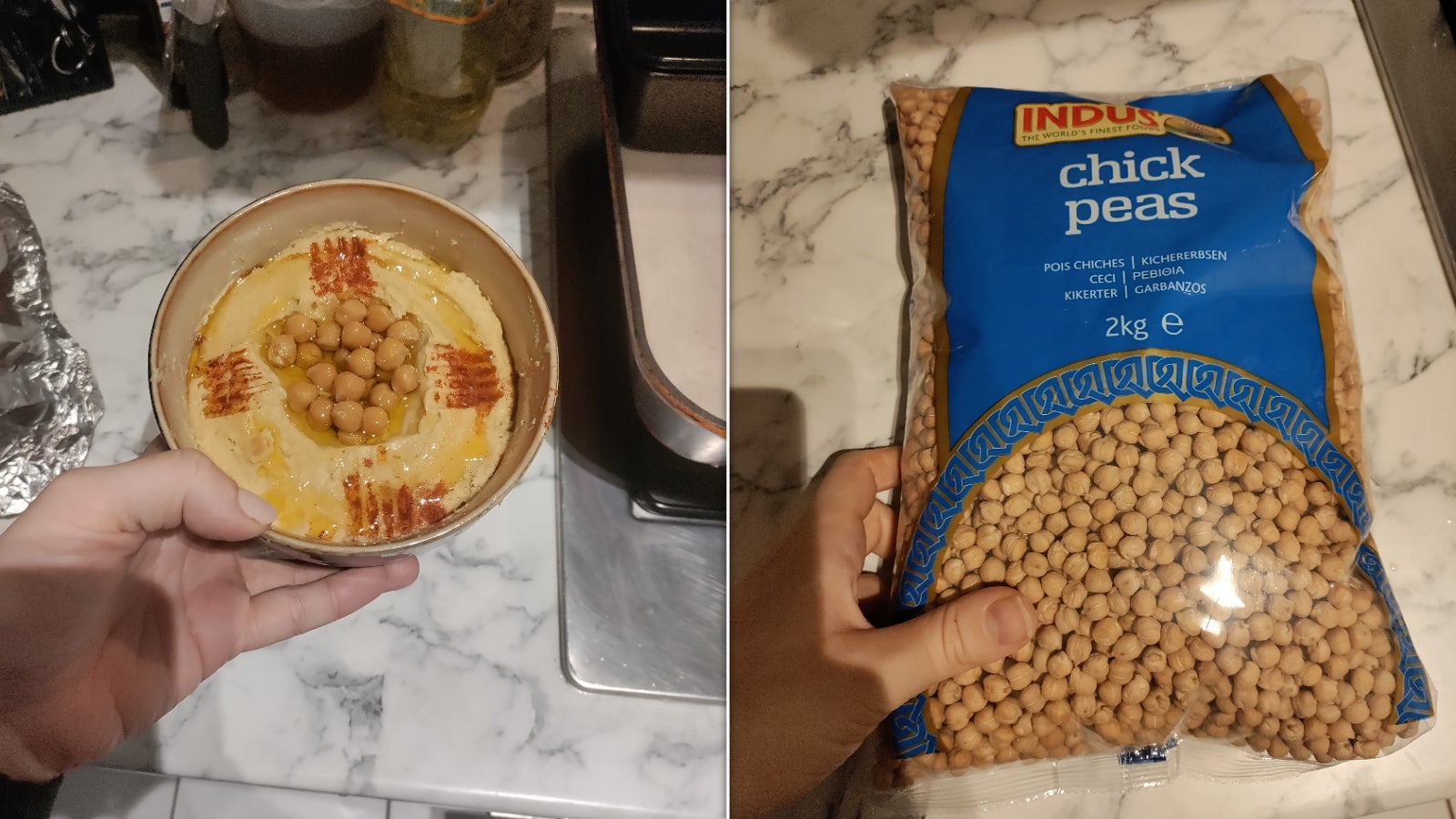
Alongside a delicious coconut lentil soup and some Greek-inspired mains, I’ve been batch-cooking my own chickpeas, too. (Yes, canned is easier, but tinned chickpeas are also designed to keep their shape in the container, meaning they’re never quite soft enough for dishes like hummus).

Still, it wasn’t until last week that I tried a long-standing trick to make them softer, creamier, and more delicious – and I wish I’d started years before.

Add baking soda to your chickpeas

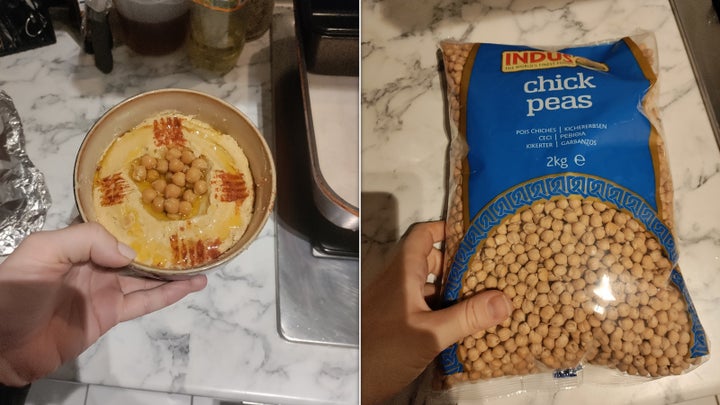
Hummus, chickpeas

Amy Glover / HuffPost UK

Hummus, chickpeas

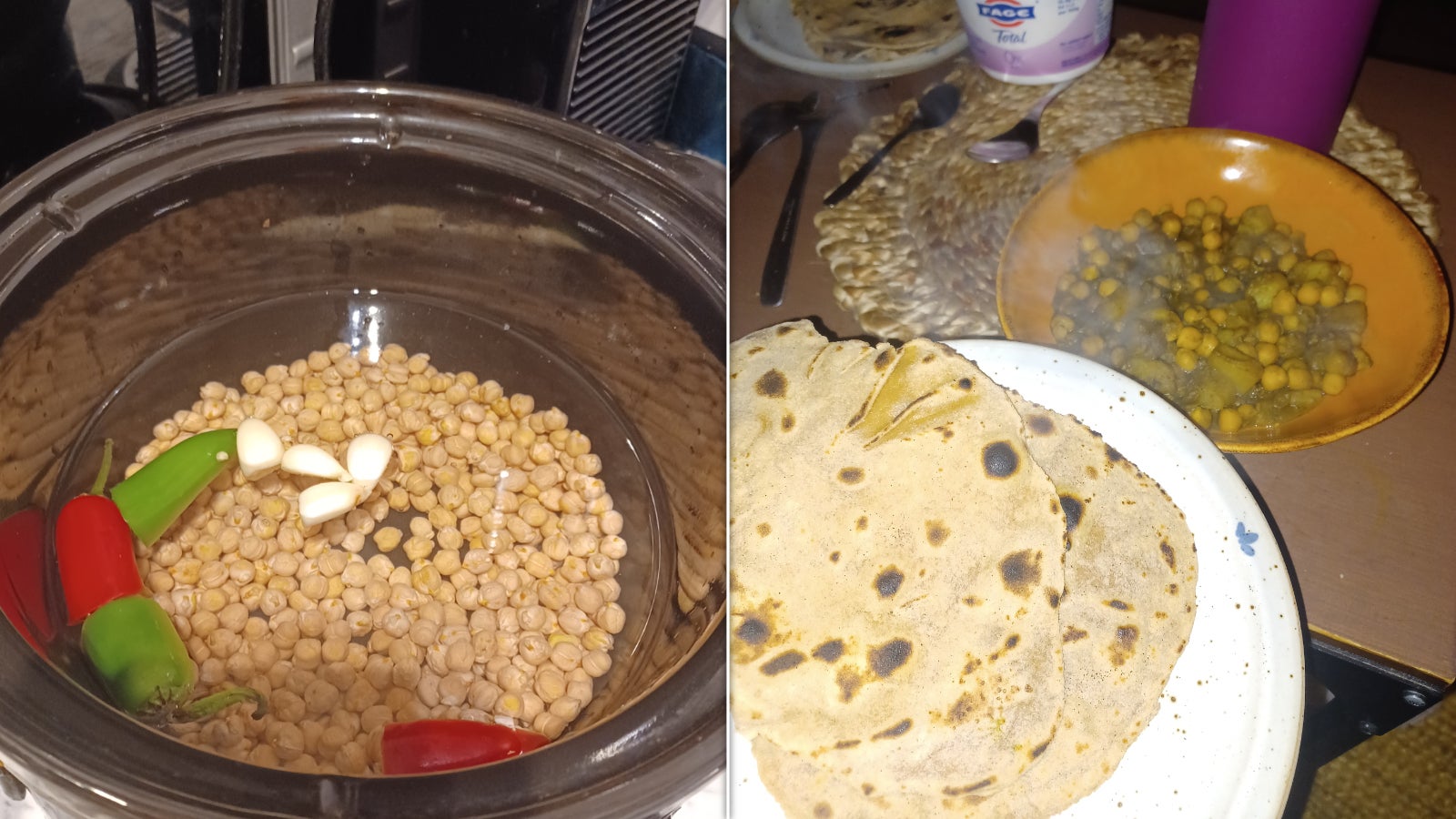
I usually add garlic, salt, and chilli to my chickpea water for a bit of added flavour. Salt might have a small advantage in softening them, but for the best results, you need baking soda.

There’s some interesting science behind the addition. When you add the baking staple to chickpea water, it slowly replaces the legumes’ rigid calcium ions with bendier sodium ions.

And the alkaline nature of baking soda also breaks down the bonds that hold their pectins (a type of plant fibre) together.

Combined, those factors mean that baking soda makes chickpeas soft, squidgy, and almost fudgy.

Their skins also soften and even begin to flake away depending on how long you cook them. That, I find, is especially useful for hummus – though I like a looser, softer chickpea for things like salads and chickpea curries, too.

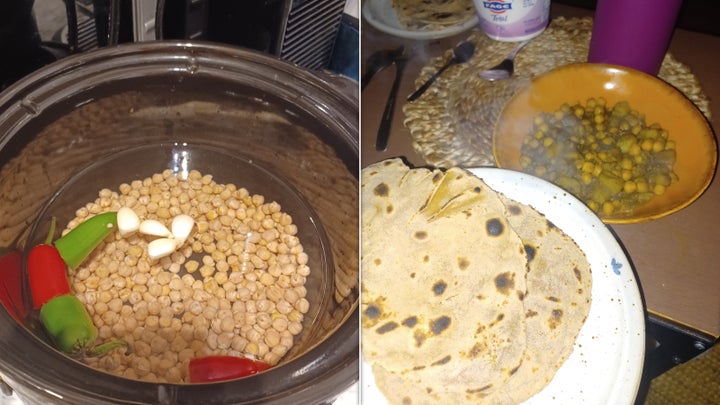
Chickpeas in the slow cooker: then in a curry

Amy Glover / HuffPost UK

Chickpeas in the slow cooker: then in a curry

I was amazed by how well the trick worked. Compared to chickpeas I’d stewed for hours, those cooked with baking soda became softer much faster – and eliminated that harder centre I could never quite coax into silky perfection.

How much baking soda should I add to my chickpeas?

You don’t need much to see impressive results. I use about a teaspoon per 500g of dry chickpeas, but some recipes halve that.

The amount you’ll need to add depends, partly, on how long you’re cooking chickpeas for. If you’re making them on the hob, more baking soda will be better; however in the slow cooker, where they stew for hours, try less.

Serious Eats notes that you don’t have to spend hours on the method if you don’t have time. You can soften tinned chickpeas using baking soda, too: just drain them, add enough liquid to cover them, and whack in some baking soda while they boil. Half a teaspoon per 400g can of chickpeas should do the job.

Test the chickpeas as they cook to make sure they haven’t collapsed completely. Once they’ve reached the desired texture, you can remove them and drain them.

This has an added benefit: the chickpea water from baking-soda-cooked legumes is a bit bitter and unpleasant. So, if you need to use this for your recipe, you can save the liquid from the can and use that later on.

Share Button

The Common Travel Sleep Mistake Giving You A ‘Holiday Sleep Hangover’

For some people, the joy of a holiday is slightly dampened by the inevitable impacts holidaying can have on sleep. In fact, according to new research commissioned by sleep technology firm Simba has found that over three quarters of Brits 76% find that holiday travel affects their sleep, with over 2 in 5 UK adults finding that tiredness affects the first day of their holiday and more.

Very relatable. The first day of every holiday for me seems to be experienced in a tired and wired daze.

It doesn’t stop there, though. In fact, this tiredness can reoccur once you’re back home in what sleep experts have dubbed a “Holiday Sleep Hangover”.

The ‘Holiday Sleep Hangover’

According to Lisa Artis, Deputy CEO of Simba’s charity partner, The Sleep Charity, the “holiday sleep hangover” describes the lingering effects of travel-related sleep disruption caused by early airport starts and poor in-flight sleep to unfamiliar hotel rooms, changing time zones and disrupted routines

But unlike a traditional hangover, it can strike twice: “once when you arrive on holiday and again when you return home.”

“The holiday sleep hangover has become the hidden physical and mental cost of modern travel,” says Artis.

“Sleep disruption usually starts much earlier and can continue long after you’ve unpacked your suitcase. It’s the combination of lost sleep, changes to routine and, for some travellers, jet lag that can leave people feeling out of sync for days.”

Additionally, if you’re a sucker for an early flight so you can “make the most of the day” once you arrive at your destination, you may be doing yourself a disservice, Artis warns, saying: “If you’re up at 3am for an airport transfer after a restless night’s sleep, you’re already asking your body to function on less recovery than it normally would. That sleep debt can follow you into the first few days of your trip.”

“It can be tempting to over-optimise the night before you travel. But trying to force a really early night can make it harder to switch off,” she explains.

“You end up clock-watching and feeling more alert.”

Instead, she recommends keeping your usual evening routine calm and consistent.

How to recover from a Holiday Sleep Hangover

According to Lisa, the most effective approach is getting back to a consistent routine as quickly as possible. That means returning to regular bedtimes, exposing yourself to daylight during the day and avoiding the temptation to stay up late to prolong the holiday feeling.

“Your sleep environment can help speed up recovery. When you’re trying to get your routine back on track, comfort and temperature become important,” adds Arts.

“If you’re waking because you’re too hot, too cold or uncomfortable, it can make recovery feel slower.”

Take care of yourself!

Share Button

It Was Too Late To Fix My Relationship With My Dying Father, So I Taught Children To Read Instead

I hadn’t seen my dad in five years when my sister texted me that he had fallen at home. After I had my first child, the childhood abuse I had previously overlooked to keep the peace suddenly became incomprehensible, and I chose to become estranged from him.

But when I found out he was dying, I knew time was running out to reconcile. I didn’t want to regret missing it.

On my first visit to see him, I brought flowers and kneeled by his bedside. He was thin, jaundiced and bedridden. His fine hair was snowy and delicate over his scalp, his movie star cheekbones more prominent than ever. His brown eyes still looked like mine.

But he didn’t recognise me. He stared at me and looked away repeatedly, his expression bewildered and hurt.

“Who are you?” he asked.

I was stunned and told him who I was.

“Is it OK that I’m here, or would you prefer I go?” I asked.

“You can stay. I’m just surprised. It’s been a long time.” There was grief and accusation in his voice.

“I know,” I said.

I wouldn’t apologise for the estrangement. He wouldn’t apologise for the abuse. We wouldn’t talk about the past when death was so close.

When I left, I kissed his forehead and promised I’d be back.

A few weeks later, I signed up to be an early literacy volunteer, teaching young children to read. Once a week, I spent an hour with the students during their lunch break, reviewing the alphabet and helping them sound out words while they ate orange slices and whole wheat pizza.

Then I would spend an hour with my dad at the healthcare facility where he lived for his last five months. We would share a few minutes of small talk, I would feed him small bites of baked fish or tater tots, and we’d watch TV.

The two things were connected. My father’s side of the family is full of educators. My dad was a professor for more than 50 years. He’s the reason I have post-traumatic stress disorder, but he’s also the reason I love literature, travel, art, food and languages. His mother – my namesake – was once a missionary-teacher who rode on horseback four miles every day to reach her students.

“Teaching is a spiritual thing,” my dad said.

I thought volunteering to help children read would connect me to my dad and our family as he was dying. The kids were at the beginning of their lives and education, while my father, the professor, was coming to the end of his.

I volunteered on Mondays. Usually, I visited my father at the end of the week. My weeks were measured in the bookends of life.

There were six schools where I could volunteer – all underfunded and with low reading test scores. I chose the one closest to my childhood home, my dad’s house. I was a kindergartener in that neighbourhood the first time my dad squeezed my wrists so hard that bruises encircled them for weeks.

The school was a rectangular building made with dark bricks. I had passed by it countless times as a child. From the outside, it looked institutional in the late September sun. But inside, I was surprised by how light it was. The hallways were painted white and worn in places with scuffs and pencil squiggles – imprints from students growing up.

Three large trees grew in the foyer outside the library. Their shiny green leaves wove a canopy over the grey and blue tiles where kids walked from recess, lunch and library time. That’s where I met the kids with whom I’d be working, affectionately called Book Buddies.

The volunteer program coordinator handed me two folders, each bearing the name of a little boy. We had two assignments for the day. The first was to complete “getting to know me” sheets. The second was to assess how many letter names and sounds they knew.

I asked them their birthdays, their favorite colour and to draw their favourite food. My first buddy knew the letters in his name but no others. My second buddy surprised me by knowing all the letters and their sounds, but he said them quietly with his eyes downcast.

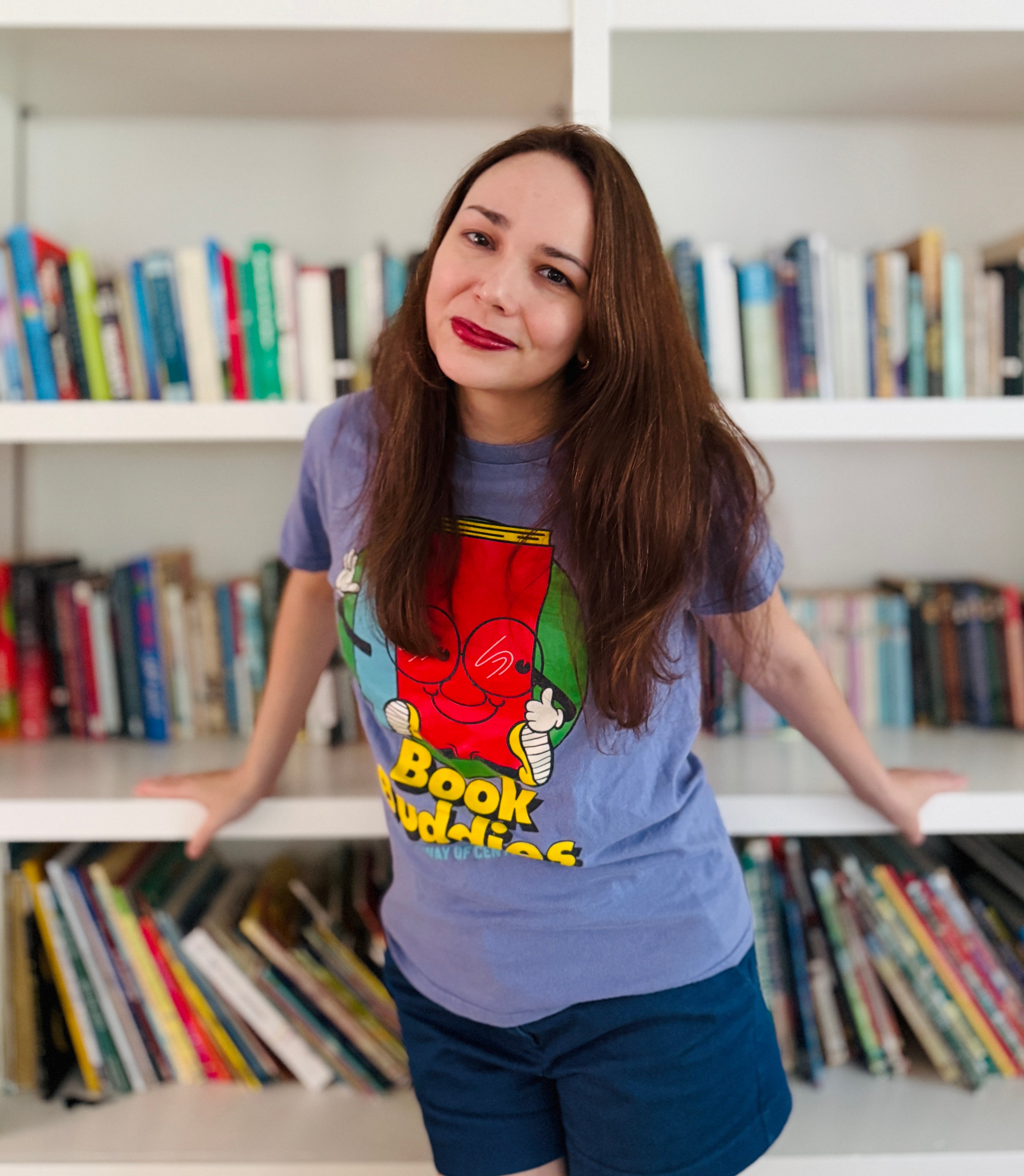
The author volunteering for the Book Buddies program

Photo Courtesy Of Virgie Townsend

The author volunteering for the Book Buddies program

At the school, there was the squeak of sneakers as kids ran in the hall and the voices of teachers announcing it was time to line up. There were boxes of small books, word games with dice, pencils, plastic utensils and thin straws for chocolate milk cartons.

Over time, I learned my first buddy loved to take a big sip of chocolate milk and burp and then we’d laugh together. He introduced me to his kindergarten friends. In the winter, his boot shoelaces were always undone, so I tied them before he returned to class.

My second buddy rarely made eye contact but read everything I put in front of him perfectly. He was reserved, but told me he lived with his dad and loved reading books the program gave him.

I praised both kids for their reading, hard work and the progress they made.

Sometimes after volunteering, I’d drive by my childhood home. With my father gone, the house stood empty.

At the healthcare facility, there was a crane to lift my dad, who used to hike by the Sequoias near his own childhood home. There were nurses who joked as they spooned medication into his mouth and the blare of televisions playing at full volume. There were cartons of Ensure and automatic hand sanitiser dispensers.

Sometimes my dad seemed stronger. On a good day, we watched Star Trek, and he laughed out loud for the first time in a while. When I left, he called after me in a strong voice, “Love you, honey.”

But organ failure is a rollercoaster with many ups and downs, all heading toward the inescapable end. Mostly, I worried about the emergence of new symptoms like the jaundice and itchiness that came and went. The bones I hadn’t seen before, jutting clavicle and breastbone. Lost fat on his fingers, every knuckle visible beneath the thin skin.

On a cold January day, I was with my dad when he began seizing. The seizures were quick, full-body and terrifying. He didn’t remember them – he just thought he’d fallen asleep for a minute. The doctor said there was nothing else they could do.

Four days later, he was unconscious. His breaths were long, slow and gasping. His TV was off. He had stopped responding to us. I asked my sisters for a minute alone with him. Everything we had left was in that small room.

“I hope that in whatever comes next, you receive the love you didn’t get as a child and you’re able to give that love to yourself and others in return,” I told him. “If there’s regret or anything else you’re carrying, you can put it by the wayside. You don’t have to carry it for me.”

He died the next morning. After he took his last breath, I watched the pulse in his neck grow fainter until I couldn’t see it beating under his skin anymore.

“Dad, I’m just going to check your pulse, OK?” I said. I placed two fingers on his neck – a place I had never touched before – and felt no movement.

Before the funeral home director placed him on the gurney, I kissed his forehead one final time and then wept.

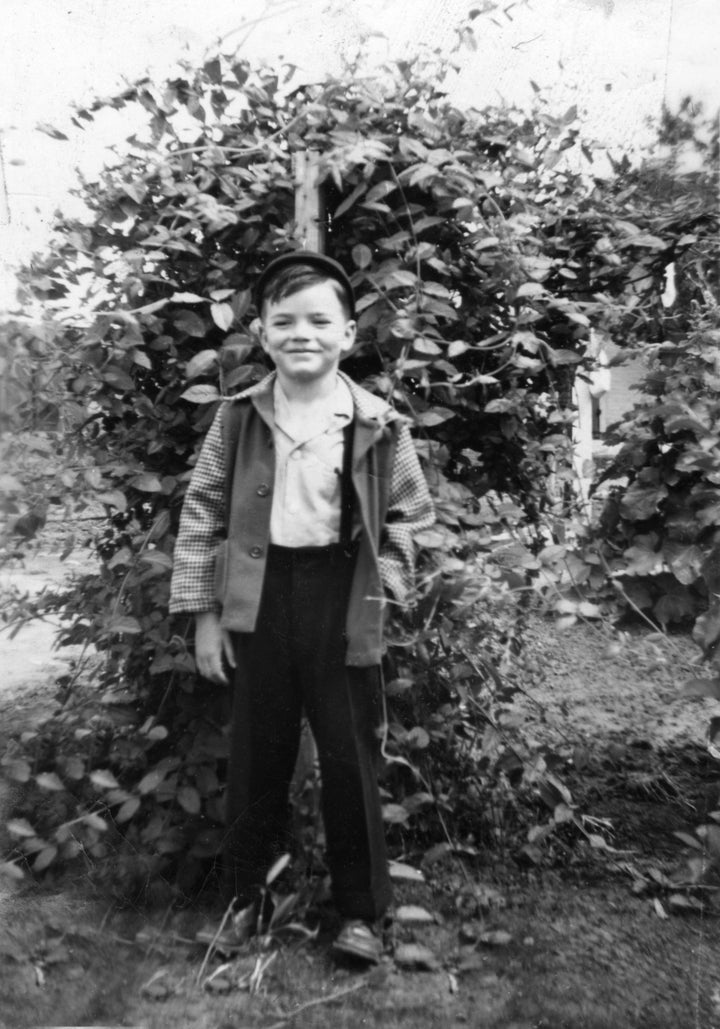
Depleted by grief and the paperwork that accompanies a parent’s death, I didn’t return to volunteering for a month. Sometimes I’d look at a photo of my dad from when he was 5 years old – the same age as my own son and my volunteering buddies.

In the picture, my dad wore a black cap over his dark hair, and his left hand was in the pocket of his checkered coat. Although I knew he had an unsafe, loveless childhood, he beamed a proud smile. I wished I could go back in time to protect that little boy.

The author's father, John Townsend, at 5 years old

Photo Courtesy Of Virgie Townsend

The author’s father, John Townsend, at 5 years old

When I went back to the school, my first buddy walked up to me with his lunch tray and a mildly scolding expression on his face.

“Where have you been?” he asked, as if I were a child who missed curfew.

“One of my family members was sick,” I said, smiling. “I’m back now.”

I was glad to be in the school, reading with the kids under the trees in the foyer. One day, as I arrived, my buddy was standing in the lunch line. He saw me, exclaimed to a friend, “That’s my Book Buddy!” and ran to hug me.

Later, when my second buddy caught a cold, I gave him tissues to take back to class because I knew he’d be too shy to ask the teacher. I helped another student carefully cut out a booklet for herself to take home to read. I made sure one of their classmates didn’t leave behind her lunchbox.

Little acts of care I wish had been given to the children that my father and I once were.

On the last day of volunteering, we held a party in the school library. I helped my buddies don plastic gold medals and paper graduation hats. We gave them backpacks with books, a toy keychain, bubbles and a red bracelet that said, “I love to read.”

“Do you love to read?” I asked my buddy, who was now reading several levels ahead of where he began.

He looked down bashfully and nodded with a smile, his two front teeth missing. We listened to a story about joyriding farm animals and played sight word bingo with candy. Then I tied his shoelace one last time, wished him a great summer, and watched him walk back to class.

I realised that while a child cannot heal their own parent, I could give that care to my kids and to other children who needed it. It was too late for my dad, but it might be right on time for them.

Do you have a compelling personal story you’d like to see published on HuffPost? Find out what we’re looking for here and send us a pitch at pitch@huffpost.com.

Help and support:

If you, or someone you know, is in immediate danger, call 999 and ask for the police. If you are not in immediate danger, you can contact:

  • The Freephone 24 hour National Domestic Abuse Helpline, run by Refuge: 0808 2000 247
  • In Scotland, contact Scotland’s 24 hour Domestic Abuse and Forced Marriage Helpline: 0800 027 1234
  • In Northern Ireland, contact the 24 hour Domestic & Sexual Violence Helpline: 0808 802 1414
  • In Wales, contact the 24 hour Life Fear Free Helpline on 0808 80 10 800.
  • National LGBT+ Domestic Abuse Helpline: 0800 999 5428
  • Men’s Advice Line: 0808 801 0327
  • Respect helpline (for anyone worried about their own behaviour): 0808 802 4040
Share Button

5 Steps For More (And Better) Orgasms During Menopause

We’ve written before at HuffPost UK about the best sex positions for menopausal women.

Speaking to HuffPost UK previously, Elisabeth Neumann, a sexologist at Lovehoney, said menopause can “make sex feel unfamiliar and frustrating, especially when things that once worked perfectly well no longer feel as comfortable”.

And that might affect the quantity and quality of your orgasms, too.

Pharmacist and author of Love Your Vulva: Celebrating Women’s Bodies, Laura Dowling, said: “As oestrogen falls, the vulva and vagina can become drier, more sensitive and less elastic, so sex may become uncomfortable or painful. And if sex hurts, you’re hardly going to be thinking, ‘Great, now let’s have an orgasm’.

Then add poor sleep, hot flushes, stress, body-image changes, medications, relationship pressures and being absolutely exhausted.”

Here, she shared how to up your odds of the big O.

How can I increase my chances of orgasm during menopause?

Neumann said some ways to increase your odds of orgasm during menopause include:

  1. Taking the pressure off yourself,
  2. Giving yourself more time,
  3. Using plenty of lube,
  4. Focusing on clitoral stimulation (“most women need direct clitoral stimulation to orgasm”),
  5. Listening to your body – “If sex is dry or painful, don’t just push through it.”

“One of the reasons I wrote Love Your Vulva is because so many women were never properly taught about their own anatomy,” she added.

“Knowing what feels good and being able to say it out loud is a very good place to start.”

Anything else?

Yes – paradoxically, Neumann said, focusing less on the big finish could sometimes make sex and masturbation more enjoyable.

“Sex does not have to be a race towards an orgasm,” she told us. “It can be about touch, pleasure, intimacy, laughing, feeling close to somebody or simply enjoying what feels good.

“And what you enjoy may change as you get older. That doesn’t mean your sex life is finished. It just means the rulebook might need a rewrite.”

We know, for instance, that hormone changes in menopause might mean some people take longer to “get going” in the bedroom, as their levels of sensitivity change.
And some people find that penetrative sex becomes uncomfortable during the life stage, too.

The author ended, “I’d much rather a woman have sex that feels pleasurable and connected than spend the whole time worrying about whether she is going to finish.

“There is no gold medal for having an orgasm. If it feels good and you enjoyed yourself, that counts.”

Share Button

Madonna Is Celebrating Her Biggest Chart Hit In 17 Years With Her Kylie Minogue Duet

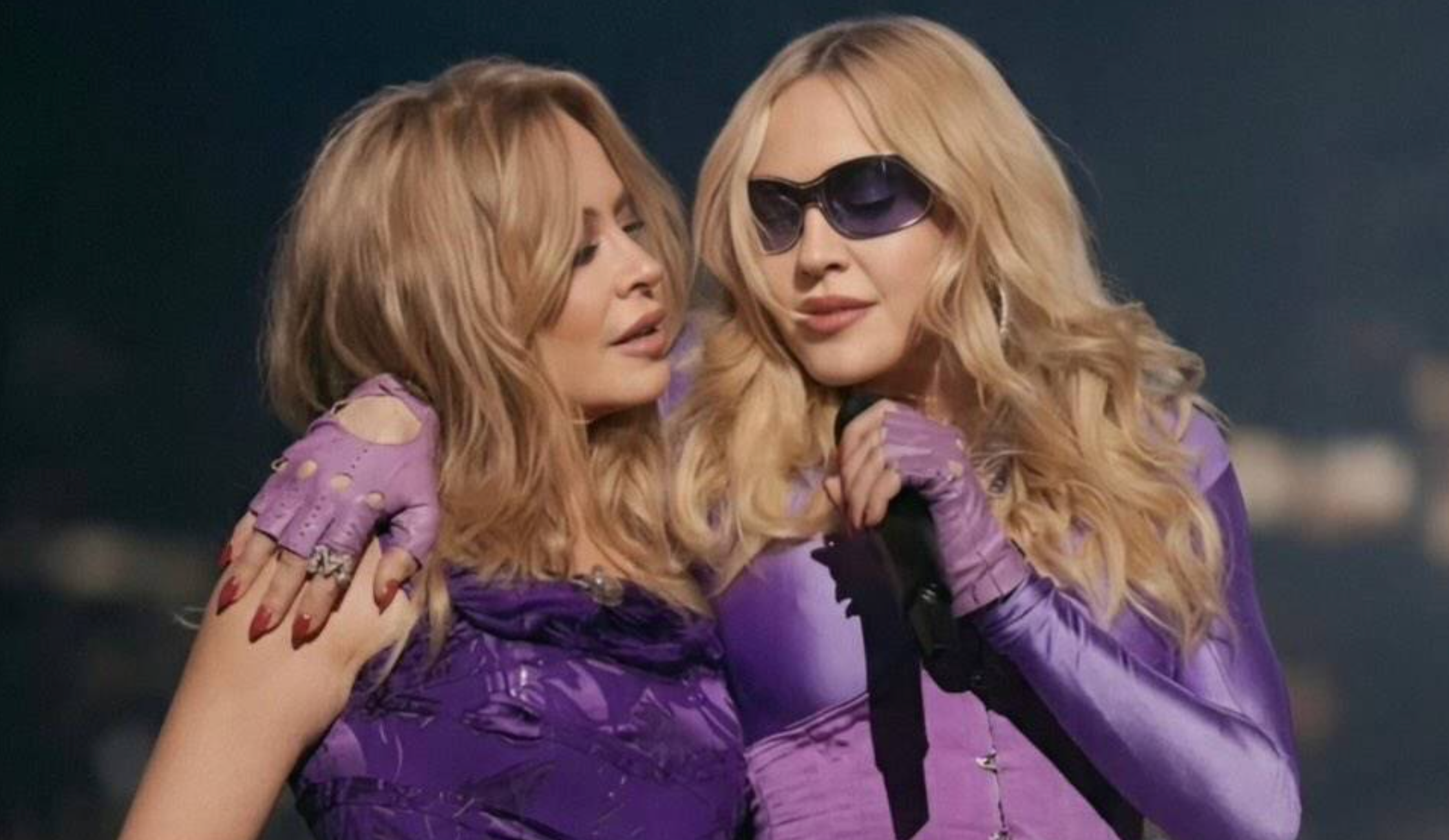
Pop fans have been waiting decades for a crossover between music icons Madonna and Kylie Minogue – and their wish finally came true last week.

Following the huge critical and commercial success of the Queen of Pop’s latest release Confessions II, she dropped a new remix of the album cut Love Sensation, with a guest feature from Kylie herself.

Earlier this week, it was reported that the two divas were on course to return to the top 10 thanks to Love Sensation, and while many initially fans held off allowing themselves to get excited… they’ve only gone and done it.

<div class="js-react-hydrator" data-component-name="YouTube" data-component-id="3378" data-component-props="{"itemType":"video","isLiveblogEmbed":false,"index":5,"contentIndexByType":1,"contentListType":"embed","code":"

","type":"video","meta":{"author":"Madonna","author_url":"https://www.youtube.com/channel/UC81VD6eeuLLSfyY_D-N8sVw","cache_age":86400,"description":"You’re watching the official lyric video for ‘Love Sensation (Afterhours Radio Edit)’ by Madonna & Kylie Minogue. Original song taken from Confessions II.\n- Stream ‘Love Sensation (Afterhours Radio Edit)’ now: https://madonna.lnk.to/LSKylie\n- Order the 3-track CD single: https://shop.madonna.com \n- Buy/stream Confessions II: https://Madonna.lnk.to/Confessions2 \n\nSubscribe to the Madonna Channel! https://Madonna.lnk.to/YouTubeID \n\nCheck out the Official Madonna YouTube Playlists…\nThe Complete Madonna Videography https://Madonna.lnk.to/Videography \nLive Performances https://Madonna.lnk.to/LiveYT \n\nHelp Us Give Back…\nRaising Malawi http://www.raisingmalawi.org/\nThe Ray of Light Foundation http://www.rayoflight.org/ \n\nStay in touch with Madonna…\nhttps://madonna.com\nhttps://instagram.com/madonna\nhttps://tiktok.com/@madonna\nhttps://x.com/madonna\nhttps://facebook.com/madonna\nhttps://www.madonna.com/newsletter\n\nCREDITS\n\nVideo: Nuno Xico, Chidi Nobi, Chloe Irving, Rastine Mir\nImages: Ricardo Gomes, Antonioni\nEditor: Danny Tull\nGraphics: Special Offer\n\nFor Madonna:\nMakeup: Marcelo Gutierrez \nHair: Eugene Souleiman\nStylist: Rita Melssen \nHair assistant: Travis Balcke \n\nFor Kylie:\nHMU: Christian Vermaak\nStyling: Frank Strachan\n\nFilmed at Club Confessions: Amsterdam WorldPride\n\nThe Madonna Channel is the official YouTube home for Madonna. As the best-selling female recording artist of all time, Madonna continues to leave an indelible mark on the world through her art, music, activism and humanitarian leadership. Madonna consistently pushes boundaries, spurs conversations and unites us all through her revolutionary work. Subscribe for the latest videos, music, news and updates. Enjoy Madonna’s groundbreaking music videos, live performances, humorous videos and more.","options":{"_cc_load_policy":{"label":"Closed captions","value":false},"_end":{"label":"End on","placeholder":"ex.: 11, 1m10s","value":""},"_start":{"label":"Start from","placeholder":"ex.: 11, 1m10s","value":""}},"provider_name":"YouTube","thumbnail_height":720,"thumbnail_url":"https://i.ytimg.com/vi/vZYXnlCiFss/maxresdefault.jpg","thumbnail_width":1280,"title":"Madonna & Kylie – Love Sensation (Afterhours Radio Edit) Official Lyric Video","type":"video","url":"https://www.youtube.com/watch?v=vZYXnlCiFss","version":"1.0"},"flags":[],"enhancements":{},"fullBleed":false,"options":{"theme":"news","device":"desktop","editionInfo":{"id":"uk","name":"U.K.","link":"https://www.huffingtonpost.co.uk","locale":"en_GB"},"originalEdition":"uk","isMapi":false,"isAmp":false,"isMobile":false,"isAdsFree":false,"isVideoEntry":false,"isEntry":true,"isMt":false,"entryId":"6a7f1084e4b0d1c2680df83b","entryPermalink":"https://www.huffingtonpost.co.uk/entry/madonna-kylie-minogue-love-sensation-top-10_uk_6a7f1084e4b0d1c2680df83b","entryTagsList":"ukmusic,madonna,kylie-minogue","sectionSlug":"entertainment","deptSlug":null,"sectionRedirectUrl":null,"subcategories":"","isWide":false,"isShopping":false,"headerOverride":null,"noVideoAds":false,"disableFloat":false,"isNative":false,"commercialVideo":{"provider":"custom","site_and_category":"uk.entertainment","package":null},"isHighline":false,"vidibleConfigValues":{"cid":"60afc140cf94592c45d7390c","disabledWithMapiEntries":false,"overrides":{"all":"60b8e525cdd90620331baaf4"},"whitelisted":["56c5f12ee4b03a39c93c9439","56c6056ee4b01f2b7e1b5f35","59bfee7f9e451049f87f550b","5acccbaac269d609ef44c529","570278d2e4b070ff77b98217","57027b4be4b070ff77b98d5c","56fe95c4e4b0041c4242016b","570279cfe4b06d08e3629954","5ba9e8821c2e65639162ccf1","5bcd9904821576674bc55ced","5d076ca127f25f504327c72e","5b35266b158f855373e28256","5ebac2e8abddfb04f877dff2","60b8e525cdd90620331baaf4","60b64354b171b7444beaff4d","60d0d8e09340d7032ad0fb1a","60d0d90f9340d7032ad0fbeb","60d0d9949340d7032ad0fed3","60d0d9f99340d7032ad10113","60d0daa69340d7032ad104cf","60d0de02b627221e9d819408"],"playlists":{"default":"57bc306888d2ff1a7f6b5579","news":"56c6dbcee4b04edee8beb49c","politics":"56c6dbcee4b04edee8beb49c","entertainment":"56c6e7f2e4b0983aa64c60fc","tech":"56c6f70ae4b043c5bdcaebf9","parents":"56cc65c2e4b0239099455b42","lifestyle":"56cc66a9e4b01f81ef94e98c"},"playerUpdates":{"56c6056ee4b01f2b7e1b5f35":"60b8e525cdd90620331baaf4","56c5f12ee4b03a39c93c9439":"60d0d8e09340d7032ad0fb1a","59bfee7f9e451049f87f550b":"60d0d90f9340d7032ad0fbeb","5acccbaac269d609ef44c529":"60d0d9949340d7032ad0fed3","5bcd9904821576674bc55ced":"60d0d9f99340d7032ad10113","5d076ca127f25f504327c72e":"60d0daa69340d7032ad104cf","5ebac2e8abddfb04f877dff2":"60d0de02b627221e9d819408"}},"connatixConfigValues":{"defaultPlayer":"16b0ecc6-802c-4120-845f-e90629812c4d","clickToPlayPlayer":"823ac03a-0f7e-4bcb-8521-a5b091ae948d","videoPagePlayer":"05041ada-93f7-4e86-9208-e03a5b19311b","defaultPlaylist":"2e062669-71b4-41df-b17a-df6b1616bc8f"},"topConnatixThumnbailSrc":"data:image/png;base64,iVBORw0KGgoAAAANSUhEUgAAAAEAAAABCAQAAAC1HAwCAAAAC0lEQVR42mNkYAAAAAYAAjCB0C8AAAAASUVORK5CYII=","customAmpComponents":[],"ampAssetsUrl":"https://amp.assets.huffpost.com","videoTraits":null,"positionInUnitCounts":{"buzz_head":{"count":0},"buzz_body":{"count":0},"buzz_bottom":{"count":0}},"positionInSubUnitCounts":{"article_body":{"count":15},"blog_summary":{"count":0},"before_you_go_content":{"count":0}},"connatixCountsHelper":{"count":0},"buzzfeedTracking":{"context_page_id":"6a7f1084e4b0d1c2680df83b","context_page_type":"buzz","destination":"huffpost","mode":"desktop","page_edition":"en-uk"},"tags":[{"name":"ukmusic","slug":"ukmusic","links":{"relativeLink":"news/ukmusic","permalink":"https://www.huffingtonpost.co.uk/news/ukmusic","mobileWebLink":"https://www.huffingtonpost.co.uk/news/ukmusic"},"url":"https://www.huffingtonpost.co.uk/news/ukmusic/"},{"name":"Madonna","slug":"madonna","links":{"relativeLink":"news/madonna","permalink":"https://www.huffingtonpost.co.uk/news/madonna","mobileWebLink":"https://www.huffingtonpost.co.uk/news/madonna"},"relegenceId":2818637,"url":"https://www.huffingtonpost.co.uk/news/madonna/"},{"name":"kylie minogue","slug":"kylie-minogue","links":{"relativeLink":"news/kylie-minogue","permalink":"https://www.huffingtonpost.co.uk/news/kylie-minogue","mobileWebLink":"https://www.huffingtonpost.co.uk/news/kylie-minogue"},"relegenceId":1072017,"section":{"title":"Entertainment","slug":"entertainment"},"topic":{"title":"Kylie Minogue","slug":"kylie-minogue","overridesSectionLabel":false},"url":"https://www.huffingtonpost.co.uk/news/kylie-minogue/"}],"isLiveblogLive":null,"isLiveblog":false,"isLiveblogSlidePage":false,"signInUrl":"https://login.huffpost.com/login?dest=https%3A%2F%2Fwww.huffpost.com%2Fentry%2Fmadonna-kylie-minogue-love-sensation-top-10_uk_6a7f1084e4b0d1c2680df83b%3Fhp_auth_done%3D1","cetUnit":"buzz_body","enableIncontentPlayer":true,"bodyAds":["

\r\n\r\n HPGam.cmd.push(function(){\r\n\t\treturn HPGam.render(\"inline-infinite\", \"repeating_dynamic_display\", false, false);\r\n });\r\n\r\n"],"adCount":0,"midArticleAdPartner":null},"isCollectionEmbed":false}”>

Yes, on Friday evening, the Official Charts Company revealed that Love Sensation had entered at number eight, marking Madonna’s highest-charting single since Celebration in 2009.

In that time, she’s only had one top 10 single, thanks to her feature on The Weeknd’s hit Popular, but Love Sensation is her first time achieving this accolade as a solo artist in 17 years.

She now has a total of 65 top 10s to her name – with only Elvis Presley and Cliff Richard boasting more.

Meanwhile, Love Sensation is now the third Confessions II track to reach the UK top 40, following the Sabrina Carpenter duet Bring Your Love and the surprise hit Danceteria earlier in the summer.

What an early birthday present for Madonna, who will be celebrating turning 68 this weekend.

As for Kylie, she’s been on something of a roll in recent history, since her chart resurgence off the back of her 2023 offering Padam Padam.

Madonna and Kylie have long been vocal fans of one another, previously sharing the stage on the Like A Prayer singer’s Celebration Tour in 2024, where they performed a surprise duet of I Will Survive.

More than a decade ago, Kylie opened up to HuffPost UK about her hopes to team up with Madonna one day, enthusing: “That would be incredible! It’s like maybe the world would stop mid orbit! Yeah, it would be incredible.”

Share Button