You’re Not Being Ghosted. You’re Just Addicted To ‘The Ping’

No one likes being ghosted. But what if you’re not actually being ghosted? What if the other person is genuinely just…busy? But someone being busy and feeling ghosted can often feel like the same thing when dating in a culture that expects instant responses.

As Monica Berg, relationship expert and author of “Rethink Love,” explains: “For many of us, especially those with anxious attachment patterns that were formed in early childhood, a pause in connection can feel like abandonment — not because it’s the reality of the situation, but because it reminds us of old feelings and stories.”

When we’re in the early stages of love, we’re flooded with cortisol, dopamine and all the chemical chaos that makes infatuation feel urgent and obsessive (the feeling of “butterflies,” for example). Layer in those unresolved attachment stories from childhood, and suddenly we’re reliving them in real time.

Waiting by the phone never gets any easier. But you can reframe these moments to make them less anxiety inducing.

Vuk Saric via Getty Images

Waiting by the phone never gets any easier. But you can reframe these moments to make them less anxiety inducing.

“If we believe we’re ‘not enough’ or that ‘everyone abandons me,’ then even a delayed text can feel like confirmation of those beliefs,” Berg said.

How Instant Text Gratification Messes With Your Head

While dating apps can often feel like “The Hunger Games,” and no one wants to waste time or emotional investment on a swipe, this obsession with immediate responses from someone who is essentially a stranger can create unrealistic expectations for many single people. It dismisses the reality that the other person may have their own schedule, priorities or boundaries, none of which are necessarily a reflection of how they feel about you.

Still, the absence of a ping on your phone can trigger a defensive response: “He can’t be that busy. He must not be into me,” or “I don’t want someone too busy to text me.”

“The constant accessibility of modern communication — texts, DMs, voice notes, read receipts — creates the illusion that we should always be available,” Berg said. “Especially in new relationships, this immediacy can feel intoxicating at first: They messaged again! They’re thinking of me! But very quickly, it can become anxiety-inducing and even addictive,” she explains.

But that reaction, Berg adds, often reinforces a cycle of emotional dependence on the ping itself. The dopamine hit we get when someone we like — or think we like — texts us back becomes the metric for our self-worth.

Receiving texts and notifications triggers a dopamine hit — the neurotransmitter responsible for pleasure and infatuation. Pairing the constant contact with the consistent dopamine can make “us feel a false sense of intimacy, when real trust and intimacy evolves over time,” Berg said.

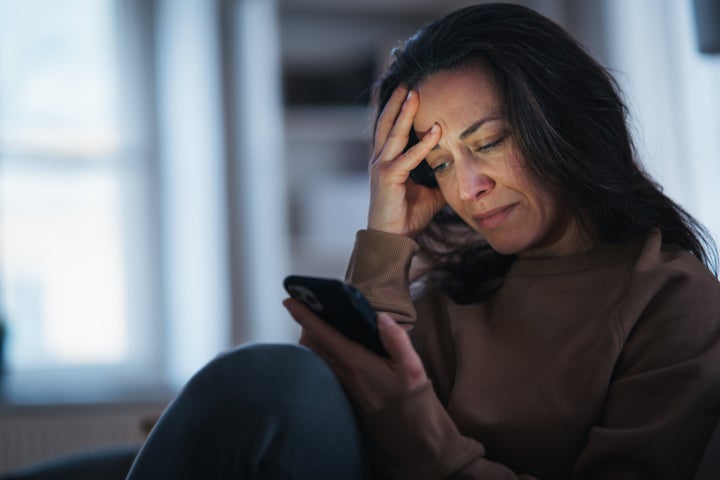
The false intimacy of text-based relationships can make pauses or gaps in talking so much more upsetting.

Halfpoint Images via Getty Images

The false intimacy of text-based relationships can make pauses or gaps in talking so much more upsetting.

“Instead, we can find ourselves diving headfirst into emotional enmeshment,” Berg adds. “Boundaries — both energetic and emotional — become blurred, and we’re starting off in codependency, fantasy and expectation.”

Psychologically, she said, this sets us up for attachment dysregulation. “Our nervous systems become hijacked by anticipation, constantly scanning for connection or perceived rejection, and we are caught in an infatuation loop that will inevitably end — whether we end up together or not.”

Building on this, psychotherapist Israa Nasir explains how the dopamine feedback loop in texting and dating apps specifically keeps us focused on external rewards ― likes, replies, matches ― rather than turning inward to consider if we truly like the person.

“When we rely on external validation (like someone texting back, matching with us, or complimenting us) we’re outsourcing our sense of self-worth to others,” she explains. “These moments of approval trigger dopamine spikes, reinforcing the idea that we are only ‘OK’ when someone else chooses us.”

The more we rely on others for reassurance, Nasir adds, the less we develop and trust our own internal coping mechanisms. Which means when someone doesn’t text back, “the brain interprets it as a threat, triggering anxiety, self-doubt and shame. This keeps us in a reactive loop, instead of a grounded state.”

Nasir also points out that dating apps are deliberately “gamified,” designed like slot machines to maximise user engagement, not necessarily emotional well-being. “This behavioural design wires us for compulsive checking and distorted thinking patterns, making it harder to form secure, healthy connections.”

Making Peace With The Lack Of ‘Ping’

So what should you do if you feel panicked or dysregulated when you don’t hear back from a romantic interest within a certain timeframe?

Berg recommends seeing the trigger as an invitation to grow. “When that familiar panic sets in, the first thing to do is pause. Breathe. Call it out. You might even say out loud, ‘Here is my old story. I feel it, but I know it’s not real.’ From here, you can now challenge the story instead of letting it run the show. I often say that we don’t have control over our first thought, but we do have control over our second.”

Berg admits that challenging these habitual, negative thought patterns is a skill that is required in any phase of a relationship but especially in these early moments. “It can also help us to remember that love, real love, isn’t built in instant replies — it’s built in trust, in patience, in spiritual growth.”

And remember that a pause in communication isn’t always a rejection. “Often, it’s just life,” Berg said. “Our lives are so fast-paced and busy. What’s more important is the work of learning to regulate and soothe our own nervous systems, not outsource our peace of mind or our sense of worth to someone else’s response times. This is the shift from what I call ‘reactive interest’ to ‘conscious interest.’ And it’s where real connection begins.”

Nasir offers practical guidance on navigating the ambiguity of digital communication, including differentiating between whether someone is actually ghosting you or simply someone needing space or living their life offline.

“Track patterns, not moments: Look at their overall communication habits. Were they consistently responsive before, or had replies already started slowing down? Consider time and context: If it’s been a few hours or even a day, they may just be living life offline,” she explains. “Ghosting typically involves a sudden, complete drop-off with no explanation over an extended period (usually a week or more).”

“Reduce time doom-scrolling or waiting for a ping. Instead, engage in meaningful, self-affirming activities: friendships, hobbies, creativity, solo travel or dining, rest. These fill your emotional reserves and make dating feel like a part of life, not the whole thing.”

– Israa Nasir, psychotherapist

If you suspect you’re really being ghosted, Nasir suggests asking directly, once. “If you’re unsure, it’s OK to check in with a grounded message. If there’s no response after that, it’s information, not necessarily personal failure.”

When nothing is guaranteed in love or life and when dating feels like it’s doing more harm than good now more than ever, Nasir further emphasises the importance of building emotional resilience.

“The most important thing is to make sure your entire life is not centred on romance or dating,” she said. “Reduce time doom-scrolling or waiting for a ping. Instead, engage in meaningful, self-affirming activities: friendships, hobbies, creativity, solo travel or dining, rest. These fill your emotional reserves and make dating feel like a part of life, not the whole thing.”

She also recommends building in regular check-ins with yourself after interactions: “How did I feel? Did I show up as myself? This centres your experience, rather than obsessing over theirs. Practice sitting with discomfort—like the unknown of a delayed reply — without reacting impulsively. Use grounding tools like breath work, movement, or journaling to stay present. This rewires your nervous system to see uncertainty as tolerable, not dangerous.”

As Berg puts it: “The goal of a relationship is not constant contact or infinite good feelings — it’s real connection, which can only occur slowly over time.”

Share Button

Your Kid Walks In On You Having Sex – This Is The First Thing You Should Say

If there’s one thing that comes with the territory of being a parent, it’s lack of privacy – and sometimes that means your child walking in on intimate moments.

It’s nothing new. Parents have been experiencing this intrusion since time began (spare a thought for the 69 dad!). But whereas once kids might’ve been hurried back to their rooms, never to discuss what happened again, these days some parents are being more open with their children about what they’ve just witnessed.

But how open should you be exactly?

I asked former sex education teacher Kathleen Hema to walk me through how’s best to respond when a kid walks in on you having sex – and the key takeaway is, it doesn’t have to be a big a deal as you think.

What to say when your child walks in on you having sex

Hema, who can often be found on social media teaching parents how to answer their kid’s sex questions, told HuffPost UK it’s important for parents to teach basic boundary setting early on in a child’s life.

This is because “when parents are setting and maintaining boundaries from an early age with their kid, it’s going to be so much easier to respond to a child walking in on you”.

Boundary setting can include teaching kids to knock on your bedroom door before entering (same goes for the bathroom) – and equally, you can reciprocate by knocking on their bedroom door.

This means that when a young child walks in and you’re in the middle of business, you could say: “Are you OK?” and the child might respond with “yeah” or “I thought I heard something”.

At this point, you can say: “OK. I didn’t hear you knock. It’s respectful to knock before entering someone’s room. Since you are OK, can we practice knocking? Can you go back out and shut the door and knock?”

This simple response gives parents a moment to gather themselves and put their clothes on, Hema suggested.

“When you go to the door and open it, you must praise them for knocking and then you can ask them a question,” she added.

You could say something like, “Great job knocking! I really appreciate you knocking when the door is closed. What’s up? I wanna help you. What do you need?”

She continued: “This type of response is positive and immediately focuses the conversation back to why they came into the room in the first place. For many young kids, that’s enough! They tell you they need a drink of water and you assist them with that request and walk them back to bed.

“Oftentimes with young kids, they don’t have any questions because they may not have really seen anything.”

Sometimes, with primary school-age children (aged five and up), a bit more explaining might be needed as a child might ask their parent “was [name] hurting you?”.

Hema said this is a common question from a young child when this situation happens and said parents can respond by saying: “Nope. [Name] wasn’t hurting me. I am OK. When adults are alone, we sometimes do adult activities and it may have looked uncomfortable to you, but I will reassure you that I am OK.”

You can then redirect them with another question: “Do you need anything else before going back to bed?”

You don’t even have to call it sex. In fact, Hema said she recommends for parents to say “adult activities” because kids understand this.

“There are loads of things that kids observe as ‘adult stuff’. For example, drinking coffee or alcohol, driving, going to work. This is just another thing they can tack on to this list,” she said.

If your child does have questions, the crucial thing is that you stay calm and relaxed while you have these conversations. Parent Map advises using “factual, plain language” and answering any questions a child asks “without supplying additional information or answering questions the child isn’t asking”.

And maybe a trip to B&Q for a bedroom lock could be a wise move afterwards, too.

Share Button

Is It OK To Give A Sex Toy As A Gift?

A sex toy can be an exciting and confidence-boosting gift to buy for yourself.

But is such an intimate item ever an appropriate thing to give as a gift to someone else, particularly if you don’t have a sexual or romantic relationship with them?

According to sexologists and relationship experts, the answer is… it depends.

Who should you give a sex toy to?

“Gifting a sex toy to a friend can be a fun, empowering gesture – but context and consent matter,” said Rachel Needle, a licensed psychologist and co-director of Modern Sex Therapy Institute.

“It’s usually appropriate when you have the kind of relationship where sex and pleasure are openly discussed, and you’re confident they’d receive it in the spirit it’s intended: playful, supportive, or celebratory.”

She recommended considering their sense of humour, comfort level and any cultural or religious beliefs that might influence their response to such a gift.

“Are they someone who celebrates their sensuality? Do they feel safe exploring? Trust your intuition, and always come from a place of love and respect,” said relationship therapist and sexologist Joy Berkheimer. “The goal of the gift should be to uplift, not to pry or push boundaries.”

Think about the closeness of your relationship as well.

“If your friendship is open, playful, and you’ve talked about sex before, then you probably have a green light, and a pleasure toy can be a great gift,” said Sadie Allison, a sexologist, author and founder of sex toy retailer TickleKitty.

“‘Giving the gift of pleasure’ is thoughtful and unique, and you’re almost always guaranteed a big smile out of it.”

Avoiding the awkward – and keeping it classy

Allison suggested giving your friend a sex toy as a gift for their bachelorette party or birthday – or as a self-love boost, perhaps after a breakup. As for specific products, consider if they’re more reserved or new to sex toys.

“In those cases, keep it subtle and pick a beginner-friendly product,” she said, recommending “a rechargeable bullet vibe that’s small and not intimidating” or pleasure lubricant.

“Have they expressed curiosity about toys or pleasure products?” Needle said. “If you’re unsure, err on the side of caution or opt for a gift card to a reputable sexual wellness store, which gives them the autonomy to choose.”

She emphasised that presentation is everything when it comes to giving such an intimate gift.

“Keep it classy, light-hearted, and respectful,” Needle advised. “Avoid public gifting unless you’re 100% sure they’ll love the attention.”

In larger group situations like a party, ask yourself whether your friend would be OK opening this gift in front of the other guests present.

“If you feel it may be awkward, give it to them on the side and let them know there’s something ‘frisky’ inside as a heads-up,” Allison said.

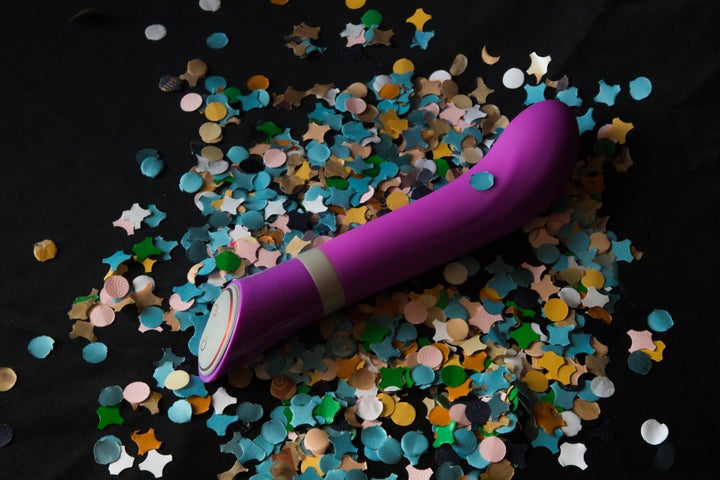
Context and consent are important when it comes to this kind of gift and how you present it.

Irena Sowinska via Getty Images

Context and consent are important when it comes to this kind of gift and how you present it.

You don’t need to go overboard with the gift wrapping, either. “Wrap it like you would any other thoughtful gift – no gag wrapping unless that’s clearly your shared vibe,” Needle said.

She also suggested including a little note with the gift, sharing why you thought of it for them – “because everyone deserves some self-love” or “you don’t need them” after a break-up.

“Try something like, ‘I saw this and thought of you, hope it adds a little spark and joy to your journey,’” Berkheimer said. “Keep it simple, genuine, and free of shame or judgment.”

If you think they’ll be surprised by the gift, a little card can provide some context and reassurance.

“If you’re nervous, pairing it with a more traditional item ― like bath products or a wellness-themed gift basket ― can soften the edges while still making a statement,” Needle said.

When it’s not a good idea to give sex toys

As noted, consent and context are incredibly important. Although times have changed and sex toys are less stigmatised, this kind of gift could cross boundaries, cause discomfort or even be considered harassment under the wrong circumstances.

If you don’t know this person very well and have never discussed intimacy or pleasure, you probably aren’t in the type of relationship where this would be an appropriate gift. If you’re on the fence, you could ask to gauge how they’d feel about that kind of present, but be respectful of the answer.

For someone with whom you have a professional relationship where specific power dynamics are at play, this kind of gift would also probably be a no-no.

Clinical psychologist and sex and intimacy coach Lori Beth Bisbey believes gifting a sex toy to a platonic friend can feel easy and uncomplicated if it’s someone you talk with about partners and sex. But advises to be mindful of situations where you have a different motive, though.

“If there is a flirtation between you, you need to be more careful about gifting a sex toy,” she said. “You need to be clear with yourself as to why you are giving this toy and what message you are trying to send. I would suggest thinking twice if the friend doesn’t know you have an interest in them.”

Share Button

Is This ADHD Symptom Messing With Your Sex Life?

Attention-deficit/hyperactivity disorder impacts many different aspects of life, from laundry habits to behavior at work. Another area where ADHD can pose major challenges is sexual intimacy, thanks to a condition known as rejection sensitive dysphoria, or RSD.

So what exactly is RSD, and how does it harm your sex life? Below, experts break down the concept, how it manifests and what you can do if the experience sounds familiar.

What is rejection sensitive dysphoria?

“Rejection sensitive dysphoria, or RSD, means having an intense negative emotional reaction ― often emotional pain ― to real or perceived instances of rejection, dislike or critical statements by others,” Dr. Lidia Zylowska, an associate professor at the University of Minnesota School of Medicine and author of The Mindfulness Prescription for Adult ADHD, told HuffPost.

“It often means being vigilant and sensitive to others’ negative reactions, trying to pre-empt them, and having difficulty shaking off the intense negative feeling triggered by feeling rejected or disliked in some way.”

RSD is not a formal designation in the DSM-5, which is the official handbook for mental health diagnoses, but the term has been popularised by psychiatrist Dr. William Dodson. As Dodson writes, this kind of extreme emotional sensitivity and pain can be triggered by someone’s perception of criticism or rejection ― or “by a sense of falling short ― failing to meet their own high standards or others’ expectations.”

RSD is particularly common in people with ADHD, as they tend to struggle with emotional regulation due to imbalanced dopamine levels and brain activity.

“One significant reason for its prevalence in ADHD is that the very nature of ADHD symptoms can lead to more frequent experiences of perceived or actual criticism and rejection,” said clinical psychologist Cristina Louk. “Impulsivity, difficulty with social cues, struggles with organization, and challenges in completing tasks can inadvertently lead to misunderstandings, critiques, or situations where individuals with ADHD feel they have fallen short.”

“Sexual intimacy demands profound vulnerability, which directly clashes with the intense fear of rejection and criticism that defines RSD.”

– Cristina Louk, clinical psychologist

Many neurodivergent individuals also have a long history of being bullied. All of these lived experiences can make the brain hypervigilant to any hint of dissatisfaction. For someone with RSD, even a seemingly neutral or minor interaction can trigger a disproportionate emotional response.

“Events such as a someone being reminded to close a window, or that they forgot to put a dish in the dishwasher, or a boss requesting some edits to a report can trigger extreme emotional reactions, rage or sadness,” said J. Russell Ramsay, a psychologist who co-founded and formerly co-directed the University of Pennsylvania’s adult ADHD treatment and research program.

These feelings are swift and overwhelming, regardless of whether there’s anything negative happening in one’s present reality. A manager could be requesting a meeting to discuss positive feedback and new opportunities, but someone with RSD might immediately assume they’re being fired and start to spiral.

“Similarly, a fleeting memory of a childhood event, like being bullied or excluded, can trigger the same intense emotional pain as if it were happening in the present moment,” Louk said.

People often compare the sensation to a physical wound, like a punch to the gut, ache in the chest or crushing sensation, she added. These episodes of emotional distress can last for a few hours or even a few days ― thus affecting someone’s ability to function in daily life.

“To cope, individuals with RSD may withdraw from social situations entirely to protect themselves from potential hurt, further exacerbating feelings of isolation and low self-worth,” Louk said.

They may also take excessive steps to avoid any perceived negative reactions from others.

“People might become people-pleasers, being overly deferential to avoid negative feedback,” Ramsay noted. “They might avoid situations that they view as ‘risky’ or overcompensate by being very perfectionistic, trying to do everything right to avoid criticisms. Reactions and impulsive over-reactions can lead to arguments in relationships, including in the workplace.”

How can RSD impact your sex life?

“Rejection sensitive dysphoria can significantly complicate a person’s sex life, transforming what should be an arena of connection and pleasure into one fraught with anxiety and potential pain,” Louk said. “At its core, sexual intimacy demands profound vulnerability, which directly clashes with the intense fear of rejection and criticism that defines RSD. This often leads individuals to emotionally withdraw, making it difficult to fully open up and express authentic desires or needs, ultimately creating a chasm in emotional and physical closeness.”

Another challenge is the tendency to misinterpret neutral responses as personal slights: “A partner’s momentary distraction or fatigue might be perceived as disinterest or disapproval,” Louk said, “triggering disproportionate emotional reactions like anger, sadness, or immediate defensiveness, which can quickly escalate minor issues into significant conflicts.”

She noted that this hypervigilance can lead to a self-perpetuating cycle of dissatisfaction, with performance anxiety and physical difficulties with arousal and orgasm. Individuals with RSD might actively avoid initiating sexual encounters or even general physical affection to prevent any sense of failure or rejection.

RSD can create challenges in your sex life, but there are ways to overcome these issues.

Xuanyu Han via Getty Images

RSD can create challenges in your sex life, but there are ways to overcome these issues.

“For someone with RSD, a partner simply saying that they’re tired, or not in the mood may trigger a spiral of anxiety, fear, and shame,” said therapist Rachael Bloom. “Fear of rejection may also cause someone to prioritise their partner’s needs over their own, as they want to make sure to get it ‘right.’ It might also make someone less likely to openly share sexual preferences or desires. This lack of openness can significantly impact someone’s sexual satisfaction.”

Individuals with RSD might even sabotage their relationships to avoid potentially feeling hurt and rejected in the future. Psychotherapist and ADHD coach Terry Matlen noted that adults with ADHD often feel lingering self-doubt and insecurities from childhood and question whether their partner is even attracted to them.

“They may be overly sensitive about their looks, perhaps perceived imperfections, weight, ability to sexually express themselves, for example,” she said. “One can also shut down sexually and not enjoy the full experience as a way to avoid being rejected or criticised.”

How can you keep RSD from hindering intimacy?

There are things you can do ― both with a partner and on your own ― to keep rejection sensitive dysphoria from derailing your sex life.

“Educating yourselves together about RSD fosters deeper empathy and understanding, and preemptive communication about potential triggers ― perhaps establishing a ‘safe word’ for needed breaks ― can prevent escalation,” Louk said.

She also recommended reinforcing the strength of your relationship by focusing on non-sexual intimacy with shared activities and emotional connection. The positive effects can carry over into your sex life as well.

“Recognise that your automatic assumptions about how someone else sees you can be mistaken,” Ramsay advised. “Look at all the positive aspects of a relationship, including the physical relationship.”

Making an effort to understand your sensitivities and reactions can help you anticipate and prepare for them.

“The key to managing RSD is to regulate the emotions involved ― shame, guilt, fear,” said Billy Roberts, a therapist at Focused Mind ADHD Counseling. “One way to regulate emotions within a relationship is by being open about RSD. Identify when you’re experiencing RSD, and check the facts with your partner. For example, ‘I’m feeling worried that you’re mad at me. Is that true?’ You might also share that it would help if they delivered their response in a supportive manner.”

Roberts emphasised that vulnerability and honest communication foster security, which builds a better sex life.

“It is helpful to recognise what happens in the moment a feeling of rejection comes up ― how does the body reacts or tenses, what feelings or thoughts bubble up,” Zylowska said. In these moments, she recommended you try to practice calming yourself with deep breathing and self-compassion.

“Instead of thinking ‘I am not liked,’ give the benefit of the doubt ― ‘what if I am liked?’” she said. “It can be helpful to ask yourself if there is too much personalising of a partner’s behaviour ― ‘maybe their lower libido is not about me but something going on with them.’”

Try to practice being brave and honest about your preferences, even in small ways, as you have sex or talk about intimacy with your partner.

“Tell your partner of your emotional sensitivities and what words and behaviours are most troublesome,” Matlen said. “Educate your partner on RSD and how it’s related to your ADHD and that it’s not about them. And it’s important to be kind to yourself, to know that it’s part of how your ADHD brain works, and that you aren’t broken, weird, or psychologically weak.”

If you’re having issues, consider seeking professional help through individual and/or couples therapy. Don’t be discouraged if you need time to figure out the right multifaceted approach for you.

“In my practice, I treat RSD using a combination of cognitive behavior therapy, acceptance and commitment therapy and somatic therapies,” Bloom said. “People with ADHD absolutely deserve to have satisfying and authentic sex lives, and developing an awareness around certain fears and how they are impacting behavior is so important.”

Share Button

‘I Haven’t Had Sex With My Girlfriend Of 5 Years. Are My Instincts Off?’

There’s no set figure for how little sex is too little.

Indeed, some researchers found that only 26% of couples hit the once-weekly mark – speaking to The New York Times, multiple married pairs reported happy, sex-free marriages.

Couples counsellor and author of The Couples Communication Handbook, Raffi Bilek, previously told HuffPost UK the tipping point is usually “whatever amount is causing arguments”.

Writing to Reddit’s r/AITAH (Am I The Asshole Here) forum recently, site user renelemely suggested he was approaching that point of “resentment” with his partner.

“My girlfriend and I have never [had] sex, and it’s been almost five years. Am I the asshole?,” he asked.

We spoke to psychologist Veronica West, founder and lead Content Creator of My Thriving Mind, about when sexual incompatibility is a dealbreaker – and when it can be overcome.

The pair have never had sex

The poster shared that he’s never slept with his girlfriend in their five-year relationship.

At first, he said, he thought she was a little shy and wanted to go slow. “I was just excited for the time to come… and it still hasn’t come,” OP (the original poster) wrote.

When he tries to bring it up, she gets very upset and says the topic makes her feel extremely guilty. She has recently shared that the main reason behind the mismatch is her lack of sex drive.

“She is beautiful and smart, and she has a good job,” OP added. “We live together and her family love me. We do everything together, and I miss her when she’s not around.”

Still, he wonders if he “can live like this”, and feels increasing “resentment” towards his partner and is hoping she can change.

Sexual incompatibility doesn’t have to be a dealbreaker

West shared that even though a lot of couples struggle to address sexual incompatibility, it isn’t a “death sentence” for the relationship.

“What really counts is what both parties feel about it,” she added. “If both parties are willing to get curious and find options, there is room to build something positive.”

When asked whether most relationships can survive a complete sexual mismatch, she responded: “Sometimes, sometimes not.”

Compromise, she said, is not always a “meet in the middle” scenario when it comes to sex. “You can’t really compromise to have sex one and a half times per week and feel like you’ve won,” she advised.

“It’s about emotional and physical needs being met in a way that feels respectful and genuine.”

That can take the form of physical contact with no sexual expectation, experimenting with open relationships, seeing a therapist, and communicating your needs often.

“But no matter the route, the two of them have to actually agree, not begrudgingly go along and hope the other [one] of them will change their mind next month,” West continued.

“It becomes a dealbreaker when the mismatch turns into a chronic emotional ache.”

Refusal to discuss the topic is one red flag.

And, she ended: “If one partner starts to feel invisible or chronically rejected, or the other feels guilt every time the topic comes up, the tension is no longer just about sex – it is about identity, resentment, and unmet needs.”

Share Button

‘Dry Begging’ Is A Form Of Emotional Manipulation That Is All Too Common

Have you ever frustratingly mumbled to your partner that it “must be nice to have a partner who walks the dog” in hopes of them walking the dog more often? Or have you ever sighed that you’ll “just do the errands alone” even though you don’t want to? Turns out, you may be dry begging, a tool that people use in relationships of all sorts to get their needs met.

“Dry begging is when someone indirectly asks for something. There’s a need there, but they’re not stating it clearly,” said Aerial Cetnar, a therapist and owner of Boulder Therapy and Wellness in Colorado.

Instead of making a straightforward request or voicing a direct want, someone who is dry begging hints at a need or makes a vague complaint, Cetnar added.

So, instead of stating, “I wish we spent more time together,” someone who is dry begging may say, “Oh, I guess I’ll just stay home with the cat” — they’re hinting at their displeasure instead of addressing it.

“I’ll say it can come from a place of insecurity, fear or manipulation,” said Tori-Lyn Mills, a licensed clinical professional counsellor with Thriveworks in Columbia, MD. But it can also be something that folks grew up with and learned as a way to get their needs met, Mills added.

It’s also not an official psychological term that you’ll find in mental health literature, said Cetnar — “regardless, it’s very much a thing.”

While it can feel easier than directly asking for what you want, dry begging really isn’t meant for the long haul. Here’s why.

Dry begging weaponises emotion.

According to Mills, dry begging can weaponise emotion and empathy while also shifting responsibility in a situation. It can “even weaponise a person’s role as a partner, specifically in romantic relationships,” she said.

For example, in a romantic relationship, if one partner wants to have sex and the other doesn’t, instead of flat-out saying how they feel, someone who is dry begging may say something like “well, most people would be happy that their partner wants to have sex with them all the time [and] is attracted to them all the time,” Mills said.

This can put the other partner in a position where they feel guilty about not wanting to have sex in the moment. It can even put responsibility on them and make them think, “Oh, I should be happy about this,” Mills noted.

“It’s kind of like — I should be giving into this. That’s how dry begging can work,” she said.

If this sounds manipulative, it’s because it often is.

If it becomes a pattern, that’s a red flag for manipulation, Cetnar said. More, if the partner ends up doing things they don’t want to do without ever being clearly asked, it’s another red flag, she said.

“It’s not always manipulative — it certainly can be — but I like to give people the benefit of the doubt. First, look at what’s the intention and is it a pattern,” Cetnar said. Once again, if it’s a pattern, that is not OK.

If it’s just an occasional happening, it probably isn’t a big deal, she said.

In some cases (but not all), it can be a narcissistic tendency.

Dry begging is often linked to narcissism, and while both experts said it certainly can be a tool narcissists use to get their needs met, not everyone who occasionally dry begs is a narcissist.

“With narcissism, there is a high level of entitlement. You may get a hint or a prompt, but you could get a lot more covert demands,” said Mills.

In the case of a narcissist and dry begging, they may explicitly try to elicit guilt in their partner when they dry beg or weaponise empathy to get their partner to do what they want, Mills explained.

“Narcissists are typically seen as manipulative. And so there can be an overlap,” Cetnar added. Narcissists are often needy, too, she said, and dry begging is definitively needy behaviour.

“I’m just going to continue to passively say something or ask for something in the hopes that people will just give me what I want,” Cetnar added.

You're setting yourself up for resentment if you don't directly ask for what you want.

Akio Maeshima via Getty Images

You’re setting yourself up for resentment if you don’t directly ask for what you want.

It can lead to resentment.

Someone who engages in dry begging by saying things like, “Oh, it must be nice to have a husband who cooks” or “I guess I’ll just hang up these pictures alone” instead of directly asking for what they want may grow resentful of their partner when they don’t get the hints.

“Because they thinking that they’re asking for something, but they’re not,” said Cetnar.

“They’re not being very clear about it,” she added. Your partner may not understand that you’re asking for help with something or may even choose to ignore your passive statements.

People likely do this because they don’t know how to ask for what they want.

It can be uncomfortable to flat-out tell someone you want them to prioritize time together or need them to help around the house more, which can make dry begging a more comfortable way of dealing with the ask.

People who tend to dry beg may be doing it out of a place of insecurity, said Mills. They may not want to get their feelings hurt if they hear a “no” to their request or may even worry that they’re asking for too much.

For some people, this is, once again, a learned behaviour.

“It’s common that people are not really taught how to ask for things in a way that’s really clear and direct,” said Cetnar. “Sometimes they resort to dry begging because it feels like it’s a hint and they’d rather it be a hint that gets rejected than a clear ask to be rejected,” she noted.

In the end, dry begging comes from a place of needs needing to be met, Cetnar said, and is likely common in those who have trouble expressing their needs and vulnerabilities.

“This could be coming from a certain person who grew up in an environment in which maybe it was a bit uncomfortable to ask for things,” she noted.

Here’s how to deal with dry begging:

The first step to dealing with dry begging, whether it’s you doing it or your partner, is awareness. You can’t fix a behaviour if you don’t know it exists.

If you dry beg your partner, ask yourself how you can start implementing direct communication, said Mills, and consider what needs of yours aren’t being met before you make a passive comment.

If you feel lonely, consider how to ask your partner to spend more time with you instead of hinting at it, Mills noted.

You can even tell your partner you’re working on this so they know to expect more direct communication and direct asks from you, Mills said.

“That way, they can practice and they can have feedback and feel supported in trying to make a positive change,” she said.

If you are in a relationship with someone who is dry begging, start to notice it and acknowledge when someone is making a request by saying something like “Is this a request? It sounds like you are asking for something here,” Cetnar said.

This can open up the conversation and encourage your partner to explicitly state their needs so there is no guesswork or resentment.

If your partner isn’t willing to change and continues to manipulate you, it’s worth considering if the relationship is worth it. But, for someone who does this as a learned behaviour or because of difficulty expressing emotions, there is hope for change.

Share Button

Is ‘Marital Hatred’ Really Normal? I Asked Experts

“What is ‘normal marital hatred’?” podcast host Tim Ferriss asked on his show recently.

Therapist Terry Real, who coined the term, explained: “The essential rhythm of all relationships is harmony, disharmony, and repair… when you’re in that dark phase, you hate your partner.

“That’s OK. It’s part of the deal… don’t sweat it. You can get through it.”

I have to confess, though I’m not married, I’ve never once felt I hated my long-term partner. I felt a little shocked by the term, but maybe I’m missing a trick?

So, I spoke to Dr Carolina Estevez, a clinical psychologist at SOBA New Jersey, and BACP-registered psychotherapist Daren Banarsë, who owns a private practice in London, about whether the term is as wild as I find it.

Hatred is a strong word, but flickers of frustration are normal

“You can love someone deeply and still have moments where you think, ‘Wow, you are driving me absolutely nuts right now,’” Dr Estevez said.

“That doesn’t mean your relationship is falling apart – it usually just means you’re two people who spend a lot of time together and deal with life’s stress side by side.”

Then, she explained: “There is also relationship OCD, where someone gets stuck obsessing over their relationship, like questioning if they love their partner or panicking when things are not perfect.”

It’s very intense and can be “distressing” – you should seek expert help if you suspect you have it.

Banarsë agrees that “momentary, intense frustration or anger towards a partner is surprisingly common and normal in healthy relationships,” adding he often sees couples “catastrophising” these moments.

“The myth of constant marital bliss can create unrealistic expectations, where any conflict is mistaken for evidence that something is fundamentally wrong,” he added.

How can I tell if my “marital hatred” is concerning?

Both experts agree that flat-out, long-lasting “hatred” is a red flag.

“If those negative thoughts start piling up or turning into constant resentment or emotional distance, that is when it is worth paying attention,” Dr Esteves shared.

″‘Marital hatred’ – if we are talking about those occasional flashes of annoyance or ‘I need five minutes away from you’ – can be part of a normal, functioning relationship [but] when those feelings take over or go unspoken for too long, they become a problem.”

For Banarsë, “the concerning threshold isn’t whether negative feelings occur, but rather their pattern, duration, and impact”.

He explains: “When contempt becomes the dominant emotion, criticism outweighs appreciation, or when negative thoughts lead to emotional withdrawal lasting weeks rather than hours, these are legitimate warning signs.”

So, while he wants to dispel the “myth of perpetual harmony” in marriage, he also suggested regular, overwhelming “hatred” for your spouse is not “normal”.

Share Button

I’m A Sexologist – Here’s Why Sex Is So Much Better (And Wilder) On Holiday

With June just around the corner, Brits are about to head into peak holiday season.

And according to data from sexual wellness company LELO, 80% of us think some time away from home would reinvigorate our sex life, while 31% say going abroad makes them more adventurous in the bedroom.

We spoke to licensed sexologist, relationship therapist, and author at Passionerad, Sofie Roos, about why going on your hollibobs makes you so much more open-minded.

Part of it is plain ol’ free time

“We simply have more time” and fewer stresses on holiday, Roos says. This leaves us not only more able, schedule-wise, to engage in the horizontal tango, but also more open to be “inspired” (oo-er).

Then, there’s the fact that you’ll likely be in a better, more playful mood.

“We are the best versions of ourselves [on holiday], making it much easier to get passionate [and] wild and put in the energy in the sex that we normally don’t have the time or lust for,” the sexologist tells HuffPost UK.

We also reframe our relationship and our partner as we take in new sights, sounds, food, and even weather, seeing our beau and ourselves in a (sometimes literal) different light.

“We’ve got the sunrise and warmth making us feel better, we eat great food, are travelling and exploring new places,” Roos says.

This “creates a perfect storm that leads to great opportunities for feeling extra passionate, attracted and hornier – making the sex more fun, enjoyable and interesting!”

Can you recreate that at home?

Speaking to Yahoo Life, sex and relationship expert Natalia Baker from All Things Worn shares that you don’t need to wave goodbye to friskiness when you land back home.

Allocating relaxation time, planning spontaneous dates, choosing to carve out quality time together, and openly discussing your fantasies with one another can all help, she says.

“Being transparent about what you both enjoy and want to try can help recreate the excitement and anticipation felt on holiday,” she recommends.

Share Button

I Found My Perfect Match With The Help Of AI. Here’s What You Should Know.

Subject: You have a match!

I wanted to share some exciting news with you – we’ve found a match I think you’ll find intriguing. He’s a disciplined and driven entrepreneur with a wonderful sense of humor. He has many interesting ideas and is an excellent conversationalist. Our AI models suggest this is a great match for you. The next steps are simple…

My eyebrows raised slightly in surprise. They’d found someone.

Like most young women, I have been through my fair share of dating ― lots of fun, but lots of frustration. So three months ago, I’d decided to begin working with a matchmaking service that claimed to leverage AI models to find your perfect match.

The AI model allegedly would be able to digest my questionnaire answers and interpret all my desires in a deeper, more science-based way than any simple dating site ever could. Lisa, my matchmaker, would partner with the model to provide a human touch, using her expert judgment to validate its findings. With an “all your boxes checked” guarantee, the service seemed foolproof.

The process was rigorous and far more in-depth than any dating app I’ve ever used. I worked through the seemingly endless, mostly invasive questions about my life ― what I valued, my relationship with my family, whether I was willing to leave New York. I submitted everything from my philosophies on the afterlife to personality test results, stopping just short of giving them my blood type and mother’s maiden name.

I thought I had answered it all until I reached a line that stopped me in my tracks: “Please upload photos of your ex.” I racked my brain, sifting through all the frogs I’d kissed. Did that one guy I’d met on a whirlwind night in London and then never spoken to again count as an “ex”? The memory of his deep-set eyes convinced me that yes, he totally did.

The author at dinner in New York City.

Photo Courtesy Of Katy Pham

The author at dinner in New York City.

There was something that felt revolutionary about inputting all my fantasies into Lisa’s “build-a-man” factory. I didn’t have to just wander Fifth Avenue blindly, hoping to bump into whoever was out there. Here, I could “Weird Science” a man: give him Andrew Garfield’s eyes, Chris Evans’ arms and Chace Crawford’s glistening smile. So long as my dream man existed, AI would connect the dots and bring him to me.

Somewhere between listing out dealbreakers and sending in photos of celebrity crushes for AI analytics, I thought to myself, Maybe this is the future.

And if it wasn’t the future, well, maybe it was mine.

“OK guys, just close your eyes and tell everyone where you see yourself in five years,” my friend Lexi gushed to the rest of “the council” — the four of us girlfriends who had been joined at the hip since college. Lex closed her eyes and saw California, gentle coasts touched by the waters she grew up in. So, she packed up her entire life, a full decade spent learning in the heart of New York City, and headed home.

I’ll never forget closing my own eyes against the salt air at the pier. Perhaps I was looking for a place, like she was. But it wasn’t what came to me. I sat in the dark behind my eyelids and was overwhelmed with the bittersweet loneliness that comes from living in a place like New York. It is a place built on comings and goings, on the guaranteed peace in the knowledge that nothing is permanent and the sadness over the same.

When my eyes closed, I did not see a place. I saw a home. A sense of belonging, not with a specific skyline to anchor me, but a person. That sense of homecoming people talk about when they find the person they want to build a world with.

I opened my eyes against the sun.

Dylan had messy hair. It wasn’t the kind that said he’d just rolled out of bed; it was the kind that said he’d spent time in front of the mirror to make it look that way. A little scar over his eyebrow made him look tougher than he really was. His dark brown and sharply intelligent eyes sparkled with wit, enthusiasm and passion.

Two of my previous matches hadn’t materialised, either due to distance or lack of interest, but this one had snagged something in my chest the moment I’d looked at his profile. Our values matched everywhere that mattered, our interests overlapped when they needed to and diverged just enough to give us space to teach each other new things. He seemed, as the digital model had promised, built for me.

Walking up to the quaint little wine bar he’d picked, right in the heart of West Village, I was insanely nervous – something about science and a matchmaker telling you they’d found you “the one” laid the pressure on thicker than Hinge ever did. And in person, he did not disappoint.

I’d thought the foreknowledge would make things easier. We could sweep aside little nothings like, “So, what do you do for a living?” and dive right into each other’s hopes and dreams and fears. But my hands were slick with the immediate worry and thrill of intimacy that I’d never known could exist between two people who hadn’t had so much as a conversation.

I could look into his eyes and know what no one else in this bar knew. I knew he studied film and loved the outdoors; I knew his childhood pet’s name, his low preference for pizza (or gluten in general). I knew what kind of parenting style he planned to use one day and for how many kids.

That little twinkle people have, when they’ve been together for years? The kind that has them communicating secrets across a crowded room? We had it. We knew everything. I spent half the date trying to determine whether I was supposed to go all in or pretend I didn’t know anything about him. But he knew I knew. It was unclear what rulebook we were supposed to be playing by.

Regardless, I remembered: Somewhere, some digital force of omniscience had rubber stamped the date, guided by a human hand. We were supposed to be here, meeting each other. It was green flags all the way down.

It turned out, of course, that there was more to learn. A person is more than a collection of ideas on a profile. Dylan had grown up in New York, the eldest of three kids. He was well spoken in a way that pointed to his privileged background, with the wild spirit (and resources) that meant that he could — and did — try out every single hobby that had ever piqued his interest. Still, he was impossibly down to earth.

Not enough glasses of wine into the date to be tipsy, he looked at me with an arched eyebrow and confessed, “I actually scored really high on my SATs. I know it’s been over a decade, but sometimes, I still try to work it into first date conversations.”

A laugh bubbled out of me. A man coming out on the first date with the exact size of his SAT score was something that, if I didn’t like him already, I might have been put off by. But I did like him, so the dorky flex was endearing. So much about him was, and as the first date jitters wore off little by little, we started to relax into each other.

Date one turned into date two. Which turned into three, and, well, you know the story.

“You’re colour blind? How did you find out?”

“Well, the fluorescent pink pants I brought home from the mall in middle school were hint number one.”

“If you were to be stuck in a time loop and had to pick one person to tell about it, who would it be?”

“My sister. We’ve always been close; she’s incredible. I can just trust her with anything. She’d drop anything to … uh … help me out of a time warp. Honestly, I also think she’s my best shot at getting back to reality.”

He was everything I had asked for, everything I believed a man should be ― kind, smart, funny, thoughtful and protective … all handed to me by an algorithm.

I’d started dreaming already — not of electric sheep, but of digitally borne boyfriends.

On our last date before I left the country to spend a couple weeks in Asia, we went bowling. I am not a great bowler, but I’m never afraid to fail. This one, I wanted to win, because we’d decided to make it interesting. If I won, he’d write me the story of how we met from his point of view. If he won, I simply had to plan our next date.

I got one strike. The love letter was not to be.

But I’d started planning the date the second I’d seen the final numbers. After all, what’s the point of loving if you are afraid to dive in with gifts and plans that say, “I listen, I care, and I want you to feel special.”

He kissed me.

I dreamt about tomorrow.

I got on the plane.

The author during her trip in Asia.

Photo Courtesy Of Katy Pham

The author during her trip in Asia.

The photo dumps came as we’d planned them — vibrant and fun and full of everything I’d started falling for Dylan over. This was a man who loved life and didn’t say no to new experiences. I responded in kind, with snapshots with friends, family, tasting exotic dishes and walking along the coast. Sets of images sent back and forth that reminded us of who we were and that we were in this.

I’m not sure exactly when the pictures started coming less often. Texts got sparse, fewer snapshots were traded from phone to phone, questions about the aforementioned special date went uncommitted to. The maybe embarrassingly detailed dreams I’d started having about tomorrows with him began to blur.

Things with Dylan died slowly, quietly, without fanfare or the need for hauntings. The modern solution I’d thought was going to revolutionise dating ― AI ― was eclipsed by another modern epidemic: ghosting. In the end, we were left with the substance of most ghost stories: unfinished business. But not the kind that needs to be tended to before each party can move on.

The connection with Dylan was gorgeous and real and temporary, like some things are. I suppose, when it comes to dating, when you’re not so worried about running into a match in a neighbourhood coffee shop or at a mutual friend’s party, it’s easy to just … log off. You don’t bid a website a lengthy farewell when you decide to stop playing; you simply don’t come back.

These days, it seems everywhere you turn, someone claims they have finally cracked the code, uncovered the hidden formula to our heart’s desire. The certainty is so contagious that for a fleeting moment, it feels like you can join them at the edge of some great revelation. But reality is their certainty is something we rent, not own, giving us a falsely fleeting sense of control in a world that remains stubbornly unpredictable.

I wonder, sometimes, if I’m wrong. Maybe my future won’t come to me generated by an all-knowing digital system. Maybe it will come via a chance meeting on the street, in line behind a stranger. Is it sillier to trust an algorithm or a fortune teller who claims they know the secrets of a chaotic universe? Or to trust the chaotic universe itself?

The tall man in front of me, with the lopsided grin, heather gray T-shirt, and worn paperback falling out of his bag, steps to the front of the line to order his coffee. He orders it the way I do.

My phone begs for my attention.

I look away from him and give it what it asks.

There’s an email in my inbox.

You’ve got a match!

Share Button

We Talked To A Couple Into ‘Hot Husbanding,’ A Kink Where Sharing Is Caring

Sharing is caring. Or at least that’s how people who are into “hot husbanding” feel.

The kink got mainstream attention last month, when comedian Nikki Glasser went on “The Goop Podcast” and talked about “sharing” her on-and-off-again boyfriend, Chris Convy, with other women.

Glasser went on to liken her kink to “lending my friend a hairdresser.”

Glasser and Convy’s arrangement isn’t a two-way street; the comedian, who hosted the Golden Globes in January, has said in the past that she’s not looking to have sex with other men, though it “might be [her] thing someday.” If Glasser’s boyfriend was into “sharing” her, they’d be hotwifing. (The kink is also sometimes called “stagging.”)

What, exactly, is hot husbanding? There are myriad ways couples (and single) get their hot husbanding rocks off, so no one definition could encompass it all. But broadly speaking, “it’s putting the focus on a partner’s desire to show off their hot husband,” said Heather McPherson, a marriage and family therapist and sex therapist in Austin, Texas.

“A hot husband is someone that is so attractive and ‘hot’ they function almost like a status symbol for their partner,” McPherson said. “The partner may also take pleasure in sharing him with others as part of the experience.”

For some, it might just be talking about the idea with their partner that’s a turn-on. Others venture out and find other women to have sex with their partners.

“From the male’s point of view, it’s difficult to say, ‘hey, I’ve got a partner, but let’s go out and have a sexual encounter.’ Most women just think I’m out to cheat on my partner.”

– Chase, a 48-year-old “hot husband”

The dynamic exists in the same kinky universe as cuckoldry or cuckqueandom ― where a man (a cuckold) or woman (a cuckquean) takes pleasure in watching their partner have sex with someone else. (Or hearing details of their partner’s sexual intimacy with a third party or established partner.)

There’s consent and boundaries with both kinks, but they differ in one key way: Those into hot husbandry aren’t generally turned on by any humiliation aspect of being “cheated on” the way a cuckquean is, McPherson explained.

Oftentimes, partner swapping is about having subversion in safety, said Jess O’Reilly, a sexologist and host of the “Sex With Dr. Jess” podcast.

“With the support of a caring partner, you get to challenge monogamous norms and break taboos,” she told HuffPost.

Sitting back and watching while your boyfriend or husband does all the work can be kind of hot, too.

“If you’re the voyeur or supportive partner, you don’t have to be the center of participation or attention. You can relish in the erotic without physically articulating,” O’Reilly said.

It varies, but for most women into hot husbanding, they don’t want their partner getting emotionally involved.

That’s true for Glasser, who explained that an emotional connection is off limits for her boyfriend. That said, for her, she does feel some rivalry toward the other women: “I think it’s definitely the competition thing of like, ‘Ooh, maybe he will leave me for her. I gotta step it up.’ I kind of like that,” she said on the podcast.

"With the support of a caring partner, you can challenge monogamous norms and break taboos by engaging in erotic pleasure with a third party," said Jess O’Reilly, a sexologist and host of the "Sex With Dr. Jess" podcast.

CSA-Images via Getty Images

“With the support of a caring partner, you can challenge monogamous norms and break taboos by engaging in erotic pleasure with a third party,” said Jess O’Reilly, a sexologist and host of the “Sex With Dr. Jess” podcast.

What it’s like to have ― and be ― a “hot husband”

To delve deeper into hot husbanding, we spoke to Chase, 48, and Scarlit, 43, a couple who’ve been together for 18 months and are exploring their kinky side. (Both asked to use pseudonyms to protect their privacy.)

Their desire to hot husband stemmed from them exploring threesomes together about six months into their relationship.

“I remember the specific moment when I was watching him with her. Don’t get me wrong, I loved being involved, but something about watching her reactions and his sexual fulfillment was mesmerizing,” Scarlit said. “Like he was my own personal porn star and I got to pick the partners.”

Scarlit said she felt intrigued, aroused and powerful in that moment ― and also a sense of compersion. (In the polyamory community, compersion is the pleasure you derive from your partner’s pleasure.)

“While I do sexually satisfy him, he also has the desire to see how he can make other women’s bodies react sexually,” Scarlit explained.

One thing Scarlit is not after is feeling like a cuck. Humiliation isn’t sexy at all to her, and the pair is careful about Chase potentially developing feelings.

“I just love watching the satisfaction he receives and provides,” she said. “I’m not at all interested in him having any relations with the female outside of the bedroom. Getting to know them on a personal level is a big turn-off. Even the thought of a date is very threatening to me.”

But watching another woman have the “the best sex of her life” and give thanks to Scarlit after? She’s definitely into that: “Mentally, it’s more ‘I allowed that, and you are welcome,’” Scarlit said. “It’s the power of my position. That I was able to provide that.”

Chase ― the hot husband ― admits that at first, hearing that his new girlfriend wanted to “share” him felt like a trap: He’d been asked to do something along the lines of cucking in the past, but in both cases, he suspected the women were prone to jealousy so he shied away from it.

“The difference between them and Scarlit is that she actively went out and pursued a third for us,” he told HuffPost. “So as we’ve explored it more, the more excited and aroused Scarlit has gotten. She’s been actively looking for cuckcake.” (That’s the term for the female partner the hot husband has sex with.)

Before hot husbanding, O'Reilly said to "talk more generally about what turns you on and off and be curious and open about concerns, hesitations and questions you may have."

CSA Images via Getty Images

Before hot husbanding, O’Reilly said to “talk more generally about what turns you on and off and be curious and open about concerns, hesitations and questions you may have.”

To find these women, the couple has engaged in dozens ― maybe hundreds — of conversations with people on Reddit, but very few have resulted in actual dates. They opened FetLife accounts (a social network for the kink community) but found that women wanting to be cuckcakes were few and far between.

“We attempted to open an account on Tinder, the app known for hookups, and it turns out they ban you permanently if you try to look for threesomes or cuckcakes,” he said.

And most women on Bumble are looking for relationships with emotional stability and longevity, not strictly sexual relationships, Chase said.

“From the male’s point of view, it’s difficult to say, ‘Hey, I’ve got a partner, but let’s go out and have a sexual encounter,’” he told HuffPost. “Most women just think I’m out to cheat on my partner.”

That said, he does have a date next week with a woman Scarlit gave the green light to months ago, she said, “only because she’s moving out of the country.”

As that statement suggests, there’s some potential for complications here.

“For Scarlit, the fear is from me deciding to move on with one of these trysts,” Chase said. “So she’s asked that I not attempt to independently engage in sexual activities with someone from my past because they have access to me outside of her.”

She’s also free to read his communications with other women if she feels jealousy or if a woman tries to message him behind her back with longer-term goals.

“The thought of the date makes me very jealous, not the sex,” she said. “But it’s also a boundary I’m wanting to push to expand our kink more.”

As Chase explained, “We’re only looking for partners for us ― for me, physically and for her, mentally ― together. ”

Some basic tips on hot husbanding (or otherwise partner swapping)

If you’re hot husband-curious, it’s worth sharing your fantasies with your partner, O’Reilly said. “Talk more generally about what turns you on and off and be curious and open about concerns, hesitations and questions you may have,” she said.

Be realistic about expectations, too, because they may not always be met. (We’re pretty monogamous-centric in this country, and even genuinely hot husbands get turned down. Take it from Chase.)

It’s also important to be mindful of treating third parties with care, O’Reilly said. Their desires, needs and boundaries are just as important as yours.

From personal experience, Scarlit advised people to only explore the kink if they have full trust and open communication with their partner.

“I think there has to be a level of emotional intelligence in both partners, and a lot of understanding,” she said. “The best tip I got was ‘only move as slow as the slowest person in the relationship,’ and so far, that’s worked for us.”

Though new to hot husbanding, she and Chase have already learned a lot about themselves and each other from it, which she credits to all the transparency required for a healthy wife or husband swap. (Talking about how you want to watch your boyfriend go down on someone has a way of opening up all communication floodgates.)

“I’m surprised how it’s seemed to change our dynamic all the way around and make talking about anything feel so easy,” Scarlit said.

Share Button