Sabina Nessa: What Must Change To End Violence Against Women

via Associated Press

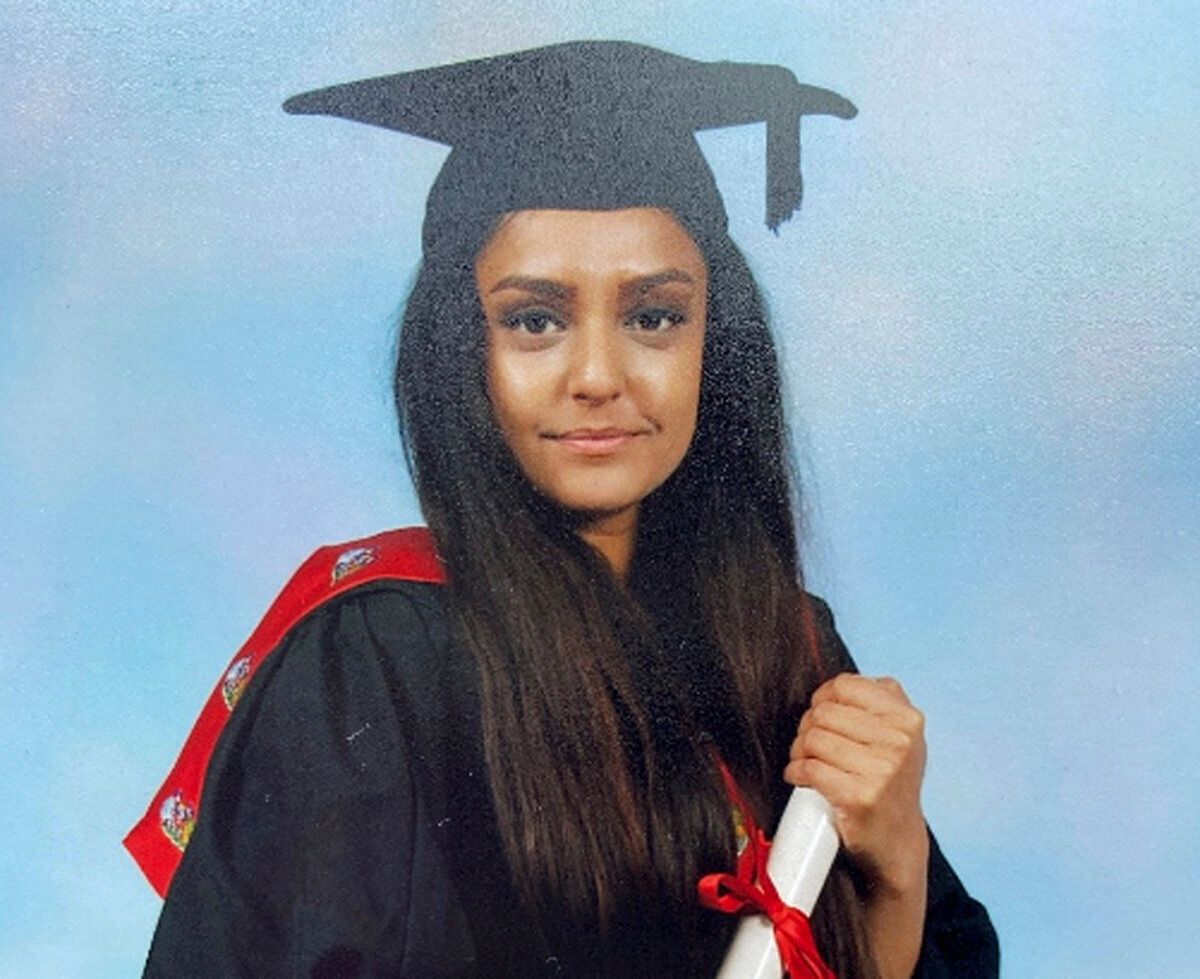
British police investigating the killing of a 28-year-old woman in London say they are probing whether she was attacked by a stranger.

Sabina Nessa was walking through a park to meet a friend at a bar, on a journey that should’ve taken five minutes, when she was killed a week ago.

On Thursday, the Metropolitan Police said a 38-year-old man had been arrested on suspicion of the murder of the 28-year-old teacher.

A vigil is being held for her on Friday night at Peglar Square in Kidbrooke Village, southeast London, close to where her body was found. 

Sadly, Sabina’s death is not out-of-the-ordinary. Around 200 women were killed last year in Great Britain, according to official figures.

But what’s being done to make sure women are protected?

Violence against women and girls (known as VAWG) in the UK is a “shadow pandemic”, according to sexual harassment lawyer Deeba Syed. She is calling for drastic change to attitudes, policies and policing so women can feel safe.

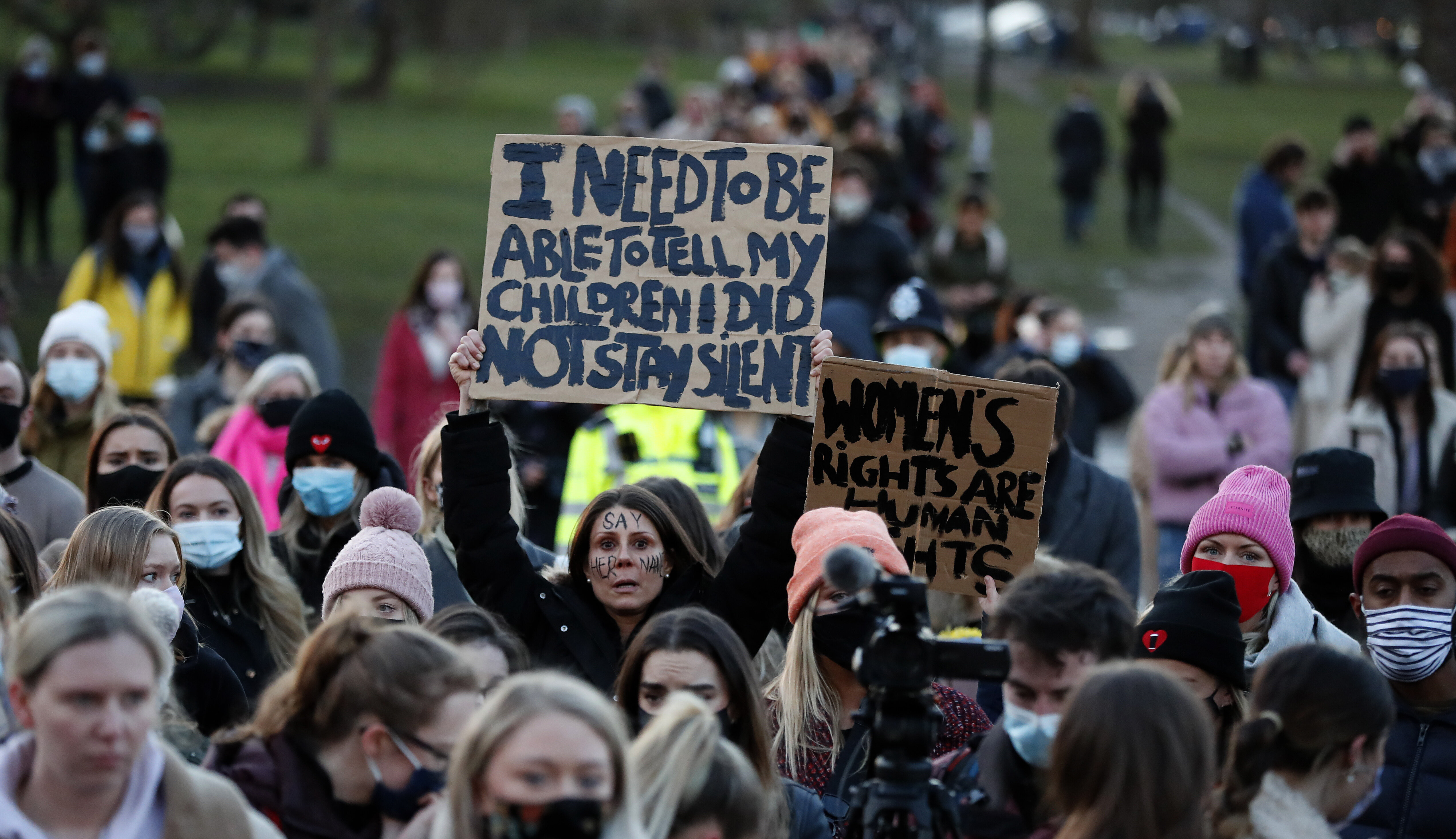
via Associated Press

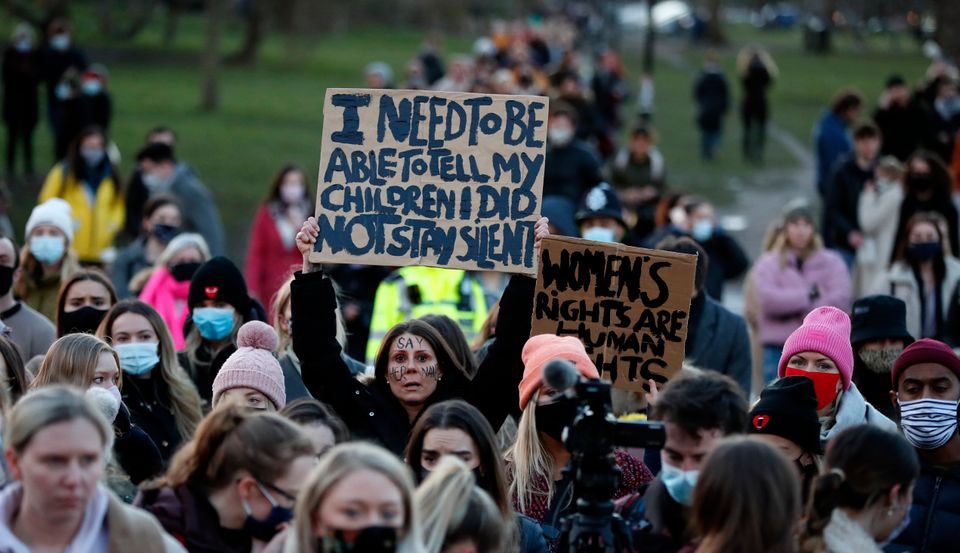
People gather in Clapham Common, in memory of Sarah Everard.

A sense of ‘urgency’

Syed believes violence against women and girls is “much more common” than people think.

“So many women have died in similar circumstances, there’ve been the high profile cases of Sarah Everard, Nicole Smallman and Bibaa Henry, and now this. But there have been so many cases in between that many people haven’t heard of.

“There’s not enough urgency in the way it’s being tackled and there’s not enough understanding of the ways that this impacts women. It impacts on all women, but particularly women of colour who are at a higher risk of violence.”

Syed questions whether measures such as more plain-clothed police officers and more street lighting – which have been proposed by the authorities – are really going to tackle the immediate issues women face.

“How many more women have to die before it’s seen as the urgent matter that
it is?”

Connecting strategies on violence and domestic abuse

“This is the shadow pandemic that’s just ignored,” says Syed.

Her thoughts are shared by Farah Nazeer from Women’s Aid, a charity fighting to end domestic abuse in the UK. 

“We know that women’s experiences of violence and abuse are interconnected,” says Nazeer.

“Strategically the government needs to respond to this. We are concerned that disconnecting the VAWG strategy from domestic abuse by creating a separate strategy is a backward step.”

The treatment of Sabina’s death has not been on the same level as others, and time and time again we see how victims from Black and minority communities do not receive the same level of attention and support. It is simply not good enough, and it has to change.Farah Nazeer, chief executive of Women’s Aid

And she especially wants to see better mental health support for women who have experienced violence with “specific ring-fenced funding for services run ‘by and for’ Black and minority women.”

Improving police understanding of the dangers faced by women

Some of the work Women’s Aid carries out includes working with police forces to deliver training around the response to survivors of domestic abuse.

But Nazeer says the reality of police forces understanding the dangers women face is still “inadequate”.

Syed wants to see every case taken “more seriously” when it comes to women going missing and similar incidents.

“After the Sarah Everard outcry, what we saw was the police telling women ‘don’t go outside’. We’re still in this place where we are telling women to moderate their behaviour to keep themselves safe when women should be able to walk down the street without having to fear for their lives.”

They’re not the only group calling for the police to do more.

A police watchdog, the HM Inspectorate of Constabulary, Fire and Rescue Services, recently said that violence against women should be treated as seriously as terrorism, and there are still areas where the police are failing women.

via Associated Press

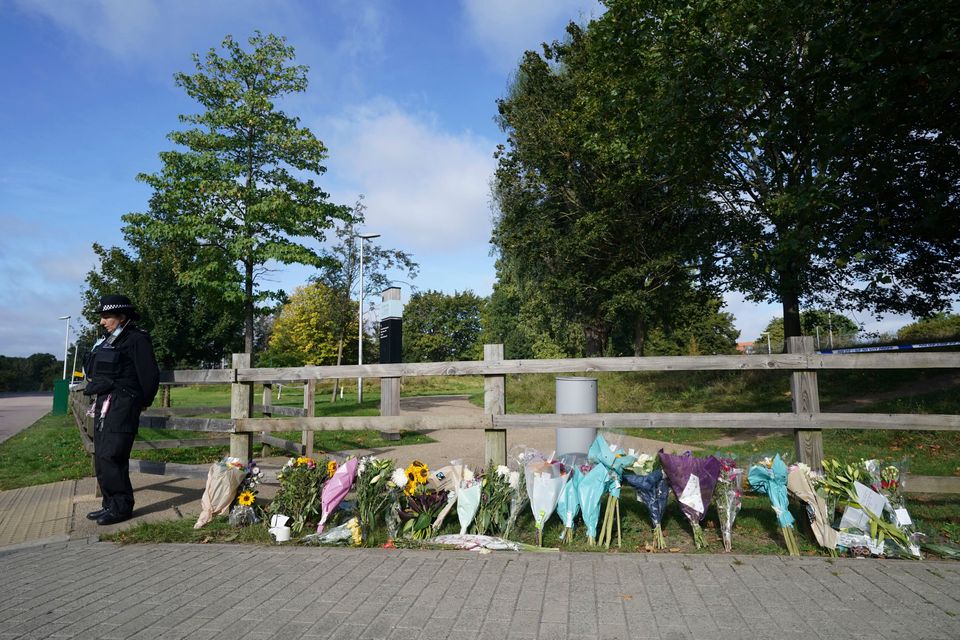
A police officer stands by floral tributes at Cator Park in Kidbrooke, near to the area where the body of Sabina Nessa was found.

The government must step up, and not wait for a social media outcry

In July, the government revealed plans to tackle violence against women and girls.

Following Sabina’s death, a spokesperson for the prime minister said the strategy would “drive long-term change” but many are sceptical.

“It’s taken grassroots activists and people on social media to demand that her [Sabina’s] story gets more attention,” says Syed. 

She thinks the government’s strategy doesn’t go “far enough”.

“VAWG services have been underfunded for years, it hasn’t been seen as important, and it’s not been seen as a priority.”

Stella Creasy, Labour MP for Walthamstow, believes women are “being let down” because of the lack of reporting and potential crimes not being investigated.

“We have to take on the culture within the police and politics that doesn’t recognise the warning signs in perpetrators behaviour and so leaves women in harms way.” 

Syed has used her own social platforms to raise awareness about stories like Sabina’s. Even though she feels a social media outcry shouldn’t be the only reason for the government to pay attention, she’s glad to see people online trying to help.

She said: “We saw in the Sarah Everard case how crucial social media was to raising awareness and creating a response.

“This is a long standing problem that needs an urgent kind of solution that shouldn’t just be based on social media outcry.”

Help and support:

If you, or someone you know, is in immediate danger, call 999 and ask for the police. If you are not in immediate danger, you can contact:

  • The Freephone 24 hour National Domestic Violence Helpline, run by Refuge: 0808 2000 247
  • In Scotland, contact Scotland’s 24 hour Domestic Abuse and Forced Marriage Helpline: 0800 027 1234
  • In Northern Ireland, contact the 24 hour Domestic & Sexual Violence Helpline: 0808 802 1414
  • In Wales, contact the 24 hour Life Fear Free Helpline on 0808 80 10 800.
  • National LGBT+ Domestic Abuse Helpline: 0800 999 5428
  • Men’s Advice Line: 0808 801 0327
  • Respect helpline (for anyone worried about their own behaviour): 0808 802 0321
Share Button

As Beyoncé Turns 40, We Look Back At Her Political Evolution

When she performed in front of the word ‘feminist’, some said she didn’t do enough. When she wore an outfit inspired by the Black Panthers, others said she did too much.

In her decades-spanning career, Beyoncé has been accused of being both too political and not political enough. As the icon turns 40, I’ve started to wonder why – and whether we’ve been too harsh on Queen B, who was just 16 when Destiny’s Child released their first single.

For Black women like myself, growing up and seeing Beyoncé elevate and making cultural strides gave me the push that I needed. From the age of five to my current age of 26, I’ve watched Beyoncé grow from a teenager to a mother-of-three, all while creating a legacy.

She has, some would say, become more involved in politics in that time. Others have argued that Beyoncé has always been political – you just didn’t see it. Either way, the way she presents her politics has certainly evolved, but it’s not been without its hiccups.

Professor Lucy Robinson, whose research spans the history of sexuality and identity politics, isn’t sure that matters. “We hold celebrities like Beyoncé accountable in impossible ways, as if they might not have changing ideas about the world around them,” she tells HuffPost UK.

To look at at Bey’s evolution properly, we need to start from the beginning, going back to the days of Destiny’s Child. “Girl power” was alive and kicking, with fellow girl bands including The Spice Girls and TLC bringing third-wave feminism to a new, ’90s generation.

The bands were still writing about love and men, but we started to see more women in music reclaiming their time and money – and Destiny’s Child were no different. In 1999′s Bills, Bills, Bills, we see the group talking about a man who becomes dependent on his girlfriend to pay for his expenses – until she has enough and demands he pays his own way. In Hey Ladies, also released in ’99, the song focuses on why women choose to stay with men who do them wrong. The singers state that if a man messes up, he has to go. The narratives are almost empowering, but still focus heavily on heteronormative coupledom.

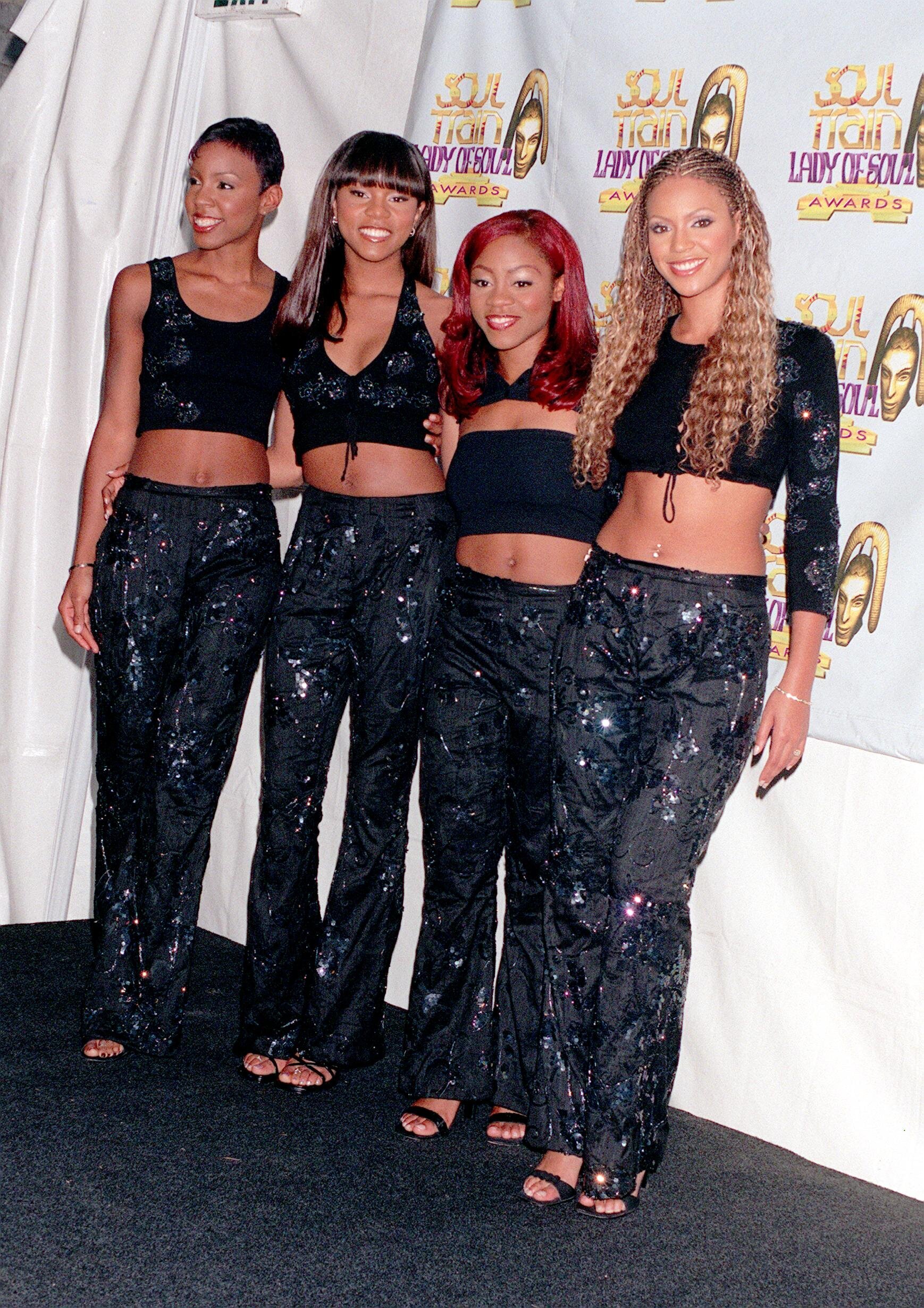
Beyonce with the original Destiny's Child band members. 

Beyonce with the original Destiny’s Child band members. 

But with their third album, titled Survivor, Beyoncé and the band members find new autonomy. The album starts with Independent Women and features anthems like Survivor, highlighting female strength, and Bootylicious, which celebrates the way the woman see themselves and their bodies.

As Beyoncé transitions into her solo career, her first songs – Crazy in Love and Baby Boy – focus on men again. Did her political empowerment take a backward turn? Professor Robinson doesn’t think that’s necessarily the case.

“It’s really interesting that we expect an individual to have a straight line of political development as if anybody does that, let alone a Black female artist,” she says. “We expect them to have this coherent development of political analysis, as if we can get inside their brain.”

By 2008, though, Beyoncé is telling the world what she’d do if she was born with male privilege (If I Were A Boy) and celebrating all the Single Ladies. Fast forward to her 2011 album ‘4’ – two years after she sang at Barack Obama’s inauguration – and she has millions of women chanting: “Who run the world? Girls.”

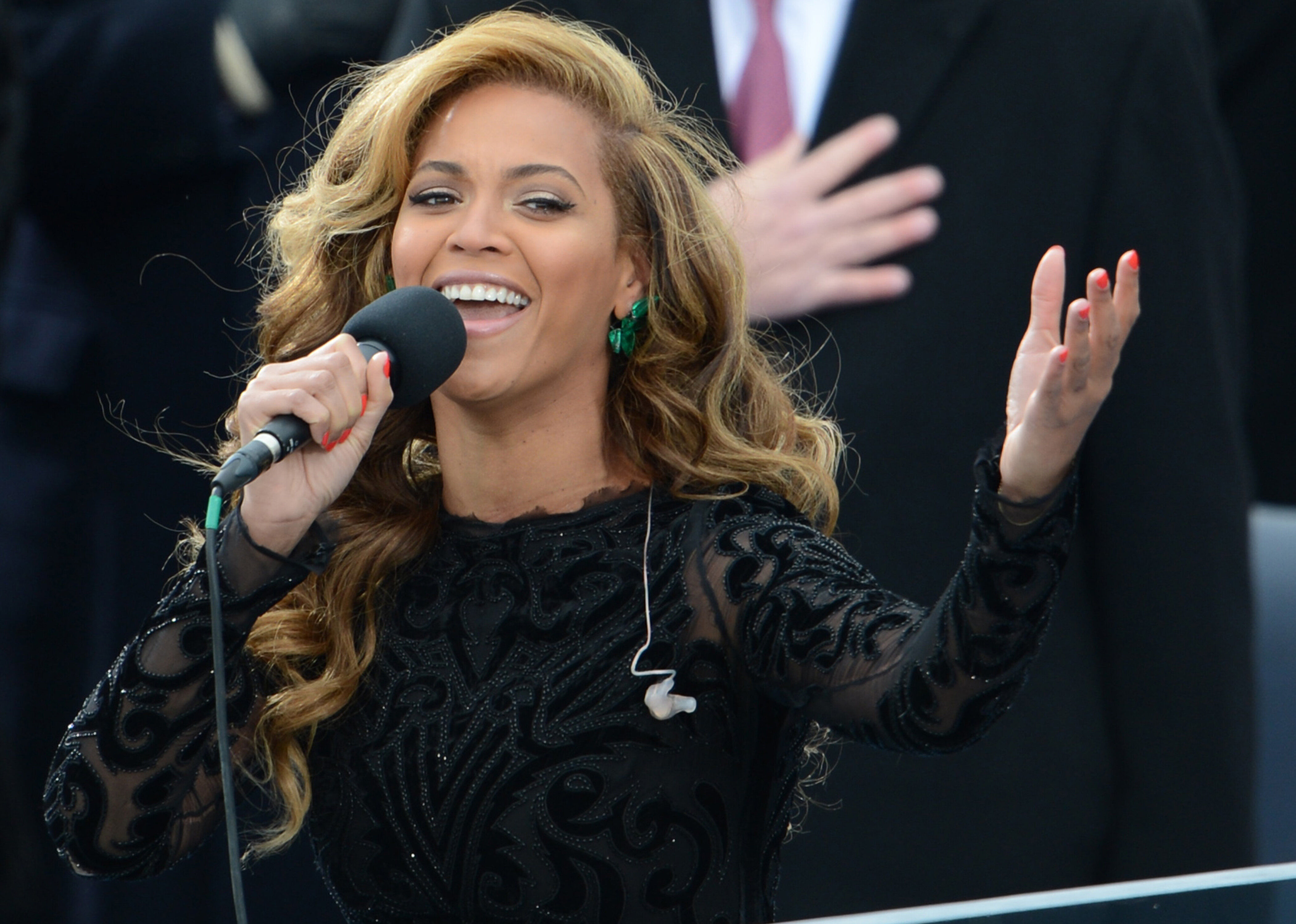
Beyonce performing at President Barack Obama's inauguration. 

Beyonce performing at President Barack Obama’s inauguration. 

It was Bey’s most obvious move into feminism, but writer Zeba Blay argues the song – along with Beyoncé’s light skin and blonde hair – still has mass appeal, because it’s “palatable…to white audiences”.

“When she sings ‘Who run the world ― girls!’ the girls she speaks of are an amorphous, ever-changing group, racially-ambiguous, of no specific social class,” she says.

Being a Black woman in the public eye is inherently political, and by adding your own opinions to the mix, you face even more scrutiny. Beyoncé’s ability to appeal to multiple groups while getting political is no mean feat.

“To have found ways to slip through the gaps and to own her own narrative, I think it’s kind of historically pretty unprecedented, to be able to do both of those things,” says Professor Robinson. “And then on top of that you have the impossibility to then be the right role model for all groups, it’s an impossible position.”

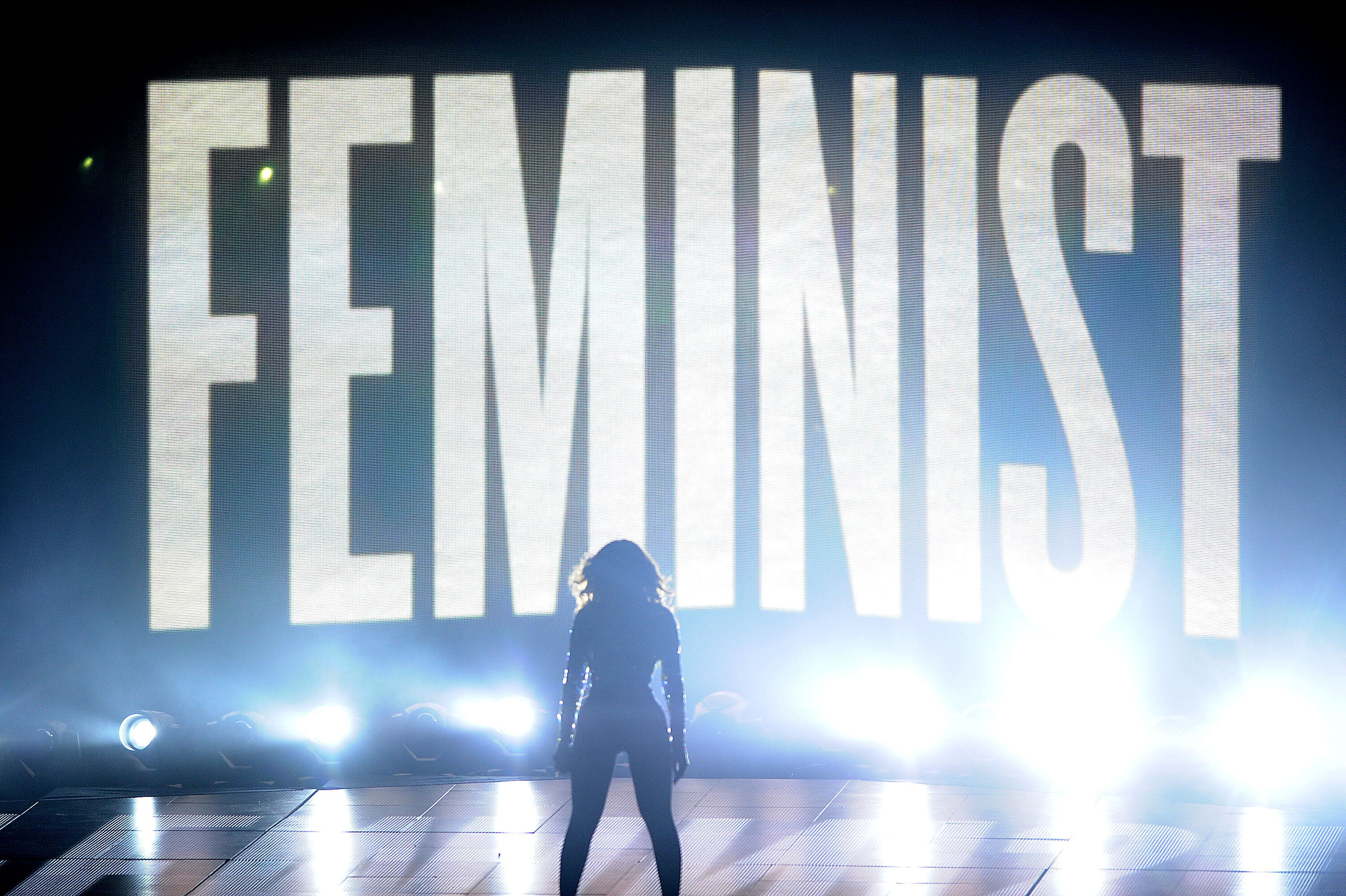
When Beyoncé eventually did make her personal stances clear, white mainstream media had a lot to say about it. Her 2014 VMA performance – when she stood proudly in front of the word ‘feminist’, singing tracks from her self-titled visual album – was divisive. Some said it was game-changing, others questioned her validity as a feminist.

In a piece for the Telegraph, Emma Watson said: “I felt her message felt very conflicted, in the sense that on one hand, she is putting herself in a category of a feminist, but then the camera, it felt very male, such a male voyeuristic experience of her.” Black woman like myself felt frustrated with the critique, as it seemed like white feminists were gatekeeping Black women from the feminist movement. During her ‘Mrs Cater’ tour, she received backlash again, as fans questioned why she used her married name.

But it was when she performed with Bruno Mars at the Super Bowl in 2016 – the year of Donald Trump’s election – that Beyoncé’s feminism became intersectional, focussing on race and politics. Some viewers found it uncomfortable to watch, because her outfit was inspired by the Black Panthers (as if that’s a bad thing).

Beyonce performing during the Super Bowl 50 Halftime Show in 2016.  

Beyonce performing during the Super Bowl 50 Halftime Show in 2016.  

Professor Robinson believes this upset people’s feelings, as she let white audiences know she wasn’t holding back any more. “There’s a big difference between being at a political inauguration and being associated with presidential politics,” she says. “Those things are accommodated within that comfort of white audiences enjoying Black music. But when you bring that to a football pitch, those lines are drawn, which makes people uncomfortable.”

Seeing her political transition at first did make me question why she wasn’t vocal about these issues in the past. I wasn’t sure if she was being performative or if it was authentic. But then I started to think about my own journey. I don’t think the same way I did when I was 18, and I’m sure my opinions will change when I’m older too. Nevertheless, I thought adding Chimamanda’s speech to Flawless was a huge power move. The speech resonated with me and made me think about my ideas of what it looks like to be a Black feminist. And it seems like I’m not the only one.

Abigail, a 27-year-old trainee lawyer from London, thinks Beyoncé has always been quite political, but believes we started to see a shift when she had her first daughter, Blue Ivy, in 2012. A bigger pivotal turn in her political awareness came during the Lemonade era, she argues.

“The visual album as a whole touched on the Black female experience in America and globally,” says Abigail, who chose not to share her surname.

“However, this is just looking at her career as a musician. She has always looked to address social and economic imbalances and this is evidenced in her building homes for Hurricane Katrina victims, supporting the families of those killed by police brutality, encouraging voter registration by having registrations booths at her concerts, creating the Formation and Homecoming scholarships for black students.”

As Beyoncé has evolved, so have her fans – and the long nature of Bey’s career means she has a special place in the hearts of many. “To me, as a Black woman, Beyoncé feels like a favourite aunt,” adds Abigail.

“She’s a reflection of the Black female experience. Her approach to the media and how she interacts with them is not just her maintaining the mystique of being a celebrity, but it’s her protecting her peace whilst still having a presence, something that so many Black women need in the workplace and in society in general.”

It’s been a hell of a ride – and it seems the Beyoncé conundrum is only set to continue. Her most recent album, Black is King, was applauded as a “love letter to Africa” by some, while others called it “incomplete”.

No one is above critique and rightly so – we should question celebrities and celebrity culture, but we should also allow them some grace. Beyoncé’s presence in mainstream media has allowed us to have conversations around Black feminism and intersectionality that we might not have had before.

As Robinson says: “I think the fans and the conversations around an artist, are actually where the real politics happens.

“Black feminism has had to do a brilliant job of explaining to white women that their experiences aren’t universal. These conversations have highlighted that some feminist issues don’t represent the experiences of Black women.”

Share Button

This Is What It’s Like To Go Through Menopause At Work

Lisa Miller likens her mind to a sieve when “menopause brain” hits at work.

“My co-workers will always be like, ‘Remember last week when we were talking about that slide?’ and I’m like, ‘Nope, I have no idea what you’re talking about,’” said Miller, a customer relations and document control specialist for an aerospace company in Virginia.

“It’s like my brain is a sieve, and just spots and memories go right through it, like a spaghetti strainer. It’s very frustrating. I know my colleagues do get frustrated. I get frustrated.“

Forgetfulness and having difficulty concentrating or thinking clearly are common symptoms, collectively known as “brain fog,” that can affect one-third to two-thirds of people going through menopause, according to researchers’ estimates.

It’s also one of the 34 documented symptoms associated with perimenopause, the phase before menopause when a person’s body starts making less oestrogen until eventually their ovaries stop releasing eggs. (Menopause itself is calculated as beginning on the 365th day since a person’s last period.)

Although menopause can be surgically or medically induced, there are usually no predictable starting and ending points when it occurs naturally. It often takes place between the ages of 45 and 55 ― critical career years when people typically take on more leadership and responsibilities at work and consider their legacies.

Perimenopause lasts for an average of about four years, but the menopause transition can stretch on for 14. This uncertain timeline can cause a lot of career anxieties. One 2014 survey in the US revealed that 12% of women admitted they had passed up a more demanding job or promotion because of their menopausal symptoms.

Because her brain fog interferes with her ability to do her job, Miller, who is 53, said she worries her menopause transition will last into her retirement.

“I’m hoping every day that it ends, but I’ve been told it could last seven to 10 years, which is terrifying,” Miller said.

Here’s what people told us about how menopause affects them at work, for better or worse, and what coping strategies and advice they have for how to put this transition in perspective.

There can be work-disrupting physical symptoms, like hot flushes and heavier periods.

For Kimberly Caprio, a Connecticut-based breast surgeon, it’s the hot flushes that make it obvious what she is going through. “When I take my gown off, it looks like a bucket of water was poured on my head,” she said.

“I don’t find it depressing or anything like that, it’s just annoying as hell.”

– Kimberly Caprio

Caprio said the excessive sweating she often experiences is inescapable and distracting while she is working. “I’m trying to concentrate on an operation; it’s rather annoying to be feeling the drips,” she said.

She’s currently looking into buying a cooling vest to wear with her hospital scrubs, but in the meantime, she said, “I just have to deal with it.” She also experiences heavier periods and cramping because of her menopause transition, and “when that happens on a long operating day, it’s never a disaster, but it’s always like ‘Ughhh.’ It’s another weight in the bag that you’re carrying.”

Putting symptoms in perspective is helpful, because they can last a while. A study by the Journal of the American Medical Association in 2015 found that menopausal people experience hot flushes and night sweats for a median of seven and a half years.

Menopause symptoms can be treatable, however. Health care providers can guide people through this time and suggest options including hormone and oestrogen therapy, non-hormonal alternatives, lifestyle changes or medications for specific symptoms.

“Many of these symptoms can be treated safely and effectively, and I try to raise that awareness in women,” Heather Hirsch, the director of Brigham and Women’s Hospital Menopause and Midlife Clinic, said on her hospital’s website. “It’s a time when many patients feel lost, frustrated and fearful — and a lot of that is unnecessary. Education and myth-busting have become big parts of my job.”

Caprio said she doesn’t attach negative meaning to the menopause experience, but she is waiting for hers to be over.

“I don’t find it depressing or anything like that; it’s just annoying as hell,” she said.

Workplace coping strategies include rehearsing, finding understanding among colleagues and taking lots of notes.

People face a choice when menopause symptoms become noticeable to their colleagues: talk about it or not? For many around the world, menopause in the workplace is still a taboo subject. In one British survey, about 47% of people who needed to take a day off due to menopause symptoms did not feel comfortable telling their bosses or colleagues the reason. In a separate survey across five countries, 44% of people who experienced menopause symptoms said they have felt too embarrassed to ask for support in the workplace.

After her first five months of menopause, Miller decided to not dance around the subject with her colleagues, most of whom are male, or make excuses for it. She felt it had become “super obvious” what was going on when she needed a fan on days when it was freezing outside.

“It is what it is. It’s a part of life,” she said. When she has brain fog, she said, “I just flat-out tell my co-workers: ‘You’re going to have to show me. Can you go into greater detail?’”

Sometimes she receives heavy sighs in response. But Miller said that for the most part, the men she works with are receptive because of other women in their lives.

“I have one co-worker whose wife is my age, so he totally gets it,” Miller said.

Tina Opie said she manages her brain fog by asking colleagues for what she really wants or needs without feeling guilty about it. A management researcher, founder of the Opie Consulting Group and a visiting Harvard Business School scholar, she also does additional prep work before teaching her classes.

“I will actually go through the slides, and I look crazy when I’m doing it, because I’m rehearsing what I’m going to say. Even the transitions in between slides, a joke I may tell … ,” she said. “Typically, I make my brain go through that process beforehand, because my short-term memory is definitely challenging.”

Another perimenopausal symptom she experiences is anger that flares quickly and stays. When she is in this emotion, Opie said, she has found it helpful to write before she speaks so that she can recognise and surface her own assumptions and extend grace, an important aspect of her leadership style.

If she is feeling invalidated or disrespected in public, for example, she asks herself, “Well, do they do that because I’m Black, because I’m a woman, because I’m 50? And then I try to write down alternative explanations for what they could have done. The writing forces me to slow down.”

Creating an open dialogue with co-workers and practicing individual coping strategies raise awareness, but Opie noted that there is an institutional responsibility, too.

“Roughly 50% of the population is going through menopause at the workplace. What are you doing from a systemic standpoint to make this an inclusive workplace?” she said.

An organisation’s answers don’t necessarily have to be elaborate, but they should be focused on supporting employees. Researchers have found that menopausal workers want their employers to offer four practical accommodations: fans, easy access to temperature control, the option to work remotely and including menopause in occupational health and safety and human resource policies.

“These steps are not just about alleviating symptoms,” management professors Kathleen Riach and Gavin Jack wrote at The Conversation. “They are about avoiding signalling that women of a certain age are an inconvenience or less valued as employees.”

But experiencing menopause at work is not always negative. In fact, it can be a gateway to a better or more improved career.

The physical symptoms of menopause aren’t fun, but the transition can also be a positive, freeing experience.

Omisade Burney-Scott, a North Carolina-based social justice advocate and the creator of “The Black Girls’ Guide to Surviving Menopause,” a podcast and multimedia project, said that too often menopause is reduced to a stereotype of “hot, sweaty, angry people without any context.”

“I feel like it’s giving me more permission to be really, really clear about the things that bring me joy, like the things that I enjoy doing, or the things that I enjoy offering or feel confident about offering to a workspace, or to social justice work or creative work,” she said. “And that feels really liberating.”

“It requires a level of focus on yourself that you may not have engaged in before.”

– Tina Opie, founder of the Opie Consulting Group

The experience pushed Claire Hattrick into pursuing a long-held passion. The aesthetician and blogger lives in Hampshire. In the UK, 900,000 women reported that they quit their jobs due to menopause symptoms in 2019.

When she went through menopause, Hattrick had “horrendous” joint pain that caused her to have to lie down on the floor between waxing clients. It eventually pushed her to work fewer hours, switch up the types of beauty treatments she performed and start blogging about her life, which ultimately turned into an additional career path.

Hattrick, who is now postmenopausal, said she sees positives in this outcome, including a new self-confidence: “It kind of makes you feel like you can take on the world almost. Like if you can deal with this, you can deal with anything.”

“If I hadn’t gone through this, I would have plodded on with the beauty [work],” Hattrick said. “It made me look at doing something I’ve always wanted to do. It’s almost forced me a little bit into saying, ‘Well, if I don’t jump ship now, I’m never going to do that.’“

Opie, too, said menopause can be a gateway for deeper career introspection and transitions, in the way turning 50 and going through perimenopause has been for her.

“It requires a level of focus on yourself that you may not have engaged in before,” she said. “You are trying to converge upon ‘what is going on with me,’ because you don’t know how to label this constellation of symptoms, and as a result, there is a self-focus that enters. …

“Now I’m applying this focus to ‘How do I feel about myself in this relationship, how do I feel about myself at work? How do I feel about myself in the mirror at night?’ It has led me to begin to explore all of those things and to try to change trajectories that I don’t find satisfactory.”

Share Button

Keeping Getting A UTI? Here Are Some Common Reasons Why

Urinary tract infections – or UTIs – can be painful, annoying and recurring, if you don’t take action to reduce the chances of getting one. While more common in women, as they have shorter urethras, meaning bacteria can pass through more easily, the issue also affects men.

Symptoms of a UTI include needing to pee suddenly or more often than usual, pain or a burning sensation when peeing, smelly or cloudy pee, blood in your pee, pain in your lower tummy, feeling tired and unwell, and in older people, changes in behaviour such as severe confusion or agitation.

If you notice any pain and continuous discomfort then definitely chat to your doctor about it. While it may just be symptoms of a UTI, which can be treated with antibiotics, doing a urine test can rule out any other conditions. There are also things to be mindful of if you want to stop getting regular UTIs.

Stella Ivaz, a urologist at London Bridge Urology, tells HuffPost UK: “We give patients lifestyle advice, and that usually includes good fluid intake, making sure you empty your bladder regularly so flushing the system. Wipe the correct way. And sex is a trigger so try voiding after intercourse so if a few bacteria did have the chance to make their way up, you try and empty that as soon as possible.”

Sound advice – and read on for more details on how best to avoid UTIs.

Not urinating properly

It sounds simple, but just make sure you finish peeing and completely empty your bladder before you get off the toilet.

You might not be aware but you may be leaving the bathroom with urine still left inside. To make sure you get it all out, you can try a method called double voiding.

This includes weeing, then standing for a few seconds, before trying again. You’ll see residual urine now coming out.

This is a good way of avoiding a UTI as static urine can build up over time and cause the infection.

Taking care after sex

During sex, all sorts of fluids are exchanged and different orifices are used, so naturally it’s going to include the swapping of bacteria.

The reason that sex increases the likelihood of UTIs is because the physical act of love-making causes a woman’s urethra to come into contact with bacteria from the genitals and anus – hers and a partner’s. After contact is made, it’s easy for bacteria to travel up into the urinary system and cause an infection.

This is one of the reasons that women experience more UTIs than men. In fact, close to 80% of premenopausal women who get a UTI had sex within the previous 24 hours. To avoid the chances of a UTI, make sure to pee after sex to flush out any potential bacteria.

Not wiping properly

This is another one which sounds simple but alas, it isn’t always done properly.

If you’re wiping from down up – as in, from the anus towards the vagina, then you’re likely inviting rectal bacteria into it. Not wiping properly can cause cystitis or (more common) urethritis.

Cystitis is usually caused by E. coli, a type of bacteria commonly found in the gastrointestinal tract. However, sometimes other bacteria are responsible. Sexual intercourse may also lead to cystitis, but you don’t have to be sexually active to develop it.

Urethritis can occur when gastrointestinal bacteria spreads from the anus to the urethra. Because the female urethra is close to the vagina, sexually transmitted infections, such as herpes, gonorrhoea, chlamydia and mycoplasma, can also cause urethritis.

Diabetes

Diabetes and urological health issues are closely connected. Diabetics are prone to UTIs because diabetes can impact blood flow, nerves and sensory function in the body, indirectly worsening urologic conditions.

Over time, people with diabetes may lose some sensory function. This can make it hard to know that you have to go to the bathroom. As a result, people may wait too long to go to the bathroom, or if the urine stays in the bladder too long, it may raise your chance for getting a bladder or kidney infection.

And finally, Covid

Don’t sound the panic alarm just yet, as Covid-19 itself doesn’t put you at risk of having a UTI. But treatments for the virus have caused UTIs in some cases. People who received steroids or had been catheterised during their treatment for Covid may be at greater risk of infection.

Share Button

The ‘Grey Areas’ Of Sexual Violence Aren’t Really Grey At All

For a decade, Rachel Thompson thought she’d had a fairly positive sex life. If someone had asked her if she’d ever experienced rape or sexual assault, she would have answered with a resounding: “No, I’ve been very lucky”. But in 2017, as the #MeToo movement reached its peak, the journalist started to reflect on past encounters.

One incident, when she was 19, continued to play on her mind. A guy she’d been seeing at university suggested they explore the woods together. He told her to lie down on a mound of moss. Before she knew what was happening, he’d straddled her body, sitting on her chest. The weight of him meant she couldn’t breathe. She panicked but told herself: “It’ll be over soon.” He ejaculated on her without saying a word, and they left.

“When I was 19, I didn’t see my experience as anything out of the ordinary,” she says. “No words sprang to mind in the aftermath of the experience – I simply had no vocabulary to express it.”

Reflecting on that night planted the seed for Thompson’s book, Rough, which explores sexual violence in the bedroom and the systems of oppression that enable it. A common theme is the suppression of one’s own trauma. Before writing the book, Thompson referred to her own experience as “bad sex” or “a grey area”, but she no longer uses those terms.

“That grey area did not stay a grey area for me,” she says. “I realised and came to terms earlier this year, right before my book was due, that actually, this was a sexual assault. It was pretty fucked up and it was really scary.”

Thompson has spoken to 50 women and non-binary people for the book, focusing on experiences of sexual violation that we find hard to talk about, because they don’t fit into the traditional boxes of “rape” or “violence”.

There’s issues like stealthing (the non-consensual removal of a condom during sex), cyberflashing (the sending of unsolicited dick pics) and non-consensual strangulation, which is a far cry from the consensual choking practised by some members of the BDSM community, with saftey precautions and safe words in place. There’s also the encounters we don’t have the words for, the moments that make women – and it is overwhelmingly women – feel a bit weird.

Catherine is among those who shared her experience with Thompson. She and a man were about to have sex for the second time. He said he didn’t have another condom, she said she didn’t have one either. He got up and said actually, he had one in the bathroom.

“In hindsight, he clearly picked our used condom out of the bin, rinsed it and reused it,” she says. “I vaguely noticed something was up at the time, but dismissed the suspicion/was too drunk to care, but thinking back that’s obviously what he did. Thinking back on the night it’s also clear that he was sober while I, although consenting, was very drunk.”

Catherine describes this encounter as something that made her “uncomfortable” during sex.

Abigail, another of the book’s interviewees, shares her experience of non-consensual choking. She met a guy on a dating app and everything was going great, until he unexpectedly put his hands on her throat and hit parts of her body. The experience left her confused.

“I’ve been sexually assaulted before and I was once dragged into a dark driveway by a man trying to rape me, in my head I didn’t feel like the two experiences – stranger in an alleyway and an attractive man on Bumble who texted me the next morning telling me how nice a time he had – were the same,” she says.

Abigail went on a second date with the man and asked him not to choke her again. He didn’t, but soon afterwards they lost touch. She says it took her a few months to recognise what had happened to her as sexual assault.

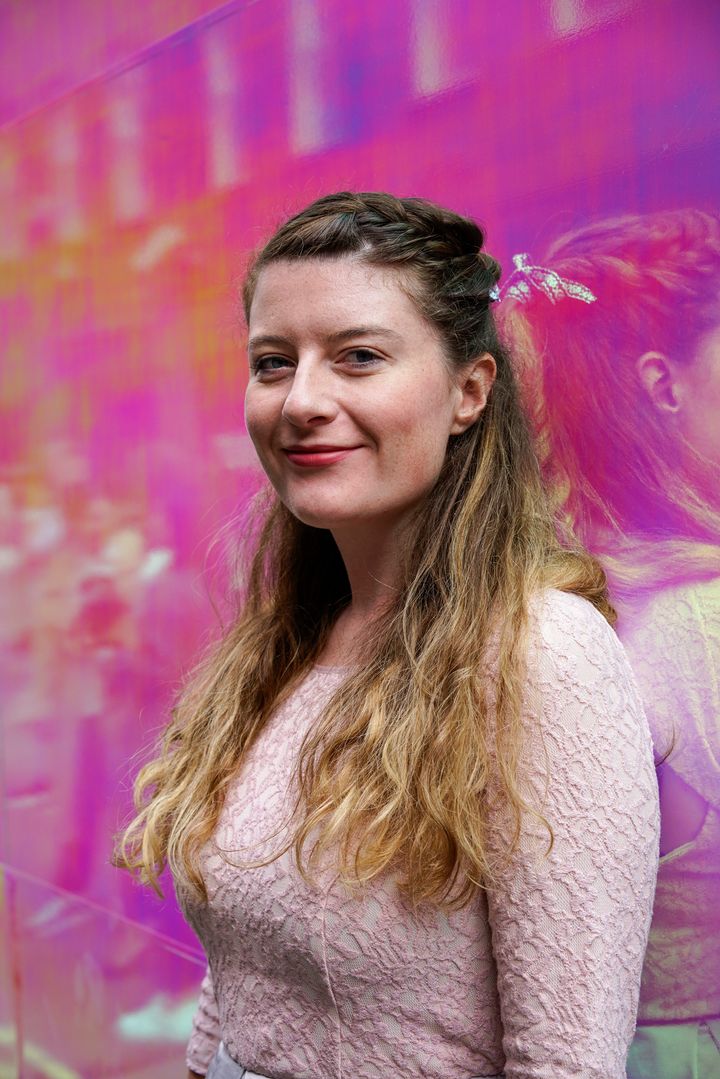
Rachel Thompson, author of Rough.

Rachel Thompson, author of Rough.

Thompson wanted to write the book “primarily for people who have experienced things that they just didn’t quite know how to put into words”. But she is clear that she doesn’t want to police the language women use on this topic either, or ban phrases such as “grey area” or “bad sex”.

“These are really personal experiences and our route to coming to terms with them and finding the words is a really personal journey,” she says. “You’re the person in charge of what you get to call your lived experiences and I don’t think we should allow anybody else to impose words or definitions on those experiences.”

Some campaigners remain concerned we don’t have the language to properly describe such encounters, and that women are being conditioned to dismiss incidences of violence.

If you’ve learned that your sex life must include violence, it’s incredibly hard to unpick why a violent assault felt so wrong,” Fiona MacKenzie, founder of the campaign group We Can’t Consent to This, tells HuffPost UK.

“It’s so normal to blame yourself for something awful that’s been done to you – and monstrously hard when the culture says you should smile and say you enjoyed it.

“Women also see what happens when others speak out against this – we get called prudes, virgins, vanilla, sex-negative… for campaigning on this. There is no shortage of perpetrators who want women to write off being assaulted as ‘just a crap shag’.”

The campaign group has heard from hundreds of women who’ve been violently assaulted in (until then) consensual sex.

“Most of them have been strangled,” says MacKenzie. “Violence against women is widespread, normalised. Society’s only just begun to push back on that in recent decades,” she adds. “We should be very suspicious of anyone telling us that violence is actually liberating. There don’t need to be grey areas – the default should be that men doing violence to women is unacceptable.”

Where is it coming from?

Porn is often blamed for the increase of violence in the bedroom and it certainly plays a part. Acts like choking, spitting and slapping are frequently shown, without any discussion on safe words and boundaries.

Such practices have been appropriated from the BDSM community, but do not reflect it; once in the mainstream, the key pillars of safety and consent are ignored. Such acts require deep trust, which is certainly difficult to establish on a first date and impossible to establish without an explicit conversation.

But porn is only part of the picture, says Thompson.

“It’s part of a landscape that also has a lack of sex education, and a lack of understanding about how consent functions, and how we should be seeking consent and negotiating consent for every individual sex act that takes place within a sexual interaction,” she says.

Brits in particular are alarmingly prudish about discussing what we do and don’t like in the bedroom, Thompson adds – and this is preventing us from establishing consent.

In the book, she hears from the anonymous sex educator @lalalaletmeexplain, who tells of one couple’s miscommunication around choking. Months into their relationship, the man asked the woman why she enjoys choking so much. She replied: “I don’t, to be honest, I do it because I thought you liked it.”

“People are getting these ideas, maybe from watching porn, and they think: ‘Oh, this is just what everyone’s doing now,’” says Thompson. “By not having the communication in those relationships and those sexual encounters, we’re not talking about what we want and what we don’t want.”

MacKenzie points out that images of sexual violence are not consigned to porn, or niche parts of the internet. She directs us to several Instagram hashtags, where images of young women with a hand around their neck are accessible in a few clicks. “Young women tell us that as tweens they learned that being strangled is an expression of passion,” she says. HuffPost UK approached Instagram for comment on this and will update with any response received.

When asking why this is happening, we also can’t forget that sex does not exist in a vacuum. Thompson’s book explores fatphobia, biphobia, white supremacy and transphobia – and how current systems of oppression impact our sexual experiences. It’s complex and endemic – and far too important to try to summarise in one article. But it’s clear that sex can never be an equaliser when it exists in a world of power imbalance.

What needs to happen?

On a macro level, we need systemic change to bring about sexual equality. There’s no quick-fix, but one thing that might help, is elevating all experiences of sexual violence.

“The #MeToo movement was founded by a black woman called Tarana Burke and I think she’s often erased,” says Thompson. “​​When the#MeToo movement exploded into public consciousness, it focused primarily on privileged white women. And that’s not to say that their stories are not valid or not worth listening to, but I think that we have to be so wary of the stories that we place at the forefront of these movements that we say speak for all survivors, because they don’t necessarily reflect all survivors.”

On a micro level, MacKenzie would like to see greater regulations of sexually violent images on social media. “We’re asking for the Online Safety Bill currently being considered by parliament to ensure that platforms stop normalising the violent assault of women – particularly those that welcome child users,” she says.

We Can’t Consent To This has already campaigned to make the use of non-fatal strangulation punishable by law as part of the 2021 Domestic Abuse Act. MacKenzie wants to see the law working in practice. “Women must be able to report choking and asphyxiation to police, and be taken seriously and not be blamed for these assaults,” she says. “We’d hope to see a significant increase in prosecutions for these assaults.”

Above all, both women want others to recognise the problems with these so-called “grey areas” of sex, and recognise that anything which makes an individual feel uncomfortable or unsafe is not “grey” at all.

The #MeToo movement may have prompted Thompson’s reflection and acknowledgment of assault, but now she thinks action is needed.

It really raised people’s awareness about the extent of sexual violence and how widespread it is in all levels of society, but I think that we need more than awareness now,” she says, “we need action: tangible, individual change.”

Rough by Rachel Thompson is out now.

Help and support:

Share Button

What Is The J-Lo Effect And How Can You Channel It?

You’re defying age and almost every other human standard? Congrats, you’ve unlocked the J-Lo effect. You’ve set the bar higher for everyone else? J-Lo effect once again. You’re dating a man whose hotness has now multiplied because of you? Ding-ding-ding, J-Lo effect.

Jennifer Lopez has done it all. Whether it’s frolicking under the Capri sun with her former flame Ben Affleck, showing off what the new 52 looks like, or just being a total badass at work, J-Lo is killing it.

The New York Times recently published an article marvelling at J-Lo’s professional and personal achievements, dubbing it the J-Lo Effect. The multi-hyphenate’s accomplishments include managing to secure $12 million (£8.6 million) to replace Simon Cowell on American Idol, plus booking a Las Vegas residency and the Super Bowl halftime show at 50.

Though she’s had her fair share of flops too, J-Lo has been able to do something other celebrities with a 30-year career have not: stayed relevant.

And her allure has been long recognised. The term J-Lo effect was first popularised in 2012 after Lopez’s American Idol success, setting off a string of other talent show judges asking for more pay.

A new context has also been added to the phrase – the desirability of Ben Affleck as a result of their pairing. By virtue of being with with her, Affleck is considered more desirable, or so the theory goes.

On Urban Dictionary, the J-Lo effect has a different meaning altogether – describing it as wearing tight trousers to make one’s butt look bigger.

To get more of an idea of this diverse concept, we spoke to Dr Hannah Hamad, a media and communication lecturer at Cardiff University, to ask what she understands the phrase to mean.

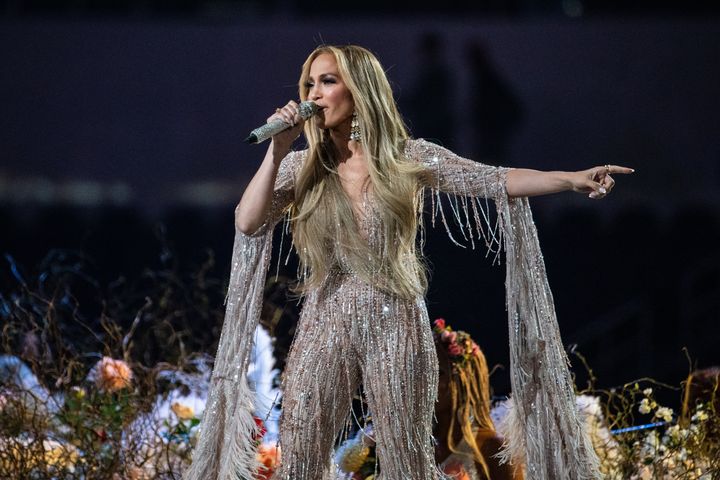
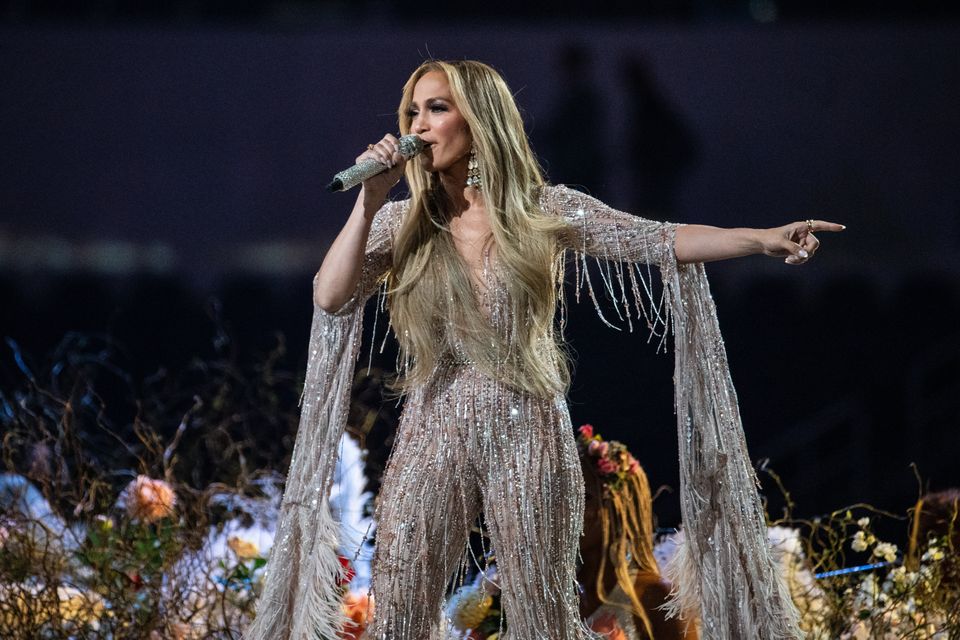
Jennifer Lopez performing in May 2021. 

Jennifer Lopez performing in May 2021. 

“The J-Lo effect is a phrase that has entered pop culture parlance and the celebrity gossip lexicon to refer to a phenomenon whereby the perceived sexual desirability of a man increases when he successfully couples with a woman who commentators and observers understand to exist in celebrity culture with higher levels of social, cultural and industry capital than him,” Dr Hamad explains. “In other words, she is ‘hotter’ than him, and she is ‘out of his league’.

“However, his levels of capital increase as a result of his association with her via their romantic or sexual relationship.”

Another connotation of the phrase is how Lopez bucks the trend for female celebrities being lambasted for ageing.

“In experiencing the levels of cultural cachet and industry power that she is at this time of her life (her 50s), she is bucking cultural and industry trends that have seen female stars criticised in the media for ageing appropriately – see for example the scorn that was heaped upon Renee Zellweger and the scrutiny to which she was subjected as a result of a noticeable change to her facial appearance in 2014,” Dr Hamad says. “Equally, we saw this in the ‘tragic spinster’ discourse that has attached itself to celebrity gossip media’s coverage of Jennifer Aniston in the post-Friends decades.”

She adds: “Lopez is not only escaping what previously appeared to be the inevitability of these cultural scripts of ‘bad ageing’ that attach themselves to female stars as they enter the mid-life decades, but is rather successfully channelling renewed confidence, energy and vitality into her celebrity career both on screen [her central figure in Hustlers is a glorious example of this] and beyond, as we see in the noteworthy levels of positive interest being taken in her reunion with Affleck.”

The rest of us might not have her fame and fortune, but we can certainly channel J-Lo’s big, baddie energy.

Life coach Kiran Singh says it’s more a state of mind. “Confidence is a daily practice. You need to connect with yourself and call out the limiting thoughts every single day,” she tells HuffPost UK. “You need to get yourself to a point where you become your own best friend, your own coach and your own cheerleader. Where you know how to talk yourself through moments of doubt and pump yourself up to take action.”

Singh believes confidence is a “by-product of action”, so you need to develop your own hype routine to pump yourself up to take action.

“Learn to love and validate yourself so that the opinions of others are irrelevant,” she says. “You do this by getting to know yourself and what you like about yourself and living in alignment with that and by overcoming the limiting stories that you are not enough through reprogramming your mindset.”

And lastly, remember “confidence is an ever-evolving journey, and the development of it is one that you will be on forever”. So if you’re not Jenny from the yacht just yet, there’s still time.

Share Button

TikTokkers Are Exposing All The Lazy Ways Men Write Women

If you’re watching a film or TV show and see a young woman dressed all in black with a grungy hairstyle and a resting bitch face, be warned – she’s probably a feminist character written by a man.

Or perhaps there’s an impossibly attractive woman doing some cooking, alone, wearing just an oversized white T-shirt and socks, as she dances around the kitchen, using a whisk as a microphone.

Such is the single dimension of some women characters on screen and in fiction, often written by men. And TikTokkers are exposing the lazy writing.

Female creators on the video-sharing app are acting out all the unrealistic ways women are often characterised: sexy, seductive, clumsy, and whimsical, their looks and tics a cue to their inner soul.

Actor and content creator Caitlin Reilly was among the first to the trend, satirising how a woman in sci-fi films is often depicted: you know, the geeky scientist who probably wears glasses and keeps her hair in a tight ponytail, and is so dedicated to her work, she has no time for love or a social life.

Reilly’s breakout video, which includes such lines as “I’m a woman and a scientist, I can’t be both good at my job and nice”, has been watched more than a million times.

She has also mocked action movies for the way they paint women; helpless, emotional, forgetful. “I forgot the box of things that are very special to me, I have to go back”, and the hysterical mum shouting “please find my daughter,” are lines that have seriously tickled her Instagram followers, too.

Over on TikTok, the trend has blown up in recent days, soundtracked by Portishead, as young women ridicule the way they’re written into fiction in the most mundane scenarios, from having breakfast to going to sleep, from putting on their makeup to taking it off, from reading to dating to chewing gum.

In one clip, a woman experiencing a break-up sits wistfully, wearing just a top – many of these portrayals are trouser-less – as she licks ice cream seductively off a spoon. Ice cream is a big thing in the land of the male gaze, it seems.

In fact, many of these #writtenbymen clips are tagged #malegaze, spreading feminist theory about the problems with women being depicted from a masculine and heterosexual (indeed sexual) perspective to a new generation.

As well as drawing attention to sexism in screenwriting, some of the videos also touch on long-established and fetishising depictions of women of colour, of disabled women, and of trans women, as shown by creator AJClementine.

You’ll see what we mean when you check out others videos tagged into the trend. And while you’re watching them, please remember no woman in history has ever taken off her glasses to realise that she was beautiful all along.

She was “all that” already – without the nerd-to-hottie makeover by a man.

Share Button

7 In 10 Disabled Women Experience Sexual Harassment At Work

Seven in 10 disabled women say they have been sexually harassed at work, increasing to almost eight in 10 among those aged 18 to 34.

These shocking statistics, which compare to 52% of women in general, are from a new report published by the the TUC that surveyed 2,003 disabled women about their careers. Of those, 1,162 respondents agreed to answer questions about their experiences of sexual harassment at work.

It’s been more than four years since the #MeToo movement took over our social media feeds, but this is the first major study into the sexual harassment of disabled women at work in Great Britain. As the report highlights, “the voices and experiences of disabled women have too infrequently been highlighted”.

Common experiences shared by those surveyed included unwanted sexual advances (38%), unwanted touching (36%), and unwanted sexual touching/sexual assault (18%).

One in 25 said they had experienced a serious sexual assault or rape at work.

The research also suggests that many disabled women experience multiple forms of harassment in the workplace, with more than half of respondents (54%) saying they had experienced two or more types of sexually harassing behaviour, and 45% saying they had experienced three or more. “This points to workplace cultures where sexual harassment is a frequent and normalised occurrence rather than an isolated incident,” the authors said.

The report identified great hesitancy among disabled women in reporting harassment at work. Two thirds (67%) of those who had experienced it did not report the harassment to their boss the most recent time it happened, with 39% saying this was because they did not believe they would be taken seriously.

Some said they were worried it would have a negative impact on their career or work relationships. Other reasons included not thinking they would be believed or thinking they would be blamed if they reported the incident.

And unfortunately, of those who did report the most recent instance of sexual harassment, more than half (53%) said it was not dealt with satisfactorily.

Unsurprisingly, this is having a huge impact on the wellbeing of women.

Around one in three (34%) of those who disclosed harassment in the survey said their experiences had a negative impact on their mental health and more than one in five (21%) said it negatively affected their relationships with colleagues.

The experiences caused one in eight (12%) to leave their job or employer entirely. This is particularly troubling given disabled women already face significant barriers to getting into work and getting paid the same as non-disabled workers.

TUC research in October 2020 found that disabled women earned 36% less than non-disabled men. The analysis also found a huge unemployment gap; disabled women were 32.6% more likely to be unemployed when compared to non-disabled men.

“Four years on from the explosion of #MeToo on a global scale, employers still aren’t doing enough to make sure women are safe at work. It’s time for every employer to take responsibility for protecting their staff from sexual harassment,” said TUC General Secretary Frances O’Grady.

“Ministers must change the law to make employers protect workers from sexual harassment specifically, and from all forms of harassment by customers and clients. Anyone worried about sexual harassment at work should get in touch with their union.”

Useful helplines and websites:

Share Button

Birth Injuries Are Leaving Some Mums Wishing They’d Never Had Kids

One in four women who experience a severe injury during birth regret having their child. It’s taboo to admit, but with more than 600,000 women giving birth in England and Wales alone each year, we need to talk about this.

A new survey of mothers affected by birth injuries lays bare the physical and psychological impact on women, which can last years into their child’s life.

The overwhelming majority (85%) of mothers who suffered severe injuries say their experience damaged their relationship with their child, with 14% saying this harm was permanent. One in three (34%) said they saw their child as the cause of the injury while, heartbreakingly, three in 10 (31%) thought their child would be better off without them.

The research, from birth injury charity The MASIC Foundation, surveyed 325 women who self-identified as having suffered severe perineal trauma when giving birth. The sample size may be small, but the research adds to growing concern about women’s health outcomes after giving birth in the UK.

While it’s important to acknowledge that millions of women around the world give birth each year without problems, it’s equally important to say this isn’t always the case – and women are increasingly talking about their negative experiences and demanding better care.

HuffPost UK has previously reported on the gaps in NHS postpartum care that widened during the pandemic. In a separate survey of mums, the majority (91%) said they were not given enough advice during pregnancy about postpartum recovery.

We also know that Black women are five times more likely to die during childbirth than white women. A controversial proposal to tackle this – inducing labour at 39 weeks for pregnant black, Asian and minority ethnic women as a matter of course – has been called “racist” by some doctors and midwives.

In the latest research, 78% of women surveyed said they have traumatic memories of birth and 52% said they face embarrassment due to symptoms of their injury.

This rings true for Catherine*, who had a prolonged labour following induction with her son, which then required an episiotomy and ventouse (vacuum delivery).

She had a third-degree tear (defined as a tear that extends into the anal sphincter), but it was initially misdiagnosed as a second-degree tear, meaning she wasn’t offered the correct treatment. Her undiagnosed injury left her in too much pain to sit down or attend mother and baby groups, leaving her “essentially house-bound” for her maternity leave. After a year – and hitting a brick wall with the NHS – she accessed help at a private clinic.

The damage has been permanent, though, and she’s still prone to toilet urgency and accidents. Catherine now carries pads, wipes, Imodium and spare underwear everywhere she goes. She quit a job she loved as she was struggling to manage her condition, and has been diagnosed with PTSD.

““My confidence, my me-ness, the essence of who I am, has been destroyed.”

– Catherine, 44, Bristol

“My confidence, my me-ness, the essence of who I am, has been destroyed,” says the 44-year-old, from Bristol. “My relationships with my child and my partner have suffered.”

Catherine has struggled to talk to friends about her experience – or even watch programmes when childbirth is mentioned – and has counselling each year in the run-up to her son’s birthday.

“With my son, I love him dearly, he is the best thing in my life, but his birth caused the injury and it is difficult to square the two,” she says.

“Every year I dread his birthday and the reminders of my traumatic experience. It is not fair on him or on me – his birthdays are not a happy occasion, but every year I have to pretend it is.”

While her partner has been understanding, Catherine says “he also carries his own guilt about what happened”. Their physical relationship has also been impacted hugely. “I feel like a shell of my former self at times,” she adds.

Like Catherine, 69% of mothers surveyed said the impact of a birth injury was both physical and emotional. Almost half (45%) said they have had postnatal depression as a result and 29% said it has affected their ability to breastfeed their baby, with 18% stopping earlier than planned.

Elizabeth*, who now has a 10-year-old daughter, describes the period after birth as the “worst time of [her] entire life” and is still impacted by her birth injury a decade later.

Aged 30, she had a fourth-degree tear (a tear that extends further into the lining of the anus). Six days after delivery, she passed faeces vaginally and was in extreme pain. She was then readmitted to hospital and found to have a recto-vaginal fistula, causing an infection in her vagina and bowel.

““I am ashamed to say that at times I wished I had never become a mother and I grieved for the life I had before.””

– Elizabeth, 40, Hampshire

Although she’s had further treatment, she still experiences rectal incontinence, which has affected her ability to socialise and work. “I often avoid eating out as this stimulates my bowel,” says the now 40-year-old, from Hampshire. “I always need to know where the toilets are.”

Her birth injury meant Elizabeth was forced to give up her beloved hobbies of horse riding and swimming. For a long time, she was in too much pain to even walk her dog. “I am ashamed to say that at times I wished I had never become a mother and I grieved for the life I had before,” she says. “I paid such a high price to have a baby.”
Jen Hall, a MASIC spokesperson, is sadly unsurprised by Catherine and Elizabeth’s stories, after having a “brutal forceps delivery” that left her with physical and psychological damage herself.

“Nobody warns you that having a child can leave you with life-changing injuries and no woman should have to go through this without support and proper medical care,” she says.

Most of these injuries are “entirely preventable”, she adds – the result of something going wrong during birth or a failure to identify risk factors beforehand, according to MASIC. The charity is calling on the government and the NHS to roll out a programme of training for medical professionals.

The Obstetric Anal Sphincter Injury (OASI) care bundle – a package of training which has been praised by the Royal College of Midwives – has been trialled in 16 maternity units across the NHS and is being extended to a further 20, but this still leaves three in four (76%) maternity units yet to be reached.

The charity is calling for it to be rolled out nationwide. They’ve also set out a seven-point plan for better care, calling for:

  1. Improved identification, diagnosis and treatment of birth injuries in the NHS.

  2. An education programme for obstetricians and midwives so that severe injuries are recognised at birth and treated in line with best evidence.

  3. A primary care education programme so that all women are asked at contacts following birth about signs and symptoms of OASI/incontinence, with appropriate referral pathways for those with symptoms in line with the NHS long-term plan.

  4. Information about the risks of OASI given to all women antenatally.

  5. Women’s concerns to be listened to and not dismissed as “normal” postnatal experiences.

  6. Specialised psychological treatment and support for women after OASI injury and an end to the stigma and taboo of talking about these injuries.

  7. Dedicated OASI clinics nationwide.

HuffPost UK has contacted NHS England and the Department for Health and Social Care for a response. We’ll update this article if they provide a statement.

Without change, women like Catherine do not feel like they can have a second child. “I feel like I was someone the birth just happened to,” she says. “At the time I was happy to place my faith in the medical professionals dealing with me; I had no reason not to. Whilst birth is normal, natural and inevitable, and women’s bodies are designed to do it, unfortunately as we all know it isn’t always that simple. The people who were meant to help me through it let me down.”
• Surnames have been omitted to offer anonymity to interviewees.

Useful websites and helplines

Mind, open Monday to Friday, 9am-6pm on 0300 123 3393.

Samaritans offers a listening service which is open 24 hours a day, on 116 123 (UK and ROI – this number is FREE to call and will not appear on your phone bill).

CALM (the Campaign Against Living Miserably) offer a helpline open 5pm-midnight, 365 days a year, on 0800 58 58 58, and a webchat service.

The Mix is a free support service for people under 25. Call 0808 808 4994 or email help@themix.org.uk

Rethink Mental Illness offers practical help through its advice line which can be reached on 0808 801 0525 (Monday to Friday 10am-4pm). More info can be found on rethink.org.

Share Button

It’s 2021 And TV Adverts Are Still Implying Only Women Clean

A television ad for a scrubbing device has been banned for suggesting cleaning the home is a responsibility uniquely associated with women.

Cue major eye rolls.

The three-minute television ad for the JML Hurricane Spin Scrubber, seen in March, depicted several women using the cleaning tool in the bathroom, kitchen and elsewhere in the home.

In the ad, four women describe their experiences with the tool, saying: “I have a very busy household. People are in and out of my shower all the time”, “I love using the extension pole to get the rings out of the bathtub”, and “I’ve given this to my mother as a gift, and it’s changed the way she cleans. I don’t have to worry about her slipping and falling”.

We don’t know about you, but we’re getting a serious throwback to the 90s, when an 11-year-old Meghan Markle campaigned against a sexist TV advert. The future Hollywood star and royal wrote a letter to Proctor & Gamble to protest their ad for Ivory dishwasher soap that claimed “women all over America are fighting greasy pots and pans”.

Three decades on, it seems little has changed.

A screenshot of the advert, provided to HuffPost UK by the ASA

A screenshot of the advert, provided to HuffPost UK by the ASA

In the banned ad for the Hurricane Spin Scrubber, one woman said she had previously been “embarrassed” to have people over to her house because of limescale deposits but no longer worried after using the product.

“I love having people over to come inspect my kitchen and my bathrooms,” she said, before a male voiceover concluded: “To get your hands on the Hurricane Spin Scrubber and a sparkling clean home call now…”.

A viewer complained to the Advertising Standards Agency (ASA) on the grounds the ad perpetuated harmful gender stereotypes by depicting women in a role that was stereotypically female and implying only women cleaned or were interested in cleaning products.

John Mills Ltd, trading as JML, said the ad had been broadcast since 2017, focused on the functionality of the product and featured two shots of men.

The firm said the ad did not suggest cleaning was only associated with women or that a man was unable to undertake any of the featured tasks.

A screenshot of the advert, provided to HuffPost UK by the ASA

A screenshot of the advert, provided to HuffPost UK by the ASA

Advertising clearance agency Clearcast said the ad did not at any point suggest that cleaning was associated with women only.

However, upholding the complaint, the ASA noted that ads may feature people undertaking gender-stereotypical roles, such as showing women cleaning, but they should take care to avoid suggesting that stereotypical roles or characteristics were always uniquely associated with one gender.

The ASA said the four women’s testimonials “contained a number of explicit references to cleaning up after other people and implied feelings of shame at other people seeing an unclean home”. There was no implication that the men briefly featured in the ad would share such responsibilities or feelings.

“We considered the cumulative effect of the four testimonials, the prominence of people cleaning who were easily identifiable as women, and the lack of easily identifiable men, perpetuated the stereotype that it was a woman’s responsibility to take pride in the appearance and cleanliness of their home, and to clean up after other people,” said the ASA. “It also perpetuated the idea that women should be judged on the cleanliness of their home.”

The ASA ruled that the ad must not appear again in its current form, adding: “We told JML to ensure their advertising did not present gender stereotypes in a way that was likely to cause harm, including by suggesting that cleaning the home was a responsibility uniquely associated with women.”

Share Button