Sign up and we’ll email you a weekly dose of parenting stories, covering everything from pregnancy and birth, to babies and toddlers. We’re in this together.
Successfully Signed Up!
Realness delivered to your inbox
By entering your email and clicking Sign Up, you’re agreeing to let us send you customized marketing messages about us and our advertising partners. You are also agreeing to our Terms of Service and Privacy Policy.
If you have a child who’s going to menstruate, it’s possible that they’ve started thinking about it before you have. Whether they’re excited to experience this rite of passage or anxious about the possibility of embarrassing leaks, tweens and teens today have more resources and options available to them than we did at their age.
One potentially helpful innovation is period underwear.
“Period underwear has been a great revolution, especially for young people,” Dr. Meredith Wise, an Ob/Gyn at the University of North Carolina, told HuffPost.
Advertisement

They’re discreet; they look like normal underwear, but have a highly-absorbent lining that holds liquid. They also generate less waste than pads and tampons, which appeals to young people who are concerned about the impact their choices have on the environment.
One of the first period underwear brands to come on the market was Thinx, which has a product line designed for teens. Of course, if you decide to go this route, your teen should wear whichever period underwear works best for them, regardless of how it’s marketed. Other brands include: Aisle, Cora, Proof, Rael, Saalt and The Period Company. Knix and Modibodi sell period swimwear in addition to period underwear.
Felicia Macdonald, VP of Strategic Communications and Public Affairs at Thinx, told HuffPost that their product is made with cotton and “can hold up to five tampons or two-and-a-half regular pads’ worth of flow.”
“They’re just as comfy as regular undies and can be worn alone or as back up with other period products for extra leak protection,” she continued.
Advertisement
If your child’s cycles are regular (note that irregular cycles aren’t abnormal), they can wear the underwear in anticipation of their period starting, or as often as they like.
The main disadvantage of period underwear is that it isn’t cheap. Of course, neither is a year’s worth of disposable menstrual products — but you don’t have to pay for all of those up front, and, increasingly, schools and other institutions are making them available for free in restrooms.
Depending on how many pairs you need per day and how often you’re able to wash them, building up a stash of period underwear costs considerably more than a 6-pack of briefs from your local big box store. Prices range from $12-39 per pair.
If your kid needs to change pairs midday to manage their flow, then they’ll have to carry a used pair around with them to bring home.
Some young people may not be too keen on taking care of clothing with different washing and drying instructions than their other clothes. And some parents may end up with a little more work added to their laundry duties.
Advertisement
To get the longest life out of period underwear, you’ll need to follow the manufacturer’s care instructions. Thinx recommends washing their underwear on a cold, delicate machine cycle, or by hand, using mild detergent, then hanging or lying flat to dry. When cared for properly, Thinx says their underwear will last for 40 washes, or approximately two years of use.
Some users also rinse their underwear in the sink or shower before washing. Avoid fabric softeners, bleach and the dryer. It’s okay to wash your underwear with other clothing — the blood won’t stain the other items in the washer.
If you do choose to buy period underwear for your child, it’s not a bad idea to also teach them how to do laundry. Ellen Friedrichs, health educator in Brooklyn and the author of “Good Sexual Citizenship: How To Create A (Sexually) Safer World,” says that the pre-pubescent years are a great time for this, if you’re lucky enough to have a washing machine at home.
This helps “to give them body privacy, not to help you out as a grown-up, but to gain privacy around things like periods and wet dreams,” said Friedrichs.
Isabel Pavia via Getty Images
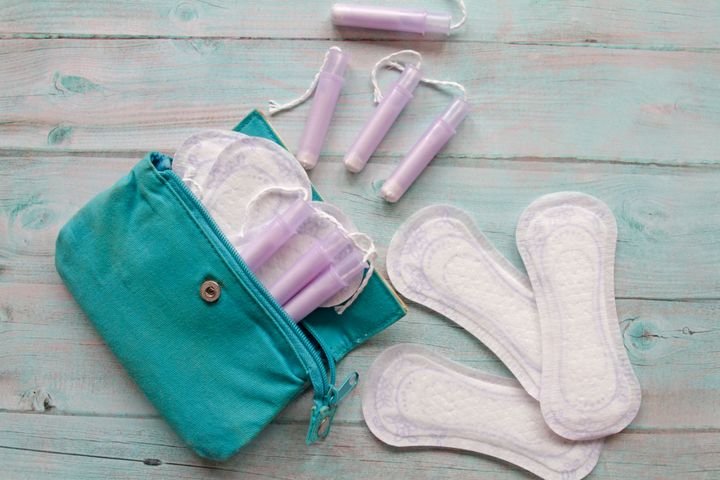
Every menstrual hygiene product has its own advantages and disadvantages.
Advertisement
Of course, there are also other options.
“Pads are traditionally the first go-to,” said Wise. “They’re easy to explain, they’re easy to get.” And they’re what the school nurse likely has on hand.
But some teens find pads uncomfortable. They may say it feels like wearing a diaper, or worry about others noticing the outline of the pad through their clothing.
“I like to reassure people that you normally can’t see a pad. But even if, psychologically, you think someone can see a pad through leggings,” said Friedrichs, period underwear “might give you that sense of comfort that nobody can see that this is happening.”
Tampons, cups and discs “can be useful for people with active lifestyles” and for swimming, said Wise. “But they do just take just a little bit more education and finesse.”
What else should your tween/teen know about menstruation?
Wise says that most people get their first period between the ages of 11 and 13, but it can also happen in the years before or after. A person usually has a first period two to three years after the first signs of breast development, “which can just seem like a little puffiness around the nipples,” said Friedrichs.
Advertisement
“It’s really hard to predict what a first period will look like,” Wise explained. Blood may be red or brown, flow light or heavy, and the person may or may not have other symptoms such as bloating or cramps.
“Sometimes people are nervous that it’s going to be like turning on a tap, and that you’re gonna have this rush of water, but it’s really, for most people, more like a drip,” Friedrichs said.
People can expect their periods to be irregular for the first year or two of menstruation. They may come 21-45 days apart, and may not be the same number of days apart each cycle.
“The hormones that the brain makes to tell the ovaries to make oestrogen and progesterone hasn’t found its rhythm yet,” said Wise. “Ovulation is not part of every cycle.”
While there is plenty of variety in what’s considered normal, Wise says there are several reasons to bring a tween or teen to the doctor:
Advertisement
No periods by age 15, or 3 years after breast development
Periods more than three months apart
Bleeding longer than seven days per cycle
Heavy bleeding that requires changing menstrual products every two hours
Any symptoms that interfere with their lifestyle or their quality of life
“Nobody should feel like they can’t go to school,” said Friedrichs, whether due to heavy bleeding, pain, or other physical or emotional symptoms they’re having with their cycles.
“For pain with periods, a lot of it is considered normal — but that doesn’t necessarily mean that it’s something that we have to put up with,” said Wise.
A doctor can recommend different options for treating period pain and other symptoms, and adults should remember that even if they lived with significant menstrual discomfort, that doesn’t mean a child needs to. (While many teens fear going to the gynaecologist, thinking it means they will need a pelvic exam, Wise said she performs “surprisingly few” of these exams on patients under 21.)
As for leaks and stains, Wise said “the most important thing is to anticipate it and to know that at some point it happens to everyone.”
Advertisement
“It’s a very normal experience. Especially those first few years, it’s hard to predict when you’re going to have your period,” she said.
Having back-up underwear and pants at school can help, but the old trick of tying a sweatshirt around your waist works just fine too.
Friedrichs tells her students, “most of us have had this happen if we’ve had our periods. And there’s a lot of uncomfortable things that happen when you’re going through life with the human body, and that’s gonna possibly be one of them. And doesn’t mean that you’re gross or dirty or bad.”
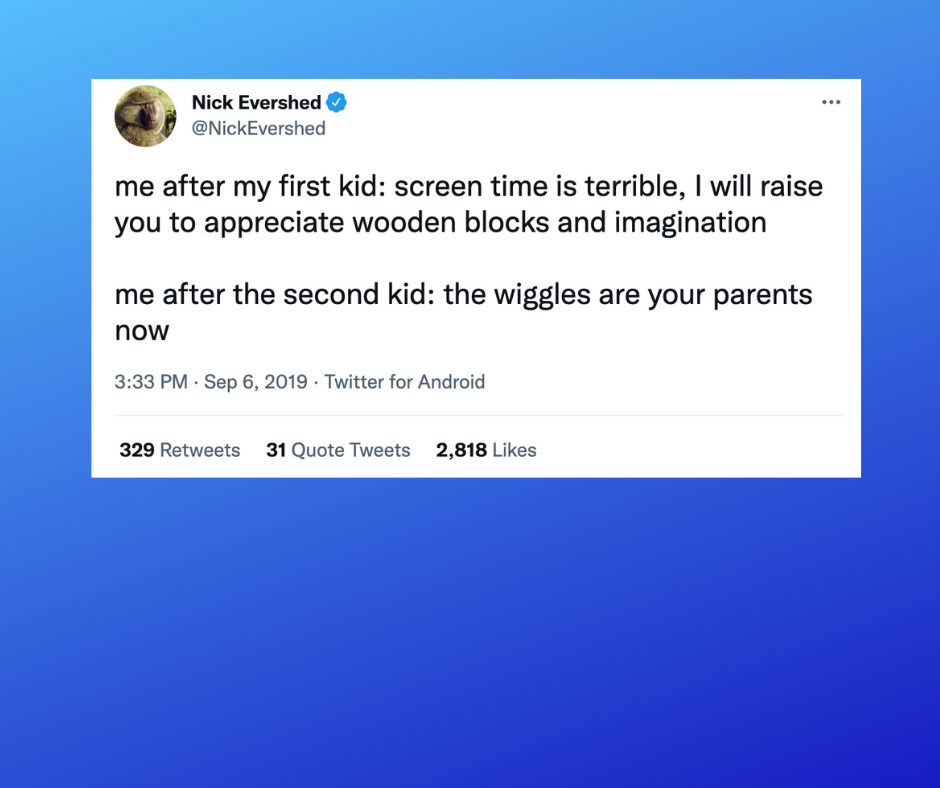
As a first-time parent, you worry about every little thing: adhering to a perfect schedule, feverishly researching the best baby products, feeding your kid the healthiest foods you can find, documenting every milestone and avoiding screen time.
Below, we gathered 24 tweets that hilariously capture the differences between raising your first kid versus raising your second, third or fourth.
“And what does it say about me that being told I can’t have sugar makes me feel like this, like I’m losing my mind — why am I so OBSESSED with sugar? What’s WRONG WITH ME?”
Tears were creeping down my cheeks, inhales coming in broken and sniffly as I typed in the chat my husband and I used to communicate during work hours, dumping out all the intense feelings that had been pummelling me since my midwife sent the email diagnosing me with gestational diabetes.
Advertisement
After undergoing gastric bypass at 17 and losing 100 pounds — enough to get me into a J. Crew dress but never their pants; enough to get me attention from certain boys but never cross the societal line from “fat friend” to “cute girl” — I’d decided that, while it hadn’t made me thin, the surgery had “levelled the playing field,” meaning I could diet like a normal woman and exert some control over my previously unruly body.
I spent the next 15-plus years swinging between crash diets and hands-off-the-wheel reactive eating, punishing myself at the gym and then spending my lunch hour texting my long-distance boyfriend about what I’d eaten that day and how many calories I had left.
By the time I turned 30, though, I’d mostly accepted that my body just didn’t want to be smaller than a size 16. Dieting made me insufferably boring, so I tried to avoid it, and I’d recently discovered that yoga made me feel great, even when it didn’t make me smaller. But I was also already the smallest I’d ever been, as the result of nine months of deep depression following the end of my engagement to the aforementioned boyfriend.
When I started regaining some of that weight after meeting a new man (now my husband), my issues with food began to resurface. I scared the crap out of him with the level of my obsession, my inability to just make a change and behave normally. When I tried to be paleo for three days, making batch after batch of “cloud bread” and “cheese crisps,” he and my therapist both put their feet down. I was banned from dieting, at least without talking to my therapist first.
Advertisement
Things got better again. Between therapy, investing more time and energy in fat-positive spaces, and beginning to work with a nutritional counselor who specializes in intuitive eating, I was able to fight my obsession with smallness and control. Even when the pandemic weight I knew I’d gained, but hadn’t kept track of, was recorded against my will at an urgent care center and plastered in huge numbers across the top of my aftercare paperwork, I didn’t diet.
I cried, and raged, and panicked, but I didn’t diet.
Then, at 36, I got pregnant.
The first trimester was mostly OK. Yes, finding a provider who wouldn’t obsess about my BMI was a struggle, and morning (or, for me, all-day) sickness was no joke, but with the help of my nutritional counsellor I was able to let go of preconceived notions about what and how much I should be eating and focus on nourishing my body with whatever it could tolerate — pretty much just salty carbs.
But as my pregnancy advanced and the nausea eased, things only got harder. Since my gastric bypass, I’ve had to avoid particularly fatty or sweet foods; a few years later, I was diagnosed with oral allergy syndrome, which drastically limited the number of fresh fruits and vegetables I can eat without cooking or pickling. I’d gotten pretty used to those restrictions, but then came pregnancy.
No raw seafood. No tuna, even if it’s fully cooked. No pink meat. No fresh/soft cheeses. No pineapple. No Caesar salads. No more than 200mg of caffeine. No Googling “Can I eat xyz during pregnancy?” unless you want to be told that thing you were about to put in your mouth might kill your unborn child.
Years of work to dismantle the binary of good versus bad foods and here was an easy loophole! I could assign moral value to foods if it pertained to my condition.
Advertisement
Photo Courtesy of Anne H. Putnam
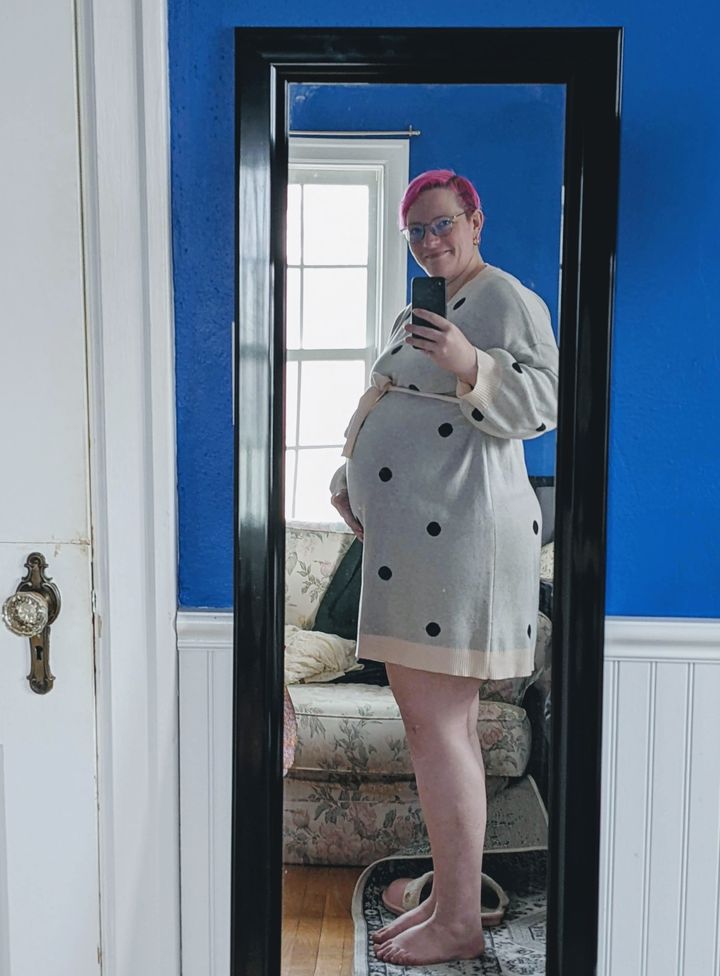
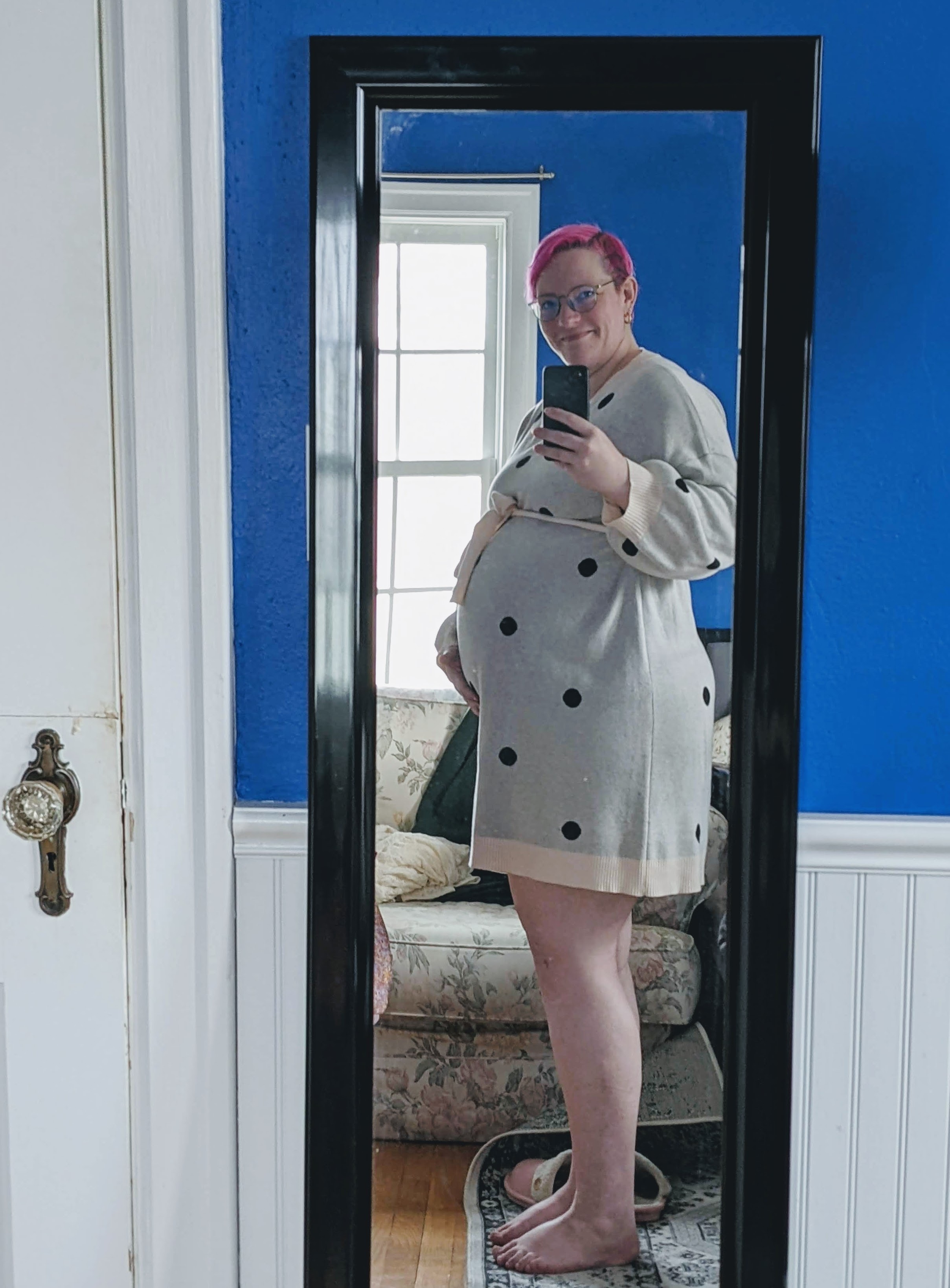
A pregnancy selfie.
The noose only tightened when we got to the blood glucose testing stage of the pregnancy and found that, counter to the reactive hypoglycemia I’ve lived with since the gastric bypass, I was in fact teetering on the edge of gestational diabetes.
At first I was only supposed to be tracking my blood glucose and not changing my diet — I was in an “observational period” — but I knew better than to trust that. I began examining everything that went into my mouth, secretly Googling whether foods were “allowed” with gestational diabetes, and avoiding but also obsessing over carbs.
I fixated on them, at once desperate to eat nothing but bread and pastries and candy and repulsed by my own desperation, my weakness. I hunted down recipes that were diabetes-friendly but not full of fake sugar — I actually found one good one — and bought hundreds of dollars’ worth of keto substitutions for snacks I missed (word to the wise: Kodiak waffles are no Eggos).
My last defenses had failed. After years of nutritional counseling and pushing back against diet talk at work/with my family/among friends/online, I was back to my ’90s California roots: Carbs were the enemy. And this time I couldn’t argue, because it was my baby’s health at risk, not mine.
Advertisement
My husband kept reminding me that this burning hot medical spotlight on my diet was temporary, but I knew something much older and more enduring had been kicked loose in my brain.
And now here I was, being explicitly told to diet, the last scraps of my sanity obliterated by an informational PDF full of condescending, shaming language around food and weight. All the time and energy (and money) I’d spent working toward a release from diet culture felt worthless in the face of this fairly common but intensely triggering diagnosis.
When I emailed my nutritional counsellor about the diagnosis, she ordered me not to look at the pamphlet again and recommended that I work with a certified diabetes educator (CDE) with experience working with people in recovery from eating disorders and diet culture trauma.
And she was right. I can’t overstate the benefit of working with someone who understands the complexities of diabetes, who can view my glucose readings holistically, and who can contextualise my questions and concerns against my history and other restrictions. Every time I leave a virtual appointment with my CDE, I feel infinitely better.
But it doesn’t last. The minute it’s time to eat again, I’m thrown into turmoil. It’s actually worse than my past experiences with dieting, because the rules are less rigid: I’m supposed to eat carbs, but they have to be the right kind of carbs, in the right amounts, alongside the right balance of protein and fat and fibre. It’s enough to make me long for my fat camp days, when some skinny adult would portion everything out for me and I could just eat mindlessly (if miserably).
Advertisement
The constant calculations and carb-tracking and food prep are good reminders of why dieting made me so unhappy for so long. It’s exhausting and all-consuming. But I have to do it, and unfortunately my damaged brain is a little too good at it; I hate to admit that I’m settling into this joyless eating pattern, fighting the diet less every day.
Between my limited food choices and the baby squishing my stomach, I don’t feel much like eating anyway — I have to remind myself to do it, to keep us both alive. This has also caused me to steadily lose weight during the second half of my pregnancy, which my midwife seems a little too happy about for my liking (despite the dark, ancient pride that sometimes oozes up from the deepest parts of me when she mentions it).
The good news is that most of these issues should go away within a day or two after the birth — thinking about the deli turkey sandwich I’m going to make my husband bring me in the hospital is the only thing that makes me actually look forward to labor.
I say “should” because don’t google the statistics about type 2 diabetes after gestational diabetes. But as my CDE points out, it’s just another risk factor like any other. And thank goodness, because the last thing I need is to be obsessing over carbs and glucose readings and how much fruit I can eat when I’m trying to keep this little human alive outside my body.
What’s less certain is whether I’ll be so quick to get back to thinking of food choices as neutral or joyful, instead of as a test of my morality. I can only hope, and prepare — in case my mental health doesn’t “snap back” — to get back to the work of dismantling the lessons of diet culture that were so easy to slip back into.
I stared at the pregnancy test with relief, sadness, fear, longing and regret. “Pregnant,” it said.
I tried to breathe. I guess I couldn’t have that glass of wine I had been planning after all. In fact, the reason I bought the test was that I wanted to drink. I hadn’t for the past several days because I started to become alarmed that my period was so late. Holy buckets. Pregnant! How did this happen?
Oh yeah, that one time I had unprotected sex. I didn’t bother taking the morning after pill because I figured I was too ancient for something to happen.
Advertisement
I honestly didn’t think I could get pregnant. I spent my 20s doing everything in my power to prevent such an occurrence, including taking the morning after pill numerous times.
Then in my 30s, I came around to the idea that I actually did want to have a kid and tried to conceive with my partner at the time. I went off birth control for years with no result. I looked into going to a fertility clinic, but the cost was prohibitive.
In my late 30s, my inability to get pregnant caused acute pain and an ongoing feeling of loss. When I turned 40, I was finally able to come to peace with what I assumed was my own infertility. When I turned 42, I figured that window had closed.
Then I found myself about to turn 43 and pregnant by someone I’d met on Hinge and with whom I had four dates.
Advertisement
I paced and paced, my mind spinning. This thing I wanted for so long finally came to fruition. A baby! I never considered getting an abortion, despite the less-than-ideal situation of being without a partner. Yes, I was scared of all the risks of having a kid as an older mom, but there was no way I’d let this chance pass me by.
I started to think of baby names right away, and before I even told anyone, plotted scenarios of how on earth I would make it work. I’d need to get a two-bedroom apartment, I thought. Maybe my parents could help with child care. Or I could ask my nieces and nephews to help babysit. I plotted and schemed how I’d make it work.
I didn’t tell anyone until the next day. The first person I called was my sister. “I think I’m going to keep it,” I found myself saying.
I told a few other close friends. Everyone was supportive, though some encouraged me not to make my decision right away about keeping it or not. I said I would think about it to appease them, but I had already made up my mind.
“I began to see how people in early pregnancy should instead lean into their community. If the worst happens, then the village is there to offer support. Why keep things secret and battle that loss alone?”
Advertisement
I found it very difficult not to tell people my happy news. I wanted to share it with the world, but I didn’t even tell my parents, nor did I tell the Hinge guy, who I hadn’t spoken to in two months. I knew I would tell them, but I felt I needed to wait.
I had heard you weren’t supposed to announce your pregnancy until you were 12 weeks along. I had people I was close to encourage me to wait until that long to share widely, but I didn’t understand why.
Abortion stigma and miscarriage stigma are two sides of the same coin. In both cases, instead of seeing reproductive health as simply that — a part of a person’s overall health care, it’s instead loaded with politics and morality. One sequence of events means you are a terrible person, another sequence of events means you somehow are lacking as a real woman.
One-quarter of pregnancies end in miscarriage. We are told to keep early pregnancies private in order to be spared the pain of sharing our loss. I began to see how people in early pregnancy should instead lean into their community. If the worst happens, then the village is there to offer support. Why keep things secret and battle that loss alone?
A week and a half after I found out I was pregnant, I was reading on the couch, and I felt a sudden gush of liquid. I went to the bathroom and realised I was spotting. I happened to have my first ultrasound appointment the next day, and I was prepared for the worst.
Advertisement
At first, when the technician began the ultrasound, I didn’t realise that my insides were being projected on the screen in front of me. I opened my legs apart so I could see the image. I gasped. I saw the most miraculous thing. It was my very own little nugget right there!
Finally, the technician took the wand out and told me she was very sorry but couldn’t detect a heartbeat. It was like she jabbed me with a knife. I started crying then, and she took me to a private room so I didn’t have to go to the waiting room.
I immediately regretted not telling my parents. I needed my mom more than ever. Why hadn’t I shared with her the truth from the beginning?
“Our culture has a long way to go to support people who get pregnant, and that starts with getting rid of the shame of miscarriage, the politicization of abortion, and the judgment of not having children at all.”
I felt shame too, about the people I had told. Now I would have to tell them about the miscarriage. But then I started to question myself. Wasn’t it a good thing to seek support when something terrible happens? Why should I feel ashamed?
Advertisement
It took three more weeks for the miscarriage to actually happen. I decided to wait for it to happen naturally, and I ended up needing to go to the emergency room. It was traumatic, and yet I still felt hesitant to share with people outside of my closest circle.
I didn’t truly feel comfortable saying it was a loss, but it was. That doesn’t negate other people’s experiences of becoming pregnant and deciding to abort. Those two truths can exist for different people. For me, I lost someone I wanted to meet and love. I had to say goodbye before they were even born.
Our culture has a long way to go to support people who get pregnant, and that starts with getting rid of the shame of miscarriage, the politicization of abortion, and the judgment of not having children at all.
That’s why you should share whenever you feel compelled to share. For me, keeping the news bottled inside me ended up preventing me from getting all the support I needed. Maybe other pregnant folks want to wait a bit longer.
The important thing is that as a society, we need to stop telling people they have to wait until some arbitrary predetermined date. Get rid of the stigma around miscarriage and start caring for people at all stages of their pregnancy journey, even pregnancies that don’t come to term.
Advertisement
Help and support:
Sands works to support anyone affected by the death of a baby.
Tommy’s fund research into miscarriage, stillbirth and premature birth, and provide pregnancy health information to parents.
Saying Goodbye offers support for anyone who has suffered the loss of a baby during pregnancy, at birth or in infancy.
Brenda Seltzer was still in the hospital, having just delivered her son, when her family started asking when she was going to have another one.
“Everybody was like, ‘How long are you going to wait until you have the second one?’” Seltzer, 33, told HuffPost. “I was like, ‘He was just born. What do you mean a second one?’”
Advertisement
Before she got pregnant, Seltzer had assumed she and her husband would have two children, but almost immediately she began having doubts. Her birth was hard and Seltzer required a blood transfusion. Finances also came into play. Seltzer and her husband both work full time, and her son’s full-time preschool cost nearly $20,000 a year.
“We started questioning: Why would we have two? I had a bad birth experience … we were working full time, and we didn’t have much help with family nearby,” said Seltzer.
By having one child, they’ve been able to put money toward fun family activities, like a pre-COVID cruise and a family season pass to Disney World. They’re also able to pour themselves into playtime with their son when they’re not at work.
“We can have a great relationship with him,” she said. “We enjoy being with him.” Having “just” one child was the perfect choice for her family.
Advertisement
And they’re not alone. The number of American parents who have one child has been steadily increasing for years. According to data from the Pew Research Center, the proportion of moms at the later end of their childbearing years who have one child doubled from the mid-1970s to 2015 — from 11% to 22%.
For many parents, the choice to have one child really comes down to knowing — and honouring — themselves and their particular circumstances.
“I chose to give my child a healthy and happy parent instead of a sibling,” said Amanda Pacovsky, 36, who has a 7-year-old daughter with her husband. She grappled with undiagnosed postpartum depression and anxiety, which “really took a toll on my mental health,” she told HuffPost, and could not imagine going through that again.
“What one-and-done parents are sick of is having their choice looked down on, or having it dismissed as a passing phase. They resent the notion that they’re not just as joyful about their family arrangement as a family of two or three or more children might be.”
Her choice was also rooted in the desire to be able to afford extracurriculars for her daughter. Currently, she’s into cheerleading and running, but they’ve also signed her up for soccer and dance without fretting too much about whether they can afford it.
Advertisement
“We are definitely not wealthy,” Pacovsky said. Having just one child gives them some financial breathing room — because as any American parent can attest, having kids is wildly expensive. It costs more than $230,000 to raise a child from birth through age 17, and that is without factoring in college.
Pacovsky and her husband are really happy about the decision they made to have one child, but she is struck by how many people in her life are not — or assume that must not be the case.
Like Seltzer, she’s spent years having her decision dismissed, with family and friends telling her that she will eventually change her mind. Or noting the (debunked) stereotypes that only children are spoiled. Or even asking her what will happen to her daughter when she and her husband die. Pacovsky started a popular Instagram page dedicated solely to one-and-done parenting memes to, as she puts it, squash the stigma of being an only-child parent.
One-and-done families say that stigma is real. Despite the steady rise in only-child households, Americans still generally think of larger families as “ideal.” About 50% of Americans say two children is best, while 40% say three or more is ideal. This in spite of research suggesting that having a second child doesn’t make parents any happier — and may specifically cause women’s happiness to dip.
Ultimately, what one-and-done parents are sick of is having their choices looked down on, or having their desire to have one child dismissed as a passing phase. They resent the notion that they’re not just as joyful about their family arrangement as a family of two or three or more children might be. (Of course, some families have one child because of infertility or a death or other reasons out of their control.)
Advertisement
“Our son is amazing. I know everyone says that, but our son has changed our lives. He’s the perfect blend of both of us,” said Meredith Rufino, 39, who has a 6-year-old son. “He brings out the best in my husband. He brings out the best in me. He has truly been a blessing.”
Her friends and family have been puzzled by how it is possible for her to so obviously delight in parenting — to so enjoy the company of her son — but not want to grow her family to try to replicate the experience.
Rufino, however, wouldn’t dream of it.
“I know myself. I know my own strengths, and I know my own limitations,” she said, noting that she has dealt with depression and anxiety. “I would rather be a great parent to one rather than an OK parent to two.”
We’re living in a time and place in which it often seems the people in charge have no sense of accountability ― whether it’s governors rejecting mask mandates and other public health measures aimed at keeping people safe, or leaders failing to own up to their role in big and small failures.
On an everyday level, many adults don’t understand the consequences of their actions and refuse to acknowledge when they’ve made mistakes. And as always, our children are watching. So perhaps now, more than ever, is the time for parents to focus on teaching kids about accountability.
Advertisement
“Accountability is a way to take responsibility for actions you’re in charge of,” Priya Tahim, a licensed professional counsellor and founder of Kaur Counseling, told HuffPost. “By teaching kids personal accountability, you’re teaching them that mistakes happen and when those mistakes happen, it’s important to learn to fix or grow from them.”
“It helps instill moral values of right and wrong, even when there is no one watching,” she added. “It also allows kids to see that it’s OK to make mistakes, and there are ways to move forward from those mistakes.”
So how can parents create a culture of accountability in their homes? Below, Tahim and other experts share their advice.
Start small.
“Parents are unsure sometimes about when to actually start asking their kids to be accountable,” Sheryl Ziegler, a psychologist and the author of “Mommy Burnout,” told HuffPost. “I feel like it starts when they’re toddlers, and it’s as simple as, ‘We can play with the puzzle but when we’re all done, we need to clean it up.’”
Advertisement
She noted that kids may wander off to play with something else or get a snack when the puzzle is finished, and too often parents resort to just cleaning it up themselves because it’s faster and easier that way. But it’s better to provide opportunities for kids to take ownership of their own little responsibilities.
“If you start early, you start setting the foundation that it’s important to be accountable: ‘Sure we can play with that now, as long as we clean this up,’” Ziegler said. “You can make it fun and have cute cleanup songs like they do in preschool, but bring it into the home to reinforce that this is how the world works.”
Give more responsibilities.
As kids get older, you can give them more things to be responsible for. The key is to make sure the tasks are developmentally appropriate, such as asking toddlers to pick up their toys and books at the end of the day.
“For kids that might be a little bit older, it could look like packing your own lunch, packing your own backpack, making your bed, or putting all of your dirty clothes in the hamper,” clinical psychologist and author Jenny Yip said. “Kids begin to understand that they do have responsibilities, and the choices they make ultimately have consequences. It also teaches them free will and how to be responsible citizens of society ― it’s ‘I do have a part in what happens in the world.’”
Responsibilities lead to opportunities for accountability. Cindy Graham, a psychologist and founder of Brighter Hope Wellness Center, advised allowing children to be Mommy or Daddy’s “helper” ― getting a diaper for their baby sibling, helping out in the kitchen or even picking up groceries when they reach their teen years.
Advertisement
“Kids are likely to continue on with actions they feel motivated to do and find highly rewarding,” Graham said. “Therefore, parents should also ask their kids for ways they would like to show how responsible they can be.”
Teach them about consequences.
“Accountability means taking ownership of the decisions and the choices you make, and accepting whatever consequences those choices come with,” Yip said. “It’s important for every young child to learn so that they understand cause and effect and how the choices they make have consequences, positive or negative.”
There are many everyday opportunities for kids to make decisions or take actions and then experience the natural consequences of those choices, said Amanda Gummer, a child psychologist and founder of The Good Play Guide.
“For example, I suggest don’t fight them if they don’t want to take a coat, but then when they moan about being cold or wet, simply explain that that is why you suggested taking a coat in the first instance, but that it was their decision not to bother. So they now need to put up with the discomfort that results,” Gummer told HuffPost.
“Perhaps they might not want to eat their lunch,” she added as another example. “There’s no need to start an argument or fight about it, but just make it clear there’s nothing else to eat until dinnertime and so if they are hungry, they will have to deal with it.”
Advertisement
Children should also understand that even when they experience negative consequences resulting from their choices, there’s always an opportunity to make things better or try again next time.
MoMo Productions via Getty Images
Parents should help their children understand the positive and negative consequences of their actions.
Offer positive reinforcement.
“Don’t forget praise at all age levels,” said Lea Lis, a psychiatrist who works with both children and adults. “Parents tend to notice when kids mess up, but when they are doing really well, they ignore it. Praise your child that is doing well with their accountability at all times, and catch them being good!”
Kids should learn that taking responsibility isn’t just about negative consequences, but about positive rewards as well. In addition to verbal praise, positive reinforcement can also come in the form of allowance for doing chores, gold stars for good behavior or a reward chart to earn prizes.
The important thing is to just acknowledge their accountability in some way, even with the little things.
Advertisement
“If they cleaned their room or made their bed on their own, you want to reinforce that,” Ziegler said. “You can say something like, ‘Good job this morning! I really appreciate how you made your bed, and I didn’t even have to tell you. That makes the morning so nice. Now we can get out of the house and go to the pool sooner.’”
Model accountability.
“I believe the primary way parents can teach their kids accountability every day is to model these behaviours,” Graham said.
She recommended that parents set an example by actively and openly practicing taking accountability for their actions. This can involve things like apologizing when they make mistakes, acknowledging when their behaviors or emotions are more extreme than a situation warrants, or identifying ways to make amends when they hurt others.
“Children are likely to repeat what they see others doing, so it is important for caregivers to be aware of the lessons kids are learning from them,” Graham said.
Parents can also use examples from their kids’ favorite shows and movies to talk about how the characters take accountability for their actions.
Advertisement
Show consistency.
“I would say consistency is the most important thing a parent can do while teaching their kids to be accountable ― consistency in how they handle times their child doesn’t take responsibility, or creating and following family rules,” Tahim said.
She recommended teaching children to follow a routine, such as waking up, brushing teeth, making the bed, showering, etc. Although parents are often exhausted, it’s valuable to make sure kids are adhering to these steps on a regular basis.
“As adults, we know that not brushing your teeth or not showering can not only have physical consequences, but social,” Tahim said. “So if you teach your child to follow a routine and they don’t follow through, it’s up to the parents to correct that action. In many cases, parents will often set rules but not follow through on the consequences once they set them. This behaviour promotes irresponsibility by teaching kids that their behaviour is acceptable and they don’t have to accept responsibility.”
Discuss the feelings involved.
Teaching a kid accountability can also help them learn how to process their feelings in an appropriate way, Tahim said.
Of course, everyone gets anxious, upset, angry and so forth. Being accountable involves learning to take charge of your emotions and process them in healthy ways, such as taking deep breaths, journaling or talking about how you feel.
Advertisement
“For example, discourage throwing things, hitting, biting, yelling as a form of anger release. Instead, try to have them release in a healthy way and be accountable for how they feel,” Tahim said. “Encourage them to explore what triggers their feelings and ways they can accept responsibility for those triggers.”
Be open-minded.
“The more open-minded a parent can be in teaching their kids accountability, the better,” Graham said. “Remember, kids will make mistakes. Parents should take care to self-regulate and not have large emotional displays when their kids struggle with accountability. This can lead their child to be less likely to want to talk about times where accountability is difficult for them.”
It’s also important for kids to understand the difference between the things they can and can’t control.
“Good mental health comes from correctly taking responsibility for things within their control ― for example, how hard they study for an exam ― while not taking responsibility for things they can’t control, like the disruption to schooling because of COVID, the lockdowns and home schooling,” Gummer said.
Parents can help their kids recognise the difference and ensure they don’t take responsibility for things they shouldn’t. Psychotherapist Noel McDermott emphasised that children often have an egocentric mindset in that they think bad things happening around them are their fault.
Advertisement
“A child might feel responsible for their parents’ feelings, so it’s important to model healthy boundaries around this,” he told HuffPost. “Mostly this will be achieved by, as parents, making it clear that your child cannot lose your love, and also by modelling and explaining when Mummy or Daddy is upset, it’s never because of them.”
Promote their independence.
“You want to build up an accountability system that eventually doesn’t rely on you,” Lis said. “For example, you might want to help them with their organisation skills or homework when they are in elementary school, but eventually, you want them to figure out how to check their assignments and organise their desks and rooms without your help.”
While you may reward your children for doing their homework when they’re young, consider longer stretches of time between such reinforcements as they get older (i.e. only rewarding bigger milestones like good report cards for teenagers).
Promoting their independence and sense of accountability also empowers kids to take ownership of their successes and failures.
“This reduces children blaming other people for things that go wrong and also helps kids feel good about themselves when things do go well, which also builds confidence,” Yip said. “Essentially, being accountable builds resiliency.”
When I was 8 years old, my mom, who was about 20 weeks pregnant, flew to Boston with my then-stepdad. She returned without a bump or a baby.
When she got home, she was devastated. So was I, because I’d always wanted a little sister. I’d been thrilled when my mother’s belly started to grow, and people began congratulating her everywhere we went.
Advertisement
She’d remarried less than a year before that, and the transition of having a new man in the house had been tough for my younger brother and me. A new baby was something we could all rally around, so it was especially difficult for all of us when my mom started experiencing complications.
At the beginning of her second trimester, right after she’d started telling people she was pregnant, she began bleeding and cramping. I spent a lot of afternoons at my cousin’s house while my mom attended doctor appointments. She’d return to pick me up, and I’d find her whispering in the driveway with my aunt. One night after dinner, we had a family meeting where she told us that the baby had a heart problem and would need surgery right after it was born.
The bleeding continued, and there were more doctor appointments and late-afternoon pickups and whispered conversations. A few weeks later, my mom went to Boston. When she returned, a new word was added to my second-grade vocabulary: miscarriage. At the time, I was old enough to know the baby was gone, but too young to understand or remember any specifics.
Still, my mom’s “miscarriage” shaped my perception of pregnancy. I understood its fragility.
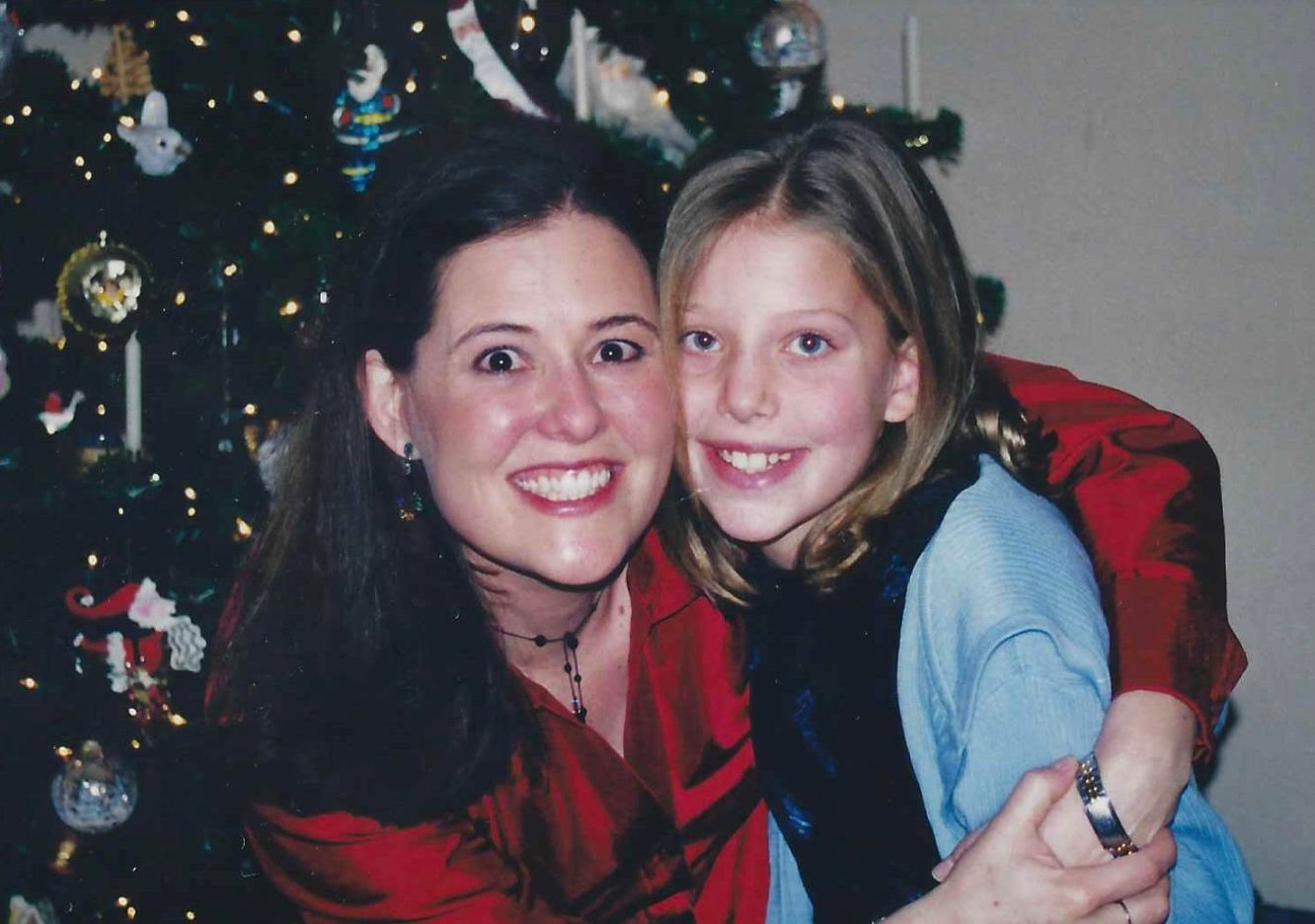
Courtesy of Sarah Hunter Simanson
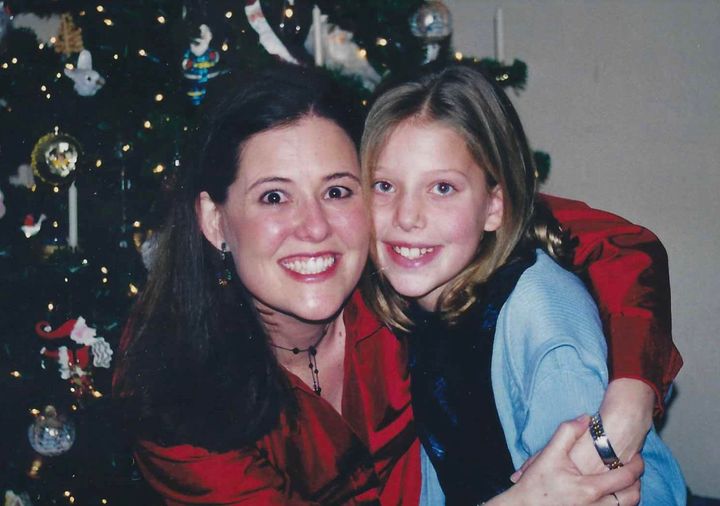
The author and her mom at Christmastime when the author was in elementary school.
Advertisement
In the fall of 2017, just as the Memphis air was turning from humid to crisp, my mom and I went for one of our regular morning walks. She was between chemo treatments for the stage 4 cholangiocarcinoma she was battling, and I had just taken my first positive pregnancy test. I hadn’t told her yet. My mom didn’t even know my husband and I were trying. I was only about four weeks pregnant, and I was afraid of getting her hopes up at a time when she really needed things to believe in, so I decided to wait to share my news until my doctor detected a heartbeat at the six-week appointment and I had an ultrasound picture to show her.
As we walked under the canopy of brown and burnt orange leaves, I asked her questions about when she was pregnant with me: “How did you feel? What was it like? Did it hurt?” This was something I’d started doing about many different topics ― I sought out information I wanted to know from her and asked questions while she was still around to answer them.
But that morning, my mom didn’t have many answers about when she was pregnant with me. “I don’t remember,” she told me. “You forget the hard parts, so you can do it again.”
We walked around a big curve in the road, and I thought about the poppy seed-sized embryo inside of me. My mom turned to look at me. I expected her to offer some insight about morning sickness or food cravings, but she changed the subject.
”You know it had genetic abnormalities, too?” she said out of nowhere. Actually, I didn’t know this, because she never talked about the baby she lost. ”My body kept trying to abort it, but it couldn’t. That’s why I kept haemorrhaging.” Her voice was faraway as she mentally traveled back to that time.
Advertisement
Now, almost four years after my mom’s death and five years after that conversation, I still remember it vividly — the crunch of leaves under our feet, the exact bend of that road, the mild weather of the day. The moment was a glimpse into the experiences of my mom’s that I could never access ― a reminder that she’d die with so many untold stories.
One day last summer, as I watched my two kids playing under the bright pink blooms of the crepe myrtles in our backyard, I began bleeding. It was a very early miscarriage, nothing like what my mom had been through. But it still made me think of her and that conversation. I couldn’t know the extent of her much-worse tragedy, but I, too, was experiencing a third pregnancy that would never be. My miscarriage — this third baby that would not be — made me feel connected to her.
It wasn’t until last month, when Tennessee’s total abortion ban went into effect, that I finally understood my mom didn’t have a miscarriage. Technically, legally, she had an abortion.
Courtesy of Sarah Hunter Simanson
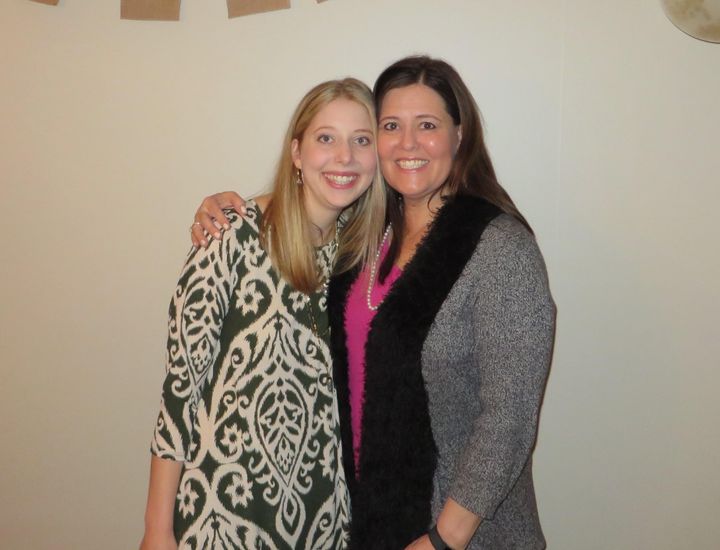
The author and her mom in November 2016. “This was right after I got engaged, two days after doctors found a mass in her liver,” she writes.
Tennessee’s ban is one of the strictest in the country. It does not include an exception for incest or rape, or for the life of the mother. Instead, the law offers the possibility of an “affirmative defence,” which allows the doctor, if charged with a Class C felony, to argue that an abortion was necessary “to prevent the death of the pregnant woman or to prevent serious risk of substantial and irreversible impairment to a major bodily function of the pregnant woman.”
Advertisement
As I read the law’s language and understood that women in Tennessee were no longer guaranteed equitable, potentially lifesaving health care, I thought back to my mom’s words: That’s why I kept haemorrhaging.
I had to know what happened in Boston. I was almost certain the pregnancy had put my mom’s life at risk and that she’d had to get an abortion, but I needed corroboration. I called my great-aunt who lives in Boston, and she immediately answered the questions I’d never known to ask.
“Yes, it was an abortion,” my great-aunt told me. “It wasn’t a viable pregnancy. It was endangering your mom’s life. It was an extremely difficult situation, and she’d had to travel to Boston for the procedure because it wasn’t legal in Tennessee.”
My great-aunt didn’t remember the specifics about why the pregnancy wasn’t viable. I knew there was only one person who’d been to those appointments with my mom and might know everything: my former stepdad.
It took me weeks to text him. We hadn’t spoken since their acrimonious divorce, the year after I graduated from college. I wasn’t even sure he’d be receptive to these questions. The experience was so long ago, and it had been so painful.
Advertisement
But he was immediately responsive, and willing to share the details he remembered. He told me the foetus had a chromosomal abnormality, misshapen kidneys, a hole in the heart, and structures at the oesophagus and rectum that prevented the processing of amniotic fluids. My mom’s health was also at risk because she kept bleeding. The neonatologist said they needed to make a decision.
The specialist referred them to an abortion clinic in Tulsa, Oklahoma. When my mom called the clinic for more information, the receptionist warned her that patients were usually harassed when entering the facility. So my mom called her aunt in Boston, and she connected her to a doctor at a hospital there.
Photo by Madison Yen
The author’s mother holds the author’s daughter a few minutes after she was born in August 2018. “It is one of the few pictures I have of them together,” the author writes. “My mom’s health declined quickly, and she died four months later.”
Even though the baby had chromosomal abnormalities and too many physiologic issues to correct, and even though my mom’s body kept trying to abort the baby naturally, it was still an unthinkable decision, my former stepdad said. They sought counsel from their Episcopal priest and diocesan bishop. They consulted another doctor in Memphis. Ultimately, the doctor in Boston reaffirmed that the foetus was not viable and wouldn’t live if carried to term. Because of this, and because of the risk to my mom’s health, they decided to proceed with the abortion.
I’ll never know what my mom experienced during that procedure. Though it was an abortion ― and a choice she made ― she still considered it a “miscarriage,” and went on to describe it that way to the few close friends with whom she discussed it. I know it was traumatic, and that is why my family never talked about it. Most importantly, I know it was a procedure my mom needed for her safety, and one that other women will need for their own.
Advertisement
Chrissy Teigen recently revealed that, like my mom, what she had claimed was a miscarriage was actually an abortion. “I told the world we had a miscarriage, the world agreed we had a miscarriage, all the headlines said it was a miscarriage,” the model said. “And I became really frustrated that I didn’t, in the first place, say what it was, and I felt silly that it had taken me over a year to actually understand that we had had an abortion.”
There are so many reasons why someone may not admit that they’ve had an abortion ― from fear and grief to the nightmarish political climate and simply wanting to keep their medical decisions private ― and all of them are valid. The bottom line is abortion needs to be safe, legal and accessible for anyone who wants or needs one.
Despite the deep trauma of her abortion, I know that my mom was profoundly grateful she could get one. It ensured she’d live and allowed her to keep being my mom. While I did not know my mom’s story until recently, I know that if she were here today, she would be outraged by what has happened in this country ― and what’s still happening. I know she’d want lawyers to challenge the abortion bans that various states have enacted. I know she’d want Lindsey Graham to understand the devastating effect that a federal 15-week abortion ban would have on the health of women and people with uteruses. I know she’d want voters to support candidates who champion abortion rights. And I believe she’d be proud of me for speaking up now and telling her story in the hope that it might matter ― that it might mean something and maybe even help do something.
Ultimately, she’d want women to have access to the procedure that protected her life. And she’d want them to have it regardless of where they are in their pregnancy, or which state they live in.
Advertisement
Sarah Hunter Simanson received her MFA from Vermont College of Fine Arts. Her writing has appeared in Salon, Romper and The Daily Memphian. She is currently working on her first novel.
Anyone who spends time around young children can attest to the fact that picky palates are common. Bold flavours ― especially those that involve heat ― often take little kids by surprise, and many react to the unfamiliarity with loud and adamant refusal. My almost-2-year-old niece, for example, is a mini foodie who loves just about every dish she tries … unless hot peppers are involved. One bite of salsa or guacamole, and she’s in full meltdown mode.
I, on the other hand, have loved spicy foods since I was a toddler (at least, according to my mom), and my adoration for peppers, chilli powder, cayenne, hot sauces and all other capsaicin-loaded eats has persisted into adulthood. That makes me wonder: Can spice tolerance be learned? Can kids develop a taste for spicy foods, even if they’re not immediate fans? And if so, how can a parent go about facilitating this while respecting their child’s preferences?
Advertisement
To answer these questions, we asked licensed nutritionists and dieticians who work with children to provide some guidance on the best ways to introduce young kids to spicy foods — and how to give them the space and the support to decide whether they like these dishes.
Children can begin to encounter seasoned foods at 7 to 12 months.
Most babies begin their foray into solid foods with soft and easy-to-eat items like warm cereal and pureed fruits and vegetables. Generally speaking, these intro foods feature gentle flavours and aren’t seasoned with salt or spices. At around the 7-month mark, though, Los Angeles-based registered dietician Blanca Garcia says that “most families with spicy foods in their cultures start giving infants foods with flavours. [Examples include] beans cooked with onions, garlic or black pepper, ginger, ginger tea and turmeric. For other cultures, spices can also include [mild] curries and garam masala. These foods are not spicy, but they do have flavours that can give the palate the foundation for what is to come.”
Begin by exposing kids to aromatic spices without heat.
As Garcia said, spices that deliver big flavours but don’t include capsaicin (the active component that causes the burning sensation prompted by hot peppers) can whet a child’s palate for more intense spices down the line.
Dawn Kane, a certified food scientist and the regulatory affairs manager for Little Spoon, advises first introducing aromatic spices without heat — think cinnamon, basil, mint or cumin — to kids.
Advertisement
“Start with a small amount to get your little one familiar with the ingredient and gradually incorporate it into more and more meal occasions,” she said. “Adding these spices can help expose your little one to a range of flavours and ingredients, helping to mitigate a future picky eater.”
When it comes to ‘hot’ foods, wait until your child has the ability to clearly say yes or no.
Adding foods with capsaicin to your child’s diet should wait until the child in question can clearly articulate their reaction to these dishes.
Registered dietician and certified nutritionist Reda Elmardi recommends waiting until after the age of 2 to try giving your kids spicy foods, both because of their physical development — she said kids’ taste buds become fully developed around that age — and because children deserve the agency to determine their own comfort levels with hot spices, which can be painful for some people to eat.
Gradually add spice to dishes that your child already enjoys.
Carefully easing your child into the experience of eating spicy food is a smart move.
“Start with a small amount of spice and serve with foods your child already enjoys,” advised registered dietician Johna Burdeos. “For instance, this might be in the form of a spicy dip to go with favourite finger foods, or a spicy sauce or gravy served with noodles, pasta, rice or potatoes. Increase the spiciness gradually, as your child’s tolerance evolves.”
Be careful with the amount of salt you use.
To mitigate the intensity of the spices and/or peppers you use in your recipe — which is always advisable, but especially when you’re cooking for kids who haven’t gotten used to spicy foods yet — keep a close eye on the amount of salt that you’re adding to the dish. Salt can heighten the perception of heat and make a spicy dish feel especially fiery.
Advertisement
Paediatric dietician Cathy Monaghan of Weaning.ie in Ireland urges you to “ensure there is no salt in the spice blends that you are using, and avoid added salt.”
Don’t force your kid to eat spicy foods, but make these dishes available to them if they want to try again.
If you introduce a spicy dish to your child and learn that they dislike it, you may assume that you missed your chance to instil a love of heat in your kid’s tastebuds. Luckily, registered dietician and nutritionist Allison Tallman of SportingSmiles.com assures us that all is not lost — as long as you let your child dictate the pace of future spicy food encounters.
“If your kid continues to disapprove of spicy foods, you can continue to offer them in small quantities, and again, one at a time,” Tallman said. “Do not push your child to eat it, though, as it may build up resentment. Give your child the choice to consume the food when and if desired.”
If your children help you prepare spicy dishes, take proper precautions.
Inviting your children to participate in the cooking process can help develop their overall interest in food, and letting them help as you prep a spicy meal could encourage them to give the completed dish a try. That said, special precautions need to be observed when you and your kids handle hot peppers or seasonings. Kids tend to rub their eyes and faces a lot, which can be very painful if their fingers have touched capsaicin.
Advertisement
“Safety measures for cooking with spicy peppers include being mindful of knives and the hot stove/pans so they don’t get cut or burned. It would also be very helpful to use gloves so they don’t get the capsaicin on their skin or in their eyes and feel those burns,” explains paediatric dietitian Courtney Bliss of Feeding Bliss in Phoenix.
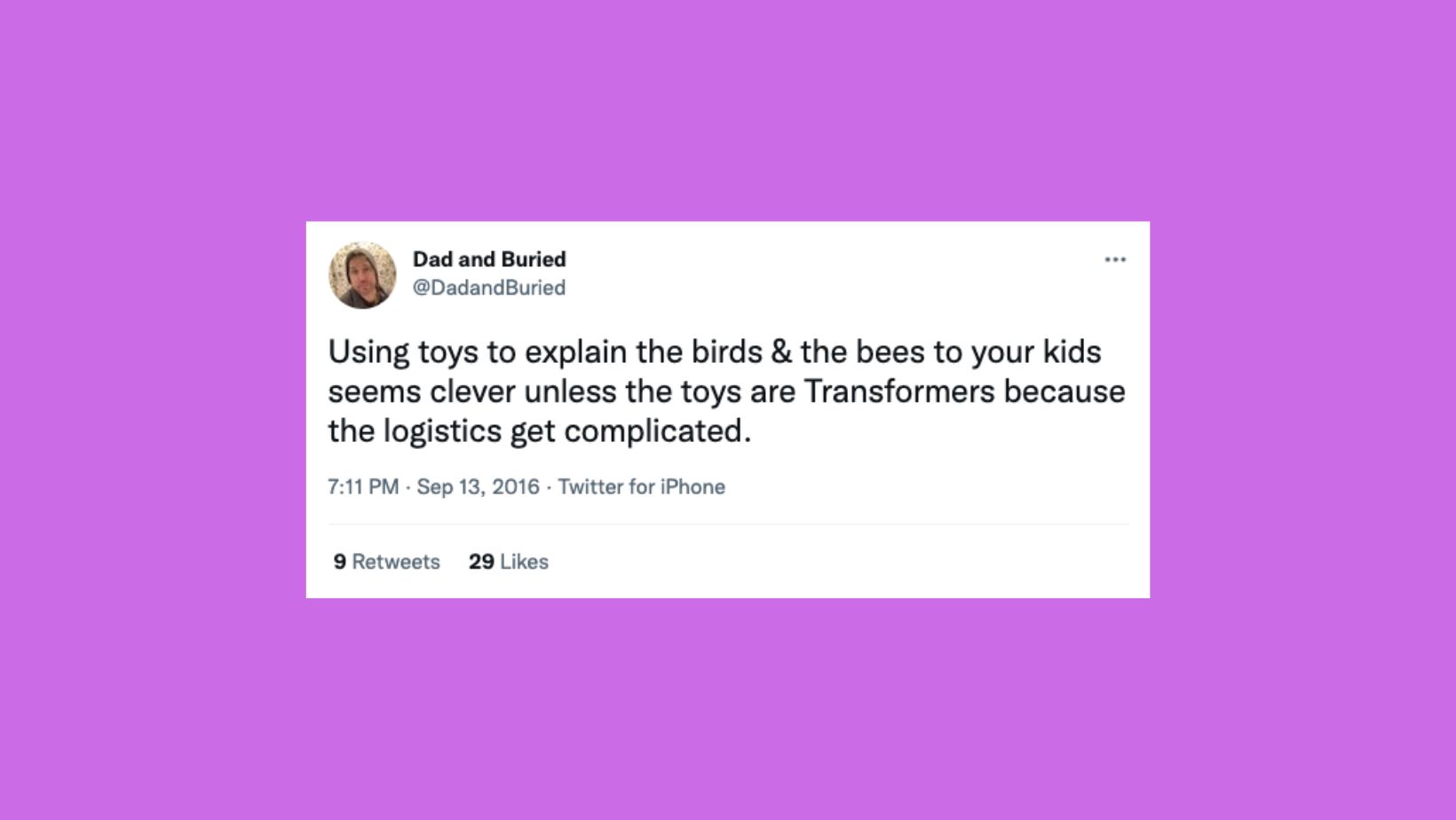
As awkward as it may feel, there comes a time when every parent must have “the talk” with their children. But those early efforts to explain where babies come from don’t always go as planned.
Fortunately, you can always laugh about it! Below, we’ve rounded up 31 hilarious tweets about trying to have the sex talk with your kids.