You’re reading Move, the nudge we need to get active, however makes us happiest and healthiest.
For many fitness lovers, leg day is often the least favourite of the week. But that’s often because of the misconception that you have to push your body to the point of struggling to walk the next day.
Advertisement
Instead, why not try a short but effective lower body workout?
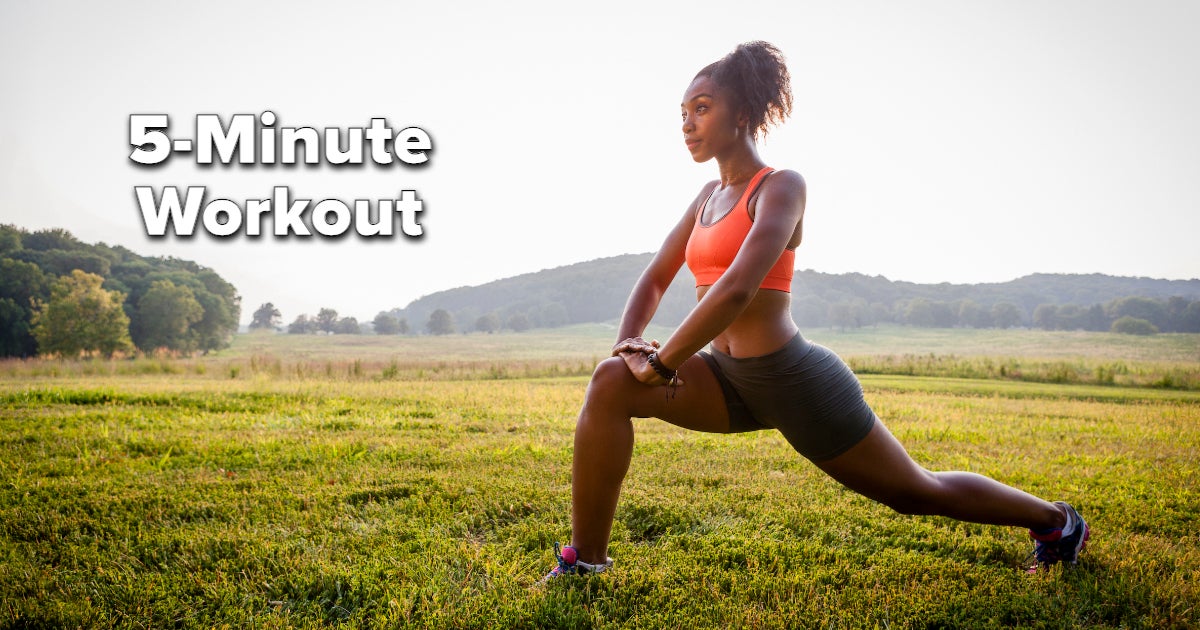
David Wiener, training and nutrition specialist at Freeletics, has shared a five-minute circuit with HuffPost UK that can be added into your next gym session or practiced during spare moments of the day.
Advertisement
“Lower body exercises are beneficial and vital for making daily tasks, such as walking, easier on us. Performing these exercises not only improves your stability, but it is a chain reaction on the rest of your body for helping improve your strength and posture,” he says.
“Ultimately, improving your lower body workout routine will give you lean muscle and achieve a stronger and more toned lower body, including the calves, thighs, hamstring and glutes.”
Advertisement
Try the “no glutes, no glory” workout today and you’ll never* be tempted to skip leg day again.
(*Well, until next week at least.)
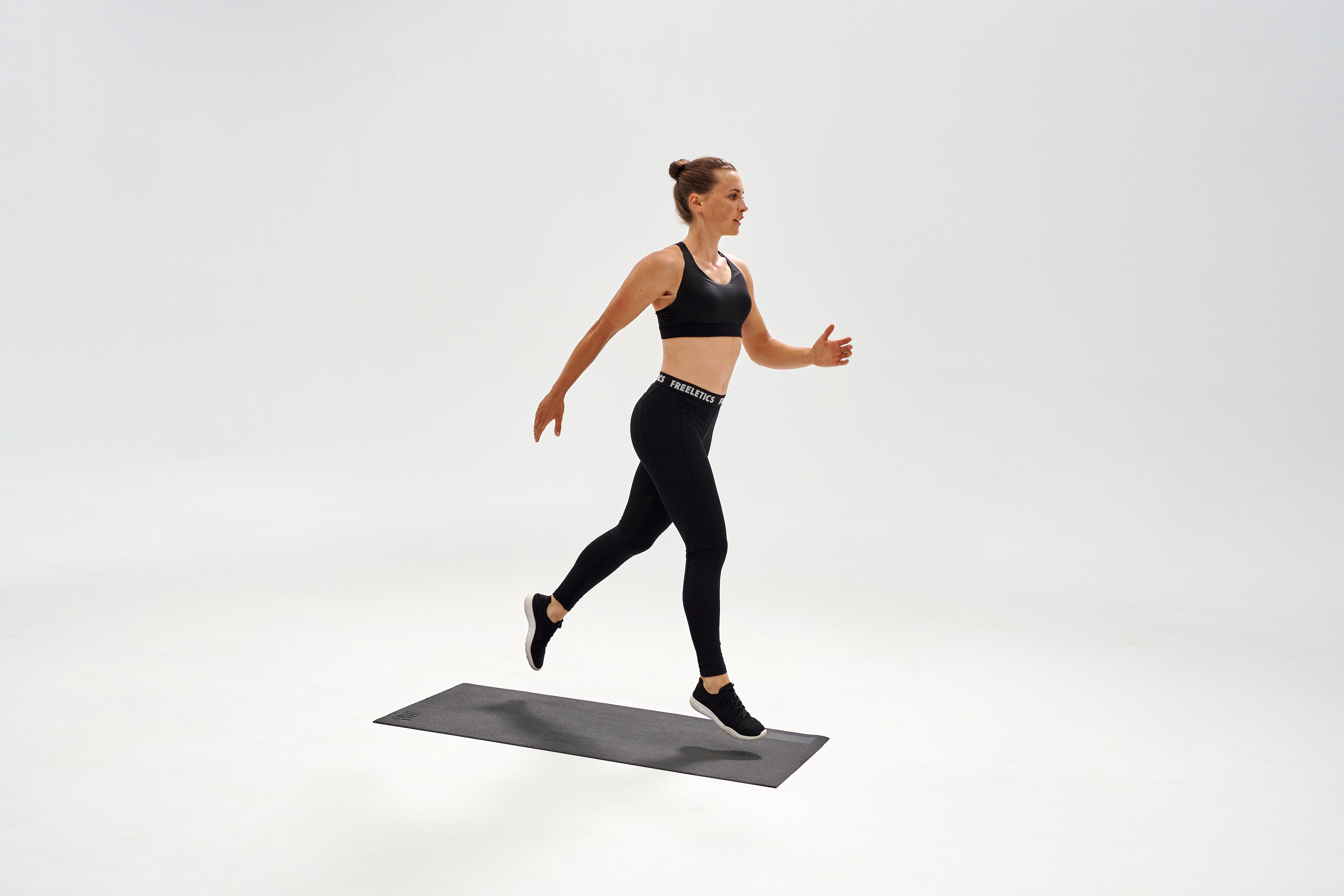
1. Squat Jumps
Freeletics
This exercise is great because it’s an all over body work out, but especially good for the lower body. It can help build your muscle and enhance strength, as well as boost your cardiovascular fitness, tone your lower body, strengthen bones, boost your circulation and burn many calories.
Advertisement
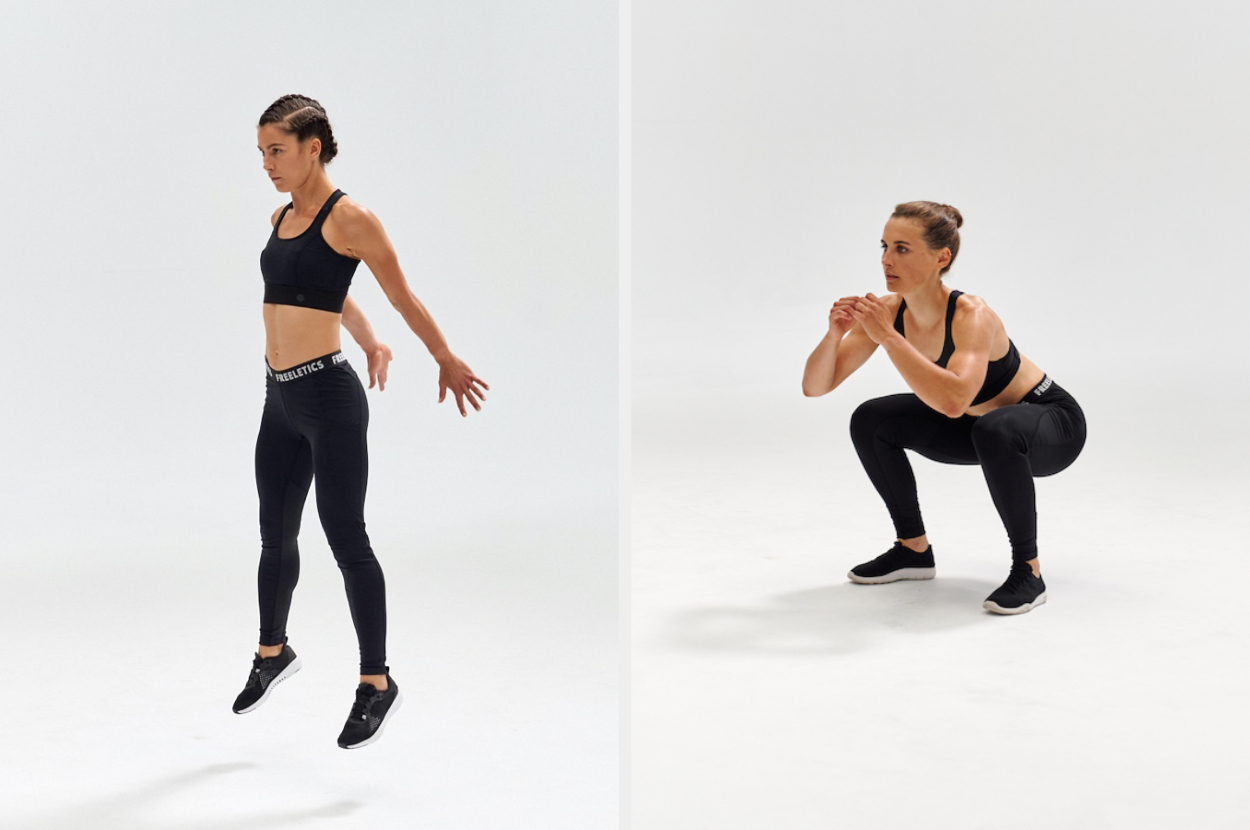
To do one: Start standing with your feet about shoulder-width apart. Point your toes slightly outwards. Always keep your back straight. Always keep hands off your body.
Lower down until your hips are below knees. Jump up so both feet leave ground and then return to the starting position before repeating.
2. Lunges
Freeletics
Freeletics
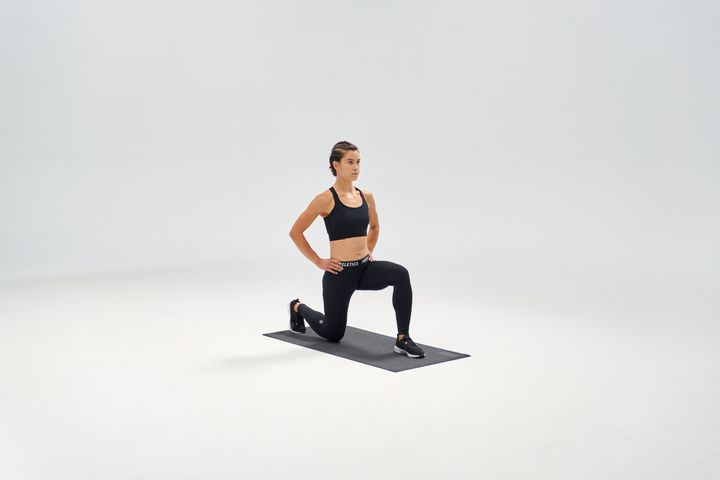
Lunges are a great exercise to increase the muscle mass in your lower body whilst building up your strength and toning. Not only this, they also help to improve your posture, balance and range of motion. Whilst a lot of exercises put strain on your spine, lunges help give your spine a chance to relax whilst working many of the larger muscles in the lower body.
To do one: Start standing upright, with your hands on your hips. Always keep your shoulders above the hips. Step forward with one foot Keep your front foot flat on the ground. Bend your back knee so it touches the ground below your hip Alternate lunging leg for the desired number of reps.
3. Squats
Freeletics
Much like a jumping squat, a normal squat has similar benefits but not as much cardio. Whilst this exercise will of course not burn as many calories as a jumping squat, it is still a great exercise to put your quadricep group of muscles to work. There’s a misconception that squats put too much pressure and strain on your knees, but squats will actually strengthen your knees and make them less prone to injury as you get older.
To do one: Start standing with your feet about shoulder-width apart. Point your toes slightly outward. Always keep your back straight. Always keep hands off the body. Always keep weight toward your heels. Lower down until your hips sit below your knees and rise back up to the starting position
Advertisement
4. Split Lunges
Freeletics

Much like the normal lunge, split lunges are a great way to work your quads, glutes, hips and hamstrings. As they are a unilateral exercise (meaning they only train one side of your body at a time), they are proven to increase your balance and posture too. Not only this, your hip flexor muscles are most commonly tight, but performing split lunges will help you improve the mobility of these muscles.
To do one: Start standing upright. Always keep your shoulders above the hips. Step forward with one foot. Keep your front foot flat on the ground. Bend your back knee to touch the ground below hip. Jump up to switch sides. Make sure your feet leave ground at same time.
Rest.
5. Table Twists
Freeletics
To enhance the flexibility of your lower body and spine, table twists are simple to perform and will stretch out all the major muscle groups in your body, helping to boost flexibility and enhance range of motion.
To do one: Start with your hands below your shoulders, heels below the knees, and hips on ground. Push up until your hips are in line with your shoulders and knees. Reach one hand up and behind you. Return to the starting position. Alternative sides Always keep your arms straight.
Rest and repeat.
Move celebrates exercise in all its forms, with accessible features encouraging you to add movement into your day – because it’s not just good for the body, but the mind, too. We get it: workouts can be a bit of a slog, but there are ways you can move more without dreading it. Whether you love hikes, bike rides, YouTube workouts or hula hoop routines, exercise should be something to enjoy.
On January 22, 1973, the US Supreme Court affirmed in a 7-2 decision the legality of women’s right to have an abortion under the 14th Amendment.
Today, about one in four pregnancy-capable people in the US have had an abortion, and the risk of complications from an in-clinic procedure is extremely low. But before it was guaranteed as a constitutional right, seeking an abortion was a harrowing, potentially life-threatening endeavour.
Advertisement
While some women saved up the cash and sometimes travelled hundreds of miles to find qualified medical providers willing to risk their livelihood by operating on patients, others settled for providers lacking the qualifications and skills to perform induced abortions. And even more desperate people attempted their own abortions.
The outcome of these back-alley procedures or at-home coat-hanger abortions was often devastating, leading to maternal death or lifelong injury. (Complications from unsafe abortions include infection, incomplete abortions, haemorrhaging, uterine perforation and damage to the genital tract or internal organs, according to the World Health Organisation.)
Advertisement
Because these stories were so traumatic – and because the stigma surrounding abortion was even greater in those pre-Roe v. Wade years – many women remained silent about their experiences.
Now, as the US Supreme Court seems poised to overturn the Roe v. Wade decision, it’s worth revisiting their stories to understand what abortion was like in the decades before it was legalised.
Advertisement
HuffPost US recently spoke to eight people who shared experiences of relatives – great-grandmas, grandmas, mothers and aunts – who sought abortions in pre-Roe v. Wade America. Many were already mothers, struggling to conceptualise raising one more child in poverty or, in some cases, with an abusive spouse.
In one story that differs from the rest, a reader shares how her great-grandma, the wife of a well-to-do dentist, was able to obtain a safe abortion in a doctor’s office with little fuss; the story illustrates how white, middle-class and upper-class women have always had an easier time accessing safer abortion options. (As many have noted, women of colour will be disproportionately affected if Roe v. Wade is overturned.)
Below, read all eight stories, which have been edited lightly for clarity, style and length.
“My maternal grandparents married in 1934.By the time my mother was born, it was clear my grandpa was a monster. Violent and cruel, he beat my grandma with a metal lunchbox. When mom was just a few months old, he threw her against a wall. My grandmother fled.
Advertisement
She discovered she was pregnant again. To induce an abortion, she drank a bottle of Lysol. You can Google ‘Lysol abortion’ and see ads from that time that suggested a woman could use Lysol to ‘correct your mistake.’ The ads are quite chilling, their meaning vague and without instructions.
Was reading the Dec 2019 edition of The Atlantic. Learned that Lysol was marketed as a “feminine hygiene” product and often used by women seeking abortions when they were illegal in the US.
It took my grandma 29 hours to die in her parent’s home; they were helpless to end the agony. Living in a logging village in winter, there was no hospital or way to travel to the city.
My mother always felt responsible for her mother’s so-called ‘suicide,’ as children do. Doing genealogy research, I uncovered the full story when my mother was in her late 60s, but her life was already written and the truth brought no comfort. I sometimes think I should never have done the research. There are four generations impacted by this one attempted abortion. We can never really know how lives would be different if she had lived. But I do know my mother’s life was forged by that event, she was an orphan, hidden from her father, never knowing why she’d been abandoned.” – Chuck M., 62, from Washington state
“My mother was a 16-year-old in 1970when she became pregnant as a result of sexual assault. She was living with my grandparents in Southern California, and abortion was not legal at that time. My grandparents were not in a position to get over the border into Mexico to have the procedure done, and they didn’t have access to a safe place to have the procedure done, either. Rather than risking my mother in a back-alley abortion, my grandmother assisted my mother in inducing a miscarriage. My grandmother had my mother sit in steaming hot baths for hours. My mother ingested medications that were considered dangerous to a fetus. They did everything short of physically harming my mother, though my mother did tell me that she was so desperate to end the pregnancy that she considered throwing herself off a high platform or down the stairs.
They managed to successfully induce a miscarriage, and my mother was taken to the local hospital to deal with the effects of the miscarriage and for a dilation and curettage. That worked, but her young body and mental health were not OK. Though my grandmother’s and mother’s intentions were to do something safer than a back-alley abortion, my mother was still at risk of potential harm from the various medications she took. And the foetus would also have been at risk for birth defects and other issues if the medications had not succeeded in a successful miscarriage. It was still dangerous.
My mother told me once that Roe was the single most important law that passed in her lifetime. That she was relieved that other women and people with a uterus would not have to suffer the same circumstances she did. If she were alive today, she would be absolutely shattered.” – Sara from New York
“My aunt Judith was just 17 in 1964 when she became pregnant after being raped on a study date at a so-called friend’s house. She was horrified to find out she was pregnant; she was on her way to college in the fall, and a baby wasn’t in her plans yet. Her doctor suggested a girls home out of town where she could stay until the baby was born and then give it up for adoption; it was her only choice since abortion was illegal.
Judith had tried all the old wives’ tales, jumping backward a dozen times at dusk and even drinking a tea that made her deathly ill just to lose the pregnancy naturally, but nothing worked. A friend of hers, Arbie, who was two years older, had been in Judith’s shoes and had taken care of her ‘dilemma’ herself.
In that summer of 1964, Judith chose to use a metal coat hanger, thinking it would be over quickly and no one would ever know. Her end result was far more than she had ever anticipated, with excessive bleeding and infection that led to a partial hysterectomy and the inability to ever carry a child. She spent nearly a month in the hospital. Her mother found out and never looked at her the same, although she did keep [Judith’s abortion attempt] from Judith’s father, knowing he would have kicked her out and pulled her college tuition. The family was hush-hush about everything, given the era everything took place.
Judith went on to graduate college top of her class to become the first female doctor of psychology in the family. From the outside looking in, her life was perfect: the house, her own office, nice car, all the material things one could ever hope to have, but she had developed a serious drinking problem and her life behind closed doors was, as she once said, ‘exactly what you’d think hell on earth would be.’
Advertisement
I was born in ’72, her only niece at the time, and she doted over me constantly every chance she had. I never suspected anything was ever wrong, although I did always wonder why Auntie Judy had such sad eyes; it wasn’t until puberty hit for me that she warned me of the dangers of having ‘that time’ and told me her story. She explained there were no real options in ’64 but said that because of Roe v. Wade in ’73, I would have more options than she had ever had.
Her desire to be able to carry a child, to be the mother she had always dreamed of, haunted her every waking hour and her dreams, and she was never able to get away from it. In 1984, just a week shy of her 37th birthday, my Auntie Judy hung herself in her attic; the pain and anguish had finally won the battle. Her note was a short novel, telling her story. I was only 12 and was told I wasn’t old enough to read it or understand it, but I didn’t listen. I sneaked and read it, and now I can remember every word, and her pain, longing and anger still haunt me to this very day.” – AJ, 50, from Louisiana
Jared Milrad/Canva
“Like most kids raised by a single mother, I’ve always thought of my mom, Jan, as courageous, resilient and strong. Growing up, she commuted nearly two hours each day ― every day ― to work a low-paying job as a secretary so that my brother and I could have a better future. Despite all that she went through, my mom never gave up and ensured that my brother and I could get the best education and have more opportunities than she did.
But it wasn’t until I was in my 20s that I realised how truly incredible my mom is. One day, my mom shared that she was around my age when she had two abortions. This was 1968-69, when abortion was still illegal in the U.S. and my mom was 26 or 27 years old.
My mom told me that she had her first abortion during this time while dating a much older man. The pregnancy was very unexpected, and because my mom was struggling to make ends meet and didn’t have much support at all, she made the wrenching decision to abort the pregnancy. Because abortion was illegal in the States, the man found a doctor for her in Puerto Rico and agreed to pay for the procedure, so my mom went with my grandma to have it done. They traveled to San Juan and then traveled a bit outside of the city. My mom expected the procedure to be done with anaesthesia, but – horrifyingly – it wasn’t.
‘The abortion was done by a butcher and my mother heard me screaming,’ my mom recalled. ‘I didn’t know that they weren’t going to give me anaesthesia. It lasted for only 20 or 30 minutes, but it seemed like a lifetime. When we got back to the hotel in San Juan, I was in such pain. Then, when I was back in New York City in A&P Grocery a few days later, I noticed that I was bleeding ― haemorrhaging.’
My grandma immediately called a gynaecologist and arranged to have my mom treated in the ER at Lenox Hill Hospital, where they didn’t tell the doctors that the bleeding was caused by an abortion out of fear because the procedure was still illegal. My mom was lucky to survive.” – Jared Milrad, 38
“Today, the majority of women who seek a legal abortion are already mothers. Let me share a pre-Roe horror story about my Italian, Catholic grandmother Mary, whom I never had the blessing to know.
Apparently, on her deathbed in 1943, Mary asked her sister-in-law Florence, who was childless, to take care of her only daughter, but the shameful secret had to be kept. My mom was forbidden to ask questions about her mother or her death. She learned the truth when she was in her 50s from me after years of research.
I was in my 20s when I first began to put together the pieces of a story that just didn’t make sense: a 34-year-old mother of three young children who is hemorrhaging but refuses to go to the hospital. Even the death certificate corroborates the secret. Cause of death: carcinoma of the cervix. But cervical cancer does not generally cause women to bleed to death.
Advertisement
Then, one day in the mid-’70s, we were talking about the Roe decision, and Florence, the woman I knew as my grandmother, let it slip that she had to lend $250 (an enormity in 1943) to one of her brothers because someone needed an abortion. I was stunned; I finally connected the dots. In a typically large Italian Catholic family, Florence had many sisters but only two brothers. One of them, it turns out, was my biological grandfather.
Grandma Mary already had three children she loved: two boys and the middle child, my mom Nancy. With an unemployed husband, a fourth child would plunge the family into poverty.
So the decision was not made lightly, but something went horribly wrong. Mary was just 34 years old and was more afraid of the law (and the judgment of the Catholic church) than she was of dying and leaving her children motherless.” – Lori Bores from New York
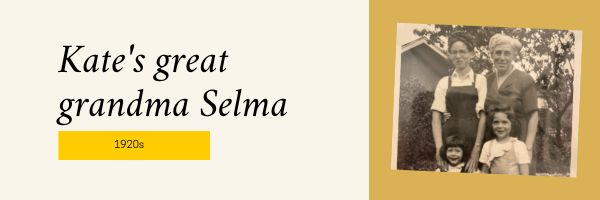
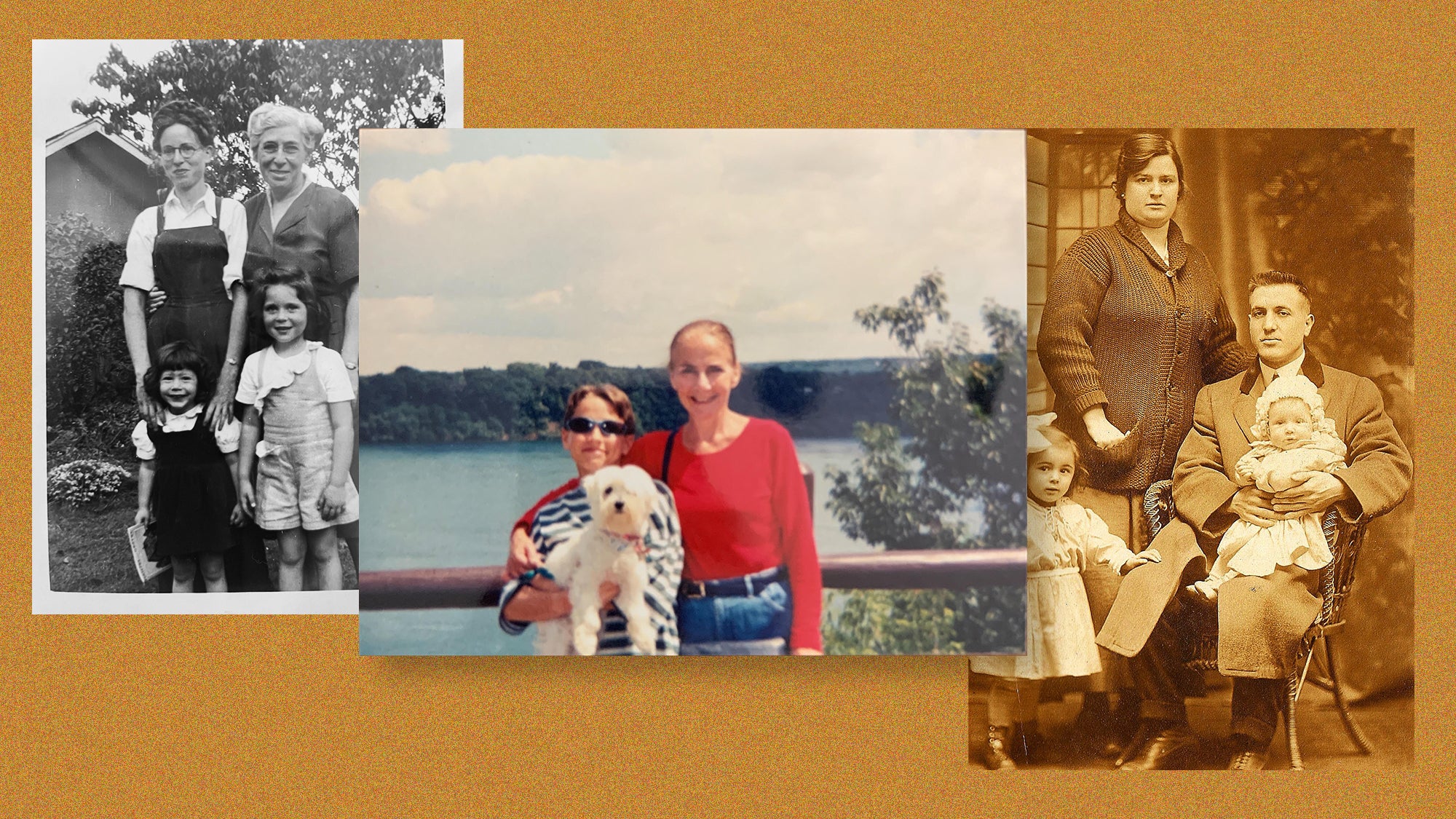
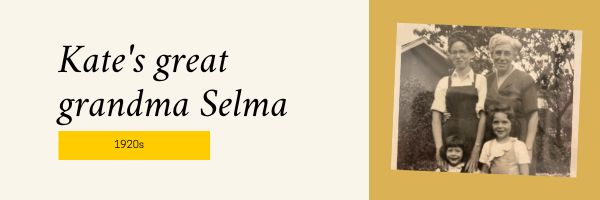
“Great-Grandma Selma Rosenthal (born 1878) was a career woman.Graduating from college in 1901, she was homely and smart, two things that did not make her particularly attractive to suitors of the era. Knowing this, she focused on having a successful career. She was by all accounts very funny, with a wonderful voice and an active circle of friends. She had no expectation that marriage or family were in the cards for her, and she had made peace with that idea.
That all changed when she met Sidney Rauh, a dentist from Cincinnati from a well-off family. It was the 1910s, and she was well into her 30s. Sidney was equally unattractive and clever, and a confirmed bachelor. He had no interest in marrying a girl for her looks but wanted to find someone he could love for her mind. When they met, it was love at first sight, and given their advanced ages, they decided to marry as soon as possible.
Selma quickly became pregnant, only to miscarry the first Christmas they spent together as a married couple. Two daughters quickly followed in 1916 and 1919, but Selma was terribly sick with her second pregnancy and she barely survived childbirth. Her doctor told her, in no uncertain terms, that if she was to get pregnant again and attempt to see it to term, she would die. She promised she would be careful.
A few years later, when she realised she was pregnant, she went to her doctor. The doctor advised her that she had to have an abortion. Sometime later, the doctor performed an abortion in his office, no fuss, no muss. But Selma was a well-off wife of a successful dentist with status in the community. It never occurred to her that what she was doing was illegal or in any way wrong. It was a decision between her, her doctor, and Sidney, and she did what was best for her family and health.
Selma died in 1948 at the age of 62 of a heart attack, having spent time not just with her daughters, but also with her granddaughters, who were five and three at the time of her death.
Great-Grandma was a suffragette and strived for women’s rights. Women’s rights and bodily autonomy were key issues in my family, but I suspect the story would not have been noteworthy had it not been for the fact that abortion became the issue it was later on. My mother and grandmother shared with me how hard things like birth control had been to get in their era, and my mother shared with me the fact that she got a (legal) abortion for family planning reasons. For us, it was just part of normal conversation.” – Kate, 50, from New York
Stephanie Voltolin/Canva
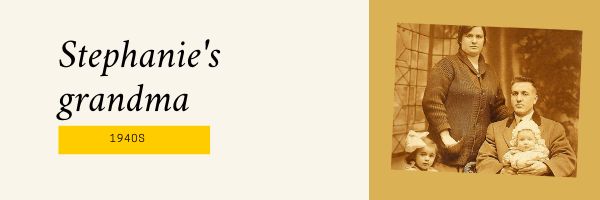
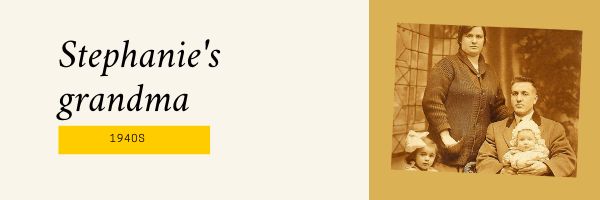
“I was born in the 1960s and grew up in a very conservative Catholic family. Nonetheless, my traditional housewife mother was ardently pro-choice. She even took one of my friends to get an abortion in the 1980s because my friend couldn’t tell her family she was pregnant.
Advertisement
Shortly after my paternal grandmother died, when I was a college freshman, my mother frankly told me during a conversation about choice, ‘Your grandmother had a back-alley abortion and almost bled to death.’
My grandmother found herself – in the early 1940s before birth control or abortion were legal – pregnant and divorced from her second husband, who turned out to be horribly abusive. She decided to leave before he began abusing her three children from her first marriage. Like most women of her day, she had no college education or career to support herself and her children. And, like most women who get abortions, she could barely support the children she had. She ended up having to go live with her parents, who were Italian immigrants.
Faced with being twice divorced and pregnant, my grandmother sought an abortion. Because they were illegal, she had to trust a back-alley ‘doctor,’ who punctured her uterus in the process. She left the procedure, collapsed in the street from the blood loss, and had to be taken to the hospital. An emergency hysterectomy saved her life.
She was an amazing mother and grandmother, and although she died almost 40 years ago, I still become emotional when I think about what a loss I would have suffered had she died from that botched abortion.
The rest of the family never knew. I am telling her story now in the same way that we disclosed our sexual trauma during the Me Too movement to educate others. Legal and safe abortion is critical to women’s reproductive rights as American citizens, and we cannot allow them to expire.” – Stephanie Voltolin
“My great-grandmother died from a botched, illegal abortion in the mid-1930s in Chicago, leaving my grandmother (2 years old) and her sister (4 years old) without a mother. When my great-grandfather remarried, his new wife already had kids of her own and didn’t want to take care of two more. My grandmother and her sister were thrown out of the house and bounced around to different aunts and uncles.
For much of my grandmother’s life, she was told that her mother died of a pregnancy complication due to an ectopic pregnancy. Later, when my grandma was a teenager, her aunt told her the truth: that her mother had died from a botched, illegal abortion.
My grandmother shared her story with me in 2012 when I was 25. We were having an early lunch. I remember she asked me if I wanted a glass of wine, which was odd for her in the middle of the day. We were talking about something else entirely and she said, ‘my mother died of a botched, illegal abortion,’ almost out of the blue, and her story just unfurled from there.
I honestly didn’t think too much about what my grandmother shared. I didn’t think her story was shocking or novel, maybe because abortion had been legal in all 50 states for my whole life. I assumed everyone else in our family knew, so I didn’t think to say anything.
A couple years later, I was catching up with my parents and one of them said, ‘Did you know Great-Grandma Sally died from a botched illegal abortion?’ That’s when I realised my grandma was nervous when she shared her mother’s cause of death with me. She was holding on to this family history and likely carrying with her the shame and stigma or the ‘don’t talk about it’ attitude of her family. It was an ‘aha’ moment for me – a real understanding that likely everyone has a family abortion story, whether they know it or not.
Advertisement
Now our family has a deep understanding that when abortion is legal, abortion is safe. And we know in the decades before Roe v. Wade was decided, people like my great-grandmother were desperate to receive the care they needed.” – Amy Handler, 35, from Oregon
Since 1973, Roe v. Wade has protected the right of all Americans to access safe and legal abortions. But a leaked document published by Politico on Monday shows that the federal protections conferred by Roe may be struck down by the US Supreme Court this summer.
If Roe falls, the legality of abortion will be determined by each state. And though a handful of states are passing legislation that will protect the right to get an abortion, many others — 26 to be exact — are expected to quickly ban or restrict abortions.
Advertisement
If this happens, millions of people in the US will no longer be able to access safe abortion care within their communities. They’ll have to wait longer and travel farther to access help. The impact on people’s mental and physical health – along with their finances, families and livelihoods – will be astronomical.
Despite the misinformation that swirls around the internet (and beyond), abortions are extremely safe procedures. They’re also incredible common – about one in four women will have an abortion by the time they are 45 – and, in many cases, they are life-saving.
Advertisement
“It is a common procedure, it is very safe, and I can’t emphasise that enough. This draft ruling is egregious, it is a basically a war against women,” Dr. Melissa Simon, a Northwestern Medicine OB/GYN, tells HuffPost.
Here’s what people get wrong about abortion
Advertisement
One of the most common misconceptions about abortions is that the procedure is dangerous or detrimental to one’s health.
A report from 2018 examined the safety of various methods of abortion – medication, aspiration, dilation and evacuation, and induction – and concluded that abortions are safe and effective and that complications from all types of abortions are rare.
It’s the barriers and restrictions that legislators sign to prevent patients from easily and swiftly accessing abortion that jeopardise their health. It’s well known that delaying abortion care increases the risk of complications.
Some US states require doctors to tell their patients that there’s a link between breast cancer and abortion – despite the fact that many high-quality studies have put this question to rest, according to Dr. Jennifer Kerns, an associate professor in the department of obstetrics, gynaecology and reproductive sciences at the University of California, San Francisco.
Advertisement
Others fear that abortions cause infertility, but research hasn’t found a link between abortions and the ability to conceive in the future. There’s also no evidence that abortions increase the risk of complications (ie. preterm birth or low birth weight delivery) in the event of a future pregnancy.
Another long-running mistruth is that abortions increase the risk of developing mental health issues. “There is a huge body of work demonstrating that abortion in and of itself does not cause mental health problems,” Kerns says, noting that people often feel relief after getting an abortion.
What we do know is that unwanted pregnancies can cause significant maternal depression and parenting stress. And those mental health issues don’t clear up with time; they are often long-lasting, afflicting the women who carried the unwanted pregnancies to term well into their 30s, 40s and 50s.
“Even in the setting of using contraception and safe-sex practices, having the option of an abortion is critical to the life and both physical and mental health of the woman.”
– Melissa Simon
Many people falsely believe pregnancy is easy to avoid, but it’s not that straightforward. Kerns sees many people, from all walks of life and phases of reproductive health, seeking an abortion. Contraception – though invaluable – is not foolproof. Birth control is not 100% effective; it can fail and lead to a pregnancy.
“Even in the setting of using contraception and safe-sex practices, having the option of an abortion is critical to the life and both physical and mental health of the woman,” Simon says.
Many anti-abortion bills have been labelled “heartbeat bills” because they ban abortions at the first sign of foetal cardiac activity. This nomenclature is wildly misleading – while primordial electrical activity can be detected around six weeks of pregnancy, this does not mean a foetus has a functioning heart. The heart, valves and vessels do not form until 16-18 weeks of pregnancy.
“Just having cardiac activity does not mean the foetus, if born at that moment, would be able to survive,” Simon says.
Restricting abortion impacts people’s health and livelihoods
Evidence shows that being denied an abortion has a devastating impact on one’s physical health, mental health and overall well-being.
The Turnaway Study, conducted by scientists at the University of California, San Francisco, found that women who carry an unwanted pregnancy to term have a four times greater chance of being below the US federal poverty level.
Advertisement
They’re also more likely to experience serious health complications, such as eclampsia and death, and to develop mental health issues, including anxiety, depression and suicidal ideation. They’re more likely to stick with an abusive partner; their life goals tend to take a back seat, and their families’ livelihoods suffer. Many go on to experience chronic pain.
“The health and welfare of the citizens of this country suffer – we see increased illness, we see increased poverty and we see increased death,” Kerns says.
“The health and welfare of the citizens of this country suffer — we see increased illness, we see increased poverty and we see increased death.”
– Jennifer Kerns
Restricting the right to an abortion does not mean the need for an abortion disappears. A recent study predicted that banning abortion will lead to a 21% increase in pregnancy-related deaths; that jumps to 33% among Black women.
Maternal mortality rates are at an all-time high. The US already has the highest maternal death rate among developed nations — and that crisis would only get worse without access to safe abortion.
“There are some women who get pregnant who could die if they continue with the pregnancy, and, therefore, an abortion is a life-saving procedure in those circumstances,” says Simon, adding that those circumstances are not rare. Abortions, in many cases, can save the life of the mother.
Here’s what the fall of Roe could mean for health care
Kerns said the leaked document demonstrates that the court is no longer a neutral group. “It really lays bare how out of touch their rulings are with people’s lives,” Kerns said.
Much of the language used in abortion restrictions and bans – like “abortionists” – really deeply divides people and shames those who get an abortion or provide an abortion.
Simon says the potential fall of Roe reflects a crisis in women’s health care, specifically when it comes to maternal health. The end of Roe would mark a war against women and people who can get pregnant, who, for the record, comprise over 50% of the US population, she adds.
Simon is exceedingly concerned about what will happen to the growing maternal death rate if Roe falls and safe abortion care becomes harder and harder to access.
Advertisement
“That is what I am very worried about in this country – that we are going to go even more in the wrong direction than we already are with respect to caring for over half of our population: women,” Simon says.
If you’re watching EastEnders, you’ll see that Stuart Highway has been struggling with breast cancer.
Creators of the long-standing TV show wanted to shine a spotlight on male breast cancer and actor Ricky Champ, who plays Stuart, has been consulting with real-life victims to gain insight into the role.
Advertisement
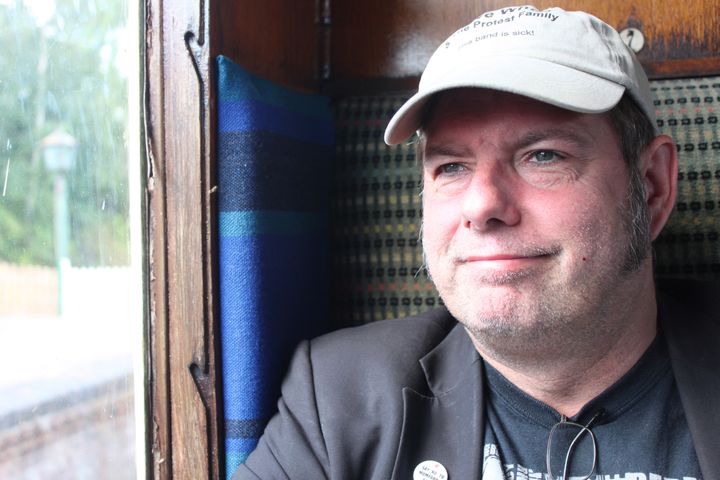
Before the storyline kicked off, Champ met with Doug Harper, 61, from London, who was diagnosed with the condition in 2011.
Just before Christmas, Harper felt a lump on his left nipple which he presumed was a cyst and continued to ignore ‘as blokes do’, he says.
Advertisement
After showing the nipple to a GP, they sent him to hospital and ran tests on Harper, sadly confirming that it was cancer.
“As soon as I showed the nipple to the GP, their demeanour changed immediately and they booked an urgent appointment at the hospital for it to be checked out,” Harper tells HuffPost UK.
Advertisement
“Being told I had breast cancer was a scary and confusing time, not only for me, but also for my friends and family. But everyone was so supportive, some even made light hearted comments about the news to lift the gloom, something they knew I would appreciate.“
Just like Stuart on the soap, one of the reasons Harper felt confused was because he didn’t think it could be breast cancer as it’s not spoken about as much in men as women.
When the oncologist told him he had cancer he says he doesn’t remember anything else apart from asking if he was going to die – he was told hopefully that wouldn’t be the case.
Since having chemotherapy treatment, Harper has become passionate about raising awareness of the condition and informing people that it can happen to anyone, regardless of gender. He is also part of a male cancer support group that he attends monthly.
Advertisement
So when EastEnders came to him to ask about his experience, Harper was glad for the opportunity.
Doug Harper
Doug has been consulting Eastenders actor Ricky Champ for the storyline
He tells HuffPost: “Ricky was brilliant. While he’s been playing the part, he’s identified the problems that men with breast cancer can get, he just really embraced it. He came along to our group support meeting, and it was uplifting because we need more publicity for men with breast cancer.
“The storyline was really subtle, Stuart’s experience of first getting diagnosed was very similar to ours, being in denial, not thinking it was happening and the shock that comes with it.”
Harper mentions that the soap accurately showed how alienating the condition can be as Stuart is handed two leaflets of support for breast cancer patients – but in both, women are pictured.
Doug has set up a male group support for cancer patients
Harper, who has since had chemotherapy, is in a band called Steve White & the Protest Family and has written a song about encouraging people to ‘check their moobs’.
He hopes more men will check themselves, saying: “Just know that men can get it. So, check your nipples, check under your arms. And if anything looks different, it could be a cyst or what looks like a cyst on your nipple, it could be a rash, an inverted nipple, or something else under your arms, if you see it, go straight to your doctor.”
He has also been working with Macmillan Cancer support. The charity’s strategic advisor for treatment, Dany Bell, who has more than 30 years’ experience working as a cancer nurse, added: “Nearly 400 men are diagnosed with breast cancer every year in the UK. But we know it’s still not something that is widely recognised or known by many people.
“Storylines like Stuart’s in TV shows like EastEnders play such a vital role in helping to raise awareness and to make more people aware of the signs of breast cancer in both men and women. Early diagnosis can improve – and even save lives – and we hope this important plot will get more men regularly check their own chests and reaching out for help, if needed.”
If you’re living with cancer and need to speak to people, about the big things and small things, you can contact Macmillan Cancer Support.
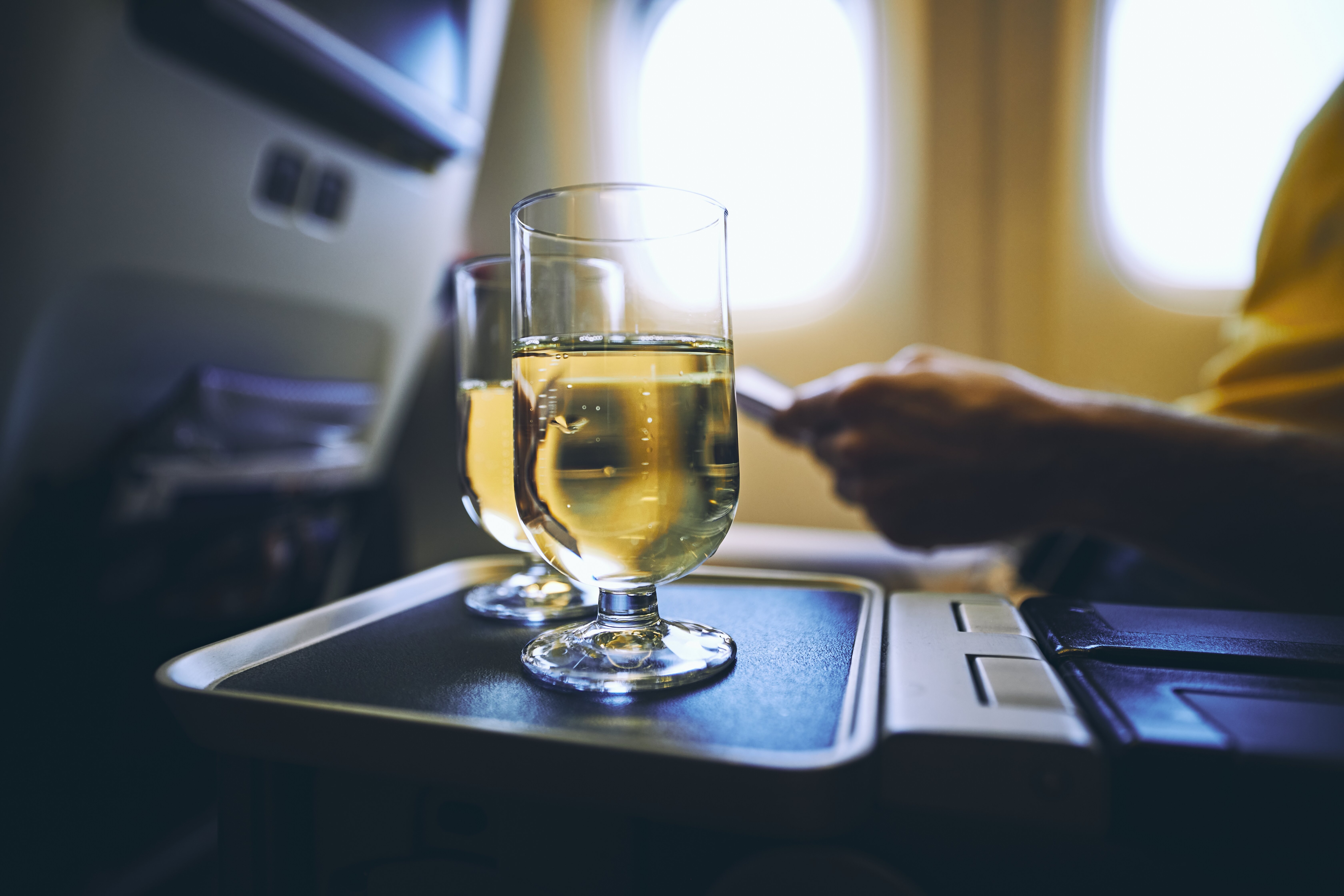
Ordering beer, wine or a cocktail while flying is a common move. For some, having an alcoholic beverage on the plane is a travel day essential to relax, take the edge off, celebrate a vacation or even to fall asleep on a long flight.
We reached out to some experts in medicine and nutrition, and asked if alcoholic beverages were a good idea while flying. Here’s what we found out about how alcohol affects your body while you’re up in the air.
Is it a bad idea to order alcohol on a flight?
There’s no easy answer to this question, experts say. Ordering a beer or wine while flying is a personal decision that might work for one person and not for the person sitting next to them. “If a person is on edge due to flying in general — and doesn’t become more so with alcohol — sometimes having a beverage might relax them or make the process feel a little bit more pleasant or more ordinary,” said Wendy Bazilian, a registered dietitian nutritionist.
But while some may grab a drink as a celebratory kickoff for a long-awaited trip, others may experience side effects while drinking on a plane.
Advertisement
You may not sleep well.
It’s tempting to order a drink in hopes that it will help you fall asleep and get some much-needed rest on an overnight flight. But this isn’t necessarily the greatest idea, according to the experts we spoke to. “Even though you think it relaxes you, your sleep will be disrupted and you likely will not get into REM sleep, the type of sleep that is restorative,” said Amy Shapiro, a registered dietitian at Real Nutrition.
Jaromir Chalabala/EyeEm via Getty Images
You may doze off after a glass of wine, but your sleep won’t be as restful.
Drinking on a flight doesn’t promote restorative sleep but can help some people fall asleep, Bazilian points out. “If in moderation … if she or he believes it helps a little to ease into sleep, then that can be fine.”
You may become dehydrated.
Advertisement
Alcohol is a diuretic, which means your body will increase its output of urine. If you don’t drink additional water to make up for this fluid loss, you may quickly become dehydrated, Shapiro said.
You may become intoxicated without even realizing.
“There is usually very little food available on most flights — or it is not particularly appetizing — and it would be easy to drink too much on a relatively empty stomach,” said Dr. Karen Jubanyik, an associate professor of emergency medicine at Yale University School of Medicine. It would be very easy to drink the same amount you drink at home, but without adequate food intake, this amount might be too much, she said.
There’s also the fact that most people are pretty sedentary on a flight, rarely leaving their seat. When you do get up, you may find you’re feeling the effects of alcohol more than expected.
You could become disruptive.
We all know that drinking alcohol can lower inhibitions. This could cause an individual to become loud and disrespectful to the flight crew and fellow passengers. People with lowered inhibitions may have a harder time staying calm when annoyed by small inconveniences and actions of people nearby, like a fully reclined seat back. “If someone has lowered inhibitions, they may speak their mind or start a confrontation with another passenger over relatively small things, which can also land them in trouble,” Jubanyik said.
You may have trouble moving around the plane.
“Progressive intoxication can lead to slurred speech, trouble with coordination and trouble walking,” Jubanyik said. “Just walking to and using the bathroom or exiting the plane could be difficult.”
The good news? You can drink on a flight if you keep some recommendations in mind.
Sipping a cocktail while commuting home from a work trip or while en route to a vacation doesn’t carry a ton of benefits, but you can still enjoy a drink while flying if it’s a behavior that works for you.
Advertisement
“It can be helpful in relaxing you or easing anxiety in the beginning, and since many people are anxious flyers, this can help,” Shapiro said, while also pointing out that drinking too much can lead to increased anxiety and have a boomerang effect, so it is important to know your limit.
Sometimes you may just want to order a drink simply because you feel like having one (many of us regularly do so after work or on the weekends), and this is fine when done in moderation and with a few tips in mind.
Don’t drink on an empty stomach.
If you plan to drink alcohol on a flight, pack some snacks and make sure to eat a meal before boarding if you know there won’t be any in-flight food service.
“Eating food alongside alcohol can help maintain energy and steady blood sugar while your body processes the alcohol,” Bazilian said.
Stay hydrated.
The experts we spoke to recommend alternating each alcoholic drink with at least one or two glasses of water. “This will help you to remain hydrated and to feel the negative effects less,” Shapiro said. Electrolyte drinks can also help, and if you have the chance, fill up your water bottle in the airport before takeoff. Water and other nonalcoholic drinks aren’t always readily available throughout the flight, so sometimes it’s just easier to carry your own.
Don’t drink if you’re going to be renting a car upon arrival.
“It is particularly a bad idea to drink alcohol if you will be renting a car and will need to drive upon arriving at your destination,” Jubanyik said. “Even if not technically drunk, driving in an unfamiliar location will likely require additional attention and reaction time than one needs in their local environment.”
Pace yourself.
Advertisement
It’s easy to drink quickly on a flight or to grab another drink simply as a way to pass time. Along with staying hydrated and taking a breather between drinks, Bazilian recommends paying close attention to how much alcohol you’re consuming. “One of those little alcohol bottles on a plane is typically 1.5 or 1.7 ounces, not a 1-ounce pour, and the mini-bottles of wine may be more than a 3-ounce pour. Just be aware that one drink [on a flight] may be more than you count as one when you’re on the ground.”
You’re reading Move, the nudge we need to get active, however makes us happiest and healthiest.
Re-establishing your fitness routine after having Covid can have major benefits for your physical and mental health, but it needs to be approached cautiously if you’re still experiencing long Covid symptoms.
Advertisement
The NHS advises those experiencing long Covid to ease themselves back into exercise slowly. “Exercise is very important for regaining your muscle strength and endurance but this needs to be safe and managed alongside other long Covid symptoms,” it says. You can read further information about exercising after Covid infection on the NHS website.
Jeannie Di Bon, founder of the Moovlite app, is a movement therapist specialising in working with people experiencing chronic fatigue and chronic pain. More recently, she’s been designing workouts for those experiencing long Covid.
Advertisement
“You may find that your energy levels have dropped post-Covid and you may experience fatigue and post-exertion malaise (PEM),” she explains. “With this in mind, I recommend taking it gently and slowly. We need to keep the nervous system calm to allow the body to repair and we need to start moving without causing a fatigue flare-up.
“Listen to your body and try not to push yourself to pre-Covid fitness too soon. The more you fight the impact of long Covid, the harder it may be to recover.”
Advertisement
Below, Di Bon has shared a gentle, five-minute workout created for those who feel ready to start moving again.
But remember, always speak to a healthcare professional about resuming physical activity if you’re experiencing chest pain or severe breathlessness, or if physical activity is worsening your long Covid symptoms.
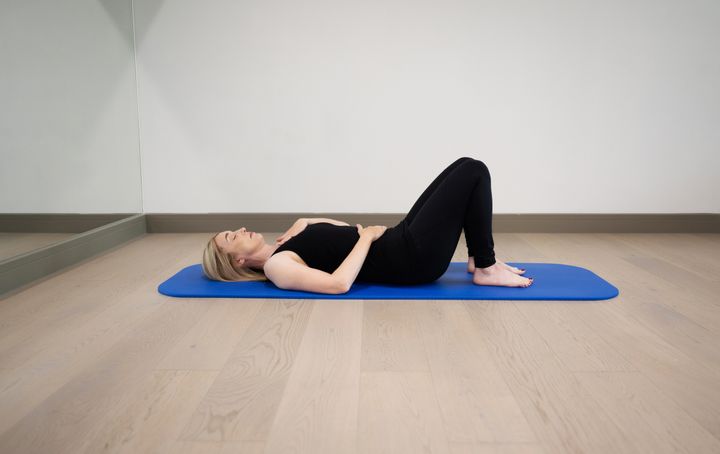
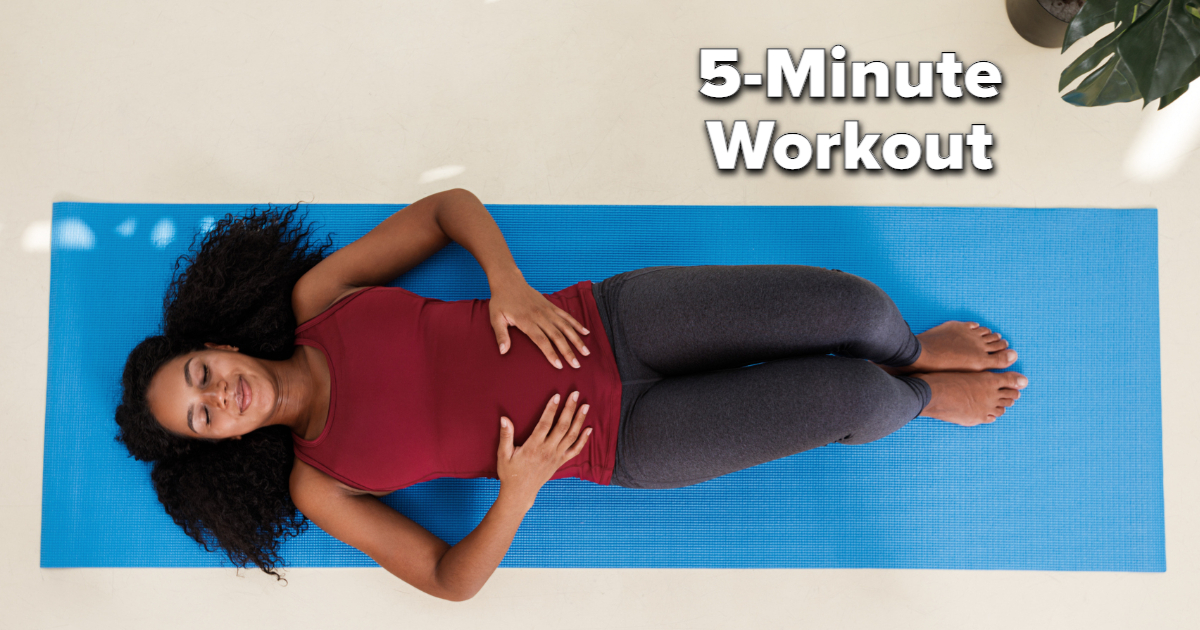
Exercise 1: Belly breathing
Jeannie Di Bon
Start with some gentle belly breathing, allowing the lower ribs to expand. For many people, Covid causes a cough and cold so we want to start moving the lung tissue in the right way. Try to breathe quietly in through the nose and out through the nose. Lying on your back does not require strong inhales so take it very gently, allowing the breath to come to you.
Advertisement
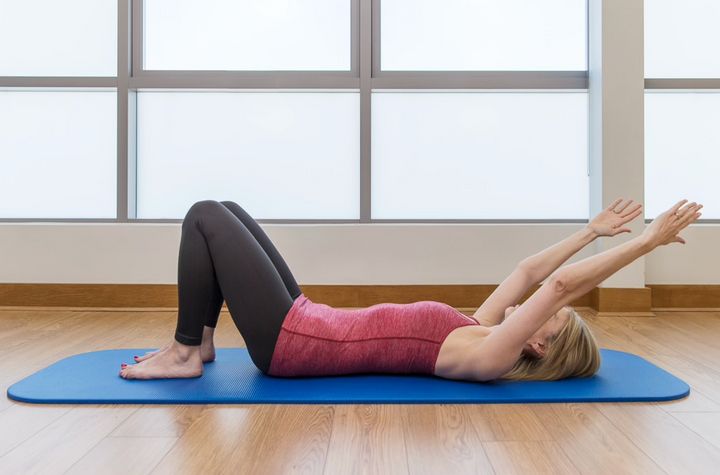
Exercise 2: Arm rolls
Jeannie Di Bon
Staying supine (lying on your back) is a good way to start moving – especially as some people experience dizziness with long Covid. You may find you don’t want to be standing for too long or doing exercises that involve inversions or squats. Keep it simple. This arm roll exercise can help stretch into the thorax and open the chest.
Start with your arms by your side. Try to keep the back heavy as you move the arms above your head and gently stretch. Let your breath settle the spine into the floor and allow the tissues to relax. You can add arm circles to this for a beautiful stretch across the chest.
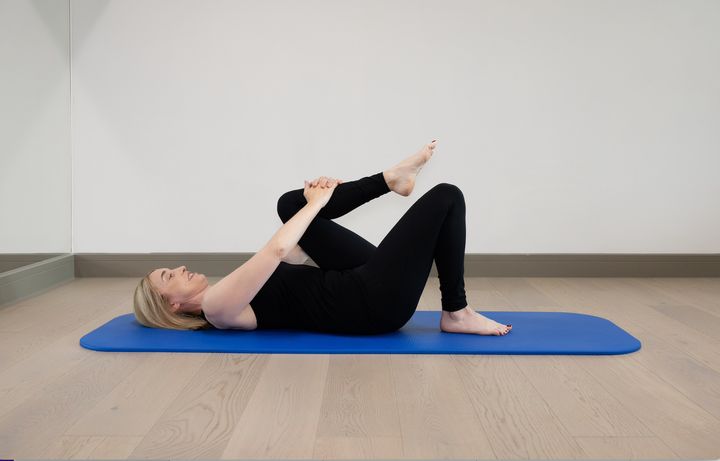
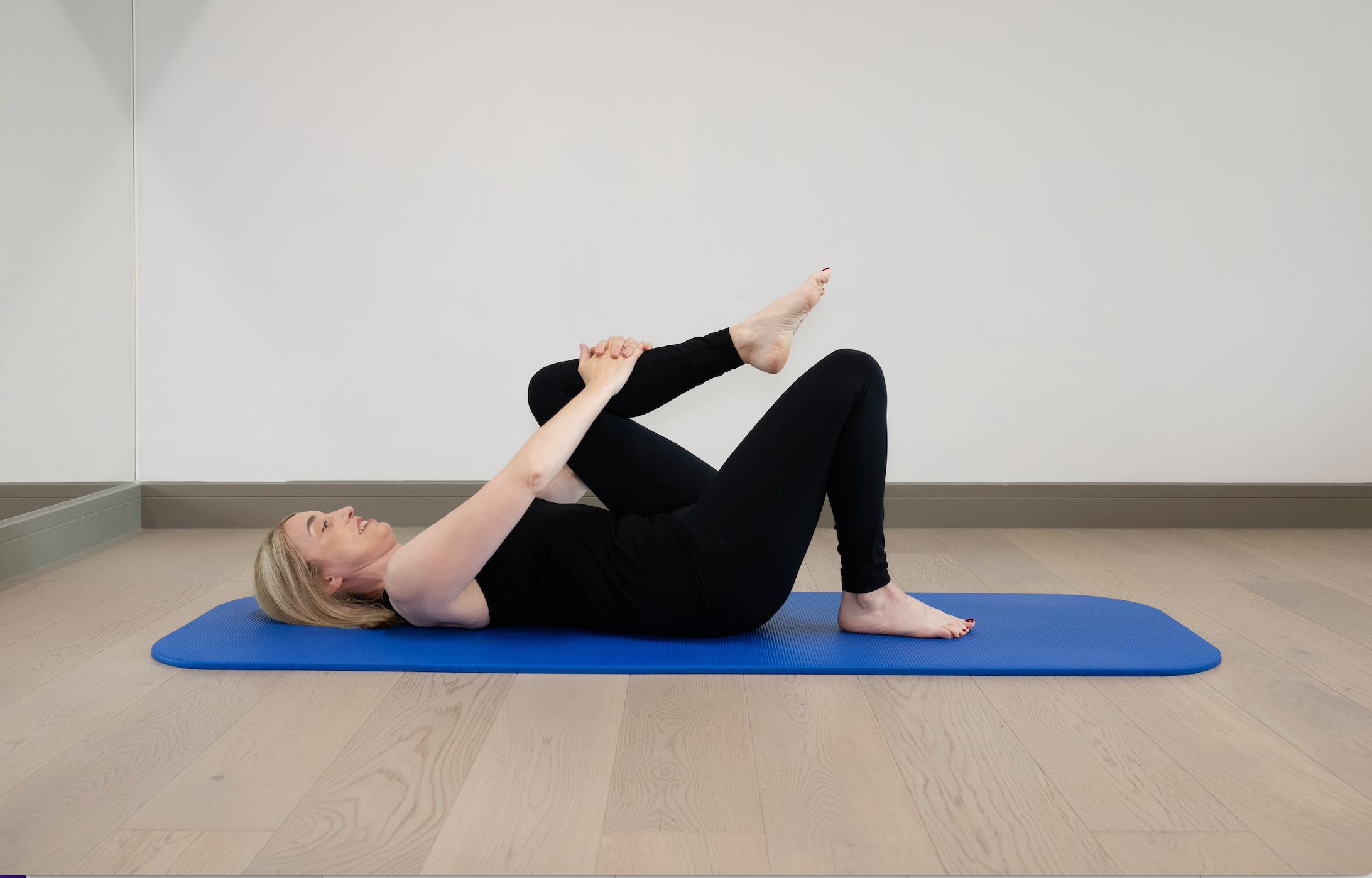
Exercise 3: Ankle roll
Jeannie Di Bon
To help with the dizziness that can happen, some simple leg exercises like calf pumps or ankle circles are recommended. You can do these lying on your back: hold on to one leg and try to circle to the ankle without the rest of the leg moving. Gently lower it back to the ground and repeat on the other leg.
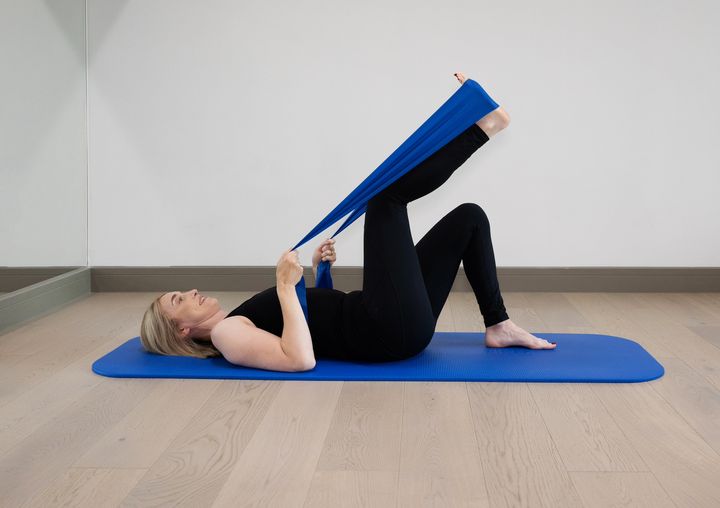
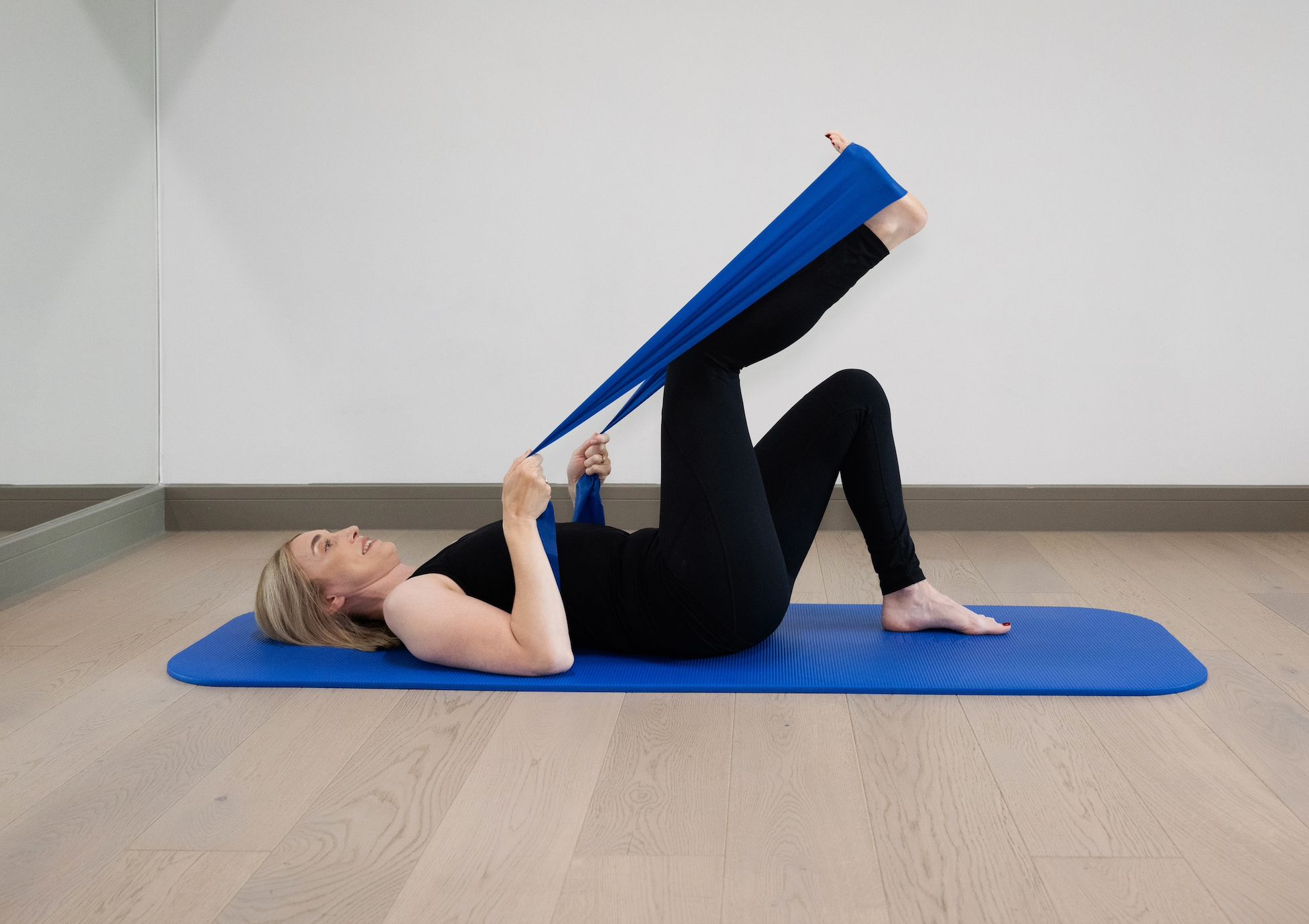
Exercise 4: Resistance training
Jeannie Di Bon
To build leg strength further, you can add a band for resistance work that is also gentle. This is another great exercise for circulation and helps prevent dizziness. Take a band and place it around your foot with the knee bent. Focus on gentle rolling the back of the thigh along the mat until the leg straightens.
Try not to lock the knee or hang into the band. Keep the energy flowing down the leg into the band. The back stays heavy into the mat – if your back is arching, raise the leg higher. Once the leg is straight, press the balls of the feet into the band and start to point and flex the foot. This is a brilliant way to utilise the calf pump.
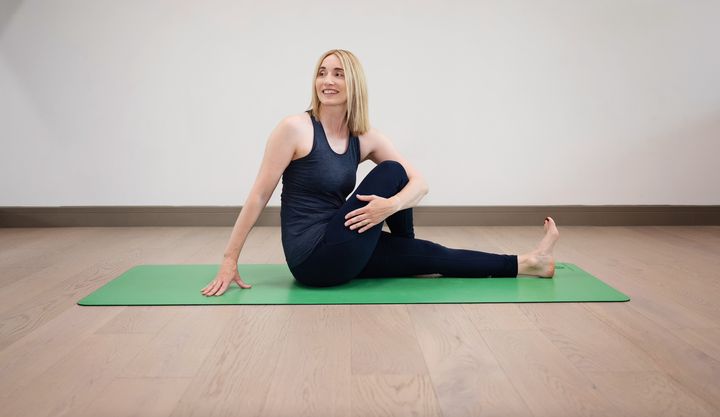
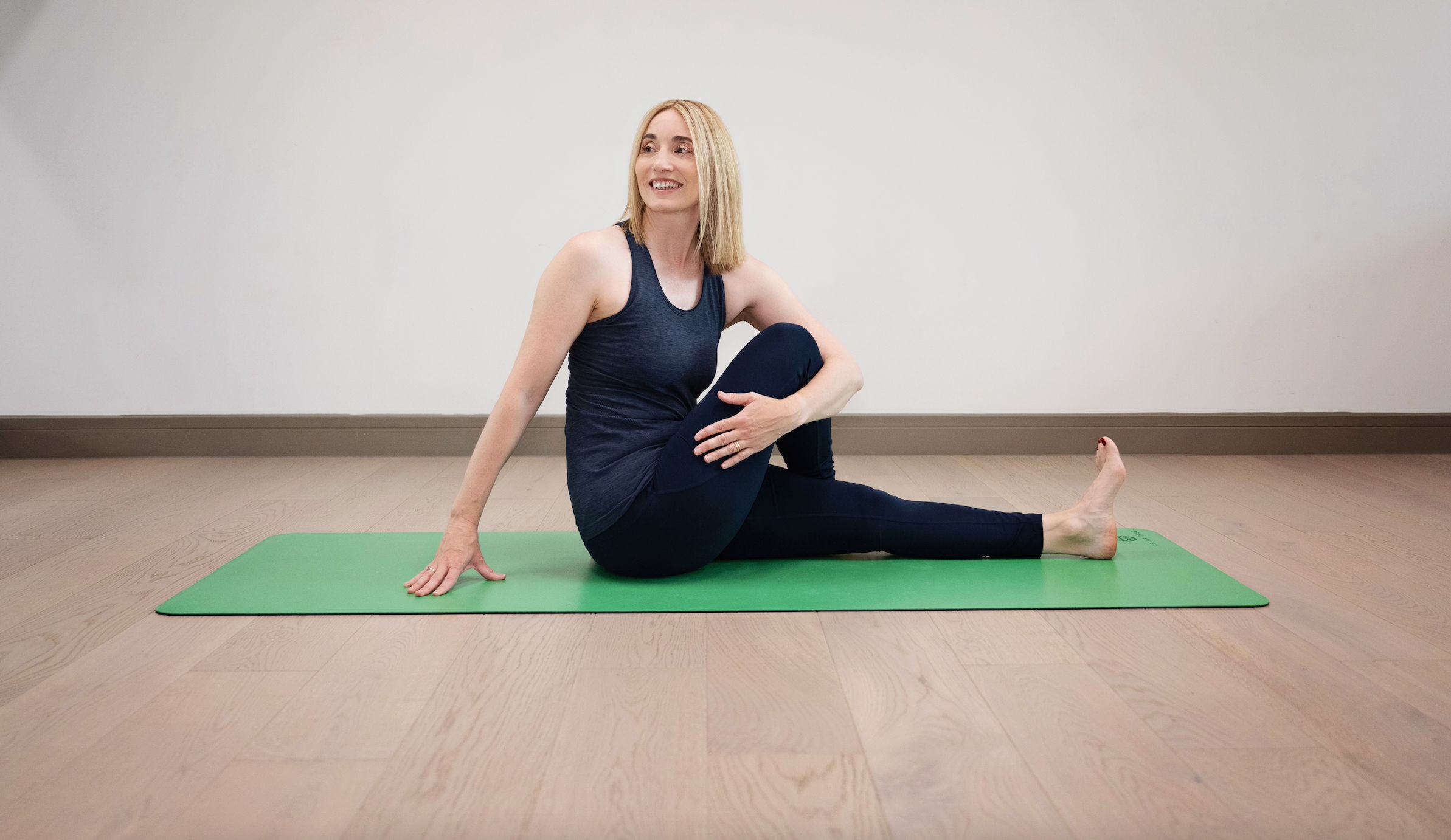
Exercise 5: Seated twist
Jeannie Di Bon
Jeannie Di Bon
A seated twist is great to help circulation and digestion. Many people do experience stomach cramps and pain with Covid. Find a comfortable seated position and cross one leg over the other straight leg. Use your arms to guide yourself around to look over the opposite shoulder. Try to lift the spine up as you twist, rather than compress the spine. It’s also important to go gentle and not force into the twist. Stay in the position and breathe softly allowing tight muscles to release. You can then repeat on the other side.
Advertisement
Move celebrates exercise in all its forms, with accessible features encouraging you to add movement into your day – because it’s not just good for the body, but the mind, too. We get it: workouts can be a bit of a slog, but there are ways you can move more without dreading it. Whether you love hikes, bike rides, YouTube workouts or hula hoop routines, exercise should be something to enjoy.
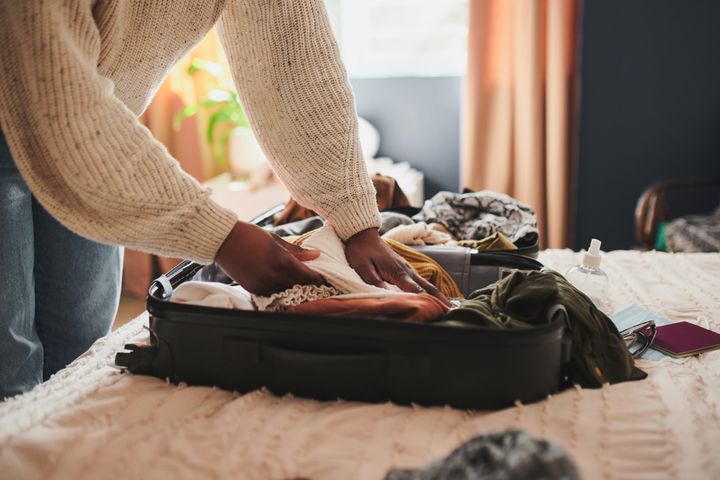

While you may not be able to avoid focusing on body concerns entirely, you can pack and prepare in a way that helps foster better body positivity on your trip. A few eating disorder and body image experts shared their best tips.
Start with your packing list
When you’re staring at your closet, trying to decide what to pack, go for comfort first. Think of the temperature at your vacation spot, what materials feel best on your skin, variety and pieces you know you love.
“People should pack whatever clothes they feel most comfortable in and are suitable for the climate of their vacation or types of activities that they’ll be doing,” said Rachel Evans, an eating disorder psychologist. “If you have space in your suitcase, then it’s probably a good idea to pack a range of clothes, some with a looser fit and some with a tighter fit … You can decide in the moment what clothes make you feel more secure about your body.”
Advertisement
Then, consider what feels fit for the occasion. “Look at styling and function,” said Carolina Mountford, an eating disorder expert with personal experience and a mental health advocate. “Do you need smart or casual? Is it an active holiday or relaxing by pools or on beaches? … Once you’ve narrowed it down to comfort and function, pick your favorites.”
And don’t forget about what feels stylish to you as far as colors, prints and styles. “Are you able to dress up in a way that feels less about the body and more about who you see yourself as?” said Kerrie Jones, a psychotherapist and founder of Orri, a specialist day treatment service for eating disorders. “Turn your attention towards the individual items themselves as opposed to how they are making your body look.”
Plan ahead for scenarios that may bring up body image issues
You can also prepare for vacation by brainstorming triggers and how to handle them.
Advertisement
“Whether it’s social media, a certain person or group of people in your friendship circle or an experience — perhaps changing rooms — if you’re aware of situations or activities that trigger negative body image, you can work to process and respond to them in a healthy way,” Jones said.
That may look like deleting your Instagram app while you’re away or changing clothes by yourself. Mentally preparing for the circumstances you know don’t make you feel good can help you navigate them or avoid them.
Adene Sanchez via Getty Images
Packing a range of clothes and options will help you feel more comfortable on your trip.
If negative thoughts pop up on your trip, redirect your attention
While being mindful of the clothes you pack can help with body image, you may still struggle with negative thoughts popping up. No need to feel bad; it happens to many of us.
“My body is supporting me on this holiday,” Evans suggested. Is it digesting yummy new foods? Allowing you to swim in the ocean? Helping you play with your kids in the sand? “Research suggests that when we focus on what our body can do for us, rather than what it looks like, then we develop a better relationship with our body,” Evans said.
Treat yourself like you’d treat someone you love
“Speak as kindly to yourself as you would to a friend. Remind yourself that this is your holiday; you’ve worked hard for it and you deserve to enjoy every moment,” Mountford said. “Remind yourself that outward appearances are a desperately poor measure of contentment. Remind yourself that those around you love you as you are.”
She explained these thoughts can help you reset your focus and re-connect you to the present.
Think of other aspects outside of your body
Advertisement
Jones also recommended reminding yourself that you are so much more than a body ― both on vacation and at home. Think, “What makes me laugh? Who do I love, and who do I know loves me back? What fulfills me? What areas of my life do I want to nurture?” she said.
And when you’re worried other people are judging you, remember feelings aren’t facts. “You’ll likely see that almost everyone is too busy getting on with their vacation to be focusing on what your body looks like,” Evans assured.
Lastly, she shared her favorite quote from Zen Shin for when you catch yourself comparing: “A flower does not think of competing with the flower next to it. It just blooms.”
Many of us fasting through the month of Ramadan can attest to the annoying feeling of needing to get up to pee through the night and generally throughout the day.
Muslims observing the holy month refrain from eating from just before the sun rises until it sets, which means packing in all the hydration before fasting commences. That can leave us needing to run to the loo a lot more, of course.
Advertisement
But many Muslims will also notice frequent urinating through the fasting day too, despite not actually drinking anything.
So why do we need to pee so much? Surely what goes in has already come out by a certain point?
Advertisement
Well, just because you’re not drinking doesn’t mean the bladder’s job is done.
Dr Gareth Nye, an ambassador for the Society of Endocrinology, tells HuffPost: “So the bladder is actually the ‘waiting room’ of our urinary tract where urine is stored before we go to the toilet. To look at changes in urine output or how much we do/don’t wee, we need to take a step back and look at the kidneys.
Advertisement
“The kidneys are involved in filtering our blood. It takes toxins and waste products and keeps the useful products the body needs to keep. One of the main filtered products is water which can be let go or kept in different amounts based on our body’s needs.”
So, on average, water makes up about 60-70% of the human body, largely depending on your age. Our bodies lose water through our urine, sweat, faeces and breath, so we have to continually replace this by drinking and eating (around a third of the water we consume comes from our food). If we don’t do this, our bodies can become dehydrated.
But we’re dehydrated, which means less pee right? Not necessarily.
Dr Nye explains that the bladder still needs to flush to out toxins, even when you’re dehydrated, thus creating more urine.
Advertisement
You might even notice a different colour in your pee when you fast.
Dr Nye adds: “The first stage of dehydration is thirst, which kicks in when 2% of body weight is lost. The signals that tell our brain we are thirsty also act on the kidneys to send less water to your bladder, keeping the water within the body and darkening your urine. You do need to flush out the toxins and so your body still produces urine even if you are dehydrated.”
You might notice other changes too in your urine while fasting.
“The key thing is, our bodies can go quite a long time without drinking and show no change in our urine output. Regularly when we sleep we can go eight-10 hours without taking any fluid on board and when you do drink/eat your body will replenish. You may notice changes in concentration as you go through the day as the amount of available water drops.”
So when iftar comes round, don’t forget to drink up (though you will feel the effects of it later).
Walking home from secondary school with my sister many years ago, I spotted a London bus plastered with a depressing advert, solemnly warning of the dangers of diabetes. “What’s the big deal?” I asked rhetorically. “Diabetes for an Asian person is a regular Tuesday.”
Though I was being facetious, I wasn’t wrong. South Asians do seem more susceptible to diabetic conditions. According to Diabetes.co.uk, the likelihood of developing type 2 diabetesis reported to be as much as six times higher in South Asians than in Europeans, with a number of factors – mostly linked to lifestyle – believed to be behind this increased risk.
Advertisement
But have we also considered the role history plays here? Is colonialism another overlooked factor that contributes to South Asian bodies? It’s well understood that people can inherit psychological trauma from previous generations but, for many racialised people, there can be physical consequences, too.
Think back to GSCE history. You may have learned the Indian subcontinent was subject to many famines, with some particularly severe ones occurring under British rule. For centuries, up until India gained independence in 1947, starvation plagued the nation, in part a byproduct of colonial times.
Advertisement
The East India Company’s raising of taxes, policy failures (including a “denial of rice”), resources being deployed to the military, and droughts that were met with British inaction, resulted in the deaths of millions. In 1943, West Bengal saw the worst of it all, a famine in which up to three million people died of malnutrition.
Yet, famines in the British era were not due to a lack of food, but due to the inequalities in the distribution of that food, Nobel Prize winning economist Amartya Sen argues, linking this inequality to what he describes as the fundamentally undemocratic nature of the British Empire.
Advertisement
You might wonder what’s all this got to do with South Asians now? Well, not only was the “great famine” in Bengal only 79 years ago (for some, a part of living memory), but when a group of people are exposed to starvation on this scale, it can affect subsequent generations.
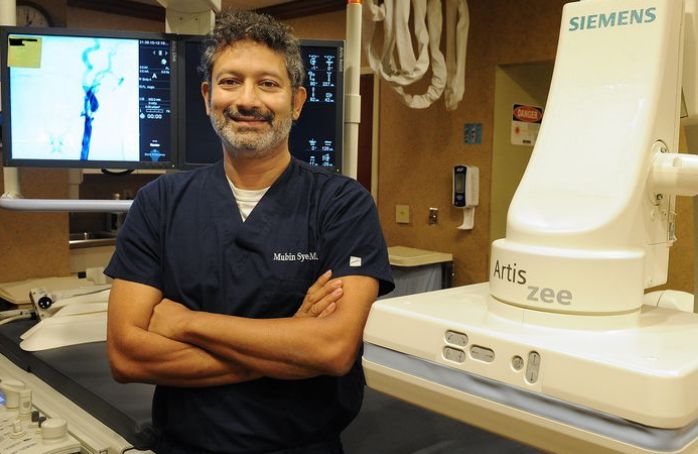
Dr Mubin Syed, a 56-year-old radiologist from Ohio who also works in vascular and obesity medicine, recently went viral on TikTok and Instagram for making this crucial link.
As he explains in his video, South Asians have a tendency to generate and store fat and not burn it off, amassing low lean muscle mass. This, he points out, is because South Asians are “starvation-adapted”, due to having to survive at least 31 famines, especially during the 18th and 19th century.
Surviving just one famine doubles the risk of diabetes and obesity in the next generation, even without a famine, according to a study by Brown university. The risk of cardiovascular disease increases 2.7 times for their grandchildren.
Advertisement
Dr Syed, whose research in this area for the past five years led him to these conclusions, tells HuffPost UK: “Exposure to even one famine has a multi-generational effect of causing metabolic disorders including diabetes, hyperglycemia and cardiovascular diseases. Imagine having an exposure to at least 24 major famines in a 50-year period.”
And the problem carries through to the present.
“In the modern era of abundance, it becomes an evolutionary mismatch. Our adaptation to scarce food availability is no longer suitable for our environment of food abundance,” he says.
So, storing nutrients was an evolutionary response to famine, but now, where scarcity is no longer a problem for much of the modern, western world, it creates a conflict, heightening our risk of certain health conditions.
“South Asians have a unique physiology,” Dr Syed explains. “For instance, we have higher body fat percentage and lower lean muscle mass. We have a six times greater risk of developing diabetes, one of the highest rates of diabetes and pre-diabetes in the world, and a four times greater risk to have a heart attack before the age 50. Furthermore, one in three South Asians will die of heart disease before 65.”
While our genes, inherited from our ancestors, can explain some of these predispositions, diet is another contributor – though not in a straightforward way. “It’s a multifactorial perfect storm,” says Dr Syed. :Genetics is one issue, but of course, lifestyle is always important. But, South Asians have to exercise twice as much as Caucasians to get the same health benefits.”
Mubin Syed
Dr Syed has been researching this area for half a decade
It certainly feels like Indians, Bangladeshis, and Pakistanis, who once made up India, are still reeling from the effects of colonialism, mentally and physically.
My family are certainly still feeling its effects. Though my parents weren’t around when the Bengal famine took place, their generation is impacted; my dad is diabetic while my mum is prediabetic, and this leaves me in a precarious position, too.
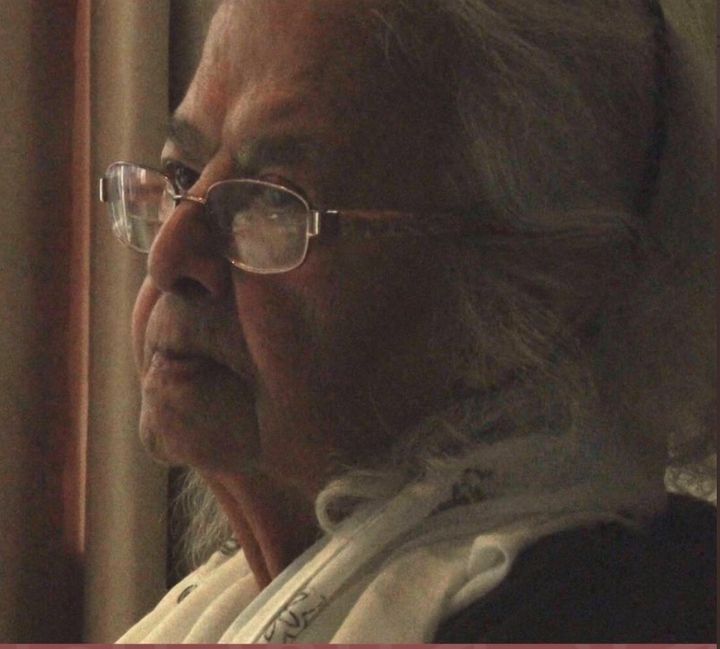
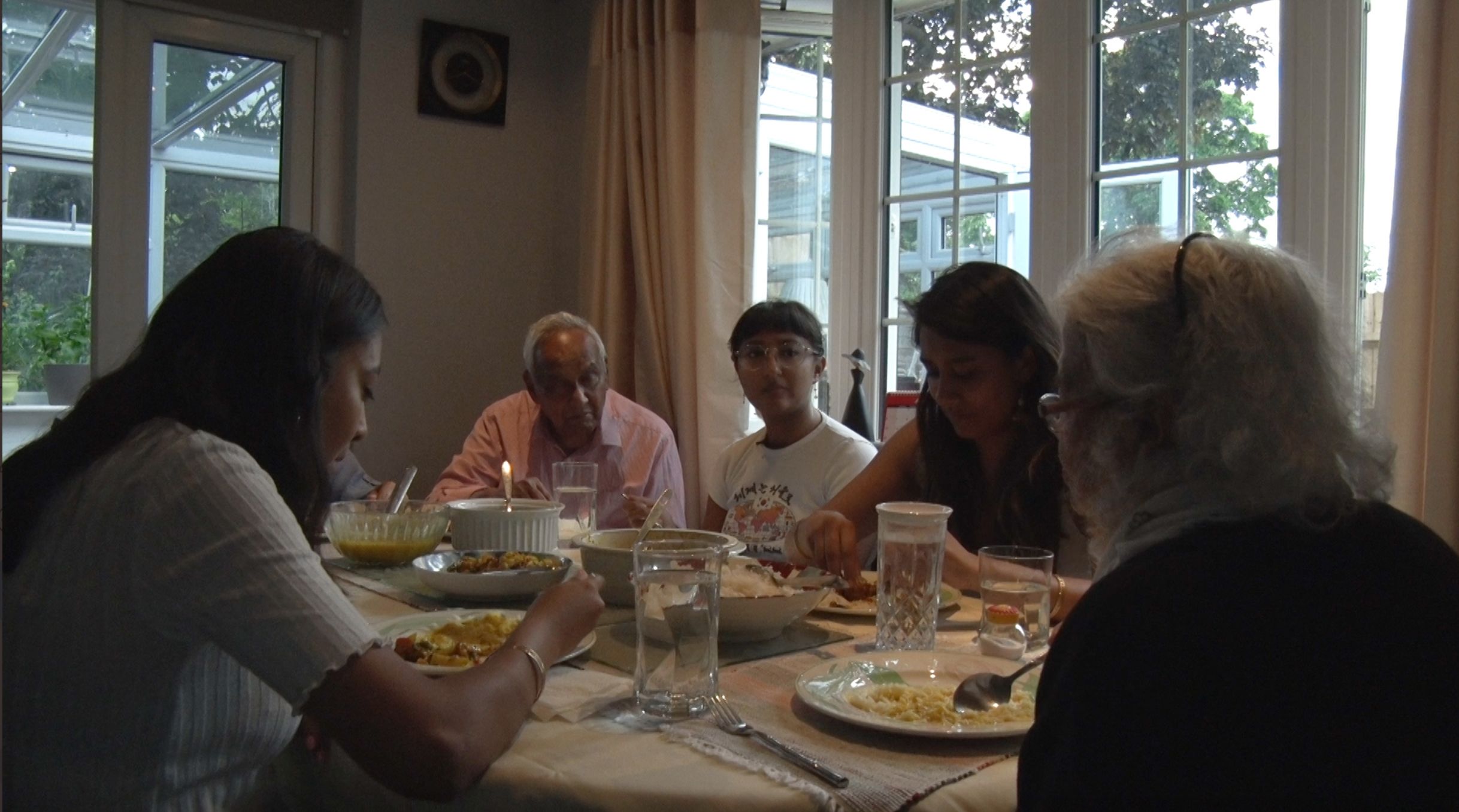
Another concern for the community is a lack of awareness about how our past informs our future. This is why filmmaker Phelan Chatterjee, 26, set out to create a short documentary, Straining The Rice that captures the trauma endured by Bengali people, told through the lens of a grandmother, Nana (not his own).
The London-based producer laments how little people know of the famine and how it affects us today.
Advertisement
He tells HuffPost UK: “I had a lot of conversations with Asian friends and family in the UK. I found very little mention or memorialisation of the catastrophe, despite the enormous number of people who died, and its effects today.
“The sheer number of lives lost, the brutal way in which they perished and the helplessness of those demanding change at the time. It’s difficult to come to terms with the fact that it’s not a part of our national conversation in any meaningful way.”
Phelan Chatterjee
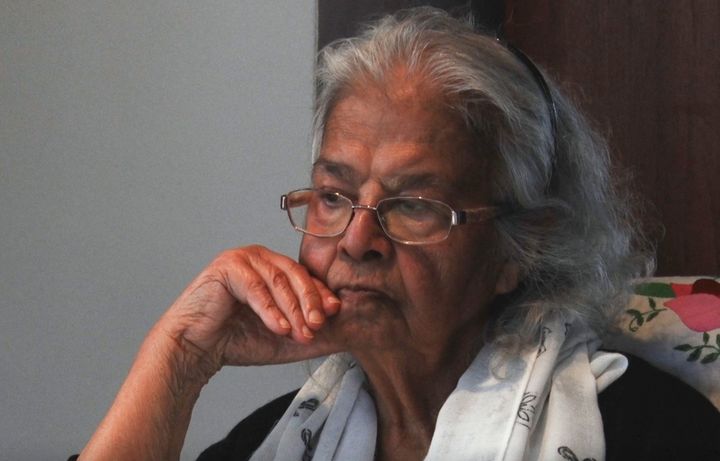
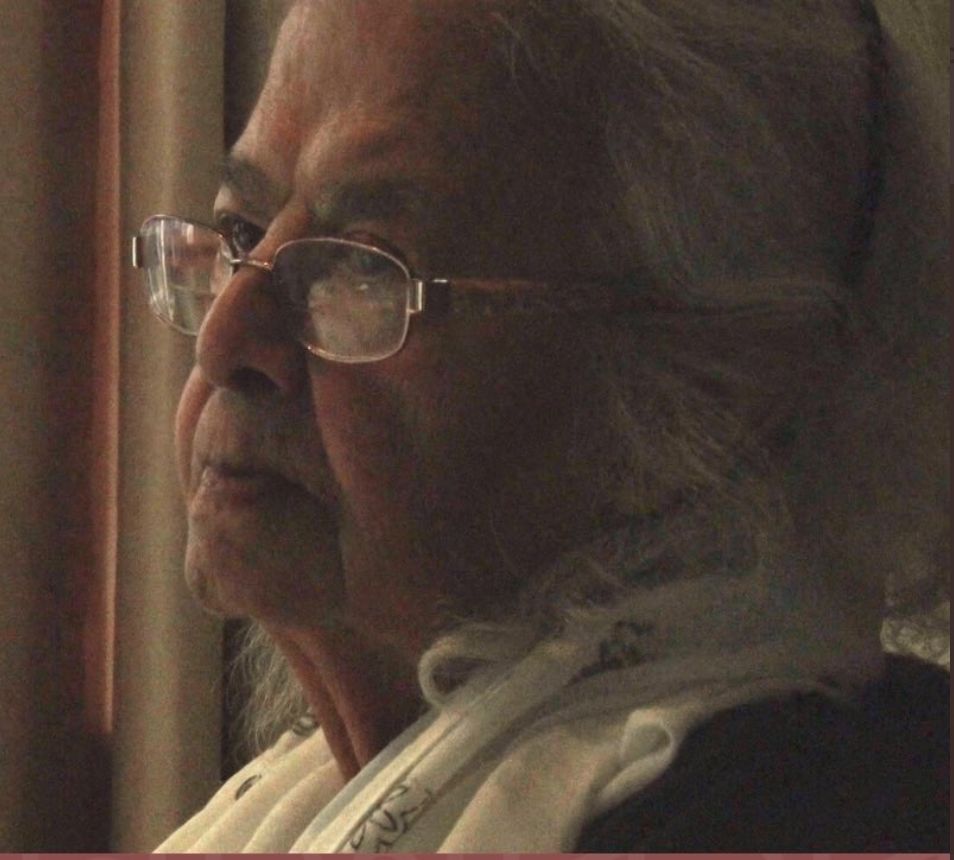
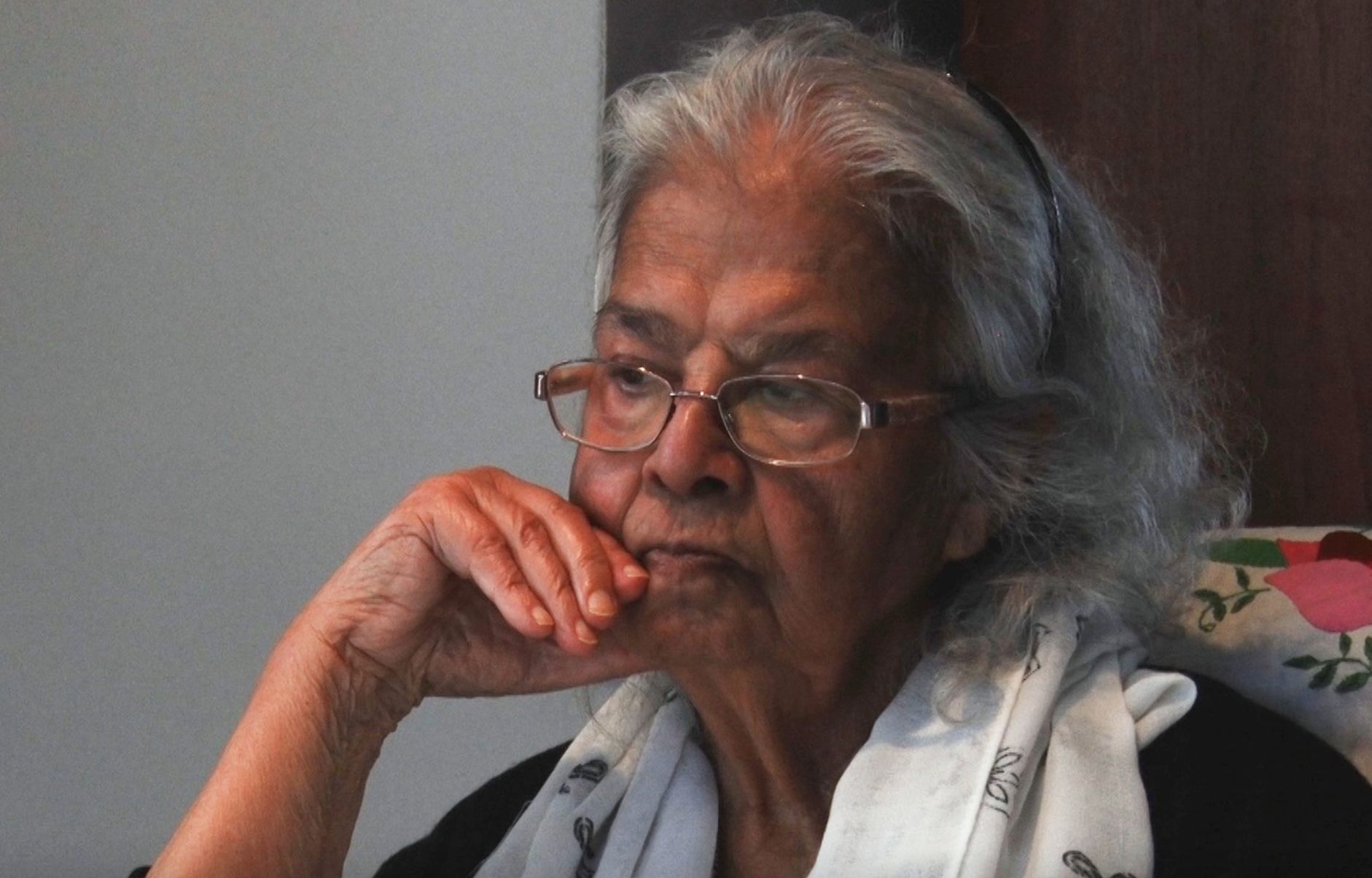
Phelan’s film Straining the Rice includes testimony from Nana, who experienced the famine as a child.
Chatterjee questions those who say the famine was simply an environmental consequence, and asks why there’s no accountability for why such conditions were created.
“The protagonist of the film, an elderly Bengali woman says the famine sparked a great deal of protest against the colonial government of the day,” he says.
“This suggests there had always been a keen awareness of the links between policy choices and the famine. But frequently, I’ve experienced famines and similar events to be thought of as beyond human control.
“I wonder what a reappraisal of those policies might bring, and how that could inform the way we understand contemporary famines, global inequality – including health inequality – and climate change.”
Phelan Chatterjee
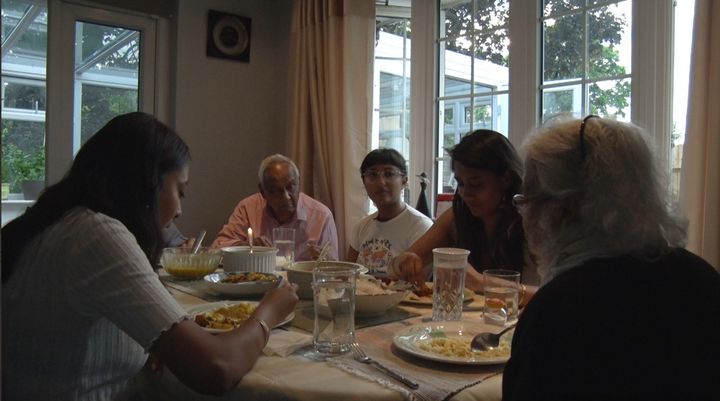
Straining the Rice focuses on a family discussion of the Bengal famine
If schools, for instance, taught students about these historical atrocities and their contemporary implications on us mentally and physically, we might have a better understanding of how to navigate our lives now. Healthcare research and responses might even cater better to our bodies, as a result.
But, despite the risks and impact of inequalities on South Asians today, Dr Syed says it doesn’t mean ill health is inevitable for us.
“It’s not a doom and gloom scenario,” he says. “The risks are avoidable, we just have to pay closer attention to diet, exercise/fitness, sleep, stress and other substances.” This means how much alcohol and tobacco we consume, says Dr Syed, and for South Asians who enjoy it, consumption of betel nut or supari.
Phelan Chatterjee
Nana remembers how beggars would ask for the starchy rice water
“Even our dental health,” he adds. “The key thing is awareness, getting regular check-ups, including lipid profiles, is critical. Do not assume you are healthy, as normal height/weight BMIs are misleading for South Asians.”
Advertisement
Many South Asians in the West who are told “colonialism was a long time ago” and not to “dwell on the past” will struggle with all these conflicting messages. We certainly can’t nor should forget a history that still continues to impact us. And there are many who still remember the harshness of colonial times.
For those who came before us, as well as ourselves, it’s imperative we keep educated and informed of our past and how plays a crucial role in our future.
When I caught COVID right before Christmas — a breakthrough infection I got despite being vaccinated, boosted and wearing a medical-grade mask just about everywhere I went — I resigned myself to the fact that my kids would get it, too. We live in a tiny New York City apartment, after all. And my younger child is too young to be vaccinated.
But we tested them frequently throughout my quarantine, and after 10 days I hadn’t spread it to either of my kids or my husband. This has caused some people in my life to question whether I really had COVID-19 after all. (I’m going to believe the, like, seven at-home rapid tests that told me I did.)
Advertisement
But it’s also made me wonder a lot about the mysteries of COVID spread within households and how that has changed because of omicron. Many people fighting infections are also dealing with the same phenomenon.
Here’s what experts have to say about household COVID spread right now:
Omicron is more likely to spread within households than previous variants
Estimates suggest the initial omicron variant is up to four times more transmissible than previous COVID variants — and the newest omicron subvariant (BA.2) may be even more contagious than that. That seems to track within households as well. In early December, British health officials estimated that the risk of spreading omicron within a household was three times higher than with the delta variant.
Advertisement
With all of the variants, households pose a big risk just because of how much time you’re spending around those people.
“There are a lot of high-touch surfaces that might not get cleaned frequently. You might interact directly with saliva more frequently, especially if you have little kids. You’re probably not masking at home, so sitting next to each other on the couch you could easily get a spray of the bigger droplets in your face,” explained Alex Huffman, an aerosol scientist with the University of Denver.
“But, most importantly, your exposure to inhaled virus is likely much higher at home,” Huffman said. A lot of that has to do with ventilation.
“Many apartments and houses have pretty low air-exchange rates, so the air doesn’t get refreshed very often, and air that an infected person breathes out can build up to fairly high concentrations,” he said.
Advertisement
That said, household spread is not inevitable
One of the many reasons why health experts really hate the idea of just “getting omicron over with” ― aside from the fact that even “mild” COVID can feel really bad and that long-haul symptoms are a real risk ― is that it is by no means inevitable that you’ll get infected just because someone else in your family or home is sick.
“It’s very difficult to compare one study against the next. In general, early on in COVID, it was roughly found that between 10 to 20% of household exposures would end up with COVID, and that was pre-vaccine,” said Dr. Richard Martinello, an associate professor of infectious diseases and pediatrics at Yale School of Medicine. Other studies have put the secondary attack rate (i.e., the spread of the disease within a household or dwelling) a bit higher — more like 25% or 30%.
With omicron, those rates are likely higher. But again, it is by no means inevitable. Martinello pointed to a recent study from Denmark — which has not yet been subject to peer review — that suggests that with BA.2, a little over 40% of household contacts became infected themselves. With BA.1 (the initial omicron strain), it was more like 30%.
Basic prevention makes a big difference
There are a lot of factors that determine how likely household spread is, which is one issue that makes precise estimates of that type of transmission so challenging.
For one, some people shed more of the virus than others. People who are immunocompromised, for example, tend to have more severe, long-lasting infections. That means they’re likely to shed the virus for a longer period of time. Then there are other elements, like whether everyone in your home is vaccinated. The fact that my unvaccinated preschooler never got COVID when I had it makes me question whether he had an asymptomatic infection at some prior point that we never knew about that gave him some level of immunity, but I have no evidence of that. Also, antibody tests can be unreliable.
No matter your family or household’s specific circumstances, prevention can make a big difference in stopping the spread at home. To the extent it is possible, you should still isolate within your own home. (I fully admit that I gave up on this quest when I was sick myself because it was Christmas and also because there are only so many places you can hide from a zealous 3-year-old in an 800-square-foot home.)
“If the sick person can’t be fully isolated, I would suggest keeping as much distance as possible; wearing high-quality, tight-fitting masks (i.e., N95s); opening windows when you can; adding a couple portable air filters (like commercial HEPA filters or DIY Corsi-Rosenthal boxes); and limiting the time you spend in shared areas together,” Huffman said.
And be strategic about the time you spend together, he added.
Advertisement
“If possible, make sure you eat and drink in separate areas where the air can be ventilated or filtered more quickly,” he said, because any time the masks come off, the risk is highest.
Experts are still learning about COVID-19. The information in this story is what was known or available as of publication, but guidance can change as scientists discover more about the virus. Please check the Centers for Disease Control and Prevention for the most updated recommendations.