‘I Stopped Splitting Rent With My Husband After 1 Sentence From My Mother-In-Law. Did I Overreact?

Cheating isn’t just limited to romantic partners, experts say – “financial infidelity,” or lying about or concealing money-related issues, can sting just as much.

It can take the form of fibbing about debt, secret spending, and even lying about your secret wealth.

It seems Redditor u/Hexylpuff is going through the latter struggle.

Writing to r/AITAH (Am I The Asshole Here), the 31-year-old asked: “AITAH for finding out I’ve been unknowingly paying rent to my husband and his mom for TWO YEARS?”

So, we spoke to William “Bill” London, a divorce attorney and partner at Kimura London & White LLP, about how to talk money with your spouse.

The couple have been married for two years

The original poster (OP) says she married her husband “Brian” two years ago.

The pair moved into a flat supposedly rented at a discount from a “family friend” after their wedding, and have always split bills evenly. This includes both rent and utilities.

For the poster, this costs about £530 a month (admittedly an amazing deal for a rental).

But OP says that at a barbecue recently, she overheard her mother-in-law say, “It’s nice getting rent from Brian’s place” and “how smart they were to keep it in the family.”

On confronting her husband, OP says she found out her mother-in-law owned the flat and that Brian’s name is also on the papers.

“He never told me. Just let me keep paying rent for two years like a clueless roommate,” she shares.

Apparently, he never told her because “she never asked.” Her husband said she was “overreacting” because the “rent” was so reasonable.

But the poster feels blindsided, saying, “It’s not just the money, it’s the secrecy.”

She ends: “I told him I won’t keep paying until we talk about a fair setup. Now he’s acting like I’m the problem.”

“It crosses the line from privacy to deception”

London tells HuffPost UK that financial strain ends more marriages than most of us realise.

“While every couple sets their own financial boundaries, I believe that in a marriage – especially one involving shared expenses – full financial transparency is not just healthy, it’s essential,” he adds.

In this case, the lawyer thinks that, “When a partner consciously misrepresents important fiscal information to the other, as by pretending to have non-existent housing costs, it crosses the line from privacy to deception.”

This can destroy the trust needed for a healthy marriage, he continues.

“Married couples are expected to be transparent about important financial information,” he advises.

“This doesn’t mean total merging of their finances or the disclosure of all trivial expenses, but hiding ownership of a mortgage-free property and asking a spouse to share in imaginary financial burdens is manipulative behaviour needing a direct confrontation.”

In other words, OP hit the nail on the head when she said the money isn’t the main issue – it’s about respect, trust, and honesty.

Share Button

Travellers To Spain And Portugal Urged Not To Make Costly Mistake

Large parts of Spain and Portugal are currently facing power outages, resulting in traffic jams, airport lags, and public transport issues.

Reuters reported that Spain’s electricity transmission operator Red Eléctrica expect the issue to persist for hours.

Portugal’s electricity transmission operator Rede Eletrica Nacional said the problem was due to extreme temperature variations, which resulted in a “rare” atmospheric phenomenon, the BBC said.

Work is under way to gradually recover electricity – with reports suggesting power has already returned in some parts of Spain.

Rory Boland, editor of customer advocacy publication Which? Travel, said: “The power outages in Spain and Portugal will have a significant knock-on effect for those travelling to and from both countries.”

For those currently in the affected countries, Boland advised to “follow the advice from local emergency services and government”.

But if you have booked holidays in any affected areas in the next few days or weeks, the consumer advocate said it’s important not to cancel your trip.

Why shouldn’t I cancel my holidays in the next few weeks or days?

“If your flight or holiday is several days or weeks away, the best advice is to not cancel as you will lose money and won’t be able to claim via travel insurance,” Boland shared.

If you are expected to travel to Portugal or Spain over the next couple of days, meanwhile, the expert advised to “check the advice from your airport or tour operator or airline apps and airport social media feeds for the most up to date advice”.

He said it’s the responsibility of the airline to look after passengers on any cancelled flight, no matter why the flight is cancelled.

“That means putting you on an alternate flight to get you to your destination, if needed, or you can accept a refund,” he added.

“You are almost certainly better off insisting on rerouting if you still intend to travel, as flights will be expensive.”

Keep your receipts

Boland advised travellers who are currently inconvenienced by the power cuts, or who will be affected by changes over the next couple of days, to document everything.

“If you are stuck because your flight has been cancelled or delayed and need to buy a meal, or need a hotel overnight, make sure you keep the receipts as you will be able to claim this back from the airline,” he said.

Follow your airline’s guidance and stick to the government’s rules in the meantime.

Share Button

I Haven’t Paid Full Price For Electronics Since 2016 – Here’s How

We hope you love the products we recommend! All of them were independently selected by our editors. Just so you know, HuffPost UK may collect a share of sales or other compensation from the links on this page if you decide to shop from them. Oh, and FYI – prices are accurate and items in stock as of time of publication.

Just after the rising price of bills has been announced, another blow; Forbes speculates that tariffs might increase the cost of consoles too.

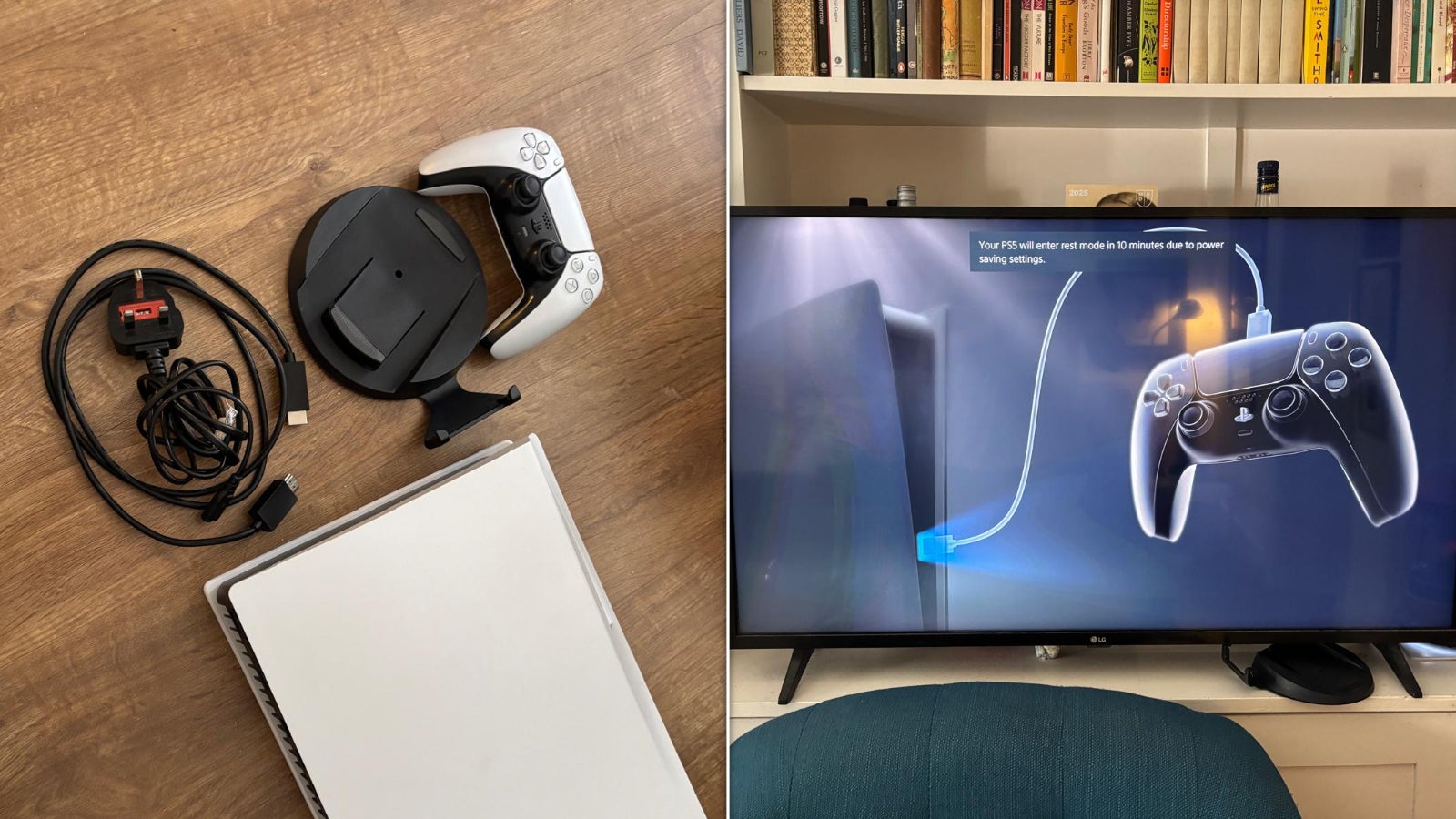
That might have got me down if I’d bought full-price electronics in the past nine years (I’ve wanted to gift my partner a PS5 for ages), but I haven’t, so it didn’t.

I have relied on second-hand sites like refurbished electronics company Back Market for ages now.

Not only are they cheaper, but they’re kinder to the planet; and Back Market, my favourite since about 2022, allows you to trade in your old tech for their verified refurbished tech too.

I have previously traded in an unwanted old phone to help me cover the (already discounted) cost of a laptop, for instance.

And while I didn’t do that for the PS5, I was still paying significantly less than full price – like, almost £112 less than full price.

Despite that significant discount, the product’s running as good as new on our also-Back Market-sourced TV.

After all, the company has rigorous rules for their Verified Refurbished products. In the case of gaming consoles, that means they’re given a full reset and data scrub, checked to make sure they’re not stolen or locked, and tested by industry pros.

So it’s no wonder my partner (who’s a sterner judge than me on this front) wouldn’t have known the console was second-hand unless I’d told him; and if he had noticed something off, he’d have been covered by the company’s Verified Refurbished one-year warranty and free 30-day returns policy.

That’s only one impressive tech deal, though. I’ve bought phones, the aforementioned laptop, my smartwatch, and even a hot air styler and coffee machine from the site before; discounts can run as high as 50% compared to new.

I like the fact that I can choose the condition my tech’s in (I wanted an “excellent” laptop, but was more than happy with a “good” smartwatch, for which I don’t have many demands).

As someone who’s been all over refurbished tech pretty much as soon as I started buying my own electronics, though, the thing that keeps bringing me back to Back Market is the quality. I simply haven’t found anywhere else whose refurbished products are as reliably good.

So, whether you’re after beauty or gaming tech or just fancy an upgraded phone, I reckon you can’t save much more for a professionally refurbished deal.

Share Button

‘I Refused To Give My Siblings Any Of Our Grandma’s Inheritance. Am I Wrong?’

Money makes families argue at the best of times. Add grief and old grudges to the mix, and it’s no wonder one in five of us has squabbled with our loved ones about inheritance.

It seems that’s what happened to Redditor u/FantasticEagle6062, who told the members of r/AITAH (Am I The Asshole Here) that he’d accepted his grandmothers’ entire inheritance without splitting a cent with his father or step-siblings.

So, we thought we’d speak to Fei Chen, former investment strategist and current CEO of Intellectia AI, as well as Joseph Fresard, a lawyer at Simasko Law, about how to handle the issue.

The poster had lived with his grandmother until she died

The original poster (OP) had a difficult relationship with his father and step-siblings, who he says bullied him.

He added that neither his father nor his stepmother seemed to care about their cruel treatment, which his grandmother noticed and hated.

Because the poster’s dad didn’t like the grandmother siding with his son, the poster didn’t speak to his grandmother for years – but as soon as he could leave, OP lived with her from 17 to 23, looking after her until her “sudden” death.

“When grandma died she had a strong will in place,” OP continued.

“She left my dad $100. That was the minimum she could leave him so he couldn’t sue for the rest, which she gave to me.”

The poster got the house, some investments, and his grandmother’s remaining money. But his father and step-siblings and father are upset at his taking the full amount, claiming it amounts to disrespecting his family.

“I told him she was right and they were all monsters and that they didn’t deserve anything,” the poster ended, before asking “AITA?”.

“His legal rights are clear”

Family tensions aside, Fresard told us that “If the will or trust leaves it only to him, his legal rights are clear, and he does not have to share it with his step-siblings. It also appears that her nan’s wishes are clear, that the inheritance was for him only.”

Chen agreed, but added: “Feuds between family members over inheritances aren’t typically about money – they’re about recognition, equity, and emotional heritage.

If one member of a family, like the Redditor, has been the exclusive caregiver, there’s a deep sense of entitlement earned. But without open, honest conversations well before the will is read, assumptions build – and blow.”

Both experts agree that whenever possible, it’s both legally and morally better to discuss any will division as soon as you’ve written it up.

“If you are the recipient of an inheritance and it is causing tension, it may help for the family to meet with the attorney who drafted the plan for all to be reassured about the wishes of the decedent and their reasoning,” Fresare advised.

After all, as Chen says, “More has been lost fighting than lost through poor investing. The most underutilised estate tools are transparency, planning, and empathy.”

Share Button

You Ask, Experts Answer: ‘My Husband Lent £7,500 To His Mother Without Telling Me’

In a recent Reddit post shared by Twigs-Rain, the Redditor explained that their “husband lent all of our money to his mother” without telling them recently.

They explained that they’d recently totalled their main car, and while their family had a backup vehicle, it wasn’t big enough for their kids and was often used by their husband for work.

So, they saved up enough for a new vehicle, but their bank didn’t let them withdraw as much as they needed in one day.

To solve the problem, the poster’s husband “transferred the money to his mother’s bank so she could get the money or a cashier’s check out for us.”

Unbeknownst to the poster, though, their mother-in-law needed that £7,500-odd to pay her employees (she’s a business owner).

Without the poster’s knowledge, their husband turned what was meant to be a transfer into a loan ― and started turning down every car the poster showed her, leaving her confused and without transport.

“The fact that they made the plan together, didn’t consult me, and then hid it from me for a week really pisses me off,” the author wrote.

“It’s now been 15 days, and she still hasn’t paid us back. He says she’s waiting for a bank loan to come through. I feel like at this point she’s more of his wife than I am.”

We spoke to relationship expert Sofie Roos and Leah Levi, a psychologist and relationships expert at the safety-first dating app Flure, about what to do if your spouse lends money without your permission or even knowledge.

This is called “financial infidelity”

Just as affairs can be emotional as well as physical, Levi told HuffPost UK that your partner can “betray” you with money too.

“This kind of secrecy about money is called financial infidelity,” she explained.

“Like emotional or sexual infidelity, financial infidelity can create distance between partners and weaken their connection. It can also cause one partner to feel left out and lead to doubts about honesty in other areas of the relationship.”

Roos says that “money is one of the most sensitive topics in a relationship”, adding that a financial misalignment “can really cause relationship problems.”

Money can be tied with respect, loyalty, priority, safety, and equity in your relationship.

So, Levi says, “If your partner is lending money to friends or family without telling you, it can feel like a betrayal and damage trust in your relationship.”

What can I do if the betrayal has already happened?

Both experts agree with Levi’s advice, to “talk about your financial expectations as a couple and set clear boundaries.”

This is a clear case of the husband overstepping what should have been an obvious “boundary”, however.

If this is the case, you need to let your partner know that what they did hurt you, Roos said.

“Then ask them what their thoughts are about this, let them explain why they did what they did and how they view it now when they know how it made you feel.”

“From there, you can come up with a plan for how to deal with money overall, but also on how to deal with situations like the one you just were in, something that can re-build your thrust and minimise the risk of something like this happening again.”

As with any other boundary, if your clearly-stated financial needs are being ignored over and over again, it might be time to reconsider the relationship.

Share Button

‘I Was Made to Feel Like a Nuisance’: How Death Admin Becomes A Second Trauma For Grieving Families

Losing a loved one is something we all will experience at some point – and unfortunately, no prior loss can prepare us for the ones that lie ahead and the world-shattering emotions that come with them.

For those of us who have to face the financial admin that’s left behind when somebody dies, there is a compounded grief as we try to navigate the institutions and paperwork that are an essential part of death admin.

In fact, in Octopus Legacy’s Human Cost of Dying report, families rank financial institutions among the least helpful when dealing with a loved one’s death.

These findings reflect the stories of people like Rosie and Lucy, who have faced overwhelming hurdles in the wake of their loved ones’ passing.

HuffPost UK spoke with Rosie and Lucie about the traumatic obstacles they faced following their losses – and what needs to change.

Rosie’s mother dying left her with an unmanageable amount of admin

Rosie lives in Edinburgh with her husband and three children.

Back in 2003, Rosie’s mother came to live with the family. But sadly in 2009 she suffered from a ruptured aortic aneurysm, was rushed to hospital and placed in the high-dependency unit.

Speaking with HuffPost UK, Rosie explains how her mother’s health deteriorated over time: “She was non-responsive for a couple of weeks – and as she woke up, it became evident that something wasn’t right.

“She had suffered a stroke during the operation and was eventually transferred to a hospital which supported stroke rehabilitation. From there, she was eventually well enough to come home.”

Unfortunately, their family’s peace didn’t last long.

“A few months later, as I was coming home from a run, I saw my mum waving at me from a bedroom window. I then watched her fall,” says Rosie.

“I ran home and found that she had suffered another stroke – we returned her to the local stroke unit, and then back to the rehabilitation hospital. This time, she wasn’t in for stroke rehabilitation but in a geriatric ward. She never left.”

The family experienced a prolonged period of grief prior to her passing

Rosie admits: “For me the grieving process was initiated in 2009 when she first went into emergency surgery. This was a long, tortured process of gradually watching my mother losing herself.

“My mother had been a force of nature, immensely practical and sensible. If there was a problem, my mother would find a way to resolve it.

There were moments, during her rehabilitation when her very strong sense of humour would peep through. She would have a twinkle in her eyes watching the banter between staff on the ward. She would beam at me or my children when we came to visit – and pat our hands.”

But mostly, as she watched her mum deteriorate, she grieved.

“When my mum died it was a release. For her – and for all of us. We could actually say goodbye,” says Rosie.

Thankfully, the funeral went smoothly. Rosie and her family shared stories of her mother and bonded with others over their stories.

But the financial admin following the funeral was when the problems started

Rosie is self-employed and offered to work on the financial side of her mother’s estate on behalf of her siblings for an agreed fee. However, it wasn’t as simple as she had expected it to be.

“My mother had 13 ISAs with different institutions,” Rosie says.

“When my father died, my mother had become really interested in money management. She had invested in the stock market and had also taken advantage of great rates each year for her TESSA (tax exempt special savings scheme) and ISA allowance.

“I discovered that each bank had different requirements in order to close the accounts. Some required a death certificate certified in a branch. Some required a death certificate certified by a lawyer. Some required correspondence just from me. Some required correspondence from all three siblings. No two of the financial institutions I approached required the same process.

“The details are woolly now – but I remember sending endless letters / forms to my siblings for them to sign and return.”

The admin put a strain on Rosie’s relationship with her siblings

For Rosie, it seemed bizarre that there wasn’t a standard process that institutions used.

“Had I known at the outset, I would not have proposed to complete this work, particularly given the fact that my mother had died in Scotland, but her will was drawn up in England,” she says.

The siblings ended up needing to engage a legal firm to complete the work anyway.

“The whole process was time consuming, resulting in me spending far longer on the process than I had anticipated. Rather than supporting each other in a period of loss, we were really discussing who wanted a footstool, a salad bowl – or who had signed what form,” she says.

“The length of the process created friction between me and my siblings to the point that we had periods of not speaking following this time.”

One silver lining during this dark time was that Rosie’s mother had already been through the process of settling an estate when her husband died in 1993.

“As a very practical person, she had written a list every year, of all her assets and where they were. That was invaluable,” says Rosie.

“My mother had also taken the precaution to open joint accounts with each of us, so that we would be able to access funds in the event of her death.”

The admin following the loss of her husband put Lucie’s life on hold for years

After losing her husband during the pandemic, Lucie encountered administrative hurdles that sent her back to when she lost her husband.

Between receiving questions from pension providers like “could you have saved your husband?” and having bailiffs sent to her property, Lucie spent the next two years battling against a range of institutions.

Her life was on pause, and she was forced to relive the trauma of finding her husband dead every single time.

Speaking with HuffPost UK, Lucie says that young widowers face a wealth of obstacles that leave them unable to process their grief: “There are very few widows, particularly young widows, who can leave the financials to sort themselves out.

“Mostly, we really need that cash to keep going and enable at least a sense of stability at a time which is so destabilising. Having to relive your trauma, deal with what seems so trivial (yet unfortunately vital) takes strength and clarity which is so challenging to achieve at this time.

“Instead of focusing on self or family, one has to really focus on getting through a challenging process which means setting aside the grieving process – which, in my view, prolongs the process.”

Financial institutions left Lucie feeling overwhelmed and frustrated

If Lucie could suggest anything to organisations that frequently speak with grieving families, it’s better training. She urges: “Have specifically trained teams with appropriate scripts and understanding of the challenges.

“Additionally, ensure that customers are regularly reminded to provide statements of wishes, emergency contacts, nominated representatives who can deal with financials in the event of death or critical illness.”

She also believes that empathy can go a long way

Following a loss, particularly the loss of somebody very close to you, the world can feel like such a strange place – like you are the walking wounded and nobody quite understands the particular pain that you are feeling.

This is compounded by a lack of empathy in institutions that aren’t suitably prepared to work with people going through something so life-altering.

Lucie admits: “I was made to feel like a nuisance. So many inappropriate questions about the nature and circumstances of my husband’s death, none of which were relevant.

“Because I was pushing hard for resolution, I was made to feel like I was in the wrong and almost not grieving enough. It was a genuinely awful process.”

Lucie shares a warning to couples and families

Some of this is still unavoidable for families in the wake of a death, but Lucie believes preparation is essential.

She advises: “Agree on where you will store passwords. Communicate well about what financial products you have and where the information is.

“Draft a will. Complete your expression of wishes and update them regularly. Get comfortable talking about money and death.

“My biggest reflection is that these were not conversations we had; I had no idea where my husband’s paperwork was and most of it was on his laptop, the password of which I did not know… Share this stuff!”


Share Button

I’m A Mum And Money Expert. This Hack Helped Save Me Thousands

If life seems expensive right now, that’s because it is.

Between high energy costs, spenny supermarket bills and extortionate childcare expenses, your bank balance probably looks a little worse for wear by the time payday comes around.

For those looking for ways to accrue a bit of extra cash, a personal finance expert has shared the one hack that’s helped save her thousands of pounds a year – and it’s surprisingly simple.

Gemma Bird, who is known on social media as @MoneyMumOfficial and is also a member of ITV Lorraine’s Saver Squad, told HuffPost UK that she stopped paying for parking when she worked for a bank.

What did she do instead then? Well, she found somewhere to park for free just over a mile away from where she worked.

That might sound like your worst nightmare – especially if you’re prone to running late. But the hack actually helped save her a lot of cash in the long-run.

“I also cancelled the gym because I was getting my steps and could do home workouts instead. I ended up saving on the gym and parking all at once,” Bird revealed.

In addition to avoiding daily parking charges, Bird rented her driveway during the daytime when she was at work, and claims that in total she saved £250 a month.

That’s £3,000 a year.

Sites like JustPark enable you to rent out your driveway each month. You can see how much you could earn here.

Recently, Bird also shared a handy hack on her Instagram account for Lidl shoppers.

The money pro said if you spend £250 at Lidl within a calendar month, and you use their Lidl Plus app, you can get 10% off your next food shop.

She also revealed how she bought some brand new games and puzzles for her kids from a charity shop – with four items costing her just £12.

Share Button

I’m A Wine Expert ― Always Check These 2 Signs On Champagne Bottles

We’ve written before at HuffPost UK about the three letters you should always look out for on Italian wine bottles to make sure you’re getting the best bang for your buck.

Well bang is one thing, but what about fizz? After all, ’tis the season for a festive glass of bubbly ― and if you’re anything like me, you have no idea what to look for on a champagne label.

Luckily wine expert Partner In Wine shared a TikTok video revealing how to “read” the drink’s bottle.

Let’s start with “Brut”

I’ll be honest here ― I thought “Brut” was a brand of champagne, but the wine pro says it’s actually to do with its taste.

“Brut is a common name for the sweetness of the wine,” she explained.

“So this bottle says ‘Brut’ on it, which means it’s a dry wine. If you want something bone-dry, look for the words ‘Extra Brut’ or ‘Brut Nature’.”

The “drier” the champagne (or the more Brut force it has ― teehee), the less sweet it is, Champagne de Lozey say on their site.

If you’re after something a little more sugary, Martha Stewart’s site adds, you might want to go for a demi-sec or, for the sweetest sip, doux, variety.

Then, there’s the vintage to consider

“Most champagnes state ‘NV’ on the label,” the wine expert said, meaning they’re not vintage.

“This means it’s been made of a blend of grapes from different years.”

Though I always heard “vintage” matters, Partner In Wine explains that the blending method helps winemakers to produce consistent wine brands that taste the same every time you drink a different bottle.

It’s a smart move because bad grape years spell disaster for your glass of bubbly ― mixing blends together can provide a better product.

With that said, Partner In Wine points out that if a winemaker shows you the year their product is from, that’s usually because its something to brag about.

“If there’s a year on the label, that means it comes form one exceptional year,” she shared. “This means it’s a vintage champagne, and they tend to be more expensive but also, more delicious.”

Don’t let the word “vintage” lead you to think she means “ancient,” though.

Cult Wine Investment writes that 2008 is this century’s standout year, with 2013 and 2014 also yielding pretty great results. 2002 and 2000 went down well too, they add.

Share Button

Gen Z’s Job Struggles Are ‘Not Remotely Their Fault,’ Uni Founder Says

I have seen headline after headline screaming the bad news: Gen Z (roughly, those born between 1997-2012) are getting fired en masse.

Fortune magazine claims that’s because youths aren’t up to the task; they don’t dress appropriately, set reasonable expectations, show up on time, show enough initiative, or kick off their careers with a can-do attitude, the publication reckons.

The message is repeated across multiple media outlets; young people can’t get, or keep, jobs, and they’re all to blame, we’re told.

So I’ll admit I was relieved to speak to the founder of the London Interdisciplinary School, Ed Fidoe, who said the generation’s workplace woes are “not remotely Gen Z’s fault.”

So what’s going on?

There are a “couple of forces” to consider, the founder told HuffPost UK.

Many organisations aren’t hiring right now, and those that are feel that they can “trim their graduate intake” ― even though they “regret it, sort of four years, five years later,” he said.

Then, there’s “a structural problem, a structural challenge, which is… Gen AI, and the impact it has on graduate jobs,” he added.

Ed shared that “something like 80% [of students] get a 2:1 or a first from Russell Group universities” (it was 87.7% in 2022), meaning internships are crucial if you want to stand out from the crowd.

But the sort of “low-level” research jobs typically given to some interns “could be done very, very easily by the technology that exists.”

“We help broker our students to get internships every year, and… each year, it’s become quite a lot harder to place them,” the founder revealed.

Even where Ed does see some cultural misalignments between young people and the workforce, he still doesn’t think it’s helpful to blame Gen Z.

Though the founder says more and more young people are not given enough “challenges” on things as basic as handing coursework in on time, he states that universities’ failure to prepare students for “the real world” is partly down to an increasingly customer-provider relationship increasingly dear uni fees may encourage.

University courses themselves are rigid too, he pointed out ― “it’s built in that there’s no change in the university sector. And then we send people out into the most volatile work market that we’ve seen in probably 50 years.”

Especially post-pandemic, Ed continued, “if we see lots of layoffs, it’s not actually because it’s Gen Z being lazy. It’s just… that’s just what happened.”

So what can Gen Z, unis, or employers do to make the situation better?

Though he doesn’t think Gen Z are entirely culpable for their lot, Ed does think that universities could do a better job of setting fair expectations for students.

He calls unis “a wonderful place to be able to provide lots of support, but [also] lots of challenges,” exposing young people to “new environments and new ideas and new thinking.

“And… if universities are backing away from that, then again, my generation is doing that generation a disservice, because what it means is they are optimising for their own ease… because people are worried about being sued. But as soon as those students leave, they’re going to enter a workplace, and the workplace is on the whole not going to be conforming to that,” Ed explained.

He adds that in the London Interdisciplinary School, “we want people to have difficult conversations. What we don’t want is people to avoid them.”

But Ed says employers themselves often have a skewed view of what their youngest workers can offer.

Far from being underqualified, he says, some Gen Z may find themselves bored by the realities of work ― a phenomenon that may be exacerbated by employer’s perceptions of young people.

“We hear lots about employers saying that graduates don’t have any of the skills they need for the workplace…pick a list; problem-solving, initiative, communication, teamwork, all the stuff, and they’re deeply ill-prepared,” he says.

He adds: “The thing that’s not talked about very much is that graduates, particularly from… often very intellectually challenging degrees, go into work and go, this is really boring.”

He advises employers to “think a bit harder… about what your students are actually capable of because they are highly capable.”

Think a bit harder about what they could be really outstanding at,” Ed says.

“There will be some things they can be better at than you are currently, and not just technology, right? Which is the sort of lazy perspective.”

Share Button

I Just Learned Why Horror Movies Make So Much Money And I Had No Clue

I’m not someone who enjoys, or even knows how to enjoy, horror.

So to think that some titles can creep close to a billion dollars in box office sales is pretty wild to me ― but they can, and do.

In a recent episode of insider showbiz podcast The Rest Is Entertainment, co-host Marina Hyde said it’s Hollywood’s “most successful genre bar none,” adding that a third of the 50 most profitable (not highest-grossing, but best return on investment) movies in Hollywood history are horror.

Even I can accept that some people like the spooky scenes I so loathe ― but why is horror such a money-maker when people love action, comedy, and romance too?

Part of it has to do with production costs

Marina mentioned The Blair Witch Project, which mainly used “found footage” (video shot from one of the actors’ camcorders), and Paranormal Activity, which made use of CCTV clips.

Blumhouse, a big-name horror production company, are “ruthless” with their budget and don’t want to really go over $20 million, the journalist said.

“Horror is thriving, really thriving,” Marina added, suggesting that fans of the genre will drop a bit more dosh than, say, a rom-com lover.

“Audiences go to cinemas for horror… Horror fans want to see stuff in theatres, she said, later adding: “People want to be scared together.”

Then, there are the casts to consider ― you’re simply less likely to see a high-budget A-lister in a horror, meaning you can save on actors’ salaries.

Blumhouse movies “don’t have big stars,” for instance, Marina’s co-host Richard Osman said. “You don’t need to be spending $25 million on actors.”

After all, what truly makes a movie scary ― mystery, suspense, scary noises, and dim screens ― aren’t exactly budget-busters.

Anything else?

The American Film Market crunched the numbers on horror movies and said that while “on average, documentaries stay in theatres for almost 5 weeks… horror movies are gone in half that time.”

They add that “What this means in practice is that horror films are much more reliant on their opening weekend to make money than other genres, and therefore much more reliant on good marketing, and a measure of luck.”

Still, they say, horror seems to be the most profitable ― bad news for me personally, but great news for studio execs.

Share Button