Last year, the government announced that it would renew its Women’s Health Strategy to help improve equality and access.
“Whether it’s being passed from one specialist to another for conditions like endometriosis or PCOS… it’s clear the system is failing women, and it shouldn’t be happening,” Health and Social Care Secretary Wes Streeting said at the time.
Advertisement
Now, a menstrual leave petition is approaching the threshold for a parliamentary debate (100,000 signatures).
Here, we spoke to Justyna Strzeszynska, women’s health expert and founder and CEO of AI-powered period care app Joii, about what that might mean.
What are people asking to be debated?
The petition is asking calling on the government to “introduce statutory paid menstrual leave of up to three days per month for people with conditions such as endometriosis and adenomyosis”.
Advertisement
They noted this was put in place in Portugal in April of last year.
Endometriosis (believed to affect one in 10 women) can cause chronic and period-specific pain. Adenomyosis is believed to affect about as many women, and also causes sometimes debilitatingly painful periods.
What happens if the petition gets 100,000 signatures?
“Once a UK parliamentary petition reaches 100,000 signatures, it becomes eligible for debate in parliament,” Strzeszynska explained.
“This doesn’t guarantee a change in law, but it does require the government to formally respond and gives MPs the opportunity to debate the issue and consider whether further action or consultation is needed.
Advertisement
“Importantly, it signals that this is no longer a niche issue, but one affecting a significant number of people across the UK.”
Does the CEO think this means we’ll get period leave soon?
Though she’s pleased by the public interest in menstrual leave, Strzeszynska isn’t sure we’ll see any changes soon, even if the debate reaches parliament.
“Historically, the UK has preferred to address health needs through flexible working, sick leave and disability or long-term condition protections rather than condition-specific leave,” she told us.
Advertisement
But she noted that “the growing public support for this petition reflects a real shift – painful and debilitating periods are being recognised as legitimate health issues, not inconveniences.
“What’s more likely is a gradual evolution, clearer guidance for employers, better use of sick leave for menstrual health conditions and stronger protections for people with diagnosed conditions like endometriosis or adenomyosis.”
Advertisement
What might menstrual leave look like?
Petitioners are calling for statutory paid leave for up to three days a month for those with conditions like endometriosis and adenomyosis.
“In practice, menstrual leave in the UK is more likely to take the form of additional paid sick days, flexible working options or condition-specific accommodations, rather than a universal ‘period leave’ policy,” Strzeszynska opined.
“For example, a small number of additional paid health days per year, explicit recognition of menstrual health within workplace policies or the ability to work from home during severe symptoms.”
Advertisement
For menstrual leave to truly work, Strzeszynska said, employers need a degree of education on menstrual issues and trust.
“Many people don’t have predictable cycles or formal diagnoses, and others worry about stigma or being taken less seriously at work,” she said.
“When implemented thoughtfully, supportive policies can reduce presenteeism, prevent burnout and allow people to manage their health without fear of judgement, which ultimately benefits both employees and employers.”
If you’ve 1) been online recently and 2) love to find recipes on social media, chances are you’ve heard of “brothy rice”.
Though the techniques, ingredients, and recipes used in viral “brothy rice” videos are centuries old, the new term has done what many a catchy title has before it: turned an established food into a viral online hit.
Advertisement
This video, for instance, which sees a poster spoon ladles of creamy sauce over fluffy rice, chicken, and pak choi, has amassed millions of views.
Multiple creators have questioned the recipes’ sudden popularity, with one TikToker pointing out that variants of the dish have existed in Asia “since the dawn of time… it’s not a new thing”.
Another said: “Am I the only one who already… had brothy fucking rice?”
Here, Ashley Bennett, the head chef at Southeast Asian-inspired restaurant Ka Pao, shares why “brothy rice” is having such a moment, as well as how to perfect it at home.
Advertisement
What is brothy rice?
It’s more or less what it sounds like: any dish that involves pouring some form of broth, or stew, or sauce over rice, veggies, and/or meat.
It is, Bennett reminds us, not new. “Although the name feels modern, the idea is very old,” she explained.
“Rice served with broth or soup has been part of everyday eating across Asia and beyond for centuries. Variations exist in many cultures as food that is filling, gentle and practical, often eaten for comfort or recovery rather than show.”
Advertisement
Why has brothy rice gone so viral?
The meals are often simple, delicious, filling, and fast (I use a New York Times version about twice a week, because it takes next to no prep time). They are often healthy too.
“Brothy rice feels right for how people want to eat at the moment. It is comforting without being heavy and works with the reality of home cooking, where meals need to be flexible and low effort,” Bennett said.
Advertisement
“It suits batch cooking, leftovers and simple ingredients, and it feels genuinely nourishing, which makes it especially appealing in winter.”
How can I make the best “brothy rice”?
Whether you’ve been making the meals that inspired “brothy rice” for years or have found new recipes through the trend, Bennett has some advice.
“The most important thing is to treat the rice and the broth separately. Properly cooked rice gives structure, while a well-made broth brings depth and balance.
Advertisement
“Taking time with the stock and adjusting seasoning at the end makes all the difference, especially adding a little acidity to lift the flavour,” the chef said.
Want a professional-level finish? “Restaurants tend to put more care into their stock and are more confident about seasoning right up until the last moment,” she ended.
“They also think about how the dish finishes, adding freshness or texture so it feels complete. Those small touches are easy to recreate at home and instantly elevate the bowl.”
Jennifer Lopez’s highly anticipated residency in Las Vegas recently came to an end, but not without renewed attacks from her critics who remain vocal in their opposition to how the pop star dresses.
The Jenny from the Block singer kicked off her “Up All Night Live in Las Vegas” residency at the Colosseum at Caesars Palace on Dec. 30, 2025, and performed the final show on Saturday. She’s set to return to the Colosseum with several dates in March.
Advertisement
While many fans of Lopez across social media celebrated her recent Las Vegas performances and her looks onstage, some critics online took the opportunity to level all-too-familiar digs at the singer and actor: that the 56-year-old performer – whose Las Vegas costumes included bodysuits, bikinis and sheer catsuits – was apparently not dressing for her age … whatever that means.
Lopez has long faced scrutiny for how she dresses. Last July, right-wing pundit Megyn Kellyripped Lopez for wearing a thong bodysuit during a performance onstage, calling Lopez a “soft porn star” during an episode of her podcast, The Megyn Kelly Show.
Advertisement
“She’s 55 years old, and she hasn’t come to grips with the fact that she’s not a sex symbol anymore,” Kelly said at the time. She had also criticised Lopez the year prior, saying Lopez was “past her prime”.
Lopez clapped back at the hate she receives over her clothing choices during her residency in Las Vegas, saying at one point onstage: “I do laugh at some of the things [people say online] sometimes, because they do say funny things, too.”
″‘Why is she always dressed that way? Why don’t she dress her age?’ – I’m like, ‘Huh?’ ‘Why’s she always naked?’” she continued. “And I say, ’If you had this body, you’d be naked, too!” she added as the crowd cheered.
Advertisement
Monica Cwynar, a licensed clinical social worker with Thriveworks who specialises in trauma and coping skills, said she believes the attacks against Lopez and how she chooses to dress are “rooted in societal perceptions of ageing, particularly for women”.
And there’s a reason behind it.
“Many people hold ingrained beliefs about how women should physically present themselves as they age,” Cwynar told HuffPost. “Partly because of a perception that desirability should dwindle as we age.”
“It stems from the same place that people don’t want to think of their parents or grandparents as sexual people,” she continued. “Because of that, there is a cultural expectation that women should adopt more conservative or demure attire as they get older.”
Advertisement
Cwynar emphasised that Lopez is an entertainer and that her personal expression and her body autonomy is “hers to display how she sees fit”.
“Women like Jennifer challenging those stereotypes can lead to backlash as it forces people to confront their own biases about age, femininity, and sexuality,” she said.
Denise Truscello via Getty Images
Jennifer Lopez photographed performing during her Las Vegas residency at The Colosseum at Caesars Palace on December 30, 2025 in Las Vegas, Nevada.
Advertisement
Societal norms have historically regulated women’s bodies – but there are ways to push back against criticism about your choices
“Historically, women’s bodies have been objectified and regulated by societal norms, leading to a policing mentality regarding female sexuality,” Cwynar said, adding that society has long asked women to dress in a way “that makes others feel more comfortable”.
Cwynar emphasised that there are societal double standards regarding the expectations for how celebrities should dress.
Advertisement
“When Brad Pitt, who is close in age to Jennifer Lopez, has his shirt off, no one seems to have a problem with that – in fact, it’s likely to be celebrated,” she said, adding, “We often allow men greater freedom in their self-expression.”
And Cwynar thought that Lopez’s response to her critics was “proof of her empowerment and agency” and that the singer emphasised that she “finds joy in her body at 56, encouraging a more inclusive perspective on beauty standards”.
And for any woman navigating criticism about their choices as they age, Cwynar recommends that you embrace your individuality and ignore the noise.
Advertisement
“Recognise that value and beauty come in many forms and that self-confidence can be empowering and extremely sexy. Engaging in practices that promote body positivity can foster a greater sense of peace with oneself,” she said.
She also recommends finding people and community that allow you to “be yourself and celebrate diversity and uniqueness.”
And when it’s appropriate, it may be helpful to engage your critics. “Share your perspective and the importance of individual expression and agency,” she said.
Advertisement
Overall, Cwynar said that it’s important to emphasise personal satisfaction over external validation.
“This is your life and you need to live it in a way that makes you happy, so dress in whatever makes you feel great.”
There’s actually a term for getting up to pee in the middle of the night: nocturia.
Most people will experience more nocturia as they age, because older bodies create less antidiuretic hormone (ADH), which helps us “hold it in”.
Still, while peeing up to twice a night is within the realm of normal (that number goes up to four times a night for those over 90), the NHS said that going more than that per night might mean you need to see a doctor.
Advertisement
Nocturia sometimes happens after drinking alcohol, because of certain medications, or due to drinking too much water close to bedtime.
Why might walking lower the number of loo trips at night?
The 2007 research, published in Biomedical Research, looked at 30 men with an average age of 71.
The researchers recorded their nocturia rates before and after walking at a brisk pace for half an hour in the evening for eight weeks.
Advertisement
Just over two-thirds (67%) of the men said they experienced deeper sleep, which the researchers think might explain why nocturia instances went down so much.
The number of times they got up to pee shrank from about three times per night, on average, to two times per night.
60% of participants enjoyed “excellent” or “good” results after the end of the trial, meaning they experienced less nocturia.
Advertisement
Why might walking help reduce nocturia?
This is not the only study to find an association between light exercise and decreased instances of nocturia.
Some researchers think this might be because exercise can help to reduce sympathetic nervous system activity and lower systemic inflammation levels.
Advertisement
A 2015 study, which also looked into walking and nocturnal polyuria, or the overproduction of urine at night, found that walking before dinner was linked to a reduction in nighttime bladder voiding from 2.3 times a night to 1.6 times.
They suggested that walking could get rid of excess fluid through sweating, too.
When to see a doctor about nocturia
Rarely, nocturia can be a sign of diabetes, high blood pressure, bladder or prostate problems, or heart disease, though the NHS stresses most cases aren’t anything to worry about.
Per the Cleveland Clinic, “contact your healthcare provider if you find yourself waking up to pee more than once or twice per night”.
Advertisement
The site suggested: “It may be a sign of something else going on, and the frequent wake-ups may leave you feeling exhausted.”
Hundreds of schools have been forced to close on the first Monday of the new year as snow covers parts of the UK.
This follows temperatures as low as -10.9°C recorded on 4 January, in Cumbria and 52cm of snowfall recorded at Tomintoul in Banffshire this morning (Monday, 5 January).
Advertisement
Yellow snow and ice alerts are in place across Scotland, Northern Ireland, the North of England, Devon, Cornwall, the East of England, and the West of Wales.
These warnings mean “possible power cuts and an increased risk of other services, like phone signal, becoming impaired,” the Met Office’s site reads.
That’s why experts recommend getting some “essentials” together in advance in case you’re affected by a power cut, as driving in the snow is best avoided when at all possible.
The office added that if you’ve been affected by a power cut, you should unplug all electronics that need to be attended at the wall. That way, when the power comes back on, you won’t accidentally restart them and forget, eg, a pair of hair straighteners that you were using when the power cut began.
Leave at least one light on so you can figure out when the power is back, and check to see if your neighbour has the same problem (if they don’t, the problem could be a tripped switch).
Wrap up warm, keep internal doors shut to trap in heat, and use a portable heater if you have one.
Additionally, you can call 105 – it’s a free service for those in Scotland, England, and Wales which allows you to report the power cut to your electricity network operator, and receive more information if you need any.
Advertisement
Why do snow and ice cause power cuts to begin with?
Snow and ice can build up on branches and power lines in a way that water, which drips off, can’t.
Then, there’s the simple fact of the temperature. The many component parts of a power system each have ideal running temperatures; very cold and very hot weather can throw them off, forcing the network to work harder.
Advertisement
Even in the absence of snowfall, tree roots can sometimes provide a pathway for ice on the ground to make its way to underground power lines.
I am a Scouser living in Glasgow which means you can assume three things about me: my family are aggressively working class, I have a soft spot for dockyards and I LOVE to swear.
I don’t even think about it, it’s just so enjoyable. Nothing quite punctuates a sentence like a healthy f-bomb and getting into a healthy gossip session absolutely requires being able to dish out the delicious c-word.
Advertisement
However, I do know that for some people, it can be offputting and make them uncomfortable. I’m careful in polite company and wouldn’t ever want to make somebody needlessly uncomfortable so I had planned to tame my spicy tongue a little until I heard that actually, swearing is good for your health.
How does swearing benefit your health?
Writing for The Conversation, Michelle Spear, a Professor of Anatomy, University of Bristol says: “Research shows that a well-placed expletive can dull pain, regulate the heart and help the body recover from stress. The occasional outburst, it seems, isn’t a moral failure – it’s a protective reflex wired into us.”
Ever screamed some expletitives after stubbing your toe? That probably helped your body out. Wild.
Spear continues: “Recent research shows that swearing can actually change how much pain people can handle. A 2024 review looked at studies on swearing’s pain-reducing effects and found consistent evidence that people who repeated taboo words could keep their hands in icy water significantly longer than those who repeated neutral words.
Advertisement
“Another 2024 report found that swearing can also increase physical strength during certain tasks, further supporting the idea that the body’s response is real rather than merely psychological.”
So, while for us it can feel emotional, it appears that swearing is much more
Have you ever had devastating news and screamed out loud, feeling that if you didn’t, it would just build up in your chest, begging for release? Spear explains that swearing is beneficial here, too.
“Swearing also helps the body recover from sudden stress. When shocked or hurt, the hypothalamus and pituitary release adrenaline and cortisol into the bloodstream, preparing the body to react.
Advertisement
“If this energy surge isn’t released, the nervous system can remain in a heightened state, linked to anxiety, sleep difficulties, weakened immunity and extra strain on the heart.”
I should’ve known it was coming for me – the fog, the forgetting, the cognitive impairment. My father, his brother, their mother, their grandmother all had it… I just didn’t expect how it would come for me.
At 54, it seems my forgetting is linked to a neurodegenerative disease. But even before my own memory and language issues began, I’d written about and wondered what my own neurological inheritance might be.
In 1981, I spent several afternoons in the peacefully lamp-lit office of an elderly, retired professor and child psychologist and underwent a variety of aptitude tests and personality assessments. It turned out I was a “highly sensitive” 5th grader with the vocabulary of a high school senior.
Advertisement
While most of the kids in my Midwestern neighbourhood rode their bikes, played flag football and Frogger, I was tucked away reading book after book. When I ran out of books, I’d spend entire afternoons seated cross-legged on the floor, poring over the pages of a set of hand-me-down Encyclopedia Britannicas. I dog-eared pages. I made notes in the margins on the Dalai Lama, the Great Alaska Earthquake of 1964 that registered a 9.2 on the Richter scale, and gladiolus — one of August’s (my) birth flowers that my paternal grandmother grew in her 4-H award-winning garden.
I’ve loved and collected words like treasures for as long as I can remember.
In March 2023, I started experiencing marked muscle weakness in several areas, most noticeably my left forearm. With any exertion, the muscles rippled beneath the skin, and my finger strokes on the keyboard weren’t landing as efficiently as they once had. Words were missing letters: Knoledge. Languge. Mariage.
My struggle with short-term memory increased. I mixed up words in conversation, and it felt like words I’d used frequently had been stowed away on shelves in my brain that I could no longer reach. Then came things like walking out of the kitchen with the faucet running, leaving the refrigerator door open, forgetting the stove burners were on and, recently, putting a container of yogurt in the drawer with my Pyrex lids.
Advertisement
The next few months brought resting tremors and trouble swallowing. My speech grew sluggish in the evenings when I was most fatigued. Now, I’m also experiencing more consistent, significant autonomic dysfunction, with a myriad of other symptoms.
In May 2024, almost exactly two years after I’d completed my midlife MFA in creative writing at 50, I was diagnosed with mild to moderate cognitive impairment. This brain – which I’ve filled with 10 years of study in higher education, ideas for essays, books yet to be written, language, memories of my children, their children, my parents when we were all much younger – is forgetting.
Courtesy of S.C. Beckner
“This photo is from my hooding ceremony when I received my first masters degree in my 40s.”
Advertisement
The first results read something like, “On the WMS-IV Logical Memory Subtest, immediate recall for two short stories was in the low average range. Delayed recall was impaired. Retention of information was impaired. On a 15-word list-learning task (RAVLT), she demonstrated a fluctuated learning curve and an impaired total learning score. Immediate recall was impaired. Delayed recall was impaired. Phonemic verbal fluency (FAS) was impaired. Semantic verbal fluency was impaired.” Impaired. Impaired. Impaired. Where did my words go?
The most recent results revealed “frontal subcortical dysfunction likely consistent with Multiple System Atrophy” – the neurodegenerative disease I was diagnosed with late last summer. Multiple System Atrophy, or MSA, is like if the worst forms of Parkinson’s Disease and ALS bore offspring. There’s no cure, and little treatment. It’s considered a terminal diagnosis with a life expectancy of five to eight years from symptom onset, maybe 10 if you’re… lucky? I’ve been told and read that every patient progresses differently. I’m nearing the three-year mark since my initial symptoms started.
I rebel against the forgetting, rebel against the losing – when I remember to. I pray. I meditate. I play word games on my cell phone well into most nights, as I’ve lost the ability to sleep for more than an hour or two in a stretch. Scrabble. Wordle. Words with Friends. Word Stacks. I work to sharpen the edges of my dulled memory, preserve what’s still firing in my brain, and search for the words that have already been wiped clean from the slate of my brain.
Advertisement
How many words could I spell with the letters V O I D E N? Void. Vine. Vino. Din. Dive. Ion. Dove. Done. Nod. Id. End. I plugged the letters into allscrabblewords.com to see how many I’ve missed. The site lists 55 words for that letter combination. I found 11.
Everything is different now. Each day arrives with some measure of frustration and fragility. When I have the capacity, I make lists of words that I most want to remember: Fecund. Cacophony. Loquacious. Serendipity.
My words, thoughts, and ideas are now submerged deep in a vat of midnight dark molasses and some days I can no longer retrieve them. They’re buried so deeply, and I am tired – brain thick with fog, limbs heavy as though they’ve been dipped in concrete. I know the words are still there – they have to be. I’ve studied and loved them for so long.
Advertisement
As a writer, storyteller, teacher, and someone who loves to be in conversation, the idea of losing those things is almost unbearable at times. In 20 years of marriage, I’ve written letters to my husband. In the beginning, letters of love and wanting, and more recently, letters of apology, request, and reflection.
I’m sorry you ended up with a sick wife.
The fear of the future washes over me and I can’t imagine the language and words that have made me who I am will be gone.
Courtesy of S.C. Beckner
The author at her desk in 2022.
Advertisement
In recent months, I’ve felt like the light of who I am is maybe starting to dim. I know that sounds dramatic, but I don’t know how else to describe it. I continue to try to write something every day, each word, every cohesive sentence – another rebellion. Whether it’s working on bits and pieces of a new essay or article I’ve had an idea for, trying to write new copy for a work project, or a journal prompt, I tell myself I have to keep writing. My desk houses stacks of Post-it notes and shards of scrap paper with scrawled notes, ideas, and words I don’t want to forget.
Some days, a paragraph might take several hours. Other days, I crank out sentence after sentence, only to return to the page to find missing words and ideas that don’t quite make sense or a story told out of order. Losing language, intellect, and what I’ve worked so hard to learn is like losing pieces of the woman I’ve worked so hard to become post full-time motherhood – a part of who I’ve always been, yet only recently had the opportunity to discover.
I hold onto my language, cradle the words I still have close to my chest like I once held my children, now long grown and living all over the country. I hold the words close like I once held those encyclopaedias while I read, then returned to them again and again. Alongside the words, I think of the faces of my children and their children. I imagine them older. In my own forgetting, I hope not to be forgotten, so I leave pieces of myself behind on the page.
Advertisement
S.C. Beckner is a freelance copywriter, essayist, and editor. Her work can be found at Salon, Business Insider, NBC Think, as well as other platforms and literary publications. S.C. is currently working on her memoir in essays. She lives in coastal North Carolina with her dog.
If you want to have a happier and healthier relationship in 2026, you don’t necessarily need a major overhaul of your love life. Just setting a simple, well-defined goal or two can make a big difference over the year’s course – though you’ll probably start seeing benefits much sooner than that.
We asked therapists to reveal the little things couples can do on a regular basis to make their relationship that much better in the coming year.
Advertisement
Put limits on your phone use
Designated screen time isn’t just for kids: Adults can benefit from setting some parameters, too. Indeed, one of the biggest complaints Roseville, California, therapist Kurt Smith hears from his clients is that their partners are constantly on their phones. This year, commit to unplugging for a set period of time each day, whether that’s before breakfast in the morning or an hour before bed at night.
“Make a joint resolution, not just an individual one, to set a time limit on social media and phone use when you’re together,” said Smith, who specialises in counselling men. “Challenge yourselves to make a list of fun, enjoyable alternative things you can do together instead of the isolating behaviour being on our phones brings.”
Designate time each day to connect with your partner
Just as you put doctor’s appointments and work meetings on your calendar, you should be just as intentional when it comes to making time for your partner. You can even use the 45-minute window you normally would have spent watching your Instagram stories to catch up and connect with your significant other IRL.
Advertisement
“Something as simple as trying out a new recipe or playing a board game can foster connectivity, improve communication skills and increase relationship satisfaction,” said Chicago-based therapist Anna Poss.
And sorry, sitting together on the couch binge-ing the latest season of The Crown doesn’t count. To make the most of this time, turn off distractions and tune into each other.
“Mindful time should prioritise bonding behaviours such as eye contact, touch and communication,” said Los Angeles psychologist and sex therapist Shannon Chavez. “Keep the conversation light by focusing on gratitudes, what has sparked joy in your day or things you are looking forward to in the week.”
Advertisement
Commit to doing something spontaneous together once a month
Selvar Nguyen / EyeEm via Getty Images
Keeping the spark alive in your relationship takes a bit work, but it’s so worth it.
For long-term couples, it’s all-too-easy to fall into the same ol’ humdrum routine. To counteract the monotony, Smith recommends thinking back to the fun, spontaneous things you did together in the early days of the relationship.
“My wife and I once jumped in the car at 10pm and drove 90 minutes through the snow to Lake Tahoe,” Smith said. “We sat in a diner for a couple of hours and then drove back. Got up the next day and went to work.”
Advertisement
As your responsibilities grow (e.g. parenting, paying bills, moving up at work), it may be harder to pull off last-minute grand adventures. But committing to spicing things up in small ways can still help keep the spark alive. That might mean scoring concert tickets the night of the show or walking by a pottery studio and deciding to pop in for a class.
Make a weekly sex date with your partner
When life gets busy, sex is often one of the first things to fall by the wayside. Scheduling sex may not sound all that sexy, but doing so ensures it will actually happen – even when you have a lot on your plates. Dedicating time for physical connection means reaping benefits like improved intimacy in the relationship, as well reduced anxiety and perhaps a stronger immune system, too.
“Let go of the goals around sex and set the intention of a time where you can give and receive pleasure with your partner,” Chavez said. “Making a regular sex date can take off the pressure around initiation and lower expectations around spontaneous sex.”
Advertisement
Schedule monthly money talks
According to a 2014 Money Magazine survey, 70% of married couples argue about money – making it a more common source of conflict than other fraught topics like household chores or sex. Too often, couples will put off having these conversations for too long or they avoid discussing finances altogether.
“After a couple of months splurging during the holidays, January is always filled with dread as the credit card bills come due,” Smith said. “Make a commitment to once or twice a month sit down for 15 minutes and talk about your financial lives together. Do this proactively rather than reactively and your relationship will definitely be better for it.”
“Make a resolution as a couple to express your gratitude more often and in meaningful ways,” Poss said. “Become more aware of the things your partner does to help you and your relationship thrive. Then let your partner know what it means to you and share your gratitude.”
That might mean remembering to say thank you for even the basic things your partner does, like taking the dog for a walk or packing your lunch. Or consider starting a gratitude jar or journal where you two can write down things you’re thankful for each day.
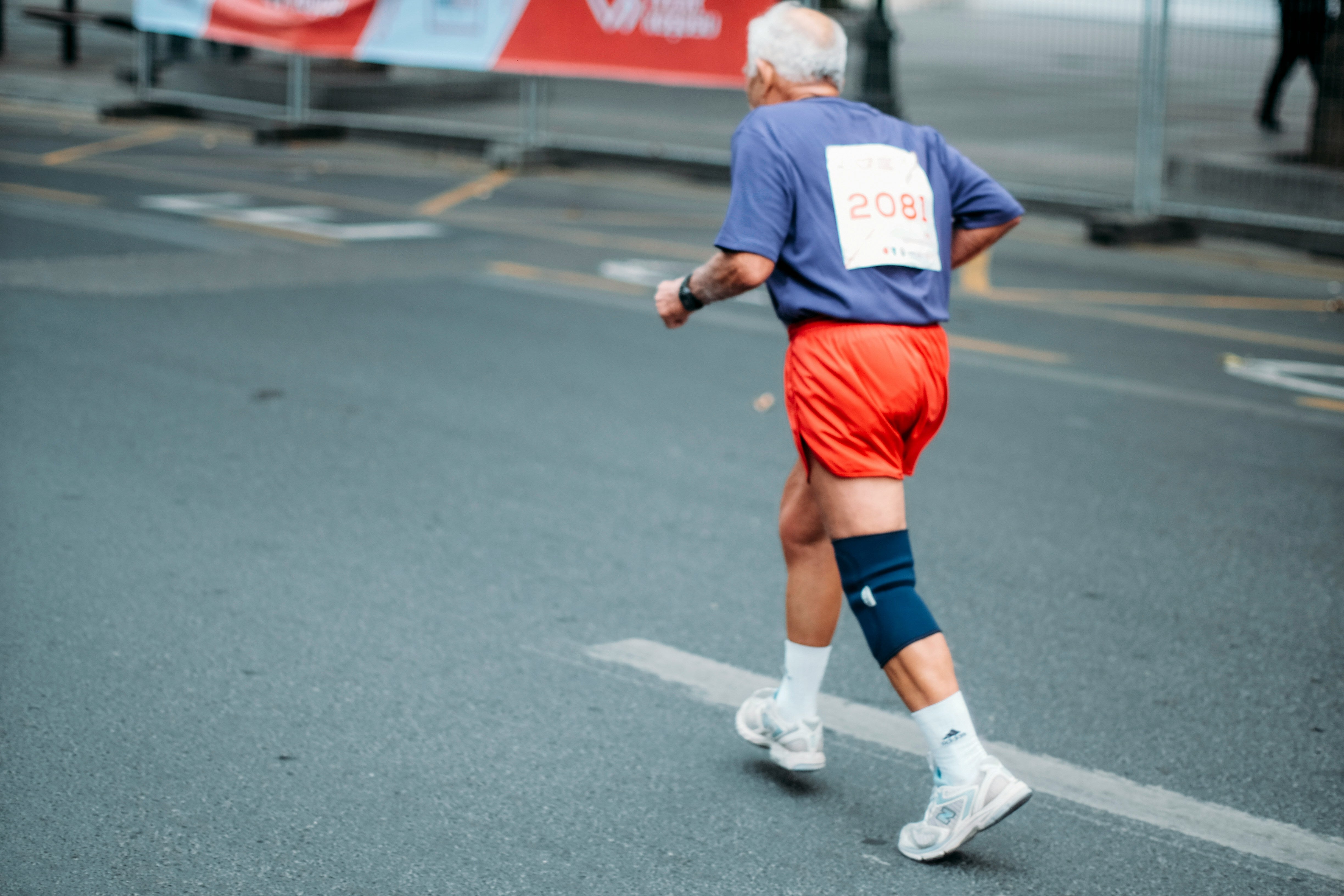
Every New Year, many of us make the resolution to take up exercising more often and what could be more accessible to us than running. Simply throw on some trainers and go, right?
Then the year goes by, the resolution slowly goes down the drain and uh, maybe next year will be the time that we’re running 10k’s and eyeing up the London Marathon ballot.
Advertisement
However, is there an age when we’re simply too old to be trying to take up this sport? Isn’t it going to be rougher on our knees as we age?
Isn’t running bad for the knees?
Writing for The Conversation, Hunter Bennett, a Lecturer in Exercise Science, University of South Australia argues that actually, running could help our knees as we age.
One way to think of this is to not think of our body as something that decays over time. Bennett explains: “Your body isn’t simply a pile of bones and cartilage that gets worn down with every step. It is a living dynamic system that grows and adapts in response to the loads that are placed upon it.”
Advertisement
With this in mind, he says that the more we use our knees, the more benefits we’ll experience.
He says: “Your knee joint is incredibly strong and designed to move. The cartilage inside your knee is a strong, flexible, connective tissue that cushions and protects the bones of your knee joint.
“There is good evidence to show when someone’s load is removed – for example, during prolonged bed rest or immobilisation – their bone and cartilage begins to deteriorate.”
This makes perfect sense.
So, when are we too old for running?
Bennett says: “Unfortunately (at least to my knowledge) there is no strong evidence examining what happens when you pick up running later in life. However, other lines of research do suggest it is likely safe and effective.
Advertisement
“A 2020 study demonstrated that older adults (65 years and older) who start high intensity jump training (known as “plyometric” training) not only see improvements in strength and function, but also find it safe and enjoyable.”
He went on to explain that these types of training lead to higher joint loads than running, giving us a fair indication that running later in life is safe.
How to get started with running
Bennett advises: “Like any type of exercise, your muscles and joints need time to adapt to the new load that is being placed upon them.
Advertisement
“With this in mind, it’s best to start with intervals where you walk for a short period, then jog for a short period. Then you can gradually increase your running distance over time, giving your body time to adapt.”
Celebrities always manage to keep us guessing. Remember when Justin Bieber posted about love and forgiveness, even if he didn’t deserve it? More recently, Britney Spears deleted her Instagram account after several concerning yet vague posts.
It’s not only celebrities who make cryptic posts on social media. A friend might share a photo with the caption, “People forget who was there for them”. Social media researchers call this practice vaguebooking.
Advertisement
“It’s when someone posts an intentionally vague message on social media that is designed to elicit questions or attention without fully divulging what’s wrong,” said Sanam Hafeez, a neuropsychologist and founder of Comprehend the Mind. “This behaviour is so common, but it’s not the healthiest way of communicating.”
If you come across these posts, you might wonder if you should respond or keep scrolling. Below, experts discuss the signs of vaguebooking, why people engage in this behaviour, and how to address it.
There are a few ways to recognise vaguebooking
People commonly share life updates on social media, from birthday celebrations to job losses. An example of vaguebooking is posting a picture of your dog with the caption “prayers needed”. By omitting information about your dog’s condition, you might be hoping for someone to ask what’s wrong.
Advertisement
Similar to sadfishing, vaguebooking involves attention-seeking, but it’s often low on detail and context. “These posts are highly ambiguous yet personal and often occur after a romantic breakup or friendship fallout,” said Jenny Woo, Harvard-trained emotional intelligence researcher and founder/CEO of Mind Brain Emotion.
The person who is vaguebooking may not be comfortable sharing the entire story. So, they’ll hint at a breakup by posting, “I’m done being taken for granted.” Or they’ll use inspirational language to hide an insult, such as “I’m cutting toxic people out of my life because I deserve better,” Woo said.
Often, these posts leave recipients wondering what happened and how they can help, said Sofie Roos, licensed sexologist, relationship therapist and author at Passionerad. For example, posting, “I will be away for some time, I need it,” could mean that the person is dealing with an illness or taking time to focus on a new business. You can’t tell unless you ask.
Advertisement
People vaguebook to avoid rejection
Sometimes, people vaguebook because they’re hoping to connect but are afraid of being judged or rejected. According to research, vaguebooking is associated with greater loneliness and participation in online gossip. “Those who are lower in emotional stability or higher in introversion may use vaguebooking to test who cares enough to ask, ‘Are you OK?’” Woo said.
People also vaguebook because they’re trying to reach a specific individual and believe they have no choice but to “triangulate an audience,” Hafeez explained. Triangulation involves bringing a third party into a conflict to ease the tension. In this case, they triangulate other social media users either to gain their support or provoke a reaction from the person who upset them.
Thais Gibson, founder of The Personal Development School, agreed, saying that vaguebooking might be a last resort when you or the post’s intended recipient isn’t willing to speak and resolve your disagreement. Although it’s not a healthy approach, vaguebooking allows you to express hurt feelings indirectly. And, as it turns out, your attachment style influences how you handle conflict.
Advertisement
Tatiana Lavrova via Getty Images
If you’ve been on social media, you’ve likely come across a “vaguebooker” — or perhaps you’re guilty of doing it yourself.
It also depends on your attachment style
You may have heard that there are four main attachment styles: secure, anxious, avoidant (dismissive avoidant), and disorganized (fearful avoidant). “Securely attached individuals are the least likely to vaguebook, because they’re the most equipped to handle conflict directly,” Gibson said. Although they tend to have unhealthy ways of dealing with conflict, people who are fearful avoidant (disorganized) aren’t as likely to turn to social media for support, she said.
Conversely, when anxiously attached individuals don’t receive validation from the person they’re fighting with, they’ll try to get it from other sources, including friends, family, or social media. “They’re looking for closeness and support, but find it difficult to ask for help,” Roos added.
Advertisement
“Surprisingly, dismissive avoidant (avoidant) is the second most likely attachment style to vaguebook,” Gibson said. Since they find it hard to be vulnerable, they often use passive-aggressive communication. For example, they might post a vengeful song about an ex or make philosophical-sounding comments, like “Whoever is meant to be with you will stay in your life.”
There’s another reason celebrities specifically vaguebook
“Some celebrities vaguebook to speak their truth without risking a media backlash,” Woo said. Perhaps, they’re expressing regret over something they’ve done or trying to take back control of a narrative that’s been distorted in their eyes. Since celebrities live under constant scrutiny, social media allows them to share while maintaining some level of privacy, Hafeez said.
Alternatively, they could be speaking to universal themes people can relate to, such as love, forgiveness, loss, and pain. “So, when they post in broad, spiritual, or poetic terms, they can be both vulnerable and seeking connection, without giving up the whole story,” Hafeez said.
Advertisement
“Other times celebrities may use cryptic posts strategically as emotional clickbait or a cliffhanger to sustain fan engagement and curiosity,” Woo said. Roos agreed, saying that celebrities may use vaguebooking to create a buzz and stay relevant.
There are tactful ways to respond to vaguebooking
It’s natural to be curious when you come across a cryptic post from someone in your network. “But resist the urge to respond immediately, at least publicly,” Hafeez said. “The post could be a cry for help or an internal monologue they don’t expect anyone to read, or something in between.”
Her advice concerning family and friends was to send them a private message, such as, “Hey, I saw your post, and I wanted to check in and see how you’re doing.” This is a non-intrusive way to validate them and give them space to share if they wish. People generally feel more supported when others communicate directly as opposed to commenting on a public thread, Gibson added.
Advertisement
“If it’s someone you’re not that close to, it’s OK to just read it and move on,” Hafeez said. “Not every post is an invitation to be involved or invested.” Roos agreed, saying that it’s all right not to respond, but if you suspect the post is about you, it’s best to reach out to them directly.
Approaching conflict head-on creates strong ties in relationships. Gibson suggested saying, “Hey, I get the sense that some of these posts are about me. I could be wrong, but I hope that you would talk to me directly so we can work through it.” Here, you’re setting a boundary that if there’s an issue, you want to address it one-on-one.
“If you’re the one who’s vaguebooking, it’s not that you’re doing something really bad,” Gibson said. “You are trying to feel seen, heard, and cared for. Those are all human needs.” Talking to a trusted individual, like a therapist, can help you find more direct and honest ways of expressing your needs besides airing them on social media.