Be a Voter

Which is better? To encourage someone to vote or to encourage them to be a voter?

If you want the person to actually vote, encourage them to be a voter. It’s been found that this framing is more likely to lead to action.

If you’d like to strengthen a behavior, weave it into your identity. And if you’d like to change someone else’s behavior, encourage them towards an identity change that includes that behavior.

Use this framing with yourself too.

Don’t just get up early. Be an early riser.

Don’t just make a difference. Be a contributor.

Don’t just do personal growth experiments. Be an explorer.

Don’t just post on social media. Be a blogger, podcaster, or YouTuber.

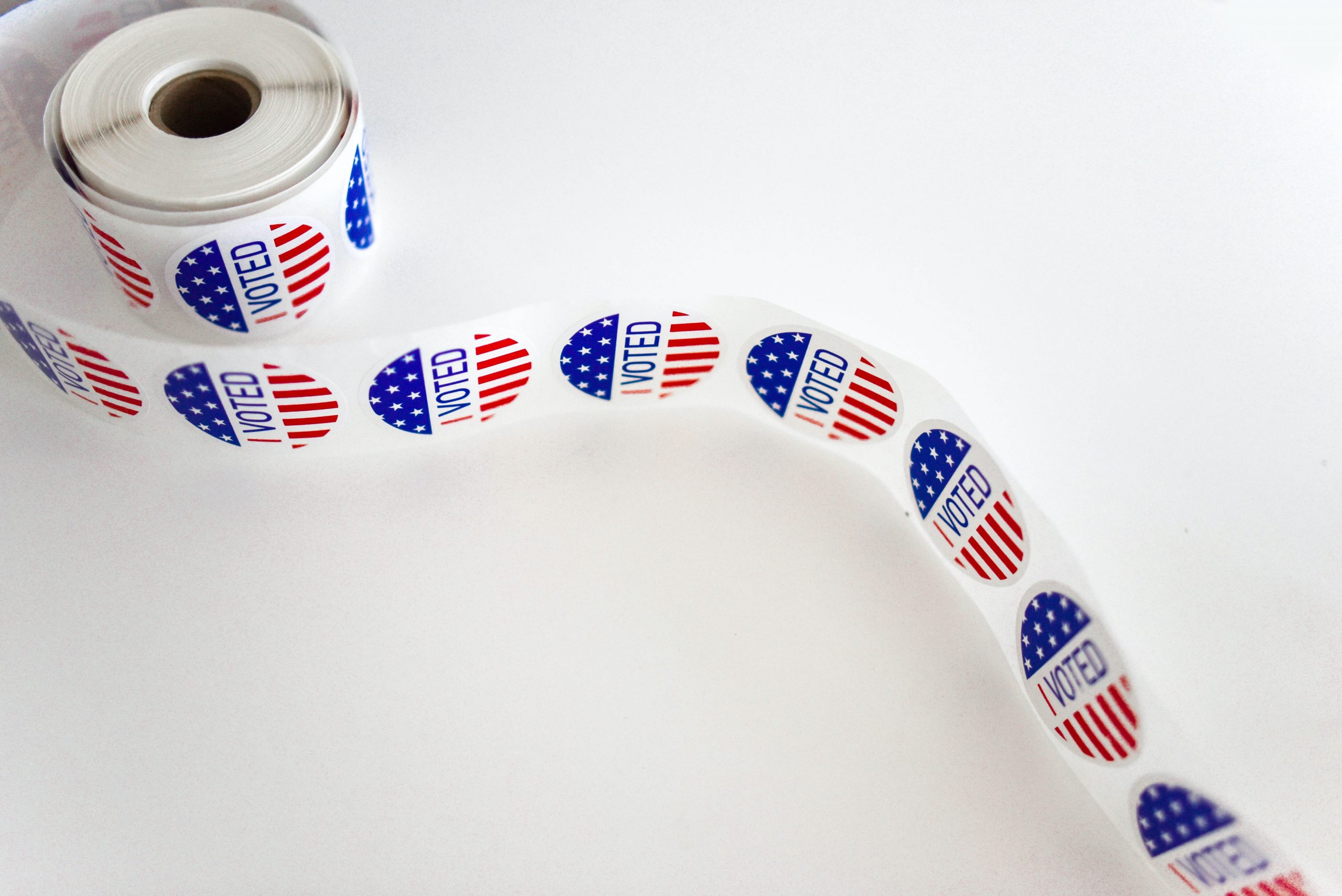
A similar framing shift motivated me to register to vote this year (my first time voting in any political election). Being encouraged to vote never motivated me to change, perhaps because it seemed like a pointless behavior. I decided to vote this time because I want to be a participant, not a spectator. Being a nonvoter in this election doesn’t feel like a good identity to embrace. This time I feel like I have to vote against stupidity in a way that didn’t seem necessary before.

I’ve found this framing especially helpful for leaning into long-term changes, like thinking of myself as an entrepreneur when starting my first business back in 1994. Being an entrepreneur is a stronger frame than starting or running a business. A behavioral frame lets you get a job when you hit a rough patch in your business, but an identity frame makes that option harder to consider.

Consequently, you may want to use behavioral framing when you’d prefer to keep your options open and give yourself more room to pivot. Behavioral framing is more flexible. If, however, you want to feel more committed and focused, so you can really invest in a particular path, identity framing is often the better choice.

Share Button

The Crown’s Charles And Diana On Doing Their Royal Roles Justice

HuffPost is part of Verizon Media. We and our partners will store and/or access information on your device through the use of cookies and similar technologies, to display personalised ads and content, for ad and content measurement, audience insights and product development.

Your personal data that may be used

  • Information about your device and internet connection, including your IP address
  • Browsing and search activity while using Verizon Media websites and apps
  • Precise location

Find out more about how we use your information in our Privacy Policy and Cookie Policy.

To enable Verizon Media and our partners to process your personal data select ‘I agree‘, or select ‘Manage settings‘ for more information and to manage your choices. You can change your choices at any time by visiting Your Privacy Controls.

Share Button

The Crown’s Emma Corrin Reveals ‘Filthy’ Diana Anecdote She Unearthed During Research

HuffPost is part of Verizon Media. We and our partners will store and/or access information on your device through the use of cookies and similar technologies, to display personalised ads and content, for ad and content measurement, audience insights and product development.

Your personal data that may be used

  • Information about your device and internet connection, including your IP address
  • Browsing and search activity while using Verizon Media websites and apps
  • Precise location

Find out more about how we use your information in our Privacy Policy and Cookie Policy.

To enable Verizon Media and our partners to process your personal data select ‘I agree‘, or select ‘Manage settings‘ for more information and to manage your choices. You can change your choices at any time by visiting Your Privacy Controls.

Share Button

12 Totally Inspiring Coming Out Videos That We Love On YouTube

HuffPost is part of Verizon Media. We and our partners will store and/or access information on your device through the use of cookies and similar technologies, to display personalised ads and content, for ad and content measurement, audience insights and product development.

Your personal data that may be used

  • Information about your device and internet connection, including your IP address
  • Browsing and search activity while using Verizon Media websites and apps
  • Precise location

Find out more about how we use your information in our Privacy Policy and Cookie Policy.

To enable Verizon Media and our partners to process your personal data select ‘I agree‘, or select ‘Manage settings‘ for more information and to manage your choices. You can change your choices at any time by visiting Your Privacy Controls.

Share Button

Planting parasites: Unveiling common molecular mechanisms of parasitism and grafting

Using the model Orobanchaceae parasitic plant Phtheirospermum japonicum, scientists from Nagoya University and other research institutes from Japan have discerned the molecular mechanisms underlying plant parasitism and cross-species grafting, pinpointing enzyme β-1,4-glucanase (GH9B3) as an important contributor to both phenomena. Targeting this enzyme may help control plant parasitism in crops. Also, this mechanism can be exploited for novel cross-species grafting techniques to realize the goal of sustainable agricultural technologies.

Plant parasitism is a phenomenon by which the parasite plant latches onto and absorbs water and nutrients from a second host plant, with the help of a specialized organ called the “haustorium.” Once the haustorium forms, specific enzymes then help in forming a connection between the tissues of the parasite and host plants, known as a “xylem bridge,” which facilitates the transport of water and nutrients from the host to the parasite.

A similar mechanism is involved in the process of artificial stem grafting, during which, the cell walls of the two different plant tissues at the graft junction become thinner and compressed, a phenomenon made possible by specific cell wall modifying enzymes. Cell wall modification has also been implicated to play a role in parasitism in different lineages of parasitic plants.

Therefore, the research team, led by Dr Ken-ichi Kurotani of Nagoya University, hypothesized that similar genes and enzymes should be involved in the process of parasitism and cross-species grafting. “To investigate molecular events involved in cell-cell adhesion between P. japonicum and the host plant, we analyzed the transcriptome for P. japonicum-Arabidopsis parasitism and P. japonicum-Arabidopsis grafting,” reports Dr Kurotani. When a gene in a cell is activated, it produces an RNA “transcript” that is then translated into an active protein, which is then used by the cell to perform various activities. A “transcriptome” is the complete set of RNA transcripts that the genome of an organism produces under various diverse conditions. The findings of their experiments are published in Nature’s Communications Biology.

Comparison of the parasitism and graft transcriptomes revealed that genes associated with wound healing, cell division, DNA replication, and RNA synthesis were highly upregulated during both events, indicating active cell proliferation at both the haustorium and graft interface.

“What’s more, we found an overlap between the transcriptome data from this study and that from grafting between Nicotiana and Arabidopsis, another angiosperm,” reports Dr Michitaka Notaguchi, the co-corresponding author of the study. Glycosyl hydrolases are enzymes that specifically target the breakdown of cellulose, the primary component of plant cell walls. A β-1,4-glucanase identified in P. japonicum belongs to the glycosyl hydrolase 9B3 (GH9B3) family; an enzyme from the same family was recognized to be crucial for cell-cell adhesion in Nicotiana by Dr Notaguchi’s group.

Further experiments showed that GH9B3-silenced P. japonicum could form the haustorium with Arabidopsis but could not form a functional xylem bridge, meaning that the P. japonicum β-1,4-glucanase is integral for the plant’s parasitic activity. Further, high GH9B3 RNA transcript levels were observed during artificial grafting experiments, thereby proving that the enzyme plays an integral role in both parasitism and grafting mechanisms.

The transcriptome data generated in this study can be used to unearth additional genes and enzymes involved in plant parasitism. Additionally, further research along these directions will help scientists develop specific molecular approaches to arrive at sustainable cross-species grafting alternatives.

Story Source:

Materials provided by Nagoya University. Note: Content may be edited for style and length.

Share Button

Humidifier care 101

Mayo Clinic does not endorse companies or products. Advertising revenue supports our not-for-profit mission.

Advertising & Sponsorship

Mayo Clinic Marketplace

Check out these best-sellers and special offers on books and newsletters from Mayo Clinic.

Share Button

Covid: What is the mental health cost to the young?

Could the long-term mental health impact of virus restrictions be far more damaging than the virus itself?

Share Button

Raising Your Baseline

In practicing the slow, shallow breathing approach from The Oxygen Advantage that I shared about during the past two days, I’m grasping that the key to this approach is to define a new baseline for my breathing and then keep synching back to that new baseline whenever I catch myself drifting from it.

The initial temptation is to sync back to my old way of breathing, which can happen automatically when I lose awareness of my breath. Then I might catch myself and practice consciously reducing my breath so I’m not over-breathing.

An aspect of this change that’s easier to catch is when I moderately exert myself for a short burst, like walking up a flight of stairs. My breathing becomes a little heavier afterwards, so I make a conscious effort to bring it back down quickly, ideally within no more than 2-3 breaths.

So it’s like I have a breathing budget, and I’m doing my best not to squander it. My budget for air this week is much lower than it was last week. And next week I’ll try to nudge it even lower.

I realized that a similar strategy also works for adjusting our emotional baselines.

Suppose you often feel depressed, frustrated, angry, anxious, or some other emotion you’d prefer not to feel so much. Pretend that you’ve suddenly been allocated a lower budget for feeling negative emotions, and you have to be careful not to squander it too quickly.

Imagine if life dramatically cut your negative emotion budget by saying: Henceforth you’re only allowed to spend half as much time in negative emotion territory.

How would you obey this mandate?

You need two pieces to succeed here:

  1. Frequent check-ins with yourself to see how you’re doing
  2. A quick recovery strategy to shift from the old behavior to the new one

Whenever you catch yourself experiencing some negative emotion, you must leave that territory and return to a positive or neutral baseline as quickly as possible. Otherwise you’ll squander your negative emotion budget too quickly.

Do you already have such a strategy? Do you know how to quickly shift yourself back to neutral or positive emotional territory? Can you do this within a few breaths?

If you don’t have such a method, then finding one ought to be a key strategic piece for raising your baseline. Being aware of negative emotions isn’t enough – you’ve also got to change them.

To practice reducing my breathing immediately when it’s too rapid, I do the opposite of the unwanted behavior. I deliberately slow down. I can’t breathe slowly and quickly at the same time, so by doing what’s incompatible with rapid breathing, I stop the rapid breathing.

It’s much the same with negative emotion. What’s incompatible with negative emotion? Positive emotion. So if you do something – anything – that makes you feel good within seconds, the negative emotion has to drop off. It can’t hang around while you’re feeling good.

Then the long-term challenge is to habitualize this recovery pattern by always practicing it at every possible opportunity.

I’m doing my best to not let myself over-breathe. Whenever I notice that I’m doing that, I immediately take conscious control of my breathing and slow it down. If I don’t do this, my baseline won’t shift, and I won’t really get to test and experience the results on the other side.

Initially you may have to consciously take control a lot – like dozens of times per day – but if you stay as consistent as you can, you’ll raise your baseline, and the new behavior pattern will become your new default.

Where else could you apply this idea? You could use it for productivity habits, eating habits, early rising, and lots of other areas of life. The key is to develop a rapid strategy for shifting your behavior in a way that’s incompatible with your old baseline. Then apply that shifting behavior every time you catch yourself running the old pattern.

To really create an effective change, the old behavioral baseline must become unacceptable for you. In order to progress to a new baseline, you must eventually regard your old baseline as out of bounds and below standard, even if it still feels normal. This is a simple approach I’ve used repeatedly times for doing personal growth experiments and also for making long-term changes. To embrace the new, there must be some willingness to say: The old behavior is dead to me.

Share Button

Lorraine Kelly, Joe Wicks And Marcus Rashford Among Stars On Queen’s Birthday Honours List

HuffPost is part of Verizon Media. We and our partners will store and/or access information on your device through the use of cookies and similar technologies, to display personalised ads and content, for ad and content measurement, audience insights and product development.

Your personal data that may be used

  • Information about your device and internet connection, including your IP address
  • Browsing and search activity while using Verizon Media websites and apps
  • Precise location

Find out more about how we use your information in our Privacy Policy and Cookie Policy.

To enable Verizon Media and our partners to process your personal data select ‘I agree‘, or select ‘Manage settings‘ for more information and to manage your choices. You can change your choices at any time by visiting Your Privacy Controls.

Share Button

Mary Berry ‘Overwhelmed’ To Receive Damehood In Queen’s Birthday Honours List

HuffPost is part of Verizon Media. We and our partners will store and/or access information on your device through the use of cookies and similar technologies, to display personalised ads and content, for ad and content measurement, audience insights and product development.

Your personal data that may be used

  • Information about your device and internet connection, including your IP address
  • Browsing and search activity while using Verizon Media websites and apps
  • Precise location

Find out more about how we use your information in our Privacy Policy and Cookie Policy.

To enable Verizon Media and our partners to process your personal data select ‘I agree‘, or select ‘Manage settings‘ for more information and to manage your choices. You can change your choices at any time by visiting Your Privacy Controls.

Share Button