Fly vs. wasp: Stealing a defense move helps thwart a predator

In the continual arms race between parasites and their hosts, innovation was thought to be the key to a successful attack or defense that one-ups the competition.

But sometimes, as in the corporate world, outright theft can be a quicker way to achieve dominance.

University of California, Berkeley biologists have shown that several species of fruit fly have stolen a successful defense from bacteria to survive predation by parasitic wasps, which in some flies can turn half of all fly larvae into surrogate wombs for baby wasps — a gruesome fate that inspired the creature in the 1979 movie “Alien.”

Bacteria and other microbes are famous for stealing genes from other microbes or viruses; this so-called horizontal gene transfer is the source of troublesome antibiotic resistance among disease-causing microbes. But it’s thought to be less common in multicellular organisms, such as insects and humans. Understanding how common it is in animals and how these genes are co-opted and shared can help scientists understand the evolution of animal immune defenses and could point the way to human therapies to fight parasitic or infectious diseases or cancer, itself a kind of parasite.

“It’s a model for understanding how immune systems evolve, including our immune system, which also contains horizontally transferred genes,” said Noah Whiteman, UC Berkeley professor of molecular and cell biology and of integrative biology and director of the campus’s Essig Museum of Entomology.

Last year, the researchers and their colleagues in Hungary used CRISPR genome editing to knock out the gene responsible for the defense in one widespread fly species, Drosophila ananassae, and found that nearly all the genetically modified flies died from predation by parasitic wasps.

In a new study published Dec. 20 in the journal Current Biology, the biologists demonstrated that this defense — a gene that encodes a toxin — can be edited into the genome of the common laboratory fruit fly, Drosophila melanogaster, to make them resistant to parasitoid wasps as well. The gene essentially becomes part of the fly’s immune system, one weapon in its armamentarium to fend off parasites.

The results demonstrate how crucial the stolen defense is to fly survival and highlights a strategy that may be more common in animals that scientists suspect.

“This shows that horizontal gene transfer is an underappreciated way that rapid evolution happens in animals,” said UC Berkeley doctoral student Rebecca Tarnopol, first author of the Current Biology paper. “People appreciate horizontal gene transfer as one of the major drivers of rapid adaptation in microbes, but these events were thought to be super uncommon in animals. But at least in insects, it seems like they’re fairly frequent.”

According to Whiteman, senior author of the paper, “The study shows that in order to keep up with the barrage of parasites that are continually evolving new ways to overcome host defenses, a good strategy for animals is to borrow genes from even more rapidly evolving viruses and bacteria, and that’s just what these flies have done.”

Gene flow from virus to bacteria to fly

Whiteman studies how insects evolve to resist the toxins that plants produce to prevent being eaten. In 2023, he published a book, “Most Delicious Poison,” about the plant toxins that humans have come to enjoy, such as caffeine and nicotine.

One plant-herbivore interaction he focuses on is that between the common fruit fly Scaptomyza flava and sour-tasting mustard plants, like the cresses that grow in streams throughout the world.

“The larvae, the immature stages of the fly, live in the leaves of the plant. They’re leaf miners, they leave little trails in the leaves,” Whiteman said. “They’re true parasites of the plant and the plant’s trying to kill them with its specialized chemicals. We study that arms race.”

What he’s learned, however, likely applies to many other insects, among the most successful herbivores on Earth.

“These are obscure little flies, but if you think about the fact that half of all living insect species are herbivores, it’s a very popular life history. Understanding the evolution of that is really important for understanding evolution in general in terms of how successful herbivores are,” he said.

Several years ago, after sequencing the fly’s genome in search of genes that allow it to resist mustard toxins, he discovered an unusual gene that he learned was widespread in bacteria. A search through earlier published genome sequences turned up the same gene in a related fly, Drosophila ananassae, as well as in a bacteria that lives inside an aphid. Researchers studying the aphid uncovered a complicated story: The gene actually comes from a bacterial virus, or bacteriophage, that infects the bacteria that live inside the aphid. The bacteriophage gene, expressed by the bacteria, makes the aphid resistant to a parasitic wasp that plagues it.

These wasps lay their eggs inside the larvae, or maggots, and remain there until the larvae turn into immobile pupae, at which point the wasp eggs mature into wasp larvae that consume the fly pupa, eventually emerging as adults.

When Tarnopol first used gene editing to express the toxin gene in all cells of D. melanogaster, all the flies died. But when Tarnopol expressed the gene only in certain immune cells, the fly became as resistant to parasites as its cousin, D. ananassae.

Whiteman, Tarnopol, and their colleagues subsequently discovered that the gene found in the genome of D. ananassae — a fusion between two toxin genes, cytolethal distending toxin B (cdtB) and apoptosis inducing protein of 56kDa (aip56), that the researchers called fusionB — codes for an enzyme that cuts up DNA.

To discover how this nuclease is able to kill a wasp egg, the UC Berkeley researchers reached out to István Andó at the Institute of Genetics of the HUN-REN Biological Research Centre in Szeged, Hungary, which had previously shown that these same flies have a cellular defense against wasp eggs that essentially walls off the eggs from the fly’s body and kills them. Andó and his lab colleagues created antibodies to the toxin that allowed them to track it through the fly’s body and found that the nuclease essentially floods the fly’s body to surround and kill the egg.

“We’ve been finding this huge untapped world of humoral immune factors that might be at play in the immune system of invertebrates,” Tarnopol said. “Our paper is one of the first ones to show, at least in Drosophila, that this type of immune response might be a common mechanism by which natural enemies like wasps and nematodes are dealt with. They are way more lethal in nature than some of the microbial infections that most people work with.”

Whiteman and his colleagues are still exploring the complexities of these interactions between fly and wasp, and the cellular and genetic changes that allowed the flies to synthesize a toxin without killing itself.

“If the gene is expressed in the wrong tissue, the fly is going to die. That gene is never going to sweep through populations through natural selection,” Whiteman said. “But if it lands in a place in the genome that’s near some enhancer or some regulatory component that expresses it a little bit in fat body tissue, then you can see how it can get this leg up really quickly, you get this amazing advantage.”

Horizontal gene transfer in any organism would pose similar problems, he said, but in the arms race between predator and prey, it may be worth it.

“When you’re a poor little fruit fly, how do you deal with these pathogens and parasites that are rapidly evolving to take advantage of you?” he said. “One way is to borrow genes from bacteria and viruses because they’re rapidly evolving. It’s an ingenious strategy — instead of waiting around for your own genes to help you, take them from other organisms that are more rapidly evolving than themselves. And that seems to have happened many times independently in insects, given that so many different ones have taken up this gene. It gives us a picture of a new kind of dynamism that is occurring even in animals that have just innate immune systems and don’t have adaptive immunity.”

Whiteman’s work was funded by the National Institute of General Medical Sciences of the National Institutes of Health (R35GM119816). Other co-authors of the paper are Josephine Tamsil, Ji Heon Ha, Kirsten Verster and Susan Bernstein of UC Berkeley, Gyöngyi Cinege, Edit Ábrahám, Lilla B. Magyar and Zoltán Lipinszki of Hungary and Bernard Kim of Stanford University.

Share Button

Virus that threatened humanity opens the future

Professor Sangmin Lee from POSTECH’s Department of Chemical Engineering, in collaboration with 2024 Nobel Chemistry Laureate Professor David Baker from the University of Washington, has developed an innovative therapeutic platform by mimicking the intricate structures of viruses using artificial intelligence (AI). Their pioneering research was published in Nature on December 18.

Viruses are uniquely designed to encapsulate genetic material within spherical protein shells, enabling them to replicate and invade host cells, often causing disease. Inspired by these complex structures, researchers have been exploring artificial proteins modeled after viruses. These “nanocages” mimic viral behavior, effectively delivering therapeutic genes to target cells. However, existing nanocages face significant challenges: their small size restricts the amount of genetic material they can carry, and their simple designs fall short of replicating the multifunctionality of natural viral proteins.

To address these limitations, the research team used AI-driven computational design. While most viruses display symmetrical structures, they also feature subtle asymmetries. Leveraging AI, the team recreated these nuanced characteristics and successfully designed nanocages in tetrahedral, octahedral, and icosahedral shapes for the first time.

The resulting nanostructures are composed of four types of artificial proteins, forming intricate architectures with six distinct protein-protein interfaces. Among these, the icosahedral structure, measuring up to 75 nanometers in diameter, stands out for its ability to hold three times more genetic material than conventional gene delivery vectors, such as adeno-associated viruses (AAV), marking a significant advancement in gene therapy.

Electron microscopy confirmed the AI-designed nanocages achieved precise symmetrical structures as intended. Functional experiments further demonstrated their ability to effectively deliver therapeutic payloads to target cells, paving the way for practical medical applications.

“Advancements in AI have opened the door to a new era where we can design and assemble artificial proteins to meet humanity’s needs,” said Professor Sangmin Lee. “We hope this research not only accelerates the development of gene therapies but also drives breakthroughs in next-generation vaccines and other biomedical innovations.”

Professor Lee previously worked as a postdoctoral researcher in Professor Baker’s laboratory at the University of Washington for nearly three years, from February 2021 to late 2023, before joining POSTECH in January 2024.

This study was supported by the Republic of Korea’s Ministry of Science and ICT under the Outstanding Young Scientist Program, the Nano and Material Technology Development Program, and the Global Frontier Research Program, with additional funding provided by the Howard Hughes Medical Institute (HHMI) in the United States.

Share Button

‘Capture the oxygen!’ The key to extending next-generation lithium-ion battery life

A research team led by Professor Jihyun Hong from the Department of Battery Engineering Department of the Graduate Institute of Ferrous & Eco Materials Technology at POSTECH, along with Dr. Gukhyun Lim, has developed a groundbreaking strategy to enhance the durability of lithium-rich layered oxide (LLO) material, a next-generation cathode material for lithium-ion batteries (LIBs). This breakthrough, which significantly extends battery lifespan, was published in the energy journal Energy & Environmental Science.

Lithium-ion batteries are indispensable in applications such as electric vehicles and energy storage systems (ESS). The lithium-rich layered oxide (LLO) material offers up to 20% higher energy density than conventional nickel-based cathodes by reducing the nickel and cobalt content while increasing the lithium and manganese composition. As a more economical and sustainable alternative, LLO has garnered significant attention. However, challenges such as capacity fading and voltage decay during charge-discharge cycles have hindered its commercial viability.

While previous studies have identified structural changes in the cathode during cycling as the cause of these issues, the exact reasons behind the instability have remained largely unclear. Additionally, existing strategies aimed at enhancing the structural stability of LLO have failed to resolve the root cause, hindering commercialization.

The POSTECH team focused on the pivotal role of oxygen release in destabilizing the LLO structure during the charge-discharge process. They hypothesized that improving the chemical stability of the interface between the cathode and the electrolyte could prevent oxygen from being released. Building on this idea, they reinforced the cathode-electrolyte interface by improving the electrolyte composition, which resulted in a significant reduction in oxygen emissions.

The research team’s enhanced electrolyte maintained an impressive energy retention rate of 84.3% even after 700 charge-discharge cycles, a significant improvement over conventional electrolytes, which only achieved an average of 37.1% energy retention after 300 cycles.

The research also revealed that structural changes on the surface of the LLO material had a significant impact on the overall stability of the material. By addressing these changes, the team was able to dramatically improve the lifespan and performance of the cathode while also minimizing unwanted reactions like electrolyte decomposition inside the battery.

Professor Jihyun Hong commented, “Using synchrotron radiation, we were able to analyze the chemical and structural differences between the surface and interior of the cathode particles. This revealed that the stability of the cathode surface is crucial for the overall structural integrity of the material and its performance. We believe this research will provide new directions for developing next-generation cathode materials.”

This research was supported by the Ministry of Trade, Industry and Energy through the Korea Institute for Advancement of Technology, and the Ministry of Science and ICT through the National Research Foundation of Korea, with funding for 2024.

Share Button

Leaving Christmas Leftovers Out For More Than This Many Hours Can Make Them Unsafe

’Tis the season for festive feasting ― and, if you’re not careful, food poisoning.

NHS Shetland says that “Campylobacter is one of the most common bacteria causing food poisoning, and it is closely associated with raw poultry such as chicken or turkey.”

But cooking your food correctly is only one part of the equation ― it also matters how, and when, you store leftovers, public health body Safefood says.

They add that “If you store your Christmas dinner leftovers carefully in the fridge you can hold on to the glow of Christmas Day and use them up over the next three days.”

How soon should I put leftovers in the fridge?

According to Safefood, they should be covered and stored away within two hours.

“Don’t eat food that has been standing at room temperature for more than 2 hours,” the health pros advised.

If your turkey still feels hot long after you’ve cooked it, you can slice it into smaller pieces before placing them in airtight containers to prevent cross-contamination.

Safefood stresses that “Leftovers stored in the fridge should be eaten within three days. ”

NHS Shetland Health Protection Nurse Chloe Umphray gives an even shorter reheat window: “Storing food incorrectly and for longer than recommended can increase the risk of bacterial growth, which can lead to food poisoning,” she warned.

“Key safety tips include: store it in the fridge, eat it within two days and only reheat it once.”

How do I safely reheat leftovers?

As Chloe says, you can only reheat leftovers once.

However you cook them, Safefood says they “should be reheated until they are piping hot all the way through. And leftover gravy should be brought to a rolling boil.”

Even if you’re eating the leftover meat cold, Food Standards Scotland adds that you should only take as much turkey as you’ll actually need out of the fridge.

They advise against leaving plates of cold cuts out, and suggest we punt the meat back in the fridge within an hour of taking it out if needed.

Share Button

14 Things You Probably Never Knew About The Christmas Classic The Grinch

In the last two decades, the 2000s big-screen adaptation of The Grinch has become an undeniable festive classic.

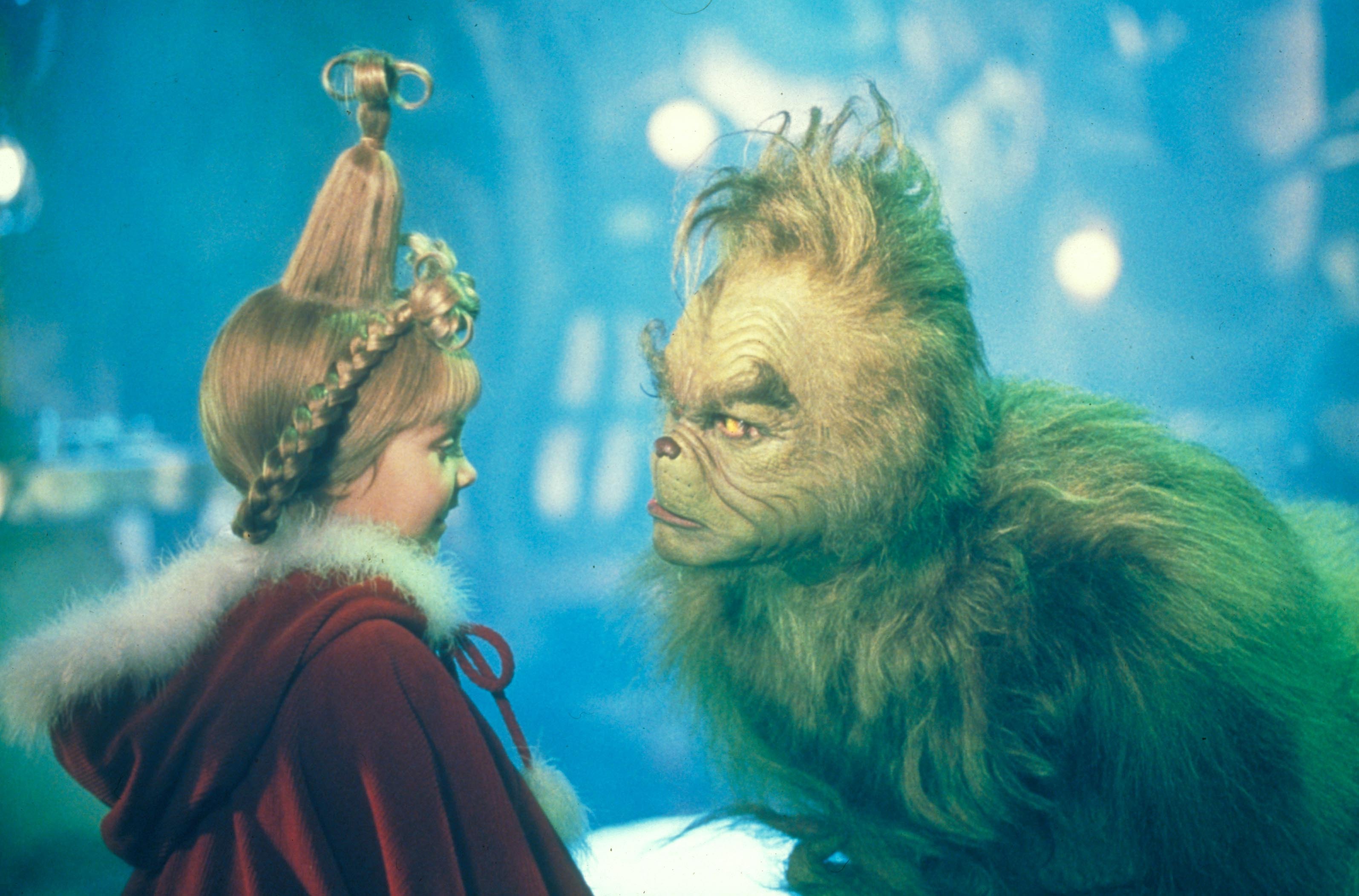
A surefire annual rewatch once cosy season rolls around, the live-action film depicts just how the frosty green heart of Jim Carrey’s character is thawed by the inhabitants of Whoville.

As familiar as you are with the tale, though, you might not know these behind the scenes facts about The Grinch, The Whos and even Mount Crumpit.

Here are 14 behind-the-scenes facts about The Grinch…

1. Jim Carrey underwent torture endurance training to help him tolerate the Grinch prosthetics

<div class="js-react-hydrator" data-component-name="YouTube" data-component-id="19" data-component-props="{"itemType":"video","index":7,"contentIndexByType":1,"contentListType":"embed","code":"

","type":"video","meta":{"author":"The Graham Norton Show","author_url":"https://www.youtube.com/channel/UC4PziMH5MvvsmqM0VCZTy-g","cache_age":86400,"description":"Jim Carrey tells us he was given training from an expert who advised the CIA on dealing with torture to get him prepared to ruin Christmas. \n\n\n\n#TheGNShow #TheGrahamNortonShow #GrahamNorton\n\nFollow us!\n\nFacebook – https://www.facebook.com/thegrahamnortonshow/?ref=page_internal \nInstagram – https://www.instagram.com/thegrahamnortonshowofficial/\nTwitter – https://twitter.com/TheGNShowFollow us here:\nFacebook: https://www.facebook.com/thegrahamnortonshow/\nInstagram: https://www.instagram.com/thegrahamnortonshowofficial/\nTwitter: https://twitter.com/TheGNShow\nTikTok: https://www.tiktok.com/@thegnshow\nSnapchat: https://www.snapchat.com/discover/The_Graham_Norton_Show/3773416663","options":{"_cc_load_policy":{"label":"Closed captions","value":false},"_end":{"label":"End on","placeholder":"ex.: 11, 1m10s","value":""},"_start":{"label":"Start from","placeholder":"ex.: 11, 1m10s","value":""},"click_to_play":{"label":"Hold load & play until clicked","value":false}},"provider_name":"YouTube","thumbnail_height":720,"thumbnail_url":"https://i.ytimg.com/vi/kXAv8RXmsrc/maxresdefault.jpg","thumbnail_width":1280,"title":"Jim Carrey Trained By CIA To Play Grinch – The Graham Norton Show","type":"video","url":"https://www.youtube.com/watch?v=kXAv8RXmsrc","version":"1.0"},"flags":[],"enhancements":{},"fullBleed":false,"options":{"theme":"news","device":"desktop","editionInfo":{"id":"uk","name":"U.K.","link":"https://www.huffingtonpost.co.uk","locale":"en_GB"},"originalEdition":"uk","isMapi":false,"isAmp":false,"isVideoEntry":false,"isEntry":true,"isMt":false,"entryId":"67628227e4b0d69068d272ed","entryPermalink":"https://www.huffingtonpost.co.uk/entry/the-grinch-facts-trivia-never-knew_uk_67628227e4b0d69068d272ed","entryTagsList":"ukfilm,christmas,nostalgia,the-grinch,@clone_of_uk_6571bbdce4b0a10def8bb7df","sectionSlug":"entertainment","deptSlug":null,"sectionRedirectUrl":null,"subcategories":"","isWide":false,"headerOverride":null,"noVideoAds":false,"disableFloat":false,"isNative":false,"commercialVideo":{"provider":"custom","site_and_category":"uk.entertainment","package":null},"isHighline":false,"vidibleConfigValues":{"cid":"60afc140cf94592c45d7390c","disabledWithMapiEntries":false,"overrides":{"all":"60b8e525cdd90620331baaf4"},"whitelisted":["56c5f12ee4b03a39c93c9439","56c6056ee4b01f2b7e1b5f35","59bfee7f9e451049f87f550b","5acccbaac269d609ef44c529","570278d2e4b070ff77b98217","57027b4be4b070ff77b98d5c","56fe95c4e4b0041c4242016b","570279cfe4b06d08e3629954","5ba9e8821c2e65639162ccf1","5bcd9904821576674bc55ced","5d076ca127f25f504327c72e","5b35266b158f855373e28256","5ebac2e8abddfb04f877dff2","60b8e525cdd90620331baaf4","60b64354b171b7444beaff4d","60d0d8e09340d7032ad0fb1a","60d0d90f9340d7032ad0fbeb","60d0d9949340d7032ad0fed3","60d0d9f99340d7032ad10113","60d0daa69340d7032ad104cf","60d0de02b627221e9d819408"],"playlists":{"default":"57bc306888d2ff1a7f6b5579","news":"56c6dbcee4b04edee8beb49c","politics":"56c6dbcee4b04edee8beb49c","entertainment":"56c6e7f2e4b0983aa64c60fc","tech":"56c6f70ae4b043c5bdcaebf9","parents":"56cc65c2e4b0239099455b42","lifestyle":"56cc66a9e4b01f81ef94e98c"},"playerUpdates":{"56c6056ee4b01f2b7e1b5f35":"60b8e525cdd90620331baaf4","56c5f12ee4b03a39c93c9439":"60d0d8e09340d7032ad0fb1a","59bfee7f9e451049f87f550b":"60d0d90f9340d7032ad0fbeb","5acccbaac269d609ef44c529":"60d0d9949340d7032ad0fed3","5bcd9904821576674bc55ced":"60d0d9f99340d7032ad10113","5d076ca127f25f504327c72e":"60d0daa69340d7032ad104cf","5ebac2e8abddfb04f877dff2":"60d0de02b627221e9d819408"}},"connatixConfigValues":{"defaultPlayer":"8b034f64-513c-4987-b16f-42d6008f7feb","clickToPlayPlayer":"5a777b9b-81fe-41a6-8302-59e9953ee8a2","videoPagePlayer":"19654b65-409c-4b38-90db-80cbdea02cf4"},"topConnatixThumnbailSrc":"data:image/png;base64,iVBORw0KGgoAAAANSUhEUgAAAAEAAAABCAQAAAC1HAwCAAAAC0lEQVR42mNkYAAAAAYAAjCB0C8AAAAASUVORK5CYII=","customAmpComponents":[],"ampAssetsUrl":"https://amp.assets.huffpost.com","videoTraits":null,"positionInUnitCounts":{"buzz_head":{"count":0},"buzz_body":{"count":0},"buzz_bottom":{"count":0}},"positionInSubUnitCounts":{"article_body":{"count":17},"blog_summary":{"count":0},"before_you_go_content":{"count":0}},"connatixCountsHelper":{"count":0},"buzzfeedTracking":{"context_page_id":"67628227e4b0d69068d272ed","context_page_type":"buzz","destination":"huffpost","mode":"desktop","page_edition":"en-uk"},"tags":[{"name":"ukfilm","slug":"ukfilm","links":{"relativeLink":"news/ukfilm","permalink":"https://www.huffingtonpost.co.uk/news/ukfilm","mobileWebLink":"https://www.huffingtonpost.co.uk/news/ukfilm"},"section":{"title":"Entertainment","slug":"entertainment"},"topic":{"title":"Film","slug":"ukfilm","overridesSectionLabel":false},"url":"https://www.huffingtonpost.co.uk/news/ukfilm/"},{"name":"Christmas","slug":"christmas","links":{"relativeLink":"news/christmas","permalink":"https://www.huffingtonpost.co.uk/news/christmas","mobileWebLink":"https://www.huffingtonpost.co.uk/news/christmas"},"relegenceId":5556441,"relegenceSubjectId":978615,"section":{"title":"Life","slug":"lifestyle"},"topic":{"title":"Christmas","slug":"christmas","overridesSectionLabel":false},"url":"https://www.huffingtonpost.co.uk/news/christmas/"},{"name":"nostalgia","slug":"nostalgia","links":{"relativeLink":"news/nostalgia","permalink":"https://www.huffingtonpost.co.uk/news/nostalgia","mobileWebLink":"https://www.huffingtonpost.co.uk/news/nostalgia"},"section":{"title":"Entertainment","slug":"entertainment"},"topic":{"title":"Nostalgia","slug":"nostalgia","overridesSectionLabel":false},"url":"https://www.huffingtonpost.co.uk/news/nostalgia/"},{"name":"The grinch","slug":"the-grinch","links":{"relativeLink":"news/the-grinch","permalink":"https://www.huffingtonpost.co.uk/news/the-grinch","mobileWebLink":"https://www.huffingtonpost.co.uk/news/the-grinch"},"url":"https://www.huffingtonpost.co.uk/news/the-grinch/"}],"isLiveblogLive":null,"isLiveblog":false,"cetUnit":"buzz_body","bodyAds":["

\r\n\r\n HPGam.cmd.push(function(){\r\n\t\treturn HPGam.render(\"inline-1\", \"entry_paragraph_1\", false, false);\r\n });\r\n\r\n","

\r\n\r\n HPGam.cmd.push(function(){\r\n\t\treturn HPGam.render(\"inline\", \"entry_paragraph_2\", false, false);\r\n });\r\n\r\n","

\r\n\r\n HPGam.cmd.push(function(){\r\n\t\treturn HPGam.render(\"inline-2\", \"entry_paragraph_3\", false, false);\r\n });\r\n\r\n","

\r\n\r\n HPGam.cmd.push(function(){\r\n\t\treturn HPGam.render(\"inline-infinite\", \"repeating_dynamic_display\", false, false);\r\n });\r\n\r\n"],"adCount":0},"isCollectionEmbed":false}”>

According to an interview on Graham Norton’s BBC talk show, the actor was trained by the actual CIA to help him endure the hefty costume required to transform him into the green meanie.

In 2022, the Canadian star said filming The Grinch was like “being buried alive every day” due to the heavy prostheses, and he could often be found smoking in full costume (complete with an oversized cigarette-holder to avoid anything going up in flames) to help him through the process.

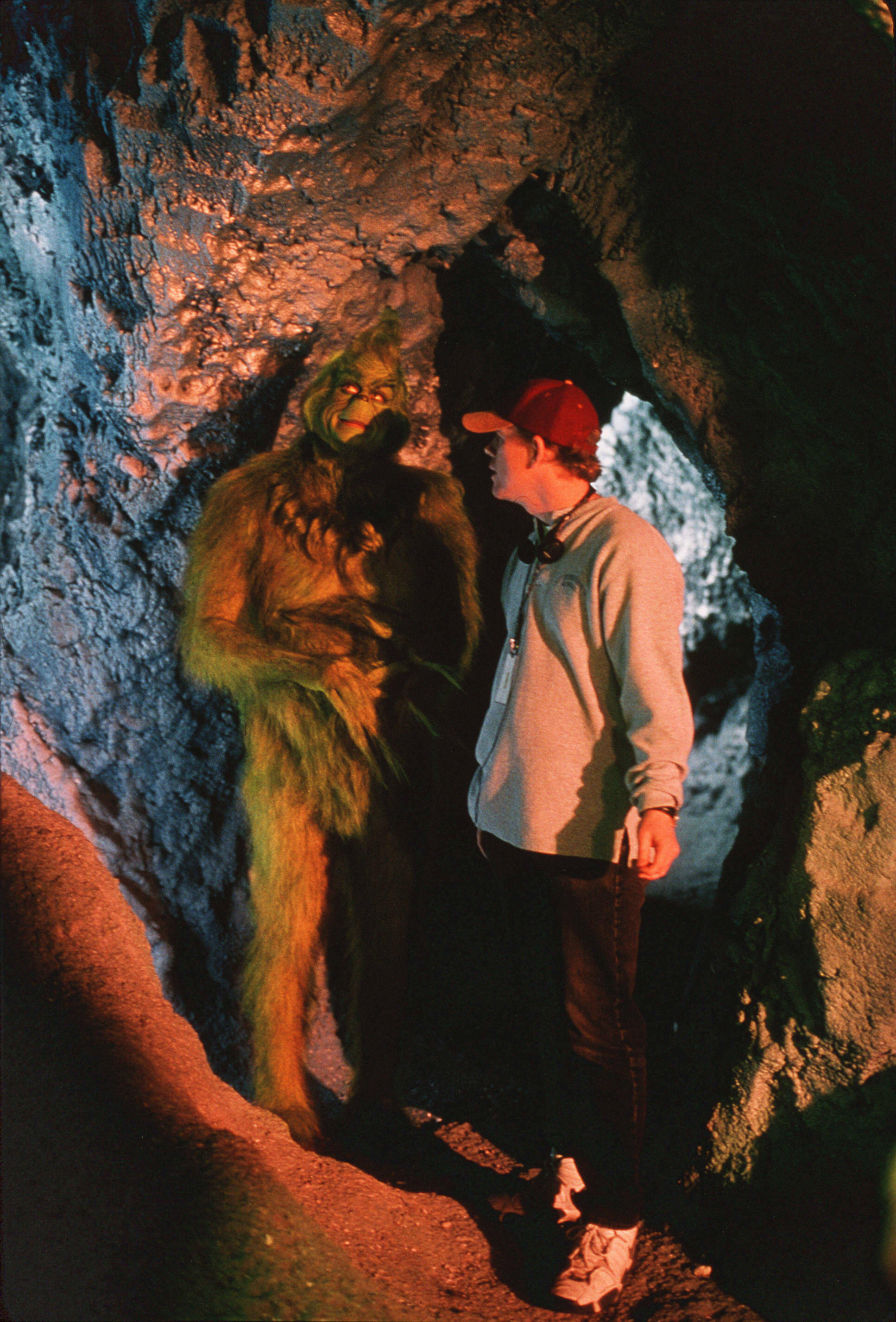
2. Director Ron Howard became The Grinch on set for a day

Jim Carrey and Ron Howard on set

Melinda Sue Gordon/Imagine Ent/Kobal/Shutterstock

So intense was the costume, that director Ron Howard finally decided to give it a whirl to see what all the fuss was about – and he also directed the production decked out in it for a day.

“It must’ve been very confusing for everyone else,” he said.

3. The Grinch is actually an Oscar-winning film

When you think “Grinch”, you don’t necessarily think: Academy Awards – but you should.

The film won an Oscar in 2001 for best makeup and hairstyling, which actually makes sense when you consider what Jim Carrey was put through on set.

4. The film almost featured a cameo from another Dr Seuss creation – The Cat In The Hat

The author’s widow, Audrey Geisel, actually put a stop to an Easter egg referencing another one of his creations, the sartorially advanced feline.

She spoke to Newsweek, and revealed that the Grinch nearly had a stuffed version of the Cat In The Hat on his wall – but she vetoed it.

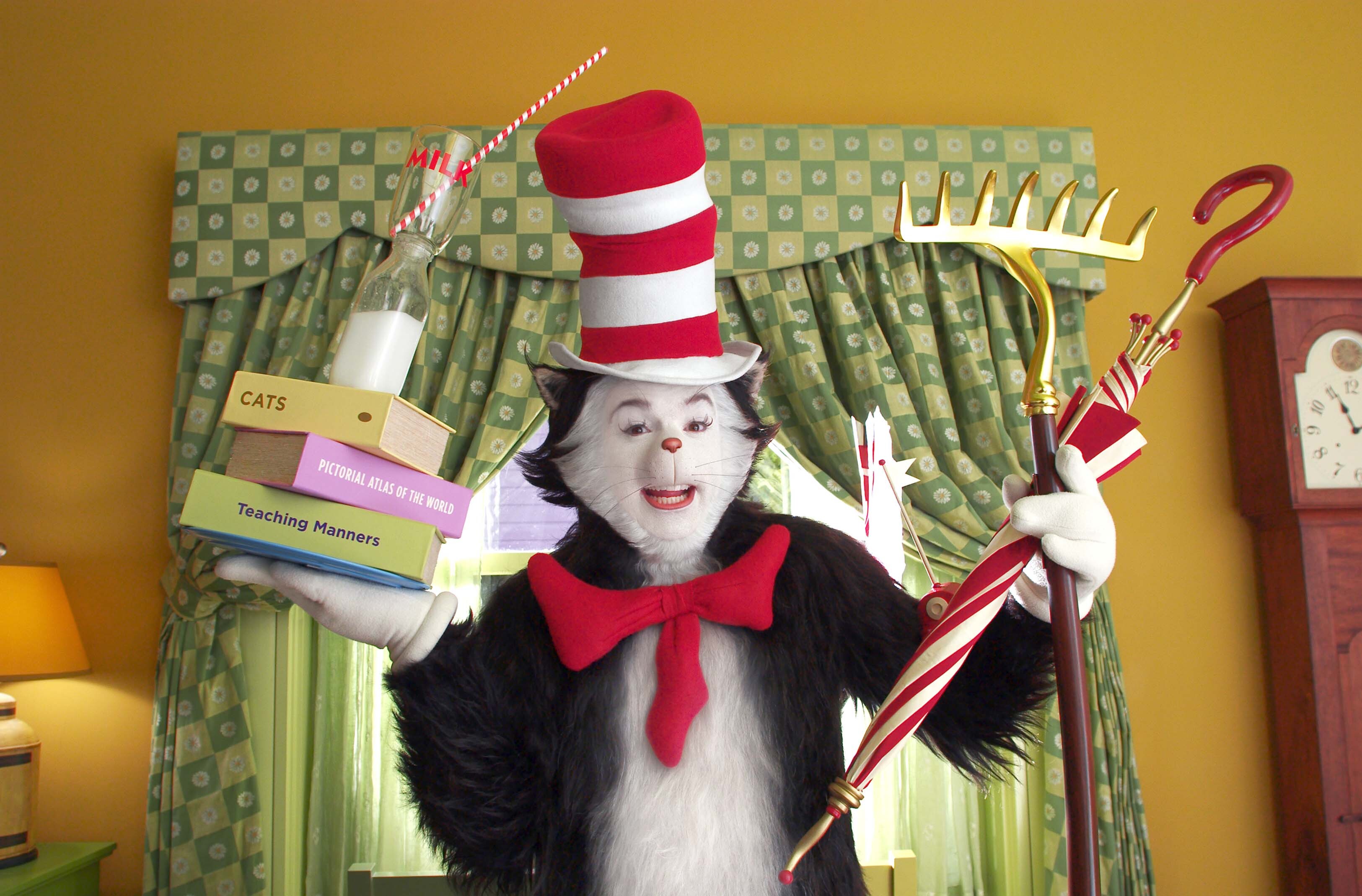
The Cat In The Hat was later adapted in a similar style to The Grinch starring Mike Myers in the title role, although it was far less well-received.

Mike Myers as The Cat In The Hat

Moviestore/Shutterstock

5. Bryce Dallas Howard appears in the film

Bryce Dallas Howard is credited as Surprised Who – and when you realise her dad was the film’s director, it makes sense for the then-19-year-old to have a cheeky cameo.

Bryce Dallas Howard
Bryce Dallas Howard

Rodin Eckenroth/GA via Getty Images

6. Eddie Murphy auditioned for the role of The Grinch

Though the role went to Jim Carrey, multiple other actors auditioned, including Jack Nicholson.

7. Welcome Christmas was written to mimic Latin

The song Welcome Christmas was written in gibberish, but it was made to mimic the sounds of the ancient roman language Latin. Producers did this so well, in fact, that some fans asked for translations of the jingle.

<div class="js-react-hydrator" data-component-name="YouTube" data-component-id="6929" data-component-props="{"itemType":"video","index":33,"contentIndexByType":2,"contentListType":"embed","code":"

","type":"video","meta":{"author":"Anthony Parsons","author_url":"https://www.youtube.com/channel/UCLbLcxIp7mqTqHf5yIGmGkw","cache_age":86400,"description":"Lyrics\n\nFahoo fores, dahoo dores\nWelcome Christmas, come this way\nFahoo fores, dahoo dores\nWelcome Christmas, Christmas day\n\nWelcome, welcome fahoo ramus\nWelcome, welcome dahoo damus\nChristmas day is in our grasp\nSo long as we have hands to clasp\n\nFahoo fores, dahoo dores\nWelcome Christmas, bring your cheer\nFahoo fores, dahoo dores\nWelcome all who’s far and near","options":{"_cc_load_policy":{"label":"Closed captions","value":false},"_end":{"label":"End on","placeholder":"ex.: 11, 1m10s","value":""},"_start":{"label":"Start from","placeholder":"ex.: 11, 1m10s","value":""},"click_to_play":{"label":"Hold load & play until clicked","value":false}},"provider_name":"YouTube","thumbnail_height":360,"thumbnail_url":"https://i.ytimg.com/vi/c9NoXo6qz2A/hqdefault.jpg","thumbnail_width":480,"title":"Welcome Christmas – Dr. Seuss’ How The Grinch Stole Christmas (2000) scene","type":"video","url":"https://www.youtube.com/watch?v=c9NoXo6qz2A","version":"1.0"},"flags":[],"enhancements":{},"fullBleed":false,"options":{"theme":"news","device":"desktop","editionInfo":{"id":"uk","name":"U.K.","link":"https://www.huffingtonpost.co.uk","locale":"en_GB"},"originalEdition":"uk","isMapi":false,"isAmp":false,"isVideoEntry":false,"isEntry":true,"isMt":false,"entryId":"67628227e4b0d69068d272ed","entryPermalink":"https://www.huffingtonpost.co.uk/entry/the-grinch-facts-trivia-never-knew_uk_67628227e4b0d69068d272ed","entryTagsList":"ukfilm,christmas,nostalgia,the-grinch,@clone_of_uk_6571bbdce4b0a10def8bb7df","sectionSlug":"entertainment","deptSlug":null,"sectionRedirectUrl":null,"subcategories":"","isWide":false,"headerOverride":null,"noVideoAds":false,"disableFloat":false,"isNative":false,"commercialVideo":{"provider":"custom","site_and_category":"uk.entertainment","package":null},"isHighline":false,"vidibleConfigValues":{"cid":"60afc140cf94592c45d7390c","disabledWithMapiEntries":false,"overrides":{"all":"60b8e525cdd90620331baaf4"},"whitelisted":["56c5f12ee4b03a39c93c9439","56c6056ee4b01f2b7e1b5f35","59bfee7f9e451049f87f550b","5acccbaac269d609ef44c529","570278d2e4b070ff77b98217","57027b4be4b070ff77b98d5c","56fe95c4e4b0041c4242016b","570279cfe4b06d08e3629954","5ba9e8821c2e65639162ccf1","5bcd9904821576674bc55ced","5d076ca127f25f504327c72e","5b35266b158f855373e28256","5ebac2e8abddfb04f877dff2","60b8e525cdd90620331baaf4","60b64354b171b7444beaff4d","60d0d8e09340d7032ad0fb1a","60d0d90f9340d7032ad0fbeb","60d0d9949340d7032ad0fed3","60d0d9f99340d7032ad10113","60d0daa69340d7032ad104cf","60d0de02b627221e9d819408"],"playlists":{"default":"57bc306888d2ff1a7f6b5579","news":"56c6dbcee4b04edee8beb49c","politics":"56c6dbcee4b04edee8beb49c","entertainment":"56c6e7f2e4b0983aa64c60fc","tech":"56c6f70ae4b043c5bdcaebf9","parents":"56cc65c2e4b0239099455b42","lifestyle":"56cc66a9e4b01f81ef94e98c"},"playerUpdates":{"56c6056ee4b01f2b7e1b5f35":"60b8e525cdd90620331baaf4","56c5f12ee4b03a39c93c9439":"60d0d8e09340d7032ad0fb1a","59bfee7f9e451049f87f550b":"60d0d90f9340d7032ad0fbeb","5acccbaac269d609ef44c529":"60d0d9949340d7032ad0fed3","5bcd9904821576674bc55ced":"60d0d9f99340d7032ad10113","5d076ca127f25f504327c72e":"60d0daa69340d7032ad104cf","5ebac2e8abddfb04f877dff2":"60d0de02b627221e9d819408"}},"connatixConfigValues":{"defaultPlayer":"8b034f64-513c-4987-b16f-42d6008f7feb","clickToPlayPlayer":"5a777b9b-81fe-41a6-8302-59e9953ee8a2","videoPagePlayer":"19654b65-409c-4b38-90db-80cbdea02cf4"},"topConnatixThumnbailSrc":"data:image/png;base64,iVBORw0KGgoAAAANSUhEUgAAAAEAAAABCAQAAAC1HAwCAAAAC0lEQVR42mNkYAAAAAYAAjCB0C8AAAAASUVORK5CYII=","customAmpComponents":[],"ampAssetsUrl":"https://amp.assets.huffpost.com","videoTraits":null,"positionInUnitCounts":{"buzz_head":{"count":0},"buzz_body":{"count":0},"buzz_bottom":{"count":0}},"positionInSubUnitCounts":{"article_body":{"count":17},"blog_summary":{"count":0},"before_you_go_content":{"count":0}},"connatixCountsHelper":{"count":0},"buzzfeedTracking":{"context_page_id":"67628227e4b0d69068d272ed","context_page_type":"buzz","destination":"huffpost","mode":"desktop","page_edition":"en-uk"},"tags":[{"name":"ukfilm","slug":"ukfilm","links":{"relativeLink":"news/ukfilm","permalink":"https://www.huffingtonpost.co.uk/news/ukfilm","mobileWebLink":"https://www.huffingtonpost.co.uk/news/ukfilm"},"section":{"title":"Entertainment","slug":"entertainment"},"topic":{"title":"Film","slug":"ukfilm","overridesSectionLabel":false},"url":"https://www.huffingtonpost.co.uk/news/ukfilm/"},{"name":"Christmas","slug":"christmas","links":{"relativeLink":"news/christmas","permalink":"https://www.huffingtonpost.co.uk/news/christmas","mobileWebLink":"https://www.huffingtonpost.co.uk/news/christmas"},"relegenceId":5556441,"relegenceSubjectId":978615,"section":{"title":"Life","slug":"lifestyle"},"topic":{"title":"Christmas","slug":"christmas","overridesSectionLabel":false},"url":"https://www.huffingtonpost.co.uk/news/christmas/"},{"name":"nostalgia","slug":"nostalgia","links":{"relativeLink":"news/nostalgia","permalink":"https://www.huffingtonpost.co.uk/news/nostalgia","mobileWebLink":"https://www.huffingtonpost.co.uk/news/nostalgia"},"section":{"title":"Entertainment","slug":"entertainment"},"topic":{"title":"Nostalgia","slug":"nostalgia","overridesSectionLabel":false},"url":"https://www.huffingtonpost.co.uk/news/nostalgia/"},{"name":"The grinch","slug":"the-grinch","links":{"relativeLink":"news/the-grinch","permalink":"https://www.huffingtonpost.co.uk/news/the-grinch","mobileWebLink":"https://www.huffingtonpost.co.uk/news/the-grinch"},"url":"https://www.huffingtonpost.co.uk/news/the-grinch/"}],"isLiveblogLive":null,"isLiveblog":false,"cetUnit":"buzz_body","bodyAds":["

\r\n\r\n HPGam.cmd.push(function(){\r\n\t\treturn HPGam.render(\"inline-1\", \"entry_paragraph_1\", false, false);\r\n });\r\n\r\n","

\r\n\r\n HPGam.cmd.push(function(){\r\n\t\treturn HPGam.render(\"inline\", \"entry_paragraph_2\", false, false);\r\n });\r\n\r\n","

\r\n\r\n HPGam.cmd.push(function(){\r\n\t\treturn HPGam.render(\"inline-2\", \"entry_paragraph_3\", false, false);\r\n });\r\n\r\n","

\r\n\r\n HPGam.cmd.push(function(){\r\n\t\treturn HPGam.render(\"inline-infinite\", \"repeating_dynamic_display\", false, false);\r\n });\r\n\r\n"],"adCount":0},"isCollectionEmbed":false}”>