Ask A GP: Is ‘Nordic Walking’ Better Than 10,000 Steps?

Amidst what can sometimes feel like a barrage of exercise advice, the NHS says that the benefits of a simple walk often go “overlooked”.

The movement, after all, is linked to better heart, brain, and mental health.

And, some posit, “Nordic walking” may be even better for you than the “regular” kind.

It’s been associated with higher calorie expenditure and less joint pain than going for a normal stroll, while some research suggests it may even ease chronic fatigue.

Here, we spoke to Dr Giuseppe Aragona, GP and medical adviser for Prescription Doctor, about why “Nordic walking” seems to be so good for us – and how it stacks up against the oft-repeated 10,000 steps rule.

What is “Nordic walking” and is it better than 10,000 steps?

Nordic walking involves using two poles to propel yourself as you walk. It was first popularised in the ’90s by skiers, hoping to build their strength off-season.

Because it involves the use of your torso and arms, it engages more of your muscles (up to 90% vs regular walking’s 50-ish %, Harvard Health said).

“In many ways,” Dr Aragona told HuffPost UK, “it offers advantages over simply aiming for 10,000 steps a day”, provided you move enough to meet fitness recommendations.

After all, she explained, the figure “was never based on robust medical evidence; rather, it emerged as a marketing concept in the 1960s.

“What we now know is that meaningful health benefits can be achieved with far fewer steps, and that the quality and intensity of movement matter just as much as the number of steps taken.”

Nordic walking may be a more vigorous activity, the GP continued, because it gets more of your body moving.

“Studies suggest it can increase energy expenditure by around 20% compared with ordinary walking at the same speed, so people often achieve a moderate-intensity workout more quickly,” she stated.

“For most adults, around 150 minutes of moderate-intensity activity per week is the recommended target, and Nordic walking is an excellent way to meet that… Nordic walking can make each step ‘count’ a little more towards cardiovascular fitness.”

Who might benefit most from “Nordic walking”?

Dr Aragona explained that the technique is an excellent choice for those suffering from joint pain, “including those with mild-to-moderate osteoarthritis”.

That’s because “The poles act almost like a support system, distributing some of the body weight through the arms and reducing the load going through the hips, knees, and ankles. This can make walking more comfortable and allow people to walk further or more confidently than they might otherwise manage.”

Additionally, Nordic walking encourages better posture and a longer stride – both of which the GP says can reduce stiffness.

And the added stability and balance the poles offer “can reduce the fear of falling and allow [people] to remain active, important for joint health in the long run”.

The sport, which is often associated with older people, can “be an excellent full-body workout for any age group,” as “It strengthens the core, improves coordination, and provides a cardiovascular boost without the higher impact of running,” Dr Aragona shared.

“Younger adults who find walking ‘too easy’ often enjoy the increased challenge and pace they can achieve with poles,” she ended.

“It can also be ideal for people recovering from injury, those who want a low-impact form of cross-training, or anyone looking for an outdoor activity that improves fitness and strength simultaneously.”

Share Button

Green Surge Continues As Party Rakes In Record-Breaking Donations Amid Soaring Popularity

The Green Party has raked in £4 million in donations since Zack Polanski became leader, it has emerged.

The huge windfall – which is almost as much as the party usually raises in a year – comes as the Greens enjoy a huge surge in popularity.

A poll earlier this month put the party ahead of Labour for the first time

Membership numbers have risen to more than 150,000, with 78,000 signing up last month alone – leading to the huge boost in the party’s coffers.

Left-winger Polanski was only elected the Green Party leader in September, but since then its rise has been meteoric.

He said last week that the Greens are “now the real opposition in British politics”.

“The only party able to hold this failing Labour government to account while also taking the fight to Reform,” he said. “This isn’t a protest vote; it’s a movement. And we’re only just getting started.”

The boost to the party’s war chest will allow them to spend far more money campaigning ahead of next May’s elections in Scotland, Wales and England.

Richard Wilson, the Greens’ head of finance, told The Times that the sudden influx of cash will allow the party to spend money on things it could not afford previously.

He said: “For the first half of this year, I’ve been spreading the message that our money is extremely tight and we have to be really, really controlled and disciplined.

“I’ve spent a lot of time saying no to things and I was getting in the habit of being unpopular, because I was saying no all the time to some quite important and essential pressing matters.”

But following Polanski’s election as leader, Wilson said his message had changed.

“I started saying no less emphatically,” he said. “And then at a certain point, I started saying yes, and now I’m saying, ‘please, you need to start thinking seriously about how to spend all this money that we’ve got’. So I’m actually urging them to come up with good ideas.”

The boost to the Greens’ financial firepower is potentially bad news for Labour, who are believed to have already lost millions of voters to the party since last year’s general election.

A poll for Savanta last week showed that the Greens now lead Labour among 18 to 25-year-olds in a dramatic turnaround on a year ago.

Chris Hopkins, the pollster’s political research director, told HuffPost UK: “While other age groups are perhaps more likely to turn to Reform, among younger adults it seems to be the Greens that benefit.

“This support for the Greens is far more pronounced among young women, and the younger ages in our cohort, but does perhaps point to the issue Labour now face: they are bleeding voters of all ages to all sides, and a strategy to win them all back is an impossible needle to thread.”

Share Button

Will The Beast In Me Get A Season 2? What We Know About The Netflix Show’s Future

This article contains spoilers for Netflix’s The Beast In Me.

Critics may not be unanimously sold on Netflix’s new thriller The Beast In Me, but that certainly hasn’t stopped people from bingeing the series in their droves.

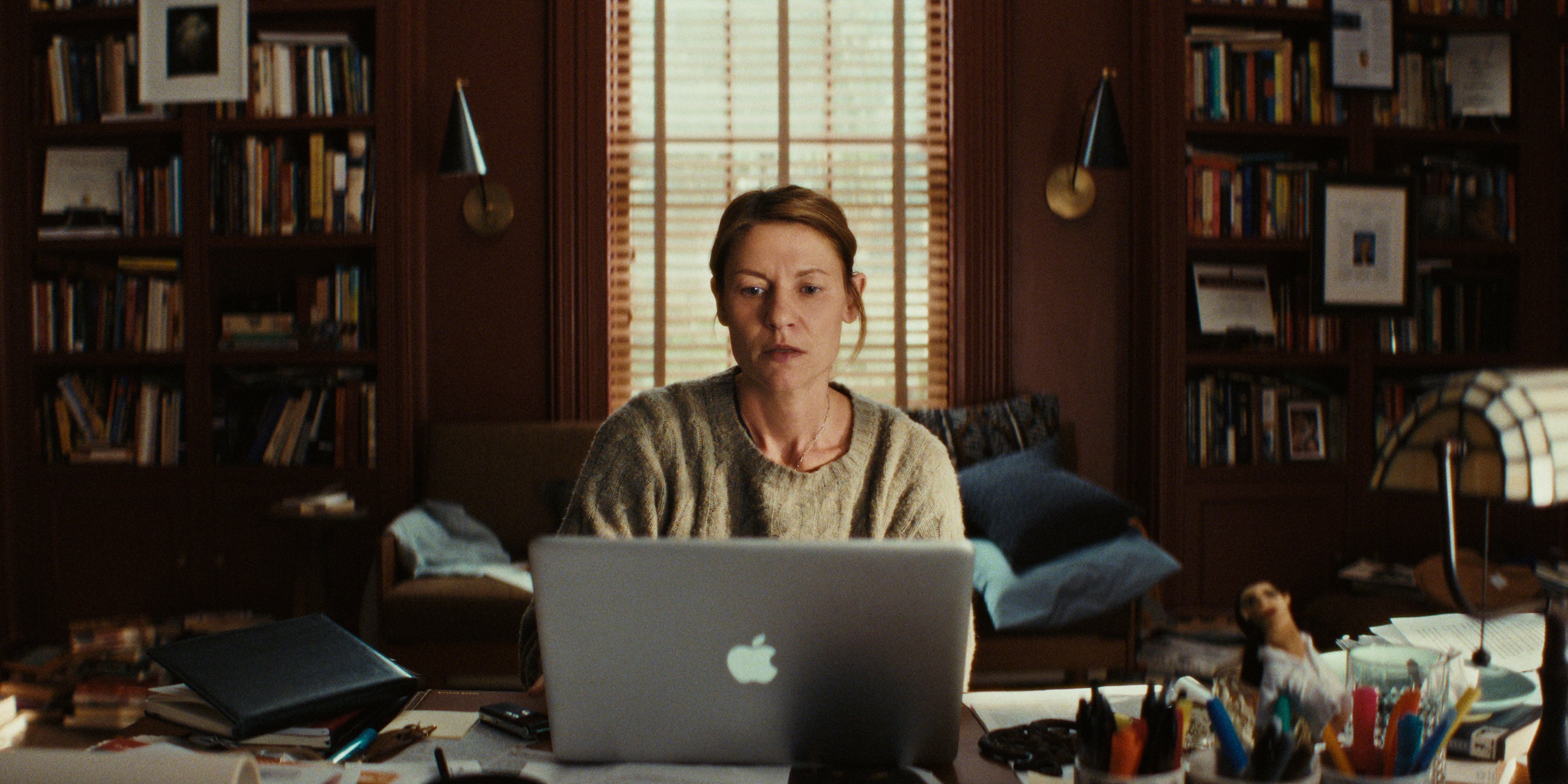
Released on the platform last week, the eight-part mystery drama stars Homeland’s Claire Danes as a woman who begins to grow suspicious about her new next door neighbour, portrayed by Matthew Rhys.

At the time of writing, The Beast In Me was number one on Netflix’s list of most-watched shows in the UK, with those who’ve already binged it pondering whether the story could continue in some capacity.

With that in mind, we’ve got good news and bad news for fans of The Beast In Me hoping for more from the show…

So, will there be a season 2 of The Beast In Me on Netflix?

First, the bad. The Beast In Me is billed on Netflix as a “limited series”, and as anyone who’s now binge-watched all eight episodes will know, the story is a self-contained one that clearly wasn’t created with the intention of continuing the story.

However, that doesn’t necessarily mean there couldn’t be more from the drama in the future, as Netflix shows like Beef and Monster were originally conceived as one-offs, only to be brought back when they proved popular with viewers.

Claire Danes and Matthew Rhys share the screen in The Beast In Me

So, given that The Beast In Me has already soared to the top of Netflix’s most-watched chart, it’s definitely not beyond the realm of possibility that the team behind it might look at bringing it back.

In fact, it’s something showrunner Howard Gordon has already expressed interest in…

What has the team behind The Beast In Me said about a possible season 2?

Asked about the possibility of more episodes in the future, Gordon told TV Insider: “The short answer is, I would say, sure […] I think there probably is a story there.”

But while – spoiler alert – Matthew Rhys would not be back for any future episodes, the showrunner also told TheWrap: “To the extent that Aggie is a writer who has been delivered to this next stage of her life, whatever that stage is… if there is a story, there might be more.”

He also teased: “I am tempted by the character of her grifter father in some way. We’ll see how the show does and if an idea comes. But I think they’d be open to more.”

Who else stars in the cast of The Beast In Me?

Besides Claire Danes and Matthew Rhys, the show features an impressive array of stars including…

  • Brittany Snow
  • Natalie Morales
  • Deirdre O’Connell
  • David Lyons
  • Tim Guinee
  • Hettienne Park
  • Bubba Weiler
  • Aleyse Shannon
  • Julie Ann Emery
  • Will Brill
  • Kate Burton
  • Bill Irwin
  • Leila George

Find out more about where you might have seen the stars of The Beast In Me before here.

The Beast In Me is now streaming on Netflix.

Share Button

Pauline Quirke’s family on her dementia: ‘She’s still funny and recognises us’

The family of the Birds of a Feather actress say “she’s still funny, she’s talking, she’s happy”.

Share Button

Children may be hit harder by flu, say officials

Health bosses says the UK often mirrors Australia a few months later.

Share Button

Astronomers unveil the surprising hidden geometry of a supernova

Swift observations with the European Southern Observatory’s Very Large Telescope (ESO’s VLT) have captured a star in the act of exploding, right as the blast pushed through its surface. This moment revealed the shape of the explosion during its earliest stage, a phase so brief that it would have disappeared from view within a day. Scientists have long hoped to observe this initial moment because it helps answer key questions about how massive stars end their lives as supernovae.

SN 2024ggi was first noticed on the night of 10 April 2024 local time. At that moment, Yi Yang, an assistant professor at Tsinghua University in Beijing, China, and lead author of the study, had just arrived in San Francisco after a long flight. Realizing the urgency, he moved quickly. Twelve hours later, he submitted an observation request to ESO, which approved it soon after. By April 11, only 26 hours after the discovery, the VLT in Chile was already observing the event.

A Rare Nearby Explosion

The supernova is located in the galaxy NGC 3621, in the direction of the constellation Hydra, approximately 22 million light-years away. For astronomers, this distance is close enough to investigate the blast in fine detail. Using the VLT and specialized instruments, the international team captured the early behavior of the explosion. “The first VLT observations captured the phase during which matter accelerated by the explosion near the centre of the star shot through the star’s surface. For a few hours, the geometry of the star and its explosion could be, and were, observed together,” says Dietrich Baade, an ESO astronomer in Germany and co-author of the study, published on November 12 in Science Advances.

“The geometry of a supernova explosion provides fundamental information on stellar evolution and the physical processes leading to these cosmic fireworks,” Yang explains. Scientists are still investigating the exact steps that trigger the explosions of massive stars, which are defined as stars more than eight times the mass of the Sun. SN 2024ggi began as a red supergiant with a mass between 12 and 15 times that of the Sun and a radius 500 times larger. This makes it a textbook example of a massive star approaching the end of its life.

What Happens When a Massive Star Runs Out of Fuel

Throughout its life, a star keeps a stable spherical shape because gravity pulls inward while pressure from nuclear fusion pushes outward. When the star exhausts its fuel, this balance collapses. The core gives way, the surrounding layers fall inward, and then bounce off the dense center. This rebound launches a shock wave that travels outward, ultimately tearing the star apart.

Once the shock reaches the surface, energy is released in enormous amounts and the supernova becomes visible. During the short window before the explosion interacts with surrounding material, astronomers can study the initial breakout shape.

Revealing Hidden Geometry with Spectropolarimetry

To capture this early structure, astronomers used a technique called ‘spectropolarimetry’. “Spectropolarimetry delivers information about the geometry of the explosion that other types of observation cannot provide because the angular scales are too tiny,” says Lifan Wang, co-author and professor at the Texas A&M University in the US, who began his career as a student at ESO. Although the exploding star appears as a single point of light, the polarization of that light contains subtle signals about the explosion’s shape, which the team successfully decoded.[1]

The VLT’s FORS2 instrument, the only facility in the southern hemisphere able to make this type of measurement, revealed that the first burst of material resembled the shape of an olive. As the blast expanded and encountered material surrounding the star, the shape grew flatter, although the axis of symmetry stayed consistent. Yang notes that “these findings suggest a common physical mechanism that drives the explosion of many massive stars, which manifests a well-defined axial symmetry and acts on large scales.”

Advancing Supernova Science Through Global Collaboration

These observations allow scientists to eliminate some existing models and refine others, improving our understanding of massive star deaths. “This discovery not only reshapes our understanding of stellar explosions, but also demonstrates what can be achieved when science transcends borders,” says co-author and ESO astronomer Ferdinando Patat. “It’s a powerful reminder that curiosity, collaboration, and swift action can unlock profound insights into the physics shaping our Universe.”

Notes

  1. Light particles (photons) have a property called polarization. In a sphere, the shape of most stars, the polarization of the individual photons cancels out so that the net polarization of the object is zero. When astronomers measure a non-zero net polarization, they can use that measurement to infer the shape of the object — a star or a supernova — emitting the observed light.

This research was presented in a paper published in Science Advances.

The team is composed of Y. Yang (Department of Physics, Tsinghua University, China [Tsinghua University]), X. Wen (School of Physics and Astronomy, Beijing Normal University, China [Beijing Normal University] and Tsinghua University), L. Wang (Department of Physics and Astronomy, Texas A&M University, USA [Texas A&M University] and George P. and Cynthia Woods Mitchell Institute for Fundamental Physics & Astronomy Texas A&M University, USA [IFPA Texas A&M University]), D. Baade (European Organisation for Astronomical Research in the Southern Hemisphere, Germany [ESO]), J. C. Wheeler (University of Texas at Austin, USA), A. V. Filippenko (Department of Astronomy, University of California, Berkeley, USA [UC Berkeley] and Hagler Institute for Advanced Study, Texas A&M University, USA), A. Gal-Yam (Department of Particle Physics and Astrophysics, Weizmann Institute of Science, Israel), J. Maund (Department of Physics, Royal Holloway, University of London, United Kingdom), S. Schulze (Center for Interdisciplinary Exploration and Research in Astrophysics, Northwestern University, USA), X. Wang (Tsinghua University), C. Ashall (Department of Physics, Virginia Tech, USA and Institute for Astronomy, University of Hawai’i at Manoa, USA), M. Bulla (Department of Physics and Earth Science, University of Ferrara, Italy and INFN, Sezione di Ferrara, Italy and INAF, Osservatorio Astronomico d’Abruzzo, Italy), A. Cikota (Gemini Observatory/NSF NOIRLab, Chile), H. Gao (Beijing Normal University and Institute for Frontier in Astronomy and Astrophysics, Beijing Normal University, China), P. Hoeflich (Department of Physics, Florida State University, USA), G. Li (Tsinghua University), D. Mishra (Texas A&M University and IFPA Texas A&M University), Ferdinando Patat (ESO), K. C. Patra (California and Department of Astronomy & Astrophysics, University of California, Santa Cruz, USA), S. S. Vasylyev (UC Berkeley), S. Yan (Tsinghua University).

Share Button

Astronomers discover thousands of hidden siblings of the “Seven Sisters”

Astronomers at the University of North Carolina at Chapel Hill have found that the well-known Pleiades star cluster, often called the “Seven Sisters,” represents only the bright center of a much larger community of related stars. By analyzing data from NASA’s Transiting Exoplanet Survey Satellite (TESS) and the European Space Agency’s Gaia space telescope, the team identified thousands of additional stellar relatives spread far across the sky. They refer to this enormous structure as the Greater Pleiades Complex, and their results show that the Pleiades is about 20 times larger than scientists once believed.

Most stars, including the Sun, form within groups. As they age, these groups gradually disperse, which makes it difficult to track which stars were born together. Astronomers can use stellar rotation as a “cosmic clock,” since young stars spin quickly and older stars slow down over time. The UNC-Chapel Hill team used this technique to locate many long-lost members of the Pleiades spread far beyond the central cluster. With rotation data from NASA’s TESS and precise measurements from ESA’s Gaia, they concluded that the Pleiades is not a compact grouping but the dense core of a much larger and slowly dispersing stellar association.

“This study changes how we see the Pleiades — not just seven bright stars, but thousands of long-lost siblings scattered across the whole sky,” said Andrew Boyle, lead author and graduate student in physics and astronomy at UNC-Chapel Hill.

Cultural Significance and Expanding Scientific Insight

The discovery reaches beyond astrophysics. The Pleiades has long served as a key reference point for understanding young stars and exoplanets, and it holds cultural meaning across many societies. It appears in the Old Testament and the Talmud, is honored as Matariki in New Zealand, and is depicted in the logo of Subaru in Japan. “We’re realizing that many stars near the Sun are part of massive extended stellar families with complex structures,” said Andrew Mann, co-author and professor of physics and astronomy at UNC-Chapel Hill. “Our work provides a new way to uncover these hidden relationships.”

Mapping Hidden Structures in the Milky Way

By studying how stars rotate, the researchers developed a new way to map our region of the Galaxy. Their findings suggest that many star clusters once thought to be isolated may actually belong to much larger stellar families. This method may eventually help scientists investigate the Sun’s own origins and determine whether it formed within a similarly extensive stellar group.

“By measuring how stars spin, we can identify stellar groups too scattered to detect with traditional methods — opening a new window into the hidden architecture of our Galaxy,” Boyle said.

Understanding How Solar Systems Form

The research contributes to ongoing efforts to reconstruct the environments in which stars and planets are born. These insights are essential for understanding how solar systems, including our own, take shape and evolve over time.

The research paper is available online in The Astrophysical Journal.

Share Button

Melanoma rates are spiking fast in these 15 Pennsylvania counties

Counties in Pennsylvania that contain or sit close to cultivated cropland show notably higher melanoma rates than other parts of the state, according to new research led by scientists at Penn State.

Researchers at the Penn State Cancer Institute reviewed cancer registry data collected from 2017 through 2021 and discovered that adults over age 50 living in a 15-county area of South Central Pennsylvania were 57% more likely to be diagnosed with melanoma, the deadliest form of skin cancer, compared to residents elsewhere in the state. The team reported these results on Nov. 14 in the journal JCO Clinical Cancer Informatics.

Charlene Lam, associate professor of dermatology at Penn State Health and co-author of the study, noted that the elevated cases appear in both rural and urban counties. She explained that the higher risk is not limited to isolated locations or people who spend much of their time outdoors.

Agricultural Environments Linked to Elevated Risk

“Melanoma is often associated with beaches and sunbathing, but our findings suggest that agricultural environments may also play a role,” she said. “And this isn’t just about farmers. Entire communities living near agriculture, people who never set foot in a field, may still be at risk.”

The usual suspect — sunlight — was included in the analysis. Yet even after adjusting for ultraviolet radiation levels in Pennsylvania and considering socioeconomic factors, two consistent associations emerged. Counties with more cultivated acreage and counties with greater herbicide use displayed significantly higher melanoma rates.

Herbicides, Biological Effects, and Melanoma Patterns

“Pesticides and herbicides are designed to alter biological systems,” said Eugene Lengerich, emeritus professor of public health sciences at Penn State and senior author on the paper. “Some of those same mechanisms, like increasing photosensitivity or causing oxidative stress, could theoretically contribute to melanoma development.”

According to the analysis, a 10% increase in cultivated land was linked to a 14% rise in melanoma cases across the region. Herbicide exposure showed a similar pattern: a 9% increase in herbicide-treated land corresponded to a 13% increase in melanoma incidence.

Lam emphasized that exposure is not restricted to those handling agricultural chemicals. She explained that these substances can drift on air currents, settle in household dust and enter water sources.

Chemical Drift and Community-Wide Exposure

“Our findings suggest that melanoma risk could extend beyond occupational settings to entire communities,” she said. “This is relevant for people living near farmland. You don’t have to be a farmer to face environmental exposure.”

The study also referenced earlier research showing links between pesticide and herbicide exposure and melanoma, citing evidence that these chemicals can heighten sensitivity to sunlight, interfere with immune responses and damage DNA in non-human animals and plants.

Study Shows Associations, Not Proof of Cause

Benjamin Marks, first author on the paper and a medical and public health student at the Penn State College of Medicine, cautioned that while higher melanoma rates appear in areas with more cropland and herbicide use, the findings do not prove that chemicals used on crops such as corn, soybeans and grains directly cause cancer. Instead, he said the patterns point to a connection that deserves further study.

He added that research of this kind is useful for spotting broad trends, even though it cannot identify individual risk.

“Think of this as a signal, not a verdict,” Marks said. “The data suggest that areas with more cultivated land and herbicide use tend to have higher melanoma rates, but many other factors could be at play like genetics, behavior or access to health care. Understanding these patterns helps us protect not just farmers, but entire communities living near farmland.”

Implications Beyond Pennsylvania

Lam said she hopes to better understand how agricultural practices relate to public health, especially since similar trends have been identified in farming regions of Utah, Poland and Italy. She encouraged anyone concerned about risk to perform routine skin checks and use sun-protective clothing and sunscreen. As part of the next phase of research, she is leading studies in rural communities within the affected area to learn more about farming practices and potential exposure pathways.

“Cancer prevention can’t happen in isolation,” Lengerich said. “This study demonstrates the importance of a ‘One Health’ approach, an understanding that human health is deeply connected to our environment and agricultural systems. If herbicides and farming practices are contributing to melanoma risk, then solutions must involve not just doctors, but farmers, environmental scientists, policymakers and communities working together.”

Other co-authors include Jiangang Liao, professor of public health sciences at Penn State College of Medicine, and Camille Moeckel, a fourth-year medical student and research associate at Penn State College of Medicine.

This work was supported by the MPH Capstone Program and the Medical Student Research Project at the Penn State College of Medicine, along with the University’s Algin B. Garrett Professorship.

Share Button

Labour Minister Compares Nigel Farage To Enoch Powell In Scathing Takedown

A Labour minister has called Nigel Farage a “reincarnation” of anti-immigration figure Enoch Powell.

Powell was a Conservative shadow minister in 1968 when he made his “rivers of blood” speech, which was blamed for deepening racial tensions at the time.

Meanwhile, Farage, the leader of Reform UK and the MP for Clacton, has been calling for stronger controls on immigration for years.

Business secretary Peter Kyle was promoting the government’s goal for creating a stronger economy when he hit out at his political rival over the weekend.

Speaking at the Co-operative Party conference, the senior minister said: “The truth is that without securing higher, sustained economic growth, reconnecting people and politics, generating trust in the potential of democracy and importance of good government becomes almost impossible.

“And the appeal of the parties of the far right – with their dogma of disruption, division and despair – it becomes, too, alluring.”

Kyle continued: “We see it today with Reform, just as we did in previous times with the National Front and the British National Party.

“Lack of economic growth it is the cause. Nigel Farage, today’s incarnation of the politics of Enoch Powell, is the effect.”

Reform UK declined to comment.

Kyle has previously attacked Reform over the party’s opposition to the government’s Online Safety Act.

He claimed people like Jimmy Savile would have used the internet to exploit children if still alive today – and claimed anyone opposed to the government’s incoming law against such behaviour would be on Savile’s “side”.

Reform UK have consistently led in the polls this year, despite Labour’s landslide victory in July 2024 – a time when Farage’s party secured just a handful of MPs.

Labour has subsequently been trying to take the wind of the party’s sails as ministers openly admit they see Reform as the real opposition to the government.

Share Button

Marie Kondo’s Surprising Secret To Finding Joy

Marie Kondo rose to international fame with her bestselling books and the “KonMari method,” which encouraged millions to tidy their homes – and their lives.

The concept is simple: keep only the items that “spark joy,” and bid a grateful farewell to the rest.

Now she’s out with a new book, “Letter from Japan,” which explores the Japanese customs and principles that inform her philosophy on tidying and mindful living.

The essay-style book features reflections on cultural touchstones, such as relaxing at an onsen, snacking on onigiri or reading manga. But it also dives into more figurative Japanese concepts like kawaii – the idea of finding charm and joy in cuteness.

“In our daily lives, we often live with the notion that, as adults, we must always behave properly and be composed,” Kondo told HuffPost via email through an interpreter.

“But simply having an item that you personally find ‘kawaii’ can bring a sense of softness and relaxation into your everyday routine – even if it isn’t meant to be shown to others.”

She’s personally a fan of the popular kawaii character Chiikawa, who adorns a small cosmetic pouch she carries.

“No matter how busy my day is, whenever I open my bag and see Chiikawa’s disarming smile, it somehow reminds me to pause and take a deep breath,” Kondo said. “It feels almost as if this tiny, adorable character is cheering me on – bringing a gentle warmth and calm to my heart. I think that’s the special effect of a kawaii character.”

She believes nurturing the sensibility to notice what’s kawaii in our lives can deepen our sense of gratitude and affection for the things we already have.

That same appreciation for life’s small joys, as well as its inevitable messes, runs through “Letter from Japan,” which arrives almost three years after Kondo made headlines for admitting that she had “kind of given up on” keeping her home tidy as a mother of three.

But rather than a departure from her previous philosophy, the author says, this newer, gentler perspective is simply a natural extension of it.

“The ideas of ‘perfection’ and ‘mastery’ that I discuss in ‘Letter from Japan’ don’t mean that we must always maintain a flawless state,” Kondo said.

“Rather, they express the importance of having the desire to grow toward an ideal goal – the respect and beauty found in the path toward perfection itself. I believe that the imperfections and struggles we encounter along that path are themselves deeply beautiful and meaningful.”

Kondo's new book, "Letter from Japan," explores the cultural traditions and principles that inform her outlook on tidying and on life.
Kondo’s new book, “Letter from Japan,” explores the cultural traditions and principles that inform her outlook on tidying and on life.

Kondo added that embracing imperfection, especially as a parent, has become an important part of how she finds calm and meaning in daily life.

“When it comes to balancing perfection and imperfection, I think what matters most is accepting and loving yourself as you are now – including your imperfections – while still holding onto your aspiration to improve,” Kondo explained.

“For example, even if I’m not able to tidy my home perfectly in the way I ideally would, I believe it’s important to maintain that sense of aspiration – the inner desire to move toward that ideal state.”

At the same time, she aims to embrace her reality as it is in the moment.

“Even if life becomes so busy that I can’t keep my home perfectly tidy, I remind myself to approach that situation with compassion and to cherish my life as a whole,” she said.

“The key is not whether everything is in perfect order, but whether you’re caring for what truly matters most in your life. In my case, since I’m raising children right now, what matters most is spending time communicating with them and maintaining a healthy balance so that I can be fully present as my best self.”

“The key is not whether everything is in perfect order, but whether you’re caring for what truly matters most in your life.”

– Marie Kondo

The goal is not a spotless house, but a balanced life. It’s about compromise and self-compassion. As Kondo notes in her book, all the children’s toys and books that pile up in her home nurture her little ones’ sense of beauty, wonder and curiosity.

And while she has less time to tidy, her day-to-day reality is filled with joyous moments with her kids … and still some opportunities for her cleaning rituals, too.

“Even if tidying has taken a lower priority for the moment, I still feel that I’m living a life that sparks joy – and that sense of awareness is what’s truly important,” Kondo said.

That same embrace of imperfection extends even to how Kondo views one of her most viral moments: the “I love mess!” meme. This clip from her 2019 Netflix show, “Tidying Up with Marie Kondo,” still pops up frequently on social media in cheeky posts about everything from cluttered apartments to chaotic love lives.

“When I come across that meme… well, I still find it quite endearing even now,” Kondo told HuffPost. “I suppose it’s because my excitement whenever I’m at a tidying site hasn’t changed at all – I still genuinely feel that spark of joy. Seeing it reminds me, ‘Yes, that’s exactly how I feel – tidying really is fun.’”

As for the meme’s place in her legacy, she’s nothing but appreciative.

“I’m actually proud if it has helped even a little to convey the idea that tidying is fun,” Kondo said. “Tidying is often seen as something bothersome or as an obligation, something you have to do. But if this moment helped people realise that the very process of bringing order to a messy space can be fun in itself, then I’m truly happy. It feels like a meaningful part of my purpose.”

Share Button