When I Was 7, I Stopped Feeling Any Kind Of Pain – Now I Know Why

I got my wisdom teeth pulled without anesthesia or laughing gas.

When the dental surgeon sent me home with a packet of prescription-strength Advil, I didn’t take it. Instead, I drove to the community centre and taught my weekly guitar class, my cheeks swelling into grapefruits as my students practiced their D-G-A chord progressions.

Ego-wise, calling out wasn’t an option (I was only loveable because I was reliable, I told myself) and this didn’t warrant a sick day, anyway. I barely felt a thing.

I also don’t remember feeling discomfort when my knee popped out in gym class, or when I fainted during a sweltering marching band parade, or when my appendix almost exploded.

My high pain tolerance didn’t just apply to physical wounds, either; it also dulled the emotional ones. Fear, guilt, awkwardness, jealousy, grief, heartache – I could numb it all.

I learned this skill when I was 7 years old.

My older brother had undiagnosed bipolar disorder. Emotions swelled inside of him, too big to contain, so he’d punch holes in the walls, or burst into our rooms at 3am, or threaten to end his life. Reactions only fuelled the fire – my mother’s anxiety and my father’s guilt like kindling below the log.

Coaxing my brother up from a low or down from a high required a calm, collected presence – someone who could stifle their reactions and use logic to mediate the situation. Someone whose own emotions didn’t get in the way. I was the ideal candidate.

By middle school, my parents had started relying on me to deescalate his episodes. When I succeeded, I was called all of the things I wanted to be: a good girl. The easy one. Such a blessing. Twice, the dispatchers on the other end of the 911 call complimented my maturity and bravery. So did the cops who took my brother to yet another inpatient facility.

Eventually, I wore my robotic mask into the world to see how other people responded. Teachers loved that I got straight As and never spoke out of turn. Friends stopped calling me bossy. Adults deemed me “one of the most well-mannered children they’d ever met”.

It seemed that everyone else liked me better when I had no needs of my own, so somewhere along the line, my emotional suppression went from a temporary tactic to a permanent state of being. By the time my best friend died by suicide when we were 19, I felt almost nothing.
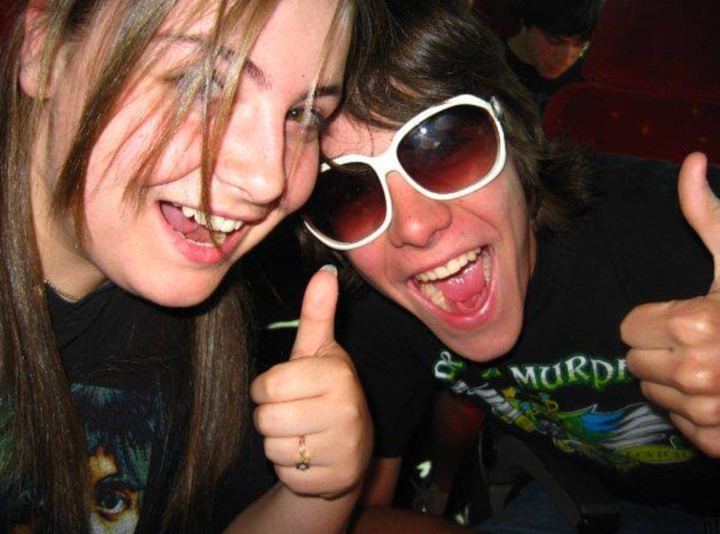
The author and her best friend Will on a trip to Disney World in 2008, four years before his death.

Courtesy of Maria Cassano

The author and her best friend Will on a trip to Disney World in 2008, four years before his death.

This skill had its perks, but it also had its detriments: all logic and no emotion makes Maria an abysmal girlfriend. The only thing I could feel was the hit of dopamine that accompanied a new love interest, so I sabotaged relationship after relationship in pursuit of it.

Yes, I was incapable of feeling pain – but I was also incapable of empathy, vulnerability, and connection.

At 28, I ended a three-year relationship with a good guy so I could pursue an impulsive fling with a not-so-good one. Something had to give. I was tired of being a romantically inept robot. Desperate to figure out what was wrong with me, I booked an appointment with a psychologist who specialised in childhood trauma.

Right off the bat, she diagnosed me with a dissociative disorder.

If I were capable of feeling anything, I would’ve felt relief. My high pain tolerance suddenly made so much sense.

According to WebMD, “dissociation is a break in how your mind handles information,” and that includes sensory inputs from your body.

One study in The Journal of Pain found that those with PTSD-induced dissociation exhibited hyposensitivity to pain. Basically, the higher the dissociation, the higher the tolerance. An overload of trauma can cause the nervous system to shut down entirely.

In one of our intake sessions, I asked my therapist why I felt so addicted to my numbness. Her response was fascinating.

“Your body has its own pain-relief system, and it actually produces opioids,” she said. “When you’re dissociated, the endogenous opioid system is in overdrive. You’re pumping out endorphins all the time to protect yourself from emotional or physical pain. Like any drug, it’s addictive.”

In other words, I didn’t need anaesthesia because I was constantly making my own.

I wanted to be human again. I wanted to feel love, joy and gratitude – but, like a bottle of Vicodin, dissociation was my coping mechanism.

The author playing guitar in her bedroom at the height of her dissociative disorder.

Courtesy of Maria Cassano

The author playing guitar in her bedroom at the height of her dissociative disorder.

So much of my identity was tied up in my numbness. I believed I would no longer be fiercely reliable. I’d have to call out sick from work. I’d have to stop answering my phone at all hours of the night for the people who loved me because I lacked boundaries. I’d be susceptible to illness, anxiety, stress, and worst of all, heartbreak. I would no longer be the girl who could handle anything.

I didn’t know who I was without my dissociation, but I wanted to find out.

Four weeks after my diagnosis, I started Eye Movement Desensitization and Reprocessing, or EMDR. It’s a psychotherapy technique that uses bilateral eye movements to stimulate memory processing, which helps the brain recover from trauma. Essentially, you focus on your worst memories and move your eyes back and forth.

My hopes were not particularly high. How could something as small as eye movements fix something as big as depersonalisation-derealisation disorder?

But EMDR worked, and it worked fast.

In my first EMDR session, my therapist told me to focus on my earliest negative memory while I watched a blue square bounce back and forth on my computer screen. I did it once: Nothing. Twice: Nada. Three times: Nope. And then the dam broke open. Sensations poured into my cells. I could feel everything, all at once.

One emotion loomed especially large, casting a shadow over the rest: I was terrified of being unlovable. That’s why I left everyone else before they could leave me — before they could sense the messiness underneath the cold, polished armour.

This odd therapy technique completely overrode my body’s hyperactive pain-relief system. Over the next 48 hours, I experienced all of the hurt, grief, abandonment and heartache I had blocked out for the past two decades. It was excruciating, and I wanted nothing more than to turn back into a robot.

The author and her boyfriend Seb picking apples on a gorgeous fall day.

Courtesy of Maria Cassano

The author and her boyfriend Seb picking apples on a gorgeous fall day.

But with the help of EMDR and this knowledgeable, compassionate therapist, I kept going. We spent the next four years sifting through these memories and emotions, finally processing them so I could let them go.

When pain arose, I felt it. I let the messiness settle in my body, making peace with its presence. Despite the raw discomfort of vulnerability, the hurt of rejection, the guilt of past mistakes, and the occasional panic attack, I resisted the foggy, familiar lure of numbness.

I’m still tempted by it – I’m sure all addicts are – but I’ve never gone back.

Now, I’m in a healthy relationship with a kind, supportive man. He slept over one night two years ago and never left, but I don’t feel the urge to jump ship. I no longer want to chase the dopamine hit of someone new. I want this man to know and accept every part of me, the way I’ve come to know and accept every part of myself.

While I’m not cured (healing is a nonlinear, never-ending road), I’ve learned that pain is a fundamental part of life. Without it, you’re not truly living. It’s the catalyst for transformation. It’s the compass that leads you toward growth. It’s the contrast that illuminates all the beautiful parts of being a fractured, feeling human being.

Maria Cassano is a writer and editor whose work has appeared in Bustle, CNN, Food & Wine, Allure, NBC, The Daily Beast, Elite Daily, and YourTango, among dozens of other publications. Represented by Emma Fulenwider at WordServe Literary, Maria’s memoir about healing from dissociation, “Numb, Party of One,” is currently out on submission to publishing houses. Learn more about it at mariacassano.com/numb.

Do you have a compelling personal story you’d like to see published on HuffPost? Find out what we’re looking for here and send us a pitch at pitch@huffpost.com.

Share Button

5 Signs Your People-Pleasing Is Actually A ‘Survival Mode’

Chances are you either know, or are, a “people pleaser” ― someone who feels the urge to please others, sometimes at your own expense.

It can make you reluctant to say “no” to others, anxious about speaking up for your own needs, and suspicious that the people in your life are always taking advantage of your “helpful” nature.

But speaking to HuffPost UK, Dr. Bijal Chheda, consultant psychologist and the founder of neurodiverse-inclusive mental health clinic Nos Curare, sometimes the instinct can be a form of “fawn mode.”

What is “fawn mode”?

“While many people are familiar with the classic stress responses ‘fight, flight, or freeze,’ there’s a fourth overlooked reaction called ‘fawn mode,’” Dr Chheda told us.

“Fawn mode is a psychological response to threat where, essentially, people-pleasing is turned up to become a survival strategy.”

But instead of causing you to flee from or confront a perceived threat, “fawn mode” means you become hyper-attuned to the needs and expectations of those around you.

It can happen to people who were bullied or exposed to an emotionally unsafe environment in childhood, the expert said, but it can also start in adulthood following toxic work, romantic, familial, or platonic relationships.

“Because they fully believe that their safety or acceptance depends on keeping others happy, people in fawn mode feel the need to work extra hard in the moment to maintain peace,” the psychologist shared.

For those on the autism spectrum, fawning behaviours “may overlap with masking or the act of camouflaging one’s real traits as a way to blend in with social expectations.

“They do this consciously in order to minimise rejection or avoid criticism, often resulting in burnout.”

Those with ADHD may face similar pressures, she continued.

What are the signs I’m in “fawn mode”?

Per Dr Chheda, you may be in fawn mode if:

1) Saying no feels impossible, even when you’re overwhelmed.

You might find it hard to set boundaries, even ones that are sorely needed, the psychologist said.

“Even when your own energy or time has been depleted, you tend to prioritise others’ needs to avoid conflict or confrontation.”

2) You are constantly anxious about upsetting others.

“This heightened anxiety makes every interaction feel like a test where one wrong move could lead to disapproval or instant abandonment,” Dr Chheda told us.

This can make clear, honest communication “exhausting.”

3) Apologising has become a reflex or automatic response.

Find yourself saying “sorry” out or habit, even if you’ve done nothing wrong?

“In these instances, apologising has become a default response used to smooth over situations or deflect potential criticism,” explained the psychologist.

“Over time, this habit can blur the lines of personal responsibility.”

4) Your sense of self-worth depends on being needed.

Some people in “fawn mode” tie their self-worth to how useful they feel they are to other people.

“In turn, this dynamic makes it hard to recognise your own personal needs or prioritise self-care without feelings of guilt,” Dr Chheda stated.

5) You feel responsible for how other people feel.

You might be hyper-vigilant about other people’s emotions and moods.

“This constant monitoring can leave you emotionally exhausted. In focusing so much on others, it becomes easy to lose sight of your own feelings or identity,” the pro told us.

What should I do if I think I’m in “fawn mode”?

You don’t have to turn a lifetime of habits around in a day, Dr Chheda revealed.

“Self-awareness is the first step to breaking free from fawn mode. Take time to reflect on when these behaviours began and how they have been reinforced throughout your life,” she advised.

“Once you have done this, you can start setting micro-boundaries. Begin with small steps like saying no to low-stakes requests or pausing before agreeing to things.”

The process of untying your worth from the needs of others can be lonig and tricky, the psychologist ended, but is ultimately worth it.

Share Button

You Might Have A ‘Depression Room’ In Your House And Not Even Realise It

It’s well-known that depression takes a toll on physical and mental health as feelings of isolation, loneliness, despair and low energy prevail.

One area that doesn’t get as much attention? Depression’s impact on your physical space, like your home or bedroom – but a conversation about this is starting on social media.

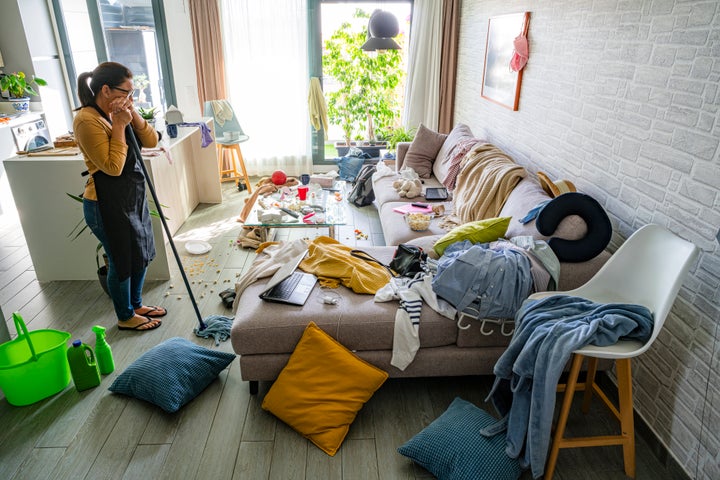
Folks on platforms like Instagram and TikTok are posting videos of their “depression rooms” – spaces filled with old laundry, trash, dirty dishes, takeout boxes and more that weren’t attended to when someone was feeling low. The videos show people cleaning their (or their loved ones’) “depression homes” or “depression rooms.”

“‘Depression room’ is this term that has entered into the pop psychology lexicon lately, and it refers to the living space of a person in the grips of a depressive episode,” said Dayton Olsen, a licensed professional counsellor with Thriveworks in Roanoke, Virginia.

“A ‘depression room’ describes a living space that has become noticeably cluttered or chaotic because the person living in it is experiencing depression,” said Kobe Campbell, a licensed clinical mental health counsellor in North Carolina.

“It’s not about laziness or lack of care, it’s a sign that the inner world has become so heavy or disorganised that maintaining the outer world feels impossible,” Campbell added.

There’s a clear reason “depression rooms” happen.

“The state of the room becomes a mirror of what is happening internally,” Campbell noted.

“It’s amazing what even just a brief glance into someone’s living space can say about how that person’s doing,” Olsen said. A picture – or video, in this case – speaks 1,000 words, he added.

“These awful depressive episodes, they do to a person’s living space what they do to a person. They rob them of the ability to just care for themselves, to tend to themselves and their space,” Olsen noted.

“Depression impairs executive function, which is the area of the brain that helps us plan, prioritise and follow through on tasks,” said Campbell.

When you’re depressed, everyday tasks and chores feel overwhelming, Campbell added.

"Depression rooms" — the messy bedrooms and homes that reflect the lack of motivation that happens when someone is depressed — are trending on social media.

Illustration: HuffPost; Photos: Getty

“Depression rooms” — the messy bedrooms and homes that reflect the lack of motivation that happens when someone is depressed — are trending on social media.

People who’ve dealt with depression describe it as a period of timelessness “where they can’t remember back, necessarily, to a time where they didn’t feel depressed, and they can’t imagine a future where they feel differently,” Olsen said.

“They’re just frozen in this awful emotional pain, and what that translates to so often is this difficulty to do what so many of us typically do when we’re well, which is to make small investments in our future – brushing our teeth, vacuuming, folding laundry, bathing, eating regularly, all of these things that don’t necessarily require a ton of energy or mental bandwidth but they do require looking ahead to the future and investing in that. And depression robs us of that,” Olsen explained.

Depression also robs folks of their energy and motivation, which can make things like doing the dishes or hanging up your clothes feel impossible.

“Depression room” cleaning is a way to break the depression feedback loop.

“When you think about psychology and mental health, there’s this feedback loop between your thoughts, your feelings and your behaviours,” explained Taisha Caldwell-Harvey, a psychologist and the founder and CEO of The Black Girl Doctor, an online therapy and wellness platform.

When your behaviour changes, and you’re no longer cleaning your bedroom or letting dishes pile up, it also influences how you think, talk to yourself and how you feel, she said.

“It’s all a circle, it’s all a loop, and so you might look around and say, ‘Oh, I’m gross, I’m lazy,’ and then if you say that, now you’re going to have [thoughts like] ‘I shouldn’t be doing this,’ ‘I’m a bad person,’ and that’s going to trigger emotions that are connected to that – now I’m sad, I feel guilty, I feel bad,” Caldwell-Harvey said.

If you feel bad, why would you do anything around your house? If you tell yourself you’re lazy, why would you pick up after yourself?

“It’s all a circle, it’s all a loop, and so you might look around and say, ‘Oh, I’m gross, I’m lazy,’ and then if you say that … that’s going to trigger emotions that are connected to that — now I’m sad, I feel guilty, I feel bad.”

– Taisha Caldwell-Harvey, psychologist and founder and CEO of The Black Girl Doctor

The clean-up depression room videos on social media are a way to break this feedback loop and make people feel better, Caldwell-Harvey said.

“Most of the times, we can’t just tell ourselves ‘feel better,’ right? The feeling [aspect] is the hardest one to try to interrupt… we usually let that one be for a minute and start with something that is an easier place, and so behaviour activation is a big one that is usually easier for people to do,” Caldwell-Harvey said.

“So, while you feel like crap, while you’re still telling yourself these negative things, you can force yourself to do a behaviour. We call it behaviour activation. And so it could be something like clean up your room, [or] it can be something as small as clean up this corner of your room,” she added.

If you don’t have it in you to clean your whole kitchen, set a timer for five minutes and clean for just that amount of time.

“So, you clean for five minutes, and now you think, ‘Oh, I did one small thing,’” she said. Being able to say to yourself, “I did one small thing” can lead to a tiny bit of hope and even a commitment to do five more minutes of cleanup the next day, she added.

This breaks the cycle and interrupts the pattern, she explained.

Depression robs folks of their motivation, which makes tasks like cleaning feel impossible.

fcafotodigital via Getty Images

Depression robs folks of their motivation, which makes tasks like cleaning feel impossible.

You can also always use your home as a visual mental health check.

“Our environment influences our emotional health. A 2010 study published in Personality and Social Psychology Bulletin found that women who described their homes as cluttered or unfinished had higher levels of cortisol and more feelings of fatigue and depression compared to those who described their spaces as restful and restorative,” said Campbell.

“So, even small acts of tidying can help signal safety to the nervous system,” Campbell noted.

Beyond signalling safety, your home can give you a peek into your emotional and mental health, which is important as it’s hard to keep tabs on the small mental health changes that lead to big declines.

Usually, people wake up one day and feel totally depressed, but it doesn’t happen overnight, Caldwell-Harvey said. “You actually have a decline,” she said.

One way to keep tabs on your mental health and be aware of the decline is by using your bedroom or home as a mental health check, Caldwell-Harvey added.

“A lot of times, your environment really is telling you how you’re doing, and so it’s a good question to ask – ‘What is my environment telling me about what’s happening right now?’” she said.

If you do have a depression room, don’t be ashamed.

Depression is heavy, isolating and scary. If you have a depression room during times of low mood, that’s OK. “If you have a ‘depression room,’ you are not alone,” said Campbell.

“Feeling shame about it is understandable, but misplaced. Clutter isn’t a character flaw, it’s a flag signalling that you need more support than you can offer yourself,” she added.

It’s also a sign that you’re struggling and need additional care, Campbell noted.

Beyond taking a few minutes to clean your depression room, make social plans and create structure for yourself within your home, added Olsen, whether that’s waking up at the same time, logging on to work at a certain time or simply having a glass of water before bed.

And know when you need extra support.

“I always want to be really careful when we talk about stuff like this,” said Caldwell-Harvey.

While content about “depression rooms” can help people feel less alone and increase conversations about depression, “I also am really cautious that we’re not glamorising suffering, and that we’re not further stigmatising people that are in a clinical depression that needs treatment,” she said.

You can have symptoms of depression and not have clinical depression, Caldwell-Harvey explained. But for those with clinical depression, things like room cleaning, behaviour changes or daily mantras aren’t going to be enough to boost your mood.

If two weeks go by and you still aren’t feeling good, you may need more support, she noted.

“If you’re struggling and you are trying this stuff, and you’re just like, ‘Yeah, this ain’t doing it,’ that’s when we want you to reach out for help,” she said. “That is what therapists are for. Medication is really effective for depression – medication and talk therapy are both extremely effective for depression,” Caldwell-Harvey added.

For some people, a depression room – and depression – may be a short-lived occurrence, but for others, it’ll be a longer challenge.

“Cleaning your room is not going to take away grief. It might make you feel better for a minute, and that’s great if it does, but again, you probably need to talk to somebody and process it and do all the things that are going to give you the long-term relief from what you’re going through,” she said.

“Not all messy rooms are depression rooms. Not all depression shows up that way,” she added. Some depressed people have spotless homes, and some non-depressed folks have cluttered, messy spaces, Caldwell-Harvey added.

But if you know your depression room is just that, be sure to take care of yourself and be kind to yourself.

“The goal isn’t to flip a switch that changes you immediately. Healing requires tiny, consistent acts of kindness toward yourself, because caring for your space is caring for yourself, said Campbell.

Share Button

5 Signs You’re ‘Quiet Cracking’ At Work Without Realising It

You might have heard of quiet quitting, taskmasking, and “conscious unbossing” ― all trends which see workers opt out of added responsibilities, busy work, and unrewarding jobs in the subtlest way they can.

But according to Guy Thornton, Founder of human resource company PracticeAptitudeTests, “quiet cracking” is on the rise, too.

The term refers to the sometimes unwitting disconnect from work that happens when employees are stressed and burned out.

“Quiet cracking isn’t laziness or a flaw in your work ethic,” Thornton said.

“It’s often a sign that your mind and body are trying to cope with something unsustainable.”

Here are some signs you might be “quiet cracking” without even realising it:

1) You’re constantly busy, but don’t get much done

Always rushing around, but never feel particularly productive? Thornton warns that it could be a red flag.

“This relates to another workplace trend known as fauxductivity, which is when you appear productive while feeling unmotivated and disconnected,” he said.

“It’s often an early sign of quiet cracking that can happen when you’re overwhelmed or unsure what your priorities are any more.”

2) You constantly ignore work messages and emails

If your inbox is bursting and your Slack notifications have built up, you may be “quiet cracking” under the pressure of constant communication.

“This doesn’t necessarily mean you’re lazy or disengaged. Your brain might simply be overloaded,” Thornton advised.

3) Handing in work at the last minute

Always scrambling to hand in that report at the last minute? It might just feel like your working style, but Thornton says it could also “be a sign you’ve mentally checked out.

“Ask yourself, are you struggling with motivation, or is the workload too much?” he continued.

“Quiet cracking often begins when expectations feel unclear or unmanageable.”

4) You’ve stopped collaborating with your coworkers

If the thought of working with others has felt more and more unenjoyable ― maybe leading you to skip meetings, avoid team get-togethers, and crave working alone ― it can show you’re disconnecting from your workplace.

“Disengagement can be subtle, and you might not even realise it until someone points it out,” Thornton wrote.

5) You’re constantly putting off work by doing small, “busy work” tasks

A great example is researching endlessly before you actually start your main task, the expert said.

“If it’s become your go-to method for delaying the real work, it might be a sign of stress or fear of failure,” he shared.

What if I think I’m “quiet cracking”?

Recognising the condition can make it easier to manage, Thornton stated.

Don’t wait to seek help if you think something’s amiss.

“It’s important to talk to people you trust in the workplace and use mental health resources if you start to experience something like this,” he said.

“Even just acknowledging that something is off is an important way to start taking steps in the right direction.”

Help and support:

  • Mind, open Monday to Friday, 9am-6pm on 0300 123 3393.
  • Samaritans offers a listening service which is open 24 hours a day, on 116 123 (UK and ROI – this number is FREE to call and will not appear on your phone bill).
  • CALM (the Campaign Against Living Miserably) offer a helpline open 5pm-midnight, 365 days a year, on 0800 58 58 58, and a webchat service.
  • The Mix is a free support service for people under 25. Call 0808 808 4994 or email help@themix.org.uk
  • Rethink Mental Illness offers practical help through its advice line which can be reached on 0808 801 0525 (Monday to Friday 10am-4pm). More info can be found on rethink.org.
Share Button

These 6 Signs Of ‘Laziness’ May Prove You Actually Just Need Support

Author and psychologist Devon Price doesn’t just think “lazy” is a harsh term – in an interview with NPR, he said he doesn’t think the attribute really even exists.

Instead, the expert suggests, the word is bandied about to shame people into prioritising productivity over health.

Speaking to HuffPost UK, consultant psychologist and founder of London mental health clinic Nos Curare, Dr Bijal Chheda, said that so-called “laziness” really can be a sign of mental health issues and neurodivergence.

She shared seven behaviours some may label “lazy” that might indicate you actually need more support:

1) Struggling to get out of bed

“For many people living with mood disorders, such as depression or bipolar disorder, just getting out of bed in the morning can feel impossible,” Dr Chheda said.

“This is especially the case after high-energy periods where intense emotional highs are followed by a sudden crash that reflects physically.”

During very high-activity spells, people with bipolar can push themselves far beyond their limits, the psychologist told us.

“In these cases, exhaustion is so overwhelming it can feel physically paralysing, making even simple tasks feel impossible.”

2) Skipping basic self-care steps

Missing showers, not brushing your teeth, and wearing the same clothes for days can leave some people feeling “lazy.”

But, Dr Chheda told us, “Neglecting personal hygiene or even basic self-maintenance tasks, such as eating regularly, can actually stem from feelings of numbness or hopelessness, symptoms often linked to major depressive disorder (MDD).”

During these times, the brain shifts into survival mode, leaving your previous routine in the dust.

“It’s not a lack of responsibility, but a sign that the mind is prioritising basic emotional survival over everyday functioning,” she shared.

3) Withdrawing from social occasions

Cancelling plans, though impolite, can be a sign of overwhelm, says Dr Chheda.

“To many neurodivergent individuals, especially on the autism spectrum, this can be a protective response to overstimulation,” she wrote.

“This type of sensory overload is typically triggered by loud environments or unpredictable social dynamics, causing them to retreat from group settings for indefinite periods at a time. In these instances, even brief conversations or small talk can be extremely mentally taxing.”

4) Procrastinating

Sometimes, the psychologist explained, there’s a science behind why you keep putting that one task off.

“Due to low dopamine levels (the hormone associated with motivation and reward), for example, individuals with Attention-Deficit Hyperactivity Disorder (ADHD) often have difficulty with task initiation,” she told us.

“Combined with time blindness (the inability to keep track of time) it makes it harder to gauge how long certain tasks will take.”

5) Decision fatigue

If the thought of choosing dinner one more time is enough to make you nope out of the meal altogether, Dr Chheda says that may be a red flag.

“If someone’s default answers are ‘I don’t care’ or ‘you choose,’ they might not be indecisive or indifferent. In fact, they might just be mentally exhausted,” she advised.

People living with generalised anxiety disorder or high-functioning depression may be especially more likely to show the sign, the expert continued.

“While often appearing composed on the outside, their minds work in overdrive, internalising their issues. As such, the burden of making daily decisions while battling intrusive thoughts wears down the brain, making even the simplest choices feel debilitating.”

6) Not following through on your goals

Not doing what you said you would can make you feel guilty, but sometimes it’s down to your dopamine, Dr Chheda said.

“These patterns are… classic symptoms of emotional dysregulation caused by low dopamine levels, common in individuals who suffer from bipolar disorder and ADHD. This is why these two conditions are often misdiagnosed as one another.”

Some with the condition can have weeks or months of intense, overactive motivation, followed by long, uninterrupted lulls.

“The turbulence makes it difficult to maintain momentum, forcing them to leave goals unfinished, even ones they were once excited about,” the psychologist ended.

Noticing one, more, or all of these signs does not definitely mean you are neurodivergent or have a mental health issue.

But if your day-to-day life is affected by your mood, stress, or exhaustion, speak to a professional about how to address it.

Help and support:

  • Mind, open Monday to Friday, 9am-6pm on 0300 123 3393.
  • Samaritans offers a listening service which is open 24 hours a day, on 116 123 (UK and ROI – this number is FREE to call and will not appear on your phone bill).
  • CALM (the Campaign Against Living Miserably) offer a helpline open 5pm-midnight, 365 days a year, on 0800 58 58 58, and a webchat service.
  • The Mix is a free support service for people under 25. Call 0808 808 4994 or email help@themix.org.uk
  • Rethink Mental Illness offers practical help through its advice line which can be reached on 0808 801 0525 (Monday to Friday 10am-4pm). More info can be found on rethink.org.
Share Button

So, That Sweet Little Kid You Knew Grew Up To Be A Jerk…

You adored them as a kid – their joy, their wonder, their lopsided art projects and endless asking of “why?” But now they’re 19 and only care about TikTok, or designer shoes, or conspiracy podcasts.

Or maybe they’ve grown into someone you find unrecognisable, even unsettling.

It’s a quiet heartbreak many family members and caregivers face but rarely talk about: What do you do when a child you love grows into a teen or adult you don’t really… like anymore?

Mandy Morris, a licensed professional counsellor and EMDR clinician, said it’s “a particular kind of heartbreak I find quietly devastating: when a child you once loved deeply grows into an adult whose beliefs or behaviours you find difficult, or even impossible, to reconcile with your values,” she said.

Maybe they’re casually cruel, deeply self-absorbed, or espousing problematic ideologies. Maybe they’re just… not who you hoped they’d be. Experts say all of the above are quite common, and that it’s OK to feel grief, anger and even guilt in relation to a beloved child who is now a confusing, semi-grown human.

Ahead, here are tips for how to process those feelings, how to find the line between individuality and harmful behaviour, and how to draw boundaries that protect your peace and the possibility of reconnection in the future.

Selfish phase or a personality type?

It’s important to acknowledge that there are myriad reasons we may find ourselves disliking how a grown child is behaving at the moment. Each of those reasons falls somewhere on a wide spectrum – from disappointing to deeply deleterious. Let’s start with the former.

“When my goddaughter started going to this fancy private high school, everything changed,” said Liana*, in Tennessee. “Suddenly all she cared about was, I don’t know, absurdly expensive shoes? And we used to be super close when she was little, so now I’m like, I don’t know how to connect with her anymore. Do I just… buy her the shoes? Or is it my job to push back and call out that she’s become so superficial?”

Mary, an American who lives in Italy, said her stateside nephew’s “very obnoxious behaviours were never corrected when he was younger,” and it has led to difficulties being around him now that he’s older. As a little kid, “he could be fun and silly,” but as a teen he “doesn’t say hi… he’ll pull his hoodie around his face at the dinner table, he’ll barely utter a ‘thank you’ for gifts,” Mary explains. “Unfortunately, it’s hard not to blame the parenting.”

Therapist Sloane Previdi specialises in families navigating boundaries and conflicts, and notes that the teen tendency towards selfishness or consumerism is certainly nothing new. But it’s important to remember that “as kids grow, they develop into their own person – shaped by many things outside your influence,” Previdi said.

To the aunties and godparents wondering what, exactly, your role should be when a beloved teen tends towards the selfish or misanthropic: “Your job isn’t to fix them,” Previdi said. Rather, your job is to stay grounded in your own values. “Hold space for complexity,” Previdi adds. “People change – but they don’t always do it on your timeline.”

When your fears are confirmed

Of course, sometimes you monitor the situation for a decade and realise that kid is now nearly 30 and certainly not going back to their old, big-hearted self anytime soon. Andrea, from New York, had to make some changes in how she deals with her younger brother due to his problematic politics.

“We were very close as kids, and got each other through a lot of shit,” she said. “As he turned into a young adult, it started to emerge that he was more conservative. Which, OK, fine. Nowadays I’m nostalgic for the days when I was just ragging him for voting for Mitt Romney – oh, if only Mitt Romney were our problem in 2025!” Andrea says her brother’s vote for Trump in 2016 led to a real falling-out between them, and he started to post racist and transphobic comments.

“We didn’t speak for nearly a year,” Andrea said. “And it wasn’t because I was pissed; it was because he was pissed. He blocked me because I wasn’t on board with his politics.”

Today, they can at least see each other at family events — but only because they’ve made the unspoken decision to never talk politics.

“It hurts my heart because the kid I love is in there somewhere,” Andrea said. “I want to believe that little kid believes in his heart that, you know, trans kids should have human rights. But I just don’t know.”

“That emotional dissonance — the clash between who they were and who they’ve become — isn’t just disorienting; it’s grief.”

– Mandy Morris, LPC, EMDR Therapist

Coming to terms with a loss like this – the loss of the brother Andrea imagined she’d grow up to have – is huge. Previdi said you may feel guilt or confusion towards a once-beloved child who has changed, and “it’s OK to feel all of that. But your love can remain, even if your relationship changes,” she explains. One of the best coping mechanisms, Previdi adds, is “accepting that love and disappointment can coexist.”

“Maybe they’ve adopted ideologies rooted in misogyny, racism, or other forms of harm,” Morris said. “And maybe you remember when they were 8 years old and asked you to read them one more bedtime story. That emotional dissonance — the clash between who they were and who they’ve become – isn’t just disorienting; it’s grief. And not the kind of grief we’re taught to expect.”

Morris explains that psychologists call this “ambiguous loss,” a form of mourning that comes without a death “when the person is physically present but emotionally or morally unrecognisable,” she said.

What about Andrea’s decision to simply not talk about the issues with her brother? Therapist and licensed clinical social worker Jennifer Kelman said it’s a valid way to cope.

“Sometimes, taking a step back and letting things be” can be a great compromise, Kelman said, especially “if you feel that if you voiced your opinions, that it could fracture the relationship.” On the other hand, “if you feel that the potential of the fracture is worth the risk, then it might be time to sit with this loved one and share your feelings.”

When behaviours cross the line

Alex, from North Carolina, has had to actively distance himself from a cousin whose behaviours took a turn for the worse.

“I grew up playing with my little cousin Brad all the time,” Alex said. “We’d go to the beach together every summer. Then, when I was in my 20s and he was an older teen, he would get drunk and kept trying to start physical fights with me.” Alex had begun to be successful in his career and had moved away from their small town. Meanwhile, he saw his younger cousin start leaning more into problematic stereotypes about masculinity and inciting violence.

“I think it stems from mental health issues in the family that nobody talks about – which are often deeply rooted, Southern family dynamics,” Alex explains. As for the physical fights, “I refused to do it,” Alex said. He stopped seeing Brad entirely. Now in his 40s, he and his former favourite cousin are “not in touch. I don’t think he’s doing well. If I run into him by accident, he doesn’t ever look well.”

Alex said he knows many of Brad’s family members have struggled with drug abuse, and he assumes his little cousin has also gone down that path.

When “behaviours become harmful, such as with addiction and aggression, it’s time to set boundaries,” Previdi said. That doesn’t necessarily mean cutting someone off entirely. Instead, it can mean saying, “I love you, and I also won’t tolerate this behaviour.”

“Dangerous or chronically dishonest behaviour deserves your firm limits,” Previdi adds. “It’s loving to say no to harm.”

Morris said that staying in connection with a problematic young person without sacrificing your own emotional safety “might look like declining certain conversations, stepping back from constant contact, or clearly stating what behaviours you won’t tolerate.” She reiterates that if the behaviour crosses into harm, whether physical, verbal, ideological, or psychological, “it’s not just acceptable to step away; it may be necessary.”

The pain behind the problem

Whether the grown kid you’re struggling with has veered into harmful territory or is just plain annoying, it’s important to remember that many “problematic” teens and young adults were once children conditioned to shut down their feelings, said Rachel Marmor, a licensed mental health counsellor.

“The neurotic adaptations they made to survive often persist into adulthood, manifesting as cynicism, disconnection, or extremism,” she explains, adding that a young adult spewing hate or retreating into their phone is likely still protecting an old emotional wound.

So start with compassion.

“Be with that person and show your empathy, concern and care,” Kelman said, “and let them know that you are worried for them.” She urges adults not to judge or accuse, but rather “lend an open ear and a warm heart.” Marmor agrees, and says to “speak honestly, even if it’s painful. Invite emotional openness, even if it’s rejected.” Set your boundaries, but don’t give up on the possibility of connection in the future.

And remember: You’re not alone in your disappointment. “Many adults are grieving the loss of a child they once knew,” said Marmor. “But grief can open the door to a new kind of relationship — one based on the adult-to-adult honesty that allows for healing.”

How to move forward

It’s not your job to save someone from the beliefs they’ve chosen to adopt. “You can’t out-love someone’s commitment to harmful thinking,” reminds Morris.

What you can do, however, is “choose what role you want to play going forward,” Morris adds. That might mean continuing to express care from a distance. It might mean breaking off the relationship.

“And it might mean holding space for the version of them you once knew,” she says, “while accepting that the present version is someone you have to relate to differently.”

“Many adults are grieving the loss of a child they once knew. But grief can open the door to a new kind of relationship — one based on the adult-to-adult honesty that allows for healing.”

– Rachel Marmor, LMHC

Perhaps most importantly, though, if you’re struggling with a child you love turning into someone you don’t like or understand, know that disliking them doesn’t make you unloving.

“It makes you human,” Morris said. “And protecting your peace is not a betrayal of the bond you once had with that child. It may, in fact, be the only way to honor it.”

*Names of those who shared their personal stories have been changed throughout this piece to preserve anonymity.

Share Button

‘Dry Begging’ Is A Form Of Emotional Manipulation That Is All Too Common

Have you ever frustratingly mumbled to your partner that it “must be nice to have a partner who walks the dog” in hopes of them walking the dog more often? Or have you ever sighed that you’ll “just do the errands alone” even though you don’t want to? Turns out, you may be dry begging, a tool that people use in relationships of all sorts to get their needs met.

“Dry begging is when someone indirectly asks for something. There’s a need there, but they’re not stating it clearly,” said Aerial Cetnar, a therapist and owner of Boulder Therapy and Wellness in Colorado.

Instead of making a straightforward request or voicing a direct want, someone who is dry begging hints at a need or makes a vague complaint, Cetnar added.

So, instead of stating, “I wish we spent more time together,” someone who is dry begging may say, “Oh, I guess I’ll just stay home with the cat” — they’re hinting at their displeasure instead of addressing it.

“I’ll say it can come from a place of insecurity, fear or manipulation,” said Tori-Lyn Mills, a licensed clinical professional counsellor with Thriveworks in Columbia, MD. But it can also be something that folks grew up with and learned as a way to get their needs met, Mills added.

It’s also not an official psychological term that you’ll find in mental health literature, said Cetnar — “regardless, it’s very much a thing.”

While it can feel easier than directly asking for what you want, dry begging really isn’t meant for the long haul. Here’s why.

Dry begging weaponises emotion.

According to Mills, dry begging can weaponise emotion and empathy while also shifting responsibility in a situation. It can “even weaponise a person’s role as a partner, specifically in romantic relationships,” she said.

For example, in a romantic relationship, if one partner wants to have sex and the other doesn’t, instead of flat-out saying how they feel, someone who is dry begging may say something like “well, most people would be happy that their partner wants to have sex with them all the time [and] is attracted to them all the time,” Mills said.

This can put the other partner in a position where they feel guilty about not wanting to have sex in the moment. It can even put responsibility on them and make them think, “Oh, I should be happy about this,” Mills noted.

“It’s kind of like — I should be giving into this. That’s how dry begging can work,” she said.

If this sounds manipulative, it’s because it often is.

If it becomes a pattern, that’s a red flag for manipulation, Cetnar said. More, if the partner ends up doing things they don’t want to do without ever being clearly asked, it’s another red flag, she said.

“It’s not always manipulative — it certainly can be — but I like to give people the benefit of the doubt. First, look at what’s the intention and is it a pattern,” Cetnar said. Once again, if it’s a pattern, that is not OK.

If it’s just an occasional happening, it probably isn’t a big deal, she said.

In some cases (but not all), it can be a narcissistic tendency.

Dry begging is often linked to narcissism, and while both experts said it certainly can be a tool narcissists use to get their needs met, not everyone who occasionally dry begs is a narcissist.

“With narcissism, there is a high level of entitlement. You may get a hint or a prompt, but you could get a lot more covert demands,” said Mills.

In the case of a narcissist and dry begging, they may explicitly try to elicit guilt in their partner when they dry beg or weaponise empathy to get their partner to do what they want, Mills explained.

“Narcissists are typically seen as manipulative. And so there can be an overlap,” Cetnar added. Narcissists are often needy, too, she said, and dry begging is definitively needy behaviour.

“I’m just going to continue to passively say something or ask for something in the hopes that people will just give me what I want,” Cetnar added.

You're setting yourself up for resentment if you don't directly ask for what you want.

Akio Maeshima via Getty Images

You’re setting yourself up for resentment if you don’t directly ask for what you want.

It can lead to resentment.

Someone who engages in dry begging by saying things like, “Oh, it must be nice to have a husband who cooks” or “I guess I’ll just hang up these pictures alone” instead of directly asking for what they want may grow resentful of their partner when they don’t get the hints.

“Because they thinking that they’re asking for something, but they’re not,” said Cetnar.

“They’re not being very clear about it,” she added. Your partner may not understand that you’re asking for help with something or may even choose to ignore your passive statements.

People likely do this because they don’t know how to ask for what they want.

It can be uncomfortable to flat-out tell someone you want them to prioritize time together or need them to help around the house more, which can make dry begging a more comfortable way of dealing with the ask.

People who tend to dry beg may be doing it out of a place of insecurity, said Mills. They may not want to get their feelings hurt if they hear a “no” to their request or may even worry that they’re asking for too much.

For some people, this is, once again, a learned behaviour.

“It’s common that people are not really taught how to ask for things in a way that’s really clear and direct,” said Cetnar. “Sometimes they resort to dry begging because it feels like it’s a hint and they’d rather it be a hint that gets rejected than a clear ask to be rejected,” she noted.

In the end, dry begging comes from a place of needs needing to be met, Cetnar said, and is likely common in those who have trouble expressing their needs and vulnerabilities.

“This could be coming from a certain person who grew up in an environment in which maybe it was a bit uncomfortable to ask for things,” she noted.

Here’s how to deal with dry begging:

The first step to dealing with dry begging, whether it’s you doing it or your partner, is awareness. You can’t fix a behaviour if you don’t know it exists.

If you dry beg your partner, ask yourself how you can start implementing direct communication, said Mills, and consider what needs of yours aren’t being met before you make a passive comment.

If you feel lonely, consider how to ask your partner to spend more time with you instead of hinting at it, Mills noted.

You can even tell your partner you’re working on this so they know to expect more direct communication and direct asks from you, Mills said.

“That way, they can practice and they can have feedback and feel supported in trying to make a positive change,” she said.

If you are in a relationship with someone who is dry begging, start to notice it and acknowledge when someone is making a request by saying something like “Is this a request? It sounds like you are asking for something here,” Cetnar said.

This can open up the conversation and encourage your partner to explicitly state their needs so there is no guesswork or resentment.

If your partner isn’t willing to change and continues to manipulate you, it’s worth considering if the relationship is worth it. But, for someone who does this as a learned behaviour or because of difficulty expressing emotions, there is hope for change.

Share Button

I Started To Finally Like My Appearance In My Mid-Thirties – This Is How I Did It

“If you want me to hide any photos, let me know”, one of my best friends messaged me after sending me the link to his wedding album.

It was a gorgeous day; a sweet, intimate ceremony, and I was fortunate enough to be one of the bridesmaids.

Despite all this happiness and joy, he knew that I would be worrying about how I looked in the photos.

I really hated my face, and I hated how it looked in some of the photos, but more than that, I hated that he knew to even suggest that to me. It was thoughtful and considerate – but also so, SO miserable.

I really couldn’t keep going on like this.

I knew I wasn’t great in front of cameras but the rush of fear that ran through my body every time I wasn’t the one clicking the shutter was getting out of control, making even the most special occasions a place of anxiety.

I can’t even tell you how it started

I wouldn’t say I once loved my appearance, but for a long time I just didn’t care. I knew that my features were nice, my family is made up of beautiful women, and in my early 20s I was able to get free drinks very easily.

At some point during the pandemic, though, I really started to hate my face. I would hide from mirrors and delete photos my partner had lovingly taken of me – candid shots of me reading, or even just snuggling with a cat.

I cried at pictures taken of me. My friends stopped taking them, or, at the very least, stopped showing me.

I called myself ugly constantly.

I did like selfies, though.

Selfies were different. I controlled the angle, the filter, the pose. When taking selfies, I finally had control over what people saw when they looked at me. As long as they never saw me in person.

I held my phone at a tilt, angling from above to get what I felt was the ‘best’ [read: slimming] version of me. Then, I’d choose a filter – usually a funny one with patterns or something silly written on them.

That way, I figured, I wasn’t falling victim to filters because I wasn’t really taking them seriously.

My very filtered face.

Sarah-Louise Kelly/HuffPost UK

Filters are harmful, though, and were likely the root of my problem

Makenzie Schroeder and Elizabeth Behm-Morawitz explored the impact of beauty filters in a paper published earlier this year in Computers in Human Behaviour.

In this study, the team found that face-slimming beauty filters on your own image are actually more harmful to body image than watching somebody else using them, or neutral colour-changing filters.

Sadly, but perhaps unsurprisingly, people who used the slimming filter preferred the filtered version of themselves and felt ‘significantly’ worse about themselves as a result.

The authors suggested that beauty filters may encourage us to compare our real selves to an artificial version of ourselves, leaving us disappointed with how we actually look, which could result in a significant impact on mental health and increased body dysmorphia.

Sounds horribly relatable.

How I stopped hating my face

First of all, I let go of filters. It was a sad parting but I knew deep down that whether they were ‘funny’ or ‘flattering’, they were doing a number on my self image.

It did take time, and I am occasionally partial to making photos a bit brighter as I worry about my skin looking dull – but, for the most part, I’ve let go of the urge to filter images of myself.

I also stopped taking selfies. I am from the MySpace generation and for a long time I instinctively took photos of myself a few times a week. I knew that to recover from this self-loathing, I needed to not think about my appearance so often.

Ultimately, it’s just my face. Who cares?

I let my loved ones take photos of me again. I let go of the silly stubbornness that had become a feature on our time together and instead allowed myself to see what I look like through their eyes.

On a recent trip to Prague with my partner, he took a photo of me in a restaurant. I was tired, I had been a little anxious through the day and I was ready to go right to bed after our dinner.

In the picture he took, though? I look happy.

-

Sarah-Louise Kelly/HuffPost UK

It’s not the most flattering photo of me – not even close – but it is one that I remember feeling content and warm in.

I remember the noise of the restaurant, the pizza that we shared and the butterflies in my stomach knowing I was in a city I’d been desperate to see for a decade.

Always being, or looking, beautiful really isn’t the point of it all. Accepting that not liking my appearance isn’t the end of the world completely changed me.

Eventually.

Share Button

10 Psychologist-Backed Ways To Ease Anxiety In 10 Minutes

According to Mental Health UK, over 8 million people in the UK live with an anxiety disorder. This equates to around just over 1 in 10 people. If you’re one of them, know that you are far from alone.

However, sometimes knowing that you’re not alone and that the thoughts and feelings you’re having are anxiety isn’t enough. In the throes of an anxiety episode, it’s hard to imagine feeling calm again.

However, according to Dr. Bijal Chheda, Consultant Psychologist and Founder of Nos Curare, sometimes all it takes is just a few moments to rest your mind and body, bringing your anxiety levels down and providing much-needed clarity.

10 steps to reduce anxiety in 10 minutes

Journal to prevent chronic stress

Dr. Chheda advises: “Writing down your thoughts can be a powerful tool for managing anxiety. A quick journaling session helps offload worries, especially about things that are hard to share with friends or family.

“Journaling can even help you gain a wider perspective on situations, helping prevent chronic stress from building up until you reach a breaking point.”

She adds that by putting pen to paper, you create a structured way to process emotions, making it easier to let go of anxious loops.

“Journaling can also become a therapeutic habit when done creatively. Use stickers or coloured pens in a small but intentional effort to make the practice more engaging.

“Establishing a routine, whether it’s daily or weekly, helps turn journaling into a ritual that supports reflection and personal growth.”

Sip a warm beverage to soothe the nervous system

From a cup of tea to a mug of hot cocoa, there’s a reason sipping a warm beverage feels so comforting – it has a direct impact on your nervous system.

Dr. Chheda says: “Warm drinks help activate the parasympathetic nervous system, otherwise known as the ‘rest and digest’ system. It sends signals to your body that it’s safe to relax by triggering the release of oxytocin, a hormone associated with relaxation.

“I suggest drinking herbal teas like chamomile or peppermint, both of which can be particularly effective in reducing tension, both physically and mentally. A warm mug of golden milk, made with turmeric and honey, is another soothing option that counteracts stress-induced inflammation.”

If you don’t fancy those, she advises that even a simple cup of warm water can have a calming effect.

“It’s best to avoid caffeinated drinks, such as coffee or fizzy drinks, as they can increase heart rate and cortisol (stress) levels.”

Tap on acupressure points (EFT tapping) to release anxiety

Emotional Freedom Technique (EFT) involves lightly tapping specific acupressure points on the body while focusing on the anxiety-inducing thought.

“By stimulating specific parts of the body called ‘meridian points’, you can release emotional blockages and release negative emotions associated with a particular issue.

“It does this by calming the body’s ‘fight or flight’ response, and has been shown to reduce cortisol levels and calm the amygdala (the brain’s ‘fear centre’). By tapping on areas like the forehead, collarbone, under-eye area, and side of the hand, you can help interrupt anxious thought patterns and calm the mind.”

Meditate to slow down racing thoughts

Meditation is one of the most effective ways to ease an anxious mind, even when done in short bursts, the psychologist advises.

“Taking just a few minutes to focus on your breath while repeating an affirmation can create a sense of reassurance, especially in times of overthinking. This mindfulness practice can slow down racing thoughts and lower stress levels, shifting your mind away from ruminating.”

Power nap to boost energy levels

If anxious thoughts make you want to go straight to bed, good news – Dr. Chheda recommends just that. Only for 10 minutes, though.

“A quick power nap can work wonders for an anxious mind.

“When you’re exhausted, your body produces more stress hormones, which can make anxiety feel worse. Sleeping, even for just 10 minutes, can reduce mental fatigue as well as improve mood and focus, enabling you to concentrate and handle demanding situations.”

Count backward from 100 to ground yourself

Anxiety often thrives in a restless mind, making it difficult to focus.

“A simple grounding exercise like counting backward from 100 can redirect your mind away from spiralling thoughts and act as a mental ‘pause’ button. You can say each number out loud or only in your mind, but make sure you do the countdown slowly and intentionally.

“Engaging your working memory with a structured task can help you interrupt the anxious cycle and bring your attention back to the present moment. If you still feel anxious afterwards- don’t worry, simply repeat the process until you feel grounded.”

Try exercise snacking to trigger feel-good hormones

If the thought of doing long stretches of exercise does nothing but make your anxiety worse, Dr. Cheeda recommends doing short bursts of exercise for 2-10 minutes in something that’s called ‘exercise snacking’.

“This approach is especially helpful for managing anxiety, as these brief sessions effectively release physical tension and lower stress hormones without the need for a full workout.

“Simple examples of exercise snacks for anxiety relief include a 10-minute brisk walk, stair climb, deep stretching or a quick set of squats and lunges. These mini workouts provide immediate relief by triggering the release of endorphins (the feel-good hormones) and rapidly reducing cortisol levels.”

Have a digital detox to refocus

According to UK Addiction Centres, people in the UK are spending over 24-hours every week online, and of those surveyed, more than half admitted to having an internet addiction.

Dr. Cheeda recommends that people take a break from their phones saying: “Screens are a constant source of mental stimulation and entertainment, but excessive exposure can make anxiety worse. ‘Doomscrolling’, or the act of endlessly consuming negative news on social media, can overload the brain and heighten stress levels.

“Taking a short break from digital devices, even for just 10 minutes, allows your mind to reset and refocus on the present. A digital detox can help reduce mental clutter, limit exposure to digital noise, and give your eyes a much-needed break. Replace screen time with a calming activity such as journaling or meditating instead. You can also step outside, stretch, and simply enjoy a moment of quiet.”

Breathing exercises to regulate heart rate

When anxiety kicks in, your heart rate often speeds up, making you feel even more on edge.

When this is taking hold, Dr. Cheeda recommends controlled breathing exercises, such as deep belly breathing (focusing on the movement of your abdomen as you breathe) or box breathing (inhaling, holding, and exhaling all while counting to four), to regulate your heart rate.

“By slowing down your breath, your body transitions out of its ‘fight or flight response’ and signals to your nervous system that it’s safe to relax. In turn, this process also lowers your heart rate and blood pressure.

“This is why breathing techniques like these are commonly used in Cognitive Behavioural Therapy (CBT) by qualified therapists, to help manage anxiety and panic attacks. Just a few minutes of focused breathing can help restore a sense of calm.”

Declutter your space for mental clarity

Your physical space can reflect your mental state. If you’re feeling anxious, tidying up a small area, like your desk, bedside table, or even just your bag, can create a sense of order, according to the psychologist.

“Clutter can act as a stressor, so cleaning up your space for 10 minutes can help create a calmer, more organised environment. As well as this, decluttering can serve as a small, tangible achievement that signals to your brain that you’re regaining control over your surroundings.

“However, don’t tackle everything at once to avoid being overwhelmed, I advise to go slowly by choosing a specific area or category to declutter first. As well as this, consider regularly getting rid of things that don’t bring you joy or serve a purpose anymore.”

Help and support:

  • Mind, open Monday to Friday, 9am-6pm on 0300 123 3393.
  • Samaritans offers a listening service which is open 24 hours a day, on 116 123 (UK and ROI – this number is FREE to call and will not appear on your phone bill).
  • CALM (the Campaign Against Living Miserably) offer a helpline open 5pm-midnight, 365 days a year, on 0800 58 58 58, and a webchat service.
  • The Mix is a free support service for people under 25. Call 0808 808 4994 or email help@themix.org.uk
  • Rethink Mental Illness offers practical help through its advice line which can be reached on 0808 801 0525 (Monday to Friday 10am-4pm). More info can be found on rethink.org.
Share Button

I Was On A Perfect Date Until His Comment About My Face Caused Everything To Unravel

My first date with Jordan was moving along seamlessly when out of nowhere he made a strange joke about my appearance.

“Wow, good thing you don’t have anything in your teeth,” he said while I was busy laughing, “because your teeth stick out so much it’s like, ‘Whoa.’”

He imitated what I apparently looked like — something between a piranha and a chipmunk. For most people, this might not have been a big deal. But for me — someone with a long history of body dysmorphic disorder, this was devastating.

I met Jordan on a dating site my daughter had encouraged me to check out not long after she’d left for college. She messaged me one afternoon with concern.

“I’m seeing a lot of selfies of you with the cats,” she said. “What’s going on? Are you getting out with your friends and meeting new people?” On her next visit home, she helped me set up a profile on a dating app.

Jordan’s profile pictures revealed a handsome man with deep hazel eyes and a full dark moustache and goatee. He was divorced and now living in Madison, Wisconsin, when he popped into my queue of potential dates after he, too, swiped right on my profile. We messaged for a few days and then made plans to meet at a popular bar-restaurant on Madison’s west side.

I had no sooner agreed to the date than my anxiety kicked in and I began obsessing over my appearance. Dating with body dysmorphic disorder had always been excruciating.

Defined by the Diagnostic and Statistical Manual of Mental Disorders, body dysmorphic disorder (BDD) falls under the category of an obsessive-compulsive disorder, specifically a preoccupation with one or more perceived defects or flaws in physical appearance that are not observable or appear slight to others. It’s estimated that in the United States, 5 million to 10 million people suffer from this disorder. My BDD revolves around my face, specifically my nose, jaw and teeth. Like other mental illnesses, BDD varies in its severity, affecting everyone differently. Left untreated, it can lead to devastating effects, including anxiety, depression and suicidal ideation.

Though my obsession with my facial defects never ceases to exist completely, it had been at a minimum for the few months preceding my date, giving me enough confidence to say yes to Jordan. In fact, as I got ready to go out, I found myself unexpectedly excited as I dug out my high-waisted black pants, new silver silk top and dangling sequin earrings. Putting on my makeup, I carefully played up my eyes with a dusty mauve shadow and highlighter above my cheekbones, attempting to draw attention away from the lower areas of my face. I must have thought I looked decent enough because I took a selfie and posted it to Facebook just before heading out the door.

It was a cool March evening when I pulled up to the Bonfyre Grill. I saw Jordan as soon as I walked in — he was standing at the bar, gazing intently at the doorway. Our eyes met and he smiled. He was shorter than his pictures revealed, but other than that, he looked much as I’d expected.

After a nervous greeting (on my part, because he appeared calm and confident), we ordered drinks and settled into our conversation. Jordan told me he moved to the U.S. in the early ’90s to attend law school. We both had kids, though I had only one, and she was off at graduate school. Jordan had two — a daughter in college who lived nearby and a younger son still at home. I’d been hoping to find a future partner who didn’t have young kids, but it wasn’t a total deal-breaker.

Forty-five minutes later, I revelled in how well our date was going. Jordan was gregarious and funny to the point of being entertaining — I was laughing so hard both my stomach and face hurt. He was also a passionate conversationalist with a deep voice and British accent I found uncommonly attractive. Even more endearing was his attentive disposition — he asked me questions about my work and complimented me on raising my daughter alone as a single mom.

As we relaxed into our second hour and another drink, Jordan inched his barstool closer to mine. Now facing each other with our knees brushing, he reached out and took my hand. I relished our mutual attraction as we planned for a second date.

A moment later, things took a surprising turn for the worse when Jordan made the joke about my teeth. I immediately froze up in shock. Before I could gather myself, he made another joke-like comment about my nose. I tried to play it off, but it was too late. A freight train had been let loose, and it was headed to a deep, dark oblivion.

I had never been on a date with anyone who had commented on one of my BDD focus areas, and I had no idea how to respond. In an instant, all the pain of my struggle rushed back to me, and I went into flight mode. Jordan quickly picked up on my change of demeanor and followed with, “Don’t get me wrong, you’re cute as hell,” but I was already searching for the exit.

“Before I could gather myself, he made another joke-like comment about my nose. I tried to play it off, but it was too late. A freight train had been let loose, and it was headed to a deep, dark oblivion.”

My struggle with body dysmorphic disorder started decades ago after suffering a mental breakdown at 28. As is common with this disorder, I didn’t trust the doctors’ diagnosis or recommendations. I didn’t need psychotherapy or medication. I needed a plastic surgeon, an orthognathic surgeon and an orthodontist. The only way to stop the obsessing and mental pain, I believed, was to fix my face. That was the beginning of a long and painful road.

I continued to have severe anxiety and daily obsessiveness for months before I finally agreed to try medication and therapy. A year later, I was no longer having panic attacks, but the obsessions were still strong. I now had depression added to my diagnosis from struggling so long with no reprieve. Unable to see the light at the end of the tunnel, I became desperate. I didn’t want to die, but I didn’t know how much longer I could go on suffering. The mental pain had become more than I could take.

Every day became a fight for survival, taking all I had to get to work, parent my daughter and maintain our small household. I began an early morning routine of prayer and spiritual reading. I meditated and visualised myself healthy, happy and defect-free. I read self-help and BDD recovery books, feverishly highlighting passages and going back to those helpful parts regularly. Many of those books became lifesaving. I set out to retrain my brain to think different thoughts and to put a hard stop to the devastating ones. Slowly, I started to have good days. Slowly, the fog lifted. And when I finally made it out of the dark two years later, I never wanted to go back again. The pain of living that existential death was worse than living with an imperfect face.

I decided it made no difference whether or not I was “deformed.” What was killing me wasn’t the deformities — real or imagined, slight or major — but the meaning I’d applied to them.

Jordan was, perhaps, insensitive and careless in his remarks about my face, but he certainly couldn’t have known the weight of his words or the impact they would have on me. But at that moment, staying in his presence was too painful. I ended the date promptly, telling him I had an early morning the next day and needed to call it a night.

“Do you still want to get together midweek then?” he asked as I was putting my coat on to leave.

“Sure,” I responded, knowing I never would.

I stopped interacting with Jordan and went back to therapy. That was over a year ago now, just two weeks before the country went into lockdown with the pandemic. Therapy, along with the solitude that quarantine provided, allowed me time to heal and to get my mind back on track.

Now, as the COVID-19 numbers decrease and with summer here, I’ve been thinking about dating again. With so much time alone, I’ve pondered how nice it would be to have a companion, a future partner, love.

A few weeks ago, I got back on the dating app and recently swiped right on a man named Matt.

Matt is five years younger than me, fit, tattooed and handsome. A military veteran now working as an engineer, he’s been sweet and gentlemanly in our messages. We’ve made plans to meet for lunch on Sunday. I’m not cured of my body dysmorphic disorder and may never be. Further, there is no guarantee the date will go well. But what lies ahead of me is a choice. I choose to live — struggles, imperfections and all.

Tammy Rabideau is a writer living in Madison, Wisconsin. Her writing has been featured in The New York Times, Rebelle Society and other publications. She is working on a memoir based on her New York Times Modern Love essay. You can follow her on Twitter at @TammyRabideau2.

Share Button