Pregnancy’s 100-million-year secret: Inside the placenta’s evolutionary power play

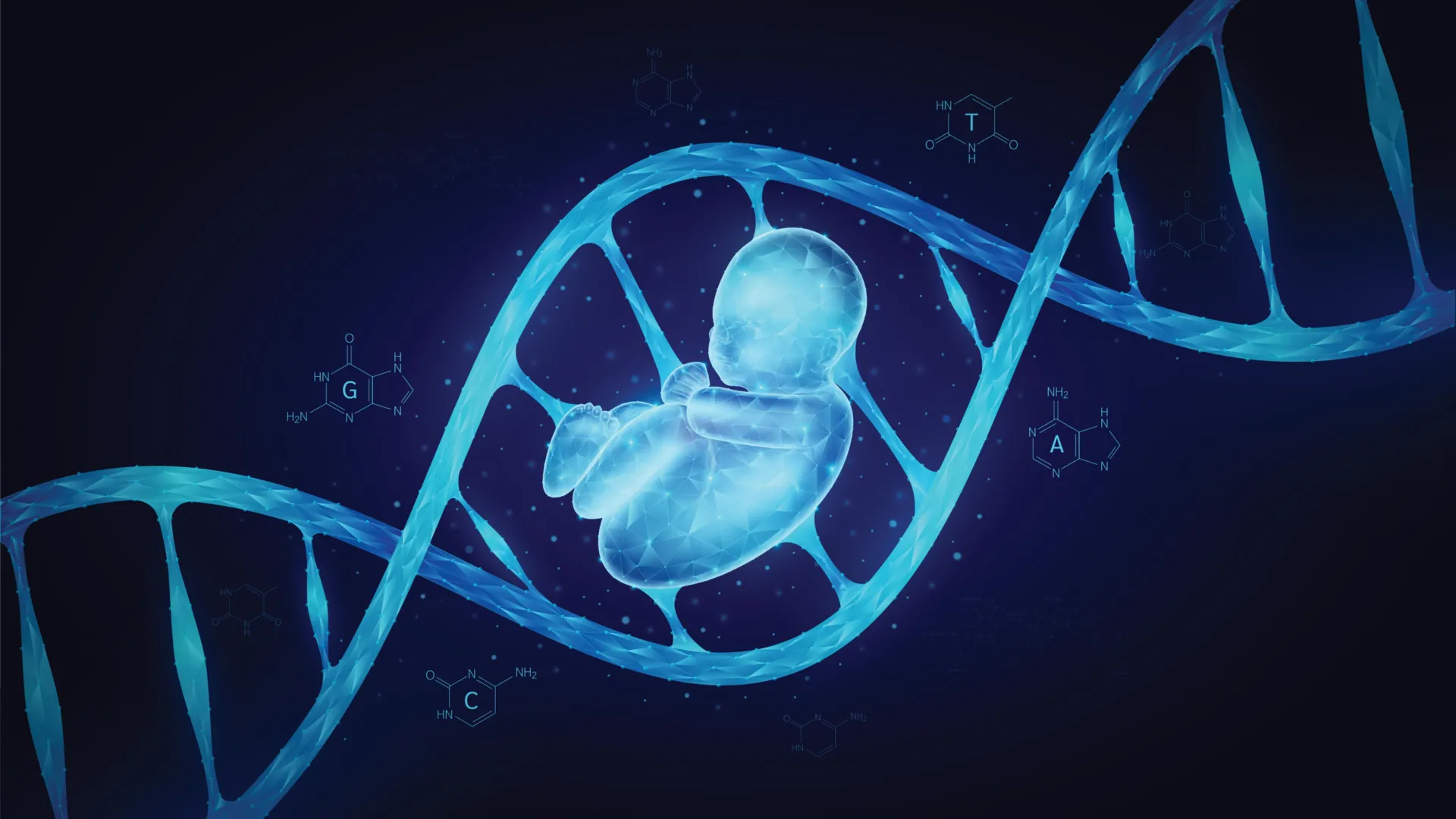
An international research team led by scientists from the University of Vienna has uncovered new insights into how specialized cell types and communication networks at the interface between mother and fetus evolved over millions of years. These discoveries shed light on one of nature’s most remarkable innovations – the ability to sustain a successful pregnancy. The findings have just been published in Nature Ecology & Evolution.

Pregnancy that lasts long enough to support full fetal development is a hallmark evolutionary breakthrough of placental mammals – a group that includes humans. At the center of this is the fetal-maternal interface: the site in the womb where a baby’s placenta meets the mother’s uterus, and where two genetically distinct organisms – mother and fetus – are in intimate contact and constant interaction. This interface has to strike a delicate balance: intimate enough to exchange nutrients and signals, but protected enough to prevent the maternal immune system from rejecting the genetically “foreign” fetus.

To uncover the origins and mechanisms behind this intricate structure, the team analyzed single-cell transcriptomes – snapshots of active genes in individual cells – from six mammalian species representing key branches of the mammalian evolutionary tree. These included mice and guinea pigs (rodents), macaques and humans (primates), and two more unusual mammals: the tenrec (an early placental mammal) and the opossum (a marsupial that split off from placental mammals before they evolved complex placentas).

A Cellular “Atlas of Mammal Pregnancy”

By analyzing cells at the fetal-maternal interface, the researchers were able to trace the evolutionary origin and diversification of the key cell types involved. Their focus was on two main players: placenta cells, which originate from the fetus and invade maternal tissue, and uterine stromal cells, which are of maternal origin and respond to this invasion.

Using molecular biology tools, the team identified distinct genetic signatures – patterns of gene activity unique to specific cell types and their specialized functions. Notably, they discovered a genetic signature associated with the invasive behavior of fetal placenta cells that has been conserved in mammals for over 100 million years. This finding challenges the traditional view that invasive placenta cells are unique to humans, and reveals instead that they are a deeply conserved feature of mammalian evolution. During this time, the maternal cells weren’t static, either. Placental mammals, but not marsupials, were found to have acquired new forms of hormone production, a pivotal step toward prolonged pregnancies and complex gestation, and a sign that the fetus and the mother could be driving each other’s evolution.

Cellular Dialogue: Between Cooperation and Conflict

To better understand how the fetal-maternal interface functions, the study tested two influential theories about the evolution of cellular communication between mother and fetus.

The first, the “Disambiguation Hypothesis,” predicts that over evolutionary time, hormonal signals became clearly assigned to either the fetus or the mother – a possible safeguard to ensure clarity and prevent manipulation. The results confirmed this idea: certain signals, including WNT proteins, immune modulators, and steroid hormones, could be clearly traced back to one source tissue.

The second, the “Escalation Hypothesis” (or “genomic Conflict”), suggests an evolutionary arms race between maternal and fetal genes – with, for example, the fetus boosting growth signals while the maternal side tries to dampen them. This pattern was observed in a small number of genes, notably IGF2, which regulates growth. On the whole, evidence pointed to fine-tuned cooperative signaling.

“These findings suggest that evolution may have favored more coordination between mother and fetus than previously assumed,” says Daniel J. Stadtmauer, lead author of the study and now a researcher at the Department of Evolutionary Biology, University of Vienna. “The so-called mother-fetus power struggle appears to be limited to specific genetic regions. Rather than asking whether pregnancy as a whole is conflict or cooperation, a more useful question may be: where is the conflict?”

Single-Cell Analysis: A Key to Evolutionary Discovery

The team’s discoveries were made possible by combining two powerful tools: single-cell transcriptomics – which captures the activity of genes in individual cells – and evolutionary modeling techniques that help scientists reconstruct how traits might have looked in long-extinct ancestors. By applying these methods to cell types and their gene activity, the researchers could simulate how cells communicate in different species, and even glimpse how this dialogue has evolved over millions of years.

“Our approach opens a new window into the evolution of complex biological systems – from individual cells to entire tissues,” says Silvia Basanta, co-first author and researcher at the University of Vienna. The study not only sheds light on how pregnancy evolved, but also offers a new framework for tracking evolutionary innovations at the cellular level – insights that could one day improve how we understand, diagnose, or treat pregnancy-related complications.

The research was conducted in the labs of Mihaela Pavličev at the Department of Evolutionary Biology, University of Vienna, and Günter Wagner at Yale University. Wagner is Professor Emeritus at Yale and a Senior Research Fellow at the University of Vienna. The study was supported by the John Templeton Foundation and the Austrian Science Fund (FWF).


Share Button

‘Menopause made me forget my name’

Kirsty Dixon from York runs support groups for women going through the menopause.

Share Button

Reform UK MP James McMurdock Gives Up Party Whip Over Covid Loans Allegations

A Reform UK MP has suspended himself from the party over allegations about “business propriety during the pandemic”.

James McMurdock removed the whip from himself after being contacted by The Sunday Times.

The paper approached him about £70,000 in government Covid “bounce back” loans he allegedly took out in 2020 and 2021 for two firms he owned.

In a statement, Reform MP Lee Anderson said: “I have today received a call from James McMurdock who has advised me, as chief whip, that he has removed the party whip from himself pending the outcome of an investigation into allegations that are likely to be published by a national newspaper.

“The allegations relate to business propriety during the pandemic and before he became an MP.”

He said the party “take these matters very seriously and James has agreed to cooperate in full with any investigation”.

McMurdock was elected the MP for South Basildon and East Thurrock last year.

It later emerged that he was jailed nearly 20 years ago for repeatedly kicking his then girlfriend.

At the time, Reform UK leader Nigel Farage said he was “a fine young man who’s turned out really very, very well”.

McMurdock is the second of the five Reform MPs elected last July to no longer have the party whip.

Rupert Lowe was suspended by the party in March amid allegations of bullying, which he denied, and now also sits as an independent MP in the Commons.

Share Button

Scientists thought the Arctic was sealed in ice — they were wrong

For years, scientists have debated whether a giant thick ice shelf once covered the entire Arctic Ocean during the coldest ice ages. Now a new study published in Science Advances, challenges this idea as the research team found no evidence for the presence of a massive ~1km ice shelf. Instead, the Arctic Ocean appears to have been covered by seasonal sea ice — leaving open water and life-sustaining conditions even during the harshest periods of cold periods during the last 750,000 years. This discovery gives insights crucial for our understanding of how the Arctic has responded to climate change in the past — and how it might behave in the future.

Tiny traces of life in ancient mud

Led by the European Research Council Synergy Grant project Into the Blue — i2B, the research team studied sediment cores collected from the seafloor of the central Nordic Seas and Yermak Plateau, north of Svalbard. These cores hold tiny chemical fingerprints from algae that lived in the ocean long ago. Some of these algae only grow in open water, while others thrive under seasonal sea ice that forms and melts each year.

“Our sediment cores show that marine life was active even during the coldest times,” said Jochen Knies, lead author of the study, based at UiT The Arctic University of Norway and co-lead of the Into The Blue — i2B project. “That tells us there must have been light and open water at the surface. You wouldn’t see that if the entire Arctic was locked under a kilometre-thick slab of ice.”

One of the key indicators the team looked for was a molecule called IP25, which is produced by algae that live in seasonal sea ice. Its regular appearance in the sediments shows that sea ice came and went with the seasons, rather than staying frozen solid all year round.

Simulating ancient Arctic climates

To test the findings based on the geological records, the research team used the AWI Earth System Model — a high-resolution computer model — to simulate Arctic conditions during two especially cold periods: the Last Glacial Maximum around 21,000 years ago, and a deeper freeze about 140,000 years ago when large ice sheets covered a lot of the Arctic.

“The models support what we found in the sediments,” said Knies. “Even during these extreme glaciations, warm Atlantic water still flowed into the Arctic gateway. This helped keep some parts of the ocean from freezing over completely.”

The models also showed that the ice wasn’t static. Instead, it shifted with the seasons, creating openings in the ice where light could reach the water — and where life could continue to thrive. This research not only reshapes our view of past Arctic climates but also has implications for future climate predictions. Understanding how sea ice and ocean circulation responded to past climate extremes can improve models that project future changes in a warming world.

“These reconstructions help us understand what’s possible — and what’s not — when it comes to ice cover and ocean dynamics,” said Gerrit Lohmann, co-author of this study, based at Alfred Wegener Institute, Helmholtz Centre for Polar and Marine Research (AWI) and co-lead of Into The Blue — i2B. “That matters when trying to anticipate how ice sheets and sea ice might behave in the future.”

Re-thinking the giant ice shelf theory

Some scientists have argued that features on the Arctic seafloor suggest that a huge, grounded ice shelf once covered the entire ocean. But this new study offers another explanation.

“There may have been short-lived ice shelves in some parts of the Arctic during especially severe cold phases,” said Knies. “But we don’t see any sign of a single, massive ice shelf that covered everything for thousands of years.”

One possible exception could have occurred about 650,000 years ago, when biological activity in the sediment record dropped sharply. But even then, the evidence points to a temporary event, not a long-lasting frozen lid over the Arctic.

Understanding the Arctic’s future

The study sheds new light on how the Arctic has behaved under extreme conditions in the past. This matters because the Arctic is changing rapidly today. Knowing how sea ice and ocean circulation responded to past climate shifts helps scientists understand what might lie ahead.

“These past patterns help us understand what’s possible in future scenarios,” said Knies. “We need to know how the Arctic behaves under stress — and what tipping points to watch for — as the Arctic responds to a warming world.”

The full paper, “Seasonal sea ice characterized the glacial Arctic-Atlantic gateway over the past 750,000 years,” is available in Science Advances.

This research is part of the European Research Council Synergy Grant project Into the Blue — i2B and the Research Council of Norway Centre of Excellence, iC3: Centre for ice, Cryosphere, Carbon, and Climate.

Share Button

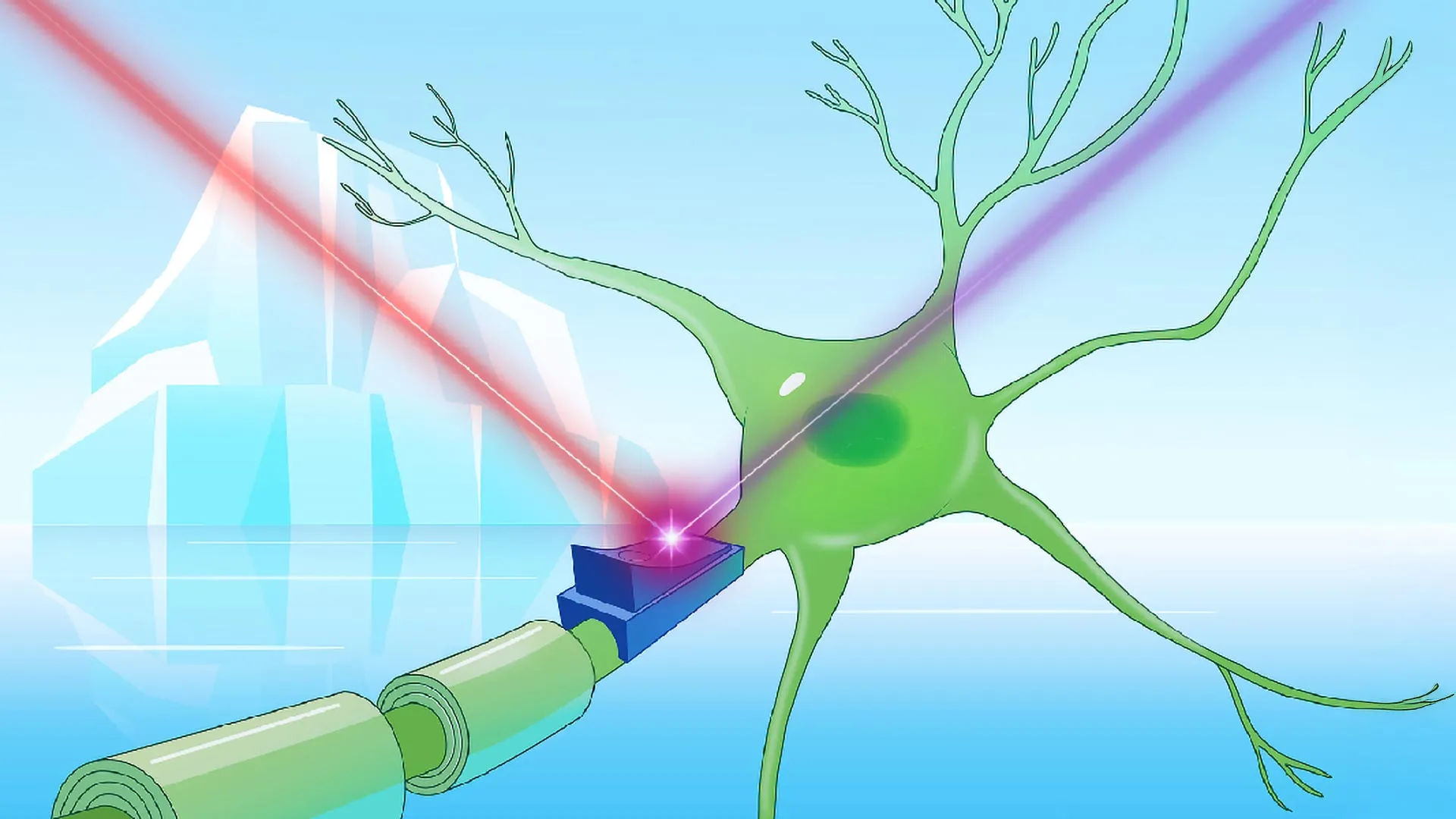
Frozen light switches: How Arctic microbes could revolutionize neuroscience

Imagine the magnificent glaciers of Greenland, the eternal snow of the Tibetan high mountains, and the permanently ice-cold groundwater in Finland. As cold and beautiful these are, for the structural biologist Kirill Kovalev, they are more importantly home to unusual molecules that could control brain cells’ activity.

Kovalev, EIPOD Postdoctoral Fellow at EMBL Hamburg’s Schneider Group and EMBL-EBI’s Bateman Group, is a physicist passionate about solving biological problems. He is particularly hooked by rhodopsins, a group of colorful proteins that enable aquatic microorganisms to harness sunlight for energy.

“In my work, I search for unusual rhodopsins and try to understand what they do,” said Kovalev. “Such molecules could have undiscovered functions that we could benefit from.”

Some rhodopsins have already been modified to serve as light-operated switches for electrical activity in cells. This technique, called optogenetics, is used by neuroscientists to selectively control neuronal activity during experiments. Rhodopsins with other abilities, such as enzymatic activity, could be used to control chemical reactions with light, for example.

Having studied rhodopsins for years, Kovalev thought he knew them inside out – until he discovered a new, obscure group of rhodopsins that were unlike anything he had seen before.

As it often happens in science, it started serendipitously. While browsing online protein databases, Kovalev spotted an unusual feature common to microbial rhodopsins found exclusively in very cold environments, such as glaciers and high mountains. “That’s weird,” he thought. After all, rhodopsins are something you typically find in seas and lakes.

These cold-climate rhodopsins were almost identical to each other, even though they evolved thousands of kilometres apart. This couldn’t be a coincidence. They must be essential for surviving in the cold, concluded Kovalev, and to acknowledge this, he named them ‘cryorhodopsins’.

Rhodopsins out of the blue

Kovalev wanted to know more: what these rhodopsins look like, how they work, and, in particular, what color they are.

Color is the key feature of each rhodopsin. Most are pink-orange – they reflect pink and orange light, and absorb green and blue light, which activates them. Scientists strive to create a palette of different colored rhodopsins, so they could control neuronal activity with more precision. Blue rhodopsins have been especially sought-after because they are activated by red light, which penetrates tissues more deeply and non-invasively.

To Kovalev’s amazement, the cryorhodopsins he examined in the lab revealed an unexpected diversity of colors, and, most importantly, some were blue.

The color of each rhodopsin is determined by its molecular structure, which dictates the wavelengths of light it absorbs and reflects. Any changes in this structure can alter the color.

“I can actually tell what’s going on with cryorhodopsin simply by looking at its color,” laughed Kovalev.

Applying advanced structural biology techniques, he figured out that the secret to the blue color is the same rare structural feature that he originally spotted in the protein databases.

“Now that we understand what makes them blue, we can design synthetic blue rhodopsins tailored to different applications,” said Kovalev.

Next, Kovalev’s collaborators examined cryorhodopsins in cultured brain cells. When cells expressing cryorhodopsins were exposed to UV light, it induced electric currents inside them. Interestingly, if the researchers illuminated the cells right afterwards with green light, the cells became more excitable, whereas if they used UV/red light instead, it reduced the cells’ excitability.

“New optogenetic tools to efficiently switch the cell’s electric activity both ‘on’ and ‘off’ would be incredibly useful in research, biotechnology and medicine,” said Tobias Moser, Group Leader at the University Medical Center Göttingen who participated in the study. “For example, in my group, we develop new optical cochlear implants for patients that can optogenetically restore hearing in patients. Developing the utility of such a multi-purpose rhodopsin for future applications is an important task for the next studies.”

“Our cryorhodopsins aren’t ready to be used as tools yet, but they’re an excellent prototype. They have all the key features that, based on our findings, could be engineered to become more effective for optogenetics,” said Kovalev.

Evolution’s UV light protector

When exposed to sunlight even on a rainy winter day in Hamburg, cryorhodopsins can sense UV light, as shown using advanced spectroscopy by Kovalev’s collaborators from Goethe University Frankfurt led by Josef Wachtveitl. Wachtveitl’s team showed that cryorhodopsins are in fact the slowest among all rhodopsins in their response to light. This made the scientists suspect that those cryorhodopsins might act like photosensors letting the microbes ‘see’ UV light – a property unheard of among other cryorhodopsins.

“Can they really do that?” Kovalev kept asking himself. A typical sensor protein teams up with a messenger molecule that passes information from the cell membrane to the cell’s inside.

Kovalev grew more convinced, when together with his collaborators from Alicante, Spain, and his EIPOD co-supervisor, Alex Bateman from EMBL-EBI, they noticed that the cryorhodopsin gene is always accompanied by a gene encoding a tiny protein of unknown function – likely inherited together, and possibly functionally linked.

Kovalev wondered if this might be the missing messenger. Using the AI tool AlphaFold, the team were able to show that five copies of the small protein would form a ring and interact with the cryorhodopsin. According to their predictions, the small protein sits poised against the cryorhodopsin inside the cell. They believe that when cryorhodopsin detects UV light, the small protein could depart to carry this information into the cell.

“It was fascinating to uncover a new mechanism via which the light-sensitive signal from cryorhodopsins could be passed on to other parts of the cell. It is always a thrill to learn what the functions are for uncharacterised proteins. In fact, we find these proteins also in organisms that do not contain cryorhodopsin, perhaps hinting at a much wider range of jobs for these proteins.”

Why cryorhodopsins evolved their astonishing dual function – and why only in cold environments – remains a mystery.

“We suspect that cryorhodopsins evolved their unique features not because of the cold, but rather to let microbes sense UV light, which can be harmful to them,” said Kovalev. “In cold environments, such as the top of a mountain, bacteria face intense UV radiation. Cryorhodopsins might help them sense it, so they could protect themselves. This hypothesis aligns well with our findings.”

“Discovering extraordinary molecules like these wouldn’t be possible without scientific expeditions to often remote locations, to study the adaptations of the organisms living there,” added Kovalev. “We can learn so much from that!”

Unique approach to unique molecules

To reveal the fascinating biology of cryorhodopsins, Kovalev and his collaborators had to overcome several technical challenges.

One was that cryorhodopsins are nearly identical in structure, and even a slight change in the position of a single atom can result in different properties. Studying molecules at this level of detail requires going beyond standard experimental methods. Kovalev applied a 4D structural biology approach, combining X-ray crystallography at EMBL Hamburg beamline P14 and cryo-electron microscopy (cryo-EM) in the group of Albert Guskov in Groningen, Netherlands, with protein activation by light.

“I actually chose to do my postdoc at EMBL Hamburg, because of the unique beamline setup that made my project possible,” said Kovalev. “The whole P14 beamline team worked together to tailor the setup to my experiments – I’m very grateful for their help.”

Another challenge was that cryorhodopsins are extremely sensitive to light. For this reason, Kovalev’s collaborators had to learn to work with the samples in almost complete darkness.

Share Button

A Strange Condition Ruined My Sex Life For 40 Years. Then A Doctor Said 1 Word That Changed My Life.

I couldn’t have been more than 19 years old when, as a happy-go-lucky UCLA student, I looked down at my penis and decided I was dying.

Cancer, I thought, noticing small red bumps at the tip of my penis. Since I wasn’t having sex with anyone — not for lack of trying, I might add — what else could they be? I was doomed before it was even legal for me to drink.

A quick trip to the university’s emergency room followed, where, under harsh lights, a female doctor held and studied my genitals, then, in front of a female nurse, broke out into laughter.

“My husband has those,” she told me. “They’re varicose veins in an uncommon place. Nothing to worry about. Go Bruins!”

It turns out, I had a lot to worry about… but not for reasons the doctor dismissed.

As a young, gay actor who moved to New York City right after college, in 1987, having red bumps on my penis wasn’t exactly the invitation to sex that I was hoping to find. Not every guy I slept with noticed, but the ones who did often thought they were a sign of AIDS, herpes or god knows what else. I’ve never forgotten the man who said, simply, that I was “a whore,” and, since he was in a relationship with another man, he couldn’t take any risks. Um, kettle…?

That said, jovially saying to guys, “relax, they’re just varicose veins,” didn’t work as well as my former doctor insinuated. Perhaps I should have had her write a note.

In reality, who could really blame these men for being suspicious? Guys were dropping dead from AIDS on a daily basis, and vigilance was everything. I spent a lot of time trying to have sex in the dark or simply praying that guys wouldn’t examine my tip too closely. Many a hard-on was deflated just worrying one of my hook-ups would suddenly scream out, “Dude, what’s wrong with your dick?!” One guy did just that.

Even in the midst of the AIDS pandemic, I slept with a lot of strangers (I always used protection for intercourse), and to them, I was just another dick — pun intended. I’m certain that, if the situation had been reversed, I’d have had a difficult time believing the varicose vein story, too.

During the periods when I had steady boyfriends, the situation diminished because they trusted me and knew I wouldn’t place them in harm’s way. (Although I’ve read reports to the contrary, I’ve never once had one of the blood vessels break, during sex or otherwise.)

However, even those men weren’t always polite about my “deformity.” One guy I dated for a long time told me that having oral sex with me was like eating ice cream with nuts — and he didn’t like nuts. Charmed!

The author when he was in college

Courtesy of David Toussaint

The author when he was in college

I’ve spent a lot of my life single, though, and as I grew older in a new century, I learned that no matter what time of life you choose to be sex-positive, there will always be a target on your back from groups who find sex with multiple partners shameful.

I also found that as I got older, most complaints would come from men much younger than myself. Being a “Dilf” or a “Daddy” has been a sweet time of life for me, but the sexual scrutiny from millennials and Generation Z has become more intense. I’ve had guys show up at my door and get naked, then, after foreplay, examine my penis like I was having a medical exam. Some were polite when they walked out the door, some were not.

Since this rarely happens with men close to my age, I chalked it up to retro-fear of older men — an AIDS-era residue that meant those of us who were sexually active during that horrifying time were still physically scarred.

By 2022, I’d had enough. I was seeing a man 20 years younger than myself and having a great time, until the night he abruptly stopped oral sex and demanded to know why I had bumps on my penis. I told him they’d always been there and that he’d just never noticed, which he didn’t believe, and he said he never wanted to see or talk to me again. I’ve not spoken to him since.

I immediately made an appointment with my doctor, pulled down my pants in the office, and asked if there was anything that could be done about my grotesque abnormality.

After yet another bright-light examination, mixed in with small talk of his impending wedding and honeymoon, he told me that, contrary to what my initial doctor said, the bumps were not varicose veins, but more than likely angiokeratoma, benign blood vessels that form on the skin. His diagnosis was delivered in a tone so carefree I definitely wanted him to write a note to future lovers.

He gave me a referral to an excellent dermatologist in New York, Dr. Bradley Glodny, who, when he studied my penis — sometimes I think my flaccid package has gotten more attention than the stiff version — confirmed that I had genital angiokeratoma, and said that, for an affordable price, he could remove them via laser.

“Yes, please,” I said faster than he could turn on the equipment to fix my equipment.

When I told him that my dates were often repulsed by my groin area, he asked, flatly, “What kind of people do you go out with?”

Fair point.

I haven’t always been the best judge of character when hormones get in the way.

“What I’m baffled by — and what shocks me upon reflection — is that I ignored seeking help for my condition for 40 years, and, just as insane, I took the opinion of one doctor without seeking a second opinion.”

A week of healing went by, and, as promised, almost all of the bumps disappeared (some were too tiny to remove). My self-esteem and self-confidence jumped up 100%, and my sex life since then has become substantially more fulfilling. I had no idea that hearing Dr. Glodny say that one word could change everything.

In the bedroom, I’ve become, like, “Hey, feel free to examine my penis. Nice, isn’t it?” and “Sure, we can have sex in bright light. Sounds like fun!”

Since an internet search returned lopsided statistics on how many people have my condition, I asked Dr. Glodny for his thoughts.

“While I cannot give you an exact statistic, I believe that most men over the age of 30 have at least a few angiokeratomas in their genital area,” he said, adding that they become more prevalent as we age.

What I’m baffled by — and what shocks me upon reflection — is that I ignored seeking help for my condition for 40 years, and, just as insane, I took the opinion of one doctor without seeking a second opinion. Varicose veins run in my family, and I have them on my legs, so it did seem like a legit diagnosis. But doctors, lest we forget, are simply professionals with theories, and should always be questioned.

Part of me was embarrassed, too, to even discuss such a sensitive part of my anatomy with a stranger, let alone have them examine it. Clearly, I’ve grown up on that front. I hope that if you’re reading this and have any skin condition that scares or confuses you, you won’t be as stubborn as I was and seek help immediately.

I don’t regret having an active sex life — quite the opposite. But I should have been more dismissive of the men who disbelieved me when I told them they were safe. I accepted humiliation in the hopes that I could score some hot ass. (Remember the guy who called me a liar? I recently reached out to him so he could see the “new and improved” me. He never responded, and, frankly, I think I dodged a bullet.)

Like most guys I know, I want all of my body to be appreciated — the muscles, the hairy chest, the penis. We all have physical imperfections, wherever and whatever they may be. When we are humiliated on any level, it only increases the kind of body fascism that needs to be eradicated.

Laser removal for angiokeratoma doesn’t last forever, and I have them tweaked about once a year. Yeah, it hurts — a lot. Yes, insurance doesn’t cover it because it’s considered cosmetic. And, yes, I have to go off the market for a good week or two afterward. But at this point in my life, skipping out on the procedure and going back to hiding in the sexual shadows would be just plain nuts.

David Toussaint is a four-time book author, journalist, professional screenwriter and playwright, and actor. He lives in Manhattan with his pug, Deja.

Do you have a compelling personal story you’d like to see published on HuffPost? Find out what we’re looking for here and send us a pitch at pitch@huffpost.com.

Share Button

Can one vanishing particle shatter string theory — and explain dark matter?

  • Researchers from Penn and Arizona State University pinpoint a lone five-particle package (a 5-plet) that could upend string theory by detecting it at the Large Hadron Collider.
  • “Ghost” tracks that vanish mid-flight may be the smoking gun physicists are chasing.
  • Early data squeeze the search window, but the next collider runs could make — or break — the case.

In physics, there are two great pillars of thought that don’t quite fit together. The Standard Model of particle physics describes all known fundamental particles and three forces: electromagnetism, the strong nuclear force, and the weak nuclear force. Meanwhile, Einstein’s general relativity describes gravity and the fabric of spacetime.

However, these frameworks are fundamentally incompatible in many ways, says Jonathan Heckman, a theoretical physicist at the University of Pennsylvania. The Standard Model treats forces as dynamic fields of particles, while general relativity treats gravity as the smooth geometry of spacetime, so gravity “doesn’t fit into physics’ Standard Model,” he explains.

In a recent paper, Heckman; Rebecca Hicks, a Ph.D. student at Penn’s School of Arts & Sciences; and their collaborators turn that critique on its head. Instead of asking what string theory predicts, the authors ask what it definitively cannot create. Their answer points to a single exotic particle that could show up at the Large Hadron Collider (LHC). If that particle appears, the entire string-theory edifice would be, in Heckman’s words, “in enormous trouble.”

String theory: the good, the bad, the energy-hungry

For decades, physicists have sought a unified theory that can reconcile quantum mechanics,and, by extension, the behavior of subatomic particles, with gravity — which is described as a dynamic force in general relativity but is not fully understood within quantum contexts, Heckman says. A good contender for marrying gravity and quantum phenomena is string theory, which posits that all particles, including a hypothetical one representing gravity, are tiny vibrating strings and which promises a single framework encompassing all forces and matter. “But one of the drawbacks of string theory is that it operates in high-dimensional math and a vast ‘landscape’ of possible universes, making it fiendishly difficult to test experimentally,” Heckman says, pointing to how string theory necessitates more than the familiar four dimensions — x, y, z, and time — to be mathematically consistent.

“Most versions of string theory require a total of 10 or 11 spacetime dimensions, with the extra dimensions being sort of ‘curled up’ or folding in on one another to extremely small scales,” Hicks says.

To make matters even trickier, string theory’s distinctive behaviors only clearly reveal themselves at enormous energies, “those far beyond what we typically encounter or even generate in current colliders,” Heckman says.

Hicks likens it to zooming in on a distant object: at everyday, lower energies, strings look like regular point-like particles, just as a faraway rope might appear to be a single line. “But when you crank the energy way up, you start seeing the interactions as they truly are — strings vibrating and colliding,” she explains. “At lower energies, the details get lost, and we just see the familiar particles again. It’s like how from far away, you can’t make out the individual fibers in the rope. You just see a single, smooth line.”

That’s why physicists hunting for signatures of string theory must push their colliders — like the LHC — to ever-higher energies, hoping to catch glimpses of fundamental strings rather than just their lower-energy disguises as ordinary particles.

Why serve string theory a particle it likely won’t be able to return?

Testing a theory often means searching for predictions that confirm its validity. But a more powerful test, Heckman says, is finding exactly where a theory fails. If scientists discover that something a theory forbids actually exists, the theory is fundamentally incomplete or flawed. Because string theory’s predictions are vast and varied, the researchers instead asked if there’s a simple particle scenario that string theory just can’t accommodate.

They zeroed in on how string theory deals with particle “families,” groups of related particles bound together by the rules of the weak nuclear force, responsible for radioactive decay. Typically, particle families are small packages, like the electron and its neutrino sibling, that form a tidy two-member package called a doublet. String theory handles these modest particle families fairly well, without issue.

However, Heckman and Hicks identified a family that is conspicuously absent from any known string-based calculation: a five-member particle package, or a 5-plet. Heckman likens this to trying to order a Whopper meal from McDonald’s, “no matter how creatively you search the menu, it never materializes.”

“We scoured every toolbox we have, and this five-member package just never shows up,” Heckman says. But what exactly is this elusive 5-plet?

Hicks explains it as an expanded version of the doublet, “the 5-plet is its supersized cousin, packing five related particles together.” Physicists encapsulate this particle family in a concise mathematical formula known as the Lagrangian, essentially the particle-physics cookbook. The particle itself is called a Majorana fermion, meaning it acts as its own antiparticle, akin to a coin that has heads on both sides. Identifying such a particle would directly contradict what current string theory models predict is possible, making the detection of this specific particle family at the LHC a high-stakes test, one that could potentially snap string theory.

Why a 5-plet hasn’t been spotted and the vanishing-Track clue

Hicks cites two major hurdles for spotting these 5-plet structures: “production and subtlety.” In a collider, energy can literally turn into mass; Einstein’s E = mc² says that enough kinetic oomph (E) can be converted into the heft (m) of brand-new particles, so the heavier the quarry the rarer the creation event.

“The LHC has to slam protons together hard enough to conjure these hefty particles out of pure energy,” Hicks explains, citing Einstein’s E = mc², which directly links energy (E) to mass (m). “As the masses of these particles climb toward a trillion electron volts, the chance of creating them drops dramatically.”

Even if produced, detection is challenging. The charged particles in the 5-plet decay very quickly into nearly invisible products. “The heavier states decay into a soft pion and an invisible neutral particle, zero (X0),” Hicks says. “The pion is so low-energy it’s basically invisible, and X0 passes straight through. The result is a track that vanishes mid-detector, like footprints in snow suddenly stopping.”

Those signature tracks get picked up by LHC’s ATLAS (short for A Toroidal LHC ApparatuS) and CMS (Compact Muon Solenoid), house-sized “digital cameras” wrapped around the collision center. They sit at opposite collision points and operate independently, giving the physics community two sets of eyes on every big discovery. Penn physicists like Hicks are part of the ATLAS Collaboration, helping perform the searches that look for quirky signals like disappearing tracks.

Why a 5-plet matters for dark matter

Hicks says finding the 5-plet isn’t only important for testing string theory, pointing to another exciting possibility: “The neutral member of the 5-plet could explain dark matter, the mysterious mass shaping up most of our universe’s matter.”

Dark matter constitutes roughly 85 percent of all matter in the universe, yet scientists still don’t know what exactly it is. “If the 5-plet weighs around 10 TeV — about 10,000 proton masses — it neatly fits theories about dark matter’s formation after the Big Bang,” Hicks says. “Even lighter 5-plets could still play a role as part of a broader dark matter landscape.”

“If we detect a 5-plet, it’s a double win,” says Hicks. “We’d have disproven key predictions of string theory and simultaneously uncovered new clues about dark matter.”

What the LHC has already ruled out

Using existing ATLAS data from collider runs, the team searched specifically for 5-plet signals.”We reinterpreted searches originally designed for ‘charginos’ — hypothetical charged particles predicted by supersymmetry — and looked for 5-plet signatures,” Hicks says of the team’s search through the repurposed ATLAS disappearing-track data. “We found no evidence yet, which means any 5-plet particle must weigh at least 650-700 GeV, five times heavier than the Higgs boson.”

For context, Heckman says, “this early result is already a strong statement; it means lighter 5-plets don’t exist. But heavier ones are still very much on the table.”

Future searches with upgraded LHC experiments promise even sharper tests. “We’re not rooting for string theory to fail,” Hicks says. “We’re stress-testing it, applying more pressure to see if it holds up.”

“If string theory survives, fantastic,” Heckman says. “If it snaps, we’ll learn something profound about nature.”

Jonathan Heckman is a professor at the School of Arts & Sciences’ Department of Physics and Astronomy, with a secondary appointment in the Department of Mathematics.

Rebecca Hicks is a Ph.D. student in the Department of Physics and Astronomy at Penn Arts & Sciences.

Other authors include Matthew Baumgart and Panagiotis Christeas of Arizona State University.

This work received support from the Department of Energy (awards DE-SC0019470 and DE-SC0013528), the U.S.-Israel Binational Science Foundation (Grant No. 2022100), and the National Science Foundation.

Share Button

Is It OK To Give A Sex Toy As A Gift?

A sex toy can be an exciting and confidence-boosting gift to buy for yourself.

But is such an intimate item ever an appropriate thing to give as a gift to someone else, particularly if you don’t have a sexual or romantic relationship with them?

According to sexologists and relationship experts, the answer is… it depends.

Who should you give a sex toy to?

“Gifting a sex toy to a friend can be a fun, empowering gesture – but context and consent matter,” said Rachel Needle, a licensed psychologist and co-director of Modern Sex Therapy Institute.

“It’s usually appropriate when you have the kind of relationship where sex and pleasure are openly discussed, and you’re confident they’d receive it in the spirit it’s intended: playful, supportive, or celebratory.”

She recommended considering their sense of humour, comfort level and any cultural or religious beliefs that might influence their response to such a gift.

“Are they someone who celebrates their sensuality? Do they feel safe exploring? Trust your intuition, and always come from a place of love and respect,” said relationship therapist and sexologist Joy Berkheimer. “The goal of the gift should be to uplift, not to pry or push boundaries.”

Think about the closeness of your relationship as well.

“If your friendship is open, playful, and you’ve talked about sex before, then you probably have a green light, and a pleasure toy can be a great gift,” said Sadie Allison, a sexologist, author and founder of sex toy retailer TickleKitty.

“‘Giving the gift of pleasure’ is thoughtful and unique, and you’re almost always guaranteed a big smile out of it.”

Avoiding the awkward – and keeping it classy

Allison suggested giving your friend a sex toy as a gift for their bachelorette party or birthday – or as a self-love boost, perhaps after a breakup. As for specific products, consider if they’re more reserved or new to sex toys.

“In those cases, keep it subtle and pick a beginner-friendly product,” she said, recommending “a rechargeable bullet vibe that’s small and not intimidating” or pleasure lubricant.

“Have they expressed curiosity about toys or pleasure products?” Needle said. “If you’re unsure, err on the side of caution or opt for a gift card to a reputable sexual wellness store, which gives them the autonomy to choose.”

She emphasised that presentation is everything when it comes to giving such an intimate gift.

“Keep it classy, light-hearted, and respectful,” Needle advised. “Avoid public gifting unless you’re 100% sure they’ll love the attention.”

In larger group situations like a party, ask yourself whether your friend would be OK opening this gift in front of the other guests present.

“If you feel it may be awkward, give it to them on the side and let them know there’s something ‘frisky’ inside as a heads-up,” Allison said.

Context and consent are important when it comes to this kind of gift and how you present it.

Irena Sowinska via Getty Images

Context and consent are important when it comes to this kind of gift and how you present it.

You don’t need to go overboard with the gift wrapping, either. “Wrap it like you would any other thoughtful gift – no gag wrapping unless that’s clearly your shared vibe,” Needle said.

She also suggested including a little note with the gift, sharing why you thought of it for them – “because everyone deserves some self-love” or “you don’t need them” after a break-up.

“Try something like, ‘I saw this and thought of you, hope it adds a little spark and joy to your journey,’” Berkheimer said. “Keep it simple, genuine, and free of shame or judgment.”

If you think they’ll be surprised by the gift, a little card can provide some context and reassurance.

“If you’re nervous, pairing it with a more traditional item ― like bath products or a wellness-themed gift basket ― can soften the edges while still making a statement,” Needle said.

When it’s not a good idea to give sex toys

As noted, consent and context are incredibly important. Although times have changed and sex toys are less stigmatised, this kind of gift could cross boundaries, cause discomfort or even be considered harassment under the wrong circumstances.

If you don’t know this person very well and have never discussed intimacy or pleasure, you probably aren’t in the type of relationship where this would be an appropriate gift. If you’re on the fence, you could ask to gauge how they’d feel about that kind of present, but be respectful of the answer.

For someone with whom you have a professional relationship where specific power dynamics are at play, this kind of gift would also probably be a no-no.

Clinical psychologist and sex and intimacy coach Lori Beth Bisbey believes gifting a sex toy to a platonic friend can feel easy and uncomplicated if it’s someone you talk with about partners and sex. But advises to be mindful of situations where you have a different motive, though.

“If there is a flirtation between you, you need to be more careful about gifting a sex toy,” she said. “You need to be clear with yourself as to why you are giving this toy and what message you are trying to send. I would suggest thinking twice if the friend doesn’t know you have an interest in them.”

Share Button

Ketamine helped me escape my negative thoughts – then it nearly killed me

Young people are taking dangerous amounts of ket because it’s cheap, easily available and helps them “disconnect”, experts say.

Share Button

‘It’s A Shitshow’: After A Year Of Mistakes And U-Turns, Can Keir Starmer Turn It Around?

Sometimes a moment can capture the political mood better than any speech or parliamentary vote.

Leaving 10 Downing Street en route to his ministerial car before prime minister’s questions on Wednesday, a walk of only a few steps which he has made hundreds of times in the past year, Keir Starmer stumbled.

As his right leg began to give way, the prime minister instinctively reached out to grab the nearest railing to steady himself.

In the grand scheme of things it was a minor mishap. No harm done, let’s just move on.

But for a PM under pressure and whose very political existence is now the subject of open speculation at Westminster, it wasn’t a great look.

If he can’t even leave the house without nearly falling flat on his face, you could hear his critics thinking, how on earth can he run the country?

Underlining how difficult things are right now for Starmer, worse was to follow less than an hour later, as he ploughed his way through PMQs seemingly unaware that his chancellor was in tears beside him.

We may never know the real reason for Rachel Reeves’ distress, but the message it seemed to convey to the country was unmistakeable: just a year on from Labour’s landslide election victory, this is a government which already seems to be emotionally and politically spent.

“They haven’t got a narrative and the whole thing’s a mess.”

The previous evening, the PM had been forced to make yet another U-turn in order to ensure the government’s flagship Universal Credit and Personal Independence Payments Bill was passed at second reading.

The fact that it no longer contains anything at all on personal independence payments demonstrates how much Starmer had to give away to win the support of enough of his rebellious MPs.

The climbdown meant that the £5 billion of savings the welfare reforms were supposed to deliver have now disappeared, leaving the chancellor to plan yet more tax rises to fill the gap.

As a backdrop to Starmer’s first anniversary in the job, it was far from ideal.

“They’ve got a huge majority, but they haven’t got a narrative and the whole thing’s a mess,” said one gloomy Labour veteran.

“I was talking to a senior businessman who said on the day-to-day stuff, the government is actually getting a lot of things right. But fundamentally it’s a shitshow.

“This weekend we should be celebrating the first anniversary of a famous victory, which was an outstanding achievement, but instead we’ve gone straight to the massive hangover.”

Starmer felt compelled to warn his cabinet this week about briefing against Morgan McSweeney, the PM’s chief of staff who has become a lightning rod for criticism of the No.10 operation.

Reeves’s strict adherence to her fiscal rules, which are aimed at keeping a tight rein on government spending, has also been blamed for the government’s woes.

Labour MPs feel worn down by having to defend unpopular government decisions like removing winter fuel payments from 10 million pensioners, only for the PM to eventually U-turn on them when the political heat gets too much.

One senior Labour figure told HuffPost UK that Starmer has it in his gift to lift the gloom, but he doesn’t have any time to waste.

“They’ve got three years to recover,” he said. “It’s perfectly doable, but they need to be getting back on track very quickly. Luckily, the Tories are still all over the place. Reform are obviously a problem, but it is a recoverable situation.

“Basically, Keir needs to get a grip. He has to shake things up and some people’s egos will get bruised in the process, but in the end we’ve got to move on.

“Does he want to be remembered as the man who re-established the party and set us on a forward path or does he want to be remembered as the man who blew it?”

“Keir needs to get a grip. He has to shake things up.”

One Labour MP said the government needs to get on and deliver the change that the country voted for a year ago.

“There has to be an improvement in living standards,” he said. “If we don’t make people feel better off, then we will suffer at the next election.”

The MP warned that Nigel Farage will be the main beneficiary if Starmer doesn’t get his and the government’s act together soon.

He said: “Nobody said it was going to be easy. There’s no political patience out there. People feel worn down and want to see improvements tomorrow, and if they don’t then they’ll vote for Reform.”

There is anger inside No.10 towards the Parliamentary Labour Party (PLP), who many believe are either unable or unwilling to accept the parlous state of the public finances means tough decisions need to be made.

In the wake of the welfare reform fiasco, one MP was even overheard saying: “I don’t understand why this means tax rises when it’s only a few billion pounds.”

Flushed with the success of forcing the PM to U-turn on welfare cuts, some rebels made it clear they will now try to force him to scrap the two-child benefit cap – a move that would come with a £3.5bn price tag.

That prompted one No.10 insider to observe: “They are aware they’ve just spent that money, right?”

A cabinet minister told HuffPost UK it was time for some Labour backbenchers to come into the real world.

“You can’t have a situation where MPs club together and force a decision that costs £5bn and then dump all the consequences on the chancellor,” he said.

“If these things are collectively decided, they need to be collectively owned. The PLP can’t think this is a free lunch, that we’ll move on next to something like the two-child benefit cap and say the chancellor will have to deal with that. It’s been very unfair to load all that on her.

“Labour MPs think somehow somebody else will deal with it, that you can tax more or borrow more and it’ll all be fine. But when you tax private schools, farmers, businesses, there’s always a big pushback. There isn’t a free little lever that you can just pull.”

rime Minister Keir Starmer and Chancellor of the Exchequer Rachel Reeves

via Associated Press

French president Emmanuel Macron is in London next week to address parliament and hold talks with Starmer on how France can work with the UK to stop asylum seekers crossing the Channel in small boats.

Bringing down immigration was a key Labour pledge in the election, and yet the number of asylum seekers making the perilous journey is at a record high.

Party strategists believe fulfilling that promise is essential if the government is to show voters that it is delivering.

But Chris Hopkins, political research director at pollsters Savanta, said it may already be too late for Starmer.

“I’m not sure he can turn things around,” he said. “It’s too early to completely write them off – we’ve seen far stranger things than a Labour comeback – but public opinion is far easier to lose than win back and the prospects for this government don’t look good.

“They lack the policy agenda to capture voters’ imagination, they lack the fiscal headroom to bring about tangible changes to people’s lives, and they’re not proving themselves to be united, competent or strong either.

“It’s no surprise at this stage that so many 2024 Labour voters have buyer’s remorse, and when the Tories and Labour fail, the untested alternatives suddenly look significantly less risky for an increasingly promiscuous electorate.

“Labour’s electoral coalition was always going to be difficult to hold together, but I think the speed and scale of the collapse from such a strong position is a surprise, and exactly what the country didn’t need from its next government.”

Starmer will spend his anniversary weekend away from Downing Street, and his allies insist he will not be brooding on the turmoil of recent days.

“He’s not someone that sits and dwells on things,” said on senior government official. “There are obviously lessons to be learned, but he’s focused on what we can do to fix things rather than spend all his time chewing over the past week.”

Labour’s first 12 months in office have been marked by a series of self-inflicted errors, gaffes, controversies and climbdowns.

The next election may not be until 2029, but Starmer and those around him know that he cannot afford for the next year to be as bad as the last one.

Share Button