Labour’s Mixed Messages On Tax Leave Voters Dazed And Confused

Buckle up everyone, the next few months are going to be a little bumpy.

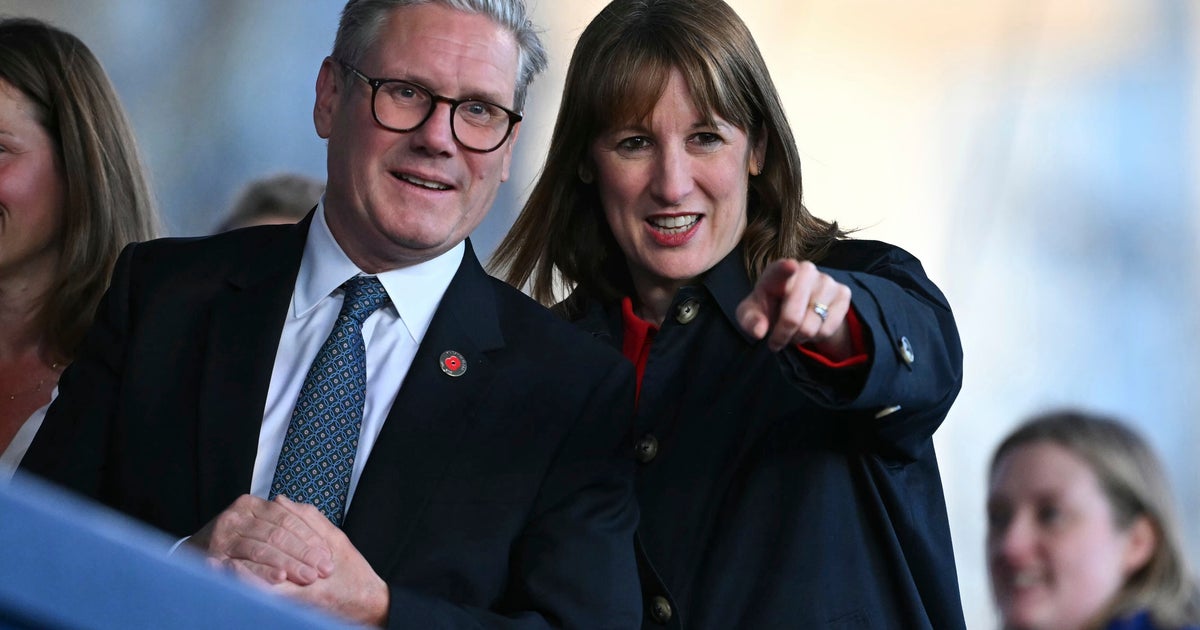
Rachel Reeves hasn’t even named the date yet for her autumn Budget – it will either be in October or November – but already it is dominating the political agenda.

The good news for the government is that gives them plenty of time to come up with a consistent message on tax, because right now they are all over the shop.

The consensus at Westminster is that taxes will have to go up to fill the black hole caused by the government’s U-turns on winter fuel payments and welfare cuts. The only questions that remain are which ones and by how much.

Left-wing Labour MPs have been loudly stating their support for a wealth tax on the assets of the super-rich. Initially, the chancellor’s opposition to such a levy appeared iron-clad.

But more recently, neither she nor anyone else in the cabinet has been willing to completely rule one out.

The government’s confused position was not helped on Sunday when transport secretary Heidi Alexander said the possibility of a wealth tax was not “directly” discussed at a cabinet away day last week.

Alexander then compounded the issue by insisting taxes would not go up for people on “modest incomes”, further fuelling speculation that the better off are going to get whacked.

Darren Jones, the chief secretary to the Treasury, was sent out this morning to tell the country what Alexander had meant, and was not wholly successful.

He set even more hares running by insisting the government would stick to Labour’s manifesto pledge not to increase “the headline rate of income tax or employee National Insurance and not to increase the headline rate of VAT”.

Except Labour’s manifesto made no reference at all to “headline” tax rates, leading to speculation that the government was looking for a clever way of putting them up while claiming not to brake their pre-election promises.

The PM’s official spokesman then had to tell journalists later that ministers were not moving the goalposts.

“No, I mean referring obviously to the manifesto commitment which we’ve repeatedly restated,” he said. “Beyond that, it will be up to the chancellor to set out policy at fiscal events in the usual way.”

Reeves herself popped up this morning, and again refused to rule out a wealth tax.

She said: “We haven’t even set the date for the Budget yet, so please forgive me if I’m not going to speculate about what might happen at an event that we haven’t even decided a date on yet.

“But we’ve been really clear in our manifesto about the taxes that we won’t increase, and we’re not going to increase the taxes that working people pay, their income tax, their national insurance and their VAT, because I do recognise the struggle that ordinary working people have faced these last few years with the cost of living.”

That brought the number of different government positions on tax to three in a little over 24 hours.

Ministers need to quickly get their stories straight, before voters’ mood shifts from confusion to outright anger.

Share Button

Richard Gadd Reveals He Cut 1 Baby Reindeer Episode For This Chilling Reason

Richard Gadd has revealed the reason why one episode of Baby Reindeer didn’t make the final cut.

The British actor and writer achieved international acclaim with the Emmy-winning Netflix miniseries based on his real-life experiences with a stalker, who is portrayed in the series by Jessica Gunning.

It’s no secret that the show features some pretty dark moments, exploring the traumatising impacts of stalking, Donny’s sexual assault and his character’s struggles with sexuality.

Yet this was exactly how Richard envisioned his series, even going so far as to remove one episode entirely because it didn’t match the dark vibe of the show.

Speaking at the Future Visions conference in Melbourne, Australia, the actor explained that TV executives had suggested he make the show lighter.

“I remember when we were developing it, there was the note that kept coming in, and probably rightfully so, about ‘The show is just too dark. You need to give us a respite’,” he said, according to Metro.

That led to an episode where Richard’s character visited his family in Scotland and spent a lot of screen time playing football with his dad.

But Richard noticed during editing that it removed all tension, and found himself, rather ironically, wishing for Martha back.

“When we got to the edit, I thought, ‘You miss her every time she’s not on screen’. And I thought, in a lot of ways, the sooner you get back to her, the better,” he said.

The deleted episode reportedly featured a climactic moment which sees Martha get into Donny’s kitchen, which was instead repurposed as a scene in the rejigged third episode, according to Variety.

The success of Baby Reindeer hasn’t been without controversy, with Richard notably becoming embroiled in a legal battle with the woman claiming she inspired the “Martha” character.

Netflix previously vowed to “defend this matter vigorously”, while insisting they stood by “Richard Gadd’s right to tell his story”.

Back in May, Richard explained that the success of the show has brought its own set of “challenges”.

During a new interview with The Guardian, he admitted: “There have been a lot of challenging moments. The show has reached such an extreme pitch – there have been times when I’ve felt like the pressure was intolerable. It’s been a hurricane.”

Share Button

This Iconic UK ’90s Show Has Finally Hit Streaming For The First Time Ever

Get ready to journey back down memory lane, because Byker Grove is about to be available to binge-watch for the very first time.

All episodes of the iconic 90s kids drama starring Ant and Dec will be on STV Player and ITVX by the end of this year – and the first five seasons are already available to watch on the latter.

The beloved kids’ drama starred Ant McPartlin and Declan Donnelly as PJ and Duncan, and the pair have been a dynamic duo ever since.

The show aired on BBC One from 1989 to 2006 and followed the lives of youngsters at a Newcastle youth club.

Now ’90s kids and new fans alike will be able to stream the series in full for the first time as part of a deal with Ant & Dec’s production company Mitre Studios.

The show was widely praised over the years for its handling of societal issues like drug addiction, abuse and homophobia, and it also featured the first gay kiss on a UK children’s programme in 1994.

Richard Williams, STV’s Managing Director, Audience: Video & Technology, said in a statement (via Radio Times): “Just when you thought the ’90s revival might have been slowing down, we’ve only gone and brought back one of the seminal TV shows of the decade.

“Byker Grove was an integral part of so many British childhoods and we’re delighted that those original viewers – now of a slightly more mature vintage – can relive all the nostalgic action on STV Player. And if any Gen Z viewers want to find out who really started the baggy trousers trend, look no further than Byker Grove!”

The announcement comes after the presenter duo announced in 2023 that they would be rebooting the classic show, though we’re still waiting for new updates on that.

“Once again it will follow a new generation of young people and their families as they try to navigate the challenges they face today in the 2020s,” the pair teased in their announcement.

After leaving the show, Ant and Dec went on to launch their music careers as PJ & Duncan, before they moved into their successful career as a presenting duo.

Share Button

How Republicans Learned To Stop Worrying And Love Crushing Federal Debt

Two decades after then-Vice President Dick Cheney declared that deficits don’t matter, members of his own party appear intent on proving his theory, adding another massive, multi-trillion-dollar slab onto the national debt.

Despite frequently expressing outrage about how much the country is borrowing to pay for basic operating costs, President Donald Trump and Republican majorities in both chambers of Congress voted to erode the tax base even further, increasing annual deficits and sending the federal debt to historic highs.

Trump inherited a robust economy with low unemployment in 2017 and yet, with a big tax cut, began generating $1 trillion-a-year budget deficits. When the COVID pandemic hit in the final year of his term, shrinking tax revenues while simultaneously requiring massive federal spending to avert a recession, the combination left Trump adding $8 trillion to the debt in just four years.

As he began his second term in January, the anticipated new debt already projected by the non-partisan Congressional Budget Office totaled some $7 trillion, and that was before the $3.4 trillion his new legislation will add over the coming decade. If the temporary components of the just-passed tax bill — such as new deductions for the elderly and those earning overtime and tip income — are made permanent, that total would surpass $5 trillion.

Bobby Kogan, an economist with liberal Centre for American Progress, said if there were ever a time to let expiring tax cuts lapse, as the 2017 Trump tax cuts would have this year, to put the country’s finances closer to a stable path, it was now, with low unemployment and a relatively strong economy.

“This would have been the time to do it, but instead they cut taxes even more,” he said.

Which means that by the time Trump is constitutionally required to leave office in 2029, the national debt will likely be $45 trillion — with Trump himself having contributed $18 trillion of it over two terms.

Which also means that interest on the federal debt is now among the top budget categories, near $1 trillion a year, and the country’s key ratio of debt to gross domestic product is near 100% and could pass 120% by 2035 – renewing fears of a debt crisis where investors both at home and abroad are no longer willing to lend the US money by purchasing treasury bonds.

“Bad things don’t happen until they do,” said Justin Wolfers, an economics professor at the University of Michigan. “You can switch very quickly from everyone thinking everything’s OK to everyone freaking out.”

From Reagan to Trump

While Trump and his followers routinely lie that his tax cuts are the largest in history, that honour actually belongs to Ronald Reagan, who in 1981 pushed through reductions totalling 2.9% of the nation’s GDP at the time.

In contrast, George W. Bush’s 2001 and 2003 cuts amounted to 1.3% of GDP and Trump’s 2017 cuts were about 0.7% of GDP.

But between Reagan and the second Bush came a sea change in how the party viewed federal debt.

While Reagan is universally known for cutting taxes, Americans are less aware today that he also raised them, repeatedly, a total of 11 times over his two terms. His Tax Equity and Fiscal Responsibility Act of 1982, in fact, was among the largest tax increases in U.S history.

Reagan had campaigned on reducing the federal deficit and instead had watched it balloon thanks to his increased defence spending paired with his 1981 cuts. And it bothered him, his aides and allies said. In the end, his tax increases effectively undid about half of his tax cuts.

“He wasn’t very happy about it. He did it reluctantly. But at the end of the day, the math was overwhelming,” his budget director, David Stockman, told NPR in 2011.

For Republicans today, math no longer seems to matter. Starting in the early 1990s, Republicans in Congress began opposing all tax increases, all the time. In 1993, when Democratic President Bill Clinton pushed through a modest hike, not a single Republican in Congress voted for it.

Thanks in no small measure to anti-tax activist Grover Norquist’s efforts over the past 30 years to obtain pledges from Republicans at all levels of government never to raise taxes, opposing any and all tax increases and, in fact, claiming that all tax cuts somehow increase tax revenue, have become GOP orthodoxy.

Wolfers said the goal is clear: to “starve the beast” — continually cutting taxes with the hopes of someday bringing on a catastrophic debt crisis that forces the president and Congress to gut Social Security, Medicare, Medicaid and other programs that activists have been unable to cut through consensus legislation.

Norquist — who in 2001 boasted that his goal was to get the government small enough to where he could “drag it into the bathroom and drown it in the bathtub” — did not respond to a HuffPost query.

Embracing debt

The irony of the debt explosion in recent years is how quickly the country’s long-term financial outlook has changed. It was just two and a half decades ago, within the lifetimes of all but the youngest voters, that the United States had finally achieved balanced budgets and diminishing debt.

In the final years of Clinton’s second term, the debt-to-GDP ratio was shrinking, and actually paying off the national debt seemed within reach.

That prospect quickly evaporated. The presidential candidate who won the 2000 election had promised sweeping tax cuts and immediately worked to enact them after taking office.

George W. Bush and congressional Republicans in that year also came up with a strategy that has since become a core part of the playbook: game the congressional budgetary analyses that would reveal how their tax cuts would generate massive and persistent deficits simply by making the cuts temporary.

In reality, everyone involved understood that once the public had grown accustomed to paying less in taxes, any president and Congress, regardless of the party, would be wary of letting the cuts lapse and being accused of raising taxes.

“We have a problem of Republicans beginning tax cuts on a partisan basis, and then Democrats being afraid not to extend them,” Kogan said.

Democrats, indeed, have repeatedly shied away from making the case that the country’s long-term financial health requires a return to previous tax rates. Instead, they have taken to arguing that the fiscal hole can be filled merely by taxing the rich — increasing rates on the richest 1% or 2% of Americans — even though the money raised by those proposals comes nowhere close to what is needed to get long-term revenues back in line with long-term spending.

An intentional revenue problem

For years, Republicans and tax opponents like Norquist have declared that Washington does not have a revenue problem, but a spending problem.

History, however, suggests the opposite. That spending on health care for the elderly and Social Security payments for an aging population would increase as a share of the federal budget has been known for decades. It was known and accounted for back in the late 1990s, when the existing level of taxation nevertheless projected an improving debt-to-GDP ratio for decades to come.

And as the years passed, despite new costs associated with a new Medicare prescription drug benefit added under George W. Bush and the Affordable Care Act under President Barack Obama, the long-term spending trend line remained largely as forecast, Kogan said.

“We used to be on track for our revenues to be on pace with our spending,” he said. “Then we cut taxes disproportionately for the rich. Now we are no longer on track.”

Today, the revenue line and the spending line diverge into the future, and will require tax increases or spending cuts totalling $1 trillion a year or more just to maintain a debt-to-GDP ratio that is as high as it was at the end of World War II.

How this can be resolved is unclear. Although an across-the-board tax increase to return to fiscal stability would be relatively modest, Republicans remain committed to not raising taxes and Democrats fear even making the effort.

Voters, meanwhile, do not seem eager to pay any more, especially given the claims from Trump and his allies that the federal government is rife with “waste, fraud and abuse” — notwithstanding the inability of multi-billionaire and former White House aide Elon Musk to find it in any meaningful quantities.

Even economists who are proponents of Modern Monetary Theory, who tend to be the least concerned about the national debt of a country that controls its own money supply, allow that sufficient tax revenue must be brought in to keep inflation and interest rates in check.

More mainstream economists wonder whether policymakers will appreciate their situation in time or whether it will require an actual economic disaster to spur them into action.

“That’s what happened to Greece,” Wolfers said. “So it does happen to first-world countries.”

Share Button

RSD May Be ‘Common’ With ADHD – Here Are Its Symptoms

Rejection-sensitive dysphoria, or RSD, is not an officially recognised diagnosis, the Cleveland Clinic says. But it is sometimes used in connection with formal diagnoses, like ADHD.

“This condition is linked to ADHD and experts suspect it happens due to differences in brain structure,” the Cleveland Clinic adds.

ADHD resource ADDITUDE calls RSD a “common ADHD trait”, though experts are in disagreement about whether it’s a trait or side effect. Nonetheless, a 2024 paper suggested a strong relationship between the two.

So, what exactly is RSD?

RSD is an extreme sensitivity to feelings of rejection. The term’s last word, “dysphoria”, comes from an Ancient Greek word meaning “uncomfortable” or “hard to bear”.

Cleveland Clinic says: “While rejection is something people usually don’t like, the negative feelings that come with RSD are stronger and can be harder to manage or both.

“People with RSD are also more likely to interpret vague interactions as rejection and may find it difficult to control their reactions.”

For those with RSD, something which might be a throwaway comment for one person can come across as a hostile, hurtful insult.

It may be linked to issues with emotional regulation, which neurodivergent people and those with personality disorders might struggle with more.

What are the signs of RSD?

People-pleasing, overreacting to perceived rejection, and struggling to interpret vague or neutral interactions as anything other than bad are common signs, the Cleveland Clinic says.

Feeling easily embarrassed or self-conscious, having low self-esteem, avoiding projects or tasks that include a risk of failure, and being preoccupied with perfection can also be symptoms.

It may be passed down genetically.

NHS Devon Partnership Trust writes that while “people with ADHD might identify with the definition of RSD… it won’t be given as a diagnosis in the UK”.

But while you are unlikely to receive a formal RSD diagnosis, you should speak to a doctor if you’re experiencing persistent difficulties with: attention, mood, focus, sensory processing, social interactions, or learning that disrupt your day-to-day life.

According to private medical centre, the Dr Jenni Clinic, talking therapies and emotional regulation techniques might help manage RSD. Some ADHD medications can also support emotional regulation, “reducing the intensity of RSD symptoms”.

Share Button

Rosie O’Donnell Responded To Trump’s Citizenship Threat — And She Didn’t Hold Back

President Donald Trump is once again reviving his long-running feud with Rosie O’Donnell — this time with a baseless threat to revoke her citizenship.

In a Saturday post on Truth Social, Trump referred to the actor and comedian as a “threat to humanity,” citing her as someone who is not in “the best interest” of the country.

“Because of the fact that Rosie O’Donnell is not in the best interests of our Great Country, I am giving serious consideration to taking away her Citizenship,” he wrote. “She is a Threat to Humanity, and should remain in the wonderful Country of Ireland, if they want her. GOD BLESS AMERICA!”

President Donald Trump and actor/comedian Rosie O'Donnell.
President Donald Trump and actor/comedian Rosie O’Donnell.

Getty Images

Trump’s remarks appeared to be in response to a TikTok video O’Donnell posted on Friday, in which she criticized the Republican Party and the current political climate of the US.

“He is definitely in a decline, and if you can’t see that, I don’t know what to tell you,” she said.

The Emmy-winning actor later fired back with two Instagram posts addressing Trump’s threat. In the first, she took direct aim at the president.

“The president of the usa has always hated the fact that i see him for who he is – a criminal con man sexual abusing liar out to harm our nation to serve himself – this is why i moved to ireland,” she wrote. “he is a dangerous old soulless man with dementia who lacks empathy, compassion and basic humanity – i stand in direct opposition all he represents – so do millions of others – u gonna deport all who stand against ur evil tendencies – ur a bad joke who cant form a coherent sentence #nevertrump”

Rosie O'Donnell attends Sky's U.K. Premiere of "The Last of Us" Season II at Vue West End on April 10, 2025 in London, England.
Rosie O’Donnell attends Sky’s U.K. Premiere of “The Last of Us” Season II at Vue West End on April 10, 2025 in London, England.

Mike Marsland via Getty Images

In a second post, O’Donnell referenced their decades-long public battle and added that she resides “rent-free in that collapsing brain” of his.

“you call me a threat to humanity –but I’m everything you fear:a loud womana queer womana mother who tells the truthan American who got out of the country b4 u set it ablaze you build walls –I build a life for my autistic kid in a country where decency still exists.”

O’Donnell first shared in March that she had relocated to Ireland on Jan. 15, calling the decision “pretty wonderful.”

“I miss many things about life there at home and I’m trying to find a home here in this beautiful country, and when it is safe for all citizens to have equal rights there in America, that’s when we will consider coming back,” she said.

Share Button

So THAT’s Why Restaurant Strawberries Taste So Much Better

We’ve written before at HuffPost UK about how to achieve a restaurant-level finish on everything from scrambled eggs to potato wedges.

But even something as simple as cucumbers and strawberries can be elevated to a professional standard, too – provided you know the chef’s secrets.

Luckily, Sabian Mehmetaj, pastry chef at Nottingham restaurant Cleaver & Wake, has shared the secret to getting the most out of the staple Wimbledon berry.

“Strawberries are such a nostalgic fruit,” he shared.

“Everyone remembers picking them, growing them or eating them with cream while watching Wimbledon. They’re simple but full of joy, which makes them perfect for summer desserts.”

Here’s his method for keeping them at their most delicious.

Store strawberries in a manner that mimics the great outdoors

“Fresh strawberries are always best, but how you store them really matters,” the chef revealed.

At his restaurant, they try to mimic outdoor conditions in their kitchen.

“During the day, we keep them at room temperature, then store them in the fridge overnight,” the pro revealed.

“This replicates the natural cycle of the seasons and stops them losing their flavour. When strawberries are too cold for too long, they can taste flat and dull.”

Berry producers Driscoll’s seem to agree.

They advise removing strawberries from the fridge “an hour or two” before eating them to get the most of their fragrant flavour.

As America’s Test Kitchen (ATK) shares, strawberries don’t actually have that much sugar; the smell is a big part of why we perceive them as sweet.

Allowing them to come to temperature will make their smell more pronounced, improving the taste of your strawberries.

Swap meringue for crumble, too

Mehmataj shared that though a pavlova is classic, he likes to add a different crunchy layer to his strawberry desserts.

“Most people go for meringue with strawberries, but I like to make a simple crumble topping instead and season it with a pinch of sea salt,” he said.

“That savoury note helps balance the sweetness and gives a really nice contrast in texture” (remember when people started pairing their strawberries with balsamic vinegar?).

If that doesn’t suit, the chef recommends a scoop of Italian meringue instead.

“Either way, it’s a dish that feels seasonal and familiar but with something a little different,” he advised.

Share Button

US Justice Department Lawyer Refuses To Rule Out 3rd Trump Term

Emil Bove, an embattled senior Justice Department official who represented President Donald Trump at his New York hush money trial, has refused to rule out a third presidential term for any president, including his boss, according to his written responses to a Senate committee questionnaire.

Bove, currently associate deputy US attorney general, is under consideration for a lifetime judgeship on the US Court of Appeals for the 3rd Circuit.

The Senate Judiciary Committee is expected to vote Thursday on whether to advance the nomination to the full chamber for approval. To aid the committee members in their decision, Bove recently provided his responses to written questions from the group totalling 165 pages, which were obtained by HuffPost.

Trump’s former attorney was asked at multiple points for his stance on whether it would be permissible for a president to run for a third term, even though the 22nd Amendment of the US Constitution explicitly prohibits it. He offered the same answer each time.

“As a nominee to the Third Circuit, it would not be appropriate for me to address how this Amendment would apply in an abstract hypothetical scenario,” Bove responded. He quoted the text of the amendment: “No person shall be elected to the office of the President more than twice.”

Bove went on: “To the extent this question seeks to elicit an answer that could be taken as opining on the broader political or policy debate regarding term limits, or on statements by any political figure, my response, consistent with the positions of prior judicial nominees, is that it would be improper to offer any such comment as a judicial nominee.”

CBS News first reported on the questionnaire Friday.

Bove has been under scrutiny in recent weeks ever since a Justice Department whistleblower said he has been leading an effort to mislead federal judges and undermine their direct orders.

The whistleblower, former DOJ attorney Erez Reuveni, alleged that Bove told lawyers like himself to say “fuck you” to federal judges who ruled against the Trump administration. Reuveni was fired in April after admitting in court that the administration deported Maryland immigrant Kilmar Abrego Garcia in error.

Bove formerly served in the U.S. Attorney’s Office for the Southern District of New York until late 2021. Last summer, he was part of a team that represented Trump in a personal capacity as he was tried and ultimately found guilty on 34 New York state felony counts.

In his responses to the senators, Bove did not recall which cases relating to the Jan. 6, 2021, attempted insurrection he had worked on as a prosecutor for the Southern District of New York.

Asked whether he wished to denounce the violent events of Jan. 6, Bove declined, saying the incident “is a matter of significant political debate.”

HuffPost reached out to the Justice Department for comment from Bove.

Share Button

Your Kid Walks In On You Having Sex – This Is The First Thing You Should Say

If there’s one thing that comes with the territory of being a parent, it’s lack of privacy – and sometimes that means your child walking in on intimate moments.

It’s nothing new. Parents have been experiencing this intrusion since time began (spare a thought for the 69 dad!). But whereas once kids might’ve been hurried back to their rooms, never to discuss what happened again, these days some parents are being more open with their children about what they’ve just witnessed.

But how open should you be exactly?

I asked former sex education teacher Kathleen Hema to walk me through how’s best to respond when a kid walks in on you having sex – and the key takeaway is, it doesn’t have to be a big a deal as you think.

What to say when your child walks in on you having sex

Hema, who can often be found on social media teaching parents how to answer their kid’s sex questions, told HuffPost UK it’s important for parents to teach basic boundary setting early on in a child’s life.

This is because “when parents are setting and maintaining boundaries from an early age with their kid, it’s going to be so much easier to respond to a child walking in on you”.

Boundary setting can include teaching kids to knock on your bedroom door before entering (same goes for the bathroom) – and equally, you can reciprocate by knocking on their bedroom door.

This means that when a young child walks in and you’re in the middle of business, you could say: “Are you OK?” and the child might respond with “yeah” or “I thought I heard something”.

At this point, you can say: “OK. I didn’t hear you knock. It’s respectful to knock before entering someone’s room. Since you are OK, can we practice knocking? Can you go back out and shut the door and knock?”

This simple response gives parents a moment to gather themselves and put their clothes on, Hema suggested.

“When you go to the door and open it, you must praise them for knocking and then you can ask them a question,” she added.

You could say something like, “Great job knocking! I really appreciate you knocking when the door is closed. What’s up? I wanna help you. What do you need?”

She continued: “This type of response is positive and immediately focuses the conversation back to why they came into the room in the first place. For many young kids, that’s enough! They tell you they need a drink of water and you assist them with that request and walk them back to bed.

“Oftentimes with young kids, they don’t have any questions because they may not have really seen anything.”

Sometimes, with primary school-age children (aged five and up), a bit more explaining might be needed as a child might ask their parent “was [name] hurting you?”.

Hema said this is a common question from a young child when this situation happens and said parents can respond by saying: “Nope. [Name] wasn’t hurting me. I am OK. When adults are alone, we sometimes do adult activities and it may have looked uncomfortable to you, but I will reassure you that I am OK.”

You can then redirect them with another question: “Do you need anything else before going back to bed?”

You don’t even have to call it sex. In fact, Hema said she recommends for parents to say “adult activities” because kids understand this.

“There are loads of things that kids observe as ‘adult stuff’. For example, drinking coffee or alcohol, driving, going to work. This is just another thing they can tack on to this list,” she said.

If your child does have questions, the crucial thing is that you stay calm and relaxed while you have these conversations. Parent Map advises using “factual, plain language” and answering any questions a child asks “without supplying additional information or answering questions the child isn’t asking”.

And maybe a trip to B&Q for a bedroom lock could be a wise move afterwards, too.

Share Button

Even Some Reform Voters Think Nigel Farage Is An ‘A******e’, So What Is His Appeal?

Nigel Farage is the very definition of a Marmite politician.

His opponents harbour feelings for him which range between contempt and outright hatred, while his supporters believe he can do no wrong.

The Reform UK leader’s ability to divide opinion was demonstrated at prime minister’s questions on Wednesday, when opposing MPs heckled him as he tried to ask Keir Starmer about the small boats crisis.

At one point, a Reform MP could be heard shouting “will you shut up” at his detractors as Farage continued to make his point.

Moments like that do Farage no harm at all. He presents himself as the anti-establishment politician speaking up on behalf of ordinary voters. How better can that be demonstrated than by MPs from the governing party trying to drown him out in the Commons?

And while Reform UK suffer blows which would be hugely damaging for other parties, they continue to lead in the polls and take council seats off their opponents.

In the past week alone, their number of MPs was once again reduced from five to four following James McMurdock’s decision to sit as an independent following allegations about his business dealings prior to entering politics.

And yet, a new poll published on Friday by Techne UK showed Reform’s lead over Labour is actually growing, with the Tories languishing 11 points behind Farage’s party in third place.

According to Luke Tryl of the More in Common think-tank, voters’ misgivings about Farage and his party are outweighed by their unhappiness with both Labour and the Tories.

He said: “There is a difference between Reform’s previous voters are their newer voters. Their previous voters are much more ideologically motivated, their newer voters are much more likely to say they are disillusioned by mainstream parties. They are the group I like to call the ‘roll the dice’ voters.

“We did a focus group in Lanark before that by-election, which Labour gained from the SNP but was a reasonably close three-way race.

“I spoke to someone who was voting for Nigel Farage, who said ‘personally I think the guy’s an arsehole, but I’m going to give him a shot because he can’t be any worse than the others’.

“I think that’s the attitude which is driving it. Lots of people say they don’t have any confidence in any politician of any party, but we may as well roll the dice on something new.”

There is no doubt that Labour’s less-than-stellar start to life in government has helped Farage.

Voters who backed Keir Starmer a year ago and are backing Reform “are more likely to say that they’ve switched because the government have failed to get immigration under control”, said Tryl.

He added: “It isn’t that the government hasn’t done a lot of popular things, but they’re drowned out by winter fuel, prisoner releases, farmers’ tax and the benefits cuts – they have defined in the public’s mind that the government has done so far.

“The government isn’t protecting the people that the public would like them to.”

This view was typified by Tim, a teacher who has switched from Labour to Reform in the past 12 months.

He told a More in Common focus group that Labour was “taking money off people with benefits and making life harder for them, but still letting the energy giants have huge bonuses every year”.

And while just one-third of voters say Farage respects people like them, that is still far more than the third who feel the same way about the prime minister and Tory leader Kemi Badenoch.

A former Tory cabinet minister pointed outthat the normal rules of politics do not apply to Farage and Reform, and until his party and Labour wake up to that fact, nothing will change.

“The establishment parties are still playing into Reform’s hands,” he said. ”Reform are controlling the game at the moment. As we head into the summer recess, they’re still setting the agenda.

“Colleagues are getting bogged down on this nonsense about an MP leaving Reform – it doesn’t matter out there in the real world. A Reform councillor doing something appalling doesn’t matter. It might have some local impact but in the grand scheme of things it doesn’t matter.”

The solution, the MP said, was for Labour and the Tories to keep their promises to the electorate.

“Politicians have to do what they say they’re going to do,” he said. “You might not agree with Donald Trump, but voters like the fact that he does what he said he was going to do.”

Farage pulled off another coup by recruiting former Tory chairman Jake Berry to the Reform ranks this week.

Berry, who served under three Conservative PMs, including his close friend Boris Johnson, said the mainstream parties had “broken Britain”.

But one of his former Tory colleagues said the significance of his defection had been overstated.

The MP said: “People like Jake Berry and [former Tory minister now Reform UK mayor] Andrea Jenkyns were not popular people. They are evidence of the mistakes of the past.

“If they were defections by people who were respected then that is a different kettle of fish. But their motivations are pretty transparent – she did it to become mayor of Lincolnshire and he wants to be mayor of Lancashire.

Nevertheless, Berry’s defection undoubtedly put further wind in the Reform sails.

If more senior Tories followed, and were joined by some from Labour, then Farage will be smiling again – regardless of what some of voters think of him.

Share Button