From BDSM To Sordid Affairs: What Emerald Fennell’s Wuthering Heights Gets Right About 18th Century Sex

Whether you loved it or you hated it, Emerald Fennell’s sexually-charged reimagining of Emily Bronte’s Wuthering Heights – featuring a brooding Jacob Elordi – still has us all talking over a week after its cinematic release. While the original 1847 novel didn’t feature any sex scenes, Fennell’s film is far more ‘Heathcliff, it’s me, it’s Cathy, I’m horny.’

But for all the sneaking out of bedroom windows, romping in carriages, grinding in the moors, finger sucking and… puppy play that Fennell portrays in her take of Wuthering Heights, how much of this raunchery was actually going on during the period in which the original novel was set?

When you think of sexy periods of time in history, we tend to think of the promiscuity of the Ancient Romans or even the more recent free love movement of the 1970s – not the late Georgian era. So before we all start wishing that we could jump in a time machine to 1770 and find our own Heathcliff to romp about the moors with, we asked leading UK historians what sex and relationships back then were actually like.

Social Class Dictated Your Sex Life

Right from the first opening scene, Fennell’s version of Wuthering Heights features public hand jobs at the gallows and crowds snogging during a frenzied public hanging in an impoverished town centre – and you’ll be surprised to know the film was actually onto something historically accurate.

As the London Museum explains, public executions were more like a fair and a party atmosphere would be in the air as thousands of people gathered to watch someone’s final moments. Gruesome, we know – however, apparently it wouldn’t be enough to turn the Georgians off.

You see, according to Dr. Ruth Larsen, Senior Lecturer in History at the University of Derby, pre-marital sex was really common among poorer classes during the time in which Wuthering Heights was set (1770 to around 1801). “Poorer people tended to marry older and engage in sexual activity prior to that, especially those living in urban areas,” she tells HuffPost UK.

So: thousands of people, likely from poorer classes, gathering en masse in an urban area with drinking and partying going on? You do the math – it would appear that this is a big old tick for Fennell’s uninhibited Wuthering Heights adaptation.

But what about those lucky enough to be born into aristocracy? Unfortunately you wouldn’t be ‘getting lucky’ as often as your less well-off counterparts.

“For the wealthier classes, it was very unusual for women to have sexual relations before wedlock,” Dr. Larsen explains. For people like Cathy, pre-marital sex would be off the cards as “the usual form of courting would have been through assemblies, formal gathering and family acquaintances.”

The sense of familial obligation, to uphold the positive reputation of the family, was felt by many, not just the richest in society – and the film yet again gets this right with Edgar Linton, whom Cathy marries, despite her love for Heathcliff in order to improve her family’s social standing.

And her choice wouldn’t have been uncommon in the late Georgian era either. As Dr. Larsen adds: “For most young women, marriages were an opportunity to find their place in society, to become mistress of the house and, if they were landed, of the estate. To decide to take a different path would have been seen by most people as unwise.”

The Logistical Nightmare Of Affairs In Georgian Britain

Of course, the sauciness in Fennell’s Wuthering Heights really ramps up when Heathcliff and Cathy give up yearning and instead start a steamy affair (cue the famous sex scene montage).

However, as easy as the duo make it look, having an affair in the late 18th century was far from plain-sailing.

“The scenes where Heathcliff crawls in through Cathy’s window are very much representative of the literary tropes we love today, but this might have been difficult to pull off in historical reality,” Lauren Good, Senior Content Producer from HistoryExtra, tells HuffPost UK.

If you were rich enough, you’d be lucky enough to have a separate bedroom to that of your spouse (as Margot Robbie’s iteration of Cathy thoroughly enjoys), however your bedroom would be adjoined – which, as Good points out, “isn’t ideal in allowing for a quick exit from your illicit lover!”

And if you did manage to get some time alone with your ‘bit on the side’, trying to then have sex wasn’t straightforward thanks to the fashion of the era.

“Women’s dress of the era wouldn’t have been so easy to get into,” Nichi Hodgson, author of the Curious History of Dating: From Jane Austen to Tinder explains.

“Women typically wore a chemise, corset, under petticoat, hoop skirt or crinoline, over petticoat and long sleeved gown – plus gloves.” Good luck trying to remove all of that while your husband snores next door.

At least Cathy wouldn’t have had to try and get her knickers off, as Hodgson points out that drawers did not come into fashion until the 1870s: “If a hooped skirt tipped to one side, you may have got an eyeful!”

In fairness to Fennell, we don’t see a nude Cathy in any of the film as Heathcliff navigates her many, many layers of opulent clothing during the daytime sex scenes in the montage – so once again, we have another historical accuracy win!

The Surprising Sadomasochism Of The Late 18th Century

Excuse our phrasing but buckle up – this might be the most surprising historical accuracy of the entire film.

Arguably the most shocking portrayals of sex in Fennell’s film come in the shape of sadomasochistic relationships, namely two servants enjoying off screen flagellation in the stables and Isabella Linton’s submissive role to Heathcliff’s dominant. And it turns out, in the words of Hodgson, “bondage and kink were alive and well in the 18th century!”

“We often assume that the stricter societal expectations placed upon those who lived centuries before us translated into their intimate lives, but that wasn’t always the case,” Good explains.

“We might dismiss this as shock factor in Wuthering Heights but flagellation, as Hilary Mitchell told us at HistoryExtra, ‘played a prominent role in English sex work from about 1700 onwards’.”

But before we get ahead of ourselves, it’s worth noting that BSDM-inspired activities were most likely services that men paid for, or engaged in with women in their service (female maids were often treated as household sex workers) as Hodgson explains.

And as for Isabella panting on a lead, you can forget about it happening in real life she adds – “not because those sort of dynamics didn’t exist but because no middle class gentleman and woman would ever be that brazen in front of a visitor like Nelly Dean in the film.”

While the release of Wuthering Heights has us yearning for moody Georgian era romance, it’s surprising how much of it is rooted in reality. If we do hop in that time machine, we’ll just have to remember to pack easier to remove clothing.

Share Button

Matthew Lillard Says Quentin Tarantino Jibes Felt Like A ‘Punch In The Mouth’

Matthew Lillard has admitted he had a profound reaction to the support he received after Quentin Tarantino’s recent disparaging comments about him.

Late last year, during an interview on The Bret Easton Ellis Podcast, Tarantino said he didn’t “care for” Lillard, as well as taking shots at fellow actors Paul Dano and Owen Wilson.

Talking to People magazine, the Scream actor joked that the outpouring of love he received in the wake of the controversial interview made him feel like he was going to his own funeral.

“It felt like I had died and was in heaven watching everyone send out their RIP tweets,” he explained, adding that the likes of George Clooney and Superman director James Gunn had “been really generous” by sticking up for him and “telling me how much they loved me and liked my work”.

“I mean, it was really nice being a part of your own wake, sort of sitting there living through all the nice things people say after you die,” the Scooby-Doo star quipped.

He admitted that Tarantino’s remarks were especially painful because he had previously been a big fan of the Pulp Fiction director, and would “love” to work with him in the future.

Quentin Tarantino
Quentin Tarantino

Jordan Strauss/Invision/AP

“I think he’s a lovely filmmaker, and to just sort of get punched in the mouth was kind of a bummer,” he admitted.

Lillard first addressed Tarantino’s comments in December during an appearance at GalaxyCon in Ohio.

Reflecting on what had been said, Lillard admitted his feelings had been hurt, and that it “fucking [sucked]” that the One Upon A Time In Hollywood director had aired his negative views.

“You wouldn’t say that to Tom Cruise. You wouldn’t say that to somebody who’s a top-line actor in Hollywood,” he said.

While Paul Dano never commented publicly on Tarantino calling him the “weakest fucking actor in SAG,” he did admit the many comments defending him were “nice”.

“I was also incredibly grateful that the world spoke up for me so I didn’t have to,” Dano told Variety earlier this year.

Share Button

BBC Confirms Second Racist Slur Was Edited Out Of Its Baftas Coverage

The BBC has confirmed that a second racist slur was edited out of Sunday night’s Baftas broadcast, after the corporation has faced widespread backlash over its coverage of this year’s event.

In the last two days, the BBC has come under fire over the decision to include an uncensored slur in this year’s Baftas broadcast, which aired on a two-hour time delay.

Early on in the ceremony, Tourette’s campaigner John Davidson shouted the N-word after experiencing an involuntary tic while Sinners actor Michael B Jordan and Delroy Lindo were presenting an award.

This backlash was then exacerbated by the news that an acceptance speech by filmmaker Akinola Davies Jr had been edited to remove a message of solidarity with Palestine from the broadcast.

Eventually, on Monday afternoon, the BBC issued an apology, and confirmed that the use of the N-word was being removed from the version of the Baftas streaming on its iPlayer service.

Tourette's advocate John Davidson at the 2026 Baftas
Tourette’s advocate John Davidson at the 2026 Baftas

Anthony Harvey/Shutterstock

The following afternoon, BBC News reported that a second slur had been successfully removed from the broadcast ahead of time, which a BBC spokesperson confirmed to be the case in an internal memo shared with HuffPost UK.

This memo, sent by the BBC’s chief content officer Kate Phillips, reads: “I’m so sorry that a racial slur was not edited out of our broadcast. We understand how distressing this was.

“Award attendees were pre-warned about the possibility of involuntary verbal tics associated with Tourette Syndrome at the start of the show, and Alan Cumming addressed it during the broadcast. Of course, this doesn’t lessen the impact and upset.

“The edit team removed another racial slur from the broadcast. This one was aired in error and we would never have knowingly allowed this to be broadcast. We take full responsibility for what happened. When I was made aware it was audible on iPlayer, I asked for it to be taken down.”

A BBC rep also reiterated to HuffPost UK: “Some viewers may have heard strong and offensive language during the BAFTA Film Awards. This arose from involuntary verbal tics associated with Tourette syndrome, and as explained during the ceremony it was not intentional.

“We apologise that this was not edited out prior to broadcast and it has been removed from BBC iPlayer.”

Michael B Jordan and Delroy Lindo on stage at the 2026 Baftas

Stuart Wilson via Getty Images for BAFTA

BBC News has claimed that the reason producers did not edit out the original slur was because they were working from a truck, and therefore missed the moment when it happened in the room, though this remains unconfirmed by Bafta and the broadcaster itself.

Meanwhile, after Delroy Lindo expressed his disappointment at the way Bafta handled the incident, a spokesperson issued a lengthy apology taking “full responsibility” for what transpired.

John also released a statement of his own, saying: “I am, and always have been, deeply mortified if anyone considers my involuntary tics to be intentional or to carry any meaning.”

Share Button

If You Sleep In The ‘Flamingo Position,’ We Have News For You

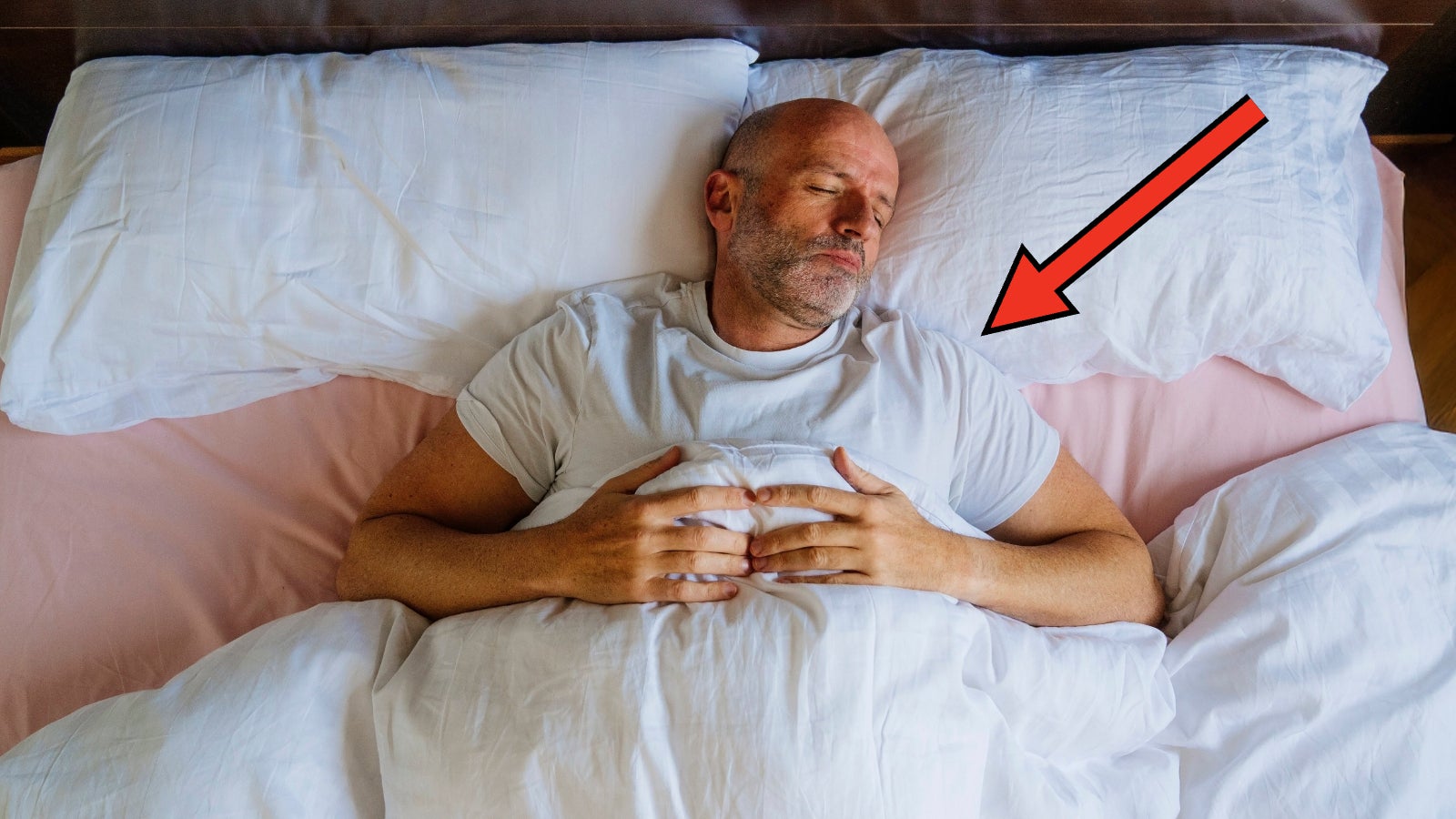
When you wake up in the middle of the night, do you find that you’re sleeping on your stomach or your side? Or do you consistently wind up on your back with the sole of one foot tucked against the calf of your other leg?

If so, you sleep like a flamingo. And if you’re on TikTok or Instagram, you might come across an influencer claiming this sleep position signals you’re stressed out or carry pain in your hips.

While this sleep position isn’t inherently dangerous – and, in fact, may be most comfortable for your body – it may suggest you need some extra support in certain cases, said Laura Nolan, a psychotherapist who specialises in somatic therapy. Here’s what to know.

Why do people end up in the “flamingo position”?

Nolan said she most commonly sees people sleeping this way when they have hypermobility, a condition in which joints stretch beyond their typical range of motion. Many people with joint hypermobility syndrome experience loose joints, joint instability and chronic pain.

“Hypermobility is linked to neurodivergence and many of the neurodivergent adults I work with report sleeping in more unconventional ways, including in the flamingo posture as well as with clenched fists or T. rex hands,” she said.

Sleeping in the flamingo position may be a habit acquired through experience and repetition. Or perhaps you wind up in this position because of chronic pain or a physical injury, Nolan added.

It’s also possible that consistently sleeping in this position – which could be unstable for some – could further strain your joints or even result in muscle stiffness, she explained. “Our bodies are complex,” she noted.

The flamingo position doesn’t immediately mean you are hurting your joints

The flamingo position isn’t an automatic red flag. Nolan said it’s entirely possible that this position is simply a cosy way for you to sleep. “It can be normal and healthy to sleep in the flamingo position,” she explained.

Jade Wu, a board-certified sleep psychologist, similarly said we naturally sleep in positions that are most comfortable to us. “Often being in this position simply shows that someone feels most comfortable doing it,” she added.

In fact, if you’re on your side with a leg up – a variation of side sleeping – the flamingo position may lower your risk of sleep apnoea and other breathing problems, Wu noted.

As a somatic psychotherapist, Nolan is more curious about what feels good about sleeping in this position rather than assuming you have “stuck stress” in the body or that something is wrong.

How to find a comfortable (and safe) sleeping position

Nolan encourages people to have a relaxed, easeful approach to sleeping. “Having too much scrutiny over how you sleep, including by thinking you are sleeping wrong or engaging in sleep perfectionism, will likely worsen sleep quality for those with existing issues,” she said.

Unless an orthopaedic health care provider or another physician has advised you to stop sleeping like a flamingo to avoid putting pressure on certain joints, there’s no need to stop, according to Wu.

Rather than forcing or training yourself to sleep in certain positions, get creative about how you can support your body while you snooze, Nolan advised.

For example, if you tend to sleep like a flamingo, consider adding a pillow underneath your knees. If you’re more of a T. rex sleeper, consider holding something in your hands, like a stuffed animal or pillow. “Be creative,” Nolan said.

If you feel stressed at bedtime, carve out some time to unwind – by practicing yoga, mindfulness or deep breathing – after dinner. Another technique Nolan recommends is progressive muscle relaxation, which involves tensing then relaxing various muscle groups. As you move between body parts, notice how each one feels.

“Remind yourself that stress is not all bad and we have many easy and quick ways of completing the stress response,” Nolan said.

Share Button

Nick Reiner Pleads Not Guilty In Stabbing Deaths Of Parents Rob And Michele

Nick Reiner pleaded not guilty to the killings of his parents, Hollywood director Rob Reiner and producer Michele Singer Reiner, in a Los Angeles court Monday.

The 32-year-old’s plea to charges of two counts of first-degree murder, with the special circumstance of multiple murders, was entered by his public defender, Kimberly Greene.

The charges carry a maximum sentence of life without possibility of parole or the death penalty.

Nick Reiner is seen at a movie premiere in September of last year.

via Associated Press

A not-guilty plea is common for criminal defendants at this stage of the case, as The Associated Press reported.

He had been set to enter a plea last month in the December stabbings but his defense attorney withdrew from the case during his last court hearing. Nick Reiner, who has since been represented by a public defender, waived his right to a speedy arraignment.

He is being held without bail.

Nick Reiner is the third of Rob Reiner’s four children. He's seen here, right, with his parents and siblings Jake and Romy in 2014.
Nick Reiner is the third of Rob Reiner’s four children. He’s seen here, right, with his parents and siblings Jake and Romy in 2014.

via Associated Press

Nick Reiner’s parents were found stabbed to death in their Los Angeles home on December 14. He was taken into custody hours later without incident, authorities said at the time.

Nick Reiner, who is the third of Rob Reiner’s four children, has a history of substance use. Authorities have not said anything about possible motives.

Share Button

Peter Mandelson Arrested Over Misconduct In Public Office Claims

Lord Peter Mandelson has been arrested on suspicion of misconduct in public office.

The former Labour minister and US ambassador has been accused of passing on market sensitive information to paedophile financier Jeffrey Epstein when he was business secretary in the wake of the global financial crash.

Two of his properties have been searched by police. Mandelson denies any wrongdoing.

A Metropolitan Police spokesperson said: “Officers have arrested a 72-year-old man on suspicion of misconduct in public office.

“He was arrested at an address in Camden on Monday, February 23 and has been taken to a London police station for interview.

“This follows search warrants at two addresses in the Wiltshire and Camden areas.”

Footage shown by broadcasters shows a plain clothed police officer leading Lord Mandelson out of a house.

Lord Mandelson then gets into the left rear seat of a waiting unmarked Ford Focus police car.

Mandelson was sacked as the UK’s ambassador to Washington last September, just seven months after being appointed by Keir Starmer, after more details emerged about his links to Epstein.

The fresh allegations about his conduct followed the release of millions of documents about Epstein by the US Department of Justice last month.

Earlier this month, the scandal led to the resignation of No.10 chief of staff Morgan McSweeney, who said he was taking responsibility for advising the PM to give Mandelson the plum diplomatic role.

Mandelson also resigned his seat in the House of Lords, although he still retains his title.

His arrest comes just days after Andrew Mountbatten-Windsor, another former associate of Epstein, was also arrested over allegations he committed misconduct in a public office when he was a UK trade envoy.

Share Button

My Senior Dog Couldn’t Walk Anymore. Before She Died, She Led Me To My Husband.

“JUST BRING BACK MY MAYAAAAAAAA,” I sobbed into the phone to my then-boyfriend of two years, Tom.

He had just left our East London apartment for a two-hour journey to the specialty vet hospital, where our 13-year-old paralysed chiweenie waited to be picked up. Housebound with Covid, I waited impatiently for him to return with the love of my life.

Tom knew that Maya had always been my soulmate. She had been at my side since I was 19 and going to college in Greenwich Village. She gently snorted in my bag as I snuck past security into my film class, where a treat from my professor awaited her. Bouncy and bright, Maya romped through the city with me, often drawing adoration from passersby for her cuteness.

We were inseparable. I would wake to the surge of traffic or the rumble of street construction below, Maya nuzzled into my dark hair. Up we went to the coffee shop’s takeout window, where, surprise, surprise, more treats were ready for her taking. On the subway, to friends’ houses, on road trips across state lines, and on flights home to sunny, smoggy Los Angeles, Maya came along every step of the way.

During Hurricane Sandy, it was Maya and me against the world. No power, no running water. Maya and I traipsed along the Westside Highway at twilight, a Blessed Virgin Mary candle ablaze as a torch, walking past what felt like a post-apocalyptic downtown.

Maya even moved across the pond with me to London when I turned 30 – a reset after a five-year relationship abruptly ended.

She first moved in with my mum, who FaceTimed me at least four times a day while I spent the longest three months of my life waiting for her to arrive.

When she finally did, I felt whole, like I could exhale and lean into my new London chapter.

A few months later, Maya, almost 12, lost mobility in her back legs. I placed her in a leather duffel bag (unzipped, of course), threw in some blankets and rushed into the November night to the same specialty vet hospital, which would become our refuge for the next three years.

Still in my yoga pants and sweatshirt from that afternoon, the only thing I could think about was getting Maya better. I kept reassuring her, “It’s OK, it’s going to be OK,” even though I was ultimately reassuring myself. Stroking her soft face and trying to keep the tears back, I knew our lives would never be the same.

“Intervertebral disc disease,” the neurologist said. “She needs a spinal fusion immediately.” With only a 50% chance of regaining movement in her hind legs, I began to prepare for whatever came next.

Maya glowed in her new neon pink set of wheels. She zipped along the Hackney Canals with even more flair than before, drawing even more smiles in her new form than she had on four legs.

It was during this period that I met Tom. We both swiped right, and I planned for him to meet Maya on our third date. By then, I had accumulated a handful of dog sitters for her. While she could be home alone for up to four hours, for special nights out, I needed backup.

Maya was still figuring out her new self and was scooting all over the apartment in her white puffy diapers. As soon as I brought Tom up to meet her, Maya had an accident all over a floor pillow. Embarrassed, I began to apologise.

“It is not a bother,” he laughed as he picked her up. “Come on, you. Let’s get you cleaned up,” he cooed as he reached for the kitchen roll.

It was at that moment that I knew Tom was here to stay. During lockdown, he would drive from the other side of London and spend the entire weekend with us, giving Maya baths, making a duvet fort for her so we could watch The Twilight Zone, and going for long walks with Maya rolling beside us. He would even adorn her with origami crowns. My plus-one became a plus-two.

Tom and Maya in our yard in London, December 2020.

Photo Courtesy Of Jordan Ashley

Tom and Maya in our yard in London, December 2020.

On our first family holiday in summer 2020, we rented a cottage in the Cotswolds, where Maya rolled in green fields sprinkled with cows grazing. When she grew tired and needed a rest, Tom would scoop her up in his arms, like a bride being carried over the threshold, and blow on her face to cool her down.

When the three of us finally moved in together, our priority was securing a ground-floor apartment so Maya could come and go with ease. Our entire existence centered on Maya. It was never just Tom and me, but rather the three of us, moving as an imperfect unit into this new, cohesive life together.

As our love deepened, Maya’s age began to catch up with her. Despite being the ultimate roller girl, more health issues began to pile on: hyperparathyroidism, myoclonic seizures, pancreatitis and blindness. During this time, she would be up all night, distressed, howling and crying.

We took turns, surviving on three hours of sleep, our collective mental health wearing down, yet we persevered. On these late nights, I would turn on sound bath playlists, sing to her and do everything in my power to keep her settled on the futon we had set up in the living room. We would not give up on our Maya.

In January 2024, we celebrated her 16th birthday together. Our only measure of time was her comfort. As long as she was still eating, still bright-eyed and not in pain, we kept going. She had traded in her wheels for a stroller, and we pushed her everywhere, her head poking out to take in the breeze.

Maya was on a cocktail of medication, and our lives revolved around the rituals of caring for her – giving her syringes of medicine, hiding pills in peanut butter, cooking for her. She was a metronome, and our lives played to her rhythm.

Maya flew home with me that spring. By now, she could not be left alone, so it was easier to travel with her to ensure round-the-clock care. During this time, I felt Maya’s clock was running out.

Maya's 15th birthday party in London, February 2024.

Photo Courtesy Of Jordan Ashley

Maya’s 15th birthday party in London, February 2024.

I knew an engagement was just around the corner. I had found the ring in his sock drawer, and I kept saying how important it was to me to have Maya at our wedding. She would be the bouquet, as I dreamed of carrying her down the aisle.

Tom would not be marrying just me; he would also be making a vow to her.

Within 48 hours of returning to the UK, Maya was rushed to the emergency vet because she could no longer breathe on her own. We began Googling videos on how to build an oxygen chamber at home from a plastic storage container. Tom found all the parts we would need and was ready to pick up the oxygen tank when the call came. It was time.

We sat with her on our laps for five hours, crying as we looked through all the photos of our many adventures over the years: Maya gliding in Williamsburg, a soggy Tom holding an even soggier Maya after a lake dip, Maya in her skulls and crossbones sweater, us singing happy birthday to her. And then my worst fear finally happened. Her spirit had grown too big for her now very tired body.

I was devastated. I don’t remember getting into the car or Tom driving us home. He held my hand and, through his own tears, led me into our now very empty apartment. Even though he was tucking me into bed and telling me to try to rest, I felt truly alone for the first time in 16-and-a-half years.

The engagement came six weeks later, while I was waiting for a taxi to Heathrow to fly back to New York. It would be the first time I would be in the city without her. Maya’s vet gave me an envelope of bluebells to plant in her honour. On that solo trip back to NYC, I walked down Sixth Avenue, turned left onto 13th Street, and stood in front of the apartment where Maya and I first became inseparable.

Maya's representation at the author's wedding in the Cotswolds, July 2025.

Photo Courtesy Of Jordan Ashley

Maya’s representation at the author’s wedding in the Cotswolds, July 2025.

Maya had always been my constant, my heartbeat outside my body. Losing her was like losing a piece of myself, the glue that held my world together. Kneeling, I spread some dirt beneath a tree and scattered the seeds.

Across the ocean, I knew my person was waiting for me. His love for Maya over those four years was one of the greatest acts of devotion I had ever witnessed. Our love for her and the shared grief of her absence would now be a journey Tom and I would navigate – together.

Jordan Ashley, Ph.D., is a writer and the founder and executive director of Souljourn Yoga Foundation, a nonprofit creating transformational yoga retreats that support girls’ education worldwide. Learn more at souljournyoga.com.

Do you have a compelling personal story you’d like to see published on HuffPost? Find out what we’re looking for here and send us a pitch at pitch@huffpost.com.

Share Button

‘Bare Beating’ Might Be The Most Irritating Public Habit Right Now

Have you ever been trapped on a train carriage with someone watching TikToks from their phone without headphones? Or seated on a plane by a passenger blasting music? Or even stuck in a doctor’s office waiting room as a fellow patient broadcasts radio commentary on a sports stream?

If so, you’ve experienced what some call “bare beating”. This term refers to the act of playing music, videos, podcasts or other audio out loud in public without headphones – essentially treating shared space like a personal living room.

“This. Is. Rude. There just is no other way to slice it,” said Nick Leighton, an etiquette expert and host of the Were You Raised by Wolves? podcast.

“You’re imposing your choices on a captive audience. Nobody decided they wanted to listen to that YouTube video, and yet here we are all having to endure it without our consent.”

Jodi R.R. Smith, the president of Mannersmith Etiquette Consulting, agreed, emphasising that bare beating is “unequivocally rude”.

“The presumption that everyone wants to listen to what you are listening to is simply unacceptable,” she said. “This is doubly so if others are unable to move away from you – at work, in an elevator, on public transportation, etc.”

In those tight quarters, what might even seem like low or moderate volume to you can feel disruptive to someone sitting inches away.

“Whether the distraction is visual, or noise related, when someone is intruding on another person’s public space, it’s not easy to look away and ignore,” said Diane Gottsman, the author of Modern Etiquette for a Better Life and founder of The Protocol School of Texas.

“Think of it this way: if a child was doing it in a public space, tight quarters or a restaurant, others would be annoyed and blame the parents for not adjusting the behaviour. When an adult does the same thing, it’s important for them to self adjust and be respectful of others in close proximity.”

Children might get grace for this behaviour because they aren’t as aware of social norms, but for adults who should know better, it’s simply rude. And depending on where you are, it might even be subject to legal penalties.

“Some people just aren’t mindful of how their behaviour affects others and simply have no idea how far phone speakers can carry sound,” Leighton said. “Spoiler alert: It’s way farther than you think.”

Are you guilty of "bare beating" in public? Here's what etiquette experts think of the "unequivocally rude" behavior.

AleksandarGeorgiev via Getty Images

Are you guilty of “bare beating” in public? Here’s what etiquette experts think of the “unequivocally rude” behavior.

Indeed, “bare beaters” don’t necessarily have negative intent and are sometimes blissfully unaware.

“The reason people are doing this is because they are trying to pass the time or may not even realise their volume is offensive,” Gottsman said. “But when you’re sitting inches away from another person, even lower noises are amplified.”

There may even sometimes be understandable reasons for the behaviour. Someone with hearing difficulties may not realise how loud their device is, or they may be experiencing technical issues. Still, Gottsman said, unless it’s an emergency, the courteous move is to wait to listen to the audio when you’re in private.

“Of course, using earbuds and utilising captions is a reasonable option,” she added.

And while bare beating feels like a modern behaviour, it’s not entirely new.

“Forcing strangers to become your unwilling audience has been an issue that’s plagued humanity since the dawn of time,” Leighton said.

Smith pointed out that methods and norms have shifted over the decades.

“Back in the ’80s, being a DJ to those in your surrounding area was actually considered the norm,” she said.

“The person with the giant boombox would play it so that everyone nearby could enjoy the sound,” she said.

“But times change and nearly everyone has the ability to listen to what they like almost anywhere – so long as they are wearing headphones or earbuds.”

For those who flout modern etiquette rules by bare beating, sometimes all it takes is a gentle nudge.

Smith recalled a recent experience at an airport gate where a man was loudly streaming a soccer game on his phone as it was time to board.

“After a few minutes, I turned and asked him what he was watching,” she said. “He excitedly told me his favourite team was playing. I told him that I was having a hard time hearing the boarding announcements and asked if he could use earbuds. He gave his head a quick shake and looked around sheepishly.

“He had not realised how loud his phone was or how many people were giving him ‘the look.’ He apologised to me and the others around him as he put in his earbuds.”

Still, Gottsman emphasised that deciding whether to speak up is a judgment call.

“Is it rude to intrude on other people‘s personal space? The answer is yes,” she said. “But understand that we cannot determine another person‘s reaction, and if you can ignore it for a very short subway ride, it’s probably best to do so.”

Regardless of whether you choose to confront someone over this behaviour, the important thing is to avoid bare beating yourself. Remember: Just because you can press play doesn’t mean everyone else signed up to listen.

Share Button

The Alzheimer’s Symptom You Might Not Expect – Or Worse, Blame Yourself For

Alzheimer’s is a horrible disease that has uniquely devastating effects on the people who have it and their loved ones.

Common symptoms include memory loss; struggling to plan, complete tasks or solve problems; feeling confused; experiencing new problems with speaking and writing; misplacing items; making poor judgment calls; social withdrawal; and more.

While those symptoms are ones we often hear about, they aren’t the only ones. There’s a symptom that many caregivers aren’t aware of and think is a result of “bad” caregiving: agitation.

“It’s critical to first appreciate that agitation is a symptom of brain changes caused by Alzheimer’s disease, not poor caregiving,” said Dr. Richard Stefanacci, the medical director of Inspira LIFE, a senior living program.

“The brain damage from Alzheimer’s makes people prone to agitation regardless of how loving caregivers are,” said Stefanacci, who also specialises in older populations and Alzheimer’s.

According to information the Alliance of Aging Research sent to HuffPost, “agitation” in this sense can present itself in a variety of ways: pacing, trying to leave, angry outbursts, profanity, hitting, mood swings, throwing items and more.

Caregivers may blame themselves, AAR continued, thinking it’s a result of their burnout, introducing a new routine or not being patient enough.

Dr. Nikhil Palekar, the director of the Stony Brook Center of Excellence for Alzheimer’s Disease at Stony Brook Medicine, said there’s a stigma when it comes to this specific symptom.

“Caregivers often feel they might be doing something wrong, which is causing their loved one with Alzheimer’s to react in an uncooperative, hostile or agitated manner, without realizing that agitation in Alzheimer’s is very common, with rates ranging from 56% in early stages to 68% in the moderate-severe stage of the disease,” he said.

How Alzheimer’s can cause agitation symptoms

Like with other Alzheimer’s symptoms, it all comes down to the brain.

“Alzheimer’s disease is the result of brain damage to areas of the brain that control emotions, decision-making and behavioral responses,” Stefanacci said.

“This neurological damage explains why people with Alzheimer’s may react strongly to situations that wouldn’t have bothered them before the disease progressed to this point.”

More specifically, we’re looking at neurotransmitters. “Alzheimer’s disease results in dysregulation and a decrease in three neurotransmitters (chemical messengers) in the brain – serotonin, norepinephrine and dopamine – resulting in symptoms of agitation,” Palekar said. Keeping in mind that those neurotransmitters help with mood, motivation, energy, anxiety and more, this makes sense.

We also have to consider environmental factors. For example, the holiday season – or other high-commotion events – can exacerbate agitation and its causes.

“Large gatherings with unfamiliar faces, disrupted routines, unusual foods and changes to previously familiar environments can cause agitation in someone with Alzheimer’s, especially [in] later stages of the disease,” Stefanacci continued.

“Most critical is to make adjustments and accommodations to reduce the stress, such as maintaining routine and familiarity.”

There is hope for Alzheimer’s agitation

Whether you experience agitation from Alzheimer’s or love someone who does, know that hope is not lost. Below, doctors share tips and other helpful information that can help you manage this symptom together:

Create and maintain routines

Consistent daily schedules with meals, activities and bedtime are key, according to Stefanacci. When you do have to prepare your loved one for a change, he encourages doing it ahead of time if/when you can and trying to maintain other routines.

Avoid arguing when possible

If the person with Alzheimer’s has a harmless belief, Stefanacci recommended not arguing with them about it. Rather, he said to focus on the emotion behind what they’re saying and remember that you can’t reason with an Alzheimer’s-damaged brain.

Use calming approaches

While difficult at times, staying calm and helping the person with Alzheimer’s stay calm is important. Speak in a calm, reassuring voice, play familiar music they enjoy and reduce confusing noise, Stefanacci said.

Know that there are helpful treatments available

It’s easy to feel hopeless when someone has Alzheimer’s, and to think that small interventions won’t make a difference. That’s understandable – and thankfully not true.

“This symptom can be effectively treated with behavioural interventions as well as medication, which is FDA-approved for the treatment of agitation in Alzheimer’s disease,” Palekar said.

To get to that point, he recommended discussing any agitation-like symptoms with the patient’s medical provider.

Similar to the tips above, Palekar listed some specific, non-pharmacological interventions that can decrease agitation, too:

  • Maintaining a daily routine and structure

  • Reducing noise and clutter

  • Gentle touching

  • Soothing music

  • Reading

  • Walking (ideally outside in the sunlight)

  • Staying busy with distractions, like snacks, objects or fun activities

  • Avoiding stimulants, such as caffeine, late in the day.

Take care of yourself as a caregiver

Being a caregiver is hard work, to understate it. Stefanacci urges these individuals to seek support from other caregivers, support groups and counselling. He also mentioned giving yourself permission to simplify or skip holiday traditions that are simply too overwhelming.

In short, it’s “normal” for someone with Alzheimer’s to show agitation – and that’s on Alzheimer’s, not anything the caregiver has done.

As someone with Alzheimer’s or their loved one, know that you are not alone, and that people are available and want to support you.

Share Button

Here’s What You Should Know Before Having Sex In Front Of Your Dog

Most dog owners would love to spend every minute of every day with their pups. Alas, life gets in the way of that for many of us, which means trying to maximise whatever time we have together.

But what about when we want to get frisky with another human? Should we let our four-legged friends stay in the room? Or is it better to separate ourselves from our dogs before we start stripping down?

That’s what we – Raj Punjabi and Noah Michelson, the co-hosts of HuffPost’s “Am I Doing It Wrong?” podcast – aimed to find out when we recently chatted with Dr Emily Levine, a board-certified veterinary behaviourist and the owner of Animal Behavior Clinic of New Jersey.

“When [my boyfriend] Benji and I have sex, we don’t let [our dog] Jumi on the bed, but he’s in the bedroom, and I feel a little bit weird about it,” Michelson admitted. “I feel like he doesn’t exactly know what we’re doing. What do you think about this from a behaviour standpoint?”

Levine said this is a common question she often gets from pet owners.

“For most dogs, it just doesn’t matter,” she said. “If they’re not bothered by it, it doesn’t matter at all. Dogs don’t have this hang-up like people do about things. They sort of live in the moment.”

However, there are some behaviours that signal a dog should not be present

“Where we shouldn’t have the dog in a room when people are having sex is when the dog tries to intervene,” Levine told us.

“There are lots of dogs who have a little bit of FOMO … like when people are like hugging, the dog wants to join in and so the dog is just like, in a happy way, ‘Hey! What’s going on here?’ and that just ruins the mood.”

Other pups might be uncomfortable for a more worrisome reason.

“There are also dogs who will get very distressed because of the sounds that are being made [during sex],” she said. “They may interpret some of those sounds as aggression [happening to] you, and then it’s not fair to the dog to have them in the room for that.”

Levine advised giving our furry friends a treat or a toy – either in the room or in another room – to keep them occupied until we’re done getting busy.

We also tackled a question from a listener about a similar – yet very different – scenario.

“We recently adopted a new dog and he loves to lick our older dog’s penis,” the listener said. “What’s going on there? And is there any downside to this or should I just let them go at it?”

“There are different reasons a dog may lick another dog’s penis,” Levine said. “It may be that there are just so many good odours in [that area] that they’re attracted to that.”

She also noted that they might be enjoying a taste that is present on or around the dog’s genitals.

“We want to make sure the dog doesn’t have like some sort of yeast infection or something in there that’s making it more attractive to the other dog,” she said.

What about the dog who is letting his friend lick him? “If he’s allowing this, he probably just thinks it feels good, or it does feel good,” she explained.

Levine told us she wouldn’t be worried about the behaviour if it’s happening “here and there”, but if it’s ongoing, it could cause problems.

“The concern about it going on for too long or too frequently is it’s possibly setting up for an infection in the penis that’s being licked.”

We also chatted with Levine about how to address unwanted barking, why some dogs get more aggressive as they get older, what to know before you let dogs and kids play together and much more.

Listen to the full episode above or wherever you get your podcasts.

Have a question or need some help with something you’ve been doing wrong? Email us at AmIDoingItWrong@HuffPost.com, and we might investigate the topic in an upcoming episode.

Share Button