Cardi B And Offset Announce Birth Of Second Child With Beautiful Family Photo

Cardi B announced the birth of her second child with husband Offset Monday in a sweet Instagram post showing the couple gazing at their new baby.

She captioned the photo simply, “9/4/21” ― presumably confirming the newborn arrived on 4 September ― and included dinosaur, blue heart and teddy bear emojis.

The WAP rapper and Migos member already have a daughter together, three-year-old Culture. Offset also has three older children from previous relationships.

Cardi B publicly revealed her pregnancy during the 2021 BET Awards in June.

During Migos’ Type S**t performance, she joined them onstage wearing a custom bodysuit with a mesh cutout showing her pregnancy bump.

The next day, she thanked fans for their “congrats and well wishes” in an Instagram post featuring an affectionate photo of herself and Offset.

“We listened to each other, communicated, prayed and then God blessed us and our family with another little blessing,” she wrote. “Our home feels so blissful and very busy… but we are ready and so happy!!”

Share Button

Is It Covid Or A Back-To-School Bug? Here’s When To Keep Your Kids Off

The start of the school term often brings snot, coughs and dodgy tummies. But the last 18 months has taught us all to be hyper-vigilant about health, so we’re looking at back-to-school bugs a little differently.

Previously, we may have sent children into the classroom with a mild sniffle, but now, with Covid still a factor, parents may be wondering whether to keep kids home. We’ve also been warned that cases of norovirus are likely to spike this September, just to add fuel to the fire.

But why do kids get poorly at the start of term anyway? And when they’ve already missed so much school last year, when’s the correct time to keep them off? Dr Sameer Sanghvi, who’s clinical technology lead at Lloyds Pharmacy Online Doctor, answered our questions.

Why do kids get ill at the start of the school term?

“Often children (and teachers) get ill at the start of term because they’re suddenly exposed to lots of people, after a summer often spent mainly with a small number of family and friends,” says Dr Sanghvi.

“The more people you mix with, the more likely you are to catch and spread germs off one another. And we all know children, even after the last year, aren’t quite as good as adults at good hygiene practices like washing their hands thoroughly, covering their faces when they cough and blowing their noses etc.”

The start of term can also be very tiring, especially for young children, who aren’t as used to being sat in a classroom all day.

“When we get tired our immune systems sometimes find it harder to fight off bugs. So this can also mean kids (and anyone who works in a school) might be more susceptible to picking something up,” Dr Sanghvi explains.

“Coughs, colds and norovirus can all be very contagious, particularly in an environment like a school, where you have lots of people in one room for long periods of time.”

What are the most common symptoms of Covid in kids?

By now, we all know the importance of self-isolating if you’ve got Covid. But kids get a lot of sniffles at school, so how can you tell the difference?

“Like with adults, the main symptoms of Covid-19 in children are still a high temperature, a new, continuous cough and a loss or change of taste or smell,” says Dr Sanghvi.

“With the start of term it’s likely lots of kids will get a cough, cold or runny nose. But if you think your child has Covid-19 symptoms, you should book them a test. That’s the easiest way to confirm if it is or isn’t Covid-19.”

If it’s not Covid, is it okay to go to school?

“It can be hard knowing when to keep a child off school. Sometimes it’s okay to send them in with a mild illness, but other times it better to keep them at home,” says Dr Sanghvi.

“If your child has Covid-19 symptoms, you should get them a test and keep them off school unless they get a negative result.

“Generally speaking, if your child has a fever, they should be off school until it’s gone (unless it’s due to Covid-19, in which case they’ll need to self-isolate and follow the advice from Test and Trace).”

As a rule, if your child has been sick or has diarrhoea, they should be off school for 48 hours from the last time they vomited or had diarrhoea, she adds.

“The NHS has lots of advice for different conditions like cold sores, chicken pox, impetigo and many others, and when to keep your kids off school,” says Dr Sanghvi. “So it’s always best checking their website, and don’t forget if you’re worried about your child, you can always ring up your GP and speak to them.”

Share Button

Perrie Edwards And Alex Oxlade-Chamberlain Introduce Newborn Son To The World

Two weeks after the birth, the singer shared a new snap of her son, and told fans his name, which you might notice is not entirely dissimilar to his father’s.

She wrote: “2 weeks of loving you. I’ve never felt love like this before! Axel Oxlade-Chamberlain.” 

Perrie first announced she was expecting a child back in May, posting a close-up of her pregnancy bump on Instagram with the message: “So happy to be on this wild journey with my soulmate… We can’t wait to meet you baby Ox!”

During their pregnancies, Perrie and her bandmate Leigh-Anne have been hard at work, promoting new Little Mix music and filming music videos for Confetti, Heartbreak Anthem and Kiss My (Uh Oh), as well as their most recent offering Love (Sweet Love), which serves as the lead single from their upcoming greatest hits album.

SOPA Images via Getty Images

Alex Oxlade-Chamberlain and Perrie Edwards at the 2019 Brit Awards

Back in May, the two singers recalled the emotional moment that they each found out the other was pregnant.

We were on a work Zoom and we were chatting about things that were coming up in our schedule because in Little Mix we are blocked out two years in advance,” Perrie explained. “I was thinking, ‘I won’t be able to do [certain things months down the line]’.

“I messaged my manager and she called me and said, ‘You’re pregnant’. I was like, ’How do you know?’, and she said, ‘Because I am pregnant’. Then she said, ‘Can I add someone to the call?’

Perrie continued: “I just heard this voice that said, ‘Perrie! You too!’ And then we just cried our eyes out. We couldn’t believe it. What timing! It wasn’t planned.”

Share Button

Yup, End-Of-Summer Tantrum Season Is Here, And It’s No Fun

For so many kids, summer really is bliss. There’s the initial joy of school being over that soon gives way to sunshine-filled days, later bedtimes, and generally loosened-up routines.

But as summer slips away, things tend to go south. Kids who just a month or two ago couldn’t believe how lucky they were to spend an afternoon at the beach turn into tired, entitled monsters, freaking out when you ask them to do anything, or yelling about seemingly little stuff.

And depending on when school starts where you live, you’re likely deep into end-of-summer-slash-start-of-school tantrum season, when kids seem to collectively lose their minds.

So why does it happen? And what can you do about it? Here’s what parents need to know about navigating this short (but intense!) stretch of time.

Spending time out of routines eventually catches up with kids.

Yes, kids love how unstructured and fun summer is. But being out of their routines for several months eventually catches up to them, especially if they’ve spent week after week soaking up lots of sun, staying up late and not necessarily eating all that well.

“We know that kids thrive when there is structure in their routines, and not having that is chaotic,” said Dr. Candice Jones, an American Academy of Pediatrics spokesperson and author of High Five Discipline: Positive Parenting for Happy, Healthy, Well-Behaved Kids.

Jones, who is a mum herself, certainly doesn’t think that kids and families have to stick to a strict schedule during the summer. But it can help to just remind yourself that your kid isn’t melting down because they’re trying to push your buttons; they’re melting down because the happy chaos of summer may finally be catching up to them.

Day-to-day, make sure you’re doing what you can to prevent tantrums by “managing their environment” and making sure your kids are getting enough food and that they’re relatively well-rested, Jones said. Sometimes on long, hot, end-of-summer days simply making sure a kiddo gets a nap and a few good snacks can do wonders for their overall behaviour.

Reminding kids of parts of school that they really like can help ease end-of-summer tantrums. 

Reminding kids of parts of school that they really like can help ease end-of-summer tantrums. 

Remember: transitions are tough, especially this year.

As you navigate the summer/fall back-to-school tantrum season, it’s also helpful to remind yourself that transitions are difficult, especially when many kids are heading back to the classroom full time for the first time in 18 months.

“It’s hard for children and parents to go through,” Jones said.

If your child’s school hasn’t started yet, it can be helpful to reinstate some routines beforehand and practice what it’s like to all get out the door in the morning, she urged. Ideally, about two weeks or so before they head back, you’d start to institute a more regular bedtime and wake time, for example. Block off time for them to read, or for you to read together, so they get a bit of practice learning again if they’ve taken a bit of a break.

Then just try to be gentle and patient with yourself and with them, Jones urged.

Try this ‘active ignoring’ technique.

Tantrums may be developmentally appropriate for younger kids, but that doesn’t necessarily help you stay calm in the moment. So Jones is a big fan of taking a few moments to step away from a toddler who is melting down, provided it’s safe to do so.

“One of the strategies that works is the removal of your attention. Don’t argue with the child. Don’t beg and plead. Just kind of calm yourself down, and remove your attention, and once your child starts to settle … then you can acknowledge their feelings by saying something like, ‘What’s going on? What’s wrong?’” she said. (Some kids really benefit from someone holding them close while they’re in the middle of a tantrum, Jones added, and you can absolutely still give them that kind of close physical support while not giving into their demands.)

The Child Mind Institute calls this strategy “active ignoring,” and notes that it’s very important to give positive attention as soon as the behaviour you’re looking for starts.

Give older kids plenty of opportunities to talk about their feelings.

There’s ample evidence that children of all ages had a tough time emotionally over the past 18-plus months, so now more than ever it’s important for parents to give their children time and space to open up about what they’re experiencing as the summer winds down.

Also, don’t be surprised if older school-age children suddenly seem to be having meltdowns or regressing, which has been happening throughout the pandemic.

With kids who aren’t necessarily big sharers, it can help to back into the conversation a bit by asking how they think their friends are coping with this current moment of transition, for example, or by telling them a bit about how you’re feeling right now. (Here are some other creative ways real parents have found to get a sense of their children’s pandemic-related feelings, which may work for the end-of-summer/back-to-school stretch.)

Don’t forget to get them excited about school as well, Jones said. Let them help you with back-to-school shopping, she suggested. Remind them of friends they’ll see or activities they love that they’ll get to do again.

“Check in, see how they’re doing, and talk to them,” Jones said. “Let them know you’re there for them.”

Share Button

Help, My Kid Is A ‘Whiteatarian’ Who Only Eats Beige Food

It was parents’ weekend at my daughter’s college, and we were treating her to dinner at an off-campus bistro. The waitress arrived, and she gave her order: “I’ll have the baked salmon with a side of sauteed spinach, please.”

I dropped my menu, my jaw and the mistaken notion that I knew what this kid had been up to since we’d dropped her off a couple of months ago. I had spent most of the past 18 years trying to nudge her – sometimes gently, sometimes with growing desperation º into eating something, anything, other than noodles with butter and salt, half a bagel with plain cream cheese or – her true love –Rold Gold Tiny Twist pretzels.

The idea of fish had always made her shudder. The mere mention of “green things” like spinach could lead to tears. So what was up with her dinner order tonight? She shrugged. “They serve salmon in the dining hall sometimes, and my friends all eat it. Everybody at school likes spinach, too.”

I feigned disinterest and changed the subject, but inside I was doing the parental equivalent of a victory dance. I had relinquished my title as mother of the world’s most adamant whiteatarian, all for the low, low cost of tuition at a liberal arts college that was 1,000 miles away from home.

Your kid is hardwired to act like this

Before I do any more gloating about the sight of my beloved progeny actually putting spinach in her mouth, let’s take a step back to those early years, when I was driven to frustration by a girl who refused anything that wasn’t white. What made her act that way, anyhow?

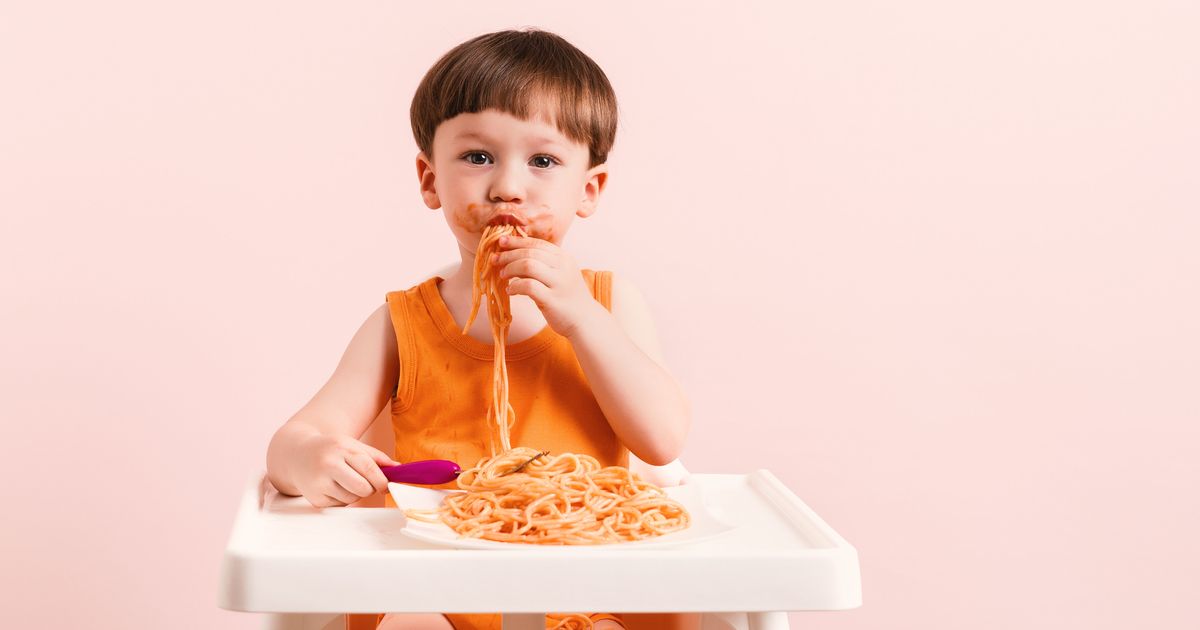
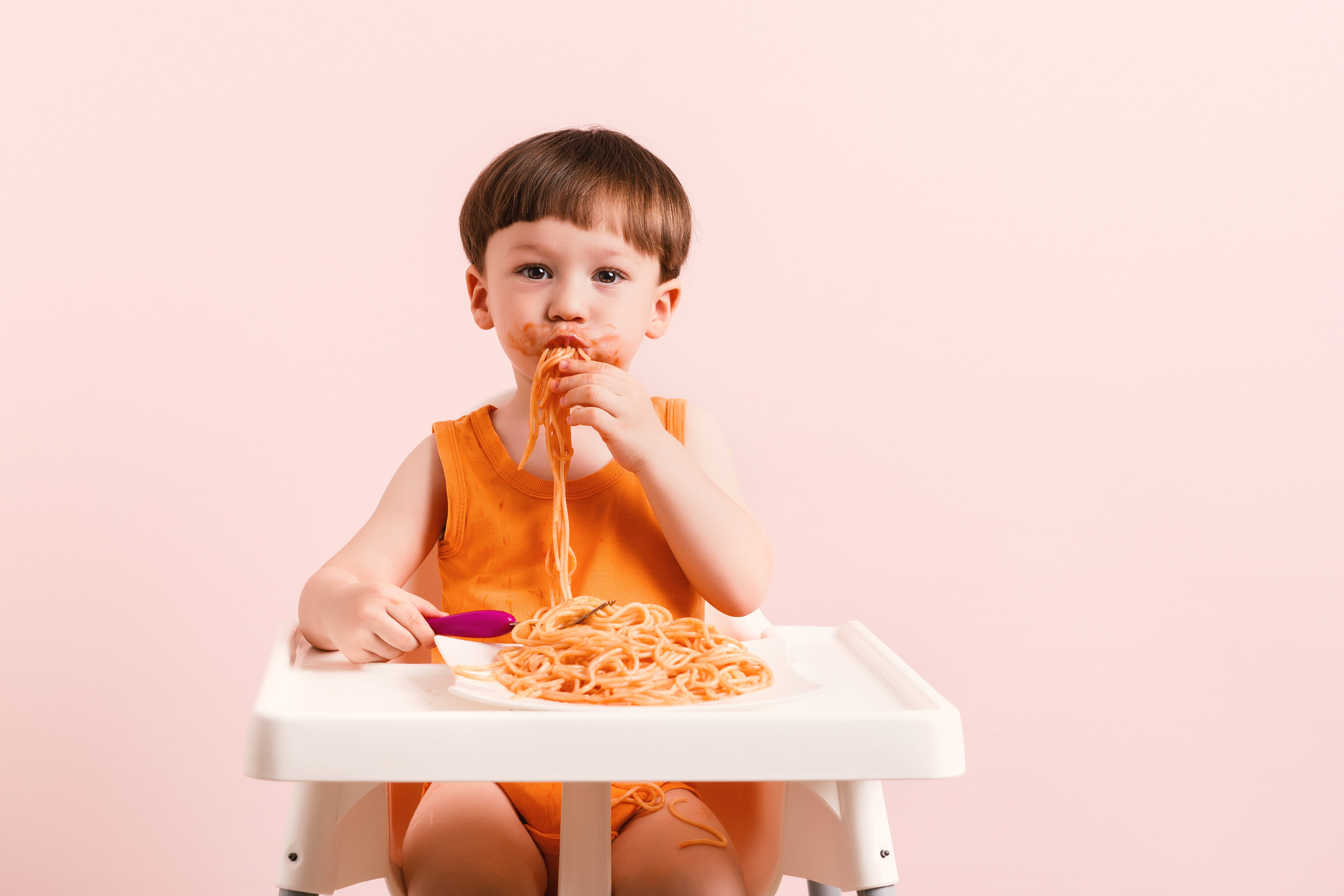
Well, mums and dads, you already know that children are annoying for lots of reasons, including a tendency toward tantrums, a love of pre-dawn wake-up times and, of course, picky eating. Would it help if I told you that their eating preferences are pretty much hard-wired into their sweet-smelling little noggins?

Look familiar?

Look familiar?

The National Institutes of Health says infants have an “innate preference for sweet and salty tastes and tend to reject sour and bitter tastes.”

And, guess what, it gets worse. “After the age of one, vegetables begin to taste very bitter to children,” Alisha Grogan, a paediatric occupational therapist who specialises in picky eating and sensory processing, tells HuffPost.

“When humans had to forage in the wild, children’s sensitive taste buds prevented them from eating anything poisonous.”

Some kids remain loyal passengers of the S.S. Sweet And Salty even as they get older, often to the exclusion of any food that might actually provide, you know, some nourishment. A range of different studies have reported that, by the time they reach age 3, between 6% and 50% of kids are described as picky eaters by their parents.

And if you think they’re doing this just to piss you off, you’re right, at least when it comes to the younger set. “Toddlerhood is when many kids start to exert their autonomy and push boundaries with parents,” paediatrician Dina Kulik tells HuffPost. Not only do they get to remind you who’s boss, they also literally make themselves happy with each bland, beige bite. “Simple sugars are easy to eat, they taste good and they provide a quick dopamine hit, much like other stimulating drugs,” she says.

Can your kid live on beige food alone?

Is a diet of pasta and bread sustainable for health? Kulik said there are concerns. “The risk of iron deficiency, especially, is high on a very starchy diet,” she says. Even though many manufactured grain-based products are supplemented, she said, kids following the whiteatarian plan are often low in iron, vitamin D, calcium and B12.

Think this bagel with cream cheese looks plain enough? Think again – those sesame seeds could even be too much for a picky eater.

Think this bagel with cream cheese looks plain enough? Think again – those sesame seeds could even be too much for a picky eater.

In the short term, anyway, the nutritional prognosis is not totally dire. One study said that, while picky eaters did tend to have lower levels of zinc and iron, their overall macronutrient intakes were not severely reduced. And many of us know at least one adult who still lives on a mostly white diet and seems to survive, if not thrive.

“Many kids can survive on white carbs alone, as long as they’re eating enough of them,” Grogan says. “Carbs often are fortified with all sorts of vitamins and nutrition. However, depending on how limited a child’s diet is, they could have some nutritional deficiencies.”

The only thing you have to fear

In the comedy special John Mulaney & the Sack Lunch Bunch, a boy named Orson Hong sings an ode in which he declares that “a plain plate of noodles with a little bit of butter is the only thing I’ll eat.” His heartfelt song is more a lament than an homage, and it’s clear that his character is anxious and fearful about ingesting anything but this classic whiteatarian meal.

Fear is a big part of what’s going on, said Amanda Smith, a programme director at Walden Behavioral Care, and it’s important for both kids and parents to acknowledge that. “Some kids might be afraid of different textures, or they might fear that a food will make them choke or vomit,” she tells HuffPost. “It can be overwhelming, scary and hard, so it’s important for parents to try to understand that.”

“Short-order cooking and pressuring a child to eat during meals can lengthen the time a child is selective about what colour foods they’ll eat.”

– Alisha Grogan, paediatric occupational therapist

Keep in mind that once they’ve passed toddlerhood, this eating pattern is about them, not you. “If an older child is still eating only white foods, they aren’t trying to punish their parents or stress them out,” Grogan says. “Eating is hard for them. One way to help is to neutralise the topic, and to avoid labelling foods as good and bad or healthy and not healthy.”

Here’s what you can do

“I suggest not fighting or negotiating,” Kulik says. She suggested an attitude of: “Here’s the plate of food. If you want it, great.” Then, she advises, “If not, don’t start a battle. There is evidence kids need to try a food more than a dozen times to realise they like it. When you simply give in and offer the carbs, they don’t learn to try anything new, and the fear and pickiness persist.”

“Short-order cooking and pressuring a child to eat during meals can lengthen the time a child is selective about what colour foods they’ll eat,” Grogan adds.

In extreme cases, a child might have what’s known as Avoidant/Restrictive Food Intake Disorder or ARFID. The disorder, Kulik explains, is characterised by “very selective eating habits or disturbed feeding patterns.”

She cites estimates that anywhere between 5% and 14% of children in inpatient eating disorder programs, and up to 22% of children in outpatient programs, have the disorder. “It’s important to note that this is a true mental disorder, and the vast majority of kids who are whiteatarians don’t have it,” she says.

Don't forget about tan foods, the close cousin to white foods.

Don’t forget about tan foods, the close cousin to white foods.

“If you have concerns, start with a visit to your child’s medical provider,” Smith suggests. “They’ll be able to assess any medical factors that could be playing a role, and they can check your child’s growth progress, weight and vital signs, and then run some lab work.”

You’ll also want to pay attention to patterns that develop at mealtimes. “If kids are having emotional tantrums or breakdowns over new foods being near them or on their plate, or if they’re gagging or throwing up when new or other-colored foods are near them, then it could be something more serious,” Grogan says.

“If your child is limiting intake to fewer than 20 foods, or you’re noticing physical symptoms relating to their diet, consulting with a health practitioner is advised,” says Sarah Appleford, a registered clinical nutritionist with an interest in children’s health, including fussy eating and gut issues.

“It’s more than just a phase if they’re refusing food at most meals, exhibiting anxiety or stress, have undeveloped eating skills or sensitivities based on texture, colour, appearance, noise or smell at the table and away from the table. Physical symptoms can include slow growth, fatigue, pallor of the skin or complaints of tummy pain or gastrointestinal upset such as constipation.”

Look to the rainbow

Along with every other awful thing, this issue is on the rise, according to the experts. “We’re seeing a growing number of kids with anxiety disorders, and extreme fussy eating behaviour is often a component,” Appleford says. But there is some good news, she adds: “Most children will naturally grow out of fussy eating as they gain more skills and confidence around food.”

“Parents can find it to be very stressful to have a child who only eats white foods, because it’s difficult to go to parties or even pack a lunch,” Grogan says. “But kids — even the pickiest — can learn to eat a variety of different coloured foods.”

In the meantime, listen to the experts and try to cut yourself (and your child) a little bit of slack. You might also want to start saving for that liberal arts college experience that will liberate their taste buds and turn them into rainbowtarians, just a few long years from now.

Share Button

The 10 Best Embarrassing Dad Jokes, As Picked By The Nation

What makes a classic dad joke? Some might say one that’s fundamentally unfunny. But we have more appetite than you’d expect for the cringe.

Ahead of National Tell-A-Joke day on August 16, Moonpig has surveyed the nation on our true feelings about dad jokes – as well finding the ones that actually land. It turns out that dad jokes make a lot of us warm and fuzzy with nostalgia and some even manage to make us laugh, rather than groan.

Almost half (49%) of those surveyed said they find dad jokes funny – not so bad, then – although the older you are, the less likely you are to find your own dad funny. Surprisingly, 64% of Gen Z say their dad makes them laugh, compared to 36% of those over 55.

As to which city takes the dad joke crown, the fathers of Liverpool are funniest (or at least have the most appreciative audiences), followed by Cardiff and Birmingham in the top three. And when it comes to low tolerance, neither Norwich or Brighton has much time for dad jokes, calling them “annoying” or even “disgusting”.

Of course, we all know the obviousness of the punchline is what makes a dad gag iconic, nor does a good(/bad) pun go amiss, which may explain why so many old classics make the following list of the nation’s favourites.

1) What do you call a boomerang that doesn’t come back?

2) Why do Dads take an extra pair of socks when they go golfing?

In case they get a hole in one.

3) What’s the best time to go to the dentist?

Tooth-Hurty.

4) A ham sandwich walks into a bar and orders a beer.

The bartender says, “sorry we don’t serve food here.”

5) What did the ocean say to the beach?

“Nothing, it just waved.”

6) “Dad, did you get a haircut?”

“No, I got them all cut.”

7) My wife asked me to stop singing ‘Wonderwall’ to her.

I said, “Maybe…”.

8) What is brown and sticky?

9) I slept like a log last night.

Woke up in the fireplace!

10) I used to hate facial hair.

Then it grew on me.

Share Button

Funny Tweets About The Things Kids Collect

From Legos to seashells to dead leaves on the ground, there’s no limit to the kinds of things kids will collect.

Consequently, there’s no shortage of parents venting about their children’s collecting habits on Twitter. If your child won’t stop picking up rocks and bringing them home, you’re not alone.

We’ve rounded up 22 funny tweets about the things kids collect. Enjoy!

Share Button

How Do We Reduce The Screen Time Our Kids Are Used To Now?

My two sons always got some screen time daily, but my husband and I tried to set relatively clear limits about what they could play and watch, and for how long. Then the Covid-19 pandemic hit, and like so many other parents and caregivers, we leaned into screens hard. Our 6-year-old got an iPad. Our toddler grew accustomed to multihour Blippi marathons while my husband and I worked. My children have become legitimate screen monsters.

Various surveys suggest that my experience isn’t an anomaly and that kids’ screen time during the pandemic has soared. In the US, kids now spend more than four hours a day on screens, and screen time has basically doubled over the past 18 months. One psychologist recently warned the New York Times that America’s kids are headed for a “period of epic withdrawal”.

I haven’t fretted too much about any of this yet, because I do believe my sons’ screen use was a matter of necessity. Screens babysat my kids when we were locked down together in our tiny apartment and didn’t have outside childcare. They gave me a much-needed break when my stress levels were so high I felt like I was practically vibrating.

But things feel different now. For one, I am hopeful that – for the first time in more than a year – both of my children will soon actually be in school full-time.

I don’t really want the amount of screen time my kids have got accustomed to to be what they expect moving forward. I also feel more pressure about how long this has been going on – and with the delta variant circulating and rates increasing again around the country, I’m aware that the pandemic is likely to continue for a while. In other words, the “survival use” of screen time is over – and I don’t want my kids to expect it in the same way every day.

Are you also thinking about dialling back your children’s screen time? Here are some strategies and ideas to have in mind.

Consider the content and the costs

Every family develops their own screen time rules. Even groups like the American Academy of Pediatrics and American Academy of Child and Adolescent Psychiatry tend to be pretty vague with their recommendations for kids over the age of six. They urge parents to “encourage healthy habits” and “limit activities that include screens” – whatever that means.

What experts generally recommend is that you be deliberate about setting those limits, rather than winging it. And when devising your own family boundaries and rules, consider what kids are watching and playing, knowing they can absorb content from TV, movies and video games.

In her new book The Family Firm: A Data-Driven Guide to Better Decision Making in the Early School Years, economist and parenting guru Emily Oster recommends that parents also think about what she calls the “opportunity cost” of spending time in front of screens. Basically, there are only so many hours during the day. So if your child is spending time watching TV, they’re not using that time to play or learn or engage in an extracurricular activity of some kind. You might be totally OK with that, and Oster notes that kids really need a break sometimes. But it’s something to consider.

In my house over the past 18 months, my kids were watching screens so they weren’t interrupting me during a meeting or driving me mad while I tried to get something done. Now that things have opened up more, though, their screen time is definitely replacing potentially more valuable pursuits, like hanging out with friends or reading.

Know that your child probably won’t be thrilled if you change your screen-related rules now that the opportunity costs are potentially more significant.

“As we come out of this, there are definitely going to be some moments where we are going to have make rules that take away privileges, and as our kids age that isn’t as common,” Oster told HuffPost. “They will be angry. And that’s just kind of what it is.”

Emphasise play

If you’re trying to cut down on screen time, it can really help to emphasise play in order to “balance out the equation,” according to experts with the Center on Media and Child Health at Boston Children’s Hospital.

“Carve out time specifically dedicated to play,” experts there say. “Plan activities that incorporate different types of play, including board games, balls, blocks and role play.”

Setting aside specific time for play can help decrease how much time your kids spend looking at screens. 

Setting aside specific time for play can help decrease how much time your kids spend looking at screens. 

You may not have had the time or energy for playing with your child – or helping them get started with play – when we were really thick in the lockdown period of the pandemic and truly in survival mode, but perhaps you have some more energy for that now. (Personally, there was a point about six months into the pandemic where I could not handle more imaginary play with my kids and placed a moratorium on hide-and-seek; now I’m starting to embrace it again, and have also really learned that I’m in my sweet spot when it comes to reading and drawing together.)

The good news is, kids seem to be getting more play in their days pretty organically right now. There is evidence that kids’ boredom is down at this point in the pandemic, while their overall feelings of happiness and enjoyment are steadily increasing, too.

Really help them with transitions

As Oster warned, kids are going to react to being told they cannot be on screens as much as they may have been over the past year-plus. You should expect that and be prepared to hold your boundary – but it’s also helpful to really work with your child through transitions from screen time to something else.

“Help your child transition from screen time to active play time. For instance, if your child is watching a cartoon, turn off the TV and encourage your child to build on the storyline themselves with toys,” the experts with CMCH say.

Previews and countdowns are other valuable tools, the Child Mind Institute’s website points out. Children can learn to switch gears from screen time to something else without too much anger or whining, but they might need you to give them a specific time frame (like: “In 10 minutes, we’re going to turn the TV off and then do XYZ”).

And being consistent about your new routines is key. “Having a predictable structure in place can be reassuring and helpful even for older kids (and adults!),” the Child Mind Institute says.

Share Button

Why This Is The Moment To Make Your Family ‘Mission Statement’

The past year and a half has been long, hard and logistically bonkers for families with young kids at home.

While the pandemic certainly isn’t over, many parents do feel a huge sense of relief as we inch closer to what looks like (for now, at least) a more typical school year. Groups such as the American Academy of Pediatrics and Centers for Disease Control and Prevention have called for kids around the country to return to the classroom. At the same time, many parents who haven’t already returned to the office for work will likely do so to some degree this fall.

Although being able to slide back into old routines might feel pretty darn glorious, economist and parenting guru Emily Oster suggests that doing so without pausing to consider your family’s “big picture” is a mistake.

Oster’s new book, The Family Firm: A Data-Driven Guide to Better Decision Making in the Early School Years, provides a framework for parents of 5- to 12-year-olds when it comes to making decisions on everything from nutrition to when kids should get their first phones. She believes this is a moment when many families would benefit from creating mission statements – and she’s got a practical guide for what they should entail.

Emily Oster's new book urges families to make mission statements.

Emily Oster’s new book urges families to make mission statements.

“With all of the terrible things that have gone on over the past 18 months, there is an opportunity, as we move out of this, to have important conversations even in families where routines have been long established,” the author told HuffPost. “What are the things we were doing before that we want to go back to? What are the things we were doing before that we think, ‘You know what? Actually, I didn’t miss that.’ It is a real opportunity for that kind of reflection to happen.”

What your family mission statement should include

The purpose of a family mission statement is really to help you and whoever else you parent with articulate your big, high-level values. But Oster doesn’t see it as simply a lofty expression of ideals. Instead, it’s a practical document that will help your family sort through parenting decisions every day.

“When I talk about creating the family Big Picture, I’m talking about these overall principles,” Oster writes in “The Family Firm.” “But I’m also talking about confronting, ‘What does Thursday night look like?’”

To start, everyone who is a parenting stakeholder in your family should get a piece of paper. Write down an overarching family mission statement in a single sentence. Next, jot down three main goals for your children.

“Big life goals,” Oster writes in her book. “Not like, ‘Use a fork better,’ even if you desperately, desperately want that.”

After that, it’s time to think about yourself. What are three priorities you want to make sure you get time for? Write those down.

Then, list three activities that are must-dos for your family on most weekdays. Oster’s, for example, include eating at least one meal with the kids, getting some work done and being around for bedtime.

Finally, list three activities you think of as must-dos on the weekend. Sports? Spending time with family? Religious activities?

“There’s an important distinction between woo-woo, kind of big-picture family mission statements and really diving into some of these specifics,” she told HuffPost.

Why it’s worth it

Oster wrote her book The Family Firm before the pandemic, though she has, of course, become a go-to (if controversial) resource for many families over the last year and a half.

While her new book does not address Covid-19 or its impact on families and family decision-making, Oster said she thinks family mission statements are more important than ever in this moment of profound transition for so many parents and kids. (In non-Covid times, she suggests creating a mission statement around the time your child starts school and revisiting it as they get older.)

“The idea of the mission statement is really to surface your most important priorities to everyone in the family, and I think the reason that is really important is often, in families, those things go unsaid,” Oster said. “We have this idea that we all love each other, so of course we kind of agree on our family’s mission. Sometimes, that’s actually not true.”

If you are co-parenting with somebody else, you might find that what you’ve written down during this exercise looks pretty different, especially if you’re both emerging from the pandemic with new values and priorities. Don’t let that frighten you, Oster said, adding that what you really don’t want is to be acting on different priorities without having talked about them first and realising they’re different.

“The value of putting out our views, even if they lead to disagreements, is that it gives us an opportunity to talk about why we disagree,” she said. Once you’ve got some clarity around your own parenting priorities, you’re able to have a clearer, calmer discussion about the ways in which you can come together.

“We are pretty conflict averse, for reasonable reasons, in a way that we’re not always at work,” Oster said. “But I see this as bringing the potential conflict forward, but bringing it into a quieter moment where we’re not mad.”

Share Button

8 Lasting Changes We Might See In Children After This ‘Lost’ Year

The Covid-19 pandemic changed all of our lives, but for developing children, its impact may have more long-term effects.

“Every child’s experience of the pandemic is different based on their temperament and their home life,” Jacqueline P Wight, director of mental health services at DotCom Therapy, told HuffPost. “Many children have experienced mental health challenges, and we anticipate that for some of these children, there will be lasting effects. For others, the challenges were more situational and will subside as life returns to normal.”

There’s no easy way to know which camp your child may fall into, but parents can take note as the situation evolves.

“Children are starting to experience the ripple effects from the collective trauma of the pandemic, and the long-term implications of this ‘lost’ pandemic year may not be fully understood for years to come,” said licensed clinical social worker Nidhi Tewari.

“The good news is that children – and humans in general – are resilient beings, and we will begin to recalibrate as the threat of Covid-19 dissipates in the coming months and years,” she added. “If we take steps to attend to our mental health and well-being now, then we can mitigate some of the long-term impact of this pandemic.”

Ultimately, awareness is key. Below, Wight, Tewari and other experts share some potential long-term changes for parents to keep in mind as they guide their children through the coming months and years.

Understanding of loss

With the current Covid-19 death toll at more than 4 million worldwide, countless children have been exposed to loss and grief during the pandemic. For many, this may have been their first experience with death.

“For the thousands who lost parents, grandparents and other loved ones, the loss is immeasurable, and grief and bereavement can take many forms,” said Dr. Ilisse Perlmutter, director of child and adolescent psychiatry at Talkiatry.

Even those who haven’t lost a loved one may have felt grief over lost experiences or opportunities. Parents should be prepared to help their children cope with grief and understand that it’s all part of the human experience.

“While it is easier said than done, it is best not to overthink the possible losses that children have experienced during the pandemic,” said Wight. “They have lived through a profoundly unique and powerful experience. They have gained skills as well as understanding during this time.”

Vulnerability to mental health issues

“Through the pandemic, there were significant increases in children and adolescents reporting anxiety and depressive symptoms, and this will likely continue trending upwards,” Tewari said.

The data doesn’t look great. A report from Save the Children found that the Covid-19 pandemic has had a “devastating” impact on families’ and children’s emotional health in the US.

“We will see on the negative side increased vulnerability to anxiety-based disorders such as eating disorders and pressure on children and adolescent mental health services,” said psychotherapist Noel McDermott. “Investment in mental well-being needs to increase and the whole needs of our kids considered.”

While many parents are anxious about their children catching up academically, McDermott believes kids have gained the perspective to recognise the other important issues in life – which isn’t necessarily a bad thing.

“We have a lot of choice about how to frame this for ourselves and for our kids,” he said. “Whilst we have seen an increase in anxiety disorders and depressive disorders during this time in kids, if we respond well to this with effective support, positive skills can be learned by kids about how to manage challenge and there can be improved resilience going forwards.”

Social anxiety

“Many children may continue to struggle with social anxiety due to the isolation of the past 1.5 years, so gradual exposure to social situations and redeveloping social skills will be essential in helping them in [reacclimatising],” Tewari said.

Dr Dyan Hes, founder of Gramercy Pediatrics, said she’s concerned about childhood development, particularly with the littlest of little ones, as the most rapid brain growth occurs from birth until the age of three. Missing out on interactions with others may have fostered a sense of social isolation that will need to be overcome.

“These children have not seen many facial expressions behind masks, they have not learned to navigate the social skills needed to play with other toddlers or even the motor skills to run on a playground,” she explained. “As a paediatrician, I wholeheartedly encourage families to send their children to school, camp or day care. The benefits far outweigh the risks, unless their child has a medical condition that would make Covid life threatening. … We need our children to reemerge into society and we need all adults to be vaccinated for this to happen.”

“We do know that kids from already stressed and underresourced communities were more adversely affected during the pandemic.”

– Dr Helen Egger, child psychiatrist and co-founder of Little Otter

Health anxiety

All of the mania around sanitising and disinfecting may also have a long-term impact on some children.

“There could be increases in illness anxiety disorder due to fears of catching the virus and having to maintain the strict hygiene protocols that have been necessary through the pandemic,” Tewari said.

“Most people’s nervous systems are dysregulated due to the pandemic’s threat to our safety and health, so it will take time for our brains and bodies to recover after the pandemic ends,” she added. “As a result, we may feel disoriented, and have a hard time believing that life can ever be ‘normal’ again.”

Anxiety around illness may also mean some children feel a fear or discomfort around going outside.

“I have noticed many kids who have never climbed up the playground ladder, learned how to ride a scooter or a bike,” Hes said. “These kids have been kept indoors for fear of Covid because they are too young to be vaccinated. I try to encourage parents to take kids out to get fresh air, run and play.”

Widening inequality

Although we can’t yet fully know the extent of the pandemic’s lasting impact on children’s academic performance or development, there are certain trends that are already very clear.

“We do know that kids from already stressed and underresourced communities were more adversely affected during the pandemic,” said Dr. Helen Egger, a child psychiatrist and co-founder of Little Otter. “Widening inequality for children may be one of the worst impacts of the pandemic.”

From economic challenges to mental health struggles, many existing gaps between populations have worsened during the pandemic, and children are bearing much of the brunt.

“Children who were struggling before the pandemic may lag further behind,” Perlmutter said. “Youngsters who are homeless, have disabilities, subjected to racial violence are especially at risk.”

Making positive memories

The impact of the pandemic isn’t entirely terrible. Wight pointed out a silver lining of living through such “unprecedented times” unlike anything kids have experienced before.

“It’s important not to overlook that children will also have special or positive memories related back to the pandemic,” Wight said. “They might remember having more quality family time, a slower pace of life, FaceTiming with family members across the country and new hobbies they developed while at home.”

McDermott highlighted other positive aspects – like spending more time with family and the refreshing old routines.

“The ‘interruption’ to the treadmill of school, university and jobs can also be viewed positively as it has allowed time to focus on important relationships in our lives,” he said.

Connection to others

Although the pandemic brought social isolation, it also fostered a sense of global community. There’s also a universality to the experience, which creates common ground for children growing up with the trauma of Covid-19.

“As a global event, there is a shared experience for all the world’s children,” McDermott said. “As has been shown around issues such as climate change, kids are truly amazing at seeing their connections and joining together. Is this the global generation? Some of us hope so.”

He also emphasised the power of the internet in allowing children to connect to each other even amid their isolation.

“The hegemony of online experience has moved forward and we will see this generation more connected to that and connected to global voices and experiences,” McDermott said.

Resilience

“Despite the horror of this devastating year, understanding that in the face of trauma and this public health disaster we have the capacity for resilience has been comforting and grounding,” Perlmutter said. “Marking life events and celebrations in the usual ways was disappointing but not out of the question. Watching the grace and enthusiasm of high school seniors’ graduation ceremonies in living rooms, drive-by birthday celebrations, Zoom visits with grandparents, and bar and bat mitzvahs and confirmations on Zoom was humbling. It gives me hope.”

Throughout the pandemic, children have learned to cope with many unforeseen changes and challenges. While the experience wasn’t always positive, it fostered major growth and resilience.

Wight encouraged parents to keep this bright side in mind as we continue to work through the evolving situation.

“It is critical for parents to manage their own distress and worries, as it directly impacts their children’s well-being,” she said. “It is most helpful to focus on the resilience of children and to give them many opportunities to return to play and the work of being children.”

Share Button