One thing about me is that I’m always going to at least have a peek at the dessert menu. Even if I’m full, I know that I could definitely make a little room for a sticky toffee pudding or maybe even just a little bit of ice cream.
It just finishes the meal off nicely, y’know?
Why do I have room, though? I couldn’t possibly have another bite of my main meal, my stomach feels full and I am feeling relatively sleepy. All of this points to somebody who has had enough to eat.
Advertisement
And yet. Just a little cake for me, ta.
Why can I always make room for dessert?
Turns out, there is actually science behind this urge.
Writing for The Conversation, Michelle Spear who is a Professor of Anatomy at the University of Bristol says: “The stomach is designed to stretch and adapt. As we begin to eat, it undergoes ‘gastric accommodation’: the smooth muscle relaxes, creating extra capacity without a major increase in pressure.
“Crucially, soft and sweet foods require very little mechanical digestion. A heavy main course may make the stomach feel distended, but a light dessert, such as ice cream or mousse, barely challenges its workload, so the stomach can relax further to make space.”
Very interesting.
Spear went on to say that while our bodies may not be physically hungry, there is of course the urge to eat something because it’s enjoyable to eat, known as “hedonic hunger”.
Advertisement
She explains: “Sweet foods are particularly potent in this respect. They activate the brain’s mesolimbic dopamine system, heightening motivation to eat and temporarily weakening fullness signals.
“After a satisfying main course, physiological hunger may be gone, but the anticipation of a sugary treat creates a separate, reward-driven desire to continue eating.”
This makes so much sense. It does feel like a sweet little reward at the end of a sit-down dinner.
OK, so your household might do Christmas dinner a little differently – we’ve always been a “chicken instead of turkey” home, and have hated debates about the role of cauliflower in the meal.
But usually, the fast is planned weeks, even months, in advance. Not so for Christmas Eve, though, at least in our house.
Advertisement
While friends from across Europe have standard dishes they always go for the night before Christmas, I always feel at a bit of a loss. I want something fast, something festive, and something that won’t tire me out before the main event.
Luckily, a post shared to Reddit’s r/Cooking, which reads, “I need easy ideas for Christmas Eve that are not lasagna,” has answers (good, because I’ve never made an “easy” lasagna in my life).
Here are some of the top replies:
1) “I’d go with a pot roast.”
“It’s filling, and it gets all your meat and veg in one pot.”
“It only takes about 35-45 minutes to heat up afterwards. I’ll be pre-assembling them before the service and letting them sit for an hour as everything is cooked already.”
“Yeah! We do Swedish meatballs along with a cold ham and other Swedish smorgasbord items like boiled potatoes, Jansens potatoes (or equivalent potato gratin), hard bread with Swedish cheese, lutefisk (only for the brave), gravlax, etc,” u/knifeyspoonysporky responded.
4) “In my family, we do a tamale party with beans, rice, and a few kinds of tamales.”
“Tamales! Buy a few dozen and provide salsa, guacamole, etc,” u/Extreme_Breakfast672 agreed.
5) “When my mum got older, we did soups and sandwiches.”
“We had several crockpots of different soups and a spread of several types of meat, cheese and bread/rolls, as well as the condiments, along with crisps, veggies and dips.
“Everyone was tasked with bringing something, even if it was just drinks, plates, soup bowls, etc. Both old and young enjoyed it. You can leave it out to snack on through the evening. And the cleanup is easy.”
“Yesss. Plus lots of people go crazy for it in appetisers the next day. [It also] mixes into breakfast or potato dishes.
“I leave a container of slices in a conspicuous part of the fridge just for my father-in-law. He finds it like there’s a beacon in the Tupperware lol,” replied u/toreadorable.
7) “You can do what my wife and I are doing, get takeaway Chinese food.”
8) “Have you ever done fish en papillote (fish in a bag)?”
“It’s so easy-you can prep everything ahead of time and assemble the bags earlier in the day, then bake when you’re ready to serve.
Advertisement
“Here is the recipe. My family reduces the amount of Cajun seasoning and adds thinly sliced vegetables, like courgette and julienned carrots. Serve with orzo or angel hair pasta, and you have a complete meal.
“Add a salad and/or soup if you want multiple courses!”
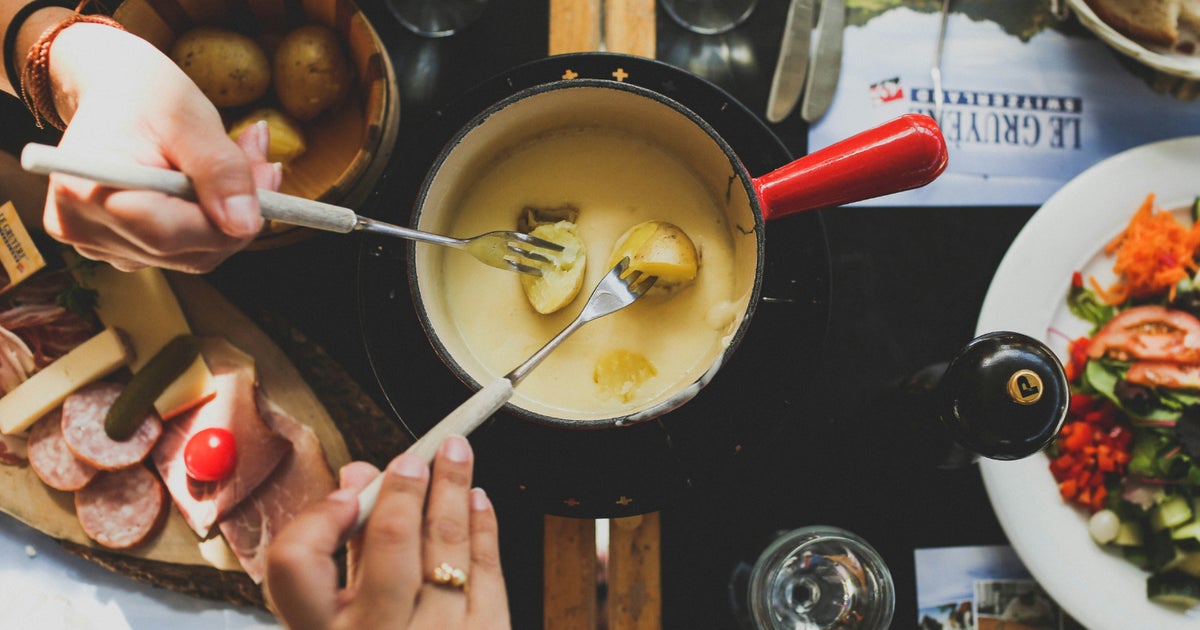
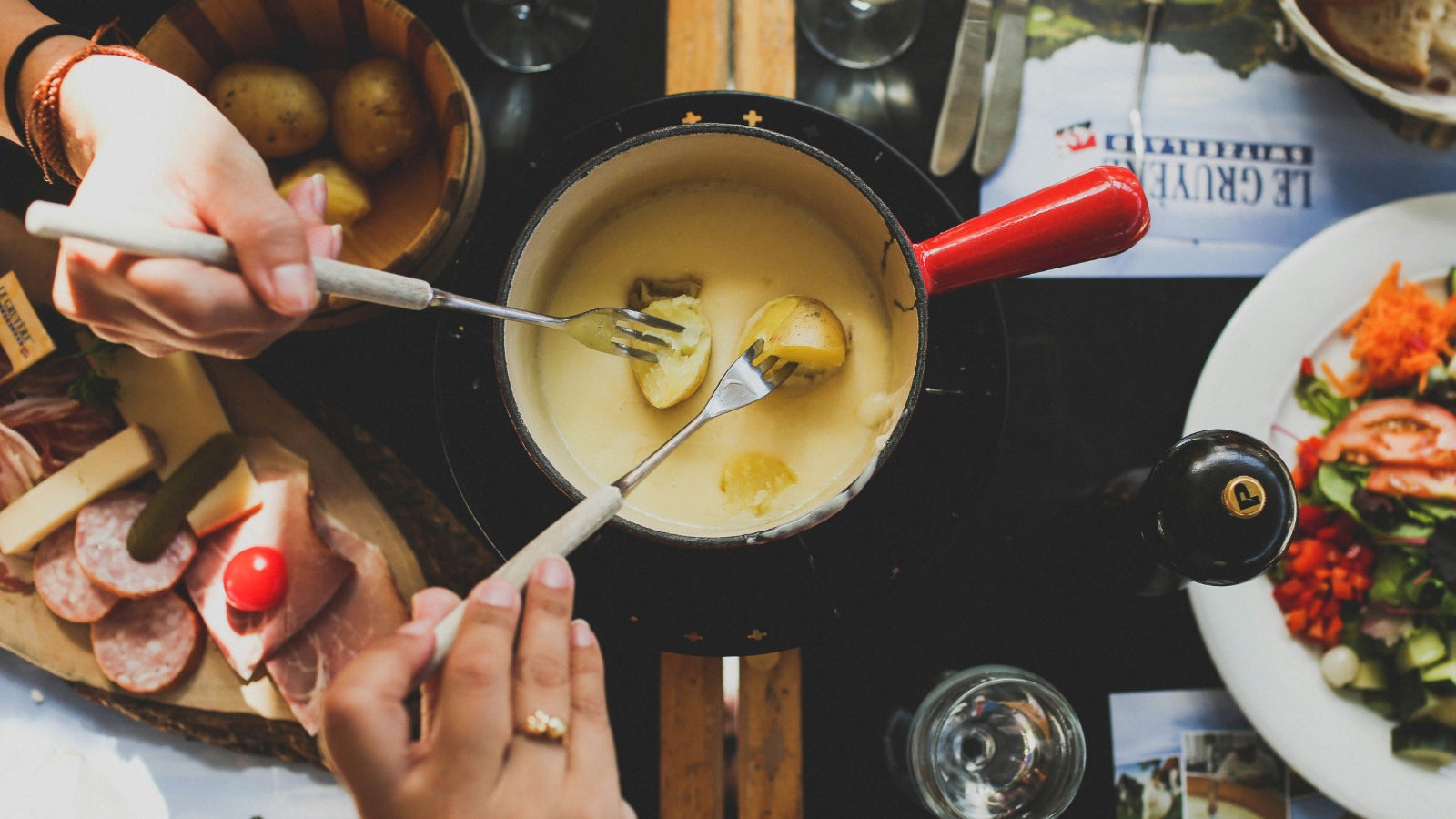
“My family likes to do cheese fondue for Christmas Eve,” said u/april-oneill.
“Serve with a sturdy bread, cubed ham, sliced apples, and steamed vegetables (broccoli and cauliflower are good for this). It’s easy but feels festive.”
10) “We’re doing nachos! We’re non-traditional around the holidays.”
“Two kinds of meat, beans, cheese, and all the sides. Everyone can build their own.”
11) “A nice beef stew. Any leftovers can be either frozen or used within a few days.”
“I generally put beef cheeks, carrots, onions, rosemary, thyme, juniper berries, and bay leaf in a bowl filled with wine and stock the night before.
Advertisement
“The following day dry the meat and veg, fry it off to give it colour, put the wine/stock in a pan and bring to a simmer for 15 min, add all your meat/veg, bring it back to a simmer, throw it in the oven with a lid for 6 hours at 140C, and crack the lid off in the last 90 minutes.
“If you’re doing dumplings, crack the lid at 60 min, and just remove fully when you add your dumplings. As a bonus, you can often reserve some of the gravy to use on Christmas Day.”
Call me a hypocrite: even though I toss and turn when I sleep, I hate when my sausage bigs in their bacon blankets wiggle out of their salty duvets as they cook.
I’m always left with tough, rubbery rashers and half-burnt, half-pale sausages, neither of which taste anything like as good as their combined selves.
Advertisement
But executive head chef Aaron Craig at The Milner York said I may be “making Christmas dinner harder than it needs to be” – preventing them from bursting is simpler than you might think.
How can I stop pigs in blankets from splitting open?
It’s down to one factor, Craig said: your oven settings.
“If your pigs in blankets burst, it’s not the sausages – it’s the temperature,” he said.
“Once you’ve wrapped them, chill them. Pop them in the fridge for about 30 minutes or into the freezer for 10. It firms up the fat, so they cook evenly without splitting,” he explained.
Want even more delicious festive food? Try coating the pigs in blankets in a delicious dressing.
“Right before they go in the oven, brush them with a little honey and wholegrain mustard,” the chef said.
Advertisement
“You get a glossy, golden coating and a lovely sweet–savory kick.”
Any other tips?
Yes. The chef said gravies really complete the Yuletide meal, but too many of us rush the process.
“Most home gravies end up way too pale,” he said.
“If you want proper rich flavour, don’t rush the roasting stage. Get your onions, carrots, celery, garlic and any poultry trimmings really deep brown ― not just lightly golden. That colour gives you depth.”
After you add your stock, simmer it gently.
“And here’s a little chef trick: a teaspoon of soy sauce or Marmite gives it an incredible umami boost without making it taste any less ‘Christmas’. It just rounds everything out,” he added.
As if thinking of what to eat in the week wasn’t hard enough, then comes the challenge of actually cooking the meals. When will the injustice end?!
Still, thanks to people like Redditor u/DanielQ_bu7, we can at least work out the least amount of effort we need to expend for the best possible results.
Advertisement
In a post shared to r/Cooking, the poster recently asked respondents to share meals which take next to no effort but which never fail to impress loved ones and guests.
Here are some of our favourite responses:
1) “Roast chicken. So easy and smells amazing when roasting.”
“A friend of mine sautées mushrooms, then piles them on top of the brie and wraps it all in [clingfilm] and puts it in the fridge for a couple of days,” AndSomehowTheWine2 responded.
“Then unwrap the [clingfilm], wrap in puff pastry, and bake. The mushroom flavour just infuses [into] the brie, and it is all DELICIOUS.”
“Julia Child’s recipe is my favourite. It’s really easy, and people LOVE it,” replied u/DaCouponNinja.
4) “Tiramisu.”
“My family thinks it is some sort of miracle that I make it. I think it’s amazing that it’s so simple (I guess it could be complicated if I made the ladyfingers myself).”
You might dust roast spuds and parsnips in semolina for a satisfying crunch, too.
But even though I write a lot about sneaky secret ingredients, I’m always on the lookout for more – especially if they don’t cost much. That’s why I was so excited to read the responses to an r/cookingforbeginners post shared by u/BlastarBanshee.
Advertisement
“What’s the one cheap ingredient that instantly makes everything taste better?” they asked.
“I just ordered a thing of MSG… and holy shit. It’s actually got less sodium by volume than any salt I own, and the flavour is just mind-blowing,” u/alek_hiddel replied.
3) “A couple of tablespoons of lemon juice, red wine vinegar or sherry vinegar in a stew.”
“Yep… a splash (or two) of sherry vinegar at the end of a stew takes it to another level. I learned this trick a few years ago, and now I always have sherry vinegar on hand,” replied u/Dense_Willow4627.
Advertisement
4) “Smoked paprika.”
″[It offers] the simple ability to add the flavour of open fire cooking back into the food we eat.”
“Every time I taste something new and go, ‘oh that’s good!’, I look up [its] ingredients and it’s almost always [got] paprika,” u/Rogerbva090566 responded.
5) “As a Balkan [person], only Vegeta is allowed as an answer.”
I know it happens every year, but the ridiculously early sunsets the UK faces each winter never fail to take me by surprise (what do you mean it’s dark at six minutes past four today?!).
That, I’m afraid, has spelt disaster for my dinners. I am frankly not bothered to cook during exhausting, gloomy evenings – even my usual old rotation has failed me.
Advertisement
There are, though, some exceptions. They all take 30 minutes or less, involve no fussy extra steps, and taste good enough to see me through my post-work exhaustion.
So, in case you’re looking for something similar, here they are:
Cook time: about 25 minutes (with pre-cooked lentils)
Amy Glover / HuffPost UK
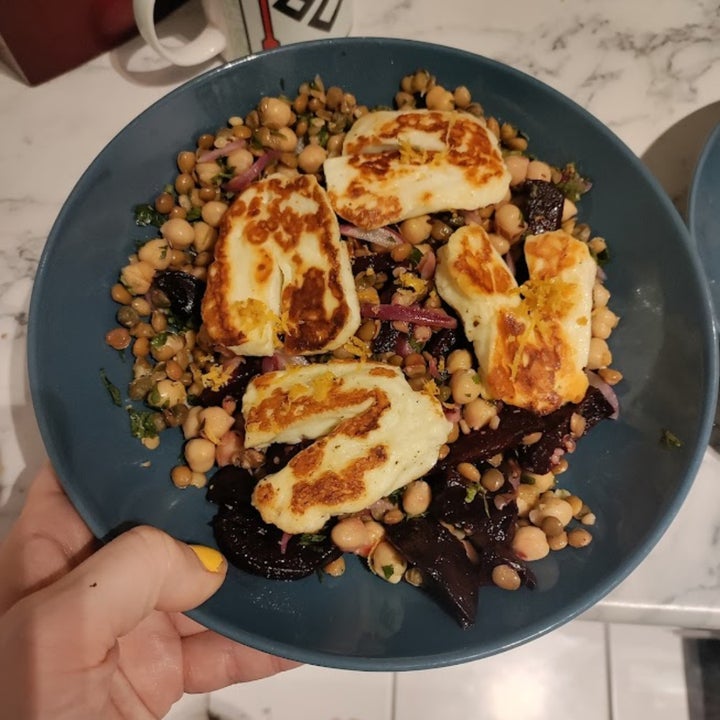
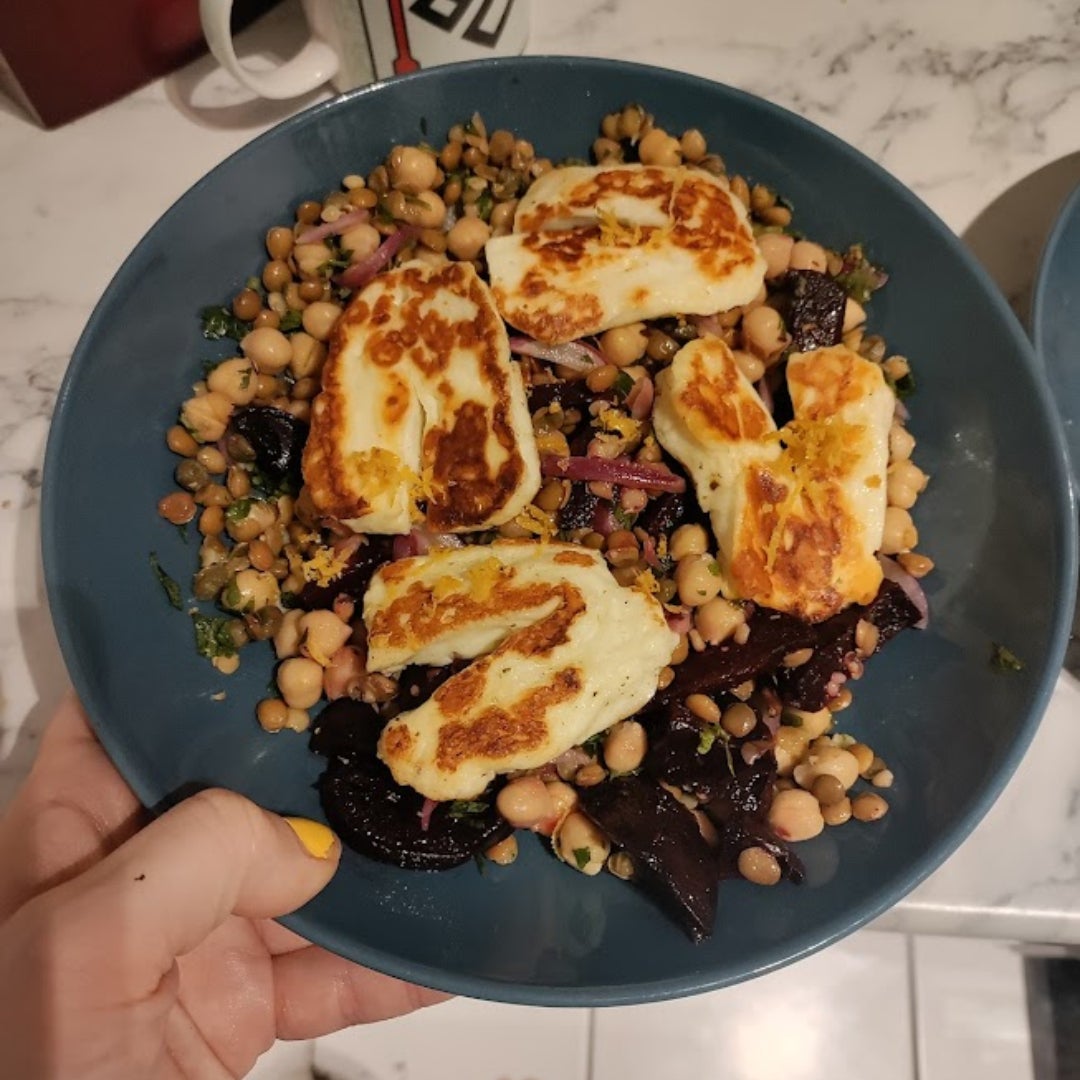
Halloumi, lentil, beetroot salad
I know, I know: I don’t want to eat anything called “salad” from August onwards either. But to be honest, this warm version (which, by the way, keeps beautifully in the fridge) barely counts: it’s more of a hearty, seasonal grain bowl.
Advertisement
It’s also perfect for emptying your cupboards, because it’s really adaptable. Replace, or mix, lentils with other pulses and legumes like butter beans, chickpeas, or even nutty bulgur wheat.
And provided you use canned lentils instead of cooking your own (I always do this – I simply warm them in a pan for a couple of minutes before serving), it takes well under 30 minutes.
Cook time: 15 minutes, if that
Amy Glover / HuffPost UK
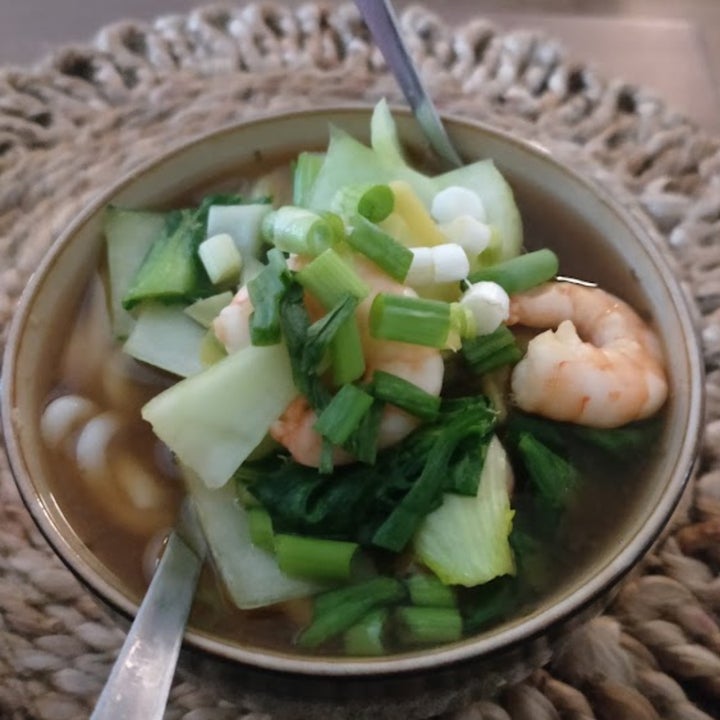
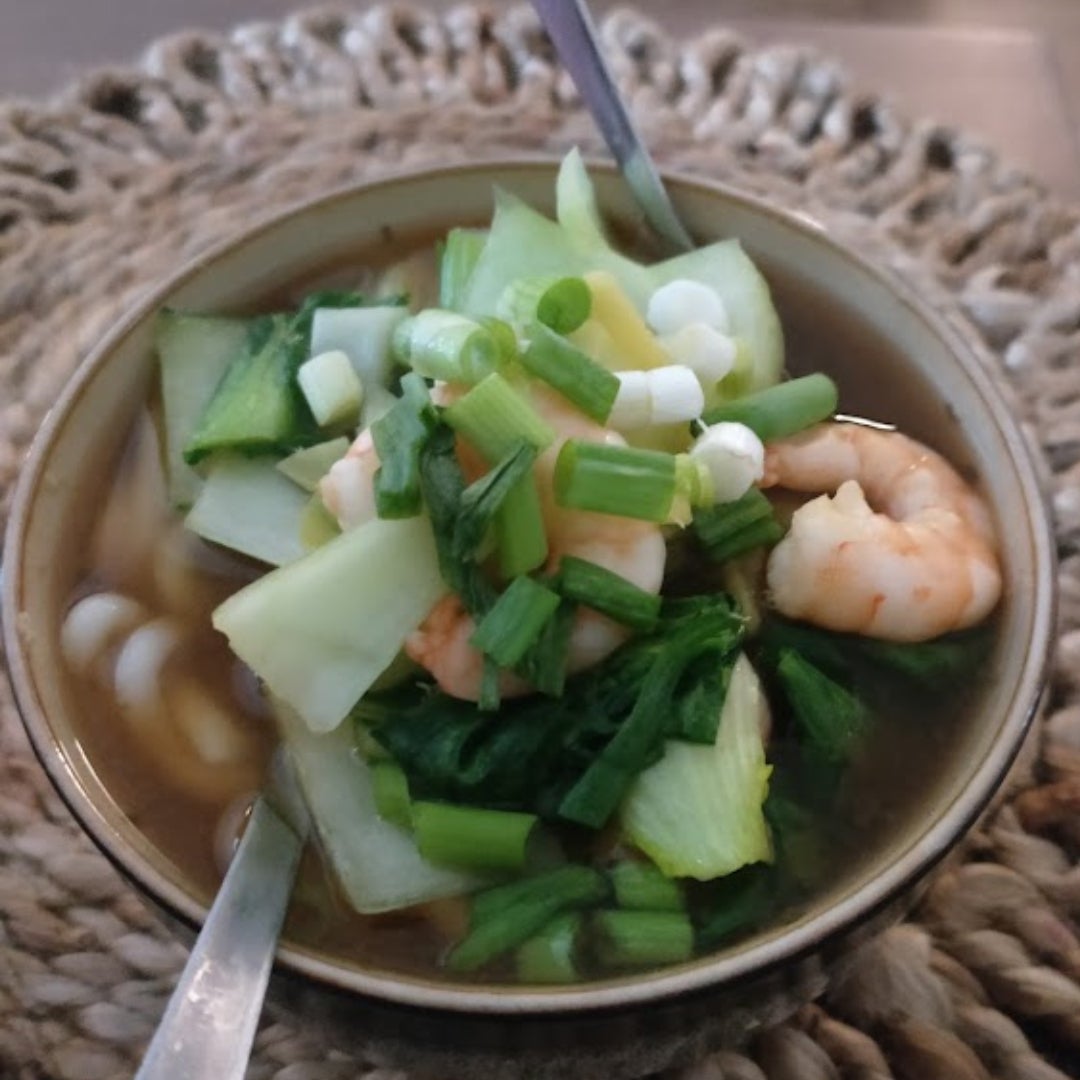
Prawn noodle soup
Advertisement
When this five-starred recipe calls itself “super fast,” it means it – I had to double-check the instructions the first time I made it to ensure I hadn’t missed a step, because it came together so quickly.
The light but satisfying flavour is especially soothing after a long day of work, too. One word of caution, though: if, like me, you slurp soup at a rate of knots, slice the bok choi across so you don’t almost choke on a large piece (this has happened to me more than twice, which, though embarrassing, at least proves the soup is good).
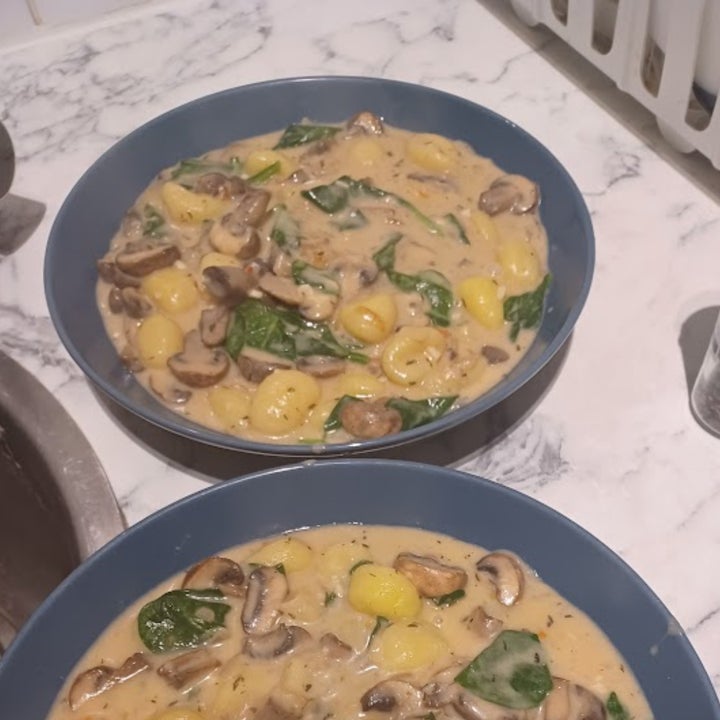
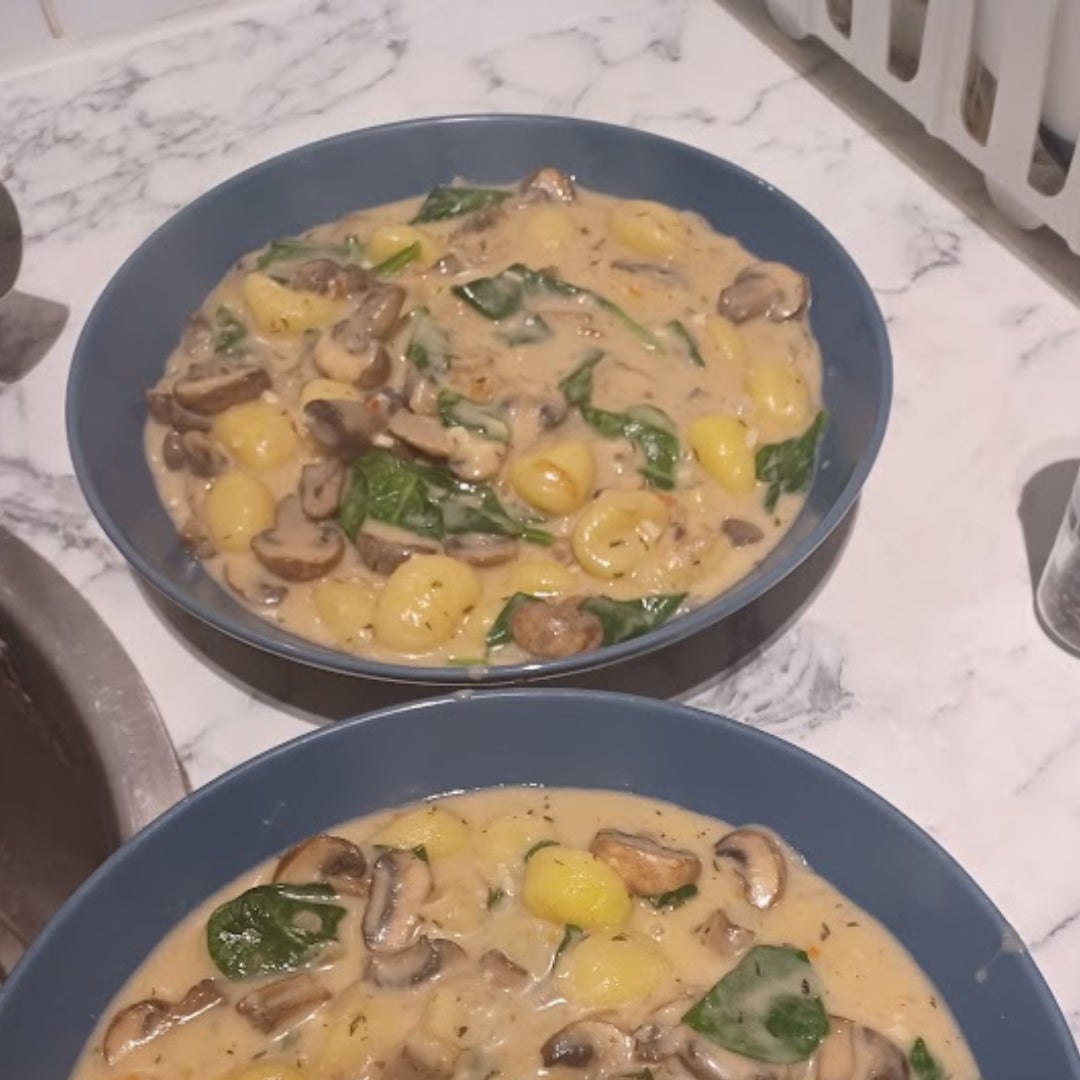
Another five-starred recipe, this one-pot wonder comes together in about half an hour.
Its ridiculously comforting flavour is perfect for cosy nights in, and I find it unbelievably satisfying – and the zing of mustard in its sauce means you won’t feel completely overwhelmed by its creaminess.
I am sure the recommended rocket included in the original recipe would add to that brightness, too, but to be honest, I’ve only ever had baby spinach to hand – thankfully, it still tastes delicious.
Advertisement
Cook time: 15 minutes, with pasta
Amy Glover / HuffPost UK
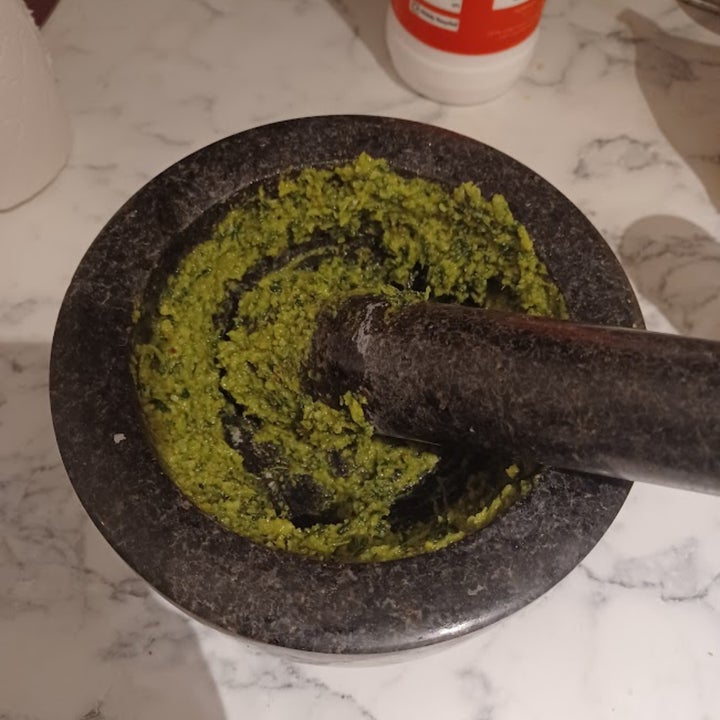
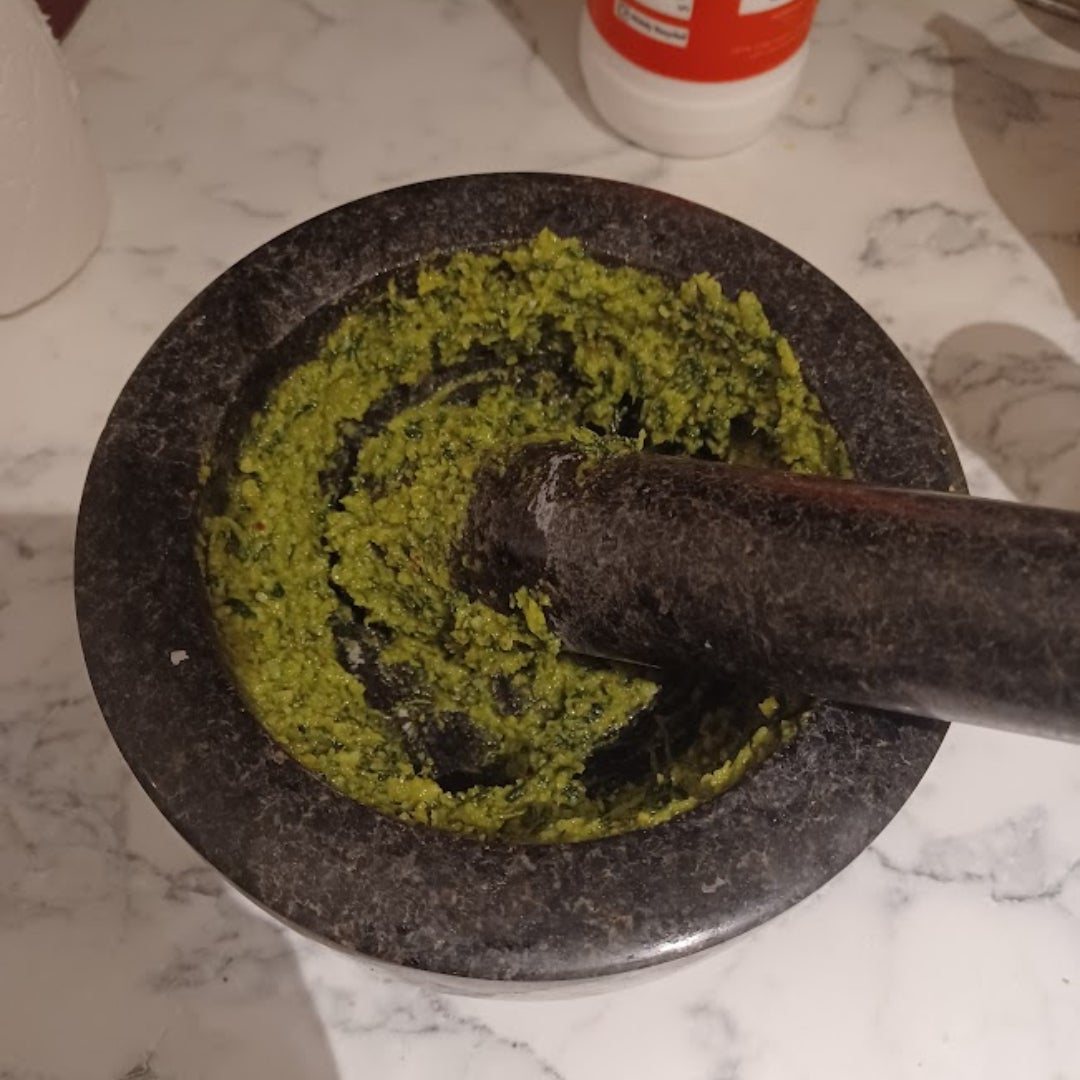
Pesto
Our young adult selves were onto something with the whole “pesto pasta dinner” thing. But if you fancy something a little more grown up – and about five times as delicious – I recommend whipping up your own pesto while your pasta is bubbling away.
I first made this pistachio version after trying the NYT’s full ravioli recipe. But, while I loved the sauce, I knew there was no way I’d actually whip out my pasta machine of a Thursday night, so I’ve simply kept the pesto and swapped the hard part for pre-made spaghetti.
Advertisement
Pesto is surprisingly forgiving: I didn’t have pine nuts the first time I made this, and it was still delicious.
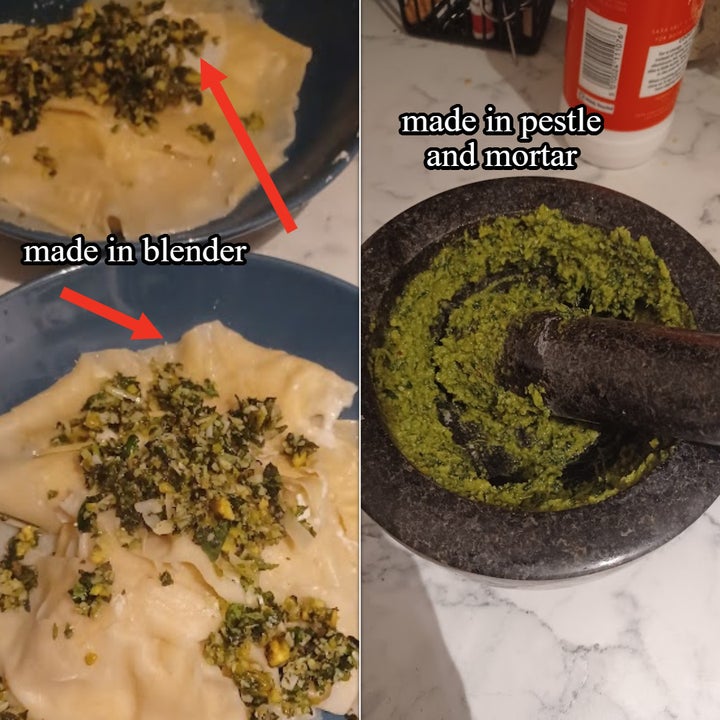
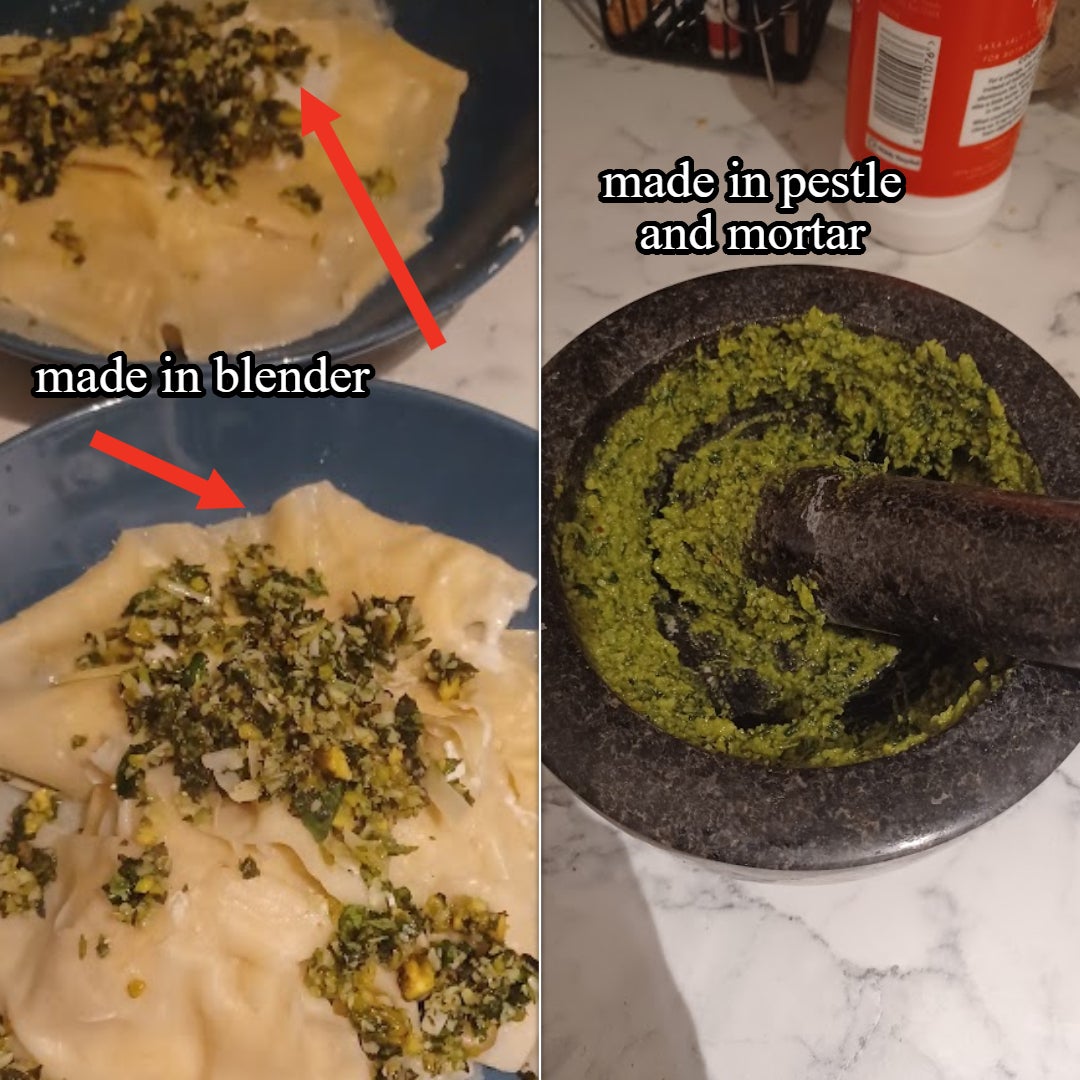
I will say, too, that though it sounds more involved, a pestle and mortar is actually faster and better than a blender: see my (awful) blended results below (left), compared to the two-minute, creamier version (below right).
Amy Glover / HuffPost UK
Blender vs pestle and mortar pesto
Advertisement
Cook time: about 15 minutes
Amy Glover / HuffPost UK
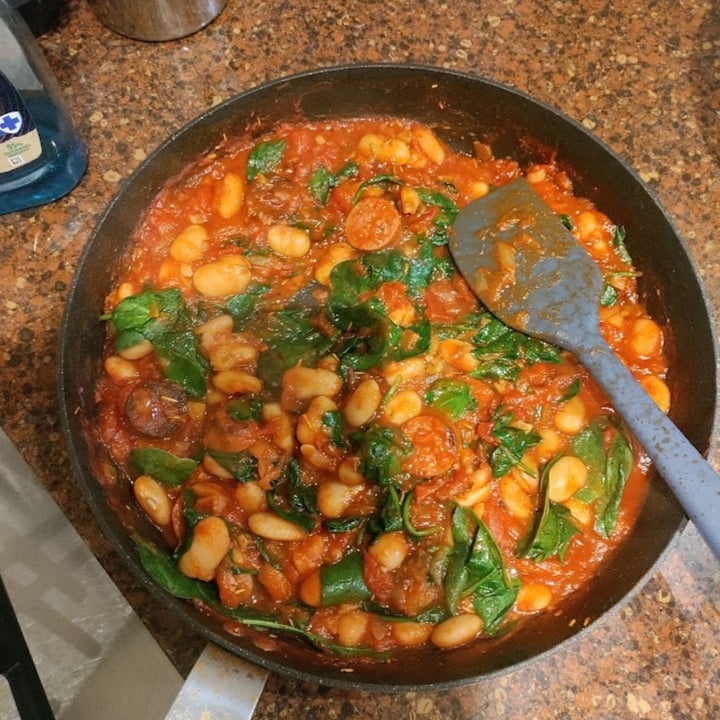
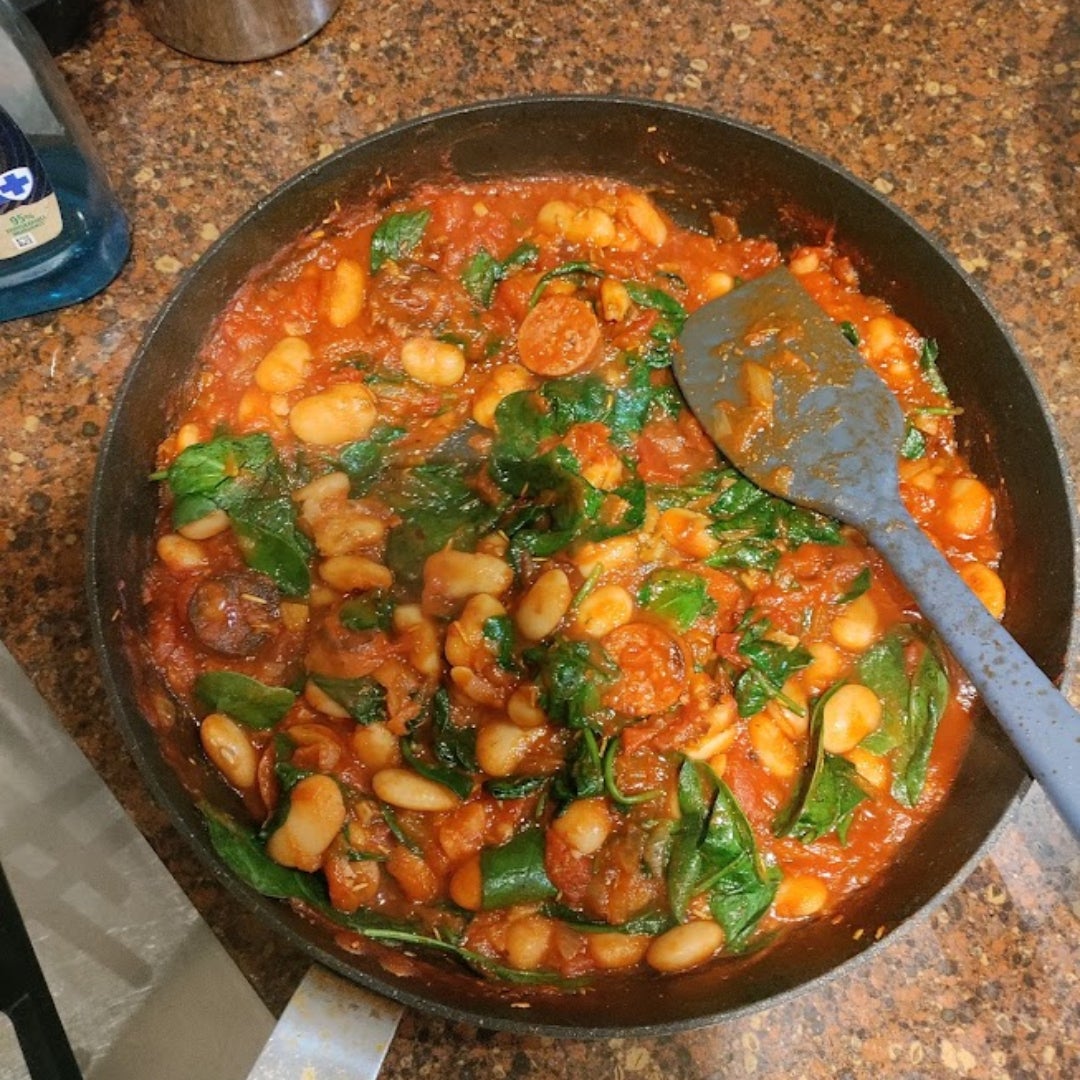
Chorizo butter bean stew
Oh, how I love a healthy-ish dinner whose instructions basically read “cook onions, pour in cans, eat”.
This one is filled with fibre-rich butter beans, a surprising amount of veg (and fruit, I suppose, if we count tomatoes), and loads of flavour.
Advertisement
It’s a one-pot wonder, too, which I’ll always take if at all possible (less washing up!), and it’s ridiculously hearty when paired with buttered crusty bread.
But dietitians like Lizzy Traxler, MS, RDN, also a diabetes educator at University Hospitals, say: “Over time, and in combination with other healthy lifestyle choices and a balanced diet, choosing sourdough over regular bread may provide numerous health benefits.”
These, she told University Hospitals, may include improved digestion. “The improved mineral absorption from the fermentation process supports cardiovascular function,” they add (this might be especially true of sourdough rye bread).
Advertisement
And the British Heart Foundation says sourdough bread may make your blood rise more slowly, too.
So why did Dr Karan Rajan, an NHS surgeon and author, advise we “check the ingredients list” on sourdough loaves before buying?
“Sourfauxs” use different fermentation methods
Quality wholegrain, sourdough, and high-fibre breads may contribute to the “replacement of hyper-palatable baked goods, which are high in sugar, fat, and salt,” which can be beneficial to our health, a 2023 paper reads.
But, they add, one of the reasons sourdough research is so tricky is because “there is no established and internationally recognised legal definition of sourdough bread”. In fact, they found, the artisanal products usually included in trials may differ from the sorts found on most shelves.
Advertisement
“Analysis of bread samples purchased in the market showed that most of these had pH levels of >5.0, substantially above desired levels of pH 4.5 to obtain desired changes in composition,” they wrote.
This paper did not say that this difference definitely meant one was better than the other, or that the higher pH versions were sourfauxs ― though traditional sourdoughs tend to have a lower pH, which is linked to their sour taste.
But if you would like to eat sourdough made from traditional starter, Dr Rajan advises you look at the labels of sourdough breads in search of “added yeast”.
Advertisement
“Authentic sourdough doesn’t mention any added yeast,” he explained, “because it uses a natural fermentation process.”
He added, “Imitation sourdough, or ‘sourfauxs,’ often contain commercial yeast like baker’s yeast and even chemical raising agents like baking powder in addition to, or instead of, live sourdough starter culture.”
To be clear, the doctor didn’t say there’s anything wrong with eating non-sourdough bread.
It’s just that he felt it was important consumers know what they’re really buying (especially considering sourdough bread could be easier for people who usually struggle to digest food to eat).
“Sourdough” is not a legally-protected term, Swie Joo, head baker at The Palmerston restaurant in Edinburgh, told The Independent (like Dr Rajan, by the way, the chef advised customers to check for the word “yeast” on packages if you want a traditional sourdough loaf).
Advertisement
That means you can add commercial, or non-fermented, yeast to “sourdough” breads.
This can make the rise of bread more predictable and easier to replicate. It can be cheaper and less time-consuming, too.
The combination could make mass production a lot easier.
The Real Bread Campaign write that their campaign “is to better protect us from the risk of being misled by cynical marketing and to allow us all to make better-informed choices about the food we eat”.
Halloween is nearly here – meaning dozens of kids are headed to a front door near you very soon.
If you live in an area where trick-or-treating is a pretty big deal, you’ll probably want to buy in some sweet treats to hand out to tiny ghouls and monsters – unless you opt to turn off your lights and pretend nobody’s home (in which case: no judgement, save yourself some cash).
If you are planning to hand out treats however, a doctor has issued a word of warning.
Paediatrician Dr Arindam Das spoke to Totalkare about some specific Halloween dangers that can lead to an increase in “blue light” callouts during spooky season.
Advertisement
One of them is pumpkin carving, he said, due to the obvious risk of cutting themselves.
“Young children are also at risk of choking on hard sweets,” he added.
So what are the safest sweets to give then?
The main takeaway is that hard or boiled sweets should be avoided at all costs for kids under the age of five (so it’s probably a wise move to forego them completely).
Whole nuts, popcorn kernels, chewing gum and small jelly sweets “all are high choking risks”, he added. Nuts are also problematic for those with allergies.
Popcorn might be a surprising one to some parents. However, they are problematic for a few reasons: the kernels are so lightweight they can be sucked up back into a child’s oesophagus, where children can either breathe them in, called aspiration, or they can choke – which is where the airway is blocked.
Advertisement
Dr Das said older children (over-fives) can “usually manage chewy or gummy sweets, but parents should still be cautious with very hard or sticky items”.
The safest alternatives, he noted, are “soft, melt-in-the-mouth treats”, like chocolate buttons, mini muffins or soft jelly.
Little boxes of raisins or dried fruit snacks (like BEAR Paws) can be a decent option for younger children, too – and are free of common allergens like gluten, dairy and nuts.
Advertisement
I’m also a big fan of Soreen lunchbox loaves as children with an egg and/or milk allergy can have them.
And if your little one does get to enjoy a treat (or three) this Halloween, the paediatrician added that having water or milk alongside these sweets can help “reduce dental risk”.
So you’d best believe I’m a regular peruser of Reddit’s r/todayilearned (TIL), where netizens share the mildly interesting scraps of trivia they, well… learned, today.
This species, Agaricus bisporum, increases in flavour and deepens in colour as it ages. Button is the mildest and palest variety: its very subtle taste may have made it the most popular kind on our shelves.
People were as surprised as I was to learn the info
Replying to the original post, Redditor u/diabloman8890 joked that the pale, creamy version we’re all used to counts as “Teenage mutant inbred mushrooms”.
“One mutation in 192[6] and now it’s the default, nature’s marketing win,” u/bebleich marvelled.
But u/Preeng was a little less impressed, commenting: “And nothing new since then? Not a blue one or a red one? Lame.”
Advertisement
Ultimately, though, as u/DConstructed pointed out, ”[Once] you cook them, they’re all brown anyway.”
If you’ve been feeling a lot more tired recently, you’re not alone: autumn fatigue can occur thanks to gut changes and disruptions to your workout routine.
That’s only one reason why people (it’s me, I’m ‘people’) might be looking for truly low-effort meal ideas at the moment.
Advertisement
Luckily, the members of Reddit’s r/Cooking have got our backs.
Posting to the forum, site user u/kindnessabound asked people to share their favourite “low-effort high-reward meal”.
Here are some of the most-upvoted responses:
1) “Pan-fried halloumi in a pita or naan with tzatziki, tomatoes, pickled onions and rocket.”
“We always have pickled onions in the fridge, and tzatziki can be made a day or two in advance. I can have dinner on the table in 15 minutes. [You can] substitute the halloumi for shrimp, falafel or rotisserie chicken.”
2) “Miso pasta. Like a year ago, someone in this subreddit said it was the lowest effort, highest reward meal they can’t stop making, so I tried it.”
“I can’t live without it now. So easy, so comforting, delicious, and makes a huge batch that heats up well for days.
“Cook 450g spaghetti. Reserve about 240ml of pasta water. Strain the pasta. In the empty, hot pot, mix three tablespoons of miso with six tablespoons of butter and half of the pasta water on low heat until a smooth sauce forms. Put the pasta back.
Advertisement
“Stir in 80g grated Parmesan bit by bit. Add more pasta water if it gets dry. Serve with chilli oil/hot sauce if you’re feeling lazy, or sautée some mushrooms to elevate it.
“Absolutely life-changing. It’s not no-effort like grilled cheese or air fryer food, but the ratio of effort to reward here is off the charts.”
“I use a bagel more often, since I’m more likely to have them in the house, but this is one of my favourites [when I] only have 10 minutes and want comfort meals,” u/ellen_boot agreed.
Advertisement
4) “Caccio e pepe. I’m making it this second.”
“Cook your pasta in less water. Drain (SAVE YOUR PASTA WATER) and keep the cooked pasta on a plate with a lid on.
“Reduce the pasta water until it’s cloudy and thick.
“Pull the pan off the stove, and remove most of the water. Add the pasta back in, reheat for just a moment until streaming, and remove from the heat.
“Stir in the black pepper and finely-grated parmesan until you get your desired consistency.”
“This! Buy a pork shoulder, make a paste from a BUNCH of spices (paprika, chipotle, cayenne, oregano, thyme, salt and pepper) and a little olive oil, and rub it all over the pork. It’s almost hard to overdo it with the spices.
Advertisement
“Add a chopped onion, a couple of cloves of minced garlic, and a couple of chopped jalapeños. Put that thing in the crock pot for eight hours and then go to town. Buy some rolls and make some coleslaw if you want,” u/BenThere20 replied.
6) “I feel like salmon always has a high bang for your buck flavour [to effort] ratio.”
“My favourite is carbonara-style packet noodles. Dice some bacon, cook it, and set it aside. Mix the ramen pack with three egg yolks and freshly grated parmesan.
Advertisement
“Cook the noodles, remove them from their liquid and place them into your pan. Heat it up, add back some starchy noodle water, mix in the egg packet mixture, put it in a bowl, add the diced bacon on top, and then grate more Parmesan cheese on it.
“The whole thing takes 10 minutes and is insanely delicious.”