I’d argue that some of the so-called Gen Z working “trends”, like “taskmasking” – looking, but not being, busy – are not so much fads as time-honoured office traditions.
But what might genuinely be unique to the age group is “income stacking,” or the increasing need to secure multiple forms of payment in order to stay afloat.
Advertisement
According to research conducted by a bastion of the gig economy, Fiverr, 54% of Gen Z and Gen Alpha believe traditional employment will become obsolete.
As a result, 67% say they think they’d need to rely on multiple smaller streams of income, rather than one job, to pay the bills.
Why don’t younger people believe in traditional career paths?
And as many careers, even in industries deemed especially “safe” as little as five years ago, become unstable, only 14% say they’d be interested in working for an established company.
Advertisement
That makes traditional paths of employment – ie starting at the “bottom” of a single company, staying there for years, and landing a more senior position – sound less and less likely as the “job hopping” generation enters the workforce.
In fact, the Next Gen Of Work study, which was run with Censuswide and involved over 12,000 young people from all over the world, found that Gen Z and Gen Alpha face “single paycheck panic”.
Advertisement
What is “single paycheck panic”?
Michelle Baltrusitis, Associate Director of Community and Social Impact at Fiverr, said: “Gen Z isn’t rejecting work; they’re redefining it.
“Faced with economic uncertainty, Gen Z is experiencing what we’re calling ‘single-paycheck panic’ – they’re diversifying income streams because relying on one job feels too risky.
Advertisement
“Instead of waiting for stability, they’re betting on themselves by embracing freelancing and building financial resilience as the smarter path forward.”
Tapping your phone to pay has become a common and easy way to purchase treats and gifts –– but it could also be a hidden way for fraudsters to scam you out of money.
That’s because some scammers might be “ghost tapping” and taking advantage of the tap-to-pay and mobile wallet technology when you buy goods on the street, according to a new alert by the Better Business Bureau, a nonprofit that tracks bad advertisements and customer complaints in North America.
In the scam reports, people say they unwittingly thought they were tapping to pay for legitimate purchases, only to later see they were being overcharged hundreds, and in some cases, thousands, of dollars.
Advertisement
In Illinois, a young man with a clipboard claimed that he was raising money for funeral expenses for a family member who had been shot and killed, according to one BBB report.
“I said I could donate $5…I handed my credit card to one of the men, who took my credit card and attempted tap-to-pay on his phone,” the victim recalled. “The interaction felt off to me, so I immediately checked my credit card accounts which both showed multiple charges for $2,496 each to a PayPal account.”
In the reports, scammers would avoid showing buyers what they were tapping for on the mobile pay terminals. That’s why asking to see the screen “to see exactly what’s happening is a great way to protect yourself,” said Melanie McGovern, the BBB’s director of public relations and social media.
Advertisement
‘Ghost Tapping’ Is Rare, But It’s A Good Reminder To Be On Guard
Illustration: HuffPost; Photo: Getty Images
You should always double-check the amount you are being charged for, in order to avoid getting “ghost tapped.”
Don’t be scared to use tap-to-pay at legitimate vendors. To put this alarming scam in perspective, McGovern said her organisation has only gotten less than 10 reports of “ghost tapping” so far. But she is concerned there could be more instances during the holiday season.
During holiday craft fairs, “people have the great convenience of tap-to-pay,” she said. “So…it’s always good to make sure that you’re protecting yourself and you know exactly how much you’ve spent.”
Advertisement
Although it is technically possible for a scammer to “ghost tap” and use your phone’s tap-to-pay feature without you tapping, it would be highly unusual for this to happen without your knowledge. That’s because the near field communication that powers tap-to-pay technology requires a distance of four centimetres or less.
“That’s essentially the length of a paper clip,” said Michael Jabbara, senior vice president and head of payment ecosystem risk and control at Visa. “If you have any awareness of your personal space, if somebody is getting to you within that distance, you are going to kind of be aware of that, and you’re likely going to move away.“
But the idea of “ghost tapping” is a good reminder to always be alert to what’s happening on your credit cards that you upload to your phone.
Advertisement
Scammers “rely on the victims to not check their bank accounts until the end of the month or two months later,” Jabbara said. “My recommendation is always to do your research ahead of time, versus when you’re dealing with a [credit card] dispute.”
There’s An Easy Way To Combat Online Fraud
If you do lose money to this kind of scam, you can dispute a charge or file a consumer complaint with your local attorney general’s office.
But one of the best ways to combat “ghost tapping” ― or any kind of online payment fraud ― is to prevent it. Be vigilant about what is being charged to your phone, and by whom. Here’s how:
Advertisement
Turn on credit card transaction alerts.
Many fraudulent charges will get flagged before being approved by your credit card’s risk signals. But even if somehow that transaction gets approved, “You have the ability to turn on your transaction alerts that can be a ‘first line of defence’ against fraud,” Jabbara said.
That way, you can immediately know if your card made a transaction for a merchant name you don’t recognise for an amount that you wouldn’t have approved.
Always ask for a receipt.
Receipts are helpful proof of purchase if you need to later dispute a charge with your bank or credit card company.
Advertisement
And it’s also a good way to suss out a scammer. McGovern said a vendor telling you “I can’t give you a receipt. [My pay terminal is] broken” is a red flag that someone is scamming you.
These are a few basic but helpful ways you can unmask the ghost, and prevent them from stealing any money you haven’t authorised to spend.
Here’s something you may not have thought about: For some foods (in this case we’re talking about bananas), the nutritional effects on your health can vary depending on the ripeness level when you eat it.
As a banana ripens, its nutritional content — the amount of sugar, starch and vitamins — changes. Meaning, if you need more sugar before a workout, or less sugar because of diabetes, you may want to eat your banana at a certain ripeness level.
Ahead, registered dieticians share the various ripeness levels, what a banana looks like at each stage, and the health conditions or goals that are best addressed at each level of ripeness.
Advertisement
Underripe
Dorin Musat / 500px via Getty Images
An underripe banana can help you feel full longer.
Bananas at this stage look green; they’re firm and difficult to peel.
“This stage has the highest resistant starch and low sugar content,” said Avery Zenker, a registered dietitian at MyCrohnsAndColitisTeam.
The benefits of resistant starch are many, including helping to feed healthy gut bacteria that reduce inflammation and keeping blood sugar levels stable, according to Zenker. It’s also digested more slowly, which can keep you full for longer.
Advertisement
“Resistant starch acts very similarly to fibre, which means it’s fermented in the gut (so it fuels your good gut bacteria) and it can be helpful for blood sugar control,” added registered dietitian Amanda Sauceda, a nutrition lecturer at California State University, Long Beach.
While good gut bacteria and blood sugar management are generally important for your health, they may apply to some individuals more than others.
“This level of ripeness is ideal for people who are trying to control blood glucose levels, such as those with insulin resistance as seen with pre-diabetes, Type 2 diabetes and other metabolic conditions,” Zenker said. “Unripe bananas can also be beneficial for anyone looking to improve gut health by improving microbiome balance.” The latter may be especially important for people who are trying to manage digestive issues like irritable bowel syndrome.
Advertisement
“If you want to up the health benefits of your green banana, consider pairing it with some peanut butter,” Sauceda added. “You get a little protein and healthy fats, which help for a better blood sugar response and are good for the gut.”
Some people may want to avoid an underripe banana, however. Zenker said athletes may fall into that category since slow digestion can cause stomach heaviness. People who are sensitive to resistant starch and experience gastrointestinal discomfort after may want a different ripeness level, too.
Barely Ripe
mrs via Getty Images
Barely ripe bananas still have a little green near the ends.
Advertisement
Bananas at this stage are mostly yellow with some green at the ends. While slightly softer, they’re still firm. This ripeness level suggests the banana is still high in fibre and low in sugar, but not to the same extent as underripe bananas.
“The resistant starches have started converting into simple sugars,” Zenker said. “Their mineral levels remain stable, particularly potassium and magnesium.”
She recommended a barely ripe banana to people who want the digestive benefits of an underripe banana without that chalky taste, as well as those who need steady energy throughout the day without major effects on their blood sugar. That means, similar to underripe bananas, barely ripe ones are great for people with insulin resistance, prediabetes, diabetes, metabolic syndrome or digestive conditions.
Advertisement
“They can also be ideal for peri- or post-menopausal women due to the resistant starch content that helps combat the effects of insulin resistance and supports gut health as hormonal changes occur,” Zenker added.
Ripe
Yaorusheng via Getty Images
A fully ripe banana has no green showing on the ends.
Bananas at this stage are fully yellow and soft, but not mushy. They’re easy to peel and have a sweet smell.
Advertisement
While ripe bananas are listed separately from barely ripe ones here, it’s important to note that not all experts find the differences noteworthy.
With that said, if we’re going to make distinctions, Zenker shared what they are: In ripe bananas, starches have mostly converted into natural sugars, fiber decreases, and sugar and antioxidant content increase. Vitamins and minerals hit their peak.
Advertisement
Sauceda added more noteworthy benefits. “One banana has 8% of your daily value for potassium, which is a mineral many people don’t get enough of,” she said. “This mineral is important for blood pressure and muscle contraction. It also meets 8% of your daily value for magnesium, which is important for bone health.”
Zenker encouraged a ripe banana for people who are about to work out, want quick and convenient whole-food energy, or are looking to increase potassium intake (perhaps to manage high blood pressure or other cardiovascular issues), as well as for kids who want an easy-to-eat, sugary food. Ripe bananas are also a good in-between for people who want fibre without the digestion-related concerns.
Very Ripe
Stefania Pelfini la Waziya via Getty Images
Two very ripe bananas, indicated by brown spots on the peel.
Advertisement
Bananas at this stage are soft, have brown spots and emit a strong aroma.
“Sugar content is near its peak, and fibre continues to decrease,” Zenker said.
That’s great for people who need quick energy, have sensitive digestive symptoms, have low appetite or want a sweet treat, Zenker said. Individuals who are trying to manage their blood sugar may want to avoid very ripe bananas, however, since they’re higher in sugar.
Overripe
Karl Tapales via Getty Images
An overripe banana looks brown or black and is usually mushy.
Bananas at this stage look brown or black and are soft, even mushy.
They’re highest in sugar and antioxidants, lowest in fibre, losing their vitamin C content and maintaining their potassium content, according to Zenker.
So again, there are pros and cons, and certain populations and situations for which it’s best suited.
“This stage is best for baking and freezing (banana bread, cookies, smoothies) rather than as a raw snack,” Zenker said. “It’s gentle on digestion and good for anyone needing fast calories, such as athletes, [but] not as ideal for people with diabetes or those seeking fibre or nutrient density.”
Advertisement
Sauceda is a fan of the smoothie option. “You don’t need to add as much banana when you use an overripe one for your smoothie, which can mean less added sugars,” she said.
As evidenced here, the banana to pick at the grocery store isn’t necessarily just the one you like the taste or colour of. Yes, we know this concept is a bit bananas, literally — and it’s true.
At the same time, we can’t blame you for going by the taste metric. Plus, bananas are nutritious whenever you eat them. “Overall, bananas are a great fruit whether you eat them green or ripe,” Sauceda said.
We aren’t sure exactly why the two appear to be linked, though, and it can be very hard to unpick whether it’s an early symptom of Alzheimer’s vs an actual cause of it.
Advertisement
New research, however, has found that turning off a circadian (related to the sleep-wake cycle) protein in mice reduced their levels of tau protein, the accumulation of which in the brain is linked to dementia.
It also seemed to raise their nicotinamide adenine dinucleotide, or NAD+, levels, associated with increased protection against dementia.
Why might your body clock be linked to dementia?
In the experiment, published in the journal Nature Ageing, scientists genetically removed a circadian protein called REV-ERBα in two groups of mice.
Advertisement
REV-ERBα, which helps to regulate our metabolic cycle and inflammation levels, also appears to control our NAD+ levels (the coenzyme we mentioned earlier, which seems to counteract the changes linked to dementia).
In one of the groups of mice, they deleted REV-ERBα proteins across their entire body.
In another group, the deletion only happened in astrocytes – star-shaped cells which make up a large part of the nervous system and help to support our brains.
For both groups of mice, the change led to increased NAD+ levels.
Speaking to WashU Medicine about a separate paper published in Nature Neuroscience, Dr Erik S. Musiek, who was involved in both studies, said: “There are 82 genes that have been associated with Alzheimer’s disease risk, and we found that the circadian rhythm is controlling the activity of about half of those.
Advertisement
“Knowing that a lot of these Alzheimer’s genes are being regulated by the circadian rhythm gives us the opportunity to find ways to identify therapeutic treatments to manipulate them and prevent the progression of the disease.”
What might this mean?
In the Nature Ageing paper, the researchers ran further studies that involved a combination of both the genetic deletion of REV-ERBα and a promising new medicine. This appeared to increase NAD+ levels.
Advertisement
The researchers suggest that inhibiting the protein may be more useful at certain stages of dementia, like early on when tau tangles are forming, than others.
“Our studies shed light on crucial neuroprotective mechanisms mediated by REV-ERBα in astrocytes and should help guide ongoing drug development efforts to target REV-ERBα function in AD and other neurodegenerative diseases,” the paper reads.
In my youth (read: a couple of months ago, when it was still bright out), I tried “Japanese walking,” “Jeffing,” and strength training to stay active.
Now that it’s cold and dark, and I have adopted the appropriate hermit lifestyle, it’s more about walking in what little daylight I can access and, to be honest, skipping the gym.
But I need to be realistic, too: I work from home and rarely feel up for getting my good (well, non-PJ) togs on of a gloomy evening or dark morning.
So, I began to try “movement snacking” – a trend that allows me to incorporate tiny workouts in between typing flurries.
Advertisement
Now, I can’t imagine a work week without it. It’s helped my upper back and shoulder pain a lot, too – I feel a lot less stiff and sore.
Amy Glover / HuffPost UK
A quick midday walk on the left: stretching on the right
What is “movement snacking”?
It involves including multiple small movement sessions, like 10 squats or a five-minute walk, into your day rather than relying on a single large block of exercise.
Advertisement
A 2022 paper found that even one-minute bursts appeared to have health benefits in small proof-of-concept studies.
And a 2025 systematic review showed that “movement snacks” lasting at least five minutes, performed twice daily or more, “improved cardiorespiratory fitness in physically inactive adults”.
For me, that took the form of a couple of squats after writing an article or a little turn around the block during lunch. I reckon I spend, on average, about three to five minutes on roughly four sessions.
Advertisement
Speaking to HuffPost UK, Dr Suzanne Wylie, GP and medical adviser for IQdoctor, said: “I think ‘movement snacking’ is an excellent and very sustainable approach to maintaining musculoskeletal health, especially for people with sedentary jobs.
“It’s realistic, easy to integrate into a busy day, and doesn’t require special equipment or a gym setting. Even a minute or two of stretching, shoulder rolls, or walking around every 30–60 minutes can have cumulative benefits for your comfort, flexibility, and energy levels.”
The doctor added that she often recommends similar approaches to her patients, “as small, consistent movements can make a big difference to how the body feels and functions over time”.
Advertisement
Can movement snacking help with back pain?
I’ve noticed that my upper back feels a lot less tense and sore now that I’ve begun “movement snacking” (and I think it’s helped my midday mood, too).
According to Dr Wylie, the two may be related.
“It’s very plausible that your improvement is directly linked to practising ‘movement snacking,’” she shared.
Advertisement
“When we remain seated for prolonged periods, particularly when working at a desk or computer, the muscles in the shoulders, upper back, and neck can become tense and shortened, while the supporting postural muscles weaken over time.
“This can lead to stiffness, discomfort, and even tension headaches. By incorporating short, regular bursts of movement throughout the day, you’re effectively breaking up those long periods of static posture.”
Exercise snacking may help, the GP ended, because “These brief stretches and mobility exercises help improve blood flow to the muscles, reduce joint stiffness, and encourage better posture”.
Advertisement
In other words, the trend may help more than your back – after all, some experts think it can help to manage your blood pressure, improve your heart health, and even support your metabolism too.
The best bit? From my experience, you won’t even notice you’re doing it – it’s so fun and easy, and helps to break up an otherwise monotonous stretch.
Ever heard of “wedding sprawl”? It’s a phenomenon that The Atlantic describes this way: “as couples strive to keep up with cultural perceptions and their friends’ lives, they can end up putting financial and logistical strain on their guests”.
And according to the Financial Times, “friendflation” – the rising cost of celebrating your mates – is on the up too.
Advertisement
They point out that the average cost of attending a wedding has risen to £450, while the mean price of attending a hen or stag weekend in the UK is a whopping £779.
Now, new stats suggest an even bleaker state of affairs: it seems simply maintaining close friendships sets women back £2,414 a year on average. For men, it’s £2,994.
44% said distance was a barrier: on average, respondents said they spent £586 going back and forth to see their friends.
Advertisement
Birthday celebrations added up to a mean of £555 a year, while birthday gifts totalled £453 a year – drinks and meals, meanwhile, cost £465.
No wonder 36% of people surveyed said they prefer cheaper meetups involving things like home-cooked meals and walking.
Additionally, Prof Jeffrey Hall, communications studies professor at the University of Kansas and director of the Relationships and Technology lab, told the Financial Times that our lack of “third spaces” – places like parks, libraries, and shopping centres, where people can hang out without spending money – doesn’t help.
Advertisement
“There’s no question that this public concept of the third space [is] in decline. There are very few places that you can congregate that don’t have some sort of entry fee,” he said.
So, “people try to create friendship-like experiences that are expensive. So then it becomes normative to say I’m going to oblige my friends to go on this trip together”.
Advertisement
How can I handle “friendflation”?
Though just under a third (32%) of respondents to the Rakuten poll said the money they spent on their friends was completely worth it, that leaves a majority who are at least somewhat unhappy with the cost.
Bola Sol, a savings expert at Rakuten, said that setting up a designated “friendship fund” to manage these costs could help and says that being honest with your mates about your financial status could help them to come to cheaper compromises.
Still, that can be a tricky conversation to have – if possible, try “jumping the gun” and setting up your own lower-cost activities first.
Advertisement
“Low-cost rituals such as walking together, sharing a meal at home, and having a long chat can be more meaningful than expensive plans. Ultimately, value connection over consumption,” Dr Jenny van Hooff, a sociologist from Manchester Metropolitan University, told Grazia.
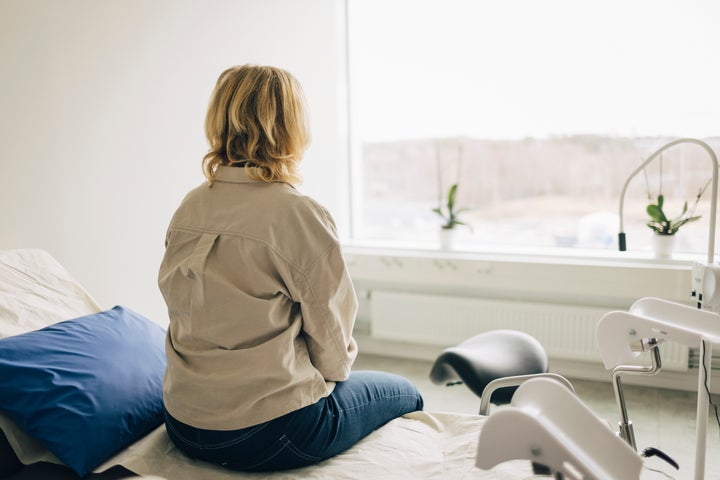
My mother wouldn’t want me to talk about this; not here, where everyone can see me. What isn’t pretty should be handled privately… or so she taught me, and her mom taught her, and so on and so forth. But the page is a place of connection. If I’m not fully present here, then what’s the point?
To put it bluntly, my organs are falling out. That’s a slight exaggeration. “Descending” is more accurate. However I frame it, it’s a disconcerting thought. My uterus, well, there’s a sign on that one that reads, “We’re done here!” But my bladder and my rectum, though performing their functions poorly, still seem necessary. I can’t have them planning their escapes.
Advertisement
The news of my organs descending surprised me. Like many women following childbirth, I’ve struggled with “peezing” (a word contributed by Liz Lemon from “30 Rock”) and other mild forms of stress incontinence for a long time. But since my mid-40s, those problems have intensified alongside a more troubling inability to defecate completely.
So after probing in hard-to-reach places, a urogynaecologist pronounces me prolapsed. According to a handout my doctor gave me by the American Urogynaecologic Society, pelvic organ prolapse, or POP, “occurs when the pelvic floor muscles and connective tissue weaken or tear. This causes the pelvic organs to fall downward into the vagina, similar to a hernia. Women may feel or see tissue coming out of the opening of their vagina as this progresses.”
POP can happen for a variety of reasons, among them muscle and nerve damage from pregnancy and childbirth, hormonal changes related to menopause, constant straining due to constipation, repeatedly lifting heavy objects and genetic predisposition.
Advertisement
To investigate the possible relationship between my prolapsing organs and my constipation, my doctor suggests that I undergo what feels like a new level of humiliation called a defecography. It’s not like a colonoscopy, where you theoretically sleep through the entire thing. In this case, medical professionals watch you poop while you are alert and fully present, live and on-camera. The test reveals whether there is some anatomical reason why you can’t eliminate properly.
I wonder if it’s worth it. Maybe I should just embrace my “pooping problem,” as my youngest calls it, and limp along without additional interventions. I can just live with the prolapses for now, right? It seems like the easiest and most peaceful route sometimes — just settling. But we all want more, don’t we? We want true healing. We want to feel better. We want to be fully restored.
I remain stubbornly curious about what could be, and schedule the test. But I give myself permission to say “no” the morning of — “no” when I get there and see what awaits me, “no” when they ask me to… you get the idea. I’ve never used the “no,” but having it emboldens me to be braver than I am.
Advertisement
“My doctor suggests that I undergo what feels like a new level of humiliation called a defecography. It’s not like a colonoscopy, where you theoretically sleep through the entire thing. In this case, medical professionals watch you poop while you are alert and fully present, live and on-camera.”
A defecography turns out to be as pleasant as it sounds. You suck down a bunch of barium and load yourself up vaginally with barium paste. The nurse then pages the radiologist: “The defo (that’s me) is ready.” She notices I’m listening to her — What else would I be doing? — and looks a little embarrassed. She apologises quickly for referring to me as “defo,” saying it’s only to prepare the radiologist for what he’s about to do. I guess referring to me as a person is too much work.
Then the radiologist arrives, explains the process, and inserts a large amount of barium paste into my rectum via syringe. If you have other anal issues like I do…a fissure, haemorrhoids, that last part is especially unpleasant. It’s hard not to feel violated unless your radiologist is gifted with an unusual amount of finesse. Mine was not.
Advertisement
Next is the fun part. You sit on an elevated platform sporting a special commode. With the radiologist and nurse next to you, you defecate on camera and on command. The radiologist stares at a screen to judge how well you eliminate and gathers evidence revealing why you cannot void completely. In my case, he found that my uterus descends and pinches off part of my rectum when I bear down, so I can only partially evacuate. Hooray? Maybe. I cry all the way home.
When I see my urogynaecologist several weeks later, she’s elated: “I’m so glad that I can do something to help you!” She’s a good doctor. She explains that she’d like to insert a silicone device called a pessary up into my vagina. It’s designed to hold up my uterus and prevent it from pinching off my rectum.
The pessary looks like a mushroom with a top that secures via suction and a long stem that extends down to my vaginal opening. Once I’ve assumed the position, she requests that I ready myself and relax. That doesn’t bode well. With significant force, she installs the medieval workhorse. According to the nurses, she “places” the pessary, but what I experience feels more like a pain-inducing shove. I arrive home feeling like I’ve got a tampon protruding and a little askew. I’m supposed to function like this for 2-3 weeks.
Advertisement
Unfortunately, the pessary changes nothing. The pooping problem persists. My urogynaecologist explains that she could still surgically fix the prolapses, pin up or remove my uterus, in hopes that stooling would improve. She looks at me: “What do you think we should do?”
My internal response is paradoxical. One part of me screams, What!?! YOU are supposed to be the expert! Why are you asking ME!?! The other ruminates, Thank you for acknowledging that I might have some wisdom to contribute.
“I’ll have to think about it.”
The end? Not really, and I hope not. But this is where we all are a lot of time. In between. In process. Unresolved. We all wander around hurting sometimes and can’t fix it. We’re all trying to make meaning of suffering while we wait for change.
Advertisement
But wherever this path takes me, I’m done with pretty and private. I’m done with the societal expectation that women’s bodies should look the same regardless of the trauma they have sustained, that aging should be invisible. My body is a ragged landscape of stories that I think I’m meant to tell. I am more than pretty. I am wildly, uncomfortably, unapologetically, fearfully resilient.
Some research suggests that reading twice a week or more can lead to decreased cognitive impairment, while neurologist and author of How To Prevent Dementia, Dr Richard Restak, said: “Reading for pleasure is perhaps the single most effective activity you can engage in for increasing cognitive reserve”.
Why might listening to music decrease dementia risk?
In this study, scientists looked at 10,893 Australian participants who were aged 70 and older.
None of them had dementia when the study began.
The researchers used Cox proportional hazard regression models to work out whether participants’ levels of music engagement (be it listening to music, playing an instrument, or a combination of both) seemed to be linked to their dementia risk from year three of the sudy onwards.
Advertisement
They found that “always” listening to music was associated with a 39% lower risk of developing dementia among their participants, compared to those who “never,” “rarely,” or “sometimes” did.
Playing an instrument was linked to 35% less risk, meanwhile, and those who both played an instrument and listened to music appeared to be 33% less likely to develop the condition too.
Listening to, and playing, music (as well as doing both) was also linked to less cognitive impairment in this study.
Advertisement
These findings seemed to be stronger among participants who’d had over 16 years of education.
“These results highlight music as a potential promising, accessible strategy to help reduce cognitive impairment and delay the onset of dementia in later life,” the paper reads.
Does this definitely mean listening to music will prevent dementia?
No. It only found a link, and not a cause – we can’t say from this data that listening to music is the reason people with the hobby were less likely to develop dementia.
Advertisement
Study senior author Professor Joanne Ryan, however, said: “With no cure currently available for dementia, the importance of identifying strategies to help prevent or delay onset of the disease is critical.
“Evidence suggests that brain ageing is not just based on age and genetics but can be influenced by one’s own environmental and lifestyle choices.”
She continued: “Our study suggests that lifestyle-based interventions, such as listening and/or playing music can promote cognitive health.”
Gulp-inducing news for the newly-engaged – it turns out the average cost of a wedding in the UK is currently around £23,250.
Which, I’m sure, makes the roughly 20% of guests who don’t show up despite RSVP-ing yes quite a challenging issue to reckon with.
Advertisement
But if you’re put in that frustrating situation, what are you meant to do about it?
Well, Redditor u/KeyManufacturer9764 says his friend had a pretty simple solution: when the poster cancelled on his pal’s wedding, he asked for cold, hard cash.
We asked Zoe Burke, leading wedding expert at Hitched.co.uk, and founder of Etiquette Expert, Jo Hayes, what they thought of the move.
Advertisement
The original poster (OP) cancelled last-minute
The Redditor, who introduced his friend to his now-wife, shared that he’d fully intended to attend and had booked a hotel.
But due to an “important work visitation” in France, he cancelled the wedding. In the comments, OP said he stated he wouldn’t be coming 12 hours before he’d have travelled, and 48 hours before the wedding itself.
“I know how insanely annoying it is with people cancelling, especially weddings late on, but I had no option for my future business, and [the work] will massively help me financially,” he continued.
Advertisement
He offered to send his wedding gift to his “disappointed” friend’s home address. And while sharing his details, the friend reportedly said: “By the way, as you’ll be missing the food, can you send the money to cover [your] empty spot, which is £95 per head”.
The poster said that the price is “taking the p*ss” for what he sees as a simple meal, and asked, “AITA if I question it or do I just send the money and stop complaining?”
Advertisement
The move is “valid”
Speaking to HuffPost UK, wedding expert Burke said: “I do think that it is valid to charge people who cancel at the very last minute”.
Despite the poster’s comment about the price of the meal “taking the piss”, she explained that “the average wedding guest costs couples £261, [so] it makes sense that they would want to recoup some of the costs – because they could have invited someone else if they’d had more notice”.
She continued, “It’s really poor etiquette, unless it’s a medical emergency or something that you know really cannot be avoided.
Advertisement
“It’s not just the fact you’re putting the couple out of pocket, but so many other things will be put out too; the table plan, the wedding favours, the personal touches that go along with being a guest at a wedding – it’s so much more than just not turning up for dinner.”
Etiquette expert Hayes agreed that “few people, with any level of decency, would pull out of a wedding with such late notice.”
Still, she said that in general – not in this specific case – “Bridal couples do well to have grace for their guests in such instances, and simply absorb the cost”.
Just like baby names, dog names ebb and flow in popularity each year depending on pop culture, traditions and more.
One year, you may run into dozens of dogs named Ollie at the dog park, just for lots of pups named Luna to appear a few years later.
Advertisement
This year, though, many dog owners stuck to certain trending names, according to a report from online pet supply retailer and pharmacy Chewy, which uses data from the profiles users make for their pets to determine pet name trends and name popularity throughout the country.
When signing up for an account, users input the name of their dog, their pet’s birthdate and the type of dog they have, Ciara Lavelle, pet expert at Chewy, told HuffPost via email.
“By looking at this aggregated information, we can see which dog names are trending and celebrate the most popular picks of the year,” Lavelle said.
Advertisement
According to this year’s data, the top 10 dog names for both male and female dogs are:
Bella
Luna
Daisy
Lucy
Max
Charlie
Bailey
Cooper
Buddy
Sadie
Getty Images
Charlie and Luna are among the most popular dog names of the year.
Beyond the top 10, names like Cheeto, Brisket and Elphaba are also becoming more popular.
Even if your pup’s name doesn’t fall within the top 10 most popular, there’s a chance their moniker is still part of a larger movement.
According to Lavelle there are some “really fun dog name trends” going on this year; for example, food-inspired names are growing in popularity. “Cheeto and Pickles both rose about 25% in popularity since 2024, and Brisket is up 68%,” Lavelle said.
Advertisement
The popularity of the film “Wicked,” the first part of which was released in November 2024, also inspired some pup names, she noted. The name Elphaba, which is the name of the Wicked Witch of the West (played by Cynthia Erivo), has grown in popularity by 200% since last year, along with its nickname Elphie. The name Glinda, which is the name of the Good Witch (played by Ariana Grande), has grown by 175% this year.
A few other pop-culture names were favored this year, too. “Plenty of pups were named in homage to Ozzy Osbourne, who passed away earlier this year. We’re seeing a 15% bump in dogs named Ozzy,” Lavelle said.
The popularity of this past season of “The White Lotus” also inspired 2025 dog names. “Remember the ‘Piper, no!’ meme from the last season of ‘The White Lotus’? We can’t prove there’s a connection, but Piper as a pet name is up 33% since last year,” added Lavelle.
Advertisement
What to keep in mind when naming your pet, according to an expert.
Naming your dog can feel like a tall task. Will it match their personality? Do they look like their name? Or does it sound too much like your nephew’s name?
“You can take inspiration from just about anything as you’re naming your dog — their color, their personality, or your favorite movies or musicians,” Lavelle said.
If you need some inspiration beyond the name’s Chewy has identified this year, American Kennel Club has a helpful list of ideas, including unique names, trending names and classic ones. (Storm, JoJo, Scout, Zeke, Kona and Jax are just several of the names on this list.)
Advertisement
It is important to remember that your dog’s name isn’t something that only your pup will hear. “You’re going to be yelling it at the dog park and responding to it at the vet’s office, so if you decide on something silly, be prepared to own it,” Lavelle said.
As long as you pick a respectful, not-offensive name, you really can’t go wrong.
“No matter what you choose, your dog will love it,” said Lavelle — “because it’s how they’ll be called by their favourite person.”