Olympic medallist Tom Daley, whose father died of a brain tumour, backs efforts to fund the research.


Olympic medallist Tom Daley, whose father died of a brain tumour, backs efforts to fund the research.
The city of 11 million people is known to be the site where the coronavirus first emerged in 2019.
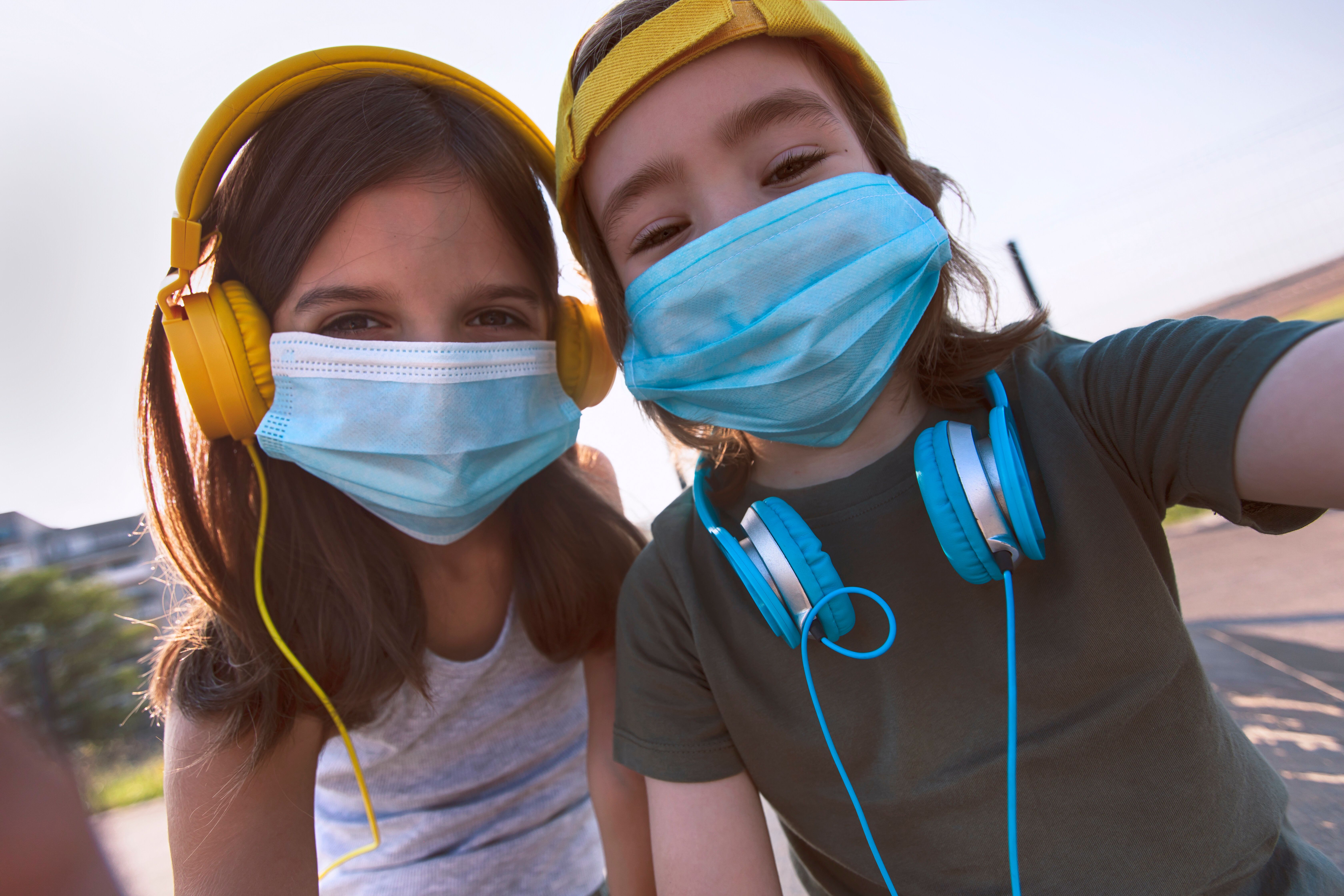
The Covid-19 pandemic changed all of our lives, but for developing children, its impact may have more long-term effects.
“Every child’s experience of the pandemic is different based on their temperament and their home life,” Jacqueline P Wight, director of mental health services at DotCom Therapy, told HuffPost. “Many children have experienced mental health challenges, and we anticipate that for some of these children, there will be lasting effects. For others, the challenges were more situational and will subside as life returns to normal.”
Advertisement
There’s no easy way to know which camp your child may fall into, but parents can take note as the situation evolves.
“Children are starting to experience the ripple effects from the collective trauma of the pandemic, and the long-term implications of this ‘lost’ pandemic year may not be fully understood for years to come,” said licensed clinical social worker Nidhi Tewari.
Advertisement
“The good news is that children – and humans in general – are resilient beings, and we will begin to recalibrate as the threat of Covid-19 dissipates in the coming months and years,” she added. “If we take steps to attend to our mental health and well-being now, then we can mitigate some of the long-term impact of this pandemic.”
Ultimately, awareness is key. Below, Wight, Tewari and other experts share some potential long-term changes for parents to keep in mind as they guide their children through the coming months and years.
Advertisement
With the current Covid-19 death toll at more than 4 million worldwide, countless children have been exposed to loss and grief during the pandemic. For many, this may have been their first experience with death.
“For the thousands who lost parents, grandparents and other loved ones, the loss is immeasurable, and grief and bereavement can take many forms,” said Dr. Ilisse Perlmutter, director of child and adolescent psychiatry at Talkiatry.
Even those who haven’t lost a loved one may have felt grief over lost experiences or opportunities. Parents should be prepared to help their children cope with grief and understand that it’s all part of the human experience.
Advertisement
“While it is easier said than done, it is best not to overthink the possible losses that children have experienced during the pandemic,” said Wight. “They have lived through a profoundly unique and powerful experience. They have gained skills as well as understanding during this time.”
“Through the pandemic, there were significant increases in children and adolescents reporting anxiety and depressive symptoms, and this will likely continue trending upwards,” Tewari said.
The data doesn’t look great. A report from Save the Children found that the Covid-19 pandemic has had a “devastating” impact on families’ and children’s emotional health in the US.
“We will see on the negative side increased vulnerability to anxiety-based disorders such as eating disorders and pressure on children and adolescent mental health services,” said psychotherapist Noel McDermott. “Investment in mental well-being needs to increase and the whole needs of our kids considered.”
While many parents are anxious about their children catching up academically, McDermott believes kids have gained the perspective to recognise the other important issues in life – which isn’t necessarily a bad thing.
“We have a lot of choice about how to frame this for ourselves and for our kids,” he said. “Whilst we have seen an increase in anxiety disorders and depressive disorders during this time in kids, if we respond well to this with effective support, positive skills can be learned by kids about how to manage challenge and there can be improved resilience going forwards.”
“Many children may continue to struggle with social anxiety due to the isolation of the past 1.5 years, so gradual exposure to social situations and redeveloping social skills will be essential in helping them in [reacclimatising],” Tewari said.
Dr Dyan Hes, founder of Gramercy Pediatrics, said she’s concerned about childhood development, particularly with the littlest of little ones, as the most rapid brain growth occurs from birth until the age of three. Missing out on interactions with others may have fostered a sense of social isolation that will need to be overcome.
Advertisement
“These children have not seen many facial expressions behind masks, they have not learned to navigate the social skills needed to play with other toddlers or even the motor skills to run on a playground,” she explained. “As a paediatrician, I wholeheartedly encourage families to send their children to school, camp or day care. The benefits far outweigh the risks, unless their child has a medical condition that would make Covid life threatening. … We need our children to reemerge into society and we need all adults to be vaccinated for this to happen.”
“We do know that kids from already stressed and underresourced communities were more adversely affected during the pandemic.”
– Dr Helen Egger, child psychiatrist and co-founder of Little Otter
All of the mania around sanitising and disinfecting may also have a long-term impact on some children.
“There could be increases in illness anxiety disorder due to fears of catching the virus and having to maintain the strict hygiene protocols that have been necessary through the pandemic,” Tewari said.
“Most people’s nervous systems are dysregulated due to the pandemic’s threat to our safety and health, so it will take time for our brains and bodies to recover after the pandemic ends,” she added. “As a result, we may feel disoriented, and have a hard time believing that life can ever be ‘normal’ again.”
Anxiety around illness may also mean some children feel a fear or discomfort around going outside.
“I have noticed many kids who have never climbed up the playground ladder, learned how to ride a scooter or a bike,” Hes said. “These kids have been kept indoors for fear of Covid because they are too young to be vaccinated. I try to encourage parents to take kids out to get fresh air, run and play.”
Although we can’t yet fully know the extent of the pandemic’s lasting impact on children’s academic performance or development, there are certain trends that are already very clear.
“We do know that kids from already stressed and underresourced communities were more adversely affected during the pandemic,” said Dr. Helen Egger, a child psychiatrist and co-founder of Little Otter. “Widening inequality for children may be one of the worst impacts of the pandemic.”
Advertisement
From economic challenges to mental health struggles, many existing gaps between populations have worsened during the pandemic, and children are bearing much of the brunt.
“Children who were struggling before the pandemic may lag further behind,” Perlmutter said. “Youngsters who are homeless, have disabilities, subjected to racial violence are especially at risk.”
The impact of the pandemic isn’t entirely terrible. Wight pointed out a silver lining of living through such “unprecedented times” unlike anything kids have experienced before.
“It’s important not to overlook that children will also have special or positive memories related back to the pandemic,” Wight said. “They might remember having more quality family time, a slower pace of life, FaceTiming with family members across the country and new hobbies they developed while at home.”
McDermott highlighted other positive aspects – like spending more time with family and the refreshing old routines.
“The ‘interruption’ to the treadmill of school, university and jobs can also be viewed positively as it has allowed time to focus on important relationships in our lives,” he said.
Although the pandemic brought social isolation, it also fostered a sense of global community. There’s also a universality to the experience, which creates common ground for children growing up with the trauma of Covid-19.
“As a global event, there is a shared experience for all the world’s children,” McDermott said. “As has been shown around issues such as climate change, kids are truly amazing at seeing their connections and joining together. Is this the global generation? Some of us hope so.”
Advertisement
He also emphasised the power of the internet in allowing children to connect to each other even amid their isolation.
“The hegemony of online experience has moved forward and we will see this generation more connected to that and connected to global voices and experiences,” McDermott said.
“Despite the horror of this devastating year, understanding that in the face of trauma and this public health disaster we have the capacity for resilience has been comforting and grounding,” Perlmutter said. “Marking life events and celebrations in the usual ways was disappointing but not out of the question. Watching the grace and enthusiasm of high school seniors’ graduation ceremonies in living rooms, drive-by birthday celebrations, Zoom visits with grandparents, and bar and bat mitzvahs and confirmations on Zoom was humbling. It gives me hope.”
Throughout the pandemic, children have learned to cope with many unforeseen changes and challenges. While the experience wasn’t always positive, it fostered major growth and resilience.
Wight encouraged parents to keep this bright side in mind as we continue to work through the evolving situation.
“It is critical for parents to manage their own distress and worries, as it directly impacts their children’s well-being,” she said. “It is most helpful to focus on the resilience of children and to give them many opportunities to return to play and the work of being children.”
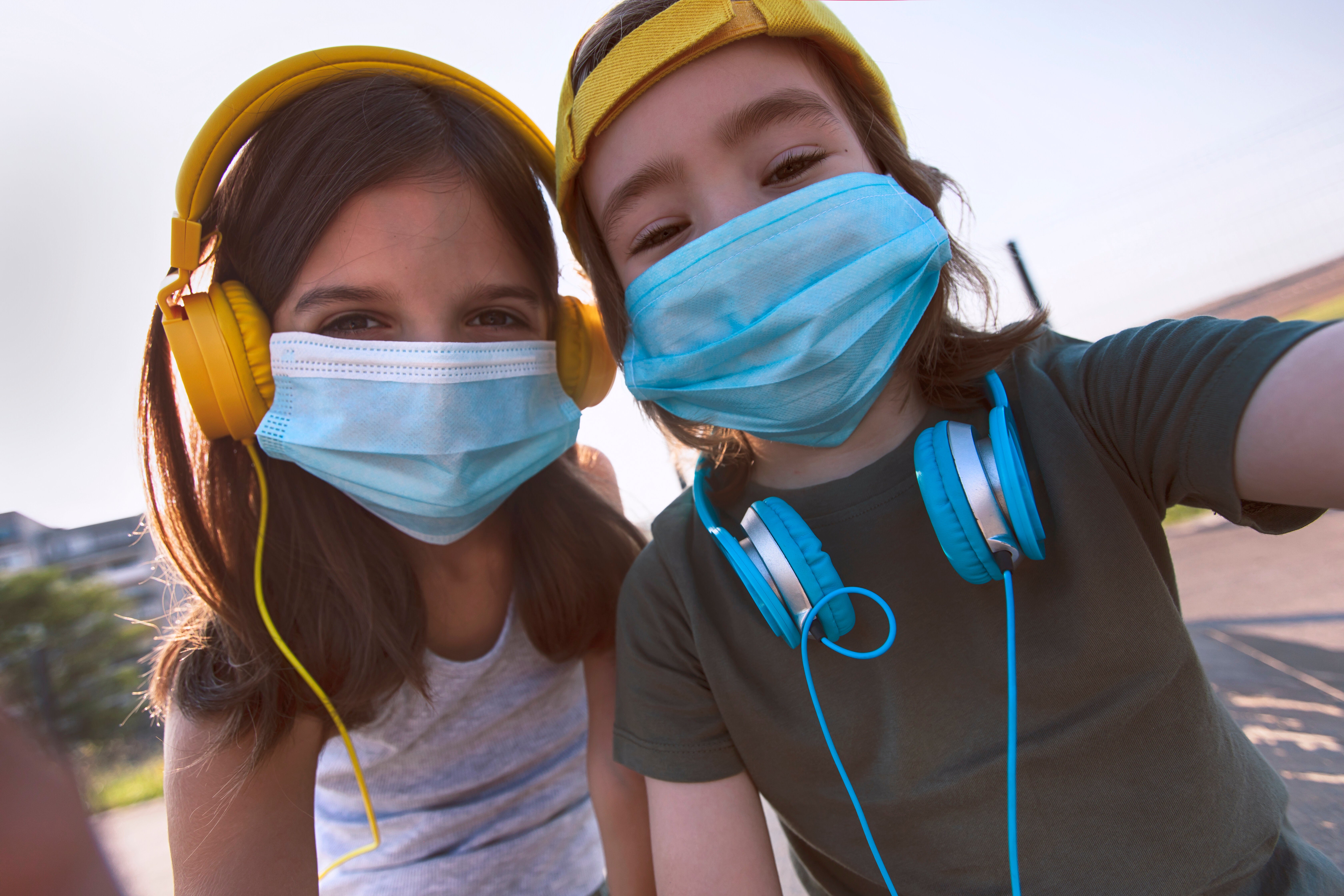
Small talk is something many of us avoided even before the pandemic, and neither months of social distancing or the awkward return of socialising has made it easier – but it’s something that can still save lives.
That is the message from Samaritans, as the mental health charity and helpline relaunches its campaign to raise awareness about the role small talk can play in preventing suicide on the railways and in other public settings.
Advertisement
The ‘Small Talk Saves Lives’ campaign has run in partnership with Network Rail, British Transport Police and the rail industry since 2017. But as the UK steps out of lockdown, it is focusing on rebuilding public confidence to trust our gut and start conversations with anyone who looks as though they may need help.
Brits are known for being quite reserved, especially in public. We rarely go out of our way to speak to strangers and keep ourselves to ourselves. But engaging in the smallest of conversations – it could be as simple as asking “hello, what’s the time?” – may help interrupt someone’s suicidal thoughts, Samaritans says.
Advertisement

The pandemic has had a huge impact on mental health – and while it may have made the idea of small talk more daunting, it has also made us value a sense of community.
Dom, who prefers not to give his surname, knows how important small talk can be. As a teenager, he was experiencing suicidal thoughts but was interrupted at a crucial moment by someone who used small talk to ask if he was ok.
Advertisement
“When I was 19 years old, I was struggling to cope and didn’t know where to turn,” he tells HuffPost UK. “I was on my way to university one day and found myself thinking about ending my life. A lady came over and started a conversation with me and when I heard her ask, “are you ok?” it instantly snapped me out of thinking about harming myself.”
Dom, who now works for Network Rail himself, says he’s supporting the ‘Small Talk Saves Lives’ campaign because it saved his.
“From my own experience, I know suicidal thoughts can be interrupted and it was the kindness behind the small talk that also made a difference to me,” he says. “That human connection made me feel seen.
Working in the railway sector for almost a decade, Dom has used small talk on several occasions when someone’s behaviour has concerned him.
Advertisement
There aren’t “typical” signs someone might need help, Dom says. “When I’ve approached people, sometimes it’s because they’ve looked withdrawn, distant, or upset. Other times, they seem completely calm, but I’ll notice that they’re in an unusual location in relation to the environment. I would say, if you get a sense that something might be wrong, trust your instincts and start a conversation – as I’ve experienced, you could save a life.”
The public is better prepared for these interventions that you might expect.
A YouGov survey for Samaritans found over three quarters (78%) of UK adults have engaged in small talk during the pandemic – 37% of those surveyed said they had chatted with neighbours they hadn’t spoken to before and 37% with strangers at the supermarket.
Almost one in five said they are also more likely to want to make small talk with a stranger face-to-face not that restrictions are lifted. Given that small talk makes 57% of respondents feel less lonely and boosts the mental health and wellbeing of a further 45%, there’s potential to make a real difference here.
Of course, starting a conversation with a stranger can be difficult and it’s natural to feel nervous.
“If you spot someone you’re worried about and aren’t comfortable approaching them, then that’s completely fine as well,” Dom says. “You can still act by trying to find someone else who might be able to help, for example, a member of staff or police officer, or you can call 999 in an emergency.”
But with everything that’s happened in the past 18 months, Dom is optimistic that people can make a difference. “One thing I’ve noticed is the pandemic seems to have brought out a greater sense of community,” he says.
“I think we all recognise how important human connection is and that checking in on each other – whether it’s a friend or family member, a neighbour or key worker you’ve never spoken to before – can make a huge, positive difference to someone else’s day, as well as your own.”
Useful websites and helplines
Samaritans offers a listening service which is open 24 hours a day, on 116 123 (UK and ROI – this number is FREE to call and will not appear on your phone bill).
Advertisement
Mind, open Monday to Friday, 9am-6pm on 0300 123 3393.
CALM (the Campaign Against Living Miserably) offer a helpline open 5pm-midnight, 365 days a year, on 0800 58 58 58, and a webchat service.
The Mix is a free support service for people under 25. Call 0808 808 4994 or email help@themix.org.uk
Rethink Mental Illness offers practical help through its advice line which can be reached on 0808 801 0525 (Monday to Friday 10am-4pm). More info can be found on rethink.org.



If you’re watching a film or TV show and see a young woman dressed all in black with a grungy hairstyle and a resting bitch face, be warned – she’s probably a feminist character written by a man.
Or perhaps there’s an impossibly attractive woman doing some cooking, alone, wearing just an oversized white T-shirt and socks, as she dances around the kitchen, using a whisk as a microphone.
Advertisement
Such is the single dimension of some women characters on screen and in fiction, often written by men. And TikTokkers are exposing the lazy writing.
Female creators on the video-sharing app are acting out all the unrealistic ways women are often characterised: sexy, seductive, clumsy, and whimsical, their looks and tics a cue to their inner soul.
Advertisement
Actor and content creator Caitlin Reilly was among the first to the trend, satirising how a woman in sci-fi films is often depicted: you know, the geeky scientist who probably wears glasses and keeps her hair in a tight ponytail, and is so dedicated to her work, she has no time for love or a social life.
Reilly’s breakout video, which includes such lines as “I’m a woman and a scientist, I can’t be both good at my job and nice”, has been watched more than a million times.
Advertisement
She has also mocked action movies for the way they paint women; helpless, emotional, forgetful. “I forgot the box of things that are very special to me, I have to go back”, and the hysterical mum shouting “please find my daughter,” are lines that have seriously tickled her Instagram followers, too.
Over on TikTok, the trend has blown up in recent days, soundtracked by Portishead, as young women ridicule the way they’re written into fiction in the most mundane scenarios, from having breakfast to going to sleep, from putting on their makeup to taking it off, from reading to dating to chewing gum.
In one clip, a woman experiencing a break-up sits wistfully, wearing just a top – many of these portrayals are trouser-less – as she licks ice cream seductively off a spoon. Ice cream is a big thing in the land of the male gaze, it seems.
Advertisement
In fact, many of these #writtenbymen clips are tagged #malegaze, spreading feminist theory about the problems with women being depicted from a masculine and heterosexual (indeed sexual) perspective to a new generation.
As well as drawing attention to sexism in screenwriting, some of the videos also touch on long-established and fetishising depictions of women of colour, of disabled women, and of trans women, as shown by creator AJClementine.
You’ll see what we mean when you check out others videos tagged into the trend. And while you’re watching them, please remember no woman in history has ever taken off her glasses to realise that she was beautiful all along.
She was “all that” already – without the nerd-to-hottie makeover by a man.


Covid-19 cases continue to rise in Kerala despite the waning of the second wave elsewhere in India.
David Peace intends to travel abroad to end his life before his motor neurone disease deteriorates further.

A study published June 16 in Biotropicaby a team of researchers at the University of Washington, the UW Burke Museum of Natural History and Culture, WWF Hong Kong and the University of Colombo has provided an important road map to conserving rough-nosed horned lizards in Sri Lanka.
Rough-nosed horned lizards, or Ceratophora aspera, are small lizards that live in Sri Lankan rainforests and aren’t found anywhere else in the world. Characterized by the prominent horn in males, rough-nosed horned lizards live in moist, humid microhabitats in rainforests and palm groves. These lizards are particularly well-suited to understand the consequences of rainforest habitat destruction, climate change and the pet trade, as they are found throughout the lowland rainforests of Southwestern Sri Lanka. By analyzing the certain types of mutations in the genome of these lizards, the team was able to determine how geography and historical events impact the distribution of the remaining wild populations of rough-nosed horned lizards. Recent UW graduate Shanelle Wikramanayake led the study as part of her undergraduate work, and is now completing her master’s degree at California State University, Northridge.
The team acquired DNA from the rough-nosed horned lizards by a catch-and-release approach of capturing wild lizards and taking tissue samples from the tips of their tails before releasing them back to the wild, which minimizes stress to the animals. Samples were taken across eight forests representing four forest groups from July through September 2018 and 2019, respectively. The remaining tissue samples will be housed along with photos of the lizards at the Department of Zoology and Environment Sciences at the University of Colombo. In addition, the DNA analysis from the team’s work is also available online, where the samples and analysis are available for other researchers around the globe to study.
In addition to habitat destruction, nonnative species like cats and chickens eat these lizards, causing further harm to them and other prey animals. The team recommends a conservation strategy that considers the population structure, history and ecology of rough-nosed horned lizards to preserve genetic diversity.
The results from the DNA analysis found rough-nosed horned lizards are separated by distance into four forest groups: Southern Lowlands, Sabaragamuwa Hills, Central Highlands and Kithulgala. With the Sri Lankan government pledging to restore rainforest habitats, the results from the study can help inform guidelines for forest landscape restoration. For example, the similarities in populations and close geographic proximity between the lizards living in the Hiyare and Kottawa forest reserves in the Southern Lowlands forest group is a great candidate for habitat restoration. The two populations could be reconnected, increasing the chances for interbreeding, which could result in a stronger gene pool for future generations and less vulnerability to extinction.
“I hope this study brings attention to the unique and obscure biodiversity in the rainforests of Sri Lanka that require urgent conservation action,” said Wikramanayake. “It’s important to consider the genetic diversity in populations across their range when looking at conservation planning and strategies. This principle should also be considered in other forest ecosystems, where conservationists are planning restoration and habitat connectivity at landscape scales.”
In addition to these lizards, the researchers are currently considering extending this work to other animals and other regions of Sri Lanka of high conservation value. In Sri Lanka, approximately 14% of mammals, 6.5% of birds, 75% of reptiles and 29% of flowering plant species aren’t found anywhere else in the world. The methods of DNA analysis in this study not only inform conservation planning in Sri Lanka, but they also can be applied to species living in other rainforests that are at risk, including Madagascar, Borneo and the Amazon.
“I am proud and impressed with the hard work and passion that Shanelle Wikramanayake put into her project,” said Adam Leaché, UW biology professor and Burke Museum curator of herpetology and genetic resources. “The Burke Museum is lucky to recruit such amazing undergraduates.”
Story Source:
Materials provided by University of Washington. Original written by Andrea Godinez. Note: Content may be edited for style and length.

In a study led by the University of Bonn (Germany), geologists compared the spatial and temporal distribution of methane concentrations in the air of northern Siberia with geological maps. The result: the methane concentrations in the air after last year’s heat wave indicate that increased gas emissions came from limestone formations. The study is published in the journal Proceedings of the National Academy of Sciences (PNAS).
What effect did the heat wave of summer 2020 have in Siberia? In a study led by the University of Bonn (Germany), geologists compared the spatial and temporal distribution of methane concentrations in the air of northern Siberia with geological maps. The result: the methane concentrations in the air after last year’s heat wave indicate that increased gas emissions came from limestone formations. The study is published in the journal Proceedings of the National Academy of Sciences (PNAS).
Permanently frozen permafrost soils cover large areas of the northern hemisphere, especially in northern Asia and North America. If they thaw in a warming world, this can pose dangers, because CO2 and methane are released during thawing — and amplify the anthropogenic greenhouse gas effect. “Methane is particularly dangerous here because its warming potential is many times higher than that of CO2,” explains Prof. Dr. Nikolaus Froitzheim from the Institute of Geosciences at the University of Bonn. Pessimists therefore already spoke of an imminent “methane bomb.” However, most previous projections showed that greenhouse gases from thawing permafrost will contribute “only” about 0.2 degrees Celsius to global warming by 2100. This assumption has now been challenged by a new study by Nikolaus Froitzheim and his colleagues Jaroslaw Majka (Krakow/Uppsala) and Dmitry Zastrozhnov (St. Petersburg).
Most previous studies only dealt with emissions from the decay of plant and animal remains in the permafrost soils themselves. In their current study, researchers led by Nikolaus Froitzheim made a comparison between methane concentrations in Siberian air, determined by satellite-based spectroscopy, and geological maps. They found significantly elevated concentrations in two areas of northern Siberia — the Taymyr Fold Belt and the rim of the Siberian Platform. What is striking about these two elongated areas is that the bedrock there is formed by limestone formations from the Paleozoic era (the period from about 541 million years ago to about 251.9 million years ago).
In both areas, the elevated concentrations appeared during the extreme heatwave in summer 2020 and persisted for months after. But how did the additional methane occur in the first place? “The soil formations in the observed areas are very thin to nonexistent, making methane emission from the decay of organic soil matter unlikely,” says Niko Froitzheim. He and his colleagues therefore suggest that fracture and cave systems in the limestone, which had been clogged by a mixture of ice and gas hydrate, became permeable upon warming. “As a result, natural gas being mainly methane from reservoirs within and below the permafrost can reach the Earth’s surface,” he says.
The scientists now plan to investigate this hypothesis by measurements and model calculations to find out how much and how fast natural gas may be released. “The estimated amounts of natural gas in the subsurface of North Siberia are huge. When parts of this will be added to the atmosphere upon thawing of the permafrost, this could have dramatic impacts on the already overheated global climate,” emphasizes Niko Froitzheim.
The universities of Bonn, Uppsala and AGH Krakow as well as the Karpinsky Russian Geological Research Institute in St. Petersburg were involved in the study.
Story Source:
Materials provided by University of Bonn. Note: Content may be edited for style and length.

About 2,000 light-years away from Earth, there is a star catapulting toward the edge of the Milky Way. This particular star, known as LP 40?365, is one of a unique breed of fast-moving stars — remnant pieces of massive white dwarf stars — that have survived in chunks after a gigantic stellar explosion.
“This star is moving so fast that it’s almost certainly leaving the galaxy…[it’s] moving almost two million miles an hour,” says JJ Hermes, Boston University College of Arts & Sciences assistant professor of astronomy. But why is this flying object speeding out of the Milky Way? Because it’s a piece of shrapnel from a past explosion — a cosmic event known as a supernova — that’s still being propelled forward.
“To have gone through partial detonation and still survive is very cool and unique, and it’s only in the last few years that we’ve started to think this kind of star could exist,” says Odelia Putterman, a former BU student who has worked in Hermes’ lab.
In a new paper published in The Astrophysical Journal Letters, Hermes and Putterman uncover new observations about this leftover “star shrapnel” that gives insight to other stars with similar catastrophic pasts.
Putterman and Hermes analyzed data from NASA’s Hubble Space Telescope and Transiting Exoplanet Survey Satellite (TESS), which surveys the sky and collects light information on stars near and far. By looking at various kinds of light data from both telescopes, the researchers and their collaborators found that LP 40?365 is not only being hurled out of the galaxy, but based on the brightness patterns in the data, is also rotating on its way out.
“The star is basically being slingshotted from the explosion, and we’re [observing] its rotation on its way out,” says Putterman, who is second author on the paper.
“We dug a little deeper to figure out why that star [was repeatedly] getting brighter and fainter, and the simplest explanation is that we’re seeing something at [its] surface rotate in and out of view every nine hours,” suggesting its rotation rate, Hermes says. All stars rotate — even our sun slowly rotates on its axis every 27 days. But for a star fragment that’s survived a supernova, nine hours is considered relatively slow.
Supernovas occur when a white dwarf gets too massive to support itself, eventually triggering a cosmic detonation of energy. Finding the rotation rate of a star like LP 40?365 after a supernova can lend clues into the original two-star system it came from. It’s common in the universe for stars to come in close pairs, including white dwarfs, which are highly dense stars that form toward the end of a star’s life. If one white dwarf gives too much mass to the other, the star being dumped on can self-destruct, resulting in a supernova. Supernovas are commonplace in the galaxy and can happen in many different ways, according to the researchers, but they are usually very hard to see. This makes it hard to know which star did the imploding and which star dumped too much mass onto its star partner.
Based on LP 40?365’s relatively slow rotation rate, Hermes and Putterman feel more confident that it is shrapnel from the star that self-destructed after being fed too much mass by its partner, when they were once orbiting each other at high speed. Because the stars were orbiting each other so quickly and closely, the explosion slingshotted both stars, and now we only see LP 40-365.
“This [paper] adds one more layer of knowledge into what role these stars played when the supernova occurred,” and what can happen after the explosion, Putterman says. “By understanding what’s happening with this particular star, we can start to understand what’s happening with many other similar stars that came from a similar situation.”
“These are very weird stars,” Hermes says. Stars like LP 40-365 are not only some of the fastest stars known to astronomers, but also the most metal-rich stars ever detected. Stars like our sun are composed of helium and hydrogen, but a star that has survived a supernova is primarily composed of metal material, because “what we’re seeing are the by-products of violent nuclear reactions that happen when a star blows itself up,” Hermes says, making star shrapnel like this especially fascinating to study.
Story Source:
Materials provided by Boston University. Original written by Jessica Colarossi. Note: Content may be edited for style and length.
