This AI app can tell which dinosaur made a footprint

A newly developed app powered by artificial intelligence (AI) is giving scientists and the public a new way to identify dinosaur footprints left behind millions of years ago, according to a recent study. The technology aims to make sense of fossil tracks that have long challenged researchers.

For many years, paleontologists have studied ancient footprints while debating what kinds of animals created them. Some tracks may belong to meat eating predators, others to plant eating dinosaurs, and some have even raised questions about whether early bird species were involved.

Turning Photos Into Instant Analysis

With the new DinoTracker app, researchers and dinosaur fans can upload a photo or drawing of a footprint using a mobile phone and receive an immediate analysis. The app evaluates the shape and structure of the track to estimate which type of dinosaur likely made it.

Fosilized dinosaur footprints offer valuable insight into prehistoric life, helping scientists understand how dinosaurs moved and behaved. However, earlier studies have shown that these tracks are often difficult to interpret because their shapes can be altered over time.

Moving Beyond Traditional Methods

In the past, researchers relied on manually built computer databases that linked specific footprints to specific dinosaurs. Experts note that this approach could introduce bias, especially when the identity of a track was uncertain or disputed.

To address this problem, a research team led by the Helmholtz-Zentrum research centre in Berlin, working with the University of Edinburgh, developed advanced algorithms that allow computers to learn on their own how dinosaur footprints vary in shape.

The AI system was trained on nearly 2,000 real fossil footprints, along with millions of additional simulated examples. These extra variations were designed to reflect realistic changes, such as compression and edge displacement, that occur as footprints are preserved over time.

What the AI Looks For

The model learned to recognize eight key features that distinguish one footprint from another. These included how far the toes spread, where the heel was positioned, how much surface area contacted the ground, and how weight was distributed across different parts of the foot.

After identifying these variations, the system compared new footprints with known fossil examples to predict which dinosaur most likely made the tracks.

When evaluated, the algorithm matched the classifications made by human experts about 90 percent of the time, even for species that are considered controversial or difficult to identify.

Unexpected Links to Birds

One of the most surprising findings came from tracks that are more than 200 million years old. The AI detected striking similarities between some dinosaur footprints and the feet of both extinct and modern birds.

According to the research team, this could mean that birds emerged tens of millions of years earlier than scientists have previously believed. Another possibility is that some early dinosaurs happened to have feet that closely resembled bird feet by coincidence.

New Insights From Scotland

The system also offered new clues about mysterious footprints found on the Isle of Skye in Scotland. These tracks were formed on the muddy edge of a lagoon around 170 million years ago and have puzzled scientists for decades.

The analysis suggests that these footprints may have been left by some of the oldest known relatives of duck-billed dinosaurs, making them among the earliest examples of this group identified anywhere in the world.

Opening Paleontology to Everyone

Researchers say the technology creates new opportunities to study how dinosaurs lived and moved across the Earth. It also gives the public a chance to take part in fossil research by analyzing footprints themselves.

The study was published in PNAS and funded by the innovations pool of the BMBF-Project: Data-X, the Helmholtz project ROCK-IT, the Helmholtz-AI project NorMImag the National Geographic Society and the Leverhulme Trust.

Dr. Gregor Hartmann of Helmholtz-Zentrum research center, said: “Our method provides an unbiased way to recognize variation in footprints and test hypotheses about their makers. It’s an excellent tool for research, education, and even fieldwork.”

Professor Steve Brusatte, Personal Chair of Palaeontology and Evolution, School of GeoSciences, said: “This study is an exciting contribution for paleontology and an objective, data-driven way to classify dinosaur footprints — something that has stumped experts for over a century.

“It opens up exciting new possibilities for understanding how these incredible animals lived and moved, and when major groups like birds first evolved. This computer network might have identified the world’s oldest birds, which I think is a fantastic and fruitful use for AI.”


Share Button

This Trend Is Exploding Among Millennials And Gen Z – And Honestly, It’s Worth Celebrating

As more research emerges about the harmful health effects of alcohol, fewer people – namely, younger people – are consuming it.

According to a 2025 Gallup poll, 54% of American adults say they drink, the lowest percentage since Gallup started polling.

With fewer folks relying on alcohol as a social lubricant, a healthier way to interact with others has gained traction. Enter “daylife”, a term coined by the fitness social app Sweatpals.

“Daylife” refers to daytime social outings involving alcohol-free fitness as a way to meet new people with similar interests.

“It’s just the concept of using wellness, using movement as a way to meet, as a way to get entertainment and to socialise, versus relying on alcohol,” Sweatpals co-founder Salar Shahini told HuffPost.

People are certainly still using alcohol-fuelled gatherings to meet new people, whether at a happy hour or a full-on party. But it’s less popular among young millennials and members of Gen Z as they drink less than older generations.

Shahini thinks this shift is partly due to the Covid-19 pandemic. “During Covid, all we could do for a few years was get together outside and just move and work out.”

For younger generations, that type of activity became the norm, Shahini said. During the pandemic, at-home fitness equipment and at-home fitness apps also surged in popularity.

But now, community-based fitness such as Hyrox competitions (which are commonly team-based) and run clubs are only becoming more popular – proof that people are looking for community.

“And we’re going to see more of that,” Shahini predicted.

More and more young people are turning to social gatherings that don't center alcohol.

Willie B. Thomas via Getty Images

More and more young people are turning to social gatherings that don’t center alcohol.

“Daylife” allows people to make new friends without centering alcohol

People who are drawn to daylife-aligned activities want to meet people and want to go out, but don’t want social gatherings to be centered on drinking, according to Shahini.

Research shows that alcohol consumption is linked to a higher risk of cancer, including colorectal cancer and breast cancer and an increased risk of dementia.

Beyond the health impacts, Kathryn Cross, a licensed professional counsellor with Thriveworks in Atlanta, said people are avoiding alcohol for its mental health impact, too.

“We are seeing that people are starting to prioritise other activities and other forms of socialisation just because we are in a season where everybody, for different reasons, is feeling heavy and alcohol tends to highlight heaviness in many different ways,” Cross said, “whether that’s aggression, irritability, sadness, it kind of traps people in their mind a little bit, and people are trying to find a better outlet for being so internalised in their thoughts.”

Shahini added that people are aware of the side effects of drinking alcohol – hangovers, bad sleep, getting drunk, bad decisions – which is also leading this shift.

Movement-based social gatherings lead to feelings of joy and accomplishment

“When you work out and feel that high that comes from working out … you keep feeling better. I think that’s much more interesting,” Shahini said.

People want to take care of themselves, he noted, which is a major feature of the run clubs, Pilates classes and other fitness activities that are booming in popularity right now. And while exercise helps you build muscle, bone strength and cardiovascular fitness, it also has measurable mental health benefits.

“Exercise stimulates the release of endorphins, the feel-good hormones in your body, which would help reduce the symptoms of anxiety and depression,” Cross said.

Joining a fitness class or run club to meet people already gives you a baseline level of connection

If you go to a certain gym or certain fitness club, you already have something in common with the other people there, Shahini said. You have similar fitness interests and you probably live in the same area.

This makes it easier to build a friendship with someone. Think about it: You can bring up your latest workout or your new fitness goal with another person who understands the kinds of workouts you do.

Social connections help us feel less isolated, Cross added, which is necessary in a country that has an epidemic of isolation and loneliness.

If you want to try out daylife, start with gyms in your area – sign up for classes on the same day and time each week so you eventually get to know the people who go to the gym then. You can also look at local groups on Facebook to learn more about local Pilates groups, running clubs and more, Cross noted.

When you do eventually make it out to one of these fitness groups, don’t be nervous about meeting or talking to new people. As mentioned above, you already have something in common.

Plus, “everyone is looking for an opportunity to feel seen by others, and everyone could use connections,” said Cross.

Help and support:

Share Button

Scientists finally explain statin muscle pain

Statins have dramatically improved cardiovascular health by lowering cholesterol and cutting the risk of heart attacks and strokes for millions of people. Despite these benefits, many patients experience unwanted side effects. These can include muscle pain and weakness, and in rare situations, a dangerous breakdown of muscle tissue that can lead to kidney failure.

Scientists at the University of British Columbia, working with collaborators at the University of Wisconsin-Madison, have now identified what triggers these muscle-related problems. Their research, published in Nature Communications, points toward a path for developing safer statins that do not cause these complications.

How Statins Interact With Muscle Cells

To uncover the mechanism, the researchers turned to cryo-electron microscopy, an advanced imaging method that allows scientists to see proteins in near-atomic detail. Using this technique, they observed how statins interact with a key muscle protein known as the ryanodine receptor (RyR1).

This protein regulates the flow of calcium inside muscle cells, acting as a gate that opens only when muscles need to contract. The researchers found that when statins bind to RyR1, they force the channel into an open position. This causes calcium to leak continuously, which can be toxic to muscle tissue and lead to damage.

“We were able to see, almost atom by atom, how statins latch onto this channel,” said lead author Dr. Steven Molinarolo, a postdoctoral researcher in UBC’s department of biochemistry and molecular biology. “That leak of calcium explains why some patients experience muscle pain or, in extreme cases, life-threatening complications.”

A Unique Binding Pattern Revealed

The study focused on atorvastatin, one of the most commonly prescribed statins worldwide. However, the researchers believe the same mechanism may apply to other drugs in the statin family.

They discovered that statins bind to the ryanodine receptor in an unusual way. Three statin molecules cluster together inside a pocket of the protein. The first molecule binds while the channel is closed, setting the stage for it to open. Two additional molecules then lodge into place, forcing the channel fully open.

“This is the first time we’ve had a clear picture of how statins activate this channel,” said Dr. Filip Van Petegem, senior author and professor at UBC’s Life Sciences Institute. “It’s a big step forward because it gives us a roadmap for designing statins that don’t interact with muscle tissue.”

Toward Safer Cholesterol Drugs

By modifying only the parts of the statin molecule responsible for these harmful interactions, researchers may be able to keep the cholesterol-lowering benefits while reducing the risk of muscle damage.

Severe muscle injury affects only a small percentage of the more than 200 million statin users worldwide. However, milder symptoms such as soreness and fatigue are far more common and often cause patients to stop taking the medication. The new findings could help reduce these side effects and encourage patients to stay on treatments that protect their heart health.

Advanced Imaging Drives Medical Breakthroughs

The study highlights how cutting-edge imaging tools are transforming medical research. Using the UBC faculty of medicine’s high-resolution macromolecular cryo-electron microscopy facility, the team captured the statin-protein interaction in exceptional detail, turning a long-standing safety question into actionable scientific insight that could shape future therapies.

“Statins have been a cornerstone of cardiovascular care for decades,” Dr. Van Petegem said. “Our goal is to make them even safer, so patients can benefit without fear of serious side effects.”

For the millions of people who depend on statins, these advances could translate into fewer muscle problems and a better overall quality of life.

Share Button

Jupiter’s clouds are hiding something big

Towering clouds ripple across Jupiter’s surface in dramatic patterns. Like Earth’s clouds, they contain water, but on Jupiter they are far denser and far deeper. These layers are so thick that no spacecraft has been able to directly observe what lies below them.

Now, scientists have taken a major step toward solving that mystery. A new study led by researchers at the University of Chicago and the Jet Propulsion Laboratory has produced the most detailed model of Jupiter’s atmosphere ever created. The work provides a deeper look into the planet’s interior without needing to physically descend into its crushing depths.

One of the study’s key findings helps resolve a long running debate about Jupiter’s composition. The researchers estimate that the gas giant contains roughly one and a half times more oxygen than the sun. That result sharpens scientists’ understanding of how Jupiter and the rest of the solar system took shape.

“This is a long-standing debate in planetary studies,” said Jeehyun Yang, a postdoctoral researcher at UChicago and the study’s lead author. “It’s a testament to how the latest generation of computational models can transform our understanding of other planets.”

The study was published Jan. 8 in The Planetary Science Journal.

Storms, Clouds, and Chemical Clues

Astronomers have been watching Jupiter’s turbulent atmosphere for centuries. More than 360 years ago, early telescope observations revealed a massive, persistent feature on the planet’s surface.

That feature is now known as the Great Red Spot, a colossal storm roughly twice the size of Earth that has raged for hundreds of years. It is only one part of a planet-wide system of violent winds and thick clouds that blanket Jupiter in nearly constant motion.

While these storms are visible from afar, what lies beneath them remains largely unknown. Jupiter’s clouds are so dense that NASA’s Galileo spacecraft lost contact with Earth when it plunged into the planet’s atmosphere in 2003. Today, NASA’s Juno mission studies Jupiter from orbit, gathering data from a safe distance.

From orbit, scientists can identify chemicals in the upper atmosphere, including ammonia, methane, ammonium hydrosulfide, water, and carbon monoxide. Researchers combine those measurements with known chemical reactions to infer what may be happening deeper below the clouds.

Even so, past studies have reached conflicting conclusions, especially when estimating how much water and oxygen Jupiter contains. Yang recognized that new modeling techniques could help resolve those disagreements.

A New Way to Model Jupiter’s Atmosphere

Jupiter’s atmosphere is a chemical maze. Molecules move between scorching temperatures deep inside the planet and cooler regions above, shifting between different states and rearranging themselves through thousands of reactions. On top of that, clouds and droplets form, dissolve, and interact with their surroundings.

To capture all of this complexity, Yang and colleagues combined atmospheric chemistry with hydrodynamics in a single model. This approach allows the simulation to track both chemical reactions and the movement of gases, clouds, and droplets together.

“You need both,” Yang said. “Chemistry is important but doesn’t include water droplets or cloud behavior. Hydrodynamics alone simplifies the chemistry too much. So, it’s important to bring them together.”

This combined approach had not been done before at this level of detail, and it led to several important insights.

Oxygen, Water, and Planetary Origins

The model produced a new estimate of Jupiter’s oxygen content, pointing again to a value of about one and a half times that of the sun. This contrasts with a recent high profile study that suggested Jupiter might contain only about a third as much oxygen.

Pinning down this number matters because oxygen plays a major role in planetary formation. The elements that make up planets and living things originated in the sun, but their proportions can vary from world to world. Those differences offer clues about how planets formed and where they came from.

One open question is whether Jupiter formed where it currently orbits or whether it migrated over time. Much of the planet’s oxygen is locked into water, which behaves very differently depending on temperature. Farther from the sun, water freezes into ice, which is easier for growing planets to collect than water vapor.

Understanding those conditions does not just explain Jupiter’s past. It also helps scientists predict what kinds of planets might form around other stars and which ones could potentially support life.

A Slower, More Mysterious Atmosphere

The model also suggests that Jupiter’s atmosphere circulates far more slowly than scientists once believed. Vertical movement of gases appears to be dramatically reduced compared to standard assumptions.

“Our model suggests the diffusion would have to be 35 to 40 times slower compared to what the standard assumption has been,” said Yang. Instead of moving through an atmospheric layer in hours, a single molecule might take several weeks.

“It really shows how much we still have to learn about planets, even in our own solar system,” Yang said.

Funding: NASA, Caltech-Jet Propulsion Laboratory.

Share Button

Puffy baby planets reveal a missing stage of planet formation

Astronomers were surprised to learn in recent years that most Sun-like stars host at least one planet that falls between Earth and Neptune in size and orbits closer than Mercury does in our own solar system — sizes and orbits absent from our solar system. These worlds, known as super-Earths and sub-Neptunes, turn out to be the most abundant type of planet in the Milky Way. Yet for all their prevalence, how they form has remained unclear. An international research team has now identified a long-missing piece of that puzzle by directly measuring four extremely young planets as they evolve toward these common planetary forms.

By studying the V1298 Tau system, the researchers captured an unusually early snapshot of planetary development. Their measurements reveal planets caught in the act of changing into the super-Earths and sub-Neptunes seen throughout the galaxy.

“What’s so exciting is that we’re seeing a preview of what will become a very normal planetary system,” says John Livingston, the study’s lead author from the Astrobiology Center in Tokyo, Japan. “The four planets we studied will likely contract into ‘super-Earths’ and ‘sub-Neptunes’ — the most common types of planets in our galaxy, but we’ve never had such a clear picture of them in their formative years.”

A Young Star System Frozen in Time

V1298 Tau is remarkably young by astronomical standards, at just about 20 million years old — a blink of an eye compared to the Sun’s 4.5-billion-year history. Four large planets circle this energetic star, each ranging in size from Neptune to Jupiter. These worlds appear to be in a short-lived and chaotic stage of rapid change, offering a glimpse of what many mature planetary systems once looked like.

Astronomers believe this system represents an early version of the tightly packed, multi-planet systems commonly found across the galaxy. Much like the Rosetta Stone helped scientists interpret ancient hieroglyphics, V1298 Tau provides a key reference for understanding how the galaxy’s most common planets take shape.

Measuring Planetary Mass Without Doppler Signals

Over a ten-year period, the team relied on a combination of space-based and ground-based telescopes to monitor the system. They tracked the precise moments when each planet crossed in front of its star, events called transits. These observations revealed that the planets’ orbits were not perfectly steady. Instead, the planets subtly pulled on one another, causing small but measurable changes in their transit timing.

These variations, known as Transit-Timing Variations (TTVs), allowed scientists to calculate the planets’ masses directly for the first time.

“For astronomers, our go-to ‘Doppler’ method for weighing planets involves making careful measurements of the star’s velocity as it’s tugged by its retinue of planets.” said Erik Petigura, a co-author from UCLA. “But young stars are so extremely spotty, active, and temperamental, that the Doppler method is a non-starter.” By using TTVs, we essentially used the planets’ own gravity against each other. Precisely timing how they tug on their neighbors allowed us to calculate their masses, and sidestep the issues with this young star.”

Planets as Light as Cosmic Cotton Candy

The mass measurements revealed a striking result. Even though the planets are five to ten times larger than Earth, their masses are only five to fifteen times greater. This combination makes them extraordinarily low in density — more like planetary-sized cotton candy than solid, rocky worlds.

“The unusually large radii of young planets led to the hypothesis that they have very low densities, but this had never been measured,” said Trevor David, a co-author from the Flatiron Institute who led the system’s original discovery in 2019. “By weighing these planets for the first time, we have provided the first observational proof. They are indeed exceptionally ‘puffy,’ which gives us a crucial, long-awaited benchmark for theories of planet evolution.”

Losing Atmospheres and Shrinking Over Time

This extreme puffiness helps resolve a long-standing question in planet formation. If planets simply formed and cooled slowly, they would be far more compact. Instead, the analysis shows that these young worlds must have changed dramatically early on, quickly losing large portions of their thick atmospheres as the surrounding disk of gas around their star disappeared.

“These planets have already undergone a dramatic transformation, rapidly losing much of their original atmospheres and cooling faster than what we’d expect from standard models,” explains James Owen, a co-author from Imperial College London who led the theoretical modeling. “But they’re still evolving. Over the next few billion years, they will continue to lose their atmosphere and shrink significantly, transforming into the compact worlds we see throughout the galaxy.”

Petigura compared the system’s importance to a famous fossil discovery. “I’m reminded of the famous ‘Lucy’ fossil, one of our hominid ancestors that lived 3 million years ago and was one of the key ‘missing links’ between apes and humans,” he said. “V1298Tau is a critical link between the star/planet forming nebulae we see all over the sky, and the mature planetary systems that we have now discovered by the thousands.”

Why Our Solar System Is Different

Today, V1298 Tau stands out as a natural laboratory for studying how the most common planets in the Milky Way come into existence. Observations of this system provide rare insight into the chaotic and transformative early lives of planets and may help explain why our own solar system lacks the super-Earths and sub-Neptunes that dominate elsewhere.

“This discovery fundamentally changes how we think about planetary systems,” adds Livingston. “V1298 Tau shows us that today’s super-Earths and sub-Neptunes start out as giant, puffy worlds that contract over time. We’re essentially watching the universe’s most successful planetary architecture in the making.”

Share Button

How To Tell If Rice Is Perfectly Cooked With A Single Glance

Cooking rice sounds easy, but making it truly perfect is surprisingly challenging.

Experts say that rinsing the grains, picking great varieties, and even cooking rice in the oven can help you to achieve fluffy bliss at home.

But even though I pride myself on my stovetop method, which took years to perfect, I still sometimes find that the side is more or less cooked than I expected after completing the absorption method.

This involves letting rice steam in a lidded pot with the hob turned off for at least 10 minutes after all the water has boiled out of the pan.

According to one chef, though, a simple sight test can confirm whether your rice is perfectly cooked or not.

If rice stands up, it’s perfectly cooked, says chef

Sometimes, once the water has cooked away, I notice that the grains of rice in my saucepan all “stand up” at the top, as if they’re looking up at me.

According to chef and teacher Erica Wides, that’s a sign it’s been perfectly steamed.

Like me, she lets the rice sit for 10 minutes after cooking it, so that the steam trapped under the lid makes it “fluffy”.

Once it was done, she showed her Instagram followers a pan full of rice which, also like mine, seemed to be standing on its end.

“You see how these rice grains are actually standing up, like, at attention?” she said. “That’s how you know that this is properly-cooked rice.”

It likely happens when the grains are steamed at the end of cooking. However, it’s not the only way to test its doneness.

How else can I tell if rice is cooked?

If you ask the late Julia Child, the secret lies under the channels (gaps) that steam makes in the rice as it cooks.

In a video showcasing the technique, she previously said: “If you notice, there are those little holes… but you can still see… liquid” at their base when the rice isn’t cooked.

But, she added, when the rice is done, you can “lift up an edge [of rice] and tilt the pan, and if there’s no liquid there” that means it’s good to go.

BBC Good Food, meanwhile, advises: “Check the rice is cooked at the end by trying a grain – this should also be indicated by the appearance of small holes on the surface and all the water having been absorbed.”

Share Button

Catherine O’Hara, Emmy-Winning Schitt’s Creek Star, Dies Aged 71

Emmy-winning actor Catherine O’Hara has died at the age of 71.

On Friday night, the Schitt’s Creek actor’s agents confirmed that the Canadian-American performer had died at her home in Los Angeles following what they described as a “brief illness”.

Catherine’s career began as a cast member on the Canadian sketch series Second City Television, for which she won her first Emmy in 1982.

From there, she branched out into acting, often in comedic roles, making appearances in films like Beetlejuice, Home Alone and its sequel, After Hours and Christopher Guest mockumentaries like Best In Show, A Mighty Wind and For Your Consideration.

She was also a prolific voice actor, performing in the likes of Disney’s Chicken Little, the Apple TV+ comedy Central Park and The Nightmare Before Christmas, in which she provided both the speaking and singing voice for Sally.

However, to many she’ll be best remembered for her work as the incomparable Moira Rose in Schitt’s Creek.

The show reunited Catherine with her former Second City and Best In Show co-star Eugene Levy, alongside his son Dan, who was also the show’s co-creator, and Annie Murphy.

Schitt’s Creek became a sleeper hit after its premiere in 2015, eventually running for six seasons and earning all four of its main cast members Emmy wins.

Catherine also won a Golden Globe and Screen Actors’ Guild Award for her performance as Moira in 2020.

Last year, Catherine made a guest appearance in the second season of The Last Of Us, playing the therapist of Pedro Pascal’s character Joel, and joined the cast of Seth Rogen’s hit comedy The Studio.

She played studio-head-turned-producer Patty Leigh in the Apple TV+ comedy, earning yet another nomination at both the Emmys and Golden Globes.

Catherine is survived by her husband, Bo Welch, and their sons Matthew and Luke.

Share Button

‘People Are Struggling, My Priority Is Cutting The Cost Of Living,’ Says Green Party By-Election Candidate

It’s been a whirlwind few days. At the start of the week I was at college doing a plastering course, and now I’m the Green Party’s candidate in the most high profile by-election we’ve ever properly contested.

I’m not your average politician. I didn’t go to university to study politics. I’m a plumber in Manchester – and through that job I spend my days in kitchens, bathrooms and front rooms. And from what I see, people are struggling.

We are not a poor country, we’re not a poor city – but government after government has treated us poorly. I see that in the cold homes, the repairs that people save up for months to do and the struggle that so many of us have with our mental health.

That’s why my number one priority will always be taking action to cut the cost of living – cheaper bills through public ownership, rent controls, free bus travel for young people. Insulating homes properly.

While Reform refuse to make the richest in our society pay their fair share, and flirt with privatising the NHS, I’ll be a champion for slashing inequality, re-wiring our economy to work for all of us and giving people the physical and mental healthcare they need.

Of course not everyone in Britain is struggling. In fact, the 50 richest families hold more wealth than 50% of the population. That kind of wealth is unimaginable to the people of Gorton and Denton, and despite widespread calls for a proper wealth tax, it’s a wealth that this government seems happy to watch accumulate.

As a plumber, my job is to assess a problem properly, take advice and find the right long term solution. That’s exactly how I’ll approach politics – and it’s a stark contrast to the other parties.

Labour is riven with U-turns, stitch-ups and lies. They do over their own mayor – and they’ll do over the rest of us too.

Reform is a party that drools over a dangerous US president, that is backed by big finance. In Matt Goodwin they’ve picked an extreme candidate, who has made his disdain for Muslims widely known, and who sees this place as just as a rung on the radical right career ladder.

In me, voters have the chance for something completely different. I’ll be an MP for all of Gorton and Denton, and i’ll be focused on tangible things to make our lives better. Where there’s a blockage, I’ll fix it – and where something needs repairing I’ll get my hands dirty.

In the coming weeks we’re going to see a lot of focus on our part of the world. Reform are backed by far-right thugs like Tommy Robinson, Labour are desperately trying to convince people that they’re still relevant. But this is Manchester, and we do things differently here.

I’ll be going door to door – with hundreds of fellow Mancunians – being very clear that there’s only one party that can be trusted on the cost of living, on taxing the very wealthiest and on bringing real justice to the Palestinians after years of British support for a genocidal Israeli regime.

I’m so proud to be from this amazing city – and I cannot wait to get going.

Hannah Spencer in the Green Party candidate in the Gorton and Denton by-election.

Share Button

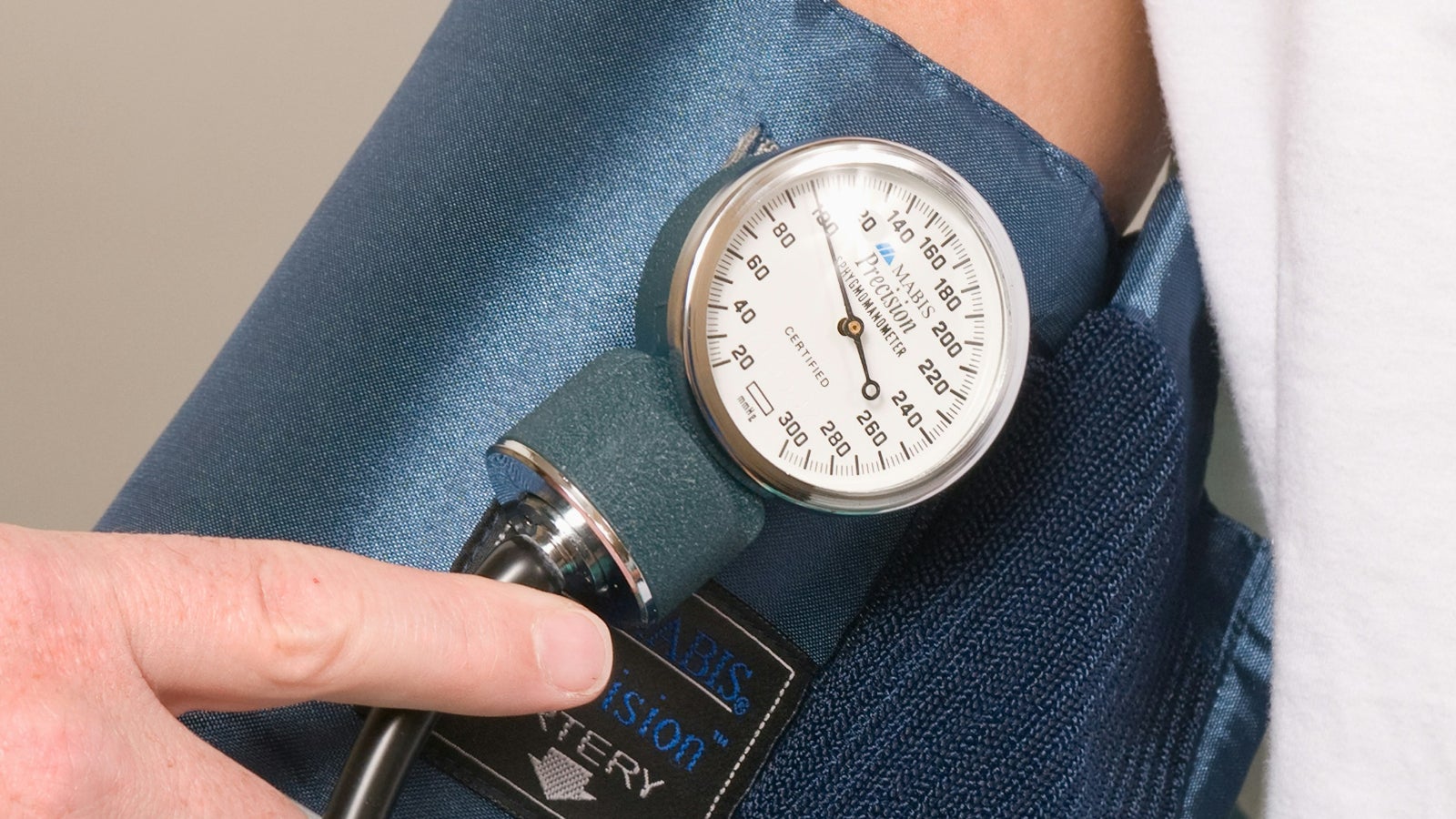
New Twice-Yearly Injections May ‘Help Millions’ With High Blood Pressure

As part of a global trial called KARDIA-2, researchers injected people with hard-to-treat high blood pressure with a medication called zilebesiran.

This is designed to be administered every six months.

It was given to 663 people with poorly-managed hypertension (high blood pressure) alongside their existing treatment.

The participants’ hypertension was not well managed with their existing medication.

The results, published in JAMA Network, suggest these injections may have the potential to “help millions with high blood pressure”, Queen Mary University of London, whose researchers led the study, said.

What did the injections do?

In this study, participants were given a dose of zilebesiran alongside their usual treatment.

Zilebesiran stops the production of a protein called angiotensinogen in the liver. Blocking that protein helps blood vessels to relax, thus lowering blood pressure.

The hypertension of the participants in this study was better-managed with the assistance of angiotensinogen injections alongside the “normal” medication, which, for one reason or another, was not working optimally for them.

The drug, which is far longer-lasting than medication which patients may have to take daily, matters because blood pressure is both hard to spot and vital to consistently treat.

It can lead to heart attacks and strokes if left unmanaged. It usually has no symptoms and is “very common,” the NHS said.

It affects about one in three UK adults.

What’s next?

KARDIA-3, a follow-up project, will investigate the effects of zilebesiran on people with high blood pressure and established cardiovascular disease, as well as people at risk of heart conditions.

And a large global outcomes study is set later this year to see how it affects stroke, heart disease, and cardiovascular event risk.

The study’s lead investigator, Dr Manish Saxena, said: “Hypertension is a global health concern as blood pressure control rates remain poor and is a leading cause of heart attacks and strokes.

“This study demonstrates the efficacy and safety of zilebesiran when added to commonly used first-line blood pressure-lowering drugs. The novelty of this treatment is its long duration; giving just one injection every six months could help millions of patients to better manage their condition.”

Share Button

Late bedtimes are linked to higher heart disease risk

Night owls may face higher risks to their heart, especially later in life, with women appearing particularly affected.

  • Adults in midlife and older age who tend to be most active in the evening, especially women, showed poorer overall heart health than those without a strong preference for mornings or evenings, based on the American Heart Association’s Life’s Essential 8 measure.
  • Analysis of UK Biobank data suggests that common habits among night owls, including lower-quality diets, too little sleep, and higher rates of smoking, help explain why their cardiovascular health scores were lower.
  • Researchers say the findings point to a clear opportunity, since improving daily habits such as sleep, diet, and smoking cessation could help night owls reduce their risk of heart attack and stroke.

Late-Night Activity Tied to Poorer Heart Health

Adults in middle age and later life who tend to be more active in the evening were found to have worse cardiovascular health than those who are active earlier in the day. The association appeared to be stronger among women, according to new research published today in the Journal of the American Heart Association, an open-access, peer-reviewed journal of the American Heart Association.

The findings suggest that when people are most active during the day may play an important role in long-term heart health.

Study Tracks Sleep Timing in More Than 300,000 Adults

Researchers examined health data from more than 300,000 adults (average age of about 57 years) enrolled in the UK Biobank. The analysis focused on chronotypes, which describe a person’s natural preference for sleep and wake timing, and how those preferences relate to cardiovascular health.

Participants were grouped based on their self-identified daily patterns. About 8% described themselves as “definitely evening people,” meaning they typically went to bed very late (for example 2 a.m.) and reached peak activity later in the day. Around 24% reported being “definitely morning people,” who tended to wake up earlier, go to bed earlier (for example 9 p.m.), and be most active earlier in the day. The remaining 67% were categorized as having an “intermediate” chronotype if they were unsure or said they were neither clearly a morning nor evening person.

Cardiovascular health was evaluated using the American Heart Association’s Life’s Essential 8™ metrics. This framework looks at behaviors and health factors known to support heart health, including eating a healthy diet, staying physically active, not smoking, and getting good-quality sleep. It also includes maintaining healthy levels of body weight, cholesterol, blood sugar, and blood pressure.

Key Differences Between Night Owls and Early Birds

The researchers identified several notable patterns when comparing chronotype groups:

Compared with people in the intermediate category, those classified as “evening people,” often called night owls, were 79% more likely to have an overall poor cardiovascular health score.

Night owls also had a 16% higher risk of experiencing a heart attack or stroke during a median follow-up period of about 14 years.

The link between evening chronotype and lower heart health scores was stronger among women than among men.

Much of the increased heart disease risk seen in evening types was linked to lifestyle habits, particularly nicotine use and insufficient sleep.

In contrast, “morning people,” also known as early birds, showed a 5% lower prevalence of poor cardiovascular health scores compared with individuals without a strong morning or evening preference.

Why Evening Types May Face Added Risk

“‘Evening people’ often experience circadian misalignment, meaning their internal body clock may not match the natural day-to-night light cycle or their typical daily schedules,” said lead study author Sina Kianersi, Ph.D., D.V.M.; a research fellow in the division of sleep and circadian disorders at Brigham and Women’s Hospital and Harvard Medical School, both in Boston. “Evening people may be more likely to have behaviors that can affect cardiovascular health, such as poorer diet quality, smoking and inadequate or irregular sleep.”

This misalignment may make it harder for night owls to maintain habits that support long-term heart health.

Lifestyle Changes Could Reduce Risk

The findings are not entirely discouraging for people who prefer late nights, according to Kristen Knutson, Ph.D., FAHA, volunteer chair of the 2025 American Heart Association statement, Role of Circadian Health in Cardiometabolic Health and Disease Risk. Knutson was not involved in the study.

“These findings show that the higher heart disease risks among evening types are partly due to modifiable behaviors such as smoking and sleep. Therefore, evening types have options to improve their cardiovascular health,” she said. “Evening types aren’t inherently less healthy, but they face challenges that make it particularly important for them to maintain a healthy lifestyle.”

Tailoring Treatment to Body Clocks

The American Heart Association scientific statement led by Knutson also recommends taking chronotype into account when planning treatment or lifestyle interventions.

“Some medications or therapies work best when they align with a specific time of relevant circadian rhythms, and this time will vary depending on whether you are a morning, intermediate, or evening chronotype,” she said. “Targeted programs for people who naturally stay up late could help them improve their lifestyle behaviors and reduce their risk of cardiovascular disease.”

Study Limitations

The researchers noted that most UK Biobank participants were white people and generally healthier than the overall population, which may limit how broadly the findings apply to other groups. In addition, chronotype was assessed only once and was based on self-reported information rather than repeated measurements.

The study was partially funded by the American Heart Association.

Share Button