The Surprising Origin Of The Word ‘Awful’ Might Just Change How You Use It

If someone called you “awful” today, you’d probably be offended. But travel back a few hundred years and that same word would have been high praise.

Awful has one of the more dramatic reversals in the English language. It began as something genuinely admiring and ended up as something quite negative in everyday use.

“The word ‘awful’ traces back to the Old English root ege, meaning dread, reverence or profound respect,” Sophie Vignoles, a linguist and head of learning content at the language learning app Babbel, told HuffPost. “That origin shows in its early use. It originally meant something that filled you with awe, describing anything that inspired wonder or terror, often tied to the power of God or nature, and it was a compliment. A mountain range or a storm could be called awful, and that was high praise.”

The word awful goes back to Old English, with experts pointing to a ninth-century citation attributed to Alfred the Great. The Oxford English Dictionary has many examples of “awful” in texts from the subsequent centuries – generally meaning things like “inspiring respect, mixed with wonder or reverential fear.”

Basically, awful was the sort of word people reached for when ordinary language failed to describe things so powerful, majestic and grand that they inspired deep reverence – like the divine.

So, how did it evolve to mean something simply negative?

“The shift happened gradually through the 19th century,” Vignoles said. “Awe itself is a mixed emotion. It carries wonder but also fear and sometimes a sense of insignificance, and over time, English speakers leaned into the fearful side rather than the reverent one. Awful stopped meaning inspiring and started meaning overwhelming in a bad way.”

“Awful” was a much more complex word than its modern “very bad” definition would suggest.

bgblue via Getty Images

“Awful” was a much more complex word than its modern “very bad” definition would suggest.

For a long time, awful captured the complexity of awe and its connection to the sacred and sublime. But language tends to simplify over time, and people gradually started emphasising the dread over the wonder. Eventually “awful” became a weaker, more casual word.

The slide was gradual enough that it drew complaints along the way. Welsh writer Hester Lynch Piozzi asserted in 1794 that the word should “be used with caution and a due sense of its importance”.

“I have heard even well-bred ladies now and then attribute that term too lightly in their common conversation, connecting it with substances beneath its dignity,” she wrote.

Over the next century, the word came into its more modern meaning of unpleasant, not desirable or just very bad.

This kind of drift where a word sheds one meaning and picks up another is known as semantic shift, and it’s one of the most reliable patterns in the history of any language. Just as “nice” shifted from something negative to something positive, awful also completely reversed course – but in the opposite direction of positive to negative.

Thus, a word that once described the sublime now describes the merely terrible. Awful’s close cousin “awesome” makes the reversal even more striking.

Interestingly, the word awful actually predates awesome by centuries, though the two had similar meanings for a stretch. As both words weakened in meaning over time, awesome shifted to a more positive connotation of “good” or “cool” while awful came to mean “very bad.”

“Awesome comes from the exact same root but took the opposite path, which shows how unpredictable this kind of drift can be,” Vignoles noted.

The awful/awesome split isn’t even unique within English. “Terrific” and “terrible” come from the same Latin root and once shared the same basic meaning: inspiring terror or dread. Today, terrible has kept that negative sense while terrific has traveled so far in the opposite direction that it’s essentially a synonym for wonderful. Thus we have another pair of sibling words that started in the same place and ended up miles apart.

“It shows that meaning is never fixed. It is negotiated by whoever is using the word at the time,” Vignoles said, pointing to Babbel’s research on the way American English has evolved in honor of the United States’ 250th anniversary this year.

“Awful is a useful reminder that English often trades one meaning for another,” she added. “This kind of reversal is not unique to English either. In Russian, the word grozny once carried a sense of majesty and awe-inspiring power. Ivan Grozny, usually translated into English as Ivan the Terrible, was not originally meant as a purely negative title. Over time, the word narrowed toward its harsher, more fearsome sense, much like awful did in English.”

So, the next time something is so bad it’s almost impressive, you should feel comfortable calling it awful, in keeping with the word’s original meaning. But if you find something so good it inspires awe, you should probably opt for a different word so as not to offend.

Share Button

‘Normal’ Means Different Things To GPs And Patients, And It May Affect Treatment

Let’s say you go to your doctor with a documented, ongoing case of psoriasis. You might complain of itchy and flaky skin.

To your surprise, though, your GP tells you these symptoms are “normal”. You might feel dismissed or as if your problems can’t be addressed; maybe you’ll be less likely to seek treatment.

At least, that’s what a recent study published in Nature Human Behaviour suggests.

It said that, while doctors might hope to reassure patients by calling well-understood symptoms “normal,” data shows it could actually make people with health issues think nothing can be done about their problems.

That might mean they don’t look for or ask about solutions like medications, even when they may be both available and useful.

Professor On Amir, the study’s senior author, told Pulse Today: “Doctors shouldn’t stop reassuring patients. But they should make their meaning unmistakable”.

So, HuffPost UK spoke to Dr Dominic Greenyer, a GP and director at The Health Suite, about what “normal” means to a doctor.

Wait – doesn’t ‘normal’ mean everything’s fine?

I’ll be honest: I always thought being told an issue is “normal” by a doctor meant everything was OK, and nothing more could be done.

But sometimes, Dr Greenyer said, that’s a miscommunication.

“When a doctor describes a symptom as ‘normal’, they will often mean that it’s common, expected in a particular situation, or consistent with a certain stage of life. It does not necessarily mean the symptom is insignificant, imaginary or something the patient simply has to tolerate,” he said.

For instance, hot flushes are “normal” during menopause and perimenopause, and pain is “normal” after surgery. However, the GP said that doesn’t mean they need to be tolerated or that they can’t be addressed with appropriate medication.

“’Common’ and ‘untreatable’ are two very different things,” he added.

And, the doctor said, doctors might say lab results or exams that fall within an expected range are normal.

“In that context, it may reassure us that we have not found evidence of a particular disease, but it does not automatically explain why someone feels unwell or mean that no further help is available,” he claimed.

“This study highlights how easily well-intentioned reassurance can be misunderstood. A doctor may be trying to say, ‘This is recognised, and you are not alone’, while the patient hears, ‘There is nothing wrong, and nothing can be done’. Clinicians need to make that distinction explicit.”

Reassurance alone might not be enough

In the Nature study, the authors tested two ways to close that communication gap: asking doctors to explain what “normal” means in a medical sense when using the word, and offering some next steps to patients after normalising their symptoms.

Both appeared to lead to better results.

Dr Greenyer said: “Ideally, reassurance should be followed by a clear plan. That might involve discussing treatment options, explaining how long the symptom is expected to last, arranging follow-up or telling the patient what changes should prompt them to seek help again.”

And if that doesn’t happen, it might be worth your while taking the lead.

“Patients should not be afraid to ask, ‘When you say normal, do you mean it is harmless, or simply that it is common?’. They can also ask whether treatment is available and what they should do if the symptom persists, worsens, or begins affecting everyday life,” the GP concluded.

“Being told something is normal should never be interpreted as an instruction to ignore a significant change in your health. If symptoms are severe, persistent, worsening or accompanied by warning signs such as unexplained weight loss, unusual bleeding, a new lump, chest pain or breathing difficulties, further medical advice may still be needed.”

Share Button

The ‘hidden gem’ offering a place to grow, connect and heal

Annadale Community Garden Group is one of four groups or individuals in the running for this year’s Make a Difference Awards NI.

Share Button

Can Andy Burnham Really Live Up To His Promise To Ease The Cost Of Living?

Andy Burnham vowed to give Brits “some breathing space” when it comes to the cost of living during his first speech as prime minister.

That was only a month ago – and he has already unveiled a series of policies aimed at making everyday life a little easier for the general public.

But just last week, Burnham also admitted that the changes he made might not be enough.

He told the BBC: “We will do everything that is possible for us to do. But I think everyone knows I am in position with limited room for manoeuvre.”

It was a noteworthy admission considering he has made the cost of living the central mission for his government.

Burnham has implemented a £2 cap on single bus rides, scrapped VAT on household electricity bills and announced a ban on “subscription traps”.

He unveiled a 20% cut to business rates for pubs, social clubs and live music venues from April onwards.

His government have also promised to help the number of unemployed young people as the number of 16 to 24-year-olds not in work surpassed a million this year for the first time in more than a decade.

The incremental changes he has unveiled appear to have had some cut-through, his net favourability rating of +13 is the highest for any prime minster since Boris Johnson at the start of the Covid pandemic, according to YouGov.

Labour has finally started to take the lead in some opinion polls, ending Reform UK’s monopoly over prime position.

But, as Burnham alluded to when speaking to the BBC, there are plenty of obstacles which stop him from being able to make significant changes to the cost of living.

For instance, UK inflation rose to 2.9% in July due to rising energy costs driven by the Iran war.

Britain refused to get directly involved with this conflict but it continues to destabilise global fuel prices and therefore impacts British energy bills.

Though this is out of the government’s control, there’s a risk voters will still end up blaming the government – as they did when the Russian invasion of Ukraine caused a spike in energy prices in 2022.

Energy regulator Ofgem is expecting the price cap for household energy bills in Britain to rise by 4% in October.

Energy bills are forecast to hit a three-year high this winter as well, eclipsing any benefits from Burnham’s VAT cut on electricity bills.

There is a growing body of support for expanding drilling in the North Sea for oil and gas to boost the economy and reduce Britain’s dependence on international energy imports.

However, after a series of record-breaking heatwaves worsened by manmade climate change, it’s unclear if Burnham will risk upsetting environmentalists by extending existing North Sea licences.

The summer heatwaves and the subsequent droughts have rocked the agricultural sector too.

Farmers fear for their yields will be hugely impacted in the months to come – meaning groceries are likely to go up in price.

Dr Liliana Danila, chief economist at the Food & Drink Federation (FDF) said: “Supply chain disruption isn’t going away.

“Alongside geopolitical volatility, extreme weather will continue to put pressure on the price of key ingredients. This makes it increasingly difficult for food manufacturers to shield consumers from price rises and protect their our resilience.”

The Bank of England will decide whether to raise interest rates next month, which could add another layer of pressure to Burnham.

Britain's Prime Minister Andy Burnham speaks during a TV interview at The Hub Cafe following a visit to Ilkeston, Derbyshire, England, Tuesday, Aug. 11, 2026.
Britain’s Prime Minister Andy Burnham speaks during a TV interview at The Hub Cafe following a visit to Ilkeston, Derbyshire, England, Tuesday, Aug. 11, 2026.

via Associated Press

The TUC general secretary, Paul Nowak, said: “With inflation ticking up because of rising energy bills – and no end in sight to Trump’s illegal war in Iran – we are going to have to see more government action to support households in the coming months.”

But where will this money come from? UK debt is nearing £3 trillion, which represents 94.1% of gross domestic product (GDP).

It comes after official figures showed an unexpected hike in government borrowing to £1.8 billion.

Speculation that the government will therefore raise taxes to meet its spending commitments is therefore rising.

All eyes will be on chancellor John Healey when he unveils his Budget on Wednesday, October 28.

The prime minister has tried not to raise the public’s expectations too high when it comes to what he can do to help the cost of living – he wrote on social media this week: “We won’t fix everything overnight.

“But wherever my government can make life a little easier, fairer or more affordable, we will. “

His last two predecessors, Keir Starmer and Rishi Sunak, tried to adopt a similar message – and neither won any plaudits from the public for doing so.

The question is whether Brits will even feel the changes Burnham intends to make.

“There’s a lot to be said for the politics of trying,” More in Common’s executive director, Luke Tryl, told the Resolution Foundation this week.

“What Burnham has is an opportunity to say to the public that we can’t do everything immediately.

“And I think they understand that international affairs are a big driver of this, but it’s sort of saying, we’ve looked at areas where we can make a difference and we’re doing that.

“It may be that he cannot meet public expectations on this and it goes the other way of other previous prime ministers.

“But I don’t think there’s an option of not being seen to do this.”

Burnham is, of course, still enjoying the honeymoon period. But will he able to live up to his own expectations?

Listen to Commons People, the podcast that makes politics easy. Every week, Kevin Schofield and Kate Nicholson unpack the week’s biggest stories to keep you informed. Join us for straightforward analysis of what’s going on at Westminster.

Share Button

2026’s ‘Unprecedented’ El Niño May Lead To UK Storms By November

Early this year, researchers became convinced we were in for a “super El Niño”.

Speaking to HuffPost UK way back in April, Professor Bill McGuire, a professor specialising in climate hazards and author of The Fate Of The World: A History And Future Of The Climate Crisis, said: “El Niño is a climate phenomenon that develops every few years, and which involves the eastern and central equatorial Pacific Ocean becoming hotter than normal.”

The signals suggesting the power of the coming phenomenon have been so strong that the UN issued an urgent climate warning over the issue. Prof McGuire told us: “The signs are that it could even be the biggest for a century and a half”.

Now, speaking to BBC Radio 4’s Today, Professor Adam Scaife, the head of long-range forecasting at the Met Office, agreed, saying it looks like the next El Niño will be “the largest since the 19th century”.

Why is this El Niño such a big deal?

“During a normal El Niño, the temperature of the equatorial Pacific Ocean typically reaches 0.5°C or more above normal,” Prof McGuire shared previously,

“If this figure reaches 1.5-2°C, the event is described as a super El Niño.”

On BBC Radio 4, Prof Scaife stated: “We’re expecting the biggest El Niño for over a century, peaking at something over 3°C. That is unheard of in modern climate records… It’s up 2°C already.”

We’ve only had five super El Niños in the last 75 years, with the most extreme being the 2015-16 event. The bigger the El Niño, the stronger its effects on the world’s weather systems.

That means we could see “particularly strong [impacts] throughout the tropics, where we expect really severe droughts in places like South America and the west Pacific”, Prof Scaife explained.

Flooding could happen in other parts of the world, and overall, the globe will likely be left hotter.

These destabilising effects could affect everything from our international food supply to disease and fire risk. The economic burden of previous El Niños has run into the trillions of dollars.

How will this El Niño affect the UK?

Though they are linked to an overall hotter climate, the effects of El Niños vary from place to place. In the UK, for instance, they can sometimes lead to colder winters.

Prof Scaife said: “There are wave-like disturbances that come out from the tropics and affect places like the UK. So we already see signals for increased rainfall and storminess in the autumn here in the UK around November time”.

After an emergency meeting last week, meanwhile, PM Andy Burnham also said: “We might be in for a wet autumn and winter straight after this, because of El Niño and some of the issues there, which was reported to Cobra”.

Share Button

Father Of Hayden Panettiere’s Daughter Marks Late Actor’s Birthday With Emotional Post

The former fiancé of actor Hayden Panettiere has shared a poignant message on what would have been her 37th birthday.

On Friday afternoon, the Ukrainian boxer Wladimir Klitschko – the father of Hayden’s 11-year-old daughter, with whom the actor was in an on-off relationship for the better part of a decade – shared a snapshot of the late Scream star on Instagram, thanking those who’ve shown “love and support” in the days since her death.

“Today is Hayden’s birthday,” he wrote. “Instead of celebrating the way we had planned, today we celebrate her life, her spirit, and the love she brought into this world.

“I want to thank all of Hayden’s fans, friends, and everyone who has reached out for the incredible outpouring of love and support. At a time filled with so much sadness, your kindness has reminded me that there is still so much good in humanity.”

Wladimir continued: “If you’re reading this, I ask just one thing: even if only for a moment, think about LOVE. Reach out to a friend. Forgive someone. Be kind. Love is a superpower. Use it.”

“Happy birthday, Hayden,” he concluded. “You are loved, you are missed, and you will never be forgotten.”

“The announcement of Hayden’s tragic death saddens me deeply. She left this world far too soon,” he lamented. “Hayden was, although no longer my partner, an important part of my life and the mother of our daughter, Kaya.

“She built an incredible career through immense talent, while also facing the darker sides of a very demanding industry. Nothing will erase the times we shared or the place she had in our lives.”

“To our daughter Kaya, I will always speak of her mother with respect and make sure she remembers the person she was,” he continued.

“I extend my deepest condolences to Hayden’s parents, her friends, and her fans, who are also grieving today. Young and talented people like Hayden should not leave this world so soon.”

Wladimir Klitschko and Hayden Panettiere in 2011

Henry Lamb/Photowire/BEI/Shutterstock

Earlier this year, Hayden spoke candidly about the issues she’d faced throughout her time in the spotlight in her 2026 memoir, This Is Me: A Reckoning.

This included opening up about her past struggles with abuse, addiction and her mental health.

An investigation into the circumstances surrounding Hayden’s death is ongoing, with an autopsy report indicating earlier this week that there had been “no signs” of any physical trauma.

Share Button

3 minutes of sprinting does something 90 minutes of exercise does not

Just three minutes of sprinting may produce a molecular response that looks very different from what happens after 90 minutes of moderate exercise.

Researchers at Rockefeller University compared how the body responds to exercise performed at different intensities. They found that six 30-second, all-out sprints changed nearly one-quarter of the proteins measured in the blood immediately after exercise. By comparison, 90 minutes of continuous moderate cycling altered less than one-quarter of one percent. Moderate treadmill running affected more proteins than cycling, but still far fewer than the brief sprint session.

Sprinting Triggers a Rapid Molecular Surge

The sprint workout also altered more than 200 metabolites and rapidly increased levels of proteins involved in blood vessel growth, tissue remodeling, and hormonal signaling.

Some of these proteins appeared to reach the bloodstream through a fast cell-signaling process called ectodomain shedding — rather than being newly produced and released, pieces of proteins already located on the surface of cells were cut away and rapidly sent into circulation.

The researchers also tested how human fat cells responded to blood collected after sprinting. Those cells showed widespread changes in gene activity, including shifts in how they processed fuel, reacted to hormones, and detected nutrient availability.

Moderate Exercise Produces a Slower Response

Moderate exercise led to a much less dramatic immediate reaction. A substantial rise in fatty acids and liver-derived proteins associated with the demands of endurance exercise did not appear in the bloodstream until three hours after the workout.

Human fat cells exposed to blood collected after moderate cycling also showed only small changes in gene activity.

Links to Metabolic Health and Biological Aging

The researchers then compared the proteins that responded to exercise with health information from more than 53,000 participants in the UK Biobank. Many of those proteins were associated with lower risks of cardiovascular and metabolic disease.

The pattern was especially notable for obesity, type 2 diabetes, and other metabolic disorders. Among 33 proteins associated with lower risk, 32 were altered by sprinting, while only three were affected by moderate exercise. More than one-quarter of those proteins were also linked to slower biological aging.

“What’s exciting here is that just a few minutes of intense exercise can trigger a significant molecular response,” says Cohen. “And we still see it after eight weeks of training, which tells us this response isn’t simply a product of the body struggling to keep up with unfamiliar stress. It may be that the responses we observed are intrinsic to intense exercise.”

Why Exercise Intensity May Matter

The findings suggest that exercise intensity may strongly influence the proteins and metabolites released into the bloodstream and, in turn, the way tissues throughout the body respond.

“It’s well appreciated that different intensities of exercise stimulate distinct body-wide adaptations,” notes Luke Olsen, the postdoctoral fellow who conducted the studies. “However, the molecular mechanisms linking these intensity-dependent adaptations have remained largely elusive. Our work suggests that exerkines-proteins and metabolites released into the bloodstream following exercise-are highly sensitive to exercise intensity and may be the key mediators of the health-promoting effects of short bursts of vigorous exercise.”

Share Button

Scientists catch a hidden electronic state forming in just 30 femtoseconds

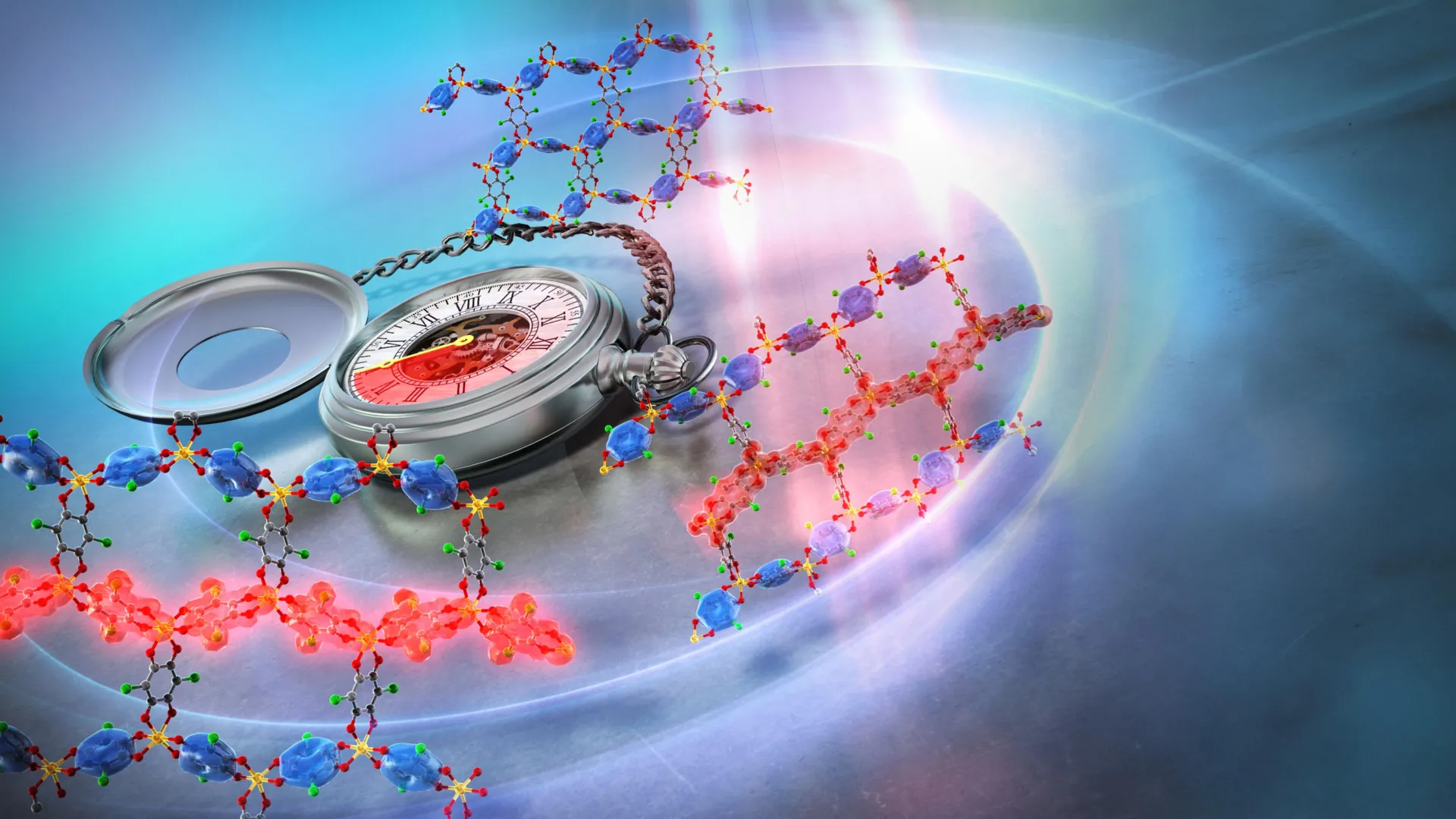
Researchers in Japan have captured an extraordinarily fast electronic transformation inside a metal-organic framework, observing a fleeting state and the hidden state that followed within just 30 femtoseconds. The team from Science Tokyo, Tohoku University, and Nagoya Institute of Technology combined ultrafast laser spectroscopy with theoretical calculations to uncover a previously unknown intermediate electronic state that helps drive the transformation. The discovery offers new clues about how light could eventually be used to rapidly control the properties of advanced materials.

Materials can behave in unexpected ways after absorbing light. In some cases, light pushes them into photoinduced states with properties that are very different from those they display under ordinary conditions. These states give researchers another way to alter material behavior beyond conventional approaches such as heating or cooling. Learning exactly how they form could be important for developing future photoresponsive materials and advanced optical technologies.

Capturing a Transformation in Femtoseconds

One of the biggest challenges is speed. The first steps in forming a photoinduced state can unfold on the femtosecond (fs) timescale (a millionth of a billionth of a second), making them exceptionally difficult to observe.

To investigate these earliest moments, a team led by Assistant Professor Tadahiko Ishikawa from the Department of Chemistry, School of Science, Institute of Science Tokyo (Science Tokyo), Japan, worked with then doctoral student Samiran Banu (currently a Special Postdoctoral Researcher at RIKEN) and collaborators at Tohoku University and Nagoya Institute of Technology, Japan.

The researchers focused on a metal-organic framework (MOF), a material constructed by connecting metal ions with organic molecules. Their goal was to determine exactly how a photoinduced hidden state develops. The findings were published in the journal Physical Review Letters.

“We found that the photoinduced hidden state forms within 30 fs through a previously unknown intermediate electronic state,” says Ishikawa.

Ultrafast Lasers Reveal a Hidden State

To follow the transformation, the researchers used time-resolved reflectance spectroscopy and ultrashort laser pulses lasting only six fs. The method allowed them to measure how the light reflected by the material changed almost immediately after the MOF absorbed a laser pulse.

With this extremely fine time resolution, the team tracked rapid changes in the material’s electronic behavior. Within 30 fs, its reflectance spectrum shifted dramatically and developed features linked to the appearance of a new optical absorption band. Those changes indicated that the photoinduced hidden state had formed.

Experiments alone, however, could not fully explain what was happening. The researchers therefore combined their measurements with theoretical calculations to reconstruct the sequence of events inside the material.

A Fleeting Electronic State Comes First

The analysis showed that immediately after absorbing light, the material briefly entered an intermediate electronic state. During this moment, electronic bonds between neighboring sites alternated between stronger and weaker in a repeating pattern. This configuration is known as a bond-order wave state.

The state existed only briefly. It was followed by small movements in the positions of atoms within the material, and those structural changes ultimately produced the photoinduced hidden state.

Theoretical calculations also suggested that the newly formed state may be polar. In such a state, positive and negative electrical charges are distributed unevenly across the material. If these photoinduced polar states can be reliably created and controlled, they could provide new ways to manipulate electronic properties using light.

“By revealing intermediate states, our method could help design materials that can be efficiently controlled using light,” explains Ishikawa.

Toward Materials Controlled by Light

Beyond showing how a photoinduced hidden state develops, the research points to a possible strategy for manipulating material properties with extremely short pulses of light. Being able to create and control these temporary states could contribute to new photoresponsive materials designed for high-speed electronics, optoelectronic devices, and other technologies that require precise control over how materials behave.

Future research could extend the same experimental and theoretical approach to other types of materials. By exposing the previously invisible steps that occur during ultrafast transformations, scientists may move closer to designing materials whose properties can be deliberately and efficiently controlled with light.

Share Button

2,200-year-old Roman shipwreck reveals ancient waterproofing secrets

For as long as people have traveled by sea, ships have needed protection from water, salt, microorganisms, and marine animals such as worms. Yet until the mid-20th century, researchers paid relatively little attention to the non-wood materials used in ancient shipbuilding. Waterproofing materials in particular remain understudied.

A new study published in Frontiers in Materials is helping fill that gap. Researchers in France and Croatia analyzed the protective coating on the Roman Republic shipwreck Ilovik-Paržine 1, which sank about 2,200 years ago off the coast of what is now Croatia.

“In archaeology, little attention is paid to organic waterproofing materials. Yet they are essential for navigation at sea or on rivers and are true witnesses of past naval technologies,” said first author Dr. Armelle Charrié, an archaeometrist at the Laboratory of Mass Spectrometry of Interactions and Systems in Strasbourg. “Studying the coatings, we found two different kinds on this vessel: one made of pine tar, also called pitch, and the other of a mixture of pine tar and beeswax. Analysis of pollen in the coating made it possible to identify the plant taxa present in the immediate environment during the construction or repairs of the ship.”

Pine Tar and Beeswax Protected the Hull

The wreck was discovered in 2016, and both the vessel and its cargo have been investigated several times since then. This study is the first to combine molecular and pollen analysis to identify the ship’s coatings and reconstruct the vegetation present when those materials were produced and applied to the hull.

The research was carried out through a collaboration between the Department for Underwater Archaeology of the Croatian Conservation Institute and the ‘ADRIBOATS’ program of the Centre Camille Jullian at Aix-Marseille University in France.

“Some regions throughout the Adriatic have particular characteristics that led local populations to develop a specific shipbuilding style,” said Charrié. “Only studies like ours offer an overview of these traditions which bear witness to genuine know-how and diverse traditions.”

To investigate the coatings, the researchers performed structural, molecular, and pollen analyses. They used methods including mass spectrometry, which can identify and measure unknown substances within complex organic mixtures.

The team analyzed 10 coating samples to determine the biological origins of the natural materials used on the vessel. Molecular fingerprinting revealed compounds associated with pine trees, showing that every sample was dominated by heated coniferous resin or coniferous tar, also called pitch.

One sample, however, contained a different formulation made from beeswax and tar. This mixture – known to Greek shipbuilders as zopissa – improves the adhesive’s flexibility and is easier to apply when hot.

Ancient Pollen Preserved in Sticky Pitch

Because pitch is naturally sticky, it can capture pollen from nearby vegetation and preserve it for long periods. By studying the types of pollen trapped in the coatings and measuring their relative abundance, the researchers were able to narrow down where some of the pitch may have been produced or reapplied during repairs.

The pollen recovered from Ilovik-Paržine 1 pointed to a wide range of environments. Some came from landscapes typical of Mediterranean and Adriatic coasts and valleys, including forests of holly oak and pine as well as matorral – a kind of Mediterranean shrubland – where olive and hazel trees grow.

Alder and ash pollen indicated vegetation associated with riverbanks and seashores, which occur along the coast and in the nearby hinterland. Small amounts of fir and beech were also present. These trees are associated with mountainous terrain and are characteristic of the north-eastern Adriatic coast, where the mountain ranges of Istria and Dalmatia lie relatively close to the sea.

Evidence of Repeated Repairs Across the Adriatic

The analysis also suggests that the vessel received four to five separate batches of coating over time. The stern and central section appear to have been covered with the same material, while researchers identified three distinct coating batches at the bow.

That pattern may indicate that the ship was repaired repeatedly, with materials obtained from different locations around the Mediterranean.

Earlier research on the vessel’s ballast pointed to Brundisium – today Brindisi – on the south-eastern coast of Italy as the place where the ship was built. The new pollen evidence suggests that some of its coatings may also have been applied in that area.

Other layers, however, may have been added along the north-eastern Adriatic coast, close to where the wreck was ultimately found.

“While it seems obvious that ships sailing long distances need repairs, it’s simply not easy to demonstrate this,” concluded Charrié. “Pollen has been very useful in identifying different coatings where the molecular profiles were identical.”

Share Button

Wellness habits you can start now – at no (or little) cost

Living a healthy life doesn’t have to just be about pricey studio classes and luxury retreats.

Share Button