I’m A Mattress Expert — These 4 Signs Mean It’s Time To Replace Your Mattress

One of the biggest expenses when moving into your own home is a bed and mattress. Matresses are deeply personal purchases — finding one that fits your sleep style, your physical needs and those of your partner is a precise process — but unfortunately, it’s advised that we replace them every six to eight years.

Which frankly seems too often, given how much a good mattress costs.

However, according to Mattress expert Steve Adams, CEO of Mattress Online, there can be signs even earlier than this that your mattress needs to be replaced.

Four signs your mattress needs to be replaced

You’re waking up feeling stiff and achy

If you start your day with stiffness or aches that fade as the day goes on, Adams warns that your mattress might be to blame.

He explains: “Over time, our body and sleep needs may change meaning the mattress that was once suitable, may not be any more, this can lead to increased pressure points and discomfort.

“Poor sleep caused by a mattress which is unsupportive and does not meet our sleep needs can even lead to longer-term health issues if left unchecked.”

The mattress is sagging or uneven

It’s time to give your mattress a good look and ask if you can see any excessive sagging, lumps or indentations where you sleep.

According to Adams, these are signs that internal materials have broken down. He says: “Some materials will have natural settlement, such as fibres – but an extreme amount of sagging can lead to discomfort, high areas of pressure and speed up the degradation of other areas of the mattress, all which will make it harder to get a restful night’s sleep.”

Allergies are getting worse at night

Ugh, there is nothing worse.

If you have noticed that you are sneezing more often, your eyes are more itchy and sensitive or you are simply more congested when you sleep, it could be your mattress that’s to blame.

This is because over time, mattresses accumulate dust mites, mould, and other allergens that might be triggering your symptoms.

Adams advises: “If washing your bedding and using allergy covers doesn’t help, it may be time to replace your mattress altogether.”

Your mattress is making noise

Not only is this incredibly awkward if you’re doing the deed while others are home but a noisy mattress, particularly one that creaks or squeaks from springs is a clear sign of wear and tear.

Adams says: ” This noise suggests that the springs inside are deteriorating, compromising support and comfort. Swapping to a newer mattress with advanced materials could be the solution to both better sleep and a quieter night.”

Share Button

Is It Just Me, Or Does Tap Water Get Colder In Winter? I Asked An Expert

I’ll be completely honest here: I know as much about plumbing as I do marine biology or rocket science (which is to say, next to nothing).

So when I told a friend “you know, I always think tap water is way colder in water,” I had no idea how to respond when she asked how I thought that’d happen.

An even more embarrassing admission; I’m not even sure where the reservoir that holds the water that runs through my sink is, or if it’d even be possible for the liquid in it to be affected by the weather.

So, I thought I’d ask Myles Robinson ― former boiler repair company owner and current CEO of UK Composite Doors ― whether I was losing it in the run-up to Christmas, or if this was a real thing.

So… Is tap water really colder in winter?

Yes, Myles says.

He told HuffPost UK: “tap water is definitely colder in the winter. It all comes down to a combination of factors, the water source, the pipes, and how they interact with the colder weather.”

“Most water systems draw from reservoirs, rivers, or groundwater. In winter, these sources naturally drop in temperature, especially in areas with freezing conditions,” he continued.

“Even groundwater, which is insulated by the earth, gets colder as the ground above freezes. So, the water entering your home starts off colder during winter months.”

If you’re thinking “wait, wouldn’t it warm up in the pipes?”, we were in the same boat ― but Myles has answers.

“Pipes running through unheated spaces, like basements, crawl spaces, or underground, are understandably more exposed to the colder air or ground temperatures in winter,” he explained.

“As the water sits in these pipes, it cools even more before reaching your tap. The longer the run of pipe from the main supply to your tap, the more pronounced this cooling effect can be.”

Does tap water get hotter in summer too?

I knew I wasn’t imagining lukewarm glasses of water in the colder months!

“Interestingly, in the summer, the opposite can happen. Heat from the air or soil can warm up the water in your pipes, making it feel less refreshing than winter’s icy flow,” Myles said. Huh!

By the way, if freezing tap water is bothering you, the home expert says there are steps you can take to get rid of the problem.

“If you’re noticing your tap water feels shockingly cold in winter, especially in older homes, you might want to check if your pipes are insulated,” he told HuffPost UK.

“Proper insulation won’t stop the water from being cooler—it starts that way from the source, but it can keep your pipes from freezing, which is a much bigger concern!’’

Share Button

This Common Mistake May Be Ruining Your Poinsettia Before Christmas

Poinsettias weren’t always a common Christmas flower in the UK ― but flower company Bloom & Wild say they became that way thanks to their festive colour and star-like shape.

So if you’ve got one in your home, chances are you’re trying your hardest to keep it fresh throughout the festive season.

Thankfully, David Denyer, an expert florist at Eflorist, told HuffPost UK that there are some surefire ways to accidentally kill your festive plant before it’d otherwise fade ― including some “people often overlook.”

What could cause an early plant death?

“Pests are a big issue that people often overlook. Aphids, whiteflies, and mealybugs are drawn to the fragile leaves of poinsettias,” David told us.

“If the leaves appear curled or feel sticky, it’s often a clear indication of a pest problem,” he added.

You can protect other surrounding plants by removing the affected plant from their area and treating it with insecticide or neem oil.

“Another comment problem is people often believe that yellowing leaves are solely due to overwatering, but in many cases, it could also indicate low light or a lack of nutrients,” David continues.

Poinsettias do need a bit of extra care in terms of nutrients, especially after they’ve been moved from one place to another or after Christmas. A slow-release fertiliser can make a difference in terms of overall health.”

How should I take care of poinsettia?

Even if you’re not worried about murdering your flower entirely, David has some tips for keeping it at its best.

Most of us over-water our poinsettia, he points out: “You have to focus on not letting the plant sit in water,” he stresses.

It’s an easy trap to fall into because people often water their poinsettias frequently, but they don’t check if the soil has good drainage. The plant’s survival is more about the quality of the watering routine than the quantity.”

Misting the leaves with water is a much better option than drenching the leaves ― you shouldn’t leave droplets on the bracts or they’ll “develop unsightly spots,” David warns.

You might want to move your plant from that spot by your window too, the flower expert says.

“Poinsettias are incredibly sensitive to changes, particularly temperature fluctuations. Avoid placing them near places where drafts or sudden warm air from vents can affect them,” he told HuffPost UK.

“The changes in temperature can be subtle but enough to cause them to shed their leaves.”

And “While they enjoy bright, indirect light, some people make the mistake of giving them too much direct sunlight, which causes the leaves to burn.”

Looks like I have a plant pot to move…

Share Button

People Can’t Agree On What Tea Towels Are Actually For And Now I’m Confused

Ask yourself this: what do you think tea towels are used for?

I know, I hadn’t thought about it either and, to be honest, I use them for everything from drying the dishes to drying the kitchen countertops after cleaning them. I even use them to help me carry hot bowls of soup from time to time.

All of this being said, I’d never considered what they’re actually for and, if a Reddit thread is anything to go by, a lot of other people hadn’t considered this either.

In the community /r/AskUK, user psyche-illogical asked: “What is a tea towel for if not for drying dishes?”

Now, there is a story behind this that is key to understanding why the question was asked but I will warn you, it could just confuse you more…

The user said: “So, my partner and I recently moved into a flat in Glasgow. Our flatmate is American. We’re from New Zealand, and we regularly use tea towels to hand dry dishes, which I’ve always assumed is what everyone uses them for.

“In the flat, there are two tea towels hanging off the cupboard just below the sink.”

Then, they revealed a baffling conversation with their flatmate, where their flatmate asked why the tea towels in the kitchen were damp, and our Reddit user said, “Um. Oh, sorry. We just made dinner and did the dishes so they might be slightly damp but I hung them back up and they should still be clean.”

To which their flatmate responded: “Oh, no, that’s OK, I’ve just never seen someone use them for that before.”

While this is a very polite exchange, it left the Reddit user flummoxed and they asked: “Have I been using them wrong my whole life? Or is the American talking rubbish? What are they using them for? I’m giving myself a bit of a complex about it!”

Well, same.

Marquee-smith commented: “I dry surfaces, dry my hands and pick up hot things with them. I leave pots and glasses to air dry usually because they are not very absorbent and leave things quite smeary.”

Interesting.

However, New_Expectations5808 has a different take entirely, saying: “They’re definitely for drying dishes. Hand towels are fluffier.”

To which Willsagain2 responded: “Exactly. Terry towelling for hand drying, flat woven cotton/linen for drying dishes when necessary.”

I’ll be honest, I don’t think I’ve ever thought this deeply about it.

Max-Main is on my wavelength, suggesting: “They’re for the impromptu and utterly chaotic pastime of tea towel flicking which starts in the kitchen and can end in any room of the house accompanied by high pitched screaming from full grown men.”

However, there was one ‘right answer’ marked on the thread

User AwarenessHonest9030 said: “I mainly use it to dry my hands after washing up or washing my hands or I use it for getting stuff out of the oven, air fryer, microwave.”

This one was marked as the right answer.

I honestly still feel confused.

Share Button

Do This 1 Trick Immediately After Using A Sieve To Prevent Stuck-On Food

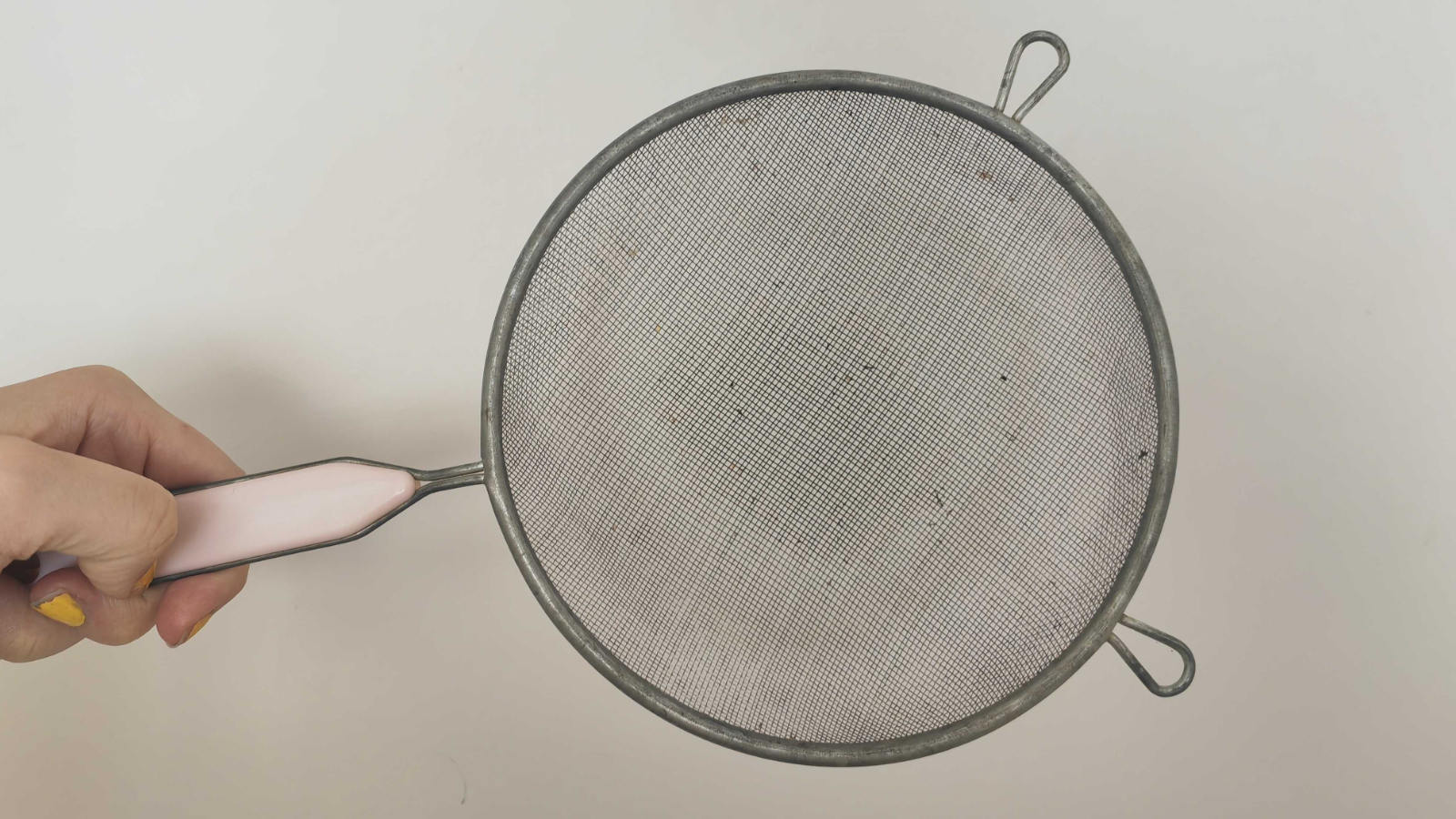
Ah, sieves ― they’d be such a handy tool if they weren’t nigh-on impossible to clean.

As someone who tends to be much kinder to “current me” than I am for “future me,” – I still end up using mine about once a day.

It’s perfect for draining pasta (except for the washing). It’s a great way to ensure no lemon seeds end up in the juice (except for the washing). It’s useful for sifting flour, too, except… well, you get the message.

So you can only imagine how relieved I was to find that taking one simple step immediately after using the tool can prevent an awful lot of stuck-on food.

Which is?

Food magazine Bon Appétit wrote that whacking the utensil against your sink as soon after using it as possible is really, really helpful.

“As soon as you finish using your sieve, bang it against the sink,” they shared.

“This helps dislodge some of those smaller pieces that haven’t had time to mush up and settle in.”

They add that you should also soak your sieve in very hot, soapy water for 15 minutes “right away.”

A dash of distilled white vinegar added to the mix can make cleaning it even more effective, the publication says.

However, for both methods, speed is key.

Is that the only hack?

Far from it. In a Reddit thread about the cooking conundrum, site users were full of recommendations.

“I turn it upside down in the sink, and use the sprayer to blast the back side. This usually cleans it pretty well,” one Redditor wrote.

Many advised against letting your sieve rest after use, even for a minute ― more people than I’d expected knew about the “banging it against the sink” trick too (am I the only one this is news to?).

Yet another person suggested using a toothbrush if the debris gets really dire (Bon Appétit reccomends this too).

With all the resentment I’ve built up to that accursed mesh, hitting it against the sink should be easy…

Share Button

The 1 Thing That Will Make Your Bathroom More Dementia-Friendly

According to the NHS, research shows there are more than 944,000 people in the UK who have dementia, and this is only increasing as people are lving longer.

The NHS also state that in the early stages of dementia, sufferers may be able to live at home, continuing to enjoy doing the things they have always done and having an active social life.

However, there are steps you or a carer can take at home to make the condition easier to manage and offset the more difficult days of dementia.

Now, Dementia UK have shared tips for making bathrooms more dementia-friendly

On their TikTok channel, a specialist dementia nursing charity have shared their tips for making bathrooms more dementia-friendly, and they’re really simple.

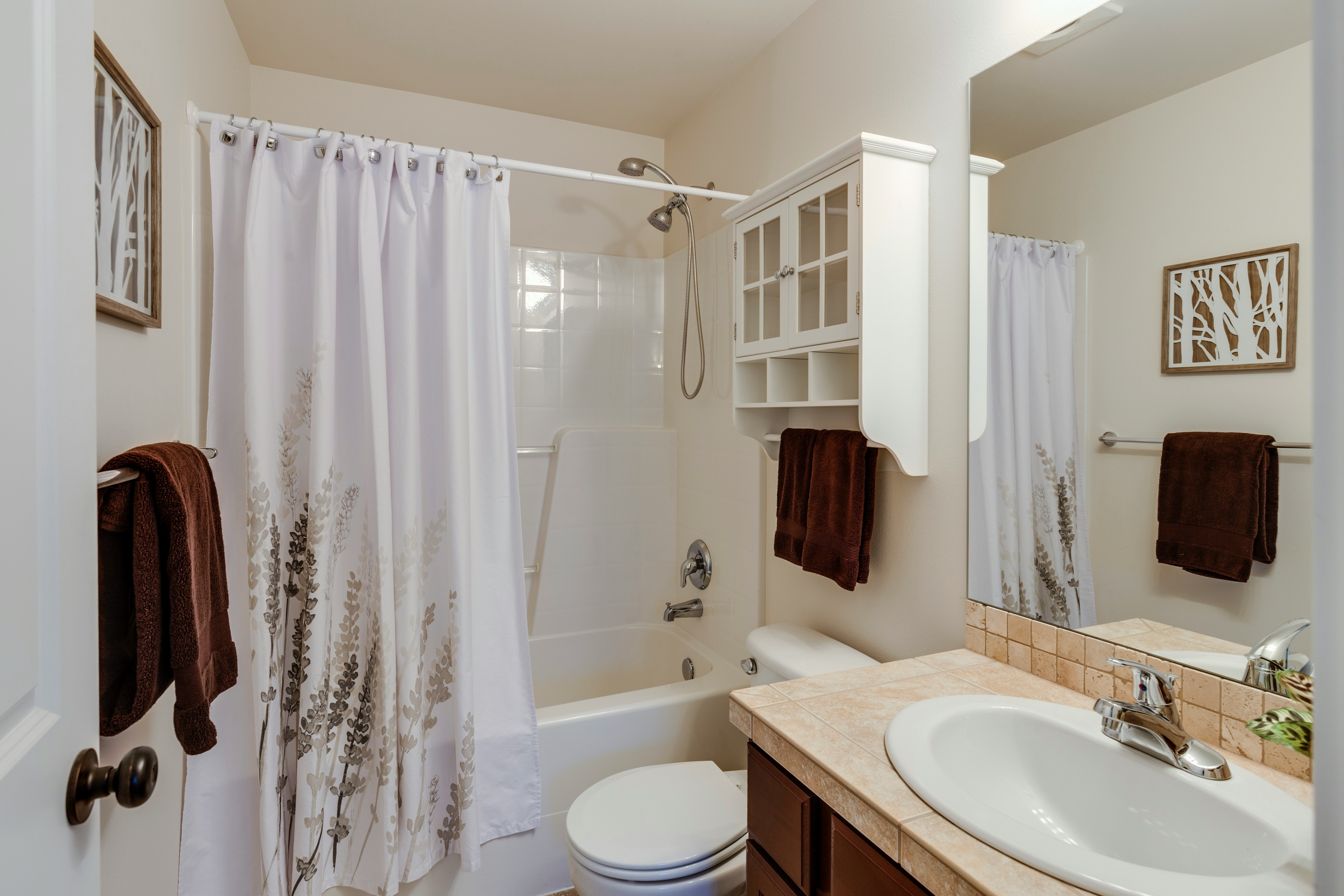
Most notably, the charity recommend using brightly-coloured towels which, as well as just making your bathroom a little more colourful, will stand out more on the towel rail and make spotting them easier.

Additionally, the experts recommend that if you have a fabric bathmat, this should be rolled up when not in use to prevent trips and falls.

While this is probably just good practice in general, NHS Inform urge that dementia sufferers are at a higher risk, saying: “There are different personal risk factors that cause people to fall, however, people with dementia are at greater risk because they: are more likely to experience problems with mobility, balance and muscle weakness.”

Dementia UK offer more tips for making bathrooms accessible

On their website, Dementia UK recommend the following steps for making bathrooms a safer place for dementia sufferers:

  • Stick a written sign or a picture of a toilet to the door to help the person identify the bathroom
  • Leave the bathroom light on at night to help the person find their way
  • Fit a toilet lid and seat in a different colour from the toilet itself to make it more visible
  • Use a free-standing toilet roll holder. These are easier to see than wall-mounted holders, and putting it right next to the toilet means the person does not have to stretch and potentially lose their balance – but if the person is prone to falls, be aware that they may be a trip hazard
  • Install rails or handles at useful points such as in the bath/shower and next to the toilet
  • Provide a bath or shower seat if the person has mobility or balance problems
  • Use flood and scald prevention plugs in the basin and bath
Share Button

Having WiFi Troubles? This Common Household Appliance May Be To Blame

According to Forbes, around a quarter of us work from home regulalrlyh and for that, we need consistently good WiFi speeds and reliable internet for our work, meetings, and availability on Slack.

However, it isn’t always that simple. In fact, I’d argue that if you haven’t found yourself aimlessly arguing with your router at least once, you haven’t hit the final boss of working from home.

That being said, before you call your provider to complain, Trevor Cooke, the privacy expert at Earthweb, has outlined four things that may be holding your WiFi back.

The surprising things that could be slowing your WiFi down

Microwaves

I know! I know!!!

Cooke said: “Microwave ovens operate on the same 2.4 GHz frequency as many WiFi networks. When in use, they can cause significant interference, leading to slower speeds or temporary disconnections.”

Cooke recommends that the router is placed away from the kitchen and any microwaves. He also advised that if your router supports it, the 5 GHz band is less prone to microwave interference.

Bluetooth devices

Cooke said that Bluetooth devices, such as wireless headphones, speakers, and keyboards, also use the 2.4 GHz frequency, potentially causing WiFi signal disruption.

To address this, limit the use of Bluetooth devices near your router or switch to the 5 GHz band for your WiFi network if possible.

Thick walls

Unfortunately, the structure of your home can significantly impact WiFi performance.

Cooke said: “Thick walls, especially those made of concrete or brick, can obstruct and weaken WiFi signals. ”

He recommends using WiFi extenders or mesh networkers to boost the signal in homes with thick walls.

Electronic devices

Other electronic devices, such as baby monitors, can interfere with WiFi signals by creating radio frequency interference.

Investing in newer electronic devices designed to minimise interference with WiFi signals can help to improve your connection.

Who knew?!

Share Button

UK Gardeners Warned About This Watering Mistake Which Could Ruin Plants

If you’re a keen gardener, you may be looking forward to the coming months as you fill your garden with plants, flowers, and even vegetables – but did you know that you may have actually been watering your plants wrong?

Yep, it turns out that there is a right way to water plants and it definitely isn’t just pouring water from a watering can over them the way that some of us are used to doing.

So, what is the right way to water plants?

According to the Royal Horticultural Society (RHS), there is an art to watering plants, especially if you hope to avoid wasting water and give your plants the best possible chance at flourishing.

According to the RHS, the best time to water is in the mornings as this is when the sun rises and plants will start to use water. They added: “The foliage and soil surface is also likely to stay drier for longer than evening watering, discouraging slugs, snails and mildew diseases.”

Each individual plant has its own watering schedule so it is worth researching the plants growing in your garden to figure out a schedule for keeping them hydrated and thriving.

When you are watering plants, especially if you’re using a watering can, it’s essential to water them at the roots. This is because wet or humid foliage encourages fungal problems and evaporation from surfaces.

The RHS added: “Watering more thoroughly, but less frequently helps get the water down to the deeper root tips.

“It is better to water the garden before drought really sets in, to keep the soil moisture levels even and avoid the soil being continuously dry.”

However, the society warned that soil doesn’t have to be really wet all the time because plants need air as well as water to grow.

What is the best water to use on outdoor plants?

According to the RHS, rainwater is actually best as it’s freely available if you are able to store it. Additionally, tap water requires treatment and often contains more minerals than many plants need.

Who knew?!

Share Button

3 Simple Steps To Save A Waterlogged Lawn, According To An Expert

Ah, soggy ol’ Britain. An island where your outfit on any given day should account for all possible weathers because truly, who knows what the day holds? This is especially true during spring when we don’t seem to have any consistency for three solid months.

Following a few weeks of hopeful sunshine, a lot of the country now has, predictably, downpour. Which is set to last for at least the rest of the week with flood warnings even being issued for parts of England, according to the Met Office. Yay.

Another issue that comes with this weather is that our gardens can get flooded (also known as waterlogged), which is dreadful news for those of us that were excited to finally get back into gardening after a long winter.

However, there are some things we can do to help our lawns recover.

How to fix a waterlogged lawn

Rhiannon Moore, a garden expert at Toolstation, shared her tips for tackling a flooded garden:

Remove any built-up debris

Moore advises that once the water has receded, you should immediately remove any leftover debris such as sticks and leaves to clear the surface of the lawn. She added that you shouldn’t use a metal rake for this as it’ll damage the already weakened soil surface.

Aerate the soil

Using a garden fork or aeration tool, spike holes into the soil surface that are no more than six inches deep.

Fertilise the soil

Using a feed that’s rich in phosphorus, fertilise your lawn. This will help to promote root growth as well as replace the lost nutrients in the soil.

Moore added: “It’s also important to remember not to mow a lawn after a period of extensive rain and make sure to avoid watering until the ground has dried out.”

Early signs of waterlogging

If you’re not familiar with waterlogging or are new to the world of gardening, you may not be aware of the signs of a flooded lawn. Moore shared the most important signs to look for:

  • Bare patches – As the grassroots start to die, it will result in bare patches of lawn. These first strike in the worst affected area

  • Moss patches – Whilst a small amount of moss is beneficial to a lawn, large amounts of it can cause the grass to die as the moss steals the ground nutrients

  • Excess weeds – Rogue weeds are a common sight in lawns however, they can quickly take over a weakened lawn and starve the remaining grass of nutrients

Long-lasting solutions for a waterlogged lawn

  • Level out the ground – If the flooding is only happening in isolated areas, you can add some topsoil and new turf to level out the uneven lawn

  • Add garden walkways – Each time you walk over your lawn, you compact it beneath your feet. Adding a simple paved garden walkway will help to protect your lawn from damage

  • Consider a French Drain – If flooding is a regular issue, you may want to consider installing a French drain. This is a gravel-filled ditch with a perforated underground pipe to drain away the water. It’s best to check with your local planning authority before starting any digging

Let’s hope for sunnier days soon!

Share Button

How To Keep Rats Out Of The Garden Without Killing Them This Spring

No offence to the little critters but for many gardeners, rats are really quite unwelcome visitors. Setting up little homes beneath decking, in sheds, greenhouses or even compost heaps means that they infiltrate the nooks and crannies of our gardens.

As they’re nocturnal, and quite skittish anyway, you’re unlikely to see a rat in the garden but signs such as rat tunnels, runs, droppings and even teeth marks can sprinkle throughout your treasured green space, letting you know that rats are living there.

The problem is, for many outdoorsy folk, killing them or poisoning them isn’t an option. I mean, of course. They’re just existing. But then, how do you get rid of them without harming them?

Thankfully, the experts at Gardeners’ World have some ideas to keep the rats at bay.

How to get rid of rats in my garden humanely

Instead of opting for rat traps, put the bird feeders away

If you have bird feeders hanging for local birds, you may be inadvertently attracting rats. This is because bird food being as small and light as it is, often falls to the ground and this attracts rats. For a while, stop filling bird feeders and if you have chickens, secure the run to deter rats.

One of the best rat repellents is simply… keeping your garden tidy

Messy gardens filled with clutter and overgrown areas are more likely to appeal to rats because of how much cover they provide. Give your garden a good tidy, especially near fences, and keep it today to deter rats.

Protect your compost heap and keep it moist

Avoid adding food scraps to your compost heap for a while and, if you can, keep it moist by including lots of greenery and mud. Gardeners’ World added: “Fixing chicken wire around the base of the bin can also help, as it prevents rats from being able to dig beneath the bin to climb inside.”

Block access to sheds and greenhouses

Rats can make their way into many small cracks, so make sure that your buildings are secured and block any gaps.

Move things around the garden to put them off coming back

Rats hate change and specifically change to their own territory. Move furniture, potted plants and anything else around your garden to encourage rats to find somewhere else to call home.

Finally, if you have any water sources such as a dripping tap that can be shut off, turn them off for a short while if you’ve exhausted all other options.

Share Button