You’re reading Move, the nudge we need to get active, however makes us happiest and healthiest.
Every football fan will tell you the joy of watching your favourite time play, but a new study goes one step further, detailing how it can even boost your mental health.
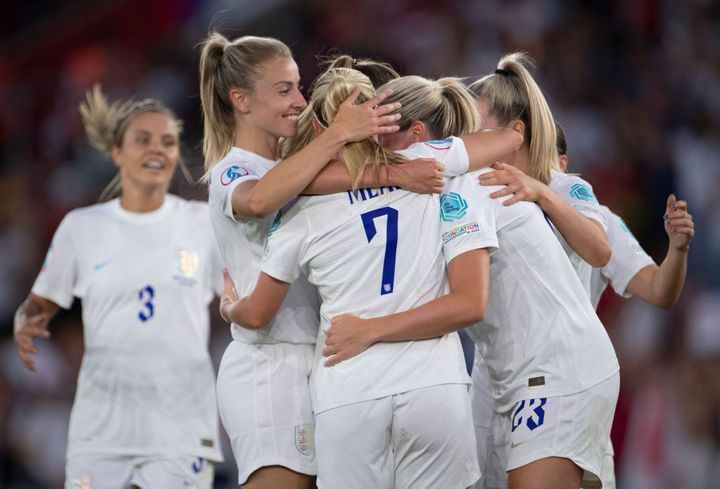
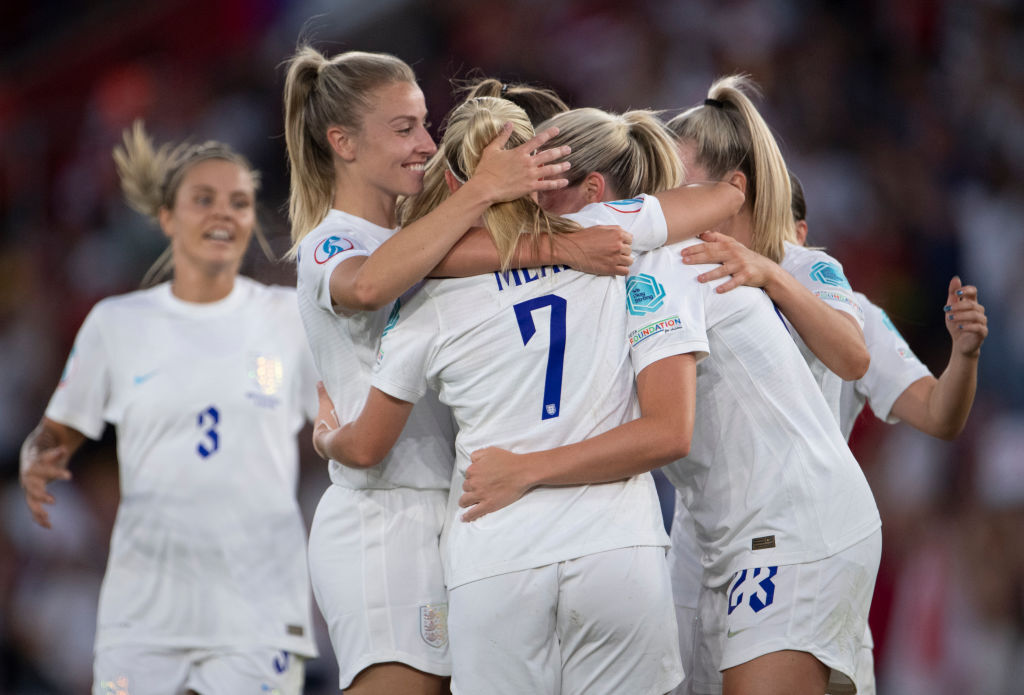
And with England’s Lionesses set to face Sweden in the Euro 2022 semi-final, it’s yet another reason to get behind the team, who’ve had a record-breaking run so far.
Advertisement
One in two of all sports fans said watching a match helps them socialise more with friends and family, according to the study conducted by charitable social enterprise, Better. Over a third (35%) said it makes them feel part of a community and 33% said it inspires them to be more active.
The researchers asked 2,000 sports fans across the country questions about their daily exercise regimes, their participation in sports, their sport-viewing habits, their fruit and vegetable intake and their alcohol consumption.
They wanted to determine which sports fans are enjoying engaging in a sport and which ones prefer the comfort of their sofas when watching their favourite athletes compete.
Visionhaus via Visionhaus/Getty Images
The mighty Lionesses will face Sweden in the Euros semi-final.
Advertisement
“Sport and exercise is brilliant for physical, mental and cognitive health. If it was a pill it would make billions!” said Dr Josephine Perry, a sports psychologist who spoke to Better.
“As well as the physical benefits, the exercise we get through sport gives us structure, purpose, energy and motivation.”
Dr Perry explained that sport also positively alters the way we process and respond to our emotions, reducing “how much we overthink” helping to build up “an emotional resilience to stress”.
“These help reduce symptoms of depression and anxiety, make us behave differently, boosts our self-esteem and means we reduce any feelings of loneliness by becoming more social,” she added.
The research also found that football fans were the most active across all sports, with 34% getting over 60 minutes of exercise every day. Footie fans were also found to be the least likely to drink more alcohol while watching sport (45%).
Advertisement
Josh Cheetham, a 30-year-old avid Leeds United fan, was not surprised by the research. “In 2018 I was suffering from depression, I was in a really dark place after a tragic life event, and I didn’t see how I was going to get better. Then I went to a football match, witnessed one of the best matches I’ve ever seen, and I was feeling better as soon as the final whistle blew,” he said.
“When I watch my team at away matches, I am usually on my own, but I don’t see it that way. We all support the same team, we are all one big community and family, you can start talking to anyone around you and immediately feel like you know them and strike up a friendship that lasts for years.”
So, if you haven’t tuned into the Euros yet, what are you waiting for?
England were always a favourite going into this tournament. But whatever the outcome, you’ll get a boost from supporting them.
Move celebrates exercise in all its forms, with accessible features encouraging you to add movement into your day – because it’s not just good for the body, but the mind, too. We get it: workouts can be a bit of a slog, but there are ways you can move more without dreading it. Whether you love hikes, bike rides, YouTube workouts or hula hoop routines, exercise should be something to enjoy.
On January 22, 1973, the US Supreme Court affirmed in a 7-2 decision the legality of women’s right to have an abortion under the 14th Amendment.
Today, about one in four pregnancy-capable people in the US have had an abortion, and the risk of complications from an in-clinic procedure is extremely low. But before it was guaranteed as a constitutional right, seeking an abortion was a harrowing, potentially life-threatening endeavour.
Advertisement
While some women saved up the cash and sometimes travelled hundreds of miles to find qualified medical providers willing to risk their livelihood by operating on patients, others settled for providers lacking the qualifications and skills to perform induced abortions. And even more desperate people attempted their own abortions.
The outcome of these back-alley procedures or at-home coat-hanger abortions was often devastating, leading to maternal death or lifelong injury. (Complications from unsafe abortions include infection, incomplete abortions, haemorrhaging, uterine perforation and damage to the genital tract or internal organs, according to the World Health Organisation.)
Advertisement
Because these stories were so traumatic – and because the stigma surrounding abortion was even greater in those pre-Roe v. Wade years – many women remained silent about their experiences.
Now, as the US Supreme Court seems poised to overturn the Roe v. Wade decision, it’s worth revisiting their stories to understand what abortion was like in the decades before it was legalised.
Advertisement
HuffPost US recently spoke to eight people who shared experiences of relatives – great-grandmas, grandmas, mothers and aunts – who sought abortions in pre-Roe v. Wade America. Many were already mothers, struggling to conceptualise raising one more child in poverty or, in some cases, with an abusive spouse.
In one story that differs from the rest, a reader shares how her great-grandma, the wife of a well-to-do dentist, was able to obtain a safe abortion in a doctor’s office with little fuss; the story illustrates how white, middle-class and upper-class women have always had an easier time accessing safer abortion options. (As many have noted, women of colour will be disproportionately affected if Roe v. Wade is overturned.)
Below, read all eight stories, which have been edited lightly for clarity, style and length.
“My maternal grandparents married in 1934.By the time my mother was born, it was clear my grandpa was a monster. Violent and cruel, he beat my grandma with a metal lunchbox. When mom was just a few months old, he threw her against a wall. My grandmother fled.
Advertisement
She discovered she was pregnant again. To induce an abortion, she drank a bottle of Lysol. You can Google ‘Lysol abortion’ and see ads from that time that suggested a woman could use Lysol to ‘correct your mistake.’ The ads are quite chilling, their meaning vague and without instructions.
Was reading the Dec 2019 edition of The Atlantic. Learned that Lysol was marketed as a “feminine hygiene” product and often used by women seeking abortions when they were illegal in the US.
It took my grandma 29 hours to die in her parent’s home; they were helpless to end the agony. Living in a logging village in winter, there was no hospital or way to travel to the city.
My mother always felt responsible for her mother’s so-called ‘suicide,’ as children do. Doing genealogy research, I uncovered the full story when my mother was in her late 60s, but her life was already written and the truth brought no comfort. I sometimes think I should never have done the research. There are four generations impacted by this one attempted abortion. We can never really know how lives would be different if she had lived. But I do know my mother’s life was forged by that event, she was an orphan, hidden from her father, never knowing why she’d been abandoned.” – Chuck M., 62, from Washington state
“My mother was a 16-year-old in 1970when she became pregnant as a result of sexual assault. She was living with my grandparents in Southern California, and abortion was not legal at that time. My grandparents were not in a position to get over the border into Mexico to have the procedure done, and they didn’t have access to a safe place to have the procedure done, either. Rather than risking my mother in a back-alley abortion, my grandmother assisted my mother in inducing a miscarriage. My grandmother had my mother sit in steaming hot baths for hours. My mother ingested medications that were considered dangerous to a fetus. They did everything short of physically harming my mother, though my mother did tell me that she was so desperate to end the pregnancy that she considered throwing herself off a high platform or down the stairs.
They managed to successfully induce a miscarriage, and my mother was taken to the local hospital to deal with the effects of the miscarriage and for a dilation and curettage. That worked, but her young body and mental health were not OK. Though my grandmother’s and mother’s intentions were to do something safer than a back-alley abortion, my mother was still at risk of potential harm from the various medications she took. And the foetus would also have been at risk for birth defects and other issues if the medications had not succeeded in a successful miscarriage. It was still dangerous.
My mother told me once that Roe was the single most important law that passed in her lifetime. That she was relieved that other women and people with a uterus would not have to suffer the same circumstances she did. If she were alive today, she would be absolutely shattered.” – Sara from New York
“My aunt Judith was just 17 in 1964 when she became pregnant after being raped on a study date at a so-called friend’s house. She was horrified to find out she was pregnant; she was on her way to college in the fall, and a baby wasn’t in her plans yet. Her doctor suggested a girls home out of town where she could stay until the baby was born and then give it up for adoption; it was her only choice since abortion was illegal.
Judith had tried all the old wives’ tales, jumping backward a dozen times at dusk and even drinking a tea that made her deathly ill just to lose the pregnancy naturally, but nothing worked. A friend of hers, Arbie, who was two years older, had been in Judith’s shoes and had taken care of her ‘dilemma’ herself.
In that summer of 1964, Judith chose to use a metal coat hanger, thinking it would be over quickly and no one would ever know. Her end result was far more than she had ever anticipated, with excessive bleeding and infection that led to a partial hysterectomy and the inability to ever carry a child. She spent nearly a month in the hospital. Her mother found out and never looked at her the same, although she did keep [Judith’s abortion attempt] from Judith’s father, knowing he would have kicked her out and pulled her college tuition. The family was hush-hush about everything, given the era everything took place.
Judith went on to graduate college top of her class to become the first female doctor of psychology in the family. From the outside looking in, her life was perfect: the house, her own office, nice car, all the material things one could ever hope to have, but she had developed a serious drinking problem and her life behind closed doors was, as she once said, ‘exactly what you’d think hell on earth would be.’
Advertisement
I was born in ’72, her only niece at the time, and she doted over me constantly every chance she had. I never suspected anything was ever wrong, although I did always wonder why Auntie Judy had such sad eyes; it wasn’t until puberty hit for me that she warned me of the dangers of having ‘that time’ and told me her story. She explained there were no real options in ’64 but said that because of Roe v. Wade in ’73, I would have more options than she had ever had.
Her desire to be able to carry a child, to be the mother she had always dreamed of, haunted her every waking hour and her dreams, and she was never able to get away from it. In 1984, just a week shy of her 37th birthday, my Auntie Judy hung herself in her attic; the pain and anguish had finally won the battle. Her note was a short novel, telling her story. I was only 12 and was told I wasn’t old enough to read it or understand it, but I didn’t listen. I sneaked and read it, and now I can remember every word, and her pain, longing and anger still haunt me to this very day.” – AJ, 50, from Louisiana
Jared Milrad/Canva
“Like most kids raised by a single mother, I’ve always thought of my mom, Jan, as courageous, resilient and strong. Growing up, she commuted nearly two hours each day ― every day ― to work a low-paying job as a secretary so that my brother and I could have a better future. Despite all that she went through, my mom never gave up and ensured that my brother and I could get the best education and have more opportunities than she did.
But it wasn’t until I was in my 20s that I realised how truly incredible my mom is. One day, my mom shared that she was around my age when she had two abortions. This was 1968-69, when abortion was still illegal in the U.S. and my mom was 26 or 27 years old.
My mom told me that she had her first abortion during this time while dating a much older man. The pregnancy was very unexpected, and because my mom was struggling to make ends meet and didn’t have much support at all, she made the wrenching decision to abort the pregnancy. Because abortion was illegal in the States, the man found a doctor for her in Puerto Rico and agreed to pay for the procedure, so my mom went with my grandma to have it done. They traveled to San Juan and then traveled a bit outside of the city. My mom expected the procedure to be done with anaesthesia, but – horrifyingly – it wasn’t.
‘The abortion was done by a butcher and my mother heard me screaming,’ my mom recalled. ‘I didn’t know that they weren’t going to give me anaesthesia. It lasted for only 20 or 30 minutes, but it seemed like a lifetime. When we got back to the hotel in San Juan, I was in such pain. Then, when I was back in New York City in A&P Grocery a few days later, I noticed that I was bleeding ― haemorrhaging.’
My grandma immediately called a gynaecologist and arranged to have my mom treated in the ER at Lenox Hill Hospital, where they didn’t tell the doctors that the bleeding was caused by an abortion out of fear because the procedure was still illegal. My mom was lucky to survive.” – Jared Milrad, 38
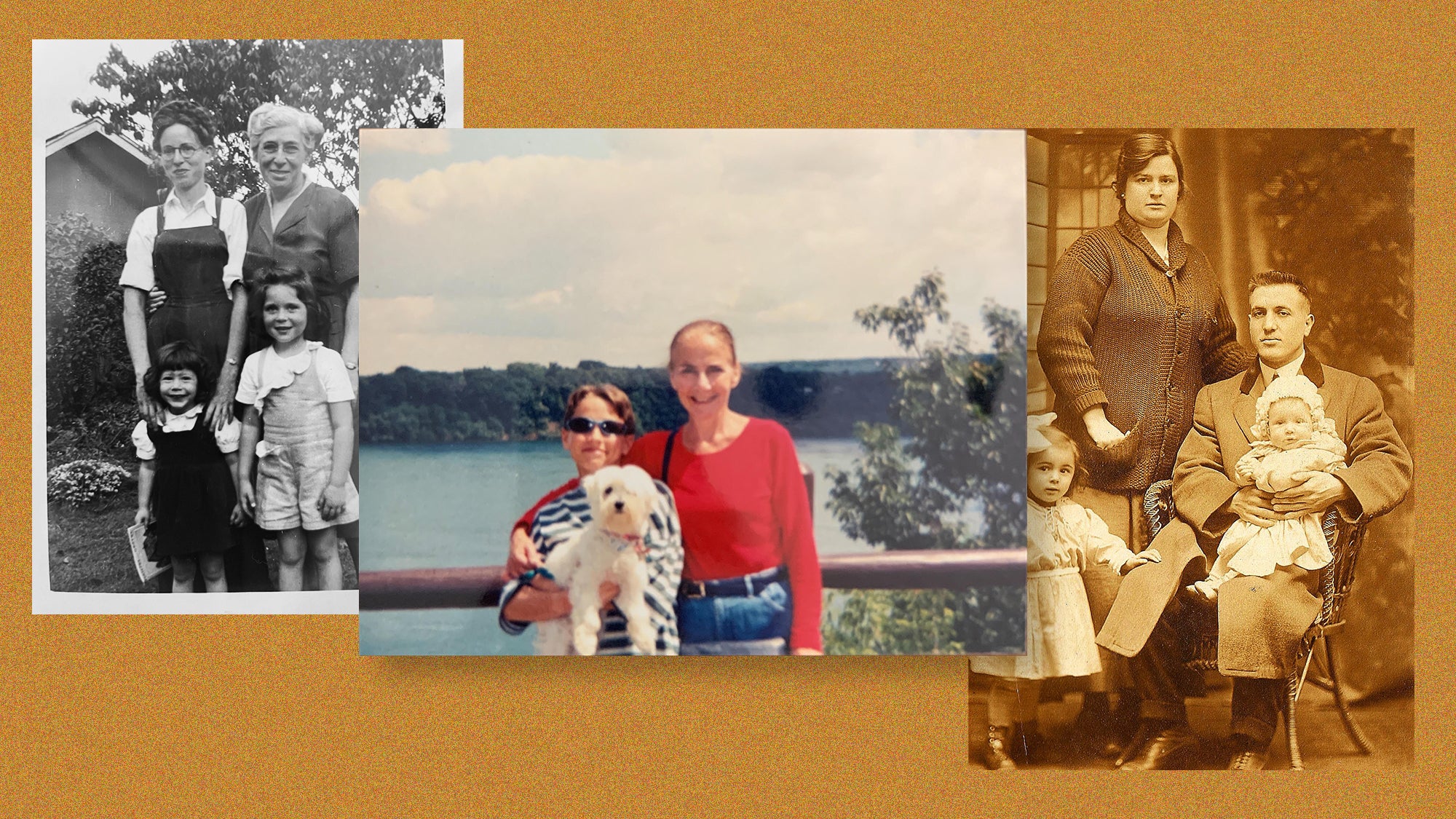
“Today, the majority of women who seek a legal abortion are already mothers. Let me share a pre-Roe horror story about my Italian, Catholic grandmother Mary, whom I never had the blessing to know.
Apparently, on her deathbed in 1943, Mary asked her sister-in-law Florence, who was childless, to take care of her only daughter, but the shameful secret had to be kept. My mom was forbidden to ask questions about her mother or her death. She learned the truth when she was in her 50s from me after years of research.
I was in my 20s when I first began to put together the pieces of a story that just didn’t make sense: a 34-year-old mother of three young children who is hemorrhaging but refuses to go to the hospital. Even the death certificate corroborates the secret. Cause of death: carcinoma of the cervix. But cervical cancer does not generally cause women to bleed to death.
Advertisement
Then, one day in the mid-’70s, we were talking about the Roe decision, and Florence, the woman I knew as my grandmother, let it slip that she had to lend $250 (an enormity in 1943) to one of her brothers because someone needed an abortion. I was stunned; I finally connected the dots. In a typically large Italian Catholic family, Florence had many sisters but only two brothers. One of them, it turns out, was my biological grandfather.
Grandma Mary already had three children she loved: two boys and the middle child, my mom Nancy. With an unemployed husband, a fourth child would plunge the family into poverty.
So the decision was not made lightly, but something went horribly wrong. Mary was just 34 years old and was more afraid of the law (and the judgment of the Catholic church) than she was of dying and leaving her children motherless.” – Lori Bores from New York
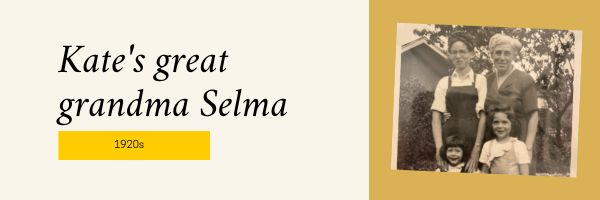
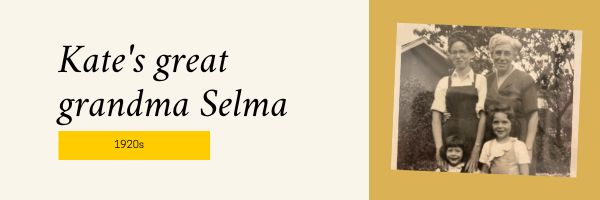
“Great-Grandma Selma Rosenthal (born 1878) was a career woman.Graduating from college in 1901, she was homely and smart, two things that did not make her particularly attractive to suitors of the era. Knowing this, she focused on having a successful career. She was by all accounts very funny, with a wonderful voice and an active circle of friends. She had no expectation that marriage or family were in the cards for her, and she had made peace with that idea.
That all changed when she met Sidney Rauh, a dentist from Cincinnati from a well-off family. It was the 1910s, and she was well into her 30s. Sidney was equally unattractive and clever, and a confirmed bachelor. He had no interest in marrying a girl for her looks but wanted to find someone he could love for her mind. When they met, it was love at first sight, and given their advanced ages, they decided to marry as soon as possible.
Selma quickly became pregnant, only to miscarry the first Christmas they spent together as a married couple. Two daughters quickly followed in 1916 and 1919, but Selma was terribly sick with her second pregnancy and she barely survived childbirth. Her doctor told her, in no uncertain terms, that if she was to get pregnant again and attempt to see it to term, she would die. She promised she would be careful.
A few years later, when she realised she was pregnant, she went to her doctor. The doctor advised her that she had to have an abortion. Sometime later, the doctor performed an abortion in his office, no fuss, no muss. But Selma was a well-off wife of a successful dentist with status in the community. It never occurred to her that what she was doing was illegal or in any way wrong. It was a decision between her, her doctor, and Sidney, and she did what was best for her family and health.
Selma died in 1948 at the age of 62 of a heart attack, having spent time not just with her daughters, but also with her granddaughters, who were five and three at the time of her death.
Great-Grandma was a suffragette and strived for women’s rights. Women’s rights and bodily autonomy were key issues in my family, but I suspect the story would not have been noteworthy had it not been for the fact that abortion became the issue it was later on. My mother and grandmother shared with me how hard things like birth control had been to get in their era, and my mother shared with me the fact that she got a (legal) abortion for family planning reasons. For us, it was just part of normal conversation.” – Kate, 50, from New York
Stephanie Voltolin/Canva
“I was born in the 1960s and grew up in a very conservative Catholic family. Nonetheless, my traditional housewife mother was ardently pro-choice. She even took one of my friends to get an abortion in the 1980s because my friend couldn’t tell her family she was pregnant.
Advertisement
Shortly after my paternal grandmother died, when I was a college freshman, my mother frankly told me during a conversation about choice, ‘Your grandmother had a back-alley abortion and almost bled to death.’
My grandmother found herself – in the early 1940s before birth control or abortion were legal – pregnant and divorced from her second husband, who turned out to be horribly abusive. She decided to leave before he began abusing her three children from her first marriage. Like most women of her day, she had no college education or career to support herself and her children. And, like most women who get abortions, she could barely support the children she had. She ended up having to go live with her parents, who were Italian immigrants.
Faced with being twice divorced and pregnant, my grandmother sought an abortion. Because they were illegal, she had to trust a back-alley ‘doctor,’ who punctured her uterus in the process. She left the procedure, collapsed in the street from the blood loss, and had to be taken to the hospital. An emergency hysterectomy saved her life.
She was an amazing mother and grandmother, and although she died almost 40 years ago, I still become emotional when I think about what a loss I would have suffered had she died from that botched abortion.
The rest of the family never knew. I am telling her story now in the same way that we disclosed our sexual trauma during the Me Too movement to educate others. Legal and safe abortion is critical to women’s reproductive rights as American citizens, and we cannot allow them to expire.” – Stephanie Voltolin
“My great-grandmother died from a botched, illegal abortion in the mid-1930s in Chicago, leaving my grandmother (2 years old) and her sister (4 years old) without a mother. When my great-grandfather remarried, his new wife already had kids of her own and didn’t want to take care of two more. My grandmother and her sister were thrown out of the house and bounced around to different aunts and uncles.
For much of my grandmother’s life, she was told that her mother died of a pregnancy complication due to an ectopic pregnancy. Later, when my grandma was a teenager, her aunt told her the truth: that her mother had died from a botched, illegal abortion.
My grandmother shared her story with me in 2012 when I was 25. We were having an early lunch. I remember she asked me if I wanted a glass of wine, which was odd for her in the middle of the day. We were talking about something else entirely and she said, ‘my mother died of a botched, illegal abortion,’ almost out of the blue, and her story just unfurled from there.
I honestly didn’t think too much about what my grandmother shared. I didn’t think her story was shocking or novel, maybe because abortion had been legal in all 50 states for my whole life. I assumed everyone else in our family knew, so I didn’t think to say anything.
A couple years later, I was catching up with my parents and one of them said, ‘Did you know Great-Grandma Sally died from a botched illegal abortion?’ That’s when I realised my grandma was nervous when she shared her mother’s cause of death with me. She was holding on to this family history and likely carrying with her the shame and stigma or the ‘don’t talk about it’ attitude of her family. It was an ‘aha’ moment for me – a real understanding that likely everyone has a family abortion story, whether they know it or not.
Advertisement
Now our family has a deep understanding that when abortion is legal, abortion is safe. And we know in the decades before Roe v. Wade was decided, people like my great-grandmother were desperate to receive the care they needed.” – Amy Handler, 35, from Oregon
Since 1973, Roe v. Wade has protected the right of all Americans to access safe and legal abortions. But a leaked document published by Politico on Monday shows that the federal protections conferred by Roe may be struck down by the US Supreme Court this summer.
If Roe falls, the legality of abortion will be determined by each state. And though a handful of states are passing legislation that will protect the right to get an abortion, many others — 26 to be exact — are expected to quickly ban or restrict abortions.
Advertisement
If this happens, millions of people in the US will no longer be able to access safe abortion care within their communities. They’ll have to wait longer and travel farther to access help. The impact on people’s mental and physical health – along with their finances, families and livelihoods – will be astronomical.
Despite the misinformation that swirls around the internet (and beyond), abortions are extremely safe procedures. They’re also incredible common – about one in four women will have an abortion by the time they are 45 – and, in many cases, they are life-saving.
Advertisement
“It is a common procedure, it is very safe, and I can’t emphasise that enough. This draft ruling is egregious, it is a basically a war against women,” Dr. Melissa Simon, a Northwestern Medicine OB/GYN, tells HuffPost.
Here’s what people get wrong about abortion
Advertisement
One of the most common misconceptions about abortions is that the procedure is dangerous or detrimental to one’s health.
A report from 2018 examined the safety of various methods of abortion – medication, aspiration, dilation and evacuation, and induction – and concluded that abortions are safe and effective and that complications from all types of abortions are rare.
It’s the barriers and restrictions that legislators sign to prevent patients from easily and swiftly accessing abortion that jeopardise their health. It’s well known that delaying abortion care increases the risk of complications.
Some US states require doctors to tell their patients that there’s a link between breast cancer and abortion – despite the fact that many high-quality studies have put this question to rest, according to Dr. Jennifer Kerns, an associate professor in the department of obstetrics, gynaecology and reproductive sciences at the University of California, San Francisco.
Advertisement
Others fear that abortions cause infertility, but research hasn’t found a link between abortions and the ability to conceive in the future. There’s also no evidence that abortions increase the risk of complications (ie. preterm birth or low birth weight delivery) in the event of a future pregnancy.
Another long-running mistruth is that abortions increase the risk of developing mental health issues. “There is a huge body of work demonstrating that abortion in and of itself does not cause mental health problems,” Kerns says, noting that people often feel relief after getting an abortion.
What we do know is that unwanted pregnancies can cause significant maternal depression and parenting stress. And those mental health issues don’t clear up with time; they are often long-lasting, afflicting the women who carried the unwanted pregnancies to term well into their 30s, 40s and 50s.
“Even in the setting of using contraception and safe-sex practices, having the option of an abortion is critical to the life and both physical and mental health of the woman.”
– Melissa Simon
Many people falsely believe pregnancy is easy to avoid, but it’s not that straightforward. Kerns sees many people, from all walks of life and phases of reproductive health, seeking an abortion. Contraception – though invaluable – is not foolproof. Birth control is not 100% effective; it can fail and lead to a pregnancy.
“Even in the setting of using contraception and safe-sex practices, having the option of an abortion is critical to the life and both physical and mental health of the woman,” Simon says.
Many anti-abortion bills have been labelled “heartbeat bills” because they ban abortions at the first sign of foetal cardiac activity. This nomenclature is wildly misleading – while primordial electrical activity can be detected around six weeks of pregnancy, this does not mean a foetus has a functioning heart. The heart, valves and vessels do not form until 16-18 weeks of pregnancy.
“Just having cardiac activity does not mean the foetus, if born at that moment, would be able to survive,” Simon says.
Restricting abortion impacts people’s health and livelihoods
Evidence shows that being denied an abortion has a devastating impact on one’s physical health, mental health and overall well-being.
The Turnaway Study, conducted by scientists at the University of California, San Francisco, found that women who carry an unwanted pregnancy to term have a four times greater chance of being below the US federal poverty level.
Advertisement
They’re also more likely to experience serious health complications, such as eclampsia and death, and to develop mental health issues, including anxiety, depression and suicidal ideation. They’re more likely to stick with an abusive partner; their life goals tend to take a back seat, and their families’ livelihoods suffer. Many go on to experience chronic pain.
“The health and welfare of the citizens of this country suffer – we see increased illness, we see increased poverty and we see increased death,” Kerns says.
“The health and welfare of the citizens of this country suffer — we see increased illness, we see increased poverty and we see increased death.”
– Jennifer Kerns
Restricting the right to an abortion does not mean the need for an abortion disappears. A recent study predicted that banning abortion will lead to a 21% increase in pregnancy-related deaths; that jumps to 33% among Black women.
Maternal mortality rates are at an all-time high. The US already has the highest maternal death rate among developed nations — and that crisis would only get worse without access to safe abortion.
“There are some women who get pregnant who could die if they continue with the pregnancy, and, therefore, an abortion is a life-saving procedure in those circumstances,” says Simon, adding that those circumstances are not rare. Abortions, in many cases, can save the life of the mother.
Here’s what the fall of Roe could mean for health care
Kerns said the leaked document demonstrates that the court is no longer a neutral group. “It really lays bare how out of touch their rulings are with people’s lives,” Kerns said.
Much of the language used in abortion restrictions and bans – like “abortionists” – really deeply divides people and shames those who get an abortion or provide an abortion.
Simon says the potential fall of Roe reflects a crisis in women’s health care, specifically when it comes to maternal health. The end of Roe would mark a war against women and people who can get pregnant, who, for the record, comprise over 50% of the US population, she adds.
Simon is exceedingly concerned about what will happen to the growing maternal death rate if Roe falls and safe abortion care becomes harder and harder to access.
Advertisement
“That is what I am very worried about in this country – that we are going to go even more in the wrong direction than we already are with respect to caring for over half of our population: women,” Simon says.
At this point of the pandemic, it still feels like we’re stuck in a bit of a time warp.
Yes, offices are opening back up and many people are carrying on with their events and travel plans. But there’s still a layer of uncertainty about what might happen next with Covid and when the pandemic will truly end — especially as more variants pop up.
Advertisement
Life doesn’t exactly feel normal yet, and as a result, time drags by. Here’s why, and how you can “gain” some of it back:
1. We lost our routines.
Advertisement
According to Ruth Ogden, an experimental psychologist at Liverpool John Moores University who studies how humans process time, this sensation that time is warped has been a global phenomenon. Through her research, she’s found that peopleacross the globe have experienced distorted time during the pandemic.
The biggest culprit of the time warp: the loss of our routines.
Advertisement
“All the things in our day that helped us know what time it was ― they were gone. That meant it became easy for time to slip and slide around,” Ogden said.
During the pandemic, time stood still for many of us. We canceled our activities and we distanced from friends. People did everything — sleep, eat, work, socialise, parent, exercise — from their homes.
“We’re all heavily routinised creatures, but this routine is important because it keeps us in time,” Ogden said.
Our day-to-day activities help us perceive time — if we are commuting, we know it’s morning, if we’re running out for lunch, it’s midday, and so on and so forth. Without daily routines, which act as markers of time, it becomes easy to get lost in time. The things that made your Saturday a Saturday, or your Tuesday a Tuesday, may no longer be there.
Advertisement
Research also suggests that emotions significantly impact our perception of time. When we’re happy and physiologically aroused, time feels like it’s flying by; conversely, depression can make time feel sluggish.
Furthermore, our expectations of how things will occur (i.e., the pandemic is over!) versus the reality of how things play out (there’s a new variant coming for us) can make time feel faster or slower, depending on if the actual outcome was better or worse than our predictions.
2. Memories help us process time, and our memories are different from the last few years.
Think back to the beginning of the pandemic, when news of Covid spreading around China first leaked. How long ago does that feel to you? Months? Years? It’s probably hard to tell.
Ogden and her research team have been studying how people feel about the length of the pandemic and have discovered that the brain processes length of time through memories.
“If we’ve got loads of memories, then it says, ‘Oh, it must have been a long time,’ but if it has very few memories, then we think it must have been a short period of time,” Ogden said.
In theory, most of us should remember the pandemic as being short — because we didn’t do a lot, Ogden said. But she’s found the opposite: most people feel like we’ve been stuck in the pandemic for much longer than we have been.
The reason, it seems, is that while we didn’t necessarily form a ton of fun, new memories for a period of time, we still formed memories. We learned how to bake bread, we got into puzzles and crafts and packed our days with Zoom meetings. We navigated life through restrictions, masking and distancing; we developed new skills and fell into new routines. Time moved forward.
Delmaine Donson via Getty Images
A loss of routine is the main reason why time seems to drag by.
3. People process time differently.
Just how distorted time feels varies from person to person. It ultimately depends each person’s personal experience with Covid and how much the pandemic has influenced or changed their daily activities, said Nicole Dudukovic, the director of the neuroscience major at the University of Oregon.
Advertisement
Ogden’s research, for example, has found that social satisfaction is one of the biggest factors behind how people process time.
“The more socially satisfied you were, the ‘quicker’ the pandemic went,” Ogden said, noting that this didn’t just involve being around people, like family in your household, but seeking out and enjoying social connections.
People who have engaged in “normal life” again, and are traveling and commuting to the office and engaged in activities, are probably going to have a more normal sense of time right now. People who are at-risk and are hunkering down, along with those who are stressed about returning to pre-pandemic activities, may continue to feel disoriented about time.
“For some people, this experience will continue for a long time and that will continue to cause distortion to their experience of time,” Ogden said.
4. We’re more aware of time now.
Ultimately, the pandemic has made people much more aware of time. We’ve had more time on our hands, which has caused us to become hyper aware of time and how it’s passing, Ogden said.
At the same time, we often don’t remember time accurately. It’s very hard for people to remember how we felt about things, like time, in the past — it’s largely influenced by how we feel about things now. Memories of how time once passed can be very inaccurate, according to Dudukovic. While it may feel like time is passing differently now, it’s totally plausible that we’re just misremembering how time felt pre-pandemic.
“It’s possible that if you’d asked me in 2019 about how fast time was going that maybe it would be not that different from how I’m feeling about it now,” Dudukovic said.
Here’s how to overcome the time warp.
Ogden said it’s important to recognise that we are not going to return to life before the pandemic.
Advertisement
“So much in the world has changed as a result of the pandemic,” she said. We’ve carried on and adapted to new ways of work and socialising.
One of the best ways to mitigate the feeling that we’re stuck in a time warp is to create new routines.
“There’s a lot of evidence to suggest that your routine, and also the number of activities that you’re engaged in, that that’s going to influence how you’re perceiving time,” Dudukovic said.
Changing your environments — stepping out of the house, going on walks, or even switching up the room you work in — can trick your brain into thinking more is happening, so that time passes more regularly.
If your days blend together, save certain activities and routines for specific days of the week.
“Make your Tuesday a Tuesday because of the things you do in it,” Ogden said.
Finally, try to keep busy. The busier we are, the less we tend to focus on how time is passing.
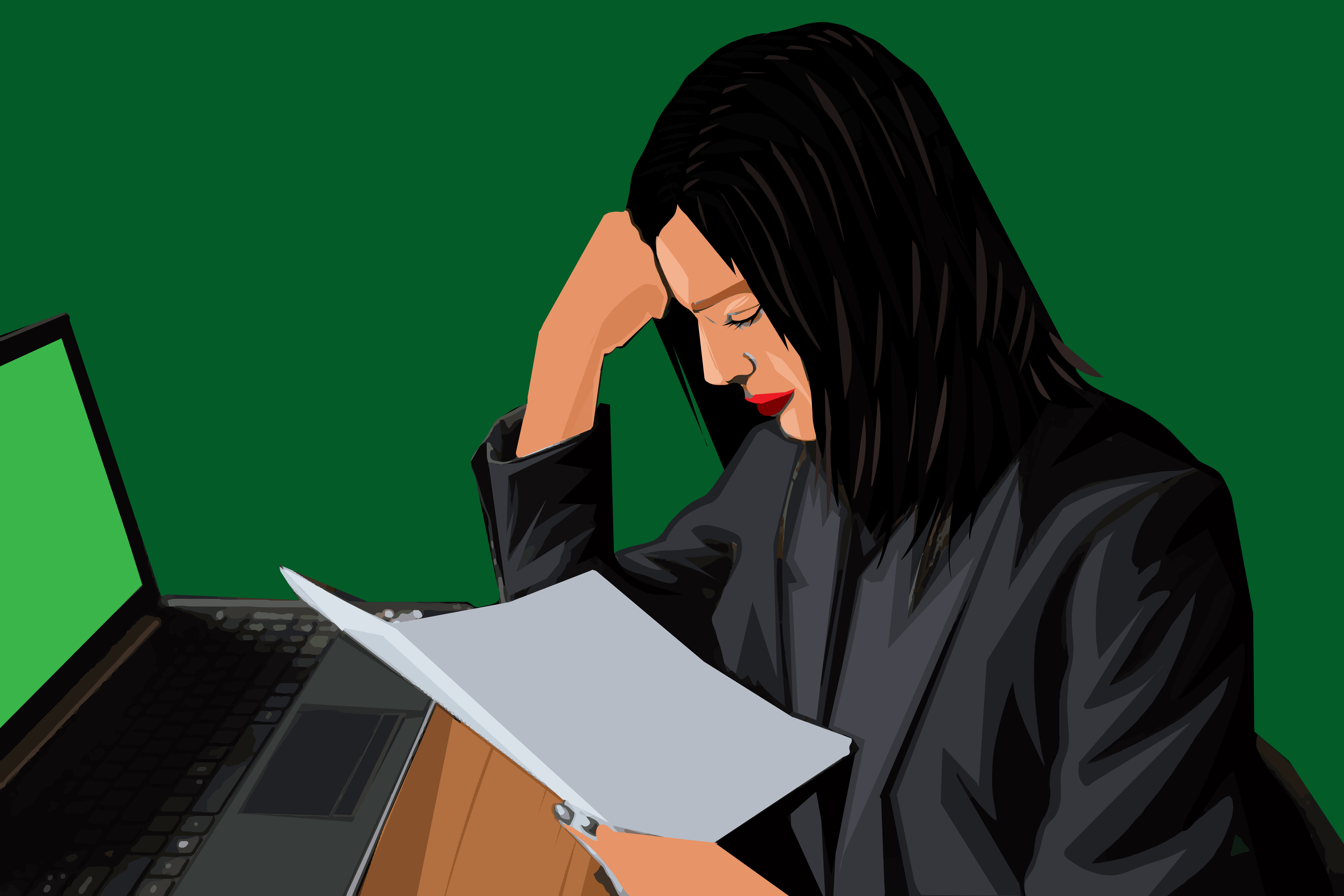
Making mistakes happens to all of us in our careers. But some of us hold on to these mistakes longer than others.
Maybe you lie awake at night still feeling queasy and anxious over the way you frustrated a client by accidentally giving them the wrong information. Maybe you are avoiding co-workers on your team because you feel like they are all judging you for that error, even though it happened last week. If either of these scenarios sounds familiar, you may be prone to obsessing over mistakes.
Advertisement
What fuels these constant worries is the shame of feeling completely inadequate and fear of others discovering your lack of capabilities, says Tanisha Ranger, a Nevada-based clinical psychologist. Once you start obsessing over mistakes because of your shame, it can steamroll into bigger problems like perfectionism.
“Shame often gives way to perfectionism, and perfectionism makes mistakes feel monumental. Essentially, ‘If I don’t do everything perfectly right then I am a failure and everyone will see my defectiveness,’” she says. “I’ve had many clients who struggled with obsessing over mistakes at work. [They lay] awake at night ruminating and beating themselves up over a mistake, not an intentional or careless mess-up, but a mistake.”
Advertisement
There’s a better way to acknowledge a mistake while still letting it go. Here’s how:
1. Put the mistake in perspective
Advertisement
After you make an obvious mistake at work, you may want the ground to swallow you up to save you from the embarrassment, shame and anxiety of facing your co-workers again.
If these worries are keeping you up at night, challenge those thoughts by getting more realistic with your thinking, suggests Shannon Garcia, a psychotherapist at States of Wellness Counselling.
“Will the world end? Nope,” she says. “Will you get fired? Highly unlikely. Will you receive constructive feedback from your boss? Maybe. Will owning up to your mistake be uncomfortable? Probably. Have you survived past mistakes? Seems like it, if you’re reading this. Will you survive this one? Yes!”
Sometimes accidental oversights do hurt your job performance, but it’s important to not catastrophise what happened.
Advertisement
“Sure, it caused a delay. Yes, it may have cost the company some money. OK, it negatively impacted job performance. But is it actually the end of your career? Really? Likely not,” says Ranger. “Shrinking things down to their right size, not ignoring/suppressing and also not overblowing or exaggerating, is an important part of letting things go.”
If it helps, try putting yourself in the shoes of co-workers who have also made mistakes. Once you see the compassion and sympathy you hold for their slip-ups, you may be more inclined to be compassionate about your own.
“When a co-worker has made a mistake in the past, is it something you’ve judged them immensely for? Did you spend your day thinking endlessly about their mistake? No. People at work are likely reacting the same way,” Garcia says. “No one is thinking about this more than you are.”
2. Learn that you don’t have to beat yourself up as penance
To move past a mistake, you also need to rethink what it means to learn from a mistake. If you think turning over every angle of how an interaction with your boss could have gone better, for example, take a deep breath. Give yourself permission to release those thoughts, says organisational psychologist Laura Gallaher of the consulting firm Gallaher Edge.
People ruminate because they believe there are payoffs to worrying so much; they think “A conscientious person would worry about this,” Gallaher says.
“When you know that you can simultaneously be a conscientious person, and also forgive yourself to move forward, it will be easier to do so.”
What Garcia tells her clients the most is “be nice to yourself,” she says. Reframe your worries in a more positive light.
“The fact that you are anxious about it means you care. That’s what your boss, co-workers and customers care about the most,” Garcia says. “Try not to beat yourself up over it. Create an affirmation to repeat to yourself whenever those negative self-talk thoughts pop up: ‘I accept my mistake, I choose to learn from it, and I am moving forward.’”
If you are stuck in the world of “could’ve/should’ve” in regards to your error, be honest with yourself about what you did not know.
Advertisement
Ranger says she works with some clients by asking them to consider why they supposedly “should have known better.” “It’s always so enticing to impose our current knowledge and wisdom on a past version of ourselves that could not have known to make that decision with the information we had at that time,” she says.
3. Don’t hide the mistake. Own what happened, but don’t take on other people’s judgement, too
When you make a big blunder at work, you may instinctually want to shut down, repress it, and forget it ever happened.
If you feel the urge to withdraw, challenge yourself to do the opposite. Be the one to bring it up in conversation with co-workers or your boss.
“If it was something that inconvenienced them, apologise for it,” Garcia says. “Then it’s a conversation happening where you are involved, people are likely to be gracious, and everyone can move on from there.”
It may sound counterintuitive, but being transparent about your mistake and its impact can be healing. “It can feel like a cold shower – before you do it, you fear it and feel uneasy or anxious,” Gallaher explains. “In the moment of being open, it can feel unpleasant at first, but once it’s over, you actually feel more refreshed 99% of the time. Taking accountability without blaming anybody is the most healing.“
Once you model being open and accountable, it may encourage others to do so as well. “Most of the time, when you lead with self-accountability, that vulnerability is courageous, and courage is contagious: People usually respond with their own self-accountability as well,” Gallaher says.
Of course, sometimes being honest about a mistake can also inspire eye-rolling judgement and harsh criticism from mean-spirited colleagues. You should hold yourself accountable for your mistake, but the judgement of your peers is not something you need to take on, too.
“Let them know what you intend to do differently to try to prevent something like this from happening in the future, and then accept that they may move on or they may not. It is outside of your control,” Ranger advises. “Taking on other people’s emotions is detrimental to yourself and makes it difficult for you to treat yourself with the kindness and compassion you deserve from you.”
You’re reading Life-Work Balance, a series aiming to redirect our total devotion to work into prioritising our personal lives.
“I’ve had splinters on my feet, I’m physically exhausted, I’ve had breakdowns. All the detox time in the world doesn’t change how burned out I am.”
Advertisement
This is the experience of Anthony*, a tech worker, 34, from London. After being asked to work weekends, weeks of late shifts, only then to be swapped onto earlies without warning, Anthony’s job has left him totally drained. So much so he’s quit his job without securing another. “I just can’t take anymore of this.”
Anthony isn’t alone in this state of mind. By the end of 2021, burnout was affecting more than 79% of UK workers, according to research by the HR tech company Ceridian, with 35% of people reporting high or extreme levels.
Advertisement
Nearly half (49%) of those surveyed in research cited an increased workload as a cause. The ongoing pandemic, post-Covid recovery, and the so-called Great Resignation, have left employers squeezing more out of their workers than ever before. And it’s causing a physical and mental health crisis.
Is there a chance of recovery? How long does it take to get over burnout?
Advertisement
We’ve seen buzzwords like self-care, wellness weekends and digital detox become the norm, but they risk ignoring the broader picture – that short stints of respite or relaxation don’t counteract the strenuous, back-breaking and brain-fogging nature of work under capitalism.
It takes years to recover from burnout. Not a day. Not a weekend. Not a week.
So what can we do? The obvious solution – if the Great Resignation is anything to go by – is to leave workplaces, even professions, that are bad for our health.
It’s what Lana*, 26, a social services worker in New York City, had to do to get some relief from her burnout.
“I quit working in the most toxic field possible in which I was forced to travel all over the city to unsafe locations. I got no support while dealing with people in extreme suffering/people who are dying. So I decided to get out of the field,” she tells HuffPost.
Advertisement
“Now I do my job and come home. No travel, no dying, I don’t stay late and I don’t take work home with me.
“My burnout was affecting me and my clients. I had to take a good hard look at myself and give myself the freedom to breathe again.”
Lana says she appreciates not everyone can leave their job immediately, especially given how expensive the cost of living is right now.
But if you are experiencing burnout, she says, it pays to make a change, rather than attempting simply to work through it.
“Finding new work definitely isn’t the only way to get over burnout, but you have to know when it’s time to take a break or reevaluate,” she says. “I feel like we owe it to ourselves.”
And while you might not completely be able to get over this block, there are some things you can do to mitigate burnout.
Jo Davidson, a business strategist who predominantly mentors female entrepreneurs, says she sees burnout among her clients all too often.
Recognise when you’re being pushed too much, she says. “Acknowledge that burnout is a result of the body telling us to stop. But we choose to ignore it, and don’t listen,” she tells HuffPost. “Taking changes is important because going back into exactly the same situation will only ever delay the healing.”
So how long can you expect to take to recover? Well, there is no right answer as the journey isn’t so linear.
“Recovery from burnout is definitely affected by how long it has been going on and how the individual recognises they have it and how actively they want to overcome it. For some it may be 10-12 weeks, however for others it can take years.”
Advertisement
10 steps to dealing with burnout
Davidson says there are ways you can aid your own recovery, whether that ultimately means leaving a job – or not. Here are some of those steps:
1. Acknowledge that it exists 2. Track stress levels (use an app, journal) 3. Identify the stressors and step away from these situations 4. Seek professional help. This is a strength not a weakness 5. Create a work life balance that includes time to have fun and rest 6. Change jobs if it is really badly affecting your mental health 7. Be kinder to yourself and keep a gratitude journal 8. Own it and believe that you can change it 9. Create a healthy sleep schedule and diet 10. Set boundaries.
While these are ways as individuals that we can ameliorate our conditions, remember that setting personal boundaries may not change the demands of your job wholesale.
This requires a company-wide push, or if you’ve got enough seniority in your role, a persistence in demands to change the wider work culture. Work should be a complementary part of our lives, not the thing that makes it unliveable.
*Names have been changed and surnames omitted to offer anonymity.
Life-Work Balance questions the status quo of work culture, its mental and physical impacts, and radically reimagines how we can change it to work for us.
You’re reading Life-Work Balance, a series aiming to redirect our total devotion to work into prioritising our personal lives.
Finding a quiet toilet cubicle, a vacant conference room, or any corner of the office or work floor you can privately sob. Sound familiar?
Advertisement
Crying at work isn’t an alien experience for many of us. And since the pandemic, those who have been propelled to the WFH environment can weep away without shame and the judgemental glances of their co-workers.
It can be a cathartic experience, to let out your work frustrations and stresses before carrying on with your responsibilities. You might even have an open policy at work where all sentiments are welcome.
Advertisement
While it’s good to let your emotions out and express yourself, we must also ponder the question – should our work places be making us cry?
It’s no secret that employment, no matter in which form, is stressful and occupies much of our thoughts. But our employment isn’t supposed to dominate our emotion in the way it does.
Advertisement
Work under capitalism has terrorised our emotion – we’re forced to constantly be switched on, available, regulate our feelings on demand (think how often we have to suppress anger, indignation, sadness at work and put on a face), and offer ourselves as capital toward businesses much more successful than we as workers are.
So when it feels like we’re hamsters on a never-ending wheel, with the bills and responsibilities mounting on us, with little room to breathe, it’s easy for our emotions to overspill and reach breaking point – often ending in tears.
Lucy*, 43, from Northampton, can relate all too well to this. “In my 20s and 30s, I cried a lot at work, for various reasons. I was figuring out who I was and my work place often wanted me to be someone that just wasn’t my personality. I ended up in tears because my work kept expecting me to be more assertive and forceful, which is the opposite of who I am.”
But Lucy had to keep her feelings private because, she says: “I think they would have seen crying as a weakness or unprofessional and unbusinesslike.
Advertisement
“Our workplaces just expect us to navigate our own emotion without any effort to remedy any ill feelings.”
But, Lucy admits, it does also depend on your profession. “Some are better than others with helping people. My workplace also provided a certain number of therapy sessions per issue you were having but I don’t think a lot of people even knew about it.”
Similarly, for Nora*, 29, a deputy lighting director at a theatre in London, not only has her job left her weeping in the past, she doubts little would change if bosses were aware of the toll they had on her.
She tells HuffPost: “My work place made me cry because of severe lack of resources and time and constant pressure to complete goals by an unmovable deadline under adverse circumstances. I was regularly working 60hr+ weeks with minimal breaks, high levels of physics and mental work and increasing demands of productivity.”
Like many of us, Nora kept her feelings hidden.
“I didn’t let work see me cry, instead I removed myself to a private location. If they had seen I think they would have responded well emotionally, i.e being initially caring and empathetic but fundamentally no actual structural or practical changes would be made.”
The experience has left Nora with little belief in workplaces to care genuinely about their employee’s wellbeing.
“I think workplaces put on a show, in most cases even earnestly, of supporting our emotions and mental health but in practice don’t actually have any infrastructure or ability to back these up,” she says.
“Most middle management are not themselves emotionally equipped or trained to deal with mental health or emotional breakdowns and yet are expected to solve problems usually caused by industry wide issues created and perpetuated by those at the highest level.”
So why is work so emotionally charged and how can we have a better grip on our emotions?
Advertisement
Well, it’s due to the nature of work itself and not a personal failing, says wellbeing psychologist Dannielle Haig.
“The workplace can be highly charged emotionally due to the fact there are numbers of humans grouped together in an environment that can be highly pressured with difficult interactions, personality differences and deadlines and so on,” she says.
“You become so emotionally exhausted that you’re vulnerable to external stressors and can no longer control your emotions. This is a sign that you need to take a break, you need some recovery time where you are investing in yourself and allowing your emotional batteries to recharge.”
But emotions arise from somewhere. You might consider addressing the stimulus – is it a difficult boss, a toxic environment?
Haig adds: “If you are feeling resentment for example, then it is time to build your boundaries and to start saying no to others and yes to yourself. If you’re feeling anger, then it’s a signal for you to remove yourself from the situation and once calm, to approach a situation from a different angle. The more you lean into your emotions and get curious about them rather than just allowing them to happen or trying to stop them, the more emotionally agile you’ll become.”
In an ever precarious job market, compounded with the cost of living crisis, most of of us are hyperaware of our earnings and employability, we might even be willing to put up with mistreatment, regardless of its emotional and mental cost.
But we’re also protected by labour rights and, in most places, a nascent understanding of work place harms and toxicity.
If we’re left in constant tears, it’s okay to question our employers, table open discussions, speak to HR, and try to change the environment, instead of toiling away to our own detriment, emotionally and physically.
*Names have been changed.
HuffPost UK/ Isabella Carapella
Life-Work Balance questions the status quo of work culture, its mental and physical impacts, and radically reimagines how we can change it to work for us.
How do you feel about your body? There’s a chance you might have some issues with it, particular if you’re a woman (thanks to society’s ever-changing and unrealistic expectations of body standards).
Body dysmorphia disorder (BDD) is also characterised by a desire to change perceived “flaws”, when these are often unnoticeable to others.
In a survey of 2,000 respondents, Better revealed that 49% of women admit to thinking often about being lean enough, exercising despite illness or injury, feeling anxiety at missing a workout, giving up work or social obligations to maintain a workout schedule or diet, or maintaining an extreme exercise programme.
Advertisement
More than a third (34%) of women have received or know someone who has received online abuse directed at how their body looks. Meanwhile, 8% of women admit to commenting negatively on someone else’s physical appearance – compared to a fifth of men (21%). And 35% say low body confidence has impacted their social life and love life, while 7% say it has impacted their career progression.
10’000 Hours via Getty Images
Better also surveyed men and found similarly worrying results. It found that 54% of men have displayed a sign of body dysmorphia, with a quarter admitting they rarely or never feel body confident.
Advertisement
Age also played a part, with 18–24-year-olds being the age group with the highest percentage (81%) having experienced at least one sign of body dysmorphia.
The study also found that 31% say low body confidence has affected their social life, with 30% saying it has troubled their love life, and 27% saying it has impacted their mental health.
So what are the signs to watch out for?
According to the NHS, symptoms of body dysmorphic disorder (BDD) include:
Worrying a lot about a specific area of your body (particularly your face)
Spending a lot of time comparing your looks with other people’s
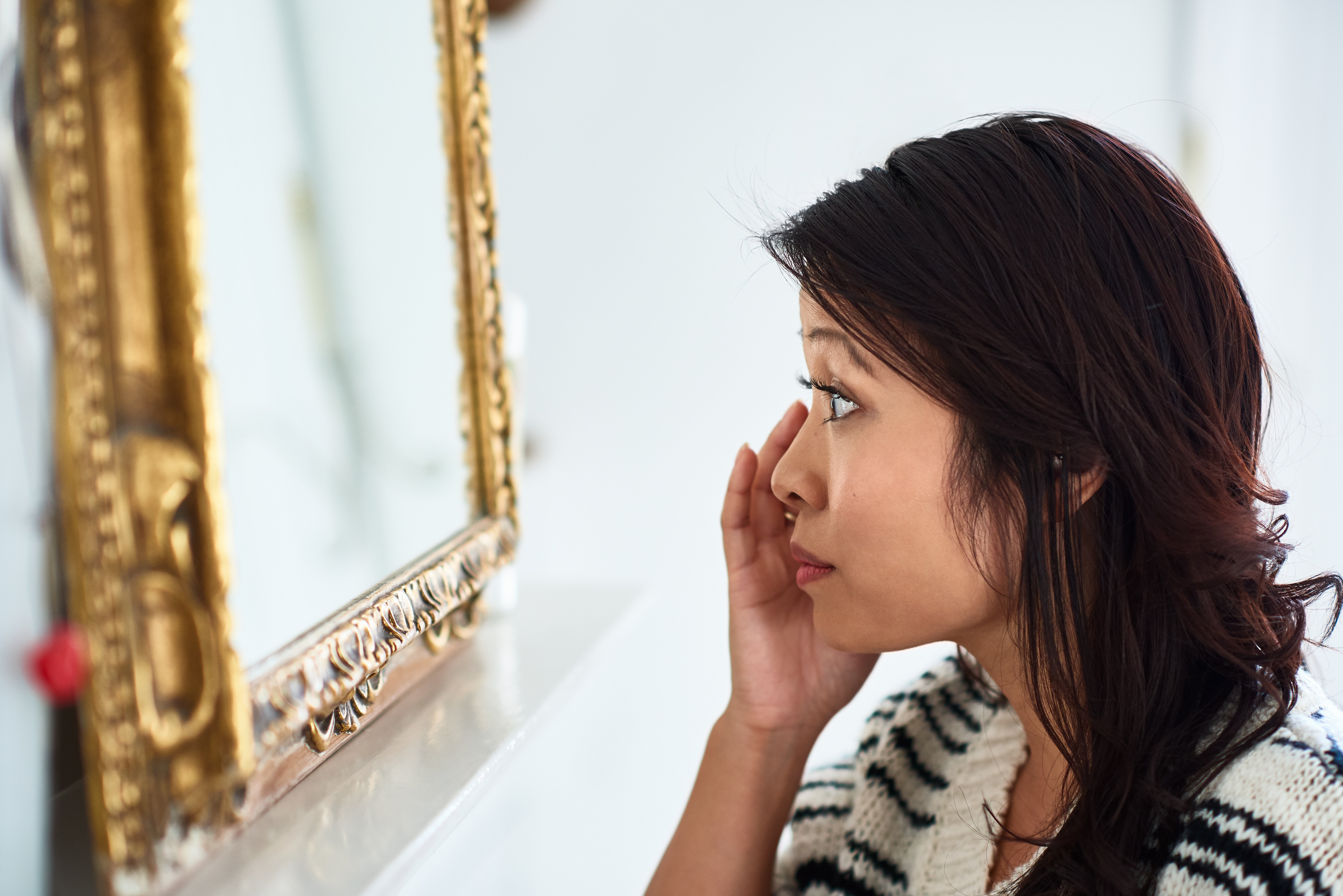
Looking at yourself in mirrors a lot or avoiding mirrors altogether
Going to a lot of effort to conceal flaws – for example, by spending a long time combing your hair, applying make-up or choosing clothes
Picking at your skin to make it “smooth”.
Advertisement
BDD can start at a young age and persist through adulthood. Better’s research found that it can start as early as five years old.
You should see a GP if you think you might have BDD. They’ll probably ask a number of questions about your symptoms and how they affect your life. They may also ask if you’ve had any thoughts about harming yourself. You may be treated by the GP, or they may refer you to a mental health specialist for further assessment and treatment.
The most common treatment for BDD is Cognitive behavioural therapy (CBT), which will help you identify your triggers and learn some techniques to manage your thoughts and emotions. Some people are also offered antidepressants.
Getting help for BDD is important, because symptoms are unlikely to go away without treatment. It’s a common mental health condition – and nothing to be embarrassed about.
Mind, open Monday to Friday, 9am-6pm on 0300 123 3393.
Samaritans offers a listening service which is open 24 hours a day, on 116 123 (UK and ROI – this number is FREE to call and will not appear on your phone bill).
CALM (the Campaign Against Living Miserably) offer a helpline open 5pm-midnight, 365 days a year, on 0800 58 58 58, and a webchat service.
The Mix is a free support service for people under 25. Call 0808 808 4994 or email help@themix.org.uk
Rethink Mental Illness offers practical help through its advice line which can be reached on 0808 801 0525 (Monday to Friday 10am-4pm). More info can be found on rethink.org.
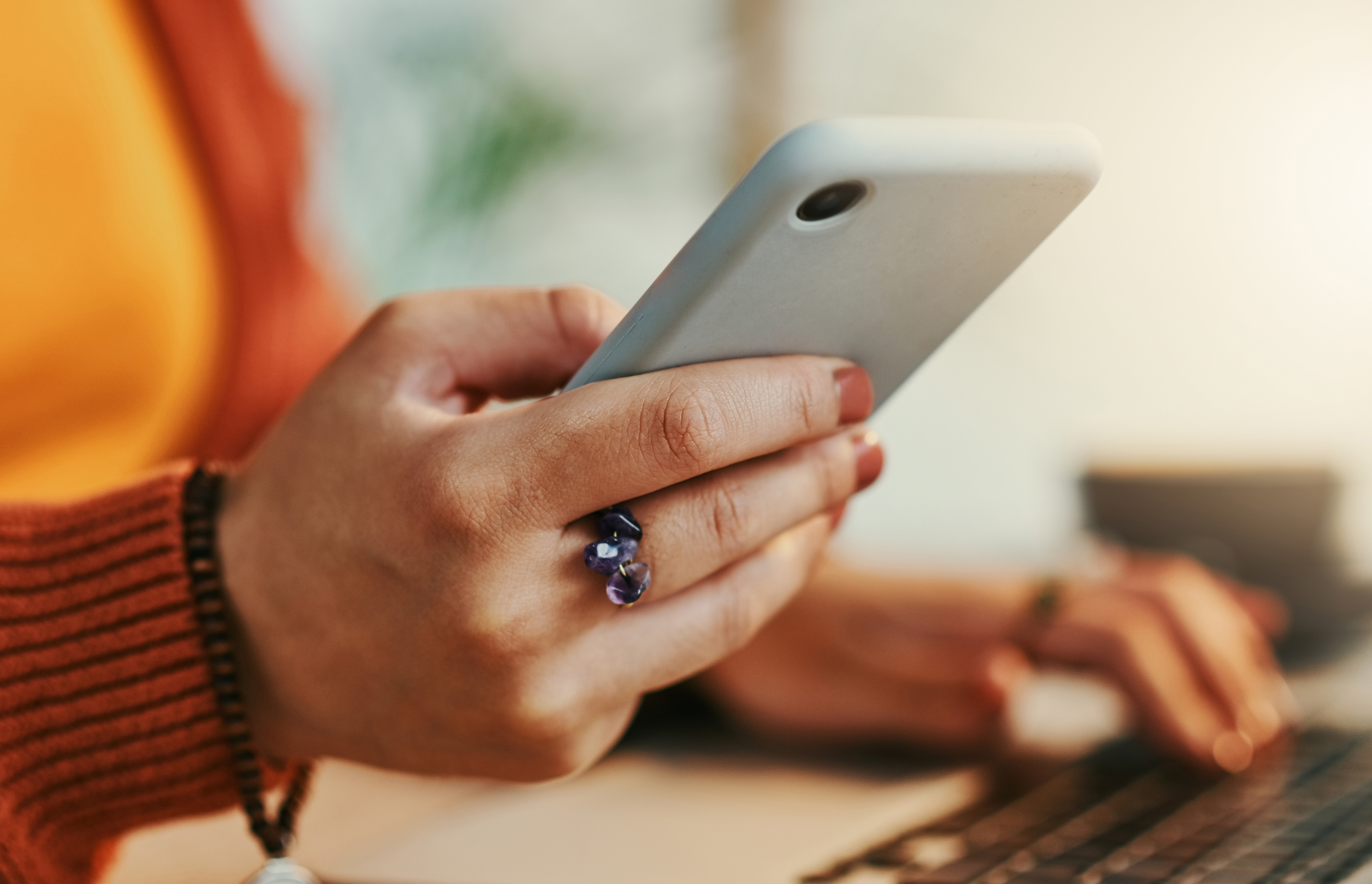
Do you spend countless hours scrolling on your phone? We’re probably all aware by now of the potential impact on our mental health and wellbeing. But how you use your smartphone has implications for your physical health, too.
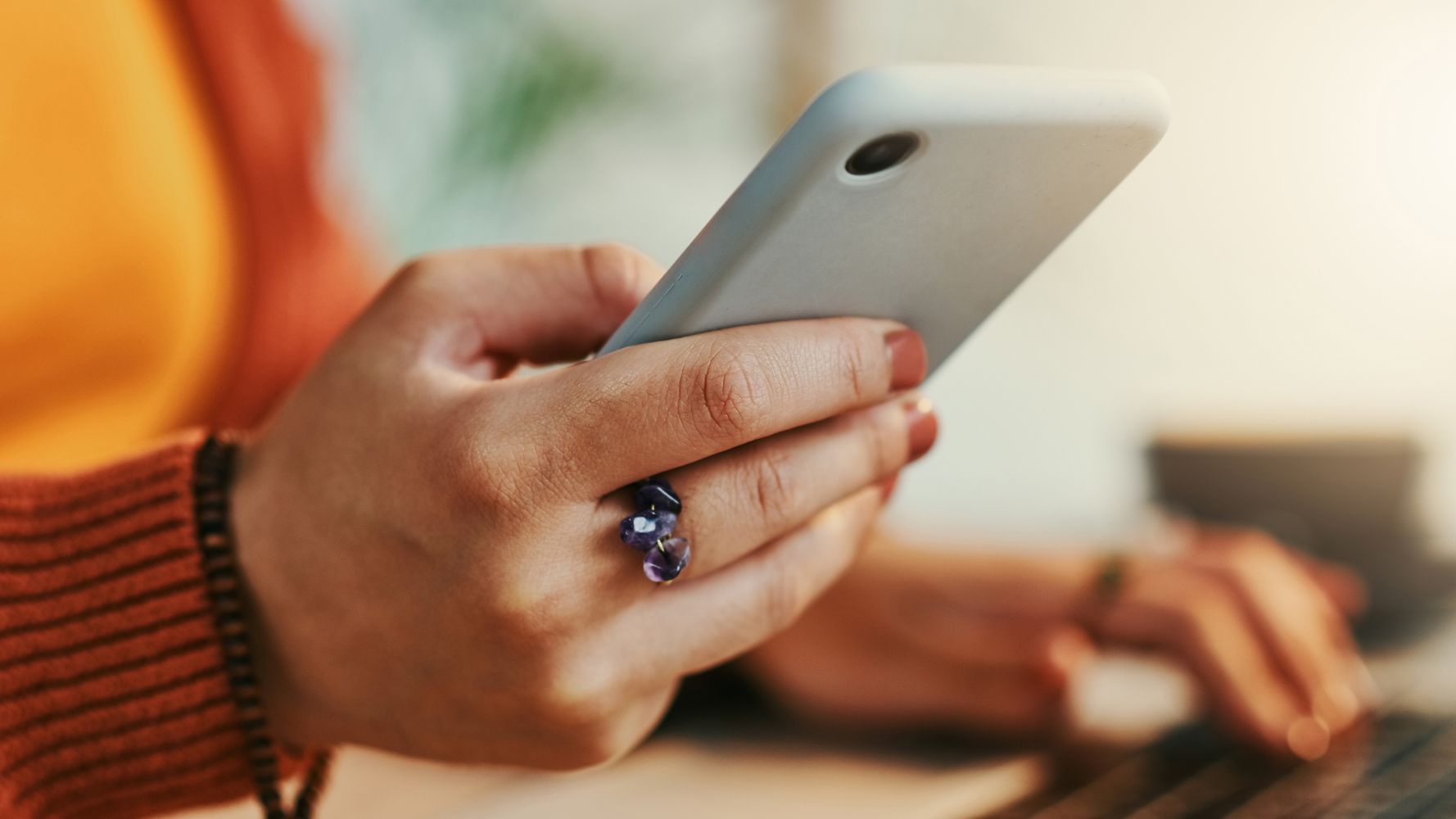
Is your phone in your hand right now? Ask yourself: how are you holding it? Is the bottom edge resting on your little finger, the back on your index and maybe your third and fourth fingers – while your thumb does all the scrolling?
Advertisement
Yep, us too. But it’s not good for us. Your pinkie and thumb are the fingers that are most impacted when holding a smartphone or tablet. If you grip or clutch your phone a lot, this can also cause your thumb and fingers to cramp or become inflamed, a condition known informally as “smartphone finger.”
But your wrists and arms can also be affected by the way you use it.
Advertisement
I don’t know who needs to hear this but, when you’re using your phone, stop using your pinky as an anchor. It’s destroying your wrist and aggravating your ulnar nerve.
This tweet went viral this week, forcing many of us to reconsider how we’re using our smartphones. How valid is its claim?
Sorry to have to break it to you, but Ben Lombard, a member of the Chartered Society of Physiotherapy, confirms to HuffPost UK that it’s all true.
Advertisement
“We tend to hold our phones with the little finger underneath supporting the weight of the phone and our wrist turning inward to told the screen to our faces,” says Lombard. “This can cause ulnar nerve compression if sustained for long periods of time.”
The ulnar nerve is one of three main nerves in your arm – it runs from inside the elbow and along your inner forearm into your palm, pinkie side, and transmits electrical signals to muscles in both the forearm and hand.
The nerve can get trapped either by prolonged stretching – when your elbow is bent – or prolonged pressure, from leaning on the handlebars of a bike, say, or using hand tools, according to John Hopkins Medicine. Or your beloved phone.
A 2017 study found a link between the extended use of smartphones and a greater likelihood of experiencing another painful wrist and hand disorder.
Advertisement
According to lead author Peter White, assistant professor in the department of health technology and informatics at Hong Kong Polytechnic University: “Caution may be warranted when using hand-held electronic devices in order to minimise the chance of developing carpal tunnel syndrome.”
Carpal tunnel syndrome can develop following repeated pressure to the point where the median nerve passes into the hand and meets the wrist – the carpal tunnel – which is surrounded by bones and ligaments, palm side of your hand.
Work conditions that call for “repetitive, forceful, or awkward hand movements, for example, when typing” are a common cause for carpal tunnel syndrome, which can result in pain, numbness, finger tingling, and weakened grip strength.
To find out if smartphone usage increased people’s chances of getting it, White and his colleagues followed up on a prior survey of 500 University of Hong Kong students, that split students into two groups: those who used portable devices for more than five hours a day and non-intensive users (who used them less than five hours a day). More than half (54%) of the intensive group reported musculoskeletal pain and/or discomfort, compared to 12% of the other group.
The new study targeted 48 students from the earlier study. Half were intensive users who spent more than nine hours a day (on average) using their device. Other students spent less than three hours a day on their devices.
Researchers found those who were part of the intensive group had significantly more and increased discomfort in their wrists and hands. The longer time a person spent using a handheld electronic device, the harder and longer their pain was.
And that’s not all. There’s also the potential for painful neck-ache. As physio Ben Lombard warns: “The position of the neck is also heavily invoked, as we tend to be stuck looking down if standing up. Or, even worse, if we are lying down using our phones, we will often be holding our neck in an extended position which can compress the nerves.”
So, other than avoiding the “pinkie anchor”, can we change the way we hold our phones to lessen any collateral damage. Not really, says Lombard, who instead recommends more mindful use of your electronics – could you be reading or watching content on a larger computer or TV screen, for instance, rather than a hand-held device?
“Ultimately, there is no ‘optimal’ way to hold your phone,” he says. “Just consider the amount of time you use it and how you use it.”
In tandem with the relentless reports of higher temperatures, extreme weather, natural disasters and depleted resources saturating your newsfeed, you may find yourself experiencing an uptick in anxiety, depression and existential dread – better known as eco-anxiety.
A 2020 poll by the American Psychiatric Association found that more than two-thirds of Americans (67%) are somewhat or extremely anxious about the effect of climate change on the planet while more than half (55%) are somewhat or extremely anxious about how climate change affects their own mental health.
Advertisement
Though not an official clinical diagnosis, the American Psychological Association defines eco-anxiety as “a chronic fear of environmental doom.” Eco-anxiety is just as real as any other form of anxiety in that it typically involves the same physical and emotional sensations.
“It’s even more real, in a sense, because the problem triggering the anxiety symptoms is objectively real and massive in scale,” Erica Dodds, chief operating officer of the Foundation for Climate Restoration, told HuffPost. “There used to be more distance between any one person and the world, but now it feels like every problem in the world is right in our living rooms with us.”
Like other forms of anxiety, eco-anxiety can affect anyone, and to varying degrees. “Some people might be proactive in taking measures to protect the planet’s resources, while others might feel so powerless to stop the degradation of the environment they can’t handle thinking about it at all,” Dodds said.
No matter where you fall on the eco-anxiety spectrum, the steps you take to recognise your symptoms and improve them will likely be advantageous for the planet, too. Where to begin? See if any of these eco-anxiety symptoms sound familiar and use the expert-backed strategies provided as fuel for positive change.
Advertisement
1. You’re in a persistent state of anticipatory anxiety
Our animalistic need to feel safe operates on the most primitive level. “When we don’t feel safe, we naturally scan our environment to detect any hint of threat,” Carla Marie Manly, a California-based clinical psychologist and author of Joy From Fear told HuffPost.
When a threat like climate change is continuously felt yet isn’t readily discernible in the present moment, you may end up with chronic anticipatory anxiety. Because anticipatory anxiety is future-based, the best way to counteract it is to reconnect with the present moment, starting with a few deep breaths to calm your over-revved sympathetic (“fight or flight”) nervous system.
“Keep a rock, dried flower, twig or other natural object around that you can look at and touch when you’re feeling overwhelmed,” said Holly Schiff, a licensed clinical psychologist based in Greenwich, Connecticut. “This acts as a grounding technique.”
Advertisement
2. You feel guilty about not doing more to reduce your carbon footprint
Odds are your guilt stems from all-or-nothing thinking — you consider your actions as successes or failures, and there’s no gray area. Meanwhile, the grey zone is where many of our daily actions land.
“Recognising this maladaptive thought pattern is the first step toward alleviating guilt and shame related to your feelings of personal responsibility for your carbon footprint,” Tyson Lippe, a psychiatrist at Heading Health in Austin, Texas, told HuffPost.
Learn to acknowledge the positive decisions instead of focusing on how much more you could have done. “By ignoring everything less than 100%, it becomes easy to feel your efforts will always be in vain,” Lippe said. “One setback or shortcoming doesn’t negate the rest of your efforts toward ensuring our planet’s health.”
Because the brain is hardwired to remember negative instead of positive experiences, documenting your achievements can keep your efforts in perspective.
“Constructing a record of accomplishments provides an easy way to review them and remind yourself that you made a difference,” Lippe said. “This method provides positive reinforcement and a way to override our propensity to focus on our shortcomings.”
3. You deeply regret choices that harmed the environment
Regret can be both constructive and destructive – and it’s important to learn the difference.
“A normal and desirable part of life is learning new information as we grow and change,” Lippe said. “But becoming aware of the unforeseen consequences of our acts and assessing past behaviour in the light of new knowledge can lead to being excessively self-critical.”
The next time you find yourself in a regret spiral, pause to notice if you’re now engaged in more eco-friendly behaviours. If you are, focus on all you’re doing now to change the world for the better.
Advertisement
Regret about your past environmental impact might also be a signal from your psyche that you’re not currently taking care of the planet. If that’s the case, “use the regret to create new behaviours that will make a positive, if small, difference,” Manly said. Think: using reusable produce and grocery bags, trying waterless cleaning products, shopping sustainable beauty brands and more.
Oscar Wong via Getty Images
Doomscrolling news about climate change can reinforce anxiety without being productive.
4. Your doomscrolling is getting out of hand
Compulsive actions emanating from eco-anxiety – like doomscrolling for the latest climate change tragedies and grim predictions – often occur in conjunction with hyper-focused, obsessive thoughts, which stem from a lack of internal safety and control.
“Such behaviours are the mind’s way of coping with the stress and anxiety of feeling powerless,” Manly said. “Seeking relief, the mind becomes stuck in ruminative patterns.”
Consider setting limitations on the daily or weekly time spent examining eco-associated information if you find yourself worrying excessively. “Being situationally aware is good; being overwhelmed is not,” Lippe said.
Another option would be to balance the scales: For every doom-filled piece of information you consume about the environment, find another on the latest successes and innovations, or hope-filled intel you can translate into action.
“It’s far more helpful and uplifting to channel the time researching climate change to doing something about it,” Manly said. “You’ll feel far more empowered and better about yourself if you switch gears to take action.”
5. You feel extremely resentful when other people do things that damage the planet
One of the key messages around climate change is that a collective effort is essential to rectify what’s happening to the environment.
“This means everyone’s individual and moral responsibility is engaged, and our response to climate change is based on cooperation,” Lippe said. “Resentment occurs as a result of perceived violation of this moral contract.”
Advertisement
Although it’s a subconscious emotional response, it can be draining and contribute to negative thought patterns. “A helpful way to combat resentment is to first recognize it, then consciously deflect resentment in favour of acceptance,” Lippe said.
You can’t control how eco-friendly other people’s habits are — only your own. Lead by example and educate where possible.
“Resenting others for not doing their part isn’t helpful,” Manly said. “However, modelling eco-friendly actions has the potential to inspire change in others, one person and situation at a time.”
6. You’re paralyzed by being overwhelmed as you build eco-friendly habits.
Because of the urgent reasons behind your desire to build eco-friendly habits, you might find yourself taking on too much too fast. “This makes maintaining those changes exhausting, and you burn yourself out,” Lippe said.
Intermittent and small tweaks are more tolerable than sudden, large ones and can lead to compounding changes, much like rolling a snowball down a hill.
“If feelings of overwhelm make you feel stuck, create a can-do calendar as a guide to monthly macro-changes supported by micro-changes,” Manly said.
In the first month, for example, your main goal might be to focus on shopping for fresh, local groceries that require less packaging – which might involve micro-goals like biking to the farmer’s market, sharing a box of fresh veggies with neighbours or planting a winter garden.
During the second month, your main goal might be to use less energy, and your micro-goals may be setting the heater no higher than 68 degrees, turning off lights when leaving the room and taking shorter showers.
“Making small, sustainable micro-changes can strengthen your resolve and your relationship with the environment,” Manly said.
Advertisement
japatino via Getty Images
Intense fear about potential extreme weather events could be a sign that your eco-anxiety needs to be addressed.
7. You’re phobic about extreme weather
A phobia is a fear that’s out of proportion with the danger it represents. “However, recent events, including wildfires and floods, have surpassed the scale of what we’ve experienced before and is blurring the boundaries between fear and phobia,” Lippe said.
Fears – and fear’s close relatives, anxiety and phobias – can leave us paralysed, but being stuck in fear only does more harm.
“Constructive fear (the side of fear that guides us to make healthy change) simply asks that we look at what we can do as individuals to shift the situation for the better,” Manly said.
If you’re feeling bogged down by destructive fear (the fear that keeps us feeling stuck and paralysed), assess the situation and do one small thing that makes a difference, such as making a donation to a charity that helps people affected by wildfire.
“When you practice this behaviour pattern, you’ll notice your fears subside because you’re taking action to create healthy change,” Manly said. “Sometimes that’s the best and only thing we have the power to do.
If your fear is a result of personally experiencing a natural disaster, it might be part of a post-traumatic stress disorder: “Seeking out professional support for diagnosis and treatment is advisable,” Lippe said.
8. You have a serious case of existential dread.
You might feel like no matter how hard you try to help the planet, it’s never enough, so you avoid taking proactive steps because they seem to make so little difference. This, paradoxically, forces you to confront the incredible scale of the problem.
“There are many approaches to decrease one’s own carbon footprint ― choosing to bike rather than drive, eating less meat, having fewer children ― but ultimately the problem is beyond the scale of individual actions,” Dodds said.
This can also help you make peace with the fact that you can’t do everything. “I find it helpful to network and see firsthand that other people are working on issues I care deeply about but don’t have the time to contribute to,” Dodds said.
You can also make small recurring donations to organisations working in areas you care about or subscribe to their newsletters to keep yourself engaged with their causes.
9. You have meltdowns about how climate change is affecting wildlife
A few weeks ago, Dodds was marvelling over a photo on Instagram of gorgeous whales sleeping underwater together — until she noticed the text accompanying the picture was describing the decimation of whale populations and its devastating effect on other species.
“In an instant, I went from awe to anguish,” she said.
The changes to our climate have been attracting so much social and media attention, especially lately, increasing the barrage of agonising information about the climate and ecosystems. Cue despair.
If you find yourself stuck in grief or immersed in one meltdown after another, take action to protect wildlife. “Most people do feel better when they’re actively engaged in fixing the problems that are causing them anxiety,” Dodds said.
Whether you volunteer at a turtle sanctuary, donate money to support animals affected by wildfires or plant bee-friendly flowers, “every action you take that’s positive can be deeply cathartic,” Manly said.
10. You struggle to plan for the future
Advertisement
When a person’s eco-anxiety becomes harmful, it’s often driven by a sense that the future is now uncontrollable and unpredictable.
“This can lead them to feel numbed out and hopeless,” Aimee Daramus, a Chicago-based licensed clinical psychologist and author of “Understanding Bipolar Disorder, told HuffPost. “They start asking questions about the meaning of having a family and career, or the worth of human life if we’re so easily swept away by increasingly common fires and hurricanes. Is life just going to get harder?”
Taking action on ecological issues can help fight the helplessness and numbness. “Start with actions that feel manageable, no matter how small, because that success will help motivate further action,” Daramus said.
If the hopelessness wins out more often than you do, eco-anxiety can be treated like any other type of anxiety and depression, using modalities like cognitive behavioural therapy, dialectical behaviour therapy, and acceptance and commitment therapy.
“Eco-anxiety support groups are also forming online,” Daramus said, such as The Good Grief Network.
11. You experience physical symptoms
Eco-anxiety can manifest in a variety of physical ways, such as insomnia, panic attacks, digestive issues and lack of focus.
Sometimes these symptoms can be due to an acute stressor and may resolve on their own — but when they become intolerable or chronic, it’s important to determine if they’re due to a medical condition, such as a mood disorder.
“If your symptoms have been linked to excessive worrying, it may be necessary to speak with a counsellor or therapist, begin medication or engage in other treatment modalities to improve your health,” Lippe said.
Much like developing good sleep, food and fitness habits, adopting an eco-friendly lifestyle should be looked at as an ongoing effort. And when you take good care of yourself, you’re much better equipped to take better care of the planet.