Paleontology rocked by discovery of organic molecules in 66-million-year-old dinosaur bones

For decades, scientists believed dinosaur fossils were little more than mineralized rock, with any original biological material long since destroyed by time. But an extraordinary study centered on a remarkably preserved Edmontosaurus fossil is challenging that assumption in a major way.

Researchers led by the University of Liverpool uncovered strong evidence that traces of original organic molecules, including collagen, still exist inside dinosaur bones dating back roughly 66 million years. The discovery adds powerful new support to a controversial idea that has divided paleontologists for more than 30 years.

Preserved Collagen Found in Dinosaur Bone

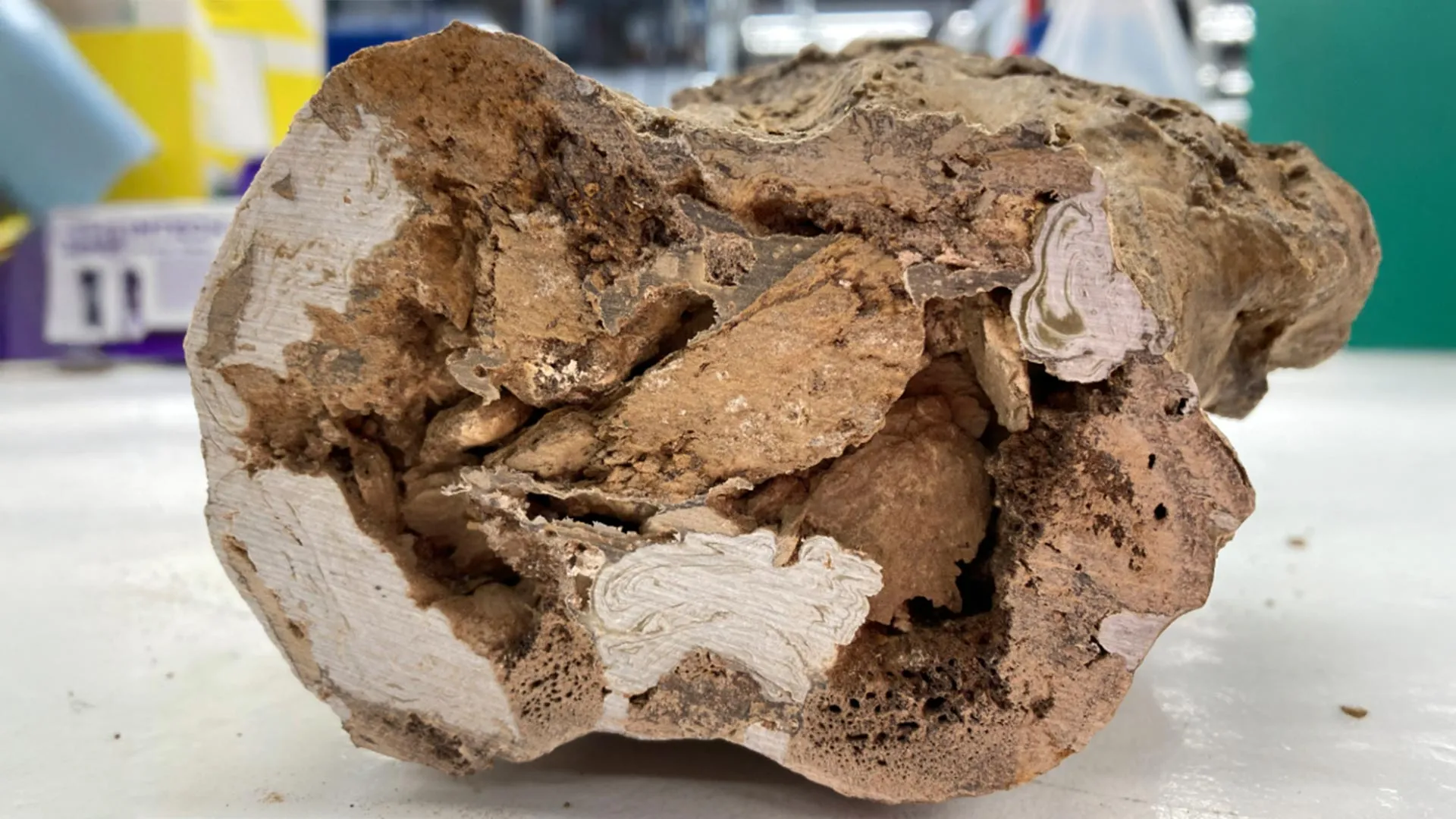
The fossil at the center of the study is a 22-kilogram Edmontosaurus sacrum, part of the dinosaur’s hip region, recovered from South Dakota’s famous Hell Creek Formation. Edmontosaurus was a large duck-billed plant eater that lived alongside Tyrannosaurus rex near the end of the Cretaceous Period.

Using a combination of advanced laboratory methods, including protein sequencing and several forms of mass spectrometry, scientists detected remnants of collagen embedded within the fossilized bone. Collagen is the primary structural protein found in bone tissue and one of the hardest biomolecules to explain away as contamination when identified in this context.

Researchers from UCLA also identified hydroxyproline, an amino acid strongly associated with collagen in bone. According to the team, this represented an important confirmation that degraded collagen fragments were genuinely present inside the fossil.

Professor Steve Taylor, chair of the Mass Spectrometry Research Group at the University of Liverpool’s Department of Electrical Engineering & Electronics, said:

“This research shows beyond doubt that organic biomolecules, such as proteins like collagen, appear to be present in some fossils.”

“Our results have far-reaching implications. Firstly, it refutes the hypothesis that any organics found in fossils must result from contamination.”

A Debate That Has Divided Paleontology

Claims of preserved soft tissues and proteins in dinosaur fossils have sparked fierce debate since the early 2000s. Some scientists argued the reported materials were modern contamination or bacterial residue rather than authentic dinosaur molecules.

One of the most famous discoveries came in 2005, when paleontologist Mary Schweitzer and colleagues reported soft tissue structures inside a Tyrannosaurus rex fossil. Later studies identified possible collagen and blood vessel-like structures in additional dinosaur specimens, including hadrosaurs related to Edmontosaurus.

The new Edmontosaurus analysis stands out because researchers used multiple independent testing methods to examine the same fossil. By combining microscopy, chemical analysis, and protein sequencing, the team aimed to rule out contamination and strengthen the case that the molecules were original to the dinosaur itself.

The findings were published in Analytical Chemistry in 2025 under the title “Evidence for Endogenous Collagen in Edmontosaurus Fossil Bone.”

Why This Discovery Matters

If proteins can survive in fossils for tens of millions of years, scientists may gain an entirely new way to study extinct animals.

Tiny molecular traces could potentially reveal evolutionary relationships between dinosaur species that are difficult to identify from bones alone. Researchers may also learn more about dinosaur growth, aging, physiology, and disease.

Taylor noted that scientists may now need to revisit fossil samples collected over the past century. Cross-polarized light microscopy images taken decades ago could contain overlooked evidence of preserved collagen in ancient bones.

“These images may reveal intact patches of bone collagen, potentially offering a ready-made trove of fossil candidates for further protein analysis,” Taylor explained.

“This could unlock new insights into dinosaurs, for example revealing connections between dinosaur species that remain unknown.”

The Mystery of Molecular Survival

The discovery also raises a fascinating scientific question: how did these molecules survive for so long?

Proteins normally break down over time, especially across geological timescales. Yet some fossils appear capable of preserving microscopic biological structures under specific conditions.

Scientists are increasingly investigating whether mineral interactions inside bone may help shield fragments of collagen from complete decay. Recent studies exploring fossil biomolecules suggest that certain burial environments and microscopic bone structures may create stable conditions that slow chemical breakdown dramatically.

Edmontosaurus fossils are already famous for their exceptional preservation. Some specimens discovered over the last century retained detailed skin impressions and other soft tissue features, earning the nickname “dinosaur mummies.”

More recent paleontology research has continued uncovering surprisingly detailed soft tissue preservation in Edmontosaurus specimens, including evidence of fleshy structures and preserved skin anatomy.

Together, these discoveries are reshaping how scientists think about fossils. Instead of viewing them solely as stone replicas of ancient bones, researchers are beginning to see some fossils as possible molecular time capsules that still preserve traces of prehistoric biology millions of years later.


Share Button

What sugar does to your body

Just how bad for you is eating sugar? And why is fruit still a good option – even though it has lots of sugar?

Share Button

Jet2 Says Power Banks Without A Key Sign Are ‘Forbidden’ On Board

Passengers hoping to bring their “smart bags”, which have chargers in them, might be disappointed: those “with non-removable batteries above 2.7Wh are not permitted onboard,” sites like Ryanair advise.

That’s because they contain lithium batteries, which power banks also have.

These can sometimes short-circuit and are generally not permitted in the hold as they can catch fire.

And on their site, Jet2 said that they ban “lithium-ion batteries, lithium metal batteries and power banks that don’t clearly state” an important rating.

Power banks need to show their watt/hour rating

Those that don’t include the “watt-hour rating or lithium metal content, or where the watt-hour rating cannot easily be otherwise ascertained, are forbidden”.

A watt-hour rating is usually shortened to Wh. Power banks should have a rating “not exceeding 160Wh, providing they are individually protected against short circuit”, Jet2 said.

What if my power bank doesn’t have a Wh rating?

This doesn’t need to be on the power bank explicitly, as you can work it out from the milliampere-hour (mAh), ampere-hour (Ah), and/or nominal voltage (V).

Once you find these, the UK Civil Aviation Authority said: “You can arrive at the number of watt-hours your battery provides if you know the battery’s nominal voltage (V) and capacity in ampere-hours (Ah) using this calculation ― Ah x V = Wh.

“If only the milliampere hours (mAh) are marked on the battery, then divide that number by 1000 to get ampere-hours (Ah). For example, 4400 mAh / 1000 = 4.4 Ah.”

If none of these is available, though, your power bank might not pass muster.

Don’t bring more than two power banks with you, either

Those are only some of the rules the airline enforces.

Their rules include:

  • No more than two power banks per passenger,
  • Power banks should not exceed 160Wh,
  • Power banks can’t be charged whilst onboard the aircraft,
  • Power banks can’t be used on-flight,
  • Power banks have to be carried on-board in hand luggage and placed under your seat,
  • Power banks must not be used to charge or power any portable electronic devices during taxi, take off, and landing.

Jet2 is not the only airline to have some or all of these rules, so check with your airline before flying.

Share Button

Danny Dyer’s Biggest Hope For Rivals Season 3 Is To ‘See His Top Lip Again’

Rivals is back for a new season with more bonking, more affairs and, of course, more moustaches.

Set in the fictional Rutshire in the hedonistic late 80s, the Jilly Cooper adaptation has turned some of British TV’s most popular actors into international sex symbols.

No one is more surprised by this than Danny Dyer, who plays the lovable Freddie Jones, especially because of his era-appropriate wig and moustache.

“I just want to see my top lip again,” he joked to the BBC of his facial hair, admitting he has to keep the moustache for around seven months of the year while he’s filming filming.

“My grandchildren only know me as a moustached man, and that depresses me slightly,” he added, referring to his daughter Dani Dyer’s three children, Santiago, Star and Summer.

Danny has one hope for his character in series three – that his character might move with the times and ditch his trademark tache.

“Obviously, we’re coming to the end of the 80s now, so if we go again, we’re sort of encroaching on the early 90s and hopefully this can come off,” he quipped.

Back in 2024, when Rivals first became a surprise hit, Danny opened up about some of the “backhanded” remarks he had received about his performance.

Speaking with his daughter Dani on their podcast Live and Let Dyers, the Mr Big Stuff actor said: “Some people were alluding to the fact that, you know, I’m the one that sort of come out of it, really, in a way, going, ‘Oh God, he’s a really good actor.’”

“I’m getting this backhanded [praise] from these big, broadsheets,” he continued. “Actually, there was a headline that went, ‘The biggest plot twist about Rivals is that Danny Dyer can act’. In a way, I’m going, ‘Oh thanks for the compliment’, at the same time going, ‘Well, fuck off’.”

Although it’s not yet been announced, Rivals fans should feel confident – thanks to the rave reviews that season two has received – that a third run is on the cords.

“We’ve already planned season three,” executive producer Dominic Treadwell-Collins said recently on the red carpet for the second series. “It’s not officially greenlit yet, but the stories are all done.”

He added: “We’re ready to go.”

The first three episodes premiere on 15 May 2026, on Disney +, followed by one a week until 5 June. The second half of the season will premiere later in 2026.

Share Button

What Teenagers Say Is Worrying Them The Most (And It’s Not Social Media)

I often think about how tough it must be to be a teenager right now. Between the pressures of school life and the inability to get away from it all thanks to the 24/7 nature of social media, it sounds pretty exhausting.

But what is it actually like? And what’s keeping the nation’s teenagers up at night? A 2025 survey by BBC Radio 5 Live and BBC Bitesize shed some light.

The online poll of 2,000 kids aged 13-18 explored the issues shaping teenagers’ lives – from mental health and safety to the rise of AI.

What is the biggest worry for teens?

Getting kids to open up about what’s worrying them can be like drawing blood from a stone for plenty of parents. But the survey offered some insights into what teens worry about most.

Over two-thirds (69%) of all participants reported feeling anxious at least some of the time, with pressure around exams and grades being the biggest worry.

Its survey of 1,000 15- to 18-year-olds taking GCSE or A-Levels found 63% said it was hard to cope in the lead-up to, and during, these exams. Of these, 13% had suicidal thoughts and 13% self-harmed. More than half (56%) had trouble sleeping.

Among those struggling, 61% experienced anxiety and 40% worsening mental health, while 30% skipped meals and one in four (26%) had panic attacks.

The research also found exams were more than twice as likely to have a significant negative impact on mental health than social media.

May – which is when school exam season starts for most – is the peak season for children to call Childline about exam stress. Between 1 April 2025 and 31 March 2026; the free, confidential service for kids delivered 1,679 counselling sessions where exam or revision stress was mentioned.

The majority of concerns about exam stress were from children aged 12-18 years old, however younger students are also impacted, with 11% of contacts coming from children aged 11 and under.

One young person, aged 16, said: “If I’m not revising for exams, I feel this panic in my chest, but the panic also stops me focusing on the revision when I try and do it.”

Another 16-year-old girl said they have plans for their future, but have completely lost motivation to revise. “I have no idea why, my friends are trying to help get me back on track but I’m so overwhelmed,” they said.

What else did the BBC’s teen survey find?

It found 65% of teens feel overwhelmed at least some of the time and almost three-quarters (74%) of girls feel anxious at least some of the time.

Another eye-opening finding was just how much time teens are spending on their phones: more than a third (38%) spend five hours or more a day, while one in 20 spend eight hours or more.

When they are online, more than half reported having seen sexist and racist content. Two in five (44%) said they have seen extremely violent content.

In real life, 44% worry about knife crime in their local area and almost one third (30%) of teenage girls have experienced sexual harassment in school.

Artificial intelligence is becoming increasingly popular among the younger generation, with almost half (47%) using it to help with homework or coursework.

This is rising year-on-year – the figure was 36% in 2024 and 29% in 2023.

Despite the challenges teens face today, nearly eight in 10 (79%) are feeling positive about their future.

Share Button

Scientists discover the strange way CO2 cools part of Earth’s atmosphere

As the Earth’s surface and lower atmosphere continue to warm, another part of the planet’s atmosphere is doing the opposite. Far above the ground, the upper atmosphere has been cooling significantly for decades. Scientists have long recognized this unusual contrast as one of the clearest signals of human driven climate change, but the exact physics behind it remained uncertain.

Now, researchers at Columbia University say they have finally uncovered the mechanism responsible. Their new study explains how carbon dioxide (CO2) interacts with different wavelengths of light in ways that cool the upper atmosphere while warming the planet below.

“It explains a phenomenon that’s a fingerprint of climate change, has been known to occur for decades, and has not been understood,” says Robert Pincus, a research professor of ocean and climate physics at Lamont-Doherty Earth Observatory, which is part of the Columbia Climate School, and co-author of the study published in Nature Geoscience.

Why CO2 Cools the Stratosphere

Near Earth’s surface, CO2 traps heat that would otherwise escape into space, contributing to global warming. But conditions are very different higher up in the atmosphere.

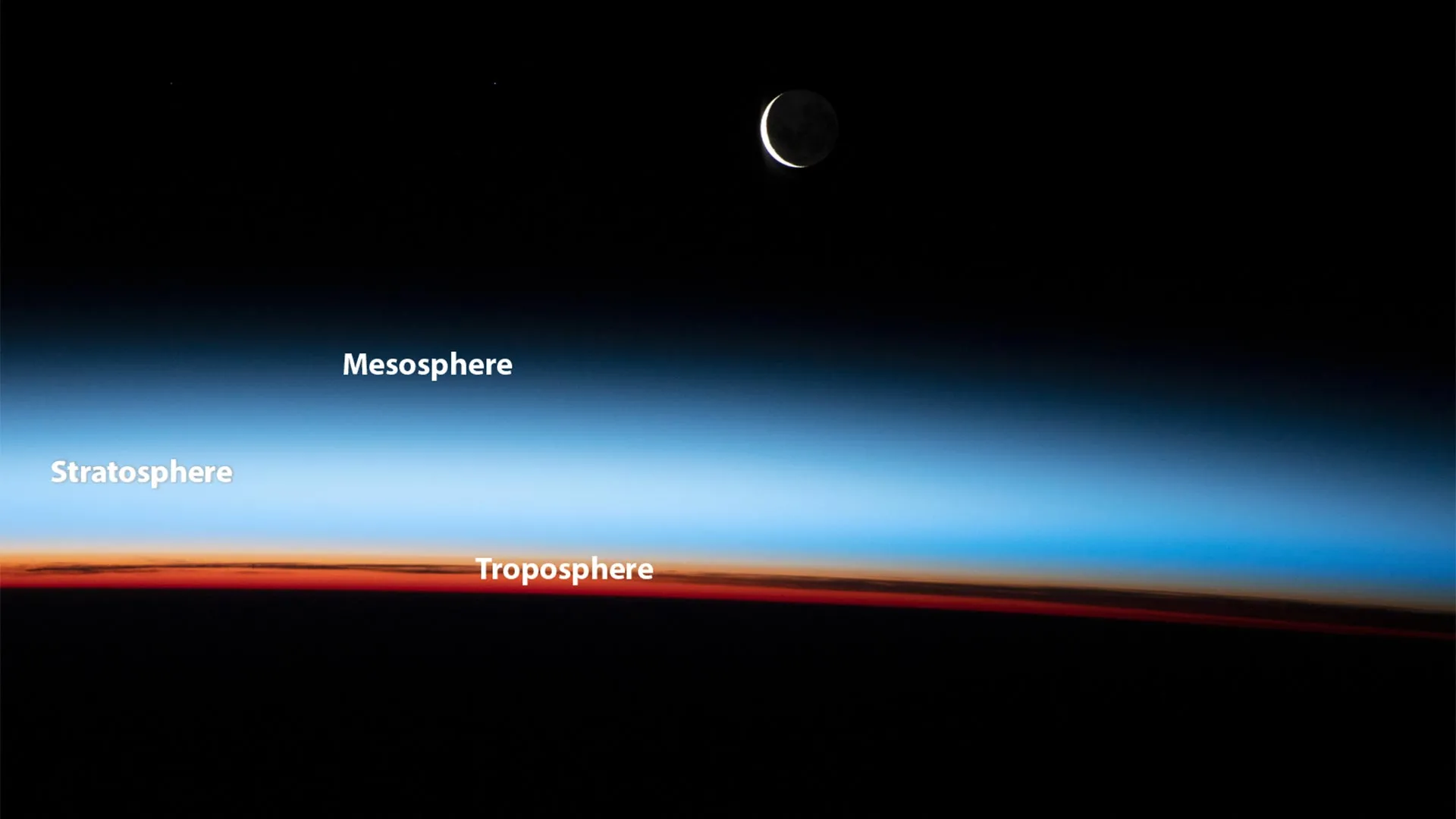
In the stratosphere, the atmospheric layer stretching from about 11km to 50 km above Earth’s surface, CO2 behaves more like a cooling system. The molecules absorb infrared energy rising from below and then release part of that energy back into space. As atmospheric CO2 levels increase, the stratosphere becomes even more effective at shedding heat, causing temperatures there to drop.

Scientists first predicted this effect in the 1960s through climate models developed by climatologist Syukuro Manabe, whose work later earned a Nobel Prize. Since the mid-1980s, the stratosphere has cooled by about 2 degrees Celsius. Researchers estimate that this cooling is more than 10 times greater than it would have been without human generated CO2 emissions.

Although scientists understood the broad idea behind stratospheric cooling, many of the detailed processes remained unresolved.

“The existing theory was incredibly insightful, but at the moment we lack a quantitative theory for CO2-induced stratospheric cooling,” says Sean Cohen, a postdoctoral research scientist at Lamont-Doherty Earth Observatory, which is part of the Columbia Climate School, and the study’s lead author.

The “Goldilocks Zone” of Infrared Light

To solve the puzzle, Cohen worked with Pincus and Lorenzo Polvani, a geophysicist in Columbia Engineering’s Department of Applied Physics and Applied Mathematics. The team built mathematical models that identified the major processes driving stratospheric cooling. They repeatedly compared their calculations with climate simulations and observational data, refining the equations over several months until the models aligned with reality.

Their research pointed to a key factor: the way CO2 molecules interact with infrared light, also known as longwave radiation.

Not all infrared wavelengths behave the same way in the atmosphere. The researchers found that some wavelengths are especially effective at promoting cooling. They described this highly efficient range as a “Goldilocks zone.” As CO2 concentrations rise, this zone widens, increasing the atmosphere’s cooling efficiency.

“It’s those changes in efficiency that are going to ultimately be what’s driving stratospheric cooling,” says Cohen.

The researchers also examined the effects of ozone and water vapor. While both can influence heating and cooling processes in the atmosphere, their impact on stratospheric cooling turned out to be relatively small compared with CO2.

How Stratospheric Cooling Strengthens Warming Below

The team’s equations successfully reproduced several known features of the atmosphere. They matched observations showing that cooling becomes stronger with altitude, with the greatest cooling occurring near the top of the stratosphere. The calculations also confirmed that every doubling of CO2 leads to about 8 degrees Celsius of cooling at the stratopause, the upper boundary of the stratosphere.

The study also highlights an important climate feedback. Although increased CO2 helps the stratosphere radiate heat more effectively, the resulting cooler temperatures mean the Earth system ultimately releases less infrared energy into space overall. That strengthens heat retention closer to the surface, intensifying warming in the lower atmosphere.

“Here’s this process that we’ve known about for 50-plus years, and we had a pretty decent qualitative understanding of how it worked. However, we didn’t understand the details of what actually drove that process mechanistically,” says Cohen.

According to Cohen and Pincus, the research is less about proving climate change exists and more about improving scientific understanding of how the atmosphere works.

“This is really telling us what is essential,” says Pincus.

The findings could also have applications beyond Earth. Researchers say the same principles may help scientists better understand the atmospheres of other planets and distant exoplanets.

“Maybe we can better understand what’s going on in the stratospheres of other planets in our solar system or exoplanets,” says Cohen.

Share Button

Deadly “red sky” solar storm from 800 years ago discovered in ancient trees

Powerful solar activity can create stunning auroras on Earth, but outside the protection of our planet’s magnetic field, the Sun can become extremely dangerous. Violent eruptions such as solar flares and coronal mass ejections can blast high energy particles through space, creating serious risks for astronauts and spacecraft.

Some of these eruptions produce solar proton events (SPEs), during which charged particles race toward Earth at speeds reaching 90% of the speed of light. In 1972, several SPEs erupted between the Apollo 16 and Apollo 17 Moon missions. If astronauts had been exposed during a lunar mission, they could have faced lethal radiation levels. As space agencies prepare for future Moon exploration, scientists are working to better understand these unpredictable solar events.

Researchers at the Okinawa Institute of Science and Technology (OIST) have now developed a new way to uncover evidence of past SPEs. The team combined medieval historical records with ultra precise carbon 14 measurements taken from buried asunaro trees in northern Japan. Using this method, they identified a solar proton event that likely occurred sometime between the winter of 1200 CE and the spring of 1201 CE, a period marked by unusually intense solar activity. The findings were published in the Proceedings of the Japan Academy, Series B.

Professor Hiroko Miyahara from the OIST Solar-Terrestrial Environment and Climate Unit explained: “Previous studies on historical SPEs have focused on rare, extremely powerful events. Our paper provides a basis for detecting sub-extreme SPEs — events that occur more frequently and are around 10-30% of the size of the most extreme cases, but still hazardous. Sub-extreme SPEs are more challenging to detect, but our method now allows us to efficiently identify them and better understand the conditions under which they are more likely to occur.”

Ancient Trees Preserve Clues About Solar Storms

Earth’s magnetic field blocks most high energy particles released during SPEs. Near the poles, however, magnetic field lines open into space, allowing some particles to enter the atmosphere. During especially powerful events, these particles collide with atmospheric gases and create carbon 14 compounds that spread around the globe and become trapped inside living organisms.

By analyzing carbon 14 levels in preserved organic material such as ancient buried trees, scientists can track changes in solar activity stretching back thousands of years. The OIST team used an ultra precise measurement technique they spent more than a decade refining. This method can detect much smaller carbon 14 fluctuations than conventional techniques, making it possible to identify weaker “sub-extreme” solar proton events that were previously invisible.

Because the carbon 14 analysis is extremely time intensive, the researchers first needed clues about when unusual solar activity may have occurred.

Medieval Japanese Diary Revealed “Red Lights” in the Sky

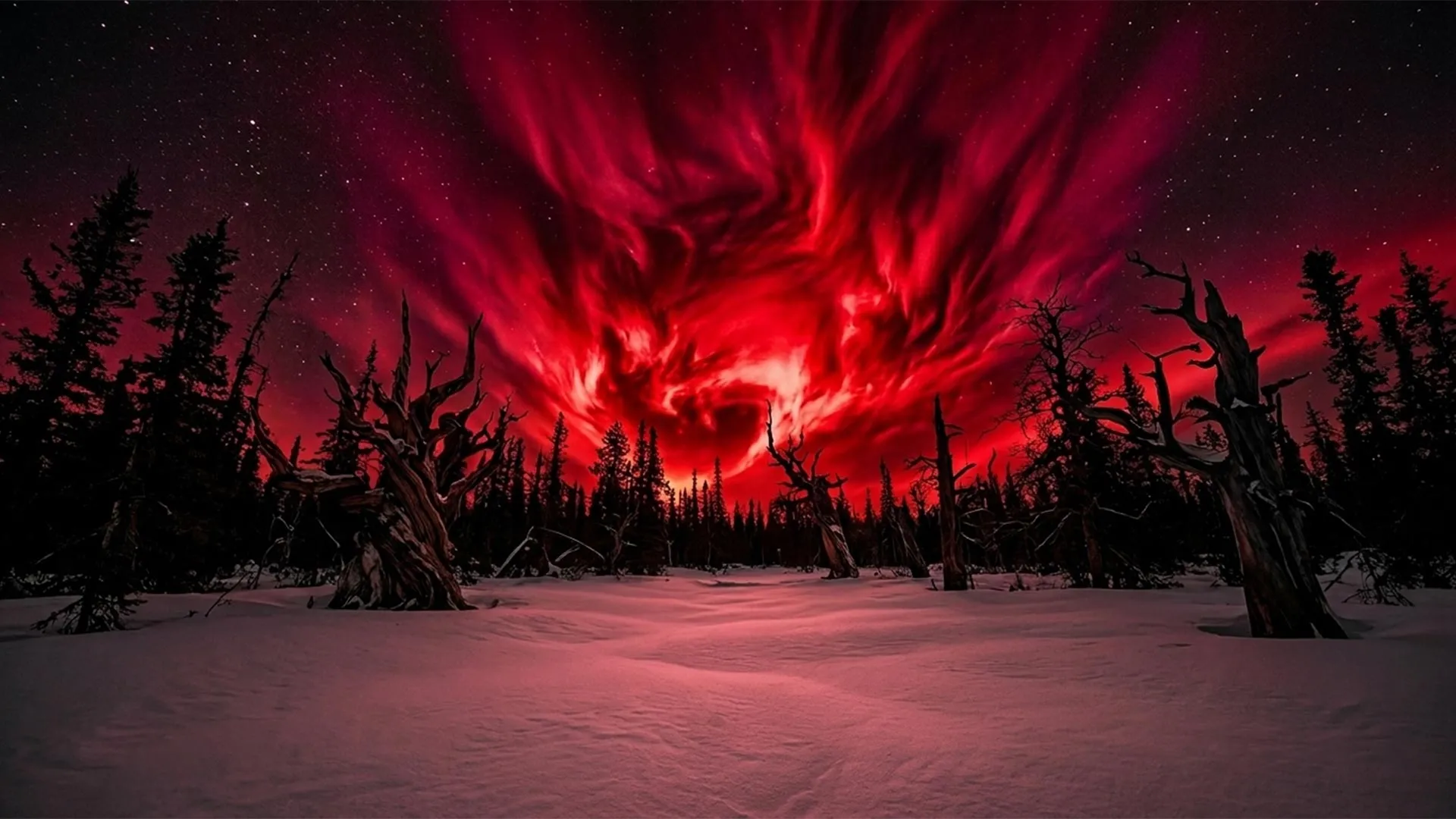
One of the key clues came from Meigetsuki, the diary of the Japanese poet and courtier Fujiwara no Teika (1162-1241). In February 1204 CE, he described seeing “red lights in the northern sky over Kyoto.”

Solar proton events do not directly create auroras, but they are often linked with the same kinds of solar disturbances that do. That historical observation gave researchers a timeframe to investigate more closely.

The scientists then measured carbon 14 levels in buried asunaro wood recovered from Aomori Prefecture in northern Japan. They discovered spikes in carbon 14 that pointed to a sub-extreme solar proton event. By combining those measurements with dendroclimatic studies — that is, a dating method based on comparing patterns of tree-ring growth associated with regional climate — the researchers determined that the event likely occurred sometime between the winter of 1200 CE and the spring of 1201 CE. Historical records from China also described a red aurora visible at unusually low latitudes during that same period.

Evidence of an Exceptionally Active Sun

“The high-precision data not only allowed us to accurately date sub-extreme solar proton events, but it also lets us clearly reconstruct the solar cycles of the period,” said Miyahara. “Today, the Sun’s activity fluctuates over eleven-year-long cycles, but we’ve found that the cycle was just seven to eight years long back then, indicating a very active Sun. The SPE we have dated occurred at the peak of one of these cycles.”

The research helps fill important gaps in the history of solar activity and improves scientists’ understanding of dangerous space weather events. According to Miyahara, carbon 14 analysis alone is not enough. Historical records and other scientific methods are also essential for reconstructing past solar behavior.

“Historical literature provides a candidate time window, and dendroclimatology enables direct intercomparison between detected SPE and reports of sunspots and auroras recorded in literature. Integrated approaches like these are necessary to accurately reconstruct past solar activity, helping us better understand the characteristics of extreme space weather,” concluded Miyahara. “For example, while the SPE we found occurred near the peak of the solar cycle, some of the prolonged low-latitude aurora recorded in the literature seems to fall near the minimum of our reconstructed solar cycle. This is unexpected, and we’re excited to look further into what solar conditions could cause this.”

Share Button

Who are the Japanese? Huge DNA discovery rewrites history

For decades, scientists believed the Japanese population largely descended from two ancient groups: the Jomon hunter-gatherers who lived in the archipelago for thousands of years, and later migrants from East Asia who brought rice farming and new technologies to Japan.

But a major genetic analysis from researchers at RIKEN’s Center for Integrative Medical Sciences suggests the picture is far more complicated.

Using whole-genome sequencing on more than 3,200 people from across Japan, the team found evidence supporting a third ancestral group tied to northeastern Asia and possibly linked to the ancient Emishi people. The findings, published in Science Advances, add powerful support to the increasingly discussed “tripartite origins” theory of Japanese ancestry.

The results also revealed something else surprising: Japan’s population is genetically more diverse than many researchers once assumed.

“The Japanese population isn’t as genetically homogenous as everyone thinks,” said Chikashi Terao, who led the study at RIKEN. “Our analysis revealed Japan’s subpopulation structure on a fine scale, which is very beautifully classified according to geographical locations in the country.”

A Massive DNA Map of Japan

To investigate Japan’s deep genetic history, researchers analyzed DNA samples collected from seven regions stretching from Hokkaido in the north to Okinawa in the south. The project became one of the largest whole-genome studies ever conducted on a non-European population.

Instead of relying on older DNA microarray methods, the team used whole-genome sequencing, which reads nearly all three billion DNA base pairs in a person’s genome. According to the researchers, this provides roughly 3,000 times more information than traditional techniques.

“Whole-genome sequencing gives us the chance to look at more data, which helps us find more interesting things,” Terao explained.

The scientists then combined the genetic information with medical histories, disease diagnoses, family histories, and clinical test results to build a large database known as the Japanese Encyclopedia of Whole-Genome/Exome Sequencing Library (JEWEL).

One especially important focus involved rare genetic variants. These uncommon DNA changes can sometimes preserve clues about ancient migration patterns and long-lost ancestral populations.

“We reasoned that rare variants can sometimes be traced back to specific ancestral populations, and could be informative in revealing fine-scale migration patterns within Japan,” Terao said.

The Hidden Third Ancestor

The analysis uncovered striking regional differences across Japan.

Jomon ancestry appeared strongest in Okinawa, where it was found in 28.5% of samples, while western Japan showed much lower levels at 13.4%. Researchers found that people in western Japan had stronger genetic connections to Han Chinese populations, likely reflecting major migration waves from continental East Asia between 250 and 794 CE. Those migrations also coincided with the spread of Chinese-style government systems, writing, and education throughout Japan.

The newly identified Emishi-related ancestry was concentrated in northeastern Japan and became less common farther west.

The findings build on earlier ancient DNA studies published in 2021 that first proposed the idea that modern Japanese people descend from three major ancestral sources instead of two. Those studies suggested that a third migration connected to the Kofun period played a major role in shaping modern Japan.

Recent follow-up studies have continued strengthening that idea. Researchers analyzing ancient genomes and skeletal remains have found increasing evidence that multiple migration waves entered Japan over centuries, creating a much more layered population history than previously believed.

Ancient Neanderthal and Denisovan DNA Still Affects People Today

The study also explored genetic material inherited from Neanderthals and Denisovans, two ancient human groups that interbred with Homo sapiens tens of thousands of years ago.

Scientists have become increasingly interested in why some of these ancient DNA fragments survived in modern humans while others disappeared. In many cases, the inherited genes appear linked to health, adaptation, or disease risk.

For example, earlier studies showed that Tibetans inherited a Denisovan-related version of the EPAS1 gene that may have helped humans survive in high-altitude environments. Researchers also previously identified Neanderthal-derived DNA associated with severe Covid-19 complications in some populations.

The Japanese genome study identified 44 archaic DNA regions still present in modern Japanese populations, many of them unique to East Asians. One Denisovan-derived region inside the NKX6-1 gene was associated with type 2 diabetes and may influence how some patients respond to semaglutide treatments.

Researchers also found 11 Neanderthal-derived genetic segments connected to conditions including coronary artery disease, prostate cancer, and rheumatoid arthritis.

Toward Personalized Medicine

Beyond tracing ancestry, the researchers believe the work could eventually improve healthcare.

The team identified potentially harmful variants in the PTPRD gene that may be linked to hypertension, kidney failure, and myocardial infarction. They also found common loss-of-function variants in the GJB2 and ABCC2 genes, which are associated with hearing loss and chronic liver disease.

“What we’ve tried to do is to find and catalog loss-of-function gene variants that are very specific to Japanese people, and to understand why they are more likely to have some specific traits and diseases,” Terao said. “We’d like to connect population differences with differences in genetics.”

The study reflects a broader shift happening in genetics research. For years, most large genomic databases heavily focused on people of European ancestry, limiting scientists’ understanding of disease risk in other populations.

Terao hopes expanding JEWEL with more Asian genomic data will help change that.

“It’s quite important to expand this to the Asian population so that in the long run, the results can benefit us too,” he said.

Share Button

Before This $10 Retinol Stick, ‘I Was Convinced The Only Sure Thing To Do For My Wrinkles Was Botox.’

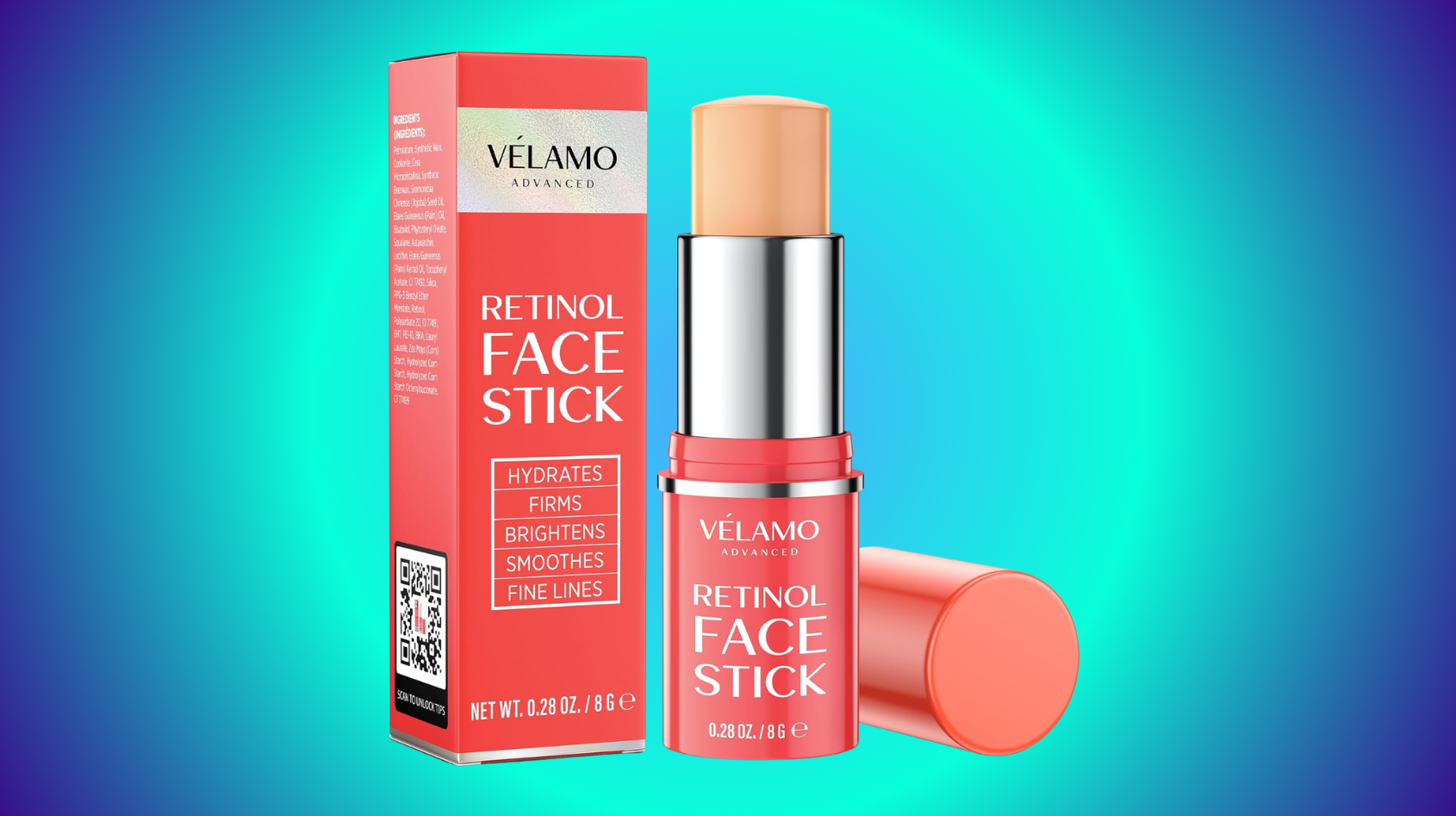
Few places on your body can indicate your age, lifestyle and health changes more than your eyes and the ultra-sensitive skin around them. From insomnia-imposed nights to natural aging to health conditions, the eyes are the windows to a little more than the soul, I’d argue. Luckily, we found a handy retinol eye stick that reviewers are loving for how it addresses everything from fine lines, eye bags, puffiness, dark circles and more. While they’re not saying it works exactly like Botox, they are calling it a “wonder of wonders” that produces impressive results fairly quickly. ” The icing on the cake: It’s freaking only $10 — at least today.

The easy-to-swipe stick is packed with a guest list of ingredients that make one seriously good party for the skin.

Retinol is the guest of honor for restoring smoothness, of course. Meanwhile, bakuchiol shows up like a hype man to help boost the retinol’s efficacy while helping to calm the sensitivity that retinol can create. Hyaluronic acid joins the dance floor with moisture-surging and plumping moves. Then, squalene and vitamin E operate like bouncers to by providing barrier protection, moisturization and skin repair, respectively.

“I don’t look 20 again, but I think it has taken about 10 years off of me,” one reviewer, Susan, shared about the crow’s feet smoothing she’s seeing after using the stick.

People are using it for their undereyes but finding that it’s convenient and effective for other parts of their face and beyond.

People are using it for crow’s feet, undereye bags, their necks, chest wrinkles (often emerging from side-sleeping, by the way) and more! One 78-year-old man, RD, uses it on an enduring “11” that has formed on his forehead over time, and notes that he saw long-lasting improvement after a few fails with other products.

Another 42-year-old reviewer notes that their neck began to smooth out within two weeks of swiping the retinol stick there faithfully.

People previously more resolved about Botox are using it comfortably. 👀

“I was convinced the only sure thing to do for MY wrinkles was to get Botox, which is expensive, at least for me,” shopper Lynette shared.

“But I did try it and I am Amazed… It does what it says it will do and it does what all of the reviews have said it will do… didn’t have to pay upwards of Hundreds of Dollars for something that I wasn’t even sure would help [or] that I would end up throwing away with all of the other products I have tried in the past.”

Another shopper, Cassandra, routinely uses Botox and higher-end beauty products, also notes what a pleasant surprise this stick is. “Smooths fine lines, brightened my eye area,” the Botox fan wrote. “Love this- everyone says my makeup looks great, but it’s the [eye stick].”

Note: We’ll continue to preach that you should always use retinol with sunscreen. Using anti-aging products (or, really, any skin care) without faithfully using a sunscreen is like going fishing with a hole in your boat. You might go somewhere, but it won’t be far.)

Definitely grab the $10 retinol smoothing stick while it’s a whopping 50% off. Still curious about how others are experiencing it? Understandable. Peep more promising reviews below:

“I love that this product is so easy to apply. No messy lotions or serums, you just simply swipe the balm under your eyes for moisturized and smooth under eye skin. I use this every night because it’s quick and effective. You don’t really need to use that much, so it’s a great value for the price. I really did see an improvement in my under eye fine lines and wrinkles after a few weeks of consitent use. This is a keeper in my skin care routine!” — Tami

“I am 74 year old man. I do not have a lot of wrinkles in spite of my age, but I have always had the so called “11” lines between my eyebrows and they give me a “mean” look. I have tried different products for years that claim to fix the problem but nothing worked. One of the instant wrinkle smoothers worked well, but after a very few hours it flaked and the wrinkles were back. I decided to give this Retinol Eye Stick a try and it is working great. I use it on the 11 wrinkles and also on my under eye bags. I began to see improvement in the 11 after around 10 days and the under eye began looking better after two weeks. For the 11 wrinkles I rub the Retinol on the wrinkles and then rub it in with my fingers. The area will appear slightly red for a few minutes then go back to normal. I just ordered and received my second stick. I started using the product around Dec 31 I think. On average the stick lasts about a month. I am still seeing improvement as I use the product and at this rate I believe the 11 will be completely gone or at least not noticeable in another month. I will continue using the product from now on. The under eye looks much better and feels really good. I carry the stick to work and use it about four times a day. I will use it less times per day when the wrinkles are gone. It has no odor that I can detect. Great product! I think that if you try it you will tell the way it feels that it will work.” — RD

“I purchased this in mid June this year and shortly thereafter began using it. I always have 0 expectations for any new product I buy. So, I just used it and forgot about it. Then lately, I guess within the last two weeks or so, my eyes seem to be more alert looking. Taking a closer look, I discovered that my crow’s feet are nearly gone! So, it has been 2 months of use and sure enough, my eyelids look tighter and my skin a bit brighter. I mean, I kept wondering what was going on and then I remembered I was using this eye stick. Note although I am old, I do not naturally have bags or discoloration under my eyes. What I have was just light wrinkling and sagging skin. I don’t look 20 again, but I think it has taken about 10 years off of me.” — Susan

Share Button

Posh sandwich has more salt than nearly five cheeseburgers

Action on Salt & Sugar said people should not be exposed to a “hidden health risk every time they buy lunch”.

Share Button