Women Describe The ‘Extreme’ Physical Pain Of Endometriosis

An estimated 6.5 million people in the United States have endometriosis, a painful condition in which the uterine lining spreads and grows outside of the uterus. But that statistic likely vastly underestimates the prevalence of endometriosis because it’s notoriously difficult to diagnose.

Many of the symptoms ― which range from painful, heavy periods and painful sex to gastrointestinal issues and intense fatigue ― are associated with other reproductive health problems, including ovarian cysts and pelvic inflammatory disease. In addition, the pain associated with endometriosis is often dismissed by doctors as normal period cramps.

The only surefire way to diagnose endometriosis is to get a laparoscopy, a tiny surgical procedure that can identify the size and location of endometriosis. But that’s typically not the first test doctors recommend. Consequently, it can take years of inconclusive tests and misdiagnoses before the condition is properly diagnosed. In fact, endometriosis is so commonly misdiagnosed that the condition has picked up the nickname “the missed disease.”

Below, women diagnosed with endometriosis share what it physically feels like to live with the condition. They hope that their stories will encourage others experiencing symptoms to seek care and advocate for an accurate, timely diagnosis.

Extremely painful, heavy periods

Jaime Henson, a nurse practitioner who was diagnosed with endometriosis at age 32, says her symptoms started when she was 14 – 18 years before she got an official diagnosis.

As a teenager, she had extremely painful and irregular periods. At one point, her period lasted over a month. “I did not want to go out and do things because of the pain and nausea,” Henson says.

Blaine Mallory, a woman diagnosed with endometriosis, said she lost a ton of blood over the course of seven to eight days when she had her period. While menstruating, she experienced extreme cramping and dizziness.

“It was an iron deficiency brought on by my period,” Mallory said. Like Henson, Mallory’s period pain intensified over the years and became localised to her left ovary, which she later learned was covered in endometriosis.

People are often told that period pain is a normal part of menstruation, which causes many who experience intense or severe pelvic pain to believe that it’s just part of having a uterus. While it’s common to have some mild discomfort during menstruation, severe pain that impacts your quality of life or ability to function is not normal.

“I did not know any different and how it was ‘abnormal,’” Henson says.

Intense periods and cramping are hallmark symptoms of endometriosis.

martin-dm via Getty Images

Intense periods and cramping are hallmark symptoms of endometriosis.

Pelvic pain during ovulation

Eventually, Henson’s pain increased and remained a problem throughout the month, not only while she had her period.

“I had extreme pelvic pain to the point where I could not stand up straight and would have to walk hunched over,” Henson says.

Kylie Meyer, a 33-year-old who recently had a hysterectomy to treat her stage 4 endometriosis, said her pain also initially flared up during her period, but got worse and occurred when she was ovulating, too. The pain, which she describes as crampy, was typically localised to one side of her body, rotating between the left ovary and the right ovary each month.

“There’d be times I would be shopping and would have to put my hand, essentially, into my pelvis to try to put pressure on the pain just to get through the store,” Meyer says.

Urinary and gastrointestinal issues

Henson says she sporadically noticed there was blood in her urine and often felt like she had a urinary tract infection ― but when she got tested for a UTI, the test results were normal. Additionally, she developed deep rectal pain. Despite undergoing multiple tests, her gastrointestinal specialist couldn’t identify the root of the problem.

Meyer also developed gastrointestinal issues. “I started getting bloating to the point that my stomach was distended,” she says. The bloating became so severe that her skin ached from being so stretched out.

Difficulty getting pregnant or infertility can be a side effect of endometriosis.

Natalia Gdovskaia via Getty Images

Difficulty getting pregnant or infertility can be a side effect of endometriosis.

Struggling with unexplained infertility

Sheila Petersen, a woman diagnosed with endometriosis at age 34, began trying to get pregnant at 30. After multiple unsuccessful attempts, she was diagnosed with “unexplained infertility.”

She underwent multiple rounds of intrauterine insemination and in vitro fertilization, but still did not get pregnant. When she was finally diagnosed with endometriosis, she understood what had been preventing her from conceiving. Estimates suggest that around 47% of women experiencing infertility have endometriosis.

“I can’t help but wonder if it was caught when I was younger if our fertility journey would have been easier,” Petersen says.

Chronic, intense fatigue

One of the more debilitating symptoms Meyer deals with is fatigue that limits her ability to go out and live her life. Because endometriosis is an inflammatory disease, the body is constantly working to fight off the inflammation. Meyer learned that she has to carve out a few days each month to rest, otherwise her body will get too run down.

“It is exhausting. I can’t do things that I used to be able to do,” she says.

Meyer hopes that by sharing her symptoms, she can prevent others from going down a similar path.

“If I had gotten diagnosed earlier, it probably wouldn’t have gotten to severe stage 4 with frozen pelvis – and who knows if my uterus could have been saved if had I been diagnosed earlier,” Meyer says.


Share Button

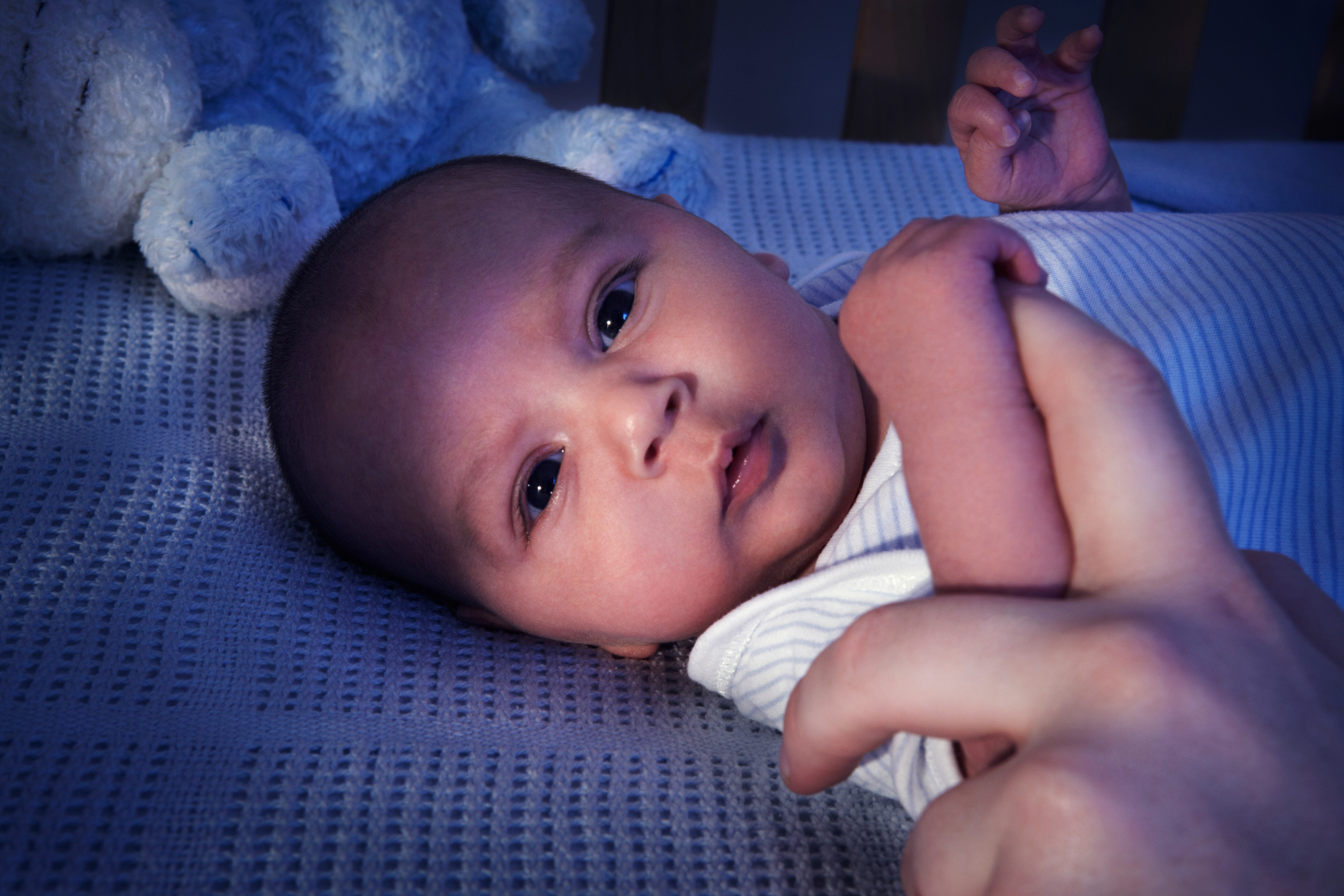
Is It Us Or Are Babies Always In A Sleep Regression?

Name two words parents dread more than sleep regression… we’ll wait.

We often hear about them in Whatsapp groups (why is my baby suddenly not sleeping?! Send coffee!), or in books about child development, with most agreeing the first sleep regression happens around the age of four months. Then eight months. Then 18 months and finally, two years.

But for lots of parents, it can feel like every week you’re starting a new sleep regression with a baby. And even when they’re toddlers, you’ll get the odd night where they sleep through in their cot (and you’ll pop some Prosecco in the morning to celebrate), but you’ll also get lots of occasions where they’ll wake up, end up in your bed, pull your hair, grab your lips and shout “DADDY!” approximately 59 times at 3.30am.

So what are sleep regressions – and why oh why does it feel like you’re constantly in one?

It turns out most sleep specialists don’t really consider sleep regression a thing, per se – the concept is not really used in scientific or medical contexts when discussing child sleep. That said, sleep specialists do recognise that lots of parents are aware of them.

“The only ‘regression’ with any science behind it, that I recognise, is the one that happens around four months old when babies’ sleep cycles actually change and become more like adult sleep,” says Emily Houltram, founder of The Sleep Chief. “But even that one divides professionals!”

Explaining what a sleep regression is, Lauren Peacock, a sleep consultant at Little Sleep Stars, says that “it generally refers to a sudden perceived deterioration in a child’s sleep pattern, typically characterised by difficulty settling at sleep onset and/or night-waking that is happening more frequently and possibly for an increased duration”.

Sleep isn’t linear, she explains, and like all other aspects of development, it matures over time with a noticeable change occurring in the first six months. “Once this change occurs, periodic night-waking becomes a normal part of the sleep pattern,” she says.

Then, whenever children hit a significant stage of their development – so that could be crawling, walking, talking, starting childcare, becoming a sibling, getting sick or teething (the list goes on), there is potential for their sleep to be impacted. Again, and again, and again.

Peacock suggests the term ‘regression’ is actually very misleading because none of these events occur as a result of a child going backwards – “they are only ever moving forwards,” she adds.

But for parents who aren’t sleeping that well, it can definitely seem like a step backwards compared to those halcyon days of newborn sleep when you could ease them gently back into slumber with a mere cuddle and a bit of milk.

Most babies will be impacted by a disruption to sleep at some point in their first few years, but some will be less impacted than others.

“All babies experience changes to their sleep pattern and many will go through phases where sleep feels more challenging,” says Peacock. “Some little ones do have a trickier relationship with sleep than others and so whilst some children will experience more frequent and persistent sleep disruption, others will navigate through these inevitable ups and downs much more smoothly.”

If you’re very much in the camp of surviving the day on four hours’ sleep and feeling like you might never get a good night’s kip ever again, we have some good news – and some bad news.

The good news is that this won’t last forever. When they’re teenagers they’ll be sleeping for lengthy stretches to the point where you’ll probably worry they’re sleeping too much.

The bad news is that even as your baby becomes a toddler, and then a young child, there’ll probably be a few bumps in the road as far as their sleep is concerned. (Like we said: basically one big sleep regression.)

Signs your baby might be entering a so-called sleep regression include:

:: Becoming more difficult to settle at bed or nap time

:: Waking more frequently than was previously typical

:: Waking in the night and then staying awake for a long period – something sleep experts refer to as a “split-night”

:: Waking up a lot earlier.

Vera Livchak via Getty Images

There is a popular narrative around sleep regressions occurring at specific ages: so typically we hear four months, eight months, 18 months and two years as inevitable points that sleep will deteriorate, says Peacock.

“However, some families will feel that their child never experiences a ‘regression’, whereas others will feel that they are hit hard by every single one – with some extra ones thrown in for good measure,” she says.

“There are ages that it is more common to see sleep challenges crop up, and they do tend to coincide with children making big developmental shifts which are more common in the baby and toddler phases, but even older children can hit bumps with their sleep.”

If you are struggling right now, infant sleep expert Katie Palmer, from Infant Sleep Consultants, suggests maintaining good sleep hygiene to get your child into the best position possible to navigate the next few months (and years, if you’re really lucky) of sleep disruption.

“This involves a good routine in the day, well-timed naps, a good bedtime routine and allowing your child to self settle,” she says. “They will always find this easier at the onset of sleep but if you know they can do it at the start of the night, there is no reason why they can’t for the rest of the night.”

The sleep specialist adds that if a child is going through a developmental leap, they may be more unsettled when it comes to drifting off – and if you’re finding this, you can help them by keeping familiar routines and boundaries in place.

Of course, there are certain points where a parent might think: is there something drastically wrong with my child because they literally do not sleep? And if you’re feeling that, it’s definitely worth speaking to a sleep specialist about it – or at the very least your GP.

“There are ages that it is more common to see sleep challenges crop up, and they do tend to coincide with children making big developmental shifts which are more common in the baby and toddler phases, but even older children can hit bumps with their sleep.”

– Lauren Peacock

If a child’s sleep is good enough most of the time – both in terms of quality and quantity – then sometimes just knowing that more challenging periods are biologically normal, and will pass, is all the reassurance parents need, says Peacock.

“All children will, sooner or later, reach the stage of sleeping through the night,” she adds.

But if a child isn’t managing well with the sleep they are getting – for example, if they are regularly tired and irritable throughout the day, or it’s taking hours to settle them at bedtime every night – that’s indicative of a more pervasive challenge with sleep rather than a short-term ‘regression’, she explains.

“Sometimes these challenges are underpinned by physiological aspects such as digestive discomfort or daytime naps not being optimal,” she says. “Other times, the patterns of behaviour that have developed around sleep aren’t helping a child to sleep well.

“The question really is whether things are working well enough, most of the time. If the answer to that is no, there are lots of ways that children can be supported towards better sleep.”

Share Button

How Covid has dealt the NHS a lasting blow

The health service is treating fewer patients than before Covid, so why is it still struggling?

Share Button

Quantum dots at room temp, using lab-designed protein

Nature uses 20 canonical amino acids as building blocks to make proteins, combining their sequences to create complex molecules that perform biological functions.

But what happens with the sequences not selected by nature? And what possibilities lie in constructing entirely new sequences to make novel, or de novo, proteins bearing little resemblance to anything in nature?

That’s the terrain Princeton University’s Hecht Lab works in. And recently, their curiosity for designing their own sequences paid off.

They discovered the first known de novo protein that catalyzes, or drives, the synthesis of quantum dots. Quantum dots are fluorescent nanocrystals used in electronic applications from LED screens to solar panels.

Their work opens the door to making nanomaterials in a more sustainable way by demonstrating that protein sequences not derived from nature can be used to synthesize functional materials — with pronounced benefits to the environment.

Quantum dots are normally made in industrial settings with high temperatures and toxic, expensive solvents — a process that is neither economical nor environmentally friendly. But Hecht Lab researchers pulled off the process at the bench using water as a solvent, making a stable end-product at room temperature.

“We’re interested in making life molecules, proteins, that did not arise in life,” said Professor of Chemistry Michael Hecht, who led the research with Greg Scholes, the William S. Tod Professor of Chemistry and chair of the department. “In some ways we’re asking, are there alternatives to life as we know it? All life on earth arose from common ancestry. But if we make lifelike molecules that did not arise from common ancestry, can they do cool stuff?

“So here, we’re making novel proteins that never arose in life doing things that don’t exist in life.”

The team’s process can also tune nanoparticle size, which determines the color quantum dots glow, or fluoresce, in. That holds possibilities for tagging molecules within a biological system, like staining cancer cells in vivo.

“Quantum dots have very interesting optical properties due to their sizes,” said Yueyu Yao, co-author on the paper and a fifth-year graduate student in the Hecht Lab. “They’re very good at absorbing light and converting it to chemical energy — that makes them useful for being made into solar panels or any sort of photo sensor.

“But on the other hand, they’re also very good at emitting light at a certain desired wavelength, which makes them suitable for making LED screens.”

And because they’re small — comprised of only about 100 atoms and maybe 2 nanometers across — they’re able to penetrate some biological barriers, making their utility in medicines and biological imaging especially promising.

The research, “A de novo protein catalyzes the synthesis of semiconductor quantum dots,” was published this week in the Proceedings of the National Academy of Sciences (PNAS).

Why use de novo proteins?

“I think using de novo proteins opens up a way for designability,” said Leah Spangler, lead author on the research and a former postdoc in the Scholes Lab. “A key word for me is ‘engineering.’ I want to be able to engineer proteins to do something specific, and this is a type of protein you can do that with.

“The quantum dots we’re making aren’t great quality yet, but that can be improved by tuning the synthesis,” she added. “We can achieve better quality by engineering the protein to influence quantum dot formation in different ways.”

Based on work done by Sarangan Chari, Hecht Lab senior chemist and a corresponding author, the team used a de novo protein it designed named ConK to catalyze the reaction. Researchers first isolated ConK in 2016 from a large combinatorial library of proteins. It’s still made of natural amino acids, but it qualifies as “de novo” because its sequence doesn’t have any similarity to a natural protein.

Researchers found that ConK enabled the survival of E. coli in otherwise toxic concentrations of copper, suggesting it might be useful for metal binding and sequestration. The quantum dots used in this research are made out of cadmium sulfide. Cadmium is a metal, so researchers wondered if ConK could be used to synthesize quantum dots.

Their hunch paid off. ConK breaks down cysteine, one of the 20 amino acids, into several products, including hydrogen sulfide. That acts as the active sulfur source that will then go on to react with the metal cadmium. The result is CdS quantum dots.

“To make a cadmium sulfide quantum dot, you need the cadmium source and the sulfur source to react in solution,” said Spangler. “What the protein does is make the sulfur source slowly over time. So, we add the cadmium initially but the protein generates the sulfur, which then reacts to make distinct sizes of quantum dots.”

This research was supported by the National Science Foundation MRSEC program (DMR-2011750), the Princeton University Writing Center, and the Canadian Institute for Advanced Research. The research was also supported by NSF grant MCB-1947720 to MH.

Share Button

Changes in Earth’s orbit may have triggered ancient warming event

Changes in Earth’s orbit that favored hotter conditions may have helped trigger a rapid global warming event 56 million years ago that is considered an analogue for modern climate change, according to an international team of scientists.

“The Paleocene-Eocene Thermal Maximum is the closest thing we have in the geologic record to anything like what we’re experiencing now and may experience in the future with climate change,” said Lee Kump, professor of geosciences at Penn State. “There has been a lot of interest in better resolving that history, and our work addresses important questions about what triggered the event and the rate of carbon emissions.”

The scientists analyzed core samples from a well-preserved record of the PETM near the Maryland coast using astrochronology, a technique for dating sediments against orbital patterns that occur over tens to hundreds of thousands of years, known as Milankovitch cycles.

They found the shape of Earth’s orbit, or eccentricity, and the wobble in its rotation, or precession, favored hotter conditions at the onset of the PETM and that these orbital configurations together may have played a role in triggering the event.

“An orbital trigger may have led to the carbon release that caused several degrees of global warming during the PETM as opposed to what’s a more popular interpretation at the moment that massive volcanism released the carbon and triggered the event,” said Kump, the John Leone Dean in the College of Earth and Mineral Sciences.

The findings, published in the journal Nature Communications, also indicated the onset of the PETM lasted about 6,000 years. Previous estimates have ranged from several years to tens of thousands of years. The timing is important to understand the rate at which carbon was released into the atmosphere, the scientists said.

“This study allows us to refine our carbon cycle models to better understand how the planet reacts to an injection of carbon over these timescales and to narrow down the possibilities for the source of the carbon that drove the PETM,” said Mingsong Li, assistant professor in the School of Earth and Space Sciences at Peking University and a former assistant research professor of geosciences at Penn State who is lead author on the study.

A 6,000-year onset, coupled with estimates that 10,000 gigatons of carbon were injected into the atmosphere as the greenhouse gases carbon dioxide or methane, indicates that about one and a half gigatons of carbon were released per year.

“Those rates are close to an order of magnitude slower than the rate of carbon emissions today, so that is cause for some concern,” Kump said. “We are now emitting carbon at a rate that’s 5 to 10 times higher than our estimates of emissions during this geological event that left an indelible imprint on the planet 56 million years ago.”

The scientists conducted a time series analysis of calcium content and magnetic susceptibility found in the cores, which are proxies for changes in orbital cycles, and used that information to estimate the pacing of the PETM.

Earth’s orbit varies in predictable, calculable ways due to gravitational interactions with the sun and other planets in the solar system. These changes impact how much sunlight reaches Earth and its geographic distribution and therefore influence the climate.

“The reason there’s an expression in the geologic record of these orbital changes is because they affect climate,” Kump said. “And that affects how productive marine and terrestrial organisms are, how much rainfall there is, how much erosion there is on the continents and therefore how much sediment is carried into the ocean environment.”

Erosion from the paleo Potomac and Susquehanna rivers, which at the onset of the PETM may have rivaled the discharge of the Amazon River, carried sediments to the ocean where they were deposited on the continental shelf. This formation, called the Marlboro Clay, is now inland and offers one of the best-preserved examples of the PETM.

“We can develop histories by coring down through the layers of sediment and extracting specific cycles that are creating this story, just like you could extract each note from a song,” Kump said. “Of course, some of records are distorted and there are gaps — but we can use the same types of statistical methods that are used in apps that can determine what song you are trying to sing. You can sing a song and if you forget half the words and skip a chorus, it will still be able to determine the song, and we can use that same approach to reconstruct these records.”

Timothy Bralower, professor of geosciences at Penn State, also contributed to this research.

Other contributors were James Zachos, distinguished professor at the University of California Santa Cruz; William Rush, a postdoctoral associate at Yale University and the Cooperative Institute for Research in Environmental Science at the University of Colorado Boulder; and Jean Self-Trail and Marci Robinson, research geologists at the Florence Bascom Geoscience Center, United States Geological Survey.

The National Key R&D Program of China and the Heising-Simons Foundation provided funding for this work.

Share Button

Particles of light may create fluid flow, data-theory comparison suggests

A new computational analysis by theorists at the U.S. Department of Energy’s Brookhaven National Laboratory and Wayne State University supports the idea that photons (a.k.a. particles of light) colliding with heavy ions can create a fluid of “strongly interacting” particles. In a paper just published in Physical Review Letters, they show that calculations describing such a system match up with data collected by the ATLAS detector at Europe’s Large Hadron Collider (LHC).

As the paper explains, the calculations are based on the hydrodynamic particle flow seen in head-on collisions of various types of ions at both the LHC and the Relativistic Heavy Ion Collider (RHIC), a DOE Office of Science user facility for nuclear physics research at Brookhaven Lab. With only modest changes, these calculations also describe flow patterns seen in near-miss collisions, where photons that form a cloud around the speeding ions collide with the ions in the opposite beam.

“The upshot is that, using the same framework we use to describe lead-lead and proton-lead collisions, we can describe the data of these ultra-peripheral collisions where we have a photon colliding with a lead nucleus,” said Brookhaven Lab theorist Bjoern Schenke, a coauthor of the paper. “That tells you there’s a possibility that, in these photon-ion collisions, we create a small dense strongly interacting medium that is well described by hydrodynamics — just like in the larger systems.”

Fluid signatures

Observations of particles flowing in characteristic ways have been key evidence that the larger collision systems (lead-lead and proton-lead collisions at the LHC; and gold-gold and proton-gold collisions at RHIC) create a nearly perfect fluid. The flow patterns were thought to stem from the enormous pressure gradients created by the large number of strongly interacting particles produced where the colliding ions overlap.

“By smashing these high-energy nuclei together we’re creating such high energy density — compressing the kinetic energy of these guys into such a small space — that this stuff essentially behaves like a fluid,” Schenke said.

Spherical particles (including protons and nuclei) colliding head on are expected to generate a uniform pressure gradient. But partially overlapping collisions generate an oblong, almond-shaped pressure gradient that pushes more high-energy particles out along the short axis than perpendicular to it.

This “elliptic flow” pattern was one of the earliest hints that particle collisions at RHIC could create a quark-gluon plasma, or QGP — a hot soup of the fundamental building blocks that make up the protons and neutrons of nuclei/ions. Scientists were at first surprised by the QGP’s liquid-like behavior. But they later established elliptic flow as a defining feature of QGP, and evidence that the quarks and gluons were still interacting strongly, even when free from confinement within individual protons and neutrons. Later observations of similar flow patterns in collisions of protons with large nuclei, intriguingly suggest that these proton-nucleus collision systems can also create tiny specks of quark-gluon soup.

“Our new paper is about pushing this to even further extremes, looking at collisions between photons and nuclei,” Schenke said.

Changing the projectile

It has long been known that that ultra-peripheral collisions could create photon-nucleus interactions, using the nuclei themselves as the source of the photons. That’s because charged particles accelerated to high energies, like the lead nuclei/ions accelerated at the LHC (and gold ions at RHIC), emit electromagnetic waves — particles of light. So, each accelerated lead ion at the LHC is essentially surrounded by a cloud of photons.

“When two of these ions pass each other very closely without colliding, you can think of one as emitting a photon, which then hits the lead ion going the other way,” Schenke said. “Those events happen a lot; it’s easier for the ions to barely miss than to precisely hit one another!”

ATLAS scientists recently published data on intriguing flow-like signals from these photon-nucleus collisions.

“We had to set up special data collection techniques to pick out these unique collisions,” said Blair Seidlitz, a Columbia University physicist who helped set up the ATLAS trigger system for the analysis when he was a graduate student at the University of Colorado, Boulder. “After collecting enough data, we were surprised to find flow-like signals that were similar to those observed in lead-lead and proton-lead collisions, although they were a little smaller.”

Schenke and his collaborators set out to see whether their theoretical calculations could accurately describe the particle flow patterns.

They used the same hydrodynamic calculations that describe the behavior of particles produced in lead-lead and proton-lead collision systems. But they made a few adjustments to account for the “projectile” striking the lead nucleus changing from a proton to a photon.

According to the laws of physics (specifically, quantum electrodynamics), a photon can undergo quantum fluctuations to become another particle with the same quantum numbers. A rho meson, a particle made of a particular combination of a quark and antiquark held together by gluons, is one of the most likely results of those photon fluctuations.

If you think back to the proton — made of three quarks — this two-quark rho particle is just a step down the complexity ladder.

“Instead of having a gluon distribution around three quarks inside a proton, we have the two quarks (quark-antiquark) with a gluon distribution around those to collide with the nucleus,” Schenke said.

Accounting for energy

The calculations also had to account for the big difference in energy in these photon-nucleus collision systems, compared to proton-lead and especially lead-lead.

“The emitted photon that’s colliding with the lead won’t carry the entire momentum of the lead nucleus it came from, but only a tiny fraction of that. So, the collision energy will be much lower,” Schenke said.

That energy difference turned out to be even more important than the change of projectile.

In the most energetic lead-lead or gold-gold heavy ion collisions, the pattern of particles emerging in the plane transverse to the colliding beams generally persists no matter how far you look from the collision point along the beamline (in the longitudinal direction). But when Schenke and collaborators modeled the patterns of particles expected to emerge from lower-energy photon-lead collisions, it became apparent that including the 3D details of the longitudinal direction made a difference. The model showed that the geometry of the particle distributions changes rapidly with increasing longitudinal distance; the particles become “decorrelated.”

“The particles see different pressure gradients depending on their longitudinal position,” Schenke explained.

“So, for these low energy photon-lead collisions, it is important to run a full 3D hydrodynamic model (which is more computationally demanding) because the particle distribution changes more rapidly as you go out in the longitudinal direction,” he said.

When the theorists compared their predictions using this lower-energy, full 3D, hydrodynamic model with the particle flow patterns observed in photon-lead collisions by the ATLAS detector, the data and theory matched up nicely, at least for the most obvious elliptic flow pattern, Schenke said.

Implications and the future

“From this result, it looks like it’s conceivable that, even in photon-heavy ion collisions, we have a strongly interacting fluid that responds to the initial collision geometry, as described by hydrodynamics,” Schenke said. “If the energies and temperatures are high enough,” he added, “there will be a quark-gluon plasma.”

“It’s conceivable that, in photon-heavy ion collisions, we have a strongly interacting fluid,” said Brookhaven Lab theorist Bjoern Schenke.

Seidlitz, the ATLAS physicist, commented, “It was very interesting to see these results suggesting the formation of a small droplet of quark-gluon plasma, as well as how this theoretical analysis offers concrete explanations as to why the flow signatures are a bit smaller in photon-lead collisions.”

Additional data to be collected by ATLAS and other experiments at RHIC and the LHC over the next several years will enable more detailed analyses of particles flowing from photon-nucleus collisions. These analyses will help distinguish the hydrodynamic calculation from another possible explanation, in which the flow patterns are not a result of the system’s response to the initial geometry.

In the longer-term future, experiments at an Electron-Ion Collider (EIC), a facility planned to replace RHIC sometime in the next decade at Brookhaven Lab, could provide more definitive conclusions.

Share Button

Cancer mRNA vaccine completes pivotal trial

It uses the same messenger-RNA technology as some Covid-19 vaccines.

Share Button

Welsh midwives vote to strike, but England turnout too low

The strike vote didn’t make the 50% legal threshold for turnout in England.

Share Button

Cwmbran: Man with broken hip taken to hospital tied to plank

Melvyn Ryan’s granddaughter, Nicole Lea, says she was told no ambulances were available.

Share Button

We Hooked Up At The Office Christmas Party – And We’re Still Together

If you’ve been making eyes at your co-worker all year, the office Christmas party can represent the perfect opportunity to shoot your shot. But you do, inevitably, need to proceed with caution. Nobody wants to be that person pulled in to see HR on Monday morning.

Still, a snog by the cloakroom can lead to far more than water cooler gossip. Below, we chat to two couples who hooked up at the Christmas party and found longterm love.

If these stories get turned into a Netflix romcom next year, you read them here first.

“He said ‘I have to get my anorak’ and I was like ‘Oh god.’”

Zoe Burke, 31, met her partner, Simon, 45, when they both worked for a media publishing company. Zoe worked in editorial while Simon worked in IT. They had their first snog six years ago at the Christmas party in London’s Cafe De Paris and now live together in Whitton, Twickenham, with their daughter. Zoe, who is editor at wedding website Hitched.co.uk, tells their story.

Zoe and Simon, whose chemistry became a running joke in their office.

“We had chemistry from the first moment we met – although I was seeing someone else so nothing happened. Also he was so comically the opposite of my usual type – I tended to go for creatives who were always skint but were free spirits. He was a single dad of two who oversaw IT operations for a huge company and was 14 years older than me.

“It was a running joke in our office because it was so ridiculous, but we got on SO well. By summer I was single and dating but nothing really happened until we got into the Christmas period and the Xmas party was looming and our flirting ramped up a bit.

“I have never put so much effort into getting ready for a party! And I didn’t see him all night! I was about to leave and my boss was like ‘he’s at the bar!’ So I went over and it was all very sweet and innocent – there was no kissing, nothing like that, he put an arm around me but that was it.

“I remember when we left we did it separately and he said ‘I have to get my anorak’ and I was like ‘oh god’. But then we met round the corner, kissed for the first time and have been together ever since!

“Me and ‘the IT guy’ is still a running joke at work, but I don’t mind so much as it’s now been six years, and we have a daughter together now too. While I might be all about weddings in my working life, we have no plans to get hitched ourselves any time soon ― even though it comes up in conversation a LOT!”

‘We did keep it a secret in the office for a month.’

Tom Bourlet, 35, and his financée Raquel, 33, recently got engaged surrounded by 32 dogs at the Golden Retriever Experience (yes, we’re jealous too). The couple, who are based in Burgess Hill, work for the party planning company Fizzbox, so they know a thing or two about hosting a good knees-up. Still, their Christmas party was more memorable than most. Tom tells their story.

Tom Bourlet and his financée Raquel

Tom Bourlet

Tom Bourlet and his financée Raquel

“We worked together for around a year before the Fizzbox Christmas party; she worked in the finance department and I worked in marketing. I used to get Degustabox deliveries [a food subscription service] to the office, and would offer around the snacks to people in the office slowly making my way over to Raquel, before using it as an excuse to have a chat with her. We also went on a work trip to Bournemouth, where we instantly bonded, sitting next to each other on the coach over.

“We mentioned much later that we both secretly fancied each other, but tried ‘playing it cool’, but the Christmas party was the point in which we got to sit next to each other with some prosecco and the rest was history.

“I think there is always a worry the next day if alcohol has been involved. I worry if I said something stupid, whether I came across well and whether she was actually interested in me or whether that was the booze talking. It was also on a Friday, so we didn’t see each other until the Monday, so [there were] a few nervy days where we sent the occasional message to each other, but nothing in-depth.

“Fortunately, as soon as I saw her on Monday, we were joking around like normal, so all awkwardness was gone away, and we then arranged to go for some drinks that evening.

“We did keep it a secret in the office for a month, however one of our colleagues saw us in the bar down the road from the office after work. It quickly spread around the office soon after this. I then went up to the CEO to let him know I was dating someone in the office, I was in a managerial role so I wanted to make sure I wasn’t breaking any HR rules at all. He was very understanding and happy for me, pointing out that a number of office relationships had led to marriages.

“It seems funny to think how nervous I was going up to her, trying to think what to say and making silly conversations about our love for Babybels. The office Christmas party certainly helped to get us both out of the office and in a more relaxed environment, so I can thank the party for the amazing relationship I’m in.

“Five and a half years on, I love her more with every day and soon I’ll be able to call her my wife. We also bought our a house together in August, while we got a puppy a month ago, our fur baby!”

Share Button