The surprising reason you’re so productive one day and not the next

A study from the University of Toronto Scarborough suggests that feeling mentally sharp can significantly boost how much you accomplish in a day. Researchers found that when people are thinking clearly and efficiently, the effect can equal roughly 40 extra minutes of productive work.

Published in Science Advances, the research tracked participants over 12 weeks to better understand why people sometimes struggle to follow through on their plans. The findings point to daily shifts in mental sharpness as a key factor. On days when participants felt more mentally alert, they were more likely to set goals and complete them, whether tackling schoolwork or everyday tasks like making dinner.

“Some days everything just clicks, and on other days it feels like you’re pushing through fog,” says Cendri Hutcherson, associate professor in the Department of Psychology at U of T Scarborough and lead author of the study.

“What we wanted to understand was why that happens, and how much those mental ups and downs actually matter.”

What Mental Sharpness Really Means

Mental sharpness refers to how clear, focused, and efficient a person’s thinking is at any given time. When it is high, people tend to concentrate more easily, make quicker decisions, and follow through on tasks. When it is low, even simple activities can feel difficult.

Instead of comparing different people, the research team followed the same individuals over time. This allowed them to see how changes within a single person influenced their daily success or struggles.

Participants, all university students, completed short daily tests that measured how quickly and accurately they could think. They also reported on their goals, productivity, mood, sleep, and workload. This detailed approach helped researchers connect mental sharpness directly to real-world outcomes rather than relying on general averages.

Daily Brain Changes Shape Success and Failure

The results showed a clear pattern. On days when students were sharper than usual, they completed more of their goals and often aimed higher, especially with academic work. On days when their mental sharpness dropped, even routine tasks became harder to finish.

These effects were consistent regardless of personality traits. Qualities like grit or self-control influenced overall performance, but they did not prevent people from having less productive days.

“Everybody has good days and bad days,” says Hutcherson. “What we’re capturing is what separates those good days from the bad ones.”

The Real-World Impact of a Sharp Mind

One of the most striking findings was how much mental sharpness matters in practical terms. By analyzing cognitive performance over hours of work, researchers estimated that being above or below your usual level of sharpness could shift productivity by about 30 to 40 minutes in a single day. The gap between your best and worst days could total around 80 minutes of work.

What Influences Mental Sharpness Each Day

The study also highlights what drives these daily changes. Mental sharpness is not fixed. It fluctuates based on short-term factors.

Students tended to perform better after getting more sleep than usual and earlier in the day, with mental performance gradually declining later on. Feeling motivated and focused also boosted sharpness, while depressive moods were linked to lower levels.

Workload showed a mixed effect. Putting in longer hours on a single day was associated with higher sharpness, suggesting people can rise to immediate demands. However, extended periods of overwork had the opposite impact, lowering mental sharpness and making it harder to stay productive.

“That’s the trade-off,” says Hutcherson. “You can push hard for a day or two and be fine. But if you grind without breaks for too long, you pay a price later.”

Simple Ways to Support a Sharper Mind

Although the study focused on university students, the insights likely apply more broadly. The findings point to practical ways people can improve their chances of having more productive days.

“From our data, there are three things you could do to try to maximize mental sharpness: getting enough sleep, avoiding burnout over long periods of time, and finding ways to reduce depressive traps,” says Hutcherson.

She also emphasizes the importance of being patient with yourself when you are not at your best.

“Sometimes it’s just not your day, and that’s okay. Maybe this is the day where you give yourself a little slack.”

Share Button

‘I’m not being listened to’ – new health plan launched as women say they are still ignored

New plans to improve healthcare for women and girls have been set out, but will they change anything?

Share Button

Wearing Headphones Every Day Isn’t Bad For Your Ears — But This Common Habit Might Be

If you peek outside, it’s pretty likely you’ll see several people running errands with a pair of headphones on. In our digital-first world, many of us use headphones all day long at work, on our commute and even at home when we’re cleaning or exercising.

Headphones are a convenient (and polite) way to listen to music, videos or calls in public. But does the direct sound exposure impact your ears and hearing any differently than other sound sources? Are headphones more damaging to your ear health?

Below, experts share what you should know about safe headphone use.

Listening to music or calls through headphones is no different than listening via a speaker.

Our ears don’t know where sound is coming from, said Catherine V. Palmer, an audiologist at the University of Pittsburgh Medical Center. Sound can be damaging whether it’s coming from car speakers, living room speakers or headphones, she added.

“One is not more dangerous than another,” Palmer said.

There’s noise around you all the time, said Dr. Kenny Lin, an otolaryngologist at Houston Methodist, and headphones don’t pose a specific danger.

“It’s just the volume at which and the duration over which you are listening to music or phone calls or whatever the case might be,” Lin said. “As long as you’re using your headphones at a reasonable volume, it is no different than listening to music from the speaker or listening to the TV.”

Headphones can be more dangerous to your ears in specific situations, though.

“The one area where a headphone can be potentially riskier is that you place the sound source right up to the ear,” Lin noted.

If you mistakenly left the volume up very high on Spotify, for example, and then plug in your headphones, “the impact of that on your ear could be potentially higher just because of where it’s placed, closer to the ear in its first place,” Lin said.

According to Anna Bixler, an audiologist and the amplification and tinnitus program manager at Jefferson Balance and Hearing Center in Philadelphia, people can also run into problems if there is a lot of sound going on around them.

“That’s really where I see people get themselves into hot water with their streaming level, because when we’re in quiet, we tend to keep it to a pretty minimal volume … when we get on a train or when we’re running outside, and there’s a lot of noise around … that’s when we have a tendency to kick up the volume to compete with external signal,” Bixler said.

There is one simple way to combat this, though: Bixler recommends that folks turn on noise cancellation if it’s available on their headphones.

“That really, really helps a lot of people to keep their streaming volume to a much more minimal level,” Bixler added.

If you aren’t competing with external noise, you won’t be tempted to increase your volume, she said.

Listening to music or calls through headphones is no more damaging than listening through a computer speaker, according to experts.

Tatiana Maksimova via Getty Images

Listening to music or calls through headphones is no more damaging than listening through a computer speaker, according to experts.

That said, sound-induced hearing loss is the most common type of hearing loss.

“The most common cause of hearing loss in adults is [sound-induced] hearing loss,” Palmer said.

But not all sounds are created equal. “‘Dose’ predicts whether sound will damage an individual’s hearing,” Palmer said. “Dose is the combination of how loud a sound is and how long you are exposed to it.”

“The louder the sound is and the longer the exposure, the more likely that there will be damage,” Palmer continued, noting that this hearing loss is permanent.

Prolonged loud sound exposure can also cause tinnitus or ringing in the ears, in addition to hearing loss, according to Lin.

So, what noise level is best?

According to the National Institutes of Health, you’re likely safe from hearing damage if you’re around sounds that are 70 decibels or less; 70 decibels is roughly equivalent to a conversation or the sound of a washing machine.

In workplaces, people exposed to noise at 85 decibels or above are advised to wear hearing protection.

How can you tell what decibel level your music and calls come in at? Many phones and smartwatches tell you when your volume is at an unsafe level. There are also apps and websites that help measure noise levels.

But the most reliable way to understand the volume of your music is by visiting an audiologist, Bixler noted.

“We can’t always just trust our ear to know what’s a safe level [of sound],” Bixler said.

An audiologist can help measure the level of sound that’s being played out of your headphones.

“We can measure the level of the sound in the ear canal,” Bixler said. “I’ve had a number of patients in more recent years actually come in to see me and have this procedure done so we know where to set safe [limits].”

Most devices you’re streaming sound from have parental locks you can set for yourself so your sound doesn’t go above a certain level, Bixler added. “I think the best thing that most people can do is take a look at any streaming device they’re using and set a nice limit for themselves.”

You won’t notice hearing loss right away, but ringing in the ears and a feeling of fullness in the ears are signs that you should see a doctor.

It’s not like listening to too-loud music will cause you immediate and noticeable hearing loss. Instead, “sound-induced hearing loss is gradual,” Palmer said.

There are signs of hearing loss you should know about, including a feeling of fullness in the ears, ringing in the ears, and, of course, diminished hearing. “These are all signs of noise-induced hearing loss, and you should manage your exposure as well as seek a baseline hearing test from an audiologist,” Palmer said.

An audiologist can help you reduce your noise exposure and also take steps to protect your hearing throughout your life.

“You want to be preemptive in thinking about your dose of sound over time,” Palmer said.

While listening to music or taking calls on headphones isn’t any more damaging than doing so through a computer or kitchen speaker, any sound exposure that’s too loud or too long can be harmful.

Share Button

Yes, Kids Are More Likely To Get Sick In The Next Fortnight

As I write this I can feel another illness taking hold: the headache, the stuffy nose, the scratchy throat. It can only mean one thing: the kids are back at school!

While plenty of people will be relieved to get back to normality after two weeks of juggling work and childcare, a survey of 1,000 parents by Olbas found over half (55%) dread their kids going back to school due to the increased chance of getting ill.

There’s no getting around it, they will (probably) get sick in the coming fortnight.

Dr Roger Henderson, an NHS GP and spokesperson for Olbas, says: “When children return to school after Easter holidays or extended breaks, it’s normal to see a sudden rise in sniffles, coughs, and stomach upsets.

“This isn’t because schools are unhealthy places, but rather because children are suddenly exposed to lots of germs they haven’t encountered in a while – almost like a refresher course for their immune systems!”

Younger children, especially those in primary school, may be hit hardest because their bodies are still learning how to handle common viruses.

“Parents should expect a wave of minor illnesses and be prepared with tissues, comfort foods, and perhaps a flexible routine to allow for extra rest,” says the doctor.

“The good news is that these minor illnesses help children build up stronger immune systems over time. While it can feel overwhelming at first, most of the common viral illnesses pass quickly, and children normally bounce back with their usual energy.”

Here, Dr Henderson shares some tips and tricks to overhaul your morning routine to at least give everyone a fighting chance amid the post-holiday bug surge.

1. Create a 10-15 minute buffer zone

The GP is a firm believer in creating a 10-15 minute ‘buffer zone’ on those mornings when the kids are waking up sniffly.

“The key here is preparation – putting out clothes, packing bags, and prepping lunches the night before gives you a head start, leaving more time for slower wake-ups when children aren’t feeling 100%,” he says.

“Building in a ‘buffer zone’ of 10-15 extra minutes can ease stress and reduce the chance of forgotten items or unexpected delays affecting you.”

2. Start the day with a warm shower or saline spray

If your kids are particularly congested first thing, a warm shower or saline nasal spray can help clear clogged sinuses and “make them feel fresher” for the day ahead.

3. Keep breakfast simple

When kids are feeling below par, something simple and nourishing to set them up for the day can work wonders. Dr Henderson suggests porridge, scrambled eggs, or smoothies are “easy options that don’t require much fuss”.

4. Take a calmer approach to rushed mornings

Easier said than done when you’ve got to be at work for 9am, but if kids aren’t feeling great, they’re going to require a bit more patience in the mornings. The GP says a “calm reassuring tone sets the pace here”.

When to keep your child off school

While kids can go to school with coughs and colds, there are instances where you shouldn’t send your child to school. Here’s what NHS Choices advises:

  • If they have a fever, keep them off until the fever goes away.
  • If they have a high temperature, keep them off school until it goes away.
  • If they have diarrhoea or vomiting they should stay away from school until they have not been sick or had diarrhoea for at least 48 hours.
  • If they have chickenpox, keep them off school until all the spots have crusted over – usually about five days after the spots first appeared.
  • If they have symptoms of Covid-19 including a high temperature, and they don’t feel well enough to go to school or do normal activities, keep them off.
  • If your child has an ear infection and a high temperature or severe earache, keep them off school until they’re feeling better or the high temperature goes away.
  • If your child has impetigo, they’ll need treatment from a GP – usually antibiotics. Keep them off school until all the sores have crusted over and healed, or for 48 hours after they start antibiotic treatment.
  • If your child has scarlet fever, they’ll need treatment with antibiotics from a GP. Otherwise they’ll be infectious for two to three weeks. Children can go back to school 24 hours after starting antibiotics, providing they feel well enough.
Share Button

A cold could kill my daughter – hospital visits feel like a death sentence

Rebecca Quayle, who has terminal cancer, has had to wait in A&E with people coughing and taking Covid tests.

Share Button

Trump Apparently Thinks Fizzy Drinks Kill Cancer Cells Because ‘It Kills Grass’

The man who suggested people drink bleach during the COVID pandemic is back with another hit.

President Donald Trump reportedly thinks fizzy drinks are good for him, because it kills grass — and therefore it must also kill cancer cells.

The wild revelation comes via Dr. Mehmet Oz, Trump’s administrator for Medicare and Medicaid, who shared the anecdote on Donald Trump Jr.’s podcast on Tuesday.

“Your dad argues that diet soda is good for him because it kills grass if you pour it on grass, so therefore it must kill cancer cells inside the body,” Oz told Trump Jr. in disbelief, to which Trump Jr. just laughed and shrugged knowingly.

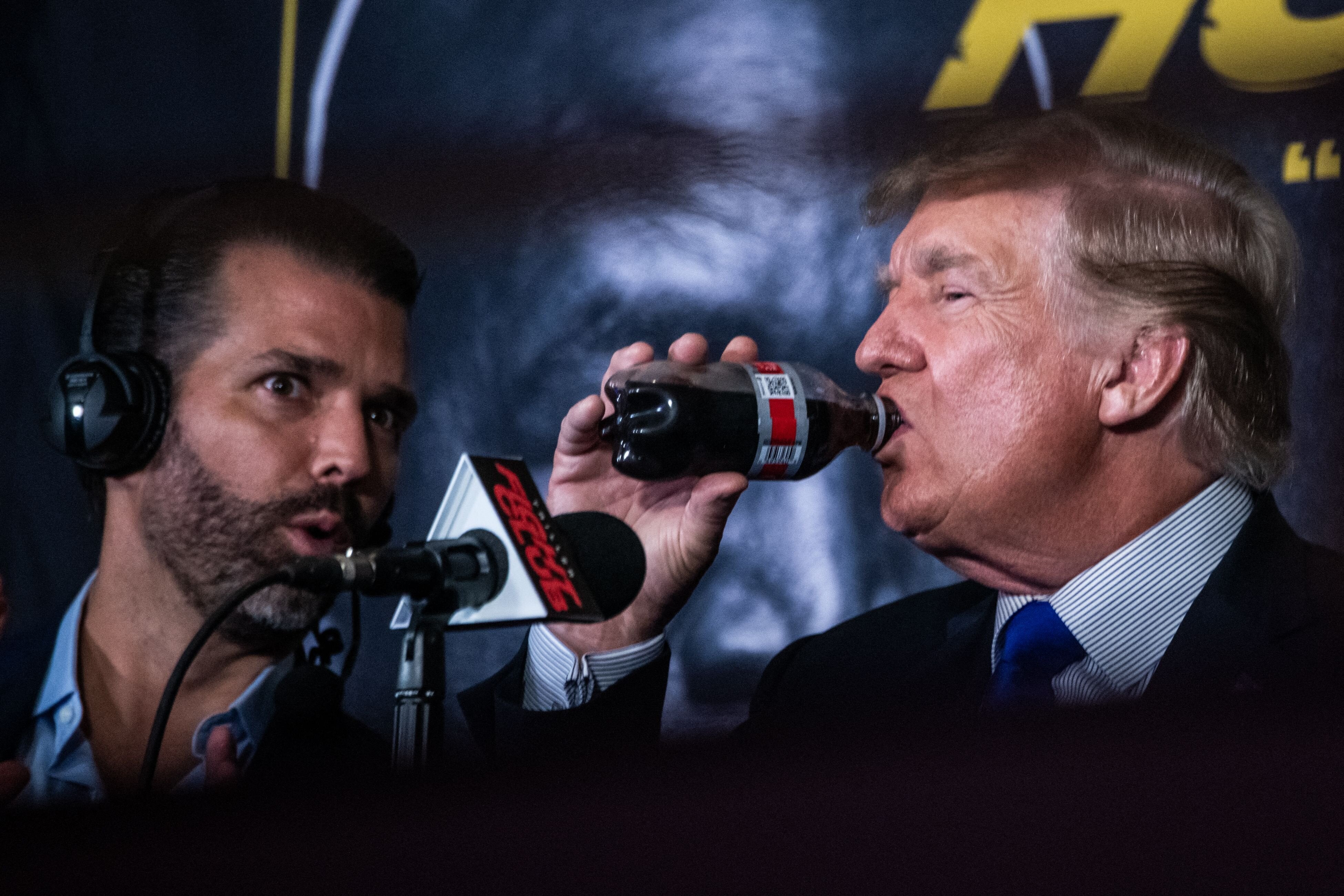
President Donald Trump drinks a soda as he hosts the Holyfield vs Belford boxing match live in 2021, next to his son Donald Trump Jr.

CHANDAN KHANNA via Getty Images

“I’m not even going to argue this right now,” Oz continued.

Oz then shared an anecdote of walking in on Trump drinking an orange Fanta on Air Force One, where he again repeated the theory.

“He’s got a Fanta on the desk and I say, ‘Are you kidding me?’ So he starts to sheepishly grin, he goes, ‘You know, this stuff’s good for me, it kills cancer cells.’”

The Memorial Sloan Kettering Cancer Center declined to comment.

Subscribe to Commons People, the podcast that makes politics easy. Every week, Kevin Schofield and Kate Nicholson unpack the week’s biggest stories to keep you informed. Join us for straightforward analysis of what’s going on at Westminster.

Share Button

Open Is Now Open

Open

Registration for Open is now live at StevePavlina.com/Open.

This is a new, in-person, 3-day experience we’re hosting April 28–30, 2026 in Las Vegas. I’ve been sharing about this for the past few weeks, and now the doors are open, so you can see the full details and sign up if you feel called to join us.

Open isn’t a content-based experience. It’s a shared inner journey focused on harmonizing your relationship with yourself and with Life.

Open is in-person only – not recorded or streamed. We’re prioritizing intimacy.

Registration just opened, and the event begins in two weeks, so this is a short window. The reasons why are shared in the full invitation:

StevePavlina.com/Open

Take a look and see if Open calls to you. It’s unique.

❤️

Share Button

Don’t feel like exercising? Maybe it’s the wrong time of day for you

Time your workout to your body clock, health researchers advise based on latest evidence.

Share Button

Palantir defends its record as MPs demand more scrutiny of data use

NHS guidance that all hospitals should be using Palantir software from this month has sparked a backlash.

Share Button

Single-sex space guidance for organisations to be published after May elections

Equalities minister Bridget Phillipson says election rules mean a new draft cannot be published until next month.

Share Button