How To Handle A Conversational Narcissist

A healthy conversation has a natural rhythm, a give-and-take in which both people feel heard, understood and valued. But with some people, that balance never quite happens.

That’s the case with what experts call “conversational narcissism.”

“Conversational narcissism is a communication style wherein an individual centres themselves in conversations, engages in oneupmanship, fails to ask follow-up questions and has a difficult time maintaining interest in what other people have to say,” Natalie Moore, a licensed marriage and family therapist, told HuffPost.

A conversational narcissist can leave you feeling drained and like you couldn’t get a word in edgewise. They tend to be inattentive and lack curiosity.

“Whatever you share is quickly met with a more extreme or more compelling version of their own experience,” said Tracy Ross, a licensed clinical social worker specializing in couples and family therapy. “Over time, the conversation stops feeling like an exchange and starts to feel one-sided. It results in leaving an interaction feeling unsatisfied and empty.”

Conversational narcissists don’t necessarily have narcissistic personality disorder, though some may fall somewhere on the narcissism spectrum.

“It’s also important to note that many of us have been guilty of conversational narcissism from time to time,” said Lauren Maher, a licensed marriage and family therapist specializing in anxiety, trauma and narcissistic abuse recovery. “If you notice that you’ve inadvertently done this, take a breath, make sure that you bring the conversation back to the original speaker and follow up by asking them questions about their experience.”

There are also best practices for those who find themselves interacting with a conversational narcissist. Below, experts break down ways you can navigate these situations while protecting your energy and reclaiming your voice.

Acknowledge your feelings ― but try not to take it personally.

“First, acknowledge any feelings that are arising for you ― such as frustration, indignation, anger, disappointment or loneliness,” Moore said. “Engaging in an interaction with someone who is a conversational narcissist can bring up lots of intense feelings, especially if you’re someone who spends effort maintaining balance in conversations who values reciprocity in relationships.”

If I’m grabbing lunch with a friend who tends to over-talk, I might say right at the start, ‘I’ve had such a heavy week and I really need to vent for a few minutes ― is it OK if I go first?’

– Dr. Sue Varma, clinical assistant professor of psychiatry at New York University Grossman School of Medicine

Try not to take someone’s conversational narcissism too personally.

“Know that what you’re experiencing has nothing to do with how interesting or valuable you are, but has more to do with the other person’s ability to take an interest in you,” Moore said.

Consider that a conversational narcissist might also be a kind and generous person in other ways.

“Look at the overall, bigger consistent picture,” said Dr. Sue Varma, a clinical assistant professor of psychiatry at New York University Grossman School of Medicine and author of “Practical Optimism: The Art, Science, and Practice of Exceptional Well-Being.”

“Is the person able to celebrate your wins and be happy for you and be there for you in your time of need? That to me is most important. If they are a true, solid, loyal friend, you can and should give them grace.”

Be direct about what you need.

“Keep in mind what your objective is in your communications with this individual,” Moore advised. “If your goal is to be seen, heard and understood, you will probably be frustrated and not get what you want. But if your goal is to communicate something specific, find a pause or an opportunity to interrupt and get straight to the point.”

Take a more efficient, practical approach. Adding a little structure to your conversation can ensure you achieve your goal. Being clear and direct about what you need is crucial.

“Set the intention,” Varma said. “If I’m grabbing lunch with a friend who tends to over-talk, I might say right at the start, ‘I’ve had such a heavy week and I really need to vent for a few minutes ― is it OK if I go first?’”

Set limits.

“Protect your peace and walk away if the conversation doesn’t become two-sided or beneficial in any way,” said communications consultant and author Amelia Reigstad.

Setting limits around how much you engage and share can help keep intense emotions at bay.

“If you find that a person is not willing to take accountability for their behaviour, or you feel drained, resentful or even a bit ‘used’ after conversations with this person, then this may be a sign that you need to set much stronger boundaries with this person,” Maher said. “This may include excusing yourself from the conversation or setting a time limit for yourself on how long you will participate in the conversation.”

Dealing with a conversational narcissist requires direct communication and boundaries.

Fiordaliso via Getty Images

Dealing with a conversational narcissist requires direct communication and boundaries.

If the conversational narcissist in question is also a fundamentally narcissistic person, you’re better off saving your energy than continuing to engage with them or falling under their control.

“Don’t ‘over-fuel,’” Varma said. “Sometimes, being a ‘great listener’ actually encourages the behaviour. If you’re giving 100% of your focus to someone who isn’t giving it back, it’s OK to lean back, give shorter responses, and politely wrap things up when you’ve hit your limit.”

Adjust your expectations.

“If the pattern continues, it’s also important to adjust your expectations and protect your own energy,” Ross said. “Not every relationship will offer the kind of mutuality you’re looking for, and recognising that can help you engage more intentionally, rather than leaving interactions feeling depleted.”

Come to terms with what the a conversational narcissist can actually provide.

“Manage your expectations,” said therapist and “Disarming The Narcissist” author Wendy Behary. “You’re not going to get a whole lot back in the way of a real, reciprocal conversation ― the real give and take of ‘I see you, I feel you. I sense you. You see me, you feel me. You sense me.’”

Practice empathic confrontation.

“I think if it’s someone who’s really intimate in your life, you may want to use the beautiful strategy of empathic confrontation,” Behary said. “Say, ’I know you’re very excited about what you want to share with me, but I have to tell you, I’m feeling a little bit forgotten in what I just shared with you. I feel like we moved very quickly from my experience into your experience, and I just want to be honest with you because you’re my dear friend, or because you’re my husband or whoever.”

With an acquaintance, you might choose to simply set limits or avoid them, but a more direct approach could be preferable for someone with whom you’re more intimately involved.

“Empathically confront them and hold them accountable for this very self-absorbed way of communicating,” Behary said.

Use gentle pivots to redirect the conversation.

“I’m a big fan of the ‘gentle pivot,’” Varma said. “You can say, ‘I love hearing about your trip, but before we move on, I really wanted to finish telling you about my new project.’ Believe it or not, the other person may genuinely be interested in hearing what you have to say and want to know what you’ve been up to.”

A person who is not narcissistic will usually reflect on their behavior, take accountability, and try to make more space for you in future conversations.

– Lauren Maher, licensed marriage and family therapist

You can “reclaim the ball,” so to speak, in a way that still protects your energy.

“Re-direct the conversation back to you ― ‘Thanks for that, great point, however, I’d love to share my perspective,’” Reigstad said.

Humour is another way to get a word in edgewise. Make a playful comment or joke to ease the tension of this dynamic.

“If you find yourself regularly interacting with a conversational narcissist, you can first try lightly interjecting with something along the lines of ‘Hang on… I’d love to finish that thought,’” Maher said.

Talk about their conversational narcissism.

“If this type of behaviour is coming from a lack of awareness or habit, then gently bringing this behaviour to their attention could shift the pattern,” said Chelsey Brooke Cole, psychotherapist and author of “If Only I’d Known! How to Outsmart Narcissists, Set Guilt-Free Boundaries, and Create Unshakeable Self-Worth.”

“You can start by saying things like, ‘I’d like to talk about something else for a while,’ ‘Our conversations are starting to feel very unbalanced,’ or ‘I feel like when I’m speaking you’re not really listening. Can we talk about that?’”

With time and accountability, the habit of conversational narcissism can shift.

“A person who is not narcissistic will usually reflect on their behaviour, take accountability, and try to make more space for you in future conversations,” Maher said.

The key is to be honest about your feelings and the patterns you’re noticing, but in a relational way.

“Rather than criticising, speak from your own experience,” Ross said. “‘I notice that when I share something important, I feel more supported when you stay with what I’m saying, rather than shifting to your own experience.’ Being clear about what you need ― more listening, more presence ― can sometimes create an opening for change, especially if the person isn’t aware of how they come across.”

Share Button

What is vegan collagen?

What’s the latest on Collagen?

Share Button

‘We will end up with an NHS without doctors’

Dr Melissa Ryan, who works at Lincoln County Hospital, is among the doctors striking over pay.

Share Button

3D heart to let surgeons practise baby’s vital heart operation

A 3D model of a baby’s heart will help doctors prepare for open heart surgery.

Share Button

Women in Northern Ireland welcome introduction of miscarriage leave

Northern Ireland has become the first part of the UK where a woman and her partner are entitled to two weeks of paid leave if they experience a miscarriage at any stage of pregnancy.

Share Button

Your vitamin D levels in midlife could shape your brain decades later

People with higher levels of vitamin D in midlife may have lower levels of tau protein in the brain years later, according to a study published April 1, 2026, in Neurology Open Access, an official journal of the American Academy of Neurology. Tau is a protein closely linked to dementia.

The researchers note that the findings show a relationship, not proof that vitamin D directly reduces tau levels or lowers the risk of dementia.

“These results suggests that higher vitamin D levels in midlife may offer protection against developing these tau deposits in the brain and that low vitamin D levels could potentially be a risk factor that could be modified and treated to reduce the risk of dementia,” said study author Martin David Mulligan, MB BCh BAO, of the University of Galway in Ireland. “Of course, these results need to be further tested with additional studies.”

Long-Term Study Tracks Vitamin D and Brain Biomarkers

The study followed 793 adults who were an average of 39 years old and free of dementia at the beginning. Researchers measured each participant’s blood vitamin D level at the start of the study.

About 16 years later, participants underwent brain scans to evaluate levels of tau and amyloid beta proteins, both of which are considered biomarkers of Alzheimer’s disease. A vitamin D level above 30 nanograms per milliliter (ng/mL) was classified as high, while levels below that threshold were considered low.

Overall, 34% of participants had low vitamin D levels, and only 5% reported taking vitamin D supplements.

Higher Vitamin D Linked to Lower Tau Protein

After accounting for factors such as age, sex and symptoms of depression, the researchers found that higher vitamin D levels were associated with lower levels of tau protein years later.

However, vitamin D levels were not linked to the amount of amyloid beta protein in the brain.

“These results are promising, as they suggest an association between higher Vitamin D levels in early middle-age and lower tau burden on average 16 years later,” Mulligan said. “Mid-life is a time where risk factor modification can have a greater impact.”

Study Limitations and Need for Further Research

One limitation of the study is that vitamin D levels were measured only once rather than tracked over time.

Highlights:

  • People with higher vitamin D levels in midlife had lower levels of tau protein later on, a key marker linked to Alzheimer’s disease
  • The study shows a link, but it does not prove that vitamin D directly reduces dementia risk
  • Researchers found no connection between vitamin D levels and amyloid beta, another Alzheimer’s biomarker
  • Further research is needed to confirm these findings and better understand the role of vitamin D in brain health

The study was supported by the National Institute on Aging, National Institute of Neurological Disorders and Stroke, Irish Research Council and Health Research Board of Ireland.

Share Button

Disruption expected as six-day doctors’ strike begins

The NHS is advising patients in England to only use emergency services when necessary but attend any confirmed appointments.

Share Button

Trump’s Iran Escalation Would Increase Death And Chaos Across The Middle East

The economic pain at home and civilian death in the Middle East wrought by President Donald Trump’s war on Iran could hit new levels in the coming days if he follows through on an oft-repeated threat to destroy Iran’s entire electrical infrastructure.

Trump says an attack, which would almost certainly be a war crime, will come if Iran does not agree to a “deal” by Tuesday night. That country’s leaders will likely hit back in kind against Gulf states that are helping the United States, according to military and Iran experts.

“Iran’s only retaliatory capability is to target America’s immediate allies in the Gulf, and Israel, if possible,” said Ray Takeyh of the Council on Foreign Relations.

Iran has, since the war began, struck military targets used by US forces in Kuwait, the United Arab Emirates, Bahrain, Qatar and Saudi Arabia. It has also targeted civilian infrastructure, but attacks on its own civilian infrastructure are likely to prompt further escalation. One especially life-threatening possibility is attacks on the Gulf states’ water desalination plants, which are even more critical to those predominantly desert countries than the ones in Iran.

“Iran has already demonstrated both its willingness and ability to retaliate in kind should the US and Israel escalate strikes on Iranian civilian infrastructure,” said Mona Yacoubian, an analyst with the Center for Strategic and International Studies.

“Bahrain and the UAE are among the likely countries to be hit. Israeli targets may prove more challenging, but Iran will certainly attempt to lash out at Israel as well.”

Such retaliation would dramatically increase the human suffering Trump’s war has already brought to the region, particularly if the damage to desalination plants reduces critical drinking water supply for residents.

Thirteen US service members have died in the war, with hundreds more injured. US and Israeli strikes in Iran have also killed at least 1,500 civilians, according to a human-rights group, including 175 at a girls school in the first hours of the attack.

Iran is also likely to hit more oil production and distribution facilities in the region, which could further inflame the world’s oil market. Crude oil prices have increased about 50% since Trump launched the war, with petrol prices up more than a dollar a gallon in America.

Industry executive Matt Randolph, though, points out that it could get even worse if Iran, with its Houthi allies in Yemen, chooses to close the entrance to the Red Sea as it has already done at Hormuz, the entrance to the Persian Gulf.

“If the response by Iran is to close the Bab el-Mandeb Strait, and I believe they will, then oil prices jump a lot,” he said. “They did it briefly in 2024 just for fun. Just to see if they could.”

The Houthis attacked commercial shipping that year in retaliation for Israel’s total war approach in Gaza that wound up killing many tens of thousands of civilians there. Red Sea traffic was reduced dramatically for a period.

These possibilities did not appear to concern Trump on Monday. Speaking to reporters at the annual White House Easter Egg Roll, he said Iran was not ready to accede to his demands to end the war.

“They just don’t want to say ‘uncle.’ They don’t want to cry, as the expression goes, ‘uncle,’ but they will. And if they don’t, they’ll have no bridges, they’ll have no power plants, they’ll have no anything. I won’t ― I won’t go further, because there are other things that are worse than those two,” he said.

Hours later at a White House news conference he called to celebrate the recovery of two Air Force crew members whose F-15 fighter plane was shot down in Iran late last week, Trump repeated that his deadline for Iran to capitulate was just over a day away.

“We’re giving them till tomorrow, eight o’clock eastern time, and after that they’re going to have no bridges, they’re going to have no power plants. Stone Ages. Yeah, Stone Ages,” he said.

Asked whether that level of destruction would not necessarily harm civilians, Trump claimed that everyday Iranians want to be attacked.

“They would be willing to ― they would be willing ― and it’s suffering. They would be willing to suffer that in order to have freedom. The Iranians have ― and we’ve had numerous intercepts: ‘Please keep bombing,’ bombs that are dropping near their homes, ‘Please keep bombing, do it.’ And these are people that are living where the bombs are exploding,” he said. “And when we leave and we’re not hitting those areas, they’re saying, ‘Please come back, come back, come back.’ These are the people.”

What precisely he wants from Iran, however, remains unclear. On several occasions since he began his air attack on February 28, Trump demanded regime change in Iran, but on Monday he said the regime has already changed. He continues to insist that Iran cannot have a nuclear weapon while also saying that their programme to make one was “obliterated” in last June’s attacks.

And on Monday, he would not even say that reopening the Strait of Hormuz to unfettered oil tanker traffic was an absolute must ― which was the subject of his Easter demand that Iran “Open the Fuckin’ Strait” – because Iran could effectively close the strait merely by claiming to have laid mines in it.

“They’re very good bullshit artists,” he said.

Trump also again refused to lay out what plan he has, if any, to conclude the war. “I have the best plan of all, but I’m not going to tell you what my plan is,” he said.

He also waxed poetic about an era when larger countries could steal natural resources from smaller ones — known as “pillaging” and defined as a war crime by the Geneva Conventions — and wished he could “take” Iran’s oil.

“I’ve said, why don’t we use it — ‘To the victor, go the spoils’ — and we don’t have that. We haven’t had that in this country probably in 100 years, because even the Second World War, you look at the Second World War, we didn’t have it with the Second World,” he said, before adding that he is good at languages and can probably get elected president of Venezuela after he leaves the White House.

Trump has not ruled out using troops for a ground assault, but has not assembled anywhere near the size of a force necessary to seize and hold Iran’s oil production infrastructure.

When asked specifically whether he was trying to wind the war down or ramp it up, Trump responded: “I can’t tell you. I don’t know.”

Subscribe to Commons People, the podcast that makes politics easy. Every week, Kevin Schofield and Kate Nicholson unpack the week’s biggest stories to keep you informed. Join us for straightforward analysis of what’s going on at Westminster.

Share Button

The Surprising Foods Paediatricians Let Their Kids Eat At Dinner

There are so many things happening in children’s lives that are outside of parents’ control, so it’s understandable that parents can go a little bonkers over issues they can control, like food.

Some mums and dads worry so much about “proper” nutrition that they can suck the fun right out of one of life’s greatest pleasures – eating what we love.

Paediatric emergency room physician Dr. Dina Kulik said sugar, carbohydrates and processed foods, for example, trigger far more fear than they deserve. “In realistic amounts, and within an overall balanced diet, they’re not the villains they’re often made out to be,” she said. “The stress and restriction around these foods can be more harmful than the foods themselves.”

Many paediatricians are parents themselves, and they often have a more relaxed attitude about what their kids eat than you might expect. Here are some of the surprising things that show up at their dinner tables:

Fast food

“We stop for fast food occasionally,” said Dr. Debra Langlois, a paediatrician at the University of Michigan Health C.S. Mott Children’s Hospital. “I’m a working parent; so when I get out of work late, and my children have an activity I need to get them to, they still have to eat. It’s important for all of us parents to remember that we’re doing the best we can. We need to give ourselves some grace as we strive to give children a healthy lifestyle that includes nutrition and physical activity.”

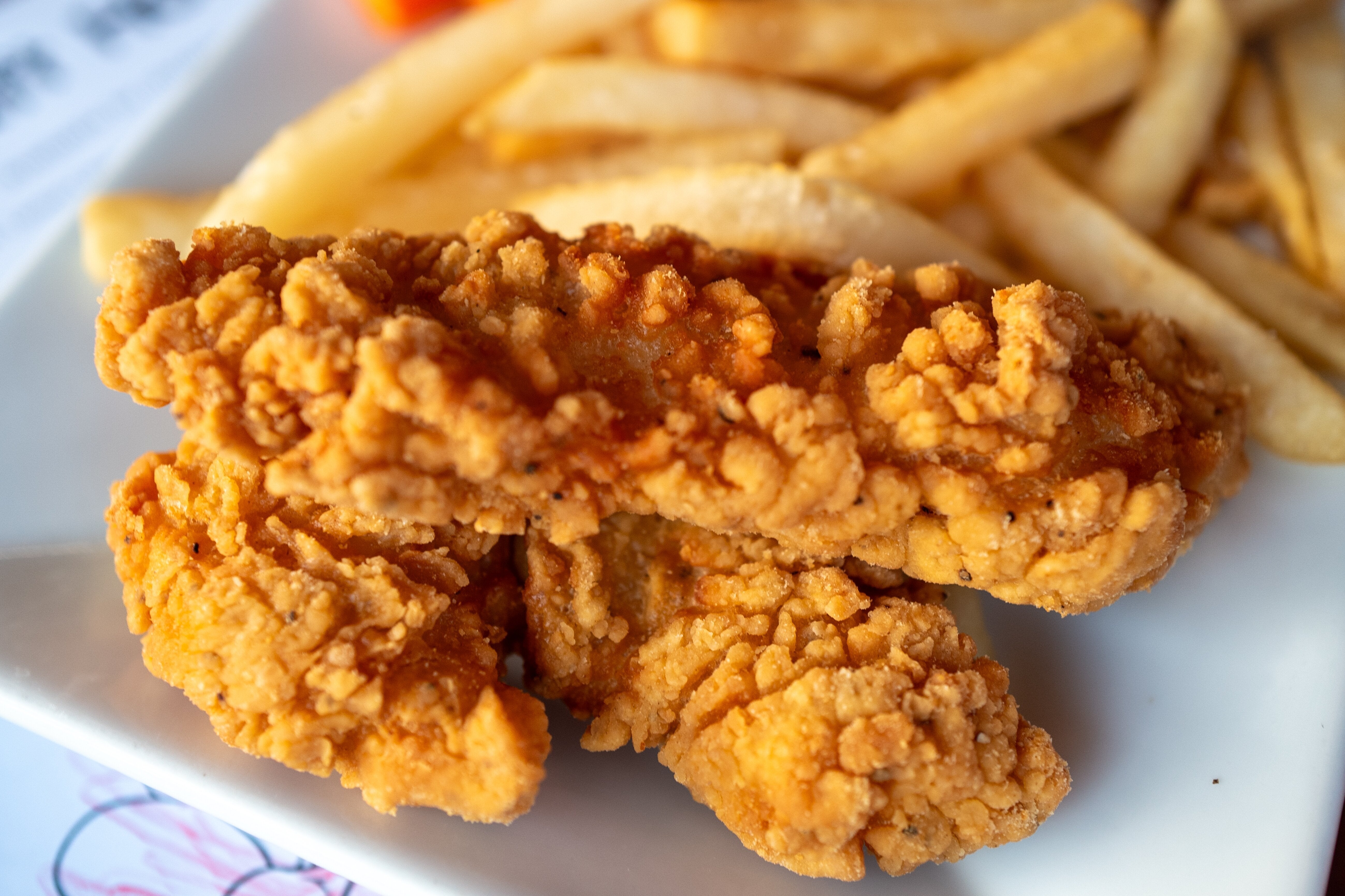
Chicken tenders

In a busy household, “some nights everyone just needs something quick and easy,” said Dr. Alicia Tucker, attending paediatrician at Children’s National’s obesity program called Improving Diet, Energy and Activity for Life (IDEAL).

“For us, chicken tenders fit the bill because they’re affordable, cook quickly and will always be eaten. I aim to balance this with easy, healthy sides that add some fibre and other nutrients, like putting them on top of a salad or serving them with apple slices or corn.”

“For us, chicken tenders fit the bill because they’re affordable, cook quickly and will always be eaten," said Dr. Alicia Tucker.

Smith Collection/Gado via Getty Images

“For us, chicken tenders fit the bill because they’re affordable, cook quickly and will always be eaten,” said Dr. Alicia Tucker.

French fries

“I do oven frying to use less oil, and I do use sweet potatoes sometimes,” said Dr. Tokunbo Akande, an integrative paediatrician. It’s a choice he feels just fine about: “A single food doesn’t determine a child’s health, so when the foundation is whole-food, plant-forward eating, occasional ‘fast foods’ don’t derail gut health, because the gut is more resilient.”

For Dr. Sara Hagan, a paediatrician at Oklahoma Children’s OU Health, frozen french fries are a welcome choice “on busy nights when we need something quick that our toddler will eat.” She went on to say that some parents worry unnecessarily about packaged foods and snacks. “While fresh foods are ideal, many packaged options contain added vitamins and nutrients that can support toddlers and picky eaters, and they can complement whole foods for a balanced diet.” Just remember that what your child eats isn’t a referendum on you, she said. “A child’s picky eating, preference for ‘treat’ foods or adventurous palate don’t reflect on a parent’s ability. The most important thing is raising a happy, healthy child.”

Crisps

“My kids get barbecue or vinegar-and-salt chips as an occasional snack,” said Dr. Anisha Abraham, chief of adolescent medicine at Children’s National Hospital.

“As a teen health specialist taking care of adolescents with eating disorders, I know that strictly controlling what kids eat may increase anxiety around eating, lead to sneaking food, or contribute to disordered eating patterns later in life. Kids benefit from structure, including regular meals and snacks, but they also need independence and trust so they can develop healthy patterns as they become young adults.”

The crunchy treat also gets a nod from Dr. Adolfo Flores, a paediatrician at Children’s Health Dallas. “I have a 19-month-old, and she’ll occasionally enjoy some potato chips,” he said. “Although the amount of sodium and carbohydrates may give pause, it’s important that my daughter understands that a healthy diet looks like a diverse selection of foods, and that includes things like chips on occasion.”

Dessert

Registered dietitian Katherine Shary leads paediatric obesity prevention efforts at Children’s Healthcare of Atlanta. “I let my kids have dessert with dinner a couple times per week,” she said. “That includes ice cream, cake, brownies, cookies or popsicles.” She offered a smart approach to offering sweets. “If your child asks for brownies, you might say, ‘Sure, we can have brownies with dinner,’ and then serve one brownie to each person. If they ask for more, you can respond with: ‘That’s all the brownies we have for this meal, but if you’re still hungry, there’s plenty of other food on the table.’ This sets a clear boundary without shame or making dessert feel off-limits.”

An easily portioned dessert, like a brownie square, makes it easier to set limits.

Lindsay Upson via Getty Images

An easily portioned dessert, like a brownie square, makes it easier to set limits.

“Peanut butter chocolate ice cream is my son’s favourite sweet treat,” said Dr. Paulina Tran, a paediatrician and associate program director in the allergy and immunology department of paediatrics at Los Angeles Medical Center. “As an allergist, I’m very aware that peanut is a top allergen. We know from strong evidence that early and regular exposure to allergens like peanuts can help prevent food allergies in many children. Since I know my child can safely eat peanuts, I’m supportive of him enjoying chocolate peanut butter ice cream as part of maintaining that regular exposure.”

Soda

“I do allow my kids, who are school-aged, to drink soda when we’re on vacation or celebrating birthdays,” said Dr. Rebecca Carter, a paediatrician at the University of Maryland Golisano Children’s Hospital and an associate professor at the University of Maryland School of Medicine. “As parents, we feel that treating soda as a once-in-a-while treat is a fair compromise, so that foods don’t feel fully off-limits or forbidden.”

Remember your kids are watching what you do

Tucker noted, “Research consistently shows that parental modelling of healthy eating behaviours has a huge impact on a child’s developing relationship with food. When kids see their parents eating a variety of foods, they’re more likely to do so as well.”

She had some practical tips for being a good food role model: “Put cucumber sticks or other crunchy veggies on the table for a pre-dinner snack while you’re cooking, and over time your kids are likely to pick up on the habit, too. And if you’re craving a cookie after dinner, remember to avoid comments about weight or body image or only getting to eat it because you exercised. Just let everyone take a cookie together and enjoy the evening.”

The biggest takeaway from the paediatricians we spoke with is that you set the tone around food, and it should be one of pleasure, enjoyment and nourishment.

“Most parents restrict treats because they care deeply about their kids’ growth and development – and that comes from a loving place,” Shary said. “If you’ve been using dessert only as a reward or bribe, you haven’t failed – you were doing what you thought was best. You can always try something new, like offering a small dessert with a meal or snack without strings attached. When dessert is treated as simply another food, kids build a healthier, more positive relationship with eating that can benefit them for life.”

Finally, remember the vibe at the dinner table can be so much more important than what’s being served. “Creating a positive mealtime environment where kids feel safe, heard and included often matters just as much as what’s on their plate,” Abraham said.

“Gut health is as much emotional as it is nutritional,” Akande reminded parents. “When we remove shame and pressure from eating, we support the nervous system and kids digest better. The most ‘integrative’ thing we can offer is a relaxed, joyful relationship with food.

Share Button

Scientists found a “lost world” of animals that shouldn’t exist yet

A newly identified fossil site in southwest China is changing scientists’ understanding of how complex animal life first developed on Earth. The discovery shows that many major animal groups were already present before the Cambrian Period began. The research was led by teams from Oxford University’s Museum of Natural History and Department of Earth Sciences, along with Yunnan University in China, and was published on April 2 in Science.

For years, scientists believed that the rapid rise of diverse and complex animals, known as the Cambrian explosion, began around 535 million years ago. This period marked a dramatic shift from simple organisms to a wide variety of more advanced life forms. The new study now indicates that this transformation started at least 4 million years earlier, during the late Ediacaran period.

Lead author Dr. Gaorong Li (Yunnan University at the time of the study, now Museum of Natural History, Oxford University), said: “Our discovery closes a major gap in the earliest phases of animal diversification. For the first time, we demonstrate that many complex animals, normally only found in the Cambrian, were present in the Ediacaran period, meaning that they evolved much earlier than previously demonstrated by fossil evidence.”

Jiangchuan Biota Fossils Show Early Animal Diversity

The fossils were uncovered in the Jiangchuan[1] Biota in Yunnan Province, where researchers collected more than 700 specimens dating from 554 to 539 million years ago. This site reveals a rich and varied Ediacaran ecosystem, including previously unknown species as well as animals once thought to appear only later in the Cambrian.

Among the most important findings are fossils believed to be the oldest known relatives of deuterostomes, a major group that includes vertebrates such as humans and fish. These discoveries extend the fossil record of this group back into the Ediacaran Period for the first time.

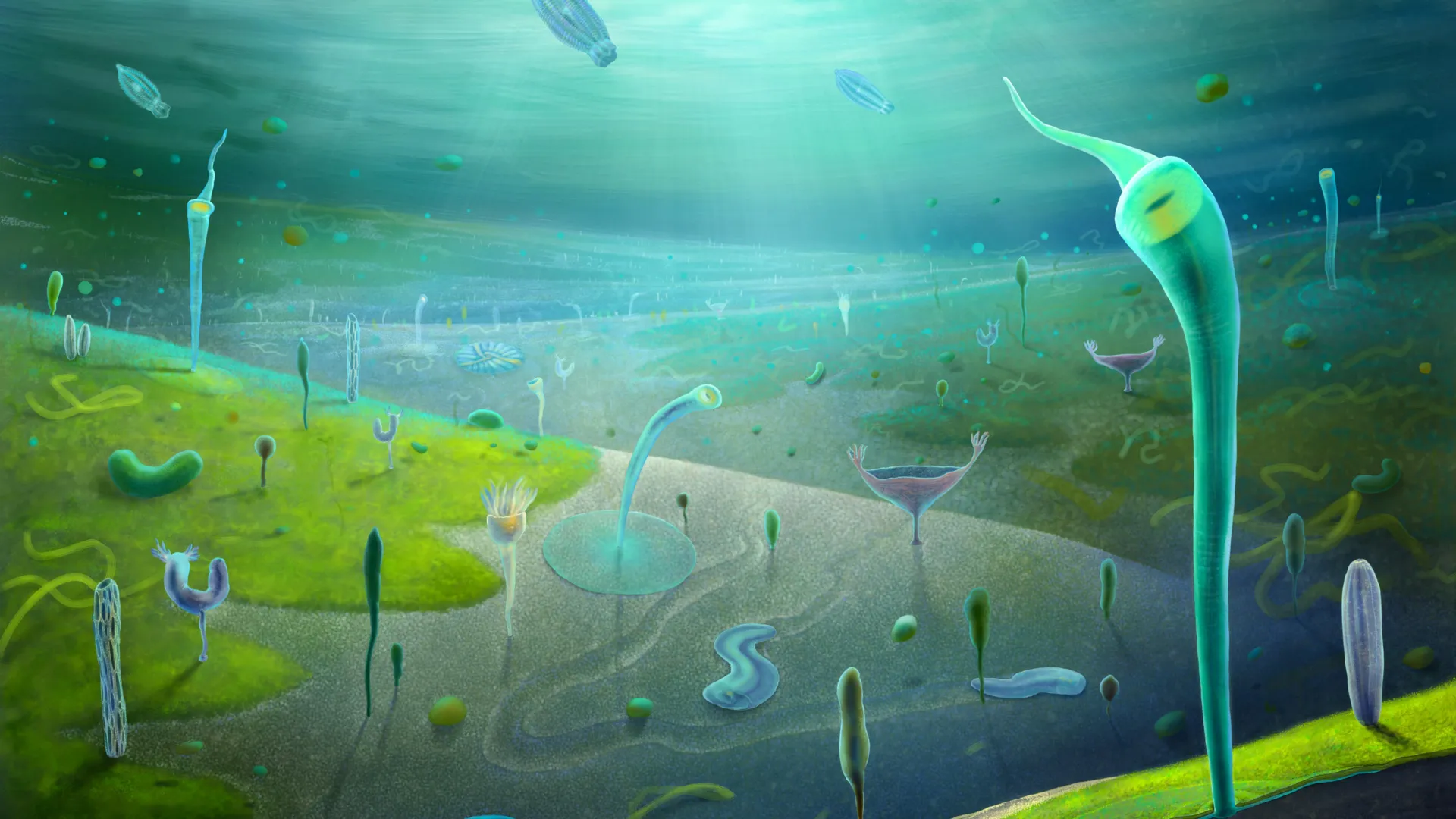
The collection also includes early relatives of starfish and their close counterparts, the acorn worms (the Ambulacraria[2]). These organisms had U-shaped bodies and were anchored to the seafloor by a stalk. Tentacles near their heads were likely used to capture food.

Co-author Dr. Frankie Dunn (Museum of Natural History, Oxford University) said: “The presence of these ambulacrarians in the Ediacaran period is really exciting. We have already found fossils which are distant relatives of starfish and sea cucumbers and are looking for more. The discovery of ambulacrarian fossils in the Jiangchuan biota also means that the chordates — animals with a backbone — must also have existed at this time.”

Strange Creatures and Transitional Ecosystems

Other fossils include worm-like bilaterian animals (having bilateral symmetry), some showing complex feeding strategies, along with rare specimens thought to represent early comb jellies.

Many of the fossils display unusual combinations of features, such as tentacles, stalks, attachment discs, and feeding structures that could be turned inside out. These combinations do not match any known species from either the Ediacaran or Cambrian periods. “For instance, one specimen looks a lot like the sand worm from Dune!” Dr. Dunn added.

Co-author Associate Professor Luke Parry (Department of Earth Sciences, Oxford University) added: “This discovery is extremely exciting because it reveals a transitional community: the weird world of the Ediacaran giving way to the Cambrian, the following time period where the animals are much easier to place in groups that are alive today. When we first saw these specimens, it was clear that this was something totally unique and unexpected.”

Solving a Long-Standing Evolution Mystery

The findings help answer a long-standing question in evolutionary biology. Previous genetic studies and fossil traces suggested that many animal lineages existed before the Cambrian explosion. However, clear fossil evidence from this earlier period had been largely missing until now.

Exceptional Preservation Reveals Hidden Details

Unlike most Ediacaran fossil sites, which preserve organisms as simple impressions in sandstone, the Jiangchuan Biota fossils are preserved as carbonaceous films. This type of preservation is more commonly associated with famous Cambrian fossil sites such as the Burgess Shale in Canada. It allows scientists to see fine details, including feeding structures, digestive systems, and organs related to movement.

Co-author Associate Professor Ross Anderson (Museum of Natural History, Oxford University) said: “Our results indicate that the apparent absence of these complex animal groups from other Ediacaran sites may reflect differences in preservation rather than true biological absence. Carbonaceous compressions like those at Jiangchuan are rare in rocks of this age, meaning that similar communities may simply not have been preserved elsewhere.”

Years of Fieldwork Lead to Breakthrough Discovery

The fossils were found by a research team at Yunnan University, led by Professor Peiyun Cong and Associate Professor Fan Wei. The group spent nearly a decade searching for diverse Ediacaran animal fossils. Although fossils had previously been discovered in eastern Yunnan, they were limited to algae and did not include animal remains.

Associate Professor Fan said: “After years of fieldwork, we finally found several sites with the right conditions where animal fossils are preserved together with the abundant algae.”

Professor Feng Tang from the Chinese Academy of Geological Science, Beijing, whose earlier work helped guide the research, said: “The new fossils provide the most compelling evidence for the presence of diverse bilaterian animals at the end of the Ediacaran, evidence people have searched for across decades.”

Notes

  1. Pronounced ‘jing-choo-an.’
  2. Ambulacraria, from the latin ambulacrum, meaning “a walk planted with trees.”
Share Button