Still believe the myth that only animal products can give you food poisoning? Consumer Reports released the top 10 foods linked to outbreaks and recalls between 2017 and 2022 and the results included meat, vegetables, fruits and even flour…!
Brian Renholm, the director of food policy at Consumer Reports was keen to point out that these foods shouldn’t be avoided, ‘these foods are all usually safe and many of them are important parts of a healthy diet’.
Advertisement
Instead, he says, the research underscores ‘the importance of following best food safety practices with all of your foods, including knowing how to track, and respond, to food recalls when they happen.’
Something that our parents once had to beg us to eat a few mouthfuls of was one of the most recalled foods over the five year period. Outbreaks were linked to romaine lettuce and bagged salads and, in fact, these caused more deaths than any other food category over the past five years.
This is likely due to water contamination from the water used to irrigate lettuce fields. If manure from a nearby field lot gets into the irrigation system, the bacteria from animal faeces may get into your salad. Lovely.
Advertisement
This is likely also because people tend to eat leafy greens raw and don’t re-wash bagged salad.
Consumer Reports recommended buying whole heads of lettuce and removing the outer leaves before eating or, alternatively, cook kale, collard greens or swiss chard instead of eating your greens raw.
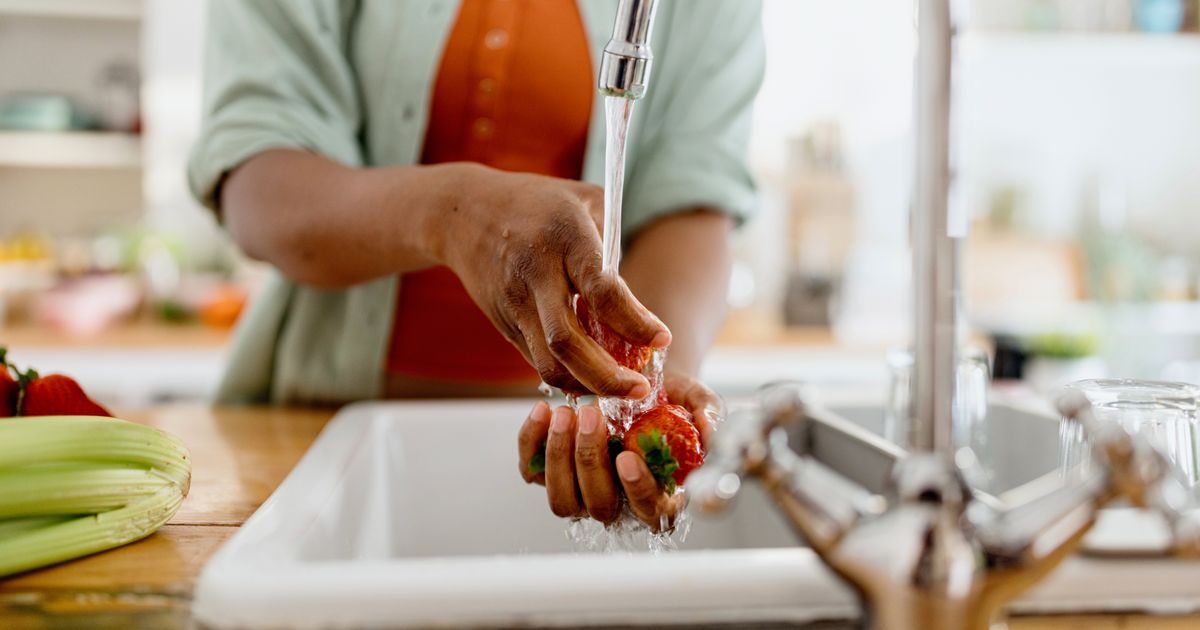

Another food that you would assume would be a safe bet for eating, peaches actually face the same contamination route to that of leafy greens, according to Consumer Reports. To avoid any illness from peaches, make sure that you wash them before consuming to remove any potentially harmful bacteria.
Cheeses and Deli Meats
Many cheese and deli meats such as salami, ham, and sausage as well as soft cheese such as brie have been recalled due to contamination with listeria. Unlike many other bacterias, listeria can survive the cold temperatures of fridges and just one small part of the meat being touches with contaminated hands can leave the entire deli counter being contaminated.
According to the FDA, 90% of people infected with listeria are hospitalised and it can lead to miscarriages and stillbirths in pregnant people.
If you are pregnant or at high-risk of infection, avoid deli meats and cheese and instead stick to pre-packaged goods.
Advertisement
Ground Beef
Packaged ground beef was found to contain strains of E.coli and salmonella.
Salmonella is the more common of the bacterias but some strains of E.coli can be so dangerous that the food is recalled before anybody even gets sick.
Make sure that you’re following the Food Standard Agency’s alerts for any recalls.
Perhaps the least surprising entry on this list, chicken is a common cause of food poisoning. Make sure that whenever you are cooking chicken, you follow the package instructions properly and that the chicken is fully cooked (no pink!) before consuming.
Infecting 62 people in the United States over a 5 year period, papaya is one of the lower risk foods on this list but for any fruit and vegetables, it’s important to remember to wash them before consuming, you never know who has handled them in shops!
An outbreak of salmonella was tied to raw flour, making 12 people unwell. Most of them ate raw dough or batter before they became ill.
While it might be tempting to lick the last of the cake batter off the bowel or spoon, even a small amount of uncooked dough is enough to make you unwell, the CDC reports. Raw flour is an ingredient that must be oven or microwave heated before eating.
Advertisement
Due to being cut into cubes or balls before eating, melons are at a higher risk of contamination as the cutting can spread bacteria from surface to flesh.
It’s better to cut your own fruit at home and, before doing so, make sure you wash the skin first to reduce the risks of spreading bacteria.
If you need pre-packaged fruit, make sure it’s washed thoroughly once you get it home.
Poultry is more susceptible to salmonella, in part because of the long process of workers removing feathers from chickens and turkeys.
A total of 398 people reported getting sick from turkey between 2017 and 2022, according to Consumer Reports.
The good news is, nobody has died from eating a contaminated onion. The bad news is, the vegetable has caused 2,167 to fall ill in the past five years. However, this was mostly during two large recalls of onions in 2020 and 2021, which were thought to be irrigated with bacteria-laden water in the US. So it is a very small risk that they’ll make you unwell.
Advertisement
If you’re still worried, rather than washing onions, which can cause them to rot faster, follow product recalls and don’t eat them raw.
What’s a successful St Patrick’s Day without an Irish Coffee? But if we’re not planning on going out out tonight, how do we recreate the iconic drink for ourselves at home?
Fortunately we’ve got Ross Creed (who just so happens to be Irish) from Cairngorm Coffee to give us the lowdown.
How To Make An Irish Coffee
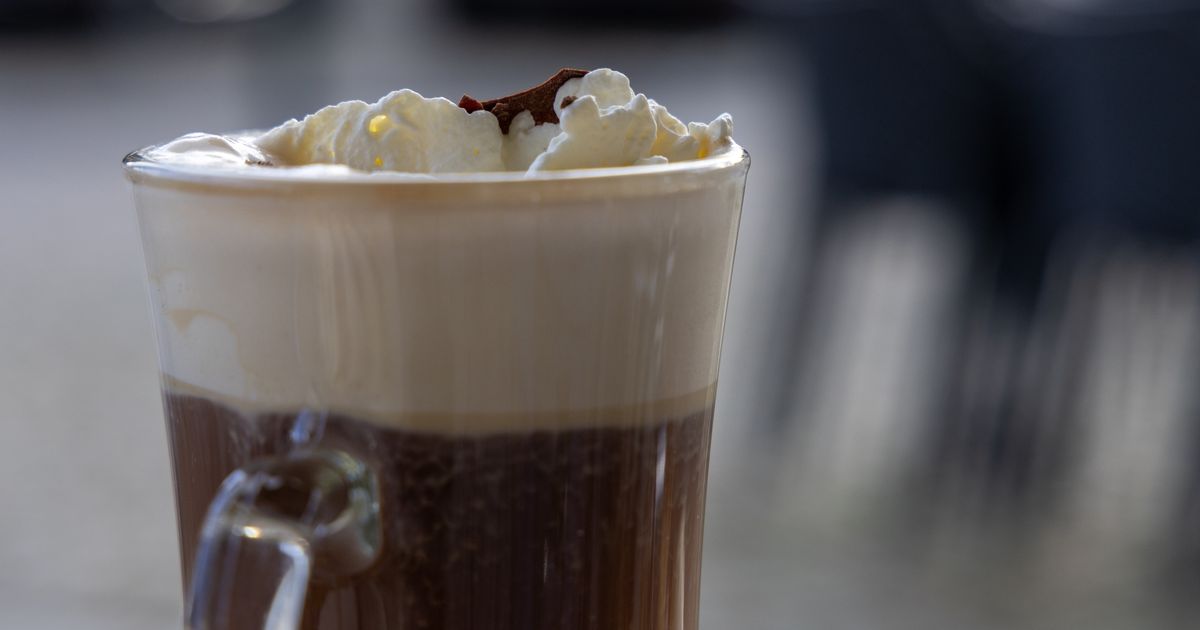
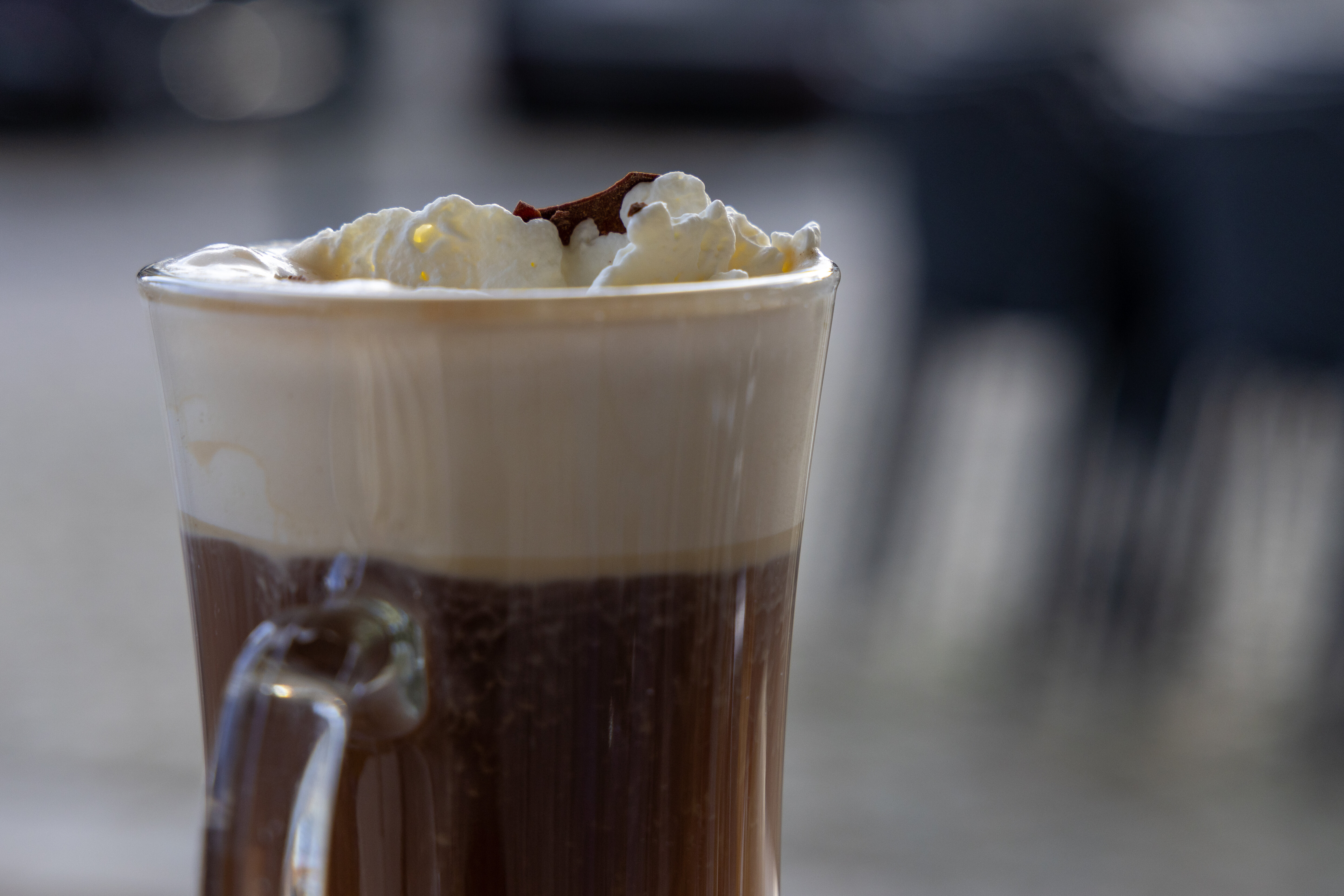
First make some coffee using your French Press. We need about 150ml per cup, but let’s make enough for a couple. Weigh out 30g of coffee and put in your French Press with 500ml of off boiling water.
We recommend using something with a good body, like any of Cairngorm Coffee’s green coffee (currently La Esperanza) or even our Guilty Pleasure House Blend which should have enough chocolatey notes to cut through the whisky.
Wait 5 minutes after pouring and then give it a good ol’ plunge before pouring.
With some hot coffee in your cup, slip in however much whisky you think is responsible and necessary – I’d suggest 50ml of Jameson’s finest, alongside a couple of spoons of Demerara Sugar and stir to dissolve/mix.
Next whip up some double cream and float it over the top to create a fluffy hat which makes your top lip look cool when you take a sip. If you’re late for the party you can always just spray some squirty cream over it which I sometimes like to do.
There you have it, a caffeinated hair of the dog/warm up act for St Patrick’s Day – have a good one.
Warning: Discussion of restrictive eating and eating disorders.
In a shock to absolutely no one, Gwyneth Paltrow has been talking about her batshit diet once again and nutritionists and doctors alike are warning from copying any of her habits.
Gwyneth discussed her daily ‘wellness’ routine (to use the word incredibl loosely) on The Art of Being Well podcast with Dr. Will Cole and a clip from it has seriously begun to do the rounds on TikTok.
Advertisement
Her ‘healthy’ daily habits include a coffee (woo!), exercise for an hour and then bone broth for lunch. The whole thing is wrapped up with having an early paleo dinner.
Yup, it’s a seriously dangerous lifestyle to promote (it’s 2023 ffs) and it’s safe to say that the internet is absolutely over it.
One TikTok user commented on the now viral video: “So bone broth and coffee are meals now?”
“This literally sounds like colonoscopy prep,” added another.
“What is she detoxing? Black coffee, bone broth, and vegetables?” commented @kelseystamps.
Nutritionists on the video sharing platform also rushed to duet the clip, warning that we ‘need to stop listening to celebrities’ when it comes to diets.
Advertisement
One such expert was Lauren Cadillac, who responded: “This is not enough food. Support you detox from WHAT?! You’re not eating anything.”
The caption on her video response read: “This isn’t #wellness this is DISORDERED. THIS IS NOT ENOUGH FOOD especially for someone that is 5′9′. Please stop following and listening to celebrities for your health and wellness advice.”
Meanwhile, Sammi Haber Brondo, a registered dietician based in New York, shared her take with Buzzfeed. She said: “I can’t and don’t want to diagnose anyone without knowing the full picture or knowing them, but it definitely screams disordered eating to me. It’s not enough food for anyone.”
Plus-size model Tess Holliday, who has previously spoken out about living with an eating disorder, also took to TikTok to share her take on Paltrow’s restrictive diet.
Advertisement
She said: “I’m not judging, because I have an eating disorder. [But] bone broth is not a suitable meal. And then to end your day with just eating vegetables? But yet people continue to give her airtime, to give her a platform, to take her ‘advice’, because everyone is too afraid to be fat.
“I’m not here to judge what people put in their bodies, especially as someone that has a restrictive eating disorder. And I get mocked all the time, because I’m fat, so how dare I talk about not feeding my body, right?
“But this s*** isn’t normal, and it’s affecting a whole other generation of young folks who think that eating like ‘GP’ is appropriate, is OK.”
Yup, it’s 2023 and between this and the chat about weight-loss drug Ozempic getting louder by the day, we seriously need to shield ourselves from this harmful rhetoric. And can someone please check on Gwen?
Dementia is one of the most emotionally painful things a person can go through. Not just for the person going through it, but also for their family and loved ones.
But what if we told you that you can reduce the risk of dementia by a whole quarter simply by changing your diet a little?
The findings of the data suggest that eating plant based foods can have a “protective effect” against dementia regardless of whether you are genetically at risk of getting it.
This research is based on data of over 60,000 individuals from the UK Biobank which is an online database of medical and lifestyle records from more than half a million Britons.
Study joint leadauthor Janice Ranson, who is a senior research fellow at the University of Exeter, said, “The findings from this large population-based study underscore the long-term brain health benefits of consuming a Mediterranean diet, which is rich in fruits, vegetables, whole grains, and healthy fats.”
Advertisement
“The protective effect of this diet against dementia was evident regardless of a person’s genetic risk, and so this is likely to be a beneficial lifestyle choice for people looking to make healthy dietary choices and reduce their risk of dementia,” she added.
The way this study worked was that the researchers scored individuals using two measures for adherence to the Mediterranean diet. They also took into account each individual’s genetic risk for dementia.
Over the course of almost ten years, about 882 people had dementia. But it was found that those who followed the Mediterranean diet lowered their risk of developing the condition by 23% compared to those who ate differently.
Dr. Oliver Shannon, who is the lead author of the study and a lecturer in human nutrition and ageing at Newcastle University, said that finding ways to reduce the risk of dementia is very important for public health.
“Dementia impacts the lives of millions of individuals throughout the world, and there are currently limited options for treating this condition,” he said.
Advertisement
According to the NHS, there is currently no specific cure for dementia. An early diagnosis can slow down the process in some cases, and also help the individual get the right treatment and support.
The researchers hope that this could form the basis of future health strategies if further research confirms their findings, and that it could pave the way for more research and new preventive treatments.
In the meantime, we can always do well to incorporate a Mediterranean diet into our lives. Not only is it very tasty, but also there is an added bonus of having the chance to reduce the risk of dementia.
We’re all trying new and innovative ways to try and ensure our fresh fruit and vegetables last longer.
Avocado is one such fruit that is very tricky to handle. As tasty as it is, it goes bad very quickly, so any trick that helps make it last longer is bound to go viral.
Advertisement
But this one TikTok hack that claims to keep avocados fresh for a longer period of time might do you more harm than good.
Specifically, it can give you poop a lot.
The trick in question asks people to submerge their avocados in cold water as it apparently slows down the oxidation process, ensuring it lasts longer.
And while this method can delay the avocado from browning, it also creates a hotspot for pathogens like listeria and salmonella to thrive, according to Scott Evans at Pink Storage Cardiff.
Advertisement
Both of these pathogens can make the consumer very ill and cause diarrhoea. Which is, I think, more than what most people are bargaining for when they bite into their avocado and toast.
Nutritionist and nutritional therapist Mays Al-Ali says that storing avocados in water gives bacteria the perfect environment to thrive.
“Storing them in water can cause bacteria to grow on the skin of the avocado — where they previously lived harmlessly pre submerging. Bacteria need water, right food and right temperature to grow, so storing avocado in water will feed the bad bacteria,” she explains.
Consuming foods with the listeria bacteria can cause listeriosis, which can pose a big threat to babies, pregnant people, over 65s and anyone with a weak immune system, according to the NHS. It can also cause sepsis and meningitis.
Nutritionist Toby King has also warned that even if you wash your avocado before doing the water submerging trick, it will not save you from infections.
Advertisement
“Some social media users believe that they can disinfect the skins from these harmful pathogens. But listeria can infiltrate the pulp of the avocado when in storage. Disinfecting the skin in this instance wouldn’t help,” he says.
So what would be the best way to store an avocado without making yourself poop every few minutes?
“The best way is to sprinkle some lemon or lime juice on the cut avocado and then store in an airtight glass container (chemical free) in the fridge,” says Al-Ali.
Or if you’re using it in a smoothie, you can peel and chop the chunks and then freeze it to use whenever you want.
So unless you want to give yourself diarrhoea and poop constantly, it’s best to stay away from this avocado submerging hack. If not, you can try and regret all your life choices as you sit on that toilet bowl for the tenth time in a day. Don’t say we didn’t warn you!
Most of us are aware that certain habits are flat-out terrible for our hearts. Smoking? Forget about it. A sedentary lifestyle — yep, that will eventually get you.
But with diet culture still running rampant, the foods that are “good” and “bad” can feel a bit murkier. The keto diet, for example, encourages piling on the bacon. And while it may help you lose weight, something about chomping on bacon every day feels — not great.
While none of these foods will kill you if eaten once in a while, cardiologists say these are the foods they never, or very rarely, eat.
Chopped liver
Some of us wrinkle our noses at the thought of eating chopped liver, while others absolutely love it. If you fall into the former category, you’re in luck. Dr. Eleanor Levin, a cardiologist at Stanford University, says she never eats liver.
“Liver is a red meat that’s extremely high in fat,” Levin said. “In general, I avoid red meat because it’s very high in saturated fat and trans fats, and in addition to being bad for the heart, saturated fat can provoke osteoporosis. Liver is especially bad because it’s also the organ that filters out toxins, so any toxins are typically just sitting there. I used to eat chopped liver when I was a kid, but I haven’t since I became a cardiologist.”
Advertisement
Breakfast sausages
Sad, but true: Dr. Elizabeth Klodas, a cardiologist based in Minneapolis, said she avoids breakfast sausages at all costs.
“These are high in sodium (promoting higher blood pressure) and a rich source of saturated fats, which raise cholesterol readings,” Klodas said. “Plus, because we only have so much room in our stomachs, foods like breakfast sausages can displace other items that might be more health-promoting.”
Klodas noted that all processed meats, including sausages, ham and bacon, have been classified as carcinogens by the World Health Organisation.
LauriPatterson via Getty Images
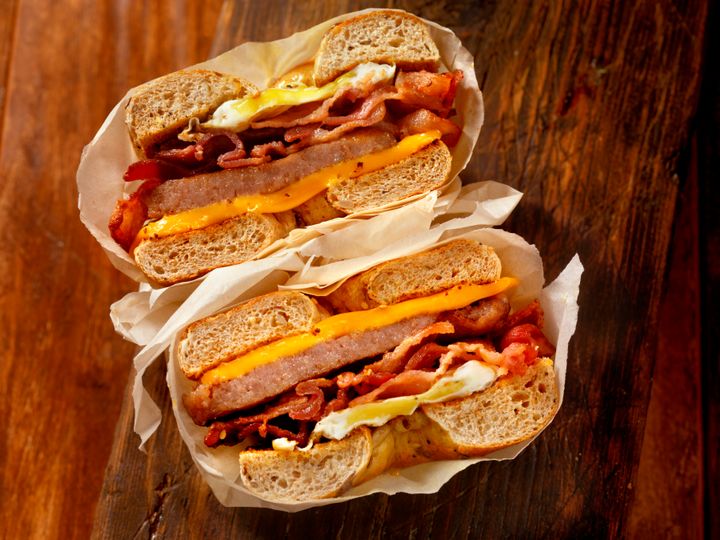
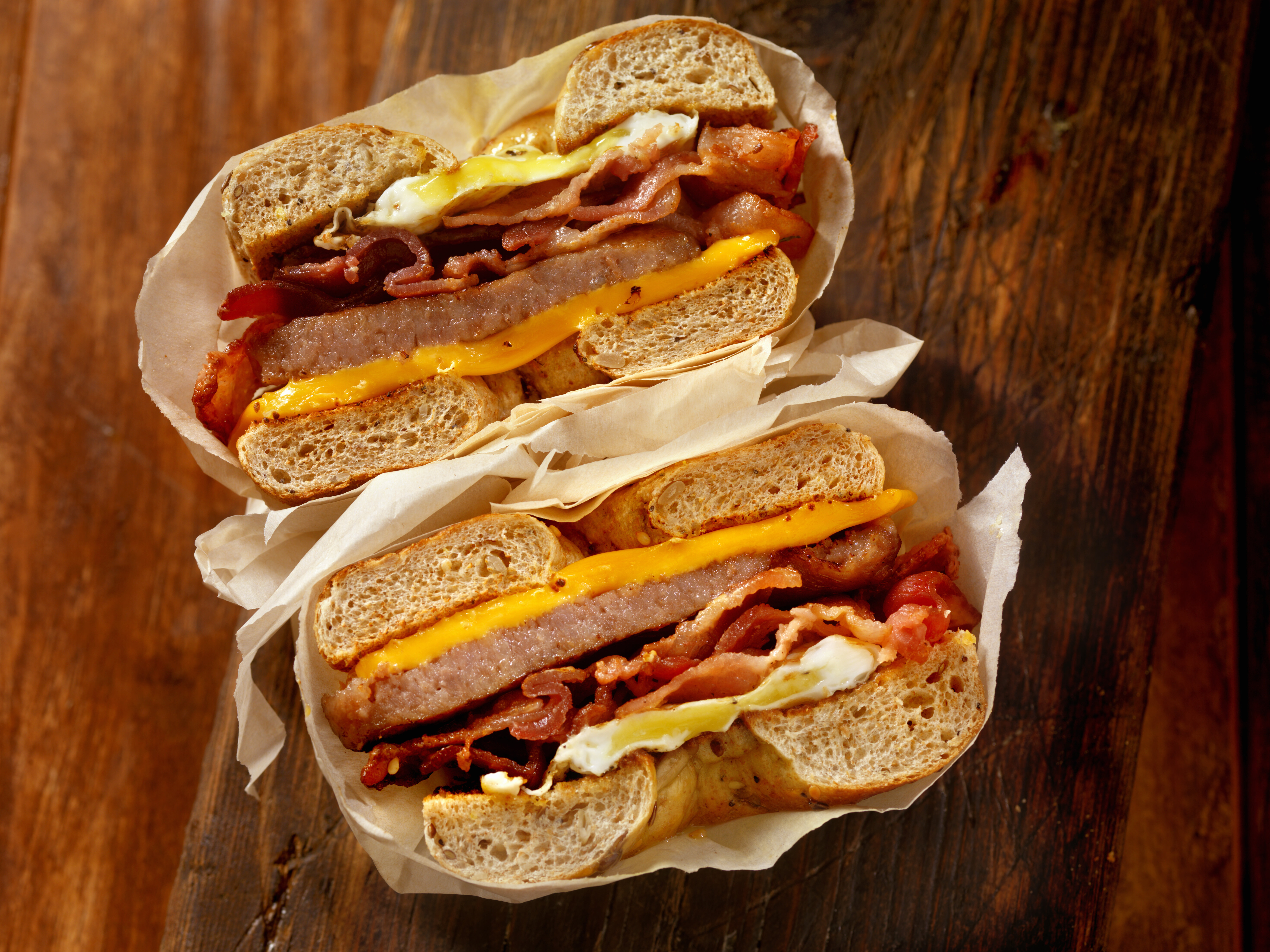
Neither the bacon nor sausage in your breakfast sandwich are a good idea, especially first thing in the morning when your stomach is empty.
Margarine
If you’re still eating fake butter, it’s time to stop, because margarine is just flat-out bad for you.
Advertisement
“Margarine seems like a great idea in theory, but it turns out to be just as bad as butter,” said Dr. Harmony Reynold, a cardiologist at NYU Langone Health. “A study found that with each tablespoon of margarine per day, people were 6% more likely to die over the median 16 years of the study. Olive oil is better, and each tablespoon of olive oil was associated with a 4% lower risk of death. With that in mind, I tell my patients to use olive oil whenever possible, even for cooking eggs, or toast. When nothing but the taste of butter will do, it’s still better to use mostly olive oil with a skinny pat of butter for flavour.”
Steak
Sorry, steak lovers, but this is another food you should probably avoid most of the time.
“I avoid really fatty red meat, like highly marbleised steak, because it’s very high in saturated fat,” Dr. Leonard Lilly, the chief of cardiology at Brigham and Women’s Faulkner Hospital, said. “Clinical studies have shown that saturated fat consumption is associated with increased risk of cardiovascular disease, cancer and diabetes.”
Lilly noted that most people can get away with eating small amounts of almost anything on rare occasions, so he’s guilty of the occasional steak.
Bacon
You were waiting for this one, right? Dr. Francoise Marvel, a cardiologist at Johns Hopkins University, said she typically avoids this salty, delicious breakfast delicacy.
“Bacon is an example of highly processed red meat that is high in saturated fat and increases the bad cholesterol — called low-density lipoprotein LDL — which is linked to increased risk of heart attack and stroke,” Marvel said. “The way bacon is processed is through ‘curing’ the pork, which usually involves adding salts, sugars and nitrates. The large amounts of salt (or sodium) used in this processing may increase blood pressure and fluid retention, causing the heart to work harder to pump blood through the body. Increased blood pressure, or hypertension, is a major risk factor for cardiovascular disease as well.”
Advertisement
Chemicals added to the meat, like nitrates, have been linked to cancer and other health problems, Marvel added.
“It should be noted there is a varying amount of processing and ingredients used by different bacon manufacturers,” Marvel said. “But overall, to lower the risk of cardiovascular disease and other health problems, limiting the intake of processed red meat like bacon is beneficial.”
Next time you order breakfast, Marvel suggests swapping two slices of bacon for two slices of avocado. Your heart will thank you.
Cavan Images via Getty Images
Heaven on your taste buds, hell on your heart’s health.
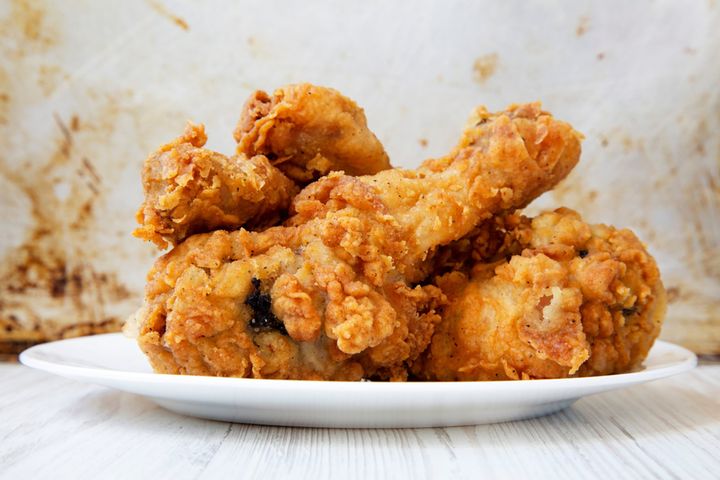

Deep-fried chicken
Fried chicken may be a trendy menu item these days, but it isn’t great for your heart.
“The one food that I rarely eat is deep-fried chicken,” said Dr. Sanjay Maniar, a cardiologist based in Houston. “Regularly eating fried foods will increase your risk of heart disease and stroke by increasing the amount of saturated and trans fats in the body.”
Advertisement
These unhealthy fats can raise LDL (bad cholesterol) and lower HDL (good cholesterol) levels, which serve as the building blocks for fatty buildup (atherosclerosis) in the blood vessels of the body, Maniar said.
“You can get great flavour by adding fresh herbs and grilling or baking chicken rather than deep frying it,” Maniar said. “You’ll keep the taste, but save the calories.”
Doughnuts
Many doughnuts are fried in oils that contain trans fats, which makes them hard on your heart, according toDr. Jayne Morgan,a cardiologist based in Atlanta.
“Trans fats raise cholesterol levels and blood sugar, contributing to Type 2 diabetes, heart disease and stroke,” Morgan said. “Trans fats are often ‘disguised’ on labels as partially hydrogenated oils, so read your labels and avoid them.”
Still, not all doughnuts are fried in oils that contain trans fats. Dunkin’, for example, fries its doughnuts in palm oil, which is free of trans-fat. Palm oil does contain saturated fat, which isn’t great for your heart when consumed in excess — so make sure you’re eating doughnuts in moderation.
Advertisement
Processed ham
Maybe the last time you ate bologna was when you were in school, or maybe it’s still part of your diet. In any case, it’s probably best to skip it, according to Dr. James Udelson, chief of cardiology at Tufts Medical Center.
“In some ways, bologna is a symbol in that it incorporates many things that should generally be avoided, including highly processed meats, which are very high in salt content and associated with risk of cardiovascular disease down the line,” Udelson said. “It is important to note that the key to dietary heart health is following the American Heart Association’s recommended Mediterranean-style diet, which is high in vegetables, whole grains, fish and some lean meats, nuts and legumes.
If you eat any of these foods once in a while, you’ll be fine. After all, who can pass up the occasional slice of bacon and a fresh doughnut? But do as these cardiologists suggest — avoid them when you can.
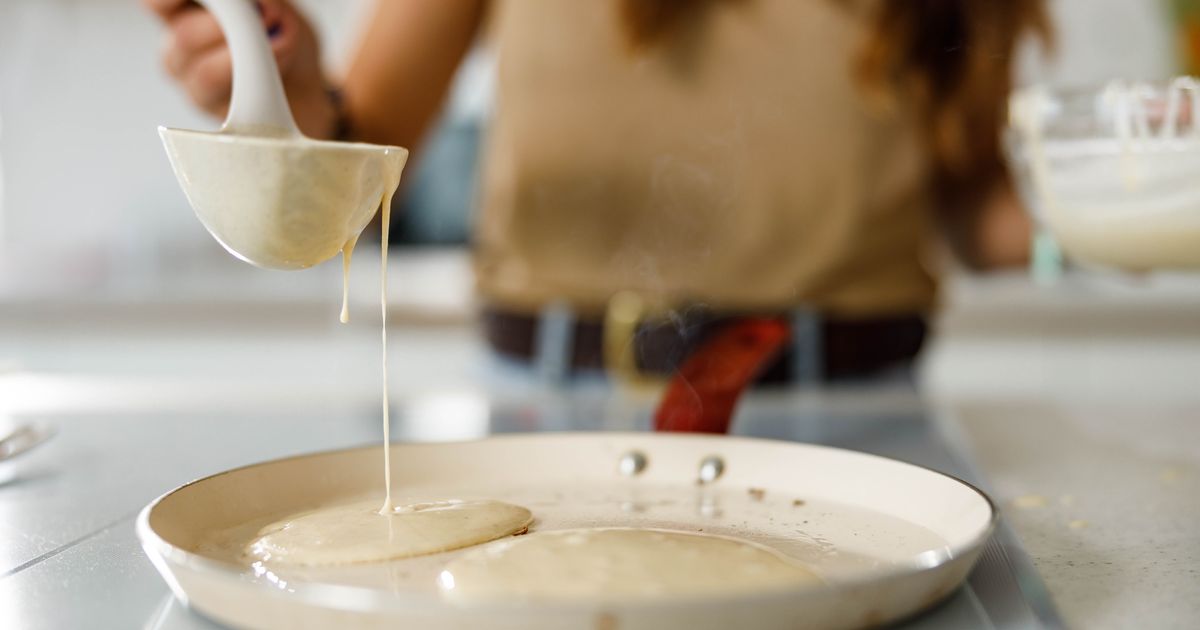
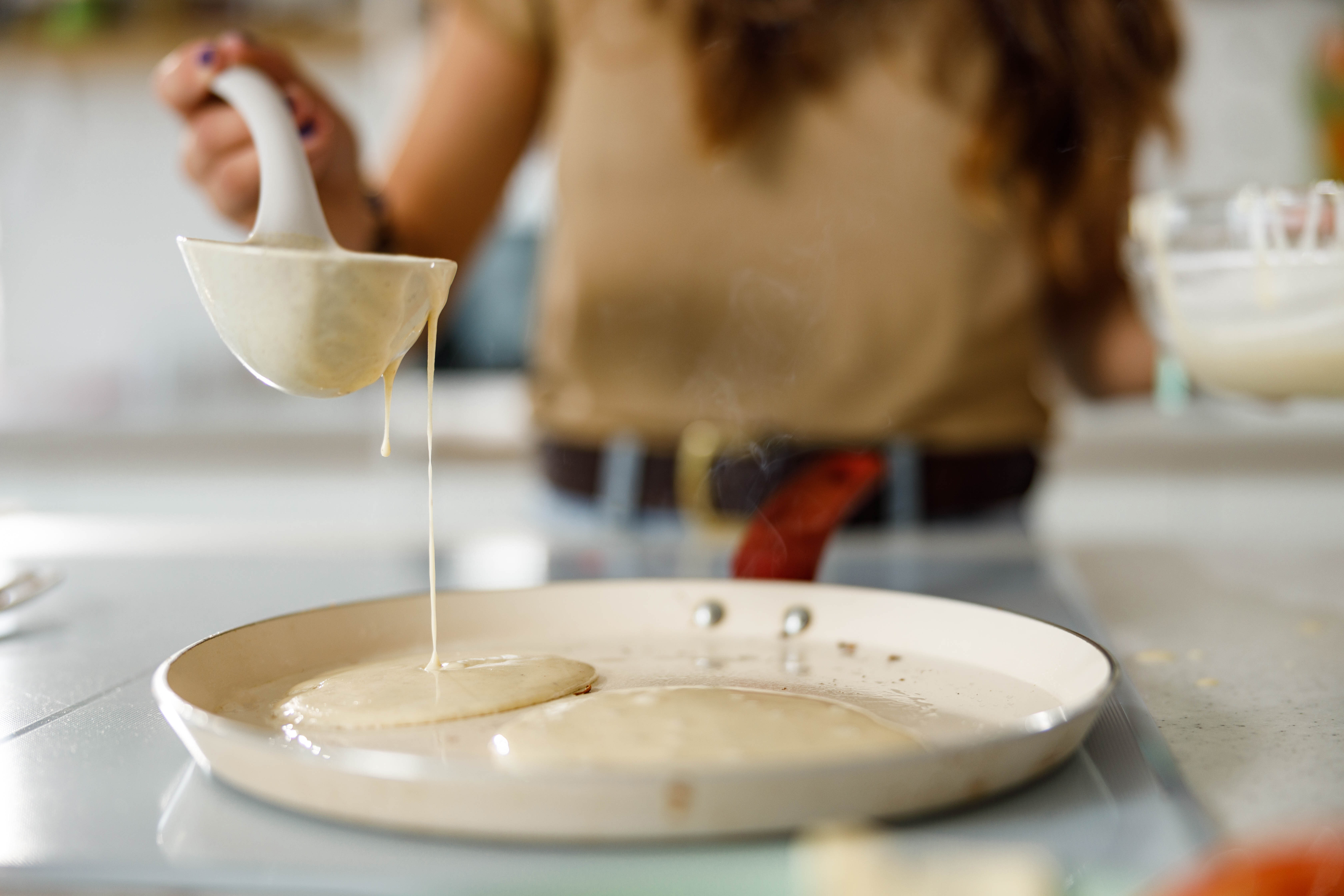
It’s Pancake Day, which means most people in the country will eat a pancake (or five) during some part of the day.
But there is one mistake you can make while preparing your meal that can end up costing you quite a lot of money.
Advertisement
If you’re like me and can never measure anything right (I still don’t know how to make the right amount of pasta for one), you’ll inevitably have some pancake batter leftover from your Pancake Day adventures.
And you might think nothing of pouring all of it down the kitchen sink. But that one mistake can cost you over £300 to fix.
According to plumbing experts at Rated People, pouring pancake mix down the drain can cause pipe bursts: “Pancake batter contains flour, fat and oil and this is a recipe for disaster when it comes to drains as it can quickly harden in pipes and lead to blockages and burst pipes which can be costly to repair.”
It can also cause complications in sewers, causing fatbergs to form in them. Fatbergs are formed when fat and grease combine with unflushable items (such as wet wipes and cotton buds), preventing water from going through.
Advertisement
Depending on how easy it is to access the pipe, the plumbing cost can be anywhere from £150 to £300, which is more than probably most of us may have bargained for while making pancakes.
“Leaking or fully burst pipes caused by increased pressure from blockages can cause damage to your property and possessions, which means fixing the broken pipework could only be part of the repair cost,” they say.
“Whether it’s a plastic or copper pipe, the solution will likely involve replacing the section of the pipe that’s damaged. Fixing a burst water pipe that’s easy to access will cost around £150, but with no visible access, the job is trickier and that can set you back by around £300 on average.”
So what can you do to avoid annihilating your drainage system when making pancakes? Some solutions include disposing the batter off in the food waste bin, freezing the batter to make it last for a good few months or making your own version of fish and chips takeaway.
And if none of this appeals to you, you can always turn the batter into Yorkshire pudding. At least it’s better than having to spend £300 in a cost of living crisis.
If you’ve spent any time on food TikTok or Instagram, you’ve likely noticed an onslaught of fancy olive oil brands, all featuring colourful, beautifully designed, photo-friendly bottles.
Influencers and social media-savvy chefs drizzle the golden liquid from these pretty containers on salads, meats, fish, hummus and much more, and their posts and videos make “status” olive oil seem like a necessary addition to any home cook’s arsenal.
Advertisement
But a bit of online searching will quickly show that on-trend olive oils (like Brightland, Graza, Fat Gold and other popular brands) command a higher retail price than the extra-virgin olive oil bottles sold at supermarkets (and a much higher price than the big under-the-sink olive oil vats sold at wholesale clubs like Costco).
So are these “fancy” olive oils worth the extra cash? When we asked professional chefs and olive oil experts to answer this question, they generally agreed that these oils are sometimes worth their splashy social media presence and their elevated cost.
Advertisement
That said, Christina McKeough, chef de cuisine of High Street in Philadelphia, pointed out that the “is it worth it?” question really comes down to personal preferences.
“Like any luxury product, it’s only worth it if you really want it, right?” McKeough asked. Shoppers need to remember that not all trendy oils are created equal and that a few important characteristics can help to determine whether hip olive oil brands qualify as smart purchases.
It’s up to shoppers to do a little research
When it comes to olive oils with a big social media presence, their (usually higher) price points can reflect a number of factors. According to Doug Psaltis, chef and co-owner of Andros Taverna in Chicago, shoppers should do a bit of digging to figure out exactly what they’re paying for.
“Are we buying the great packaging and marketing with inflated prices? I am not sure that price always correlates to quality. What would lead me to pay more for olive oil would be freshness ― a great raw product that is produced by great people with integrity,” Psaltis said.
In some cases, olive oil’s “viral” potential has more to do with its bottle’s aesthetic (and its ability to be marketed by influencers) than with its overall quality.
Advertisement
Lisa McManus, editor of America’s Test Kitchen Reviews, believes social media can encourage people to learn more about olive oil, which is a positive development: “If Instagram has gotten people interested in olive oil, that’s incredibly great.”
However, she advised against taking these Instagram or TikTok recommendations at face value, instead encouraging the olive-oil-curious among us to “take this opportunity to explore beyond the flashy promotional stuff.”
“Great olive oil does not necessarily come via the recommendations of Instagram stars. There are fantastic extra-virgin olive oil producers throughout California and the world who don’t have Instagram accounts,” she said, adding that “cute bottles and attractive promoters don’t translate automatically to great oil.”
‘Fancy olive oil can actually save you money’
Alexa Dombkoski, founder of Bellemille Extra Virgin Olive Oil, admits that “olive oil isn’t a very sexy product to sell, so putting it in Instagram-able packaging certainly helps.”
But she went on to explain that “with all the options on the market, you have to be able to distinguish between the pretty faces and the products that can stand on their own based on quality.”
Advertisement
Once you know what to look for and how to interpret the labels of the trendy viral olive oils out there (or the labels of your regular supermarket brands), then you’ll discover that, as Dombkoski said, “Fancy olive oil can actually save you money.It’s always best to use the highest quality ingredients across the board, but when that isn’t possible, you can lean on that fancy olive oil to add a little zip [to] ‘save’ the most basic or boring dish and bring it back to life.”
Essentially, Dombkoski believes that using a £30 olive oil made from olives harvested at their peak and cold-pressed for maximum flavor can balance out any negatives that come from purchasing a cheaper cut of meat or off-season produce. Also, because a little bit of olive oil goes a long way, spending more on a bottle gives you a high-quality product that can be used for countless recipes over the course of several months.
As the CEO and co-founder of Graza, one of the most ubiquitous “fancy” olive oil brands on social media these days, Andrew Benin acknowledges that “sometimes, when you are paying 38 bucks for 375 millilitres of olive oil, £9 of that is just to cover the cost of the fancy bottle.”
But in his view, olive oil that earns its higher price (and he counts the olive oil produced by Graza in this category) is “harvested and milled the right way, protected from light, never blended, [and] is a powerful flavour bomb.”
Advertisement
How to know if your pricey olive oil is worth the cash.
Chef Steven Jarczyk of Sfera Sicilian Street Food in Chicago recommends paying attention to what the label says about where and how it’s grown. “You have to start with beautiful olives,” he said. Psaltis also prioritises freshness: “[You should look for] a great raw product that is produced by great people with integrity. Are they choosing the best fruit to mill? Is the olive oil fresh and handled with care? I believe those are the most important factors that separate a good product from a great product.”
Dombkoski gave a clear breakdown of what to look for on a label: “Does it tell you where the oil comes from? Is that different than where the label says it was bottled? Is it blended with olive oil from somewhere else? A quality producer is going to want you to know where the olive oil is from, when it was produced, [and] how it was produced. The more information a brand is willing to volunteer about their production, the better off the consumer is to make an educated decision when purchasing olive oil.”
If you’re wondering what specific information you want to see, look out for the following before buying a new brand of olive oil:
“Extra virgin”: This term, commonly found on olive oil bottles, refers to oil that’s never been heated or treated with chemicals. Because the oil is cold pressed and unrefined, it retains more of the natural flavour of the olives and offers both aromatic notes and a smooth texture.
The phrases “single origin” and “single varietal”: “Single origin” means the olives used to make the oil are grown in the same location, while “single varietal” means only one type of olive is used. While blended olive oils aren’t inherently bad, there’s a lot more room for error in these bottles; different growing conditions and different olive types can clash and produce an oil with a less-than-smooth flavour profile. If your oil only includes one type of olive grown in the same place, then you’ll end up with a much higher rate of consistency.
Grown in Spain, Italy, Greece or California: Olives thrive in Mediterranean climates, so olive oils produced in actual Mediterranean countries benefit from the vibrant flavour of the olives grown there. In the U.S, Southern California’s Mediterranean-ish temperatures make this region the best area for domestic olive oil.
Make sure you’re using it for the right reasons
Some home cooks say olive oil (and especially “nicer” olive oils) shouldn’t be used for cooking, because the oil’s bright and mellow flavours can turn bitter and acrid. But our experts insist that, in the words of Dombkoski, “It is perfectly acceptable to cook with your fancy extra-virgin olive oil.” That said, Dombkoski warned that quality extra-virgin olive oil “will impart a distinct flavour into your dishes.” So if you don’t want to taste the grassy, botanical notes associated with olive oil, you may want to swap it out for a neutral-flavoured cooking oil like vegetable oil or canola oil.
To maximize the flavor potential of well-made olive oil, Ann Ziata, chef at the Institute of Culinary Education, suggests “using it as a finishing oil or a dressing oil rather than a cooking oil.”
“High-end olive oil will add great depth and richness when used as a seasoning, drizzled over pasta, vegetables or rice,” she added. “High-heat cooking like deep-frying or grilling may destroy the flavors of the oil, which are sensitive to heat, oxygen, and light.”
Advertisement
Mica Talmor, the chef and owner of Pomella in Oakland, California, likes to use olive oil for finishing, but she mentioned that “EVOO has very bold and distinct flavors, so I won’t use it if I want the dressing to have a specific flavor, like in a citrus vinaigrette or pomegranate vinaigrette. A less expensive neutral oil is much better for that.”
While lighter-weight neutral oils are a better bet for deep-frying and high-heat cooking, plenty of recipes still call for olive oil as a primary cooking fat, particularly when moderate or low stove or oven temperatures are involved. In these cases, “‘regular’ olive oils are still perfectly fine to use when cooking, and they have the added advantage of being extremely versatile and less expensive,” said Michael Murdy, the chef and food scientist behind the blog Robust Kitchen.
Check out the bottle itself (not just the label) before you buy
To get the best possible value out of a £30-plus bottle of olive oil, be sure to store the oil in conditions that will keep it fresh and flavourful for an extended period. “The enemies of olive oil are heat, air, light and time,” McManus said. “You want to keep it cool, covered, and tightly capped, away from heat and sunlight (so definitely do not store it next to your stove or in a window!).”
Michelle Spangler, the owner of Infused Oils & Vinegars in Dallas, said it’s also wise to “purchase oil that is packaged in dark glass or light-impermeable tins from a reputable dealer who has stored it in a temperature-controlled environment.” A darker container will prevent the oil from being affected by light.
Olive oil doesn’t “go bad” like other perishable groceries, but our experts generally agreed a bottle of “nice” olive oil will be at its best within six to nine months of opening. For optimal results, switch out your olive oil bottles at least that frequently.
While many familiar Christmas traditions originated in Western countries, people from all around the world and from different cultural backgrounds celebrate the holiday with the same spirit of gratitude and togetherness. No matter where, recipes passed on through generations are central to family gatherings. From callaloo to chicken tikka masala, find out what renowned chefs and food influencers around the world are cooking on Christmas Eve.
Mexico
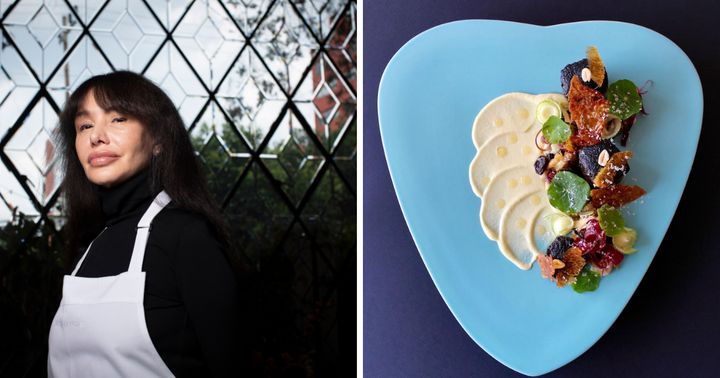
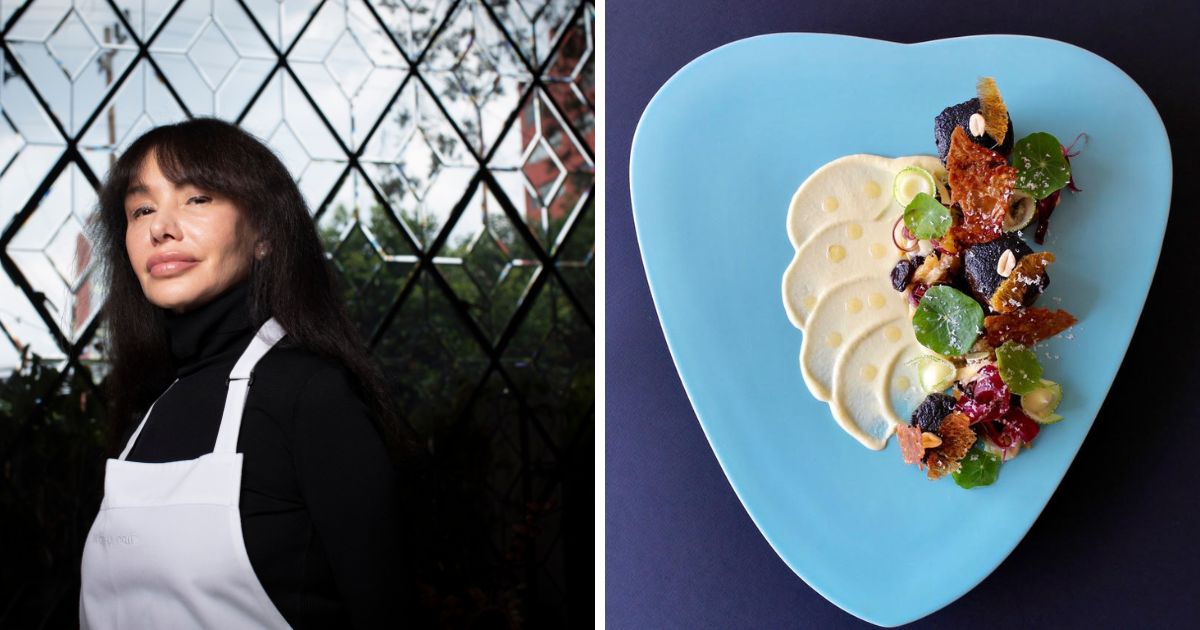
Martha Ortiz Chapa is the head chef at Tuch de Luna at La Casa de la Playa in Riviera Maya. She was the chef-owner of Dulce Patria, which had been named one of the 50 best restaurants in Latin America and the best restaurant in Mexico City before closing earlier in the Covid-19 pandemic. She has also served as a judge on “Top Chef Mexico,” and in 2020 was named one of the 40 best chefs in the world.
Advertisement
Courtesy of Martha Ortiz
Martha Ortiz and her turkey in mole.
Our December traditions begin with the Posadas (a religious festival held from Dec. 16-24), which lead the way to the grand celebration of Christmas Eve. During this time, Mexicans hang seven-point-star piñatas (the peaks representing a different capital sin, including gluttony) made with contrasting coloured tissue paper and filled with pieces of sugar cane, tejocotes (a fruit), orange wedges, peanuts, candies and sugar-coated almonds. We blindfold the guests, who take turns hitting the piñata until someone breaks it, in celebration of the predominance of virtue and abundance.
On Noche Buena (the night that is good), aka Christmas Eve, I elegantly present these crafts to my guests. I usually use a dark tablecloth as a canvas and decorate it with wooden kitchen utensils, such as grinders, spoons and saucepans, surrounded by colourful flowers. I personalise each guest’s place on their plate with a small piñata, which holds inside a traditional sweet or piece of candy and a message of friendship and love, in the hope that they will take it home with them and, when they break it, the abundance of affection, bonds and the celebration of life will grow.
As a proud Mexican, I begin with traditional dishes such as romeritos (tender sprigs of seepweed) with cactus strips, and mole (made with at least 50 ingredients) seasoned with dried shrimp. I serve a salad called Noche Buena, which is prepared with diced jicama, apple, beet, orange wedges and crunchy peanuts. For main, we have pork leg in spicy pulque marinade. I wash it down with my personal favourite, a punch of tejocotes, tamarind, jicama pieces, piloncillo (a raw form of pure cane sugar), guavas and spices and a touch of hard liquor.
Advertisement
I add the leftover punch to the mother sauce to prepare a fruity mole and serve it with turkey pieces that have a crackling-like crunchy skin. And, if there’s some left over, I make a delicate cheesecake to remember all the flavour of the Posadas days.
With this celebration of classic and modern dishes, I honour my grandmother’s cooking and think about the great wealth of ingredients from Mexico. This is how, surrounded with piñatas and sweet smiles, I wish that each Christmas Eve will become an early memory of tradition, lineage, and my pride of being a female Latin, Mexican chef.
St. Thomas, U.S. Virgin Islands
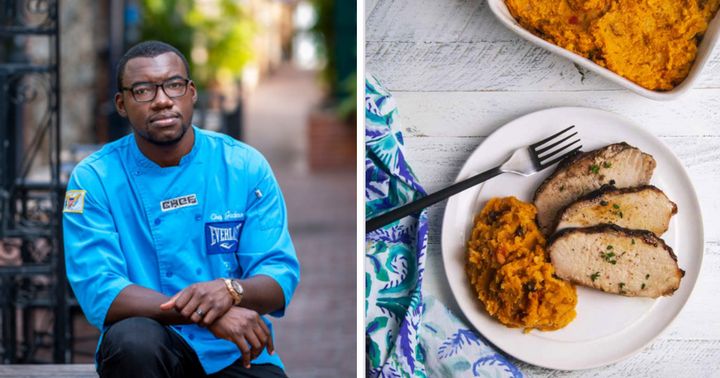
Julius “The Chef” Jackson is a professional chef, Olympian boxer, community leader and author of the cookbook “My Modern Caribbean Kitchen: 70 Fresh Takes on Island Favourites.” He currently offers private interactive culinary social events through “The Chef’s Cooking Lab” and is the head chef and manager at the nonprofit My Brother’s Workshop Bakery and Café in St. Thomas.
Courtesy of Julius Jackson
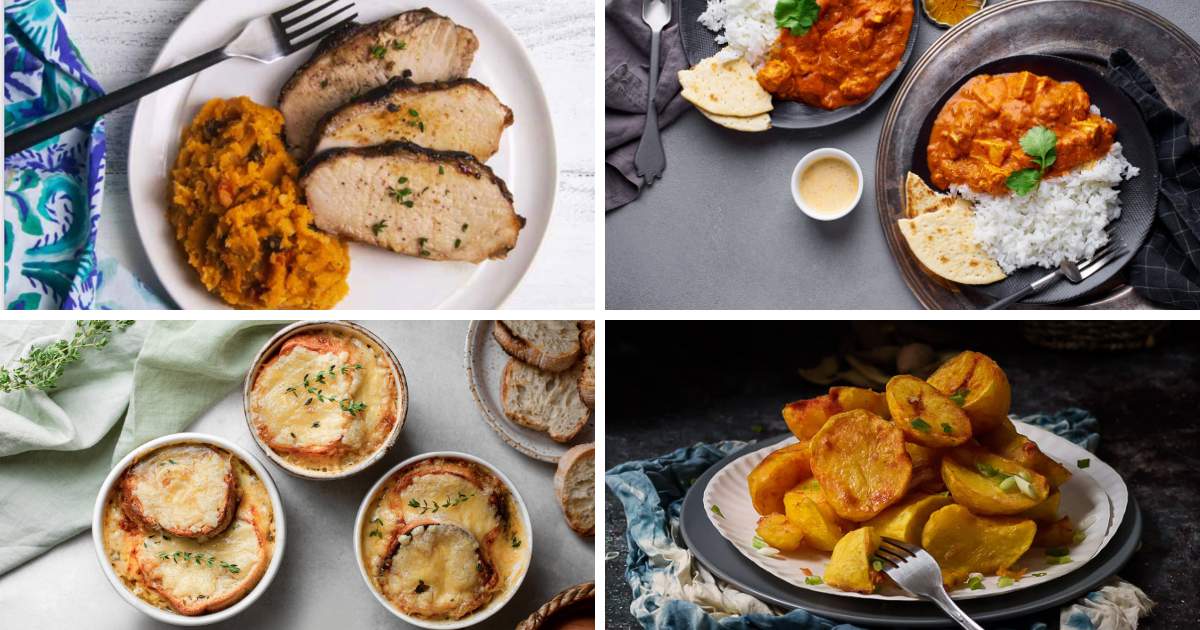
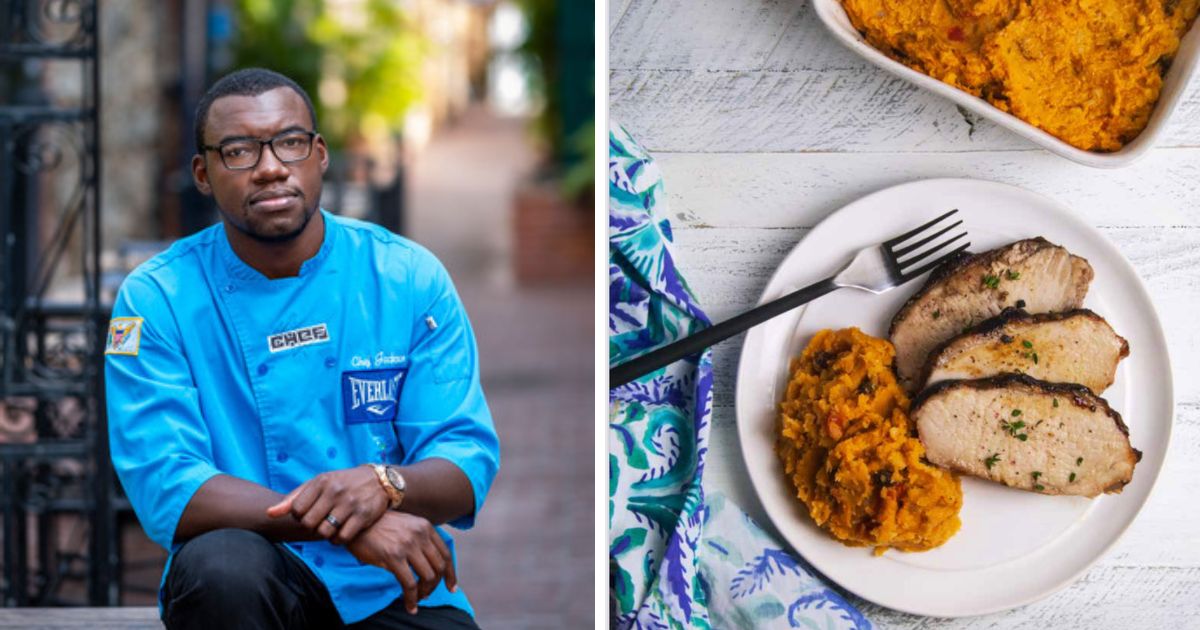
Julius Jackson and his Christmas Eve roast pork.
We have such a melting pot of cultures in the Virgin Islands that we have created our unique mashup. You can see this to be true in the way we celebrate the Christmas season.
Advertisement
It’s very traditional for us to have callaloo as a starter for the Christmas Eve meal. This stew made from okra, spinach and pork is influenced by African cuisine. My personal favourite is the seafood version, which I make with shrimp, conch, lobster and saltfish. The warm green goodness gives me the feeling of the Christmas season on a tropical island.
I also love roasting pork for our Christmas Eve or Christmas Day dinners. This dish came about from our Puerto Rican brothers and sisters that migrated to the U.S. Virgin Islands, and we adapted it within our culture. I generously rub the butt, shoulder or the whole pig down with seasonings and cloves, make incisions into the skin to allow the seasonings to penetrate inside the meat and under the skin. Then, I roast the pork for 5-6 hours until the skin is super crispy. This is one of my all-time favourites dishes because I love the tender and salty meat with the crispy skin.
The guavaberry fruit has also become a major part of our tradition here in the Virgin Islands. The slightly sweet- and tart-tasting fruit that looks like red and purple blueberry comes from our West Indian neighbours. During Christmas time, we consume guavaberry rum or incorporate it into desserts, such as homemade guavaberry tart and guavaberry cheesecake.
After dinner, we carol calypso/quelbe Christmas tunes at home and around our neighbourhood, stopping at homes of friends and family members for snacks and rum.
India
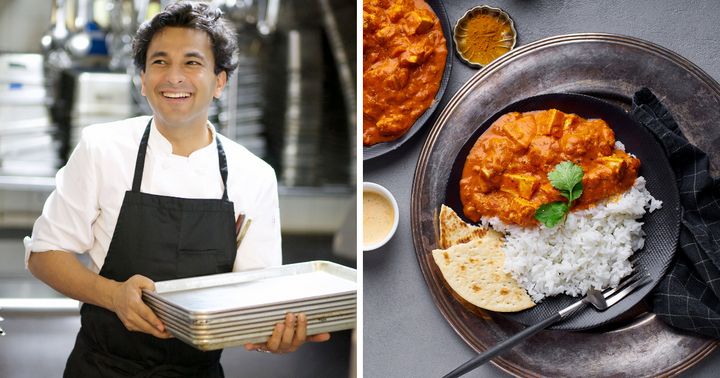
Vikas Khanna is an Indian American chef, restaurateur, cookbook author, filmmaker and humanitarian. He grew up in Amritsar, India, served as a judge on “MasterChef India” and received a Michelin star for six consecutive years for his New York restaurant Junoon. He has authored over two dozen books and directed and produced several films.
Advertisement
Courtesy of Vikas Khanna
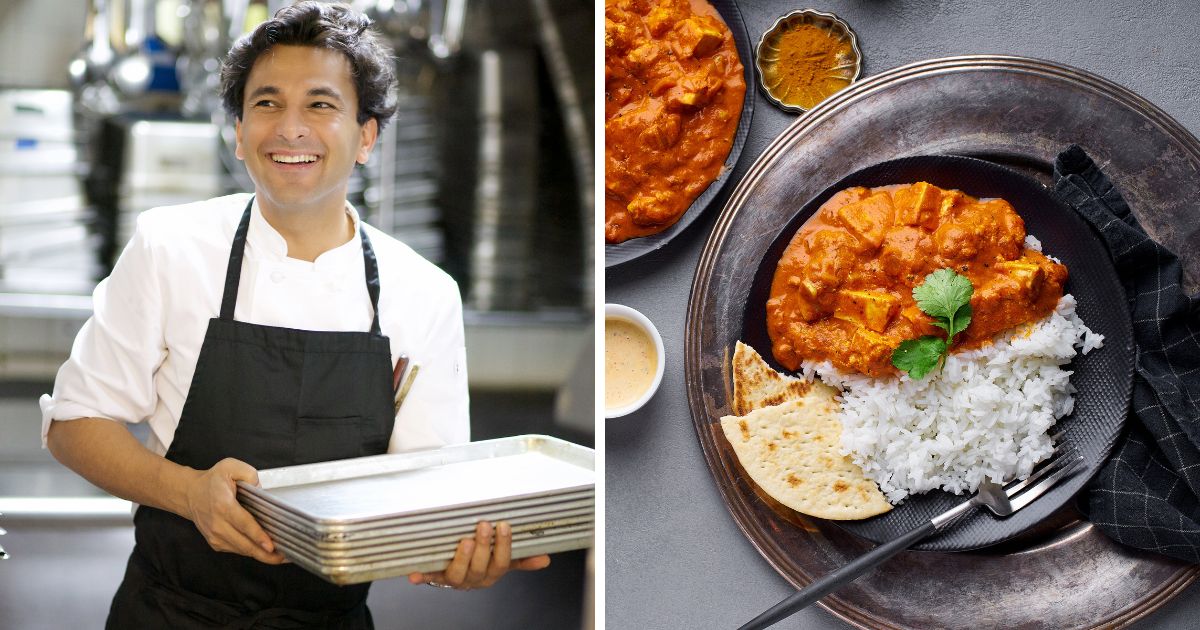
Vikas Khanna makes paneer tikka masala for Christmas Eve, but in a smaller appetizer form.
Christmas Eve is celebrated in India with as much fervor as all other religious festivals, especially more so in the northern state of Punjab, where I hail from. For us Punjabis, it is one more occasion to celebrate and feast on good food.
We usually plan an elaborate dinner with near and dear ones (which in Punjab can be a lot of people). My special guests on Christmas Eve are all the elderly grandparents who I look forward to cooking for. Most of the dishes I cook are keeping in mind their palate and preferences, so it’s an Indian-style Christmas dinner. It is also my way of expressing my gratitude towards my grandmother, who was my first culinary teacher.
December yields some of the best farm produce, giving me an array of choices of ingredients. The weather in Punjab is cold this time of the year, so the dishes are served warm and spicy.
I make several dishes using paneer (Indian cottage cheese), because paneer and Punjabis are made for each other. We are a dairy-rich state! So, I make paneer tikka masala for appetisers, stuffed paneer paratha, paneer and mixed vegetables, and a curry. For the meat eaters, I make a chicken version of the same dishes.
Advertisement
Also, instead of the popular regional Punjabi dish, chole bhature, which is served at most festive occasions,I prefer making bo wale kulche, which non-Amritsaris find smelly because the dough is double-fermented, but I find them aromatic and absolutely relish them. Some of these recipes are in my book, “Amritsar — Flavours of the Golden City.”
After a hearty dinner and loads of friendly conversations, it’s time for desserts. The one dessert that is mandatory at my Christmas Eve dinner is whipped fruit cream with fresh seasonal fruits. It reminds me of my childhood when my grandparents would take me and my siblings out for this treat. Making the same dish for my special guests feels like completing the circle.
The happy faces of my guests, especially the grandparents, fill my heart with joy and energise me for the new year ahead.
France
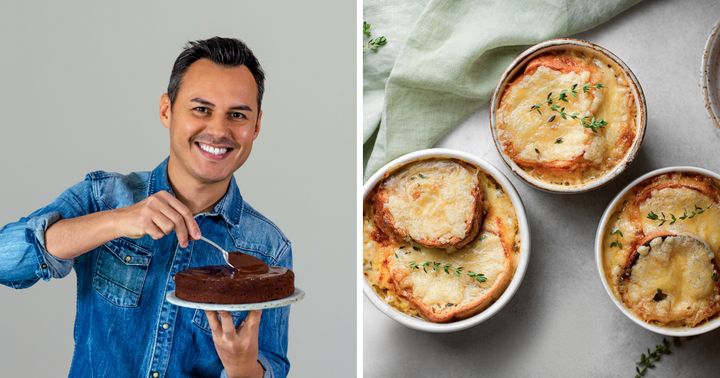
Herve Palmieri (who goes by Hervé Cuisine) is a Paris-based videographer, food blogger and author of “Easy and Amazing Desserts” and “Easy Aperitifs With Friends.” His YouTube channel featuring cooking tutorials has over 1 million subscribers.
Courtesy of Herve Palmieri
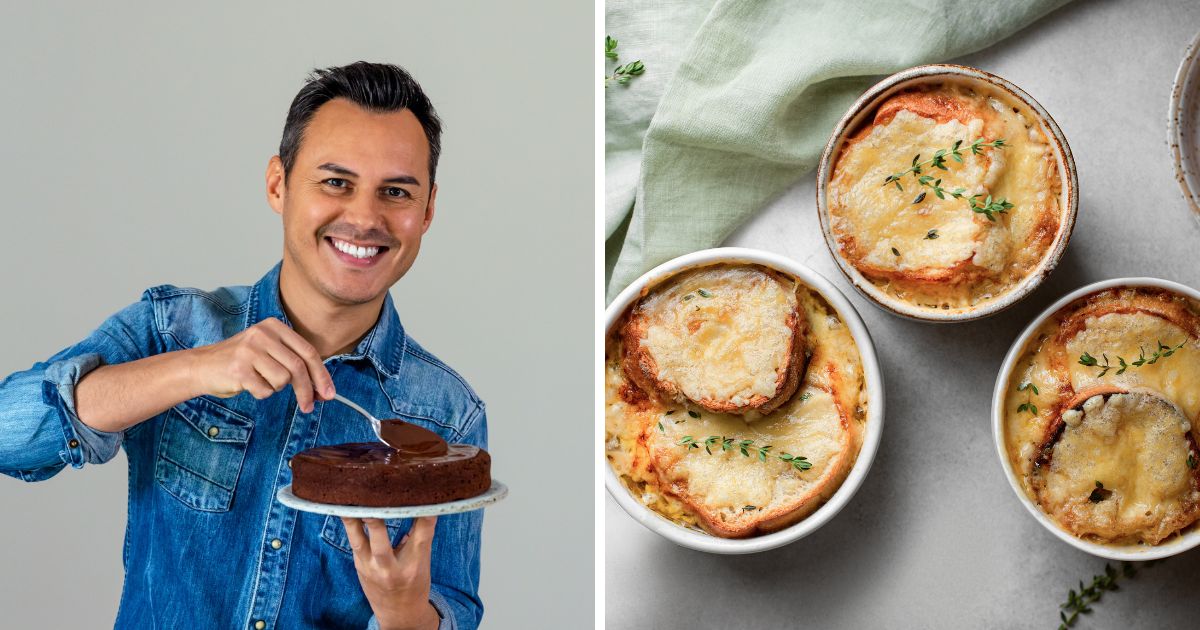
Herve Palmieri with a Black Forest cake, and French onion soups like the ones he makes on Christmas Eve.
Advertisement
The first thing that comes to mind when I think about Christmas Eve is my family. We all live in Provence in the southeastern part of France. I have one son, two sisters and six nephews and nieces. In France, Christmas is a very special time when families come together, forget, forgive and give. We always try to get together on Christmas Eve, taking turns to either host or rent a place in the Alps or in the national park of Queyras.
Everyone participates with the Christmas Eve meal planning. The kids help prepare puff pastry treats for appetisers that we cut out in Christmas tree shapes and fill with cheese, nuts, honey and raisins. They also like making tapenade (olive paste that’s popular in Provence) and goat cheese mix. Then, we display everything on the table like a buffet so everyone can taste a bit of everything.
Traditionally, we also serve some poultry and several sides. For instance, we would include grilled veggies like glazed carrots and sprouts, pureed parsnips or sweet potatoes with spices. For dessert, we have a tradition to serve two cakes: Black Forest, that I’ve been doing according to my mom’s recipe for years probably since I was 10 years old, and a buche, which is a more traditional recipe often made with chestnut puree and chocolate (or you can make it more exotic with mangoes and coconut).
Both of my parents, who come from Vietnamese and Italian origins, my sisters and I, love to cook or bake. So, for Christmas lunch, we prepare Vietnamese fried spring rolls, a recipe my grandfather passed on to my mother when she was a young girl and needed to help prepare the meals for her family of six children. For Christmas Day dinner, we usually make a typical French onion soup made with yellow or white onions, olive oil, vegetable broth and a crust of melted cheese and croutons with herbs like thyme and rosemary. It is very simple, tasty and supposed to help you cleanse your body after a heavy meal.
Christmas Eve is not all about eating, though. We like to play some group games, like the Wolf, which is a strategy game opposing wolves and villagers that you play in a circle in dim light, even though my father always falls asleep before the end of the game! We also go for a late walk outside in the little village in the Alps called Aiguilles en Queyras, even if it’s freezing, because you know, we do eat more than usual on that night.
Advertisement
Uganda
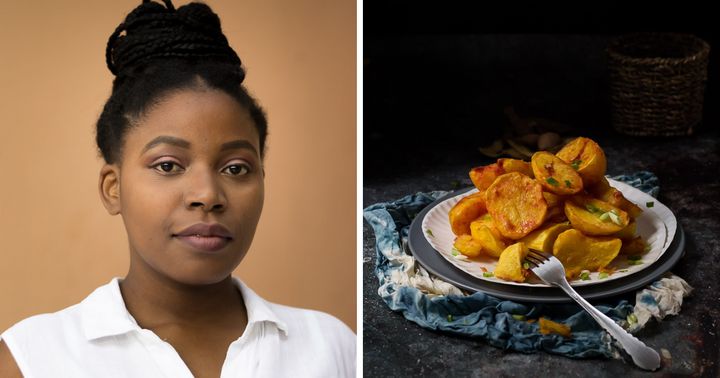
Sophia Musoki is a Ugandan food writer and food photographer. She is author of “A Kitchen in Uganda,” one of the most notable food blogs in the country, and three e-books, one of which received a Gourmand World Cookbook Award. Musoki also produces and hosts the podcast “Our Food Stories” where Ugandans share food stories.
Courtesy of Sophia Musoki
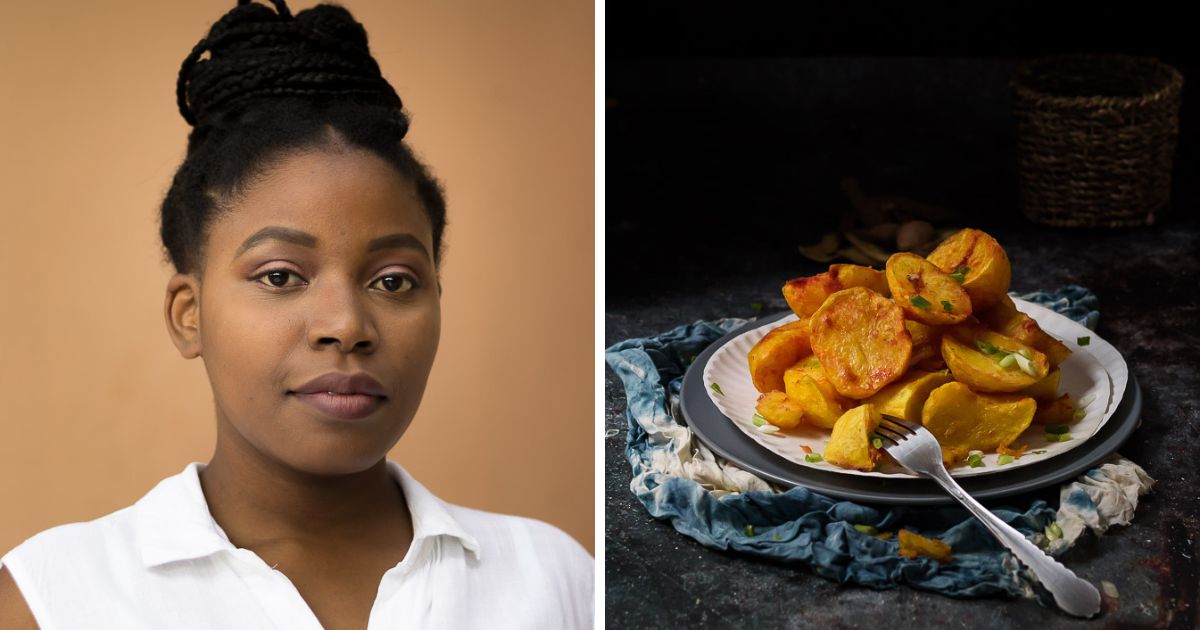
Sophia Musoki and her Ugandan fried potatoes.
For my family, Christmas Eve is a time when everyone arrives at my grandparents’ home in Kasese, in western Uganda, from various parts of the country to end the year together. Their home is situated on the edge of one of the many Rwenzori ranges with a dizzying but scenic view. Banana and coffee tree plantations surround the house, giving it a lush green backdrop for our African Christmas.
Christmas Eve is more of a preparation day for me and my family. We have 15-20 people crammed in the small kitchen, which is located about 5 meters away from the main house. Each of us has an assigned task. Older male relatives set up a corner to slaughter a mature goat for the meal, while the female relatives peel potatoes, bananas and yams. In another corner of the kitchen, my cousins, nieces and nephews shell fresh beans to make soup, using beans my aunts bring from either their gardens or the market. I love getting involved in the chopping, cutting, cleaning and slicing of all the condiments like tomatoes, onions, local garlic and garden eggs.
While everyone is busy, my grandmother puts on a big pot of green banana and black beans katogo (a stew of starch and a protein pottage) on fire to simmer for the evening meal.
Advertisement
On Christmas Eve, we also spend some time selecting cookware, such as heavy cast-iron pots for steaming and clay pots for stewing meat and boiling beans. If we don’t have enough, we either go out to the market and purchase some or borrow from generous neighbours.
Aside from cooking, this is also a time for the family to share good news, like the birth of a child, graduation, a wedding anniversary or a baptism. This cheerful atmosphere is filled with children playing hide and seek, which is more fun to do at night and among many people. The adults tell stories of their travels while neighbours drop by occasionally to join in on the conversation. We generally serve visitors fresh fruits. My favourite part of Christmas Eve is the camaraderie of the meal preparation. As we roll into the evening, we leisurely peel, slice and eat fruits like mangoes, sugar cane and jackfruit, which I believe “takes a village” to do. This keeps us occupied until the katogo is served on large shared trays, which is often very late into the night.
The big Christmas meal is just days away, but don’t you feel like switching things up a bit this year?
Sure, we love our traditional turkey and trimmings, but it can all feel a bit same same. Which is a shame, given the amazing food culture we have in the UK.
Advertisement
Luckily, our friends over at Tasty have been set on changing all that with their festive video series, A Very Tasty Christmas. Throughout the month of December, they’ve been spotlighting different cultures around the UK who celebrate Christmas – sharing recipes for the delicious dishes they eat.
As a treat, we got to sample every one of these delicious dishes a few weeks ago at the joint Buzzfeed / HuffPost Christmas gathering, so we can vouch for just how mouthwateringly tasty they really are.
Take your pick from the recipes below or why not try them all over the festive break? We promise they’ll add flavour and fun to your table on December 25.
Kosovan Brussels Sprouts🇽🇰
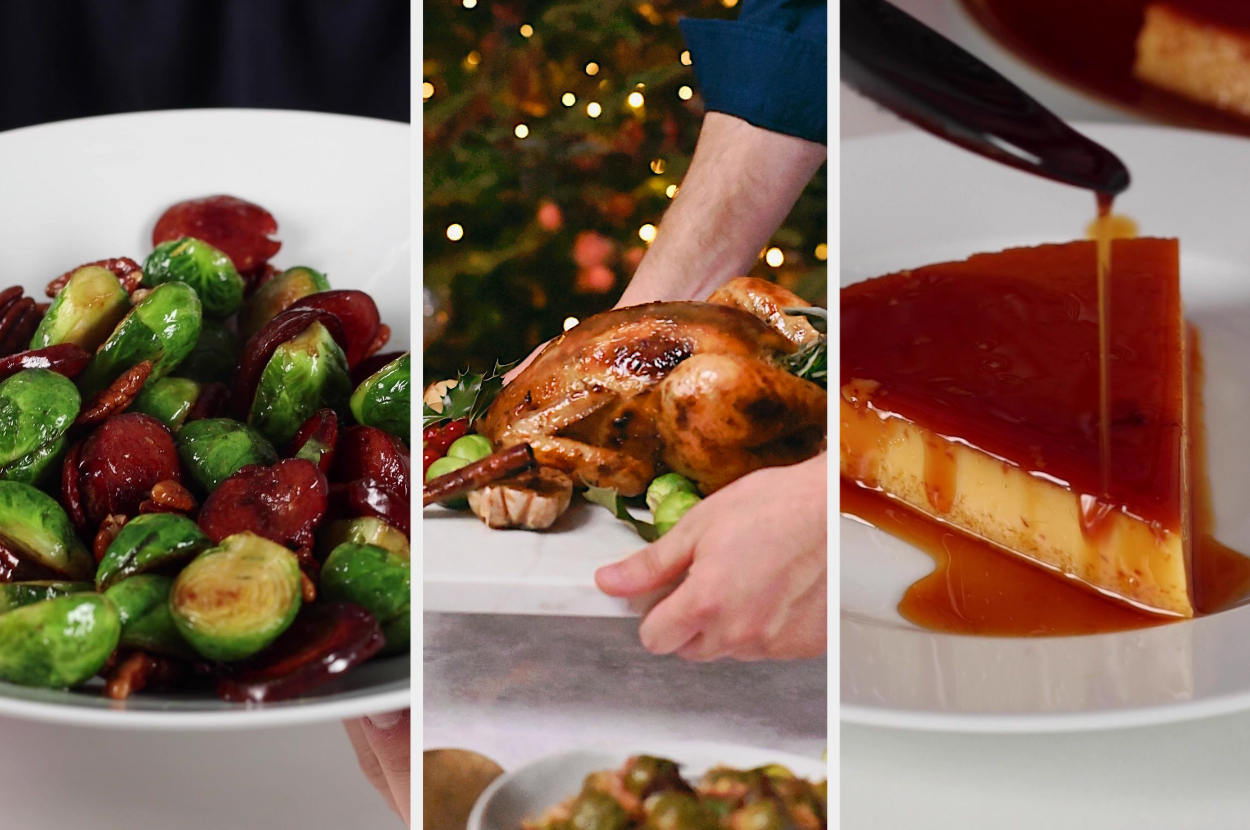
Are you still a sprout doubter? You won’t be once you’ve tried these bad boys. The magic to this recipe from Lirim Gula, aka @gulasgrub, is Sujuk, a dry, spicy and fermented Balkan sausage that takes this festive veg from no to “WOH!”
Advertisement
Cantonese Hoisin Spatchcock Chicken 🇭🇰
If you’d like something different to turkey, give this juicy chicken recipe from Romany Henry, aka @dudu_eats. a go. Spatchcocking ensures the crispiest skin, while the honey glaze and (hidden) garlic cloves add flavour.
Filipino Leche Flan🇵🇭
Who said Christmas pud has to be stodgy? Make this lighter-than-light Filipino flan from @godfrey_mercado instead (and appreciate his jumper while you do!). The secret is in not overstirring – and getting the final flip after cooking just right.
Advertisement
Ghanian Jollof Rice with Festive Suya Skewers🇬🇭
Representing Ghana, plant-based chef Rachel, aka @tastycurls, delivers the ultimate Jollof Rice recipe – with 100% vegan skewers on the side. This dish has spice, thanks to the Scotch Bonnet in the sauce – and we love her for it.
Haitian Macaroni Au Gratin🇭🇹
Carinne Julien, aka @carcarj brings sunny Haiti to these chilly climes, with a classy spin on Mac & Cheese. The key? Cheese and more cheese. Watch the vid to see she adds cheddar and parmesan, not once but three times. Yum!
British Toad In The Hole 🇬🇧
It’s not Christmas without pigs in blankets so praise be to creator Emma, aka @thesugafix_, for giving this British classic a key festive update. Serve this one up on Christmas day and you’ll be getting a round of applause from all.
Advertisement
Italian Wine Cookies 🇮🇹
These tasty Christmas cookies aren’t just for dunking in wine, you actually pour it in the cookie dough, too! You’ll also be using olive oil instead of butter. Could things get more Italian? Wonderful Lucia Fioravanti, aka @luu_cy, explains all.
Middle Eastern Christmas Turkey 🇸🇾
And finally, the turkey on top! Homam Ayaso (@homamino) adds his own special twist on this Christmas centrepiece, smothering it in delicious butter made aromatic with herbs, spices, citrus and a little festive magic for a turkey, in Homan’s words “like no other”. A very merry Christmas from him – and us!