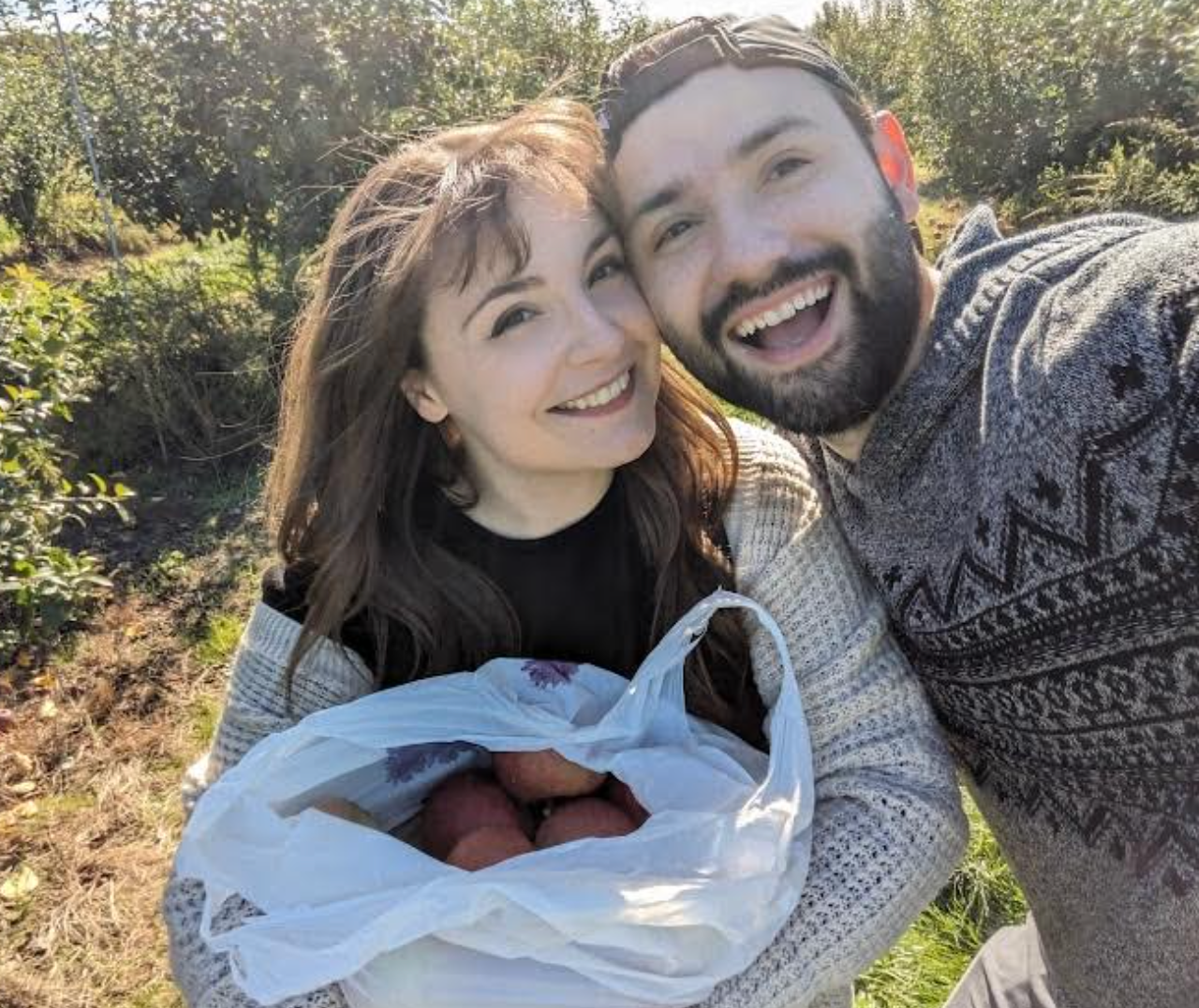
My Best Friend And I Are Straight Married Men, And We Tell Each Other ‘I Love You’

“I love you,” Doug said to me.

“I love you, too,” I answered before we pushed the red hang-up buttons on our iPhones at the end of our weekly call.

My wife gave me a funny look, as she did weekly, at the affectionate way we always concluded our conversations. I suspect his wife did, too.

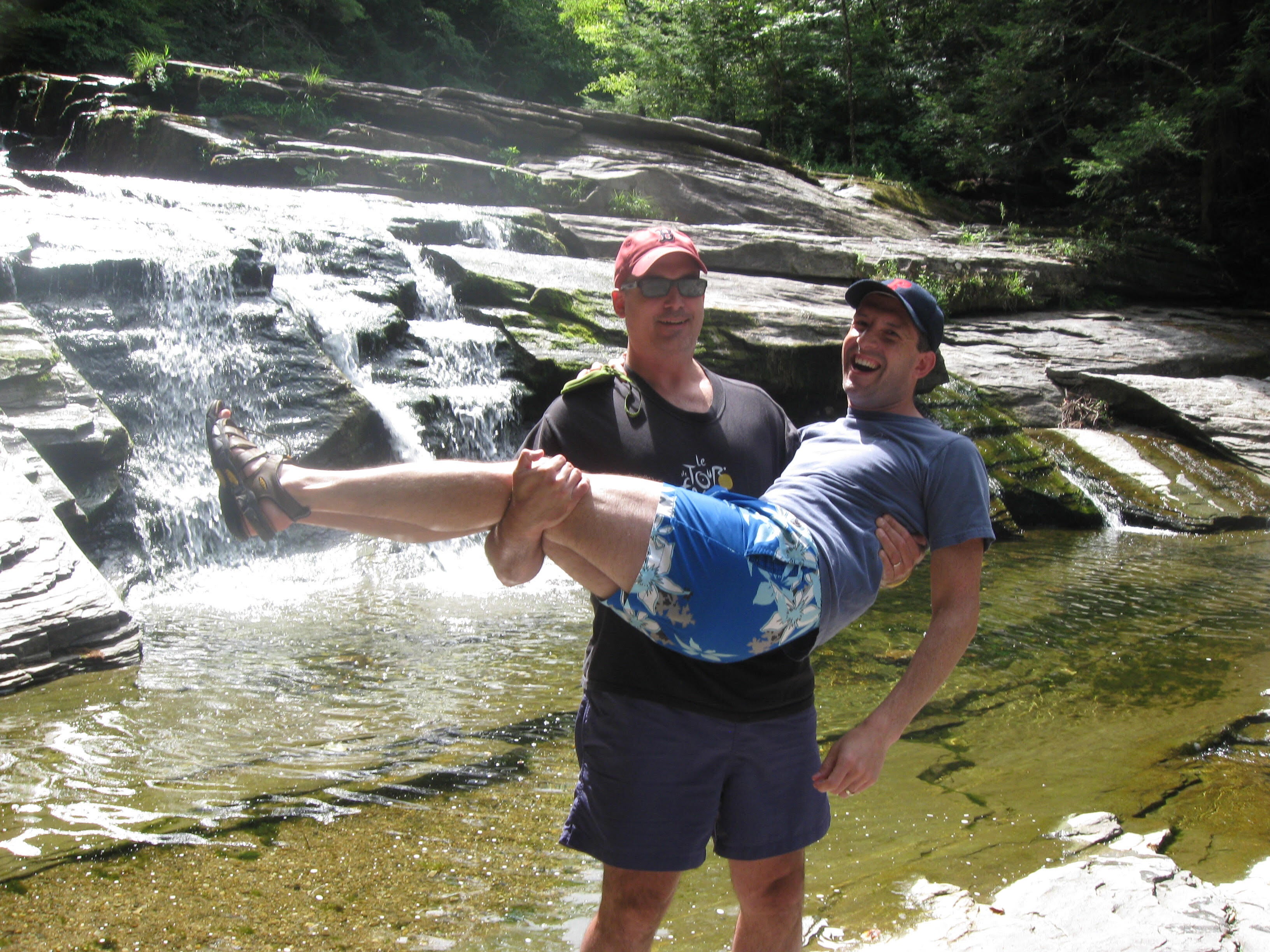
Doug has been my best friend since 1980, when we played Little League baseball together in Providence, Rhode Island. His team, which had yellow uniforms, was coached by a rough guy who would line the boys up before every game and whack their groins with a bat to make sure they were wearing their cups.

My team, outfitted in blue uniforms, was sponsored by a social club in the working-class Fox Point section of the city. Our end-of-the-season party was held in the smoky, dimly lit bar of our sponsors, where we sat at chipped wooden tables to consume our sodas and pizza.

A couple of regulars, parked in their usual spots, would watch us with bemused smiles as they nursed their beers. Some of us would end up occupying those same bar stools when we grew up. Some wouldn’t.

At the time, it was hard to predict who would fall into which camp.

Doug and I met on the base paths, though we can’t remember if he was running and I was playing first base or the other way around. Looking at us, it wasn’t obvious that this was a friendship that would deepen for decades.

Even at that age, he was tall, handsome and had an easy way with people that drew them in. I was of average height, skinny and more of a smartass. He was a Red Sox fan, while I followed my dad, a native of the Bronx, in rooting for the Yankees. His family was Protestant; mine Jewish. He became a lawyer; me, a doctor.

Our relationships with our fathers drew us together, though, as we both struggled to navigate them. My dad helped coach my baseball team, and in an effort to dismiss any accusations of favouritism, went overboard in proving that I would receive no special treatment.

He drove to games, the team’s baseball equipment packed loosely in the trunk of his Dodge Dart, while I walked separately. When I struck out, he threw his hat into the dirt of the dugout’s floor, disgusted at my inadequacies. If I missed a throw to first base, he wouldn’t talk to me for days.

Doug’s Dad, an owlish history professor who spent most of his time in a home office from which we were eternally banned, never attended a game. Sometimes, he wouldn’t even notice Doug for days.

One father too present, the other too absent. Doug and I turned to each other to make sense of these dads – and for reassurance that we weren’t bad kids.

When my dad threw a tantrum at my batting foibles, I’d look across the field and meet Doug’s calm brown eyes. Not your fault, they’d say. I came to his games to cheer him on.

“We loved each other, even back then. But at that age, at that time and where we grew up, we would never say it out loud.”

Siblings – and we each had one – are thrust upon us. Best friends you get to choose. And we chose each other.

We loved each other, even back then. But at that age, at that time and where we grew up, we would never say it out loud.

As is true with any long-term relationship, we had our ups and downs. In high school, Doug’s father finally noticed him, didn’t like what he saw, and Doug left to join his mother, who was living in Massachusetts.

We lost touch until our first summer after starting college. Doug tracked me down to the restaurant where I was working and left me a note with his address and phone number – he was staying with his sister by then. We took up again as if no time had passed. I still have the note.

Over the following years, we met each other’s girlfriends and went out to restaurants and movies as couples. I told him excitedly that I was going to propose, and he did the same before his proposal. Then, after the fact, we called each other to review every detail of how it had gone. We organised each other’s bachelor’s parties, were groomsmen at one another’s weddings and were early visitors to see each other’s first children.

We didn’t express our love, though, until my wife and I separated, in 2004. Doug and his wife had divorced by then after she stunned him one night by announcing that they were inherently incompatible and might as well just get it over with. For months after their split, I talked with him daily and told him he was a good person, that he was loveable. Eventually, he believed me.

I remember the exact moment we said it, too. I had moved to a dingy apartment that I had furnished with a small kitchen table, two chairs, an old couch and a futon. Broken, devastated at my own failure in marriage and at the thought of losing my young son, I sat on the bare floor of the bedroom sobbing into the phone as Doug listened, soothed and calmed.

“I love you,” he said, stressing the I. “I love you.” No matter what I thought of myself, or what the rest of the world might say, Doug would always love me.

“I love you, too,” I answered, reassured by him, and as if we had been saying these words to each other for years.

This time, he called me every day for months until I could reassemble the pieces of myself, the closing signature to our conversations now firmly established.

“I kiss my boys and tell them how much I love them just as much as I do my daughter.”

We both married again, both to women, both happily, and served as each other’s groomsmen one more time. Our families get together every year, despite the thousand miles that separate us, and our kids refer to the adults as uncles and aunts. We’re not gay – though we joke that if we were, we would choose each other as husbands.

Our wives look at us funny when we say that, too.

A cultural shift has occurred in the 40 years since Doug and I played Little League baseball with each other, and it isn’t as strange today for two straight men to express their feelings for one another as it once was.

However, we recognise that our openness still isn’t the norm, so we try to model how we treat each other for our children, so hopefully, it will be the norm for them. We say the words as they listen to our calls, and I kiss my boys and tell them how much I love them just as much as I do my daughter.

Over time, Doug and I developed our routine of weekly phone calls, and text a lot in between. The topics of our tête-à-têtes range from how work is going to recent bike rides to the occasional boyhood reminiscence, but always settle on parenting.

I now attend my kids’ sporting events and cheer them on from the sidelines. Doug coaches his daughter’s soccer team. Still, we worry about the relationships we’ve developed with our own children. I ask Doug for advice on how he would handle the issue of the week that has arisen in my family, and he does the same with me. I tell him how much I admire the father he has turned into; he echoes the compliment back.

And then we tell each other “I love you,” a lot more comfortable in saying the words out loud than when we were younger, and maybe a little more comforted in the dads we, ourselves, have become.

This piece was originally published in June 2021 and we’re rerunning it now as part of HuffPost Personal’s “Best Of” series.

Mikkael A. Sekeres, M.D., M.S. is Chief of the Division of Hematology and Professor of Medicine at the Sylvester Comprehensive Cancer Center, University of Miami. He is a widely published essayist and the author of “When Blood Breaks Down: Life Lessons From Leukemia” (The MIT Press). Follow him on Twitter at @MikkaelSekeres.

Do you have a compelling personal story you’d like to see published on HuffPost? Find out what we’re looking for here and send us a pitch!

Share Button

I Was Terrified Of Public Speaking For Years. Here’s How I Finally Conquered My Fear

When my younger sister called in November 2022 to say she was getting married, I was slow to connect the dots.

“YAAAAY!” I screeched into the phone. Meg had been my maid of honour a couple of years earlier, and now I’d be hers. I turned and roared over my shoulder, “Meg and Ken got engaged!” in the general direction of my husband, Nick.

From 10 feet away, he grinned and winced, possibly reflecting on his own marriage to a human car alarm. However, after a giddy few minutes of chatter, the realisation hit me like a bridal bouquet to the face: “Oh, crap.”

“Yep,” Meg said.

“I have to give a speech at your wedding, don’t I?”

“Yep,” Meg confirmed.

And just like that, my excitement mutated into 270 days of dread.

Some people get butterflies in front of an audience. For me, it’s killer bees. My extreme fear of public speaking, or glossophobia, isn’t mere nervousness – it’s a personal horror show.

My symptoms are intense: chest pain, a churning stomach, and knees so trembly I’d make a newborn giraffe look graceful. As in any good scary movie, the danger feels real.

Whether it’s five people or 50, my nervous system floods with adrenaline like I’m facing Hannibal Lecter instead of some barely interested co-workers.

Why such an extreme reaction? Science has my back. The human brain is wired to perceive public speaking as a genuine threat, a response rooted in our evolutionary history.

When we look at an audience, all those eyes staring back can trigger the same primal fear our ancestors felt on the savannah. As comedian Deborah Frances-White said in her 2015 Ted Talk, “the fear of public speaking is essentially the fear of being eaten because audiences look a lot like lions”.

Logically, I know I’m not in mortal danger, but my lizard brain disagrees. The fear is bad enough, but the social pressure – the dread of being judged and the lack of control – makes it worse.

I panic about losing my train of thought, about saying something stupid that gets immortalised in a group chat, and about mispronouncing words I should know. (A co-worker once called me “brave” for using the word niche in a presentation. Is it nitch or neesh? I learned a dozen synonyms so I never have to say it again.)

My fear is irrational, but I’m not alone.

Comedian Jerry Seinfeld once joked that for many people, their top fear isn’t death – it’s public speaking. “This means, to the average person, if you have to be at a funeral, you would rather be in the casket than doing the eulogy,” he quipped.

Of course, plenty of things are scarier than public speaking. In the 2024 Chapman University Survey of American Fears, nearly 29% of respondents named it as a top phobia. It didn’t even crack the top 10 list.

Still, for people who do have this fear, it can be paralysing – even for those accustomed to the spotlight.

I’ve never gone near a world stage, and I hope to keep it that way. But I find comfort in horror stories like these, as if they’re talismans that might protect me against embarrassment.

I’m unsure when or why my glossophobia started, but by high school, I avoided public speaking at all costs. That choice profoundly shaped my experiences, friendships and mental health. Although I was interested in theatre, for instance, I stuck to stage crew. Auditioning for the fall play was simply out of the question.

Yet as my fear of public speaking swelled, so did my love for writing. English class became a sanctuary. Unlike public speaking, writing offered the glorious freedom to edit what I wanted to say, to tinker until my words felt just right. I could substitute one for another, sculpt them into sentences, and create something resonant and articulate and unmistakably me.

After high school, I attended the University of Iowa, home of the world famous Writers’ Workshop. The sidewalks of downtown Iowa City are studded with bronze plaques honouring writers like Flannery O’Connor and Kurt Vonnegut.

As an English major, I devoured works by George Eliot, David Foster Wallace and Mary Oliver. I found my voice in literary critiques and painstakingly crafted essays. The written word never made my palms sweat, at least not until the due date. And I made sure to avoid any elective that mentioned “oral presentation” in its syllabus.

Core classes were another story. For my social science credit, I took Introduction to American Foreign Policy. That end-of-semester presentation still haunts me. I remember the hot flush of my cheeks, the stuttering of my heartbeat, and the sickening realisation that my audience was too uncomfortable to make eye contact.

But that’s the thing about public speaking: the more you avoid it, the more daunting it becomes.

With each presentation, I unconsciously trained my brain to accept distress as part of the process. I convinced myself there was nothing I could do to overcome my fear. My worsening anxiety shaped my career prospects, too.

As I approached graduation, I ruled out public-facing professions like teaching and law. Instead, I envisioned myself as a book editor, accompanied by a red pen and the relative safety of solitude.

By 2010, when I landed my first publishing job, my public speaking fear was debilitating. As it turned out, making books required constant collaboration. The corporate environment only made things worse. Each workday felt like a high-stakes performance, and my older colleagues were intimidating with their dark suits and Blackberries. And there were So. Many. Meetings. I came home drained every night.

“I had to talk in a meeting today,” I’d groan to my then-boyfriend Nick, collapsing in a heap on the couch.

“And you knew what you were talking about,” he’d respond gently. But logic offered little comfort in the face of my mental and physical anguish.

As time went on, I discovered that promotions and new jobs didn’t alleviate my distress – the stakes only got higher. The irony was hard to swallow. I had an English degree, a discipline rooted in critical thinking and the beauty of language.

Yet there I was, reduced to a Wacky Waving Inflatable Tube Man in front of people who rattled off buzzwords like “synergy” with a straight face.

My panic about public speaking was all-consuming. It kept me up at night, savaged my weekends, and manifested as migraines. It held me back from new opportunities – No way I can do that job, I’d think.

I tried to compensate by overpreparing for presentations, but robotic rehearsals usually backfired. Instead of boosting my confidence, I felt like an actor searching for a cue card. And the typical “overcome your fear” advice never seemed to help.

Think about your audience. Trust me, I am.

Make eye contact. But now I’ve forgotten what I was saying.

Try a power pose. Well, I’m standing on a step stool because I’m too short for the podium, so that ship has sailed.

Five years passed. Finally, I asked for help.

In 2015, during an annual checkup, I blurted out that public speaking anxiety was ruining my life. I had friends who took Xanax for their anxiety disorders, I explained. Was that an option for me? My doctor sat back in her seat and said something that shocked me: “I understand.”

She told me she suffered from the same fear and coped by taking a beta-blocker before speaking at conferences. I perked up.

Beta-blockers are often prescribed for heart conditions. They’re not FDA-approved to treat performance anxiety, but for decades, physicians have prescribed them “off label” as relief from its physical symptoms. These medications block the effects of adrenaline, essentially stopping the “fight-or-flight” feeling in its tracks. No shaking, no racing heart, and, unlike Xanax, no risk of addiction.

My doctor wrote me a prescription for propranolol – a tiny orange tablet to swallow 30 minutes before public speaking. She explained it had minimal adverse effects and that I was a good candidate for it. A little drowsiness instead of blistering panic? I practically skipped to the pharmacy.

That 10-milligram pill changed my life.

Propranolol doesn’t treat anxiety itself, so profound dread remained my constant companion. But during my next presentation, I was startled to discover my legs didn’t wobble when I approached the podium. My hands were steady and dry as I clutched the remote. Most surprising of all, my head stayed clear.

With the humiliating physical symptoms under control, I could focus on what I needed to say. I wasn’t enjoying myself, but the situation was tolerable. After I returned to my seat amid applause, I went limp with relief. And what was that – a tiny twinge of hope? Finally, I had something in my tool kit to help me function like a normal adult.

I had intended for propranolol to be a temporary solution to my public speaking fear, but it soon found a permanent home in my purse. The medication helped with performance evaluations, job interviews, difficult conversations, and – let’s be honest – Election Night 2020.

That year, I moved into a senior leadership position at work and started running meetings instead of attending them. It was a whole new fear unlocked.

“I wouldn’t know you were nervous if you hadn’t told me,” a work friend remarked once. “You seemed so chill today.”

“Excellent. I’ve fooled you all,” I joked.

On the outside, propranolol did help me appear calmer in the spotlight. But the internal doomscrolling remained, and the contrast between my exterior composure and inner chaos made me feel like a fraud.

In 2021, I took a big step and found a therapist. Erica (not her real name) wasn’t seeing patients in person because of the pandemic, but telehealth suited me fine.

Over the next couple years, Erica taught me to trust “Future Jenna.” I discovered I didn’t need the ritual of overpreparing. I could ignore the inner voice that said, You suck at presentations, because years of evidence proved otherwise.

I realised I didn’t need propranolol every time. Instead, Erica taught me grounding techniques like progressive muscle relaxation. She helped me understand that adrenaline before public speaking could be energizing rather than something to suppress with medication. And, ultimately, Erica listened to a lot of yapping about Meg’s wedding, which was planned for August 2023.

Each exciting wedding planning milestone – dress shopping, food tasting – was also a stressful reminder of my impending speech. Meg would’ve let me off the hook if I’d asked, but hot, squirming shame held me back. I was the older sister – the matron of honour. I didn’t want to let her and Ken down.

As mid-August rolled around, I felt ready. I had written a heartfelt, funny toast. And I decided to give it without propranolol. It would be a test of my hard-won coping strategies, in front of the friendliest audience I could hope for.

Meg’s wedding arrived on a scorching hot Chicago day. And it’s true that I overprepared: I printed and stashed not two but three copies of my speech. It’s also true I had no trace of propranolol in my system. I finally learned vulnerability doesn’t make us weak – even if your knees shake during a wedding toast.

At the reception, when the DJ called my name, Nick squeezed my hand hard. As I stood to accept the microphone, my heart started galloping – not entirely without fear, but mostly from sincere joy. I turned to my beautiful sister and my new brother-in-law and beamed.

There’s a video of the speech somewhere. I’m still working up the courage to watch it.

Jenna Jakubisin is an editor and science writer. She has an MA in Science Writing from Johns Hopkins University and a BA in English from the University of Iowa. Her work has appeared in Undark, Science Editor, and others. She lives and works near Chicago, Illinois.

Do you have a compelling personal story you’d like to see published on HuffPost? Find out what we’re looking for here and send us a pitch at pitch@huffpost.com.

Share Button

I Spent Years Nearly Drinking Myself To Death. Then A Stranger Sent Me A Photo That Made Me Turn My Life Around

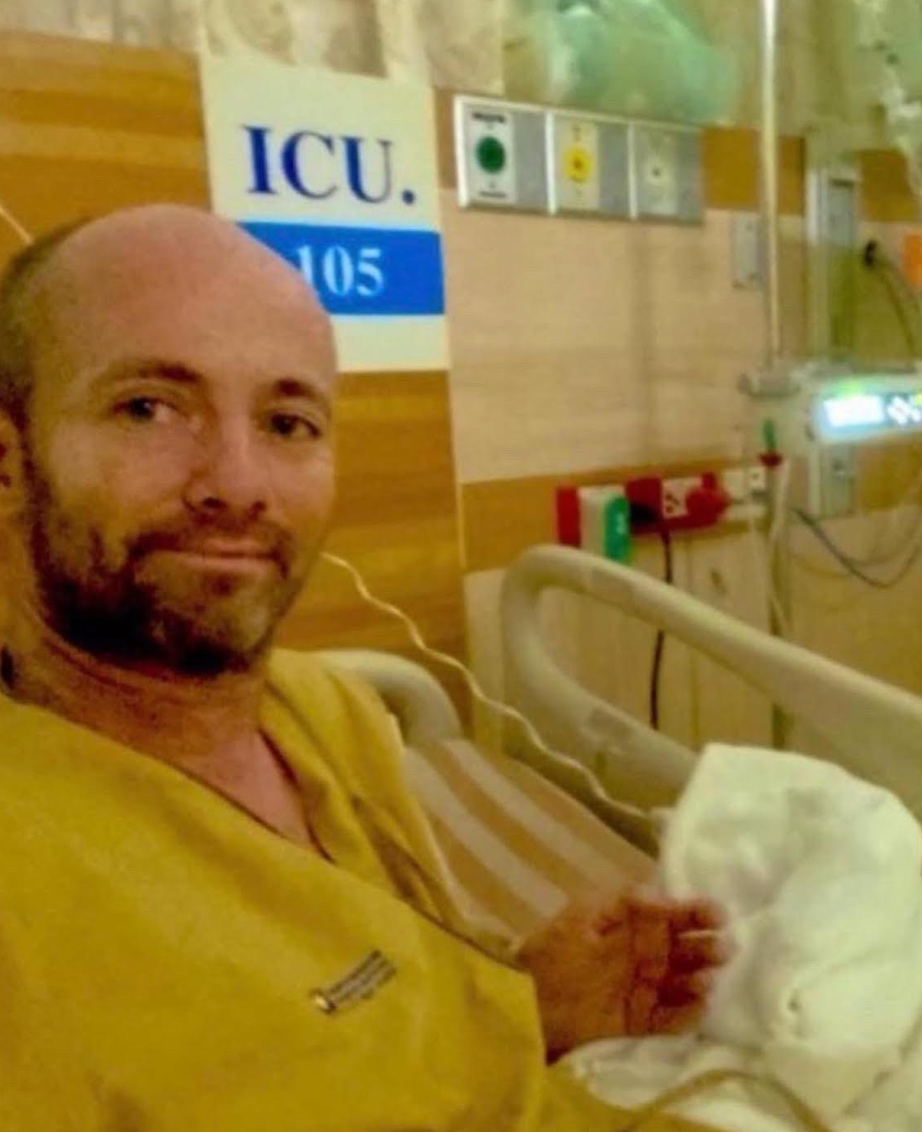
Four years ago, I woke up in an ICU in Thailand. My liver was failing. I was drinking three bottles of wine a day, chasing it with whiskey, and swallowing handfuls of Valium. I wasn’t trying to numb the pain anymore – I was trying to kill myself. I just didn’t have the guts to do it all at once.

Moving to Thailand was supposed to be my big fix. Back in Ireland, I’d built and sold a successful media company with 40 staff members across three cities. On paper, I was doing well.

In real life, I was a wreck. I’d been a functioning alcoholic for years, hiding behind client meetings, late nights, and a culture where drinking hard was seen as normal. I was burned out, lost, and clinging to the hope that sunshine and distance might change something.

It didn’t.

In fact, Thailand made it worse. The freedom, the quiet, the time – it gave my addiction space to grow. With no structure around me, I lost the plot completely. I drank until I blacked out, every day, for months. I was surrounded by beaches and blue skies, but I wanted to disappear.

The ICU stint scared me straight. It was rock bottom. I left the hospital and never touched a drink again. I woke up and realised I had two options: keep going and die, or stop and face everything I’d been running from. That was the day I quit. I haven’t had a drink since.

But getting sober was just the start. I needed something bigger to hold onto. Something that gave the days shape.

That’s when the dogs came in.

At first, it was just a couple of strays I saw around the island. They were sick, mangy, limping. I left out some food. The next day, more showed up. Then more. Before I knew it, I was feeding dozens – then hundreds. The need was overwhelming. Thailand has millions of street dogs, and most of them are barely surviving.

Nobody else seemed to be doing much. So I figured maybe I could.

What started as something to keep me busy became the centre of my life. Today, I run a sanctuary called Happy Doggo. We feed more than 1,200 dogs every day. We rescue the ones that have been hit by cars, dumped, abused, and left to die. We also fund the sterilisation of thousands a month, which helps stop the suffering before it starts.

These dogs have been through the worst, but they still want to trust. They still look at you with hope. That guts me every time.

One dog in particular changed everything.

Her name is Tina.

I got a WhatsApp message one day – a photo from someone I didn’t know. It showed a dog chained under a shack up in the mountains. She was skin and bones, her fur was matted, and she was lying in her own filth. Her eyes were what really got me: broken, but still alert. I’ve seen a lot of rough cases, but this one hit different.

I called Rod, my Aussie mate who helps with rescues, and we drove up into the hills. When we found her, she didn’t move much. Her chain was short, the ground was hard, and her body looked like it had given up. But when I reached out, she leaned into my hand. No fear. No flinching. Just surrender.

The locals weren’t fussed. They said she was old, or maybe hit by a car. They didn’t argue when I asked to take her.

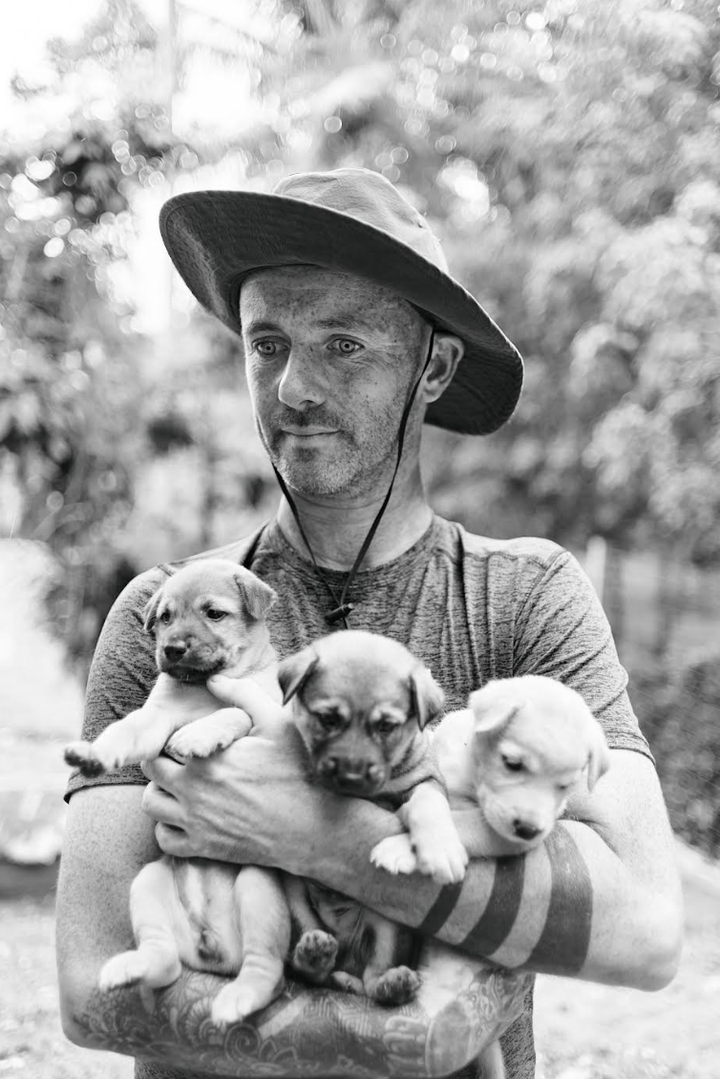
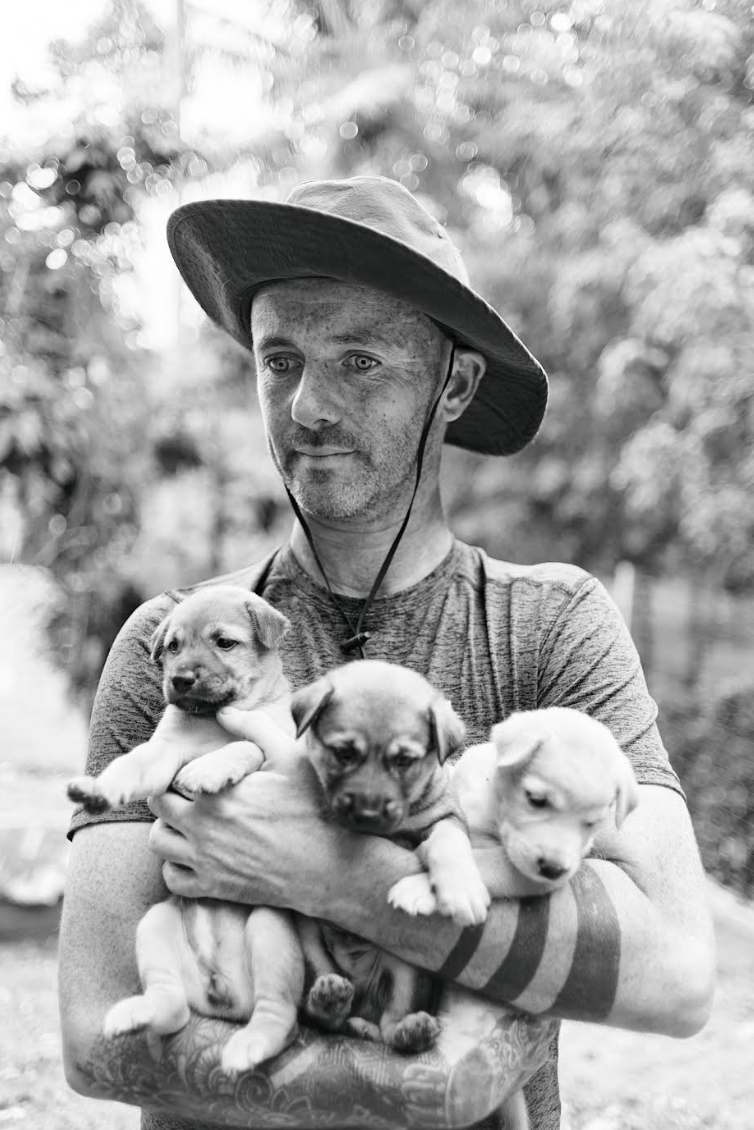
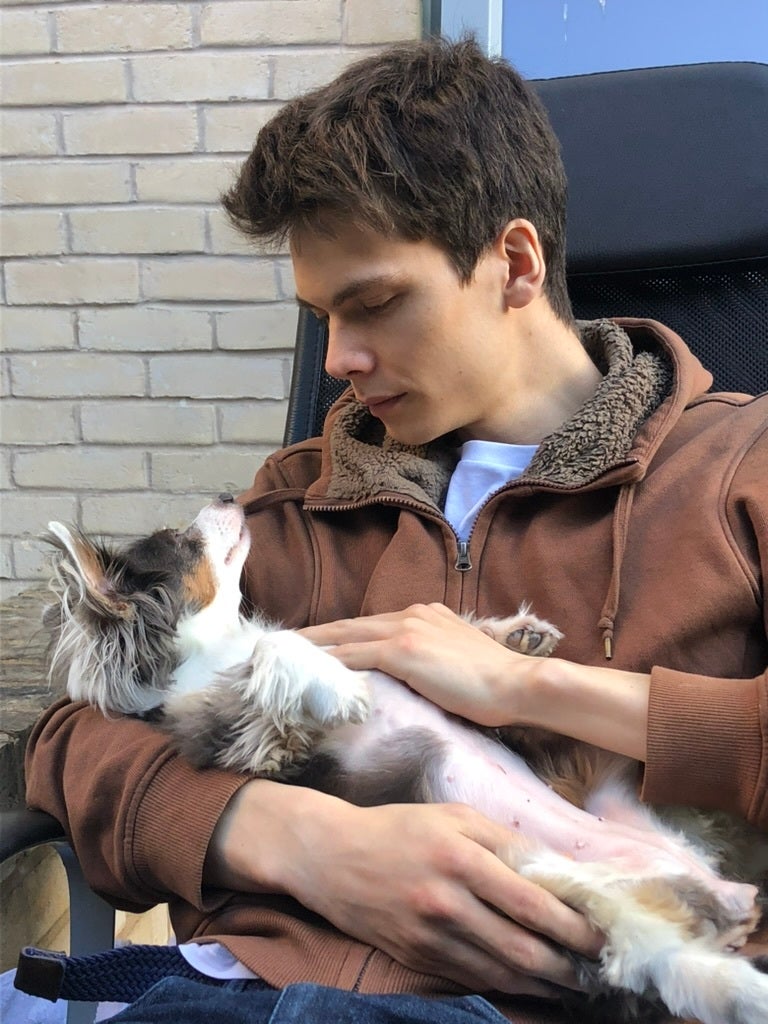
The author with rescue puppies in Thailand in 2023.

Courtesy of Niall Harbison

The author with rescue puppies in Thailand in 2023.

The vet didn’t sugarcoat it. Tina was riddled with parasites, she was anaemic, and her kidneys weren’t great. But the shocker was she was a golden retriever. You don’t see many of those on the streets here. The vet reckoned she’d been used for breeding, over and over, and then dumped when she couldn’t deliver any more litters. Used, then thrown away.

That night, I wanted to give Tina something good. A proper meal. Real food. Something she hadn’t had in a long time.

It nearly killed her.

At the time, I didn’t know that starving dogs can’t handle big meals right away. Within an hour, her stomach ballooned. She started struggling to breathe. I freaked out. My colleague Valeria knew what it was – bloat – a deadly condition where the stomach fills with gas and can twist. If it’s not treated fast, they will die.

We didn’t have a vet on hand. It was just us, a needle, and a lot of panic. Valeria stuck the needle in and released the gas. It hissed out like a pressure cooker, and I thought, maybe, just maybe, we’d bought her a bit more time.

That night, I sat beside Tina listening to her breathe. I thought about the times I nearly died – all the nights I’d wanted it to end – and here I was, doing everything I could to keep this broken little dog alive.

Over the next few days, Tina stayed close. She slept in my bed. Ate tiny meals. Slowly, her fur started growing back. Her eyes softened. She wagged her tail. One day, after a bath, a tuft of hair stuck up like something out of an ’80s music video. I looked at her and thought, You’re Tina Turner.

That’s how she got her name.

The author with Tina in Thailand in 2023.

Courtesy of Niall Harbison

The author with Tina in Thailand in 2023.

Tina became the face of Happy Doggo. People connected with her story – and I think it’s because we all love a comeback. I certainly do.

She reminded me of myself. Shackled. Exhausted. Written off. But still here. Still trying.

Before all this, I thought success meant money, nice things, a big exit. I had those, and I was miserable. Now, I go to sleep knowing I’ve helped someone survive another day – even if that someone is covered in fleas and chewing my flip-flop. I’ve never felt more grounded.

Sobriety gave me my life back. But the dogs gave me a reason to live it.

People ask why I do this – why I spend my days scooping poop, chasing donations, running around after sick animals. The answer’s simple: because someone has to. And because, somewhere along the way, they saved me, too.

I wrote a book about Tina – and about all of this. It’s called Tina: The Dog Who Changed the World. It’s her story, but it’s mine as well. A story about getting knocked down, and choosing to get up again. About how the smallest life can give you the biggest reason to keep going.

There are 500 million street dogs in the world. I’ve made it my mission to save half of them. Sounds mad, I know. But I believe in impossible things now.

I believe a dog can save a man’s life. And I believe Tina wasn’t just a dog. She was the start of everything.

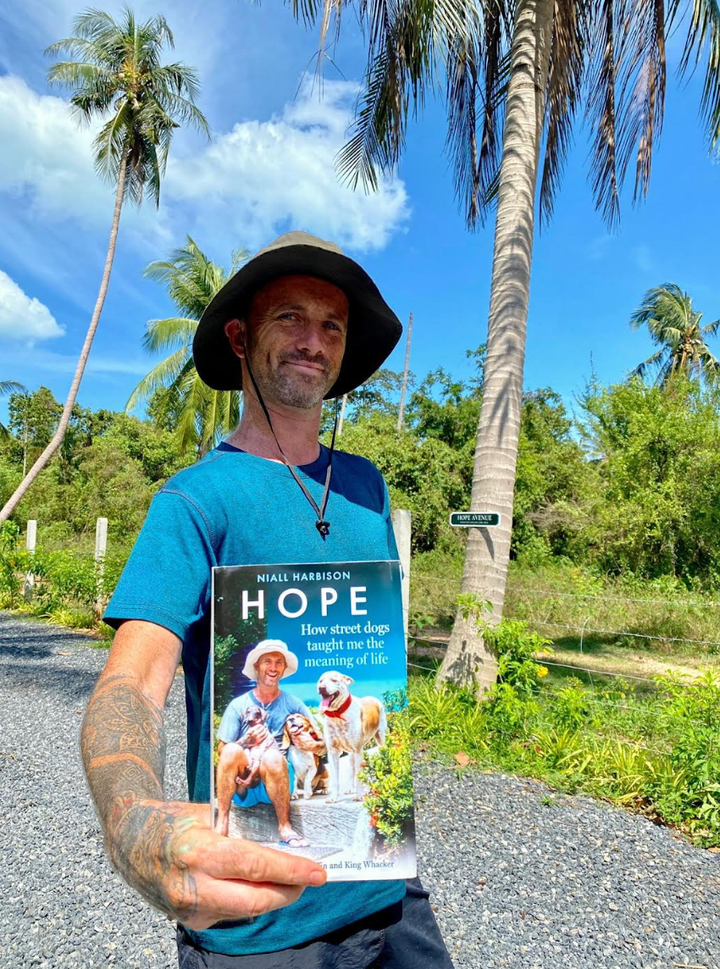
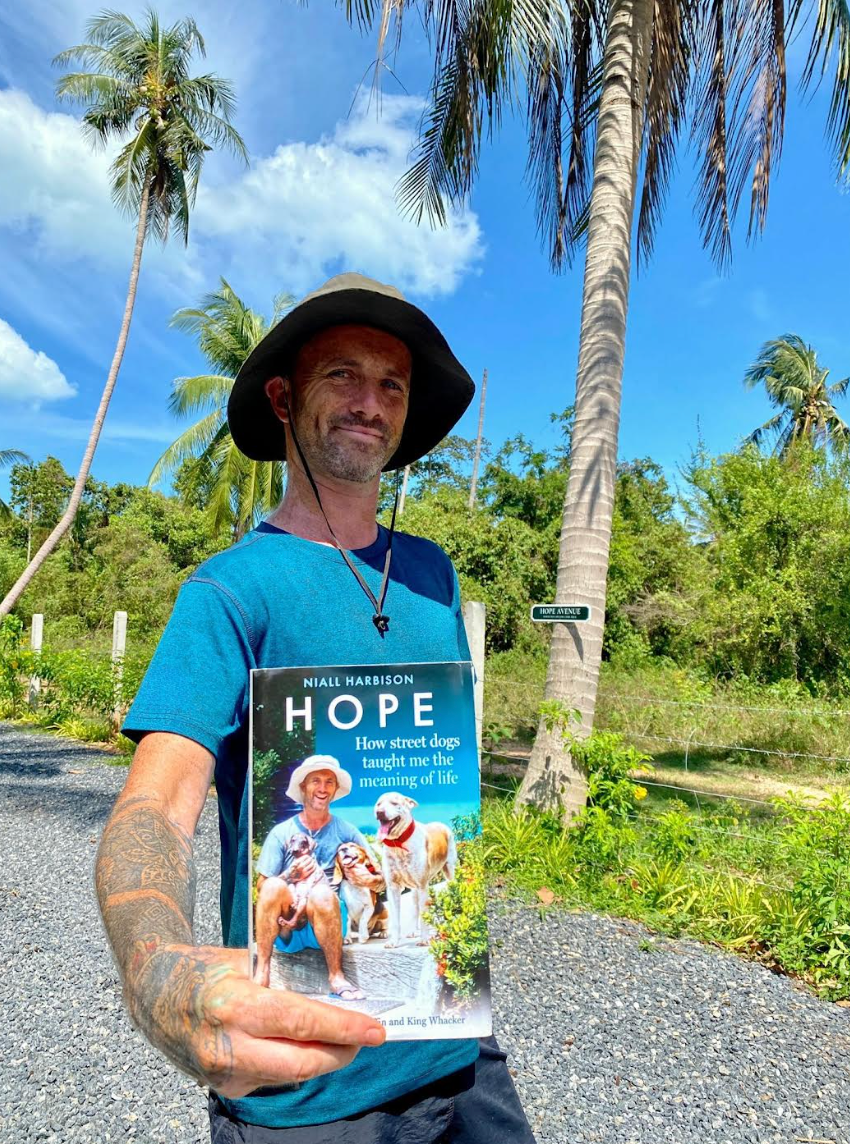
The author holding the first book he published, "Hope: How Street Dogs Taught Me the Meaning of Life."

Niall Harbison is an author, former tech entrepreneur, and street dog rescuer based in Thailand. A recovered alcoholic, he now runs Happy Doggo, a nonprofit that feeds and cares for more than 1,000 street dogs every day. His memoir, “Hope: How Street Dogs Taught Me the Meaning of Life,” became a Sunday Times bestseller, and his latest book, “Tina: The Dog Who Changed the World,” which appeared on the New York Times best-sellers list in 2025, honors the rescue dog who started it all. Follow his journey at happydoggo.com, on Instagram (@niall.harbison and @wearehappydoggo), or on YouTube at http://youtube.com/@wearehappydoggo.

Do you have a compelling personal story you’d like to see published on HuffPost? Find out what we’re looking for here and send us a pitch at pitch@huffpost.com.

Help and support:

Share Button

When I Was 7, I Stopped Feeling Any Kind Of Pain – Now I Know Why

I got my wisdom teeth pulled without anesthesia or laughing gas.

When the dental surgeon sent me home with a packet of prescription-strength Advil, I didn’t take it. Instead, I drove to the community centre and taught my weekly guitar class, my cheeks swelling into grapefruits as my students practiced their D-G-A chord progressions.

Ego-wise, calling out wasn’t an option (I was only loveable because I was reliable, I told myself) and this didn’t warrant a sick day, anyway. I barely felt a thing.

I also don’t remember feeling discomfort when my knee popped out in gym class, or when I fainted during a sweltering marching band parade, or when my appendix almost exploded.

My high pain tolerance didn’t just apply to physical wounds, either; it also dulled the emotional ones. Fear, guilt, awkwardness, jealousy, grief, heartache – I could numb it all.

I learned this skill when I was 7 years old.

My older brother had undiagnosed bipolar disorder. Emotions swelled inside of him, too big to contain, so he’d punch holes in the walls, or burst into our rooms at 3am, or threaten to end his life. Reactions only fuelled the fire – my mother’s anxiety and my father’s guilt like kindling below the log.

Coaxing my brother up from a low or down from a high required a calm, collected presence – someone who could stifle their reactions and use logic to mediate the situation. Someone whose own emotions didn’t get in the way. I was the ideal candidate.

By middle school, my parents had started relying on me to deescalate his episodes. When I succeeded, I was called all of the things I wanted to be: a good girl. The easy one. Such a blessing. Twice, the dispatchers on the other end of the 911 call complimented my maturity and bravery. So did the cops who took my brother to yet another inpatient facility.

Eventually, I wore my robotic mask into the world to see how other people responded. Teachers loved that I got straight As and never spoke out of turn. Friends stopped calling me bossy. Adults deemed me “one of the most well-mannered children they’d ever met”.

It seemed that everyone else liked me better when I had no needs of my own, so somewhere along the line, my emotional suppression went from a temporary tactic to a permanent state of being. By the time my best friend died by suicide when we were 19, I felt almost nothing.

The author and her best friend Will on a trip to Disney World in 2008, four years before his death.

Courtesy of Maria Cassano

The author and her best friend Will on a trip to Disney World in 2008, four years before his death.

This skill had its perks, but it also had its detriments: all logic and no emotion makes Maria an abysmal girlfriend. The only thing I could feel was the hit of dopamine that accompanied a new love interest, so I sabotaged relationship after relationship in pursuit of it.

Yes, I was incapable of feeling pain – but I was also incapable of empathy, vulnerability, and connection.

At 28, I ended a three-year relationship with a good guy so I could pursue an impulsive fling with a not-so-good one. Something had to give. I was tired of being a romantically inept robot. Desperate to figure out what was wrong with me, I booked an appointment with a psychologist who specialised in childhood trauma.

Right off the bat, she diagnosed me with a dissociative disorder.

If I were capable of feeling anything, I would’ve felt relief. My high pain tolerance suddenly made so much sense.

According to WebMD, “dissociation is a break in how your mind handles information,” and that includes sensory inputs from your body.

One study in The Journal of Pain found that those with PTSD-induced dissociation exhibited hyposensitivity to pain. Basically, the higher the dissociation, the higher the tolerance. An overload of trauma can cause the nervous system to shut down entirely.

In one of our intake sessions, I asked my therapist why I felt so addicted to my numbness. Her response was fascinating.

“Your body has its own pain-relief system, and it actually produces opioids,” she said. “When you’re dissociated, the endogenous opioid system is in overdrive. You’re pumping out endorphins all the time to protect yourself from emotional or physical pain. Like any drug, it’s addictive.”

In other words, I didn’t need anaesthesia because I was constantly making my own.

I wanted to be human again. I wanted to feel love, joy and gratitude – but, like a bottle of Vicodin, dissociation was my coping mechanism.

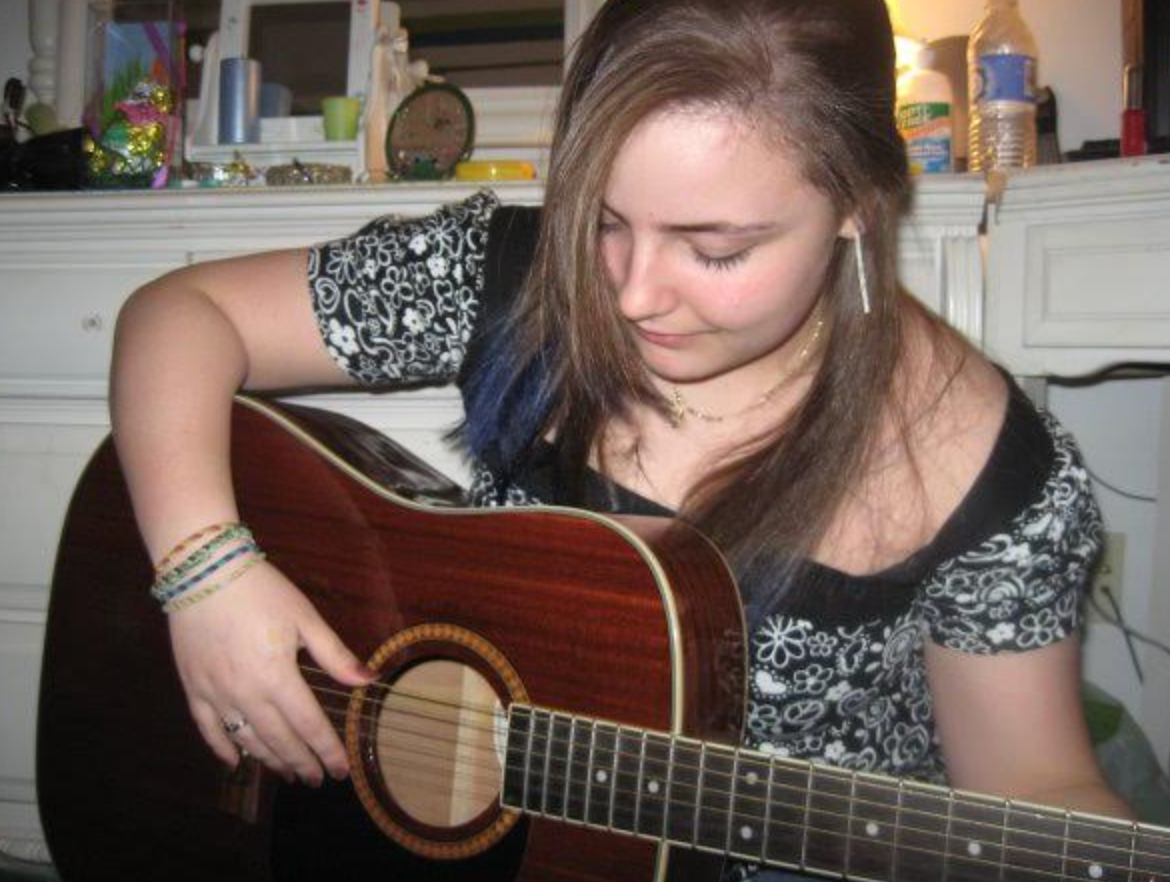
The author playing guitar in her bedroom at the height of her dissociative disorder.

Courtesy of Maria Cassano

The author playing guitar in her bedroom at the height of her dissociative disorder.

So much of my identity was tied up in my numbness. I believed I would no longer be fiercely reliable. I’d have to call out sick from work. I’d have to stop answering my phone at all hours of the night for the people who loved me because I lacked boundaries. I’d be susceptible to illness, anxiety, stress, and worst of all, heartbreak. I would no longer be the girl who could handle anything.

I didn’t know who I was without my dissociation, but I wanted to find out.

Four weeks after my diagnosis, I started Eye Movement Desensitization and Reprocessing, or EMDR. It’s a psychotherapy technique that uses bilateral eye movements to stimulate memory processing, which helps the brain recover from trauma. Essentially, you focus on your worst memories and move your eyes back and forth.

My hopes were not particularly high. How could something as small as eye movements fix something as big as depersonalisation-derealisation disorder?

But EMDR worked, and it worked fast.

In my first EMDR session, my therapist told me to focus on my earliest negative memory while I watched a blue square bounce back and forth on my computer screen. I did it once: Nothing. Twice: Nada. Three times: Nope. And then the dam broke open. Sensations poured into my cells. I could feel everything, all at once.

One emotion loomed especially large, casting a shadow over the rest: I was terrified of being unlovable. That’s why I left everyone else before they could leave me — before they could sense the messiness underneath the cold, polished armour.

This odd therapy technique completely overrode my body’s hyperactive pain-relief system. Over the next 48 hours, I experienced all of the hurt, grief, abandonment and heartache I had blocked out for the past two decades. It was excruciating, and I wanted nothing more than to turn back into a robot.

The author and her boyfriend Seb picking apples on a gorgeous fall day.

Courtesy of Maria Cassano

The author and her boyfriend Seb picking apples on a gorgeous fall day.

But with the help of EMDR and this knowledgeable, compassionate therapist, I kept going. We spent the next four years sifting through these memories and emotions, finally processing them so I could let them go.

When pain arose, I felt it. I let the messiness settle in my body, making peace with its presence. Despite the raw discomfort of vulnerability, the hurt of rejection, the guilt of past mistakes, and the occasional panic attack, I resisted the foggy, familiar lure of numbness.

I’m still tempted by it – I’m sure all addicts are – but I’ve never gone back.

Now, I’m in a healthy relationship with a kind, supportive man. He slept over one night two years ago and never left, but I don’t feel the urge to jump ship. I no longer want to chase the dopamine hit of someone new. I want this man to know and accept every part of me, the way I’ve come to know and accept every part of myself.

While I’m not cured (healing is a nonlinear, never-ending road), I’ve learned that pain is a fundamental part of life. Without it, you’re not truly living. It’s the catalyst for transformation. It’s the compass that leads you toward growth. It’s the contrast that illuminates all the beautiful parts of being a fractured, feeling human being.

Maria Cassano is a writer and editor whose work has appeared in Bustle, CNN, Food & Wine, Allure, NBC, The Daily Beast, Elite Daily, and YourTango, among dozens of other publications. Represented by Emma Fulenwider at WordServe Literary, Maria’s memoir about healing from dissociation, “Numb, Party of One,” is currently out on submission to publishing houses. Learn more about it at mariacassano.com/numb.

Do you have a compelling personal story you’d like to see published on HuffPost? Find out what we’re looking for here and send us a pitch at pitch@huffpost.com.
Share Button

My Son And I Were Turned Away From Ikea’s Play Area For 1 Disturbing Reason. Here’s What They Don’t Understand.

In late June, a few days before Disability Pride Month began, I took my 7-year-old child on an outing to an Ikea store.

As I filled out a waiver so he could enter the store’s small play area, I noticed I was the only parent present.

It turned out that parents typically drop off their children while they shop, but that wasn’t an option for me.

My son has a rare, severe form of epilepsy called Dravet syndrome, among other medical conditions, and he can’t be without a grown-up carrying his seizure rescue medication, as I was.

The scary reality is that around one in five children with Dravet syndrome die in childhood because the seizures can be so severe. There is currently no cure.

I explained this to a staff member and told her that I’d need to be in the room with my child. She informed me that no parents were allowed into the play area.

“But isn’t there a policy for kids with disabilities?” I asked.

She told me a service dog could accompany a child, but a parent could not.

I stopped signing the form. I said to the staff member, “That’s discrimination against kids with disabilities.” She didn’t respond.

I hadn’t known about the store’s play area before this visit, and I had been happy to see that it wasn’t a playground – just a space with toys like a train set and dart board. Since my son had a seizure at an indoor playground a year ago, I’d stopped taking him to them. But now, even this play space was not an option for him.

My child and I were both upset. He loves going to Ikea to walk through the showroom and eat in the cafeteria – a place open enough that it was the only indoor restaurant he ate in during our four years of masking during the Covid-19 pandemic. We have several Ikea furniture items, including bunk beds, a coat/shoe cubby and a toy chest. He helped us build them all.

Since his severe seizures began about two years ago, he’s had to change his life in significant ways. Heat, sports, just running around to play, illness and excitement have all become triggers for him. Summer is especially hard – on hot days, he can’t be outside. In fact, we had driven the hour to Ikea in traffic just so he could walk and have a change of scenery in a large, air-conditioned space because the temperature outside was dangerous for him.

I told him, “This isn’t OK.”

He said, “We should talk to someone.”

I was proud of him.

After talking to a few staff members, we spoke with a manager, who said he wasn’t familiar with the policy, and he’d get back to me the next day. He didn’t.

Later, I looked online, and there was a section on the Ikea website directing caretakers of children with disabilities to start a conversation with the Ikea store manager about how the child can best have their needs accommodated in the play area. I was hopeful that when we went in the future, we could show the policy to the staff.

However, that doesn’t undo the pain my child felt after hearing that he wasn’t welcome in that play space because of his disabilities. During the hour-long car ride home afterward, we talked a lot about discrimination. I reinforced that what happened wasn’t OK, and that the more than 3 million kids with disabilities in our country deserve to be included.

I told him about my older sister, his late aunt, who had microcephaly and faced various barriers to equal access too, like having to sit on the sidelines of playgrounds in her wheelchair. It upset me.

When I was 10, in 1993, I read about new accessible playgrounds in an issue of Scholastic News, and I hoped we could build one for her. Sadly, she died a few weeks later, but in her memory, my family and I worked with the Cincinnati Parks Department to build an accessible playground. My son thought that was cool.

I also explained that many groups of people face discrimination for reasons such as gender, race, sexual orientation, immigration status and more, and we need to be allies and stand up against all forms of discrimination.

I also told him that one way to help is to make disabilities more visible and raise awareness, as we have done in his school class for the past three years.

This June, for Dravet Syndrome Awareness Month, he and I held a neighbourhood lemonade and cupcake fundraiser and donated money to the Dravet Syndrome Foundation, which helps fund the kind of critical epilepsy research that the Trump administration has recently cut.

After our experience at Ikea, as one of his bedtime books, we re-read the picture book All the Way to the Top, about a child who protested and helped advocate for the Americans with Disabilities Act, which passed 35 years ago.

Afterward, I told him about children with disabilities who went to Congress this summer, asking their leaders not to make it harder for them to go to the doctor and get the medicine and treatment they need.

Unfortunately, President Donald Trump’s domestic policy billhas since passed, and many people, including children with disabilities, will be harmed as a result.

Two days after the bill passed, my child woke up and said, “I want to make a sign about disabilities.”

He asked for my help with spelling before writing the words, “People with disabilities are important” in pencil and then tracing over them with marker. He stood by our Disability Pride yard sign, and then, since the temperature was cooler out, he walked down our street and held it up for cars passing by.

He said that when he grows up, he wants to be an “activist” and “protester.”

I told him that he already is.

[Editor’s Note: HuffPost reached out for a response, and Ikea US issued the following statement: “At IKEA, we strive to offer a safe and inclusive environment for children to play while in our stores. Our Småland policies are in place to keep children safe when they are in our space. Regarding this family’s recent experience in our College Park, MD store, we are incredibly sensitive to feelings of exclusion, and so we have shared information with the family about our accommodations process, so that they may have a more positive experience at IKEA. We are constantly working to improve how we create an inclusive space while maintaining policies that keep all children safe.”]

Do you have a compelling personal story you’d like to see published on HuffPost? Find out what we’re looking for here and send us a pitch at pitch@huffpost.com.

Share Button

I Said One Little Word At Work – And Got Fired

I stared out floor-to-ceiling windows at the frigid Hudson River. It was just days before the winter-holiday slowdown at work, and in that stark industrial room, all of my colleagues stared, too, just like we had the prior December (and the one before that).

An executive spoke coldly about budget cuts and the need to maximise value by remaining “lean and mean”. Then we were ordered back to our desks, which were lined up in long rows a floor away.

First there was silence. Then the firings began.

One by one, I’d hear a phone ring and pray it wasn’t mine. If it was, it meant I’d soon be leaving my desk for the last time. After a fateful walk to Human Resources to sign paperwork, I’d then be escorted out of the building while an ex-coworker would pack up my things.

Years later, tears still fill my eyes remembering taping up boxes for my friends. One second they were there, and the next they were gone without even a goodbye. I was always the lone survivor, and some days, the guilt was enough to make me want to follow them out the door.

Year after year, the layoffs continued, but I remained. Once a part of a small editorial team of three at one of the world’s most famous lifestyle brands, by the end, I was a sad and scrappy team of one. My second to last joyful season of firings, my boss was cut. Then one year later, they fired the editor beneath me and decided I could handle things on my own.

You are a rockstar! You are so efficient! Take this raise! Hooray, you!

When I couldn’t keep up with the workload, I was told to work harder. Faster.

“But it’s too much,” I pleaded.

“Stop with the negativity,” they said.

After one too many days spent crying in the bathroom with no friends left in sight, I finally broke. I quit my job without anything lined up, a bold move that would become an even bolder 10-year pattern that I never could have anticipated as an eager kid barely out of college.

For the next decade I repeated this cycle: Get a shiny new job. Get promoted. Get burnt out. Quit. Writing it now, it seems rather obvious I had a problem. But living through it, I felt like I was anything but the problem. They were the evil employer. I was the prized employee who never got fired. Not only that, after each valiant, dramatic resignation I put in, my friends would applaud me.

You’re so brave! So inspiring! So true to yourself!

However, toward the end of each one of my fateful job finales, another pattern had emerged – one people didn’t see. I’d stop eating. Lose weight. Have panic attacks. My anxiety would ultimately become unbearable, and that’s when I’d get up the gusto to quit. So brave and inspiring, right?

I gave every job everything I had. My mornings, my breaks, my nights, my weekends, and of course, every hour in between. As a result, I was spared through countless slaughterings. I mean come on: What boss would ever dream of firing a person like that? A human so dedicated, she’d jump through flaming hoops to get her job done.

Then something unexpected happened: I burnt out on life – not just work – and realised I was actually just a human with absolutely no boundaries.

Zero. Zilch. None.

"This was a shiny new headshot taken in 2019 with the start of a (yet another) new job," the author writes.

Courtesy of Liz Regalia

“This was a shiny new headshot taken in 2019 with the start of a (yet another) new job,” the author writes.

Through the blur that was the years spent “building my career,” I met a man and he asked me to marry him. He was wonderful and caring, and he still is. We were happy together, so when he got down on one knee, I said yes despite having been adamantly against the idea of marriage my whole life.

My mother, after I told her the news, didn’t say congratulations but: “Wow, I really didn’t know if you’d say yes.”

Well, yes mum. I did. Why? I didn’t know how to say no.

Hell, “no” wasn’t even in my repertoire. I did whatever I needed to keep the peace. Keep a good GPA. Keep money in my bank account. But now my inability to set a boundary when it came to honouring my own happiness was officially catching up.

After six years of marriage, the truth of never wanting an “I do” in the first place had crept up in a myriad of ways, and soon it was yelling at me so loudly that I couldn’t drown it out anymore. So, I quit my marriage, too.

After my divorce, I started therapy. That’s where I’d learned just how much my lack of boundaries had been sending me running in circles my whole life. Ignoring my own needs had become second nature. It ensured things didn’t change. It ensured people stuck around. And as it’d turn out, it also ensured I stayed employed. And, at the heart of everything, it ensured some part of me felt safe.

But what felt like winning – whether it was friends, promotions or love – had actually been losing what mattered most. I’d lost time to pursue my dream of writing a book, friendships that kept me afloat, and ultimately, myself because I never learned to set a boundary to keep people from taking too much of me. So I set out to do just that.

With the help of my therapist, I started saying no to plans I didn’t want to do. I started saying no to holidays if it meant being around family members who belittled me. I even started to say no to friends who didn’t know how to set boundaries of their own. That’s when something all-too familiar happened: My team shrunk at work, and I was asked to pick up the slack. It felt like the ultimate test, and I accepted:

No, I cannot work extra hours because we are short-staffed.

No, I cannot do two jobs because someone left.

No, I cannot hit two project deadlines instead of one by Monday.

I uttered that last one on a Friday, but I made a fatal mistake afterward. When my boss pushed me harder to hit both deadlines, instead of sticking to my guns, I said the two words that have gotten my people-pleasing self into more sleepless nights than any others: “I’ll try.”

I woke up with a tightness in my chest on Sunday morning. The work was still not done despite trying my damndest the day before. Could I try to finish it if I worked another seven-hour day? Yes. Would I have to cancel plans with friends? Yes. Would I have to forgo working on my manuscript? Yes. Then, in spite of my ego wanting so badly to please, I decided the answer was no.

“Ignoring my own needs had become second nature. It ensured things didn’t change. It ensured people stuck around. And as it’d turn out, it also ensured I stayed employed. And, at the heart of everything, it ensured some part of me felt safe.”

Come Monday, instead of feeling like a hero walking into work like I often did at the beginning, I felt nauseous. I immediately admitted to my team that no, I was not able to hit the deadline, but I tried. An hour later, my boss called me into her office.

“It’s less than a month into the new year, and I already hear you saying ‘no,’ again,” she said exasperated. “It’s unacceptable.”

Little did she know, I’d spent the past three years in therapy practicing how to say exactly that: N-O. Two little letters that when put together had the magical ability to set a boundary that would protect me from burning out and betraying my integrity. But little did I know that when you finally learn that no is indeed an acceptable answer, you will also quickly discover who disagrees. By the end of the week, I was fired.

That Friday, I was escorted out of the building. My friends were left to pack my things from my desk in small boxes like I had done so many times for others. I felt like a complete failure, not yet seeing the longer story buried beneath the surface of how I got here. But I do now. What felt like a mortifying public defeat was actually my biggest internal victory yet.

The people-pleaser in me died that week, and I admit that I completely crumbled after getting kicked to the curb. In many ways, my worst fears were realised: staying true to yourself by setting boundaries can result in an enormous amount of pain. But from the rubble, I emerged as someone else.

Looking back, with no full-time job in sight, I’ve made the hard decision not to look for one. As a recovering over-achieving people-pleaser who has struggled so hard to learn to set boundaries, the risk of signing up to work for someone else who doesn’t respect them is simply too great for me.

Right now, I’ve decided to work jobs that don’t demand more than I can give. As a result, I have restored friendships and even finished the book I dreamed of writing. Yes, it’s scary going my own way. Yes, some people doubt I can make it work. Yes, I feel lonely and uncomfortable most days. But, no: I will not let that stop me.

The author (left) celebrating the single freelance life in New York City with her best friend at the end of 2024.

Courtesy of Liz Regalia

The author (left) celebrating the single freelance life in New York City with her best friend at the end of 2024.

Liz Regalia is a writer and editor based in Charleston, South Carolina. She has over a decade of experience covering lifestyle, health and wellness for a variety of national publications, and has also overseen digital content programming and editorial strategy at various media companies. She just completed her first novel which she hopes will find a publishing home very soon.

Do you have a compelling personal story you’d like to see published on HuffPost? Find out what we’re looking for here and send us a pitch at pitch@huffpost.com.
Share Button

I’m Exhausted From Following These Unspoken Rules For Black Women At Work

It was almost the end of the day when I got the email from HR. They’d finished their investigation. The words were cold, clipped, and final: the rating would be upheld.

I stared at the screen, feeling the weight of that first-ever mark against my stellar, decade-long career. I didn’t cry or yell. I just sat there in stunned silence, trying to figure out how I went from a very strong performer to “mostly effective” in the span of three months.

The very next morning, seconds after I logged in, I got a ping from my boss. She wanted to discuss my training of another department.

One of the complaints I filed with HR was the unreasonable ask my boss made of me to train another department. And she needed me to know that she knew, the moment I logged in, that nothing would be done, and my concerns weren’t taken seriously. She was revelling in my defeat.

That same day, she scheduled a meeting with the other department head to discuss next steps for me to train — ironically, the very team and department that were supposed to support me. Less than 24 hours later, I was in the emergency room.

That hospital visit and the subsequent medical leave weren’t just about one email or one toxic boss. It was about everything I’d learned, quietly, painfully, about what it means to be a Black woman in corporate America. Years of shapeshifting. Contorting. Code-switching. High achievement. Overperforming. Constantly bracing for feedback that always seemed to have a double meaning.

Those final months before I called it quits felt like an unraveling. But really, they were a revelation. Because that’s when I started to understand the game I’d been playing all along. Not because anyone taught me the rules, but because I kept getting penalised for breaking them.

Rule #1: Nobody talks about playing the game.

During my medical leave that became my exit, I’d go on morning walks to clear my head before therapy. And it was on one of those walks that a memory hit me like a brick.

I was in the hallway with a colleague, offering guidance on how to navigate a challenging dynamic she found herself in with our manager. I thought I was being helpful. She cut me off mid-sentence, smirked, and said, “I’m not like you. You know how to play the game, and you play it well.”

I remember chuckling in surprise, but inside, something cracked. That line came rushing back to me during that walk, and suddenly, everything clicked. She was right. We’re all playing a game, but no one ever says that out loud. And if you don’t know you’re playing, you’re bound to get played. Just like I did.

What she saw as gameplay, I saw as survival. I wasn’t scheming. I was assimilating. Shrinking. Smiling through meetings, I wanted to scream in. Rewriting emails three times to avoid sounding “aggressive,” even when I was calling out real issues.

No one pulled me aside and said, “Here’s how it works for people like us.” There’s no onboarding guide for Black women in corporate spaces. But you learn. You learn when to speak. How to sound. How to disappear just enough to be non-threatening, but not so much that they forget your value. It’s a balancing act so exhausting that even your wins feel like survival, not success.

Rule #2: There are no spectators.

That memory was followed by another. This one was in a leadership meeting. After the meeting, I had my one-on-one with my boss, where she told me, “You don’t always have to have all the answers. You can let someone else speak, even if they’re wrong.”

Translation: It wouldn’t hurt you to be quiet.

So I did. I decided to fall back and give others space. I bit my tongue even when I knew the guidance being given was flat-out wrong. But then I got called out for that, too. “You don’t seem engaged,” was the feedback.

It was like trying to find traction on a moving walkway. Step forward? Too much. Step back? Not enough. That’s when I learned: there are no spectators in this game. As a Black woman, you’re always performing. Even silence is seen as a choice, a signal, a strike.

Others could sit back and still be seen as thoughtful. I was expected to be brilliant without being bossy. Warm without being weak. Present but never overpowering.

There is no neutral ground for us. You are either doing too much or not enough. And both are equally punishable.

Rule #3: Their best is your mediocre.

As I continued to walk, I thought back to when the department was restructured and I began reporting to the same boss, the one who thought I had “too many answers.” The dust had barely settled before the complaints about me started rolling in. People were upset because I was following the rules.

And it wasn’t lost on me that the complaints came from colleagues who didn’t look like me and had never been held to the same standard. They didn’t want accountability. They wanted shortcuts. And I wouldn’t give them that.

My boss began looping me in on the complaints. “I just want you to be aware of what’s being said,” she’d tell me. I’d ask, “Is this something I did wrong, or just that I’m following the process?” Her response was always the same: “I’m not saying I believe them. I’m just keeping you informed.”

But she said it often enough that it didn’t matter.

Eventually, I started documenting everything. Missed steps. Skipped approvals. Backdoor decisions. And when I started clapping back at each complaint, with receipts, her tone shifted.

“You need to stop worrying about what other people are doing. That’s just the peanut gallery,” she said.

I laughed. Not loud. Just the kind of laugh that bubbles up when you realize the game is rigged and nobody’s even pretending otherwise.

“So when they report me, it’s accountability, but when I report them, I need to rise above?” I asked.

She didn’t flinch with her response: “You’re being held to a higher standard.”

Same title. Same pay grade. But I was the one expected to rise above it all even when I was right. Even when I was the one being targeted.

That’s what they don’t tell you. “Higher standards” don’t come with higher rewards. Just less room to breathe. And a constant, grinding reminder that your excellence will never be enough if it makes anyone else uncomfortable.

Rule #4: There can only be one.

The sting of those memories reminded me of a deeper heartbreak. One I didn’t want to admit still hurt. Because the toughest rule for me to swallow didn’t come from white colleagues, it came from the only other Black woman in the room. When I joined this department, which was fated to be my last, I was cautiously optimistic. I was excited to learn I had a fellow Black colleague I’d be working with. She was already established: respected, trusted, technically sharp. I thought, maybe finally, I won’t have to be the only one. Maybe we can do this together.

At first, it felt like a possibility. But the more I contributed, the more I noticed the shift. Colder emails. Shorter replies. My ideas were dismissed or blocked outright. At first, I thought it was about process. But then I realised she didn’t see me as an ally, but as competition.

And that’s when I learned the next rule: There can only be one. If there’s one of us already in the room, there’s a quiet assumption that adding another is one too many. We’re taught to compete for scraps instead of expanding the table. To protect our place instead of inviting others in. Corporate culture trained us to guard our proximity to power like it’s a seat at a table that only ever has one chair.

The author ringing in her 45th birthday at a popular local restaurant.

Photo Courtesy Of Nicole S.Palmer

The author ringing in her 45th birthday at a popular local restaurant.

Rule #5: The goalposts will keep shifting.

That painful memory made me think of another corporate constant: the endless shifting of what “good enough” looks like.

“You’ve done everything you need to do. The rest is up to us.”

That’s what every executive told me when I asked what it would take to get promoted. I had the metrics. The pedigree. The wins. So I waited.

And then the goalposts moved.

Suddenly, I was “too direct.” “Not collaborative enough.” “Hard to manage.” “Unprofessional.”

I hadn’t changed. Their comfort with my success had. They loved me useful. But they couldn’t handle me shining too brightly.

That’s the lesson: The system will pretend to reward you, right up until the moment you actually start winning or surpassing the very people who were cheering you on in the first place.

Rule #6: Shade is inevitable.

Then I remembered another instance. After yet another 18-hour day, I met with my boss the following morning for a quick reconnect. I told her how people were amazed I was still upright. My go-to response to them was “sheer will.”

“Well, given your Jamaican background and how your people are, I’m not surprised,” I was told by my boss in response.

I laughed, hoping it would mask how incredibly offended I was by her words. In that moment, I wasn’t a person. I was a trope. Strong. Tireless. Workhorse.

Shade doesn’t always come with bitter words or snide commentary. Sometimes it’s smiling. Sometimes it’s subtle. But it always reminds you that no matter how much you produce, you’ll still be boiled down to a stereotype.

Rule #7: Ain’t nobody coming to save you.

As I headed home, I replayed the tape. I saw all the warning signs long before the ER visit. The quiet exclusions. The polite dismissals. The endless “feedback.”

But I stayed.

I stayed because I thought I could outwork the politics. That my loyalty would matter. That someone would see what was happening and step in.

They didn’t.

That final year was a slow burn of gaslighting and emotional erosion. And when I medically checked out, so did they. My decade of service meant absolutely nothing.

I wish I’d known then what I know now: You are your own rescue.

Not HR. Not leadership. Not mentorship programs. Just you, deciding that the game isn’t worth your safety, your sanity, or your soul.

The day HR upheld that performance review didn’t break me. It revealed me. It showed me that my silence wasn’t protection, it was complicity. That my value didn’t come from how well I adapted to dysfunction. That believing I had to earn fair treatment was the most dangerous lie of all.

Now, when I look back, I don’t focus on what I could have done differently or regret I stayed. Well, not as much as before. Mostly, I see the lessons I learned. I see the awakening.

And if naming these unspoken rules helps even one Black woman pull the ripcord before she reaches her breaking point, then I’ve done what the system never did for me.

Nicole S. Palmer is a best-selling author, founding partner of independent publishing company Delnic Media, and host of 5-star rated podcast Black Womaning in Corporate America™. When she isn’t writing, she’s speaking, and she’s usually talking about race, identity and equity.

Share Button

My Wife Of 45 Years Died. I Thought I Truly Knew Her — Until I Discovered Her Journals

“Feel her toes and feet. When they turn cold, you’ll know. You’ll know she’s ready to go,” the hospice nurse told me. “Human bodies are predictable.” She had witnessed life’s final act hundreds of times.

This was my Sue’s 13th day in hospice. I held her hand, still warm.

My wife of almost 45 years, my Sue, lay motionless, life draining from her body.

Her thin, grey hair fell in tufts around her head. Her eyes were closed. Her body was a wisp under the blankets. Her breathing was shallow. Her cold toes pointed toward the ceiling, and I wrapped my fingers around her heels. They felt hard, as if they were only bones, and the coldness was like a wetness that I couldn’t get off my hands, even though I kept wiping them on my pants, a towel and the bedspread.

Sue arched her back as if she were trying to touch her shoulders together and then her body fell back, relaxed, and was still.

She died at 10:22am, April 18, 2018.

No pulse, no heartbeat, no finger squeeze like the day before.

Sue was 73, killed by breast cancer that had gone undiagnosed for years despite regular checkups. The radiologist had missed the malignancy hiding behind scar tissue, and it spread without mercy.

Sue gave me instructions when she knew she was dying: “Think about one thing you’ll do right after I die. Just do the one thing, and then do another and then another.”

Sue is pictured meeting her sixth grandchild, just six weeks before she died.

Courtesy of Dan Fogel

Sue is pictured meeting her sixth grandchild, just six weeks before she died.

She understood me. If I thought about the enormity of losing her, I might go nuts, or do impulsive and stupid things. I had done many impulsive and stupid things in my life, which is why my father called me Schmendrick (a Yiddish term for a stupid person or fool).

Wasn’t the fact that Sue and I were together proof of my ability to jump headfirst into situations that many people would consider foolish?

I knew Sue was smarter than me, and she was right: The first moment without her was paralysing, so I did nothing.

I just stood there holding her hand. If I let go, the hospice staff would take her body away. She would no longer exist. She would be erased, other than in our memories. I couldn’t bear that, and I was not ready. Sue had known I wouldn’t be.

I couldn’t cry. I was silent. I looked at my daughters, my two-month-old grandson, and then back at Sue.

I waited for her to tell me what to do, how to react, how to feel and when to leave, as she had always done. I needed her to tell the family when to gather again. I needed her to explain this death.

“Just do the one thing,” I heard her say again in my head.

People thought Sue was shy. Pleasant. Practical. She kept her emotions tight inside her. I reasoned that Sue was stoic — a person who could endure pain without complaining, and handle life’s inevitable deep hurts and disappointments without sharing the load. And I never asked her directly about her emotions.

After 45 years, I thought I knew her. But I didn’t.

Days after she died, I pulled out a wedding-day photograph from June 26, 1973. Sue, 29, looks like a delicate hippie goddess with her long brown hair and peasant dress. I am 26. Skinny, redheaded, bearded, an eager Schmendrick ready to smash the glass under my foot at our wedding ceremony, under the chuppah, and in one firm stomp.

We broke with Jewish tradition and decided that both of us would smash a glass. This was all new to Sue, who grew up on a farm in Union City, Pennsylvania, as a Presbyterian.

“Whatever you do,” I said, “Don’t miss the glass. That’s lifelong bad luck.”

Sue’s stomp was tentative, and the glass rolled out from under her foot. Perhaps, at that moment, she realised how hard it would be to put her foot down when it came to me.

The author and Sue's wedding day, June 26, 1973.

Courtesy of Dan Fogel

The author and Sue’s wedding day, June 26, 1973.

No wonder she was nervous. We had met 10 months before that photo was taken. We worked together at Penn State. She was married, in the process of divorcing her husband of seven years, with a four-year-old daughter, Cathy, and another daughter who wasn’t mine on the way.

During our first lunch date, Sue said she knew early on that she never should have married her first husband. I didn’t ask why. I was distracted by the sexy dip in her upper lip, her tender smile, her soft voice, and how her body fit with mine.

I had proved myself a screw-up in ways that mattered to most people. I got kicked out of Penn State’s undergraduate school, and had to claw my way back to get my bachelor’s degree in international economics and then my master’s in psycholinguistics. Sue got a master’s scholarship from Penn State in horticulture. I was going to get a Ph.D. scholarship from the University of Wisconsin and Sue told me that she would go with me, but only if we got married.

Yep, Sue wanted to marry Schmendrick. She had two little girls who depended on her, yet somehow this smart woman decided she would depend on me. Trust me. That she needed me.

Sue was the most mature woman I had ever dated. Did I marry her to show the world I wasn’t a screw-up? I realised that I needed to be mothered by a person who was more centred than me. And being a father gave me a serious job. I adopted Cathy and Cristene, who was just seven months old when Sue and I got married. Our daughter Jessica came along in 1980.

I did many things to show the world, like getting my Ph.D., becoming a university dean, and attaining wide recognition for my international work. I started the first private business school in Central and Eastern Europe, in Budapest, Hungary.

Our lives seemed to roll along like a Lexus that was comfortable and dependable, until Sue got terminal cancer. I became numb and couldn’t cry following her death. Still, I somehow managed to “just do the one thing,” like keeping appointments and arranging her memorial … until I couldn’t.

The author and Sue's daughters (from left): Cristene, Jessica and Cathy.

Courtesy of Dan Fogel

The author and Sue’s daughters (from left): Cristene, Jessica and Cathy.

Two months after Sue’s death, I walked into an optometrist’s office. The receptionist had a frowning face and a bored smirk, which I suspected was from asking the same questions every 15 minutes: “Name? Insurance? Address?” I answered each one rapidly.

“Marital status?” she asked.

Marital status? I panicked. I am married. Wait, no, I’m not. I’m single — well, sort of. Am I a widower who is single? A single person who had a wife, and therefore a widower? Am I still married without a spouse?

The receptionist asked again, “Sir, marital status?”

“Widower,” I said out loud for the first time. When I left the appointment, I sobbed in the parking lot the way that most people cry the day of a person’s death. I felt a gut-twisting feeling: I may not stop crying.

That’s the day I understood how little I knew about what was happening to me. I felt as if a part of me had been amputated, and I had no idea what was left.

That’s the day my grieving started for real and became a constant companion.

Then I did what I’d always done when confronted with a challenge: read others’ experiences in research, memoirs and fiction, watched films, and talked to people.

I watched Ricky Gervais’ fictional TV series After Life and saw how his character struggled with losing his wife. I could relate to everything he felt. His anger was mine. My anger came out at family gatherings, when I insisted that my daughters tell me how they felt, and at work, where I found myself defying authority.

Grieving became a chisel. It broke away the shell of what I had believed about Sue, myself and our relationship, and forced me to see that I didn’t know Sue deeply.

We had used unspoken rules of conduct, dimmed our intimacy and foiled self-inspection. I learned that despite our years together, Sue had locked away secrets. We used loving gestures and words to avoid authentic and painful truths — what Buddhists call “near enemies.” We never asked each other the important question: “Who are you in the deepest part of your heart and soul?”

My Sue left a few handwritten notes in books and files around the house, as well as several journals. When I began to read them, I found that she was not stoic. She had plenty of painful thoughts that she’d never said out loud.

“I think I hate him,” she once wrote, referring to me.

Shayna Punim (Yiddish for "beautiful face"), the author's chow chow/shepherd mix.

Courtesy of Dan Fogel

Shayna Punim (Yiddish for “beautiful face”), the author’s chow chow/shepherd mix.

I was successful but chronically bored, so I hopped around impulsively, securing jobs in various cities and dragging Sue and the kids with me. I was blind to her desires, and she was reluctant to rip me a new one.

I never knew that she hated our move to Pittsburgh in 1990, our seventh relocation since 1973, including one to Budapest. I learned from her journals that Sue had been tired of the changes, but she never said so to me. She picked out two Pittsburgh houses she liked. We had to buy one quickly, and I chose the wrong one. Sue asked me to walk away from the deal the day of signing. Why didn’t I?

Was that why she hated me? Or was it because she wanted to get her Ph.D. in horticulture, a desire I discovered in her journals, yet my demands took precedent over hers? Or was it that I did not see her for who she was? And if she had something to say, why didn’t she say it out loud?

I went to therapy after her death and kept reading. I was forced to unravel the assumptions that we had based our lives upon. I felt lost about who she was at the core. My feelings were like that glass I had shattered under my foot all those years ago — broken and unfixable.

My therapist diagnosed me with attention-deficit/hyperactivity disorder, a neurodifference that makes me impulsive, lose focus, and have trouble using my brain’s executive functioning. My mind wanders like a pinball machine, a series of hyperlinks, tying together thoughts that have minimal connections. My teachers and parents, unaware of my ADHD, had told me, “You need to focus and try harder.” I was focusing and trying hard by attending to multiple things at once and moving fast.

I spent most of my time with Shayna Punim, the dog Sue got one year before she died so that I’d have a companion.

I began dating six months after Sue died — another example of my impulsive behaviour. I swiped left and right on eHarmony. As Mary-Frances O’Connor said in the book The Grieving Brain, my brain was searching for what it lost, and I thought finding another woman would resolve that search. It didn’t. I felt more lost, less in touch with myself, and more confused about Sue and what we had together.

It took Sue’s words — “just do the one thing” — to keep me from doing too many impulsive and stupid things, like marrying the first woman who bought me a scotch at a bar.

My therapy, dating, research and discussions have helped me realise grief can be a stern, persistent teacher.

Sue Fogel: June 15, 1944, to April 18, 2018.

Courtesy of Dan Fogel

Sue Fogel: June 15, 1944, to April 18, 2018.

I see how much pain I caused by not recognising Sue’s needs, and not asking what she wanted and why.

I see Sue when I look at the garden she planted, the place where we spread her ashes. The flowers bloom anew, year after year … and so does my hope that I’ll discover more about her and myself.

I want another chance to ask my Sue all my questions, but I am not going to get it.

Still, despite what I learned about Sue after she died, I know that journals and diaries tell only part of the story. I don’t doubt that Sue loved me ― and I know that I loved and still love her ― but I now realise that her life might not have been exactly the life I thought it was. But isn’t that the way for all of us? How much do we share ― even with our closest loved ones ― and how much do we keep hidden? How much is left unsaid across almost half a century?

Why do we do this? And at what cost to us, and to the ones we love? What’s most important for me now is to understand more about Sue, who she was, and to reconsider my own life ― then and now. How can I honour my Sue as I knew her and as I didn’t? How can I take responsibility for the mistakes I made? Maybe it begins with this essay. Maybe my true grieving starts with processing who I was with Sue, who I am now — without her — and who I want to be going forward. As Sue said, just do the one thing.

Dan Fogel is a semiretired academic and entrepreneur living north of Charlotte, North Carolina, on Lake Norman. He spends most of his time writing and completing his memoir, visiting with family and friends, and walking with his dog, Shayna Punim. His academic career includes research, publications, teaching and consulting focused on environmental sustainability principles and practices in organizations. This work took him to various parts of the world, most notably Western, Central and Eastern Europe, and South America. You can find him at SP3 and dan@spthree.com.
Do you have a compelling personal story you’d like to see published on HuffPost? Find out what we’re looking for here and send us a pitch.

Share Button

I Became An OnlyFans Star At 56. Then My Hometown Found Out

I grew up in a small Southern town where everyone knew everyone else’s business, and often gossiped about it. That’s typical of many small towns in America, but I never found myself at the centre of any of that gossip.

That all changed when at 56, I launched an OnlyFans account that immediately took off and made me a huge adult entertainment star.

To say that my career change was out of the ordinary is an understatement. After 30 years of working a corporate job and raising a family, my life was mundane. I felt trapped in a loveless, sexless marriage and wondered if this was all there was to life.

I let my hair go grey during the Covid-19 pandemic. Bitterly unhappy, I put on weight. I drank a lot of wine. I cried – a lot. After years of battling bulimia, finally overcoming it and making healthy choices, I was heading in the wrong direction once again.

Desperate to make a change, I gathered up all of the courage that I had inside and asked for a divorce. I decided that I would rather be alone than unhappy in my relationship, and I felt at that time that I would probably be alone for the rest of my life.

Then I met Cam.

I was intrigued by this well-spoken, highly intelligent man 20 years my junior. He was the most handsome man that I had ever seen, so I was convinced that he couldn’t have felt the same electricity I did when our eyes met for the first time.

But I was mistaken.

To my amazement, he asked me out, and our relationship quickly turned physical. I was blown away to find that my sensual side, which I had repressed for so many years, was just waiting for the right person to revive it.

The author poses with her boyfriend, Cam, who "made me feel like the most beautiful woman in the world," she writes.

Courtesy of Rae Richmond

The author poses with her boyfriend, Cam, who “made me feel like the most beautiful woman in the world,” she writes.

Our connection was magic. It was electric. It was wild.

The camera soon came out. We found that we enjoyed taking pictures and making videos of ourselves in intimate moments. It was so exciting and added a new layer of intensity to our bedroom romps.

Cam made me feel like the most beautiful woman in the world, and as a result, my confidence soared. I started taking care of myself again — emotionally, mentally and physically. Cam is a personal trainer, so he helped me find a routine that worked for me, and I was thrilled by how it made me feel and look.

We started talking about the possibility of sharing our sexy pics and videos on OnlyFans, and the thought was a huge turn-on for both of us.

Because I have a business background, I started to research the mature entertainment creator niche and learned that men in their 20s, 30s and 40s were the primary demographic for content made by women my age. I once would have been surprised by that, but having a 36-year-old boyfriend who was totally hot for me made me realise that the age-gap fantasy is definitely a thing!

The author in 1983

Courtesy of Rae Richmond

The author in 1983

I asked Cam If he really thought that anyone would be interested in watching a 56-year-old woman take her clothes off and have sex. He laughed and said: “Baby, the way you do it — definitely!”

I first posted on OnlyFans on May 7, 2023. Just a few months later, I am already one of the most successful creators on the platform, which blows my mind.

As soon as I launched my account, I began to gain popularity through my various social media platforms and started getting requests to do podcasts and interviews.

It’s been extremely empowering for me to own my own sexuality as Cam and I have fun creating our scenes. He is quite creative and conceptualises most of our content, which we love making. We often act out storylines and use things like fluorescent paint and black lights to bring something extra to our photos and videos. Our real-life passion and chemistry translate very well onto film, and my subscribers absolutely love it.

While I keep my real identity secret for safety reasons, I am not ashamed of what I do, and I’m very proud of the work Cam and I do together. The response to my content has been overwhelmingly positive, so I was not prepared for the reactions from many of the people in my hometown when they found out about my sexy new career.

The author in 1997

Courtesy of Rae Richmond

The author in 1997

I’m not sure who first learned about my OnlyFans account. My guess is that someone in my hometown subscribed without knowing it was me and then got the surprise of their life once they realised who I was, or maybe someone’s husband became a subscriber. I may never know for sure.

I started receiving hate-filled messages from someone who knew my real identity and called me a “hypocrite” (because I am a Christian and attend church regularly). They posted on social media, tagging both my stage name and real name, and said that people who knew me should “see what I’m really like”.

I was so hurt and puzzled – I would never do anything to hurt anyone, and whoever did this had malicious intent. The hateful words they spewed at me, including comments that I’m serving Satan and going to hell, cut me to the core.

The situation quickly snowballed from there as more and more people found out about my career. People I barely know are angry that I didn’t tell them about my new life, as if they somehow had a right to this information.

Weeks later, I am still receiving messages, and people are still talking about me in thinly veiled, passive-aggressive posts on social media. They’re claiming “my world will come crashing down” and condemning “people who live double lives.”

A few people from my hometown sent supportive messages but asked me not to tell anyone about their support for my new career — because they were worried they would also become targets of this mob.

I’ve tried to explain to the few people who have been willing to listen that I’m still the same person I was before. I’ve asked a few of them to explain to me where their rules for my life are laid out.

Could I have sex with my 20-years-younger boyfriend or not? Would that be OK with them as long as we didn’t film it? Is it OK to film it as long as we don’t let anyone watch it? Is it a sin because I put it on the internet for people to watch, or was it already a sin? What about what they’re all doing in their bedrooms? Do other people have a right to have an opinion on that? Did any of them have sex outside of marriage or live with their partner? Is any of this anyone else’s business? Are they suggesting that we should all have to put it all out there and let everyone vote on it?

The author and Cam pose with their dogs, Dax and Daisy.

Courtesy of Rae Richmond

The author and Cam pose with their dogs, Dax and Daisy.

It all sounds ludicrous, doesn’t it? And you probably won’t be shocked to learn that I never got a single answer to any of my questions. I’m tired of defending myself.

In the end, all I know is that we are all responsible for our own choices, and I’m happier than I’ve been in years.

I knew going into this that I would need to grow a thick skin because I wasn’t sure what the reaction would be. I did develop that thick skin, but what I didn’t know was that I was going to need it to protect me from those who were supposed to be my friends. I’ve certainly discovered who I can truly rely on and, in many cases, there is a fine line between hater and (supposed) friend.

I’ve learned to stand up for myself, trust my own instincts, and make my own decisions and proudly stand by them. I’ve learned to lean on those who offer me unconditional love and support and to sidestep everyone else. I’ve learned that when a woman takes control of her life, some people will be scared, and they’ll go to great lengths to try and bring her down. I’ve learned that none of that matters because I know who I am, I’m not ashamed, and I refuse to be shamed by narrow-minded busybodies.

I’m going to keep creating my content and expressing myself in whatever way that Cam and I choose. As long as it works for us, we enjoy creating it and my subscribers love it, everyone else will just have to live with it. They might also want to ask themselves why they care so much about how another person chooses to live their life when it has no impact on them whatsoever.

"I’ve learned that when a woman takes control of her life, some people will be scared, and they’ll go to great lengths to try and bring her down," the author writes.

Courtesy of Rae Richmond

“I’ve learned that when a woman takes control of her life, some people will be scared, and they’ll go to great lengths to try and bring her down,” the author writes.

Someone once told me that it costs $0.00 to mind your own business, but that’s apparently too expensive for some people. I believe they may be on to something there. Even if we don’t agree with one another, there is no reason why we cannot be kind and respectful of others’ choices.

My OnlyFans account continues to grow in popularity, and I will continue to live my life unapologetically — hopefully using my social media platforms to encourage other women to do the same. The best advice that I have for anyone who may find themselves in a similar situation would be to stay true to yourself and what you believe in and continue to follow your heart and your dreams. Always remember, if they throw bricks at you, don’t throw them back — pick them up and use them to build your empire!

Rae Richmond grew up a bit sheltered in a small town in Virginia. She was a wallflower who finally began to blossom and come out of her shell in her 50s. Richmond says she’s “finally exploring different facets of myself” through her onscreen work as a top content creator. In her spare time, she enjoys working out, cooking and baking for friends and family, and taking her two dogs on long walks. In addition to OnlyFans stardom, she is currently voice acting on erotic audio books and writing a book of her own. She has an OnlyFans course for creators in development and expects to launch it in late November. To learn more about her, visit https://linktr.ee/raerichmond777.

Do you have a compelling personal story you’d like to see published on HuffPost? Find out what we’re looking for here and send us a pitch.

Share Button

I Teach Covid Patients To Smell Again. Here’s What I’ve Seen

Approaching the one-year anniversary of the coronavirus pandemic, I’m struck by the irony of how the pandemic has brought to the forefront such an underappreciated, yet vitally important, sense: our sense of smell.

To date, over 110million people have been infected with coronavirus. Around 60% are estimated to have experienced smell and taste disturbance – with 10% having persistent symptoms. This means that about seven million people – and rising – are presumed to have this symptom.
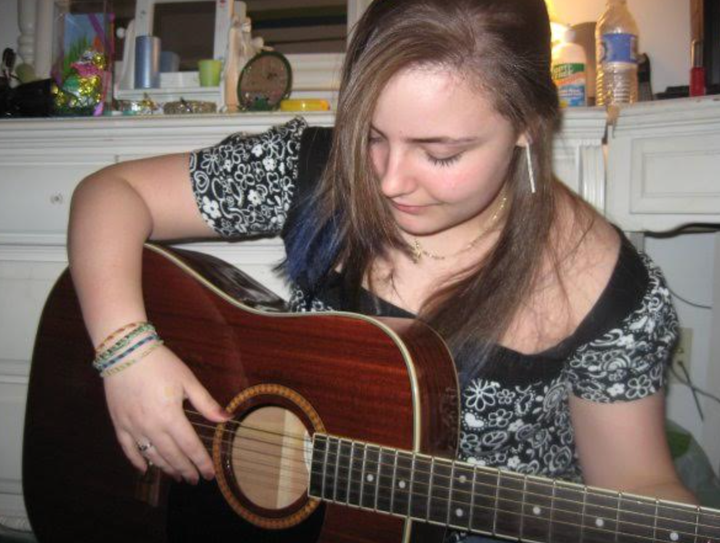
In turn, that means an increasing number of people are turning to ‘smell training’ to regain their lost or altered sense of smell. The training doesn’t have any harmful effects, doesn’t require a prescription, and can be done inexpensively at home. And while there’s no guarantee that smell training will restore your sense of smell, many people have seen positive results.

The practice itself involves consistently smelling four distinct odours – clove, rose, lemon and eucalyptus – twice daily with the aim that, over time, the sense of smell is restored. There’s no evidence that you have to use these particular smells – some choose four scents that they have a connection to and are familiar with, from a time when they could smell normally. The idea is that the repeated short-term exposure to familiar smells might help make new neural connections in the brain.

My goal as a smell coach is to provide guidance on doing the smell training the right way, from the start, for the best possible outcome. That includes showing people what to buy, teaching them the proper technique when smelling the jars, helping them identify the right time to do the smelling sessions so the training actually becomes a habit, and coaching them on having the right mindset to see it out for the long term.
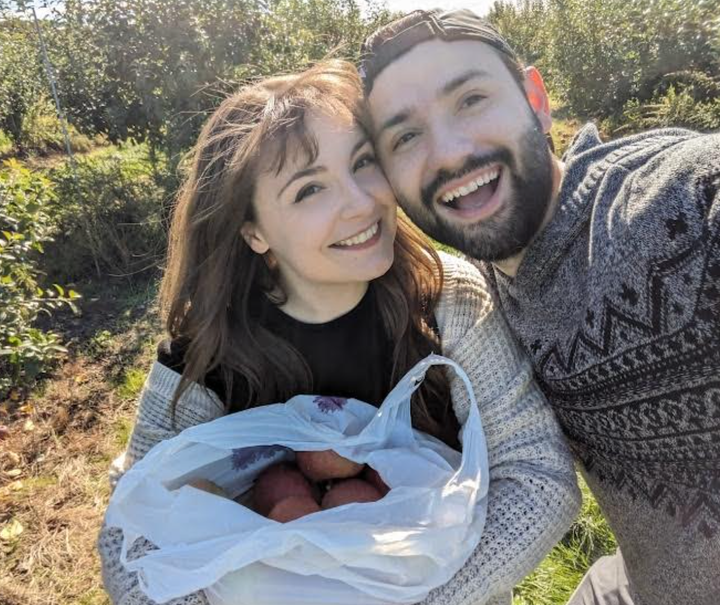
“I felt a deep sense of responsibility to help and support those who’ve lost their sense of smell.”

When I started working with anosmia charity Fifth Sense, I felt a deep sense of responsibility to help and support those who’ve lost their sense of smell. I spent most of my career in the fragrance industry, where I worked with many talented perfumers, and where I trained to smell properly. And then, becoming a certified aromatherapist, I learned to work with essential oils safely and mindfully for wellbeing. Combining these skills has allowed me to help set those smell training up for the greatest chance of success.
Unfortunately, there are a lot of misconceptions about what smell training is – the biggest being the belief that your sense of smell will easily come back in a few weeks. When it doesn’t, many people are frustrated and give up, but the harsh truth is that it’s important to make smell training a habit, like brushing your teeth twice a day. Studies have shown that long-term smell training seems to be associated with the most success, so sticking it out is key.

Smell training, I say to the people I work with, is as much a psychological endeavour as a physical exercise. Plenty of people aren’t ready to commit to doing smell training right away – the sense of loss is still too great. They’re grieving for something that they used to take for granted, that they now realise gave them so much pleasure, and which, sadly, they’re now living without.

You have to be in the right frame of mind to do smell training. It’s a real commitment to smell four scents twice a day, every day, sometimes for many months, most of the time smelling nothing at all and with no guarantee that your sense of smell will return. Often they get into a rut and give up, believing there’s no point, that it’s not going to work anyway. Not being able to smell the odours day after day can, understandably, feel like a constant reminder of what they’ve lost.

“While many regain their sense of smell, I gain more from the experience than they’ll ever know.”

The training can be a very isolating experience too. Generally in life, you’re surrounded by people who can smell and don’t really understand what you’re going through. It can feel very frustrating and demotivating to be the only one. My recommendation is to find a Facebook group, an organisation like Fifth Sense, or a smell training program like mine, which includes an aspect of community. Smell training with others gives you accountability to show up, to stay committed and to stay encouraged along the way.

Even before the pandemic, I’ve seen how smell training can make a real difference in people’s lives. Many get their sense of smell back, but even those still on the journey tell me with bright smiles about glimpses of smells they were able to detect, which encourages them to keep going, and stay focused. It’s been incredibly rewarding to hear people tell me, proudly, how they’ve set up their routine, or when they share pictures and journal entries to show me they’re still going strong after many months.

But, honestly, I have to say that witnessing the courage and determination required to smell train has been nothing short of humbling to me. While many regain their sense of smell, I gain more from the experience than they’ll ever know. I have nothing but the utmost admiration and respect for their difficult journey.

Frauke Galia is founder of FALK Aromatherapy and an ambassador for Fifth Sense

Have a compelling personal story you want to tell? Find out what we’re looking for here, and pitch us on ukpersonal@huffpost.com

Share Button