Well-Intentioned Parents Often Say This 1 Common Phrase – And It’s More Damaging Than You Realise

Many parents nonchalantly refer to their children, whether babies or adults, as their “best friend”. It can be an offhanded comment about an infant daughter or a declaration to the room at your child’s 30th birthday party.

It’s a phrase that, generally, comes from a good place. But if a parent actually treats their child as a best friend, such as by sharing personal stories or swapping gossip, it can become a problem.

“There is absolutely nothing wrong with you wanting to spend time with your child and [if] you find that you have fun hanging out with them, that is great, but when you are referring to your child as your best friend, that is a blurring of boundaries,” said Holly Humphreys, a licensed professional counsellor with Thriveworks in Roanoke, Virginia.

This can cause the relationship dynamics to move from parent-child to parent-friend or parent-counsellor, she noted.

“So, you’re actually putting your child into a different category when you say that they’re your best friend, and then that can lead into oversharing of personal details that your child should not know about,” Humphreys noted.

It can also cause problems for both the kid and the parent in other realms, too. Here’s what therapists want you to know:

Your young children should absolutely never be your “best friend”

It’s always a no-no for parents to refer to and treat a young child as their best friend, therapists say. And that’s true whether you have kids in elementary school, middle school, high school or college.

The idea that your young child is “your best friend” may come from a loving place, “but even with good intentions, it points to a deeper issue,” said Carrie Howard, a licensed clinical social worker and anxiety coach.

“Kids need their parents to be their parents. They need [their parents] to be the safe, guiding adults in their lives, not their peers. And when those lines get blurred, it makes it harder to set boundaries and actually parent well,” Howard explained.

If you treat your kid like your best friend, they may not want to listen to you when you do set rules. Or, they may feel pressure to care for you, either emotionally, practically or both. This role-reversal is known as parentification, Howard explained.

“A child can’t be their parent’s best friend without feeling some unspoken pressure to meet the needs of the parent that just aren’t theirs to meet,” said Howard.

“Children aren’t developmentally equipped to be a parent’s primary emotional support system.”

– Kyndal Coote, licensed social worker

Kyndal Coote, a psychotherapist, said when she hears a parent refer to their young child as their best friend, her first concern is the emotional burden that’s falling on the child.

“Children aren’t developmentally equipped to be a parent’s primary emotional support system. They don’t have the tools to do that, their brain is not even developed,” Coote said.

If a child is a parent’s primary emotional support system, the child may feel responsible for managing a parent’s feelings, she noted. “And that is a very, very heavy burden for someone who should just be focused on learning how to manage their own development,” added Coote.

As children get older, this kind of emotional burden can cause the child to feel insecure in their decision-making and lead to guilt when prioritising other relationships, such as romantic partnerships, Coote said.

“When we rely too heavily on our children in adolescence or in childhood, that relationship is just going to continue to be enmeshed as the child grows into an adult child,” said Meredith Van Ness, a psychotherapist and the owner of Meredith Van Ness Therapy.

(Enmeshment is a dysfunctional relationship pattern in which someone lacks boundaries and autonomy in a family.)

The line is a little more blurred with adult children, but they still shouldn’t be your “best friend.”

With adult children, this is a much more nuanced issue and likely depends on the relationship and the family, Van Ness said.

Treating your adult child as your best friend isn’t as damaging as treating a young child that way, because adult children can understand grown-up issues, but it can still be problematic and is not advisable.

“With adult kids, the dynamic is a bit different. Sometimes these relationships can feel very close and even look like a friendship in some ways – you might talk on the phone every day or spend a lot of time together, and that can be really wonderful, but I caution parents not to mistake that closeness for a peer-to-peer best friend relationship,” Howard said.

When your child becomes an adult, they’ll start to have their own relationship woes and other grown-up problems. “And they should still be able to come to you as their parent,” Humphreys said.

More, the parent-child history doesn’t just disappear when a child grows up, which can lead to an imbalance in the so-called “best friendship,” Howard said.

“Think of it this way, in my role as a therapist, ethically, I can’t be friends with my clients when they discharge from treatment, even though we’re both consenting adults, and there’s an important reason for this. It’s really hard to have a truly mutual, healthy, give-and-take relationship when there’s been a significant power differential in the past, like with therapist [and] client or parent and child,“
Howard explained.

Former roles in a relationship leave an imprint, Howard added. “It’s hard to erase that history of who had more power, influence or responsibility in the relationship,” Howard noted.

This can then make the relationship vulnerable to bad boundaries and blurred lines, Howard noted.

Finance adds another power dynamic to this relationship, Van Ness added.

Parents often pay the dinner bill for their grown-up children or give them money for the grandkids. This isn’t so common in friendships.

While it's OK to be friendly and warm to your child, you shouldn't lean on them as you would with a best friend.

The Good Brigade via Getty Images

While it’s OK to be friendly and warm to your child, you shouldn’t lean on them as you would with a best friend.

There are red flags that the parent-child friendship has gone too far

There can certainly be an aspect of friendship within a parent-child relationship, but you have to understand when that goes too far, Howard said.

“We want to maintain boundaries with our kids … these are long-standing relationships, so we don’t want to infringe on those boundaries by burdening [our kids] with our emotions that we really need to rely on someone else for,” Van Ness said.

If a child, no matter the age, has to become the emotional caretaker of the parent, it’s a red flag that the parent-child friendship has crossed a line, said Van Ness.

“Unfortunately, that happens with young children when parents get divorced,” said Van Ness.

This may look like one divorced parent trying to get a child to “side with them” instead of the other parent, Van Ness said.

Oversharing personal details that your child shouldn’t know is another sign that the relationship isn’t healthy, Humphreys said.

“You should not be going to your child to discuss marital difficulties, problems with other people, that sort of thing,” Humphreys added.

“If you find yourself doing that, then that’s a red flag that you need to have more peer-to-peer relationships,” said Humphreys.

“It’s hard to erase that history of who had more power, influence or responsibility in the relationship.”

– Carrie Howard, licensed clinical social worker and anxiety coach

Instead of reaching out to your child about these things, you should aim to talk to your significant other, a friend, another parent, or a sibling, Humphreys noted.

“You should not be relying on your child to help you get through situations. That puts a lot of pressure on a child, and also, if you are going to them when you’re having marital issues or relationship issues, that puts them in the middle a lot of times with the other parent or the other significant person in your life,” Humphreys said.

If you find yourself getting jealous of your child’s friendships or romantic relationships because you feel threatened by the bond, that’s also a bad sign, Coote said. You should want your child to have other happy and healthy relationships.

If you lean on your parent or child too much for support, there are other places to go

If you think you’ve been leaning on your parent or child a little too hard and treating them as that “best friend” role, it’s OK. In most cases, it comes from a place of love.

“This is everybody’s first human experience, so the first thing I tell parents is, it’s not your fault that you weren’t taught healthy relationship skills and you didn’t have the tools to develop that — most of us didn’t get an education on managing your emotions and [emotional] intelligence and relational intelligence and that sort of thing — but, even if you didn’t get that education and you didn’t have that healthy example, it’s not your fault, but it is your responsibility to do something about it and develop those skills as adults so you don’t unintentionally harm your kids,” said Coote.

The first step in breaking this pattern is developing your own support system, Coote added.

“Do you have healthy adult friendships? Are you good at managing your own emotions independently? Do you know how to regulate your emotions? Can you sit with difficult emotions?” Coote asked.

“You can have warm, loving relationships while still maintaining that role as their parent. It’s almost like mentorship rather than friendship. You’re not their equal, you’ve been on the planet much longer than them, so you really shouldn’t even developmentally feel like they’re equal,” Coote said.

Whether your child is six, 16 or 36, the parent’s job is to “guide them toward independence, not keep them close to meet your emotional needs,” Coote noted.

“Our goal as a parent is to raise our kids so that they can be independent,” Van Ness said.

“We really need to know that our parents are going to be OK without us and that our kids are going to be OK without being in their lives so fully,” said Van Ness.

Leaning on your child (or your parent) as your best friend only puts unfair pressure on them and takes away from all the great aspects that can exist in a parent-child relationship.

Share Button

Perrie Edwards Announces She’s Expecting Another Baby In Very Sweet Family Video

The former Little Mix singer made the exciting announcement in a video posted on social media over the weekend, captioned: “Guess what hunnies…

In the clip, Perrie could be seen walking away from the camera wearing a top emblazoned with the message “if he wanted to he would…” – the name of her latest solo single – on its back.

She then turned around to reveal a second message, “…and he did!”, revealing her pregnant stomach, at which point she was joined by her footballer fiancé and their four-year-old son Axel.

Love you and so happy for you all,” Jade wrote, while Leigh-Anne – who was pregnant at the same time as Perrie during their time in Little Mix – added: “Just the best news! Love you all.”

She and Alex share one child, Axel, who was born in August 2021.

Perrie is also currently gearing up for the release of her self-titled debut album, which is coming at the end of this month, and has been preceded by singles like Forget About Us, You Go Your Way and her latest musical offering, If He Wanted To He Would.

Share Button

MTV VMAs 2025 Full Winners List: Female Artists Dominated At This Year’s Video Music Awards

It’s safe to say the 2025 VMAs ceremony was a big night for female artists.

Women dominated almost all of the main categories at this year’s Video Music Awards, with Lady Gaga picking up four awards in total, while Ariana Grande scooped the top prize of the night.

Mariah Carey, meanwhile, picked up the coveted Video Vanguard prize for her contributions over the course of her career, and Sabrina Carpenter also took home three awards.

As for the male winners, Bruno Mars picked up two awards for his collaborations with Gaga and Blackpink star Rosé, while Alex Warren was named Best New Artist after his breakthrough hit Ordinary became a global smash.

Here’s a quick guide to all of this year’s main winners…

Video Of The Year

Ariana Grande – Brighter Days Ahead

Artist Of The Year

Best Group

Ariana Grande scooped the top award of the night

via Associated Press

Song Of The Year

Rosé and Bruno Mars – Apt.

Best New Artist

Alex Warren

Best Pop Video

Ariana Grande – Brighter Days Ahead

Best Pop Artist

Sabrina Carpenter

Best Album

Sabrina Carpenter – Short N’ Sweet

Best Collaboration

Lady Gaga and Bruno Mars – Die With A Smile

Best Hip-Hop Video

Doechii – Anxiety

Best R&B Video

Mariah Carey – Type Dangerous

Mariah Carey on stage at the VMAs on Sunday night

via Associated Press

Best Rock Video

Coldplay – All My Love

Best Alternative Video

Sombr – Back To Friends

Best K-Pop Video

Lisa, Doja Cat and Raye – Born Again

Best Latin Video

Shakira – Soltera

Best Afrobeats Video

Tyla – Push 2 Start

Best Country Video

Megan Moroney – Am I OK?

Best Long-Form Video

Ariana Grande – Brighter Days Ahead

Video For Good

Charli XCX and Billie Eilish – Guess

Push Performance Of The Year

Katseye – Touch

Song Of The Summer

Tate McRae – Just Keep Watching

Video Vanguard

Mariah Carey

Share Button

Lab ‘revolutionising’ maternity training – NHS

The lab is used to recreate emergency situations so staff can learn in a risk-free environment.

Share Button

AI has no idea what it’s doing, but it’s threatening us all

The age of artificial intelligence (AI) has transformed our interactions, but threatens human dignity on a worldwide scale, according to a study led by Charles Darwin University (CDU).

Study lead author Dr Maria Randazzo, an academic from CDU’s School of Law, found the technology was reshaping Western legal and ethical landscapes at unprecedented speed but was undermining democratic values and deepening systemic biases.

Dr Randazzo said current regulation failed to prioritize fundamental human rights and freedoms such as privacy, anti-discrimination, user autonomy, and intellectual property rights – mainly thanks to the untraceable nature of many algorithmic models.

Calling this lack of transparency a “black box problem,” Dr Randazzo said decisions made by deep-learning or machine-learning processes were impossible for humans to trace, making it difficult for users to determine if and why an AI model has violated their rights and dignity and seek justice where necessary.

“This is a very significant issue that is only going to get worse without adequate regulation,” Dr Randazzo said.

“AI is not intelligent in any human sense at all. It is a triumph in engineering, not in cognitive behavior.

“It has no clue what it’s doing or why – there’s no thought process as a human would understand it, just pattern recognition stripped of embodiment, memory, empathy, or wisdom.”

Currently, the world’s three dominant digital powers – the United States, China, and the European Union – are taking markedly different approaches to AI, leaning on market-centric, state-centric, and human-centric models respectively.

Dr Randazzo said the EU’s human-centric approach is the preferred path to protect human dignity but without a global commitment to this goal, even that approach falls short.

“Globally, if we don’t anchor AI development to what makes us human – our capacity to choose, to feel, to reason with care, to empathy and compassion – we risk creating systems that devalue and flatten humanity into data points, rather than improve the human condition,” she said.

“Humankind must not be treated as a means to an end.”

“Human dignity in the age of Artificial Intelligence: an overview of legal issues and regulatory regimes” was published in the Australian Journal of Human Rights.

The paper is the first in a trilogy Dr Randazzo will produce on the topic.

Share Button

This common sugar builds stronger cancer-killing T cells

For cancer, and infection-fighting T cells, glucose offers far more than a simple sugar rush.

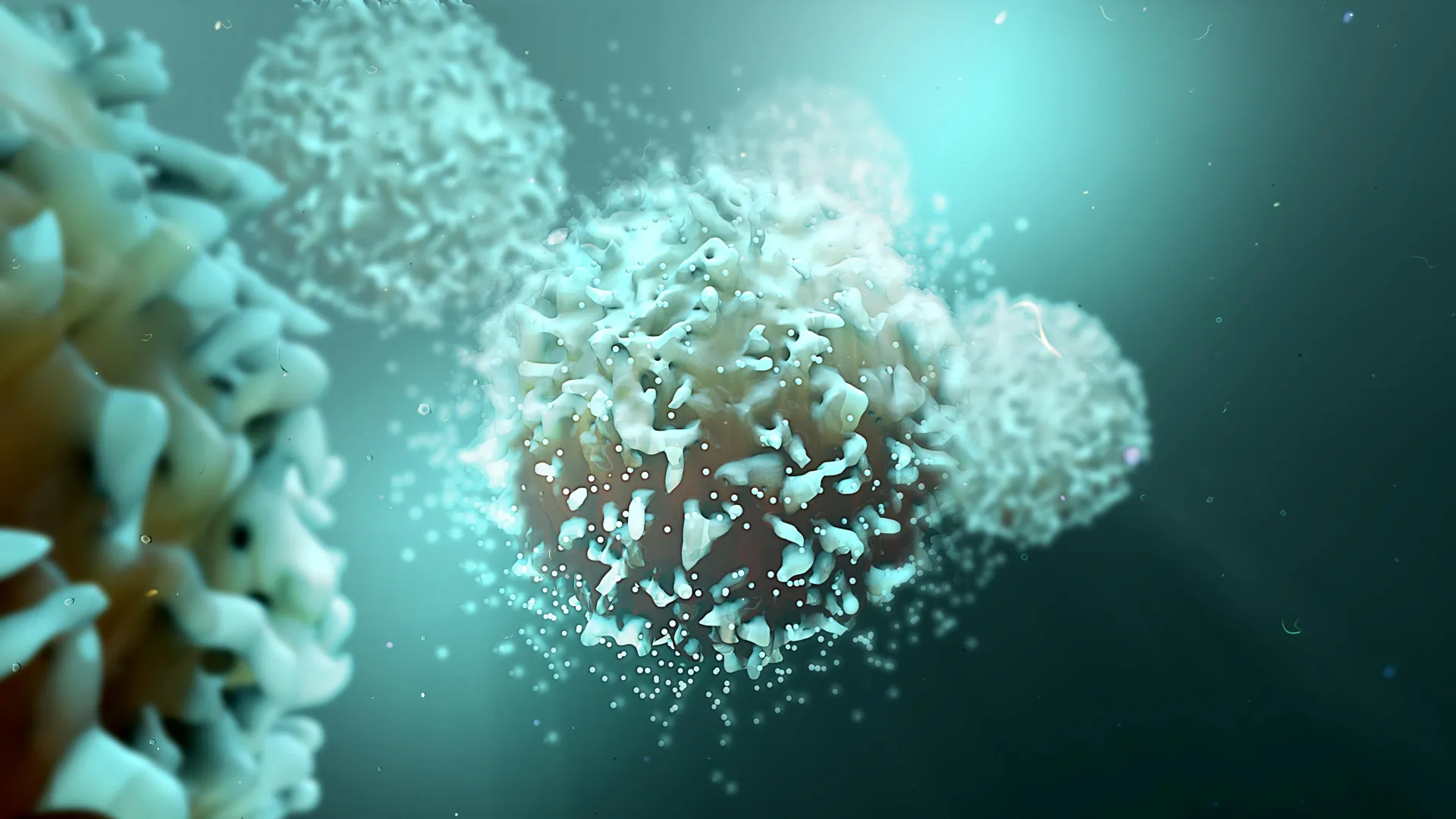
A new discovery by Van Andel Institute scientists reveals that glucose, an essential cellular fuel that powers immune cells, also aids in T cells’ internal communication and boosts their cancer-fighting properties. The findings may help optimize T cells’ ability to combat cancer and other diseases.

A study describing the work published on September 2 in Cell Metabolism.

“Immune cells are highly influenced by their environment” said Joseph Longo, Ph.D., the study’s first author and a postdoctoral fellow in the lab of Russell Jones, Ph.D. “We knew that T cells need access to glucose to function, but we didn’t know exactly why. It was previously thought that T cells mainly break down glucose for energy, but our new work shows that T cells use glucose as a building block for other molecules that are necessary to support T cells’ anti-cancer properties.”

The findings reveal that T cells allocate significant portions of glucose to build large molecules called glycosphingolipids (GSLs). These sugar-fat compounds are essential for T cell growth and making proteins that T cells use to combat cancer.

GSLs help form fat-rich structures on T cell surfaces called lipid rafts, which bring together cell signaling proteins that instruct the T cell to kill cancer cells. Without GSLs, these signals are weaker, making T cells less effective at destroying tumors.

“Both T cells and cancer cells leverage different nutrients to support varying aspects of their function,” Jones said. “The more we know about these different fuel sources, the better we can support T cells’ innate cancer-fighting abilities while also developing ways to possibly make cancer cells more vulnerable to immune attack.”

Other authors include Lisa M. DeCamp, Brandon M. Oswald, Ph.D., Robert Teis, Alfredo Reyes-Oliveras, Ph.D., Michael S. Dahabieh, Ph.D., Abigail E. Ellis, Michael P. Vincent, Ph.D., Hannah Damico, M.B., Kristin L. Gallik, Ph.D., Nicole M. Foy, Shelby E. Compton, Ph.D., Colt D. Capan, M.S., Kelsey S. Williams, Ph.D., Corinne R. Esquibel, Ph.D., Zachary B. Madaj, M.S., Hyoungjoo Lee, Ph.D., Connie Krawczyk, Ph.D., Brian B. Haab, Ph.D., and Ryan D. Sheldon, Ph.D., of VAI; and Dominic G. Roy, Ph.D., of Université de Montréal.

Research reported in this publication was supported by the National Institute of Allergy and Infectious Diseases of the National Institutes of Health under award no. R01AI165722 (Jones). The content is solely the responsibility of the authors and does not necessarily represent the official views of the National Institutes of Health.

Share Button

Dinosaur teeth reveal secrets of Jurassic life 150 million years ago

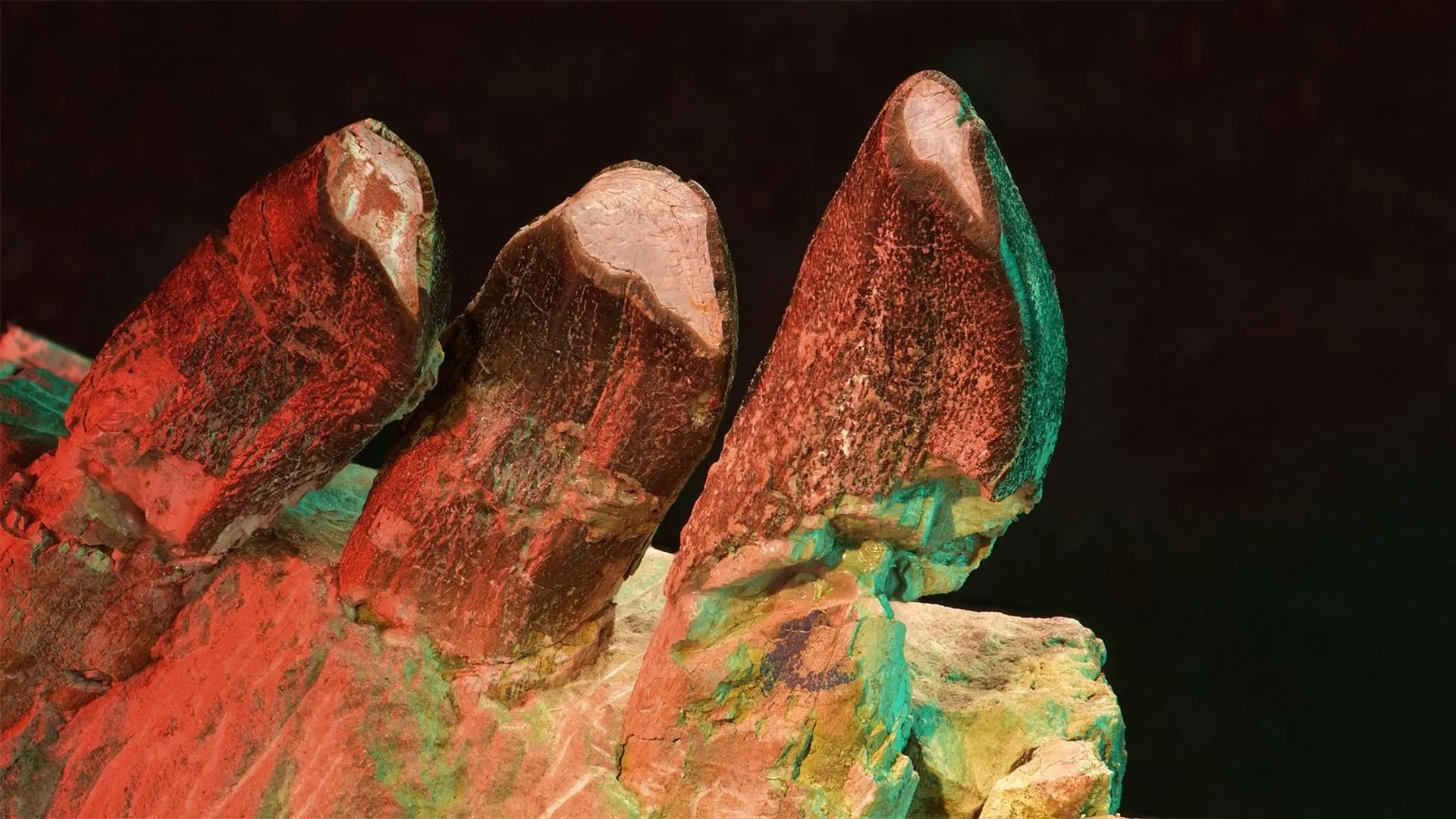
What did long-necked dinosaurs eat – and where did they roam to satisfy their hunger? A team of researchers has reconstructed the feeding behavior of sauropods using cutting-edge dental wear analysis. Their findings, published in Nature Ecology and Evolution, show that microscopic enamel wear marks provide surprising insights into migration, environmental conditions, and niche distribution within ecosystems from 150 million years ago.

How did massive dinosaurs live during the Jurassic period? What did they eat, how did they share their habitats – and did they perhaps migrate seasonally? These questions have been explored by an international team of researchers led by Dr Daniela E. Winkler, a postdoctoral researcher at Kiel University, Dr Emanuel Tschopp, visiting scientist at the LIB and research associate at Freie Universität Berlin, and André Saleiro, PhD student at NOVA University Lisbon. Their new study employs an unusual method: using wear marks on fossilised teeth as a window into the past.

“I still find it fascinating that microscopic scratches on fossil teeth can tell us so much about diet and even behavior,” says Winkler, an expert in the applied methodology. The technique, known as Dental Microwear Texture Analysis (DMTA), was originally developed by a research group led by LIB scientist Professor Thomas Kaiser for studying mammals. The current study, published in Nature Ecology and Evolution, marks the first systematic application of the method to sauropods. The analyses were carried out in the laboratories of the LIB.

Tooth Enamel as an Environmental Archive

The team analyzed 322 high-resolution 3D scans of tooth surfaces from three geological formations that are famous for their dinosaur fossils: the Lourinhã Formation in Portugal, the Morrison Formation in the USA, and the Tendaguru Formation in Tanzania. All the teeth came from a total of 39 individuals. Samples were taken directly from original teeth or from high-resolution silicone molds. “We’re talking about structures at the micrometer scale,” Winkler explains. “These tiny wear marks results from the interaction between tooth and food – they reveal what the animals had eaten in the last days or weeks of their lives.”

Surprising Differences between Species and Regions

The statistical analyses revealed clear differences between various sauropod groups and their localities oder geographic regions. Particularly striking was the high variability in wear patterns among the flagellicaudatans – a group of long-tailed sauropods that includes the well-known Diplodocus. This heterogeneity suggests that these animals had access to a variety of food sources and displayed generalist feeding behavior.

A particular surprise was that Camarasaurus specimens from both Portugal and the USA had highly uniform wear patterns. Such consistency in microwear is unlikely to be explained solely by uniform plant availability – rather, it indicates that these dinosaurs deliberately sought out the same preferred food sources throughout the year. “The climate at the time in both Portugal and the USA was highly seasonal, so certain plants likely weren’t available year-round,” explains Emanuel Tschopp. “The consistency in Camarasaurus tooth wear suggests they may have migrated seasonally to access the same resources.”

Things were different with the titanosauriforms from Tanzania, whose teeth showed significantly more intense and complex wear. The researchers interpret this as a result of specific environmental conditions: the Tendaguru Formation featured tropical to semi-arid climates and nearby was a large desert belt, from where quartz sand was probably often blown onto plants these sauropods ate. This sand-contaminated diet likely caused the highly abrasive wear patterns seen on the teeth.

Climate, Not Plant Variety, as the Key Factor

There were also clear differences between the regions themselves: teeth from Tanzania were consistently more heavily worn than those from Portugal or the USA. The crucial influencing factor? Climate.

“One of the most interesting aspects of this work is that we were able to relate differences in dental wear patterns to palaeogeography and the habitat preferences of different sauropod faunas,” concludes André Saleiro. These findings also guide his future research: “The study showed me how to approach my ongoing work on niche partitioning in herbivorous dinosaurs – by focusing on specific palaeo-environments to better understand the ecological relationships within species groups, and how these differences evolved across ecosystems.”

For Emanuel Tschopp, this is also one of the most exciting elements of the research: “With these microscopic traces, we can suddenly make behavioral statements about these enormous extinct animals. Migration, specialization, niche use – it all becomes tangible.” Another notable aspect: wear patterns differed depending on the area of the tooth – on the side (buccal) or on the chewing surface (occlusal). These differences were accounted for in the analysis to avoid distortion.

Relevance for Biodiversity Research

This study provides not only new insights into the lives of individual dinosaur species but also contributes to a broader understanding of paleoecological relationships. Niche partitioning, climate-driven adaptations, and potential competition avoidance can thus be identified even in fossilized ecosystems.

“We demonstrate that ecological principles like niche formation and migration behavior were important not just today, but already 150 million years ago,” says Winkler. Tschopp adds: “The sauropods of the Morrison Formation show enormous species diversity – and that diversity was only possible because the species behaved differently and occupied different dietary niches.”

Looking Ahead: More Teeth, More Knowledge

The research is far from over. Future studies aim to explore whether juvenile and adult sauropods differed in their diets, or how dwarf species such as Europasaurus from Lower Saxony adapted to their specific island environment. Saleiro is already working on an expanded dataset for the Portuguese fauna, including other herbivorous dinosaurs.

“What excites me is that we can keep refining this method – and every new sample adds another piece to the puzzle,” says Winkler. “Our tools are getting better – and so is our understanding of what life back then was really like.” Tschopp agrees: “We’re still at the beginning with this method – but combining paleontology, modern technology and interdisciplinary collaboration opens up fascinating insights into ancient worlds.”

Share Button

Disabled NHS medic told she’s ‘not a real doctor’

Disabled and neurodivergent doctors say the lack of reasonable adjustments is pushing some out.

Share Button

4 Completely Bonkers Things That Happened At The Reform UK Conference

Reform UK’s conference in Birmingham has come and gone, and for fans of the strange, odd and downright crazy, it did not disappoint.

Nigel Farage had hoped that the glitzy two-day event would show the country that his party is professional, competent and ready to form the next UK government.

And while there were certainly moments which demonstrated precisely why Reform is currently leading Labour and the Tories in the opinion polls, there was also enough evidence to suggest it has a long way to go before it can shake off its eccentric image.

Here, HuffPost UK looks at four of the conference’s most bizarre moments.

1) The Singing Mayor

Farage was forced to bring forward his keynote speech to the conference on Friday after in an attempt to avoid being overshadowed by the cabinet reshuffle taking place at the same time.

But it was the actions of the Reform leader’s warm-up act, Dame Andrea Jenkyns, that grabbed the headlines.

The mayor of Greater Lincolnshire, a trained opera singer, strode onto the stage in a sparkling jumpsuit to a recording of her self-penned song “I’m An Insomniac”.

For reasons known only to herself, Jenkyns decided to join in, with her arms outstretched in an attempt to gee up the crowd before the main event.

In a tenuous attempt to link the song’s lyrics to the conference, the former Tory MP asked the audience: “Is this godawful Labour Government giving you sleepless nights and insomnia too?”

The muted response from the presumably-stunned audience spoke volumes.

<div class="js-react-hydrator" data-component-name="Twitter" data-component-id="2361" data-component-props="{"itemType":"rich","index":14,"contentIndexByType":1,"contentListType":"embed","code":"

This woman has always been an absolute fruit loop, Andrea Jenkyns singing herself onto stage at the Reform cringefest. 😂😂😂pic.twitter.com/zEF6CwBLza

— Rameses Niblick III (@TheLittleWaster) September 5, 2025

","type":"rich","meta":{"author":"Rameses Niblick III","author_url":"https://twitter.com/TheLittleWaster","cache_age":86400,"description":"This woman has always been an absolute fruit loop, Andrea Jenkyns singing herself onto stage at the Reform cringefest. 😂😂😂pic.twitter.com/zEF6CwBLza— Rameses Niblick III (@TheLittleWaster) September 5, 2025\n\n\n","options":{"_hide_media":{"label":"Hide photos, videos, and cards","value":false},"_maxwidth":{"label":"Adjust width","placeholder":"220-550, in px","value":""},"_theme":{"value":"","values":{"dark":"Use dark theme"}}},"provider_name":"Twitter","thumbnail_height":720,"thumbnail_url":"https://pbs.twimg.com/amplify_video_thumb/1963952138054225921/img/BYFX3GAv-uWCZeyJ.jpg:large","thumbnail_width":1302,"title":"Rameses Niblick III on Twitter / X","type":"rich","url":"https://twitter.com/TheLittleWaster/status/1963959328555024507","version":"1.0"},"flags":[],"enhancements":{},"fullBleed":false,"options":{"theme":"featured","device":"desktop","editionInfo":{"id":"uk","name":"U.K.","link":"https://www.huffingtonpost.co.uk","locale":"en_GB"},"originalEdition":"uk","isMapi":false,"isAmp":false,"isMobile":false,"isAdsFree":false,"isVideoEntry":false,"isEntry":true,"isMt":false,"entryId":"68bd29c4e4b0b40e31a82de7","entryPermalink":"https://www.huffingtonpost.co.uk/entry/4-completely-bonkers-things-that-happened-at-the-reform-uk-conference_uk_68bd29c4e4b0b40e31a82de7","entryTagsList":"reform-uk,andrea-jenkyns,@ai_seo_headline","sectionSlug":"politics","deptSlug":null,"sectionRedirectUrl":null,"subcategories":"","isWide":true,"isShopping":false,"headerOverride":null,"noVideoAds":false,"disableFloat":false,"isNative":false,"commercialVideo":{"provider":"custom","site_and_category":"uk.politics","package":null},"isHighline":false,"vidibleConfigValues":{"cid":"60afc140cf94592c45d7390c","disabledWithMapiEntries":false,"overrides":{"all":"60b8e525cdd90620331baaf4"},"whitelisted":["56c5f12ee4b03a39c93c9439","56c6056ee4b01f2b7e1b5f35","59bfee7f9e451049f87f550b","5acccbaac269d609ef44c529","570278d2e4b070ff77b98217","57027b4be4b070ff77b98d5c","56fe95c4e4b0041c4242016b","570279cfe4b06d08e3629954","5ba9e8821c2e65639162ccf1","5bcd9904821576674bc55ced","5d076ca127f25f504327c72e","5b35266b158f855373e28256","5ebac2e8abddfb04f877dff2","60b8e525cdd90620331baaf4","60b64354b171b7444beaff4d","60d0d8e09340d7032ad0fb1a","60d0d90f9340d7032ad0fbeb","60d0d9949340d7032ad0fed3","60d0d9f99340d7032ad10113","60d0daa69340d7032ad104cf","60d0de02b627221e9d819408"],"playlists":{"default":"57bc306888d2ff1a7f6b5579","news":"56c6dbcee4b04edee8beb49c","politics":"56c6dbcee4b04edee8beb49c","entertainment":"56c6e7f2e4b0983aa64c60fc","tech":"56c6f70ae4b043c5bdcaebf9","parents":"56cc65c2e4b0239099455b42","lifestyle":"56cc66a9e4b01f81ef94e98c"},"playerUpdates":{"56c6056ee4b01f2b7e1b5f35":"60b8e525cdd90620331baaf4","56c5f12ee4b03a39c93c9439":"60d0d8e09340d7032ad0fb1a","59bfee7f9e451049f87f550b":"60d0d90f9340d7032ad0fbeb","5acccbaac269d609ef44c529":"60d0d9949340d7032ad0fed3","5bcd9904821576674bc55ced":"60d0d9f99340d7032ad10113","5d076ca127f25f504327c72e":"60d0daa69340d7032ad104cf","5ebac2e8abddfb04f877dff2":"60d0de02b627221e9d819408"}},"connatixConfigValues":{"defaultPlayer":"16b0ecc6-802c-4120-845f-e90629812c4d","clickToPlayPlayer":"823ac03a-0f7e-4bcb-8521-a5b091ae948d","videoPagePlayer":"05041ada-93f7-4e86-9208-e03a5b19311b","defaultPlaylist":"2e062669-71b4-41df-b17a-df6b1616bc8f"},"topConnatixThumnbailSrc":"data:image/png;base64,iVBORw0KGgoAAAANSUhEUgAAAAEAAAABCAQAAAC1HAwCAAAAC0lEQVR42mNkYAAAAAYAAjCB0C8AAAAASUVORK5CYII=","customAmpComponents":[],"ampAssetsUrl":"https://amp.assets.huffpost.com","videoTraits":null,"positionInUnitCounts":{"buzz_head":{"count":0},"buzz_body":{"count":0},"buzz_bottom":{"count":0}},"positionInSubUnitCounts":{"article_body":{"count":5},"blog_summary":{"count":0},"before_you_go_content":{"count":0}},"connatixCountsHelper":{"count":0},"buzzfeedTracking":{"context_page_id":"68bd29c4e4b0b40e31a82de7","context_page_type":"buzz","destination":"huffpost","mode":"desktop","page_edition":"en-uk"},"tags":[{"name":"reform uk","slug":"reform-uk","links":{"relativeLink":"news/reform-uk","permalink":"https://www.huffingtonpost.co.uk/news/reform-uk","mobileWebLink":"https://www.huffingtonpost.co.uk/news/reform-uk"},"url":"https://www.huffingtonpost.co.uk/news/reform-uk/"},{"name":"Andrea Jenkyns","slug":"andrea-jenkyns","links":{"relativeLink":"news/andrea-jenkyns","permalink":"https://www.huffingtonpost.co.uk/news/andrea-jenkyns","mobileWebLink":"https://www.huffingtonpost.co.uk/news/andrea-jenkyns"},"url":"https://www.huffingtonpost.co.uk/news/andrea-jenkyns/"}],"isLiveblogLive":null,"isLiveblog":false,"backfillRelatedArticles":[],"cetUnit":"buzz_body","enableIncontentPlayer":false,"bodyAds":["

\r\n\r\n HPGam.cmd.push(function(){\r\n\t\treturn HPGam.render(\"inline-1\", \"entry_paragraph_1\", false, false);\r\n });\r\n\r\n","

\r\n\r\n HPGam.cmd.push(function(){\r\n\t\treturn HPGam.render(\"inline\", \"entry_paragraph_2\", false, false);\r\n });\r\n\r\n","

\r\n\r\n HPGam.cmd.push(function(){\r\n\t\treturn HPGam.render(\"inline-2\", \"entry_paragraph_3\", false, false);\r\n });\r\n\r\n","

\r\n\r\n HPGam.cmd.push(function(){\r\n\t\treturn HPGam.render(\"inline-infinite\", \"repeating_dynamic_display\", false, false);\r\n });\r\n\r\n"],"adCount":0,"midArticleAdPartner":null},"isCollectionEmbed":false}”>

This woman has always been an absolute fruit loop, Andrea Jenkyns singing herself onto stage at the Reform cringefest. 😂😂😂pic.twitter.com/zEF6CwBLza

— Rameses Niblick III (@TheLittleWaster) September 5, 2025

2) Platforming Lucy Connolly

On the day that three girls attending a Taylor Swift-themed dance class were murdered last year, Lucy Connolly posted a tweet calling for “mass deportation now”.

She called on people to “set fire to all the fucking [asylum] hotels full of the bastards for all I care”, before adding “if that makes me racist so be it”.

A month later, she pleaded guilty to writing a social media post intending to stir up racial hatred and was jailed for 31 months.

During her time in prison, Connolly – who was released last month – became a cause celebre for many on the right, who claimed her incarceration was evidence that freedom of speech is being undermined in the UK.

Introducing her to the conference stage on Saturday, Daily Telegraph journalist Allison Pearson described Connolly as “Britain’s favourite political prisoner”.

She received a warm ovation from the audience, who seemed happy to overlook the fact that she had actually pleaded guilty to a serious crime.

Mail on Sunday columnist Dan Hodges pointed out: “Staggering that someone just released from jail after admitting a crime of racial hatred is invited to speak at a major party conference. Completely undermines Reform’s modernisation narrative.”

3) Anti-Vax Doctor Says Covid Vaccine Gave King Cancer

Reform officials have been at pains to stress that the party is not home to conspiracy theorists and extremists.

But that was rather undermined by the fact that an vaccine-sceptic doctor was allowed to give a speech from the main conference stage claiming the Covid vaccine was linked to cancer in the Royal Family.

After claiming vaccines “created havoc” in the human body, Dr Aseem Malhotra said wanted to pass on the views of a doctor he described as am eminent oncologist.

“He thinks it’s highly likely that the Covid vaccines have been a factor, a significant factor in the cancer of members of the royal family,” he said.

“This isn’t just his opinion many other doctors feel the same way.”

Health secretary Wes Streeting said: “When we are seeing falling numbers of parents getting their children vaccinated, and a resurgence of disease we had previously eradicated, it is shockingly irresponsible for Nigel Farage to give a platform to these poisonous lies.

“Farage should apologise and sever all ties with this dangerous extremism.”

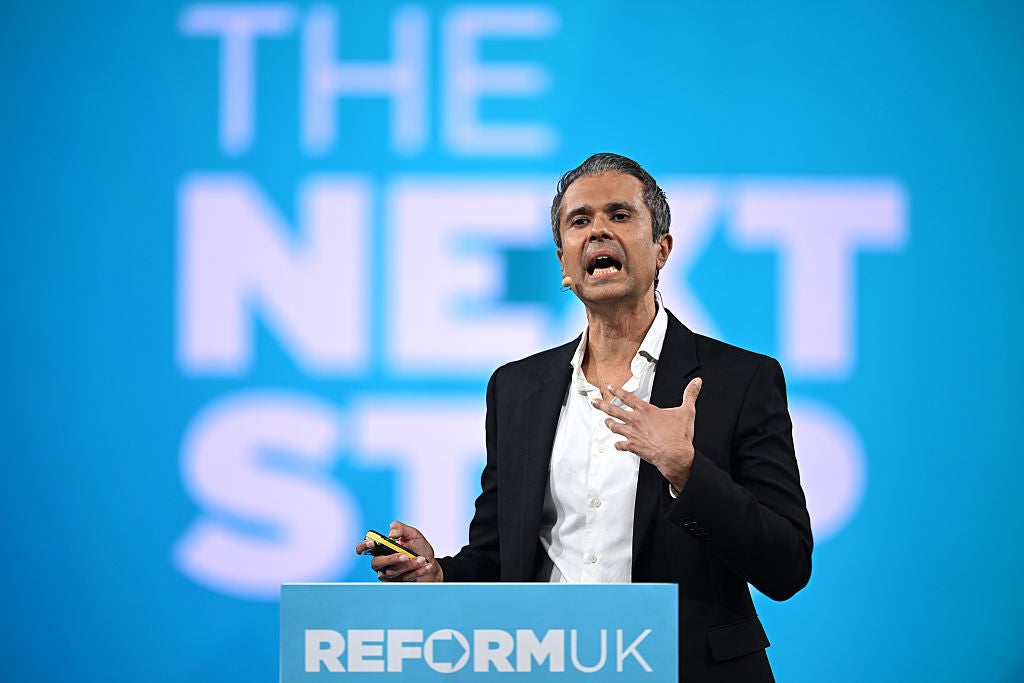
Dr Aseem Malhotra, Cardiologist and Medical Advisor, MAHA Action addresses delegates on day two of the Reform UK party conference at National Exhibition Centre on September 06, 2025 in Birmingham, England. Members of Reform UK gather at the NEC Birmingham for the Party's two-day conference. (Photo by Leon Neal/Getty Images)
Dr Aseem Malhotra, Cardiologist and Medical Advisor, MAHA Action addresses delegates on day two of the Reform UK party conference at National Exhibition Centre on September 06, 2025 in Birmingham, England. Members of Reform UK gather at the NEC Birmingham for the Party’s two-day conference. (Photo by Leon Neal/Getty Images)

Leon Neal via Getty Images

4) Andrea Jenkyns Singing. Again

The conference ended with senior Reform members standing awkwardly on the conference stage singing the national anthem.

Inevitably, leading the singalong was Andrea Jenkyns, whose voice almost gave in and who, it seemed, changed the lyrics at one point to God Save The Queen, even though Elizabeth II died three years ago.

Share Button