What you eat could decide the planet’s future

eople, the holidays often bring joyful indulgence, followed by regret and ambitious New Year’s resolutions to eat better.

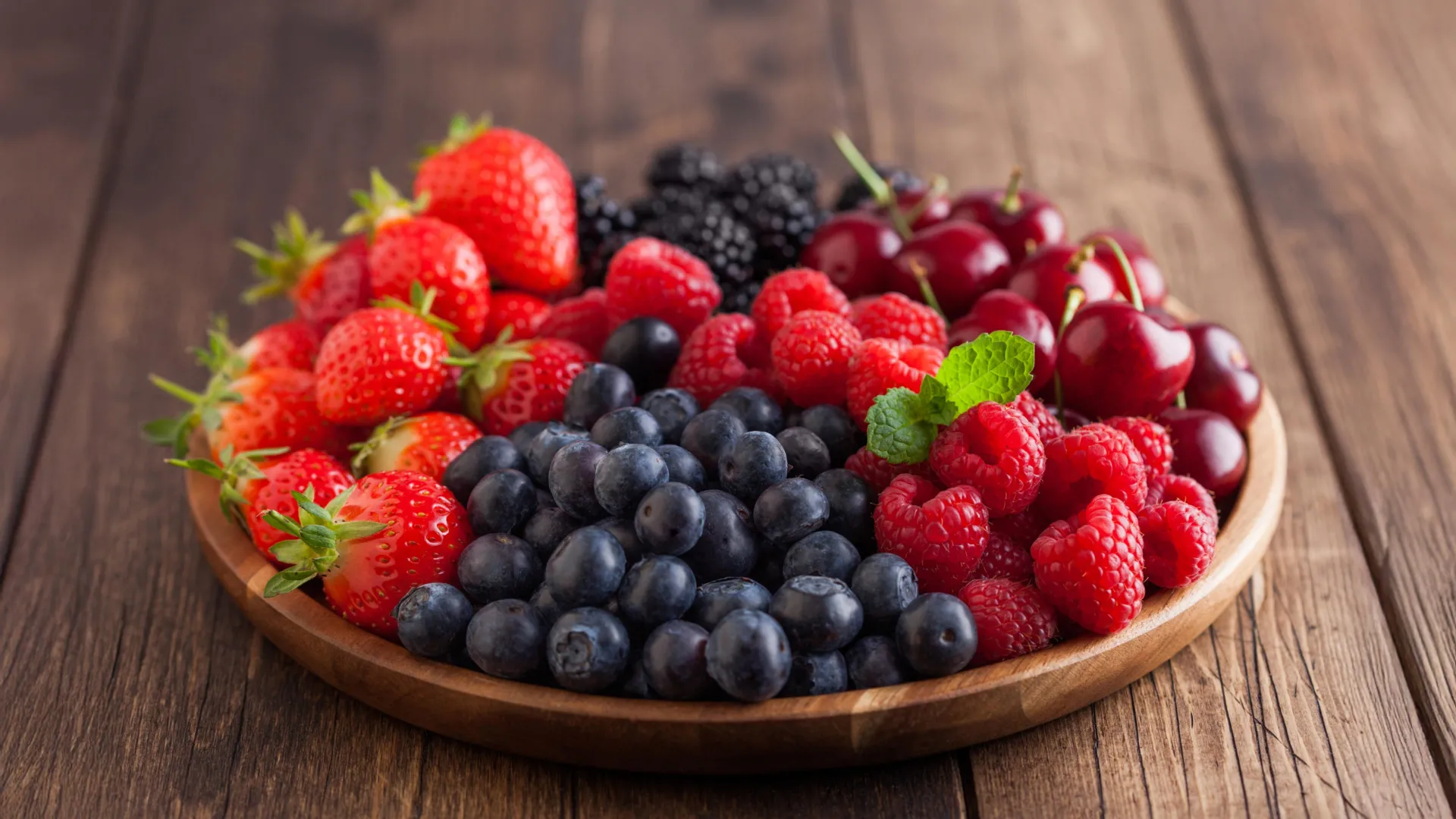
A recent study from the University of British Columbia suggests moderation should not be a seasonal goal but a long-term one. The research found that 44 percent of the global population would need to change their eating habits to keep global warming below 2 °C.

The study was led by Dr. Juan Diego Martinez while he was a doctoral student at UBC’s Institute for Resources, Environment and Sustainability. He explains what the research uncovered and outlines practical diet changes that could make a real difference.

What did you find?

Half of us globally and at least 90 percent of Canadians need to change our diets to prevent severe planetary warming. And that number is conservative, because we used 2012 data. Since then, emissions and the world’s population have both increased. Looking ahead to 2050, we found that 90 percent of us will need to be eating differently.

We looked at data from 112 countries, accounting for 99 percent of food-related greenhouse gas emissions globally, and divided each country’s population into 10 income groups. We calculated a food emissions budget for each person by combining emissions from food consumption, global food production and supply chains, and compared these emissions to the total the world can afford if we want to stay below 2 °C of warming.

Why focus on dietary changes rather than, say, flying less?

The world’s food systems are responsible for more than one-third of all human greenhouse gas emissions.

We found that the 15 percent of people who emitted the most account for 30 percent of total food emissions, equaling the contribution of the entire bottom 50 percent. This select group consists of the wealthiest people in high emissions countries, including the Central African Republic, Brazil and Australia.

Even though this group is emitting a lot, there is a much higher number of people whose diets are above that cap. This is why half, not just the richest, of the global population needs to change diets. In Canada, all 10 income groups are above the cap.

Debates around flying less, driving electric and buying fewer luxury goods are valid: We need to reduce emissions any way we can. However, food emissions are not just a problem for the richest — we all need to eat, so we can all make a change. For people who are both flying frequently and eating lots of beef, it’s not an either/or: Try to reduce both.

What changes can we make to our diets?

Eat only what you need. Repurpose what you don’t. Less wasted food means fewer emissions, less cooking and more easy, tasty leftovers.

Eliminate or reduce your beef consumption — 43 percent of food-related emissions from the average Canadian come from beef alone. We could have had our beef and eaten it too if we’d followed the agreements laid out in the Kyoto Protocol, but we’re now at a point where food emissions also need to fall to avoid the worst of climate change.

I grew up in Latin America where eating a lot of beef is part of the culture, so I get how much of an ask this is. But we just can’t deny the data anymore.

Vote with your fork. This is a first step to demand change from your political leaders. The more we talk about our own dietary changes and what matters to us, the more politicians will begin to care about policies that bring positive changes to our food systems.

Share Button

Why consciousness can’t be reduced to code

Today’s arguments about consciousness often get stuck between two firm camps. One is computational functionalism, which says thinking can be fully described as abstract information processing. If a system has the right functional organization (regardless of the material it runs on), it should produce consciousness. The other is biological naturalism, which argues the opposite. It says consciousness cannot be separated from the special features of living brains and bodies because biology is not just a container for cognition, it is part of cognition itself. Both views capture real insights, but the deadlock suggests an important piece is still missing.

In our new paper, we propose a different approach: biological computationalism. The label is meant to be provocative, but also to sharpen the conversation. Our main argument is that the standard computational framework is broken, or at least poorly suited to how brains actually work. For a long time, it has been tempting to picture the mind as software running on neural hardware, with the brain “computing” in roughly the way a conventional computer does. But real brains are not von Neumann machines, and forcing that comparison leads to shaky metaphors and fragile explanations. If we want a serious account of how brains compute, and what it would take to build minds in other substrates, we first need a broader definition of what “computation” can be.

Biological computation, as we describe it, has three core features.

Hybrid Brain Computation in Real Time

First, biological computation is hybrid. It mixes discrete events with continuous dynamics. Neurons fire spikes, synapses release neurotransmitters, and networks shift through event-like states. At the same time, these events unfold within constantly changing physical conditions such as voltage fields, chemical gradients, ionic diffusion, and time-varying conductances. The brain is not purely digital, and it is not simply an analog machine either. Instead, it works as a multi-layered system where continuous processes influence discrete events, and discrete events reshape the continuous background, over and over, in an ongoing feedback loop.

Why Brain Computation Cannot Be Separated by Scale

Second, biological computation is scale-inseparable. In conventional computing, it is often possible to cleanly separate software from hardware, or a “functional level” from an “implementation level.” In the brain, that kind of separation breaks down. There is no neat dividing line where you can point to the algorithm on one side and the physical mechanism on the other. Cause and effect run across many scales at once, from ion channels to dendrites to circuits to whole-brain dynamics, and these levels do not behave like independent modules stacked in layers. In biological systems, changing the “implementation” changes the “computation,” because the two are tightly intertwined.

Metabolism and Energy Constraints Shape Intelligence

Third, biological computation is metabolically grounded. The brain operates under strict energy limits, and those limits shape its structure and function everywhere. This is not just an engineering detail. Energy constraints influence what the brain can represent, how it learns, which patterns remain stable, and how information is coordinated and routed. From this perspective, the tight coupling across levels is not accidental complexity. It is an energy optimization strategy that supports robust, flexible intelligence under severe metabolic limits.

The Algorithm Is the Substrate

Taken together, these three features point to a conclusion that can feel strange if you are used to classical computing ideas. Computation in the brain is not abstract symbol manipulation. It is not simply about moving representations around according to formal rules while the physical medium is treated as “mere implementation.” In biological computation, the algorithm is the substrate. The physical organization does not just enable the computation, it is what the computation consists of. Brains do not merely run a program. They are a specific kind of physical process that computes by unfolding through time.

What This Means for AI and Synthetic Minds

This view also exposes a limitation in how people often describe modern AI. Even powerful systems mostly simulate functions. They learn mappings from inputs to outputs, sometimes with impressive generalization, but the computation is still a digital procedure running on hardware built for a very different style of computing. Brains, by contrast, carry out computation in physical time. Continuous fields, ion flows, dendritic integration, local oscillatory coupling, and emergent electromagnetic interactions are not just biological “details” that can be ignored while extracting an abstract algorithm. In our view, these are the computational primitives of the system. They are the mechanisms that enable real-time integration, resilience, and adaptive control.

Not Biology Only, But Biology Like Computation

This does not mean we think consciousness is somehow restricted to carbon-based life. We are not arguing “biology or nothing.” Our claim is narrower and more practical. If consciousness (or mind-like cognition) depends on this kind of computation, then it may require biological-style computational organization, even if it is built in new substrates. The key issue is not whether the substrate is literally biological, but whether the system instantiates the right kind of hybrid, scale-inseparable, metabolically (or more generally energetically) grounded computation.

A Different Target for Building Conscious Machines

That reframes the goal for anyone trying to build synthetic minds. If brain computation cannot be separated from how it is physically realized, then scaling digital AI alone may not be enough. This is not because digital systems cannot become more capable, but because capability is only part of the puzzle. The deeper risk is that we may be optimizing the wrong thing by improving algorithms while leaving the underlying computational ontology unchanged. Biological computationalism suggests that building truly mind-like systems may require new kinds of physical machines whose computation is not organized as software on hardware, but spread across levels, dynamically linked, and shaped by the constraints of real-time physics and energy.

So if we want something like synthetic consciousness, the central question may not be, “What algorithm should we run?” It may be, “What kind of physical system must exist for that algorithm to be inseparable from its own dynamics?” What features are required, including hybrid event-field interactions, multi-scale coupling without clean interfaces, and energetic constraints that shape inference and learning, so that computation is not an abstract description layered on top but an intrinsic property of the system itself?

That is the shift biological computationalism calls for. It moves the challenge from finding the right program to finding the right kind of computing matter.

Share Button

What is happening to flu this winter – and should you buy a vaccine?

Flu has come early this year with a new mutated version of the virus circulating.

Share Button

11 Ridiculously Easy (And Delicious) Christmas Eve Dinner Ideas

OK, so your household might do Christmas dinner a little differently – we’ve always been a “chicken instead of turkey” home, and have hated debates about the role of cauliflower in the meal.

But usually, the fast is planned weeks, even months, in advance. Not so for Christmas Eve, though, at least in our house.

While friends from across Europe have standard dishes they always go for the night before Christmas, I always feel at a bit of a loss. I want something fast, something festive, and something that won’t tire me out before the main event.

Luckily, a post shared to Reddit’s r/Cooking, which reads, “I need easy ideas for Christmas Eve that are not lasagna,” has answers (good, because I’ve never made an “easy” lasagna in my life).

Here are some of the top replies:

1) “I’d go with a pot roast.”

“It’s filling, and it gets all your meat and veg in one pot.”

Credit: u/LadyLongLimbs

BlueCupcake4Me, meanwhile, said, “This is our absolute favourite pot roast recipe. Worth every minute. The only modification we make is to add more broth.”

2) “This year I’m making enchiladas.”

“It only takes about 35-45 minutes to heat up afterwards. I’ll be pre-assembling them before the service and letting them sit for an hour as everything is cooked already.”

Credit: u/SarahB2006

3) “My family always does Swedish meatballs on Christmas evening.”

“It’s something that takes very little time that night and can be done easily – and fits the Christmas vibe.”

Credit: u/hibernate2020

“Yeah! We do Swedish meatballs along with a cold ham and other Swedish smorgasbord items like boiled potatoes, Jansens potatoes (or equivalent potato gratin), hard bread with Swedish cheese, lutefisk (only for the brave), gravlax, etc,” u/knifeyspoonysporky responded.

4) “In my family, we do a tamale party with beans, rice, and a few kinds of tamales.”

Credit: u/chicklette

“Tamales! Buy a few dozen and provide salsa, guacamole, etc,” u/Extreme_Breakfast672 agreed.

5) “When my mum got older, we did soups and sandwiches.”

“We had several crockpots of different soups and a spread of several types of meat, cheese and bread/rolls, as well as the condiments, along with crisps, veggies and dips.

“Everyone was tasked with bringing something, even if it was just drinks, plates, soup bowls, etc. Both old and young enjoyed it. You can leave it out to snack on through the evening. And the cleanup is easy.”

6) “Ham. Nothing is easier.”

“Yesss. Plus lots of people go crazy for it in appetisers the next day. [It also] mixes into breakfast or potato dishes.

“I leave a container of slices in a conspicuous part of the fridge just for my father-in-law. He finds it like there’s a beacon in the Tupperware lol,” replied u/toreadorable.

7) “You can do what my wife and I are doing, get takeaway Chinese food.”

8) “Have you ever done fish en papillote (fish in a bag)?”

“It’s so easy-you can prep everything ahead of time and assemble the bags earlier in the day, then bake when you’re ready to serve.

“Here is the recipe. My family reduces the amount of Cajun seasoning and adds thinly sliced vegetables, like courgette and julienned carrots. Serve with orzo or angel hair pasta, and you have a complete meal.

“Add a salad and/or soup if you want multiple courses!”

Credit: u/nola_t

9) “Fondue.”

“My family likes to do cheese fondue for Christmas Eve,” said u/april-oneill.

“Serve with a sturdy bread, cubed ham, sliced apples, and steamed vegetables (broccoli and cauliflower are good for this). It’s easy but feels festive.”

10) “We’re doing nachos! We’re non-traditional around the holidays.”

“Two kinds of meat, beans, cheese, and all the sides. Everyone can build their own.”

Credit: u/hellonheels99

11) “A nice beef stew. Any leftovers can be either frozen or used within a few days.”

“I generally put beef cheeks, carrots, onions, rosemary, thyme, juniper berries, and bay leaf in a bowl filled with wine and stock the night before.

“The following day dry the meat and veg, fry it off to give it colour, put the wine/stock in a pan and bring to a simmer for 15 min, add all your meat/veg, bring it back to a simmer, throw it in the oven with a lid for 6 hours at 140C, and crack the lid off in the last 90 minutes.

“If you’re doing dumplings, crack the lid at 60 min, and just remove fully when you add your dumplings. As a bonus, you can often reserve some of the gravy to use on Christmas Day.”

Credit: u/XcOM987

Share Button

Take Inspiration From How Christmas Is Celebrated Around The World

In a time when many of us are opting to create our own Christmas traditions, finding inspiration from around the globe to sprinkle into your own life could be just the festive magic you’re looking for.

After all, this is a celebration that happens in so many places internationally, why would you not want to invoke Christmas spirit in new (to you) ways that could even revive the holiday if you’ve been feeling a bit miserly in recent years?

Plus, you can brag about being cultured, a little Christmas gift to yourself.

How Christmas is celebrated in places around the world

Ježíšek in Prague at Christmas

Prague City Adventures explains: “I have lived with Santa Claus visiting on Christmas Eve night since I could understand what a holiday was. No such fat jolly person visits here. Instead the gifts are brought by Ježíšek, or baby Jesus.

They went on to explain that though this sounds religious, Prague is largely atheist and this is real Christmas magic in action, adding: “Ježíšek is magic. He is the bringer of toys and fun though I suspect he also brings new underwear, something parents claim you need, and no one wants for Christmas.

“Under the Communist regime there was an attempt to replace Ježíšek with a Santa like figure known as Děda Mráz (Grandfather Frost) but he never had as big of a following as baby Jesus.”

Ježíšek also drops off gifts during Christmas dinner and rings a bell to let the family know that he’s finished, which I can only imagine results in a stampede of children racing to unwrap their presents.

Christmas Eve feast in Brazil

According to World Holiday Traditions: “Following [Christmas Eve mass], families gather for a traditional Christmas Eve dinner, typically served around 10 PM. The meal is a festive spread that reflects Brazil’s diverse culinary heritage.

“It usually includes roasted turkey, ham, various salads, and fresh tropical fruits. A signature dish is rice cooked with raisins, accompanied by farofa—seasoned manioc flour that adds a distinctive flavour and texture to the meal.”

KFC in Japan

Japan Rail Pass says: “Every Christmas, an estimated 3.6 million Japanese families get their holiday meal from none other than Kentucky Fried Chicken. Somehow this tradition is one of the most sacred and one that really embodies the Japanese Christmas spirit.

“The demand is so high that people start placing their orders for the special Christmas menu six weeks in advance. And the wait in line on Christmas day is so long that it takes hours for people to get their meal. In short, doing Christmas the Japanese way means a visit to the Colonel!”

KFC is closed on Christmas Day in the UK but you could definitely make your own at home…

Visiting ancestors in Finland

On Christmas Eve in Finland, cemeteries across the country are lit up with candles placed by people paying their respects to ancestors.

Speaking to This Is Finland, Risto Lehto, who manages six cemeteries run by the Parish Union of Helsinki said: “As many as three-quarters of Finnish families visit a cemetery at Christmas, mostly on Christmas Eve, and we even have to make special traffic arrangements to accommodate the crowds.”

For those who don’t have a loved one buried in the cemetery, there is a space for lighting candles in memorium for loved ones. A quiet moment of reflection before the chaos of the big day itself.

Share Button

Christmas can be a nightmare for misophonia sufferers like me

Christmas is a difficult time if you suffer from a reduced tolerance to sounds, but there are ways to make it easier.

Share Button

Tuberculosis Cases Are Rising In The UK And Several Groups Are At Risk

According to the World Health Organization (WHO), a total of 1.23 million people died from tuberculosis (TB) in 2024 (including 150 000 among people with HIV). Globally, TB is the world’s leading cause of death from a single infectious agent and among the top 10 causes of death.

Additionally, the UK Health Security Agency reported that in England, TB diagnoses increaseds by 13% in 2024 compared with the previous year, to 5480 people.

While in the UK, we are still just about under the WHO threshold for ‘low incidence’ status of the disease, these figures and similar trends in the US are a sign that progress has stalled and we’re no longer on the trajectory for ending TB.

Which is desperately sad as the disease is both curable and treatable.

Who is at risk of TB in the UK?

BBC Science Focus explains: “TB is closely tied to poverty and to the conditions in which people live and work. Crowded or poorly ventilated housing, homelessness, low income and health risks such as under-nutrition, diabetes, smoking and heavy alcohol use can all increase a person’s vulnerability.

“People in disadvantaged communities are more likely to be exposed and less likely to be diagnosed early, meaning that generally they suffer from worse treatment outcomes. Social stigma, gaps in health systems and misattributed symptoms can also further delay care.”

The NHS also says:

Anyone can get TB, but some people are more likely to get it or get more seriously ill from it, including people who:

  • spend a lot of time with someone who has active TB, such as people living in the same house
  • were born in or lived in an area where TB is more common
  • have a weakened immune system, such as people with HIV, a kidney transplant or who are having certain treatment like chemotherapy
  • are under 5 years of age
  • live in overcrowded or unhealthy conditions, such as people who are homeless
  • regularly smoke, drink alcohol or take drugs
  • have had TB before and it was not treated properly

Those who are at higher risk of being infected are encouraged to get the vaccine against TB, called the BCG vaccine.

What are the symptoms of TB?

Symptoms include:

  • a cough that lasts more than 3 weeks – you may cough up mucus (phlegm) or mucus with blood in it
  • feeling tired or exhausted
  • a high temperature or night sweats
  • loss of appetite
  • weight loss
  • feeling generally unwell

In children, it may also prevent growth and gaining weight.

Share Button

The Generous Act That Can Slow Brain Ageing

We all know that we could and should be doing more to help others but with busy work lives, busy home lives and attempting to make time for self-care, there often just aren’t enough hours in the day.

However, new research from the University of Texas at Austin has revealed that, well, a bit selfishly, helping others could also be the secret to helping our own long-term brain health.

This is essential as according to Alzheimer’s Research UK, 982,000 people are estimated to be living with dementia in the UK and this number is predicted to rise to 1.4 million by 2040.

Helping others could slow down brain ageing

The study, which followed more than 300,000 adults in the US over two decades found that people who consistently helped others outside of the home showed a slower rate of age-related decline.

This decline was reduced by 15-20% among those who either volunteered formally or helped in informal ways by doing things like helping neighbours, family or friends.

Notably, the most consistent benefit was found when people spent around two to four hours per week helping others. So, even a few hours one evening or an hour here or there could make a significant difference.

How to get started in volunteering

Reach Volunteering offers the following advice to those that have never volunteered before: “If you’ve never volunteered before, start with a time limited project, or a short-term commitment. This will give you a chance to try out volunteering and experiment with what works for you.

“Think carefully about what you can reasonably offer. Consider how much time you can spare, whether you can travel or if remote working would be best for you, and what sort of commitment you’re willing to make. Don’t overstretch: work out what you can confidently commit to and start there – you can always build on it later.”

Share Button

Yet Another U-Turn As Labour Backs Down Over Farmers’ Inheritance Tax

The government has U-turned on its plans to launch an inheritance tax raid on farmers.

After months of intense backlash and protests in Westminster, Labour has increased the threshold – the point at which inhertance tax would apply on large farm estates – from land worth £1 million to those worth £2.5 million when it is introduced in April.

The new plan will also permit spouses to pass on £5 million of assets between them before they have to pay the inheritance tax.

This means the total number of estates impacted will drop from 375 to 185 – and the U-turn could cost around £130 million.

It comes after prime minister Keir Starmer told a Commons committee hearing last week that he had been told of farmers with terminal illnesses who were planning to kill themselves before the new rules came in to avoid the tax.

Environment secretary Emma Reynolds claimed the government’s change of heart came about after listening to those within the agriculture community.

She said: “Farmers are at the heart of our food security and environmental stewardship, and I am determined to work with them to secure a profitable future for British farming.

“We have listened closely to farmers across the country and we are making changes today to protect more ordinary family farms. We are increasing the individual threshold from £1m to £2.5m which means couples with estates of up to 5m will now pay no inheritance tax on their estates.

“It’s only right that larger estates contribute more, while we back the farms and trading businesses that are the backbone of Britain’s rural communities.”

But the new U-turn has caused frustration from those within Labour, too.

One MP told HuffPost UK: “Another hill we’ve been forced to climb only to be marched back down again. This government is like being stuck in a room with ‘The Thick of It’ on repeat.”

A rural Labour MP said the government had been “dragged along to do the bare minimum”.

Conservative leader Kemi Badenoch described the U-turn as a “big win for the Conservative Party’s campaign against Labour’s Family Farm Tax.”

She added: “This fight isn’t finished. Other family businesses are still affected by Labour’s tax raid, and we will keep pushing until the tax is lifted from them too. But today is an important win, and proof that standing up for what’s fair, even when the odds are against us can make a real difference.”

Reform’s deputy leader Richard Tice also pounced on the government’s flip-flopping.

He said: “Labour’s tax raid on family farms has already been a disaster for the sector, plunging countless farmers into despair, with heartbreaking reports of some taking their own lives in order to save their farms for future generations.

“This cynical climbdown – whilst better than nothing – does little to address the year of anxiety that farmers have faced in planning to protect their livelihoods. Even with the raised threshold, many family farms will still face crippling bills. With British agriculture hanging by a thread, the government must go further and abolish this callous farms tax.”

The Lib Dems’ rural affairs spokesperson, Tim Farron, said: “It is utterly inexcusable that family farmers have been put through over a year of uncertainty and anguish since the government first announced these changes.

“Liberal Democrats were the first to call out and oppose the unfair family farm tax in last years Budget and we have been proud to stand alongside our farming communities to campaign against it ever since. This concession has been hard won, and I am so grateful to all the farmers who have fought tirelessly to achieve this.

“This is about justice and security – if we undermine British farming then we also undermine our ability to provide us with the food we need to keep us secure in an uncertain world.

“Yet many family farms will still find themselves financially crippled and barely making the minimum wage.

“We demand that the government scraps this unfair tax in full and if they refuse to, Liberal Democrats will submit amendments in the new year to bring it down.”

Share Button

Scientists find a weak spot in deadly fungus that shut down hospital intensive care units

Scientists have identified a genetic mechanism that could point to new ways of treating a rare but deadly fungal infection that has forced multiple hospital intensive care units to shut down. The finding offers early hope against a pathogen that has been difficult to control and nearly impossible to treat once it spreads.

Candida auris is especially dangerous for people who are already critically ill, leaving hospitals highly exposed to outbreaks. Although the fungus can exist on the skin without causing symptoms, patients who depend on ventilators face a much greater risk. Once infection occurs, about 45 percent of patients die, and the fungus is resistant to all major types of antifungal drugs. This resistance makes treatment extremely challenging and allows the pathogen to persist in hospital wards.

A global health threat with mysterious origins

The infection was first detected in 2008, and its origin is still unknown. Since then, outbreaks have been reported in more than 40 countries, including the UK. Candida auris, also called Candidozyma auris, is now recognized as a serious global health threat and appears on the World Health Organization’s critical priority fungal pathogens list. In the UK, reported cases have continued to rise steadily.

Studying infection in a living model

Researchers at the University of Exeter have now taken a major step forward by examining how genes are activated during Candida auris infection. This marks the first time such genetic activity has been studied in a living host using an approach based on fish larvae. The study was published in the Nature portfolio journal Communications Biology and was supported by Wellcome, the Medical Research Council (MRC), and the National Center for Replacement, Reduction and Refinement (NC3Rs).

The researchers say the results could help identify a biological target for new antifungal treatments or even allow existing drugs to be reused, if the same genetic behavior is confirmed during infection in humans.

The project was co-led by NIHR Clinical Lecturer Hugh Gifford of the University of Exeter’s MRC Center for Medical Mycology (CMM). He said: “Since it emerged, Candida auris has wreaked havoc where it takes hold in hospital intensive care units. It can be deadly for vulnerable patients, and health trusts have spent millions on the difficult job of eradication. We think our research may have revealed an Achilles heel in this lethal pathogen during active infection, and we urgently need more research to explore whether we can find drugs that target and exploit this weakness.”

Why traditional research models fell short

One of the biggest obstacles in studying Candida auris has been its ability to survive high temperatures. When combined with its unusually strong tolerance for salt, this has led some researchers to suggest it may have originated in tropical oceans or marine animals. These traits also made it difficult to study using conventional laboratory models.

To overcome this, the Exeter team developed a new infection model using Arabian killifish. The eggs of this species can survive at temperatures similar to the human body, making them suitable for observing infection in conditions that closely resemble real illness.

Genetic activity reveals possible vulnerabilities

During the experiments, researchers observed that Candida auris can change its shape by forming elongated fungal structures known as filaments. These structures may help the fungus search for nutrients while infecting a host.

The team also analyzed which genes were activated or switched off during infection to identify possible weak points. Several of the genes that became active are responsible for producing nutrient pumps that capture iron-scavenging molecules and transport iron into fungal cells. Because iron is essential for survival, this process may represent a critical vulnerability.

Co-senior author Dr. Rhys Farrer of the University of Exeter’s MRC Centre for Medical Mycology said: “Until now, we’ve had no idea what genes are active during infection of a living host. We now need to find out if this also occurs during human infection. The fact that we found genes are activated to scavenge iron gives clues to where Candida auris may originate, such as an iron-poor environment in the sea. It also gives us a potential target for new and already existing drugs.”

Hope for future treatments

Dr. Gifford, who also works as a resident physician in intensive care and respiratory medicine at the Royal Devon & Exeter Hospital, emphasized the clinical importance of the findings. He said: “While there are a number of research steps to go through yet, our finding could be an exciting prospect for future treatment. We have drugs that target iron scavenging activities. We now need to explore whether they could be repurposed to stop Candida auris from killing humans and closing down hospital intensive care units.”

The Arabian killifish larvae model was developed with support from an NC3Rs project grant as an alternative to using mouse and zebrafish models, which are commonly used to study interactions between pathogens and their hosts. Dr. Katie Bates, NC3Rs Head of Research Funding, said: “This new publication demonstrates the utility of the replacement model to study Candida auris infection and enable unprecedented insights into cellular and molecular events in live infected hosts. This is a brilliant example of how innovative alternative approaches can overcome key limitations of traditional animal studies.”

The paper is titled ‘Xenosiderophore transporter gene expression and clade-specific filamentation in Candida auris killifish (Aphanius dispar) infection’ and is published in the Nature portfolio journal Communications Biology.

Share Button