If you’ve been making eyes at your co-worker all year, the office Christmas party can represent the perfect opportunity to shoot your shot. But you do, inevitably, need to proceed with caution. Nobody wants to be that person pulled in to see HR on Monday morning.
Still, a snog by the cloakroom can lead to far more than water cooler gossip. Below, we chat to two couples who hooked up at the Christmas party and found longterm love.
Advertisement
If these stories get turned into a Netflix romcom next year, you read them here first.
“He said ‘I have to get my anorak’ and I was like ‘Oh god.’”
Zoe Burke, 31, met her partner, Simon, 45, when they both worked for a media publishing company. Zoe worked in editorial while Simon worked in IT. They had their first snog six years ago at the Christmas party in London’s Cafe De Paris and now live together in Whitton, Twickenham, with their daughter. Zoe, who is editor at wedding website Hitched.co.uk, tells their story.
Zoe and Simon, whose chemistry became a running joke in their office.
“We had chemistry from the first moment we met – although I was seeing someone else so nothing happened. Also he was so comically the opposite of my usual type – I tended to go for creatives who were always skint but were free spirits. He was a single dad of two who oversaw IT operations for a huge company and was 14 years older than me.
“It was a running joke in our office because it was so ridiculous, but we got on SO well. By summer I was single and dating but nothing really happened until we got into the Christmas period and the Xmas party was looming and our flirting ramped up a bit.
Advertisement
“I have never put so much effort into getting ready for a party! And I didn’t see him all night! I was about to leave and my boss was like ‘he’s at the bar!’ So I went over and it was all very sweet and innocent – there was no kissing, nothing like that, he put an arm around me but that was it.
“I remember when we left we did it separately and he said ‘I have to get my anorak’ and I was like ‘oh god’. But then we met round the corner, kissed for the first time and have been together ever since!
“Me and ‘the IT guy’ is still a running joke at work, but I don’t mind so much as it’s now been six years, and we have a daughter together now too. While I might be all about weddings in my working life, we have no plans to get hitched ourselves any time soon ― even though it comes up in conversation a LOT!”
‘We did keep it a secret in the office for a month.’
Tom Bourlet, 35, and his financée Raquel, 33, recently got engaged surrounded by 32 dogs at the Golden Retriever Experience (yes, we’re jealous too). The couple, who are based in Burgess Hill, work for the party planning company Fizzbox, so they know a thing or two about hosting a good knees-up. Still, their Christmas party was more memorable than most. Tom tells their story.
Tom Bourlet
Tom Bourlet and his financée Raquel
Advertisement
“We worked together for around a year before the Fizzbox Christmas party; she worked in the finance department and I worked in marketing. I used to get Degustabox deliveries [a food subscription service] to the office, and would offer around the snacks to people in the office slowly making my way over to Raquel, before using it as an excuse to have a chat with her. We also went on a work trip to Bournemouth, where we instantly bonded, sitting next to each other on the coach over.
“We mentioned much later that we both secretly fancied each other, but tried ‘playing it cool’, but the Christmas party was the point in which we got to sit next to each other with some prosecco and the rest was history.
“I think there is always a worry the next day if alcohol has been involved. I worry if I said something stupid, whether I came across well and whether she was actually interested in me or whether that was the booze talking. It was also on a Friday, so we didn’t see each other until the Monday, so [there were] a few nervy days where we sent the occasional message to each other, but nothing in-depth.
“Fortunately, as soon as I saw her on Monday, we were joking around like normal, so all awkwardness was gone away, and we then arranged to go for some drinks that evening.
“We did keep it a secret in the office for a month, however one of our colleagues saw us in the bar down the road from the office after work. It quickly spread around the office soon after this. I then went up to the CEO to let him know I was dating someone in the office, I was in a managerial role so I wanted to make sure I wasn’t breaking any HR rules at all. He was very understanding and happy for me, pointing out that a number of office relationships had led to marriages.
Advertisement
“It seems funny to think how nervous I was going up to her, trying to think what to say and making silly conversations about our love for Babybels. The office Christmas party certainly helped to get us both out of the office and in a more relaxed environment, so I can thank the party for the amazing relationship I’m in.
“Five and a half years on, I love her more with every day and soon I’ll be able to call her my wife. We also bought our a house together in August, while we got a puppy a month ago, our fur baby!”
You’re reading Love Stuck, where trained therapists answer your dating, sex and relationship dilemmas. You can submit a question here.
In a long-term relationship, you might start to feel like you’re doing everything with your partner. Concerts, parties, restaurants, trips, it can get to a point where you automatically bring your ‘other half’ everywhere.
Advertisement
Which is why some people in relationships try to regain their independence, like this week’s reader: Collin.
“I would like to travel with a friend of mine to Portugal for a surf trip without my wife,” Collin says. “She is having an issue with me going without her for various reasons. I am not sure how to navigate this issue in our 30-year marriage. We have not travelled independently much before.”
Collin doesn’t mention any issues with his wife, but he wants to have more solo experiences. Is this a problem?
“Your decision to holiday without her may raise some insecurities in your wife, which she may not feel able to voice,” Lord says.
Advertisement
“This is not to suggest that your decision is wrong, or in some way harmful to her, but taking the time to gain some insight into why she has an issue would be helpful to you both.”
Lord adds that Collin has mentioned that he hasn’t done much independent travelling before, so after 30 years of marriage, a desire to travel without her may come as a surprise to his wife.
“Whilst we may like to believe that our partner will happily accept all our wishes with support and understanding, our actions can sometimes impact upon our partners’ feelings in a way we may not expect,” Lord adds.
“Your wife may feel a sense of rejection if you have always holidayed with her in the past, but this time have chosen to take a friend.”
Why might his wife have an issue with him travelling without her?
Counselling Directory member Georgina Smithasks Collin if there’s been a breach of trust, have the couple had to navigate infidelity? “If so, then it would be a big ask to request solo travel, depending on the circumstances and the couple’s timeline of difficulty,” Smith adds.
Advertisement
“Even if lack of trust is not an obvious issue, I would be encouraging the husband to explore those ‘various reasons’ with her and discuss together how he may provide reassurance around her insecure feelings around this trip.”
Counselling Directory member Victoria Jeffries believes that Collin’s wife is feeling insecure at the idea of him leaving her. “It could be she views this as some form of abandonment.”
“I would hazard a guess that this runs deeper with your wife; it may be that at some point in her life (most likely her childhood) she felt excluded or abandoned by those she loved, and therefore you taking a trip without her is triggering those feelings for her,” Jeffries adds.
“This may seem far-fetched (and possibly even unfair on her part), however it is not uncommon for painful feelings from the past to suddenly arise from seemingly ordinary circumstances such as a spouse simply wanting to take a surfing trip with a friend.”
What practical tips would you give this reader?
Smith encourages Collin’s wife to communicate all of her concerns and fears around this solo trip. ″Communicate and compromise on ‘ground rules’ – how often will the couple talk while he is away, what is acceptable behaviour like staying out til late and around the opposite sex for example,” Smith adds.
Advertisement
She also suggests making plans for another trip as a couple might help, so Collin can avoid the sense that his wife is ‘missing out’ and have a chance to reconnect. “Using empathy and good listening skills is key – try to understand the feelings behind her words. Having an issue with the trip will be about her feelings of discomfort, not just to be difficult.”
Jeffies also emphasises talking to his wife and exploring her concerns. “It may also be a good idea to explain why this trip is important to you (presuming it is),” she says. “It could be that your wife isn’t fully taking into consideration what this means for you.”
Love Stuck is for those who’ve hit a romantic wall, whether you’re single or have been coupled up for decades. With the help of trained sex and relationship therapists, HuffPost UK will help answer your dilemmas. Submit a question here.
If you’ve never had an orgasm, it’s easy to feel like your body is defective. But the reality is, there are many things that can contribute an inability to orgasm and plenty of ways to address it – it’s not hopeless!
According to Sadie Allison, a sexologist, author and founder of sex toy retailer TickleKitty, being “anorgasmic,” as it’s sometimes called, could be attributed to “inhibitions in the bedroom, cultural or religious beliefs that make it hard to mentally relax, medical conditions or taking medications, sexual hang-ups from past experiences, and relationship or intimacy issues.”
Advertisement
Past trauma, subconscious feelings of shame or fear, body discomfort, anxiety or even just lack of knowledge about anatomy can also be factors in anorgasmia.
“One of the main reasons, however, is a lack in education around sexual anatomy, arousal and response, pleasure and the clitoris,” Allison adds. “Unfortunately they don’t teach this important information in school. But the good news is, this is something that can be practiced and learned with success!”
But how exactly should you go about learning and practicing if you’ve never had an orgasm? Below, Allison and other sex therapists share their advice.
First, recognise that there’s nothing wrong with you
If you’ve never had an orgasm, it’s important to understand that you are not alone and there’s nothing wrong with you. This is a not-uncommon experience, especially for people with vulvas.
In fact, studies suggest that roughly 10% of women have never had an orgasm, and 50% do not experience orgasm during sexual intercourse.
Advertisement
“You are not broken,” says Kate Balestrieri, a sex therapist and founder of Modern Intimacy. “Orgasms and pleasure can be complex, layered, and unpredictable, especially if you have less experience with sex that you enjoy. Refrain from judging or shaming yourself if you have not yet experienced an orgasm.”
Try getting to know your body
“Most people will find their first orgasm through self pleasuring vs. with a partner,” says sex and relationship coach Keeley Rankin. “This is because being with a partner offers a whole new complex dynamic. And while potentially sexy and fun, for folks who are looking for an orgasm, it is typically more stress inducing.”
Instead, start with your own body, by yourself. Explore which zones are your hot spots and get comfortable masturbating.
“Choose a place where you feel you have privacy and make yourself comfortable,” advises Nazanin Moali, a sex therapist and host of the Sexology podcast.
She recommends building psychological arousal by reading or listening to sexually explicit or romantic content, whatever turns you on.
Advertisement
Miki Onigiri / EyeEm via Getty Images
Sex therapists recommend spending time by yourself getting to know your body.
“When you feel aroused, I recommend that you start with a body scan from head to toe and make a note of all the sensations in your body,” Moali says.
Consider gently massaging lotion all over your body. Take deep breaths in and out to release any tension.
“Start with touching and caressing your face and neck and explore different types of strokes,” she advises. “The goal for the first few times is to get to know different sensations in your body. Set the intention to get to know your body and explore it without putting any pressure. When you are ready, slowly move to your genital area and pay attention to the types of stroke that feel good.”
You can use your fingers or a vibrator or other sex toy in your exploration. Familiarise yourself with lots of different sensations.
Advertisement
Remove the focus on orgasm as the goal
“I initially take orgasm off the table as a goal,” says sex therapist and psychologist Megan Fleming. “The goal is getting back to the basics of giving and receiving pleasure. The pressure of having an orgasm as a goal is often a big part of what inhibits their arousal response.”
Rather than concentrating on having an orgasm, try to focus on the pleasure of arousal, connection with your body or your partner’s body, creativity and general enjoyment.
“Re-conceptualise your expectations for sex,” Balestrieri says. “So many people organise themselves around penetration and orgasm being the pinnacle and goal for pleasure. But that perpetuates a performative experience of sex and limits the countless other opportunities for pleasure that can increase the likelihood of an orgasm. Changing the goal from having an orgasm to experiencing pleasure and fun can paradoxically make orgasms more accessible.”
“There is no magic pill for finding an orgasm. It is often a deep dive into your own sexuality, emotional wounds, psychological blocks, beliefs, as well as learning new skills.”
– Keeley Rankin, sex and relationship coach
Get cliterate
“The sexual encounters we see depicted in film primarily depict penetrative sex,” says Zoë Ligon, a sex educator and founder of Spectrum Boutique. “And while some people can orgasm through penetration alone, the vast majority of people need external stimulation or external stimulation paired with internal stimulation in order to achieve orgasm. We as a culture ignore clitoral stimulation, as well as the time that is needed to build up arousal in order to achieve orgasm.”
Advertisement
She hopes society will continue to move away from penetrative intercourse as the standard definition of “sex” and seeks to educate people with vulvas and their partners about the importance of the clitoris – the small erogenous organ with highly sensitive nerve endings – in reaching orgasm.
“Become cliterate,” echoes Allison. “If you’re still learning where your clitoris is, or how to pleasure it, this is your starting point. The clitoris has about 8,000 nerve endings and is the main epicentre of orgasm creation. While there are other types of orgasms like G-spot, penetrative, anal, they are more advanced, so consider exploring those after you become your own clitoral expert.”
Advocate for your pleasure
When it comes to sex with a partner, good communication is crucial. Everyone is different, so don’t be shy in sharing how you like you like to be touched.
“Don’t be afraid to tell your partner what feels good and what doesn’t,” advises Kimberly Resnick Anderson, a sex therapist and assistant professor of psychiatry at UCLA School of Medicine. “You’d be surprised what a conversation about sexual preferences and fantasies can accomplish. If you are too embarrassed to talk to your partner about sex, you are missing out on an opportunity to increase your sexual satisfaction.”
Of course, the conversation can be uncomfortable, especially with a new partner, but having an open dialogue will bring you closer.
Advertisement
“Orgasm is about surrendering to the moment, to your body’s pleasure, and to another person,” says Jenni Skyler, a sex therapist and director of The Intimacy Institute. “If you are with a new partner, trust is still developing, and thus surrendering to a new person can be tricky.”
Whatever you do, don’t fake an orgasm, or stop doing it if you’ve already developed that habit.
“At times, women fake orgasms in an attempt to please their partner,” Moali says. “However, through this, you are also sending the wrong information to your partner about what works for you. Instead, focus on slowing down and getting curious about what types of touches feel good in your body. Spending more time engaging in foreplay will help you build enough arousal, thereby shortening the arousal gap between you and your partner.”
Mikhail Reshetnikov / EyeEm via Getty Images
Don’t be afraid to experiment with different sex toys, erotica and more.
Keep experimenting
Never stop trying new things, from techniques to toys. Resnick Anderson suggested vocalizing as a tip to facilitate orgasm.
“Research has shown that expressing sounds of pleasure during sex can increase capacity for orgasm,” she explains. “Women are also more likely to climax during coitus if they can control the speed, depth, and angle of penetration with positions like cowgirl or reverse cowgirl.”
Advertisement
Resnick Anderson also recommends trying different kinds of porn, like more female-friendly videos or erotic writing. Even something as simple as keeping your socks on might make you feel more comfortable and relaxed.
“Activate as many senses as possible,” she adds, noting that some people struggle to get out of their heads and into their bodies. “The more sensations one experiences at the same time, the easier it is to connect to your body. Tantalise your senses by engaging your hearing, vision, tastebuds, sense of smell, and sense of touch all at once. When our brains are busy listening, smelling, tasting, seeing, and touching, it’s easier to ignore intrusive or anxious thoughts.”
Invest in a new vibrator or other sex toys for solo or partnered sex. Try a lubricant. And pay attention to the different kinds of sensory experiences that give you pleasure, or even turn you on.
“Don’t limit yourself to what you think should turn you on, and instead give yourself permission to explore a full range of fantasies or erotic material, so you can learn what your body responds to,” Balestrieri says. “Refrain from judging yourself. Fantasies are just fantasies and do not say anything about your character. Often, fantasies give us access to an emotional or sensory experience that we can’t (and may not even want to) experience in real life. Think of fantasies and sex as play, and let yourself colour with vibrance.”
Seek professional help
If you’re concerned about your inability to orgasm, you may also consider seeking professional help.
“First and foremost, go to a sexual medicine specialist to ensure nothing physically going on – hormone issues, pelvic pain, tissue issues,” advises sex therapist and educator Nicoletta Heidegger. “Not just a regular [gynaecologist] or urologist – someone who has specialised training in sexual medicine and sexual functioning.”
Advertisement
If there are no discernible medical issues, she recommended then reaching out to a sex therapist, sex coach or sexological bodyworker to continue your journey.
There are also a number of apps, books other resources that might be useful. Heidegger recommended Come as You Are and Becoming Cliterate by Laurie Mintz. Ligon is a fan of Girls & Sex by Peggy Orenstein.
“Check out the app OMG Yes, Beducated, or Vanessa Marin’s Finishing school,” Heidegger says. “With many other topics like driving or changing a tire, we learn, and practice or take classes. There is no shame in this not coming naturally – pun intended. You may need practice, help, tools, education, and support, which is totally OK.”
It can also be helpful to talk to a mental health professional about any negative feelings or past experiences around sex.
“Address any shame you feel about sex,” Balestrieri says. “Shame – unless it’s part of your kink – is an inhibiting experience. It makes us feel small and unworthy, and when it comes to pleasure and the permission one gives themselves to feel pleasure, shame is a huge barrier to orgasm.”
Advertisement
Be patient
“I explain right away to my clients that this is often a long journey ― not to scare anyone, but to create realistic expectations for what they can expect,” Rankin said. “There is no magic pill for finding an orgasm. It is often a deep dive into your own sexuality, emotional wounds, psychological blocks, beliefs, as well as learning new skills.”
Patience is key. Be prepared to spend a lot of time with your body and try to remain relaxed and optimistic. Focus on the fun exploration and in-the-moment sensations.
“Stay positive and be patient,” Allison said. “Don’t be discouraged or feel something is wrong with you. Sometimes it could simply be a new rubbing technique or vibrator that surprises you with that special sensation, or even a new partner that brought that special something. Hang in there and enjoy as you explore and try new things. Remember, it’s a journey, not a race. And you’re so worth it!”
Since news of the overturning of Roe V Wade broke on Friday, ending the constitutional right to abortion in the US after almost half a century, abortion rights activists have galvanised, and social media efforts have amplified.
You may have seen posts alluding to the fact that a woman can only foster one full pregnancy a year, while a man can impregnate multiple people in a day, should he have the opportunity. And the solution often suggested: vasectomy, the surgical procedure that cuts or seals the tubes that carry a man’s sperm.
Advertisement
Amid so much anger around the policing of women’s bodies, the impulse to suggest that men’s bodies should also be policed is understandable.
In a world of reduced abortion access, where women are left either to manage birth control or carry their babies to full term, people are once again suggesting we shift the onus to men in the form of mandatory vasectomies.
You wanna know what prevents abortions? Vasectomies.
— 🖕🏻Aunt Crabby Calls Bullshit 🖕🏻 (@DearAuntCrabby) June 25, 2022
In fact, this view has been circulating on social media for a while now. And while many people are probably not being literal in their calls for vasectomies, it speaks to the widespread rage over moves to control bodily autonomy.
However, many people are pointing out the flaws in the argument.
Vasectomies aren’t an ‘alternative’ to abortion
This suggestion has basic logistical failings, as PHD researcher Georgia Grainger, from the Centre for the Social History of Health and Healthcare in Glasgow, has pointed out in a Twitter thread.
As a historian of vasectomies, Grainger, aka @sniphist on Twitter, stresses that the procedure is not an alternative to abortion.
This is because women will still need terminations, she says, both of wanted and unwanted pregnancies, regardless of vasectomies and other forms of birth control.
Nor are vasectomies a failsafe form of birth control – and when in rare cases they do fail, it’s not usually obvious until the pregnancy is identified, she says.
Advertisement
If the pregnancy is a wanted pregnancy but is either ectopic or otherwise not viable or dangerous, then a vasectomy explicitly cannot prevent that – they were wanting to be pregnant, it’s a biological mishap and needs to be treated with abortion.
If it’s caused by failed birth control, then… Vasectomies can fail too! It’s unlikely but absolutely possible. Sometimes the vas deferens heals itself years later. And there’s no way to know, unlike a split condom or missed Pill, so no Plan B.
In her thread, Grainger also highlights that even if someone had insisted they’d had the surgery, could you trust that they really had?
Especially, in the case of abusive relationships or sexual assault, why would someone who doesn’t respect consent take up an invasive surgery for the benefit of someone else?
Forced sterilisations are deeply problematic
Grainger stresses this important historical point. Forced sterilisations have been trialled as several points during history and they enforce eugenics, she says. The policy has predominantly been targeted at minority groups to stop them from procreating.
Advertisement
In US history, indigenous Americans, Black and Latinx people, incarcerated peoples, and poor communities endured forced sterilisations.
These groups were targeted throughout the 20th century, with nearly 70,000 people forcibly sterilised (and not just men, an overwhelming amount were working-class women of colour).
If you think a “mandatory vasectomy til men prove they can be a father” is even a fun thought experiment, I recommend you go and read up on eugenics. Plus, that inevitably becomes “mandatory IUDs for women” too, which again, has happened in recent US history.
Germany also has a history of coercive sterilisation, having sterilised disabled people, institutionalised people, and even alcoholics. In Nazi Germany, the Hereditary Health Court also known as the Genetic Health Court, was a court that decided whether people should be forcibly sterilised.
Grainger is not the only one to point out these troubling historical precedents.
i am BEGGING other white people to stop talking about mandatory vasectomies as if Black and Indigenous peoples haven’t been subjected to centuries of involuntary sterilization. there are other ways to discuss contraception and pregnancy prevention that don’t invoke eugenics.
forced sterilization of cis-men would ultimately impact Black and brown men the most as all of these restrictions always target the most vulnerable of our population
hi this is called eugenics! what is so hard for people to understand about this? BODILY AUTONOMY FOR EVERYONE, NOT PUNISHMENT. pic.twitter.com/kLZomQGkQB
— Elly Belle 🔮 (famously not a woman) (@literElly) June 26, 2022
Bodily autonomy for all, not some
People have also pointed out that if we want better rights and autonomy for women and people who can get pregnant, this has to mean protecting these rights for everybody
Do we really want men to face the same bodily scrutiny applied to women – and for men who chose not to go through the procedure to be vilified?
Advertisement
Nor does the vasectomy vs abortion binary do much for trans and nonbinary people who also need access to abortions, and are often excluded from discussions of these human rights.
The pro-choice movement is all about bodily autonomy and protecting everyone’s right to make decisions about their own bodies
As the debate continues, Grainger’s insights have gone viral on Twitter, amassing more than 75,000 likes.
But, as she pointed out in her own thread, she is still pro-vasectomy, as long as they’re for the right reasons and for people who genuinely want them.
Ultimately, we shouldn’t pit vasectomies against abortions, she says. Abortions will always be needed, whether because the pregnancy is failing, the pregnant person is at risk, because there wasn’t consent to the sex in the first place, or simply because the pregnant person doesn’t want children.
Advertisement
So next time you see calls for mandatory vasectomies or are temped to make one yourself, remember that it’s not as straightforward as it seems.
This is probably not a question Prince William is asking himself as enters his fifth decade. But the Duke of Cambridge’s birthday has got us thinking about milestone ages, and why some of us place so much significance on certain numbers.
For women, approaching ‘The Big Four O’ often means discussions of fertility and the biological clock intensify (whether or not you want children and even though a woman doesn’t suddenly wake up on her birthday unable to conceive).
Advertisement
But what’s at the forefront of men’s minds as they approach this age? We asked a bunch of guys aged 39 and over to find out.
‘I get a lot of stick for being single still’
“I’m almost 40, single, with no permanent long-term job. I still love travelling and exploring and totally lack any sort of plan. But I’m kind of okay with that.
“At 40, you’re expected to have job security, a demonstration of some sort of career progression, where you’ve ended up with a bigger salary, a nicer suit and a nicer house.
Advertisement
“I get a lot of stick for being single still. All my friends are in marriages or second marriages in some cases, people say: ‘you’re not going to get sorted are you?’ Every now and then, you do question your life choices. There are always going to be periods in a 12 month calendar where you’re going to have a couple of phases of self-doubt, where you might question the way you’ve done things. You might feel a bit sorry for yourself and have a bit of a pity party. But on the whole I’m quite content with where things are – I’ve seen a lot of the world, I’ve met a lot of great people. I’ve been very, very fortunate in that sense.” – Stephen Boyd, 39, Lincolnshire
‘I was fine with turning 40, but turning 41 hit me hard’
Peter McKerry
“Turning 40 didn’t phase me, but when I turned 41 I began to obsess over the fact that my life was in a type of descent towards the inevitable end, and that my best experiences were behind me. I was also worried that if I had a child I’d have a limited amount of time to be in their life. My dad was 53 when I was born and I was teased about it at school, so I didn’t want to be an ‘old dad’.
“As it turned out I was 43 when my daughter was born so I beat him by 10 years! Now my life is all about watching her grow and develop (she’ll be three in August) and it has given me joy but also anxiety. I’m trying to live in the moment now because I don’t want to have more regrets than I already do, and I want my daughter to have the happiest and most secure childhood I can give her. So now I don’t obsess as much over my age or my past as I have a real focus on ensuring Flora is happy and loved.” – Peter McKerry, 45, Westcliff-on-Sea
‘Men get more of a free pass’
Andy Dewar
Advertisement
“I turn 44 this week and love it. I think 30 was more of hurdle for me psychologically, as it was the age where I felt you needed to knuckle down to some responsibilities and achievements personally and professionally, as well as resenting the fact I was no longer young and carefree. So by your 40s, you can enjoy all the new challenges and opportunities that come your way.
“There’s far more pressure on women at all ages but particularly 40s to have a great career and be a mum, I think. As far as media and peer pressure goes, men get more of a free pass. I’m lucky in the sense family and friends have never had any great competition between us to do well, some days are a grind, some days are easy. If you set yourself targets you lose sight of what’s important, which in my case is just trying to enjoy whatever it is I’m doing.” –Andy Dewar, 44, Hamilton, Scotland
‘I haven’t altered anything’
Michael Charles Grant
“I felt perfectly fine [approaching 40], with no pre-conceived thoughts of 40 being an issue and prohibiting me from what I can do physically and mentally. I look younger than my age so perhaps that played a fact in my mindset.
Has anything about being 40 surprised me? No not at all, why should it? I haven’t altered anything about my lifestyle to encompass my age or felt as if I had needed to.” – Michael Charles Grant, 40, Hertfordshire
Advertisement
‘Turning 40 made me re-evaluate my health and fitness’
″40… oh, that sounds old. Well, that was the thinking I had when I was in my mid 30s and heading towards 40. Society slots you into a category when your age starts with a four. I had just had my twin boys Alex and Lewis a few months before and dealing with them was really taxing on the mind and body. It was then also that I decided that ‘Dad Bod’ wasn’t something I liked and that I needed to do something about it. General fitness levels were poor and I found myself struggling with day to day tasks in dealing with two newborns. So I said to myself ‘Paul, you’re now 40, you’ve got the twins to think about, you don’t want two young boisterous boys growing up with a dad that can’t keep up… time to get into shape.’ It was a ‘If I don’t do this now, I never will’, moment.
“I’m in better shape now that I was in my 20s and 30s. Confident in how I look, with loads of energy for playing with the twins. My change in physique also motivated my wife to get back to the gym too, plus it has brought us closer with shared interest in fitness and just being better for our sons. Also, more body confident = more intimacy too.” – Paul McCaw, 46, Belfast Northern Ireland
‘Every decade has got better for me.’
Stu McKinlay
“Every decade has got better for me so – despite the birthday itself not feeling like a big deal – I was really excited that my 40s would continue that trend.
Advertisement
“My 30s were where I started to put into action the stuff that I had discovered in my 20s. I left my really great job in the public service (which I totally loved) to start my own business in brewing. My wife and I started the business, had three kids, and then moved our business and family from New Zealand to UK. It was busy beyond belief, but we were both doing things we loved. Coming up for seven years into my 40s and despite the clusterfucks of Brexit and Covid, I’m having the time of my life!
“While there’s immense privilege in being a man – and that’s something far too few men understand – I think there’s a lot of pressure on men to achieve certain things by certain ages. I’m constantly aware of how, at certain stage in my life, I feel like I’ve still not grown up. And I wonder if my parents felt the same. I do remember my dad telling me that he didn’t actually feel safe and comfortable in his life until he was in his 50s. I totally get that. I guess a part of it is kids growing up and releasing that weight of expectation around looking after them.” – Stu McKinlay, 46, London
People with monkeypox symptoms have been advised not to have sex by the health authorities.
The UK Health Security Agency (UKHSA) issued this new advice after 71 new cases of the virus were confirmed in England on Monday.
Advertisement
This brings the total to 179 reported cases since May 7, most of which are in England. Four have been in Scotland, two in Northern Ireland and one in Wales.
The monkeypox outbreak has taken the public by surprise over the last month because the virus is usually confined to Central and West Africa, but health experts have been clear that this will not develop into a new pandemic.
Advertisement
Here’s how the authorities believe we can prevent transmission.
Is this virus sexually transmitted?
Advertisement
No – the virus mainly spreads through any close physical contact but can also live on bedsheets or towels.
It also does not spread that easily and there is currently no available evidence that the virus spreads through sexual fluids.
So, why is this the new advice?
As sex encompasses close physical contact avoiding sex would reduce the risk of passing the virus on, according to the health experts.
Advertisement
Anyone who suspects they have the virus should try to cover lesions with clothes, wear a face mask and avoid public transport where possible while they are still potentially infectious.
People only stop being infectious once their lesions have healed and their scabs have dried up – usually in one to two weeks – and so should avoid contact with others until this point.
But, according to the new guidance, people should still use condoms for at least eight weeks after the infection.
The general public have also been advised to keep an eye out for any new rashes or lesions on their bodies.
How do you know if you have monkeypox?
These are the symptoms:
Fever
Headache
Muscle aches
Backache
Swollen lymph nodes
Chills
Exhaustion
Weakness
Rash
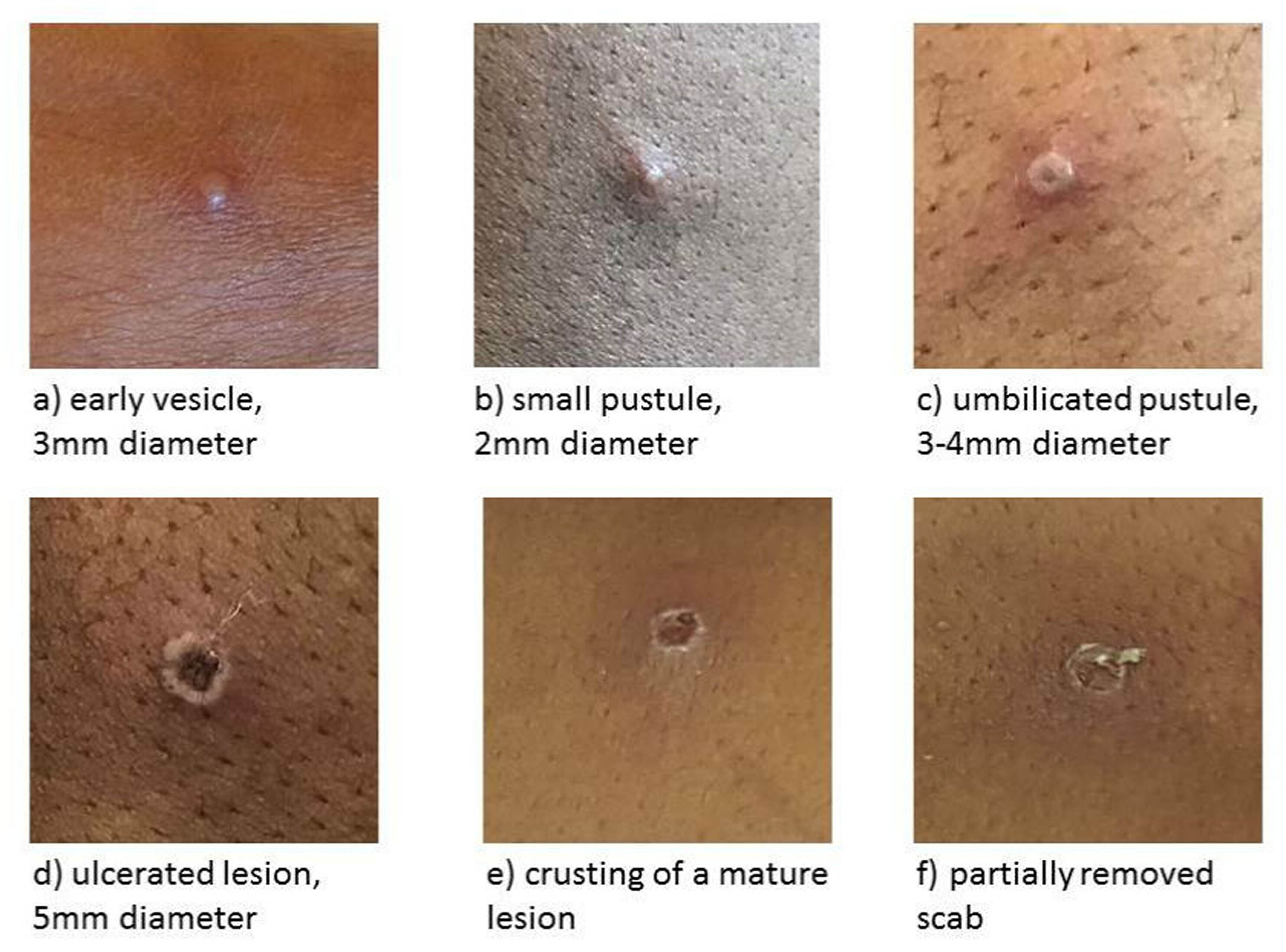
UK Health Security Agency via PA Media
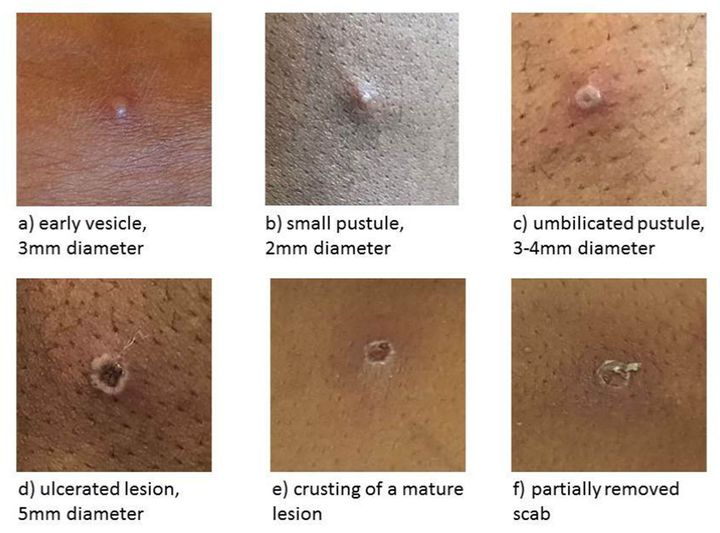
UKHSA’s image of monkeypox lesions
The rash can start on the face before moving to the body. It gradually transforms, and can form sores comparable to chickenpox or syphilis before scabbing. The scab falls off but can leave a scar.
The incubation period (the time before symptoms appear) is usually from six to 13 days but can range from five to 21 days.
Why have gay or bisexual men been particularly warned?
Advertisement
The UKHSA report that the majority of cases so far have been among men who have sex with men.
However, it’s important to note that this is likely due to where the virus allegedly first started to spread – at two European raves – and not because this group are at higher risk of catching it.
Anyone is at risk of catching the virus regardless of sexual orientation.
But, she added: “We are concerned that individuals may acquire this infection through high-risk exposure if they don’t have the information they need to protect themselves.”
The UKHSA also said the risk “remains low”, but urges anyone with unusual rashes or lesions to contact NHS 111 or their local sexual health service.
Healthcare workers who are pregnant and people with severely weakened immune systems should not care for suspects or confirmed monkeypox cases.
Those working with confirmed cases need to wear personal protective equipment, including respirators, aprons, eye protection and gloves.
Those at the highest risk have also been asked to isolate for up to 21 days.
Advertisement
Health protection teams are tracing the contacts of positive cases and UK health officials have purchased 20,000 doses of a smallpox vaccine called Imvanex.
This vaccine is said to be relatively effective at reducing severe infection and the rate of transmission – it will be offered to those close contacts of the people who are diagnosed with the virus.
The advice to abstain from sex has not gone down well
For parents dating again, figuring out when to introduce a new partner to your kids is a tricky calculus: How many months should you wait? Does the relationship feel stable and safe enough to take that step? Is your child emotionally ready to meet someone new since you split from your co-parent? What will your ex say?
The stress doesn’t end there; once the introductions have been made, you need to check in with your kids to make sure it’s all not too much, too fast, and that they’re comfortable around your new partner.
Advertisement
This common post-divorce dilemma has played out on a very public stage in recent months, since reality star Kim Kardashian has started dating Saturday Night Livekim comedian Pete Davidson.
Things seem to be going swimmingly for the new couple, but Kardashian’s ex, Kanye West, has expressed concern about Davidson’s relationship with his kids. (At one point West even dramatically wrote, “NO YOU WILL NEVER MEET MY CHILDREN” on an Instagram post.)
Advertisement
Still, photos taken recently show that Davidson has met the couple’s kids. And earlier this month, another photo popped up showing what appears to be a new tattoo for the comedian: The ink reads KNSCP, letters many fans believe stand for Kardashian’s four children with West: North, Saint, Chicago, and Psalm.
Family therapists we spoke to wondered just how committed a person could be after roughly six months of dating.
“The tattoo seems more like evidence of his impulsivity rather than his genuine attachment to his girlfriend’s kids, which he could not possibly have in any substantive way after only six months,” says Virginia Gilbert, a Los Angeles-based therapist specialising in high-conflict divorce.
“I think six months is too soon to meet her kids, especially with an in-process messy divorce and Kanye being so opposed to the meeting, but everything Kim does is in the public eye, it would have been hard to keep Pete a secret, so the question is probably moot,” she added.
Kurt Smith, a family therapist in Roseville, California, who mostly works with men, says that the desire to connect deeper with your significant other by showing interest in their kids is understandable.
Advertisement
Ultimately, though, new partners need to recognise that it’s a delicate dance ― one that usually requires a healthy distance.
“Pete should be asking himself why that was so important for him to do at this stage of the relationship,” he says.
Since this co-parenting quandary is top of mind for many right now, we decided to ask family therapists and other experts on blended families to share the advice they’d give to parents newly dating again like Kardashian. Here’s what they say.
First off, when should introductions be made?
For divorced parents, when to introduce and involve a new partner in children’s lives is a complex question, with no “one size fits all” answer.
For some people, six months is enough; for others, a slower approach might be necessary, says Dawn O. Braithwaite, a professor of communication studies at the University of Nebraska-Lincoln.
Braithwaite has spent her career studying how families interact to create, navigate and change relationships, routines and traditions, especially in stepfamilies and chosen families.
According to her, parents need to consider the following six things before making introductions:
What they believe will be the future of their new relationship
The age of the children
How long it’s been since the separation or divorce
How well children have adjusted to changes in their family situation
The relationship with the co-parent
The interest the new partner has in meeting the kids
“While there are exceptions, most scholars have found that new partners can play a positive role in children’s lives, but that they should go slow and act as a friend for children rather than overstepping and acting in ways that are confusing or inappropriate for children,” the professor says.
Advertisement
Johnny Greig via Getty Images
“While there are exceptions, most scholars have found that new partners can play a positive role in children’s lives, but that they should go slow and act as a friend for children,” said Dawn O. Braithwaite, a professor at University of Nebraska-Lincoln who studies stepfamilies.
Meetups should be casual at first
To avoid coming on too strong or overstepping boundaries, keep those early getting-to-know-you meetups as casual as possible: Arrange a park date or meet up for a Marvel movie and pizza.
“The onus needs to be on the new partner to meet the kids where they are ― meaning you need to participate in the kinds of things they like to do,” Gilbert says. “I would also suggest postponing adult sleepovers until the kids become comfortable with the new partner.”
Remember that your relationship is not with your partner’s kids — it’s with your partner only
If you’re the parent, reinforce that you’re not a package deal – not yet, anyway.
“Maintaining this boundary is important for both partners, the health of the new relationship, and, most importantly, for the kids’ health,” Smith says.
Move too quickly and you could quickly incur the annoyance of the kids ― and the potential ire of the other parent.
“I’ve counselled divorcing parents where his new girlfriend posted pics on social media of his kids at a birthday party like they were her own and believe me, it did not go over well with the other parent,” Smith says.
“It’s hard enough bringing in new partners and blending families, so avoiding anything that could cause tension or conflict should be avoided,” he explained.
Be comfortable being an outsider for a while.
Advertisement
Kids in situations like this are usually grappling with competing, confusing concerns, says Amy Begel, a family therapist in private practice in New York City and author of the blog Most Human: “Will they betray their father if they have a relationship with this new guy? Will they betray their mother if they are loyal to their father and want to protect his feelings?”
That’s why it’s important to take a backseat for a bit if you’re the new partner. It may feel like a blow to the ego to be treated as marginal, or worse, an intruder, but patience during this process is crucial, Begel says.
As Jenna Korf, a stepmom and founder of StepmomHelp.com, previously told HuffPost, you’re an outsider joining an already-formed family – even if your partner and their kids eventually move into your home.
“A lot of this is unintentional, but kids automatically go to their parent,” she says. “You might be sitting right next to your partner and they won’t address you, often leaving you out of the conversation.”
If you’re the new partner, take the approach of a new friend or neighbour, not an automatic stepparent.
New partners should try to befriend the kids, but move at a pace determined by the kids, says Ron Deal, the founder of SmartStepfamilies.com and author of a number of popular books on blended families.
“In my book with Dr. Gary Chapman, Building Love Together in Blended Families, I tell stepparents it’s like making friends with a new neighbour,” Deal says. “You don’t just push your way into their house and tell them you’re their new BFF. That makes enemies.”
Instead, the stepdad and author advised, you knock and wait patiently on the doorstep.
“You may even have to talk to them through the door for a while until you find a few things you have in common. Only when they open it can you begin to connect face to face,” Deal says. “Slowly, over time, a friendship is made that stands on its own terms.”
mixetto via Getty Images
Meeting for the first time? Keep it casual. Think: The new Marvel movie on Disney+ and pizza at home where you get a chance to talk and get to know each other.
Avoid “erase and replace” messages if you’re the new partner
Advertisement
According to Deal, exaggerated gestures like Davidson’s tattoos send the wrong message to kids. The goal for new partners is to come across as additive rather than substitutive. The kids should feel like they’re potentially adding to the family, not getting a substitute dad or mum.
“Pete’s tattoo may sound romantic – that’s the kind of thing people do to win the affections of their dating partner – but to the children it declares, ‘You’re mine.’” Deal says. “Someone might say, but isn’t that great as well? Not necessarily to a child. In their world, it may seem like Pete is trying to ‘erase and replace’ their father.”
A child’s loyalty lies, understandably, with their biological parent, not the new stepparent. A message like that threatens their relationship with their father “may partially explain Kanye’s strong reaction and only escalates the battle between the parents,” Deal tells HuffPost.
“Here’s my rule of thumb: a new partner who tries to erase and replace a biological parent is, in fact, going to be erased and replaced themselves,” he says.
FatCamera via Getty Images
“As a general rule, it takes at least two years before a new partner can assume a traditional parenting role,” said Virginia Gilbert, an LA-based therapist specializing in high-conflict divorce.
Most kids with newly divorced parents are dealing with abandonment issues; don’t add to them
It’s awful for a child to get attached to a new partner who then disappears from their lives. If your partner is coming on too strong with the kids, Gilbert says to acknowledge that this is a tough transition for everyone and tell them you really appreciate their efforts.
Then, shift the conversation: Try to encourage them to see things from the kids’ perspective: Among other things, your kids may be feeling extra loyal to your ex or they may be experiencing grief that their parents are no longer together. They may not want to share you with a new person and they may not want someone to have control over changes in their lives.
“Your new partner needs to understand how overwhelming your relationship might feel to the kids and that their ambivalence is not about them,” Gilbert says. “If the issue is creating conflict between you and your new partner, consider seeing a therapist who can help you both make child-centred decisions.”
The big takeaway here, though, is to take things slow: “As a general rule, it takes at least two years before a new partner can assume any sort of traditional parenting role,” Gilbert says.
You’re reading Love Stuck, where trained therapists answer your dating, sex and relationship dilemmas. You can submit a question here.
The topic of porn can be a taboo subject, but we need to talk about it – especially in relationships. This week’s reader, Jenny, wrote in to ask for advice related to her husband’s porn consumption.
Advertisement
“My partner is watching porn and won’t have sex with me,” she said. “I found out that my husband is into porn and he won’t turn from his ways. He’s pleasuring himself but won’t have sex with me, what should I do?”
Navigating a situation like this can be tricky, but Counselling Directory member Georgina Smith is here to help.
Advertisement
How can this reader speak to her husband about this?
“Like any difficult subject in a relationship, pick a time when you are both able to talk freely, raising it when you are both calm and able to discuss rationally, don’t wait until an argument,” Smith says.
Advertisement
“Invite some open conversation about his feelings around his porn habit and how that makes you feel – try to use empathy and good listening skills.
“Explore how you could find your way back to a sex life you both enjoy to feel more connected. You are entitled to express your desire for sex in a relationship and how their rejection may be causing you hurt.”
When does watching porn become an issue in a relationship?
Smith believes that watching porn in a relationship becomes an issue when it causes harm to the partner. “Some people perceive watching porn as a form of infidelity, especially if it is done in secret,” she says.
Advertisement
“If porn watching is essentially a substitution for actual sex and that is impacting on the relationship (by stopping a couple connecting via sex and intimacy), I would consider that to be an issue.
“If watching porn has become addictive (i.e. unable to stop even if viewer wants to stop) then that person may need specialist help.”
What should we do when porn becomes an issue in our relationship?
Smith emphasises that we should “communicate effectively around the subject, don’t avoid it just because it can sometimes be an uncomfortable conversation.”
“Try to understand where you are both coming from if you have opposing views around porn and figure out how you might find a common ground that keeps both of you happy,” Smith says.
“Get some couple counselling to unpack in a safe space and reflect individually why you feel the way you do about porn would be two helpful places to start.”
Love Stuck is for those who’ve hit a romantic wall, whether you’re single or have been coupled up for decades. With the help of trained sex and relationship therapists, HuffPost UK will help answer your dilemmas. Submit a question here.
You’re reading Love Stuck, where trained therapists answer your dating, sex and relationship dilemmas. You can submit a question here.
There’s a reason why the friend to lover trope is so popular in film and TV. You’re friends with someone for years, you date other people and then you realise the person you’ve been looking for has been right in front of you.
Advertisement
Having a solid friendship with someone can be a great foundation for a relationship. But the movies we watch don’t tell us how awkward it can be to tell your friend you fancy them. What if they aren’t attracted to us? What if it ruins the friendship?
This is what this week’s reader, Carol, is worried about. “There’s a man that I like and we have been friends for about five years. We are in the same running and wild swimming group and get on well. How can I move out of the ‘friend zone’?” she asked.
Advertisement
Though the term “friend zone” has been debated, there’s nothing wrong with exploring the potential of a relationship with a friend – as long as you’re fully prepared to accept that they may not reciprocate your feelings.
Though it can be scary to shift the dynamic, Counselling Directory member Simona Bajenaru says we should be honest and authentic.
Advertisement
“Speaking your feelings might be as rewarding as perhaps the hesitation to do so. Whether reciprocated or not, once the initial fear and shame subside, your sense of confidence and pride might blossom,” Bajenaru says.
How can we get out of the friend zone?
Bajenaru first invites anyone in this situation to ask yourself five questions:
Why now?
What drives your desire to move out of the “friend zone”?
What are your expectations, moving out of it?
Would you say he completes or complements you where you are at now?
What feelings come up when you envisage your future together?
Advertisement
Bajenaru emphasis that “although answering these questions logically is important, digging deeper into your feelings will help clarify whether your desire to advance this relationship is genuine or acting on a temporary need to be fulfilled (company, intimacy) or fear to be satisfied (loneliness, low self-esteem).”
In a situation like Carol’s – where you usually see the other person in an activity group – asking them if they’d like to meet up one on one for a coffee or drink is probably a good first step.
Why do people struggle to move from friendship to romantic?
“Coming out of the ‘friend zone’ is terribly scary for most of us,” Bajenaru says. “Hesitation is a natural reaction to such prospects since a non-reciprocation of your feelings blurs your treasured friendship’s way forward.
“Best case scenario, his feelings are mutual and knowing each other well enough provides a beautiful and safe space to nurture the next stage of your relationship.
“The less fortunate scenario may be a slow distancing leading to potentially losing a valued friend, a perhaps abrupt end to his reliable, consistent presence in your life. Should this be the case, please know you have not done anything wrong.”
How can we continue a friendship with someone if they don’t reciprocate feelings for us?
There is an overall risk of awkwardness between yourselves for a while after feelings are shared.
“Sometimes the response is not even immediate: your friend may choose to process his own feelings first. A beautiful placeholder to receive might be ’I am flattered, I need to process it,” Bajenaru says.
“However, they may choose to never respond nor engage, avoiding difficult conversations with you and themselves.
Advertisement
Bajenaru adds that “continuing the friendship would require an honest conversation about the attempt to have more than a friendship and setting some boundaries and perhaps ‘ground rules’ until some new kind of ‘normality’ is established.”
Love Stuck is for those who’ve hit a romantic wall, whether you’re single or have been coupled up for decades. With the help of trained sex and relationship therapists, HuffPost UK will help answer your dilemmas. Submit a question here.
And somehow the spouses of Twitter continue to find humor in the minutiae of married life ― and sum it up perfectly in no more than 280 characters.
Every other week, we round up the funniest marriage tweets of the previous 14 days. Read on for 24 new, relatable ones that will have you laughing in agreement.