A Reform UK Government Would ‘Tear Britain Apart’, Starmer Says In Outspoken Attack

A Reform UK government would “tear” the country apart, Keir Starmer has claimed in one of his most outspoken attacks on Nigel Farage yet.

Speaking to The Economist, the prime minister warned that the party – which is currently leading in the polls – would “tear apart our country with their propositions for not actually respecting the tolerant, diverse country that we are”.

He added: “They’ve got no ideas on the economy whatsoever.

“And my worry is, and this is how history tells us, is that a rightwing proposition like that, with fantastical ideas, leaning towards Russia, if it gets into power, it will find that its policies don’t work, and it won’t become more progressive, it won’t nudge towards the centre, it’ll be go to the right, to the right, to the right.

“We’ve not faced that in this country ever in this form, and it is the political fight of our times and we have to win that political fight.”

He also claimed that he could “sleep at night” if there is a Tory government, but it would be different if there were a more right-wing government in power.

Starmer claimed now is a “real test of centrist politics”.

According to a More in Common mega-poll from September based on responses from almost 20,000 Brits, Reform would win a general election if voters were heading to the ballot box soon.

Reform would take 373 seats while Labour would secure just 90, and the Tories would take 41.

Farage’s populist party also accepted the single largest political donation in history in the third quarter of 2025, according to Electoral Commission figures, accepting £9 million from a Thailand-based donor.

Hours after Starmer’s comments were published, Farage held a press conference where he batted back against racism claims.

The party leader has been accused of being racist and antisemitic when he was a teenager, according to accounts given by some of his peers from Dulwich College.

The Clacton MP has offered a range of responses to the claims, including agreeing he may have made offensive comments – but not with malice or the intent to cause hurt – to claiming the accusations are without foundation.

After a BBC Radio 4 presenter Emma Barnett hit out at Farage’s deputy Richard Tice over the allegations this morning, Farage called her a “lower grade presenters”.

He said: “I cannot put up with the double standards of the BBC about what I’m alleged to have said 49 years ago, and what you were putting out on mainstream content. So I want an apology from the BBC for virtually everything you did throughout the 1970s and 80s.”

Farage later implied that he would remove Reform UK council leader Ian Cooper from his post after he was emerged of making racist social media posts.

He said the party had not been aware of Cooper’s other social media accounts, saying: “We’re going through due process. All I can say is it doesn’t look very good. We expect our people to be truthful with us and if they’re truthful with us, we’ll be honorable towards them.”

Share Button

The Latest Version Of Celebrity Thinness Isn’t Just Annoying, It’s Dangerous. I Should Know.

Every time I see Ariana Grande on the red carpet or in interviews lately, I feel a mix of fear and anger. Not at her, her beautiful spirit, breathtaking voice or right to move through the world in the body she chooses. But at what she’s come to symbolise.

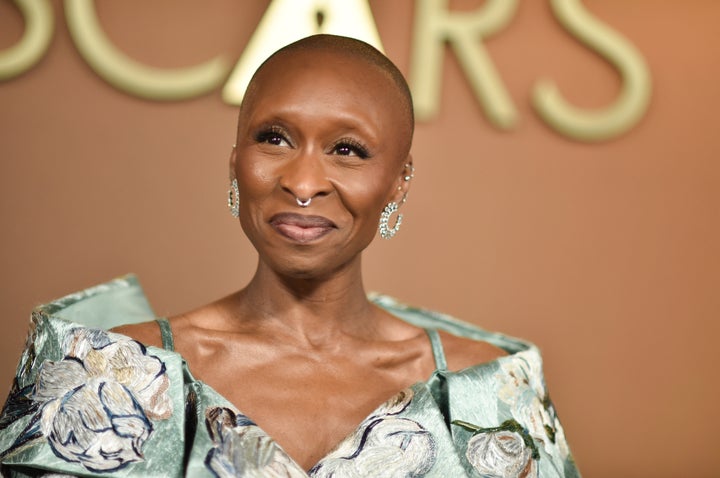
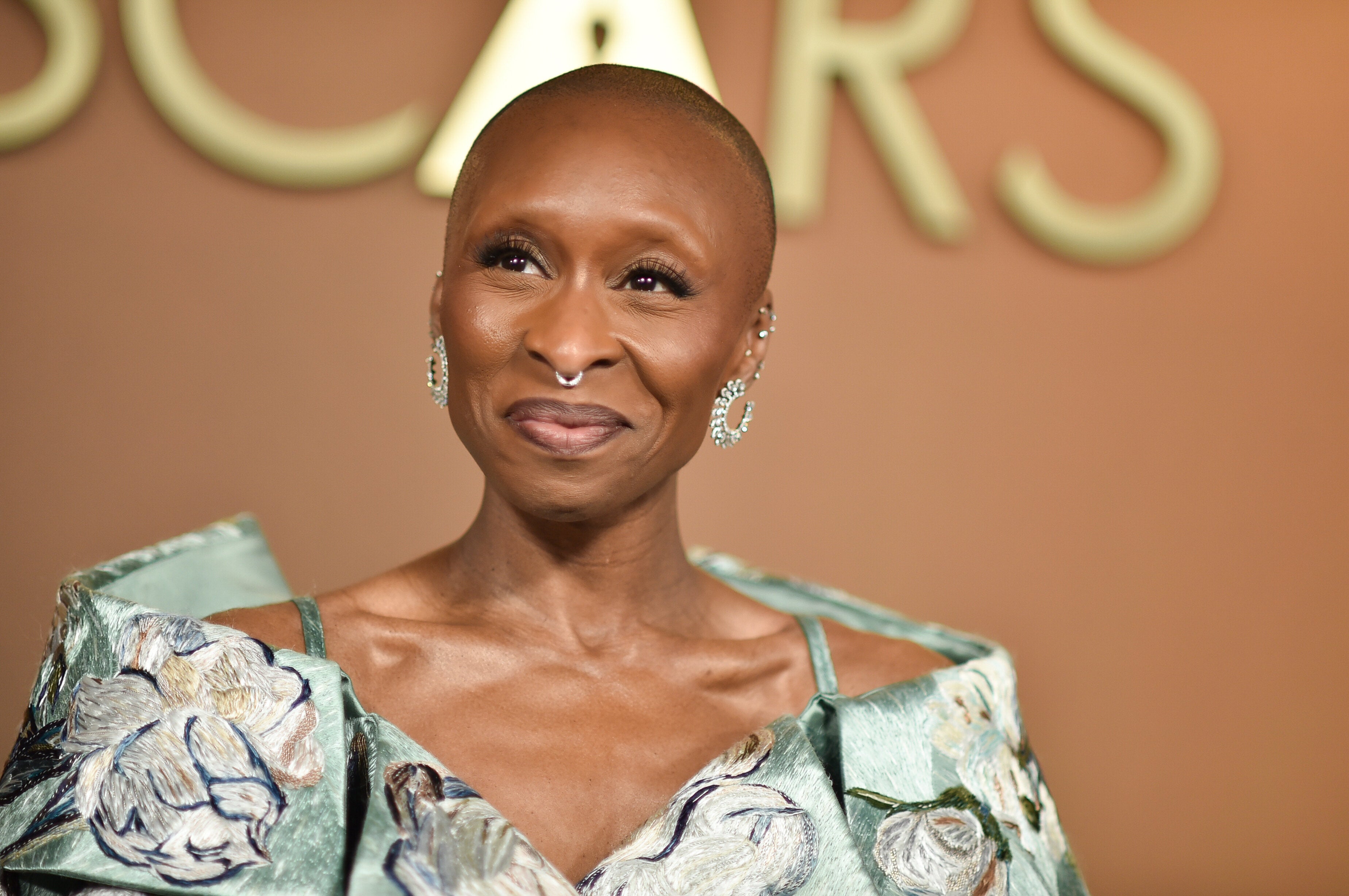
Extreme thinness is back, and it’s being packaged as aspiration. Grande and Cynthia Erivo are everywhere promoting Wicked in interviews, photo shoots, red carpet events. Their bodies and the ultra-thin bodies of other celebrities – small, smaller, smallest – are glamourised and showcased with the media positioning Grande as one the main figures to be celebrated.

Even though there has been some criticism, it’s been drowned out by the mega promotion machine that celebrates these figures, and plasters them everywhere with great fanfare.

And this is happening at the same moment weight-loss drugs like Ozempic and Wegovy have become omnipresent.

These drugs are now so widespread – and will be even more so with the soon to be released pill forms – and easily obtained that people are using them whether or not they medically qualify. Not for diabetes, not even for health problems ostensibly related to “obesity”.

But to chase the kind of extreme thinness that’s on every magazine cover, every blockbuster press tour and in every curated celebrity post.

This comes after millions of women, myself included, have spent years trying to unlearn the toxic messages we were fed in our youth. That beauty equals thinness. That discipline means restriction. That our bodies must be controlled and minimised to be acceptable.

We fought for size diversity, for the radical idea that you can be beautiful, strong and worthy without disappearing. And just as that movement was starting to shift the cultural tide, here comes this trend of pharmaceutical shrinking that pretends thinness is wellness.

This isn’t about calling out celebrities, and it isn’t about body shaming. It’s about the unspoken message all of this is sending: when it comes to health, thinner is always better. This isn’t just frustrating. It’s dangerous.

A danger I know intimately.

When I was a teenager, my mother used to say, “If you only lost weight, you could be beautiful.” She equated being thin with the worth of a woman, and believed it would grant her access to power, success and opportunities.

I was a 14-year-old desperate to fit in with the cool kids. So when a popular girl in my high school freshmen class turned to me and asked how much I weighed, I answered without much hesitation.

“About 130 pounds.”

She looked at me in horror, “Oh, my God. I would kill myself if I ever weighed that much.”

I stood there, the fluorescent hallway lights buzzing above me, trying not to let the heat rising in my face show. She had confirmed what my mother had drilled into me, that the most important thing to be was thin.

My mother had done everything in her power to get me to lose weight: She’d pushed, pleaded, threatened, bargained. And she wasn’t the only one spreading the message of thin worship. This was the 1980s, the era of low-fat everything, Slim Fast and Jane Fonda workout tapes. No one was talking about mental health or eating disorders, no one I knew anyway.

Instead of motivating me, this made me feel like there was something wrong with me. That I was unworthy and unlovable the way I was. So when I was 15, I went into the bathroom one afternoon, locked the door and pushed my fingers down my throat.

As soon as I emptied my stomach, I felt an avalanche of self-loathing and disgust, but also a kind of relief. I sat on the cold tile floor, throat burning, face tear-streaked, clutching the white porcelain bowl. That started a secret life I carried for the next 30 years.

Decades of compulsive binging and purging, of painful highs and crashing lows. Of hiding behind locked doors and running showers to muffle the sound of vomiting. Of looking into a steamed-up bathroom mirror at a version of myself I hated.

The author in high school, around age 15.

Photo Courtesy Of Rebecca Morrison

The author in high school, around age 15.

The new thinness cult isn’t just happening on red carpets. It’s happening on TikTok. In classrooms. In text threads between friends. It’s shaping how young people define health, beauty, morality. As a result, eating disorders are on the rise, especially among young girls. Treatment centres are seeing a dramatic spike in patients.

I don’t know these celebrities’ stories, their health journeys, or their reasons. But it’s not about personal beauty choices. It’s about systems. About money. About power. About a $450 billion global beauty industry and $163 billion weight loss market that thrives when we hate ourselves enough to keep spending.

My anger is at the cultural shift that’s pushing people, especially kids, toward disordered eating, mental health crises and lifelong shame.

By the time I was in my 40s, I’d found a way to make peace with my body. I finally believed, like so many others that had seen the body acceptance movement gain ground, that it was OK to be who I was. That worth didn’t have to be determined by how little I weighed.

Now, millions of women like me are seeing this latest cultural shift and thinking: We already fought this battle. We already lived through the eating disorders, the shame, the isolation, the obsessive calorie counting. We were finally starting to believe that health came in many forms, that beauty wasn’t synonymous with being smaller.

We deserve a culture that refuses to treat weight loss as a moral victory. So does the next generation – so young people don’t grow up thinking they need to hurt themselves to be beautiful or valued, like I and countless others did.

Do you have a compelling personal story you’d like to see published on HuffPost? Find out what we’re looking for here and send us a pitch at pitch@huffpost.com.

Help and support:

Share Button

Miley Cyrus Breaks Silence After Confirming She’s Engaged To Maxx Morando

Miley Cyrus has confirmed that she and her long-term partner Maxx Morando are now engaged.

Rumours began circulating on Monday night that the Wrecking Ball was planning to marry her fellow musician, with whom she’s been in a relationship for around four years, after she was spotted wearing a ring on her engagement finger.

She later confirmed the headlines were accurate during an interview with People magazine at the premiere of the new Avatar movie Fire And Ash.

The detail that I can share is that for us, our privacy and us kind of keeping it small has been something that I’ve been astounded that I’ve actually been able to have and being able to kind of have more choice,” she enthused.

I think it’s also being older, being more protective of what I’m open to sharing.”

Miley and Maxx – a drummer in the band Lilly, who also worked with the former Disney star on her latest album Something Beautiful – were first thought to have begun dating towards the end of 2021, with the couple reportedly cosying up behind the scenes of her New Year’s Eve Party TV special that year.

Speaking to New York magazine earlier this year, Miley said of her now-fiancé: “I ended up with a person who means a lot to me and treats me really well and respects me.

“I had to learn that the hard way because my mommy taught me the wrong way and then I had to learn the right way by myself.”

“My man’s hot as hell too. But my man also respects me,” she added.

The Grammy-winning singer has been married once before, to The Hunger Games actor Liam Hemsworth.

She and Liam began dating when she was still a teenager, eventually tying the knot in 2018 and parting ways after less than a year of marriage.

Share Button

Critics Are All Saying The Same Thing About Meghan Markle’s Festive Netflix Special

Meghan Markle’s much-derided Netflix lifestyle series may have come to an end – but it’s going out in a big way with one last instalment.

Yes, Wednesday morning saw the arrival of With Love, Meghan: Holiday Special, the first (and, presumably, only) festive special in the Duchess of Sussex’s two-season project which has seen her offering tips on everything from cooking and crafting to gardening and generally being a great first.

Seasons one and two of With Love, Meghan were slammed by critics upon their release earlier this year, with many reviews claiming that the show felt out of step with what’s going on in the world, particularly in light of the current social and economic climate.

And – surprise, surprise! – the Holiday Special has also been met with a similarly lukewarm response.

Here’s a selection of what critics are saying about With Love, Meghan’s seasonal swansong…

“That, mercifully, is the end. I feel both offended and harmed, but in the spirit of goodwill I will add a star to my rating in gratitude for the fact that at least we are safe now until next year. God bless us, every one.”

“I said a little prayer before watching With Love, Meghan: Holiday Celebration. Give me the strength, I muttered, to endure what is to come, and the grace not to give in to despair. I’ve been struggling since the trailer landed a couple of weeks ago, because it opened with Meghan, in wellies, dancing around Christmas trees shouting, ‘Hey-oh!’. Now the whole festive episode has arrived and it is more than we could have hoped for, or done to deserve.”

Naomi Osaka pays Meghan Markle a visit in her new Holiday Celebration

JAKE ROSENBERG/NETFLIX

“You’ll be reaching for the Christmas spirits – make mine a double – within the first five minutes, as Meghan talks us through the basics. ‘Once a year, you get to do the tree thing’. Advent calendars ‘are about having a surprise every day for 24 days until you get to Christmas’. ’Tis the season to wrap gifts. You don’t say!

“This is reminiscent of the advice given by Pippa Middleton in Celebrate, that seminal work of non-fiction produced by the Princess of Wales’s sister, which recommended serving turkey on Christmas Day and going stargazing at night-time because that’s when it’s dark.”

“It’s not a real special by any stretch, but some YouTube content or the radio that you might put on in the background as you do your tree or wrap your presents. White noise to dull the senses. It’s all a little Stepford Wives; not informative, fun, enjoyable or even aspirational.”

Sometimes, people are given a platform because of who they are, rather than what they can bring, and With Love, Meghan gives me the same feeling as when I am around very wealthy people who think that making a salad with friends makes them ‘grounded’ and ‘relatable’. On the other hand, there’s something soothing, even enjoyable, about the show’s glossy inanity.”

“It’s hardly scintillating stuff, but Netflix has really hit its stride with this special episode of With Love, Meghan. They’re really leaning [into] the frantic energy of its star trying to crack puns without splashing hot oil or butter down her pristine cashmere sweaters. Honestly, the production team must be trolling Meghan here with increasingly bizarre and elaborate set-ups for her to impart hosting ‘hacks’. In fact, are they really hacks? They would make anyone actually hosting Christmas for a big group have a nervous breakdown before the canapes were served.”

With Love, Meghan and With Love, Meghan: Holiday Celebration are streaming now on Netflix.

Share Button

Elf On The Shelf Inspiration To See You Through To Next Week

While there are plenty of parents who are probably too maxxed out to be adding Elf On The Shelf to their daily routine (hi, hello, I am sadly one of them), the annual tradition remains hugely popular among families in the UK and across the pond.

In fact, just over one-third of parents (who have kids aged 10 and under) are thought to be taking part.

Whether you’re a seasoned veteran or are taking it up for the first time this year, here’s a quick recap of what it entails, as well as some inspiration for later in the week when you start to run out of steam…

What is Elf On The Shelf?

Like many new events and traditions here in the UK (ahem, Black Friday), Elf on the Shelf originated in the US, as the story of an elf sent by Santa to watch over kids at Christmas time.

Carol Aebersold and her daughter Chanda Bell came up with the storybook in 2004. “We grew up with this tradition in our home,” Bell previously told HuffPost UK. “When we were children, our Scout Elf, Fisbee, would come to our home and look over our family each year. I have such wonderful childhood memories with Fisbee.”

After it was rejected by publishers, the pair decided to self-publish the book in 2005 and packaged it up with an elf toy. This way, parents could make the elf pop up at different places around the house (as he did in the book), reminding kids he was on the move, keeping an eye out for Santa.

Aabersold and Bell sold the books from the backs of cars and reached out to family and friends they thought might want to adopt the tradition. Then in 2007, a picture was taken of Jennifer Garner walking down the street holding her own Elf on the Shelf box set. The photo went viral and everyone wanted to know more. By 2008, Elf on the Shelf was in major retail stores.

How does Elf On The Shelf work?

In short, elves are “adopted” by families and named. On 1 December, they then pop up somewhere around the house – perhaps with a note saying hi to the kids.

Once children are in bed, parents then place the elf (or elves) in different locations around the house so they are somewhere new when they wake up each morning.

The elf then says goodbye on Christmas Eve.

Elf On The Shelf inspiration

OK, so we’ve established how it all works. Now, here’s some festive inspiration for when you run out of steam and have no idea where to put your elves…

1. Hiding in the tree

Elves in the tree

Zoe Griffin / Elf On The Shelf

Elves in the tree

2. Sitting on your garden furniture (weather permitting)

Elves on the garden bench

Zoe Griffin / Elf On The Shelf

Elves on the garden bench

3. Hanging out on your wreath

Elves on the wreath

Zoe Griffin / Elf On The Shelf

Elves on the wreath

5. Tucking into afternoon tea

Elves having afternoon tea

Zoe Griffin / Elf On The Shelf

Elves having afternoon tea

6. Munching mince pies

Elves eating mince pies

Zoe Griffin / Elf On The Shelf

Elves eating mince pies

7. Causing mischief with toilet roll

8. Conquering a paper cup pyramid

9. Getting frozen (for all the Elsa fans)…

Share Button

Sabrina Carpenter Hits Out At White House For Using Her Song In ‘Disgusting’ Video

Sabrina Carpenter has hit out at US president Donald Trump’s administration after the White House used her song to soundtrack a video she has described as “evil and disgusting”.

Responding on the same platform on Tuesday afternoon, the Grammy winner wrote: “This video is evil and disgusting. Do not ever involve me or my music to benefit your inhumane agenda.”

“This post honestly makes me sick,” she responded. “My music is about love, unity, and spreading positivity – never about division or hate.”

Share Button

Doctor Shares Signs You Might Have ‘Hormonal Insomnia’

Even though I have insomnia, I didn’t recognise that I had a problem for years.

That’s because I thought the condition only meant struggling to fall asleep. But I have sleep maintenance insomnia, which means I wake up in the middle of the night and then struggle to return to the land of nod.

I heard the phrase for the first time last year. But I only read the words “hormonal insomnia” this week.

Speaking to HuffPost UK, Dr Giuseppe Aragona, GP and medical adviser for Prescription Doctor, explained that those with the condition “often have trouble falling asleep initially, wake during the night and struggle to return to sleep, or wake too early in the morning”.

But what does the term mean, why does it happen, and what can you do if you have it?

What is “hormonal insomnia”?

The term “refers to difficulty sleeping that arises as a result of changes or imbalances in the body’s hormone levels,” Dr Aragona explained.

“Several hormones play a key role in regulating sleep, including melatonin, which signals to the brain that it is time to sleep, and cortisol, which promotes alertness and can interfere with sleep if elevated at night.”

Reproductive hormones, like oestrogen and progesterone, can also lead to the condition because they, too, affect our sleep patterns.

So perhaps it’s not surprising that the GP said: “Hormonal insomnia is most commonly observed during life stages when hormone levels are changing significantly, such as during the menstrual cycle, pregnancy, perimenopause, or menopause, and may also occur in thyroid disorders or other endocrine conditions.

“These hormonal shifts can disrupt the body’s temperature regulation, circadian rhythm, and mood, all of which contribute to sleep disturbance.”

What are the symptoms of hormonal insomnia?

They’re quite like those of “regular” insomnia, Dr Aragona said.

“People experiencing hormonal insomnia often have trouble falling asleep initially, wake during the night and struggle to return to sleep, or wake too early in the morning.

“Sleep may feel fragmented and of poor quality, leading to daytime fatigue, irritability, poor concentration, and low mood.”

If your hormonal insomnia is linked to hormonal changes like menopause, you might notice other symptoms keeping you awake, like hot flushes and night sweats.

If a GP were to check for hormonal, rather than general, insomnia, the doctor tolf HuffPost UK, they “would typically explore a person’s life stage, hormonal history, and the timing and pattern of symptoms.

“It is also important to consider associated symptoms such as mood changes, night sweats, or bladder issues, and to rule out other causes of insomnia such as stress, poor sleep hygiene, sleep apnoea, or pain.”

Blood tests can help to rule out thyroid issues or hormonal imbalances, too.

What should I do if I have hormonal insomnia?

Dr Aragona recommends a blend of different strategies.

“Maintaining a consistent sleep routine, avoiding stimulants and screens in the evening, and keeping the bedroom cool, dark, and quiet can help,” he advised, while “Relaxation techniques such as mindfulness or breathing exercises can reduce stress and cortisol levels, making it easier to fall asleep.

“Addressing underlying hormonal symptoms, for example, through lifestyle strategies or, where appropriate, medical treatments for menopause-related symptoms, may also improve sleep.”

If your insomnia lasts for a long time ― some doctors put it at more than three nights a week, for three months or longer ― see a GP, said the expert.

Lastly, “General health measures, including regular exercise, a balanced diet, and avoiding excessive alcohol or nicotine, also support better sleep,” said Dr Aragona.

“Hormonal insomnia is usually multifactorial, so addressing lifestyle, behavioural, and medical factors together tends to be the most effective approach.”

Share Button

DfE’s Mock Apology Post To Parents Seriously Misread The Room

A Department for Education social media statement went viral, but not in a good way.

The Department published a mock ‘apology’ celebrating the impact of its Breakfast Club initiative.

Unfortunately, instead of sounding human or witty, it read as self-congratulatory and oddly patronising – and within hours, was circulating widely as an example of political comms gone wrong.

As CEO of nanny company Koru Kids, I watched this with dismay for several reasons.

I was saddened because the policy itself is well-evidenced and successful. Breakfast clubs are essential childcare infrastructure, and it’s great that they’ve served over 2.6 million meals. That’s something to celebrate.

But the botched announcement also revealed something deeper about trust, empathy and the currently fragile relationship between families and the state.

One jarring aspect of the statement was its self-congratulatory tone. The government seemed to be taking credit for outcomes actually delivered by exhausted frontline workers.

Breakfast clubs have run because kitchen staff show up at dawn. Childcare works because early years educators absorb the strain every day. Attendance has improved because teachers, SENCOs and safeguarding teams grind constantly.

Parents, too, commented the tone of the statement was ‘off’. One section said the Department’s policy has given parents “alarming amounts of unexpected free time”, suggesting British parents are now luxuriating in extra hours at the spa.

Any parent could tell you this is absurd. Parents use childcare to keep their jobs and put food on the table.

But the humour in these cases was gentle, well-judged, and didn’t punch down.

Satire only works when the audience knows you get them. That’s why your friends can take the mickey out of you, but it’s rude if strangers do – because the jokes have to rest on a base of trust.

Sadly, the Department of Education just has not earned the right to joke about how hard it is to be a parent. They’ve misread the room.

What’s actually happening is that life is becoming ever harder for families.

Brand-new data from Buttle UK shows that 43% of young people in crisis think they might need to drop out of education to work. More than half (55%) of children say they’re sometimes too hungry to learn. 60% of parents can’t afford school shoes. 59% can’t afford uniforms.

Against this backdrop, a joke about parents gaining “unexpected free time” doesn’t just misjudge the tone – it makes people wonder whether policymakers understand what life is like for most people at the moment.

This matters, because we are living through a profound crisis of confidence in institutions.

People reading this statement quite reasonably think, “If they don’t get it, how can we trust them to make policies in our interests?”

Empathy isn’t just a layer of comms you add at the end, it needs to be an integral part of the whole process. When it’s missing, it makes you question the process itself.

And that’s something that really threatens us all.

Rachel Carrell is the CEO of Koru Kids.

Share Button

Advent Has Begun. But What Does That Actually Mean, And Why Do We Have Advent Calendars?

Not to alarm you, but we’re a matter of weeks away from Christmas – and already in Advent.

Advent, which begins on the Sunday closest to November 30, lasts for four weeks. This year, it started on Sunday, November 30; the earliest it can begin is November 27.

But what does Advent mean, and why do we celebrate it?

Advent means “coming”

Per Britannica, Advent comes from the Latin word “Adventus,” meaning “coming”.

In the Christian faith, it refers to the coming of Christ, celebrated at Christmas.

It can also, the BBC shared, be a “time of preparation when Christians think about the second coming of Christ and what they need to do to be ready for his return.”

The dates have not always been the same. For instance, under Bishop Perpetuus of Tours (461–490), Advent used to involve a fasting period which began on November 11.

Advent is linked to the Advent wreath, made from a circle of evergreen leaves used to represent eternal life. There are also four candles, one for each of the Sundays ’til Christmas. Some add a fifth candle that symbolises Jesus Christ.

This final candle, if present, is not usually lit until Christmas begins. The other candles are traditionally lit on each Sunday before Christmas.

Why do we have Advent calendars?

Like Christmas trees, these started out as a German tradition – though Advent calendars took off a little later, in the 19th century.

It was simply a way to count down to Christmas.

Traditional Advent calendars often had Bible verses or pictures, though NPR pointed out Advent calendars weren’t the only way Germans built anticipation at the time – less long-lasting versions included keeping a chalk tally on walls and doors, and placing extra straws in the crib of a Nativity scene.

So, though it took a few decades, perhaps it’s not surprising that German publisher Gerhard Lang is credited with the first printed Advent calendar, as well as the first Advent calendar with doors.

And though the first chocolate version is believed to have been made in the ’50s, it took Cadbury’s about 20 years to make the first mass-produced version in 1971.

Only in the ’90s did demand become high enough for them to keep the calendars in continuous production.

Because Advent does not always begin on December 1, though, they don’t follow the exact dates every year – it is just easier to go 1-25, or 1-24.

Share Button

‘My Boyfriend’s Jokes Started Including Creepy Details. Can I Ever Trust Him Again?’

Though closeness is an important part of a great relationship, the cofounder and COO of Fresh Starts Registry, Genevieve Dreizen, says that privacy is key, too.

“As a person who spends a great deal of time helping people navigate life transitions and emotional crossroads, I always remind people that privacy is not a threat to intimacy,” the etiquette expert said.

In fact, she calls it a “necessary ingredient” for a healthy partnership.

Perhaps that’s why Redditor u/taliv_03 said she feels so “disgusted” after learning that her partner had been rifling through her diary.

Writing to the forum r/TwoHotTakes, the original poster (OP) said that she first suspected him of reading her journal about a month ago, when his jokes about her changed.

Here, we asked Dreizen to weigh in on the tricky situation.

OP’s partner began joking about details only shared in her journal

The poster, a 27-year-old woman, said that her partner (a 29-year-old man) had been together for a little over a year when she noticed the change.

Throughout that period, she had a paper diary that her boyfriend knew about. It is a “non-negotiable” for her, she says; her partner had previously “teased me [about it] once in a sweet way, calling it my ‘brain compost bin.’”

About a month ago, though, she started noticing something strange about her partner’s jokes.

“We were with friends, and he made a joke about how I [research] symptoms for my cat more than for myself… It stung because that exact line was in my journal the night before, word for word,” OP wrote.

“A week later, he told this story to my sister about how I still feel guilty for breaking a snow globe when I was five. I have never told that story out loud, only wrote it down after a therapy session.”

Two nights ago, she said she walked in to see her diary open on a coffee table in front of her. He claimed he had moved it to save it from the cat, she said.

After he mentioned yet another private musing, though, she raised her suspicions with him, “and he got defensive, said I should not write things down if I don’t want them to be ‘found art’, and that I was overreacting because ‘partners should not have secrets.’”

Since then, OP writes, she has felt “disgusted and stupid, like my safe place just got ripped open for someone else’s stand-up routine.

“At the same time, I keep wondering if I am making this bigger than it is. Is reading a partner’s journal and then using their thoughts as jokes a hard deal breaker, or something you can actually rebuild trust from?” she ended.

“This is a boundary violation”

Speaking to HuffPost UK, Dreizen explained: “When a partner reads your diary, they aren’t just crossing a line of etiquette; they are trespassing on the internal space where you tell the truth to yourself. That space is sacred.

“A diary is not a shared document, not a negotiation, not a relationship ledger.”

And when someone snoops in your diary, “You’re dealing with a breach of trust that destabilises the foundation of emotional safety in the relationship.”

It turns a private space into an arena where you suddenly have to worry about leaving yourself open to teasing and jokes, the expert added.

“That kind of emotional exposure can make you question your reality, tiptoe around your own inner world, or feel ashamed of feelings you were never meant to defend.

“The injury is not just about the reading – it’s about the casualness with which your boundaries were dismissed, the entitlement to your inner life, and the refusal to take accountability afterwards.”

For her part, Dreizen said, “The first step is acknowledging that this isn’t a difference in opinion about privacy. This is a boundary violation. The partner’s belief that ‘partners shouldn’t have secrets’ is a misconception wrapped in control.

She said that in this case, repair is only possible once OP’s partner has proven that he understands that he’s wrong and why and has taken concrete steps to change.

Dreizen asked the poster, should she wish to give her partner another try, to say something like, “I’m open to moving forward, but only if you take responsibility without minimising and commit to respecting my boundaries. What steps are you willing to take to make that happen?”

Share Button