The 15-Minute Lunch Change An Expert Says May Banish Your Afternoon Slump

It feels like we went from 9pm sunsets to a black sky at half bloomin’ four in a matter of seconds.

And with increasing darkness comes the onset of seasonal affective disorder (SAD) and vitamin D deficiencies for some. That’s not to mention potentially dysregulated sleep and decreased physical activity, either.

So perhaps it’s no wonder that Brenig Moore, health and safety and technical officer at Astutis, told HuffPost UK: “Lunch breaks matter all year round, but more so over the darker seasons of autumn and winter”.

In fact, Moore said, a 15-minute change to your lunch break could be considered a “basic safety requirement”.

You should go for a walk on your lunch break in winter

Sunlight during winter is scarce, which can deplete your stores of vitamin D and even disrupt your sleep.

But it will likely be too dark to get enough of that sweet sunlight on the other side of your work day.

So, the Royal Osteoporosis Society’s advice – “to let the sun shine on your face or arms for about 10 minutes between 11am and 3pm” – might be best achieved for many on their lunch break.

“It is a basic safety requirement to get out and take a small walk for at least ten minutes to boost your alertness, mood and energy,” Moore revealed.

He added, “Short days mean your body’s natural wake/sleep cycle is disrupted. Even just fifteen minutes outdoors can help you avoid that mid-afternoon slump that leads to mistakes, stress and burnout.”

Even your joints struggle in the colder, more sedentary months, he continued.

“Cold weather tightens muscles and joints, and what’s going to make that even worse is sitting in the same office chair all day… Moving at midday resets posture and reduces aches that lead to long-term issues.”

It may be especially useful in times of high pressure, the health expert stated: “Winter workloads spike, but powering through kills efficiency… The people who pace themselves work smarter, not longer. A 30-minute break can save hours of tired mistakes.”

What are the other benefits of taking a walking break this winter?

“You may find your mood to be a lot lower in winter than it is in summer, and this isn’t uncommon,” Moore said.

“A break in natural light helps keep serotonin levels stable, and stops stress building up and overwhelming you.”

Not enough motivation?

“Constant screen time drains the brain. Stepping away at lunch resets concentration and judgement, which will lower the risk of accidents happening both at work and at home,” the expert ended.

“By going out and resetting your brain, you’re less likely to come back to the office or your laptop and make any mistakes. Some accidents may just be something as simple as not including an attachment in an email, but some accidents may be something that could cause injuries for you or others in the workplace.”


BRB, just putting my trainers on…

Share Button

Yes, Science Says Exercising In Winter Really Is Harder

Who was summertime me? I don’t recognise that running, strength-training, “Japanese walking” powerhouse – winter me is an immobile hermit.

I know, I know, staying active in the colder months is great for your health.

But I just can’t bring myself to work out often now that the clocks have gone back. The motivation simply won’t kick in.

If that sounds like you, though, some reassuring (or depressing, depending on your mindset) news: you’re not alone. There is real science behind your cold-weather sluggishness.

No wonder we tend to spend more time staying still in the final season of the year.

Why is it so much harder to exercise in winter?

If you are a member of the many people affected by Seasonal Affective Disorder (SAD), your motivation to head to the gym may be shot.

A paper suggested that vitamin D may potentially increase athletic performance, though more research is needed. Many of us lack the vitamin, linked to bone, muscle, and tooth health, in the darker months, the NHS said.

Some research conducted on military service members suggested that “The combination of cold temperatures with other environmental stressors, including altitude, wind, and wet environments, exacerbates the overall metabolic strain on military service members.”

In other words, it just takes more out of you to work out when it’s chilly out.

Another paper found that people who stood outside in the cold before attempting cycling saw a decrease in performance of 30%.

Your muscles might not work as well in the cold, either (in fact, they can tense up so much in response to cool weather that it may increase your risk of injury).

Want to warm them up ahead of your training session? Fine – but that might take you more energy, too.

More great news: once you’ve completed a chilly session, your hormones may make you hungrier than you would have been if you’d exercised in warmer weather.

How can I motivate myself to work out in winter?

BBC Sports recommends reframing sport as “me time,” working out with others, wrapping up warm, changing your routine to an indoor one, and rewarding yourself when you do get active.

PureGym says that sticking to a routine and seeing exercise as a way to get sunlight – which can help you regulate your sleep, especially after the clock change – may help too.

Even committing to a quick burst of activity on your lunch break can be useful, experts told TODAY.

Share Button

Can’t Imagine Yourself Old And Happy? You May Have A ‘Sense Of Foreshortened Future’

I’m a little embarrassed to admit it, but I’ve always blanked when someone asked me about my five-year plan or inquired whether I wanted to get married or have kids.

My future feels like it has nothing to do with me, and I struggle to envision it – in general, though, the idea of hitting milestones never felt like it “fit” me.

I also felt vaguely as though I was going to die at 20, then 30 (I wonder if the goalposts will move again). It’s a phenomenon friends have described, too.

So, I felt enormous relief in discovering the term “a sense of foreshortened future”, which may be more common than you realise.

What is a “sense of foreshortened future”?

BACP member Alec Williams, a trauma-focused therapist based in London, said: “A ‘sense of foreshortened future’ isn’t simply just thinking that one’s life will be short”, though that can be a part of it.

“It often goes much deeper and can undermine a person’s entire worldview.

“Often,” he explained, “it happens due to an individual experiencing an extreme traumatic event… that shakes the very foundation of how they experience the world.”

Those with a “foreshortened sense of future” might lose all sense of trust in their environment, no longer believing that it can be a safe place where they are valued and cared for.

“Previous commitments, projects, interests or things they were looking forward to can begin to feel meaningless and become difficult to make sense of. The future of one’s life can often feel collapsed and insignificant,” the therapist added.

“In everyday life, this might mean not making long‐term plans, feeling separate or disconnected from the world or people, or believing that investing in the future is pointless.

“Over time, this can affect all aspects of someone’s life and heap a heavy strain on interpersonal relationships. How do you plan a future with someone who no longer trusts or believes in it?”

Why does “a sense of foreshortened future” happen?

Per Williams, trauma can leave you mentally stuck in your time (or times) of distress.

It “can disrupt continuity in time so that a person feels cut off from a
’before’ and an ‘after’”, he said.

“A catastrophic traumatic event, such as torture, can lead to a change in the
structure of time-based experience… they might not just have difficulty in
imagining the future, but experiencing time in a way where the future fails to
present itself as fully meaningful or available.”

This can sometimes make you feel “othered”.

Because people with a sense of foreshortened future may have a different understanding of both the past and the present (as well as what’s coming next), Williams says that “The future may still exist intellectually, but it lacks the availability and meaning that often allows for planning and hope.

“The world as they knew it has gone, and things that once held meaning are no longer relevant. The future is now either too unknown or too unsafe to engage with.”

It is not as simple as a fear of death, he added. “It’s a seismic shift in worldview that alters a person’s ability to move forward with their life and comprehend a future.

“This can lead to withdrawal. If the future life feels insignificant or meaningless,
the effort required to stay connected and invest in relationships, work, and
long‐term planning can feel futile.”

What can I do if I have a “sense of foreshortened future”?

Therapy can be a great step forward, says Williams. “We can help clients reconnect to what they care about, restore trust in the world, and rebuild time-based experience around past, present and future, helping them to put trauma back on the timeline.”

This way, he hopes, “once again, the future can belong to them, rather than being unreachable due to trauma”.

Per VeryWell Health, being mindful of your thoughts, seeking positive activities, connecting with others and reducing avoidance where possible, practising self-care, and choosing actions aligned with your values often may help too.

Help and support:

  • Mind, open Monday to Friday, 9am-6pm on 0300 123 3393.
  • Samaritans offers a listening service which is open 24 hours a day, on 116 123 (UK and ROI – this number is FREE to call and will not appear on your phone bill).
  • CALM (the Campaign Against Living Miserably) offer a helpline open 5pm-midnight, 365 days a year, on 0800 58 58 58, and a webchat service.
  • The Mix is a free support service for people under 25. Call 0808 808 4994 or email help@themix.org.uk
  • Rethink Mental Illness offers practical help through its advice line which can be reached on 0808 801 0525 (Monday to Friday 10am-4pm). More info can be found on rethink.org.
Share Button

Donald Trump’s Spokeswoman Brands BBC ‘100% Fake News’ Over Panorama Row

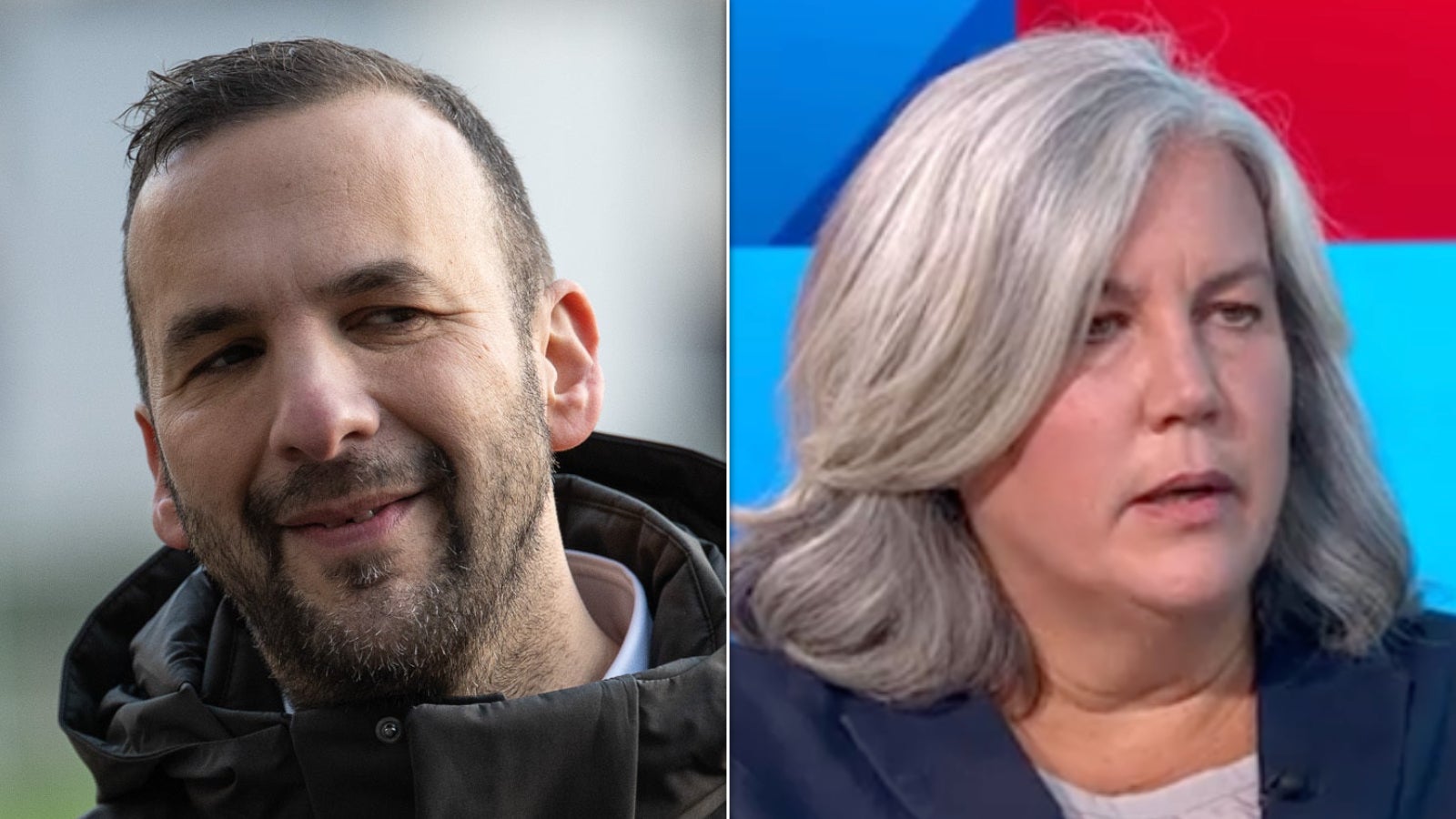
Donald Trump’s spokeswoman has branded the BBC “100% fake news” over claims the broadcaster doctored a speech made by the US president.

Panorama has been accused of misrepresenting comments Trump made outside the White House prior to the riots on January 6, 2020.

An internal memo said an edition of the BBC’s Panorama programme broadcast last October had spliced together two sections of President Trump’s speech to supporters to give a misleading impression of what he actually said.

In one section, Trump appears to say he was going to walk to the Capitol with them to “fight like hell”.

However, Trump actually said he would walk with them “to peacefully and patriotically make your voices heard”.

He called on his supporters to “fight like hell” later in the speech amid false claims that the 2020 election had been stolen from him.

A 19-page dossier on the incident, seen by the Daily Telegraph, was sent to the BBC board by Michael Prescott, a former external adviser to the corporation’s editorial guidelines and standards committee.

Trump’s son, Donald Trump Jr, has already branded the BBC “full of shit” over the controversy.

Speaking to the Telegraph, Trump’s spokeswoman Karoline Leavitt said: “This purposefully dishonest, selectively edited clip by the BBC is further evidence that they are total, 100 per cent fake news that should no longer be worth the time on the television screens of the great people of the United Kingdom.

“Every time I travel to the United Kingdom with President Trump and am forced to watch the BBC in our hotel rooms, it ruins my day listening to their blatant propaganda and lies about the president of the United States and all that he’s doing to make America better and the world a safer place.”

A BBC spokesman told the Telegraph: “While we don’t comment on leaked documents, when the BBC receives feedback it takes it seriously and considers it carefully.

“Michael Prescott is a former adviser to a board committee where differing views and opinions of our coverage are routinely discussed and debated.”

Leavitt has previously attacked the BBC over its coverage of the war in Gaza.

She accused the broadcaster of spreading “misinformation” over the way it covered claims that Israel had killed Palestinians near an aid distribution centre in June.

But in a video posted on X, BBC News analysis editor Ros Atkins said Leavitt’s diatribe “was repeatedly false”.

“This contains a mix of misrepresentation and untruths,” he added.

Share Button

Sourdough Bread May Have Health Benefits, But Some Doctors Recommend Reading The Label Carefully

We don’t know for sure whether sourdough bread definitely has health benefits.

But dietitians like Lizzy Traxler, MS, RDN, also a diabetes educator at University Hospitals, say: “Over time, and in combination with other healthy lifestyle choices and a balanced diet, choosing sourdough over regular bread may provide numerous health benefits.”

These, she told University Hospitals, may include improved digestion. “The improved mineral absorption from the fermentation process supports cardiovascular function,” they add (this might be especially true of sourdough rye bread).

And the British Heart Foundation says sourdough bread may make your blood rise more slowly, too.

So why did Dr Karan Rajan, an NHS surgeon and author, advise we “check the ingredients list” on sourdough loaves before buying?

“Sourfauxs” use different fermentation methods

Quality wholegrain, sourdough, and high-fibre breads may contribute to the “replacement of hyper-palatable baked goods, which are high in sugar, fat, and salt,” which can be beneficial to our health, a 2023 paper reads.

But, they add, one of the reasons sourdough research is so tricky is because “there is no established and internationally recognised legal definition of sourdough bread”. In fact, they found, the artisanal products usually included in trials may differ from the sorts found on most shelves.

“Analysis of bread samples purchased in the market showed that most of these had pH levels of >5.0, substantially above desired levels of pH 4.5 to obtain desired changes in composition,” they wrote.

This paper did not say that this difference definitely meant one was better than the other, or that the higher pH versions were sourfauxs ― though traditional sourdoughs tend to have a lower pH, which is linked to their sour taste.

But if you would like to eat sourdough made from traditional starter, Dr Rajan advises you look at the labels of sourdough breads in search of “added yeast”.

“Authentic sourdough doesn’t mention any added yeast,” he explained, “because it uses a natural fermentation process.”

He added, “Imitation sourdough, or ‘sourfauxs,’ often contain commercial yeast like baker’s yeast and even chemical raising agents like baking powder in addition to, or instead of, live sourdough starter culture.”

To be clear, the doctor didn’t say there’s anything wrong with eating non-sourdough bread.

It’s just that he felt it was important consumers know what they’re really buying (especially considering sourdough bread could be easier for people who usually struggle to digest food to eat).

The Real Bread Campaign has called for more research into the topic. For now, though, the group, which is against “sourfaux” breads, list some studies which suggest the real thing might have some health benefits.

Why might supermarkets create “sourfaux” breads?

“Sourdough” is not a legally-protected term, Swie Joo, head baker at The Palmerston restaurant in Edinburgh, told The Independent (like Dr Rajan, by the way, the chef advised customers to check for the word “yeast” on packages if you want a traditional sourdough loaf).

That means you can add commercial, or non-fermented, yeast to “sourdough” breads.

This can make the rise of bread more predictable and easier to replicate. It can be cheaper and less time-consuming, too.

The combination could make mass production a lot easier.

The Real Bread Campaign write that their campaign “is to better protect us from the risk of being misled by cynical marketing and to allow us all to make better-informed choices about the food we eat”.

Share Button

The Average Number Of Friends People Have Is A Lot Lower Than I Thought

According to the World Health Organisation (WHO), social isolation and loneliness are increasingly being recognised as public health issues across all age groups.

One in six people worldwide, the WHO added, face the problem, which they say can have “a serious impact on physical and mental health, quality of life, and longevity”.

That is not to say, of course, that having a small friend group necessarily means you feel lonely. But new figures from Talker Research have found that the number of mates people have on average has shrunk once again.

And Gen Z reported a higher number of friendships fading in the past 10 years (10.4) than Boomers (7.7).

What’s the average number of friends?

According to this data, which involved 2,000 participants, the figure balances out to 3.6 close pals per person.

As Vice points out, this figure seems to be “shrinking every year”, with younger generations seemingly increasingly affected.

Distance, life transitions, and not having enough time were cited as the top three reasons for growing apart.

In a separate YouGov Friendship Study, 58% of UK respondents said they had less than 10 friends, of any closeness level, overall.

12% of Britons said they had just one close friend, while 41% put it at two to three; meaning a majority (53%) have three close friends or fewer.

7% of people polled by YouGov said they didn’t have a single person they don’t have anyone they’d call a close mate (women and men formed equal parts of that figure).

How can I find and keep friends in adulthood?

Speaking to HuffPost UK previously, Dr Uma Darji, a family doctor who told us she’s often felt too tired to hang out with her friends, said, “What matters most is staying emotionally connected, not necessarily seeing each other constantly”.

She added, “I suggest adjusting expectations. If you aren’t up for a long dinner, try to engage with a short voice note or quick meme exchange to keep the lines of communication and connection alive without draining you… Be honest with your friends, you don’t have to pretend that you can do it all.”

And after seeing the Talker research we mentioned earlier, Kyle Sligar, a psychologist at All In Bloom Therapy, said “taking initiative, being consistent, and stepping into vulnerability” can help you to form new connections, too.

“There are so many other adults out there feeling lonely,” he added. The psychologist recommends attending community meet-ups, trying new classes, volunteering, and even trying new online groups.

Share Button

Alan Carr Speaks Out After All Those Dramatic Twists In The Celebrity Traitors Finale

This article contains major spoilers for the final episode of The Celebrity Traitors.

Alan Carr is speaking out about the many twists and turns in the Celebrity Traitors final.

During Thursday night’s bumper-length finale, viewers saw the former Chatty Man host manage to pull the wool over the eyes of Nick Mohammed and David Olusoga to make it all the way to the end of the game, nabbing the hefty prize money for himself.

Things then ended on an emotional note as Alan broke down in tears, admitting that the deceitful game had been “tearing me apart”.

After the episode aired, Alan appeared in a video posted on BBC iPlayer’s official Instagram page, celebrating his victory.

“It feels absolutely amazing to be the first Celebrity Traitors winner,” he enthused. “I mean, who even knew that this would happen? I think I have surprised the nation and, most importantly, I’ve surprised myself. I’m still in shock.”

Reflecting on some of his highlights from the series, Alan named his “favourite moment” as Celia Imrie’s now-infamous fart.

“Everyone goes, ‘oh ain’t it funny when Celia farted?’, but people forget I was chained to her. I couldn’t get away from it,” he quipped.

On his favourite “murder” of the series, Alan continued: “This sounds so weird, but for me, my favourite kill was Lucy. Because I handed it to her on a plate, well, not a plate, in my hand. I handed it to her, it was done face-to-face.

“You know what, I got such a taste for killing, it was nice to see their eyes as I murdered them. What have I become?”

He added: “This whole experience has been mind-blowing, it’s been wonderful, it has changed me as a person, and I’ve absolutely loved it. But you know, all good things must come to an end. And as Shakespeare said, parting is such sweet sorrow…”

The cast of The Celebrity Traitors pictured with host Claudia Winkleman

BBC/Studio Lambert/Cody Burridge

Already, it’s been reported that 11 million people watched the gripping Celebrity Traitors finale, with a second season already heavily rumoured to be in the pipeline.

Before that, though, the show will return for its fourth regular series early next year.

Share Button

Nancy Pelosi Announces Retirement From Congress

WASHINGTON — Representative Nancy Pelosi (Democrat, California) announced on Thursday that she won’t run for reelection in 2026, marking the end of her decades-long run in the House and capping off her legacy as one of the Democratic Party’s most powerful and effective leaders.

“I have truly loved serving as your voice in Congress,” Pelosi said in a six-minute video that showcases her tenure and her city’s history.

“That is why I want you, my fellow San Franciscans, to be the first to know. I will not be seeking reelection to Congress,” she says. “With a grateful heart, I look forward to my final year of service as your proud representative.”

Pelosi, 85, has represented her progressive San Francisco district since 1987. First coming to the Congress to tackle the AIDS crisis devastating her community, she rose through the ranks of her party to make history, again and again. She was the first woman elected House minority whip in 2001, the first woman elected House minority leader in 2002, and, most notably, the first woman to become House speaker in 2007, and again in 2019.

As party leader, Pelosi kept a tight grip on her colleagues for decades. She was known for her mastery of vote-counting and legislative strategy, and her ability to bring wavering Democrats on board with her plans by hauling them into private meetings, plying them with pieces of dark chocolate and cutting a deal before they walked out the door.

Pelosi has been a boon to Democratic fundraising for decades. In 2014, for example, one news outlet suggested she was single-handedly keeping House Democrats afloat that year.

Her legacy as speaker includes her strong opposition to the Iraq War during President George W. Bush’s tenure and her pivotal role in passing landmark legislation under President Barack Obama. She was key to some of his greatest successes, including the Affordable Care Act, the Dodd-Frank Wall Street reform bill, the repeal of the military’s “don’t ask, don’t tell” policy, and the American Recovery and Reinvestment Act, which infused $841 billion into the economy to stave off pain from the 2007-09 recession.

During President Donald Trump’s first term, Pelosi was his most formidable adversary. She routinely called him out for his lies and recklessness, and threw up barriers to his many efforts that Democrats opposed. Trump was no fan of hers, often calling “sick” or “crazy,” but even he praised her political savvy when Democrats retook the House in 2018, saying she deserved “a lot of credit.”

Pelosi weathered numerous intra-party scuffles as leader. She angered progressives in 2019 by refusing to support impeachment proceedings against Trump, though she later agreed to hold hearings and Trump went on to be impeached later that year. She also upset some Democrats last year by not-so-subtly signalling that then-President Joe Biden should drop his bid for reelection after his disastrous debate performance against Trump in June.

The California Democrat had been fueling speculation about her future for weeks. She said last month that she’d be making an announcement on whether she was running again, but only after the November 4 elections. She was waiting to see the outcome of a California ballot initiative she strongly supported: Proposition 50, a statewide redistricting measure that Democrats are pushing as a counter to gerrymandering in Republican-led states. It passed.

There’s not an obvious successor for Pelosi’s House seat. Democrats currently running for this seat include California state Senator Scott Wiener and Saikat Chakrabarti, a former tech executive who was also former chief of staff to Rep. Alexandria Ocasio-Cortez (Democrat, New York).

Share Button

Jennifer Lawrence Teases More Of Her New Miss Piggy Movie

Jennifer Lawrence is opening up more about the new film she’s producing based on screen icon, Miss Piggy.

Earlier this week, the Die, My Love star teased during an interview on the podcast Las Culturistas that she and fellow Oscar winner Emma Stone were co-producing a new film centred around the legendary Muppets character, which Tony recipient Cole Escola would write.

Naturally, this news was met with a lot of buzz, with Jimmy Fallon grilling her about it further when she stopped by The Tonight Show on Wednesday.

During the interview, Jen hailed Piggy as a “feminist icon”, and explained that the germ of the idea for the new movie came during lockdown, at a time when so-called “cancel culture” was being debated extensively, and a friend suggested: “It would be so funny if Miss Piggy got cancelled.”

“Now, that is not the plot [of the film], necessarily,” the former Hunger Games actor was quick to clarify. “But it got the wheels turning. [We realised], ’wait, there hasn’t actually been, like, a feminist Miss Piggy starring [role]. So I started producing it.”

She revealed she then turned to Emma Stone for help with co-producing as she considers herself more of an “ideas guy”, while the Poor Things star is both a “Muppets-head” and a “shark”.

“I went to her to be like, ‘what do we do?’,” Jennifer added. “So now, Cole is writing it, and they are perfect. And yeah!”

Asked if she’ll also star in the project, she replied: “I think so. I mean, I have to be. I mean, I want to be.”

Miss Piggy first shot to fame in the 1970s, when she was introduced as the resident diva on The Muppet Show.

In the decades since, she’s become one of the franchise’s most cherished stand-out characters, most recently appearing in 2021’s Muppets Haunted Mansion.

Next year, she’s set to share the screen with Sabrina Carpenter in a one-off special revival of The Muppet Show, commemorating 50 years since the first episode aired, which will be written by Emmy winner Seth Rogen.

Share Button

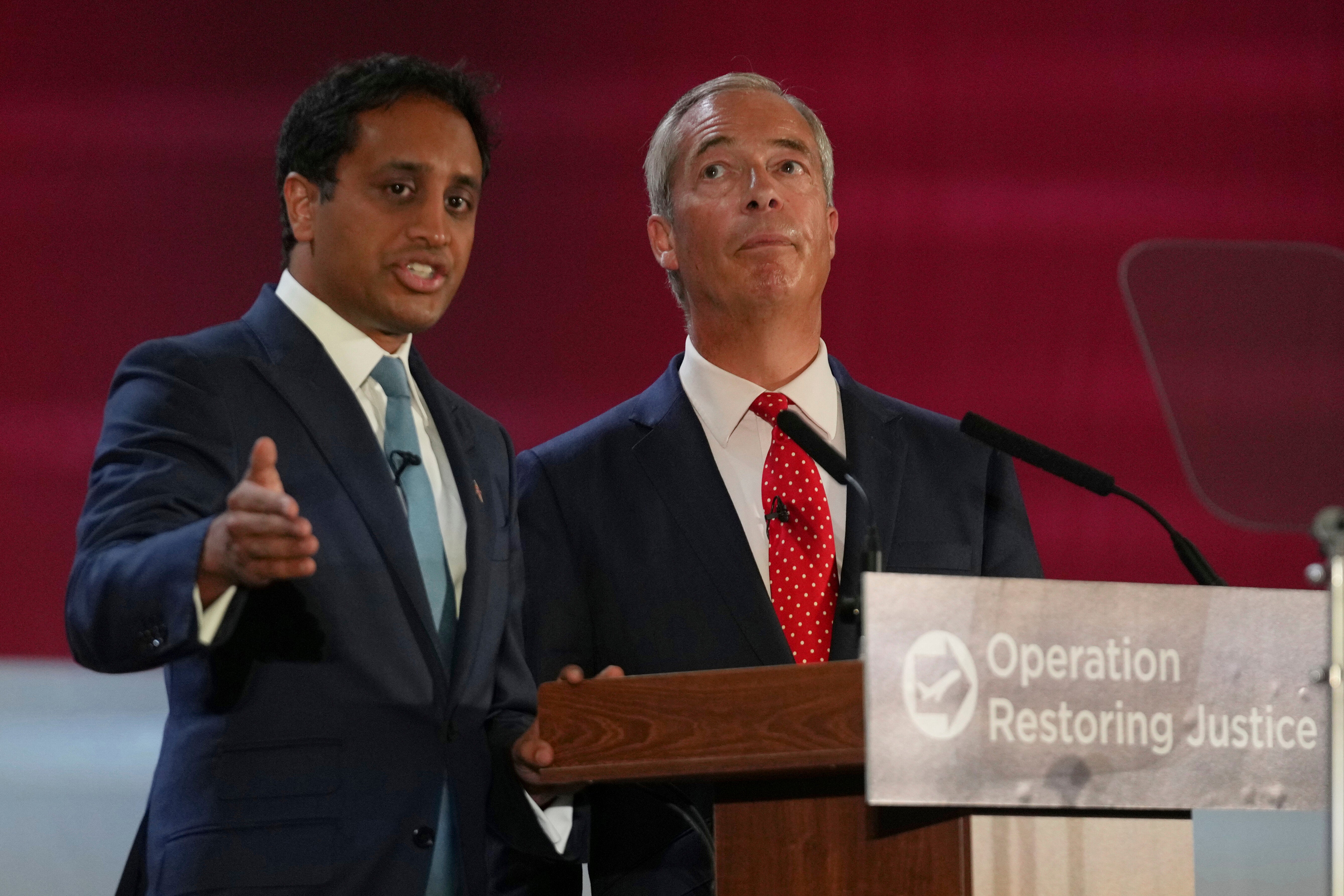
Reform UK ‘In Chaos’ After Losing One In Six Members On Flagship Council

Reform UK has lost nine councillors on a flagship local authority in just six months, it has emerged.

The party won 57 of the 81 seats up for grabs on Kent County Council in a landmark victory in May.

Reform bosses said the council would be “the biggest advert” for how the party would run the country if it wins the next general election.

But since then, the party has been hit by a wave of controversy which has seen their number of councillors slashed to 48.

The most recent departure was Isabella Kemp, who was suspended by Reform on Thursday.

It is the latest in a string of suspensions since a video showing Kent County Council leader Linden Kemkaran shouting and swearing at members was leaked to The Guardian.

Councillors Bill Barrett, Paul Thomas, Brian Black and Oliver Bradshaw have since been removed – while Maxine Fothergill remains suspended by Reform HQ, who linked all five to the video leak.

They were said to have “undermined the interests of the party” and have been called “dishonest” by the Reform leadership.

Kemkaran said: “Some had quit because they couldn’t hack it, others have been thrown out for bad behaviour, because they weren’t good enough or they weren’t team players – not up to the challenge or were simply unable or unwilling to accept discipline.”

She added: “Believe me, we are much stronger and we are totally battle fit.”

Antony Hook, the Lib Dem leader on the council, mocked Reform on Bluesky.

A Labour Party spokesperson said: “Reform’s leader in Kent said that Reform councils were ‘the biggest advert’ for what a Nigel Farage government would look like. It’s now clear that means total chaos.

“Reform promised to cut council waste and tax, but instead, in council after council, Reform are cutting services and putting council tax up. In Kent, Reform’s flagship council is in meltdown and it’s local residents who will pay the price.

“Reform have shown they aren’t serious and can’t be trusted.”

Reform UK have been contacted for comment.

Share Button