Has Secondhand Gifting Finally Become Acceptable This Christmas?

It’s the most wonderful time of the year, a time where people come together to meet, eat and have an excuse to swap presents. But Brits are more likely to be concerned with rising bills than what to get their mate for Christmas.

Inflation in the UK reached 11.1% last month, a level not seen since October 1981. The price of your average grocery bill is still sky-high, up 14.6% compared to this time last year. Not to mention high interest rates on loans, plus expensive energy and fuel costs all contributing towards the cost of living crisis.

And it’s not just money that’s on our minds. Gifts can have a huge impact on the environment. The production, transport and even the marketing of Christmas presents all contribute towards the extraction of raw materials and greenhouse gas emissions. We also use large amounts of paper to wrap presents, which can contribute to an increase in solid waste production.

But, there’s a cheaper, greener way for people to buy their loved ones Christmas presents: secondhand gifts.

For a lot of people, the idea of buying our friends and family a gift from a charity shop feels odd. Will I offend someone if I buy them a second hand gift? Will the gift be in good condition? What will I do if they want to return it? But, 38% of people said they had gifted someone a secondhand item over the past 12 months, according to a survey from Vinted.

Another 65% of people said they would consider gifting someone a secondhand item in the next 12 months.

svetikd via Getty Images

The notion of buying secondhand gifts isn’t new to everyone though. Stasia Brewczynsk, who is a 34-year old account director at District One Studios, has been receiving and giving them for years. She thinks there’s nothing wrong with being upfront about where your gift came from.

“As a kid, one of my mum’s favourite Christmas gifts was a beautiful hand-me-down black and rainbow wool blanket her grandmother crocheted, originally for another relative who passed away prior to my mum receiving it,” Brewczynsk shares.

“A couple years ago, my mum gifted it to me. Secondhand gifts are a family tradition!”

Brewczynsk explains that there are so many great reasons to give secondhand gifts. “It can be more cost-effective and sustainable than buying new. You can find unique items that were made to last and offer a sense of charm, story, or history. It can help take the pressure off gift reciprocation,” she adds.

She shares that she managed to give her friend’s children new-in-package secondhand toys. “I would not have otherwise been able to afford such an extravagant set of gifts, or have been comfortable unintentionally setting an expectation of reciprocation,” she says.

“And bonus: since as households we both try to limit purchasing new plastic items, which can be in conflict with the kids’ fondness for robot toys which are often made of plastic, secondhand is a great way to make giving something that’s less sustainable, a little more sustainably.”

Maya Matava, who is an 18-year-old university student from the US, says they enjoy buying secondhand gifts for their friends, as there’s a certain level of care and attention that goes into buying secondhand gifts which makes them feel a lot more personal.

“A lot of the secondhand gifts I’ve bought have been received really well,” Matava says. “Most of the gifts I buy secondhand are collectibles or items that are otherwise difficult to buy new (some recent examples include Broadway Playbills, vintage postcards, and, on a more specific note, ceramic pie birds).”

Due to the type of secondhand gifts they try to buy, Matava usually shops in local antique and thrift shops. “But I will also shop on eBay if I have trouble finding something in local stores.”

Rory Gillet, who is a 32-year old SEO Consultant from Warminster, Wiltshire, says he and his partner use resale sites like Vinted throughout the year, “so why buy only new at Christmas?”

“There are so many good secondhand products out there, it really isn’t necessary to buy a lot of things new,” he says. “I first thought it would be a cool Christmas challenge with a friend to see what we could buy for each other from the platform with a max spend of £50.”

“Since then I have had a child and we buy most of her clothes and quite a lot of her toys secondhand. So when looking for a specific present for my niece, I started on Vinted and found the perfect drum.”

This is the second Christmas that Gillet will be buying secondhand gifts. “I didn’t last year, as I couldn’t find what I was looking for online or in charity shops. But this year I have managed to find three great gifts – all on Vinted,” he adds.

So, where do you start if you want to buy secondhand gifts this Christmas?

From Natacha Blanchard, consumer lead at secondhand shopping platform Vinted, has a few suggestions:

  • Start looking for gifts as early as you can to provide ample time for finding more unique items. No time is too early, since items tend to be available all-year-round.
  • Create and share wish lists with friends and loved ones to prevent a collection of wasteful, unwanted gifts building up at the end of the year. You can maintain this list all-year-round, so there’s no rush to add items come gifting season. You can also do this if you are open to receiving pre-owned gifts – let your friends know your intention and share your list of “favourited” items on your favourite secondhand shopping platform.
  • When buying a pre-owned gift, ask your seller if there’s a story behind the item or reason why they’re selling it. They might have a really funny or poignant story that you could then share with your gift recipient to make that pre-owned gift a little bit more special.
  • Children grow out of their clothing so quickly that quite often, clothes are lucky if they are worn more than once, if at all. As a result, there is a great selection of pre-owned kids clothing and toys on secondhand platforms that you could purchase for gifting. And don’t forget pets! You can pick up great pre-owned clothing, accessories and toys for pets too.

Christmas doesn’t need to be expensive and it really is true what they say: it’s the thought that counts. Buying a secondhand gift shouldn’t be an act of shame, but rather a way to save the planet whilst being more intentional about what to get your love ones.

To avoid any awkwardness later down the line, be upfront about where you sourced your gift from. In fact, shout it from the rooftops! It’s time we all celebrated secondhand.


Share Button

This Is What Happens To Your Brain When You’re In Back-To-Back Meetings

If you have ever felt like a full day of back-to-back meetings was draining your life force, you’re not alone.

Many of us dread a packed work calendar. Wasting too much time in meetings is a distraction preventing 67% of professionals from making more of an impact, according to a 2019 survey of nearly 2,000 people by organisational consultancy Korn Ferry.

But it’s not just that a high number of meetings can give us feelings of anxiety. There’s actually research that shows how attending too many — and seldom taking breaks — can cause our brains to work differently.

Study Finds Stress Levels Spiked Amid Back-To-Back Meetings

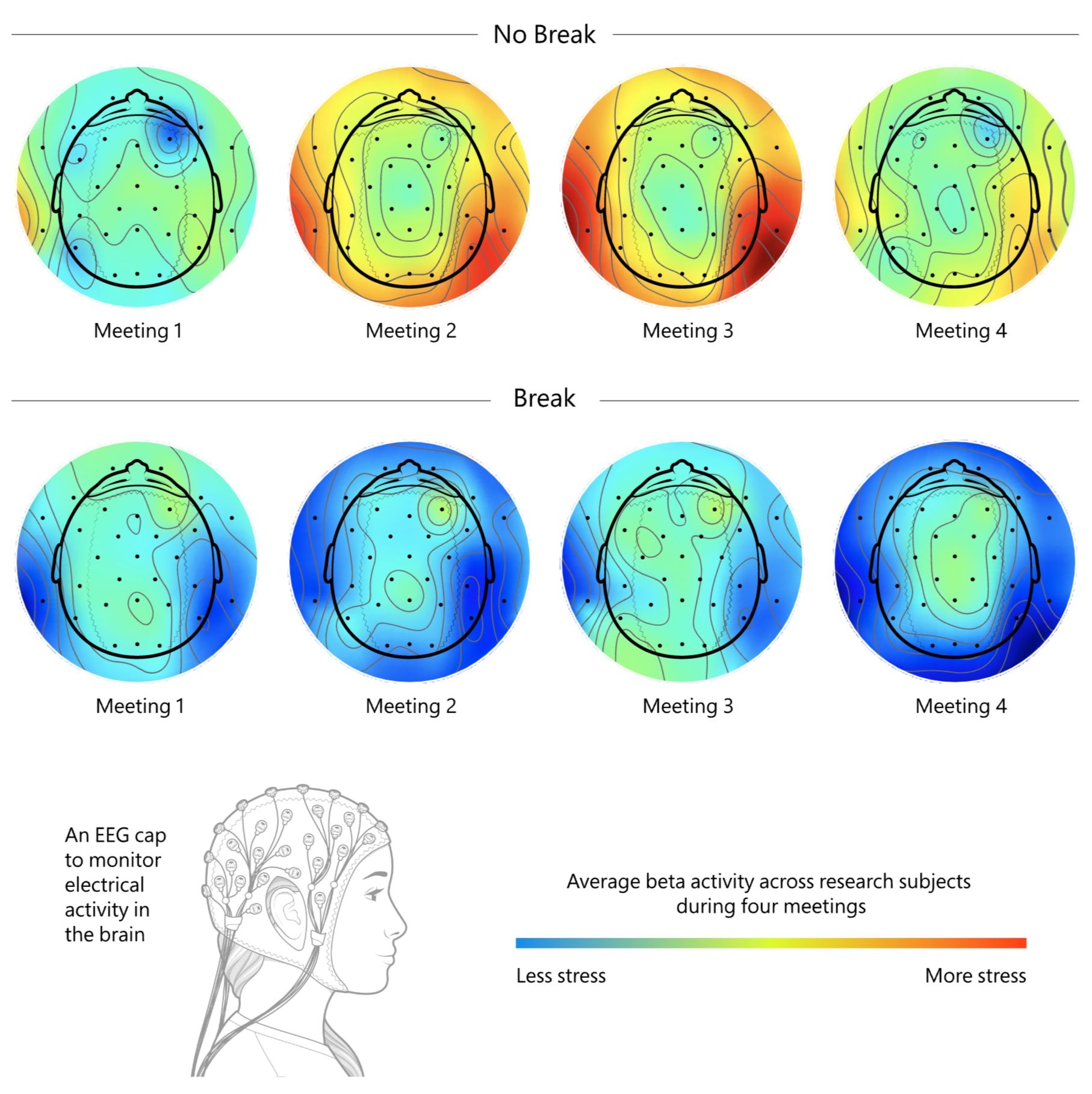
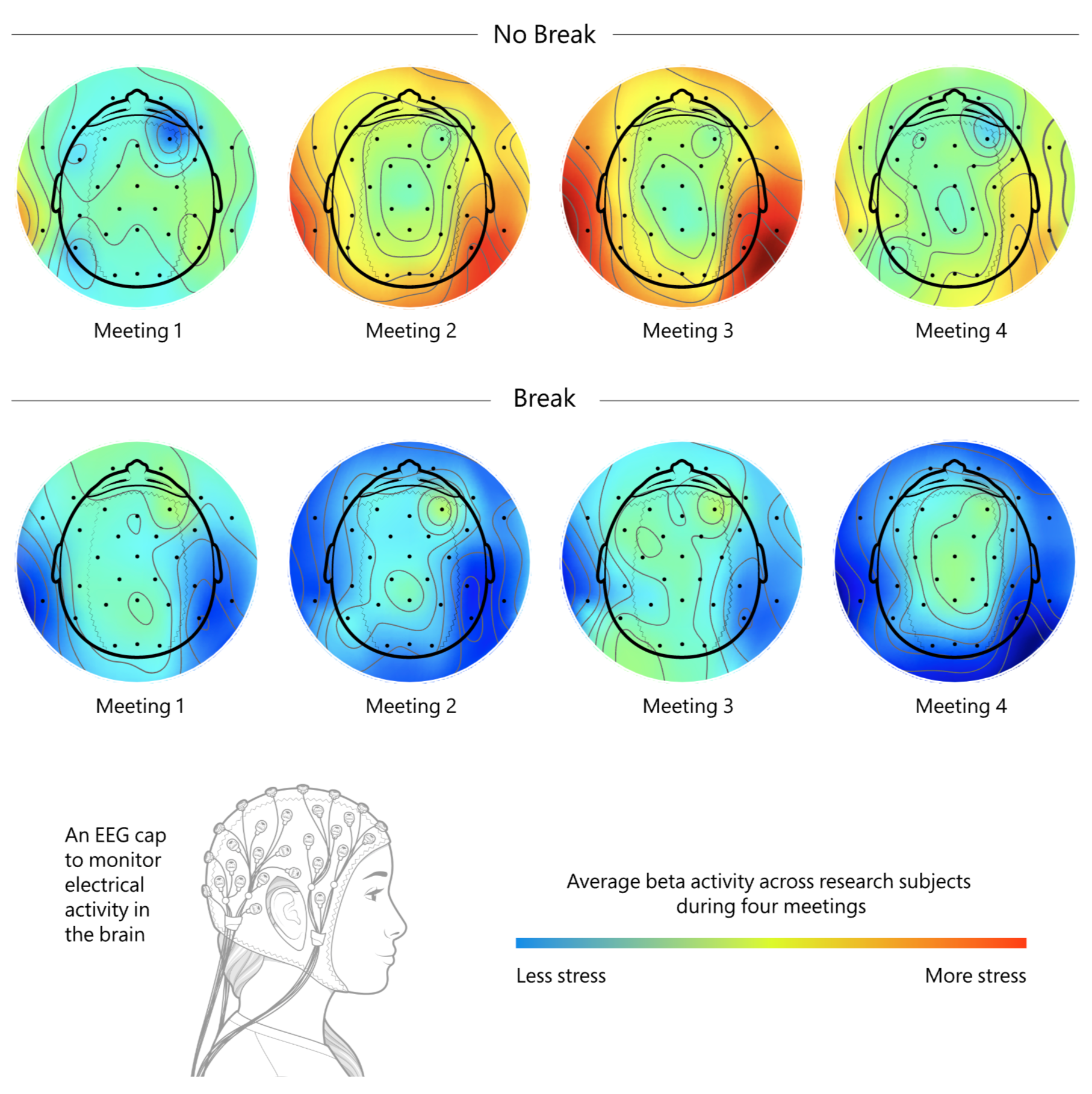
In 2021, researchers at Microsoft’s Human Factors Lab asked 14 people to take part in video calls while wearing electroencephalogram equipment that monitored electrical activity in their brains. On one Monday, some participants were given four half-hour meetings without breaks, while others had four half-hour meetings with a 10-minute break between each for meditation; then, on the following Monday, the two groups switched.

Among those who got no breaks, beta wave activity increased in the brain with each successive meeting, indicating heightened stress levels. In fact, just the anticipation of the next call caused a spike in beta activity during the transition period between meetings, researchers found.

In a Microsoft study last year, beta wave activity increased in the brains of people who had successive meetings with no breaks, indicating a rise in stress. Beta activity remained stable in those who took 10-minute breaks.

Brown Bird Design

In a Microsoft study last year, beta wave activity increased in the brains of people who had successive meetings with no breaks, indicating a rise in stress. Beta activity remained stable in those who took 10-minute breaks.

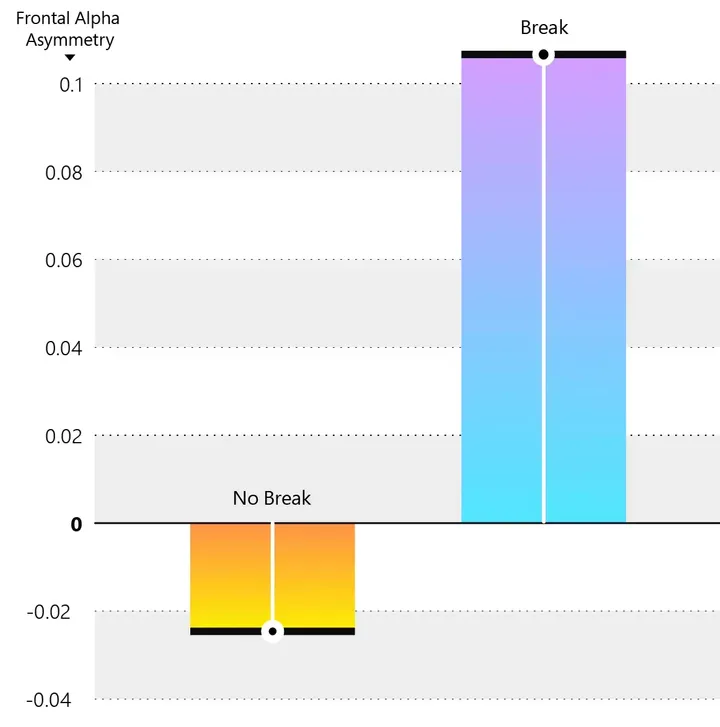
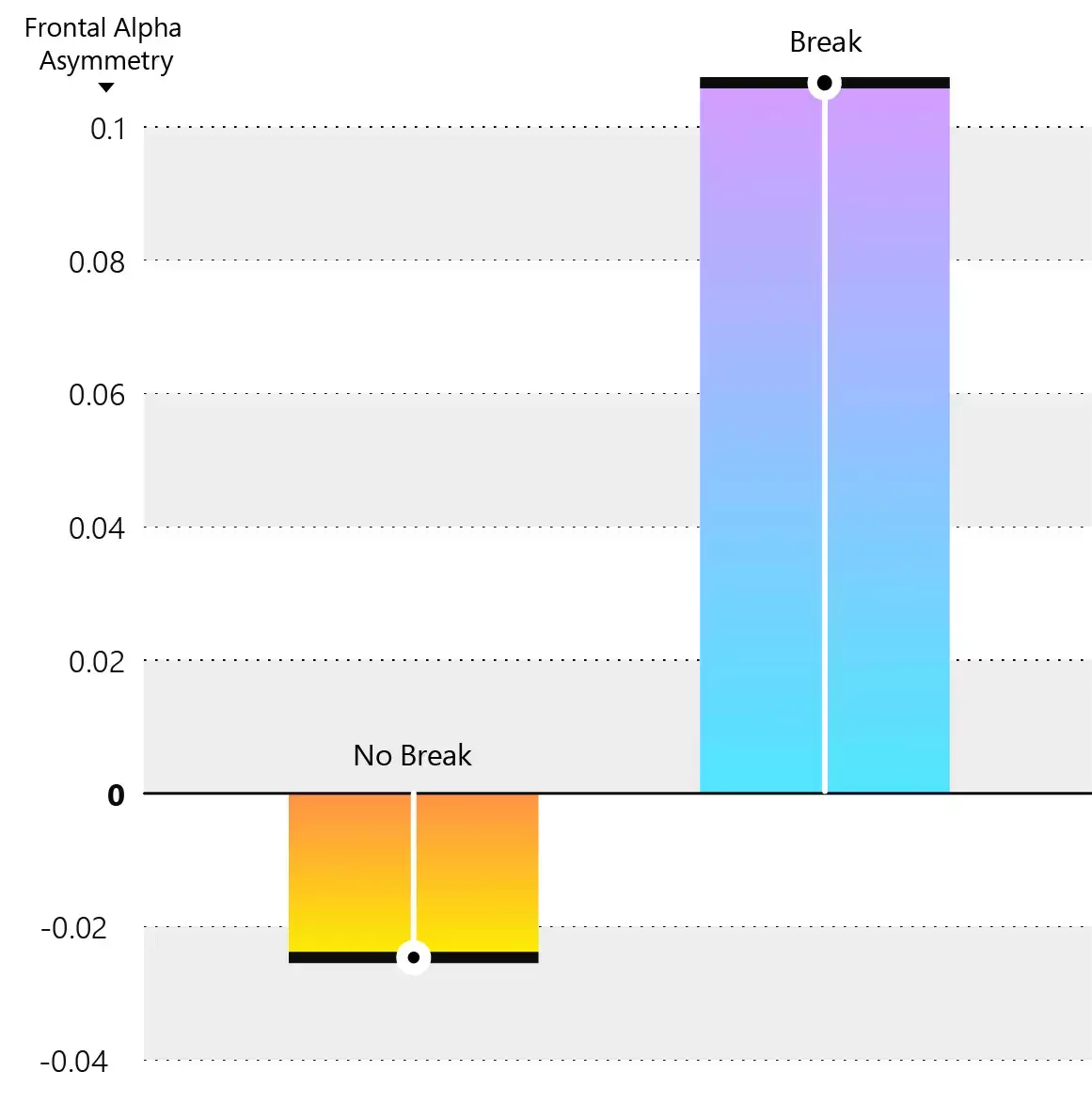
Meanwhile, the researchers also measured the difference in right and left alpha wave activity over frontal regions of the brain — known as frontal alpha asymmetry — which can indicate levels of mental engagement.

Participants who took breaks showed positive frontal alpha asymmetry, suggesting higher engagement during the meetings, while those without breaks had negative asymmetry, indicating that they were more mentally withdrawn.

When study participants had breaks between meetings, their brains showed signs of higher engagement.

Valerio Pellegrini

When study participants had breaks between meetings, their brains showed signs of higher engagement.

“I’m not surprised that people who took breaks between meetings felt better. People who take breaks in general feel better,” said Laura Vanderkam, a time management expert and the author of “Tranquility by Tuesday: 9 Ways To Calm the Chaos and Make Time for What Matters.”

“We all take breaks one way or another; it’s just [that] many times they’re unconscious. By choosing when and how to take a break, you notice the break happening and reap the rejuvenation,” Vanderkam said.

One big caveat to Microsoft’s findings, of course, is that the sample size of participants was small. But the study aligns with a large body of other research suggesting that meeting overload causes unproductive, unhappy employees who feel like their schedule is ruling their life.

In a recent survey of 76 companies, for example, management researchers found that employee productivity more than doubled when meetings were reduced by 40%.

“This is largely because employees felt more empowered and autonomous,” the researchers wrote in March for Harvard Business Review. “Rather than a schedule being the boss, they owned their to-do lists and held themselves accountable, which consequently increased their satisfaction by 52%.”

Making The Most Of Breaks In Meeting Marathons

If you’re looking for ways to make your own breaks more impactful, try to resist scrolling on social media or reading your email, experts said.

“Many people check email between meetings as a form of a break, and I get that,” Vanderkam said. “But [it is] even better to batch email at some point in the day, or only do it between every other meeting, and use those little bits of time for something else that will add joy and meaning to your life, like a 10-minute walk outside.”

Holistic health coach and mindfulness teacher Rosie Acosta recommended a relaxation technique in which you breathe in for three seconds and out for six, repeating as necessary.

“You only need to do three to five cycles before your body starts to respond and release tension,” she said. “Most of us sit at computers a lot. So if you do sit, perhaps use this time to stand and stretch. The biggest way to reset is to shut down the distractions.”

And if you’re a manager, try setting your teams up for success by avoiding marathon meeting days and building in more breaks.

“To make 10-minute breaks work, it’s helpful for organisations to set a culture that meetings start at, say, the hour and end 10-15 minutes early,” Vanderkam said. “That allows for a break or a ‘passing period’ like in a high school for people who need to travel.”

The big takeaway? It’s better to take a short breather than to power through a slew of meetings, as even a few minutes can make a big difference in our stress levels and ability to focus.

“When we are laser-focused on a task, we tend to create tension in our body, we stop breathing, and we stay in that tension throughout the day,” Acosta said. “If we are able to take short breaks to either do some breathing or even just relaxing of your shoulders, it gives your body the space it needs to feel relaxed.”

Share Button

How To Avoid An All-Out War When The Grandparents Disagree With Your Parenting Style

When it comes to raising kids, everyone wants to share their two cents on what the best way to do it is – and that often includes grandparents.

And whether you’re a new parent who’s still finding their feet, or a seasoned pro who’s mastered the art of caring for multiples, it can be hard not to get upset when someone criticises what you’re doing, or goes against a particular way you want to raise your kids.

Perhaps unsurprisingly, disagreeing over parenting techniques is the most common reason why parents argue with their own parents (aka the grandparents), according to a survey by iHus, which specialises in multigenerational living.

“It is totally normal to have a different parenting style to your own parents,” therapist Siobhan Butt, who is a member of Counselling Directory, tells HuffPost UK.

“You are different people, living at a different time and have a different set of life experiences that inform how you decide to parent.”

The differences in how you parent can come out in all kinds of situations, she suggests, from what you choose to feed your children and how much screen time you allow them, to your political and religious ideology.

The C.S. Mott Children’s Hospital in Michigan asked parents of children aged 0-18 years old about disagreements with grandparents around their parenting choices. Most parents (89%) said their child saw at least one grandparent often or occasionally – and of these, 37% reported minor disagreements with grandparents about their parenting choices, and 6% reported major disagreements.

Two in five parents (40%) said disagreements arose because grandparents were too soft on their children, while 14% said they were too tough.

The most common areas of disagreement were over discipline, meals and snacks, and TV or screen time, followed by manners, health and safety, treating some grandchildren differently than others, bedtime, and sharing photos or information on social media.

If you are finding your parents are doing things that go against how you parent – or they’re making comments about your parenting style that are pretty negative – you’re probably going to have to sit down and have a chat with them about it. Otherwise the resentment is just going to pile up until someone blows a gasket.

“It is always best to have this conversation with them,” says Siobhan Butt, who runs Revive Relationships. “Be open, tell them how you are feeling, make it known that you respect them and appreciate that they have lots of life experience and wisdom to bring, but if you would like advice about a particular situation you will ask them for it.”

Likewise, if you see your parent saying or doing something to your child that you’re not happy or comfortable with – for instance, disciplining them in a certain way – don’t be afraid to pull them up on it.

“Boundaries are so important in this situation, like I said before talk to your parents, be open and honest and let them know what you are uncomfortable with and why,” says the therapist.

But be gentle with them, she warns, as it’s likely they aren’t trying to be malicious and they have the best intentions for you and their grandchildren.

“If you respond to their actions with hostility the situation could escalate and conflict can arise,” she adds.

If you do sit them down for a chat, you might want to remind them that while you respect them and value their input, you are uncomfortable with what they did – and then explain why, says the therapist. Finish the conversation by telling them you would appreciate it if they could not do this in the future.

Of course, sometimes this will fall upon deaf ears. Of those surveyed by C.S. Mott Children’s Hospital, 43% of parents said they’d asked a grandparent to change their behaviour to be consistent with their own choices or rules and while almost half (47%) found they did make a change, just over a third (36%) said the grandparent agreed to change their ways but didn’t, and 17% said the grandparent flat out refused.

“If it is a boundary that keeps being crossed, try being curious,” says Butt. “What is it that they find so difficult about keeping to this and how can you help them?”

With Christmas just around the corner and families coming together under one roof, tensions can run a little higher than normal – meaning the odds of a rift might be higher too.

Adene Sanchez via Getty Images

If you are feeling a bit tense because of something your parent has done or said to your child – or even about the way you parent – it’s important to recognise this and do something about it. “Just how we can recognise a song within a few seconds of hearing it, we can do this too with our own emotions,” says Butt.

“Before things feel like they are too much and your response turns into a reaction of hostility, take a deep breath, maybe remove yourself from the conversation or say you are feeling uncomfortable and you would appreciate it if the conversation could be changed.

“If difficult conversations normally end in shouting and upset think about the pattern of behaviours that normally happen: what role do you play and what can you do to help change this pattern?”

Grandparents are so important and often have so much to offer to your children – like they did to you when you were growing up (and still often do today). They are also, as writer Rhiannon Lucy Cosslett puts it, “the invisible glue holding our broken childcare system together”. Many will – and do – drop everything to get the chance to spend time with their grandkids.

That’s not to say that sometimes you won’t disagree with what they say or do – and vice versa – but after a heart-to-heart, you can often end up singing from the same hymn sheet. (Or at the very least, the same book.)

In cases where this doesn’t happen, ultimately it’s grandparents who lose out – 15% of parents said they limit the amount of time their child sees some grandparents, and these limitations were far more common when grandparents did not respect parenting choices.

Share Button

‘My Wife Doesn’t Want Me To Go On Holiday Without Her’

You’re reading Love Stuck, where trained therapists answer your dating, sex and relationship dilemmas. You can submit a question here.

In a long-term relationship, you might start to feel like you’re doing everything with your partner. Concerts, parties, restaurants, trips, it can get to a point where you automatically bring your ‘other half’ everywhere.

Which is why some people in relationships try to regain their independence, like this week’s reader: Collin.

“I would like to travel with a friend of mine to Portugal for a surf trip without my wife,” Collin says. “She is having an issue with me going without her for various reasons. I am not sure how to navigate this issue in our 30-year marriage. We have not travelled independently much before.”

Collin doesn’t mention any issues with his wife, but he wants to have more solo experiences. Is this a problem?

Counselling Directory member Kim Lord doesn’t necessarily think so.

What would you say to this reader?

“Your decision to holiday without her may raise some insecurities in your wife, which she may not feel able to voice,” Lord says.

“This is not to suggest that your decision is wrong, or in some way harmful to her, but taking the time to gain some insight into why she has an issue would be helpful to you both.”

Lord adds that Collin has mentioned that he hasn’t done much independent travelling before, so after 30 years of marriage, a desire to travel without her may come as a surprise to his wife.

“Whilst we may like to believe that our partner will happily accept all our wishes with support and understanding, our actions can sometimes impact upon our partners’ feelings in a way we may not expect,” Lord adds.

“Your wife may feel a sense of rejection if you have always holidayed with her in the past, but this time have chosen to take a friend.”

Why might his wife have an issue with him travelling without her?

Counselling Directory member Georgina Smith asks Collin if there’s been a breach of trust, have the couple had to navigate infidelity? “If so, then it would be a big ask to request solo travel, depending on the circumstances and the couple’s timeline of difficulty,” Smith adds.

“Even if lack of trust is not an obvious issue, I would be encouraging the husband to explore those ‘various reasons’ with her and discuss together how he may provide reassurance around her insecure feelings around this trip.”

Counselling Directory member Victoria Jeffries believes that Collin’s wife is feeling insecure at the idea of him leaving her. “It could be she views this as some form of abandonment.”

“I would hazard a guess that this runs deeper with your wife; it may be that at some point in her life (most likely her childhood) she felt excluded or abandoned by those she loved, and therefore you taking a trip without her is triggering those feelings for her,” Jeffries adds.

“This may seem far-fetched (and possibly even unfair on her part), however it is not uncommon for painful feelings from the past to suddenly arise from seemingly ordinary circumstances such as a spouse simply wanting to take a surfing trip with a friend.”

What practical tips would you give this reader?

Smith encourages Collin’s wife to communicate all of her concerns and fears around this solo trip. ″Communicate and compromise on ‘ground rules’ – how often will the couple talk while he is away, what is acceptable behaviour like staying out til late and around the opposite sex for example,” Smith adds.

She also suggests making plans for another trip as a couple might help, so Collin can avoid the sense that his wife is ‘missing out’ and have a chance to reconnect. “Using empathy and good listening skills is key – try to understand the feelings behind her words. Having an issue with the trip will be about her feelings of discomfort, not just to be difficult.”

Jeffies also emphasises talking to his wife and exploring her concerns. “It may also be a good idea to explain why this trip is important to you (presuming it is),” she says. “It could be that your wife isn’t fully taking into consideration what this means for you.”

Love Stuck is for those who’ve hit a romantic wall, whether you’re single or have been coupled up for decades. With the help of trained sex and relationship therapists, HuffPost UK will help answer your dilemmas. Submit a question here.

Share Button

Feeling Drained? You’re Probably Dealing With ‘Energy Leakage.’ Here’s What To Know.

When thinking about the ways you spend your energy, what comes to mind are likely the things that are commonly known as “draining” — work, commuting, running errands, the list goes on.

But there are smaller, everyday moments that can be just as depleting. Those are what Melissa Urban, the co-founder and CEO of Whole30 and New York Times bestselling author of “The Book of Boundaries: Set the Limits That Will Set You Free,” calls “energy leakages.”

According to Urban, energy leakage — while not a clinical phrase — is “the invisible ways that we spend energy throughout the day that leaves us feeling drained.”

She noted that “every interaction you have, whether you’re meeting your mum for lunch or replying to a social media comment … is an energetic exchange and sometimes those exchanges can leave you feeling really invigorated and positive and restored … but, in other times … you just feel depleted, you feel anxious, you feel overwhelmed, you feel frustrated.”

In other words, interactions that result in energy leakage are those interactions that consume “more energy than they’re giving back,” Urban said.

So, if you are dealing with a friend who always treats you like a therapist or are getting upset when scrolling through photos of an ex, you may be dealing with energy leakage.

Here are some unexpected ways you’re draining your energy and what to do about it.

Your phone and social media are huge sources of energy leakage.

According to Urban, your phone and social media are major culprits of energy leakage. “It feels effortless to just lie in bed and scroll and post or leave a comment or follow comments down the rabbit hole,” she said but “that is an energetic exchange.”

And, most of the time, you are not getting any energy back after looking at social media — especially when you’re comparing your life to someone else’s on Instagram, checking a toxic social media account or reading hateful comments.

Think about it: Do you ever feel better after social media stalking? Probably not.

Kids can be draining, too.

As wonderful as they are, kids can be a reason for energy leakage, too, Urban said.

“Kids are needy, they need things all the time, and they don’t have the processing for you to be like, ‘Dude, I need a minute,’” she said.

When kids need something, they need something. And that’s OK (you can’t exactly tell a 4-year-old to make their own dinner), but there are ways you may be adding to this energy leak.

You may be expending extra energy on your child (like many parents can’t help but do) — for example, frequently checking in with your child when they’re quietly playing, or asking if they need a snack or water when they’re content, Urban noted. In the end, you’re putting more pressure on yourself in this moment when, really, your child is just fine.

Beyond kids, specific people in your life can be ‘energy vampires.’

“I think everyone knows what it feels like to leave a conversation with that person who is an ‘energy vampire,’” Urban said. “You just feel like they sucked all the life out of you.”

These could be colleagues who constantly complain to you about work or family members who need a lot of support (but don’t give any support back).

There’s probably someone in your life who fits the “energy vampire” mould; signs include leaving an interaction completely depleted or exhausted.

Urban noted that this can be especially tough for those who have people-pleasing tendencies. You may feel like it’s extra hard to deal with energy vampires because they just take and take and take.

Staying angry about things that should be left in the past is another culprit.

How many times have you been cut off in traffic and let it ruin your entire afternoon?

This, Urban said, is another major driver of energy leakage: “That’s energy you are spending on something that isn’t even real anymore” — it happened in the past.

The same goes for holding grudges along with anything that puts our energy in the past or future, she noted, so things like rehearsing disaster and negative self-talk, too.

Certain people in your life may unknowingly drain your energy.

Solskin via Getty Images

Certain people in your life may unknowingly drain your energy.

Energy leakage is related to a feeling of mindlessness.

Alayna L. Park, an assistant professor of psychology at the University of Oregon, told HuffPost that the concept of energy leakage reminds her of mindlessness — the opposite of the popular practice known as mindfulness, which she defined as “paying attention to the present moment.”

Mindlessness is what Park describes as going on autopilot.

“Going on autopilot isn’t always going to drain your energy,” but a lot of the reasons we experience energy leakage — checking our phones, scrolling social media, agreeing to an event you don’t want to attend — happen because our minds are on autopilot, she added.

“We’re just kind of going through our day without always having an intention in mind,” Park said, and that can be particularly damaging when it comes to activities that exhaust you.

There are ways to help combat this feeling.

“If you know you’re about to do something that’s draining, [give] yourself a small reward afterward,” Park said. This way, you’ll have something to look forward to during a draining activity or interaction.

The reward doesn’t have to be huge. It can be something simple like going for a short walk after a meeting with someone who drains your energy or rewarding yourself with a piece of chocolate after going through a situation that led to a feeling of energy leakage.

Park also suggested setting a timer for activities that lead to energy leakage. For example, if you want to scroll social media but know it depletes your energy, you can set a time limit so you won’t just be endlessly scrolling.

Or, if there’s someone in your life who depletes your energy (and you still have to see them … like a colleague, for example) you can limit your meetings with this person to 30 minutes and remind yourself that “I can do anything for 30 minutes, even if it’s unpleasant,” Park added.

But, how much time you need to restore your energy will vary.

Urban said it’s important to know where you draw your energy from — if you’re introverted (meaning you recharge from time alone) or extroverted (you gain energy from spending time with other people) — in terms of handling your energy leakage.

If you don’t know if you’re an introvert or extrovert, “you can use Susan Cain’s super simple introvert-extrovert model,” to determine how you get your energy, Urban added.

“If you’re extroverted where being around other people makes you feel energised, you might need less quiet or alone time to restore energy leakage,” Urban said, “and you might want to choose to spend time specifically with the people who you know make you feel energised.”

For those who are introverted, you will likely need a lot more alone time to restore your energy, she noted.

Keep track of what makes you feel this way.

You may not know exactly what drains your energy, and that’s OK, Park said. If you notice you are dealing with this feeling of energy leakage at the end of every day, make a point to take note of your actions in the days to come.

To decipher what is making you feel this way, pay attention to your actions, emotions and physical sensation, she said.

When it comes to emotions, when we are on the path to feeling drained, “we might notice we’re a little more irritable than usual, or down or anxious,” Park said. Additionally, you may notice that your heart is racing or your face feels hot, she said.

Another major sign? If you’re going about your day and not doing necessary self-care tasks like working out or keeping your home in order, you may be dealing with energy leakage, too.

If any of this rings true, take a step back and think about the tasks or interactions in the day that could have led to this moment.

“An issue I see a lot it almost seems like this all or nothing — you’re fine and then you notice, ‘Oh, I’m really drained right now,’” Park said, “It can be helpful to catch before you hit the ‘I’m completely drained right now.’”

It’s important to set boundaries.

“Setting boundaries is a huge and important factor in energy leakage — you want to set boundaries with friends, family members, co-workers or co-parents who are overstepping your capacity,” Urban said.

This can include telling someone that certain topics are off-limits, that you don’t want to take part in gossip or that you will leave a conversation if it turns mean.

Boundaries look different for everyone and should address the need that your energy leakage is trying to show you — so if something makes you feel drained or anxious, you probably need to establish some boundaries.

While boundary-setting can be tough, setting boundaries is “immediately going to allow you to reclaim some of that energy,” Urban said.

Share Button

Grocery Prices Have Finally Dipped – What Does That Mean For Christmas?

Grocery prices have finally fallen (slightly), but sadly your Christmas dinner still isn’t looking any cheaper.

According to new research from data insights company Kantar, the cost of the traditional Christmas dinner for four people has increased by 9.3% compared to last year, up to £31.

Shoppers will have to spend an additional £60 in December just to buy the same items as last year, too.

But – looking on the bright side – that’s still less than general food bills at the moment.

Groceries overall are 14.6% more expensive than they were 12 months ago (down from 14.7% inflation in October).

This is the first time there’s been any drop at all in price for 21 months, suggesting inflation may finally be easing.

Even so, Kantar has noted that the sale of mince pies and Christmas puddings have fallen year-on-year.

Presumably this is because consumers are cutting down on their seasonal purchases ahead of the official festive periods towards the end of the month.

Interestingly, the football World Cup has not inspired a sudden splurge either.

Take-home beer sales only increased 5% to £230 million – even then Kantar believes this is due to increased prices, rather than a rise in the number of purchases

Discount supermarkets, Aldi and Lidl, have both opened up new stores across the country in the last three months though. An extra 1.5 million households now shop at Aldi compared to 2021.

As head of retail and consumer insight at Kantar, Fraser McKevitt, explained: “As we move into the busiest time of the year for supermarkets, there are signs that the pace of grocery price inflation is easing off slightly.”

But, he added that the research shows “just how much rising prices are impacting people at the tills and in their daily lives”.

December is still expected to be the largest ever month for take-home grocery sales as inflation and festive spending kick in.

Supermarkets are set to take more than £12 billion for the first time.

McKevitt added: “We’re seeing yet more evidence of the coping strategies shoppers are adopting to mitigate rising costs, and in particular own-label sales are growing at pace, now up 11.7% year on year.”

He said the cheapest value own-label lines have increased by 46.3% too – but people still want treats around this time of year, triggering the increase in premium own-label sales up by 6.1% to £461 million in November.

Share Button

‘My Daughter Couldn’t Speak Until She Was Six, But She Knew Exactly What She Wanted To Say’

In My Story, readers share their unique, life-changing experiences. This week we hear from Rachael Kent, who’s 40 and based in south Yorkshire.

When my daughter was 18 months old, she was still making baby babble noises. It was like she was trying to make sense of different things, but it was just noises that came out of her mouth. She couldn’t form words.

Freya-Rose started a preschool group at two and when I saw her in that environment with other children her age, I realised she was going to need some intervention to help her with her speech.

She was referred to speech and language therapy – we did group sessions to begin with and she tried so hard. She’d get frustrated because she knew exactly what she wanted to say, but it just didn’t come out.

As she grew up, other kids would shy away from her. They’d call her the baby because of the fact she’d make sounds like ‘ba ba ba’ all of the time, even when she was trying to talk. You could see it hurt her because she’s a very expressive child. She can’t hide anything that well.

At the park, kids would go near her but the second she opened her mouth and all these strange noises came out, you’d see them look and then move away – and she’d just be stood there. That was heartbreaking to watch.

Every now and again you’d come across another child who didn’t mind or care that she couldn’t speak and they’d go on the roundabout together.

But it got to the stage where as a parent I used to think: is it really worth taking her up to that park and watching her look so disheartened because nobody wants to talk to her?

I would always say to other parents: if they see a child like that, don’t pull your kid away from them, don’t make a big issue out of it as if they’ve got something wrong with them. Get them to ask questions because that’s how they’re going to learn and how they’re going to be more accepting of kids that are a little bit different and talk in a different way.

When Freya moved to nursery, she had another speech and language assessment and they decided they were going to come in weekly to work with her.

The nursery had to do 15-minute sessions with her every day and then we did 15-minute sessions with her at home. You can’t just rely on the actual therapist coming in, like it’s going to be some sort of magic thing. As a parent you have to put that work in too, constantly helping them. It’s got to be a team effort between everybody to keep it going.

Because she was really struggling to make herself understood, we taught her Makaton and she picked the signs up really quickly. We already knew Makaton because Freya’s older brother Alex, who’s now 21, has autism, ADHD and epilepsy – and we’d used it to communicate better with him when he was younger.

We’re very lucky Freya is a really placid child, so even when she couldn’t speak we only ever had two or three incidents where she got frustrated at other children.

But the rest of the time she would keep trying to show you over and over again – and as a parent that’s really upsetting when you find out your child’s been doing that. She’d be there with tears in her eyes, welling up, because she so desperately wanted everyone to know what she was saying.

She’d go into her own little shell: most of the time she’d play alongside other children, but not actually with them because she didn’t know how to tell them what she wanted to do.

As a parent, you do hit those low points where you think: are they ever going to get that speech or is she going to have to fumble her way through life?

She’d have several accidents at school because she couldn’t tell them she needed the toilet and she’s the sort of child that will not go unless she’s told that she can go. Or she wouldn’t do her school work – and it wasn’t because she didn’t want to, but because she couldn’t get the lid off the pen. It can bring a lot of frustration. It complicates so much when you take away someone’s speech.

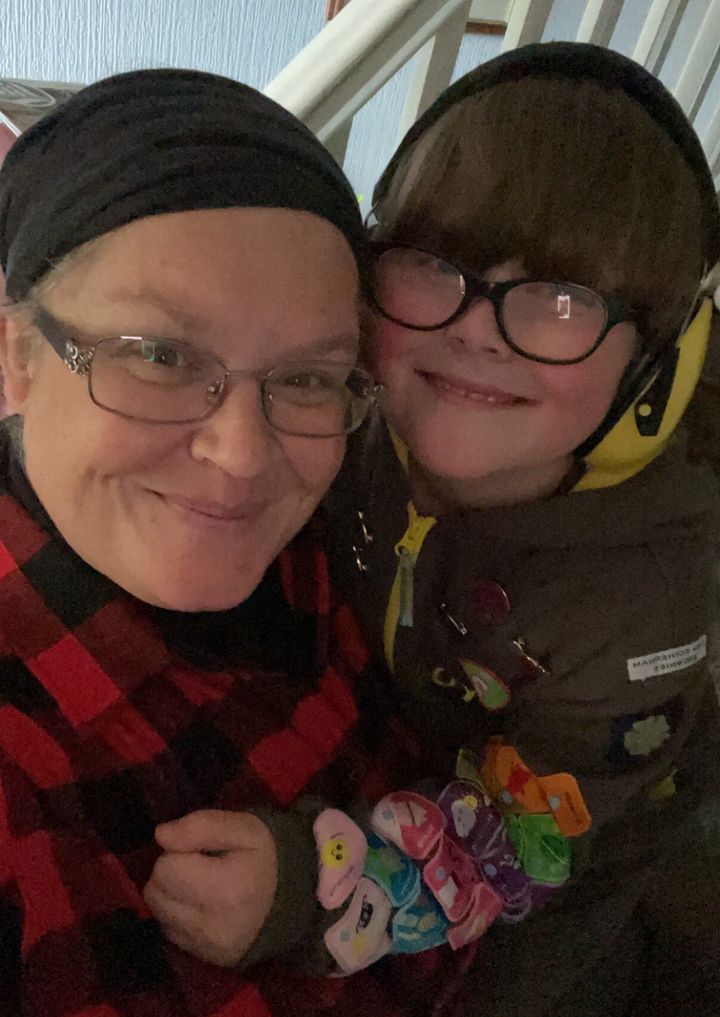
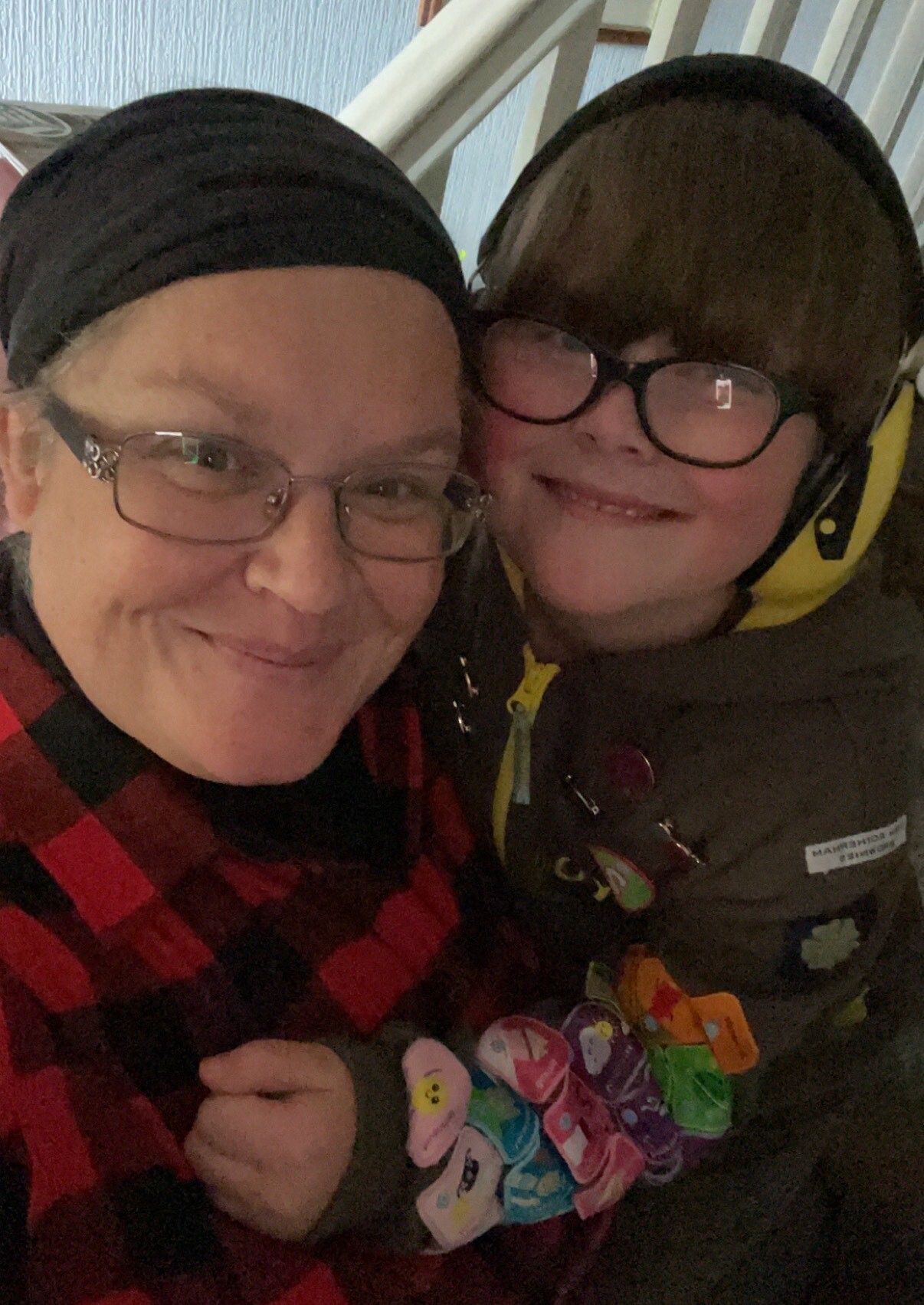
Rachael and her daughter Freya-Rose

Rachael Kent

Rachael and her daughter Freya-Rose

Freya was diagnosed with a speech sound disorder, which means she knows what she wants to say, but her brain doesn’t send the right signals for her mouth to make the movements of different sounds.

The speech and language team said about getting her into groups to try and encourage speech through social interaction. She wasn’t allowed to attend after school clubs, because they said she needed 1-2-1 support and they didn’t have the staff to facilitate it.

I’d gone to Brownies and Guides when I was younger and had adored my time with them, so I approached our local Rainbow group and explained the whole situation. They hadn’t got any experience of someone that didn’t speak, but they were willing to learn.

The first time I took her, I asked them if they wanted me to stay and they said: ‘No, let’s see how she gets on.’ I made them some visuals and gave them a crash course in the signs Freya used and we’ve never looked back.

"It was the best feeling ever."

Rachael Kent

“It was the best feeling ever.”

The third week of Rainbows she came out with the biggest grin on her face. She dragged me to the door, pointed inside and she signed to me: ‘My friends.’

It was the best feeling ever. She had the odd friend outside of school but that was more because I was friends with their parents, not because they’d chosen to come and see her. She never really said ‘that’s my friend’ until she went to Rainbows. She couldn’t wait to put her uniform on each week.

Sometimes you can take children to groups and they’ll – for want of a better word – tolerate them if they’ve got any additional needs. I had that experience with her brother at a few groups we went to when he was growing up. But Freya just 100% belongs. The other girls walk in and she gets big hugs off everyone. If she’s looking unsure, someone is always there to grab her hand and take her to where she needs to be.

When Freya was about five, a speech and language specialist worked solidly with her, in addition to us and her school doing the speech and language sessions as well, and she slowly started saying two- or three-word sentences.

We kept building on that and then by the time she was six we were getting pretty much full sentences where you recognised at least 90% of the words that she was saying.

Freya-Rose is now eight and has been diagnosed with autism, a moderate intellectual disability, and PICA – in addition to her speech sound disorder.

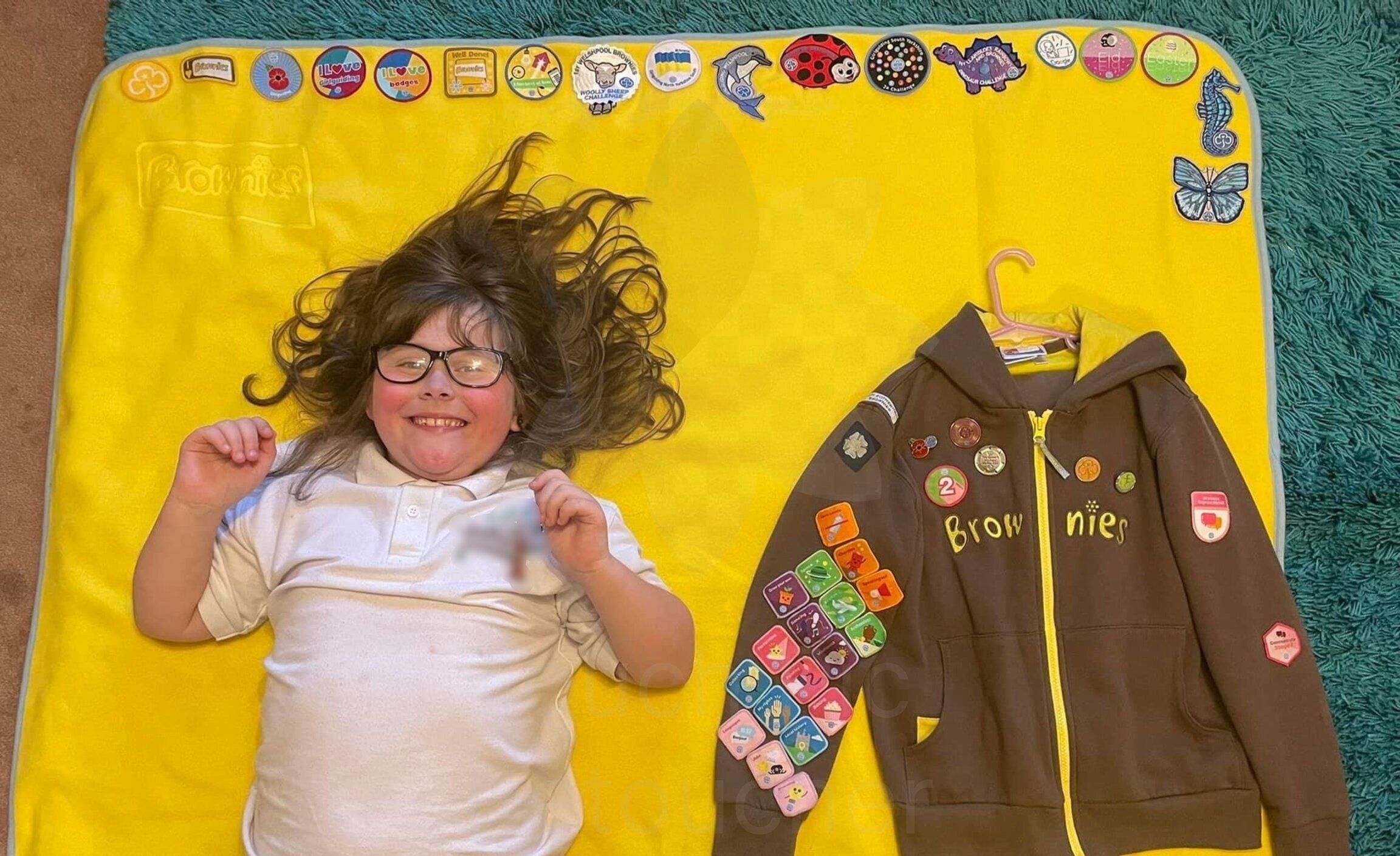
She’s been in Brownie’s for 12 months, after finishing Rainbows, and completed all her interest badges within six months of being there. She’s absolutely flying.

She even went away for a full weekend with them and they set an entire chalet up with symbols for fridge, bedroom, etc.

"They’ve helped her confidence grow so much."

Rachael Kent

“They’ve helped her confidence grow so much.”

She had the best time and they’ve helped her confidence grow so much – she’s gone from being that girl who would just sit and smile at everybody to someone that, when questions are asked, her hand will go up and she’ll try to answer stuff.

This week she’s narrator number five in her school nativity. I saw two of the school staff and they said: ‘Wait until you see it, make sure you’ve got tissues because we sat and cried through the entire practice when she stood up there with a microphone and said her lines.’

She’s got four pages and a couple of sentences on each page to read out. She’s not 100% clear all of the time, but compared to where she was before, it’s just amazing.

To find out more about Girlguiding and each of its four sections: Rainbows, Brownies, Guides and Rangers, visit girlguiding.org.uk.

Rachael was interviewed by Natasha Hinde and her answers were edited for length and clarity. To take part in HuffPost UK’s My Story series, email uklife@huffpost.com

Share Button

How To Successfully Secure Working From Home (Even If Your Boss Is A Dinosaur)

New government legislation allows employees the right to request flexible working from the time they start a new job. The move is being received well by unions, who advised minsters to do more in relation to making flexible working a norm.

Millions of Brits all over the UK are currently working flexibly, this includes people working from home, compressed hours, job sharing, flexitime and part-time and term-time only working.

The government announced on Monday that it would introduce legislation which will give employees the right to ask for flexible working arrangements as soon as they start a job. Previously, you could only make a request after 26 weeks.

Now, you can do it straight away. A request can be made every year and employers have up to three months to respond.

As well as helping those who want to work from home, the government said around 1.5 million low paid workers such as students, carers and gig economy employees would benefit from this legislation, because it would let those workers take on a second job if they desired.

Tray Durrant, executive director of PA recruiter, Bain and Gray, believes the new move will be a good thing for employees. “It will prompt discussion and iron out the working arrangements from day one, which can only be a good thing for both sides and ensure hybrid working arrangements are clear cut. It is already part of the dialogue for our candidates when looking for new roles,” Durrant says.

Though the move will be important for employees, some people shared that they’d feel uncomfortable asking for flexible working options in a job interview as they fear the response, according to a TUC survey.

However, Durrant thinks it’s important that this is covered during the interview process. “This should set the stage for the future working arrangements,” Durrant adds. “It’s crucial during any interview process that all elements are considered by both parties, and establishing the ground around flexible working arrangements would be anticipated by the employer.”

Equally, there are some who might feel anxious about approaching their current employer about the topic of flexible working. But Durrant says “whether or not someone is intimidated, communication is paramount”.

More than a quarter (26%) of businesses have reported an increase in questions regarding flexible working at interview stage. UK workers increasingly expect flexibility as a given, with some going so far as to say they’d be more likely to continue working for their employer if they were able to work overseas as part of their current job.

So, what’s the best way to make a WFH request?

“Employees need to think through the benefits of presenting their case for home working, which might be easier for some roles than others,” says Durrant. “Highlight clear tasks where the focus is individual and where undertaking these duties makes more makes more sense in an uninterrupted environment.”

Alison Blackler who is a mind coach understands that bringing up the topic of flexible working can be difficult if your manager isn’t keek on the idea. Blackler share’s three tips to when making a working from home request:

  1. Prepare what you want to say, get as much factual information to present, for example, the length of time saved travelling and have the key pointers written down. This helps you get all your points over, keeps you on track and therefore reduces overwhelm and fluster.
  2. Make sure that time has been planned into the managers diary and state what you want to talk about ‘flexible working’. Be brave and clear – being up front helps everyone with expectations. It is also tempting to try to ask casually, which can catch the manager off guard and therefore get an unwanted response. This also helps you prepare yourself for the conversation
  3. Remember, these conversations usually go better than we imagine in our minds. We often dread them and make them into much bigger deals. Rehearsal also helps the mind so that it is not new and it is much easier.

This also goes for employees who feel pressured to work in the office, despite being offered hybrid working options. “If this becomes a problem for the employee, the individual should bring it up with their manager and ask for clear guidelines on the company policy and on their role,” Durrant shares.

“Again, communication is paramount to set parameters and ensure there is clarity around the role and the number of days in the office.”

Employees certainly want hybrid to stay – 15% of businesses are already receiving increased requests to work from anywhere, Totaljobs reported. Meanwhile 15% are getting questions about four-day working weeks.

Around 16% of companies have improved flexible working options in order to retain staff aged over 50, according to Totaljobs. And only 12% of companies citied “managing flexible working patterns” as one of the major challenges facing businesses in Q3 2022, suggesting most are getting used to the idea). Instead, cost of living (55%) and retaining staff (26%) were the principal concerns.

Share Button

‘Chilled To The Bone’: What Jewish People Need You To Know About Kanye West

In some ways, a masked millionaire managing to even out-do conspiracy theorists by saying, ‘I love Hitler’ is so outright absurd, that it could be funny.

But when I watched Kanye West go on his latest antisemitic rant on conspiracy theorist Alex Jones’s podcast, in which he claimed to be a good person who just happened to love Hitler, I felt not only chilled but also utterly depressed. It is a scary time to be a Jew.

Jew hatred has become fashionable over the last few years. I’ve got used to seeing #Jews trending on Twitter all the time – never for a good reason.

Sometimes, the hatred is from the far left, who demonise us as Zionists (in their narrative, Zionists who are the puppet masters of politicians, have an obsession with money and like to kill children). And sometimes it is from the far right (who also claim Jews are the puppet masters of politicians, have an obsession with money and like to kill children).

We are fighting both, but right now Kanye – who legally changed his name to Ye last year – is at the centre of what is sometimes called the horseshoe effect – the idea that all the extremes meet in antisemitism. The problem isn’t that he is one man going on tirades but that he is an extremely influential man, who has twice as many Twitter followers as there are Jews in the entire world.

“I felt chilled to the bone when I saw a clip of what he was saying,” Lindi*, a 73-year-old Jewish grandmother from Leeds, tells me. “I feel frightened because a whole new tranche of people will be attracted by what he says. The world is a much smaller place than it used to be – ideas get quickly spread around.

“Just before he went on his rant, he was having dinner with Donald Trump who is a very powerful man hoping to become President again. The reach of people like this is huge. And it is no longer just about words – it is not just moaning about Jews at dinner parties – but actual physical attacks are happening.”

Lindi (left) and Sam S(right)

Last year antisemitic incidents reached a record high – up 34% – and of these 2,255 attacks, 176 were violent. We are one of the smallest minorities in the country, making up just 0.5% of the UK, but the victims of 23% of all religious assaults.

“One of the things that is worrying me is that he is turning two oppressed communities, who should be allies, against each other,” says Sam S*, 43, from London. “It feels like he’s trying to start a race war and it feels like the far right are encouraging it. I’m worried it’s not going to stop. It’s going to keep escalating.”

Some have put West’s rants down to mental health, as he’s previously spoken about his diagnosis of bipolar disorder. But many have contested the idea that mental illness could cause antisemitism.

“This isn’t just mental illness – what he is saying is the result of a deep ideology,” says Alex Hearn, 47, from London, who is an antisemitic activist and the director of Labour Against Antisemitism. “The things he has come out with are tropes going back hundreds of years; it is part of a deep conspiratorial belief system. They aren’t off-hand comments but the tip of an ideological iceberg.

“Some of it is far right, white supremacist, Nazi ideology and it merges in with a supersession ideology that Black people are ‘the real Jews’ and that the rest of us are just pretenders. It’s a mix of increasingly popular ideas.”

Alex Hearn (left) and Joseph Cohen (right)

Prior to Kanye’s latest outburst, he’d already threatened to go ‘death con three’ on Jewish people. Disturbingly, a group in Los Angeles were later photographed draping a banner reading “Kanye is right about the Jews” over a freeway overpass.

For all the Hollywood celebrities who condemed anti-semitism in the aftermath, there were others who repeated some of the rapper’s rhetoric.

Most notoriously, basketball star Kyrie Irving posted a link to a controversial Amazon documentary called ‘Hebrews to Negroes: Wake Up Black America’ which contains both Holocaust denial and the same idea being spread by Kanye – that African Americans are the ‘real Jews’. (He’s since apologised).

Last week, Amazon boss Andy Jassy refused to bow to pressure to remove the film from the streaming site, saying: “We have to allow access to these viewpoints, even if they are objectionable.”

Hearn believes this stance is potentially “more dangerous than what Kanye is saying”.

“What we are talking about is the normalisation of conspiratorial thinking about Jews in popular culture,” he adds.

What can we do about Kanye and his antisemitism? Jews are stuck in a bind. Speak up and we are whiny – some even accuse us of being racist. Attempt to close him down, and that is proof of our ‘power’. And yet, I can’t tell you how powerless I feel.

“It is this battle which is most painful to me as a Black British Jew.”

– Lara Monroe

For Black British Jews the situation is complicated and, perhaps, doubly painful. Before Kanye was attacking Jews, he was attacking his own people, says Lara Monroe, a 43-year-old from East London, who writes about her experience of being both Black British and Jewish.

“To divorce Kanye’s antisemitic comments from those he made towards his own Black community can miss the nub of what is going on,” she tells HuffPost UK. “When Kanye and Candace Owens were photographed together wearing an ‘All Lives Matter’ top that was a trigger that something deeper was coming.”

For her, it is particularly painful to see his attempts at starting a war between minorities when she encompasses both.

“Who wins when the relationship between the Black and Jewish communities is broken by the agents of chaos who consciously or unconsciously stir it? The white supremacists. It is this battle which is most painful to me as a Black British Jew.

“When someone like Kanye chooses to be one of those agents, both Black and Jewish people can either feed into this with anger, mistrust and accusations of lack of solidarity or we can do what works, by being alert to and disrupt any spark of supremacist language or behaviour.”

“We can see Kanye becoming radicalised as we watch.”

– Joseph Cohen

Within hours of the Alex Jones’s podcast broadcast, Kanye was temporarily suspended from Twitter. But activist Joseph Cohen, who is in his late 30s and from London, says the dangerous thing about stopping antisemites talking on the mainstream is that they head into more extreme spaces.

“We can see Kanye becoming radicalised as we watch,” he says. “At first it was just about a Jewish manager. Then it was ‘death con three on Jews’ and now it’s ‘I love Hitler’. One of the pluses of still being able to see what he says is that we can see the full extent of his radicalisation. It is almost impossible for anyone to defend him now. I do worry that if we don’t allow for free speech, we push them into the arms of the neo-Nazis, but as it is, Kanye is already in bed with them.”

Cohen, who investigates antisemitism for an organisation called Israel Advocacy Movement, raises concerns that Kayne is not only influencing white supremacists in America, but the far right in Britain too.

“The most powerful Black artist in the world has united with some of the most dangerous and violent white supremacists on the planet and the far right in this country – people like Tommy Robinson – are being inspired by it,” he claims.

“It was only recently that they were focused more on Muslim people and were even attempting to pretend they were friends of Jewish people. But now the far right is, once again, universally focused on Jews and Kanye is helping with that. People who never thought about Jews suddenly believe these tropes – these ancient tropes about us – because Kanye is saying them. And the hardest thing is, I don’t know what we can do about it.”

*Some interviewees chose not to share their surnames.

Share Button

How To Pick A Workout Playlist That’ll Keep You Going For Longer

You’re reading Move, the nudge we need to get active, however makes us happiest and healthiest.

Music is a lot of things: it’s restorative, motivational, moving and educational. There are endless ways we use music to get through our days, whether listening to a sad song on repeat or hitting play on an upbeat tune.

According to Ronna Kaplan, a clinical supervisor and adjunct music therapy faculty at Cleveland State University, “music is positive in many ways for mental health, it can be used across the lifespan” for many different situations.

One of those ways is during exercise. It can be a crucial element in enhancing your workout. Here’s how.

Your body’s movement naturally matches a song’s rhythm, which can help you stick to a specific pace.

There’s a reason your foot starts tapping or your shoulders start moving as soon as a song comes on. According to Joy Allen, the chair of music therapy and director of the music and health institute at Berklee College of Music in Boston, this is because of rhythmic entrainment, which is an “unconscious reaction — that’s what we call the entrainment.”

“Our body’s going to [move] in time with that sound or that rhythm,” she says.

So, when it comes to exercise, your body automatically falls in line with the tempo of the music “because of the way that our brains are connected with rhythm,” Allen says.

When picking music for a workout, like when going for a walk or run, for example, you’ll want to choose a tempo that is close to your natural stride. “Go [with] what seems comfortable for you and play around with different songs,” she says.

You can use music to increase your pace, too.

If you’re looking for an added challenge, pick a song with a pace that is a little quicker than your average running or walking stride, this should help you move faster throughout your workout.

You can start with a song with a slower tempo and gradually increase your speed by picking songs with faster beats, which is ideal if you’re looking to improve your walking or running pace, according to Kaplan.

“It primes the person to an outside cue,” she says. It “helps your muscles activate in their walking pattern.”

Music can help distract you from boredom during a workout.

Tempura via Getty Images

Music can help distract you from boredom during a workout.

It’s motivating.

How often has someone walked into the gym, realised they forgot their headphones, and then had a not-so-great workout — or even left the gym altogether? Allen pointed out this is a common occurrence: There is a major reason why music is integral to so many people’s workouts.

The music you listen to during a workout helps with motivation, and there are several things behind that motivation.

First, you probably want to hear your favorite song on your exercise playlist, which may keep you going for longer. Second, if you put on music that’s unexpected (like if you put on reggaeton instead of your regular pop soundtrack), you will be interested in hearing what comes next in the song, which may also keep you moving longer than usual.

“If you’re always listening to the same stuff, sometimes that’s great [but] sometimes we have fatigue from it — we know what to expect and what’s coming, so it can be a little less motivating,” Allen says.

And music is distracting.

No one wants to focus on their tough workout as they’re in it. If anything, they want to not think about it. As you sing along to lyrics or are reminded of music-induced memories, songs let your mind wander throughout an exercise regimen, so you don’t have to stand (or sit) there and think about how hard your workout is.

Music keeps you from getting bored during a workout, too, which can happen when you’re doing something kind of mundane like walking on a treadmill, Allen noted. Music activates the brain by giving your mind something else to think about.

“It captures your attention… ‘oh, here’s something I’m listening to,’ so I’m not attending to what could be an uncomfortable experience with the exercise, it gives me something else to focus on,” Allen says.

You’ll reap even more benefits when you pick your music.

According to Kaplan, when someone chooses the music they’re listening to, they’ll have better results, whether working out or doing something like meditation.

A recent study led by the Department of Kinesiology at Samford University in Alabama stated, “if the music played over the speakers is not preferred by the individual giving effort, performance may suffer. Thus, coaches and athletes should consider individual music preferences when attempting to optimise performance and training.”

This further speaks to the motivation you feel when working out to music you enjoy.

Additionally, Kaplan says you might notice you’re in a better mood when working out to music you select, which may make you feel like you enjoyed your workout more. And that’s a win-win.

This may mean you’ll be more likely to work out again that week, which is a great way to hit your fitness goals.

Move celebrates exercise in all its forms, with accessible features encouraging you to add movement into your day – because it’s not just good for the body, but the mind, too. We get it: workouts can be a bit of a slog, but there are ways you can move more without dreading it. Whether you love hikes, bike rides, YouTube workouts or hula hoop routines, exercise should be something to enjoy.

HuffPost UK / Rebecca Zisser

Share Button