10 Beautiful British Vineyards You’ll Absolutely Want To Visit

You are reading Anywhere But Here, our summer-long series on travel at home and abroad, serving up the information and inspiration you need

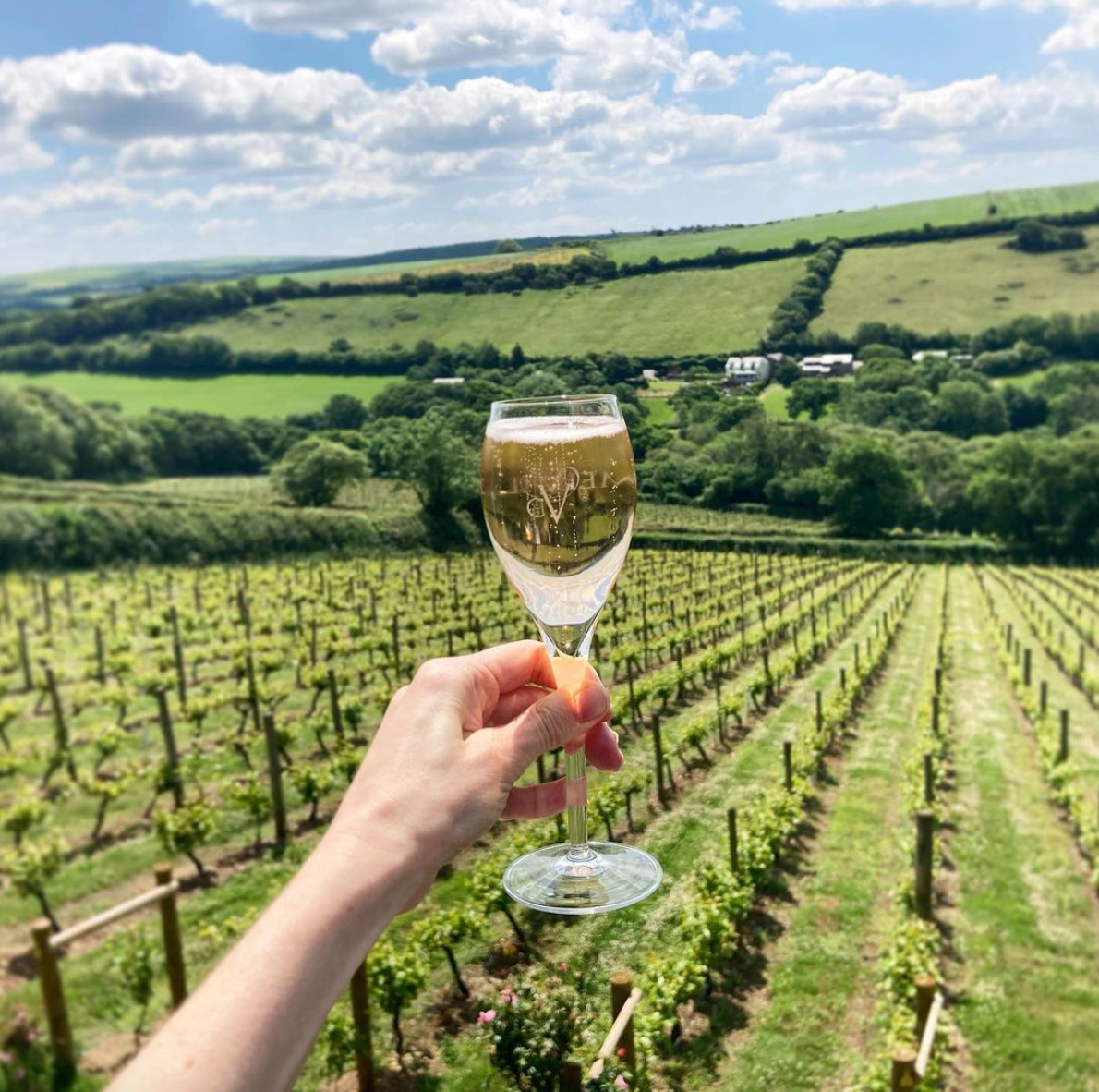
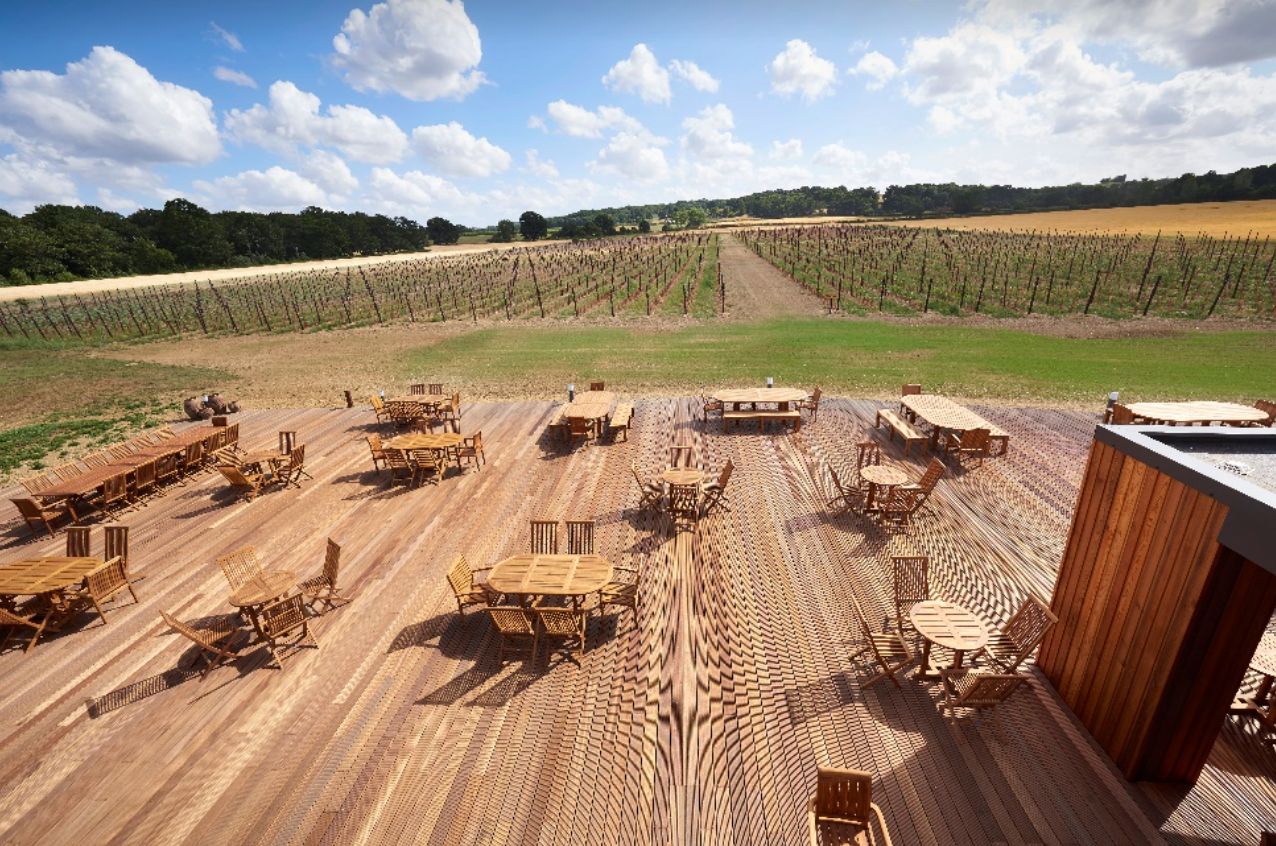
When you think of fine wine, Britain may not instantly spring to mind – but it should. The nation is home to dozens of lovely vineyards, many of which allow visitors to sip away while enjoying a captivating view.

As wine intake continues to increase in the UK, with a consumption of 1.77 billion bottles in 2020, new vineyards are blossoming all around the land, which can provide the same unforgettable experience you would receive in a rural estate in France. With less travel time, too.

To help you decide which one to visit, the investment experts at Money.co.uk have analysed more than 100,000 Instagram hashtags associated with 693 British vineyards to reveal the most popular.

Topping the list, Surrey’s Denbies Wine Estate is considered the most beautiful vineyard, with an impressive 9,255 hashtags. This award-winning destination located in Surrey Hills offers wine tasting alongside two restaurants and a hotel, with outstanding views of the 265-acre estate.

In second place, Llanerch Vineyard, located in Rhondda Cynon Taf, Wales, comes in with 5,325 hashtags. Located less than 25 minutes outside of Cardiff’s city centre, Llanerch Vineyard is home to award-winning wines, a restaurant, hotel and its own cookery school.

Finishing the top three is Camel Valley Vineyard located in Cornwall. With international award-winning English Sparkling wines, a Royal Warrant from The Prince of Wales, and spectacular views of the Cornish countryside, it’s easy to see why this vineyard is one of the most Instagrammed in Britain.

Here is the full list of beautiful vineyards to visit.

1. Denbies Wine Estate (Surrey, England)

2. Llanerch Vineyard (Rhondda Cynon Taf, Wales)

3. Camel Valley Vineyard (Cornwall, England)

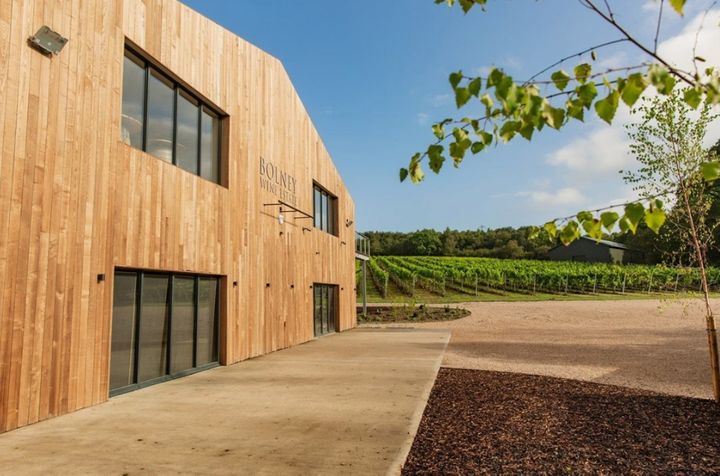
4. Bolney Wine Estate (Sussex, England)

5. Three Choirs Vineyard (Gloucestershire, England)

6. Wyken Vineyard (Suffolk, England)

7. Hambledon Vineyard (Hampshire, England)

8. Knightor Winery (Cornwall, England)

9. Hush Heath Estate (Kent, England)

10. Biddenden Vineyard (Kent, England)

Travel is the story of our summer. The rules (and traffic lights) are always changing, but one thing’s clear, we dream of being Anywhere But Here. This seasonal series offers you clear-headed travel advice, ideas-packed staycation guides, clever swaps and hacks, and a healthy dose of wanderlust.

Share Button

‘If The Euros Can Happen, Why Not Pride?’ – People Are Devastated That London Pride Is Cancelled

SOPA Images SOPA Images/LightRocket via Gett

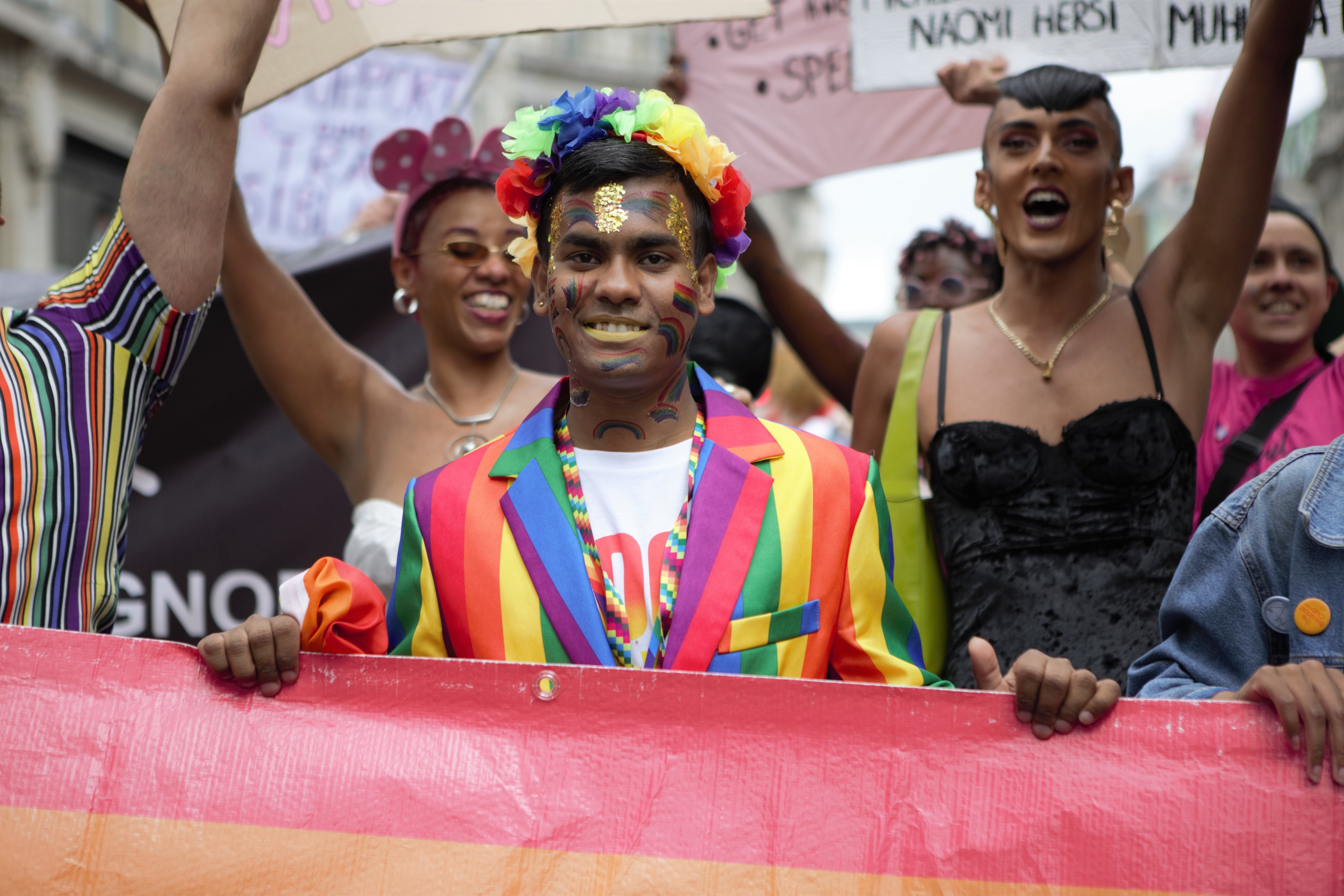
London Pride has been cancelled for a second year in row

Pride in London was cancelled on Friday, just a few weeks before the public were set to attend the highly-anticipated event – leaving some people angry and frustrated.

The director for community engagement with Pride in London confirmed the disappointing news in a short video posted on Twitter.

Christopher Joell-Deshields explained: “Pride like all other major public events has faced countless challenges with regards to safely holding one of the largest events in the capital.

“I’m truly saddened to say that Pride in London won’t be happening in person this year.”

Unsurprisingly, the news did not go down well among the fans of the festival, especially as it was also cancelled last year.

When the news broke, The New Statesman’s Rachel Cunliffe tweeted: “This is so sad. It’s an outdoor parade.

“If the Euros can happen, why not Pride?”

Why the Euros 2020 final did go ahead 

Approximately 60,000 fans flocked to Wembley stadium to watch England compete in the Euro 2020 final against Italy back in July.

The match was blighted by chaos at one point when ticketless fans also flooded into London, with some even attempting to enter the stadium.

Covid spread rapidly among the attendees with some even dubbing their strain of the virus the “Wembley variant” in the days immediately after the football game and many claimed the occasion was a super-spreader event.

But the match went ahead as part of a pilot scheme, the Event Research Programme, run by the government to see what kind of risk large gatherings posed to the epidemic.

England has since lifted almost all of the restrictions – yet many public events, like Pride, are still being cancelled.

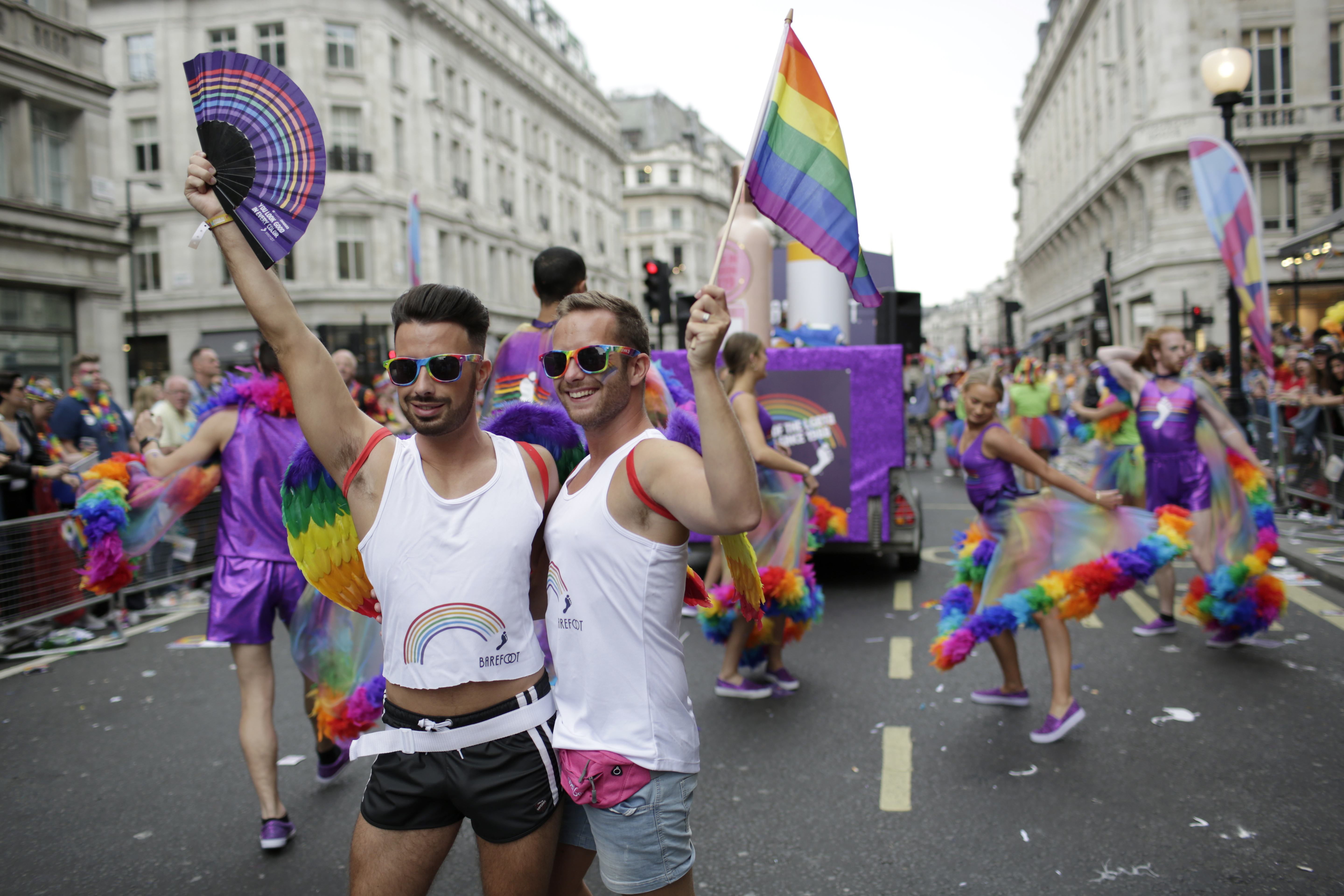
John Phillips via Getty Images for Barefoot Wine

Pride was last held in London in 2019

NIKLAS HALLE’N via Getty Images

The crowds leaving the Euro 2020 final in Wembley stadium in July

Another account supported the comparison to the Euros, tweeting: “Oh, but when it’s football London is wide open.”

One pointed to the other events held in the UK and asked: “340,000 people at Silverstone but Pride is too much? The rules don’t make any sense.”

There were approximately 350,000 who attended Silverstone at some point during the three-day motor racing event held in July.

Another took aim at the management team and said: “As pride organisers you’re hardly fighting.”

But, not all hit out at London Pride’s decision.

Some believe this was the safest move

A different Twitter account wrote: “Gutting news but absolutely the right decision. Pride without the protest just isn’t.

“Solidarity with your whole team who must be devastated to have to make such a hard decision.”

We Are via Getty Images

Manchester and Brighton Pride have also been cancelled due to Covid regulations

But why did it have to be cancelled? 

Joell-Deshields explained that navigating the new Covid guidelines and legislation for large-scale events was “extremely challenging”.

He added that it was clear Pride in London could not “provide the level of mitigation expected from the local public health team and the government”.

Joell-Deshields said the parade would have to be cancelled, with the whole event restricted to two or three events across London with a limited ticket supply.

He explained: “This goes against everything we want Pride in London to be or that we have been so far.”

He explained: “We cannot waiver from that commitment to you, our community.”

Joell-Deshields added that volunteers will still be focusing on engaging with LGBT+ communities to “achieve our committed objections towards diversity and inclusion”.

He said his team will now start planning for Pride in London 2022, which will honour the 50th anniversary since the UK’s first pride event.

There will also be an appeal to declare 2022 “a year of queer”.

Pride in London is not the only major event this year which had to cancel.

Manchester Pride, Brighton Pride and Notting Hill Carnival were all called off, along with Glastonbury Music Festival.

Southampton Pride, on August 28, and Reading Pride, held on September 4, will still be going ahead. 

Share Button

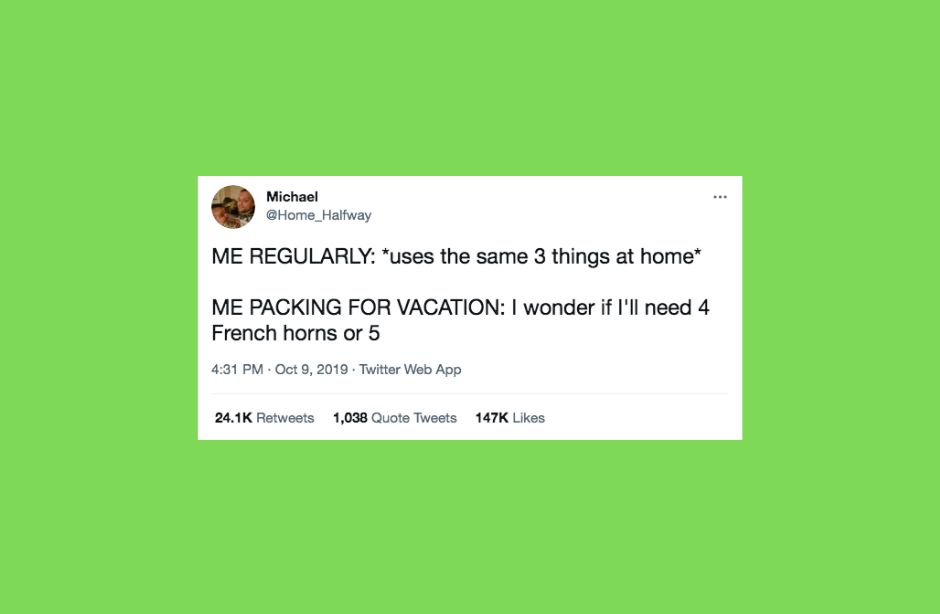
30 Tweets About Packing For A Holiday That Nail The Utter Chaos

You are reading Anywhere But Here, our summer-long series on travel at home and abroad, serving up the information and inspiration you need.

Travel brings out different sides of our personalities, especially when it comes to packing.

For some, it highlights a tendency to forget the important things. For others, packing decisions reveal an almost delusional sense of optimism.

Whichever camp you fall into, you’re not alone. The funny folks on Twitter have shared their packing challenges, fails and musings. Below, we’ve rounded up funny and relatable tweets about packing for a trip.

Travel is the story of our summer. The rules (and traffic lights) are always changing, but one thing’s clear, we dream of being Anywhere But Here. This seasonal series offers you clear-headed travel advice, ideas-packed staycation guides, clever swaps and hacks, and a healthy dose of wanderlust.

Share Button

Greggs’ New Vegan Melt Is Here, But Is It Any Good?

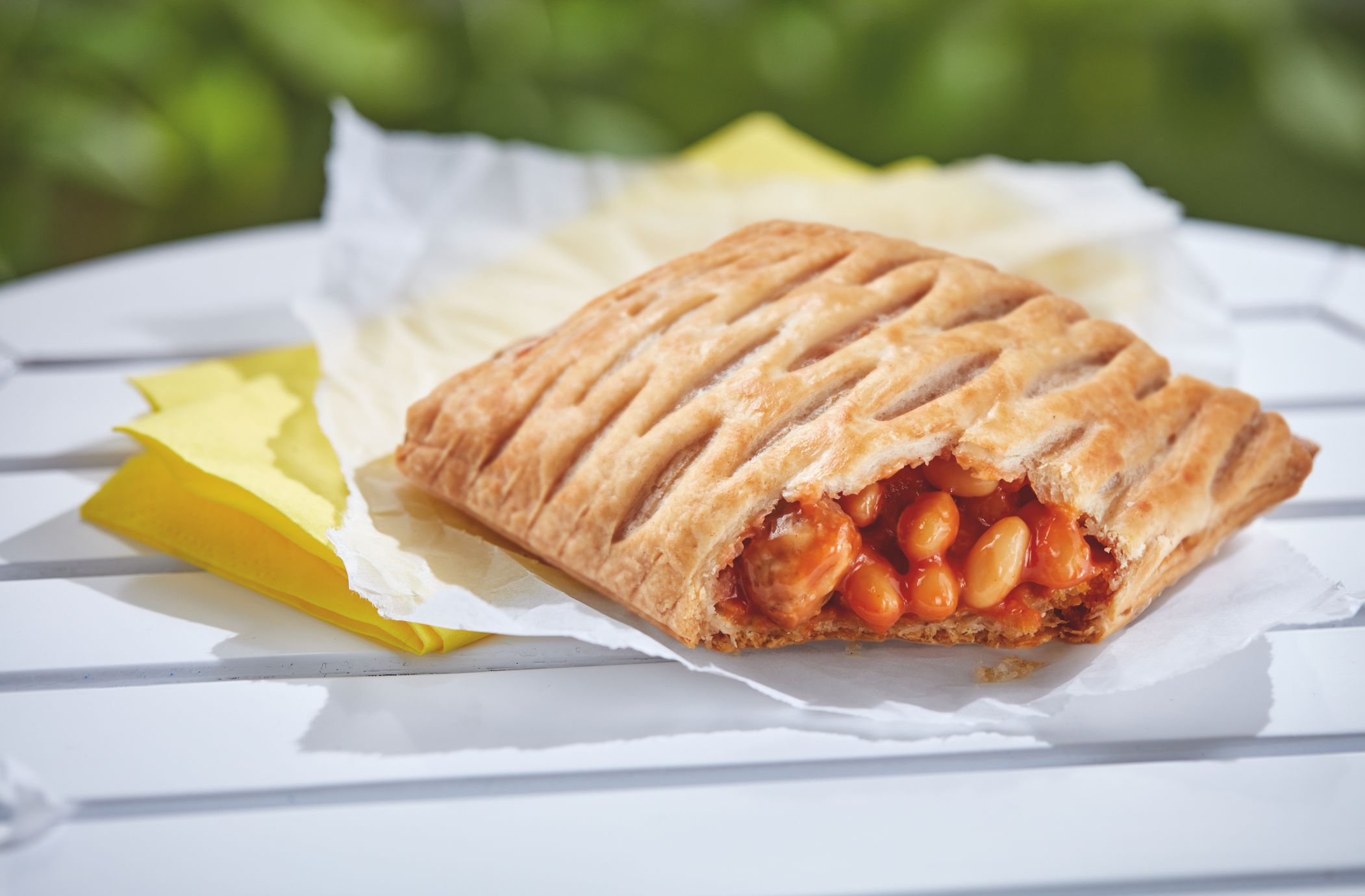
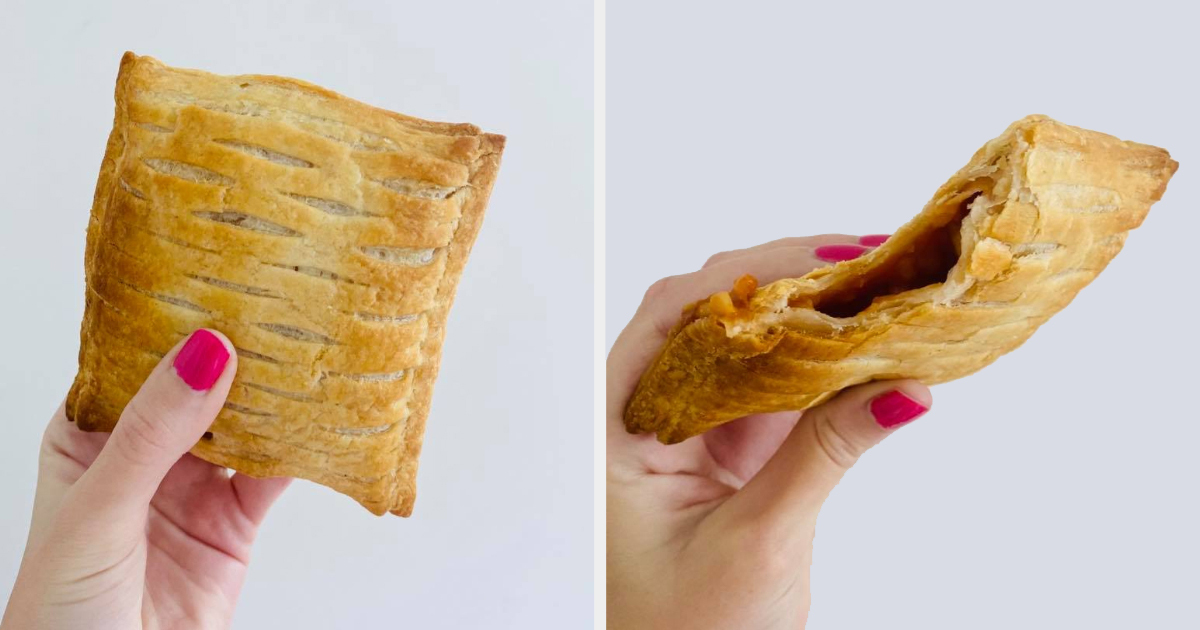
First, there was the game-changing sausage roll. Next, the Quorn-based ‘steak’ bake. Now, Greggs has added another vegan alternative to its menu: the Vegan Sausage, Bean and CheeZe Melt.

Available in 2,000 shops nationwide, the new product is designed to mirror the traditional, meat-filled Sausage, Bean and Cheese Melt, or SBCM, as it’s known among die-hard fans.

The vegan-friendly version is wrapped in layers of vegan puff pastry, but instead of the classic filling, it contains vegan sausage, baked beans and grated original and mozzarella flavour vegan cheeZe (yes, you have to spell it with a giant ‘Z’).

Customers queued round the block for Greggs’ previous vegan releases, so it’s no wonder the retailer is running with a theme.

Where other high street bakeries have struggled, Greggs has managed to bounce back from a tough 18 months, with profits now outstripping pre-pandemic levels. Can this £1.60 beanie bake help keep Greggs in the black?

We tried it to find out.

The vegan SBCM

The vegan SBCM

Faima Bakar, life reporter ⭐️⭐️⭐️

“My hopes are very high with Greggs’ new vegan sausage, bean and cheese melt. The last time I tried a new vegan item – the famous sausage roll – it had healing powers. I was sick at the time it was launched but the sausage roll was the only thing I could stomach. I got better after eating it. See, healing powers. So I was expecting the same kind of magic from this one.

“Unfortunately, it falls a bit flat. The beans feel too tomatoey and runny, it overpowers the rest of the flavours – but the sausage and pastry do satisfy. It looks and smells the same as other Greggs items, and has the crumbliness of them too, so maybe don’t eat it over your laptop.

“Though I don’t love this one as much as I like the other vegan products at Greggs, I am glad they’re continuing down this route. As I follow a halal diet, I can’t eat their sausage roll, steak bakes and melts. But the vegan offering changes all that.”

Rachel Moss, life editor ⭐️⭐️

“My breakfast routine usually consists of tea and something sugary, so it’s safe to say I’d never normally pick up a giant savoury square pre-10am.

“I’ve got to hand it to Greggs though, the chefs have nailed the pastry – it’s buttery in texture, golden in appearance and you’d have no idea it was vegan unless someone pointed it out. Unfortunately, things go downhill once you bite into it; the filling is disappointing, mainly because there isn’t enough of it.

“The vegan sausage is almost entirely absent and the cheese is so mild, you can’t taste it. Inside the largely hollow shell, the dominant flavour is beans. I like beans, but would I buy a plain old ‘Bean Melt’? No, I would not.”

Where's the filling? 

Where’s the filling? 

Nancy Groves, head of life ⭐️⭐️⭐️⭐️

“Despite being a carb fiend, I’ve never really got into Greggs, I think because I prefer my starch in potato, rice or pasta form, rather than pastries and pies. Still, I’m not going to turn down a free meal, and this melt is certainly that: proteinous, despite its plant-based credentials.

“Biting in, I can taste all the different elements we’re promised even if I can’t see them – the filling has that unmistakeable pinky-red hue of baked beans which makes me feel a bit queasy. But neither the ‘sausage’ chunks or ‘cheeZe’ give me the ick that I often get from vegan substitutes, and the pastry square pretty much holds its shape, making it easy to eat on the go – or who am I kidding? – at my work-from-home desk. I’m left full, if craving some greens. I still don’t get the Greggs hype, but this melt is my type. Yes, I’m surprised too.”

Habiba Katsha, life reporter ⭐️⭐️⭐️⭐️

“As a certified Greggs fan I’m so excited that they’ve extended their vegan line. Though I’m not vegan per se, it’s nice to know that there’s a healthier alternative available. I grew up on Greggs and my fondest memories have been getting a sausage roll in the morning with my mum.

“The presentation of the sausage, bean and cheese melt is perfect, but I expect nothing less from Greggs. It’s golden and crispy. I’m shocked these are even vegan because I expected it to taste bland, but it’s quite the opposite. The filling really is flavourful and I can taste all the elements coming through. The nice surprise is how I feel after eating it. Even though I’m full, I still feel light because it isn’t too heavy on the stomach.”

Share Button

These Companies Are Short-Changing Their Minimum Wage Staff

A total of £2.1m was found to be owed to more than 34,000 workers following investigations by HM Revenue and Customs dating back to 2011. Named employers have been made to pay back what they owed, and were fined an additional £3.2m.

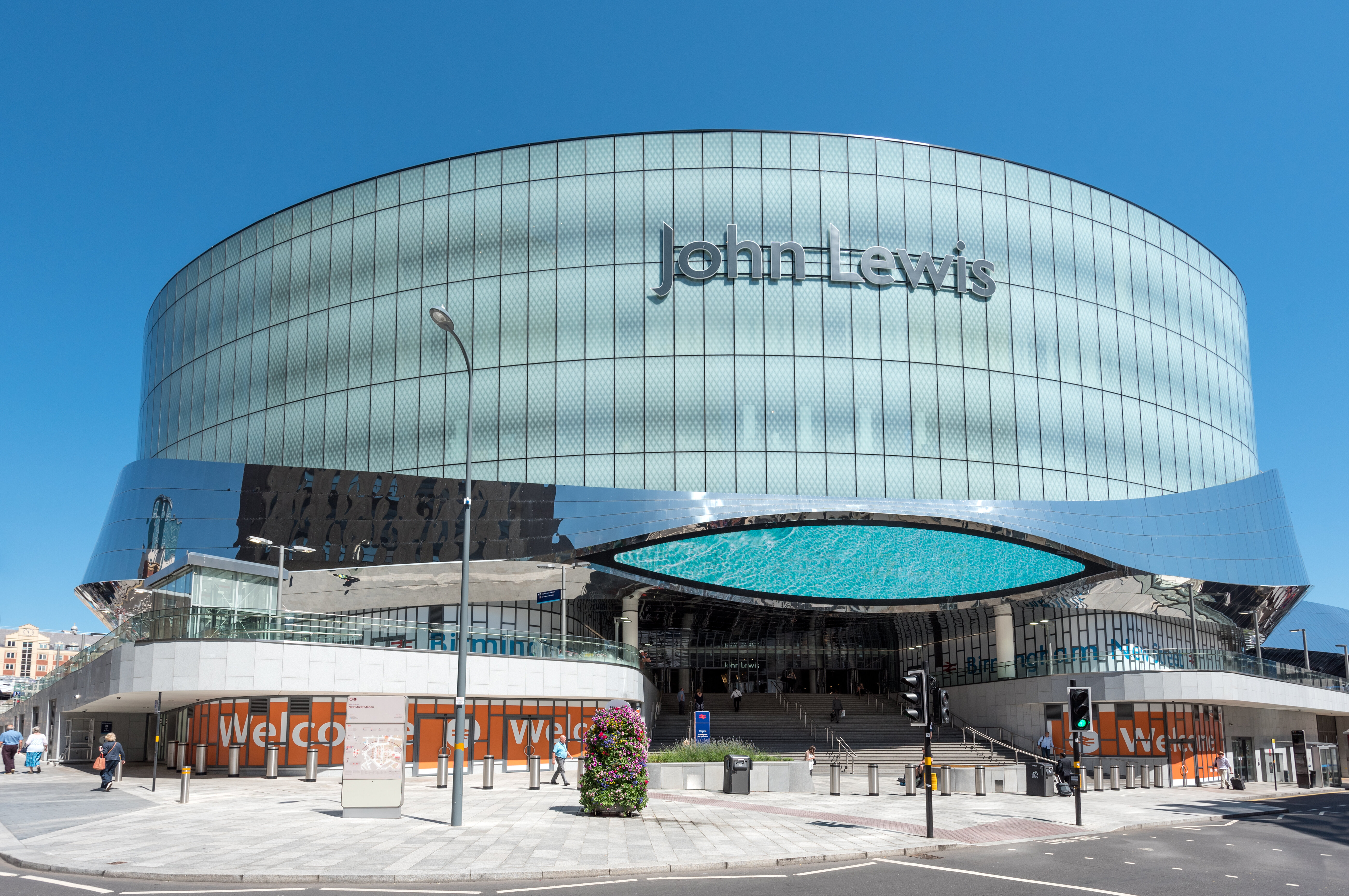
Businesses named by the government include retail giant John Lewis, which said it was “surprised and disappointed” to be on the list released by the Business Department.

A John Lewis Partnership spokesman said: “This was a technical breach that happened four years ago, has been fixed and which we ourselves made public at the time.

“The issue arose because the Partnership smooths pay so that Partners with variable pay get the same amount each month, helping them to budget.

“Our average minimum hourly pay has never been below the national minimum wage and is currently 15% above it.”

Other organisations named and shamed included Sheffield United, Oldham Athletic, Crewe, Charlton Athletic and Portsmouth football clubs, as well as The Body Shop, Worcestershire Cricket Club and Enterprise Rent A Car.

Almost half of employers named wrongly deducted pay from workers’ wages, including for uniforms and expenses, while 30% failed to pay workers for all the time they had worked, such as when they worked overtime, and 19% paid the incorrect apprenticeship rate.

Business minister Paul Scully said: “Our minimum wage laws are there to ensure a fair day’s work gets a fair day’s pay. It is unacceptable for any company to come up short. All employers, including those on this list, need to pay workers properly.

“This government will continue to protect workers’ rights vigilantly, and employers that short-change workers won’t get off lightly.”

Low Pay Commission chairman Bryan Sanderson said: “These are very difficult times for all workers, particularly those on low pay who are often undertaking critical tasks in a variety of key sectors including care.

“The minimum wage provides a crucial level of support and compliance is essential for the benefit of both the recipients and our society as a whole.”

A total of 2,300 employers have been named since the current scheme was introduced in 2014.

Shadow employment rights and protections secretary Andy McDonald said: “The government isn’t doing nearly enough to crack down on companies who pay under the national minimum wage.

“Just six employers have been prosecuted for paying employees less than the minimum wage in the last six years despite more than 6,500 breaches having been found.

“Laws protecting workers aren’t worth the paper they are written on if they are not enforced, but weak employment rights and a lack of enforcement action leaves too many working people vulnerable to this exploitation.”

Share Button

Marcus Rashford ‘Doing Government’s Work For Them’ Over Food Voucher Take Up

Nick Potts – PA Images via Getty Images

Rashford said he feared registrations to the government-backed food voucher scheme were ‘plateauing’

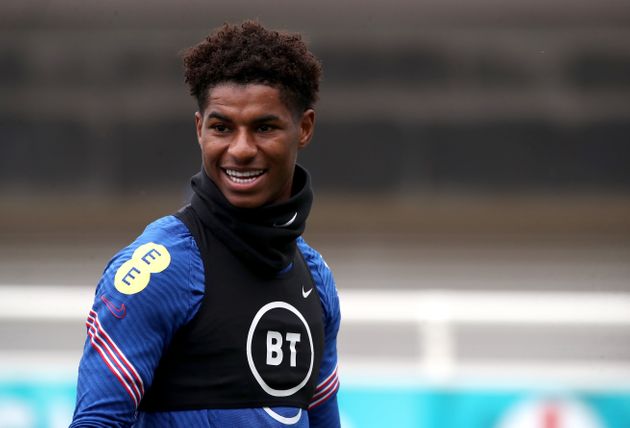
Marcus Rashford has kickstarted a drive to get more disadvantaged families signed up to a food voucher scheme – prompting calls from Labour that the footballer is having to “do the government’s work for them”.

The England and Manchester United striker urged health professional to help get more children signed up to the government’s healthy start food voucher scheme after it emerged that 40% of those eligible were still not registered.

In an open letter published in the British Medical Journal, Rashford said he was worried that after an initial good start last year, numbers were now “plateauing”.

“Since November 2020, members of the child food poverty taskforce have used their channels and platforms to communicate about the healthy start scheme and to tell people how to access it, with the hope that we will be able to reach the majority of those most in need,” he said.

“While we have seen 57,000 more parents benefit from the scheme as a result, I’m concerned we are plateauing.

“More than 40% of those eligible for the vouchers are still not registered for the scheme, and I’m confident that the majority of these parents can be found in communities just like mine, where I grew up — no internet, no high street, no word of mouth.”

Labour’s shadow child poverty secretary Wes Streeting accused the government of having “no strategy for lifting children out of poverty”, adding: “Once again we see Marcus Rashford having to do the government’s work for them.”

Rashford’s letter is not the first time the footballer-turned-campaigner has intervened to provide decent food for children.

Last year he forced the government into a U-turn over free school meals so that they were provided to vulnerable children during the summer and Christmas holidays.

In May he became the youngest person to top the Sunday Times giving list by raising £20 million in donations from supermarkets to tackle child food poverty.

Rashford, who has spoken movingly about his own experience growing up in poverty, said the stigma attached to receiving help from the state was  “the most silly thing I’ve ever heard”.

In a letter to MPs last year urging them to back the child food poverty taskforce, Rashford recalled hearing his mum cry herself to sleep as she worried about how to make ends meet.

 “I remember the sound of my mum crying herself to sleep to this day, having worked a 14-hour shift, unsure how she was going to make ends meet,” he wrote at the time.

“That was my reality and thankfully I had the talent to kick a ball around to pull us all out of that situation.

“Many can’t find that way out and aren’t being offered a helping hand to do so.”

The department for health and social care has been contacted for comment.

Share Button

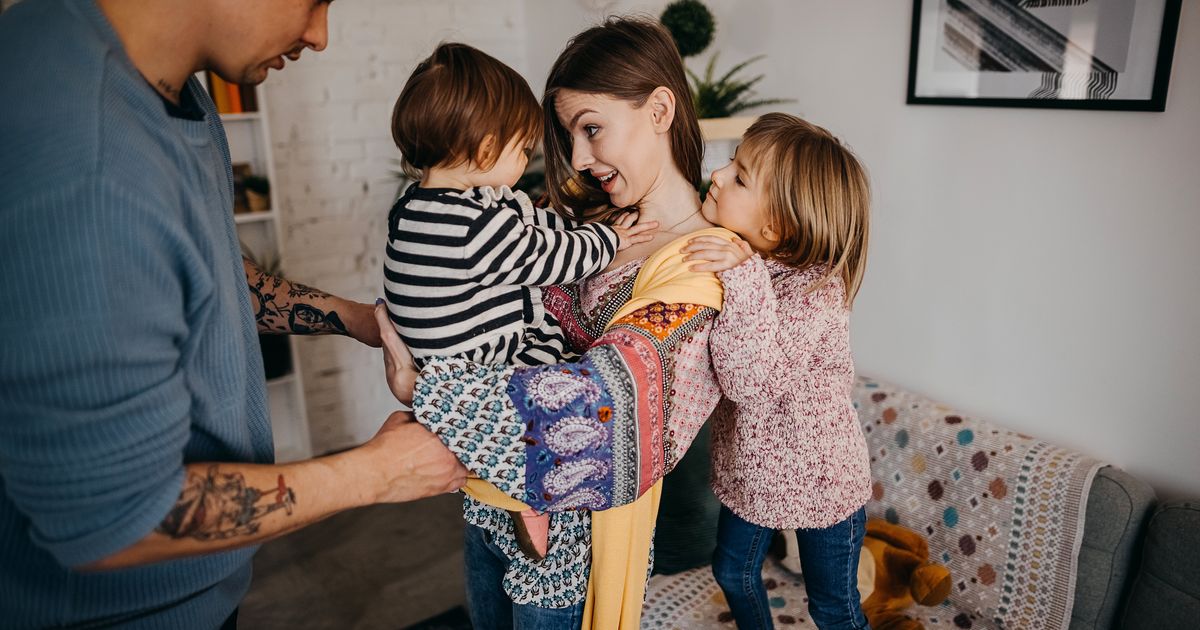
Why This Is The Moment To Make Your Family ‘Mission Statement’

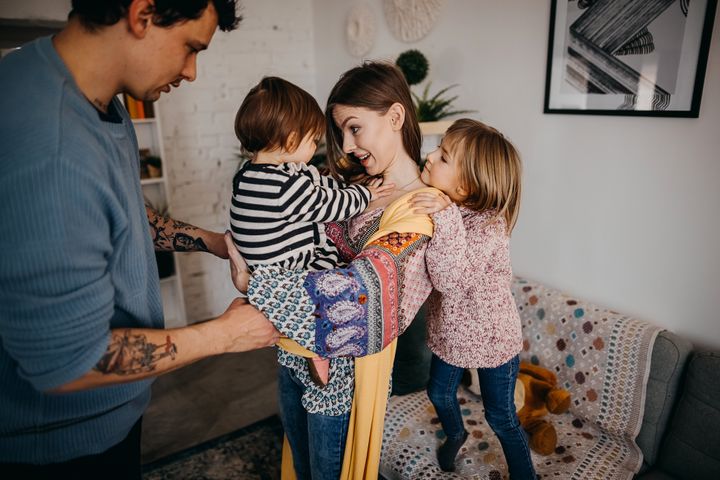

The past year and a half has been long, hard and logistically bonkers for families with young kids at home.

While the pandemic certainly isn’t over, many parents do feel a huge sense of relief as we inch closer to what looks like (for now, at least) a more typical school year. Groups such as the American Academy of Pediatrics and Centers for Disease Control and Prevention have called for kids around the country to return to the classroom. At the same time, many parents who haven’t already returned to the office for work will likely do so to some degree this fall.

Although being able to slide back into old routines might feel pretty darn glorious, economist and parenting guru Emily Oster suggests that doing so without pausing to consider your family’s “big picture” is a mistake.

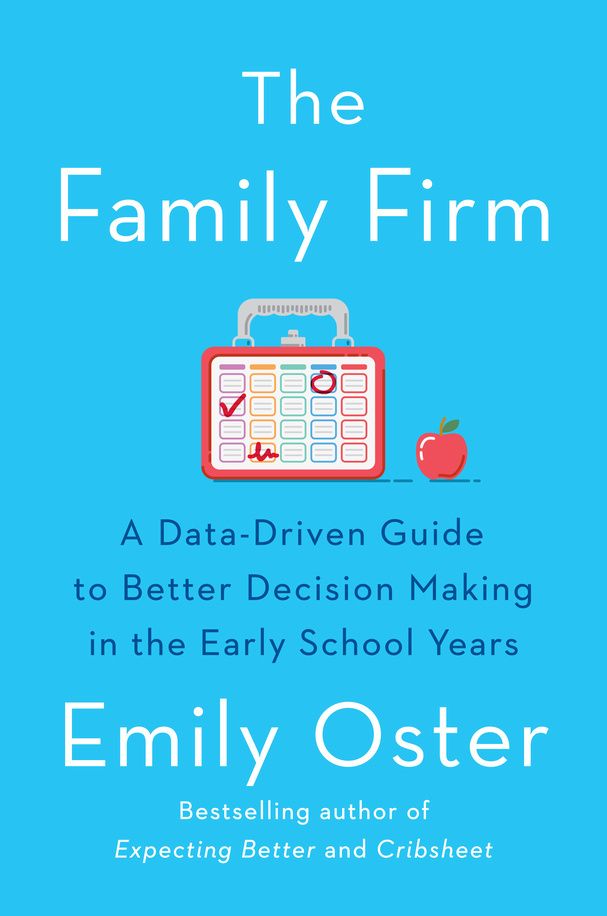
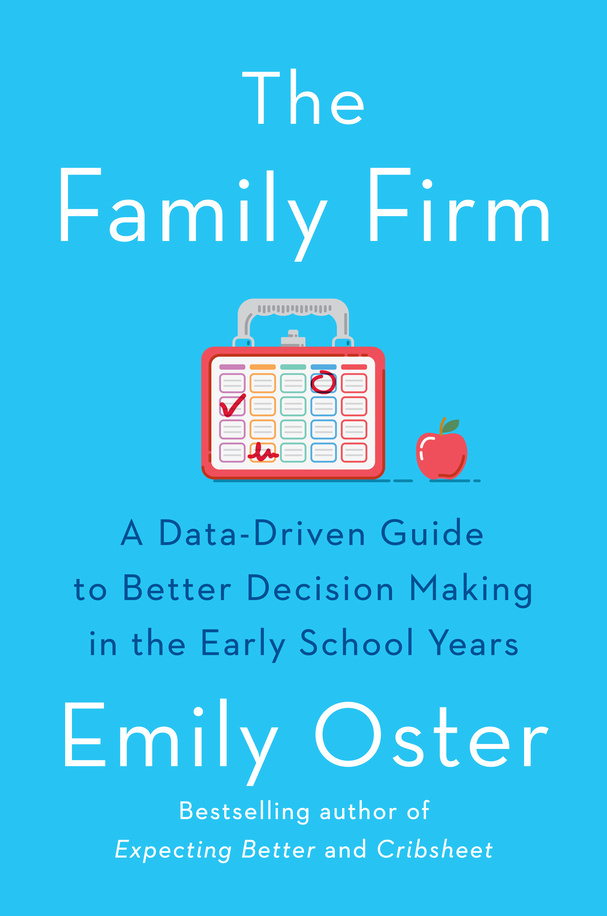
Oster’s new book, The Family Firm: A Data-Driven Guide to Better Decision Making in the Early School Years, provides a framework for parents of 5- to 12-year-olds when it comes to making decisions on everything from nutrition to when kids should get their first phones. She believes this is a moment when many families would benefit from creating mission statements – and she’s got a practical guide for what they should entail.

Emily Oster's new book urges families to make mission statements.

Emily Oster’s new book urges families to make mission statements.

“With all of the terrible things that have gone on over the past 18 months, there is an opportunity, as we move out of this, to have important conversations even in families where routines have been long established,” the author told HuffPost. “What are the things we were doing before that we want to go back to? What are the things we were doing before that we think, ‘You know what? Actually, I didn’t miss that.’ It is a real opportunity for that kind of reflection to happen.”

What your family mission statement should include

The purpose of a family mission statement is really to help you and whoever else you parent with articulate your big, high-level values. But Oster doesn’t see it as simply a lofty expression of ideals. Instead, it’s a practical document that will help your family sort through parenting decisions every day.

“When I talk about creating the family Big Picture, I’m talking about these overall principles,” Oster writes in “The Family Firm.” “But I’m also talking about confronting, ‘What does Thursday night look like?’”

To start, everyone who is a parenting stakeholder in your family should get a piece of paper. Write down an overarching family mission statement in a single sentence. Next, jot down three main goals for your children.

“Big life goals,” Oster writes in her book. “Not like, ‘Use a fork better,’ even if you desperately, desperately want that.”

After that, it’s time to think about yourself. What are three priorities you want to make sure you get time for? Write those down.

Then, list three activities that are must-dos for your family on most weekdays. Oster’s, for example, include eating at least one meal with the kids, getting some work done and being around for bedtime.

Finally, list three activities you think of as must-dos on the weekend. Sports? Spending time with family? Religious activities?

“There’s an important distinction between woo-woo, kind of big-picture family mission statements and really diving into some of these specifics,” she told HuffPost.

Why it’s worth it

Oster wrote her book The Family Firm before the pandemic, though she has, of course, become a go-to (if controversial) resource for many families over the last year and a half.

While her new book does not address Covid-19 or its impact on families and family decision-making, Oster said she thinks family mission statements are more important than ever in this moment of profound transition for so many parents and kids. (In non-Covid times, she suggests creating a mission statement around the time your child starts school and revisiting it as they get older.)

“The idea of the mission statement is really to surface your most important priorities to everyone in the family, and I think the reason that is really important is often, in families, those things go unsaid,” Oster said. “We have this idea that we all love each other, so of course we kind of agree on our family’s mission. Sometimes, that’s actually not true.”

If you are co-parenting with somebody else, you might find that what you’ve written down during this exercise looks pretty different, especially if you’re both emerging from the pandemic with new values and priorities. Don’t let that frighten you, Oster said, adding that what you really don’t want is to be acting on different priorities without having talked about them first and realising they’re different.

“The value of putting out our views, even if they lead to disagreements, is that it gives us an opportunity to talk about why we disagree,” she said. Once you’ve got some clarity around your own parenting priorities, you’re able to have a clearer, calmer discussion about the ways in which you can come together.

“We are pretty conflict averse, for reasonable reasons, in a way that we’re not always at work,” Oster said. “But I see this as bringing the potential conflict forward, but bringing it into a quieter moment where we’re not mad.”

Share Button

Taxis and Takeaways: Are Covid Vaccine Incentives Going To Work?

Car services such as Uber and Bolt and food delivery apps UberEats and Deliveroo are among those offering incentives for young people to get jabbed.

As the vaccine rollout continues, the government is doing everything it can to coax young people into getting the Covid-19 jab – and if that means offering discounted taxi rides and takeaways, Westminster says: whatever it takes.

Uber has said it’s reminding all users in August to get vaccinated, offering discounts on rides and meal delivery for doing so. Deliveroo will also offer vouchers, while Bolt is offering “free ride credit” to vaccination centres.

The Department of Health said more partnerships would be released “in due course”, while some local charities and councils have also started offering free taxis to help people get to vaccination centres.


The government remains concerned about the current Covid vaccine uptake among young people. The latest figures suggest 68% of 18 to 29-year-olds in England have had the first jab, compared to 88.6% of all UK adults.

Thanking the businesses supporting this vaccine drive, health secretary Sajid Javid then addressed young people directly, saying on Sunday: “Please go out and take advantage of the discounts.

“The lifesaving vaccines not only protect you, your loved ones and your community, but they are helping to bring us back together by allowing you to get back to doing the things you’ve missed.”

What do young people make of the scheme? We spoke to them to find out.

Abi Howe, 20, a student from Kent doesn’t think free pizza is enough to entice young people to get the vaccine. “It’s a childish and immature approach,” she tells HuffPost UK. “Hesitancy from young people is higher than the general population and that isn’t going to be eased by bribery, which suggests [the reason is] young people just aren’t bothered.”

Howe has already received her vaccination, but said that if she weren’t already vaccinated ,the discounts wouldn’t encourage her to get jabbed, nor has she seen any information as to whether incentives will be applied retroactively.

“I think young people have sacrificed a lot and this hasn’t been recognised,” she says. “Instead, they’ve been blamed for a rise in cases and now criticised for vaccine caution without proper information which might ease their worries.”

““It’s awful, tone-deaf and reeks of people putting graffiti on a leaflet, thinking, ‘yes, that will attract the kids’.””

– Chadwick, 29

Ada Enechi, a 27-year-old producer from east London was happy to bag her free meal after a first dose of the vaccine, which up until now she’d not got round to booking. In fact, she got jabbed and fed in the same place: a festival-like tent that has been set up near her house. Once vaccinated, she says, you get your free food and a drink, and it’s all accompanied by live music.

It sounds like a party, but freelancer and fellow Londoner Chadwick, 29, who preferred not to give his surname, thinks these incentives are a terrible idea.

“It’s awful, tone-deaf and reeks of people putting graffiti on a leaflet thinking, ‘yes, that will attract the kids’. If you have any respect for young people you would acknowledge the complexity of our existence,” he tells HuffPost UK.

Chadwick believes the vaccine is too important for such tactics and advises people seek out information about its safety, while avoiding scaremongering.

That message might resonate with Deborah Ajulo, 24, a sustainability coordinator from London, who has worries about the vaccine, as she believes scientists need several years to really understand a vaccine.

“Deals like this make me even more sceptical and push me further away from wanting to get the vaccine,” she tells HuffPost UK. “It feels like there is another agenda. This to me is not desperation, but it feels like they are trying to exclude people to peer-pressure them into getting the vaccine.”

She adds: “The government has treated young people like we’re ignorant and don’t understand what is going on. They’ve blamed young people for lockdowns and Covid spreading. I think they’ve just found it easier to blame us, rather than themselves for their lack of competency.”

Share Button

Third Vaccine Dose May Protect Those With Autoimmune Diseases

People who suffer from an autoimmune disease may benefit from a third dose of the Covid vaccine to protect them from breakthrough infections, a new study suggests.

The vaccine programme is still rolling out in the UK – over 88% of adults have had their first dose and over 72% are now fully vaccinated with two doses.

Currently, two doses of the vaccine provides 90% protection against hospitalisation against the Delta variant. The latest data from Public Health England and Cambridge University shows that around 60,000 deaths and 52,600 hospitalisations have been prevented by vaccines up to July 23.

However, autoimmune diseases often require treatment that dampens the immune system leaving the immunocompromised still vulnerable to Covid and prompting growing calls for them to get a third dose of the vaccine

Previously medical professionals have been unsure whether Covid vaccines would work on immunocompromised people who take B-cell-depleting drugs, such as rituximab to treat rheumatoid arthritis.

However, a pre-print study from the Medical University of Vienna found patients taking rituximab were still able to develop a humoral and cellular immune response – including the antibody production necessary to fight Covid-19.

As Michael Bonelli, senior author of the Vienna study, explains: “B cells constitute an important cell population for the development of antibodies. We were able to show that more than 50% of patients receiving B-cell-depleting treatment with rituximab still develop antibodies to SARS-CoV-2 [Covid-19], and that there is potentially additional protection via a cellular immune response.”

This underscores the importance of vaccinating immunosuppressed patients against Covid, Bonelli said, while his colleague Daniel Aletaha, head of the university’s division of rheumatology, said they also showed that a third vaccination is sometimes needed for people with autoimmune disease.

“The findings from this study formed the basis for a now completed randomised booster vaccination study, which investigated whether the group of patients receiving rituximab treatment who were unable to produce antibodies following standard vaccination can develop humoral or cellular immunity if given a third vaccination with an mRNA vaccine [such a Pfizer] again or a third vaccination with a vector vaccine [such as AstraZeneca],” Aletaha said.

The findings come as many people remain concerned the UK government’s final easing of restrictions in England on July 19 – dubbed ‘Freedom Day’ by some – came before the nation was fully vaccinated, leaving those who have previously shielded from the virus susceptible to infection.

A third dose of the vaccine would differ from the autumn booster jab that has been suggested for the wider British public by the Joint Committee on Vaccination and Immunisation (JCVI)

According to the JCVI’s interim plan, this booster could be offered as early as September to those living in residential care homes for older adults, all adults aged 70 years or over, adults aged 16 years and over who are considered clinically extremely vulnerable, and frontline health and social care workers.

In the meantime, the researches behind the Vienna study hope their findings will feed into the creation of guidelines for a Covid vaccination strategy for immunosuppressed patients.

A follow-on study will extend the rituximab study to all patients with immunosuppression and different indications from the fields of rheumatology, neurology, haematology and transplantation, they added.

Share Button

8 Lasting Changes We Might See In Children After This ‘Lost’ Year

The Covid-19 pandemic changed all of our lives, but for developing children, its impact may have more long-term effects.

“Every child’s experience of the pandemic is different based on their temperament and their home life,” Jacqueline P Wight, director of mental health services at DotCom Therapy, told HuffPost. “Many children have experienced mental health challenges, and we anticipate that for some of these children, there will be lasting effects. For others, the challenges were more situational and will subside as life returns to normal.”

There’s no easy way to know which camp your child may fall into, but parents can take note as the situation evolves.

“Children are starting to experience the ripple effects from the collective trauma of the pandemic, and the long-term implications of this ‘lost’ pandemic year may not be fully understood for years to come,” said licensed clinical social worker Nidhi Tewari.

“The good news is that children – and humans in general – are resilient beings, and we will begin to recalibrate as the threat of Covid-19 dissipates in the coming months and years,” she added. “If we take steps to attend to our mental health and well-being now, then we can mitigate some of the long-term impact of this pandemic.”

Ultimately, awareness is key. Below, Wight, Tewari and other experts share some potential long-term changes for parents to keep in mind as they guide their children through the coming months and years.

Understanding of loss

With the current Covid-19 death toll at more than 4 million worldwide, countless children have been exposed to loss and grief during the pandemic. For many, this may have been their first experience with death.

“For the thousands who lost parents, grandparents and other loved ones, the loss is immeasurable, and grief and bereavement can take many forms,” said Dr. Ilisse Perlmutter, director of child and adolescent psychiatry at Talkiatry.

Even those who haven’t lost a loved one may have felt grief over lost experiences or opportunities. Parents should be prepared to help their children cope with grief and understand that it’s all part of the human experience.

“While it is easier said than done, it is best not to overthink the possible losses that children have experienced during the pandemic,” said Wight. “They have lived through a profoundly unique and powerful experience. They have gained skills as well as understanding during this time.”

Vulnerability to mental health issues

“Through the pandemic, there were significant increases in children and adolescents reporting anxiety and depressive symptoms, and this will likely continue trending upwards,” Tewari said.

The data doesn’t look great. A report from Save the Children found that the Covid-19 pandemic has had a “devastating” impact on families’ and children’s emotional health in the US.

“We will see on the negative side increased vulnerability to anxiety-based disorders such as eating disorders and pressure on children and adolescent mental health services,” said psychotherapist Noel McDermott. “Investment in mental well-being needs to increase and the whole needs of our kids considered.”

While many parents are anxious about their children catching up academically, McDermott believes kids have gained the perspective to recognise the other important issues in life – which isn’t necessarily a bad thing.

“We have a lot of choice about how to frame this for ourselves and for our kids,” he said. “Whilst we have seen an increase in anxiety disorders and depressive disorders during this time in kids, if we respond well to this with effective support, positive skills can be learned by kids about how to manage challenge and there can be improved resilience going forwards.”

Social anxiety

“Many children may continue to struggle with social anxiety due to the isolation of the past 1.5 years, so gradual exposure to social situations and redeveloping social skills will be essential in helping them in [reacclimatising],” Tewari said.

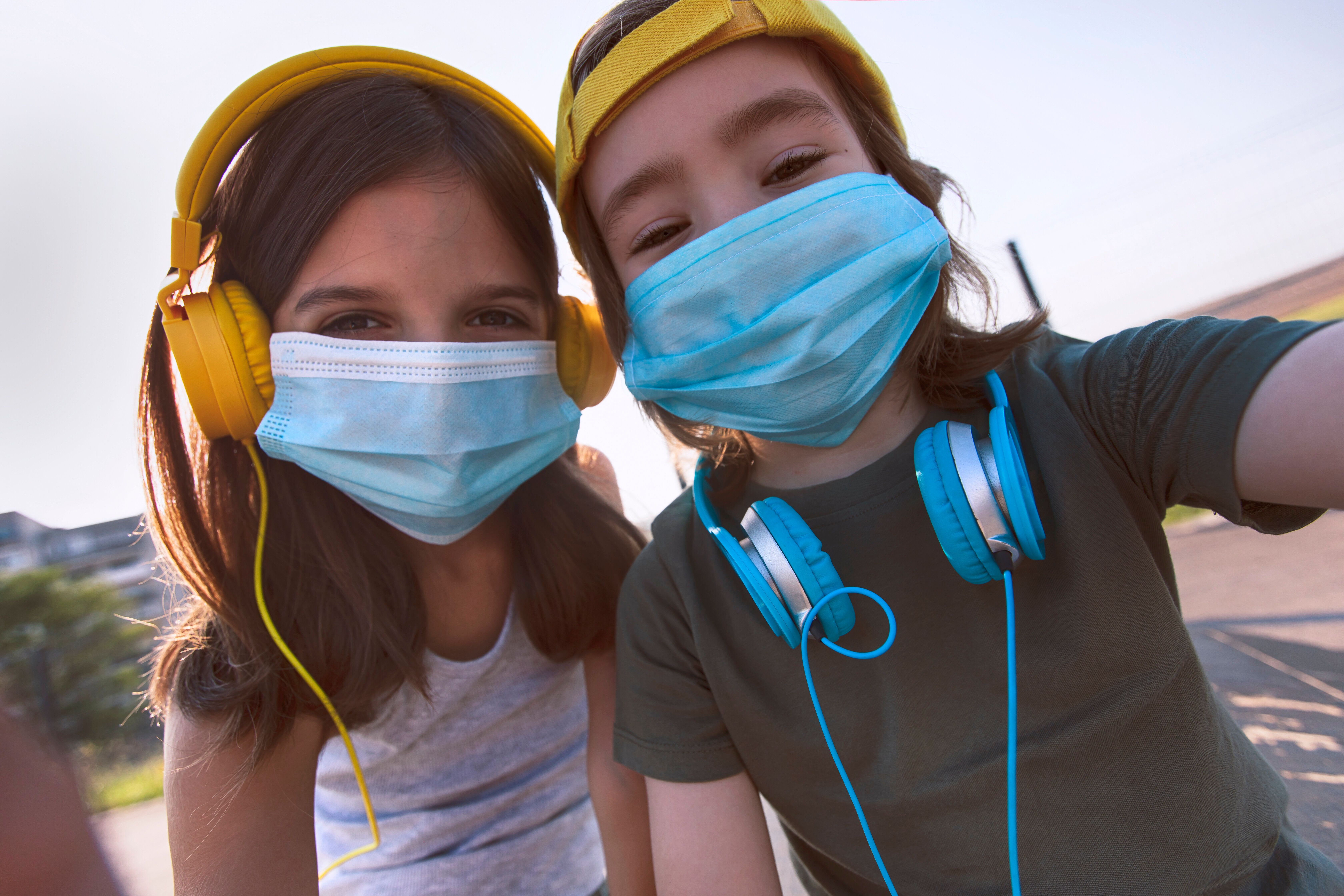
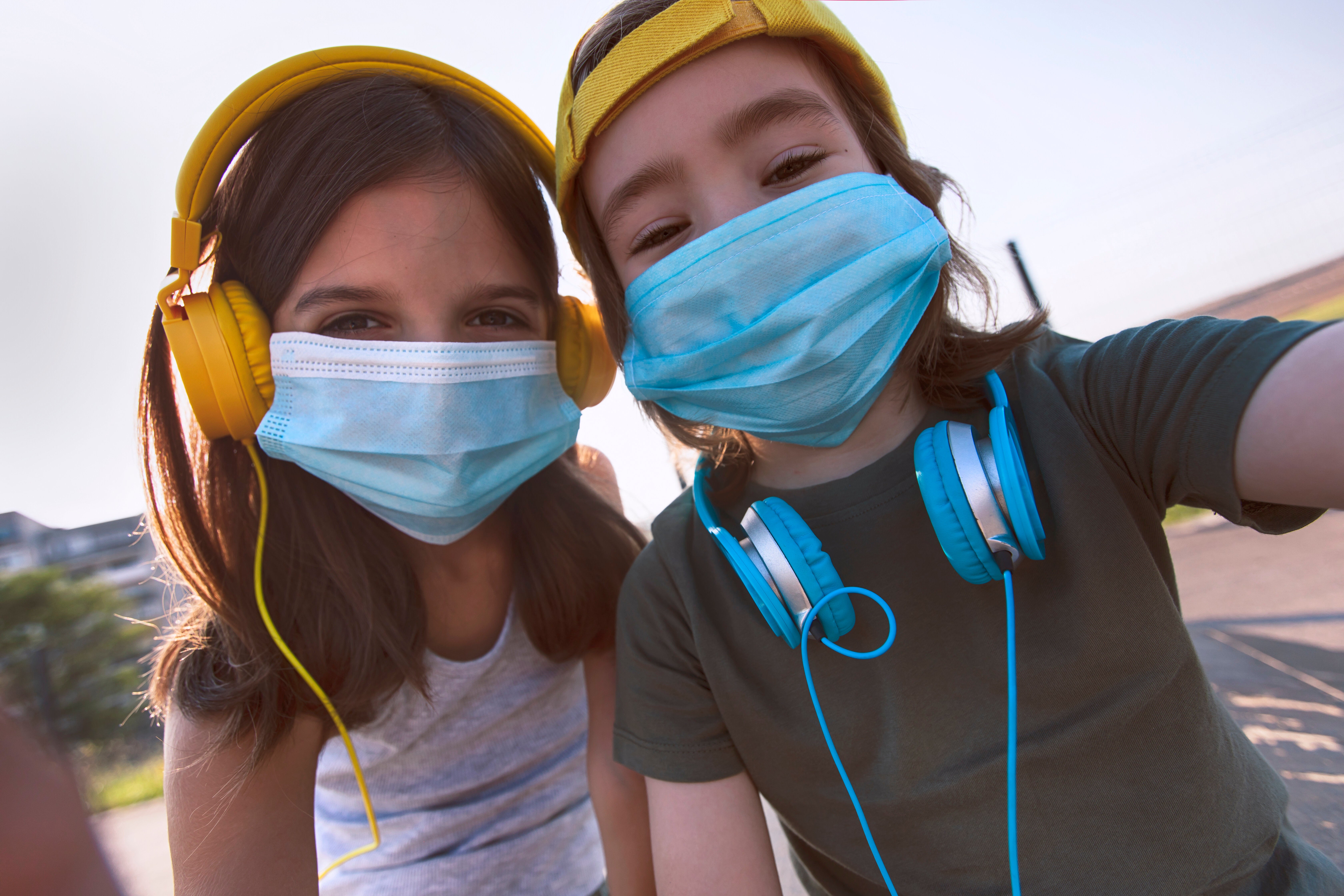
Dr Dyan Hes, founder of Gramercy Pediatrics, said she’s concerned about childhood development, particularly with the littlest of little ones, as the most rapid brain growth occurs from birth until the age of three. Missing out on interactions with others may have fostered a sense of social isolation that will need to be overcome.

“These children have not seen many facial expressions behind masks, they have not learned to navigate the social skills needed to play with other toddlers or even the motor skills to run on a playground,” she explained. “As a paediatrician, I wholeheartedly encourage families to send their children to school, camp or day care. The benefits far outweigh the risks, unless their child has a medical condition that would make Covid life threatening. … We need our children to reemerge into society and we need all adults to be vaccinated for this to happen.”

“We do know that kids from already stressed and underresourced communities were more adversely affected during the pandemic.”

– Dr Helen Egger, child psychiatrist and co-founder of Little Otter

Health anxiety

All of the mania around sanitising and disinfecting may also have a long-term impact on some children.

“There could be increases in illness anxiety disorder due to fears of catching the virus and having to maintain the strict hygiene protocols that have been necessary through the pandemic,” Tewari said.

“Most people’s nervous systems are dysregulated due to the pandemic’s threat to our safety and health, so it will take time for our brains and bodies to recover after the pandemic ends,” she added. “As a result, we may feel disoriented, and have a hard time believing that life can ever be ‘normal’ again.”

Anxiety around illness may also mean some children feel a fear or discomfort around going outside.

“I have noticed many kids who have never climbed up the playground ladder, learned how to ride a scooter or a bike,” Hes said. “These kids have been kept indoors for fear of Covid because they are too young to be vaccinated. I try to encourage parents to take kids out to get fresh air, run and play.”

Widening inequality

Although we can’t yet fully know the extent of the pandemic’s lasting impact on children’s academic performance or development, there are certain trends that are already very clear.

“We do know that kids from already stressed and underresourced communities were more adversely affected during the pandemic,” said Dr. Helen Egger, a child psychiatrist and co-founder of Little Otter. “Widening inequality for children may be one of the worst impacts of the pandemic.”

From economic challenges to mental health struggles, many existing gaps between populations have worsened during the pandemic, and children are bearing much of the brunt.

“Children who were struggling before the pandemic may lag further behind,” Perlmutter said. “Youngsters who are homeless, have disabilities, subjected to racial violence are especially at risk.”

Making positive memories

The impact of the pandemic isn’t entirely terrible. Wight pointed out a silver lining of living through such “unprecedented times” unlike anything kids have experienced before.

“It’s important not to overlook that children will also have special or positive memories related back to the pandemic,” Wight said. “They might remember having more quality family time, a slower pace of life, FaceTiming with family members across the country and new hobbies they developed while at home.”

McDermott highlighted other positive aspects – like spending more time with family and the refreshing old routines.

“The ‘interruption’ to the treadmill of school, university and jobs can also be viewed positively as it has allowed time to focus on important relationships in our lives,” he said.

Connection to others

Although the pandemic brought social isolation, it also fostered a sense of global community. There’s also a universality to the experience, which creates common ground for children growing up with the trauma of Covid-19.

“As a global event, there is a shared experience for all the world’s children,” McDermott said. “As has been shown around issues such as climate change, kids are truly amazing at seeing their connections and joining together. Is this the global generation? Some of us hope so.”

He also emphasised the power of the internet in allowing children to connect to each other even amid their isolation.

“The hegemony of online experience has moved forward and we will see this generation more connected to that and connected to global voices and experiences,” McDermott said.

Resilience

“Despite the horror of this devastating year, understanding that in the face of trauma and this public health disaster we have the capacity for resilience has been comforting and grounding,” Perlmutter said. “Marking life events and celebrations in the usual ways was disappointing but not out of the question. Watching the grace and enthusiasm of high school seniors’ graduation ceremonies in living rooms, drive-by birthday celebrations, Zoom visits with grandparents, and bar and bat mitzvahs and confirmations on Zoom was humbling. It gives me hope.”

Throughout the pandemic, children have learned to cope with many unforeseen changes and challenges. While the experience wasn’t always positive, it fostered major growth and resilience.

Wight encouraged parents to keep this bright side in mind as we continue to work through the evolving situation.

“It is critical for parents to manage their own distress and worries, as it directly impacts their children’s well-being,” she said. “It is most helpful to focus on the resilience of children and to give them many opportunities to return to play and the work of being children.”


Share Button