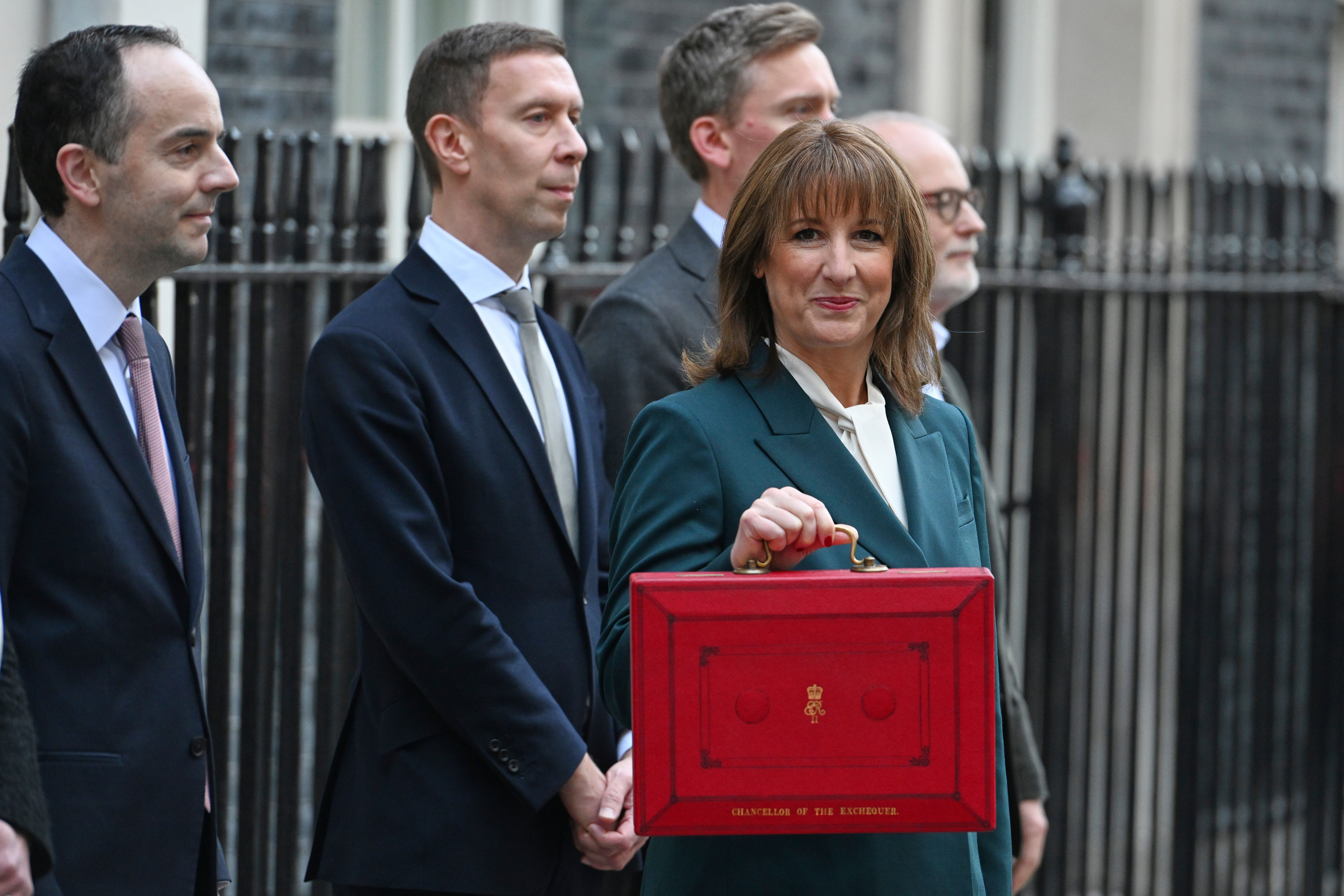
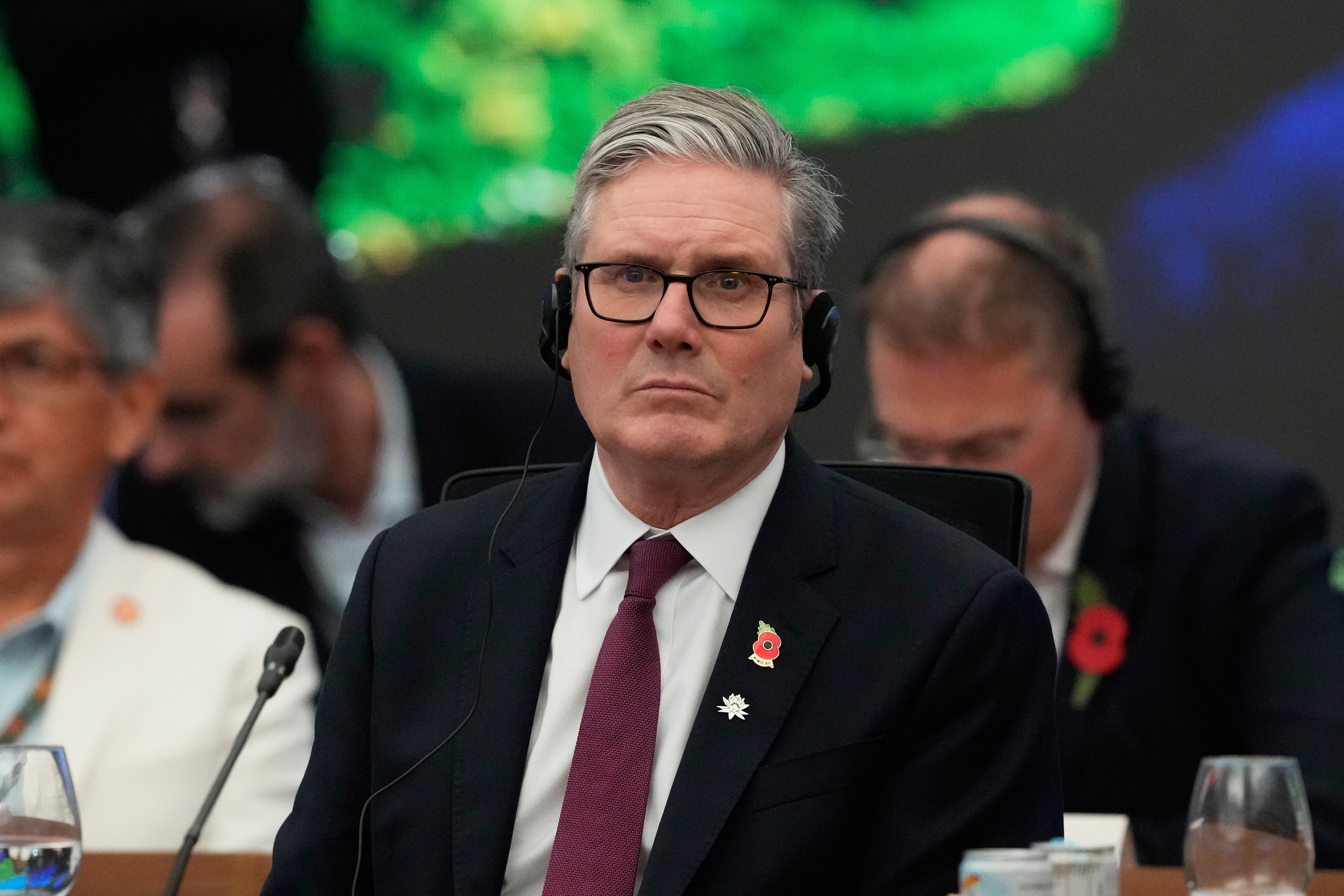
Rachel Reeves said her Budget had “promised and delivered” everything Labour had promised to do when it won the election last year.
It would see government debt come down, NHS waiting lists cut and reduce the cost of living, she insisted.
Advertisement
But the key takeaway for voters from her second Budget is that taxes will go up by £26 billion – on top of the £40bn hike in her first one a year ago.
Around £9bn will come from her decision to maintain the freeze in income tax thresholds, something else she ruled out last year on the basis that it would hit working people.
It means nearly a million workers will start paying the higher rate of income tax, an extra 780,000 will start paying it for the first time, while 4,000 will be dragged into 45p rate reserved for the highest earners.
Advertisement
At the same time, welfare spending will continue to rise until the end of the decade, thanks in part to the chancellor’s announcement that the two-child benefit cap is to be scrapped.
Expect the Tories and Reform UK to point out this fact every day between now and the next general election.
As one senior Labour figure told HuffPost UK: “It is a disaster. We are on the wrong side of every statistic, argument, policy and public opinion.”
Advertisement
Earlier this week, the prime minister’s spokesman said that the government’s number one priority remains growing the economy.
But the Office for Budget Responsibility’s analysis of Reeves’s plans showed that while gross domestic product (GDP) will rise slightly more than expected this year, it will slow down in each of the next four years.
Labour’s attempts to tackle the cost of living are also floundering, with the OBR forecasting that inflation will be higher than expected in the next two years.
Advertisement
“We can say cost of living all we like, but people don’t really believe it,” said one gloomy Labour MP. “We can’t just keep saying ‘Liz Truss’ and pretending we have a philosophy.”
Another backbencher described the government as “politically rudderless”, but those Labour MPs happy with the Budget comfortably outnumbered the malcontents.
That was shown by the large number waving their Commons order papers as Reeves announced she was ending the two-child cap.
Advertisement
Moves to cut energy bills by £150 by reducing green levies have also been welcomed, as have inflation-busting rises in the national minimum wage and the living wage and a new mansion tax on homes worth more than £2 million.
“We’ve kept to the manifesto and kept to the fiscal rules,” an MP told HuffPost UK. “Ending the two-child benefit cap lifting isn’t a silver bullet, but is good politics within the party. Increasing the council tax levies on high value homes will go down well too.”
A minister added: “I think it was very good. Lots of public investment, great on energy prices, the cost of living and child poverty, and the fiscal rules are in place, which is the most important thing.”
Advertisement
Nevertheless, it is the wider voting public that Reeves, Keir Starmer and the rest of the party will have to convince, rather than their MPs and activists.
She is the most unpopular chancellor on record for a reason, and putting people’s taxes up by another £26 billion – having said she wouldn’t a year ago – is unlikely to turn things around.
Speculation that the Budget could trigger a leadership challenge to the prime minister can probably be put to bed, with the international bond markets so far giving it a cautious welcome.
Advertisement
But the moment of maximum danger for this iteration of the Labour government remains next May, when millions of voters will go to the polls across the UK to deliver their verdict on its performance so far.
The fear of many Labour people is that there was little in this Budget to suggest that it will be anything other than a bad night for their party.
As if thinking of what to eat in the week wasn’t hard enough, then comes the challenge of actually cooking the meals. When will the injustice end?!
Still, thanks to people like Redditor u/DanielQ_bu7, we can at least work out the least amount of effort we need to expend for the best possible results.
Advertisement
In a post shared to r/Cooking, the poster recently asked respondents to share meals which take next to no effort but which never fail to impress loved ones and guests.
Here are some of our favourite responses:
1) “Roast chicken. So easy and smells amazing when roasting.”
“A friend of mine sautées mushrooms, then piles them on top of the brie and wraps it all in [clingfilm] and puts it in the fridge for a couple of days,” AndSomehowTheWine2 responded.
“Then unwrap the [clingfilm], wrap in puff pastry, and bake. The mushroom flavour just infuses [into] the brie, and it is all DELICIOUS.”
“Julia Child’s recipe is my favourite. It’s really easy, and people LOVE it,” replied u/DaCouponNinja.
4) “Tiramisu.”
“My family thinks it is some sort of miracle that I make it. I think it’s amazing that it’s so simple (I guess it could be complicated if I made the ladyfingers myself).”
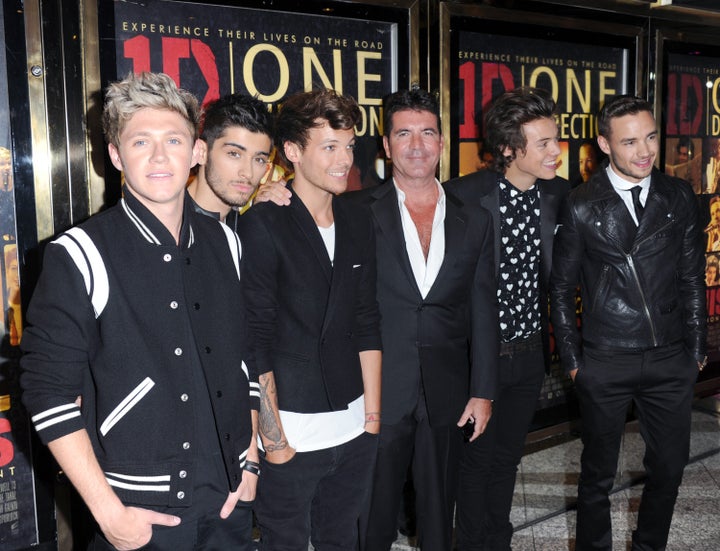
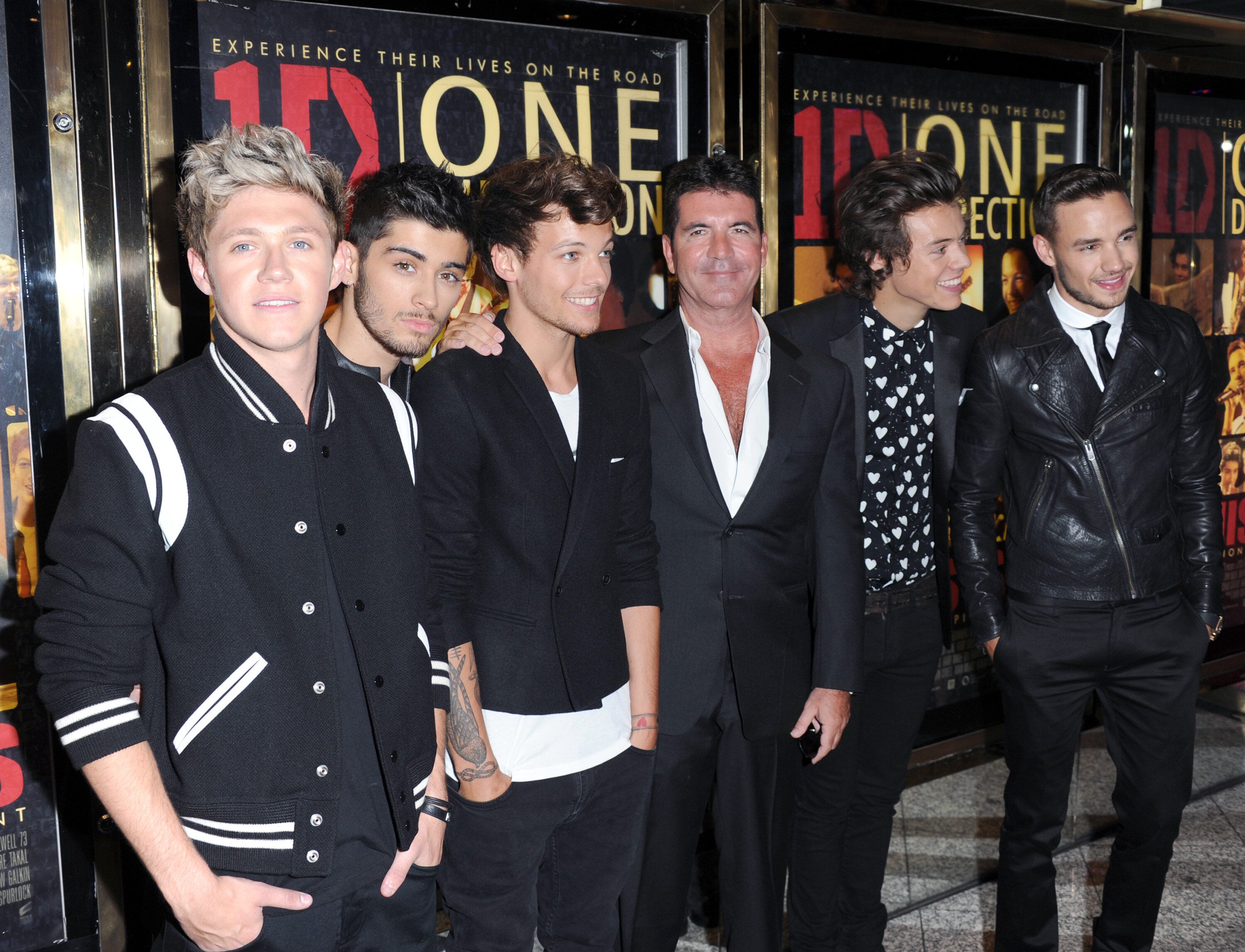
The TV and music mogul mentored Liam during his and his One Direction bandmates’ time on The X Factor in 2011, and later signed them to his now-defunct Syco record label for the duration of their time together.
During a new interview with Rolling Stone, Simon was asked about Liam’s death, stating: “When I heard the news, it really hit me. I saw him a year before this happened. He came over to my house. We talked about his son and being a dad.
Advertisement
“I remember saying, ‘Music is not everything. Don’t let it run your life anymore. Find something else that you are passionate about’.”
Liam Payne pictured in 2017
via Associated Press
Simon continued: “You ask yourself that question: ‘Could I have done anything more? What would’ve happened to Liam if he hadn’t been in the band?’.
Advertisement
“Having spoken to his mum and dad recently, all they kept telling me was he was so proud of what he had achieved. I wish I could turn back the clock, of course. When I spoke to him that day, I felt really good about him. I thought, ‘Wow, you seem in a really good place’.”
Asked about those who would put the blame on him for the circumstances leading to Liam’s death, the Britain’s Got Talent judge insisted he doesn’t “read any of this stuff because if I did, you would just torture yourself”.
“The idea that you are essentially responsible for somebody’s life, 10 years after you’ve signed someone? You can’t do that,” he added.
Nicholas is best known for his performance as Albert Square’s resident doctor Anthony Trueman, a role he’s played on and off for the last 25 years.
Advertisement
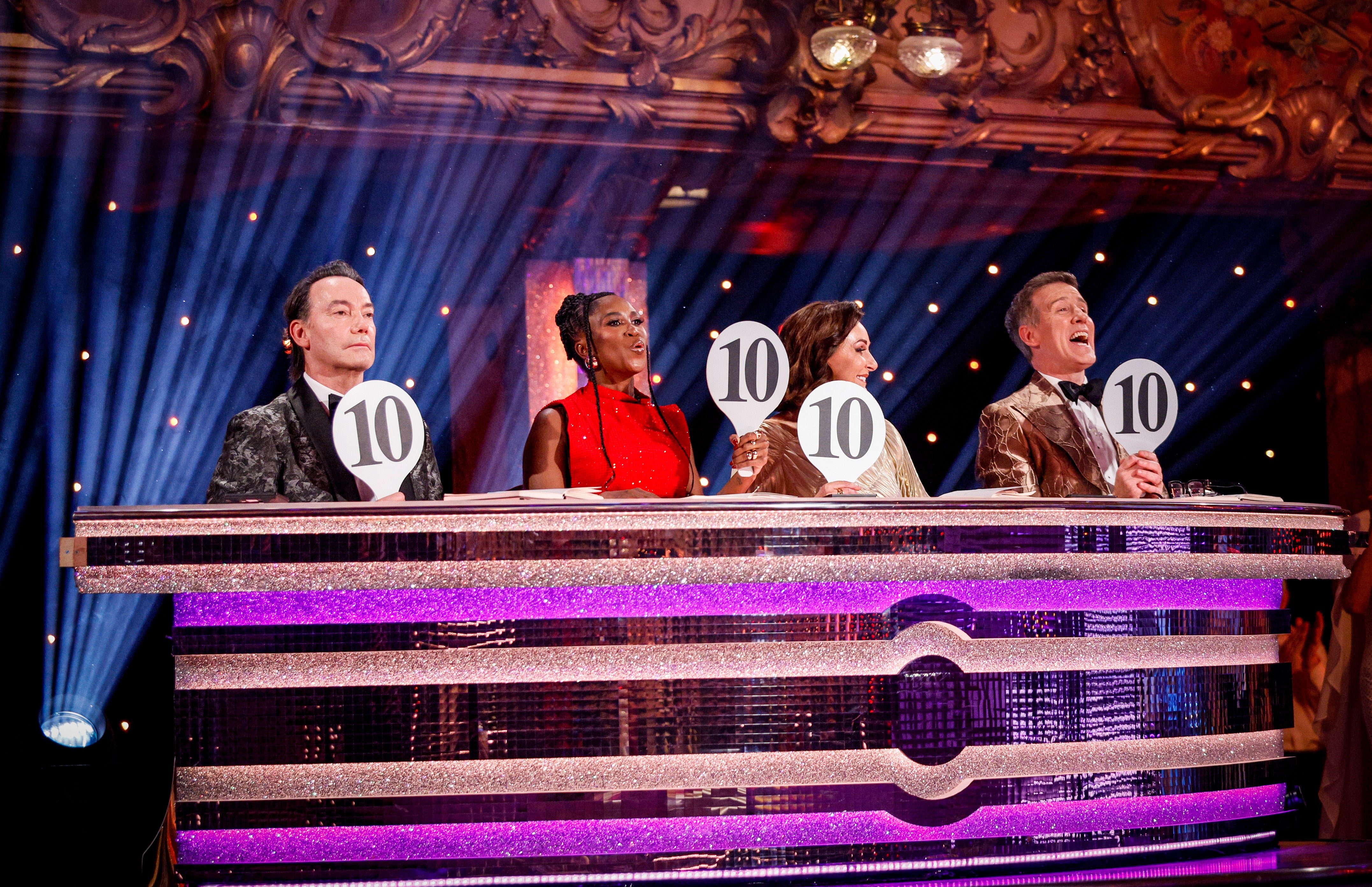
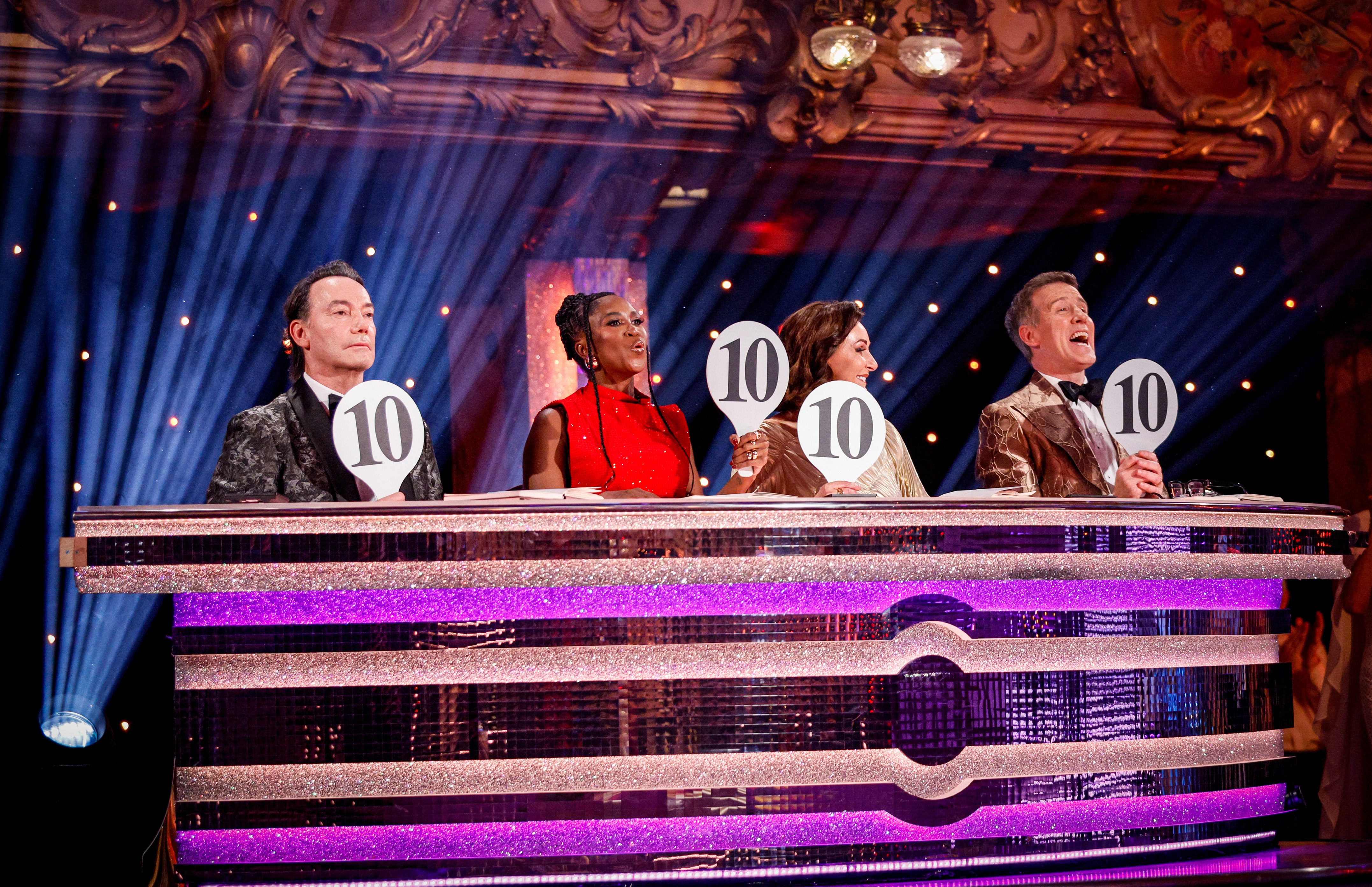
On Tuesday afternoon, it was announced he’d be performing alongside Strictly pro Luba Mushtuk – who was not given a celebrity partner on this year’s season – on the upcoming festive episode, which will air on Christmas Day.
He enthused: “I’m really excited to be doing this, almost as excited as my wife and daughters are! Hopefully I’ll do them, Albert Square and Luba proud.”
Outside of EastEnders, Nicholas has also appeared in shows like Coronation Street and the radio soap The Archers. He also competed on the talent show Soapstar Superstar back in 2006, finishing in eighth place overall.
During the UK’s recent snowy and icy spell, you might have tried salting your driveway to prevent, or “melt”, ice.
That likely works because of an ongoing battle between water and ice on the top layer of a slippery sheet. Sodium’s structure means its ions break apart in water, making it harder for H2O molecules to stick together – thus lowering the melting point of ice.
Advertisement
Until recently, most scientists thought that a thin layer of water on ice was to blame for its slipperiness, too. The idea was that pressure or friction applied to ice led its top layer to melt, leaving a slick film of liquid.
The water theory might not explain why ice stays slippery in temperatures well below freezing, The Conversation previously noted.
Scientists at Saarland University in Germany wanted to explore why that might be. So, they ran molecular simulations of ice interfaces through advanced computer systems to see if they could work out what was really going on.
Advertisement
In a press statement, study author Professor Martin Müser said: “It turns out that neither pressure nor friction plays a particularly significant part in forming the thin liquid layer on ice”.
Their research suggested that instead, something happens to the strict molecular structure needed to keep ice solid when we step on it, thanks to molecular dipoles.
Advertisement
What are molecular dipoles, and why might they make ice slippery?
Molecular dipoles happen, Saarland University explained, when “a molecule has regions of partial positive and partial negative charge, giving the molecule an overall polarity that points in a specific direction”.
Ice relies on a very neat and exact crystalline formation of molecules in order to stay solid.
But when we, for instance, step on ice, the direction of the dipoles in our shoe sole interacts with those in the ice, this study suggested.
That means the previously-perfect structure of ice crystals falls apart.
“In three dimensions, these dipole-dipole interactions become ‘frustrated,’” Professor Müser explained.
Advertisement
This, Saarland University said, refers to “a concept in physics where competing forces prevent a system from achieving a fully ordered stable configuration”.
What does this mean?
Well, for one thing, it could mean that skiing at very cold temperatures is more possible than we previously thought.
“Until now, it was assumed that skiing below -40°C is impossible because it’s simply too cold for a thin lubricating liquid film to form beneath the skis. That too, it turns out, is incorrect,’ said Professor Müser.
Advertisement
“Dipole interactions persist at extremely low temperatures. Remarkably, a liquid film still forms at the interface between ice and ski – even near absolute zero,” he added, though at this temperature the liquid may be too viscous to actually facilitate much movement.
Saarland University noted that the implications of this discovery are yet to be fully seen, though the “scientific community is taking notice”.
Labour MPs are being offered tours of 10 Downing Street as Keir Starmer tries to repair relations with his disgruntled backbenchers, HuffPost UK can reveal.
An email sent to members of the Parliamentary Labour Party (PLP) offers them the chance to bring guests with them to see what goes on behind the famous black door.
The email, which was sent by PLP secretary Ella Watson, said: “We are pleased to announce that the PLP office, together with the No.10 political office, will be hosting a series of tours of No.10 Downing Street for MPs and their invited guests.”
MPs are then invited to fill in a booking form to arrange a time for their tour.
The email added: “If your booking is confirmed, the PLP office will contact you via the email address provided, and send you a pro-forma for you to complete with your guest names. It will also include important security information.”
Starmer has been criticised for not spending enough time in the House of Commons, and for failing to set aside time since becoming prime minister to get to know more of his 405 MPs.
One MP joked: “When one of the complaints is that the PLP feel like they are kept at arms length by No.10, a booking form really breaks down barriers.”
A backbencher added: “I did wonder if it was a ploy by the political team to learn the names of the PLP.”
Referring to criticism of the number of foreign trips the prime minister goes on, a Labour source said: “Has anyone asked if the PM wants to visit one day too?”
Rachel Reeves will deliver her make-or-break second Budget on Wednesday, with voters braced for a wave of tax increases as she tries to fill a black hole of between £20 and £30 billion in the public finances.
The chancellor is under huge pressure to deliver a financial statement that appeals to voters while not spooking the international money markets.
Advertisement
It is not an overstatement to suggest that her job – and that of her next door neighbour Keir Starmer – could rest on whether or not the Budget is a success.
The build-up to the big day has been far from plain sailing for Reeves, who dramatically U-turned on plans to raise billions by breaking Labour’s manifesto pledge not to put up income tax.
That has left her exploring a “smorgasbord” of options to raise the money she needs to balance the books.
Advertisement
Although nothing will be officially confirmed until Reeves delivers her statement at around 12.30pm on Wednesday, here is what we already will be in it.
Rail fare freeze
The government announced over the weekend that rail fares in England will be frozen next year – the first time in 30 years.
The freeze will apply to regulated fares – including season tickets and off-peak returns – until March 2027.
Advertisement
It only applies to services run by England-based train operating companies, but the government said it intends to “directly limit inflation” and hold down a “major component of everyday costs”.
Prescriptions kept to under £10
Patients will be able to save around £12 million next year as the chancellor intends to extend the freeze on NHS prescription charges.
The cost of a single prescription will remain at £9.90.
Minimum wage reforms
Labour will regularly name and shame employers who breach the national minimum wage rules.
A Treasury source said this is meant to protect vulnerable workers and prevent companies from hiding by hitting them with fines.
Advertisement
A boost for children’s playgrounds
More than 200 play areas are meant to be benefitting from this injection of £18m of cash.
It comes after the government’s Pride in Place programme has offered £5 billion for communities to regenerate public spaces.
Seizure of illegal vapes
Budget Force and HM Revenue & Customs will now be able to seize illegal vapes and issue £10,000 fines.
If business owners break the rules, they could face prison time.
From October 2026, all vapes will have to have a digital duty stamp with a QR code so they can be scanned to check which are fake.
Advertisement
Shops will have a six-month grace period to sell any unstamped stock.
Benefit fraud crackdown
Reeves claims she will be able to rack up £1.2 billion of savings as officials continue cracking down on incorrect Universal Credit payments up until 2031.
There is reportedly a team of 6,000 at the Department for Work and Pensions who have reviewed more than a million cases and already saved the taxpayer £1 billion.
Boost for pensioners
The chancellor is set to announce that 13 million pensioners will benefit from an above inflation rise to the State Pension next April, equating to more than £550 a year more.
Advertisement
It’s part of the government’s commitment to the triple lock, which means increasing the State Pension every year according to the highest of one of three figures: inflation, average earnings growth or 2.5%.
From next April, the rate of the full new State Pension will increase to just over £240.
Boost for secondary school libraries
Every secondary school in England is expected to benefit from a £5 million boost for school libraries – which works to around £1,400 per school.
Every child, regardless of their background, would then have access to a wide range of books.
350 new planners
Reeves is expected to put aside an extra £48 million to recruit 350 new planners as part of the government’s plan to “get Britain building”.
Advertisement
The chancellor would reportedly look at hiking up the number of graduate planners and launching a Planning Careers Hub.
Guaranteed student loan support for care leavers
Reeves will promise care leavers up to £13,500 of student loan support – the full amount – to level the playing field.
Only 14% of young people who leave care go to university at the moment, compared to 50% of the wider population. They are more likely to drop out due to financial barriers, too.
Advertisement
The current system limits maximum student support to those on the lowest incomes, under 25, who do not have a partner,
Mansion tax
The Times reported Reeves intends to use the current council tax system as the basis for a new property tax for large properties by revaluing the most valuable homes across council tax bands F, G and H.
Supposedly the government will allow homeowners to defer paying the tax until they move house or die.
Advertisement
This will hit 100,000 properties and supposedly raise £400-450 million from the levy.
Two-child cap
Labour is widely expected to lift the two-child benefit cap, which prevents family from claiming more of universal credit on any children after their second.
This is likely to cost £3 billion. The government did choose to keep the Tory policy in place during their first Budget last year, but subsequent backlash from the left-wing of Labour has likely played in encouraging Reeves to drop the cap.
Threshold freeze
Reeves is widely expected to freeze the income thresholds at which income tax rates start to apply in a move which would raise around £8 billion for the Treasury.
Advertisement
It’s referred to as a “stealth tax” because workers end up being dragged into a higher tax bracket when they get a pay rise in line with inflation.
The UK has been been criticised for “blocking ambition” to tackle climate change by environmental campaigners.
COP30 – the UN’s 30th conference of parties – concluded this weekend following fraught discussions over how countries around the world can work together to address the declining environment.
Advertisement
After two weeks of intense meetings, the 194 countries present – the US did not send a delegation only agreed on a voluntary arrangement, rather than a legally binding deal, to begin discussions on a roadmap to gradually phasing out fossil fuels.
But, in a small win for campaigners, developed countries did agree to triple financial support for developing nations as they adapt to the climate crisis.
They will now receive £92 billion a year for adaption – although they will not get it until 2035.
Hannah Bond, co-CEO of the non-profit ActionAid UK, hit out at the British delegates in particular for this lacklustre conclusion to the summit, claiming the conference “still falls short” when it comes to finance.
Advertisement
Wealthier nations which typically produce more greenhouse gas emissions have been repeatedly asked to help developing countries cover the damage costs that come with environmental disasters.
However, the UK caused a stir when it chose not to give taxpayer cash to the COP30 forests fund even before this year’s conference began amid ongoing struggles within the British economy.
The Department for Energy Security and Net Zero told Politico the UK is still “incredibly supportive” of the initiative and would continue with “efforts to unlock private investment”.
Advertisement
ActionAid UK’s Bond said: “A COP that delivers progress behind closed doors and still falls short on finance cannot claim success.
“It’s a major setback that the UK’s refusal to cough up for the climate funding it owes, and to centre justice, meant a wider agreement collapsed.
“It’s like watching a house engulfed in fire while the arsonists stand around debating who should hold the hose.
Advertisement
“Without making big polluters pay up for the damage they’ve caused, climate justice remains impossible – yet the UK continues to push private finance and loans, deepening debt and forcing the Global South to foot the bill while allowing the ongoing financing of fossil fuels and deforestation.”
She added: “Women and communities in the Global South are already leading the solutions; now countries like the UK must stop blocking ambition, deliver real finance, and match the courage of those fighting for their as we fight for all of our futures.”
The director of climate research and policy at the campaign group Corporate Accountability, Rachel Rose Jackson, said the whole of the “global North should be ashamed” of their actions at COP30.
Advertisement
She said: “Yet again the EU and others, as the largest historical polluters, continue to orchestrate their great escape rather than do their fair share.
“The US, who told the world it wouldn’t even bother to show up, is still manipulating on the sidelines in Belém while it expands oil and gas drilling at home.
“And Big Polluters continue to write the rules of climate action with no protections in place.
“We must Kick Big Polluters Out, reset the system, demand the Global North do its fair share and pay its climate debt, and urgently and justly end the fossil fuel era that is poisoning us.
Advertisement
“These are the only measures by which a true success can be measured.”
Meena Raman, from the non-profit Third World Network, also hit out at the EU and the UK for “playing political games”.
She said: “The countries of the Global North, led by the EU and UK, effectively held the COP30 negotiations hostage – insisting on diluting commitments to climate finance for adaptation before allowing progress. Their public frustration over the supposed lack of ambition on mitigation was little more than posturing, designed to deflect attention from their own obligations.”
Romain Ioulalen, from Oil Change International, said wealthy countries were to blame for COP’s failures this year.
Advertisement
He said: “The EU, UK, Australia and other wealthy nations are to blame for COP’s failure to adopt a roadmap on fossil fuels by refusing to commit to phase out first or put any public money on the table for the crisis they have caused.“We didn’t win the full justice outcome we need in Belém, but we have new arenas to keep fighting.”
Meanwhile, Nikki Reisch from the Centre for International Environmental Law, called the final agreement an “empty deal”, adding: “COP30 provides a stark reminder that the answers to the climate crisis do not lie inside the climate talks – they lie with the people and movements leading the way toward a just, equitable, fossil-free future.”
What’s the capital of Canada? Uh-oh. Ottawa? Do Americans typically know that?
I tried to respond to my new internist, but the answers didn’t flow from me. Each one caused a stutter the size of Mariana Trench — and it terrified me.
Plus, I was twitching so badly, my arms were practically useless.
I’d been in the hospital for a month. Zach, my husband, was at home in our apartment taking care of my newborn baby with my mother. It wasn’t easy for them: small apartment, new baby, one bathroom, my life hanging in the balance.
Advertisement
For the last few weeks, I’d been cycling in and out of the ICU. Zach had even gotten “the talk” — a doctor had called in the thick of the night to tell him that I might not make it home. Many thought I would likely not survive. They didn’t fully know what was wrong with me, except that everything was going wrong with me.
Four weeks earlier, I had my baby by C-section. Moments later, I was rushed into another surgery because my vitals started to plummet and I was bleeding out rapidly.
I didn’t even get to hold my baby. There was no skin-on-skin — only chaos, panic, and then I didn’t wake from my anesthaesia. It was a living nightmare. I did wake up eventually, and four days after giving birth, I finally met my daughter before she went home — without me.
Advertisement
After having my baby, I endured three rounds of ICU intubation, multiple abdominal surgeries, a body full of blood clots, heart failure and kidney failure with a dash of severe sepsis and pneumonia and a long list of other scary conditions I’d never want to Google. I was a forever-changed, half-dead person.
Once I was removed from the ventilator for the final time — and I was able to speak again — a rotating cast of doctors visited me every day, and told me different things about my condition. It felt like some absurdist theatre play. I had practically the same conversation over and over and over in a spin cycle of frustration and a maze of murky next steps.
My case was especially challenging because I had so many bodily systems failing and that required a slew of doctors. I had a fetal maternal medicine team, residents, an internist, a cardiologist, a hematologist, a nephrologist, an infectious disease specialist, a pulmonologist, a surgical team and maybe a few others I’ve forgotten.
Advertisement
“I’m a project manager at my day job, and you all have got to get organised working across fields,” I complained to one of my many physicians. “Everyone is telling me something different.”
In response to my speaking up, my doctors finally put a text chain together so they could all communicate in one place.
It’s possible that text chain saved my life — and it may never have been created if I hadn’t said something.
Advertisement
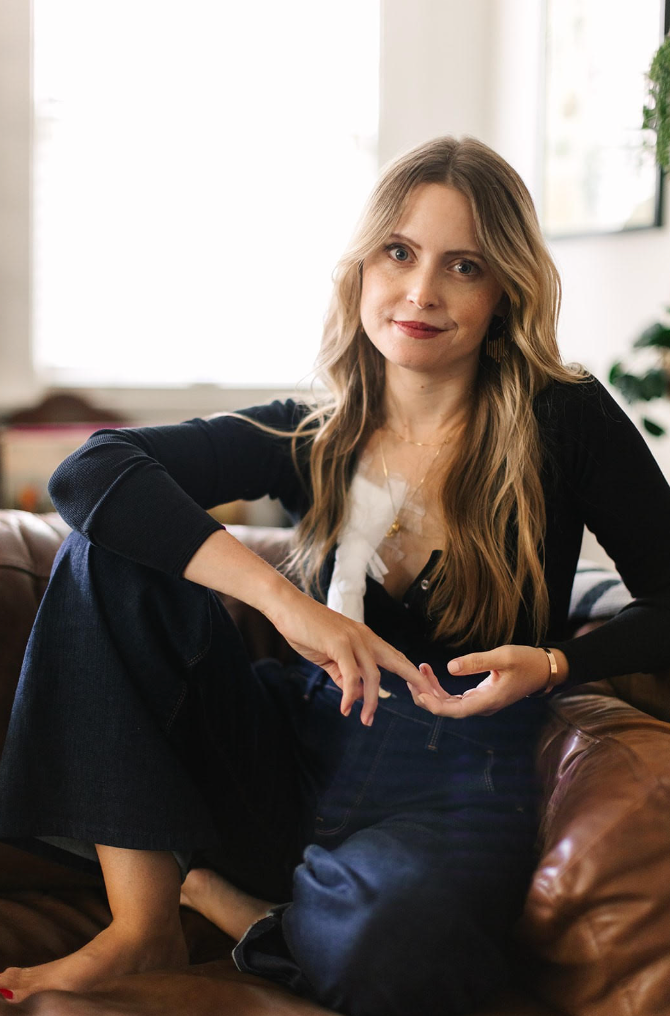
Photo by Becca Murray
“This is a moment from my nine months on dialysis in 2022,” the author writes.
I realised, if I was going to live, I’d have to project-manage my recovery. I had power. I could assert myself. My doctors cared deeply about my survival, so I reasoned it was time to start asking them for what I needed instead of passively riding my tidal wave of medical torment. My skin was grey and my kidneys didn’t work, but I wasn’t weak — not where it counted the most. I had my mind and I had my voice back, so I needed to use it.
I was many tests away from an official diagnosis but my wise haematologist had a theory that I have a particularly nasty disease called atypical haemolytic uremic syndrome, or aHUS. It’s wildly rare and kills a lot of people who get it. The disease strikes women in particular because it often hides in the body until a trigger — like pregnancy — sets it off.
Advertisement
After a few stable days, I began to feel a progressively increasing shake and stutter in my body. I tried to project manage by sharing my new symptoms with my doctors. “This isn’t me,” I said. “Something else is really wrong.”
My newly assigned internist told me it might be a side effect of my medicine. Other doctors suggested I was stressed and recommended I take clonazepam to ease my anxiety.
Suddenly, a few hours later, everything in my perception began mysteriously repeating three times in a row, like being stuck in a horrific deja vu loop, and then I could no longer speak.
Advertisement
It turned out my body was poisoning my brain with toxins because my kidneys were failing. I desperately needed dialysis, but there were no machines available at this massive cutting-edge hospital… and my nightmare continued longer than it should have.
I was beyond angry and frustrated. Despite constantly keeping my many providers apprised of my symptoms, I was now at the point of toxic encephalopathy and experiencing aphasia and nervous system tremors with deja vu.
Why had I been dismissed when I spoke up about the warning signs I was experiencing?
The data doesn’t look fondly on the system. A 2009 study showed middle-aged women with the same heart disease symptoms as men were twice as likely to be diagnosed with a mental health issue. The Journal of American Heart Association found that women possibly experiencing a heart attack wait 29% longer in ERs than men.
Advertisement
Recently, the CDC reported 1 in 5 women experience mistreatment during their pregnancies, and the stats are markedly worse for Black women, resulting in higher rates of tragic maternal mortality.
I know that doctors often have it rough in a broken system. I sympathise with their challenges and fatigue. But it should be on the medical industry and educational institutions — not patients — to make strides to overcome these pressures.
I am also not saying we should always distrust our doctors. I believe in science and I believe in their training and expertise. But after everything I experienced, I now know there are ways patients can better support our providers, and I know that engaging with them and playing an active role in our care is not only vital — it can mean the difference between life and death.
Advertisement
Now, I approach health care differently.
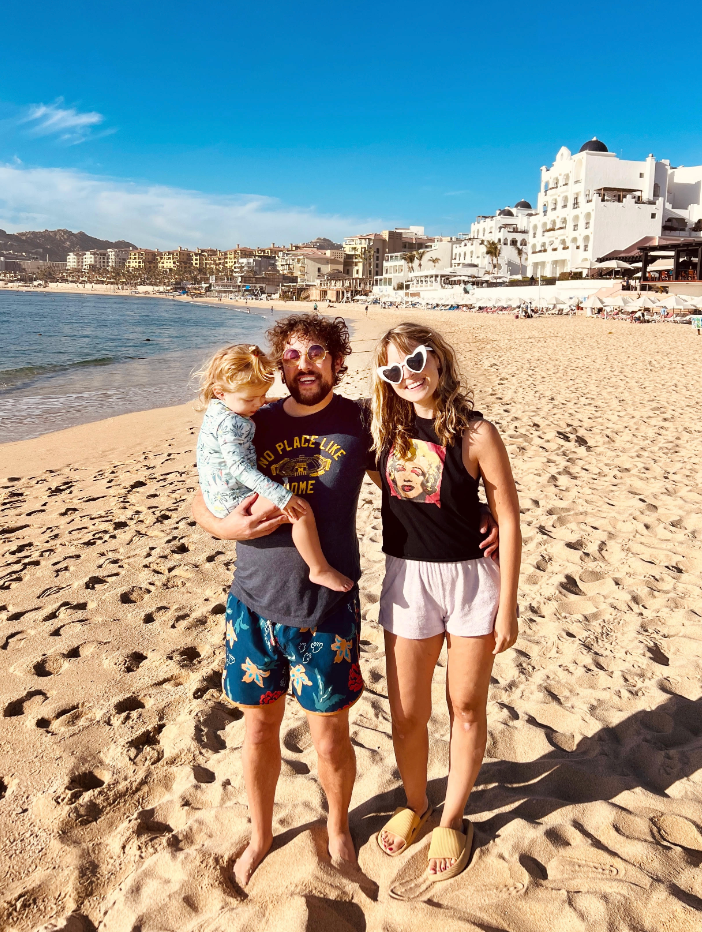
Courtesy of Taylor Coffman
The author on vacation with her husband and daughter.
While doctors certainly have knowledge and training that I do not, I am an expert on myself. We work together and truly listen to each other to make the best decisions about how to treat my conditions. I urge them to communicate in a clear way that helps me understand exactly what is happening and I continue to voice my concerns until I am satisfied that they understand what I’m experiencing.
When I know something is wrong, but I’m not sure exactly what, I become a researcher. I organize a list of bullet points about what I am feeling in the notes app on my phone and bring it to my appointment.
Advertisement
I also do my homework. Though many doctors say they hate it when patients look for information on the internet — and Googling symptoms can lead to trouble — a new study shows it may not be as harmful as once thought, and there are many great digital resources to consult.
If I want a test or procedure that a doctor doesn’t agree I need, I ask them to annotate my request in the notes. Written records have weight. I also often ask medical professionals if it’s okay to record the appointment using my phone’s voice memo recorder.
When we see doctors, we’re often overwhelmed by all of the information we’re receiving and the big emotions we’re feeling and it’s amazing how much we can miss.
Advertisement
My current doctors are invested in my care and I like them all. But, at the end of the day, it’s a relationship based on their ability to keep me well. If I don’t see progress, I get a second opinion, and it’s okay if they know that. It’s not personal. These doctors often end up consulting each other.
Most people don’t want to be a squeaky wheel, but be a squeaky wheel. Research showsbeing an empowered patient can improve health outcomes. I respect boundaries and I’m kind, but I’m insistent. If I commit to a plan with the doctor, I don’t slack. It’s not always easy, but when I’m doing everything that’s asked of me, if a treatment doesn’t work, then it’s not on me.
Five grueling weeks after giving birth, I finally went home to my baby. It turned out that my hematologist was right — I do have aHUS.
Advertisement
Today, I’m doing quite well by chronic rare disease standards. There is no cure for aHUS, but it’s one of the very few rare diseases with an approved treatment. After nine months of dialysis, my kidney regained some function and left me with stage 3 kidney disease. I currently get infusions every eight weeks to keep my aHUS from causing more damage, but otherwise, I’m busy being a mom to my active toddler.
While the experience was a roller coaster, I did find my voice in that hospital bed. I learned the importance of advocating for my needs and, most crucially, to trust myself when something is wrong.
This piece was originally published in February 2024 and is being rerun as part of HuffPost Personal’s “Best Of” series.
Taylor Coffman is a multi-hyphenate creative from the East Coast. As an actor, Coffman has recurred on HBO’s “Silicon Valley” directed by Mike Judge, CBS’s “Life in Pieces,” Rachel Dratch’s “Late Night Snack,” and has appeared in Ryan Murphy’s “FEUD.” Behind the scenes, she worked for many years at Jimmy Kimmel Live; one of the nation’s most listened-to NPR stations, KPCC; and in podcasting at LAist Studios. She lives in Santa Monica with her musician husband, Dustbowl Revival’s Zach Lupetin, her daughter and a very needy rescue dog named Sunny.
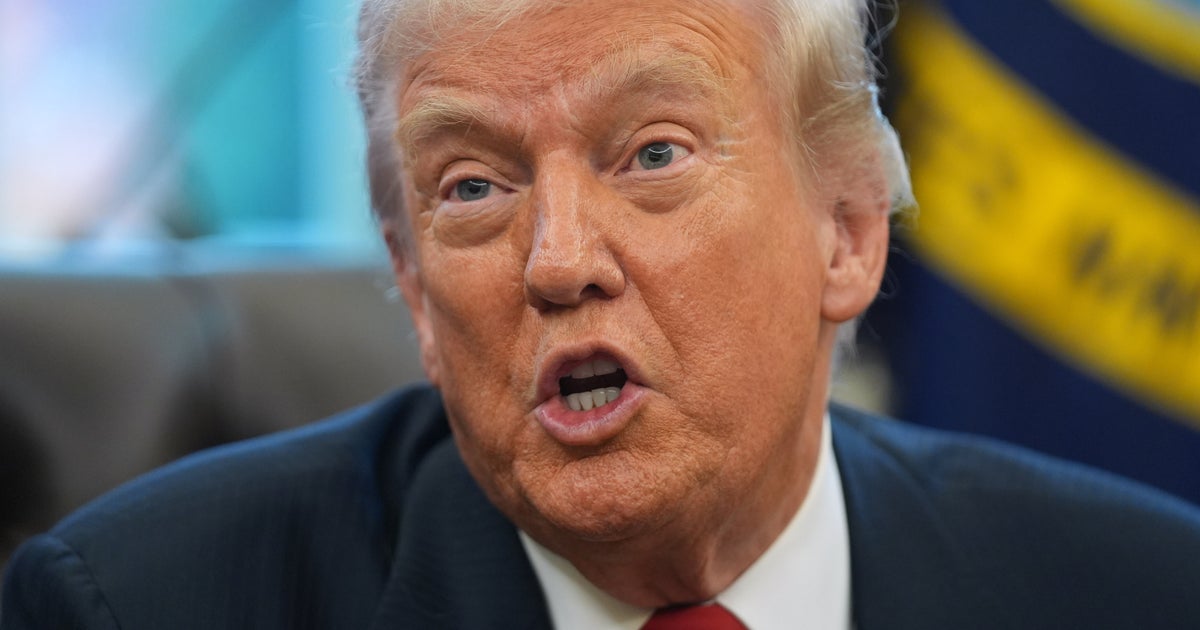
Donald Trump has attacked the Ukrainian leadership for showing “zero gratitude” over the US’s new peace plan to end Russia’s war.
America has unveiled a new 28-point framework meant to resolve the Ukraine conflict in recent days and given Kyiv until Thursday to agree to it – or the US will withdraw access to its intelligence and weaponry.
Advertisement
However, there are fears the plan involves too much capitulation from Ukraine towards its aggressor, almost four years after Vladimir Putin invaded, and that it was authored with too much input from Russia.
The framework involves capping Ukraine’s armed forces at 600,000, giving up its weapons and ceding even more territory to Russia, which already controls a fifth of Ukraine’s sovereign land.
Top western officials are now holding talks on the proposals in Geneva.
Ukrainian president Volodymyr Zelenskyy said Kyiv faces a difficult choice between sacrificing the country’s dignity and losing a major ally.
After Zelenskyy posted on social media that “further work” is ongoing to make sure Ukrainian perspectives are included, the US president furiously took to social media.
“UKRAINE ‘LEADERSHIP’ HAS EXPRESSED ZERO GRATITUDE FOR OUR EFFORTS, AND EUROPE CONTINUES TO BUY OIL FROM RUSSIA,” he wrote.
Advertisement
He pointed out that the US still sells weapons to Nato which are distributed to Ukraine.
Writing in a post on TruthSocial, the US president said: “The war between Rsussia and Ukraine is a violent and terrible one that, with strong and proper US and Ukrainian LEADERSHIP, would have NEVER HAPPENED.”
He repeated his previous claims that if the “2020 Presidential Election was not RIGGED & STOLEN” – a baseless allegation – then there would be “no Ukraine/Russia War”.
He added: “Putin would never have attacked!”
He then claimed he inherited a war that “SHOULD HAVE NEVER HAPPENED” which is a “LOSER FOR EVERYONE”.
Advertisement
Trump’s outburst comes after Zelenskyy wrote on X: “The Ukrainian delegation is working in Geneva today, focused on finding doable solutions to end the war, restore peace, and guarantee lasting security.
“There have already been brief reports from our delegation members about the outcomes of their first meetings and talks. Currently, there is an understanding that the American proposals may include a number of elements based on Ukrainian perspectives and critical for Ukrainian national interests.
“Further work is ongoing to make all elements truly effective in achieving the main goal anticipated by our people: to finally put an end to the bloodshed and war.”
Advertisement
Trump has been determined to resolve the war in Ukraine ever since he returned to office in January, even claiming he could end it within 24 hours.