In one of his more recent videos, the father-of-three can be seen shushing and bouncing a baby to sleep, before trialling some more, ahem, avant-garde sleep techniques.
“Go to sleep now or I’m going to set fire to this,” says the comedian, while standing next to the cot holding Ewan the sheep.
“I don’t actually want you to go to sleep,” he says in the next breath, trialling a bit of reverse psychology. “I think you should stay up all night.”
Next on the dad’s list of techniques is peer pressure. Perched casually by the side of the cot, stroking his face, he says: “So apparently all the cool babies have been getting early nights recently… Yeah, that’s just what I’ve heard.”
Advertisement
Lewis also trials whale sounds, bargaining and the threat of cancelling Christmas. At one point he’s standing near the cot with a 4-pint bottle of milk.
But it’s the last tip that seems to do the trick: boring his child with chat about Bitcoin.
The 37-year-old from Manchester told HuffPost UK: “My baby isn’t sleeping at the moment so I’ve been desperately searching Instagram and TikTok for advice.
Advertisement
“Once you try everything and it still doesn’t work you start resorting to crazy threats and ultimatums that a baby is obviously not going to understand.
“I thought it’d be funny to do a ‘how to’ video that isn’t particularly helpful but reflects our desperate behaviour as parents.”
Advertisement
Parents dubbed the video “hilarious” and many seemed to think the Bitcoin tip – while a joke – was actually pretty genius.
There were also plenty of suggestions from others about the lengths they’d go to to get their little ones to sleep.
“I used to read books in a really boring voice, then I would fall asleep and they’d stay awake,” said user rachlbc.
“Just put a recording on of the finance review work Teams call,” added hannahlou1983.
Another commenter, nicoledanica, said the video was “spot on”. She added: “I’m a nurse and I used to give detailed lectures to my son about anatomy and physiology when he was a baby and would wake up in the middle of the night.”
If life seems expensive right now, that’s because it is.
Between high energy costs, spenny supermarket bills and extortionate childcare expenses, your bank balance probably looks a little worse for wear by the time payday comes around.
For those looking for ways to accrue a bit of extra cash, a personal finance expert has shared the one hack that’s helped save her thousands of pounds a year – and it’s surprisingly simple.
Advertisement
Gemma Bird, who is known on social media as @MoneyMumOfficial and is also a member of ITV Lorraine’s Saver Squad, told HuffPost UK that she stopped paying for parking when she worked for a bank.
What did she do instead then? Well, she found somewhere to park for free just over a mile away from where she worked.
Advertisement
That might sound like your worst nightmare – especially if you’re prone to running late. But the hack actually helped save her a lot of cash in the long-run.
“I also cancelled the gym because I was getting my steps and could do home workouts instead. I ended up saving on the gym and parking all at once,” Bird revealed.
In addition to avoiding daily parking charges, Bird rented her driveway during the daytime when she was at work, and claims that in total she saved £250 a month.
Parents frequently say that “all they want” is for their kids to be happy. But what does this happiness look like?
The things that parents tend to focus on — good grades, college acceptances, a fulfilling career — are all measures of achievement. Pride in an achievement may well engender a feeling of happiness, but it certainly isn’t the only way to get there. Plus, most parents don’t really want their child’s happiness limited to milestones like graduations or championships.
Parents often “think something is wrong when our children are unhappy. We become distressed when they are distressed. Often, when we intervene to take away their distress, we are robbing them of the opportunity to learn to tolerate their own distress and, thus, limit their ability to develop resilience — which, in itself, gives us greater access to happiness,” Bolton told HuffPost.
In other words, kids need experience dealing with a full range of emotions — including sadness, disappointment and frustration — if they’re going to lead the kind of lives we think of as happy ones.
Advertisement
Parents’ laser-focus on kids’ achievement is another obstacle. The pressure to succeed can leave kids feeling like their parents’ love is conditional, that they are valued for what they do instead of who they are.
“In our parenting and educational practices, we increasingly value things outside of the person to justify their value — their achievement of grades, the number of likes on their social media posts, and their participation on several travel teams are examples of this. These can lead to moments of happiness that undermine longer term unhappiness,” Bolton said.
A student might feel momentary pride about a test score, but the pressure to keep their grades up might cause anxiety in the long run, for example.
Instead of positioning happiness — a state we all know to be elusive — as yet another goal that kids need to reach, Bolton suggested that we think in terms of kids’ wellness. “Wellness, for me, includes both the ability to enjoy happy moments but also the resilience to cope effectively with the hardest moments,” he said.
Advertisement
To help our kids lead the kind of happy lives that wellness makes possible, we can focus on helping them build resilience and social connection through small daily habits, or micro-practices.
“In the same way we know that eating vegetables and moving our bodies help our physical health, there are everyday behaviours we can teach children that build their happiness muscles,” Ariana Hoet, a psychologist who is the executive clinical director of The Kids Mental Health Foundation, told HuffPost.
Here are some micro-practices that parents can encourage their kids to do every day to promote their well-being.
Advertisement
1. Social connection
“Children with strong social connections have more positive emotions,” Hoet said.
“Having meaningful connections with friends and family every day is protective to children’s mental health and important for their happiness levels,” she continued.
Social connection is also the antidote to social isolation, which puts people of all ages at risk for anxiety and depression, in addition to other health issues. Whether it’s a family meal, walking the dog together or riding bikes around the neighbourhood with a friend, interactions that help your child feel connected to the community they’re in will promote happiness.
2. Behavioural activation
If a kid is feeling down, it’s easy to get stuck in the rut of inertia. That’s why it’s important to encourage kids to do something every day that makes them feel good. This could mean spending time outdoors, seeing a friend or making art.
Advertisement
Hoet recommends that kids “do at least one pleasant thing every day for at least 5-15 minutes.” There are a huge variety of activities that might fit the bill. Hoet recommended choosing ones “that help a child feel connected to others, proud/accomplished, or simply that bring them joy.”
Bolton underscored the value of mastery, which he defined as “the experience of getting better at something that is meaningful to us (not because we will get an award).” An example, he said, would be “the child who loves building with legos without the expectation of a prize or gold star for the best creation.”
3. Mindfulness
It’s a buzzword these days, but the truth is that mindfulness simply means “being present in the moment, instead of in your thoughts worrying about the future or sad about the past,” Hoet explained.
Advertisement
But that doesn’t mean mindfulness comes easy. Kids (and adults) will need to practice frequently in order to build this skill. We tend to associate mindfulness with breathing exercises and meditation, but those aren’t the only ways to get there. The only requirement is to try to stay present in the moment, so you can practice mindful eating, walking, or many other daily activities.
“Mindfulness is a wonderful way to quiet our nervous system,” Bolton said.
Tom Werner via Getty Images
“There are everyday behaviors we can teach children that build their happiness muscles,” said psychologist Ariana Hoet.
4. Gratitude
With practice, we can train our brains to “notice the good in our day-to-day life and spend less time thinking about the difficult things,” Hoet said.
Advertisement
Bolton also expressed this. “Our emotion often follows our attention,” he explained, adding that a practice like a gratitude journal can help us hone in on the good things in our lives. Likewise, saying “grace” before a meal, whether or not in a religious way, is a way to share a daily moment of gratitude, Bolton said.
5. Goal-setting
Goals don’t have to rely on standard measures of success like money, grades or likes on social media. Your child might want to learn to play a song on the piano, or cook a meal for the family.
“Children with achievable goals feel a sense of purpose and meaning to their lives. Goals give them something to look forward to and can increase their motivation,” Hoet said.
Advertisement
6. Generosity
“When we do things for other people, it boosts our sense of ourselves,” Bolton said, adding that there is a body of research showing the benefits of being generous.
One study, for example, found that people’s depression and anxiety symptoms were reduced by performing acts of kindness.
“We know that creating the habit of kindness toward others helps children feel happier, calmer, and less anxious. There is also the added benefit of helping foster social connections,” Hoet said.
Advertisement
Walking a neighbour’s dog while they are homebound or helping to prepare food for someone in need are meaningful acts of generosity in which kids can participate.
“Enough with the guilt-tripping against parents who sleep train their toddler-age children,” she said. “Most times it’s needed for the entire family.
“Let’s not normalise parent and child functioning every day on sleep deprivation – because that is what’s harmful to a child’s developing brain and a parent’s mental health.”
She continued: “If you don’t do it, that’s up to you. But let’s stop putting information out there … that’s misleading parents and guilt-tripping them, because that’s just unkind.”
Advertisement
What is sleep training?
The premise of sleep training is fairly simple: parents are aiming to teach their little ones to fall asleep without their help. So that means no rocking, swaying, feeding to sleep, etc.
But putting it into practice is less than simple. Often it involves a bit of trial and error and possibly some crying while your child figures out how to get themselves to sleep.
When are you meant to start sleep training?
The Sleep Foundation suggests babies aren’t ready for sleep training until they’re about six months old. This is because prior to that “they haven’t developed the circadian rhythms that will help them sleep through the night”.
Advertisement
“Just as there’s no exact right age to begin sleep training, you also don’t have to sleep train,” the foundation says.
“Babies will eventually learn to sleep on their own. However, sleep training is effective and offers significant benefits to both babies and parents, with no evidence of negative long-term effects.”
There are a few different methods parents try, from the Ferber method to the fading method and the more controversial cry-it-out method.
Advertisement
Here, we’ll quickly break down what they entail:
Ferber method
This involves putting your baby in their cot while they’re “drowsy but awake” and then leaving the room. If they cry, wait for three minutes (roughly) before going back in to check on them and comfort them.
The idea is that you console them but you don’t pick them up.
Then you leave the room again, this time for five minutes. And repeat. Each time you increase the amount of time you leave the room for until they’ve fallen asleep.
And if your little one wakes up in the night, the idea is you repeat the process to help settle them again.
Advertisement
Laura Ohlman on Unsplash
With sleep training, parents are aiming to teach their little ones to fall asleep without their help.
Cry-it-out method
This strategy involves leaving your baby to fall asleep on their own without comforting them and then leaving them until a set time in the morning.
“Parents are instructed not to intervene and to ignore crying and tantrums unless there’s a concern that the child is ill or hurt,” according to Huckleberry.
Advertisement
Fading method
This is another more gradual approach where parents camp out in the child’s room until they fall asleep. The premise is that you pop your child into their cot when they’re drowsy and then stand nearby or sit on a chair in their room, offering minimal levels of comfort, until they fall asleep.
“Each night, the parent gradually moves further away from their child while still remaining in their sight,” explains the Sleep Foundation.
Pick up/put down method
This one requires a little more patience. According to The Mother Baby Centre, parents put their baby down drowsy and if they start to then cry, you let it happen for a bit before picking them up and soothing them.
Advertisement
Then you put them back down again while still awake and repeat the process until they go to sleep.
Her approach is that you do your bedtime ritual as usual, say ‘goodnight’ to your child after popping them in their cot and then leave the room.
When your child cries, take no action for two minutes. Then, go back into the bedroom and comfort them but without picking them up (this might involve lying them back down and putting your hand on their tummy while shh-ing them).
Go back out of the bedroom and then stay out for four minutes. Then repeat the exercise until your child goes to sleep.
Advertisement
Is sleep training good or bad?
It’s hard to definitively answer this.
“Looking at how babies slept for most of human history (together with caretakers) we realise that sleep training today is more about suiting parental lifestyles than what’s biologically and evolutionary normal for babies,” explained science communicator Violeta Gordeljevic, on the Science for Parents Instagram account.
She advised proceeding with caution if you do try it: “When in doubt about physical and emotional safety, choose caution. This may mean choosing gentler methods.”
In a video that might put parents’ minds at ease, Professor Emily Oster recently set out to share what the research on sleep training says in an informative video.
Advertisement
The CEO of ParentData, who has two children of her own, said sleep training can be a “very polarising” topic but suggested the data is “pretty good” in this area (although Gordeljevic disagrees) and came up with a summary for parents who are deliberating whether to give it a go.
“First, on average, sleep training improves the quality of infant sleep,” said Prof Oster. “It is not a panacea, it doesn’t work perfectly for every kid, but on average it improves sleep.”
Her second point is that sleep training, on average, “improves mood and happiness for parents” probably because “parents are sleeping better”.
Advertisement
And her last point is that when looking at either the short-term or the long-term impact, “we do not see any differences in attachment measures, in emotional regulation, in any of the metrics you might worry about with sleep training”.
“It just does not look like sleep training makes kids worse off,” she concluded.
When you’re a kid there are lots of things you believe that aren’t necessarily true.
Most of the time this is down to what your parents have told you (like the police will tell you pull you over if you don’t turn the light off in the back of the car), but other times it’s just what you’ve made up in your head – and nobody has questioned it, so it’s taken as gospel.
In an amusing thread posted on Mumsnet, user @Carryonrunning asked the masses: “What do you remember from your childhood that you now realise you really misunderstood?”
Advertisement
Cue, a hilarious thread of eyebrow-raising confessions… (If you’re a parent reading this, it’s a useful reminder that kids take things very literally.)
I thought you got given an actual sack when you lose your job
“My dad came home from work one day with a hessian sack he’d acquired from somewhere. He then told my mum, ‘I’ve been given the sack’. It took me years to realise that a) he was joking and b) you don’t get given an actual sack when you lose your job.”
– BlossomCat
I thought you became an adult at 100 years old
“As a young child I thought you became an adult at 100 years old. Imagine my shock when someone at primary school told me it was just 18. I had a full on existential crisis when I realised most people don’t even live to 100!”
Advertisement
– Flustration
I thought you were meant to drive with one wheel either side of the central road line
“My family didn’t have a car, so my main experience of driving when I was really young was my grandad. He only drove us occasionally and from these rare experiences I worked out that the white line in the road was a guideline to keep you straight – a wheel each side of it. When I got to about 8 I began to wonder how cars going in opposite directions could both straddle the centre line without crashing. As I got older I realised my grandad was a really bad driver.”
I thought ‘cash back’ was free money
“In the shop when my mum and dad answered that they didn’t want cash back I always wondered why they turned down free money.”
– EdithGrantham
I thought it was the last day of the world
“I remember leaving primary school one day and I heard the teacher say to a friend’s Mum, ‘It’s the last day tomorrow.’ I must have been about five. I actually thought she meant that it was the last day of the world. I remember laying in bed that evening and worrying and worrying… In the end I went downstairs, crying to my Mum and asked her if it really was the last day of the world the next day.
Advertisement
“To my amazement, she looked at the calendar. I remember thinking, surely the people who make the calendars wouldn’t know when the last day is?! In reality she was just checking that it definitely was the last day of term. She hugged me and explained that the next day was just the last day of term, not Armageddon!”
– Feelinghurt2
I thought my mum’s heart would miss a beat and she would die
“I heard my mum talking on the way home from picking me up at school, to some of her mum friends. She said something like ‘my heart missed a beat’ and from that moment on for YEARS I was afraid that hearts could do this. I worried that my mum’s heart would miss more beats and she would die, or that my heart might miss a beat and something bad would happen. I’d lie in bed listening to my heartbeat and wondering if I’d notice if it missed one…”
– Vroomfondleswaistcoat
I thought giving the middle finger meant ‘up and over’
“I remember my dad giving the 1 finger salute when driving and me asking my mum what that meant. With a rather frosty look at my dad she said it meant up and over. I then got confused as to why I got into trouble doing it.”
Advertisement
I thought the olden days were actually black and white
“I thought that the ‘olden days’ really were black and white and there really was no colour – just like the photographs. I thought that at least they had grey and different tones of black and white.”
– Whatthechicken
I thought To Let signs meant public toilet
“I used to think that when you saw a ‘To let’ sign on a building, it was a polite way of saying there’s a public toilet in there.”
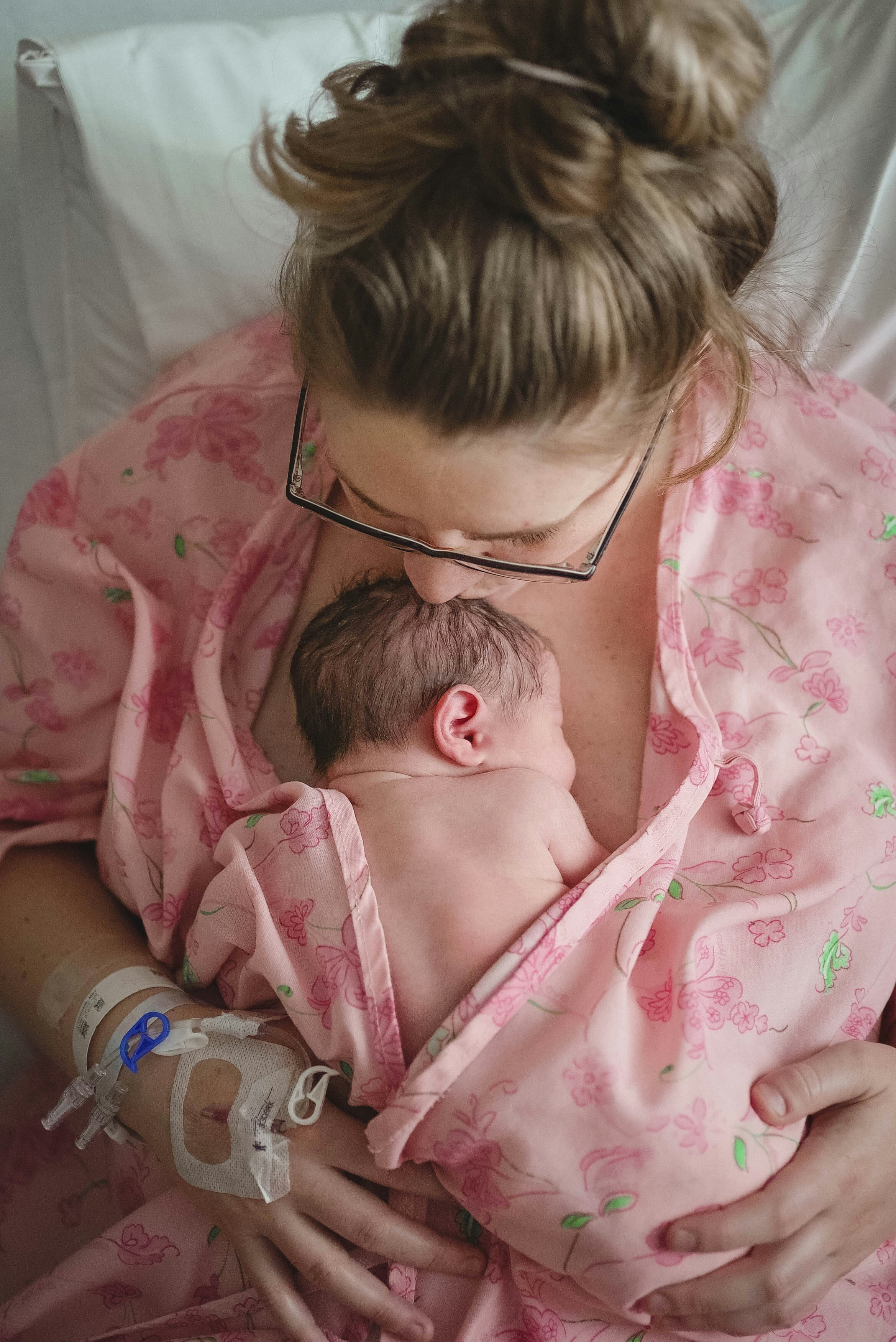
My due date was fast approaching when I had a moment of clarity. Or it might have been madness, I’ll let you decide.
I’d been receiving maternity care at a local hospital – the same hospital where my eldest daughter had been born almost three years earlier – and decided I really didn’t want to go back there to give birth.
Advertisement
So, at 34 weeks pregnant, I went online and did what I knew best: researched.
With my laptop perched on my ballooning belly, I looked at other hospitals and saw there were some decent options. But, palms all sweaty, I quickly realised it was the thought of another trip to the labour ward that was filling me with so much dread.
I briefly considered a home birth but realised I wouldn’t be able to relax properly if I knew our neighbours could hear me mooing away (and believe me they would be able to hear it – our walls are paper thin).
Then I saw something intriguing on Instagram of all places: a freestanding NHS birth centre and it was just 10 minutes further than the hospital where I’d been receiving antenatal care. How had I never heard about it?
Advertisement
Why I switched up my care
I’m not a particularly anxious person but the very thought of going back to that first hospital to give birth filled me with dread. Just thinking about it would make my heart race.
The thing is, I had always thought I didn’t have a particularly bad experience at that hospital – compared to the horror stories I’ve heard, it was a “walk in the park”. I was one of the lucky ones. My birth was relatively straightforward: it was a vaginal delivery, no interventions, and my baby was OK.
I experienced some tearing but didn’t really think much of it at the time because it was all quite numb down there. My partner got kicked out a couple of hours after giving birth, which I found to be the most distressing part of all because I had no idea how to look after a baby and was absolutely exhausted.
Advertisement
I remember spending the following 12 hours sat in a bloody hospital gown waiting for my partner to be allowed back into the hospital for visiting hours (cheers, Covid) so I could finally have a shower and hand our newborn over to him.
I was exhausted because I’d barely slept all night – my daughter had been born late the night before, so I’d been up all night checking she was still breathing and listening to the coughs of other mums on the shared ward, hoping they didn’t have Covid. It also happened to be the hottest day of the year which only added to my anxiety.
In the days and weeks after the birth, I experienced some issues with an infection and my stitches coming undone. I also saw a GP at my eight-week follow up appointment who checked my perineal area and suggested my tear had been worse than first thought.
Advertisement
“I was one of the lucky ones. My birth was relatively straightforward: it was a vaginal delivery, no interventions, and my baby was OK.””
I felt I couldn’t really complain about the fact the midwife “popped my vein” – she failed to put a cannula into my arm before I was about to give birth, so we had to wait for a doctor to come and do it. My blood platelets had been on the low side so they thought they’d put a cannula in ahead of time in case I needed a blood transfusion or something – a thought which made me feel really relaxed!
Advertisement
Or the fact that I had to be on a labour ward because of those cursed platelets and all I could hear in the rooms along the corridor were screams.
Or the fact I had two midwives – an experienced staff member and a student – rummaging around in my vagina, one after the other, before delivery. It prompted a panic attack and, I’d argue, was more painful than birth at points. Now, I know midwives are short on time and we all have to learn, but I was not prepared for how painful that examination was going to be. And I wasn’t allowed an epidural because of the platelet issue, so I felt it all.
These things were all unpleasant, but nothing compared to what I’ve heard from other mums. I was a lucky one, right? My baby survived.
I realise now – after years of mentally dismissing what had happened – that perhaps there was a reason why my body was going into fight or flight when I sat down to consider the thought of another hospital birth.
My body was saying no, and thank goodness I listened.
Advertisement
So, at 34 weeks pregnant, I switched up my maternity care. It’s fairly easy to do – I self-referred to the birth centre and then called the hospital and explained I was moving my care across.
I had to do another booking appointment (this is the first appointment you usually do when receiving antenatal care in England, where they check your weight, height, take urine and blood samples, etc.,), but on the whole it was an easy process.
And I cannot stress to you how refreshing it was to speak to the midwives at Edgware Birth Centre.
They were so relaxed and didn’t overly-medicalise things. I asked about my platelets again and they didn’t seem worried – my midwife was so reassuring and, unlike at the hospital where I’d seen a different person each time, this person was someone I spoke to continuously for the following six weeks.
It’s hard to express what a game-changer it was having the same midwife for my antenatal appointments. When we chatted on multiple occasions in the run up to the birth, I felt like I was a human, not just a number who was there to pop out a baby.
Advertisement
On the day I gave birth, I went to the birth centre at around 11am when my contractions were ramping up and called my midwife en route, who amazingly was on shift. They got a room ready for me and started filling the birth pool, as I’d asked if I could try that for pain relief purposes and also to help reduce the risk of tearing again.
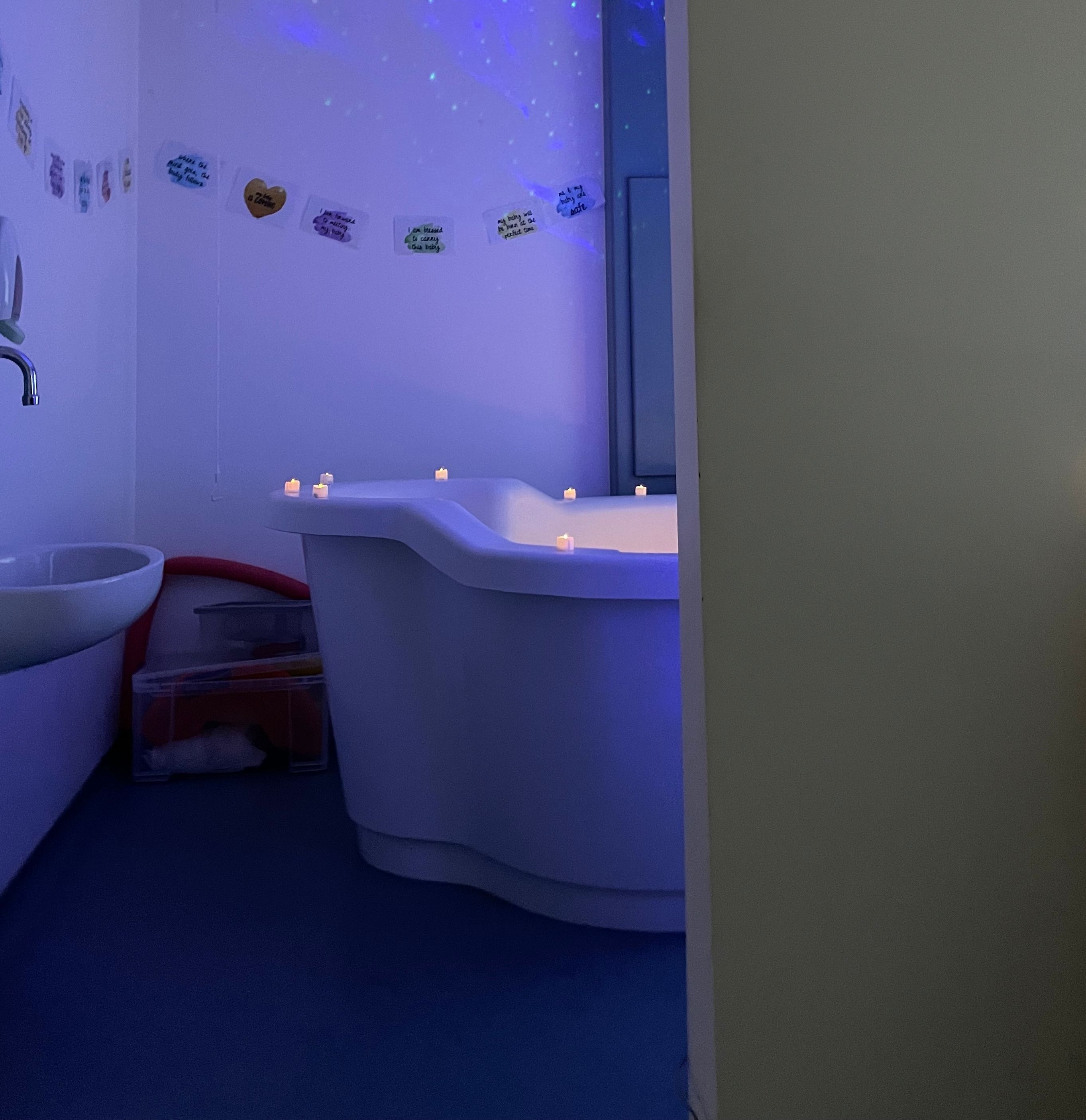
When we got there, we went straight to the room and I nearly cried. They’d turned some fairy lights on and there was a diffuser pumping out a calming fragrance in the corner. The birth pool was trickling away. There was nobody screaming in the distance. The atmosphere was so… tranquil.
“Do you want a drink?” my midwife calmly asked me, and then my partner. We looked at each other in disbelief.
Advertisement
Natasha Hinde
The room where I ended up giving birth.
The next few hours were a bit of a blur but consisted of a lot of reassurance from my midwife and her colleague who kept telling me that I knew what I was doing, to listen to my body, and to let them know if I felt an urge to push.
I believe their kindness and reassurance, as well as the feeling of safety from being in this little sanctuary they’d created on my behalf, helped everything speed up a bit and by 2.30pm, our baby was in my arms.
Advertisement
I didn’t need stitches (thank you, birth pool) and by 7pm we were home.
It was a good birth – and I feel bad for saying that, because so many women do not get to have a good birth. I firmly believe that if I hadn’t switched up my care at the eleventh hour, it might not have been a good birth.
And of course, we can never know, but studies have found having a baby at a birth centre is as safe as giving birth in hospital,yet results in fewer interventions.
However, the story doesn’t end there. A few months after I gave birth, I received an email inviting me to join a consultation about the proposed closure of the birth centre. The NHS North Central London Integrated Care System said that, on average, fewer than 50 women give birth there a year.
Advertisement
Under proposed new plans, the birth suites could be closed however the birth centre would still provide antenatal and postnatal services. I couldn’t believe what I was reading.
Deflated by the proposed closure, I attended the online consultation and sat listening to other mothers who had received positive experiences there.
The stories I heard hammered home exactly what can happen if a maternity service isn’t overwhelmed with demand and midwives can truly focus on the people giving birth: they are treated like human beings. The midwives have more to give because they are not physically, mentally and emotionally exhausted.
Advertisement
The decision on the fate of the birth centre is due to be announced this spring.
Dr Jo Sauvage, chief medical officer at North Central London Integrated Care System, told me: “Your positive feedback is a great reflection of the midwifery team at Edgware Birth Centre. We want, above all else, for everyone who gives birth in North Central London to have a similarly high quality of experience, and this means making some difficult decisions.
“The proposed option that we put forward for consultation would see us retain and expand the antenatal and postnatal services at Edgware Birth Centre. For those who choose a midwifery-led birth, we are proposing to maintain the option of home birth, and co-located midwifery-led units which provide a home from home environment.”
Action group Delivering Better is currently calling on the Secretary of State for Health and Social Care, Wes Streeting – who has openly said the maternity crisis keeps him awake at night – to improve maternity care with two key changes: the chance to see the same midwife throughout pregnancy and proactive health checks after the baby is born at three and six months.You can add your voice to the open letter here.
There’s a lot of work to be done when it comes to overhauling the UK’s maternity and postnatal care system – and one birth centre cannot change that. But if it helps women have a good birth, a safe birth, then I’d argue it’s worth its weight in gold.
Advertisement
Update: We have amended the article to clarify that, on average, fewer than 50 women give birth at Edgware Birth Centre each year.
On Sunday evening, the former Coronation Street star and her husband Mark Wright revealed that they were expecting their first child in a joint Instagram post.
The announcement was made alongside a photo of the Fool Me Once actor and former The Only Way Is Essex cast member posing on a beach, with Michelle cradling her pregnant stomach.
Advertisement
“2025 is going to be a special one for us,” they wrote, adding a baby emoji for good measure.
Michelle and Mark are thought to have begun their relationship in late 2012, eventually tying the knot in May 2015.
Throughout their time in the spotlight, Michelle and Mark have both been open about their hopes to become parents.
Advertisement
Back in 2018, Michelle told Women’s Health: “I’ve always been broody. I love kids, and I want four, so hopefully in the near future.”
In an interview with The Sun a year later, Mark added: “We say we’re going to try [for a baby] every year but something comes up with work.
“So it’ll be Michelle filming in South Africa [for Our Girl] and then I got the job in Los Angeles [presenting for Extra] – so we think, ‘right, we’ll try next year’.”
Advertisement
Michelle Keegan and Mark Wright in 2019
via Associated Press
In more recent history, Michelle has spoken about her frustration at constantly being grilled by journalists about whether she wants to start a family, branding such questions sexist.
Michelle told The Mirror: “It’s horrible. People don’t know if we’re trying. They don’t know the background of what’s happening. In this day and age, you shouldn’t be asking questions like that.
Advertisement
“I’m asked purely because I’m a woman. But I’m immune to it now – it’s like a reaction, and as soon as I hear it I brush it off as it’s no one else’s business.”
“I get asked about children whereas Mark wouldn’t for example,” she told Women’s Health in 2020. ”‘Why haven’t I had a child? When am I going to have a child?’. I don’t know what they want me to say. I don’t know what the right or wrong answer is.”
Asked if her family are as guilty as the press for asking her questions about starting a family, she quipped: “Not any more! People don’t mean any harm by it, but they know what the answer’s going to be.”
Parenthood comes with many different responsibilities, but one of the most challenging and hilarious is definitely the Santa Claus charade.
Parents have a complicated relationship with the jolly old man in red. After all, saying he exists is a lie, and lying is wrong. But so is ruining the joy of Christmas …
It takes work to keep the magic of Santa Claus alive, which inevitably leads to a lot of funny moments (and a lot of funny tweets). Here are 29 tweets from parents about keeping up the Santa charade. Enjoy!
February 16, 2021 was meant to be the day that I birthed my newborn son – without drugs, not even gas and air! – into a birthing pool, under the glow of lavender-coloured LED lights, as the sound of ‘cicadas in a field’ gently filled the my private room at the midwife-led birthing unit of my local hospital.
Ideally, this would have been with the aide of a birthing Doula, but as we were deep into another nationwide lockdown, I was lucky to even have my (masked) husband as my birthing partner.
Advertisement
However, somehow nearly three weeks later in early March – instead of the birth I had expected and made a playlist for – I found myself recovering from three excruciating days of induced labour and an emergency c-section, while laying in a pool of blood in a sensory clusterfuck of a maternity ward.
I couldn’t move – partly from exhaustion, mostly from major surgery and a catheter – so I couldn’t even pick up my son when it was time to feed him.
The story of my pandemic pregnancy and my son’s birth is complicated, tender, and generally something I keep very private. My husband lived it alongside me, but only my closest friends and my therapist know why orange Lucozade makes me want to vomit or why the sight of that small, blue suitcase under the guest bed can still make me cry.
Advertisement
What is truly horrifying to me, aside from my own gruesome memories, is that my story is just a drop in the ocean when it comes to how many women in the UK have also had a “negative” or traumatic birth experience.
Because of these unsettling and life-altering numbers, a new campaign called Delivering Better, formed by a group of mothers, is urging Health Secretary Wes Streeting to take urgent action to improve maternity services in the UK.
The group’s new report highlights the need for “better support for women who often suffer, both mentally and physically, years after they have given birth” and shows the horrific impact that traumatic births are have on women, with almost half of all mothers suffering mentally and physically.
Advertisement
They report one in four mothers experience a negative birth in the UK, and that 72% of those women say their experience had left them with long-term mental health impacts.
Of the women who reported a negative birth experience:
almost half (48 per cent) say it had a long-term impact on their relationships,
over a third (37 per cent) say it had a long-term impact on their ability to work,
more than half (54 per cent) said it left them less likely to want to have more children.
More than half of women (58%) of the women who said they had a negative birth experience said they “didn’t feel listened to during delivery” – which, for me, was one of the worst parts of my own experience.
Advertisement
Being in one of the most vulnerable states a human can be in, and then voicing a need, a concern, or asking for help and being denied that help or dismissed by the people who are apparently there to help you can be incredibly damaging for your mental health. Not being listened to can also have incredibly serious, if not life-threatening physical implications, too, as we know from the startling statistics around Black maternal health care.
What can be done differently to help new mothers?
As both a mum and an editor I see a lot of press releases and newsletters targeting mothers and pregnant people. Some of it is helpful, but I’ll never forget an email I was sent about a new campaign to “support maternal mental health” which initially sounded excellent as some big name brands were involved.
However, reading the details, the campaign was meant to support women’s mental health after giving birth via… a meditation app. And some frozen food vouchers. And also a bit of funding for an organisation that has been criticised for its potentially harmful policies and focus on ‘natural births’.
Advertisement
We deserve better than this.
There needs to be much more tangible action taken in both pregnancy and delivery to see any significant changes in maternal mental health.
In my opinion, a lot can be done by addressing the curriculum and policies of prenatal courses that are available to parents – and the cost and accessibility of these services, too. I’ve experienced first hand that women – especially first-time parents – are taught in these courses that we have much more control over exactly how and when our babies will be born. That we can choose a positive birth experience.
We’re told to just watch your favourite films and eat some chocolate to get those oxytocin levels up and then labour shall commence shortly thereafter. If you breathe correctly that baby’s gonna pop right out of you – you’ve been doing your cervical massages, right?
Advertisement
But I can tell you firsthand – as can thousands of other parents – you can do everything “right” and still end up having an emergency c-section.
The Delivering Better campaign is asking for changes to be made in both pregnancy and delivery for mothers, including greater continuity of care throughout pregnancy.
The aftercare new mothers get is nearly comical in its limitations, and the group is also calling on GPs to proactively contact mothers via text message at three months and six months postpartum to check in on their physical and mental health.
Advertisement
According to Delivering Better: “Mothers often report feeling abandoned after the current six-week check, which is often not fit for purpose, with only a couple of questions directed at the mother.
“Some mums say the main question they’re asked is whether they are back on contraception. In the survey, 88% of mothers say they support receiving mental and physical health checks in the months following their birth experience, and 81% say they would have benefited from this themselves if it had been offered.”
Shocking isn’t it?
You can read more of what Delivering Better is asking for on their website, where you can also sign their open letter to Wes Streeting, “urging action for maternity care that is safe, compassionate and evidence-based”.
Advertisement
Help and support:
Mind, open Monday to Friday, 9am-6pm on 0300 123 3393.
Samaritans offers a listening service which is open 24 hours a day, on 116 123 (UK and ROI – this number is FREE to call and will not appear on your phone bill).
CALM (the Campaign Against Living Miserably) offer a helpline open 5pm-midnight, 365 days a year, on 0800 58 58 58, and a webchat service.
The Mix is a free support service for people under 25. Call 0808 808 4994 or email help@themix.org.uk
Rethink Mental Illness offers practical help through its advice line which can be reached on 0808 801 0525 (Monday to Friday 10am-4pm). More info can be found on rethink.org.
Help and support:
Sands works to support anyone affected by the death of a baby.
Tommy’s fund research into miscarriage, stillbirth and premature birth, and provide pregnancy health information to parents.
Saying Goodbye offers support for anyone who has suffered the loss of a baby during pregnancy, at birth or in infancy.
My two kids, my husband and I were at an outdoor picnic table at Roberta’s pizza on a chilly day in Brooklyn when our then-7-year-olddeclared that they were nonbinary.
The kids had finished eating their plain cheese pizzas and were goofing around, giddy to be eating at a restaurant after endless pandemic meals at home. In the middle of the hand-slapping game they were engaged in, my oldest said something to my youngest about them becoming a dad one day. Our 7-year-old let out an exasperated yell, like they had hit some kind of boiling point.
Advertisement
“I’m not a he or a she!” they said, their fists clenched. “I’m nonbinary, call me they.”
They had been telling us that they’d felt “a little like a boy and a little like a girl” since they were about 3, but this was the first time they put a label, and a pronoun, to that feeling. My husband and I were both blown away and very proud of them for so confidently asserting their young identity.
My family lives in a picturesque Brooklyn neighbourhood, where many of the historic brownstones have rainbow flags in windows. Most people here would probably identify as being liberal-leaning. However, even before this moment, we had already experienced some of the challenges of raising our gender nonconforming child in a world that is so wedded to binaries.
When our child was in second grade, we were all surprised at how easily the other kids in class adapted to using their pronouns (they/them/theirs) correctly. One teacher even told me that when someone accidentally misgendered our child, using a pronoun that does not reflect their gender identity, the other students were quick to correct them. The parents of those kids from school, on the other hand, have had a harder time accepting our child’s identity.
Our child is often misgendered. People look at them, with their long hair, pink-hued outfits and rainbow Crocs, and assume they’re a girl. And as progressive as Brooklyn can seem, the reality is that many of the everyday spaces our family encounters are gendered ones, from play spaces to dance classes. When our child took ballet a few years ago, the teacher often asked the little girls to imagine they were fairies or princesses but wasn’t quite sure what to say to my child. One year, our child’s teacher struggled to switch to “folks” or “friends” instead of addressing the students as “boys and girls.” Our local school waits until kids are in fifth grade before introducing students to the topic of gender identity.
Advertisement
And it was only as recently as 2021 that New York City public schools were finally required by law to designate all single-occupancy bathrooms as all-gender bathrooms. Attitudes across the country toward the LGBTQ+ community seem to only be getting worse. In fact, in the last year alone we’ve seen an explosion of anti-LGBTQ+ laws aimed at limiting trans and nonbinary people’s rights and safety. In 2024, a Manhattan parent-led advisory board called on the Department of Education to revisit guidelines on trans girls’ sports participation. Most recently, President-elect Donald Trump has been spreading rhetoric about schools performing gender-affirming surgeries on students.
As a preschooler, our child enjoyed some of their brother’s toys but mostly gravitated toward what would be considered “girly” toys and interests — princesses, every character in the ”Frozen” movie, playing dress-up with tutus and dresses — and preferred female friends as playmates. When they asked us to draw a picture of them, they would get frustrated.
“No, draw me as a girl,” they’d say.
Some days they’d say they wished they could grow up to be a girl. After a while, it was clear to us that our child’s identity lived somewhere in between the two poles of “male” and “female” and that those coordinates were fluid.
Sometime around third grade, I noticed their classmates had begun separating into groups of male and female. I saw it at drop-off and pickup, where the girls would congregate in circles on the sidewalk to chat while the boys would start roughhousing and talking about soccer. Our child gravitated toward the girls’ circles, as this group shared similar interests (imaginary play, an obsession with cats, a love of stuffies and schoolyard dramas).
When we talked with them about their friendships at school, they said they were “friends with everyone.” But when it came to playdate requests and stories about who they hung out with at recess, it was mostly girls. I also noticed how the moms of the girls would plan playdates and sleepovers for their kids, and how we were never a part of those invitations. It was hurtful. I’ve wondered how it must feel for my child to hear about these gatherings knowing they hadn’t been included or to wonder why I was unable to make certain playdates they had requested happen.
Advertisement
I knew it wasn’t the kids who were responsible for their own social calendars. My child seemed to be very well-liked by their peers. Their friends would come up to me, arms linked with my child’s, asking when they could have a playdate. Again and again, I reached out to parents to plan get-togethers for our kids, and again and again, there was always a reason why it couldn’t come to fruition. (There were, however, a few exceptions, and those are the parents I value dearly.) I began to think it was me.
Parents in our grade tend to do “girls’ parties” and “boys’ parties” as a way to make things more wallet (and apartment) friendly. Sometimes my child is invited to both, as the only nonbinary kid at an all-boy or all-girl party. One day last year, as the kids trickled out of the side doors of the school and found their respective grownups along the sidewalk, one of my child’s friends came running to her mom to ask why my child hadn’t been invited to her birthday. The mom smiled at me apologetically and said to her daughter, “I thought you wanted just girls.”
“They’re not a boy or a girl,” the girl responded. “They’re my friend.”
Photo Courtesy Alexis Barad-Cutler
The author and her child taking a walk.
A few weekends ago, my child was finally invited to their first slumber party. They had been talking about this party since before school ended last year and had been constantly asking me if I had received the invitation yet. The birthday girl had invited them multiple times and repeatedly told them about the activities she had planned for her soiree (face masks, a movie, waffles the next morning).
For the first time, I wondered if this really was an oversight and not a slight, so I did something I’d never done before. We’d recently sent out electronic bar mitzvah invitations for our older child and about 40 of them had not been received, having gone straight to spam. It took everything in me to send a text to the birthday girl’s mothers, asking if the same thing might have happened with their invitation.
Advertisement
“We’re sorry,” the moms wrote back. “We were trying to keep it small, because we can’t fit everyone in our apartment. But we love your child, and would love it if they could come.”
I was embarrassed that this wasn’t a case of “it got lost in the mail” but very grateful for their graciousness and the invite. I’d never seen my kid pack their fuzzy, bear-shaped travel bag so fast as they did the morning of the sleepover party. As we walked the dog and picked up a chocolate macaroon at the cafe behind our apartment, they told me that they had a plan for when it came time to change into pajamas.
“I’ll change in the bathroom,” they said. “To give the girls privacy.” That night I was with friends at a sushi restaurant, celebrating my husband’s birthday. I kept looking at my phone with dread, imagining the text or call from the parents telling me that it wasn’t working out and that we’d have to come get them. I couldn’t stop worrying about potential moments when my child’s gender identity could make them, or the others, uncomfortable.
The next morning, they came home from their sleepover giddy (and surprisingly well rested). They showed me the pink and purple tie-dye shirt they’d made and told me about how great a movie “A League of Their Own” was even though they “hate baseball” (their words).
“Oh, and mom,” they added. “Everyone took turns changing in the bathroom by themselves. Not just me.” When they said this to me, it confirmed that this had indeed been on their mind that night. And, it meant something to them that the other kids at the party decided to change in the privacy of the bathroom. I imagine it helped my child not feel singled out and made them feel even safer.
Advertisement
At 10 years old, my child is super confident, comfortable in their body and still very much gender nonconformingin the ways they express themselves, their hobbies and their interests. They no longer want to wear dresses but, rather, dress for ultimate comfort. They intend to keep growing out their already long hair. And they still tell us that they feel like both a boy and a girl.
Any parent will tell you that the minute you think you have one thing down, another one comes up that you’d never expected. As a parent of a nonbinary kid, and especially as we enter the middle school years with our child, I know these curveballs will become even more complex and with bigger potential consequences. Trans and nonbinary folks suffer disproportionately from mental health issues. A 2020 survey led by Trevor Project found that more than half of the trans and nonbinary youth (ages 13 to 24) respondents seriously considered attempting suicide. On the legislative level, our country is becoming ever more dangerous for LGBTQ+ kids. There have been more anti-LGBTQ+ bills introduced in statehouses this year than in each of the previous five years. It can feel bleak out there at times.
When we became parents, my husband and I knew very little about the huge spectrum of ways a person can express their gender identity. We didn’t even know that being gender nonconforming was an option until our child embodied it for us, and pushed us to learn and challenge our preconceptions and biases. We’ve met with child therapists, we’ve read a lot of articles and books, and we’ve spoken to other parents of trans and nonbinary kids. We continue to be open to the possibility that things might shift for our child as they mature.
As with so many things, change starts in the home. My hope is that other parents can also learn to take some cues from their kids, who I think have a lot to teach all of us about inclusion and acceptance.