This Baby Perfectly Embodies Our Excitement For Christmas Dinner

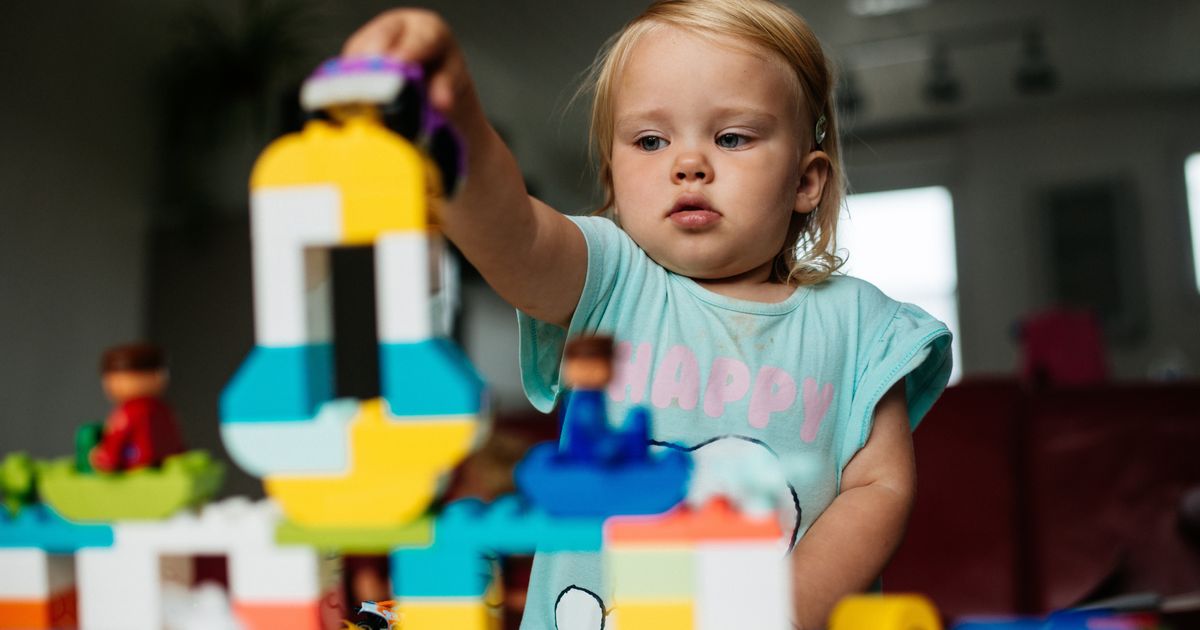
A hilarious video of a baby getting ridiculously excited about being fed is basically all of us ahead of our Christmas dinner.

In the clip, baby Milly pulls a face that can only be described as equal parts shocked, terrified and excited as she anticipates spoonfuls of chocolate pudding.

Milly was just nine months old when her mum, Sandra Karlsson Elfsten, decided to film her response to the delicious treat.

“She truly loved it,” the mum-of-three, who lives in Molkom, Sweden, tells HuffPost UK.

“She does that face when she gets excited over things.

“She actually does it even now [she’s five] – not exactly like in the video, but she gets excited with all her body.”

Karlsson Elfsten originally shared the video of baby Milly on Instagram in 2018, however it was recently resurfaced by another account – and we felt it was too good not to share.

Thank you Milly (and Sandra) for bringing us even more joy today.

Share Button

My Children Are Autistic, Here’s How We Make Christmas Wonderfully Unique

The festive period can be overwhelming for lots of people, but for autistic children it can be a particularly fraught time of year.

The disruption to their routine, sensory overload, and overwhelming influx of new information can be stressful and sometimes even distressing, says Michelle Myers, who works for Great Minds Together, a charity supporting young people with special educational needs and disabilities (SEND).

Myers – who is an autistic woman and mum to autistic children – suggests all of this can add up to trigger episodes of increased levels of anxiety, fluctuation of needs and different behaviours as children process these changes.

“It can be a really difficult time,” she tells HuffPost UK, “but there are steps that parents can take to better support them and reduce the overall stress of the festive period.”

Here are her tips for navigating the festive period if your child is autistic or has additional needs.

Don’t be afraid to create new traditions

“Be unapologetically you and do what brings your family peace and joy this Christmas,” says Myers.

Whether it’s leaving presents unwrapped under the tree because your child has a sensory sensitivity to wrapping paper, or you let them eat their favourite pizza instead of Christmas dinner, her main piece of advice is to “do what works for you”.

“Create new traditions,” she suggests. “Neurodiverse families are wonderfully unique so it makes sense that our Christmas should be just as wonderfully unique as we are.”

Do plan ahead

Sticking to daily routines can be so important for autistic children (and adults!), so Myers advises keeping as many routines in place as possible over the festive period – and that includes Christmas Day.

“Some routines for autistic people are as essential to us as breathing,” she says, “so to have too many changes can really impact us.”

When things do have to change, it’s important to plan as far in advance so you can give your child as much warning as possible – “and don’t change too many things at once,” she adds.

Don’t say ‘yes’ to events you know will be stressful

It’s so important to advocate for the needs of your child – and that means saying no to events that you know will be stressful.

“Tell Aunty Irene that hugs are a no-go. Ask school for a timetable of events. You owe no explanations to anyone,” says Myers.

She says autistic people deserve to have their “often-hidden needs accepted and respected”, otherwise they can fall into the trap of feeling the pressure to conform, which can lead to masking, she adds, “which is never a good thing for anyone”.

Masking is where a person hides or disguises parts of their selves in order to fit in. According to the National Autistic Society, it might involve suppressing certain behaviours autistic people find soothing, or mimicking the behaviour of other people in order to get by in social situations.

Do use visual supports

Visual supports such as lists, calendars, text messages or even photos can help autistic people prepare for new experiences, suggests Myers. So don’t be afraid to roadmap what Christmas – and the following days – will entail.

“It helps us to process time, sequence activities and even reduces our anxiety,” she says.

Any kind of visual support you can provide will act as a sat nav to their day. This helps them see the steps they need to take, prevents them from getting lost, and maps out the time it will take (so they can see it will end eventually).

All of this can contribute to preventing them from getting overwhelmed.

Do remember to schedule time for them to recharge

“Imagine we all have a battery inside us. Some things we do drain our battery, and some things we do charge our battery. December brings with it lots of things that can quickly deplete autistic children’s batteries,” says Myers.

Whether it’s the carols, the flashing lights, the social interaction with family members you haven’t seen since this time last year.

“We need to remember that their little batteries may need more opportunities to charge at this time,” says Myers. So do schedule time for your family to rest amid the mayhem of the festive period – even on Christmas Day.

“Take a sensory bag, ear defenders, a dark den, their favourite snack or blanket, whatever works for them,” she adds.

Don’t be too hard on yourself

One thing it’s important for parents to remember is that it’s ok if things don’t turn out perfectly at Christmas. You’re doing the best you can.

Myers recalls how one year her Christmas tree collapsed and thousands of pine needles fell off it. “I was devastated,” she recalls. “I cried so much I convinced myself that Christmas was over.

“But then my son came bounding down the stairs and proceeded to swish through the dry dead pine needles like fallen autumn leaves – my tears turned to hysterical laughter streaming down my face.

“All was not lost, right there in that moment we found joy and laughter. We shared such a moment together in the chaos of my fallen tree that I realised that for us, Christmas was always going to look a bit different to everyone else’s – and that was OK.

“In fact, it was more than ok, it was amazing.”

For more information on supporting children with SEND including informative blogs and podcasts visit www.greatmindstogether.co.uk.

Share Button

This Is Why Some Kids Are Terrified Of Santa – And What To Do About It

If you’ve taken your child to see Santa recently, chances are they’ll have reacted one of three ways: they’ll have been shy and a bit unsure, they’ll have been super excited and loved the experience, or they’ll have become really upset.

“If you’ve ever been to a Santa’s grotto it is very common to see kids responding fearfully when it’s their turn to see Santa,” says counsellor Chris Boobier. “The photos are not as parents expected, with many children in tears.”

Sometimes this fear of Saint Nick can spiral into something more. Year-on-year data reveals that Google searches for ‘Santaphobia’ have increased by 56% since last December, according to analysis by Crafted Beds, while searches for ‘fear of Santa’ have risen by 31%.

Why is Santa so scary?

If you think about it, it makes total sense that children would be wary of this strange man dressed in a bright red outfit with fake facial hair. Especially if they’ve been warned against interacting with strangers.

Then you’ve got all the additional storylines that surround Santa. The fact he watches over kids and knows if they’ve been naughty or nice, that he can squeeze down the chimney and drop presents into their bedrooms when they’re asleep.

“It completely goes against everything that is regularly taught about safety, causing conflicted feelings,” says Boobier.

On top of that, come December – heck, November – Santa is everywhere. “Now that you can write to Santa, get Santa to call you, go and see Santa, track him through the air, there is a lot ‘more’ of Santa than ever before and it can be overwhelming,” says the therapist.

“He changes size and shape, has different voices and it doesn’t quite add up: kids are smart and know something is afoot, but also believe what they are told.”

Then you’ve got the over-stimulating environment in which you usually find Santa – the bright lights, loud sounds and crowds of people at his grotto.

Combine that with a couple of years of not socialising much (thanks Covid) and it’s really no wonder more kids aren’t shaking in their boots on coming face-to-face with Mr Claus himself.

“We are in a post Covid world where children under four have not been socialised as much as before because of lockdowns,” says Counselling Directory member Claire Elmes. “This is feeding into many social difficulties, including visiting Santa.”

How to tell your child has a phobia of Santa

The point at which being scared of Santa turns into a full-blown phobia is usually after a negative experience has occurred and the child has linked this to Santa in some way. You might find, as a parent, that anything related to Santa or Christmas then triggers your child, causing a physical and emotional reaction.

You might even notice they start to react negatively to anyone wearing similar red coats, says hypnotherapist Penny Ling: “Our brain’s pattern match for danger. A person with a phobia of spiders will jump at a tomato stalk, so it stands to reason a child phobic about Santa will respond with fear around red coats and long white beards.”

Symptoms of Santaphobia could include your child feeling more anxious than usual, not wanting to go to bed on their own or having difficulty sleeping, says Boobier.

“They may want to avoid anything too ‘Christmassy’ like grottos or certain movies, and not talk about Santa. They may request stockings are not put in their room,” he adds.

Some children, on being faced with Santa, might become agitated and want to leave, adds Ling, who is a member of Hypnotherapy Directory. They might start crying or wet themselves if they are not taken out of the situation early enough.

If you’ve got this far, you’ve probably established that your child has a phobia of Santa – or at the very least, is uncomfortable by his presence. So what can you do about it?

Dos and don’ts for tackling Santaphobia

Do prepare your child for their trip to see Santa

Preparation is key ahead of a trip to see Father Christmas, says Claire Elmes. She recommends discussing what is likely to happen at the grotto and showing your child pictures of Santa ahead of it so they know and are prepared for what to expect.

“Explain that some children find him a bit scary and that’s ok, you will be with them and it is all safe,” she says. Sometimes it can be helpful to go with another child who is OK with Santa.

Don’t force them to sit on Santa’s lap

If you do get to the grotto and they become upset, don’t force them to sit on Saint Nick’s lap or have pictures taken, it’s not going to be enjoyable for the child or help their fear.

“Acknowledge their feelings,” suggests Elmes, “and accept they may not be ready. Gently encourage them to be a safe distance and observe others if possible.”

Boobier adds that parents might want to find other photo opportunities where their child can be themselves and be happy.

Don’t shame your child for being scared

Sometimes as parents it can be hard to put ourselves in our kids’ shoes and you might even tell your child to “stop being silly” because it’s “just Santa”. But Ling suggests this is unhelpful.

“Try to be encouraging, showing that other children are enjoying the experience and it’s just new for them,” she says.

Don’t make up stories about Santa to scare your child into behaving

Chris Boobier is also keen to convey that children begin to have awareness for make believe and reality between the ages of three and five, so anything up to the age of five could be completely real to them.

“The idea they are being watched and don’t want to be on the naughty list will feel very real,” he says. “Knowing to what depth our children believe this Christmas magic can help with pulling back on some on the ever-growing Christmas traditions we create (Elf on the Shelf, anyone?) and reduce the ongoing hype that Christmas has become.”

Elmes agrees: “As tempting as it is try not to use Santa as a bribe for being good (we’ve all been there!) telling children he is always watching can also be a bit scary.”

Do talk about their fears

Let your child tell you they are afraid of Santa and really listen to how they feel, allowing them time and space to explain why, suggest therapists.

“Whilst this can feel a bit sad for parents as they go to all the effort to make Christmas magical, listening and understanding how your child feels without dismissing their feelings is the key to helping your child cope at Christmas time,” Boobier adds.

“They may tell you what would feel better for them and some traditions could be altered as they grow up.”

Remember it probably won’t last forever

However you feel about your child’s response to Santa, Chris Boobier encourages parents to keep perspective: “Most children grow out of a fear for Santa past the age of five, depending on development progress, when they can confidently distinguish the difference between fantasy and reality – and they will become excited again about Santa Claus.”

Share Button

12 Tales Of Play Dates Gone So, So Very Wrong

There’s a bit of a wild-card element to every play date. You can control your own behaviour, and you may have attempted to teach your child how to behave as a guest in someone else’s home – or as a host in their own – but you can’t guarantee that your kid won’t spontaneously decide that today is the day to break all the rules.

The children may wander off while you’re attempting to make polite conversation with another parent, and just when you think how nice it is that they are playing together quietly, you suddenly realize that things have gotten too quiet.

We asked for tales of play dates gone wrong on HuffPost Parents’ Facebook page and elsewhere. Here are some of the wildest stories, lightly edited for readability.

A leaky situation

New York mum Kimberly Schwartz and her husband went to pick up their three-year-old from an after-school play date at a friend’s house. After they arrived, the adults chatted in the kitchen while the kids played upstairs. Then, “my husband pointed out a leak coming from the ceiling. The wall was yellow where it was leaking,” said Schwartz.

“My daughter was having so much fun she decided to opt out of using the bathroom and had wet herself in the exact spot upstairs where there was a gap in the molding. She had made it rain urine in their house. And now it’s all I can think of when I visit.”

An eerie glow

When Tammy Greenwood-Stewart of San Diego arranged a play date for her youngest child, then six, she bought glow sticks for entertainment. It worked, but “the two kids chewed the glow sticks,” Greenwood-Stewart said, “and their mouths, tongues, stuffed animals and bedding were all luminescent for hours.”

She said that the parents “Googled like crazy” but the kids were unharmed, adding that her child has since grown into an 18-year-old adult.

Playing referee

When her boys were 10 and eigh years old, Suzanne Brown of Austin, Texas, invited two brothers at those same ages to their house for a play date — but things quickly turned violent.

“Our guests got into such a horrible physical fight with each other that my husband actually had to physically separate them,” said Brown.

“The only way we could keep things from restarting was to move the younger boys to a different part of the house and keep them there.”

When Brown and her husband explained to the guests’ mother what had happened, she responded nonchalantly, “Oh, they get rowdy sometimes.”

Is that a wipe?

Lauren Woods of Washington agreed to babysit a friend’s three-year-old son at the boy’s house. Her own daughter was two at the time.

“He went to the bathroom by himself and said he didn’t need help, and naive person that I was, I believed him,” said Woods.

Later, when she entered the bathroom, Woods discovered that her charge had “gone number two and reached into his mom’s makeup to wipe himself.” When her friend texted to see if everything was going okay, Woods responded, “Yes, but I’m throwing your mascara away — please don’t try to retrieve it.“

Wisely, her friend texted back, “OK, I don’t want to know!”

When a play date is not a play date

Ashley Austrew of Omaha, Nebraska, once brought her kids to another family’s home for what she believed was a play date. She was invited to stay, but while the kids had fun playing, Austrew was subjected to what she generously called “a surprise MLM sales pitch.”

“I had to sit through a presentation about this mom’s multilevel marketing company and get pressured to buy things from her. I’m extremely introverted and really don’t know how to remove myself from awkward situations, so I just politely faked interest,” said Austrew. “It was painful.”

When the kids are playing together quietly, it's not always a good sign.

Paul Biris via Getty Images

When the kids are playing together quietly, it’s not always a good sign.

A dress-up surprise

Sarah Zimmerman of California was chatting with other parents in her living room when she realized that they hadn’t seen their children for a bit, and things were suspiciously quiet.

Then, “my kid came out from the back of our house wearing my teddy,” she said. “It had been in a nondescript gray bag on the upper shelf of my closet. Delightful.”

Keeping everybody safe

Leah Cate of Portland, Oregon, recalled that shortly after her two boys were placed with her home as foster children, the family learned that the pair had two sisters also in foster care.

“We invited the girls over for a play date as soon as possible,” said Cate. This meant four children in the house, ages 6, 4, 3 and 2.

In what Cate described as “the happy chaos of reuniting,” the children “locked us out of the house in front of their social worker, who had come by to check on us. She found us panicking on the porch.”

But the story has the happiest of endings. “We all coached the kids about how to unlock the door, the worker had a great sense of humour, the girls soon came to live with their brothers, and after being in care for six years we adopted them all,” said Cate, who added, “I’m tired just remembering.”

Feelin’ free

Keaton Erin Buster hosted a get-together at her home when her son was preschool age.

“It was summer, so we were all hanging out on the back deck enjoying a barbecue,” she remembered.

“My son announced that he needed to go to the bathroom. I told him ‘OK’ and thought nothing of it. The next thing I know, he’s dropped his pants and is peeing off the deck in front of everyone!”

Buster says she yelled: “Nooo! Not there!”

He son gave her a bewildered look and said: “Why?? You always let me do it!”

“I died of embarrassment twice in the span of about eight seconds,” said Buster.

What happens in the woods…

Canada-based Ashley Owens recalled a celebration for the end of the school year where her son “pooped in the woods instead of going inside to do his business.”

The act might have remained secret, but “one of his friends put it on the end of a stick and chased other kids around with it,” said Owens.

Don’t drink that!

HuffPost reader Rai Mitchell’s daughter was in elementary school when she hosted a sleepover with one of the girl’s friends.

“I walked around the corner to see the child mixing a ‘potion’ concoction consisting of cough medicine, mouthwash and soda that she had intended to give to my child to drink,” she said.

Mitchell was shocked; she had figured that the girls were old enough to know to stay out of the medicine cabinet. But while they had the know-how to open all the safety caps on the bottles, they lacked the wisdom to understand that actually consuming the potion was a bad idea.

Unfortunately, the evening ended badly when Mitchell called off the slumber party. The friend “went fully feral, lashing out and refusing to comply,” said Mitchell, who eventually calmed the child down and drove her home.

It’s the thought that Counts?

Daniela of Cambridge, England, shared that she took her two daughters, ages five and three, to a play date with several other girls.

“At the end of it, the mum who hosted us gave the guests … Christmas presents. My girls received one present to share,” she said.

“It was a present for the ‘family.’ A big drama followed by. My 3-year-old could not understand that it was a shared present, and my oldest wanted to carry it home by herself. They both cried all the way home.”

Me want cookie!

Another parent from Portland shared the story of an “impromptu” outdoor play date with their children, ages five and three, and a neighbour’s 3-year-old. One of their kids asked for a bite of the cookie that the neighbour child was holding — “and accidentally bit his thumb in the process. There was a little bit of blood.”

Of course, “the other mum was understandably upset,” perhaps not believing that the reader’s child had asked for the bite of cookie.

There were no further play dates between the families.

Share Button

8 Heartbreaking Photos Summing Up Christmas For Ukrainian Kids This Year

After almost 10 months of war, the impact of Russia’s invasion on Ukraine’s children is truly devastating.

The UN believes around 400 children have been killed and more than 700 have been left with life-changing injuries since Vladimir Putin ordered troops into Ukraine.

And, as the war is ongoing – making it harder to gauge the full impact of the atrocities in Ukraine – agencies believe the real figures are much higher.

It is also the largest refugee crisis in Europe since World War 2, with almost eight million people from Ukraine fleeing to other European countries, with a further 6.5 million internally displaced.

Three Ukrainian photographers – Anastasia Vlasova, Alina Smutko, and Nina Sologubenko – have captured how children are coping this Christmas for Save The Children.

According to one mother, Oksana*, her eight-year-old daughter’s hair has started to turn grey from the stress.

“Look at my elder daughter, she is only eight and she has grey hair. I do not tell her, but when I braid her hair, I burst into tears, because she is a little child and they saw such things,” she told the photographers.

“It was very scary sitting in the basement, knowing that if – God forbid – the house was hit, you would be buried. You worried about yourself at that point, you’re scared for your children.”

Twelve-year-old Karina* also told the photographers: “There’s going to be something lacking. You know, the atmosphere of Ukrainian Christmas.”

A lot of children are also apart from their fathers, many of whom have been conscripted to serve in the Ukrainian military.

Masha*, nine, said: “I would like my dad to come here or at least to talk to him over the phone. He said everything I draw may come true.

“So I drew for us to be together, for us to be at the seaside next summer…And when I was drawing him, I felt happy.”

Olha*, mother of seven, told Save The Children: “This year the mood isn’t festive. We just wish the war would be over, to live peacefully.

“We don’t want anything, no Christmas, no New Year. How can we celebrate? People are dying.”

She said that at night they “fear every rustle”.

Here are just seven images which provide a snapshot into the lives of Ukrainian children under attack from Russia right now.

15-year-old Dmytro* was one of several children interviewed for Save The Children.

Save The Children

15-year-old Dmytro* was one of several children interviewed for Save The Children.
Dmytro* lives with his mother and six younger siblings in northern Ukraine, near the border with Russia and Belarus.

Save The Children

Dmytro* lives with his mother and six younger siblings in northern Ukraine, near the border with Russia and Belarus.
A view of *Dmytro's house that burned down, near Chernihiv, Ukraine.

Save The Children

A view of *Dmytro’s house that burned down, near Chernihiv, Ukraine.
Three photographers have shared a harrowing insight into life in Ukraine right now.

Save The Children

Three photographers have shared a harrowing insight into life in Ukraine right now.
Dmytro*'s brother Taras*, four, sits by the wall behind the heating stove at home near Chernihiv, Ukraine.

Save The Children

Dmytro*’s brother Taras*, four, sits by the wall behind the heating stove at home near Chernihiv, Ukraine.
Elena*, 36, sits for a portrait with her two-year-old daughter Vira* in their flat in Suceava county, northern Romania

Save The Children

Elena*, 36, sits for a portrait with her two-year-old daughter Vira* in their flat in Suceava county, northern Romania
Vira*, two, sits in her kitchen for a portrait in Suceava county, northern Romania

Save The Children

Vira*, two, sits in her kitchen for a portrait in Suceava county, northern Romania
Elena*, 36, hugs her daughter Vira*, two, in the bathroom at their home Suceava county, northern Romania

Save The Children

Elena*, 36, hugs her daughter Vira*, two, in the bathroom at their home Suceava county, northern Romania

The difficulties Ukrainian children are facing during this tumultuous period has not gone unnoticed in Kyiv.

The Ukrainian president Volodymyr Zelenskyy shared a video address on the first day of the new school year back in September. He said: “They stole part of your childhood, part of your youth…

“But you are free. You always will be. So be worthy of your will – and of our Ukraine.”

*Names have been changed to protect their identity.

Share Button

‘I Pooped In A Secret Way’: 27 Funny Tweets That Perfectly Sum Up Life With Toddlers

Life with toddlers is a real rollercoaster – one moment they’re telling you they love you, the next they’re mooing at you as you step out of the shower.

Fast forward two hours and they’re prostrate on the floor, screaming at you because you wouldn’t let them lick your shoe.

While they can be pretty harsh sometimes – and totally unreasonable – their brutal honesty and innocent outlook on life often brings plenty of laughs to the table, too.

These tweets sum up just how chaotic life can be with young children – and while we do love a moan as parents, we also know we wouldn’t have it any other way.

1. Where did you hide the poo?!

2. My child loves me… but also pizza.

3. Today in questions you never thought you’d ask yourself: Why is there a car under my back?

4. Hi sweetie. Please stop licking mummy’s face.

5. This parent was probably quite relieved they didn’t get to see their toddler’s carol concert IRL.

6. When your toddler is mad because they can’t do something (that also happens to be impossible)…

7. Get this toddler on The Apprentice.

8. Out of the mouth of babes (and all that).

9. Twinkle Twinkle Little Star. But with the word penis.

10. This two-year-old ran the dishwasher undetected and empty for an entire hour.

11. Imagine being demoted from Your Majesty to Mom Face. Cruel cruel world.

12. Does anyone else’s toddler run like this?

13. Another reason why toddlers get mad: they can’t eat raw food.

14. This toddler wanted to go and buy some more milk for boobies. Then things got a bit dark.

15. Why do all toddlers line up toys like this?

16. Who doesn’t love getting sick 17 times a month?

17. This toddler requested their pear is cut into rectangles and nobody has time for this.

18. Feelings = hurt.

19. When you find out the nation’s favourite coffee chain doesn’t sell books.

20. We’re just wondering why any parent would do this to themselves?

21. WFH and looking after toddlers is a real hoot (said no one ever).

22. This tweet is perfection.

23. Two going on… 42?

24. Admittedly they can be cute.

25. But then in the next breath they can be stone cold.

26. This toddler is going places. (Mainly the steakhouse next door.)

27. We’ll just leave this here…

Share Button

Is It Us Or Are Babies Always In A Sleep Regression?

Name two words parents dread more than sleep regression… we’ll wait.

We often hear about them in Whatsapp groups (why is my baby suddenly not sleeping?! Send coffee!), or in books about child development, with most agreeing the first sleep regression happens around the age of four months. Then eight months. Then 18 months and finally, two years.

But for lots of parents, it can feel like every week you’re starting a new sleep regression with a baby. And even when they’re toddlers, you’ll get the odd night where they sleep through in their cot (and you’ll pop some Prosecco in the morning to celebrate), but you’ll also get lots of occasions where they’ll wake up, end up in your bed, pull your hair, grab your lips and shout “DADDY!” approximately 59 times at 3.30am.

So what are sleep regressions – and why oh why does it feel like you’re constantly in one?

It turns out most sleep specialists don’t really consider sleep regression a thing, per se – the concept is not really used in scientific or medical contexts when discussing child sleep. That said, sleep specialists do recognise that lots of parents are aware of them.

“The only ‘regression’ with any science behind it, that I recognise, is the one that happens around four months old when babies’ sleep cycles actually change and become more like adult sleep,” says Emily Houltram, founder of The Sleep Chief. “But even that one divides professionals!”

Explaining what a sleep regression is, Lauren Peacock, a sleep consultant at Little Sleep Stars, says that “it generally refers to a sudden perceived deterioration in a child’s sleep pattern, typically characterised by difficulty settling at sleep onset and/or night-waking that is happening more frequently and possibly for an increased duration”.

Sleep isn’t linear, she explains, and like all other aspects of development, it matures over time with a noticeable change occurring in the first six months. “Once this change occurs, periodic night-waking becomes a normal part of the sleep pattern,” she says.

Then, whenever children hit a significant stage of their development – so that could be crawling, walking, talking, starting childcare, becoming a sibling, getting sick or teething (the list goes on), there is potential for their sleep to be impacted. Again, and again, and again.

Peacock suggests the term ‘regression’ is actually very misleading because none of these events occur as a result of a child going backwards – “they are only ever moving forwards,” she adds.

But for parents who aren’t sleeping that well, it can definitely seem like a step backwards compared to those halcyon days of newborn sleep when you could ease them gently back into slumber with a mere cuddle and a bit of milk.

Most babies will be impacted by a disruption to sleep at some point in their first few years, but some will be less impacted than others.

“All babies experience changes to their sleep pattern and many will go through phases where sleep feels more challenging,” says Peacock. “Some little ones do have a trickier relationship with sleep than others and so whilst some children will experience more frequent and persistent sleep disruption, others will navigate through these inevitable ups and downs much more smoothly.”

If you’re very much in the camp of surviving the day on four hours’ sleep and feeling like you might never get a good night’s kip ever again, we have some good news – and some bad news.

The good news is that this won’t last forever. When they’re teenagers they’ll be sleeping for lengthy stretches to the point where you’ll probably worry they’re sleeping too much.

The bad news is that even as your baby becomes a toddler, and then a young child, there’ll probably be a few bumps in the road as far as their sleep is concerned. (Like we said: basically one big sleep regression.)

Signs your baby might be entering a so-called sleep regression include:

:: Becoming more difficult to settle at bed or nap time

:: Waking more frequently than was previously typical

:: Waking in the night and then staying awake for a long period – something sleep experts refer to as a “split-night”

:: Waking up a lot earlier.

Vera Livchak via Getty Images

There is a popular narrative around sleep regressions occurring at specific ages: so typically we hear four months, eight months, 18 months and two years as inevitable points that sleep will deteriorate, says Peacock.

“However, some families will feel that their child never experiences a ‘regression’, whereas others will feel that they are hit hard by every single one – with some extra ones thrown in for good measure,” she says.

“There are ages that it is more common to see sleep challenges crop up, and they do tend to coincide with children making big developmental shifts which are more common in the baby and toddler phases, but even older children can hit bumps with their sleep.”

If you are struggling right now, infant sleep expert Katie Palmer, from Infant Sleep Consultants, suggests maintaining good sleep hygiene to get your child into the best position possible to navigate the next few months (and years, if you’re really lucky) of sleep disruption.

“This involves a good routine in the day, well-timed naps, a good bedtime routine and allowing your child to self settle,” she says. “They will always find this easier at the onset of sleep but if you know they can do it at the start of the night, there is no reason why they can’t for the rest of the night.”

The sleep specialist adds that if a child is going through a developmental leap, they may be more unsettled when it comes to drifting off – and if you’re finding this, you can help them by keeping familiar routines and boundaries in place.

Of course, there are certain points where a parent might think: is there something drastically wrong with my child because they literally do not sleep? And if you’re feeling that, it’s definitely worth speaking to a sleep specialist about it – or at the very least your GP.

“There are ages that it is more common to see sleep challenges crop up, and they do tend to coincide with children making big developmental shifts which are more common in the baby and toddler phases, but even older children can hit bumps with their sleep.”

– Lauren Peacock

If a child’s sleep is good enough most of the time – both in terms of quality and quantity – then sometimes just knowing that more challenging periods are biologically normal, and will pass, is all the reassurance parents need, says Peacock.

“All children will, sooner or later, reach the stage of sleeping through the night,” she adds.

But if a child isn’t managing well with the sleep they are getting – for example, if they are regularly tired and irritable throughout the day, or it’s taking hours to settle them at bedtime every night – that’s indicative of a more pervasive challenge with sleep rather than a short-term ‘regression’, she explains.

“Sometimes these challenges are underpinned by physiological aspects such as digestive discomfort or daytime naps not being optimal,” she says. “Other times, the patterns of behaviour that have developed around sleep aren’t helping a child to sleep well.

“The question really is whether things are working well enough, most of the time. If the answer to that is no, there are lots of ways that children can be supported towards better sleep.”

Share Button

7 Of The Most Common Things Parents Say About Their Adult Children In Therapy

Each new stage of parenthood comes with different joys and stressors. The problems that weigh heavily on a parent when raising a toddler or a teen are much different than the ones they face once their kids are grown up.

We asked therapists what issues parents of adult children most often bring up during their sessions. Below, they reveal the top concerns they hear again and again and offer advice on how to work through them.

1. “I’m concerned about what they’re posting on social media.”

A parent may know it’s unreasonable to expect an adult child to share all the details of their lives with mom or dad. Still, parents worry that their child may be secretly struggling with something while they’re kept in the dark, said Atlanta clinical psychologist Zainab Delawalla. These worries are often based on — or exacerbated by — what parents see on their kids’ social media profiles.

“Parents often try to ‘read between the lines’ and worry about if their kids are drinking too much, socializing too little or prioritizing the ‘wrong things’ all based on what they see their kids posting,” Delawalla said.

“I often advise these parents to think about what they see on social media as the ‘headline’ of a news article: It gives you some information about the content of the article but is rarely the full story.”

Here's what parents say about their adult kids in therapy.

NickyLloyd via Getty Images

Here’s what parents say about their adult kids in therapy.

The next step is to have an actual conversation with your kid to gather more information about the potential problem.

“The harder part, of course, is trusting that their kids will give them all of the necessary information,” Delawalla said. “And if they choose not to share a specific aspect of their lives with their parents, that they feel equipped to handle it without the parents’ help.”

2. “What if my kid never finds a partner?”

Some parents of adult children worry when their kid is single passed a certain age. Perhaps their son or daughter wants to be in a relationship but has no serious prospects. Or maybe their kid is quite happily single. In either case, the lack of a long-term partner can be distressing to parents when it feels like everyone else is settling down.

Winifred M. Reilly, a marriage and family therapist in Berkeley, California, often hears comments like these from her clients with adult children: “She’s 33, and the clock is ticking,” “He keeps meeting people who are afraid of commitment,” and “Maybe we weren’t the best role models for marriage. What if it’s our fault?”

“At best, as parents of adult children, we’re in the audience watching a play in which our children have the leading role,” Reilly, author of “It Takes One to Tango,” told HuffPost. “None of us enjoys the helpless feeling of being unable to control things or make things better. Especially when our children are struggling. It’s harder still when we take their difficulties personally.”

“None of us enjoys the helpless feeling of being unable to control things or make things better.”

– Winifred M. Reilly, marriage and family therapist

Reilly’s advice? Take a breath and leave it alone. Repeated questions about the status of their love life will only bug them or make them feel worse than they already do.

3. “Is our relationship too close? Or too distant?”

Navigating the closeness (or lack thereof) of the parent/adult child relationship is a common theme among the clients of Pasadena, California, clinical psychologist Ryan Howes.

“If their child is taking their individuality very seriously and not calling or visiting as much as they would like, the parent is wondering how they can foster more contact,” Howes told HuffPost. “And they may be questioning what they did wrong to make their child want to avoid them.”

He continued: “If their child is failing to launch, is still living at home, or seems dependent on them to make rudimentary decisions, they wonder how they can inspire their children to become their own person and are perhaps questioning what they did wrong to make their child so dependent.”

In either situation, the parent is looking for answers on what the “right” amount of independence or contact is for this stage of life and how to persuade their child to get on board.

Howes explained that there is no universal right or wrong amount of contact — only what works best for a given family’s dynamic.

“Now that their child is an adult, their job is no longer to tell their children what to do, but to have a conversation about it, adult-to-adult,” he said. “They need to start by clarifying what they want and hope for regarding the frequency and depth of contact with their adult children, and then ask their children what they want and hope for, and try to come to an agreement.”

4. “My child is too strict — or too permissive — with their kids.”

For some grandparents, the urge to butt in and voice their opinions on their kid’s parenting style can be hard to tamp down.

“Yep, it is really hard not to say something!” Reilly said. “And that’s exactly what you need to do. This issue is both a parenting and an in-law issue, which makes it extra-high voltage. Parents of young children have to find their way. And they usually find that way by trial and error. Sometimes parents don’t even agree about what’s OK and what’s not for the kids. The last thing you want to do is be taking sides.”

“Supporting them financially, materially and in other ways while they flounder and drift aimlessly is not what love looks like.”

– Kurt Smith, therapist specializing in counseling men

Reilly’s rule of thumb: If your kid asks for parenting advice, offer your two cents. Otherwise, be loving and supportive and keep your opinions to yourself.

5. “I feel like my kid has no direction in life.”

Parents come to Northern California therapist Kurt Smith, who specializes in counseling men, for help when their 20- or 30-something-year-old child doesn’t have consistent employment (even though they’re physically and mentally capable of holding down a job). He walks them through how to set healthy boundaries and helps them acknowledge the role they may have played in the child not being more motivated or independent.

“Supporting them financially, materially, and in other ways, while they flounder and drift aimlessly is not what love looks like,” Smith said. “Instead, it looks like being uncomfortable, child and parents, for however long it takes for the adult child to find their identity and turn that into a direction for their life.”

Also, these adult kids may live with their parents long-term until they’ve found steady employment and some financial stability (or perhaps longer). While this may be a fine — or even preferred — arrangement for some families, it can be a common pain point for others.

“Some recent parents I helped had their 47-year-old son living with them for more than 10 years. He moved back home after his divorce, lost his job, never got another one, and never left,” Smith said. “The biggest issue in these situations is helping the parents redefine what loving an adult child looks like, since most mistake love as still caring for them like they did when the child was an actual child.”

Eventually, these clients could set — and firmly hold — new, healthy expectations for their son. He was able to secure a job and move out on his own.

“He’s been out for a while now and just bought a house,” Smith said. “His parents are thrilled and so proud. He was capable of this the whole time — his parents just needed to get out of the way.”

6. “I worry my kid is making the wrong life decisions.”

Parents often have doubts about their kids’ big life decisions: whether it’s about how they manage their money, what career they pursue, or who they choose to date, Delawalla said.

In these cases, the goal in therapy is to help parents understand that the person best-equipped to make these decisions is the person whose life they impact the most, she said.

“Parents are one step removed from such decisions, and while they may have a different perspective, it is healthier for them to allow their children to have freedom of choice,” Delawalla said. “We discuss how to offer their opinion without imposing their will and not withdrawing their support, whether intentionally or unintentionally if their children’s decisions don’t align with their own.”

7. “I think my kid needs help. When should I intervene?”

This one encompasses several of the abovementioned issues: financial, career, relationship or other stressors can all fall under this umbrella. A parent sees that their child is struggling. Their instinct is to swoop in immediately and bail them out of trouble. While it’s understandable that they want to fix things for their child, this behavior may not be in anyone’s best interest in the long run.

Parents may have the resources, knowledge or experience to remedy the situation. They want to intervene but don’t know when or how to go about it. (And those who don’t have the means to fix things for their kid may feel guilty about it, Howes said).

When dealing with this issue, Howes said he defers to a school philosophy from his kids’ kindergarten days: “We don’t do anything for the kids they can do for themselves.”

“If they can tie their shoes, then the teachers won’t tie them for them,” he said. “If they can clean up after lunch, the teachers won’t clean up after them. This is a solid philosophy. Doing those tasks for them teaches them that 1) the world will take care of the things they don’t want to do, and 2) they aren’t competent, so someone better at the task should take over.”

This applies to young adults, too, Howes said.

“If they are able to figure out a budget, recover from heartbreak, and learn to take care of themselves, then they should have the opportunity to do that, which builds self-confidence and a sense of independence,” he said.

“If they are able to figure out a budget, recover from heartbreak, and learn to take care of themselves, then they should have the opportunity to do that.”

– Ryan Howes, psychologist

Swiftly jumping in to save the day sends the message that the adult child cannot handle the situation on their own and needs Mom or Dad to come to their rescue.

“Of course, there are exceptions” to this, Howes said. “If the adult child truly lacks the ability or resources to manage their own life, then parents and other family members may need to step in. But that is not as frequent as some parents think.”

In therapy, Howes asks the parents to consider why they’re intervening: Is it because their child needs them to? Or is it because they don’t like the uncomfortable feeling of knowing their kid is in a tough spot?

“If it’s about their discomfort,” he said, “then we have some important work to do.”

Share Button

Why is Strep A So Awful This Year?

Families across the UK have been urged to stay vigilant about Strep A symptoms this week, following a series of tragic deaths in children.

A total of 15 children have now died in the UK from Strep A since September, according to the latest figures. This includes 13 children under the age 15 in England and two others in Northern Ireland and Wales, according to data from the UK Health Security Agency (UKHSA).

Streptococcus A (Strep A – also known as Group A Strep or GAS) are a group of bacteria that can cause a wide variety of skin, soft tissue and respiratory tract infections. These include strep throat and impetigo, but the most common illness caused by Strep A is scarlet fever, which is highly infections and has been spreading across the country.

But why are infections so awful this year? And what – if anything – can parents do about it?

Why is Strep A spreading?

Less mixing due to Covid could be part of the reason why hundreds of children are being diagnosed with Strep A-related illnesses this year. When social measures were put in place, the spread of Strep A was contained. Now, children who did not catch Strep A in 2020 or 2021 are being infected.

“It strikes me that as we are seeing with flu at the moment, lack of mixing in kids may have caused a drop in population-wide immunity that could increase transmission, particularly in school age children,” microbiologist Dr Simon Clarke, from the University of Reading, told Sky news.

What are the symptoms?

The best way to protect your kids is to know the symptoms and seek treatment quickly. It’s important to remember that Strep A causes a mild illness in the majority of children that can be easily treated with antibiotics. Symptoms include:

  • red and white patches in the throat
  • trouble swallowing
  • a headache
  • lower stomach pain
  • general discomfort, uneasiness, or ill feeling
  • loss of appetite
  • nausea
  • rash

“On darker skin, the rash can be more difficult to detect visually but will have a sandpapery feel,” Duncan Reid, pharmacist at Pharmacy2U told HuffPost UK.

Additionally, the British Islamic Medical Association explained that “the rash is more obvious in the groin/armpit area. Sometimes the flushed cheeks appear as ‘sunburned’ on darker skin with whiteness near the mouth”.

“In children with darker skin tones, the rash could be harder to spot as it may not appear red, but will be darker than normal skin,“ Dr Mabs Chowdhury, president of the British Association of Dermatologists added.

“The rash in all pigment types can have a sandpapery feel. The tongue can appear redder than normal with prominent white spots (sometimes called ‘strawberry tongue’).”

Where are the infections in the country?

The latest available data shows that in England, there were 1,062 scarlet fever infection notifications received in week 48 (the week commencing November 28).

Currently, there are large concentrations of Strep A and associated scarlet fever cases in multiple parts of the UK, with the North West particularly impacted. The below data also shows incidences of invasive group A streptococcal infection (iGAS) – a rare but serious complication of Strep A, which can be life-threatening.

Number and rate per 100,000 population of scarlet fever and iGAS notifications in England: week 37 to week 48 of the 2022 to 2023 season.

How do parents feel?

Plenty of parents are beside themselves with worry right now as strep A continues to dominate the news. On social media and in private Whatsapp groups there’s been an outpouring of worry from parents, who are understandably on edge in case they miss the signs of illness that could progress to something far worse.

“I’m personally more worried about this than I was when Covid started,” said 35-year-old Emma Hawes from Wigan.

Hawes, who has a 13-year-old and eight-year-old, told HuffPost UK: “I am extremely anxious at the moment. I had no idea what the symptoms were so I’ve obviously been reading as much as I can.”

Diana Wilkinson, 45, has two children of primary school age. She told HuffPost UK: “I’m genuinely so worried about it. Every time I see the news it’s full of warnings of Strep A, and horrifically the number of fatalities is rising.

“Our school has been great at flagging concerns and sending out information about what to look out for, but with several cases already it feels very close to home.”

Is there an antibiotics shortage?

Some pharmacists are warning of a shortage of antibiotics – which hasn’t done much to quell concerns. However, the government has repeatedly denied it.

The National Pharmacy Association explained: “Pharmacies are having to work very hard to obtain stocks of these antibiotics and some lines are temporarily unavailable.

“We have been advised by wholesalers that most lines will be replenished soon, but we cannot say exactly when that will be.”

Leyla Hannabeck, CEO of the Association of Independent Multiple Pharmacies, claimed that authorities going on broadcast rounds saying there is supply is “misleading”.

“I want to reassure the public that pharmacies are doing everything we can to get hold of antibiotics and we are pushing the government to identify where the blockage is,” Hannabeck added.

Health secretary Steve Barclay said there was a “good supply” of penicillin, and that he had been reassured by medical suppliers. However, he said some GPs may experience shortages as stock is moved around to meet demand.

“Now, sometimes, GPs can have particular surges if they’ve got a lot of demand in an area, and that’s quite routine, we can move the stock around our depots,” he told Sky News.

Will schools close?

Currently, the Department for Education (DfE) has not updated its official advice to schools, but it is directing them to guidance from the UK Health Security Agency (UKHSA).

Parents were told to keep their children at home if they suspected that their children had Strep A, in a blog published by Dfe.

Education secretary Gillian Keegan said the department was “working closely” with the UKHSA and “monitoring the situation”, adding that the situation is “worrying”.

One school in Hull temporarily closed for a “deep clean” after several Strep A cases, but at the moment, schools on the whole are not being advised to close.

How do you catch Strep A?

Duncan Reid, pharmacist at Pharmacy2U explained: “Strep A is spread through contact with droplets from an infected person when they talk, cough or sneeze.”

“Some people can have the bacteria present in their body without feeling unwell or showing any symptoms of infections and while they can pass it on, the risk of spread is much greater when a person is unwell. It is still possible to infect others for up to three weeks.”

“Good hand and respiratory hygiene are important to top the spread of Strep A. By teaching your child how to wash their hands properly with soap for at least 20 seconds, using a tissue to catch coughs and sneezes, and keeping away from others when feeling unwell, they will be able to reduce the risk of picking up or spreading infections.”

When should parents contact their GP?

  • if you suspect your child has scarlet fever
  • your child is getting worse
  • your child is feeding or eating much less than normal
  • your child has had a dry nappy for 12 hours or more or shows other signs of dehydration
  • your baby is under 3 months and has a temperature of 38°C, or is older than 3 months and has a temperature of 39°C or higher
  • your baby feels hotter than usual when you touch their back or chest, or feels sweaty
  • your child is very tired or irritable
  • your child is having difficulty breathing – you may notice grunting noises or their tummy sucking under their ribs
  • there are pauses when your child breathes
  • your child’s skin, tongue or lips are blue
  • your child is floppy and will not wake up or stay awake.
Share Button

How To Avoid An All-Out War When The Grandparents Disagree With Your Parenting Style

When it comes to raising kids, everyone wants to share their two cents on what the best way to do it is – and that often includes grandparents.

And whether you’re a new parent who’s still finding their feet, or a seasoned pro who’s mastered the art of caring for multiples, it can be hard not to get upset when someone criticises what you’re doing, or goes against a particular way you want to raise your kids.

Perhaps unsurprisingly, disagreeing over parenting techniques is the most common reason why parents argue with their own parents (aka the grandparents), according to a survey by iHus, which specialises in multigenerational living.

“It is totally normal to have a different parenting style to your own parents,” therapist Siobhan Butt, who is a member of Counselling Directory, tells HuffPost UK.

“You are different people, living at a different time and have a different set of life experiences that inform how you decide to parent.”

The differences in how you parent can come out in all kinds of situations, she suggests, from what you choose to feed your children and how much screen time you allow them, to your political and religious ideology.

The C.S. Mott Children’s Hospital in Michigan asked parents of children aged 0-18 years old about disagreements with grandparents around their parenting choices. Most parents (89%) said their child saw at least one grandparent often or occasionally – and of these, 37% reported minor disagreements with grandparents about their parenting choices, and 6% reported major disagreements.

Two in five parents (40%) said disagreements arose because grandparents were too soft on their children, while 14% said they were too tough.

The most common areas of disagreement were over discipline, meals and snacks, and TV or screen time, followed by manners, health and safety, treating some grandchildren differently than others, bedtime, and sharing photos or information on social media.

If you are finding your parents are doing things that go against how you parent – or they’re making comments about your parenting style that are pretty negative – you’re probably going to have to sit down and have a chat with them about it. Otherwise the resentment is just going to pile up until someone blows a gasket.

“It is always best to have this conversation with them,” says Siobhan Butt, who runs Revive Relationships. “Be open, tell them how you are feeling, make it known that you respect them and appreciate that they have lots of life experience and wisdom to bring, but if you would like advice about a particular situation you will ask them for it.”

Likewise, if you see your parent saying or doing something to your child that you’re not happy or comfortable with – for instance, disciplining them in a certain way – don’t be afraid to pull them up on it.

“Boundaries are so important in this situation, like I said before talk to your parents, be open and honest and let them know what you are uncomfortable with and why,” says the therapist.

But be gentle with them, she warns, as it’s likely they aren’t trying to be malicious and they have the best intentions for you and their grandchildren.

“If you respond to their actions with hostility the situation could escalate and conflict can arise,” she adds.

If you do sit them down for a chat, you might want to remind them that while you respect them and value their input, you are uncomfortable with what they did – and then explain why, says the therapist. Finish the conversation by telling them you would appreciate it if they could not do this in the future.

Of course, sometimes this will fall upon deaf ears. Of those surveyed by C.S. Mott Children’s Hospital, 43% of parents said they’d asked a grandparent to change their behaviour to be consistent with their own choices or rules and while almost half (47%) found they did make a change, just over a third (36%) said the grandparent agreed to change their ways but didn’t, and 17% said the grandparent flat out refused.

“If it is a boundary that keeps being crossed, try being curious,” says Butt. “What is it that they find so difficult about keeping to this and how can you help them?”

With Christmas just around the corner and families coming together under one roof, tensions can run a little higher than normal – meaning the odds of a rift might be higher too.

Adene Sanchez via Getty Images

If you are feeling a bit tense because of something your parent has done or said to your child – or even about the way you parent – it’s important to recognise this and do something about it. “Just how we can recognise a song within a few seconds of hearing it, we can do this too with our own emotions,” says Butt.

“Before things feel like they are too much and your response turns into a reaction of hostility, take a deep breath, maybe remove yourself from the conversation or say you are feeling uncomfortable and you would appreciate it if the conversation could be changed.

“If difficult conversations normally end in shouting and upset think about the pattern of behaviours that normally happen: what role do you play and what can you do to help change this pattern?”

Grandparents are so important and often have so much to offer to your children – like they did to you when you were growing up (and still often do today). They are also, as writer Rhiannon Lucy Cosslett puts it, “the invisible glue holding our broken childcare system together”. Many will – and do – drop everything to get the chance to spend time with their grandkids.

That’s not to say that sometimes you won’t disagree with what they say or do – and vice versa – but after a heart-to-heart, you can often end up singing from the same hymn sheet. (Or at the very least, the same book.)

In cases where this doesn’t happen, ultimately it’s grandparents who lose out – 15% of parents said they limit the amount of time their child sees some grandparents, and these limitations were far more common when grandparents did not respect parenting choices.

Share Button