My Lab Conducted A Study On Preschool Girls. What We Discovered Should Disturb You.

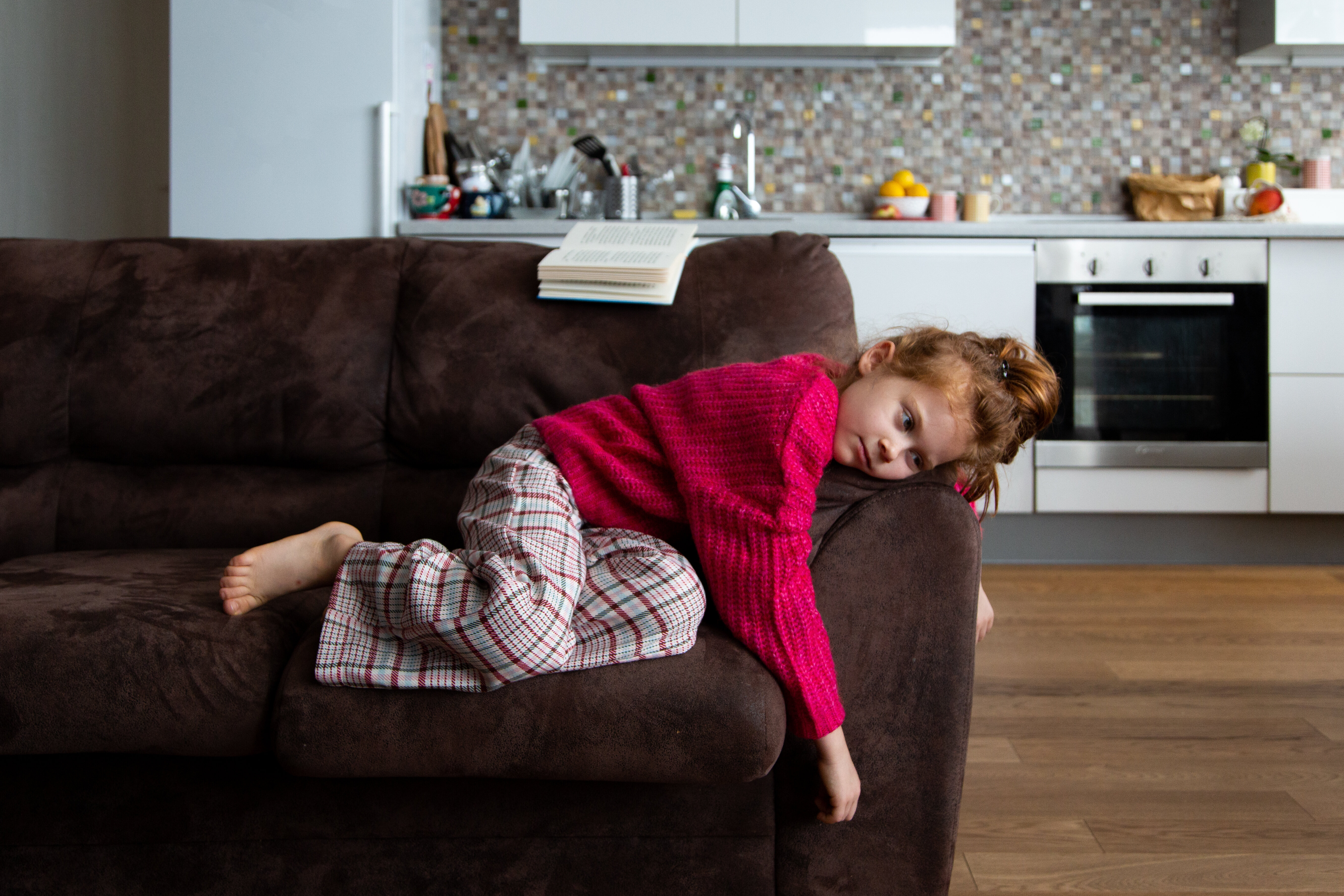
Over the past year, a friend’s daughter – let’s call her Lily – has repeatedly called herself ugly.

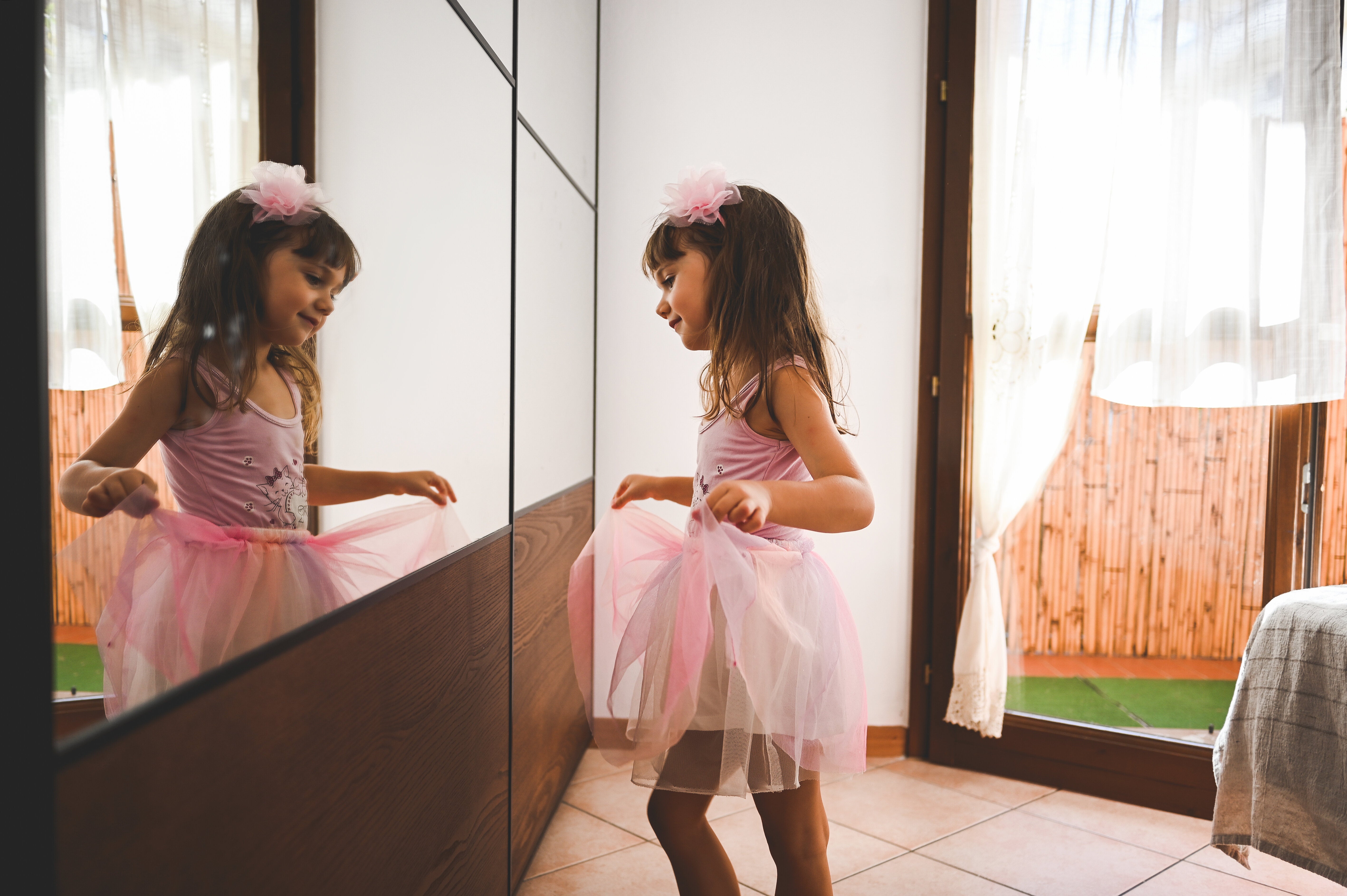
When Lily is supposed to be brushing her teeth, she looks in the mirror with a frown on her face, eyes scanning her features with disappointment.

Lily has wavy dark-brown hair; she wants straight blonde hair.

One morning Lily put pink marker all over her mouth. The day before, a child at school had called her ugly, and she thought the “lipstick” would make her look prettier.

Lily is 4. And she is beautiful.

How has the world warped this child’s view of herself? Why does Lily even need to care about looking beautiful at 4? Is she worried about getting a date for the class field trip?

More attention is finally being paid toward the harmful effects of social media on teens’ body image and mental health. However, a study my lab conducted suggests that we are missing an important piece of the puzzle. Specifically, we discovered that among girls, a preoccupation with appearance starts as young as age 3.

In our study, we interviewed 170 children ages 3 to 5 to examine when kids start to value being beautiful. Across all of the measures that we assessed, girls on average greatly valued their appearances. Girls said that to be a girl they needed to be pretty, and looking pretty was important.

When asked to select from an array of outfits and occupations, the girls in our study tended to select many fancy outfits and appearance-related occupations, like being a model or makeup artist. They showed good memory for pictures of fashionable clothing when these pictures were later hidden from view.

When explaining why they liked a pop culture character, girls often said things like, “I like all the princesses because they are pretty.” In a previous study, young girls also tended to purchase many toys that focused on appearance (e.g., a vanity set) with play money.

Across both studies, not only did girls tend to care highly about appearances, but they also did so more than boys.

Girls were about five times more likely than boys to say they liked a character due to what I refer to as “appearance reasons”.

Boys more often cited “action reasons,” such as liking Spider-Man “because he jumps high, climbs and shoots webs”.

Our study concluded that gender differences related to how much emphasis we place on beauty likely start in preschool.

While girls around the world have long been taught that beauty is of utmost importance, conversations with other gender development experts point to the early 2000s as a pivotal period when a new “girlie-girl” culture emerged.

One driver of this culture was the launch of the Disney Princess franchise in 2000, which continues to enamour young girls. My two young daughters have probably drawn upwards of a thousand pictures of Moana over the past two years.

Although Disney movies have evolved and now try to include more agentic heroines, the take-home message received by children still centred on beauty.

By adolescence, children are already primed to be preoccupied with how they look – a vulnerability that social media, often a very visual platform, taps into and exploits.

Decades of research have shown that tying self-worth to looks and having a distorted body image are linked to a whole host of negative outcomes, which can include poorer physical health (e.g., eating disorders, substance abuse) and mental health (e.g., depression). An unhealthy focus on appearance can also detract from a focus on school, interfere with academic performance and limit the career aspirations of young women.

If we know that emphasising physical appearance sets girls up for unhappiness – or worse – we must rethink our words and actions that instil this value, and we must begin before adolescence and social media use.

The preschool and kindergarten years are especially critical, as it’s during this time that children typically begin to strongly identify with a gender – whether the one they were assigned at birth or the one they know themselves to be – and they are hungry to learn what that gender means.

Children form gender stereotypes based on the information that is available to them and often doggedly follow these stereotypes. Because children are learning that girls are defined by how they look and boys by what they do, we must change the information they receive.

We can do this in a variety of ways. One is to (re)examine the images and toys our children encounter on a daily basis. Those beloved princesses and mermaid dolls with absurd body proportions can create internal standards that are impossible to attain.

Although adults understand the metaphor in making a superhero larger than life, children, who are extremely visual and swayed by how objects and people look, take these images at face value. We need to buy and create toys that feature diverse body shapes and sizes, varied and accurate facial features, different hair textures and a spectrum of skin colours.

There are some bright spots already out there. Our family loves the three Madrigal sisters from the movie Encanto. Mirabel, the main protagonist, has glasses and curly hair. Her oldest sister Luisa is renowned not for her beauty, but for her physical strength. Isabella, the middle sister, has darker skin and realistic body proportions that my children not only see but also feel when handling their dolls. The village values all three of them for their helpfulness, and their primary goals do not centre around attracting a prince. Barbie is also making more diverse dolls, but those more representative toys are still the minority.

There are also toys and games that encourage girls to solve problems, build structures and robots and use their creativity, but because our culture is still so influenced by gender stereotypes, young girls are often not exposed to them. We need to not only add positive and diverse images and toys, but move away from featuring and selling the harmful ones that currently dominate the market.

Until corporations do better, it’s up to us to do what we can. If you find yourself reaching for an “appearance toy” for a girl in your life, look for toys that encourage a wider variety of activities. Believe me, harmful images and toys will seep into your household, often through gifts from friends and family members, so parents and teachers need to take an active stance. Don’t feel guilty saying no to a toy that promotes an unhealthy approach to appearance.

We can also change how we talk to the children in our lives. Instead of constantly commenting on a child’s appearance – “You look so pretty!” or “That’s a beautiful dress!” – try focusing on other admirable attributes, especially when you’re speaking to girls.

On a broader level, let’s expand the idea of what a girl or a boy can be. By having more examples of the different ways that kids can be their gender (whether by being more or less traditionally feminine, masculine or something in between), everybody wins.

Of course, it’s important to instill a sense of pride in one’s appearance. But this is possible without focusing on traditionally esteemed – and frequently policed – characteristics. It can be even more complicated for children of colour or children from low-income backgrounds, where looking “good” can be unfairly and dangerously tied to respectability.

In these contexts, parents are often actively fighting to keep their kids from internalising insidious white beauty standards, in addition to challenging gender stereotypes.

And although appearance is typically emphasised more among girls, boys also face unrealistic standards regarding muscles and strength. One study found that 49% of boys ages 8-12 were unhappy with their appearance and another found that boys as young as 6 showed preferences for thinner and more muscular bodies.

Many of us relate to feeling dissatisfied with the way we look and have experienced negative outcomes due to our fixation on it. As a 12-year-old, I was obsessed with the weight I gained during puberty. Though doing varsity volleyball and track and field made me fit and strong when I was 15, I was unhappy with my body, and experienced depression and suicidal ideation.

I was not alone. I knew many other girls who were dealing with similar feelings. When I later attended Stanford, I was surrounded by incredible, high-achieving women, some who were world-class athletes, but who also struggled with their body image and disordered eating.

Seeing so many others who also suffered made me realise that these appearance- and health-related matters were bigger than just me.

Ultimately, I was motivated to study gender development as a career, which I’ve been doing for 17 years, in the hopes of addressing this complex and alarming societal issue.

I am anxious about what will happen when my two young daughters become teens, in a society where sexism and patriarchy still run rampant.

My husband and I have even contemplated leaving Los Angeles, arguably one of the most image-obsessed cities in the world.

Whenever we drive down Santa Monica Boulevard, billboards and advertisements expose my daughters to the supposed wonders of plastic surgery, implants and freezing off fat.

When we traipse down Montana Avenue, a swanky shopping area, we pass dozens of eyelash salons, hair salons, nail salons, waxing salons, sugaring salons and skincare shops squeezed in tightly next to each other along the street.

I know that these messages would still reach them no matter where we moved. This is the world we live in. This is the culture we’ve been told to want. These are the messages our children pick up – not just from where they live, but from the shows they watch, the movies they see, the songs they hear, the friends they make and even in their schools. And thanks to social media, AI technology, filters and photoshopping, it’s only getting worse.

So, we need to do whatever we can to combat all of this.

My research shows we have a huge problem on our hands. If a child is already steeped in these gender stereotypes and dysmorphic body ideals by age 5, just imagine what she’ll be thinking by 15.

It’s our responsibility to do whatever we can to foster healthier values and provide more diverse images and ideas of what it means to be a girl, a boy and a human being. I want my daughters – and everyone else’s kids – to always be able to recognise their own unique beauty, and I want them to know their value does not depend on that beauty.

This piece was originally published in May 2024 and is being rerun now as part of HuffPost Personal’s “Best Of” series.

May Ling Halim, Ph.D., is a developmental psychologist and is a mother of two girls. She is a Professor of Psychology at California State University, Long Beach, and the Director of the Culture and Social Identity Development Lab. Her research focuses on gender identity development among diverse young children. Her work has been published in leading academic journals on child development.

Do you have a compelling personal story you’d like to see published on HuffPost? Find out what we’re looking for here and send us a pitch at pitch@huffpost.com.

Help and support:

Share Button

Mums Are Sharing When The Mental Load Peaks – And I’m Exhausted Just Thinking About It

If you’re a parent, particularly a mother, you’ll likely be well acquainted with the mental load – or as UCLA Health describes it, the “behind-the-scenes, cognitive and emotional work needed to manage a household”.

Studies have found mums take on 71% of all household mental load tasks (in comparison to dads, who take on 45%), ranging from planning meals and arranging activities to managing household finances.

The impact of this unequal division of tasks, which can often go unnoticed, is not to be underestimated. “It can lead to stress, burnout and even impact women’s careers. In many cases, resentment can build, creating strain between couples,” political scientist Dr Ana Catalano Weeks said.

The weight of the mental load can vary dramatically over the years, depending on a range of factors including the age of your kids, their needs at the time and how many hobbies they have.

One parent took to Reddit recently to ask whether other mums felt there was an age where the mental load peaked.

“I have two kids, different school ages so in two different schools and schedules,” she said. “The mental load feels substantially larger than when they were smaller and only dealing with baby and toddler stages.”

The overarching theme was that there were two key peaks: the baby and toddler years; and then the tween years. But it turns out even university-age kids can come with their fair share of admin, too.

The baby and toddler peak

As a member of this camp, I can wholeheartedly say the mental load is exhausting – especially when you’re breastfeeding, as it’s not something you can technically “hand over”.

Similarly, keeping a child from harming themselves 24/7 (we’re currently in the climb everything and try-to-throw-ourselves-down-the-stairs phase of toddlerhood) is tiring.

Then there’s the sheer amount of sickness young kids have – and trying to juggle that around work, and who needs to take which day off to look after who, or who needs to be calling family members for backup childcare – as well as all the cleaning, weaning, and having to take the entire house with you when you go out anywhere for a significant period of time (aka more than 20 minutes).

One mum of four children aged 15, 18, 20 and 24 said the toddler years were “the worst” in terms of mental load.

Another parent noted they experienced “two mental load peaks” which had “very different flavours”, one of which was the baby and toddlerhood peak, “which was very much about keeping them alive and uninjured”.

They continued: “A lot of my mental energy was consumed by constant feeding, cleaning, and supervision of irrational creatures with no self-preservation instinct.” Told you.

But the tween years are also hard

The same mum added: “There was another mental load peak in the preteen years. This one was more about keeping everything on the rails. It was a combo of puberty issues like hygiene resistance and emotional meltdowns, and admin issues like keeping track of school schedules, projects, activities, trips, and social engagements.

“It started to settle down for us in high school, when the kids are more reliably handling their own personal, school, and social stuff.”

Another parent agreed that tweens require a lot of extra organisation: “As a parent of teens and tweens, I think there is more mental load for tweens. I’m still texting/arranging with other parents, still in charge of signing them up for things and transportation to/from everywhere, and still needing to support school a lot more.”

Older teens

Some parents did find that even with older children – we’re talking college-age kids and young adults – their mental load peaked.

“Mine are 17 and 22,” said a mother. “It’s peak emotional mental load. One is transitioning to adulthood after college and struggling to find a career. One is entering last year of high school and is anxious about the future. And I’m transitioning through perimenopause!!! It’s a very different mental load at this stage. It’s by far my worst time.”

Another parent agreed: “I can relate. I have an almost 19 year old and 21 year old. The 19 year old is starting college, and the twenty one year old has about a year and a half to go. And I am in menopause now, so my anxiety is high, and my sleep is all over the place.

“I feel like this is the hardest stage for me because they don’t listen as much to you.”

How to cope

Regardless of which stage you’re in, know that you’re certainly not alone.

If you’re struggling under the sheer weight of the mental load, UCLA Health experts have shared the following tips:

  • Speak to your partner about it and find a way to divide this invisible labour more equally. “Plan to meet weekly to review the mental labour for the upcoming week and assign those tasks,” experts suggest. There’s loads of advice on how to broach the topic here.
  • Make a daily or weekly to-do list so you can get them out of your head.
  • Set boundaries by saying “no” to things if it doesn’t work for you. Encourage older children to be independent – as the experts advise, “make them responsible for packing their own school and sports bags”.
  • Prioritise you time – that means taking rest where you can, exercising, eating well, and doing activities that fill your cup.
  • Don’t be afraid to ask for help if you’re struggling – whether that’s from your partner, friends and family members, or your GP or therapist.

Help and support:

  • Mind, open Monday to Friday, 9am-6pm on 0300 123 3393.
  • Samaritans offers a listening service which is open 24 hours a day, on 116 123 (UK and ROI – this number is FREE to call and will not appear on your phone bill).
  • CALM (the Campaign Against Living Miserably) offer a helpline open 5pm-midnight, 365 days a year, on 0800 58 58 58, and a webchat service.
  • The Mix is a free support service for people under 25. Call 0808 808 4994 or email help@themix.org.uk
  • Rethink Mental Illness offers practical help through its advice line which can be reached on 0808 801 0525 (Monday to Friday 10am-4pm). More info can be found on rethink.org.
Share Button

Pregnant Women In UK Told To Take Action Ahead Of RSV Season

For years; women, trans and non-binary people have been urged to get the flu and whooping cough vaccines during pregnancy.

Last year, a new vaccine was added to the list. But you may not have heard about it.

The vaccine is for RSV (respiratory syncytial virus). The illness can be very serious for babies, causing lung infections, breathing difficulties and even death, which is why pregnant individuals are urged to get vaccinated.

As the NHS explains: “When you have the RSV vaccine in pregnancy, the protection from the vaccine is passed to your baby. This means your baby is less likely to get severe RSV for the first six months after they’re born.”

Last winter, Australia saw record numbers of RSV since reporting began. This year, cases had been creeping up again (although they did recently plateau).

Australian winter illness levels can help give some indication of how viruses will spread in England when the cooler weather arrives, which is why the NHS’s top midwife is urging people in the UK who are currently pregnant to prioritise getting vaccinated against the virus.

What do I need to know?

If you’re 28 weeks (or more) pregnant, speak to your maternity service provider or GP about getting booked in for the RSV vaccine.

The vaccine can cause some mild side effects like swelling or pain at the injection site, a headache, and an aching body.

No side effects have been reported in babies born to mothers who have been vaccinated.

Babies born in ‘late summer or the autumn are most likely to be admitted to hospital’

Kate Brintworth, chief midwifery officer for NHS England, said: “While for most adults RSV only causes mild, cold like symptoms, for older adults and young children it can lead to serious breathing problems that can end up in hospitalisation.

“Getting vaccinated while pregnant is the best way to protect your baby from the moment they are born, and now is the time for mums to act, to make sure their babies are protected ahead of their first few months this winter, when there tends to be more bugs circulating.”

Research from the UK Health Security Agency (UKHSA) has found the RSV vaccine is 72% effective in preventing hospitalisation for newborns whose mothers are vaccinated more than 14 days before delivery.

Greta Hayward, consultant midwife at the UK Health Security Agency, said the vaccine boosts the pregnant parent’s immune system “to produce more antibodies against the virus, and these then pass through the placenta to help protect their baby from the day they are born”.

RSV season usually starts in October and Hayward said “babies born in late summer or the autumn are most likely to be admitted to hospital”.

Typical symptoms are a sore throat, runny nose, cough or fever, drowsiness, problems feeding or drinking, and difficulty breathing (including wheezing).

Some children with RSV can go on to develop complications such as pneumonia and bronchiolitis. In fact, RSV is the leading cause of bronchiolitis in infants, accounting for around 60-80% of infections.

“Hundreds of babies attend Emergency Departments each day for bronchiolitis through most of November and December,” said Hayward. “That is why it is so important that over the summer pregnant women reaching 28 weeks of pregnancy, ensure they are vaccinated as soon as possible.”

Share Button

Your Fail-Safe Guide To What To Eat While Camping With Kids This Summer

The summer holidays are now in full-swing and for some parents across the UK, that can only mean one thing: a camping holiday to enjoy a hearty dose of nature and, let’s be honest, tire the kids out in time for bedtime.

You have the equipment ready, the car is packed and the kids are suitably excited for the opportunity to go absolutely feral on a campsite. There’s only one issue: what do you eat every day?!

Of course, going out for dinner is an option but heading out for every single meal kind of defeats the point of camping and can make this relatively affordable holiday quite pricey after a few days.

Thankfully, there are plenty of options to choose from.

The best foods to eat when camping

Sandwiches

I know, I know, what an obvious suggestion. However, these handy snacks are ideal for throughout the day, are very easy to store and if they’re wrapped in tinfoil, can last a little longer than usual. They’re popular for a reason!

Pasta

Whether it’s tuna pasta, tomato and cheese pasta or even just pesto pasta, this delicious dinner is great hot or cold. You can make it ahead of time to reheat once you’re camping or you can simply tuck into it cold.

Pasta salads are also a delicious go-to, just keep the components separate until you’re eating to save anything going soggy.

Breakfast burritos

The camping experts at The Adventure Bite say: “Camping Breakfast burritos are easy to put together and full of delicious sausage, eggs, crispy fried potatoes, and melted shredded cheese. It’s the ultimate lazy camping breakfast if you put them together at home and toss them on the fire in foil.”

YUM. Perfect for filling tummies ahead of a day of adventures.

Cereals

Keep milk in your cooler bag and take with you a box of cereal or muesli. Quick, simple and cheap. Plus, kids never tire of cereal.

Tinned fruits

BBC Good Food recommends: “When it comes to camping desserts, it’s often a case of assembling rather than cooking. Tinned fruit can be mixed into an instant salad, but if you want to add a special touch, melt some chocolate to drizzle over tinned pears, then sprinkle with hazelnuts.

“Sweet, shiny canned peaches with cream are a retro winner, too.”

Pre-seasoned meats

In the /r/camping community on Reddit, user RedJessa says: “I like to pre-season steak, chicken breasts or pork chops and seal them in vacuum sealer bags. Just throw them on whatever grill type you please. I also will pre-chop potatoes and veggies, seasoned and sealed.

“Ready to sautee or cook in foil packs over the grill. The vacuum sealer thing is great for prepping camp food and I re-use the bags until I can’t anymore to reduce waste. I pre-cooked bacon last time so we only had to throw it on to heat and crisp, so much easier and less mess.”

Who said camping couldn’t be bougie?

Finger foods

Eat Sleep Wild suggests: “Another favourite option is a sort of lunch mezze of breads, olives, cured meat, cheeses, and hummus. All of these options travel well, are high in calories and good fats, and are super tasty!”

Happy camping!

Share Button

My Son And I Were Turned Away From Ikea’s Play Area For 1 Disturbing Reason. Here’s What They Don’t Understand.

In late June, a few days before Disability Pride Month began, I took my 7-year-old child on an outing to an Ikea store.

As I filled out a waiver so he could enter the store’s small play area, I noticed I was the only parent present.

It turned out that parents typically drop off their children while they shop, but that wasn’t an option for me.

My son has a rare, severe form of epilepsy called Dravet syndrome, among other medical conditions, and he can’t be without a grown-up carrying his seizure rescue medication, as I was.

The scary reality is that around one in five children with Dravet syndrome die in childhood because the seizures can be so severe. There is currently no cure.

I explained this to a staff member and told her that I’d need to be in the room with my child. She informed me that no parents were allowed into the play area.

“But isn’t there a policy for kids with disabilities?” I asked.

She told me a service dog could accompany a child, but a parent could not.

I stopped signing the form. I said to the staff member, “That’s discrimination against kids with disabilities.” She didn’t respond.

I hadn’t known about the store’s play area before this visit, and I had been happy to see that it wasn’t a playground – just a space with toys like a train set and dart board. Since my son had a seizure at an indoor playground a year ago, I’d stopped taking him to them. But now, even this play space was not an option for him.

My child and I were both upset. He loves going to Ikea to walk through the showroom and eat in the cafeteria – a place open enough that it was the only indoor restaurant he ate in during our four years of masking during the Covid-19 pandemic. We have several Ikea furniture items, including bunk beds, a coat/shoe cubby and a toy chest. He helped us build them all.

Since his severe seizures began about two years ago, he’s had to change his life in significant ways. Heat, sports, just running around to play, illness and excitement have all become triggers for him. Summer is especially hard – on hot days, he can’t be outside. In fact, we had driven the hour to Ikea in traffic just so he could walk and have a change of scenery in a large, air-conditioned space because the temperature outside was dangerous for him.

I told him, “This isn’t OK.”

He said, “We should talk to someone.”

I was proud of him.

After talking to a few staff members, we spoke with a manager, who said he wasn’t familiar with the policy, and he’d get back to me the next day. He didn’t.

Later, I looked online, and there was a section on the Ikea website directing caretakers of children with disabilities to start a conversation with the Ikea store manager about how the child can best have their needs accommodated in the play area. I was hopeful that when we went in the future, we could show the policy to the staff.

However, that doesn’t undo the pain my child felt after hearing that he wasn’t welcome in that play space because of his disabilities. During the hour-long car ride home afterward, we talked a lot about discrimination. I reinforced that what happened wasn’t OK, and that the more than 3 million kids with disabilities in our country deserve to be included.

I told him about my older sister, his late aunt, who had microcephaly and faced various barriers to equal access too, like having to sit on the sidelines of playgrounds in her wheelchair. It upset me.

When I was 10, in 1993, I read about new accessible playgrounds in an issue of Scholastic News, and I hoped we could build one for her. Sadly, she died a few weeks later, but in her memory, my family and I worked with the Cincinnati Parks Department to build an accessible playground. My son thought that was cool.

I also explained that many groups of people face discrimination for reasons such as gender, race, sexual orientation, immigration status and more, and we need to be allies and stand up against all forms of discrimination.

I also told him that one way to help is to make disabilities more visible and raise awareness, as we have done in his school class for the past three years.

This June, for Dravet Syndrome Awareness Month, he and I held a neighbourhood lemonade and cupcake fundraiser and donated money to the Dravet Syndrome Foundation, which helps fund the kind of critical epilepsy research that the Trump administration has recently cut.

After our experience at Ikea, as one of his bedtime books, we re-read the picture book All the Way to the Top, about a child who protested and helped advocate for the Americans with Disabilities Act, which passed 35 years ago.

Afterward, I told him about children with disabilities who went to Congress this summer, asking their leaders not to make it harder for them to go to the doctor and get the medicine and treatment they need.

Unfortunately, President Donald Trump’s domestic policy billhas since passed, and many people, including children with disabilities, will be harmed as a result.

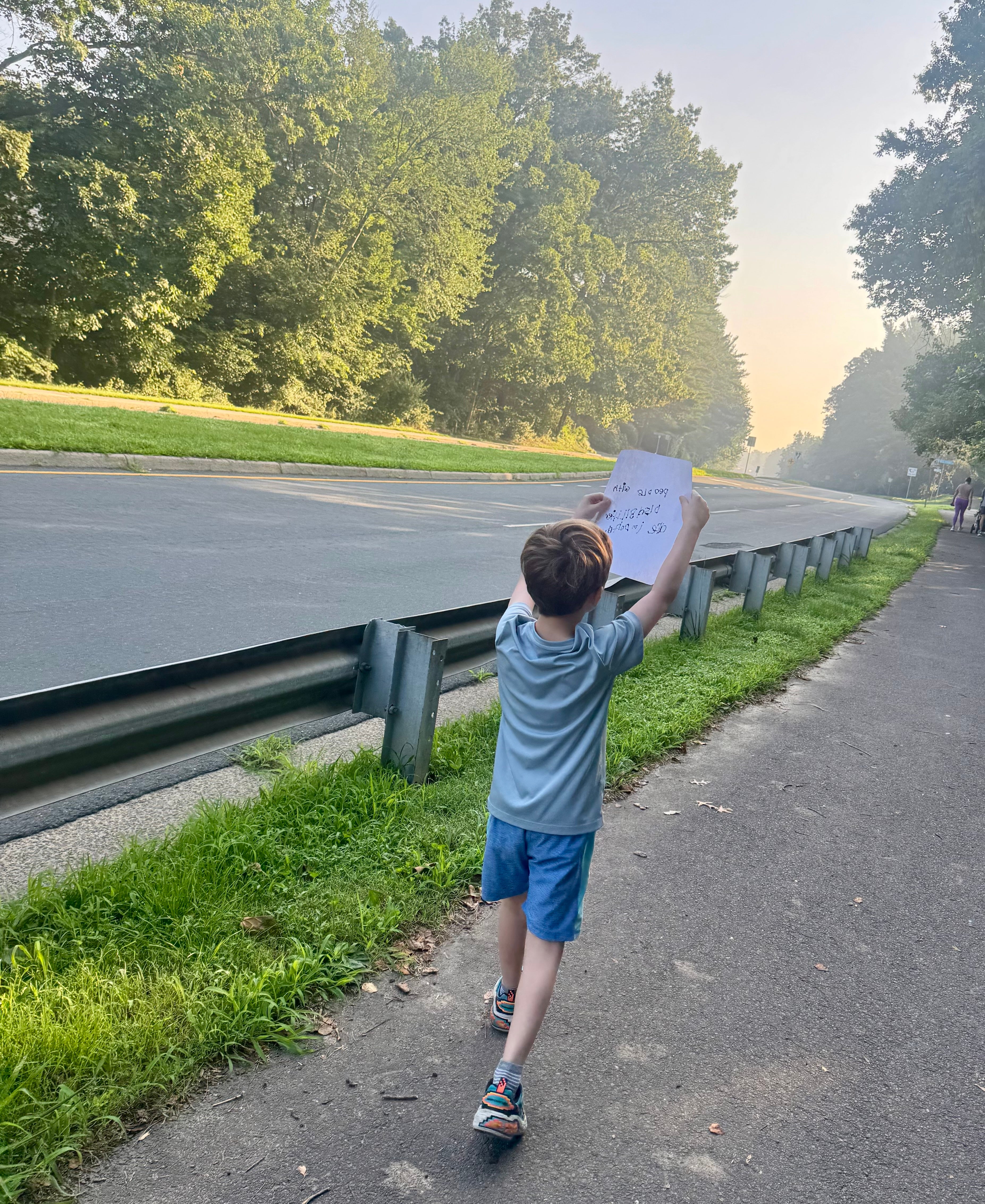
Two days after the bill passed, my child woke up and said, “I want to make a sign about disabilities.”

He asked for my help with spelling before writing the words, “People with disabilities are important” in pencil and then tracing over them with marker. He stood by our Disability Pride yard sign, and then, since the temperature was cooler out, he walked down our street and held it up for cars passing by.

He said that when he grows up, he wants to be an “activist” and “protester.”

I told him that he already is.

[Editor’s Note: HuffPost reached out for a response, and Ikea US issued the following statement: “At IKEA, we strive to offer a safe and inclusive environment for children to play while in our stores. Our Småland policies are in place to keep children safe when they are in our space. Regarding this family’s recent experience in our College Park, MD store, we are incredibly sensitive to feelings of exclusion, and so we have shared information with the family about our accommodations process, so that they may have a more positive experience at IKEA. We are constantly working to improve how we create an inclusive space while maintaining policies that keep all children safe.”]

Do you have a compelling personal story you’d like to see published on HuffPost? Find out what we’re looking for here and send us a pitch at pitch@huffpost.com.

Share Button

I’m A Grandma To 10 Kids – Here Are 4 Common Mistakes Grandparents Make

Grandparents can have such a positive effect on family life – but sometimes, they might overstep, and things can swiftly turn sour.

Research from Michigan Medicine found almost half of parents have butted heads with grandparents over parenting choices, often involving discipline, snacks and screen time.

Yet when families get along, the benefits can be far-ranging – not only do studies show that grandparents who are actively involved in their grandchildren’s lives tend to live longer, but kids with close relationships to their grandparents often experience fewer behavioural problems.

Parenting expert Esther Wojcicki, who is a grandmother to 10 children, is a firm believer that successful grandparenting starts with “respecting your adult children’s parenting choices”.

The author of How to Raise Successful People and founder of the Parenting TRICK app, has walked us through four common mistakes grandparents make – as well as advice for building healthier, happier family dynamics.

Here’s what she had to say…

1. Overstepping parental boundaries

“Many grandparents instinctively feel they know what’s best, having already raised their own children,” said Wojcicki. “It’s natural to want to guide your adult kids in their parenting journey, but taking charge or telling them what they should or should not do can cause tension.” Remember, your child is an adult.

Solution

“Open, honest communication is vital. Parents and grandparents should discuss expectations and boundaries before issues arise. It can help to have the grandparents acknowledge – verbally or even in writing – that the parents are in charge,” she said.

“Agree not to undermine their authority or contradict their parenting decisions, especially in front of the children. If a misstep happens, address it promptly and honestly. Failing to do so can erode trust – one of the most crucial elements in any relationship.”

2. The problem with sweets and toys

The parenting pro said while it’s very tempting to show love with presents, showering grandchildren with sweets and toys – especially when parents disapprove – can create bigger problems. “While the intention is affection, it can feel like undermining the parents’ wishes and household routines,” she explained.

Solution

Her advice is simple: before bringing treats or gifts, check with the parents. “Ask if certain toys or foods are off-limits, and respect their decisions. A thoughtful note, an outing, or a shared activity can be more meaningful than material gifts, and they reinforce healthy boundaries and habits,” she added.

3. Encouraging secrets

It’s not unheard of for grandparents to let children break a rule with a wink and a “just don’t tell your mum or dad”.

“While it seems innocent – letting them stay up late or sneak an extra cookie – it teaches children that it’s okay to keep secrets from their parents, which is a dangerous precedent,” said the author.

Solution

She warns never to encourage secret-keeping, even over minor issues. “This can send mixed messages about honesty and can even risk children’s safety in more serious situations. Instead, focus on creating memorable moments you’d all be happy to share openly,” she added.

4. Criticism and undermining

And lastly, while it can be tough watching your child parent differently than you did – and even harder not to comment on things like snacks, screen time, or even clothing choices, Wojcicki said criticising your adult child’s parenting – or poking fun at your grandchild – can “hurt feelings and sow discord”.

Solution

Her advice is to aim for encouragement over criticism. “If you disagree with a parenting choice, share your thoughts privately and respectfully,” she said.

“Remember: unless a child’s safety or health is at risk, it’s the parent’s prerogative to make their own mistakes and learn, just as you did.”

Share Button

I’m A Child Psychiatrist – Don’t Make This 1 Mistake When Talking To Teens

Raising teens can be a bit of a minefield – where once your sweet, adoring child worshipped the ground you walked on, all of a sudden they simply don’t want to know.

You might be facing more arguments, major mood and sleep changes, as well as having to become a full-time translator while your kid keeps calling everyone “chat”.

But there is one innocent mistake parents might be making in the teenage years, according to a child psychiatrist – especially if you want them to be able to open up to you.

Child psychiatrist Dr Willough Jenkins said in a TikTok video that it “might sting a little” for parents to hear, but she wants everyone to know: “If you’re doing most of the talking, you’re probably not having a conversation with your teen… that’s called a lecture.

“You want them talking more than you. That’s how you learn what they’re really thinking, and how they learn that you’re really listening.”

Her advice to facilitate more conversations with teens is simple: “Start with a question. Then pause. And really listen.”

In a separate video, the psychiatrist said one of the things that makes a successful parent is “listening more than lecturing”.

She also suggested “staying calm when things go wrong”, “repairing after you mess up” and “setting boundaries with love, not fear” are “what real success looks like”.

Therapists previously told HuffPost UK that creating a space that feels emotionally safe and low-pressured is important to help teens open up – especially if you think they might be struggling mentally.

Make conversation by asking open-ended and emotionally neutral questions and statements. You could say something like: “How’s everything going lately?” or “How are things feeling for you at school/with friends/life right now?”.

And then really listen.

BACP-accredited therapist Lauren Young also suggested resisting the urge to fix everything for teens and instead, validating their feelings and thanking them for trusting you if they come to you with a problem.

All of this can help teenagers know that you’re there for them. As BACP-accredited member and psychotherapist Debbie Keenan told us: “Sometimes, the goal isn’t to get your teen to ‘open up’ immediately, but to remind them that they’re not alone, that emotions are valid, and that you’re a reliable presence in their life.

“Trust is built in the quiet, everyday moments, often more than in the big talks.”

Share Button

Khloé Kardashian Opens Up About Tristan Thompson’s Comment On Their Daughter’s Clothes

From infidelity to paternity scandals, it’s no secret that Khloé Kardashian and her ex Tristan Thompson have gone through public struggles during their former on-and-off relationship.

But despite all of the drama, the reality star has maintained that co–parenting with Thompson, the father of her children True and Tatum, has been relatively “seamless”.

Kardashian has been open about co-parenting with Thompson in the past. But in a new episode of her podcast Khloé in Wonder Land, the star got candid about how being a “co-parenter” can be hard emotionally at times and admitted that she can get “defensive” as a mum when she and Thompson have opposing opinions.

Kardashian then recalled an instance where the NBA star once questioned her over the length of seven-year-old True’s shorts.

“Tristan’s not wrong, but he’s like, ‘Don’t you think those shorts are too short on her?’” she explained during Wednesday’s episode. “You wanna almost be like, ‘Yeah, she’s my kid!’ But it’s our kid. You just want to have that ownership.”

Kardashian continued: “I’m like, ’Yes, they’re short, but we’re just hanging out at the house pool – because I will send pictures to him or whatever.”

In moments like those, Kardashian said she gives herself and the Canadian basketball player grace.

“You still wanna let your co-parenter be the parent as much as they want to. And you also have to give them grace [and] yourself grace,” she shared.

Tristan Thompson and Khloe Kardashian first began dating in 2016.

Jerritt Clark via Getty Images

Tristan Thompson and Khloe Kardashian first began dating in 2016.

Kardashian added: “Sometimes, you have to take a breath and be like, ‘It’s OK. He’s doing what’s right. Yes, the shorts are short, but we’re at home lounging, so let me explain the context of these photos.’”

Wrapping up her comments, Kardashian noted that her exchanges with Thompson can cause an “emotional battle” within herself.

“That is an emotional battle I have [with] myself. I can’t be like, ‘This is my kid.’ I have to allow for Tristan to be the dad, too,” she said.

Despite their occasional difference in parenting styles, the mum of two said elsewhere in the episode that there’s ultimately “no drama” when it comes to co-parenting with Thompson.

“Him and I are seamless co-parents. I’m really grateful for that,” she said. “Tristan trusts me as a mom, so I don’t get a lot of pushback … he just knows that I’m not going to do anything to harm the kids.”

Watch Kardashian’s Khloe in Wonder Land podcast below.

Share Button

Ed Sheeran Has 1 Bit Of Parenting Advice For First-Time Dads

Ed Sheeran has two young girls, and he’s got some advice for anyone about to be a first-time dad.

“I just think always be the one that makes the breakfast in the morning. Always be the one that gets up first and lets your partner have her lie-in and do the breakfast,” he said on last week’s episode of Kylie Kelce’s hit podcast, Not Gonna Lie.

“Because also, that’s the time of the day your kids are, uh, the least angry, because they’re rested and they wake up and it’s fun,” he said. “Your partner gets to have a lie-in, but also then you get the golden moments in the morning when your kids are like, calm and happy.”

Kelce chimed in and agreed with Sheeran’s assessment.

“I say it all the time. They’re their best selves in the morning,” the mum of four added. “They’re like sweet and cuddly, and their voices are like gentle.”

<div class="js-react-hydrator" data-component-name="YouTube" data-component-id="5662" data-component-props="{"itemType":"video","index":7,"contentIndexByType":1,"contentListType":"embed","code":"

","type":"video","meta":{"author":"Not Gonna Lie with Kylie Kelce","author_url":"https://www.youtube.com/channel/UCmCEofjQiLDJYUCFu_zlfPA","cache_age":86400,"description":"Kylie’s back for a brand new episode of Not Gonna Lie presented by Toyota and kicks the show off with some very exciting news the Real Ones have been waiting for since we launched the show! \n\nKylie then gets honest about a new parenting trend called “Feral Child Summer” where kids have less structured days, play freely outside and have very little screen time. Kylie shares her own experiences with “feral summers,” how she feels about it for her girls and which one of her kids gets the title of “most feral Kelce child.”\n\nAlso, in Doomscroll of the Week, Kylie is inspired by a TikTok of a woman’s father-in-law walking in on her pumping and shares how her dad and father-in-law react whenever she feeds Finn. She also gives her official tips for people who may not know how to act when a woman is breastfeeding near them.\n\nThen, Kylie is joined by Grammy Award winning superstar and one of the best-selling artists in history – Ed Sheeran! Kylie and Ed talk about raising all girls in their households and the music and movies their daughters love.\n\nAfter that, Kylie asks Ed about his new album “Play” coming out in September and which songs his daughters love the most. Ed shares how he plays his new music for his wife and kids often to get their feedback.\n\nKylie and Ed also get into where Philly ranks as far as his favorite U.S. cities to perform in, what he loves about Philadelphians and which artists they think are the “cheat codes” for bringing on stage to get the greatest crowd reactions in their hometowns.\n\nThen, Kylie asks Ed about his incredible “Dive” duet with singer Ellie Banke who Kylie is a major fan of from all her song covers on TikTok. Ed also tells Kylie which of his own duets are his favorites of all time. \n\nLastly, Kylie and Ed rave about their mutual love for the movie Love Actually and Ed shares his go-to fatherhood advice he likes to give first time dads.\n\nMake sure you tune into More Sh*t Monday on the Not Gonna Lie YouTube channel for more exclusive clips from Kylie’s longer conversation with Ed Sheeran!\n\nP.S. Kylie announces some big news in this episode… (it will be available @ 12pm ET!) \n.\n.\n.\nDownload the full podcast here:\nApple: https://podcasts.apple.com/us/podcast/not-gonna-lie-with-kylie-kelce/id1780888125\nSpotify: https://open.spotify.com/show/0RgXbSGGmwpzAyeLHbDqUD?si=4585dab89c4f4c11&nd=1&dlsi=e178bf324b99403f\n\nFollow Not Gonna Lie on Social Media for all the best moments from the show: \nlnk.to/j61XD8\n\nSupport the Show: \n\nToyota: To learn more about the Toyota Sienna, please visit https://www.toyota.com/sienna/\n\nEd Sheeran’s New Album “Play” Is Out 9/12! https://es.lnk.to/playWE\n\nChapters: \n00:23 – Intro\n01:11 – Kylie’s Big Announcement\n03:24 – Feral Child Summer\n08:06 – Breastfeeding Etiquette \n13:33 – Ed Sheeran Joins the Show\n14:10 – The Girl Dad Experience\n17:23 – Kids Music That Slaps\n22:52 – Ed’s New Album\n26:22 – Performing in Philly\n30:01 – NFL Fandom\n33:05 – Most Memorable Duets\n40:30 – Love Actually\n43:57 – Fatherhood Advice\n\n#kyliekelce #ngl #edsheeran #motherhood #fatherhood #music #comedy #parenting #nfl","options":{"_cc_load_policy":{"label":"Closed captions","value":false},"_end":{"label":"End on","placeholder":"ex.: 11, 1m10s","value":""},"_start":{"label":"Start from","placeholder":"ex.: 11, 1m10s","value":"2766"}},"provider_name":"YouTube","thumbnail_height":720,"thumbnail_url":"https://i.ytimg.com/vi/wRm9dJK7VF8/maxresdefault.jpg","thumbnail_width":1280,"title":"Kylie & Ed Sheeran on Performing with Beyoncé, Raising Their Girl Squads & Most Feral Kelce | Ep. 26","type":"video","url":"https://www.youtube.com/watch?v=wRm9dJK7VF8","version":"1.0"},"flags":[],"enhancements":{},"fullBleed":false,"options":{"theme":"life","device":"desktop","editionInfo":{"id":"uk","name":"U.K.","link":"https://www.huffingtonpost.co.uk","locale":"en_GB"},"originalEdition":"uk","isMapi":false,"isAmp":false,"isAdsFree":false,"isVideoEntry":false,"isEntry":true,"isMt":false,"entryId":"6876642fe4b0de0ba50623a8","entryPermalink":"https://www.huffingtonpost.co.uk/entry/ed-sheeran-dad-advice_uk_6876642fe4b0de0ba50623a8","entryTagsList":"life-as-a-parent,celebrity-parents,parenting,ed-sheeran,@ai_seo_headline,@us_huffpost_now,@widget-imported","sectionSlug":"parents","deptSlug":null,"sectionRedirectUrl":null,"subcategories":"entertainment","isWide":false,"isShopping":false,"headerOverride":null,"noVideoAds":false,"disableFloat":false,"isNative":false,"commercialVideo":{"provider":"custom","site_and_category":"uk.parents","package":null},"isHighline":false,"vidibleConfigValues":{"cid":"60afc140cf94592c45d7390c","disabledWithMapiEntries":false,"overrides":{"all":"60b8e525cdd90620331baaf4"},"whitelisted":["56c5f12ee4b03a39c93c9439","56c6056ee4b01f2b7e1b5f35","59bfee7f9e451049f87f550b","5acccbaac269d609ef44c529","570278d2e4b070ff77b98217","57027b4be4b070ff77b98d5c","56fe95c4e4b0041c4242016b","570279cfe4b06d08e3629954","5ba9e8821c2e65639162ccf1","5bcd9904821576674bc55ced","5d076ca127f25f504327c72e","5b35266b158f855373e28256","5ebac2e8abddfb04f877dff2","60b8e525cdd90620331baaf4","60b64354b171b7444beaff4d","60d0d8e09340d7032ad0fb1a","60d0d90f9340d7032ad0fbeb","60d0d9949340d7032ad0fed3","60d0d9f99340d7032ad10113","60d0daa69340d7032ad104cf","60d0de02b627221e9d819408"],"playlists":{"default":"57bc306888d2ff1a7f6b5579","news":"56c6dbcee4b04edee8beb49c","politics":"56c6dbcee4b04edee8beb49c","entertainment":"56c6e7f2e4b0983aa64c60fc","tech":"56c6f70ae4b043c5bdcaebf9","parents":"56cc65c2e4b0239099455b42","lifestyle":"56cc66a9e4b01f81ef94e98c"},"playerUpdates":{"56c6056ee4b01f2b7e1b5f35":"60b8e525cdd90620331baaf4","56c5f12ee4b03a39c93c9439":"60d0d8e09340d7032ad0fb1a","59bfee7f9e451049f87f550b":"60d0d90f9340d7032ad0fbeb","5acccbaac269d609ef44c529":"60d0d9949340d7032ad0fed3","5bcd9904821576674bc55ced":"60d0d9f99340d7032ad10113","5d076ca127f25f504327c72e":"60d0daa69340d7032ad104cf","5ebac2e8abddfb04f877dff2":"60d0de02b627221e9d819408"}},"connatixConfigValues":{"defaultPlayer":"16b0ecc6-802c-4120-845f-e90629812c4d","clickToPlayPlayer":"823ac03a-0f7e-4bcb-8521-a5b091ae948d","videoPagePlayer":"05041ada-93f7-4e86-9208-e03a5b19311b","defaultPlaylist":"2e062669-71b4-41df-b17a-df6b1616bc8f"},"topConnatixThumnbailSrc":"data:image/png;base64,iVBORw0KGgoAAAANSUhEUgAAAAEAAAABCAQAAAC1HAwCAAAAC0lEQVR42mNkYAAAAAYAAjCB0C8AAAAASUVORK5CYII=","customAmpComponents":[],"ampAssetsUrl":"https://amp.assets.huffpost.com","videoTraits":null,"positionInUnitCounts":{"buzz_head":{"count":0},"buzz_body":{"count":0},"buzz_bottom":{"count":0}},"positionInSubUnitCounts":{"article_body":{"count":3},"blog_summary":{"count":0},"before_you_go_content":{"count":0}},"connatixCountsHelper":{"count":0},"buzzfeedTracking":{"context_page_id":"6876642fe4b0de0ba50623a8","context_page_type":"buzz","destination":"huffpost","mode":"desktop","page_edition":"en-uk"},"tags":[{"name":"life as a parent","slug":"life-as-a-parent","links":{"relativeLink":"news/life-as-a-parent","permalink":"https://www.huffingtonpost.co.uk/news/life-as-a-parent","mobileWebLink":"https://www.huffingtonpost.co.uk/news/life-as-a-parent"},"section":{"title":"Parents","slug":"parents"},"topic":{"title":"Life As A Parent","slug":"life-as-a-parent","overridesSectionLabel":false},"url":"https://www.huffingtonpost.co.uk/news/life-as-a-parent/"},{"name":"celebrity parents","slug":"celebrity-parents","links":{"relativeLink":"news/celebrity-parents","permalink":"https://www.huffingtonpost.co.uk/news/celebrity-parents","mobileWebLink":"https://www.huffingtonpost.co.uk/news/celebrity-parents"},"url":"https://www.huffingtonpost.co.uk/news/celebrity-parents/"},{"name":"Parenting ","slug":"parenting","links":{"relativeLink":"news/parenting","permalink":"https://www.huffingtonpost.co.uk/news/parenting","mobileWebLink":"https://www.huffingtonpost.co.uk/news/parenting"},"relegenceSubjectId":981826,"url":"https://www.huffingtonpost.co.uk/news/parenting/"},{"name":"Ed Sheeran","slug":"ed-sheeran","links":{"relativeLink":"news/ed-sheeran","permalink":"https://www.huffingtonpost.co.uk/news/ed-sheeran","mobileWebLink":"https://www.huffingtonpost.co.uk/news/ed-sheeran"},"relegenceId":6019493,"url":"https://www.huffingtonpost.co.uk/news/ed-sheeran/"}],"isLiveblogLive":null,"isLiveblog":false,"cetUnit":"buzz_body","enableIncontentPlayer":false,"bodyAds":["

\r\n\r\n HPGam.cmd.push(function(){\r\n\t\treturn HPGam.render(\"inline-1\", \"entry_paragraph_1\", false, false);\r\n });\r\n\r\n","

\r\n\r\n HPGam.cmd.push(function(){\r\n\t\treturn HPGam.render(\"inline\", \"entry_paragraph_2\", false, false);\r\n });\r\n\r\n","

\r\n\r\n HPGam.cmd.push(function(){\r\n\t\treturn HPGam.render(\"inline-2\", \"entry_paragraph_3\", false, false);\r\n });\r\n\r\n","

\r\n\r\n HPGam.cmd.push(function(){\r\n\t\treturn HPGam.render(\"inline-infinite\", \"repeating_dynamic_display\", false, false);\r\n });\r\n\r\n"],"adCount":0},"isCollectionEmbed":false}”>

“They want to help out as well!” Sheeran said. “So I’m handing them plates, and they’re putting the plates away, and I’m like, you’re making my job easier. And also, we’re spending time together.”

The singer continued: “So yeah, I’d say always do the morning shift. I actually love the morning shift and the evening shift. Reading 40 different stories and having someone like, fall asleep on your shoulder is actually really lovely.”

Sheeran and his wife, Cherry Seaborn, have two girls: Lyra Antarctica Seaborn Sheeran, aged 4, and Jupiter Seaborn Sheeran, who is 3.

The Perfect musician has spoken about the ways that parenthood has changed him, calling fatherhood “the best thing that’s ever happened to me”.

“There’s so many different sides and shades to it,” the songwriter shared during SiriusXM Hits 1 interview in 2021. “You know, there’s difficult days, there’s amazing, easy days.”

He added: “It’s just a roller coaster of emotions. I know that sounds like a cliché thing to say, but it’s amazing. I love it.”

Share Button