8 ‘Gross’ Things Your Body Does That Are Actually Good For You

Have you ever wondered why you have earwax or why you fart? Although these bodily functions might seem gross, they are actually beneficial to maintaining your overall health. So even though they may be stinky, unsightly or a huge nuisance – you need them for optimal functioning.

To provide more insight on the most common disgust-inducing body mechanisms, we chatted with a few doctors on what you might notice and why they happen. Here’s what to know:

1. Earwax

If you’ve noticed a clogged feeling in your ears, then it may be due to a buildup of earwax, also known as cerumen. However, when it’s not causing damage and discomfort, earwax is actually good for you.

“Not only is earwax normal, it’s necessary. Earwax protects the ears from things that could hurt the eardrum, such as dust, hair or small insects,” says Dr. Jaclyn Railsback, an internal medicine physician at Cleveland Clinic Florida Weston Hospital.

Certain factors that may affect the amount of earwax you have include previous ear surgery or trauma, recurrent ear infections, or wearing hearing aids or deep earplugs.

“Unless there is a serious condition, such as hearing loss or infection, it is best to leave earwax alone in most cases,” Railsback says.

2. Leaky nipples

Not everyone has leaky nipples, however, those who just had a baby will likely experience this phenomenon.

“Your body would rather produce too much milk than not enough in the early stages of breastfeeding,” says Dr. Whitney Casares, the founder and CEO of the Modern Mamas Club. “All that extra milk can get messy as your body works out the balance of supply and demand between you and your baby and you may end up with leaky nipples and a wet shirt.”

Leaky nipples are a normal part of the breastfeeding process and are a clear sign of heavy milk production for nursing people. That said, if other discharge leaks from the nipples, or if there’s pain, you’ll want to consult with your doctor to rule out any underlying conditions.

3. Flatulence

While passing gas may be embarrassing and gross, it’s a natural result of the digestive process.

“It is a way for your body to expel both swallowed air as well as the fermented byproducts of undigested food,” says Dr. Brett Mendel, a gastroenterologist and Everlywell adviser.

The volume and frequency of flatulence can vary greatly between individuals and can be affected by diet, activity level, antibiotic use and even altitude.

Additionally, farting may indicate that your diet is high in fibre which can signal improved gut health and that of the microbiome. Plus, it can help prevent unwanted stomach pain and bloating which is commonly caused by “holding it in”.

While farting is normal, too much may not be a good thing. “Excess gas leading to bloating and abdominal pain can be signs of serious medical conditions you should share with your doctor,” Mendel says.

According to Healthline, excessive flatulence is categorised as farting more than 20 times per day. While this is frequently caused by diets high in fibre, in some rare cases it can be indicative of other issues such as Crohn’s disease or dumping syndrome.

4. Burps

You’ve probably been told not to belch at the dinner table, but sometimes you just have to let it out for your health.

“Burping is the body’s way of expelling excess gas from your stomach and even though it seems gross, it is a normal bodily function,” Railsback says. “When we swallow food or drinks, it goes through the esophagus and into the stomach where stomach acids and digestive enzymes work to break food down into nutrients that we use for energy which creates gas during the process.”

If you always hold in your burps because you’re embarrassed or they are just not something you like to do, then you might experience bloating and an overinflation of the stomach that may cause discomfort.

While burping a few times isn’t a cause for concern, if it persists, then you might want to take a trip to the doctor’s office. “While burping is a normal function, it can be associated with certain conditions like GERD, indigestion, gastritis, ulcers and IBS,” Railsback says.

5. Vaginal discharge

While using the restroom, you might notice some discharge when you wipe. Although this clear jelly-like substance might seem gross, it’s actually a sign of a healthy reproductive system.

Vaginal discharge is a way your body carries away dead cells and bacteria, keeping the vagina clean and preventing infection,” Casares said.

While discharge is normal, Casares noted that if your discharge has a fishy odor, causes itching or changes color, you’ll want to get checked out by a medical professional to rule out any underlying conditions or infections.

6. Mucus

After blowing your nose, you’ll most likely see mucus in a tissue. Mucus is naturally produced by the cells in your mouth, throat, nose and sinuses.

“Mucus plays an important role in lubricating and protecting your upper and lower airway,” Railsback says. “Its slippery consistency helps trap potential irritants as it contains special antibodies and proteins to help fight harmful germs that may be introduced into your respiratory tract.”

Railsback noted that healthy mucus tends to be thin and clear, but if you’re sick or have other lung disease, mucus can become thick, colourful and can potentially cause difficulty breathing.

7. Pooing

As the popular saying goes, “everybody poops.” While it may not smell pleasant, “bowel movements are the mechanism for our body to get rid of materials that cannot be digested,” Mendel says. “It is generally accepted that normal bowel movements are from three times a day to three times a week.”

According to the Bristol Stool Chart, a “sausage-like” poop with cracks or a “smooth soft sausage or snake-like” type of poop is ideal (Types 3 and 4). Anything that falls too far out from the descriptions above should be flagged to a professional for evaluation.

While pooping is healthy, alterations in bowel movements can be an indicator of overall health. For example, if you have chronic constipation, diarrhea, or blood in your stool, you’ll want to schedule an appointment with your physician.

8. Pus

When you get an infection, like a staphylococcus (a bacterial infection) or folliculitis (infection of a hair follicle), you might notice that pus develops. While it may be an eyesore to look at, pus is actually a good thing.

“The white stuff coming out of an infection ― known as pus ― is the collection of defensive white blood cells that are attacking bacteria to trap and kill them,” said Dr. William Li, a doctor and author of Eat To Beat Disease.

It’s usually normal to have some pus present shortly following the presence of a wound – around one or two days after. This means that the white blood cells have flocked to the open wound and are working to fight germs and bacteria. If the wound is healing, it’ll usually be odour-free and not show signs of discolouration.

When you get an infection, however, the pus may smell and the wound may be hot to the touch so you’ll want to be sure to head to the doctor to get it treated and prescribed medication to clear it as soon as possible.

Share Button

How To Pull Off A Therapy Session In The Middle Of Your Workday

Just as you take care of your physical health, therapy is an important aspect of taking care of your mental health. Making a therapy appointment can be a tricky task, especially if your therapist’s schedule overlaps with your workday.

It’s normal to experience a range of intense emotions following your therapy session. Understand that it may seem tough to transition back to work if you’re feeling emotionally and mentally drained. There are also a few ways to make going about your to-do list a little easier post-session.

If you plan to schedule your appointment during work hours, aim for a day when your workload may be lighter and you can work from home, if possible. Moreover, try to block some additional “transition time” in your schedule for after the visit, says Katie Duke, a nurse practitioner on the health care advisory board of the Figs clothing company in Santa Monica, California.

If you have the appointment on a busier workday, it is also helpful to inform your therapist if there are any important meetings that are happening after the session so that the therapist can also be mindful about tailoring what is talked about in the visit, says Alyssa Mancao, a therapist and founder of Alyssa Marie Wellness in Los Angeles.

Mancao also recommends being aware of time so you can spend the last 10 minutes of the visit on coping techniques to transition back to “work mode.”

And if you need a little extra help beyond that, here are a few expert-approved tips on how to pull yourself together after therapy if your appointment is during work:

Go for a walk

Mancao recommends going for a 15-minute walk after your therapy session to help calm your nervous system and transition your mind from being in “therapy mode.”

Take some time to get some fresh air and go for a walk outside or make a few rounds in your office building, if possible.

Try a quick breathing exercise

Deep breathing is a practice that helps cultivate mindfulness, aka. the ability to be present. Mindfulness can help calm your busy mind, improve your mood and reduce any stress you may be experiencing.

“Taking slow, controlled breaths that engage the diaphragm sends signals to our brain to evoke calmness and relaxation,” says Andrea Elkon, a psychologist with Best Within You Therapy & Wellness, based in Atlanta.

She recommends trying the following diaphragmatic breathing practice:

  • Aim to count to at least four as you inhale, imagining your diaphragm as a balloon filling with air
  • Exhale for at least another four counts, releasing all of the air
Taking a moment to unwind after your workday therapy session will help you better jump back into your tasks.

Westend61 via Getty Images

Taking a moment to unwind after your workday therapy session will help you better jump back into your tasks.

Give yourself a little pep talk

If you’re feeling especially overwhelmed or drained after your therapy session, understand that it is completely OK to feel this way. Don’t be too hard on yourself. Don’t let your inner voice criticise you.

“Instead, remind yourself that seeing a therapist is one of the best investments you can make for your mental health and well-being. Shift your focus on how seeking therapy has made a positive difference in your life,” Duke says.

Engage your senses with a distraction

When you focus on your senses in the present, it will shift your attention away from the painful memories and emotions that therapy might trigger, Elkon says.

To engage your senses, try activities like colouring, rubbing lotion on your hands, playing with a fidget toy or drinking a cup of hot tea or a very cold drink.

Nourish yourself with a snack

If you scheduled a therapy appointment during your workday, make sure to have a snack and water on hand after the session.

“Your body will likely have a stress response to the therapy session, leaving you feeling depleted, and having a healthy snack with some water is a way to nourish yourself,” says Kristin Meekhof, a therapist and author of A Widow’s Guide to Healing.

Jump into your to-do list or plan an event

It may be comforting to feel in control by tackling some items you’ve been putting off.

“Engaging in some sort of task that involves your thinking or planning brain will quiet the emotion centres and help you feel centred in the moment,” says Neha Chaudhary, a psychiatrist and chief medical officer of BeMe Health, a mobile mental health platform.

Chaudhary recommends drafting an email to someone at work (but not sending it!), writing down a grocery list or meal plan for the week, or thinking about the next place you want to travel and what activities you would do there.

Take it slow when going back to work

It’s normal to feel like you need to occupy your mind with work-related things immediately after your therapy appointment. However, be sure to not ignore any emotions you may be feeling.

Take slow steps as you start completing your work duties, and keep a journal handy to write down any of your thoughts and feelings as they come, says Regine Muradian, a psychologist based in California.

“Give yourself some grace, and remind yourself that you don’t need to finish everything today,” she says.

Share Button

‘Habit Stacking’ Could Be The Answer To Actually Sticking To Your 2023 Resolutions

It’s the same every year – we make a list of resolutions for the New Year the length of our arm, before inevitable breaking them half way through January.

The fact of the matter is, trying to implement so many changes into our lives at once is no easy feat.

Change can be tricky, especially if it involves breaking a habit of a lifetime and requires a whole lot of discipline. However, there is a method that could make us stick to our self-promises for good.

Enter ‘habit stacking’.

The concept is fairly straightforward, as TikToker Elle Leonard explains in her now viral video, habit stacking involves ‘stacking’ a habit you want to do on top of one you already have, meaning it’s more likely to become part of your daily routine.

In her video, Elle uses the example of wanting to speak to her grandparents more. In her home she has mugs that her grandmother gave her and now, whenever she uses one, she uses it as a reminder to phone her relatives there and then to check in.

By incorporating her daily habit of having a morning coffee with a new habit of speaking to her grandparents, she’s managed to stick to it.

And it’s not just TikTok that loves habit stacking, the pros do too.

According to James Clear, author of #1 New York Times bestseller Atomic Habits, “your brain builds a strong network of neurons to support your current behaviours. The more you do something, the stronger and more efficient the connection becomes.”

He defines the formula for habit stacking as: After/Before current habit, I will new habit.

Habit stacking, explains Clear, lets you take advantage of the strong connections you have for a habit you already carry out in order to stick to a new one.

“You have patterns and behaviours that have been strengthened over years. By linking your new habits to a cycle that is already built into your brain, you make it more likely that you’ll stick to the new behaviour,” he writes on his website.

By stacking your habits, effort is less, the new parts of your routine are more natural, and voila! You’re on the road to long-lasting behavioural change.

Another key way of making sure that habit stacking is successful, is clearly setting a highly specific and actionable cue on which to attach your new habit to.

For instance, let’s take ‘eating more healthily’ as a resolution we want to stick to in 2023. According to Clear, this isn’t, well, clear enough.

Instead, to make it actionable, you’d stack it onto something you already do, for instance: “When I cook dinner for myself at night, I will cook a portion of vegetables every single time.”

Or how about, “when I wake up, while I’m waiting for/making my coffee, I will eat a piece of fruit.”

This is far less vague than ‘eat healthier’ as it’s a habit you can incorporate into the one you already carry out.

Here’s another example that many of us will no doubt be promising ourselves in 2023: drinking more water.

Instead of just vowing to do that, we can build it into our routines on top of an action we already carry out – “after I brush my teeth, I will drink a glass of water”, “before I eat my lunch, I will drink a glass of water”, “when I close my laptop for the day, I will drink a glass of water.”

Clear explains: “Be specific and clear: After I close the door. After I brush my teeth. After I sit down at the table. The specificity is important. The more tightly bound your new habit is to a specific cue, the better the odds are that you will notice when the time comes to act.”

Here’s his list of habits you can ‘anchor’ a new one to:

  • Get out of bed.
  • Take a shower.
  • Brush your teeth.
  • Get dressed.
  • Brew a cup of coffee.
  • Eat breakfast.
  • Take the kids to school.
  • Start the work day.
  • Eat lunch.
  • End the work day.
  • Change out of work clothes.
  • Sit down for dinner.
  • Turn off the lights.
  • Get into bed.

Happy stacking!

Share Button

The One Mistake That’s Tripping Up Our New Year’s Resolutions, According To A Psychologist

We all want our New Year resolutions to work, but – every year – it always proves particularly difficult to make them stick.

It’s also hard not to drop any plans you may have had for self-improvement by spring, promising to yourself that you’ll try again when the next January rolls around.

We’ve all been there – trying to make the goals smaller, and rewarding yourself along the way, but nothing feels like it works.

Don’t give up yet though.

Senior lecturer in psychology at the University of Law, Mark Jellicoe, has suggested some more evidence-based techniques which could make 2023 the year you actually stick to those healthier habits.

So, here’s what to do – and not to do – this January.

Don’t tell everyone

We know, the usual wisdom advises you to tell more people, so there’s more social pressure – or more accountability – meaning you might be more likely to actually follow through.

But, Jellicoe sats: “There is growing evidence that would suggest doing this can be detrimental.”

Jellicoe suggests that the act of telling someone about the goal – and the subsequent praise you may receive – could “lead us to deceiving ourselves that we have already achieved” it.

So you might end up not actually ending attempting the goal with as much gusto as you may have beforehand.

Do manifest (a little)

A trend which has emerged in recent years suggests if an individual really wants something, they tell themselves actively they already have it to push their mindset into a more optimistic one.

It’s like a wider interpretation of the phrase, “dress for the job you want not the job you have”.

But, as Jellicoe points out that “manifesting is no magic bullet”, and there is little direct evidence suggesting this would help you realise a goal.

However, he suggests that “several supported scientific approaches” have a similar mindset ascribed to manifestation.

He explains: “It makes sense that if we orient ourselves towards an outcome then we might be more motivated to achieve it, which would invoke the pattern of thinking and behavioural beliefs to help us do this.”

The psychologist also suggests that manifesting was most effective when combined with setting goals.

Do set goals

It’s hard to set out clear, achievable targets – and it can sometimes feel too much like homework.

But, this is one of the most effective ways to make sure you reach that end goal.

Jellicoe suggests looking to the WOOP model – Wish, Outcome, Obstacle and Plan – to make sure the targets you set are realistic.

“This approach encourages us to think about the reality of our situation and the likely obstacles that come between us and our ultimate goals, so we can plan ways to overcome them.”

He suggests combining this with the more classic means to approach your goals – SMART – Specific, Measurable, Achievable, Realistic and Timebound, for the best results.

“Resolutions, or goals, are like alchemy. There are many reasons why we fail to achieve our resolutions. Often goals can be too vague or in reality, the resolution might be a wish that we are just not that committed to,” he explains.

3. Know your limits

Jellicoe also touches on the impact ab individual’s personality can have on achieving your goals too.

He advises looking at personalities through the five traditional factors which have been identified within most individuals: openness, conscientiousness, extraversion, agreeableness, neuroticism.

He urges anyone looking to change their habits to find out your personality type online so you can adapt your strategies appropriately.

For instance, those who are more conscientious are more likely to see goals through; but equally that could make someone stick at a goal when it’s no longer relevant.

Share Button

15 Tweets Accurately Describing The Hellscape That Is Parenting On A Hangover

If you rang in the New Year last night and are nursing a sore head this morning, you’re probably contending with the fact you’ve now got a day (or two, if you’re really lucky) of looking after your kids while your brain tries to escape your skull.

Never fear though, you’re certainly not alone in your struggles. These tweets are proof that hangovers and being a parent certainly don’t, under any circumstances, mix. But we’ll do it all again next year anyway…

1. This video is *the* most accurate depiction of the struggle we’re all facing right now

2. Trampolining on a hangover is probably not advised

3. See also: potty training

4. Why do we do it to ourselves?

5. There is no respite for a hungover parent

6. Sometimes you have to do whatever works for you. And sometimes that means chips and guac for breakfast

7. Why would anyone ever knowingly drink alcohol knowing this awaits them the following day?

8. Behold: parenting with a hangover 2.0

9. PSA: don’t drink the night before any live action children’s show. It’s not worth it

10. Hideous is an understatement

11. Sometimes you’ve got to celebrate those small wins…

12. We repeat: greasy snacks are essential

13. If you’re not bribing your kids, you’re doing it wrong

14. When your hangover renders you into a horizontal, immovable state, you’re going to have to contend with being sat on

15. All in all, not an experience we want to repeat in a hurry

For those now wondering how on earth they can cope with today’s hangover, check out these tips from parents on how they’ve survived one with kids in tow (the racetrack idea is pretty genius) and if all else fails, take a leaf out of Jenny Hicken’s book…

Share Button

10 Dating Trends We Want To Leave Behind In 2022

Quarantine and social distancing practices made dating weird for the last few years – in New York City, health officials even told singles to use walls and other dividers during sex to avoid face-to-face contact? (“Make it a little kinky,” they advised.)

Now singles are pretty much back into the swing of things, which is great, only there’s a whole slew of new dating trends to look out for.

Below, we catalogue 10 terrible dating trends we’d love to swipe left on in the new year. (Plus, a few we hope last.)

1. Zombie-ing

It’s alive! It’s alive! With zombie-ing, the ghoster you thought you’d never hear from again pops back into your life as if nothing happened. Your best bet? Make like a non-zombie character from “The Walking Dead” and run far, far away.

2. Voice-fishing

In 2021, the dating app Hinge released a feature allowing daters to send voice messages and add audio notes to profiles. Apparently, that’s resulted in a lot of voice-fishing – users use a phony, sexier-sounding voice in the hopes of attracting a date. Think: Paris Hilton using a baby voice even though she actually has a relatively deep voice.

<img class="img-sized__img landscape" loading="lazy" alt="In 2021, the dating app Hinge released a feature allowing daters to send voice messages and add audio notes to profiles, which has led to voice-fishing. ” width=”720″ height=”480″ src=”https://www.wellnessmaster.com/wp-content/uploads/2022/12/10-dating-trends-we-want-to-leave-behind-in-2022-4.jpg”>

Luis Alvarez via Getty Images

In 2021, the dating app Hinge released a feature allowing daters to send voice messages and add audio notes to profiles, which has led to voice-fishing.

3. Hesidating

A holdover from our collective pandemic mentality, to hesidate is to feel unsure about a relationship and dating as a whole because of how uncertain life has felt since Covid.

A study from Plenty of Fish this year found 70% of singles are unsure about who they’re dating and if they want something serious or more casual. While we can sympathise, in the long run, that kind of avoidant dating behavior benefits no one.

4. Masterminding

Admittedly, this one is going to be hard to understand if you’re not a Swiftie. First, you have to understand that Mastermind is a song from Taylor Swift’s album Midnights that delves into how she laid the “groundwork” for meeting a romantic interest.

In response to the song, TikTokers posted videos sharing the grunt work they put into making things happen with their partners.

There’s nothing wrong with doing your research on a crush or creating a fancy-meeting-you-here “coincidence” or two but some people admitted to vaguely stalkerish behaviour.

“I researched on LinkedIn a lawyer in my area that could help me and then ‘bumped into him’ for a week straight at his local Starbucks until he asked me out,” one woman confessed in a now-viral video, which has been viewed more than 1.8 million times. “We dated for about a month, in which he helped me out so much and I got my legal procedure resolved.”

5. Power PDA-ing

Coined by the dating app Bumble, “power PDA” is like regular PDA, only with more spit and way more ass grabbing.

“People are really making up for lost time,” Caroline West, relationship expert with Bumble, said of the trend on the Dermot & Dave” podcast. “Two in three Bumble daters are saying they’re into [the power PDA trend], and I think it’s related to how touch-starved we were during the pandemic. People are really making up for two years of having nobody touch them.”

We agree that touch is essential but please, try to keep it below Kourtney Kardashian and Travis Barker levels. The world doesn’t need another Kravis.

6. The excess of ethically nonmonogamous men on dating apps

We’ve got nothing against practicing ethical nonmonogamy – whatever works for you and yours! – but too many times, it’s a cover for shady behaviour. Maybe someone doesn’t admit they’re in an open relationship until they’ve been on multiple dates with a new person. Or maybe their partner isn’t clued in on the nonmonogamy.

As Twitter user @MxMippy put it, “Let’s stop saying ‘ethical non-monogamy’ and start saying ‘consensual non-monogamy’ to emphasise that a lot more people are in non-monogamous relationships than they aren’t consenting to or are aware of.”

7. Pete Davidson

Yep, Pete Davidson has dated enough women this past year to qualify as a veritable trend. (Side note: Is there a way to unsubscribe from Pete Davidson content? If so, let us know in the comments.)

Yes, Pete Davidson has dated enough women this year to qualify as a trend.

Dimitrios Kambouris via Getty Images

Yes, Pete Davidson has dated enough women this year to qualify as a trend.

8. Beige Flags

First coined by TikTok creator Caitlin MacPhail, a self-proclaimed dating guru, “beige flags” are “signs on dating app profiles that the person behind the profile is probably fucking boring.”

Think: Someone whose entire personality is liking “The Office” or “Harry Potter.” Or someone who writes that they’re “looking for someone who can keep up with me” on their dating profile.

Why are we not into this trend? It’s just sort of petty. Give people a little leeway to be basic sometimes!

9. Winter Coating

Season-specific dating trends to reek of desperation (ugh, “cuffing season”) and this one is no different: Winter coating is when someone you’ve casually dated, hooked up or even just DM’ed with on a dating app hits you up during the aforementioned cuffing season. Gotta keep warm somehow!

10. Hey-ter

Have you ever had a conversation with someone on a dating app where they started off saying “hey” and followed up with “hey” and maybe then tossed in a “good morning!” the next day, just to keep things fresh? Yeah, that’s a hey-ter and we hate that.

And here are five dating trends we want to keep:

1. Infla-dating

According to eHarmony’s end-of-year and 2023 dating trends report, 47% of singles have passed on a date due to their personal financial situation.

Luckily, others have just decided to “infla-date” — or go on less expensive dates due to the rising prices of food at restaurants and gas.

As many as 48% of single millennials and Gen Zers have suggested going on more budget-friendly dates ― think a mid-morning coffee and a walk rather than a £100 dinner ― in response to the economy, according to a survey from Plenty of Fish.

The benefits of infla-dating trend may go beyond your wallet: Going on less expensive dates makes the stakes feel lower and takes some of the pressure off.

“Less pressure can mean more fun, deeper connection, or — if the date is bad — a quicker exit,” dating coach Lily Womble told HuffPost.

According to a recent survey conducted by dating app Plenty of Fish, 48% of single millennials and Gen Zers have suggested going on more budget-friendly dates

tim scott via Getty Images

According to a recent survey conducted by dating app Plenty of Fish, 48% of single millennials and Gen Zers have suggested going on more budget-friendly dates

2. “Are We Dating The Same Guy” private Facebook groups

“Are We Dating The Same Guy?” started as a Facebook group for New Yorkers where women could anonymously share warnings about guys they’ve dated (or ask if anyone had any intel about a guy before the date). Now there’s a “Are We Dating The Same Guy?” for nearly every big city in the US.

As Glamour wrote of the trend, the groups are like the “whisper network women have been using for centuries, just amplified.”

3. Open-Casting

With the “open-casting” trend, singles shift their focus away from their traditional “type” and give someone they wouldn’t usually go for a chance. According to a Bumble’s annual report, one in three are now more open to whom they would consider dating.

“With open-casting we are seeing people more willing to date outside their type, and valuing emotional maturity over physical attractiveness, which shows we are less focused on superficial qualities like looks and more focused on who we are emotionally compatible with,” Lucille McCart, Bumble’s communications director, told news.com.au last month.

4. Hardballing

To hardball is to be clear with someone about your intentions and expectations for being romantically involved, whether you’re looking for a serious long-term partnership or a casual fling. Hardballing is basically the antidote to “situationships” and awkward “What are we?” conversations.

5. Dating Wrapped

Inspired by Spotify Wrapped, the annual feature on Spotify that shows you stats on your most listened to artists and songs, “Dating Wrapped” videos on TikTok had singles getting brutally honest about their dating activity in 2022, cataloging everything from the the number of first dates they went on, to the the number of times they deleted and re-downloaded dating apps.

“I went on 31 first dates, and if you think that’s a lot, there is more: this does not include one catfish encounter. That’s right, I spent three days talking to someone pretending to be a Polish influencer. I also ended up on the ‘Today’ show because of it,” TikTok user @SamsAreBetter joked.

Not only is the trend hilarious, but detailing the minutiae of your dating life is a great way to pinpoint things you want to change in 2023. Way to put those PowerPoint skills to use, guys!

Share Button

Try TikTok’s Viral Pillowcase If Your Skin, Hair And Sleep Routine Need TLC

We hope you love the products we recommend! All of them were independently selected by our editors. Just so you know, HuffPost UK may collect a share of sales or other compensation from the links on this page if you decide to shop from them. Oh, and FYI — prices are accurate and items in stock as of time of publication.

There are three areas many of us strive to perfect when it comes to health and beauty: our skin, hair and sleep. Often the secret to all round good health is a restful snooze, but there are a number of factors that can disrupt your slumber, and have a knock on effect on your physical and mental health.

But Silvi has become a bit of an internet sensation to combat all of the above, in the form of its anti-acne silk pillowcase.

Silk pillowcases have seen a surge in populariy in recent years, thanks to celeb advocates such as Queer Eye’s Jonathan Van Ness, but Silvi has gone one step further with a triple threat in the bedding and beauty game: a pillowcase that aims to prevent hair damage, achieve blemish-free skin, and act as a sleep aid.

Maybe it’s understandable that this pillowcase has gone viral on TikTok, racking up more than 20 million views after a video testing the product proved no nasties grow from, or on, this design, in over a week. Genius, right?

The science behind Silvi’s anti-acne silk pillowcases is that they are treated with silver ions, clinically proven to eliminate up to 99.7% bacteria that contribute to breakouts, within a week.

Not only is the gentle and lightweight fabric antibacterial, it’s hypoallergenic too, and free from any chemicals, making it a good bet if you’ve got sensitive skin, suffer from allergies, or are prone to breakouts – as well as shoppers on the lookout for anti-ageing solutions.

And then there’s the hair benefits. The mulberry silk fabric is soft to the touch, which is ideal for those wanting to prevent hair breakage when tossing and turning through the night. Plus, the gentle fabric means a comfortable surface to lay your head on, which inevitably encourages a better night’s sleep.

Silvi’s pillowcase is also temperature regulating, meaning no more night sweats, or sleepless slumbers leaving you tired and groggy come the morning. In fact, the brand says the fabric is “4.5 times more breathable and cooling than cotton”, making it popular with pre and perimenopausal women, too.

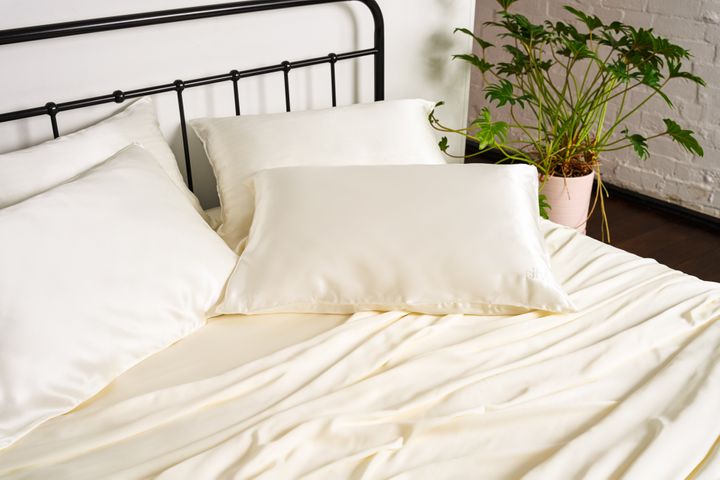
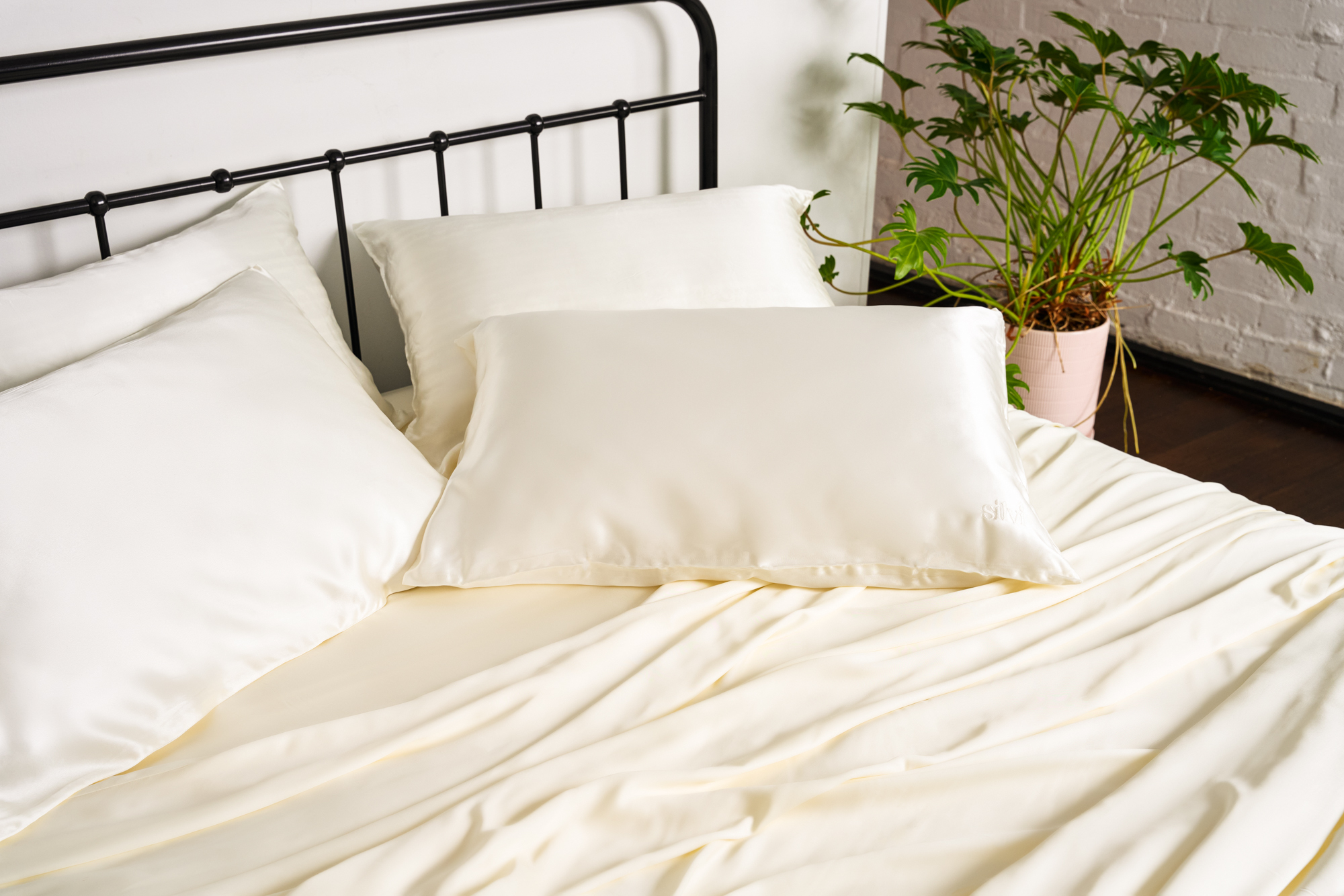
The Silvi silk pillowcase in white

ROSS CAMPBELL

The Silvi silk pillowcase in white

The Anti-Acne Silk Pillowcase comes in two sizes (standard and king size), as well as two colours (white and charcoal grey), to match your bedroom style. It also features a zip fastening so there’s no fear of your pillow slipping out.

Silvi’s pillowcase has been ethically certified cruelty free as it’s not tested on animals. And while the innovative design is machine washable – on a delicate setting with a neutral pH detergent – the silver treatment keeps it fresher for longer, so the pillowcase only needs washing every 10 to 14 days. Fewer washes means this purchase is more eco friendly, too. Every little helps.

Each pillowcase retails for £49, but fans say it’s an investment work making, considering the benefits to your hair, skin, sleep, and washing come laundry day. Buy for yourself, a friend, relative or loved one, and know that if you aren’t quite satisfied with your purchase, Silvi offers shoppers a 100-night guarantee, which means unsatisfied customers are eligible for a full refund.

But, with 100,000 pillowcases sold to happy customers in the first year alone, we don’t expect you’ll be using it any time soon. Sweet dreams!

Share Button

My Christmas Doesn’t Look Like Your Christmas

With our quirks and personal traditions, no two Christmases are the same. And – at the risk of sounding like a cheesy Christmas ad – that’s what makes the holidays so special.

Ahead of this year’s festivities, we asked readers across the country to share what they’ll be doing come Christmas day.

Some of you are heading to church, others to the pool. Some are looking forward to family time, others will kick back with friends – or cats. And the food? If you’re uninspired by traditional turkey fare, how does cottage pie, chicken Kyiv, or a Zimbabwean feast sound?

However you’re spending the day, have a happy one.

‘I’m a working Santa, Christmas is my day off’

Michael Facherty, who’s 71 and based in Caversham, and has played the role of Father Christmas for nearly 40 years. On December 25th he’ll be having a well-deserved break.

Michael Facherty

“In the run up to Christmas a working Santa has many jobs. Among them is recording videos for clients, this year including a charity pop single, various corporate jobs including parties, and grottos. My favourite this year was being Santa on Hobbs of Henley Santa Cruises. Work with individual families includes Zoom calls and home visits.

“I often have a charity visit on Christmas Day but not this year, so I’ll have a lie in. The day starts with some presents and then I have my special Christmas lunch. My wife and son are vegans, but Matt makes me cottage pie with steak mince as a special treat. I’ll watch the Richard Attenborough version of Miracle on 34th Street at some point during the day. Boxing Day is my favourite day, because our grandchildren visit us.”

‘My British friends are now family.’

Nishtha Goel, the founder of sustainable brand Unnaaty, is 32 and based in London. She’ll be spending her fourth Christmas in the UK with friends, who she calls her “chosen family”.

Nishtha Goel

“I am from India and have been living in the UK since 2018. I don’t have any family here, but have found a friend who is my chosen family and since 2019 it is has become a tradition that I spend Christmas at her place, with a few other friends. What could have been a lonely day is not, because my British friends are now family.

“I am a vegetarian so, while my friends enjoy turkey, they are thoughtful enough to cook a separate vegetarian meal for me, which includes vegetarian stuffing, peas, carrots, Brussel sprouts, to name a few things. I enjoy every bit of the traditional Christmas dinner, it is such a beautiful way of bringing families together.

“My favourite part of the day is late evening, when we play silly board/card games and just have a relaxed time with each other, full of smiles and laughter.”

‘It is my favourite park run of the year.’

Robin Barwick, aged 50, is the event director Royal Tunbridge Wells parkrun. On Christmas day he’ll be helping 200-300 runners start the day in high spirits.

Robin Barwick

“I will be run director at RTW parkrun this Christmas morning, for what has become one of our best attended fixtures. It is my favourite parkrun of the year.
Between 200 and 300 runners and walkers are likely to show up for our 9am start, along with around 35 volunteers.

“Christmas morning parkruns have a special atmosphere. Many come in
festive fancy dress, with anything from reindeer headbands, elf costumes, the full Father Christmas outfit or maybe a Christmas tree disguise.

“Runners can take the 5k run competitively if they want to but on Christmas Day most people treat it as an opportunity to get some fresh air and exercise with friends and family without worrying about their finish time. It is a very social occasion and as our cafe in Dunorlan Park will be closed many will bring their own refreshments to enjoy after their run. They are not always alcohol-free.”

‘I’ll sleep the whole way through Christmas day’

Marlene Bayuga, 59, lives in Morden, Surrey and works as a Marie Curie healthcare assistant in the community covering Southwest London and sometimes Kent.

Healthcare assistant Marlene Bayuga.

Marie Curie

Healthcare assistant Marlene Bayuga.

“This Christmas I will be working throughout the night from 10pm until 7am. On Christmas day I will sleep during the daytime, and I will go for Christmas supper at my brother’s house, where we have roast turkey with all the trimmings. Then I will leave at 9pm to go to work and I will bring a mince pie and some Christmas pudding with me!

“When I arrive to my patients’ house I greet them with Christmas greetings and reassure their family that their loved one will be cared for, monitored, and supported during the night so that they can have a restful sleep. It can reassure them to know that someone is there with their loved one, so they won’t be alone overnight.

“I work during Christmas because someone in the community will always need my care at the end of their life, and because everyone deserves to have a good end of life experiences, both patients and their families. My family completely support and understand this. I know I’m there to give light during what can be a really difficult time for them.”

‘We go to church to celebrate Jesus’ birthday’

Nicole Bateman, 34 from Bournemouth, is a mum of two, author and owner of A Box Full of Joy. She’ll be celebrating Christmas by attending church and spending time with her family.

Nicole Bateman

“We start the day with the kids coming into our bed to open their stockings, then we have gammon and eggs with orange juice for breakfast and then open our presents under the Christmas tree.

“We then go to our church to celebrate Jesus’ birthday and then head over to grandparents for Christmas lunch, then a walk after that.

“I have a daughter who is three and a son who is six, and my son has epilepsy. He was diagnosed in July 2020 and has yet to find a medication to control his seizures. Last Christmas, he had five seizures over the four-day period, so by keeping to familiar things (like waking up at our house and going to our church like we do on a normal Sunday) it keeps some routine and stability to the day, which hopefully limits seizures.

“Christmas time can sometimes cause sensory overload and seizures for our boy, so we have to get the balance between too exciting (excitement is one of his seizure triggers) but then still making it a fun day.”

‘I’m solo cat-sitting – and I can’t wait’

Charlotte Lingard, who’s 34 and based in Kent, is looking forward to spending Christmas with some feline friends.

Charlotte Lingard and two of the cats she's looked after this year.

Charlotte Lingard

Charlotte Lingard and two of the cats she’s looked after this year.

“I will be cat-sitting a cat called Lola in Blackheath over Christmas for a couple who are abroad for the Christmas holidays.

“I plan to spend my day eating all the festive party foods I enjoy, cuddling Lola and making sure she is spoiled; also exploring Blackheath and Greenwich, as it is not an area of London I am familiar with, but I have heard a lot of nice things about it.

“I have been doing cat-sitting on and off for nearly a year now. It started when my flat did not allow pets, and I was missing feline company whilst working remotely. I use two websites to find and apply for cat sits, I have had five star reviews so far.

“I am completely happy in my own company, so I am looking forward to it!”

‘I swim then cook the kids’ favourite: Chicken Kyiv’

Sue Bordley, who’s 51 and from the Wirral, writes swimming-related books and will be heading the pool for her daily dip on Christmas morning.

Sue Bordley

“On Christmas Day, I’ll get up at about 7.15 am and have a quick coffee before heading to the pool, which opens at 8am that day. It’s always nice to have a chat to Julie, Paula and Harry, my fellow die-hard swimmers who are there every morning.

“I’ll swim for an hour. Swimming got me over a breakdown six years ago. It’s my release, my lifeline – why on earth would I not want to have that on the day that’s supposed to be the best of the year?

“After my hour’s swim and a lovely relaxation boost in the hot tubs, I go home to spend the day with my husband Mark (48) and sons, Jack and Olly (15 and 12).

“While the boys play their new computer games, I prepare a (reasonably) traditional Christmas meal: I make the usual roast potatoes and vegetables, but we don’t have turkey, choosing roast pork instead and the boys are allowed to have their favourite Chicken Kyiv. At Christmas, everyone should have what they like – and it’s only one more dish to wash.”

‘I’m setting my own solo Christmas traditions’

Patience M. Chigodora, a 30-year-old spiritual life coach from Nottingham, is using Christmas to have some me-time.

-

“This year I’m doing things differently. My Christmas isn’t about being with family and friends; it’s about me. I actually want to rest, recover and feel replenished in the New Year which honestly last year I didn’t after spending a lot of my time travelling around the UK to be with family and friends.

“I am planning a few days filled with candle-lit baths, PJs, feasting on all my favourite Zimbabwean and English infused dishes paired with my fave red wine of course. Binging on my favourite Christmas movies and series (like How to Ruin Christmas series on Netflix), I might pop to the cinema to watch the new Avatar movie, go on walks and I’m allowing freedom for spontaneity and going with the flow.

“It’s really important to me this year that I celebrate Christmas how I want to – not how I am expected to. I will be seeing family and friends here and there, focusing on quality time rather than quantity, but 80% of the period, including New Year, will be spent basking within my inner-verse.”

‘We Zoom our families and celebrate online’

Viva O’Flynn, who’s 40 and based in Gloucester, enjoys spending a cosy Christmas at home with her husband, John. They’ll spend the afternoon on Zoom, celebrating with family abroad.

Viva O’Flynn and her husband, John.

Viva O’Flynn

Viva O’Flynn and her husband, John.

“Christmas Day starts with me waking up next to my husband, John. He cooks brunch for us, eggs florentine or eggs Benedict with salmon. Then, we head to our Christmas tree to open presents. I open each gift with a kiss, a ‘thank you’ and ‘I love you’. He does the same.

“It’s just the two of us celebrating Christmas in person, because his family are in Ireland, mine are in the Philippines. We log into Zoom and say our Christmas greetings to them, and we play some games with them online. Some of my cousins even sing Christmas tunes.

“There is nothing like being with family to celebrate in person: hugging them, kissing them on the cheek, holding their hands, eating meals with them. But it is the pandemic and flu season, and flights back home are doubly expensive. We’ll wait until after the holidays to reunite with them in person. The next best thing is seeing them, hearing their voices, and celebrating Christmas with them virtually.”

Share Button

8 Things Therapists Do To Handle Stress Over Christmas

There’s no doubt that the festive season can be a stressful time, amid all the travel plans, family visits and present shopping.

These activities often involve an array of demands that take a toll on your mental health, such as cleaning, cooking and spending. So it’s totally OK to experience stress or anxiety among the festivities; even mental health professionals – who may seem like they have it all together – aren’t immune to these feelings.

HuffPost asked therapists for insight on how they feel joy and cheer amid the stress of the season. Here are their personal tips for decompressing and relaxing:

They set aside time for themselves

The festive season can be a busy time, especially if you are surrounded by friends and family. It’s normal to feel stressed and anxious about meeting up with people or hanging with relatives.

“I always make sure I set aside some time for myself to relax during the holidays and focus on my wellness needs,” says Michael Klinkner, a licensed clinical social worker in Arizona.

They scribble a few thoughts in a journal

Minerva Guerrero, a therapist who founded Mind Matters Mental Health Counseling in New York, says she often takes a journaling break to intentionally ground herself.

“I like to journal to get clear on what I’m hoping the holidays bring me and how I feel during this time,” she says. “This self-care activity really helps me destress and relax during the holiday season.”

They listen to music

Music therapy can evoke feelings of calmness and relaxation.

“I often create soothing and hype-me-up playlists, which help me move through my feelings,” says Naiylah Warren, a therapist and clinical content manager with mental health platform Real.

They focus on holiday events that give them joy

During one of the busiest times of the year, it’s important to set boundaries to take care of your mental health and wellbeing.

“I generally check in with myself in regards to what traditions or gatherings feel stressful to me and which ones bring me joy,” says Kama Hurley, a clinical counsellor and life coach in Idaho. “I prioritise what I love to do and say no to the things that make me feel anxious.”

Even therapists need some coping strategies to get through the holidays.

LordHenriVoton via Getty Images

Even therapists need some coping strategies to get through the holidays.

They make a self-care list

Hurley says she writes a self-care list when she’s anxious or stressed, as it gives her agency and lifts her mood.

“I write down activities that help me relax and make me feel good about myself that I can accomplish when feeling the intense emotions,” she says.

Having a go-to list that you can reference and change will help you identify which activities are sources of joy.

Madeline Lucas, another therapist and clinical content manager at Real, shared some self-care activities that help her feel less isolated in her holiday stress: taking long showers with music, applying sheet face masks, going on walks and stretching.

They sit in stillness for a few minutes

The art of meditation can be powerful in achieving a sense of calm and balance.

“I practise meditation exercises for a few minutes whenever I feel stressed,” says Regine Muradian, a clinical psychologist in California. When you feel that stress starting to creep up on you, take a moment to inhale deeply and focus on your breathing.

They plan ahead

Israa Nasir, a therapist who founded the mental wellness brand Well.Guide, said she plans ahead for the festive season, which helps her destress. “I make sure to take care of any client and associated work-related obligations fully when I take time off during the holidays,” she says.

Planning a schedule before you get too busy may feel comforting as it offers a sense of routine, with many decisions already made in advance.

They talk to their therapist

Many mental health professionals get help from therapists of their own to manage stress. If you feel that stress is inhibiting your ability to get through the day, consider connecting with a mental health professional now.

“If I anticipate a lot of stress prior to the holiday season, I’ll schedule a few extra sessions with my own therapist before they go on their holiday break to help process the feelings I’m having,” Nasir says.

Share Button

No, Christmas Is Not The Time To Slide Into Your Ex’s DMs

It’s almost Christmas and work is finally winding down. Instead of using this time wisely to plan goals for next year or productively to wrap the presents under your tree, you’re doing what you do best: time-wasting on social media.

You scroll and scroll and – what’s this? – somehow you’ve made it onto your ex’s Instagram page (whoops!). It’s been a while since you last spoke so you think: let me just wish them an early merry Christmas. What’s the harm in that?

Because let’s face it, who hasn’t been contacted by an ex-partner or fling over the holiday season – or done a little festive messaging ourselves?

These dwindling days of the year are often a time for reflection and/or twiddling our thumbs. A time to think about the people you miss (or the ones you missed out on). And whether you’re single or in a relationship, it’s now we mull over who we really appreciate and want to keep in our lives. Or who we want back…

Chris*, 27, a product designer from Manchester received an interesting email just this Tuesday. The subject read “Hi Christopher.” It was his ex of a few years back reaching out to ask for forgiveness and apologise for past mistakes.

“I had forgiven her years ago so I was quite shocked when I saw the email,” Chris tells HuffPost UK. “She asked to meet up, but I replied and said this would be inappropriate. I think she’s still holding on to the past but I’ve moved on and hope she does the same.”

Sometimes the contact is not as chill. Savannah*, a 23-year-old doctor from London, only broke up with her partner at the start of 2022, but due to the nature of the relationship, it didn’t end on good terms.

Following their split, Savannah blocked the ex across several different platforms, but this didn’t stop him from trying to get in touch – and he recently attempted to contact Savannah through their joint Netflix account. She removed his profile, but he somehow logged back in and deleted her account entirely.

“He’s done that because he knows it’s the only way he can get through to me,” she says. “I would never want to get back to him again and he knows this, which is why he’s trying so hard.”

It’s not all unhappy endings, however. Laura*, a 29 year old writer from east London reached out to an ex-situationship fling last Christmas.

“We stopped dating a month before but, I really missed him so I texted him on Christmas morning. We live really close to each other so I wanted to press my luck to see if he would come and see me in the evening,” she tells HuffPost UK.

“Even though he didn’t visit me, we spent the whole day talking which felt nice and familiar. I have a small family so Christmas always feels a bit boring, I think I reached out to him so I could have some entertainment throughout the day.”

A few days later the former fling ended up visiting her. And spoiler alert: “We started dating again. So I guess you could say it worked,” she says.

Sliding into your ex’s DMs over Christmas ended up being a good move for Laura but is this really a time to be contacting past lovers?

Relationship and dating expert Christiana Maxion weighs in.

Why do people feel the need to message their exes during the Christmas holidays?

There’s usually a reason an ex tends to reach out during the holidays – and that reason might not necessarily be you, warns Maxion.

“It could be because they have ‘time’ on their hands whilst off work, stuck and bored within a family situation, or feeling nostalgic or maudlin,” she says.

“This will make them think about the potential for a new hook up or about a past love. They will then use any excuse to try and get back into your good graces. And they’re also hoping that the holiday cheer will erase bad memories and you’ll let them back in and engage with their contact.”

What if it’s you who gets the urge to message?

Maybe you’re like Laura and feel the pull to message someone you once dated? Maxion says it’s easy to remember the good times especially around Christmas, but an ex is usually an ex for a reason.

However, maybe your past relationship ended down to bad timing or a set of circumstances that have since changed.

Whoever makes the first contact again, Maxion advises asking yourself: “Do you still have feelings for this person? Are they [or you] trying to rekindle love or just seeking attention? Are they bored with family or actually interested in you?”

Being back home can conjuring up past feelings, she says, which can make you want to take a stroll down memory lane in other ways. “Let your answers inform you as to whether this is a truly good idea or not.” she recommends.

How should we respond if an ex reaches out to us?

“I would ignore an ex if you’re over them or in a new relationship. Silence speaks volumes!.” Maxion says. And if it feels like a sign to revisit things?

By all means, explore your feelings, “if you can be clear headed about it, disregarding the obvious ‘cheer’ and goodwill we fill ourselves with at Christmas.” But explore your motivations too, she adds.

“Make sure you ask yourself those questions – you’ll find your answer!”

* Surnames have been omitted to offer anonymity

Share Button