‘Nano-chocolates’ that store hydrogen

An innovative approach could turn nanoparticles into simple reservoirs for storing hydrogen. The highly volatile gas is considered a promising energy carrier for the future, which could provide climate-friendly fuels for airplanes, ships and lorries, for example, as well as allowing climate-friendly steel and cement production — depending on how the hydrogen gas is generated. However, storing hydrogen is costly: either the gas has to be kept in pressurised tanks, at up to 700 bar, or it must be liquified, which means cooling it down to minus 253 degrees Celsius. Both procedures consume additional energy.

A team led by DESY’s Andreas Stierle has laid the foundations for an alternative method: storing hydrogen in tiny nanoparticles made of the precious metal palladium, just 1.2 nanometres in diameter. The fact that palladium can absorb hydrogen like a sponge has been known for some time. “However, until now getting the hydrogen out of the material again has posed a problem,” Stierle explains. “That’s why we are trying palladium particles that are only about one nanometre across.” A nanometre is a millionth of a millimetre.

To ensure that the tiny particles are sufficiently sturdy, they are stabilised by a core made of the rare precious metal iridium. In addition, they are attached to a graphene support, an extremely thin layer of carbon. “We are able to attach the palladium particles to the graphene at intervals of just two and a half nanometres,” reports Stierle, who is the head of the DESY NanoLab. “This results in a regular, periodic structure.” The team, which also includes researchers from the Universities of Cologne and Hamburg, published its findings in the American Chemical Society (ACS) journal ACS Nano.

DESY’s X-ray source PETRA III was used to observe what happens when the palladium particles come into contact with hydrogen: essentially, the hydrogen sticks to the nanoparticles’ surfaces, with hardly any of it penetrating inside. The nanoparticles can be pictured as resembling chocolates: an iridium nut at the centre, enveloped in a layer of palladium, rather than marzipan, and chocolate-coated on the outside by the hydrogen. All it takes to recover the stored hydrogen is for a small amount of heat to be added; the hydrogen is rapidly released from the surface of the particles, because the gas molecules don’t have to push their way out from inside the cluster.

“Next, we want to find out what storage densities can be achieved using this new method,” says Stierle. However, some challenges still need to be overcome before proceeding to practical applications. For example, other forms of carbon structures might be a more suitable carrier than graphene — the experts are considering using carbon sponges, containing tiny pores. Substantial amounts of the palladium nanoparticles should fit inside these.

Story Source:

Materials provided by Deutsches Elektronen-Synchrotron DESY. Note: Content may be edited for style and length.


Share Button

‘Battle of the sexes’ begins in womb as father and mother’s genes tussle over nutrition

Cambridge scientists have identified a key signal that the fetus uses to control its supply of nutrients from the placenta, revealing a tug-of-war between genes inherited from the father and from the mother. The study, carried out in mice, could help explain why some babies grow poorly in the womb.

As the fetus grows, it needs to communicate its increasing needs for food to the mother. It receives its nourishment via blood vessels in the placenta, a specialised organ that contains cells from both baby and mother.

Between 10% and 15% of babies grow poorly in the womb, often showing reduced growth of blood vessels in the placenta. In humans, these blood vessels expand dramatically between mid and late gestation, reaching a total length of approximately 320 kilometres at term.

In a study published today in Developmental Cell, a team led by scientists at the University of Cambridge used genetically engineered mice to show how the fetus produces a signal to encourage growth of blood vessels within the placenta. This signal also causes modifications to other cells of the placenta to allow for more nutrients from the mother to go through to the fetus.

Dr Ionel Sandovici, the paper’s first author, said: “As it grows in the womb, the fetus needs food from its mum, and healthy blood vessels in the placenta are essential to help it get the correct amount of nutrients it needs.

“We’ve identified one way that the fetus uses to communicate with the placenta to prompt the correct expansion of these blood vessels. When this communication breaks down, the blood vessels don’t develop properly and the baby will struggle to get all the food it needs.”

The team found that the fetus sends a signal known as IGF2 that reaches the placenta through the umbilical cord. In humans, levels of IGF2 in the umbilical cord progressively increase between 29 weeks of gestation and term: too much IGF2 is associated with too much growth, while not enough IGF2 is associated with too little growth. Babies that are too large or too small are more likely to suffer or even die at birth, and have a higher risk to develop diabetes and heart problems as adults.

Dr Sandovici added: “We’ve known for some time that IGF2 promotes the growth of the organs where it is produced. In this study, we’ve shown that IGF2 also acts like a classical hormone — it’s produced by the fetus, goes into the fetal blood, through the umbilical cord and to the placenta, where it acts.”

Particularly interesting is what their findings reveal about the tussle taking place in the womb.

In mice, the response to IGF2 in the blood vessels of the placenta is mediated by another protein, called IGF2R. The two genes that produce IGF2 and IGF2R are ‘imprinted’ — a process by which molecular switches on the genes identify their parental origin and can turn the genes on or off. In this case, only the copy of the igf2 gene inherited from the father is active, while only the copy of igf2r inherited from the mother is active.

Lead author Dr Miguel Constância, said: “One theory about imprinted genes is that paternally-expressed genes are greedy and selfish. They want to extract the most resources as possible from the mother. But maternally-expressed genes act as countermeasures to balance these demands.”

“In our study, the father’s gene drives the fetus’s demands for larger blood vessels and more nutrients, while the mother’s gene in the placenta tries to control how much nourishment she provides. There’s a tug-of-war taking place, a battle of the sexes at the level of the genome.”

The team say their findings will allow a better understanding of how the fetus, placenta and mother communicate with each other during pregnancy. This in turn could lead to ways of measuring levels of IGF2 in the fetus and finding ways to use medication to normalise these levels or promote normal development of placental vasculature.

The researchers used mice, as it is possible to manipulate their genes to mimic different developmental conditions. This enables them to study in detail the different mechanisms taking place. The physiology and biology of mice have many similarities with those of humans, allowing researchers to model human pregnancy, in order to understand it better.

The lead researchers are based at the Department of Obstetrics and Gynaecology, the Medical Research Council Metabolic Diseases Unit, part of the Wellcome-MRC Institute of Metabolic Science, and the Centre for Trophoblast Research, all at the University of Cambridge.

The research was largely funded by the Biotechnology and Biological Sciences Research Council, Medical Research Council, Wellcome Trust and Centre for Trophoblast Research.

Share Button

Winner Of The Christmas Day TV Ratings Contest Revealed

Strictly Come Dancing’s Christmas special proved a ratings hit, claiming the most viewers outside of the Queen’s festive message.

The Strictly special, which was won by pop star Anne-Marie, was watched by an average of 5.8 million viewers, according to overnight figures from the BBC.

The 30-year-old singer and her professional dance partner Graziano Di Prima were victorious after performing a thrilling cha cha, which earned them a perfect score of 40 from the judges.

BBC One secured eight of the top 10 programmes on Christmas Day – with ITV taking eighth and ninth place with episodes of Coronation Street and Emmerdale.

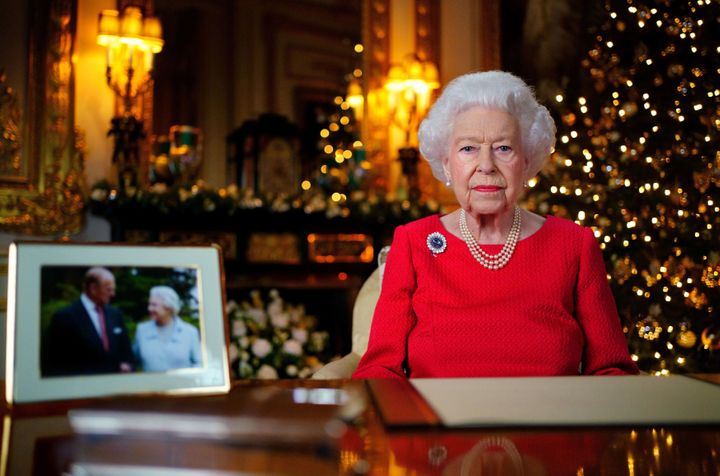
The Queen’s Christmas broadcast, which was around 10 minutes long and saw her reflect on the death of her husband the Duke of Edinburgh and the continuing impact of the coronavirus pandemic, was watched by 7.4 million viewers on the BBC.

Queen Elizabeth II during her annual Christmas broadcast

Victoria Jones via PA Wire/PA Images

Third place went to Call The Midwife with 4.7 million viewers, Michael McIntyre’s Christmas Wheel secured 4.6 million and was fourth, while Blankety Blank took fifth with 4.2 million.

Sixth place was taken by Mary Poppins Returns, the 2018 sequel to the well-loved 1964 film, with 3.7 million viewers, while animated production Superworm was in seventh with 3.34 million.

On ITV, Coronation Street secured 3.25 million viewers and Emmerdale was watched by 3 million.

In 10th place, the festive EastEnders special had an audience of 2.9 million.

BBC One sitcom Mrs Brown’s Boys, which usually secures high audience numbers, did not feature in the top 10.

Charlotte Moore, the BBC’s chief content officer, said: “Viewers chose the BBC on Christmas Day and entertained them in their millions, with Strictly taking the top spot.

“Nothing brings the country together at Christmas quite like the BBC, there was something for everyone with the seven most popular programmes across the day that caps off a brilliant year on the BBC, celebrating British creativity where we have delivered hits and award winning work and seen huge audiences come to our shows.

“It’s these moments, in a time of intense competition, that prove that after 99 years the BBC matters more than ever.

“We have an ambitious and exciting year ahead in 2022 to mark our centenary year with an unmissable range of world class content that will celebrate and reflect the unique role the BBC continues to play in the lives of audiences across the UK.”

Share Button

David Beckham Has Hilarious Comeback For Victoria After She Takes The Mick Out Of His Singing

Victoria Beckham got a taste of her own medicine after taking the mick out of husband David’s singing over Christmas.

Posh posted a video of Becks roasting chestnuts on an open fire on Christmas Day, as he sang along to The Christmas Song.

As he gave it his best Nat King Cole, David turned around and realised that Victoria was filming him.

“Oh my God, you’re actually trying hard with that vocal,” she laughed.

In a dig at Posh’s own vocal prowess – which was often commented on during her Spice Girls days – David had a hilarious comeback, remarking: “Oh I’m sorry, Adele.”

As Victoria posted the video on Instagram, she even tagged Adele in the caption, as she joked that David was “burning his nuts”.

She wrote: “Does anyone love Christmas as much as my husband?!? @davidbeckham husband?!? kisses @adele #burninghisnuts.”

Victoria also shared a picture of her and David with their kids to wish her followers a Merry Christmas.

The snap showed the couple and children Brooklyn, Romeo, Cruz and Harper all in their finest gear in front of a Christmas tree at the recent wedding of David’s dad Ted.

Victoria’s followers noticed something amusing about the photo though, when they spotted David was standing on tip toes to try and make himself taller than his sons.

“First thing I noticed, bless him,” one person commented.

Share Button

Prostate screening could be ready in five years

One of the UK’s leading cancer scientists said medical advances were making it possible.

Share Button

Long Covid: ‘I have to choose between walking and talking’

People say their lives have been ruined by long Covid, amid fears the number of sufferers is rising.

Share Button

A Very British Scandal Is The True Story Of Duke And Duchess Of Argyll – Here’s What You Need To Know

<div class="js-react-hydrator" data-component-name="YouTube" data-component-id="5768" data-component-props="{"itemType":"video","index":0,"contentListType":"embed","code":"

","type":"video","meta":{"url":"https://www.youtube.com/watch?v=SDkh-GK1G_g","type":"video","version":"1.0","title":"A Very British Scandal | Trailer – BBC","author":"BBC","author_url":"https://www.youtube.com/channel/UCCj956IF62FbT7Gouszaj9w","provider_name":"YouTube","description":"⁣Subscribe and 🔔 to OFFICIAL BBC YouTube 👉 https://bit.ly/2IXqEIn\nStream original BBC programmes FIRST on BBC iPlayer 👉 https://bbc.in/2J18jYJ\n\nThis is the true story of Argyll v Argyll – one of the most notorious, extraordinary and brutal legal cases of the 20th century.⁣\n\n#BBC #AVeryBritishScandal #BBCiPlayer\n\nA Very British Scandal | Streaming from 26 December | BBC iPlayer\n\nAll our TV channels and S4C are available to watch live through BBC iPlayer, although some programmes may not be available to stream online due to rights. If you would like to read more on what types of programmes are available to watch live, check the ‘Are all programmes that are broadcast available on BBC iPlayer?’ FAQ 👉 https://bbc.in/2m8ks6v.","thumbnail_url":"https://i.ytimg.com/vi/SDkh-GK1G_g/maxresdefault.jpg","thumbnail_width":1280,"thumbnail_height":720,"cache_age":86400,"options":{"_start":{"label":"Start from","value":"","placeholder":"ex.: 11, 1m10s"},"_end":{"label":"End on","value":"","placeholder":"ex.: 11, 1m10s"},"_cc_load_policy":{"label":"Closed captions","value":false},"click_to_play":{"label":"Hold load & play until clicked","value":false}}},"fullBleed":false,"flags":[],"enhancements":{},"options":{"theme":"news","device":"desktop","editionInfo":{"id":"uk","name":"U.K.","link":"https://www.huffingtonpost.co.uk","locale":"en_GB"},"slideshowAd":{"scriptTags":[],"otherHtml":""},"slideshowEndCard":{"scriptTags":[{"attribs":{},"scriptBody":"\r\n (function(){\r\n var c = document.getElementById(‘taboola-endslate-thumbnails’);\r\n c.id += ‘-‘ + Math.round(Math.random()*1e16);\r\n \r\n var taboolaParams = {\r\n loader: \"//cdn.taboola.com/libtrc/aol-huffingtonpost/loader.js\",\r\n mode: \"thumbnails-b\",\r\n container: c.id,\r\n placement: \"Endslate Thumbnails\",\r\n target_type: \"mix\"\r\n };\r\n \r\n if (typeof window.modulousQueue === \"function\") {\r\n \twindow.modulousQueue.add(function(){ doTaboola(taboolaParams); });\r\n } else {\r\n \tdoTaboola(taboolaParams);\r\n }\r\n }());\r\n"}],"otherHtml":"

"},"isMapi":false,"isAmp":false,"isMt":false,"entryId":"61c45fa5e4b04b42ab68f4a7","entryTagsList":"uktv,we-love-tv,tv-drama,claire-foy,paul-bettany,a-very-british-scandal,","sectionSlug":"entertainment","deptSlug":null,"sectionRedirectUrl":null,"subcategories":"","isWide":false,"headerOverride":null,"noVideoAds":false,"isNative":false,"commercialVideo":{"provider":"custom","site_and_category":"uk.entertainment","package":null},"isHighline":false,"vidibleConfigValues":{"cid":"60afc140cf94592c45d7390c","disabledWithMapiEntries":false,"overrides":{"all":"60b8e525cdd90620331baaf4"},"whitelisted":["56c5f12ee4b03a39c93c9439","56c6056ee4b01f2b7e1b5f35","59bfee7f9e451049f87f550b","5acccbaac269d609ef44c529","570278d2e4b070ff77b98217","57027b4be4b070ff77b98d5c","56fe95c4e4b0041c4242016b","570279cfe4b06d08e3629954","5ba9e8821c2e65639162ccf1","5bcd9904821576674bc55ced","5d076ca127f25f504327c72e","5b35266b158f855373e28256","5ebac2e8abddfb04f877dff2","60b8e525cdd90620331baaf4","60b64354b171b7444beaff4d","60d0d8e09340d7032ad0fb1a","60d0d90f9340d7032ad0fbeb","60d0d9949340d7032ad0fed3","60d0d9f99340d7032ad10113","60d0daa69340d7032ad104cf","60d0de02b627221e9d819408"],"playlists":{"default":"57bc306888d2ff1a7f6b5579","news":"56c6dbcee4b04edee8beb49c","politics":"56c6dbcee4b04edee8beb49c","entertainment":"56c6e7f2e4b0983aa64c60fc","tech":"56c6f70ae4b043c5bdcaebf9","parents":"56cc65c2e4b0239099455b42","lifestyle":"56cc66a9e4b01f81ef94e98c"},"playerUpdates":{"56c6056ee4b01f2b7e1b5f35":"60b8e525cdd90620331baaf4","56c5f12ee4b03a39c93c9439":"60d0d8e09340d7032ad0fb1a","59bfee7f9e451049f87f550b":"60d0d90f9340d7032ad0fbeb","5acccbaac269d609ef44c529":"60d0d9949340d7032ad0fed3","5bcd9904821576674bc55ced":"60d0d9f99340d7032ad10113","5d076ca127f25f504327c72e":"60d0daa69340d7032ad104cf","5ebac2e8abddfb04f877dff2":"60d0de02b627221e9d819408"}},"customAmpComponents":[],"ampAssetsUrl":"https://amp.assets.huffpost.com","videoTraits":null,"positionInUnitCounts":{"buzz_head":{"count":0},"buzz_body":{"count":0},"buzz_bottom":{"count":0}},"buzzfeedTracking":{"context_page_id":"61c45fa5e4b04b42ab68f4a7","context_page_type":"buzz","destination":"huffpost","mode":"desktop","page_edition":"en-uk"},"cetUnit":"buzz_body"}}”>

[embedded content]

Following the success of A Very English Scandal starring Hugh Grant and Ben Whishaw in 2018, the anthology series is returning – albeit slightly retitled – to tell the story of another high-profile scandal from the history books.

A Very British Scandal is set to be one of the biggest dramas airing over the Christmas period, beginning in a plum Boxing Day evening slot, with the following two parts being shown over the subsequent evenings.

From the real story, to what happened next, this is what you need to know…

What is A Very British Scandal about and is it a true story?

The Duke and Duchess of Argyll in 1959

Fairfax Media Archives via Getty Images

A Very British Scandal tells the real-life story of the tempestuous marriage and the bitter, brutal divorce of the Duke and Duchess of Argyll.

The case played out in the white-hot glare of the 1960s media, with accusations of forgery, theft, violence, drug-taking, secret recording, bribery and an explicit Polaroid picture all making the front pages. The saga ended with Margaret Campbell fighting to prove that she was more than just a so-called “Dirty Duchess”, as she was labelled in the press.

During the divorce process, the Duke produced a Polaroid photograph of the Duchess performing a sexual act on another unidentified man – nicknamed “the headless man” – that he had found, in a move that has been likened to modern day revenge porn in reflections on the case.

He also produced a list of men with whom he believed his wife had had extra-marital affairs. A judge subsequently granted him a divorce, calling the Duchess a “wholly immoral” and “completely promiscuous woman”.

The series turns the scandal inside out to explore the social and political climate of post-war Britain, looking at attitudes towards women during that era, and examining how Margaret was betrayed by her friends and publicly shamed by a society that revelled in her fall from grace.

Writer Sarah Phelps says: ”It’s a story about a woman who refused to be slut shamed, who refused to go quietly and refused to do as she was told. She set fire to the expectation of her class, gender and her sex rather than go quietly.

“She put the private lives of the wealthy, the landed and the titled all over the front pages, not the untouchable great and good but bare forked animals.”

Who were the Duke and Duchess of Argyll?

The Duke and Duchess at their wedding in 1951

Keystone via Getty Images

Margaret Campbell was the daughter of a self-made millionaire and famous for being an “It Girl” and a debutante before her second marriage to Ian Campbell in 1951, where she became part of the aristocracy for a brief period.

Ian Campbell was the 11th Duke Of Argyll, inheriting the dukedom from his first cousin once removed, Niall Diarmid Campbell, in 1949.

He had been married twice before he and Margaret tied the knot. His first marriage was to Jeanne Campbell, with whom he had two sons – including Lord Colin Campbell, the ex-husband of royal biographer and I’m A Celebrity contestant Lady Colin Campbell.

Who plays the Duke and Duchess of Argyll in A Very British Scandal?

Claire Foy plays Margaret

via PA Features Archive/Press Association Images

Claire Foy (The Crown, Wolf Hall) and Paul Bettany (Iron Man, WandaVision) lead the cast as Margaret and Ian Campbell.

Speaking about her character, Claire says: “There’ve been so many books written about Margaret and so many rumours about her. She even wrote her own book but in that she doesn’t refer to her sexual life – as why would she? Margaret’s sexuality seems to have become another personality or something outside of herself, which I find that really bizarre and strange.

“In this story, what I’m keen on is how easily she fell in love and how she kept letters and mementos of her lovers. In a way, I think that was the romantic side of her and her sexuality was linked to that. But also in this story, no one should have the right to know that side of her. It’s no one’s business and it never was. It’s straight misogyny.”

Paul Bettany plays Ian Campbell

via PA Features Archive/Press Association Images

Paul adds: “The press was rabid and incredibly cruel to Margaret and if you read the old stories back, the misogyny is extraordinary. If this were happening now, she would be seen in a much different light.”

He says of their story: “It’s been fascinating to get into and also the porn shaming of this woman.. The idea of a husband doing that is so distasteful and cruel. It’s so shocking to think that it happened at that time. It still happens and it’s appalling.”

What happened to the Duchess after the events of A Very British Scandal?

Margaret Campbell pictured in 1975

Ian Tyas via Getty Images

After the divorce was finalised in 1963, Margaret published a memoir, Forget Not.

She lost her fortune and subsequently opened her Mayfair house at 48 Upper Grosvenor Street for paid tours before later moving to a suite at the Grosvenor House Hotel.

Following another move, she was later placed in a nursing home in Pimlico, where she died in 1993 following a fall.

She was buried alongside her first husband and father of her three children, Charles Sweeny, in Brookwood Cemetery in Woking, Surrey.

It was reported that Margaret died largely penniless.

Ian Campbell remarried shortly after his divorce was granted, wedding Mathilda Coster Mortimer in 1963. The couple remained together until Ian’s death in 1973.

When is A Very British Scandal on?

A Very British Scandal will air on Boxing Day at 9pm on BBC One and continues over the next two consecutive nights.

All episodes will also be available as a boxset to stream from 26 December on BBC iPlayer.

Share Button