An inquest into the death of Ida Lock has shone light on repeat mistakes – and wider failures in certain hospitals across England


An inquest into the death of Ida Lock has shone light on repeat mistakes – and wider failures in certain hospitals across England
The royal describes “months of sheer worry” she experienced over the birth of her second child.
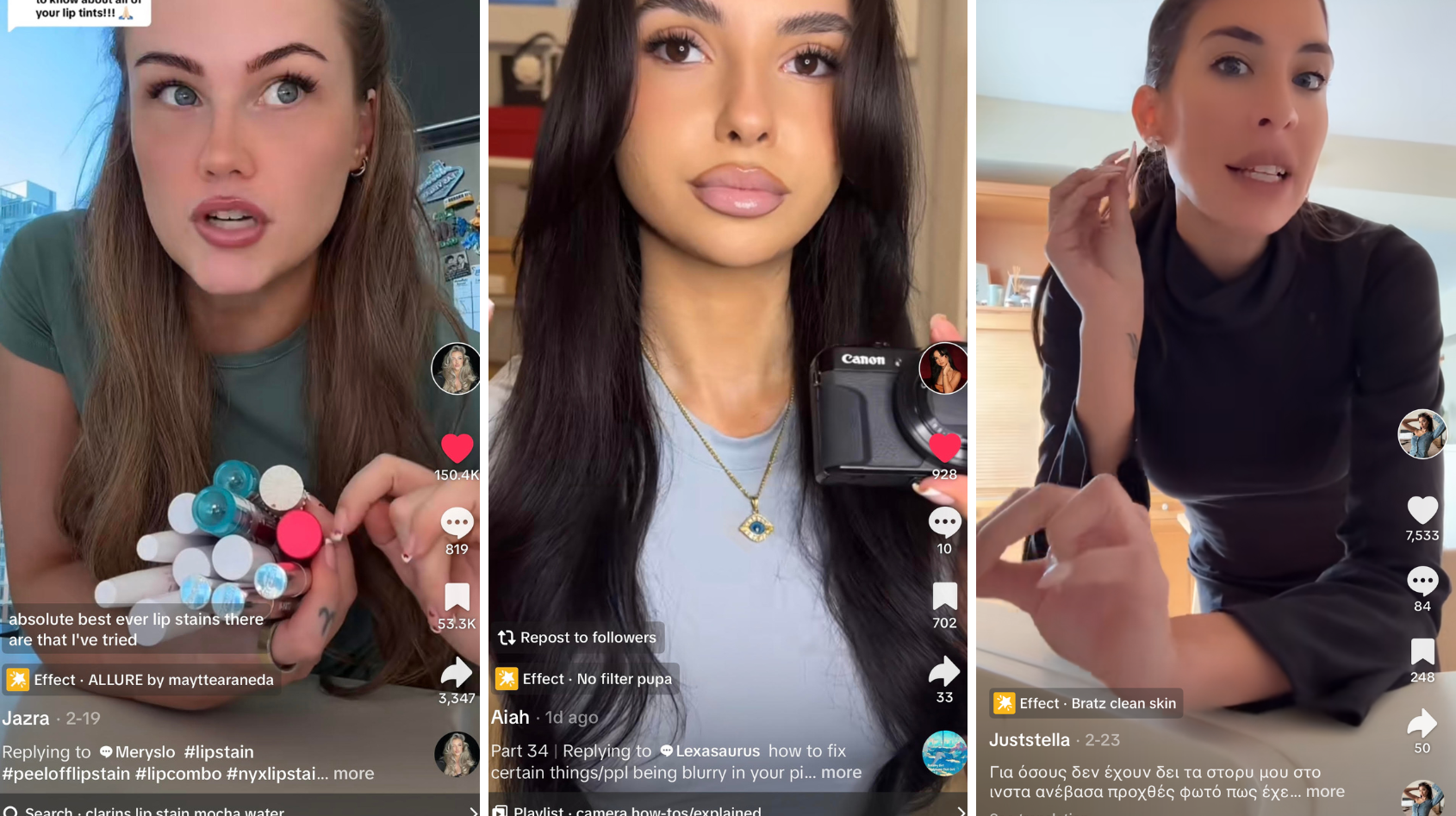
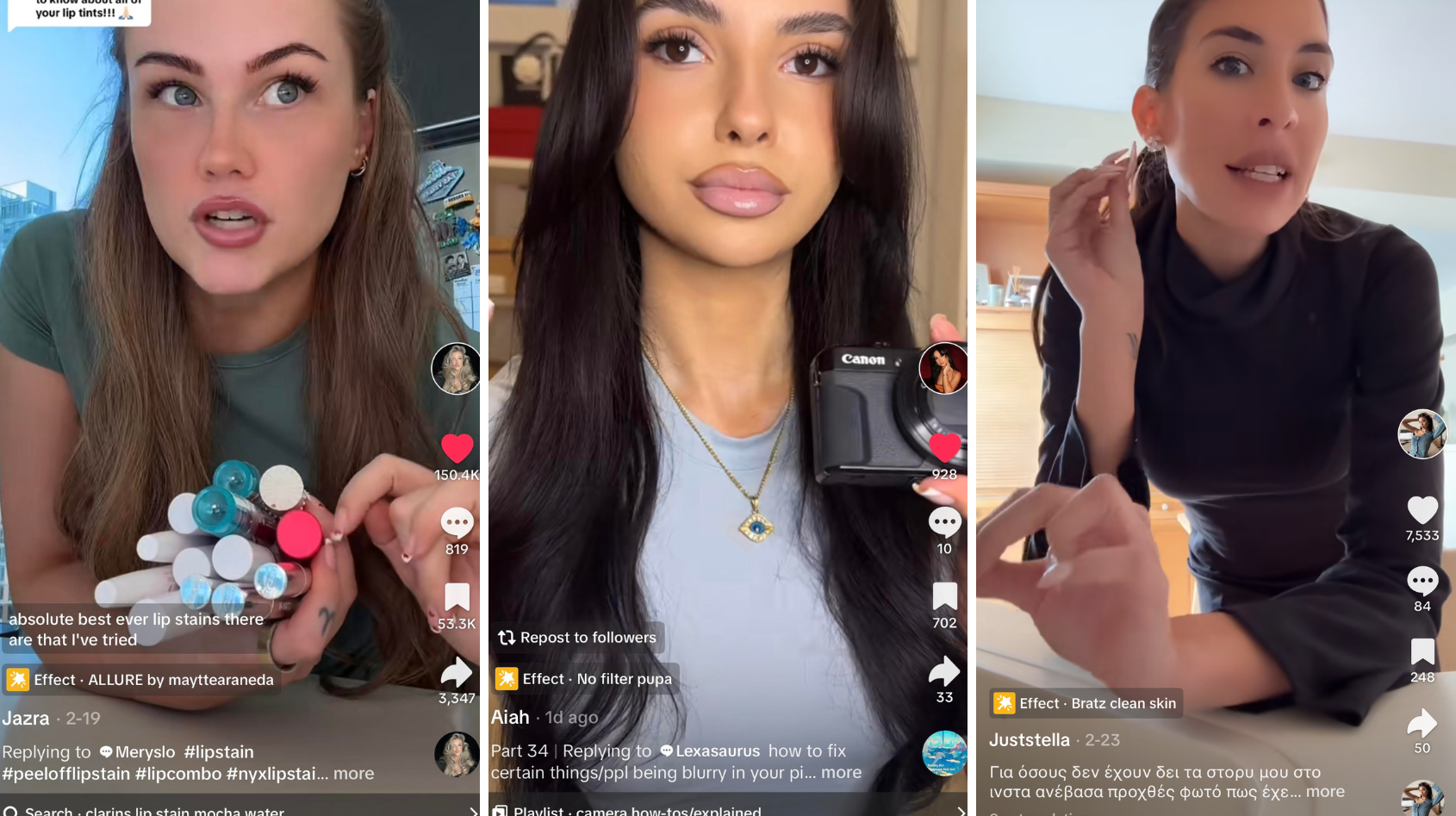
When the “Bold Glamour” filter on TikTok was created in early 2023, people were shocked by how seamless it looked, and that it wasn’t glitching like other face-altering filters. Despite everyone admiring its technological improvement, it led to an uproar online and offline, with celebrities like Katherine Heigl showing the shocking difference it made.
It’s been widely reported that filters on social media can create a disconnect between online and real life and lower one’s self-esteem. The issue doesn’t just affect teens — it can negatively affect anyone. The curation of social media leads many people to use filters in order to receive positive feedback, which then reinforces the belief that we should be relying on them, explained Natalie Buchwald, a therapist and founder of Manhattan Mental Health Counseling.
Advertisement
You can, of course, still use filters and have a healthy self-image, but experts advise considering the reasons you use filters in the first place.
“While occasional use of filters doesn’t inherently indicate low self-esteem, dependence on them can be problematic,” Buchwald said. “Maintaining a healthy self-image involves recognizing one’s intrinsic worth without relying on digital enhancements.”
Long-term exposure to a filtered image of yourself may create issues in your self-image, even leading to seeking cosmetic surgery to achieve that image of yourself. “Often called ‘Snapchat dysmorphia,’ it describes individuals seeking cosmetic surgery to replicate their filtered selfies. This can manifest in body insecurity and dysmorphia,” Buchwald added.
Advertisement
HuffPost spoke to three influencers who regularly use beauty filters to understand why and how these filters affect their self-esteem.
“I’m super open about beauty standards, filters and treatments on my page. I use beauty filters pretty often! Most of the time, while filming on TikTok I’m using one because of ease, and sometimes TikTok automatically puts them on your face.
“I prefer filters that don’t make me look like a completely different person. I try to remind myself that skin texture, blemishes, redness, undereye bags are all normal. Most things you see online are very unrealistic and you shouldn’t compare yourself to them.
Advertisement
“Filters did change how I saw myself. Social media is so unrealistic, so when you look at yourself in a mirror and you don’t have a smooth foundation filter on, it will look different. A few years back when the filters were heavier, I would wear a lot more makeup in real life to really smooth out my skin or contour my face, and I also ended up getting lip filler and Botox done because I was comparing myself to a filter that made my lips bigger or my skin smooth. Seeing myself with plumper lips or no wrinkles has influenced the treatments I’ve done. I still get minimal lip filler to this day. I’ve always been super transparent about getting procedures done online, even back then. Now I’m pretty confident in myself with or without makeup.
“Looking at the ‘perfect’ version of yourself can make you a bit critical of your natural features. Generally, being a content creator can make you critical about yourself and your appearance; with or without filters, I’m staring at my face all day long editing videos. This often will make you notice things most people probably don’t see.
Advertisement
“If social media removed beauty filters, it wouldn’t affect my content at all! I’m super open on my page, with and without filters, and always will be. I think I might put a little bit of makeup on before I film some of my content to make myself more presentable than I do now, but I would be totally fine with that. I think it would make social media a healthier space for everyone, including myself.”
“I use beauty filters occasionally when filming my TikTok videos, usually ones that enhance smoothness subtly without drastically changing my features. Without a filter, I feel just as confident. For me, it’s less about changing how I look and more about maintaining a particular style, visually.
“I wouldn’t say I’m addicted to using filters. They don’t necessarily make me criticize myself, but more aware of how different enhancements can affect one’s perception. I don’t rely on them to define my self-image.
Advertisement
“Filters can certainly influence beauty standards and make people more self-critical. I think that’s all a byproduct of being on social media. Unless people are openly mentioning they are using filters, it’s hard to tell. As consumers, we may assume these creators are like this in real life, too.
“Personally, using filters hasn’t influenced me to get cosmetic treatments, but I can see how constant exposure to ‘perfect’ images can create unrealistic expectations, which is why I make it known to my audience when I use beauty filters, rather than hide the fact that I am using them. I do have lip filler, and in hindsight, I may have been influenced by the ‘perfect’ images we see on social media.”
Advertisement
“I use filters that smooth out the skin very often. I initially started using them out of curiosity, and now it has become a habit — I do it automatically. Honestly, I have no issue with how I look without filters. The only reason I use light filters is because I used to have acne, and it used to bother me.
“I have created content without a filter many times, and I have no problem with that, nor does it make me uncomfortable.
Advertisement
“I wouldn’t say filters make me critical of my natural features, just that I liked how my skin looked without blemishes and acne marks when I had acne. Many women have been influenced by filters, trying to achieve this smooth image in real life. I know from some doctor friends that people ask to look like their filtered selves [via medical intervention]. However, that has never happened to me.”
Of course, users aren’t necessarily to blame; the platforms have to take responsibility, noted Buchwald. “Similar to how certain posts are highlighted as #Advertisement, the social media platforms need to demand users who edit their photos to add a similar #filtered tag to avoid skewing the public perception of what is normal.”
There may be some changes soon on that front, as TikTok is said to be banning face-altering filters like “Bold Glamour” for teen use, as these can have dramatic effects on the self-esteem of impressionable young people.
Advertisement
“Young people and parents saw the benefit in being authentic online and recognised the positive impact of belonging and connecting online,” wrote Christine Grahn, head of public policy and government relations for TikTok in Europe, in a recent newsroom statement.
Comparing yourself to online filtered images can trigger social comparison, explained Buchwald. “This can lead to feelings of inadequacy and diminished self-worth, as one’s unfiltered reality may not match the enhanced images presented online. It’s a competition where no one can win as there’s always ‘something else you can improve,’ which can be a very toxic mentality to have about your self-image.”
There are ways to combat negative self-image created by one’s online presence. Buchwald recommends a few different ways; seeking professional advice like therapy to foster self-acceptance, mindfulness practices and spending time in nature as a way to ground yourself and distance yourself from the bubble of the online world. Finally, avoid consuming content that makes you feel bad about yourself or even limit your social media usage until these feelings don’t consume you.
Advertisement
Interviews have been condensed and edited for clarity and length.

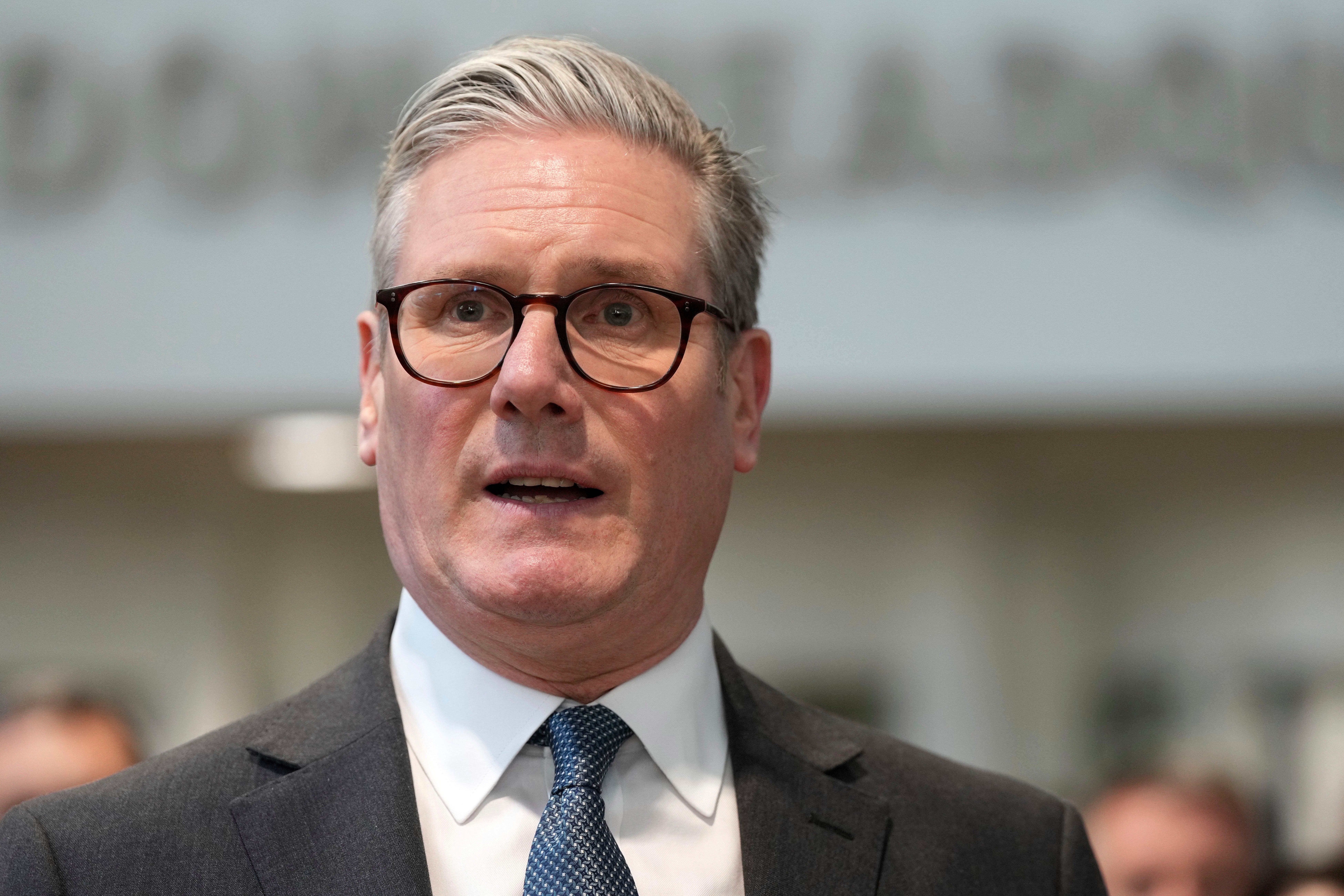
Keir Starmer has claimed the UK was “under pressure” to speak out after Donald Trump’s explosive spat with Volodymyr Zelenskyy last month.
The US president accused his Ukrainian counterpart of being ungrateful for America’s support for Kyiv since Russia invaded, criticised Zelenskyy for wearing military fatigues in the Oval Office and told him he had “no cards” with which to negotiate a deal with Moscow.
Advertisement
The White House then cancelled a scheduled joint press conference and appeared to kick Zelenskyy out of the building without signing the expected shared mineral agreement.
Trump went on to pull US military aid and intelligence sharing with Ukraine.
It was not until, with the UK’s encouragement, Zelenskyy publicly said he backed Trump’s efforts to secure a quick peace in Ukraine and said he was open to a 30-day ceasefire that the US reinstated aid and intel sharing.
Speaking to the New York Times, the prime minister has now revealed that there were plenty of tensions behind the scenes for No.10 around this time.
Advertisement
He said: “On the day in which the Oval Office meeting between President Trump and President Zelenskyy didn’t go particularly well, we were under pressure to come out very critically with, you know, flowery adjectives to describe how others felt.
“I took the view that it was better to pick up the phone and talk to both sides to try and get them back on the same page.”
The prime minister also recognised Trump has caused “quite a degree of disorientation” just two months into his second administration where he’s announced a string a dramatic orders – including imposing 25% tariffs on British steel.
Advertisement
Starmer then told the NYT that he still believes the best position for the UK right now is to remain as a bridge between the US and Europe, despite growing concerns about the White House’s relationship with Moscow.
He said: “Many people are urging us to choose between the US and Europe. Churchill didn’t do it. Attlee didn’t do it. It’d be a big mistake, in my view, to choose now.”
The PM defended Trump’s call for an increase in defence spending among European allies too, saying the US president “has a point”.
Advertisement
The PM also noted that he has a good relationship with Trump, adding: “I like and respect him. I understand what he’s trying to achieve.”
However the PM made it clear he does not share Trump’s warmth towards the Russian leader after the US president has repeatedly claimed he trusts Putin.
Starmer said: “I don’t trust Putin. I’m sure Putin would try to insist that Ukraine should be defenceless after a deal because that gives him what he wants, which is the opportunity to go in again.”
Advertisement

DEIR AL-BALAH, Gaza Strip (AP) — More than 50,000 Palestinians have now been killed in the war between Israel and Hamas in Gaza, the territory’s Health Ministry said on Sunday.
It comes as new Israeli airstrikes killed at least 26 Palestinians overnight, including a Hamas political leader and several women and children.
Advertisement
Israel’s military also sent ground troops into part of the southern city of Rafah as thousands of Palestinians fled after new evacuation orders.
Israel ended the latest ceasefire last week with a surprise wave of strikes that killed hundreds, and it has launched ground incursions in northern Gaza. It says it is targeting militants.
Israel’s Cabinet late Saturday approved a proposal to set up a new directorate for advancing the “voluntary departure” of Palestinians in line with US President Donald Trump’s proposal to depopulate Gaza and rebuild it for others.
Advertisement
Palestinians say they do not want to leave their homeland, and rights groups say the plan could amount to expulsion in violation of international law.
The military ordered people to leave Rafah’s already heavily destroyed Tel al-Sultan neighborhood on foot along a single route to Muwasi, a sprawling area of squalid tent camps. The war has forced most of Gaza’s population of over two million to flee within the territory, often multiple times.
“It’s displacement under fire,” said Mustafa Gaber, a journalist who left with his family. He said tank and drone fire echoed nearby. “There are wounded people among us. The situation is very difficult,” he said.
Advertisement
“The shells are falling among us and the bullets are (flying) above us,” said Amal Nassar, also displaced from Rafah. “The elderly have been thrown into the streets. An old woman was telling her son, ‘Go and leave me to die.’ Where will we go?”
The Palestinian Red Crescent emergency service said it lost contact with a team of medics responding to the strikes. Spokeswoman Nebal Farsakh said some were wounded.
There was no immediate comment from Israel’s military, which says it only targets militants. Israel blames civilian deaths on Hamas because it operates in densely populated areas.
Advertisement
Hamas said Salah Bardawil, a well-known member of its political bureau, was killed in a strike in Muwasi that also killed his wife.
Hospitals in southern Gaza said they received a further 24 bodies from strikes overnight, including several women and children.
Gaza’s Health Ministry said 50,021 Palestinians have been killed in the war and more than 113,000 have been wounded. That includes 673 people killed since Israel’s bombardment on Tuesday shattered the ceasefire.
Advertisement
Dr. Munir al-Boursh, the ministry’s general director, said the dead include 15,613 children, with 872 of them under 1 year old.
The ministry does not distinguish between civilians and combatants in its count but says women and children make up over half the dead. Israel says it has killed around 20,000 fighters, without providing evidence.
The ceasefire that took hold in January paused more than a year of fighting ignited by Hamas’ October 7, 2023 attack into Israel, in which militants killed some 1,200 people, mostly civilians, and took 251 hostage. Most captives have been released in ceasefire agreements or other deals.
Advertisement
In the latest ceasefire’s first phase, 25 Israeli hostages and the bodies of eight others were released in exchange for nearly 2,000 Palestinian prisoners. Israeli forces pulled back, allowing hundreds of thousands of people to return to what remains of their homes. There was a surge in humanitarian aid until Israel cut off all supplies to Gaza earlier this month to pressure Hamas to change the ceasefire agreement.
The sides were supposed to begin negotiations in early February on the ceasefire’s next phase, in which Hamas was to release the remaining 59 hostages — 35 of them believed to be dead — in exchange for more Palestinian prisoners, a lasting ceasefire and an Israeli withdrawal.
Those talks never began. Israel backed out of the ceasefire agreement after Hamas refused Israeli and US-backed proposals to release more hostages ahead of any talks on a lasting truce.
Advertisement
Hundreds of Israelis gathered outside Prime Minister Benjamin Netanyahu’s office in Jerusalem on Sunday to protest his handling of the war and his attempt to dismiss the head of the Shin Bet internal security service.
“I’m worried for the future of this country. And I think it has to stop. We have to change direction,” said one protester, Avital Halperin.
Israel’s cabinet passed a measure Sunday creating 13 new settlements in the occupied West Bank by rezoning existing ones, according to Bezalel Smotrich, Israel’s far-right finance minister, who is in charge of settlement construction.
Advertisement
This brings the number of settlements, considered illegal by the majority of the international community, to 140, said anti-settlement watchdog group Peace Now. They will now receive independent budgets from Israel and can elect their own local governments, the group said.
In a separate development, Iran-backed Houthi rebels in Yemen, who are allied with Hamas, launched another missile at Israel overnight. The Israeli military said it was intercepted, and there were no reports of casualties or damage.
The Houthis resumed attacks on Israel after it ended the Gaza ceasefire, portraying them as an act of solidarity with the Palestinians. Trump ordered the renewal of US strikes on the rebels last week over its previous attacks on international shipping in the Red Sea.
Advertisement
The rebels have said they are trying to blockade Israel, but most of the ships they have targeted have no connection to the conflict.
Magdy reported from Cairo. Associated Press writers Natalie Melzer in Nahariya, Israel, and Julia Frankel in Jerusalem contributed.
Follow AP’s war coverage at https://apnews.com/hub/israel-hamas-war


In a 2020 YouGov poll, 38% of mothers and 14% of fathers said they thought having kids hurt their careers.
That can take the form of reduced hours, taking fewer opportunities, and leaving the workplace entirely, respondents shared. “All of these factors tend to lead to stagnating or lower pay,” YouGov added.
Advertisement
In a now-deleted Reddit post, a site user asked members of r/AITAH (Am I The A**hole Here) whether that trade-off deserved financial compensation from their spouse.
So, we spoke to divorce lawyer and CEO of OW Lawyers Michelle O’Neil about whether the demands were fair.
The post author said his pregnant wife, who makes substantially more money than he does, told him he was expected to become a stay-at-home dad when their first child was born.
Advertisement
The suggestion – which had not been discussed with the father beforehand – left the poster uneasy because he didn’t like how that might play out in the event of a divorce.
When he brought this up to his wife, he suggested she offer him a share of her property as a safety net in return for the career stagnation, lack of pay, and financial insecurity the lifestyle change could expose him to.
She didn’t seem comfortable with the arrangement, leading the poster to wonder whether or not his demands were unfair.
Advertisement
O’Neil said that in her decades-long career, she’s seen firsthand “how decisions like this can create significant financial disadvantages for the spouse who steps away from their career”.
“While becoming a stay-at-home parent is a deeply personal decision, it must be made with full awareness of the long-term financial risks,” she continued, “particularly in the event of a divorce.”
Additionally, the divorce lawyer calls the discussion – or lack thereof – around the change a “red flag”.
Advertisement
“When one spouse dictates a major life change rather than engaging in a collaborative discussion, it often signals deeper power imbalances in the relationship which lead to bigger issues,” she told HuffPost UK.
“Decisions about career sacrifices, parenting roles, and financial security should be mutual, not unilateral.”
Explaining that staying home to look after a child can lead to a loss of earning potential, a smaller pension, a lack of asset equality, and financial dependence, O’Neil said the husband’s request for equity in the home is “a smart negotiation move”.
Advertisement
Though not everyone can offer a share of their home to mitigate those risks, the divorce lawyer advised: “Marriage is a partnership, and both spouses’ contributions – financial and otherwise – must be valued and protected.
“If one spouse makes a career sacrifice, the financial risks should be acknowledged and mitigated before the decision is made, not after.”

Before my last period, I was inconsolable. Nothing much had happened but it felt like the world was closing in on me and it was hard to imagine ever feeling happy again.
I couldn’t pinpoint what had caused such a significant drop in my mental health. I lost my granddad at the start of January and I have some personal struggles that I’m grappling with but even with those in mind… it seemed pretty out-of-nowhere.
Advertisement
I cried every day in the week leading to my period, several times a day. I was so worried I was falling back into the dark depression that swallowed me whole around 15 years ago.
Almost as soon as this deep depression had hit, it left again. I wasn’t fully out of the woods but I could definitely bring myself to make a cup of tea, to ask my partner for a hug and could get out of bed with my alarm rather than hours after it had gone off.
I made the most of the new burst of energy by doing the things you’re supposed to do to support your mental health; I ate well, I spent a good amount of time soaking up the sun in my garden and I made sure that I went to bed around the same time every night.
Advertisement
I still wondered, though, what had caused the crash I’d just experienced.
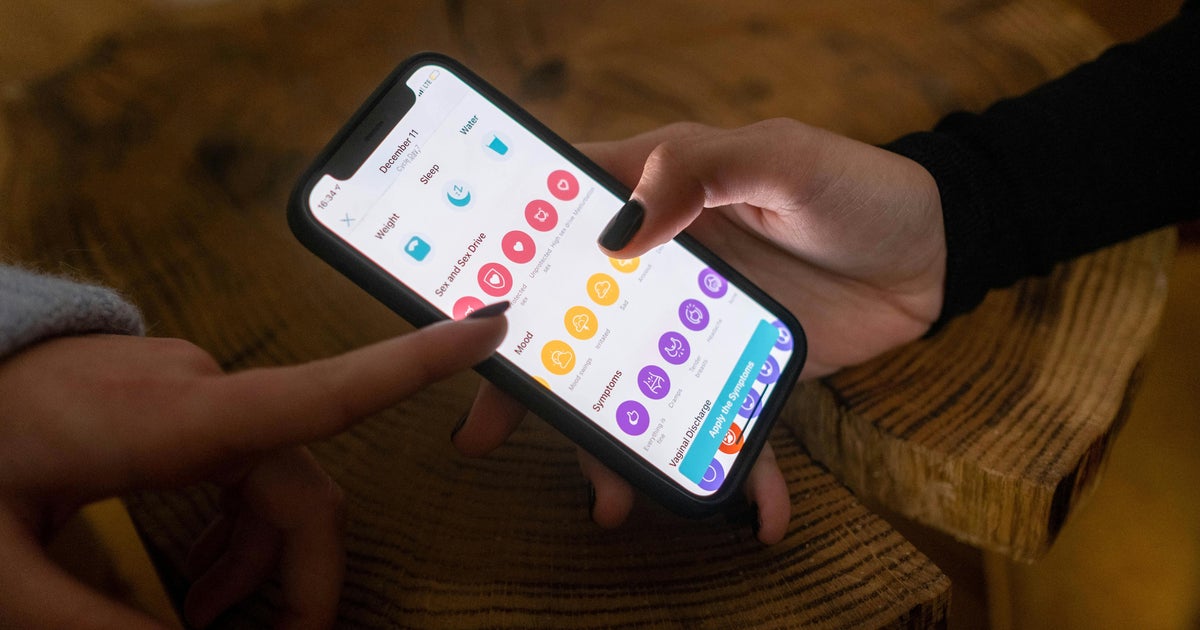
Since my temporary menopause ended, I’ve been using the period tracking app Flo to log not just my periods but my moods before, during and after my period as well as other symptoms I experience throughout my cycle.
Unbeknownst to me, this app also delivers full reports of the data you’ve given them and highlights patterns that may help to decode your physical and mental health.
The most common symptom that I logged around 1-4 days before the end of my cycle was depression. Every month, for six months.
Advertisement
My first response was to feel ashamed — I’ve been getting periods since I was 9 years old, the past 25 years of my life, how did I not notice? Then, I gave myself some much-needed grace: life happens, you can’t keep on top of all of it.
Immediately, I booked a doctor’s appointment. I knew what this could be and even knowing this happens every month was a huge weight off my shoulders.
The doctor confirmed what I already knew: I have premenstrual dysphoric disorder (PMDD).
It’s a condition that 800,000 women in the UK live with, and according to leading mental health charity Mind: ”[PMDD] is a very severe form of premenstrual syndrome (PMS). It causes a range of emotional and physical symptoms every month during the week or two before your period. It is sometimes referred to as ‘severe PMS’”.
Advertisement
According to the Royal College of Nursing, around 8% of people who get periods have this condition.
Treatment can involve medications, talk therapy or even surgery to remove the ovaries, according to Bupa. For me, we’re still figuring out what my next steps should be but even understanding this about myself has given me something I can work with once my cycle is coming to an end.


Traditionally, chemists have relied on well-established but limiting methods to synthesize these molecules. The new research, co-authored by Kevin Brown, the James F. Jackson Professor of Chemistry in the College, and Professors Xiaotian Qi, Wang Wang, and Bodi Zhao of Wuhan University, presents a fundamentally different approach.
Researchers at Indiana University and Wuhan University in China have unveiled a groundbreaking chemical process that could streamline the development of pharmaceutical compounds, chemical building blocks that influence how drugs interact with the body. Their study, published in Chem, describes a novel light-driven reaction that efficiently produces tetrahydroisoquinolines, a group of chemicals that play a crucial role in medicinal chemistry.
Tetrahydroisoquinolines serve as the foundation for treatments targeting Parkinson’s disease, cancer, and cardiovascular disorders. These compounds are commonly found in medications such as painkillers and drugs for high blood pressure, as well as in natural sources like certain plants and marine organisms.
Traditionally, chemists have relied on well-established but limiting methods to synthesize these molecules. The new research, co-authored by Kevin Brown, the James F. Jackson Professor of Chemistry in the College of Arts and Sciences at Indiana University Bloomington, and Professors Xiaotian Qi, Wang Wang, and Bodi Zhao of Wuhan University, presents a fundamentally different approach.
How It Works: Light as a Chemical Tool
Instead of using traditional chemical reactions, scientists harness light to trigger a process called photoinduced energy transfer, wherein light initiates a controlled reaction between sulfonylimines (a type of chemical compound) and alkenes (another type of compound), leading to the creation of tetrahydroisoquinolines — a type of complex molecule. This method allows for the development of new structural patterns in the molecules, which were previously difficult or impossible to create using other methods, offering a more efficient way to make complex molecules.
“The key innovation in this study is the use of a light-activated catalyst, a special molecule that speeds up the reaction without being used up itself,” said Professor Brown. “Traditional methods require high temperatures or strong acids — like trying to cook food with a blowtorch instead of a stove. These harsh conditions can sometimes create unwanted side reactions, or make the process less useful for certain chemicals. The new process, however, uses molecules that respond to light, and can bypass heating by access new energy states. This makes the reaction cleaner, more efficient, and less likely to create unwanted byproducts.”
Brown and colleagues also found that tiny changes in the location of electrons within the starting materials had a huge impact on how the reaction played out — akin to if these electrons were puzzle pieces that needed to fit together just right. By tweaking the shapes of these pieces, the scientists made sure that only the desired product was formed, making the process highly selective. This is crucial for making medicines, where even a small mistake in a molecule’s structure can turn a helpful drug into something useless or even harmful.
Implications for Medicine and Other Industries
“The ability to create a wider range of tetrahydroisoquinoline-based molecules means that medicinal chemists can now explore new drug candidates for treating diseases like Parkinson’s, certain types of cancer, and heart conditions,” noted Professor Qi. “Right now, some diseases have very few effective treatment options, and this method could help scientists discover new and better drugs more quickly.”
Beyond pharmaceuticals, this research could also impact other industries that rely on fine chemicals. In agriculture, for example, similar chemical reactions could be used to develop more effective pesticides or fertilizers. In materials science, it could help create new synthetic materials with specific properties, such as better durability and longevity and greater resistance to heat for the aerospace, automotive, electronics, and medical industries.
The researchers plan to fine-tune the reaction conditions, meaning, they will experiment with different ingredients and settings to make the improve the process further. They also aim to find out if this method can work on even more types of molecules, expanding its usefulness. In addition, they hope to partner with pharmaceutical companies to test whether this technique can be used to produce medicines, potentially leading to new drug discoveries that could make a difference in people’s lives.
“This approach gives chemists a powerful new tool,” said Professor Brown. “We hope especially it will open the door to the development of new and improved therapies for patients around the world.”
As the field of photochemistry continues to expand, innovations like this may redefine how medicines and essential chemicals are made, paving the way for faster, cleaner, and more efficient production methods.
Lesson 13 of the free Engage course delves deeply into deservingness and explains how to ask for more than you feel you deserve.
You’ll find the rest of the Engage course videos in the Video section.
Join the Engage notification list to get an email whenever a new Engage lesson is published. I also encourage you to subscribe to my YouTube channel to follow the course there.
Enjoy!