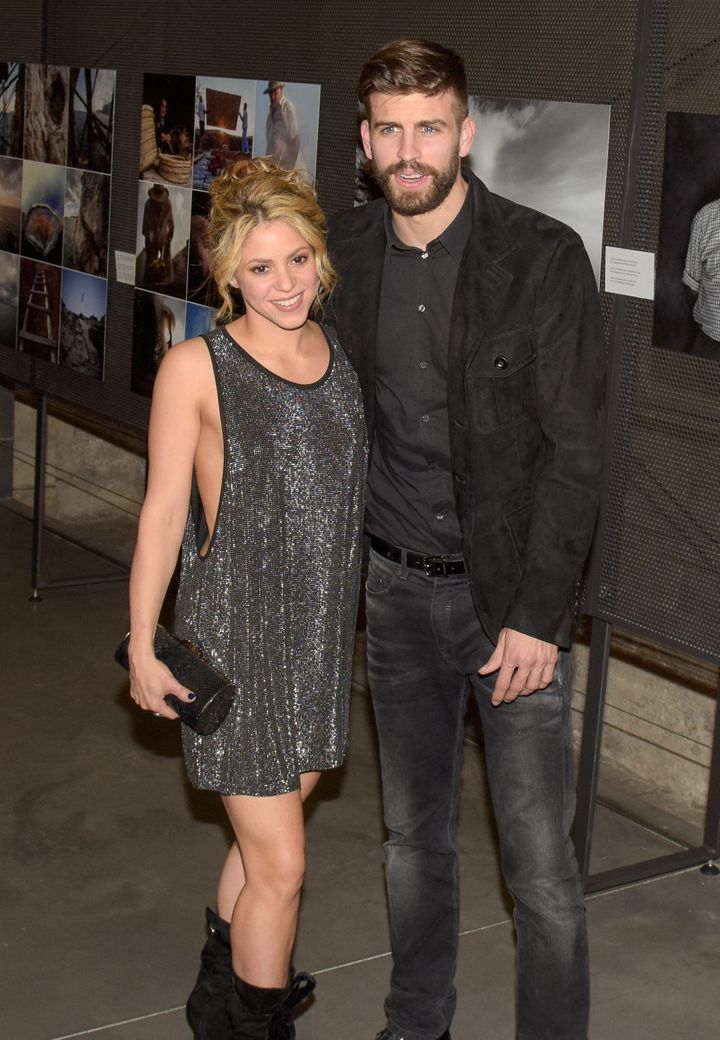
Shakira and partner Gerard Piqué have parted ways after over a decade together, the former couple confirmed on Saturday.
In a joint statement announcing the split, Shakira and Gerard said: “We regret to confirm that we are separating. We ask for privacy at this moment for the wellbeing of our children, who are our maximum priority.”
Advertisement
“Thank you in advance for your understanding and respect,” they added.
The chart-topping Hips Don’t Lie singer and FC Barcelona player began dating shortly after meeting at the Fifa World Cup in 2010, where Shakira performed the official song Waka Waka (This Time For Africa) and Gerard was one of the players on the winning team, Spain.
Advertisement
During their relationship, they welcomed two sons, seven-year-old Sasha, and nine-year-old Mila.
Born in Colombia, Shakira relocated to Barcelona in the 2010s, where she and Gerard had been living together with their family.
Advertisement
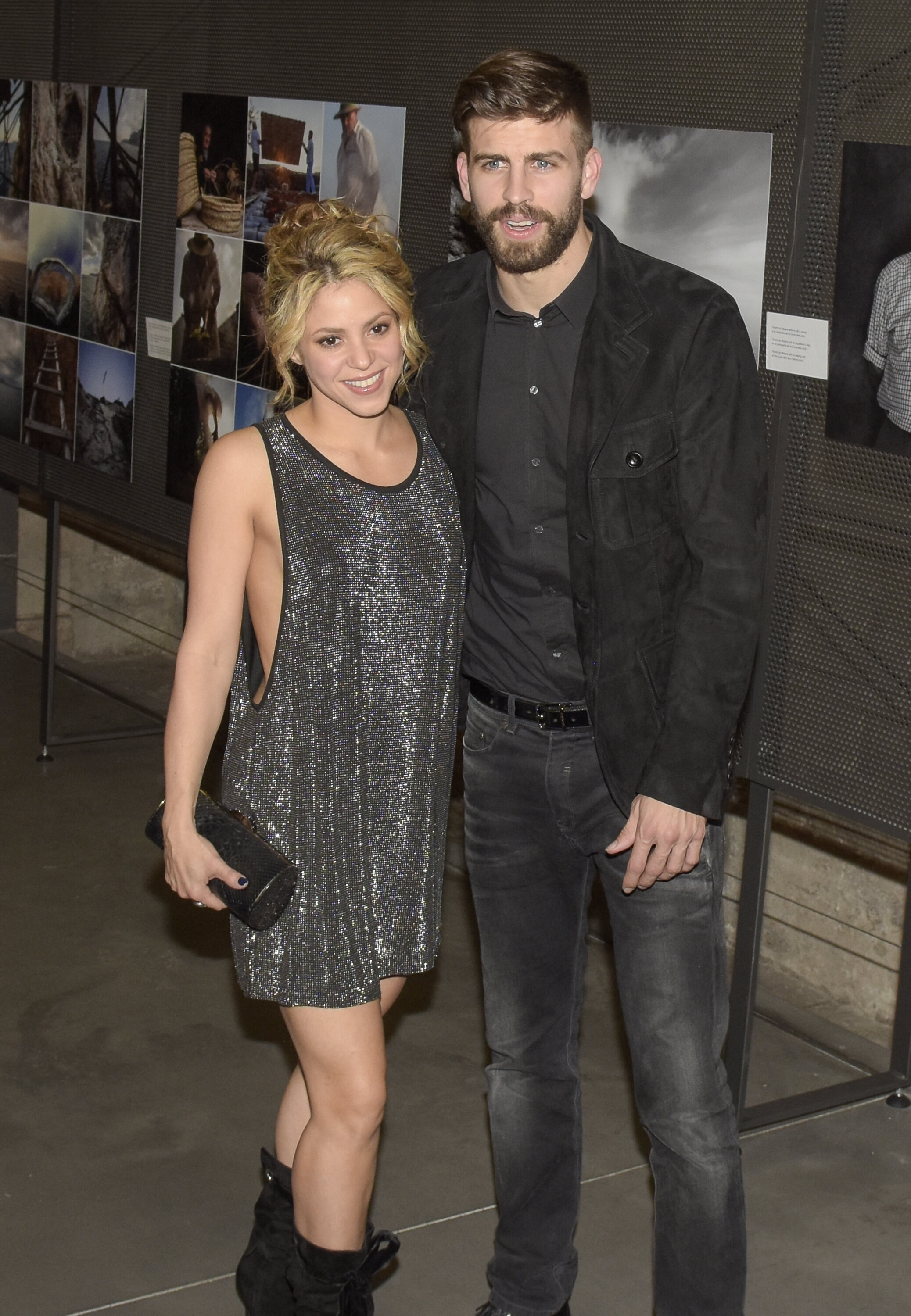
Shakira and Gerard together in 2016
Robert Marquardt via Getty Images
Shakira is currently awaiting trial for alleged tax fraud, after losing an appeal last month.
Prosecutors in Spain have alleged that the star had failed to pay up to around £12.4 million in tax on income earned between 2012 and 2014.
According to Reuters, they are arguing that Shakira was living in Catalonia during this period, although she has insisted she did not permanently move there until 2015.
Her legal representatives have insisted: “Shakira’s conduct on tax matters has always been impeccable in all the countries she had to pay taxes and she has trusted and followed faithfully the recommendations of the best specialists and advisers.”
Advertisement
Shakira is currently gearing up for the release of her twelfth studio album, telling PA Media that it was a “family project” as her children came up with the concept for her Te Felicito music video.
He was also asked about Zayn, who quit 1D in 2014, a year before the group announced they’d be going on an indefinite hiatus.
“There’s many reasons why I dislike Zayn and there’s many reasons why I’ll always, always be on his side,” Liam said.
Advertisement
“You can always look at the man for where he is and say ‘Whatever, that guy’s a dick,’ but at the end of the day once you understand what he’s been through to get to that point and also if he even wanted to be there. I’m so misunderstood by myself more than anyone… I can’t sit here and dick on him.”
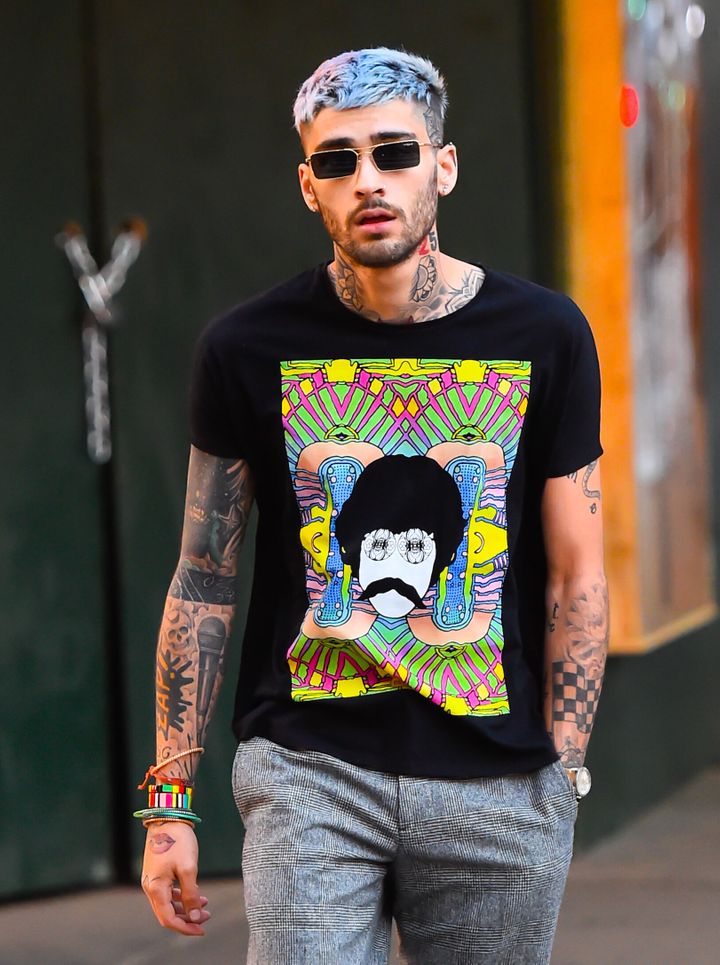
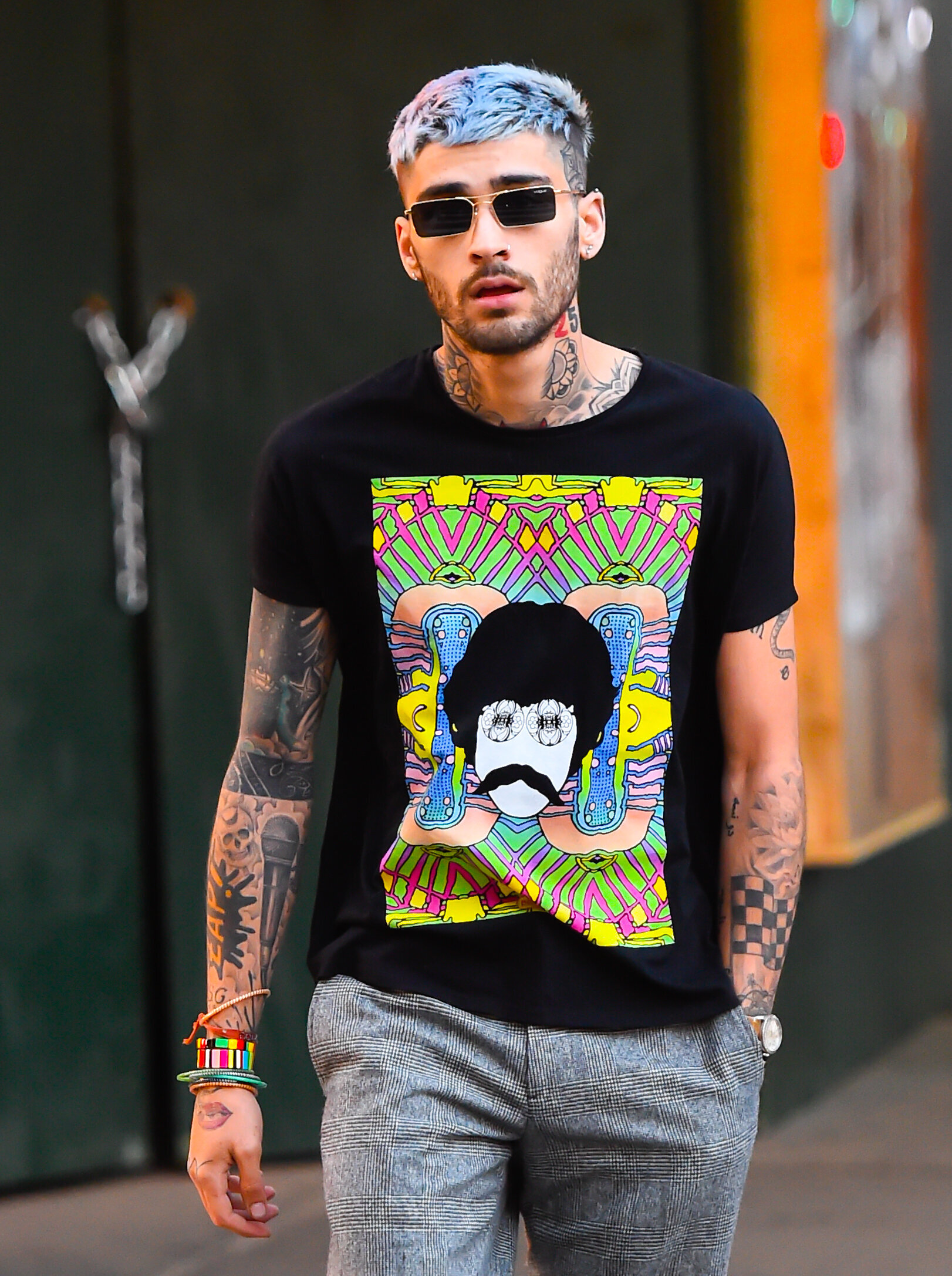
Zayn Malik pictured in 2018
Raymond Hall via Getty Images
Liam added: “I can’t commend some of the things he’s done, I can’t be on his side for that.
Advertisement
“What I can say is I understand…. You hope at some point the person on the other side of the phone wants to receive the help you’re willing to give them.”
As his remarks became more widespread, Liam posted a clarification on his Twitter page.
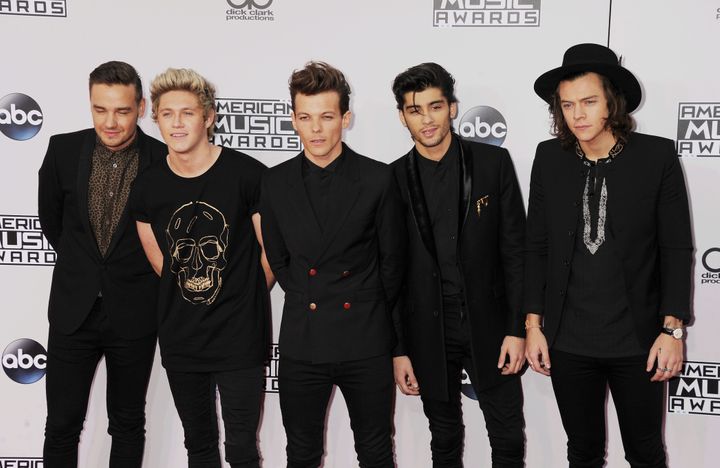
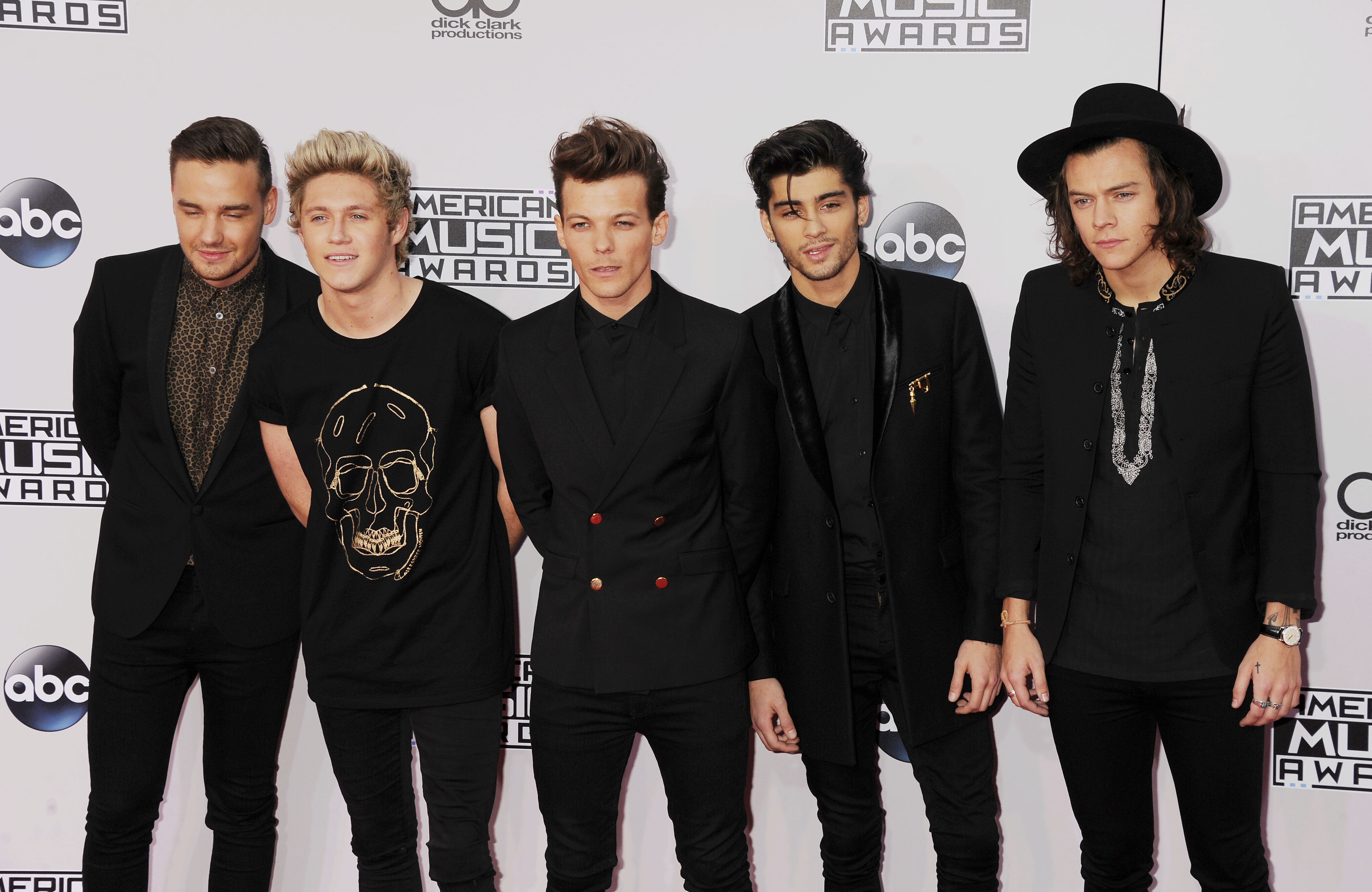
One Direction in 2014, shortly before Zayn’s departure
Jeffrey Mayer via Getty Images
“I wouldn’t normally comment on this stuff but when it’s your family it’s hard to let it slide,” he tweeted.
“They mentioned a specific incident involving Zayn which I responded to – but listening back maybe I didn’t articulate myself as well as I could have.
Advertisement
“I was saying that there will always be things we disagree on but that I will always, always be on his side. That’s family. Zayn is my brother and I will stand by him forever.”
Guys – I wouldn’t normally comment on this stuff but when its your family it’s hard to let it slide.
They mentioned a specific incident involving Zayn which I responded to – but listening back maybe I didn’t articulate myself as well as I could have.
I was saying that there will always be things we disagree on but that I will always, always be on his side. That’s family. Zayn is my brother and I will stand by him forever.
Elsewhere in the interview, Liam admitted that while he and Louis Tomlinson are now “best mates”, they “hated” one another during their time in One Direction.
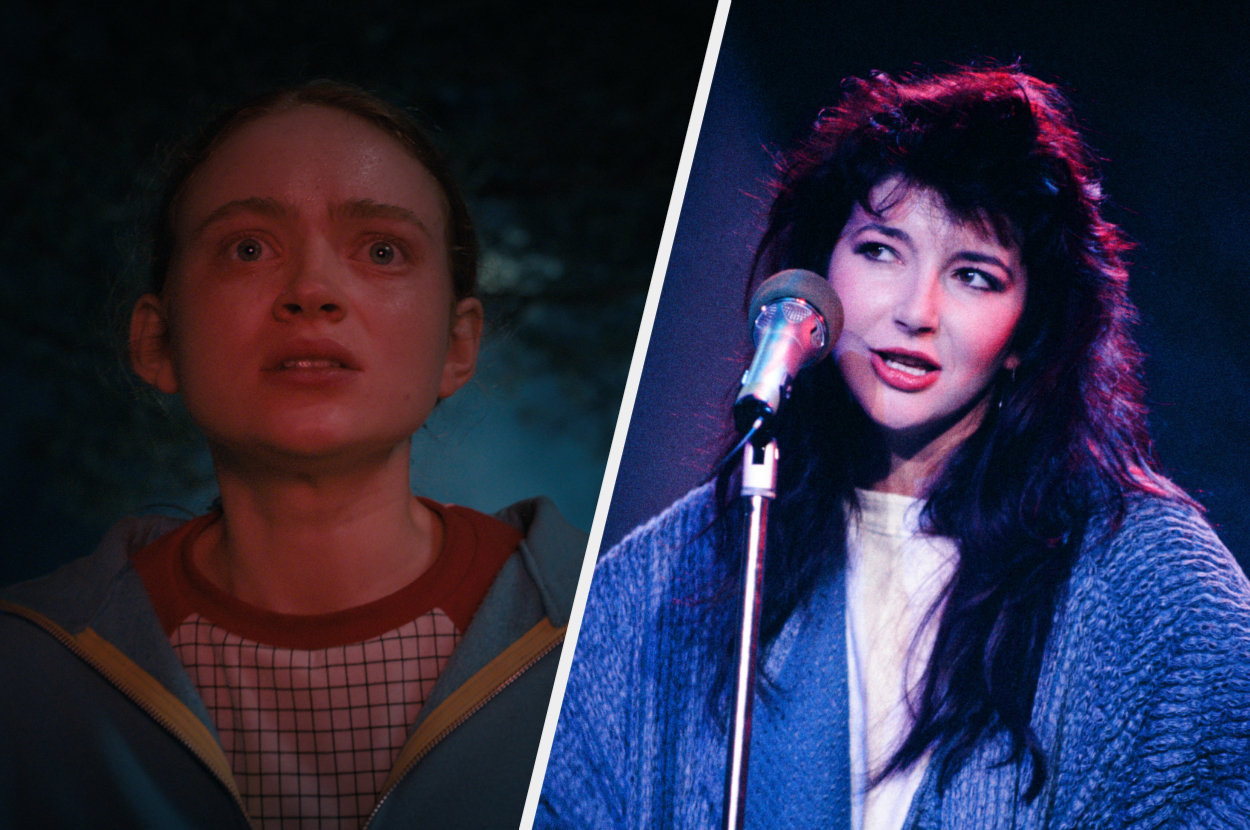
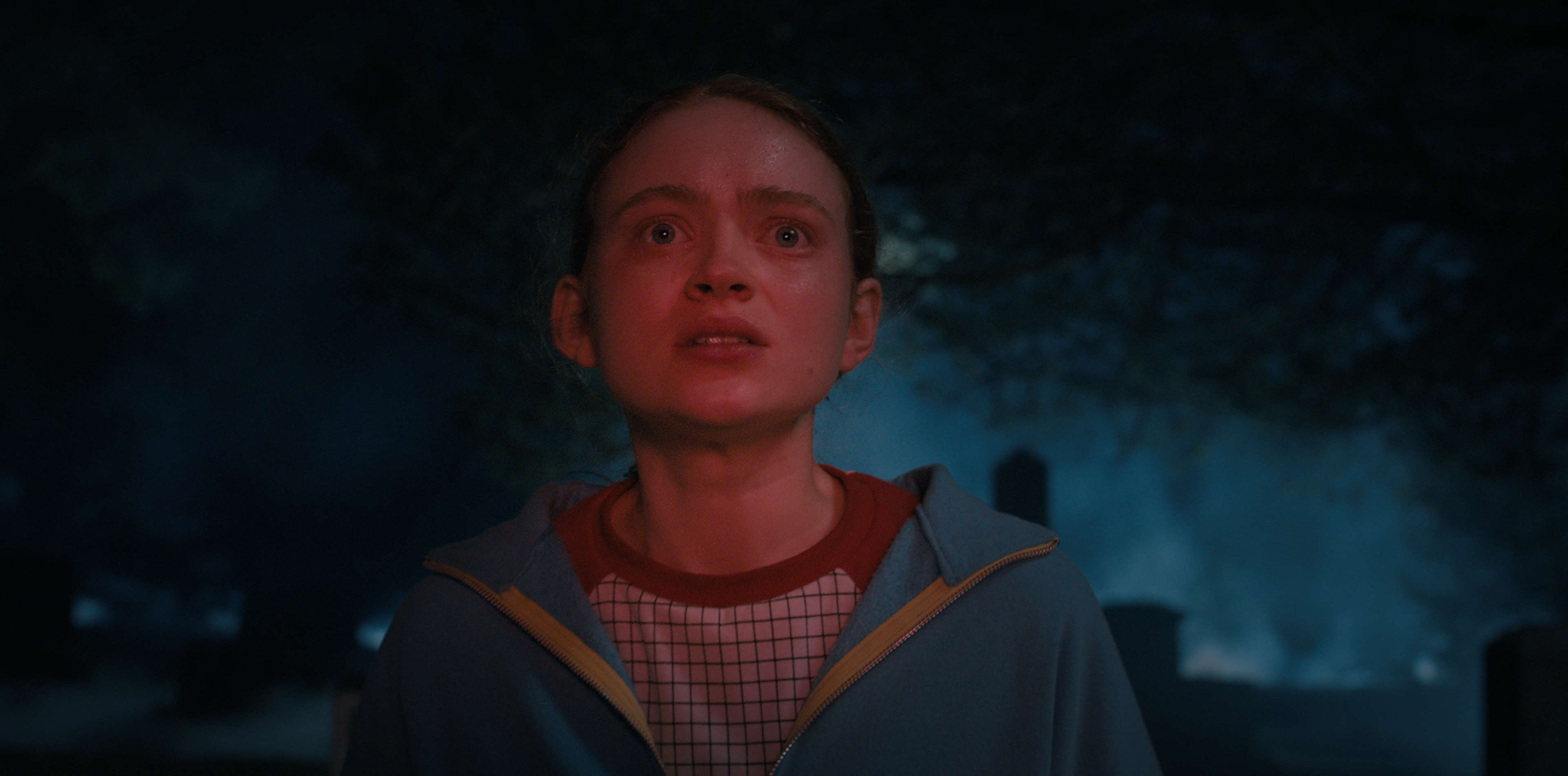
One of Kate Bush’s signature tunes made a return to the UK top 10 this week, after receiving pride of place in the latest series of Stranger Things.
The first half of the hit Netflix sci-fi drama’s fourth season debuted last week, with the pop icon’s hit Running Up That Hill being featured prominently in multiple scenes throughout the new episodes.
Advertisement
Due to the popularity of Stranger Things, Running Up That Hill shot to the top of the iTunes chart in the last week, and also received an 8700% percent increase in streaming.
On Friday, it was revealed that the track had landed at number eight in the UK singles chart, an impressive 37 years after it was first released.
Advertisement
The Official Charts Company’s CEO Martin Talbot said of the feat: “It is fantastic to see Running Up That Hill returning to the Top 10 this week, driven by its feature in Stranger Things, introducing Kate Bush and this iconic eighties hit to a brand new audience.”
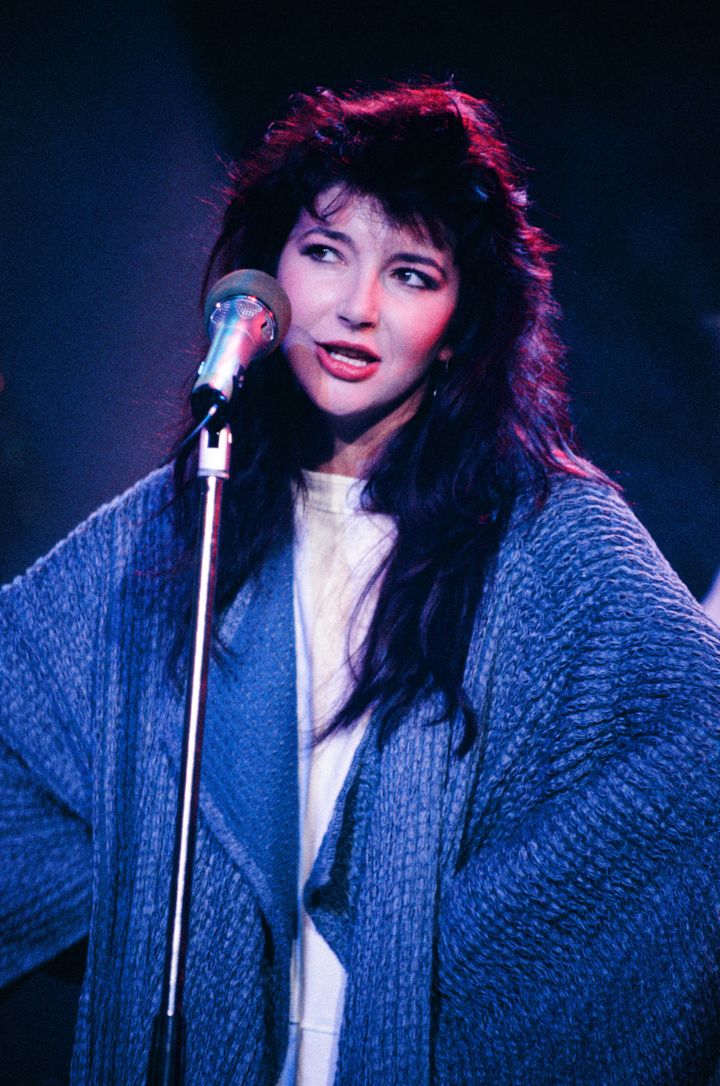
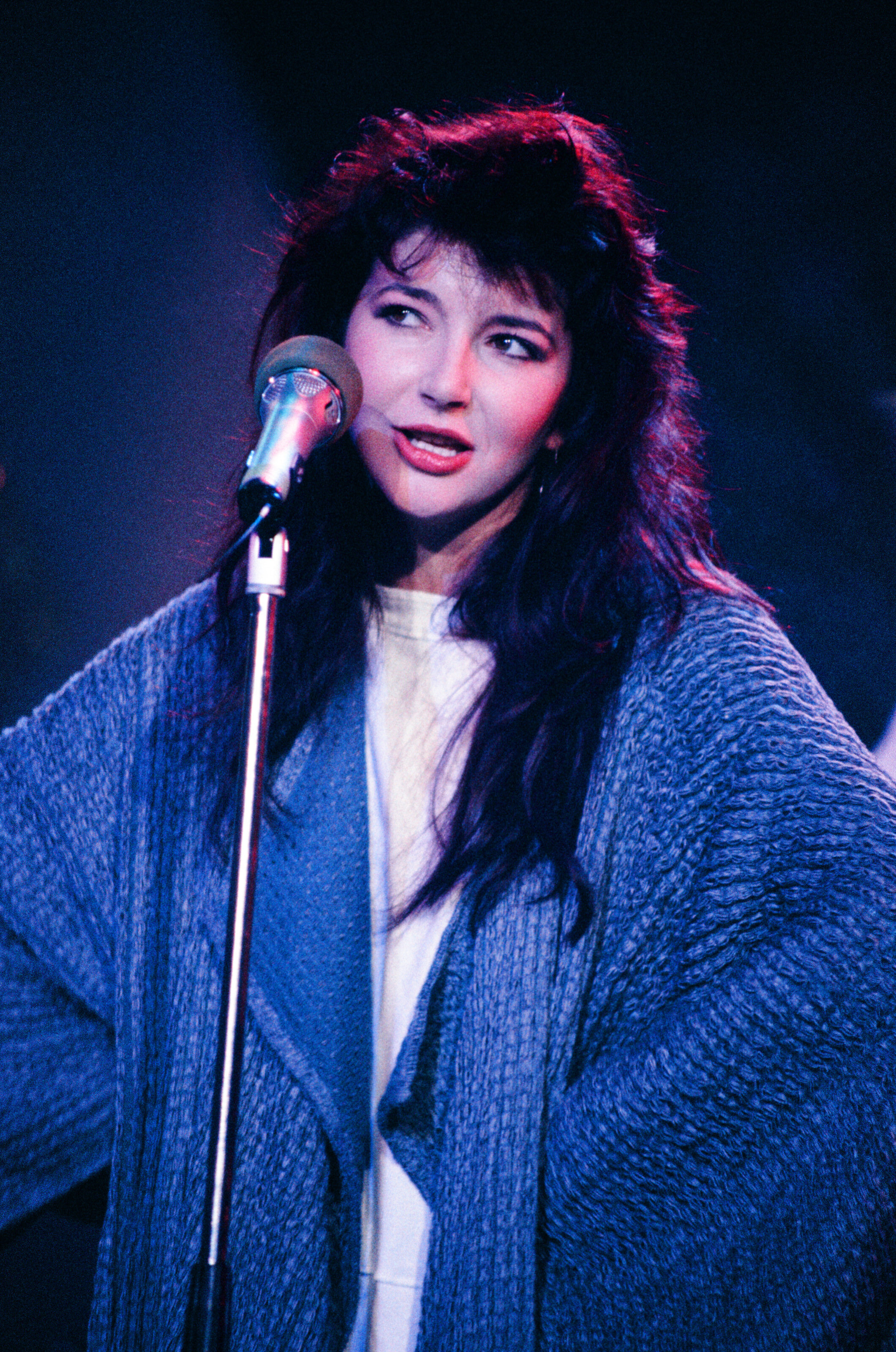
Kate Bush performing in 1985, the year Running Up That Hill was first released
United Archives via Getty Images
Running Up That Hill was first introduced as the lead single from Kate Bush’s Hounds Of Love album in 1985, peaking at number three upon its original release.
Advertisement
In 2012, a re-recorded version of the track was included in the London Olympics Closing Ceremony, and later released as a single, which also reached number six in the UK charts.
Kate Bush famously keeps out of the spotlight, but did perform a string of concerts in London back in 2014, where Running Up That Hill was included on the setlist.
The acclaimed musician is often reluctant to allow her music to be featured in films or TV shows, but gave permission to Stranger Things as she was apparently already a fan.
Wende Crowley of Sony Music Publishing told Variety: “Kate Bush is selective when it comes to licensing her music and because of that, we made sure to get script pages and footage for her to review so she could see exactly how the song would be used.”
Advertisement
The first chapter of Stranger Things’ fourth season is available to stream on Netfix now.
The government has confirmed that a consultation which could pave the way for greater use of imperial measurements in post-Brexit Britain will be launched on Friday.
Plans to review “overbearing EU rules” will restore “common sense” to the statute book, according to the Department for Business, Energy and Industrial Strategy (BEIS).
Advertisement
The EU weights and measures directive came into force in 2000, with traders legally required to use metric units for sale-by-weight or the measure of fresh produce.
It remains legal to price goods in pounds and ounces, but they have to be displayed alongside the price in grammes and kilogrammes, except in a limited number of cases.
Advertisement
The 12-week consultation will look at how to change those stipulations, giving traders more freedom to choose how they price fresh items.
It will assist the government in considering, for example, allowing vegetables to be sold in pounds only, or in pounds with a less prominent metric equivalent.
Advertisement
BEIS said this will help inform plans to legislate to give businesses greater choice over the units they use.
The department insisted the move would not inflict further costs on businesses as there was no intention to require them to make a change.
A range of stakeholders are being invited to contribute to the consultation, including businesses, trade associations, enforcement bodies and consumer organisations.
The government announced its intention to review the rules on imperial measurements in September last year, as part of a range of post-Brexit regulatory reforms.
Advertisement
Business minister Paul Scully said: “While we think of our fruit and veg by the pound, the legacy of EU rules means we legally have to sell them by the kilo.
“Our consultation today will help shops to serve customers in the way their customers want.”
The move has come in for criticism, with Tory peer and supermarket boss Lord Rose of Monewden arguing that the idea of returning to imperial weights and measures is “complete and utter nonsense” and would “add cost” for those making the transition.
The Asda chairman said on Thursday that the change would only please “a small minority who hark for the past”.
New government guidance published on Friday will also help businesses apply the Crown symbol to pint glasses, in what BEIS said will serve as a “tribute” to the Queen’s Platinum Jubilee.
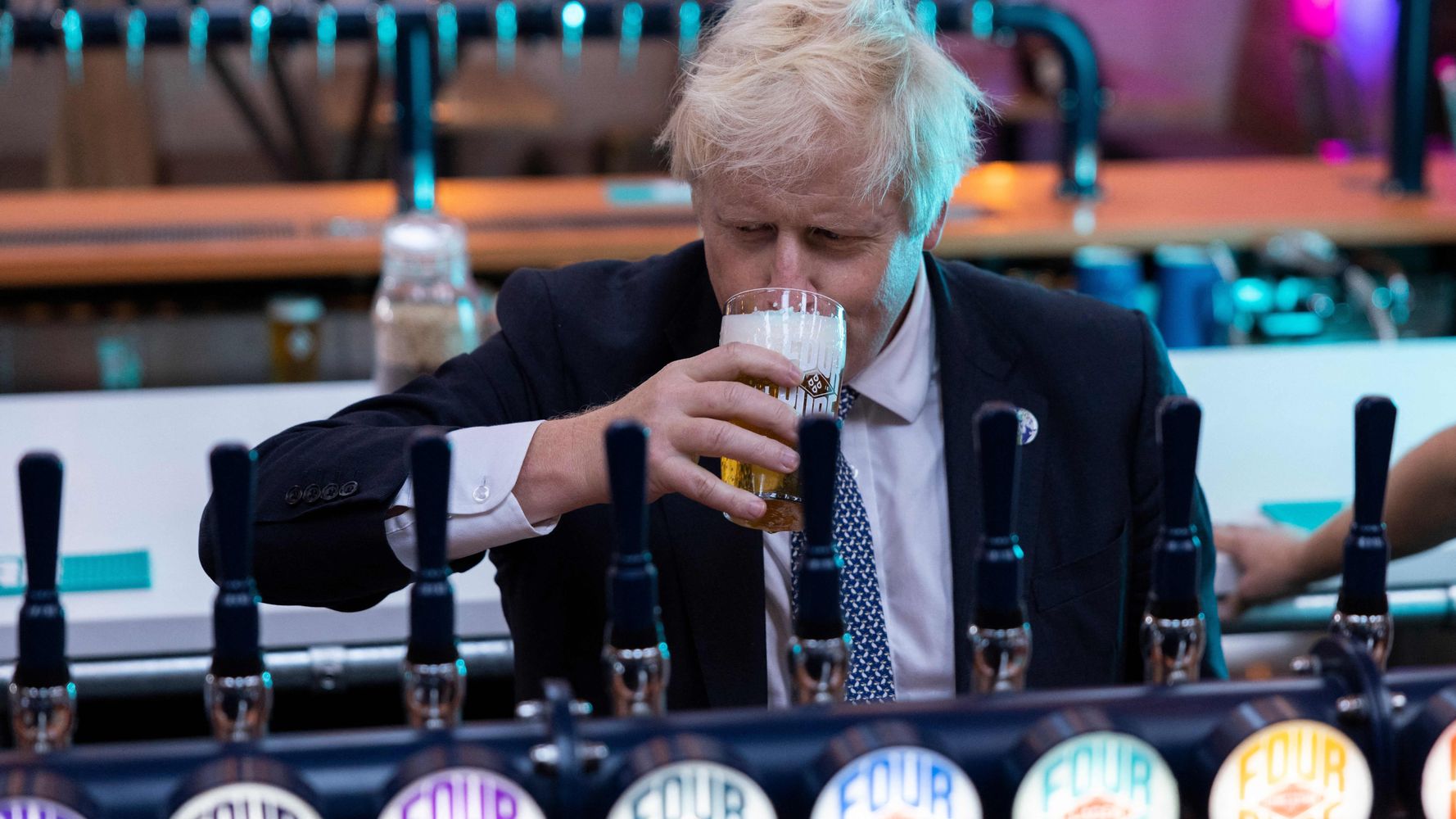
British pint glasses intended for measuring and serving beer used to be marked with a Crown stamp as a declaration that the measure was accurate.
But on the implementation of an EU directive in 2006, they were required to display an EU-wide “CE” marking to show they were conforming with the union’s regulations in the UK.
Glasses already bearing the Crown stamp did not have to be removed from circulation, and those with the EU-wide marking were technically allowed to display the Crown too, as long as it did not obscure the new symbol.
From 2023, glasses entering the market in England, Scotland and Wales will have to carry the new UKCA marking to show they are conforming with legal requirements.
Businesses can decide whether to apply the Crown symbol, which would be purely decorative.
Advertisement
Scully said: “This Platinum Jubilee weekend we’re raising a toast to Her Majesty the Queen’s health and service to this country.
“It’s a fitting tribute that we’re now helping businesses to restore the Crown symbol to pint glasses.”
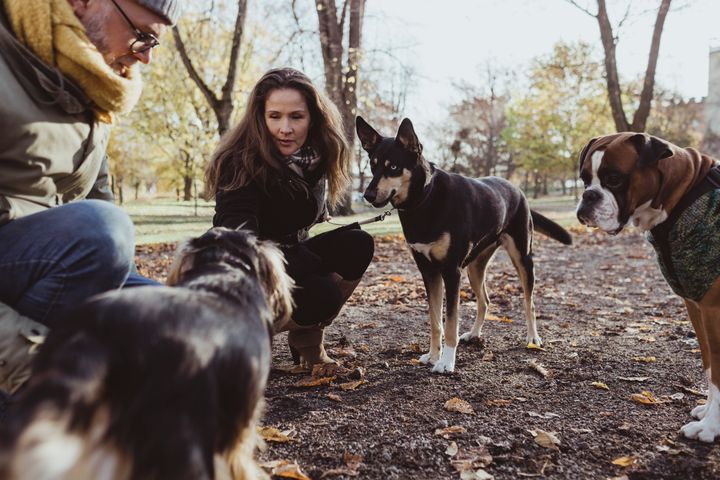
Going to the park with a dog is a great way to help your pet socialise, exercise and get some fresh air. But not every canine knows how to behave there.
The same goes for humans. In fact, there are several rude boo boos that dog owners display in this setting.
Advertisement
“Etiquette is all about being mindful of other people, which certainly applies to the dog park,” Nick Leighton, an etiquette expert and co-host of the Were You Raised by Wolves? podcast, tells HuffPost.
To help make the dog park a safe and enjoyable setting for everyone, HuffPost asked Leighton and other etiquette experts to share the faux pas they’ve observed – and their advice for avoiding these missteps. Here are eight of the rudest things you can do at the dog park.
Advertisement
Not cleaning up after your dog
“The rules about picking up after your pet aren’t suspended in a dog park,” Leighton noted.
Advertisement
When your dog goes, it’s your responsibility to clean it up, and there’s little excuse for failing to do so.
“Most parks are well-supplied with waste pickup bags and plenty of trash cans, so please do your part,” says Camp Bow Wow animal health and behaviour consultant Erin Askeland.
Failing to pay attention to your dog
“Be sure to pay attention to your dog at all times,” Leighton advises.
Advertisement
Keep a close eye on what your pup is doing and resist the urge to tune out. Stay vigilant and keep your leash handy in case the two of you need to make an early exit.
“In addition to monitoring your dog’s behaviour, it’s common courtesy to be sociable with the other pup parents, complimenting them on the cuteness of their canine companion and making pleasant conversation,” said Thomas P. Farley, aka Mister Manners. “To let one’s dog roam free while you catch up on email, disengaging with everyone in the enclosure – including your pet – is a no-no.”
If you’re distracted on your phone, you’ll also miss out on the opportunity to “engage with your dog, practice recall, ensure play is appropriate, provide breaks in play, and monitor your dog’s body language,” Askeland notes.
Anna Belova / 500px via Getty Images
Bringing small children
Avoid bringing young children who need constant supervision to the dog park, if possible, as their presence will make it difficult to monitor your dog.
“You don’t know the other dogs and need to keep your focus on your own dog,” Askeland said. “Adding small children is dangerous to the child and the dogs in the park.”
Toddlers and babies may also be at risk of harm from rowdy dogs, especially if there are animals present who are unfamiliar with little kids.
Not intervening when necessary
“While at the dog park, people should ensure their dog is interacting with other dogs in an appropriate manner,” says animal behaviorist and consultant Kate Mornement. “Dogs that are aggressive or reactive towards other dogs should not be taken to dog parks. Try to ensure your dog and the other dog it interacts with are having a good time. If your dog is playing too rough with another dog, it’s best to intervene and call your dog away.”
Don’t allow your dog to bully other dogs or steal and shred up their toys. Look out for any aggressive, dangerous behaviour.
Advertisement
“Dog parks are wonderful places for well-behaved and socialised dogs who enjoy the company of other dogs,” Mornement says. “However, not all dogs are well-behaved or socialised and this can cause problems at the dog park.”
Leaving gates open
“In some ways, dog runs can be for canines what Las Vegas is for humans: For these lucky pups, what happens on the dog run stays in the dog run!” Farley says. “Being off-leash, doggies excitedly embrace the rare sensation of liberation. But while dogs will let down their guards, their humans should not. Being aware of securing the dog-run gate while coming and going is rule number one.”
Pay attention to the gates at fenced-in dog parks. Many of these have double-gated entrances to prevent off-leash dogs from escaping. Pause before you open a gate, especially if you notice lots of dogs hanging around the area, and look out for any pets trying to make a hasty exit. Be sure to properly close and latch any gates behind you as well.
Maskot via Getty Images
Don’t feed other dogs without permission from their owners.
Giving food to other dogs
“Don’t give food to other dogs at the park,” Askeland advises. “You don’t know the other dogs and whether or not they can have food you may offer.”
On a similar note, don’t bring your own human food to snack on in this space. In addition to potentially endangering other dogs, you probably won’t enjoy being swarmed by pups looking for a snack.
Bringing an unvaccinated dog
Don’t go to the dog park with a canine that is unvaccinated, sick or under 4 months old. In addition to being vulnerable, they might also put other pets at risk. Only bring your dog if they are up to date with their shots and any other requirements the park may have in place.
“Make sure your pup is vaccinated and protected against fleas, ticks and other parasites,” Askeland said. “This helps keep other pups safe too.”
Advertisement
Forcing an uncomfortable dog to go to the park
“Dogs that are fearful and nervous around unfamiliar dogs should also not be taken to dog parks,” Mornement said. “This is because these dogs are not enjoying the dog park environment and this can make their behaviour worse.”
Make sure your dog’s behaviour is appropriate for a dog park before you take them to one.
“This is not the place to test whether your dog enjoys playing with other dogs or a place to help a dog learn to play,” Askeland says. “If you’ve recently added a dog to your home, you should wait until your dog has adjusted to his/her home and you have gotten to know your dog and his/her body language and normal interactions before deciding whether the dog park is the right place to visit.”
That way, you can watch your dog’s body language at the park and remove them if they’re showing signs that they aren’t comfortable.
“Understand that not all dogs are great with a dog park, and it’s OK if your dog does not go to a dog park,” Askeland adds.
A single copy of these materials may be reprinted for noncommercial personal use only. “Mayo,” “Mayo Clinic,” “MayoClinic.org,” “Mayo Clinic Healthy Living,” and the triple-shield Mayo Clinic logo are trademarks of Mayo Foundation for Medical Education and Research.
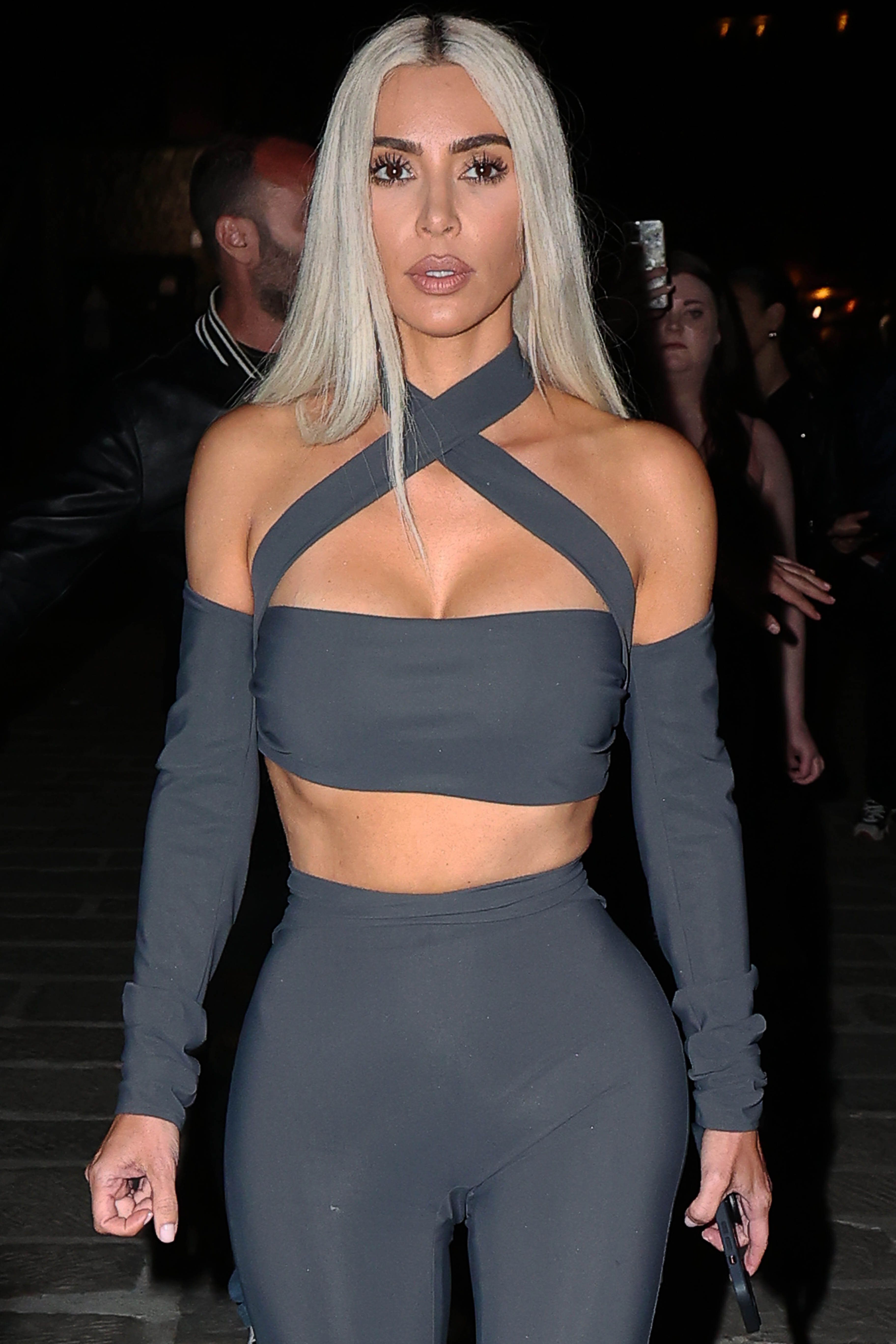
“I’ll try anything,” the beauty and reality TV mogul told The New York Times in a recent interview about her new skin care line.
“If you told me that I literally had to eat poop every single day and I would look younger, I might. I just might.”
The new line, SKKN by Kim, is a nine-product skin routine mirroring her own elaborate regimen: cleanser, toner, exfoliator, hyaluronic acid serum, vitamin C serum, face cream, eye cream, oil drops and night oil. The brand launches next month and joins her existing makeup and shapewear lines, KKW Beauty and Skims.
The nine items come to an eye-popping total of $630, which Kim told the Times was necessary in order to include the ingredients she wanted.
She said she uses the products on her neck and décolletage all the way “down to my nipples.”
The Times clarified that, as yet, “excrement is not one of the ingredients in Ms. Kardashian’s new skin care line”.
You’re reading First Thing, the HuffPost UK series helping to make your mornings happier and healthier.
Getting enough sleep is critical for physical and emotional well-being, but so many people fall short. The US Centers for Disease Control and Prevention estimates that a whopping one in three Americans don’t get enough sleep on a regular basis. (For reference: adults should be aiming for at least seven hours.)
Advertisement
Of course, many factors go into a person’s ability to get sufficient rest, from work and family schedules to sleep hygiene.
With that in mind, here are five common mistakes a lot of people make in the morning that affect their ability to fall asleep – and stay asleep – later on:
Advertisement
1. You’re drinking too much caffeine
Obvious? Sure. But drinking too much caffeine in the morning can throw your entire sleep routine off track.
Advertisement
In general, most healthy adults can safely have up to 400mg of caffeine a day. That’s the equivalent of roughly four cups of brewed coffee or two energy drinks, if that’s your thing. Remember, though: caffeine levels in energy drinks can vary widely, and there are serious concerns about their potential impact on the body.
The effects from caffeine generally kick in within 15 minutes and peak about an hour later.
“Six hours after caffeine is consumed, half of it is still in your body,” according to the Cleveland Clinic. “It can take up to 10 hours to completely clear caffeine from your bloodstream.”
That means you can absolutely have a few cups of coffee in the morning and still be feeling them by dinnertime.
Advertisement
Also, keep in mind that some people are particularly sensitive to caffeine. So try cutting back for a bit to see how that affects your ability to get sufficient ZZZs.
2. You’re waking up at totally different times every day
Sleeping in when you can is glorious, yes. But it can also take a toll on your broader sleep patterns. Many sleep experts suggest that people set a standard wake time and stick with it to the best of their ability, even on the weekends.
Why? If you sleep for a few extra hours on a Sunday, for example, you might not be tired again until much later than usual – which means your bedtime is thrown off and you’re likely to be pretty darn tired when you wake up early for work on Monday.
An irregular sleep schedule can also increase your risk of what experts call “social jet lag” – basically, the discrepancy between your body’s natural sleep schedule (i.e., circadian rhythm) and your social schedule, which throws off the midpoint of your sleep and has been linked to health issues such as increased inflammation and higher risk of depression.
Sleep is governed by our circadian rhythms (which also influence everything from hormone regulation to body temperature). And the sun’s cycle has a huge impact on those rhythms day to day.
Your body’s circadian clock is most sensitive to light starting about two hours before your usual bedtime and lasting throughout the night up until about one hour before your usual wake time, per the CDC.
“Exposure to light during these times will affect when your body naturally gets sleepy and is ready to fall asleep,” the CDC says.
Advertisement
What all of this means is that exposing yourself to plenty of bright light in the morning can help shift your bedtime earlier; by the evening, you’re more likely to be sleepy and primed for rest.
blackCAT via Getty Images
If you’re waking up on the wrong side of the bed, your morning routine might be to blame.
4. You’re not making a to-do list
Creating a to-do list is one of the most powerful things you can do to stay on track throughout the day. It can also be an effective way to combat anxiety that often creeps up at bedtime and makes it hard to fall asleep.
Not all to-do lists are created equal, though. First and foremost, it’s a good idea to write it down.
“When you try to manage your to-do list in your head, you’re likely to forget items,” HuffPost senior reporter Kelsey Borresen previously wrote. “Jotting it down on paper (or digitally in your Notes or other mobile app, if you prefer) gives you something concrete to refer to when your brain feels like mush.”
Also, make sure it’s realistic. Try to focus on three to five things you can actually accomplish, experts say. It’s a plan, not a wish list.
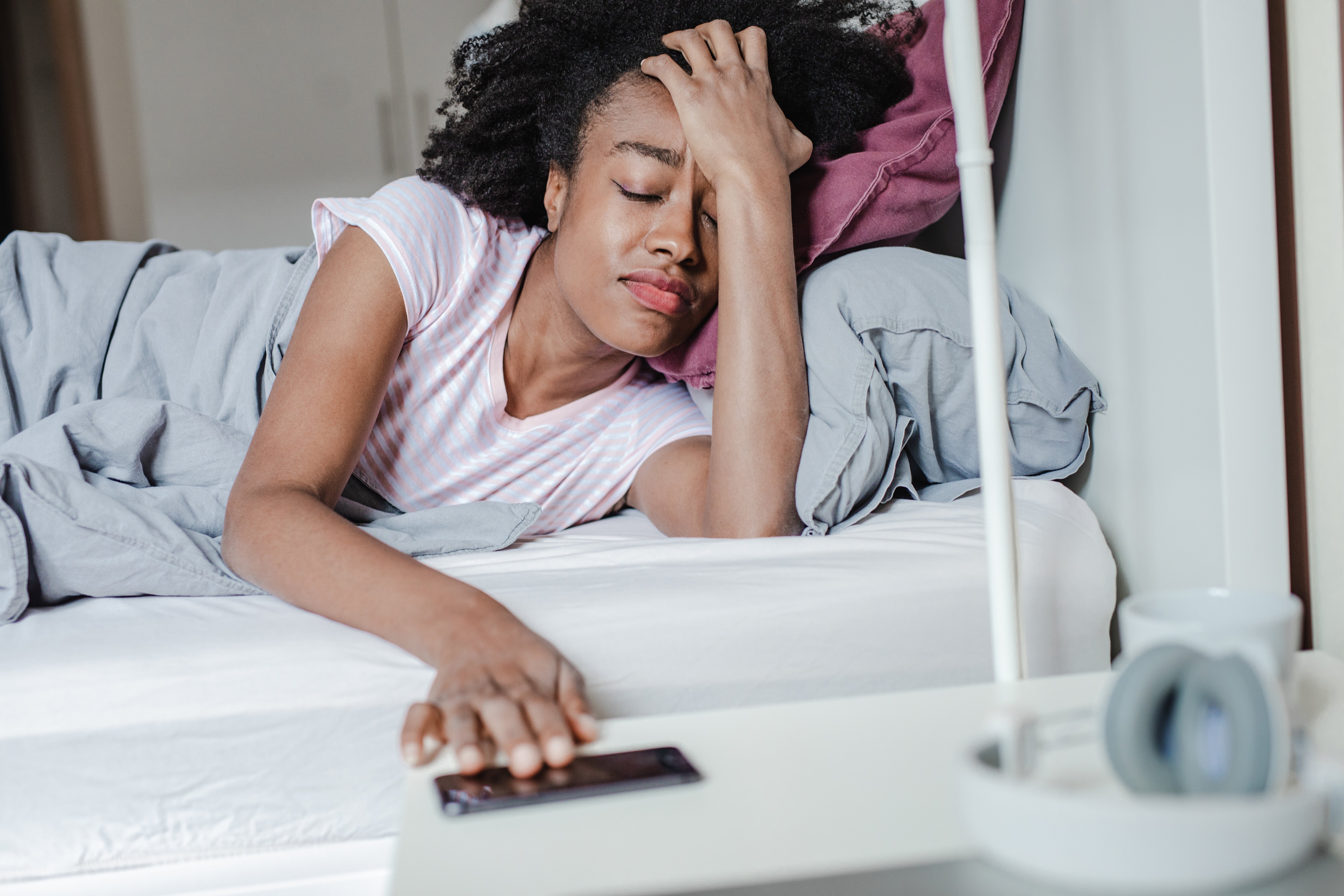
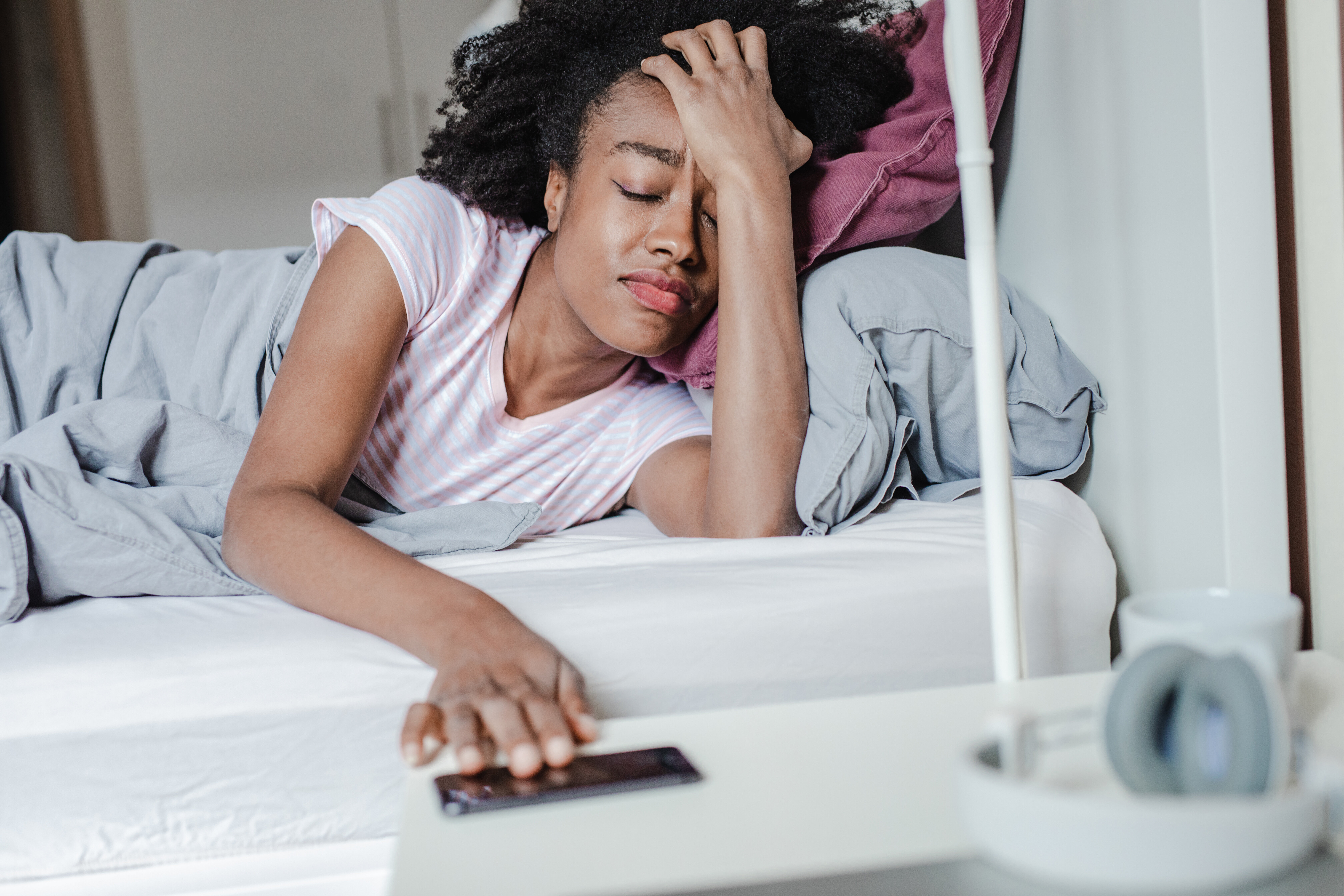
5. You’re glued to your phone
Checking your phone immediately after waking means you’re letting someone else dictate what’s on your mind first thing. And that can set the tone for the rest of the day – right up until your bedtime.
“If we wake up and we check our phone and there’s an email from our boss that says, ‘we need to talk,’ or there’s an email from a client who’s like, ‘Hey, can I call you later?’ we can go straight from our slumber into panic mode, where your heart is racing,” Susie Moore, a life coach and author of “Let It Be Easy: Simple Ways To Stop Stressing And Start Living,” previously told HuffPost.
At that point, it can be a lot more difficult to return to a calm “intentional” state, Moore said, which can have ripple effects. So do yourself a favor and set the tone for the day by using an alarm clock rather than relying on your phone to wake you up. And try your best to make sure the time when you wake up and before you go to bed is phone-free.
Advertisement
First Thing is a series on HuffPost UK Life giving you tips and advice on how to enjoy your mornings. Whether you’re an early bird or night owl, starting your day off right will make for a happier and healthier day. We’ll be sharing exercise advice, nutrition guidance, as well as ideas on forming new habits. (And no, the answer to a productive morning isn’t just setting an alarm for 5am!)
“Taking pictures, make sure you can’t see no lace, that wig secure like the money in a safe.” So goes the Chloe x Halle song, Do It.And those lyrics signify just how normalised wig-wearing is for Black women. Growing up it was normal to see your mum, aunts and even grandmas wearing one.
But the state of wigs have evolved a lot since they started wearing them.
Advertisement
I was 17 when I first ventured into the world of wigs and these were the days of closures. A closure is your bog-standard wig that usually features clips or an elastic band to ensure it stays in place all day. In fact, they’re perfect for everyday use, because they’re so easy to put on and take off.
Now we also have the frontal wig, which has really taken off in the past couple of years. When Chloe and Halle sing, “Make sure you can’t see no lace”, they are referring to the lace on a frontal wig. A frontal differs from a closure wig as it’s typically glued down to your hairline so it looks more like your own hair.
Advertisement
As Martha O explains on the Natural Girl Wigs blog: “One way to identify frontals is that they are used to recreate the hairline from ear to ear, while closures are used to recreate the natural parting of the hairline.”
Frontal wigs have grown in popularity, especially online.But head to TikTok and you’ll see more and more Black women who are tiring of their wigs, too.
Advertisement
This sentiment isn’t part of the natural hair movement per se – many Black women still enjoy wearing fake hair – but we want to explore different options. Options such as tape-ins, pony-tails and natural hair extensions. The kind of options that have been available to white women for much longer.
This is something that Tendai Moyo and Ugo Agbai, co-founders of Ruka Hair, have also observed. Ruka is a Black-owned hair business that aims to provide Black women with hair extensions in different textures and formats. As well as selling online, it now has a physical shop in Westfield Stratford City and also works with a network of “co-creators” (in its lingo) who test out products.
“What we’ve noticed is Black women having less attachment to a particular style. We’ve seen more people experimenting with their own hair in various formats like ponytails and clip-ins,” Moyo tells HuffPost UK.
She continues: “One of the things a co-creator said in our community interview last year is that, historically, white women can go to a salon and say, ‘I want longer hair that looks exactly like mine.’ But, historically speaking, Black women haven’t been able to do that.”
Advertisement
That more Black women are downing their wigs is due to two Cs, she says: compromise (or not wanting to) and choice (the availability of alternatives). “Three years ago, white women were using things like micro-links. This option wasn’t a thought for Black women then, because it didn’t exist in our texture.”
Agbai also sees the trend for wig-wearing waning. “I think with wigs, especially with frontals, it was something that you only saw in the theatre, or only saw celebrity stylists doing. Then it became extremely accessible and prominent. Now I feel like people are experimenting with other styles,” she tells me.
Wider choice is certainly a factor, but let’s not understate that the maintenance of frontals can be tedious. Wearing a frontal regularly requires a lot of time and effort. You have to glue the wig (which can take ages), then straighten it, apply a lace tint to make the wig look natural. Sure, you get used to it, but it’s not fun.
As the Ruka website highlights, Black women spend six times as much as their white counterparts on haircare products and service. But this could be beginning to change.
“I’ve seen Black women accept the fact that their hair doesn’t have to take a ridiculously long time,” Moyo says. “Especially since frontals are usually done by professionals, if you do it by yourself you’re not always doing it correctly, which causes more damage and time needed. I’ve seen more Black women finding styles that are less time consuming.”
Agbai agrees and suggests that it’s liberating many of us from some long-held habits, in some cases inherited. “All of the language we’ve been socialised to use around our hair has influenced this,” she says. “We think our hair should take a long time, that it can laborious to do our hair. I’m excited to see that shift and see Black women really look for quicker solutions.”
“I felt like I was forcing it… when I put a frontal on myself, I didn’t look like those other girls.”
– Akua Ntiamoah, 26, Essex
The phrase “where’s the lace?” is used all too often in reference to frontal wigs. There’s an obsession with making frontals look exactly like the hair on your head when a lot of the time, they just don’t. This pressure for wig perfection has made some Black women consider other options.
This is the case for Akua Ntiamoah, 26, a civil servant from Essex, who says she didn’t enjoy wearing wigs as her hair never looked like what she saw online.
“I felt like i was forcing it. Maybe it’s because I saw girls on Instagram wearing them, but when I put a frontal on myself I didn’t look like those other girls,” she says. “Black girls always say, ‘the lace is invisible’, but I can see it in real life.”
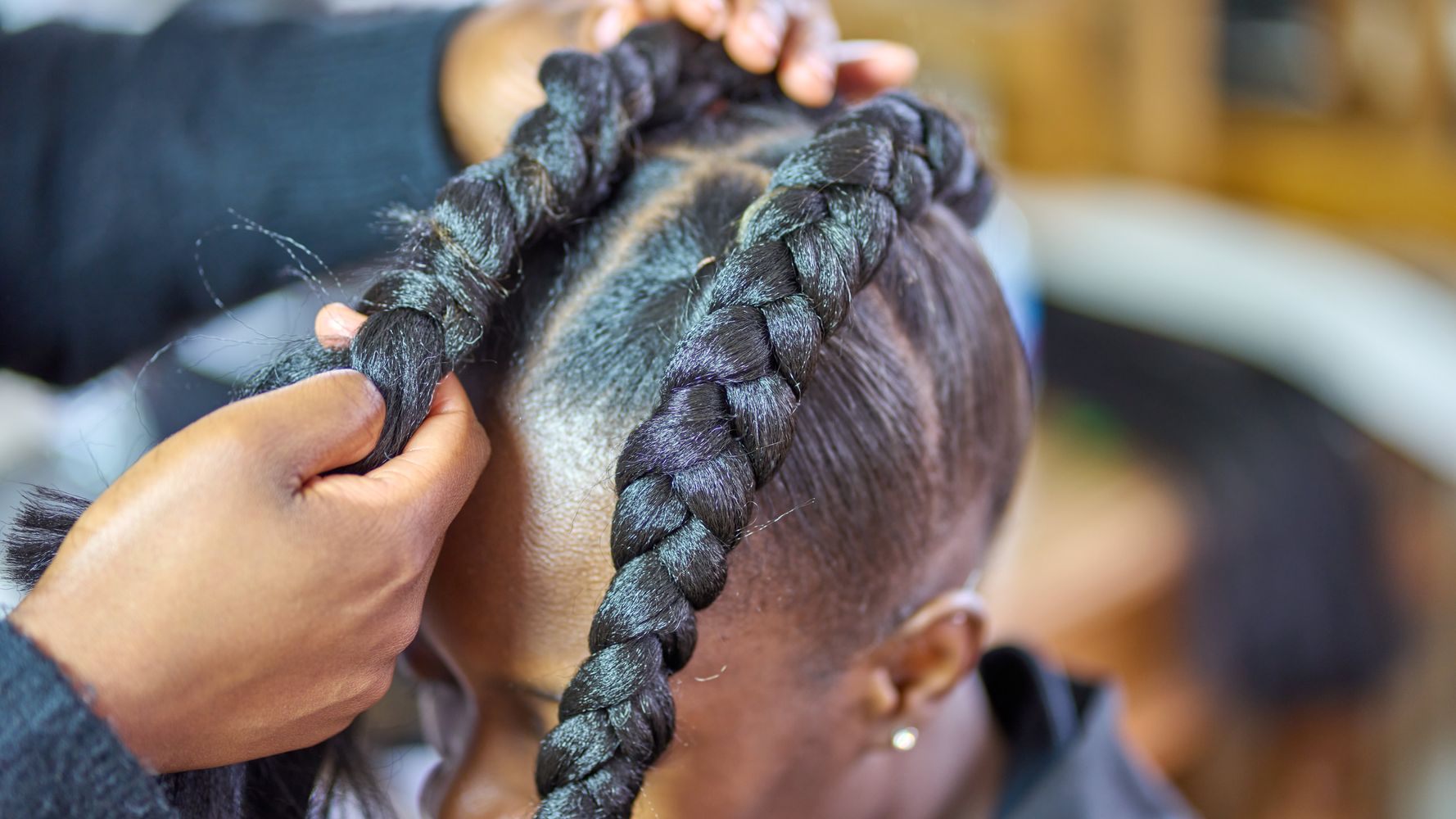

She stopped wearings wigs two years ago. “I was tired of my wigs not looking natural, so I cut my hair. I wore wigs from time to time, but I still didn’t look right so now I just wear my hair out in a pony.” She says she also enjoys braids.
Advertisement
Moyo and Agbai have received positive feedback about Roka’s ponytails that putting them on doesn’t require much work for the wearer. As they tell me: “We’d get women saying: ‘We don’t have to put much gel in our, we can just attach the ponytail and go.’ That is the best thing!”
While wigs are often seen as a great protective style, wearing them too often can also damage your hair. For Joy Olugboyega, 25, a photographer and director from London, wearing wigs ruined her hairline – so she doesn’t.
“I stopped wearing wigs in 2019. Haven’t worn a wig since,” she says. “My relationship with wigs was pretty much on and off. I hated what it was doing to my hairline but at the same time appreciated the convenience.”
And now she’s made the break, Olugboyega is reclaiming more than her hair. “I realised I looked way better with my natural hair and Afrocentric hairstyles like fulani braids, faux locs, feed-ins. Not only do I look better, but I feel better too, like a queen,” she says.
“I just feel more like I’m more myself when it comes to how I present. It’s the truest representation of me and where I come from.
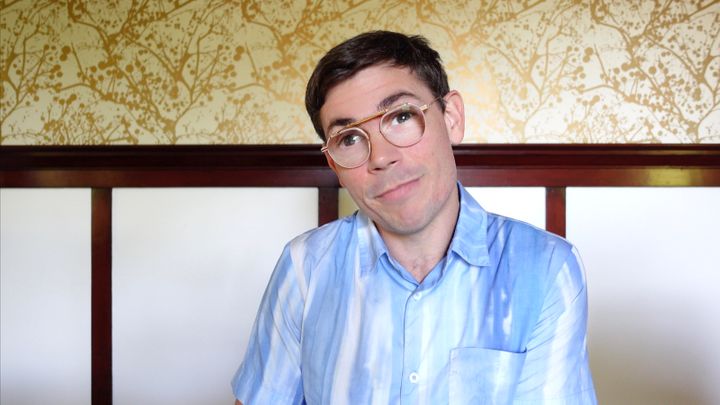
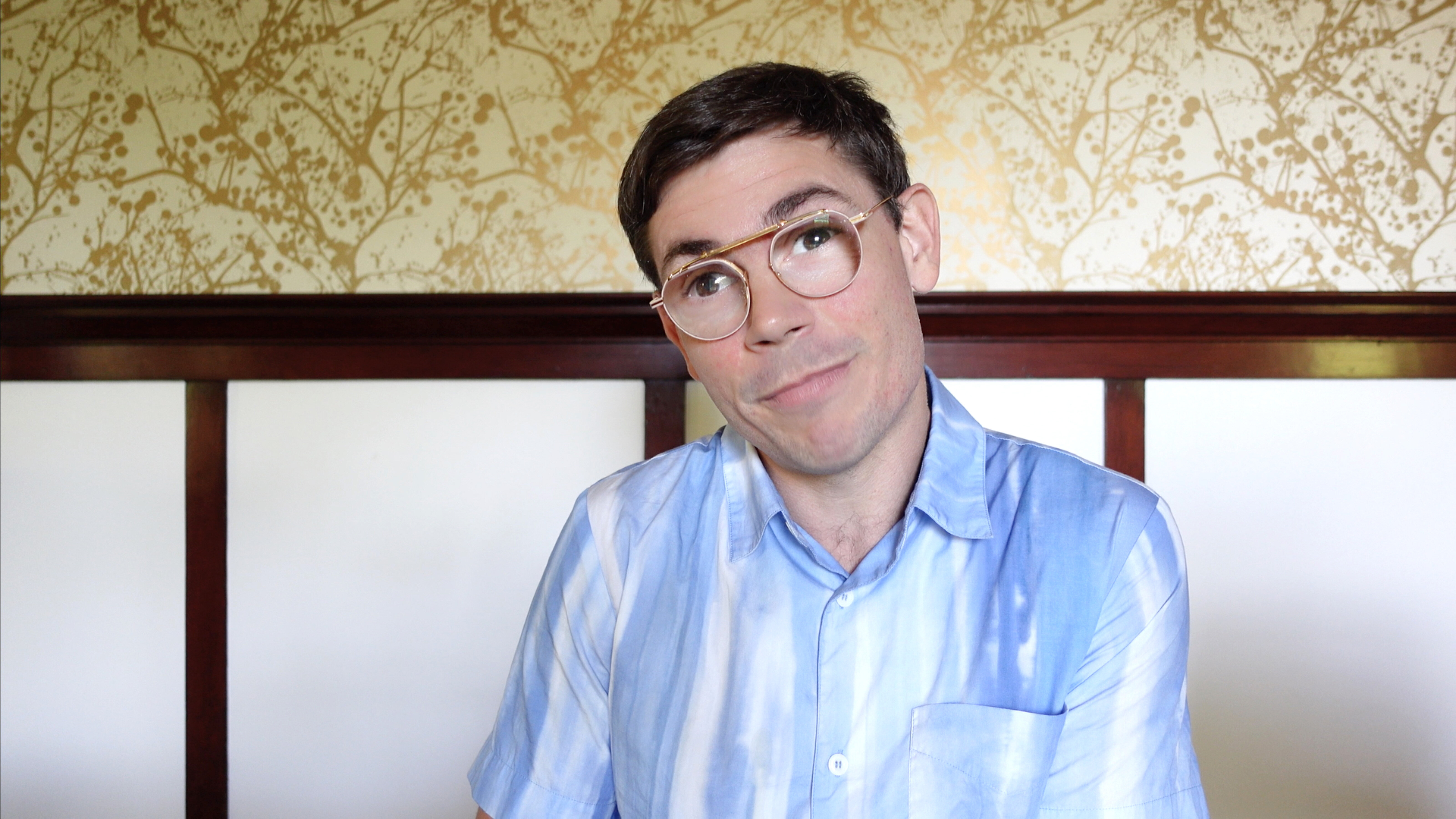
To say the past couple of years have been busy for Ryan O’Connell. Last year saw the second season of his sitcom Special – the sitcom he co-created and starred in – debuting on Netflix to huge acclaim, after which it was revealed he’d joined the cast of the much-awaited Queer As Folk remake.
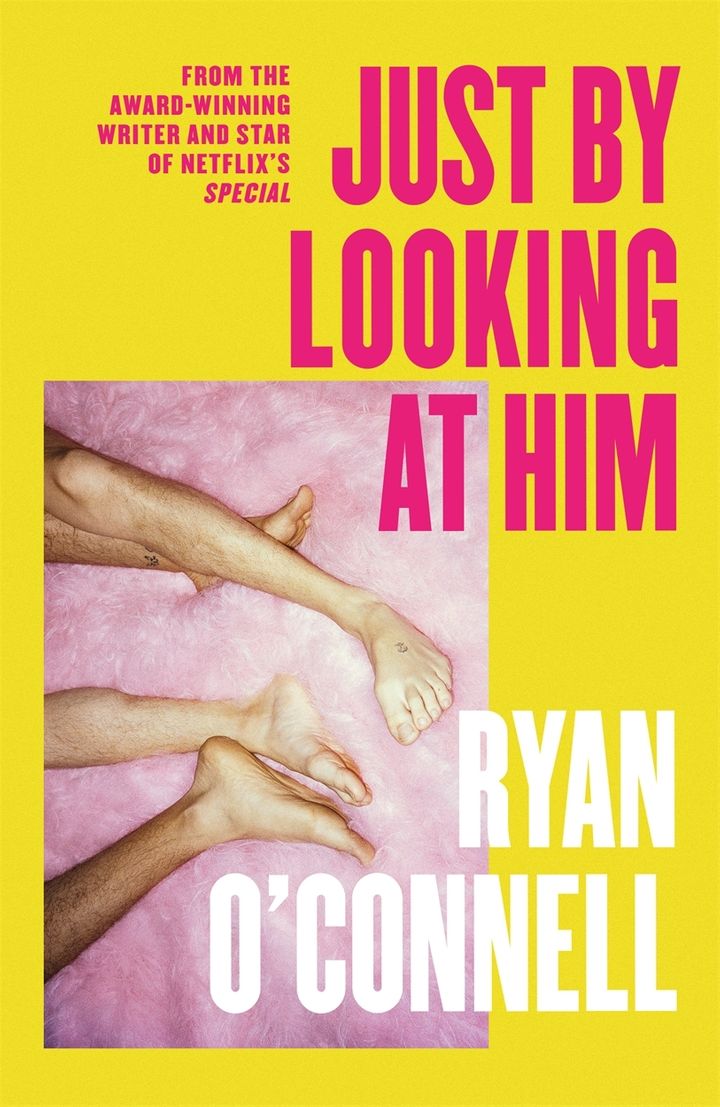
On top of that, he’s also about to release his first novel, Just By Looking At Him, which he’s already working to have adapted for the big screen.
Advertisement
It’s been an exciting time for Ryan, he tells HuffPost UK, but not one he’s in a particular rush to repeat.
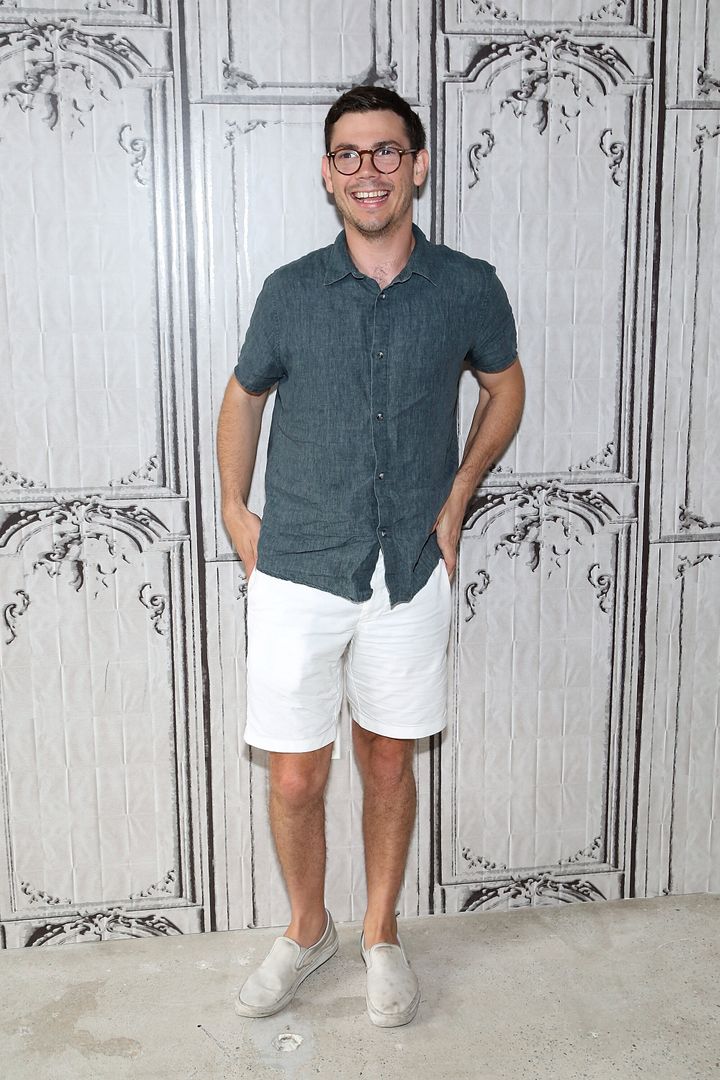
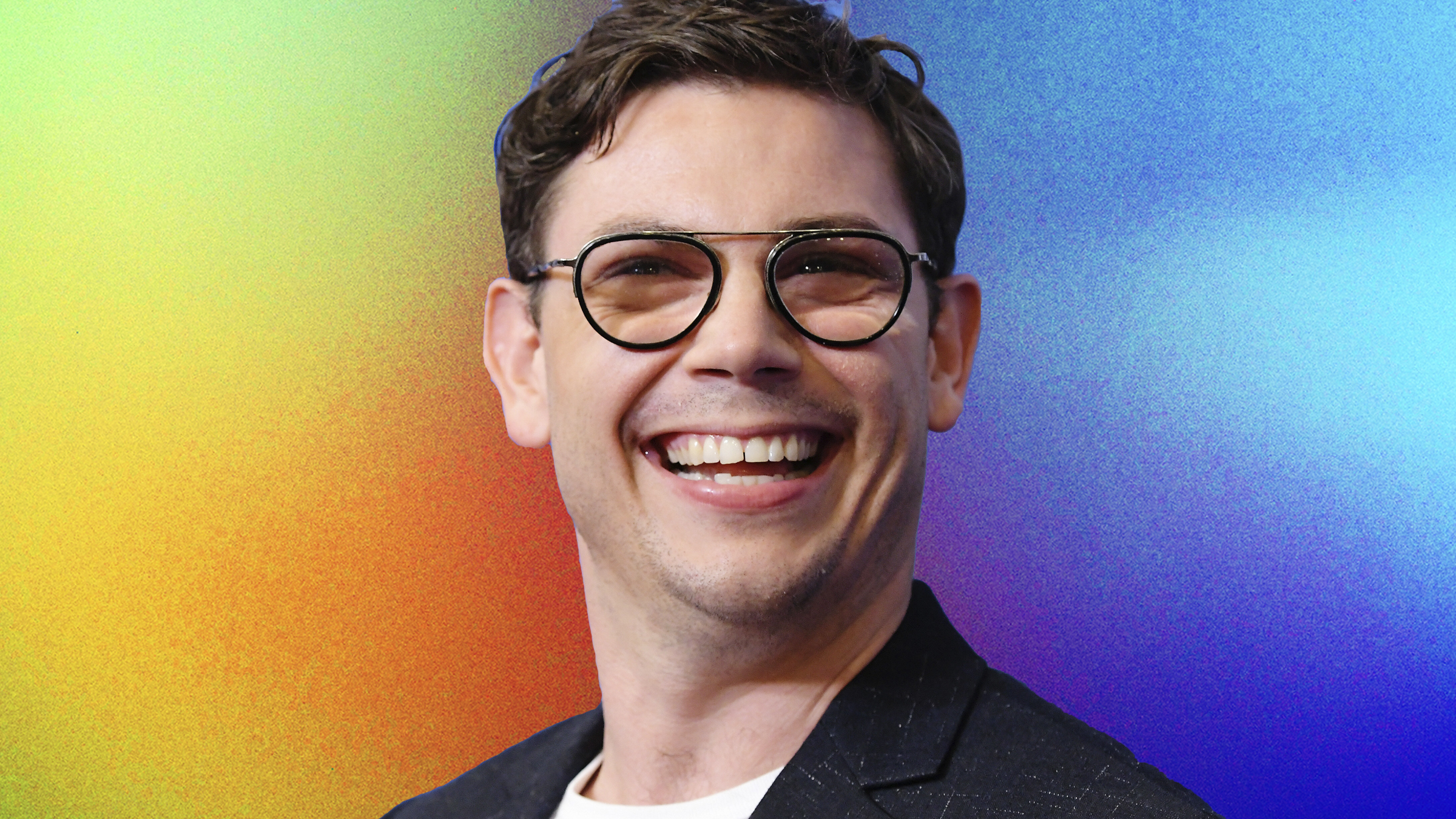
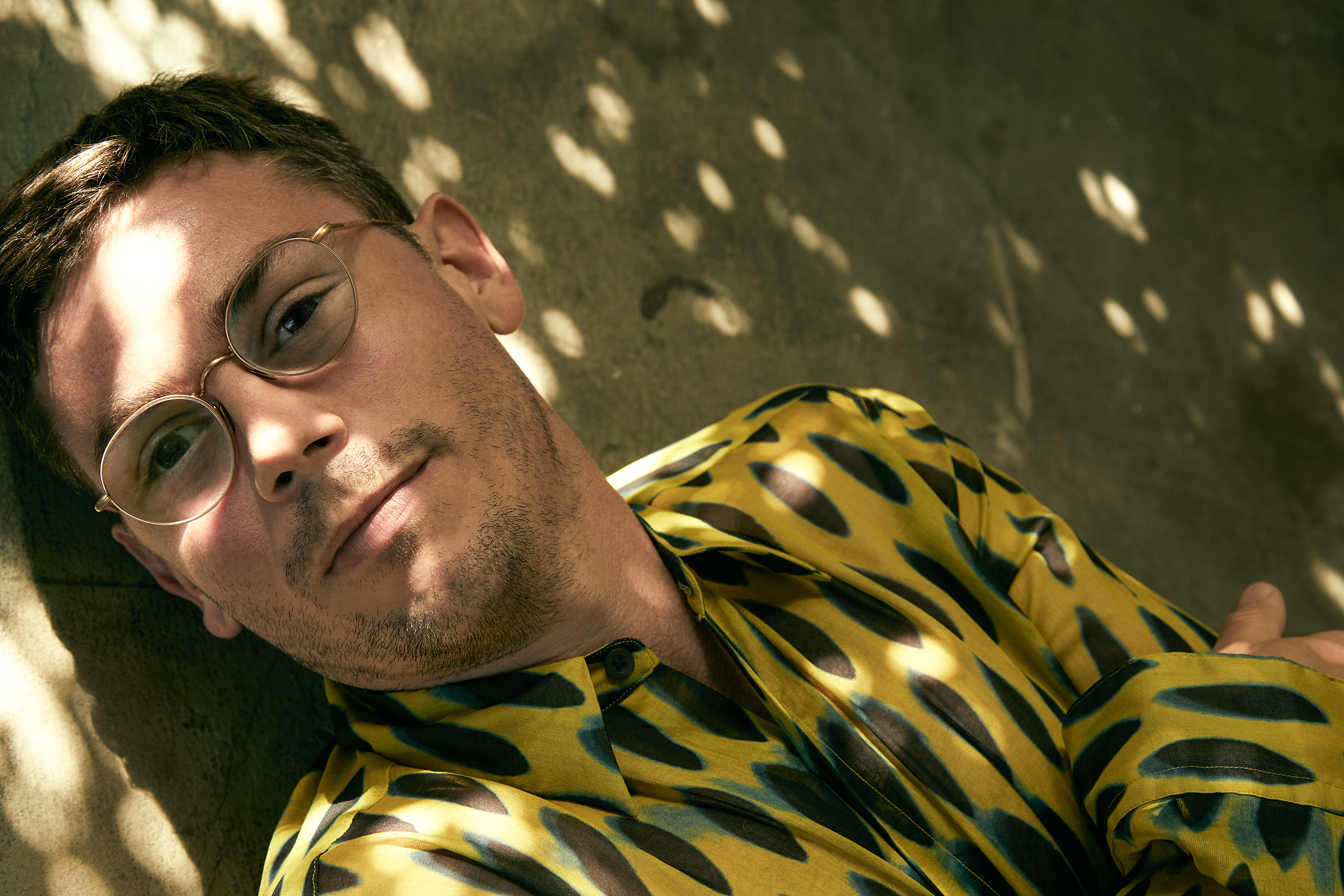
Ryan O’Connell
Aaron Jay Young
“I can’t have a couple of years like that ever again,” he admits. “I was working so much that I truly felt like I was hanging on by a thread.
Advertisement
“I’m really glad that [projects I’ve worked on] are coming out, but a lot of this stuff that we’re talking about now was born from the pandemic, and trying to stave off existential dread and channel that into work. And now I’m kind of like… oh, I want to have fun. See my friends, and live laugh love.”
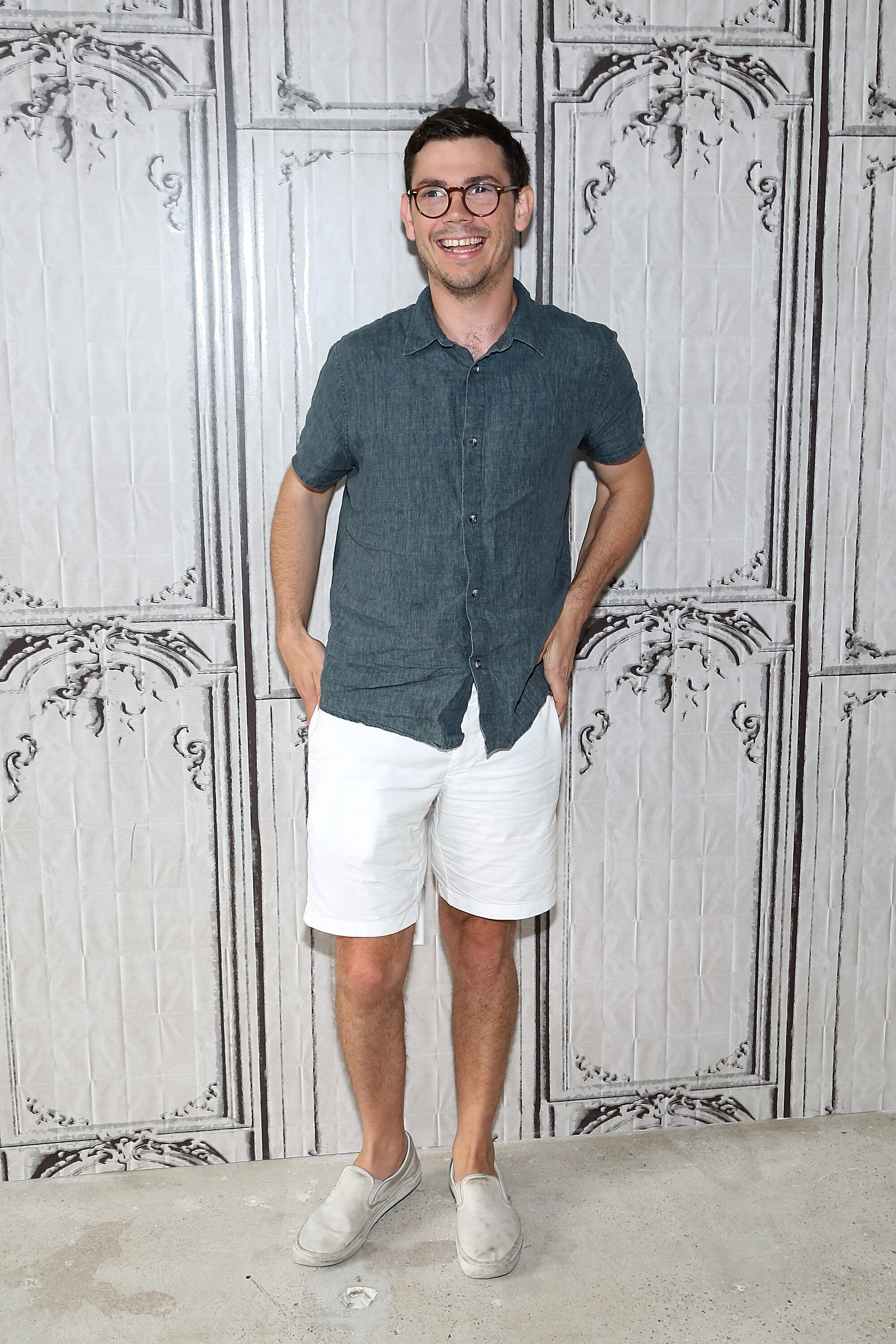
It’s fair to say these past two years have been especially busy for Ryan
Monica Schipper via Getty Images
And while Ryan has enjoyed being “a lady of leisure”, he’s already looking to the future, and says directing is the next challenge he hopes to pursue.
Advertisement
“I’d never really taken that time for myself where I really, truly did nothing. But being a lady of leisure only works if you know that it’s finite,” he says.
“It was really fun, but because I’m a Virgo, I was then like, ‘OK, back to work’. It was also nice to do that knowing I was about to go into the press cycle for the novel and Queer As Folk.”
To launch our new Pride interview series, we spoke to Ryan about the queer TV that made him feel seen when he was growing up, befriending his ultimate queer icon and being the “Kris Jenner of Gen Z”…
Who was the first queer person you can remember looking up to?
Advertisement
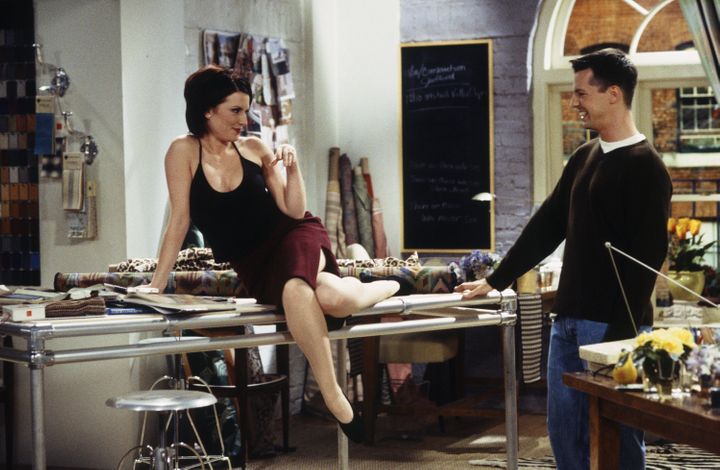
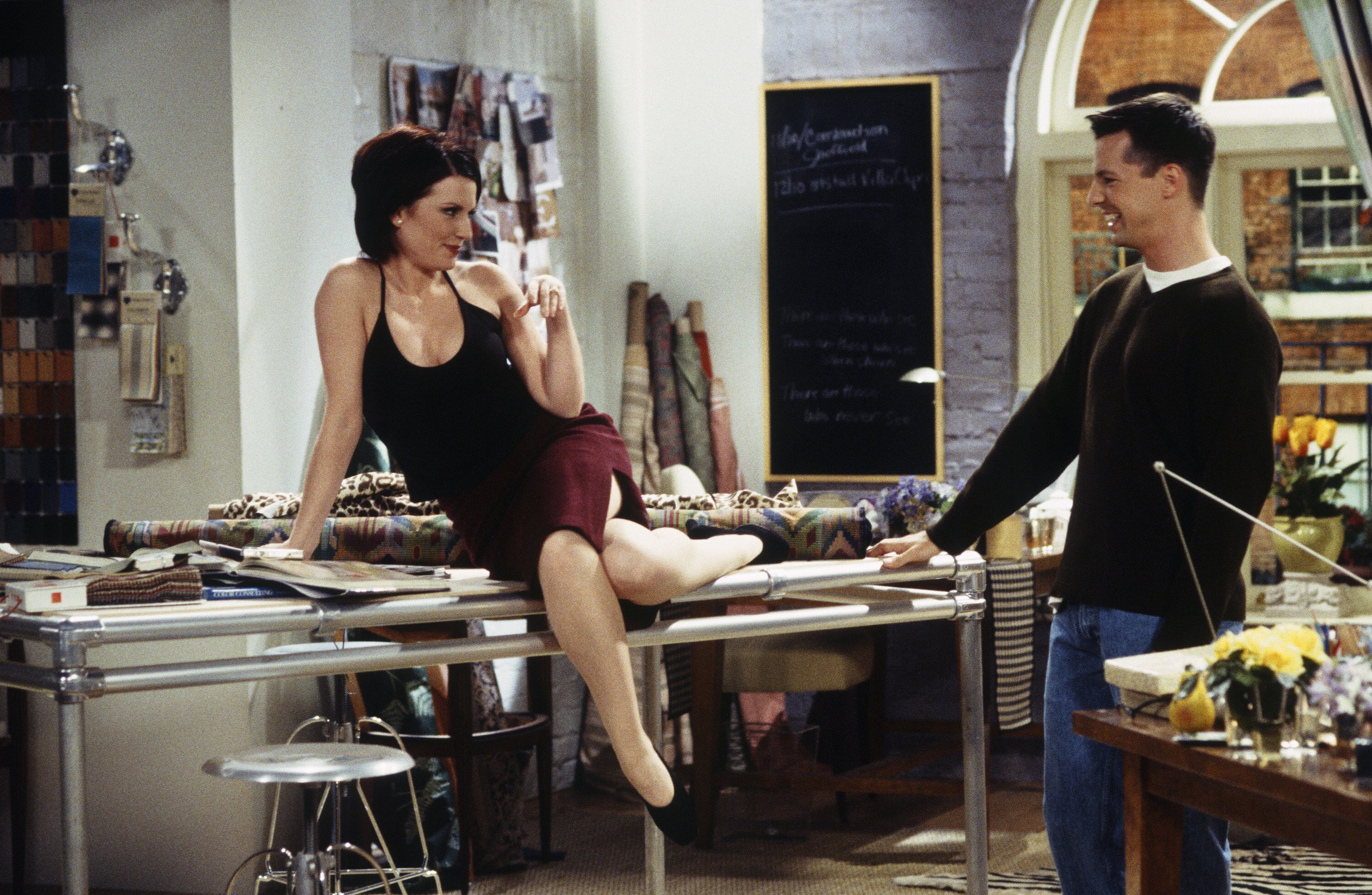
Megan Mullally and Sean Hayes in Will & Grace
NBC via Getty Images
There was a show on The WB called Popular, it was actually Ryan Murphy’s first show. And Mary Cherry and Nicole Julian, while not gay men, essentially were gay men. They were these really bitchy high schoolers that were, like, hellbent on destruction and being Machiavellian, and they were the most glamorous, insane characters I’d ever seen on TV.
I was maybe 12 years old when the show came out, and I had no idea about what a “queer sensibility” was until I saw that show. and it was like, “oh, I’m laughing because I’m gay”. And then it was like, “oh, I’m gay”.
And then of course, Will & Grace. Karen Walker and Jack McFarland were my first real peeks into queerness, like a little lifeline. So, Mary Cherry, Nicole Julian, Karen Walker and Jack McFarland. Notice that there’s only one actual gay man on that list.
What was the first LGBTQ+ TV show or film that you remember resonating with you?
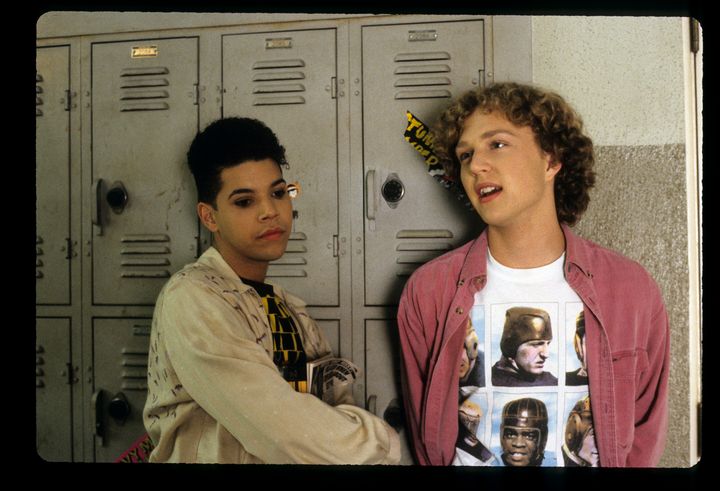
Wilson Cruz and Devon Gummersall in My So-Called Life
ABC Photo Archives via Getty Images
I was eight years when My So-Called Life came out – I should not have been watching it, but my family was obsessed, so we’d watch it every week. And in that show, there was a character called Ricky, who was queer. It wasn’t even really discussed that much, which I think was kind of transgressive in its own way. There wasn’t, like, a “very special gay episode”, he just was gay.
And I remember being eight years old and feeling like, “hmmm I really seem to connect with this character for reasons that I’m not quite sure about and also scared of and also intrigued, dot dot dot”. So definitely My So-Called Life, Popular and, of course, Will & Grace.
What’s a song you associate with your own coming out?
","type":"video","meta":{"url":"https://www.youtube.com/watch?v=b9tAdPN3FZ4","type":"video","version":"1.0","title":"Cherish (Remastered Version)","author":"The Association – Topic","author_url":"https://www.youtube.com/channel/UC1xTzc2q-KzBPxIZ6vHViqQ","provider_name":"YouTube","description":"Provided to YouTube by Rhino\n\nCherish (Remastered Version) · The Association\n\nThe Assocation: The Essentials\n\n℗ 1967 Warner Records Inc.\n\nAdditional Musicians: Ben Benay\nBand Member: Brian Cole\nAdditional Musicians: Butch Parker\nAdditional Musicians: Curt Boettcher\nProducer: Curt Boettcher\nEngineer: Gary Paxton\nAdditional Musicians: Jerry Scheff\nAdditional Musicians: Jim Troxel\nBand Member: Jim Yester\nBand Member: Jules Gary Alexander\nAdditional Musicians: Lee Mallory\nAdditional Musicians: Mike Deasy\nEngineer: Pete Romano\nBand Member: Russ Giguere\nBand Member: Ted Bluechel\nBand Member: Terry Kirkman\nAdditional Musicians: Toxey French\nWriter: Terry Kirkman\n\nAuto-generated by YouTube.","thumbnail_url":"https://i.ytimg.com/vi/b9tAdPN3FZ4/maxresdefault.jpg","thumbnail_width":1280,"thumbnail_height":720,"cache_age":86400,"options":{"_start":{"label":"Start from","value":"","placeholder":"ex.: 11, 1m10s"},"_end":{"label":"End on","value":"","placeholder":"ex.: 11, 1m10s"},"_cc_load_policy":{"label":"Closed captions","value":false},"click_to_play":{"label":"Hold load & play until clicked","value":false}}},"fullBleed":false,"flags":[],"enhancements":{},"options":{"theme":"news","device":"desktop","editionInfo":{"id":"uk","name":"U.K.","link":"https://www.huffingtonpost.co.uk","locale":"en_GB"},"slideshowAd":{"scriptTags":[],"otherHtml":""},"slideshowEndCard":{"scriptTags":[{"attribs":{},"scriptBody":"\r\n (function(){\r\n var c = document.getElementById(‘taboola-endslate-thumbnails’);\r\n c.id += ‘-‘ + Math.round(Math.random()*1e16);\r\n \r\n var taboolaParams = {\r\n loader: \"//cdn.taboola.com/libtrc/aol-huffingtonpost/loader.js\",\r\n mode: \"thumbnails-b\",\r\n container: c.id,\r\n placement: \"Endslate Thumbnails\",\r\n target_type: \"mix\"\r\n };\r\n \r\n if (typeof window.modulousQueue === \"function\") {\r\n \twindow.modulousQueue.add(function(){ doTaboola(taboolaParams); });\r\n } else {\r\n \tdoTaboola(taboolaParams);\r\n }\r\n }());\r\n"}],"otherHtml":"
I came out when I was 17 on the last day of my junior year in high school. And I did it because I had a crush on this boy, and I knew that in order to date him I would have to come out of the clos’ and live my truth. And that summer was this magical coming-of-age, queer Criterion collection vibe.
There was this movie I was watching at the time called Cherish, this small indie film that nobody had seen – and no one has still seen it – and the theme song of that movie was Cherish by The Association. Remember that song? It’s like an old-school 1960s kind of haunted song. And that was me and my boyfriend’s song. Or at least it was in my head.
What was the most recent LGBTQ+ show or film that made an impact on you?
Advertisement
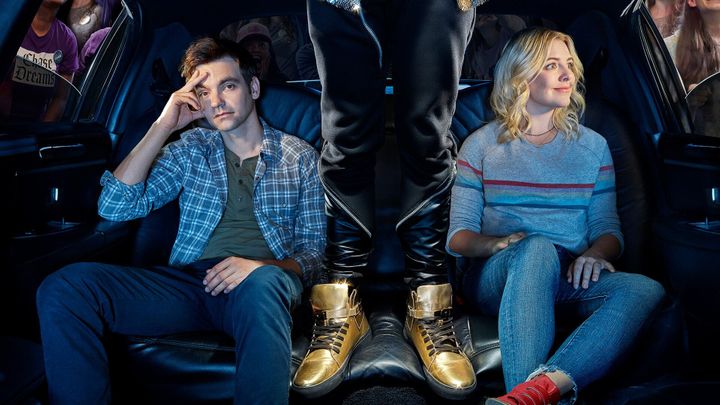
The Other Two
I watched Stranger By The Lake in quarantine, and I loved it. It’s this horny French queer thriller. There are cumshots, there are uncut dicks, it’s sort of spooky spaghetti, I love it. And of course I love The Other Two. Iconic.
But I don’t watch a lot of scripted shows, to be honest. Because I work on scripted, sometimes it feels like I’m doing my homework, so basically I only watch Below Deck.
Who is your ultimate queer icon?
JOEL SAGET via Getty Images
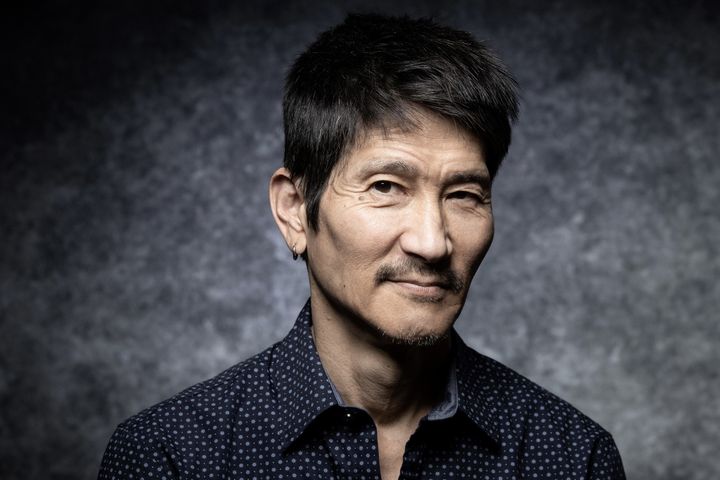
That’s a really, really good question. I’m just going to go with the first person that comes to mind, and that’s the director Gregg Araki, who did films like The Doom Generation, Nowhere, Mysterious Skin and The Living End.
I feel corny saying that, because I’ve actually become friends with Gregg – not to bra-aag. But whenever I’m with him, I’m always like, “you have no idea how obsessed I am with you”. Basically, in the early 90s, he created this new wave of queer cinema, that was so amazing, and he always included a lot of Shoegaze which is my favourite genre of music.
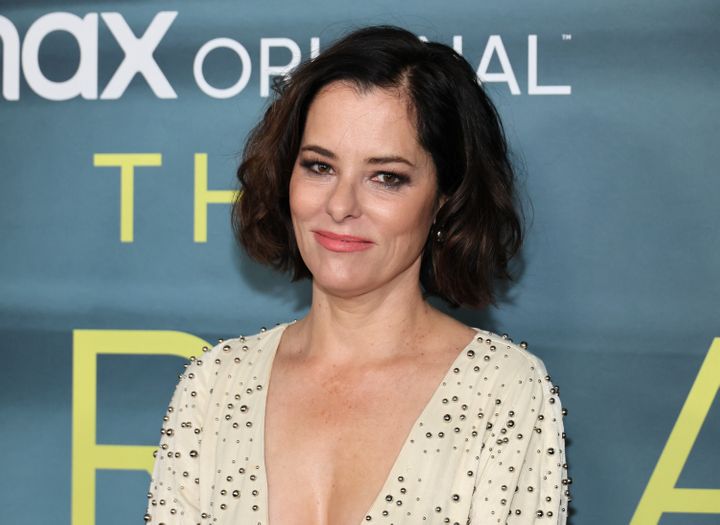
And then next to Gregg, I would say Parker Posey.
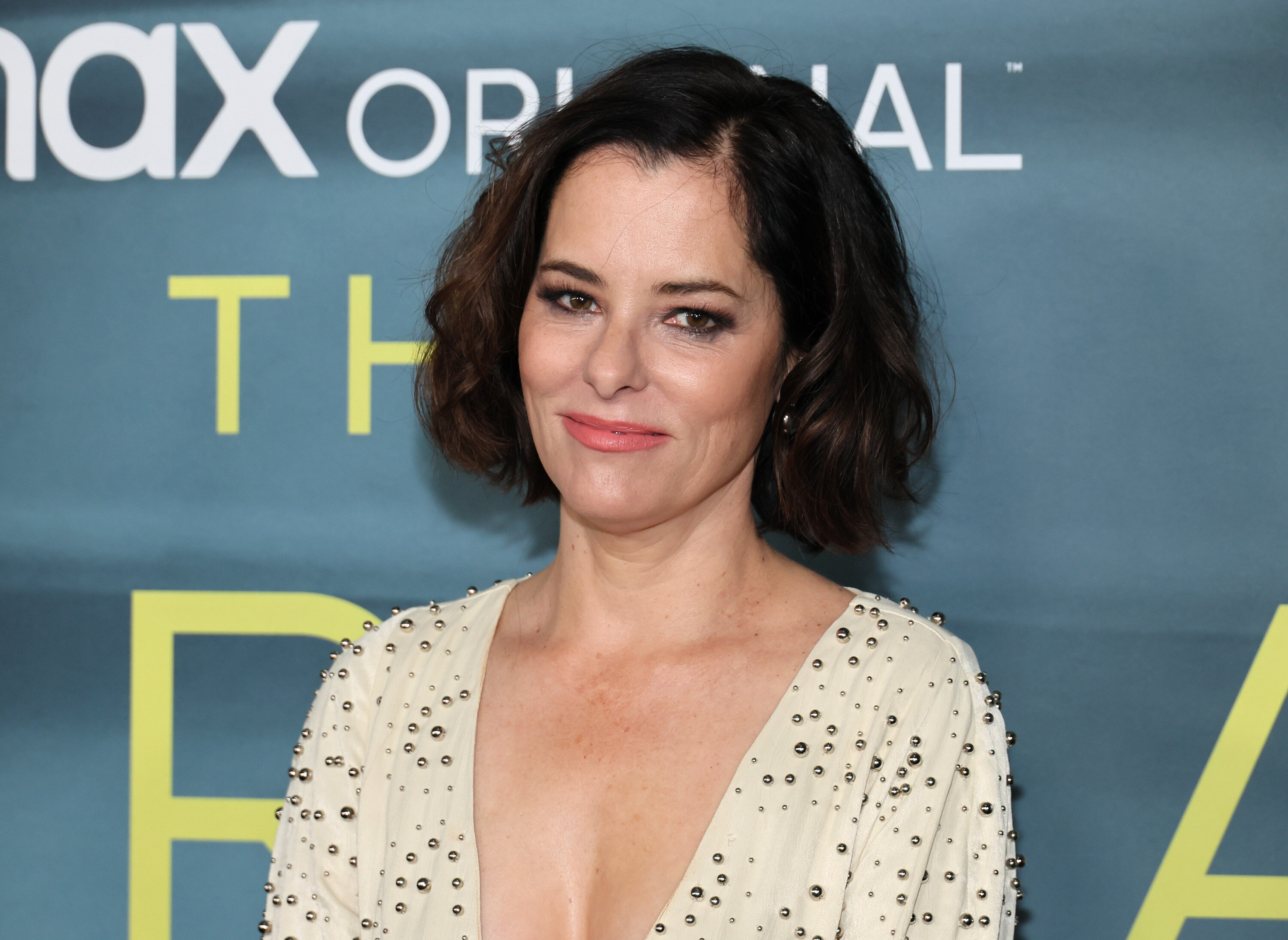
Parker Posey
Dia Dipasupil via Getty Images
When I was growing up, Party Girl, Clockwatchers, House Of Yes, all those indie films were so major to me. Those are two icons to me. She’s amazing, she’s so specific and so herself.
One scripted thing I am watching right now is The Staircase which ordinarily I would not do because it’s like, “honey we’ve already seen the documentary, must we revisit again?”. But honey, if Parker is there, I have to RSVP.
Who is a queer person in the public eye right now that makes you excited about the future?
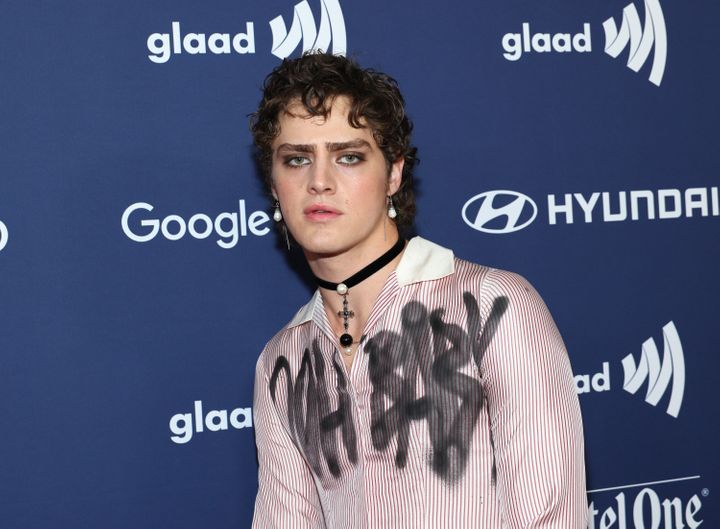
Fin Argus
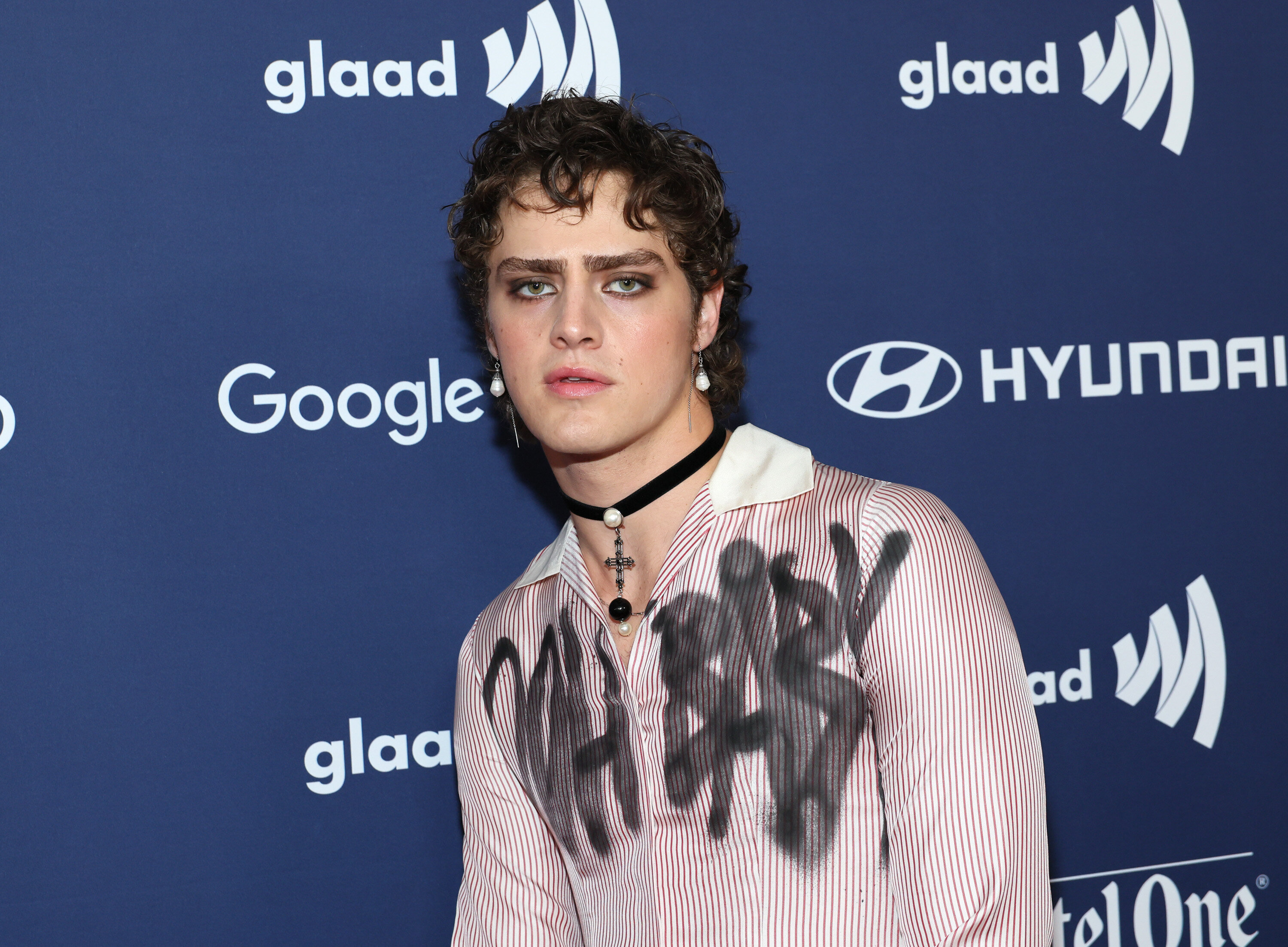
Dia Dipasupil via Getty Images
I am biased, but Fin Argus. They’re in Queer As Folk, they play a character called Mingus. They’re 23 years old, and when I first met them I was like, “OK, they’re 23, I’m 35, we probably won’t have anything in common, they’re only a child”. But we actually got extremely close and I think they’re so brilliant. They also do music and their music is incredible.
Advertisement
I’m obsessed Gen Z. I’ll go on the record as saying I feel like a spiritual grandfather to Gen Z, I’m a big fan. I am very the Kris Jenner of Gen Z, that’s a moniker that I will take proudly.
What’s your message for the next generation of LGBTQ+ people?
We live in a really mind-fuck-y time, in the sense that the world as we know it is becoming more and more progressive, but because of that, there is a fight to retain the old thought. And that fight is actually winning. So it’s this really very weird, emotional, whiplash-y time where the minority is coming into power, but their views don’t reflect the culture that we live in today.
Ryan O’Connell pictured in 2021
Media Access Awards Presented By Easterseals via Getty Images
That’s a very hard place to be in, and it’s a confusing place to be in. But my one piece of advice is to know the culture is going with you, rather than against you. And what you’re seeing is, there’s a lot of fear and people wanting to maintain the status quo. But that’s going to change with or without them.
You can’t change the fact the culture is becoming more progressive. So, even though it’s a very scary time for a lot of minorities, more people are with them rather than against them.
The reality is that if it wasn’t real, if the change wasn’t happening, if the world wasn’t becoming more progressive, there wouldn’t be these death rattles of the old guard. These last power grabs. So it makes sense, even though it’s terrible.
Ryan O’Connell’s new book Just By Looking At Him is out on Tuesday 7 June.