Rolling over. The first step. The first word. Parents often fixate on these classic developmental milestones, but doing so can lead to unhealthy comparisons and insecurity.
“Milestones are exciting, but also know that your child may not follow the ‘expected’ ages for specific actions,” said Christina Furnival, a psychotherapist who specializes in children’s mental health. “Each child is unique and special and wonderful, regardless of the standard milestones they reach and the age at which they reach them.”
Of course, if you have serious concerns about your child’s development, it’s important to talk to your pediatrician. But if you simply find yourself feeling worried about their progress and your ability as a parent, remember that there are so many milestones worthy of celebration, including more nuanced and subtle ones.
Below, Furnival and other experts share 21 interesting and insightful small milestones in childhood development.
Showing visual attention
“Visual attention is a very important early developmental milestone that is more difficult to measure in a concrete way,” said Lauren C. Shuffrey, a developmental neuroscientist. “At birth, infants already have the ability to visually distinguish different types of objects, such as human faces, and this skill continues to develop over time. Visual attention to social or nonsocial stimuli in the early life environment helps form the basis for more complex skills later in infancy, such as social communication and joint attention.”
Kristene Geering, director of content at Parent Lab, noted that she looks for and delights in seeing a baby express joint attention ― another big step in their visual attention development.
“This might be a child looking at something, turning back to the parent, then looking back at the object,” she explained. “Or it could be them pointing at something and checking to see if you’re looking, too. A lot of parents don’t realize what a big deal that is for both communication and cognitive development, but it’s huge!”
Dropping and knocking things over
It may seem annoying when your little one drops their toy every time you hand it to them, but Rachel Robertson, vice president of education at Bright Horizons, said this is another big sign of growth.
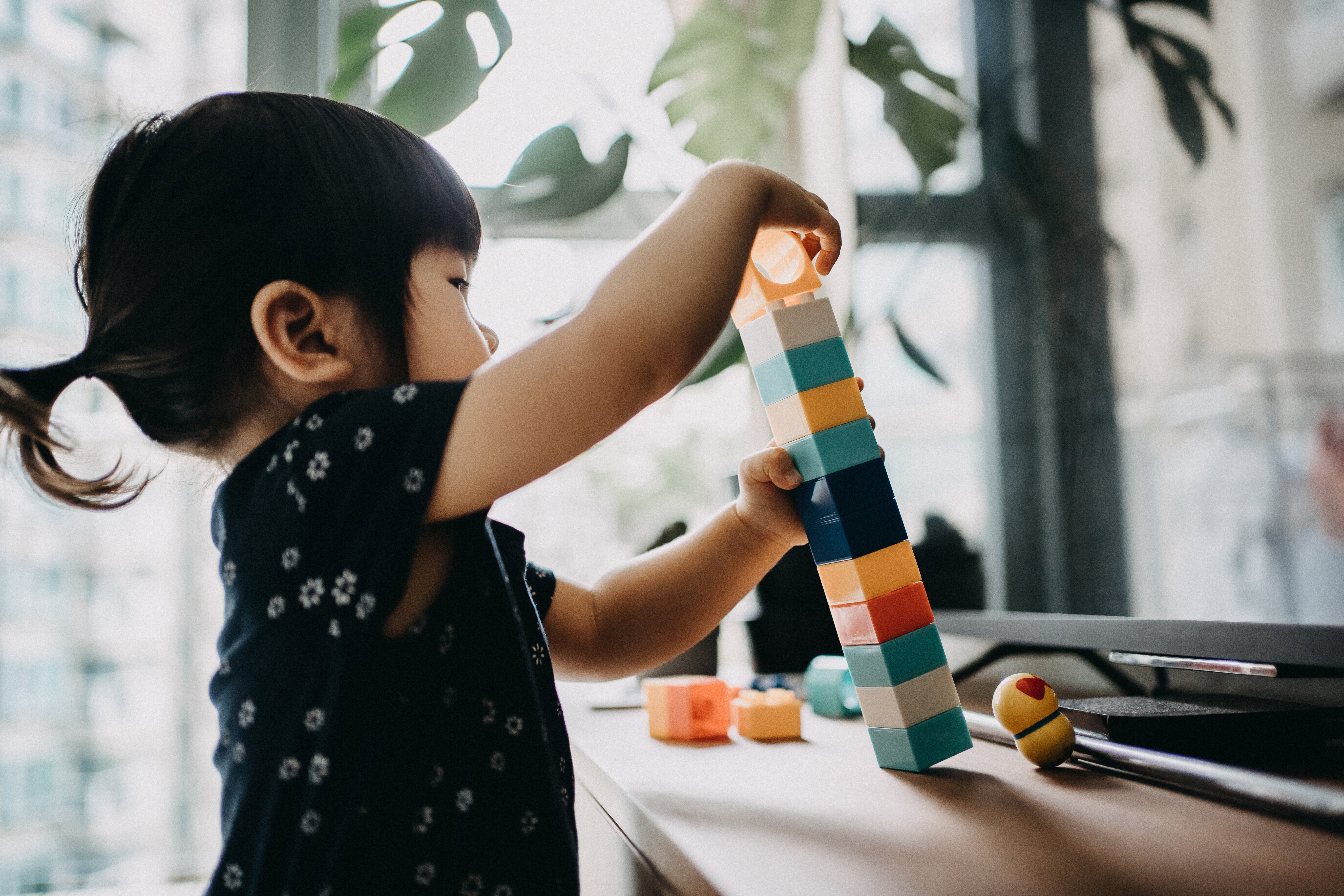
“Toddlers are really great scientists,” she explained. “They are exploring a lot of cause and effect: Like what happens when I drop my spoon once, twice, 10 times! How about if I dump this bucket of blocks? They are working on muscle control.”
Amanda Gummer, a child psychologist and founder of The Good Play Guide, noted that babies dropping things is a step toward understanding “that they can have an impact on their environment” ― thus making major strides in cognitive development.
“For example, splashing water, knocking over a pile of blocks, or pressing a button on a toy to set off lights and sound,” she added. “Toddlers and preschoolers will then progress from seeing the world in a very concrete way, to being able to use symbolic and logical thinking.”
Forming a strong attachment
“Has your infant around five months on become less comfortable with being passed around and a little more clingy?” said Noel McDermott, a psychotherapist. “They are forming attachments in a healthy way to a primary carer. Their neurological frontal lobe development ― the brain development crucial for language, social, thinking, executive decision making ― is happening.”
He explained that this mechanism allows them to develop bonds with others throughout their lives. While this can manifest as separation anxiety and pose challenges, it’s actually a milestone when your child shows a strong attachment to a parent or friend.
“Even when your preschooler cries at drop-off because they are so comfortable with you ― that’s a milestone to note,” Furnival added. “Also when they run into class without looking back.”
Playing peekaboo
“Peekaboo is another milestone that, while parents certainly enjoy it, they don’t often recognize as a sign of object permanence,” Geering said.
Object permanence is the ability to understand that items or people still exist even when you can’t see them. “There are several stages for object permanence, and recognizing that this is a milestone … can make a parent’s day.”
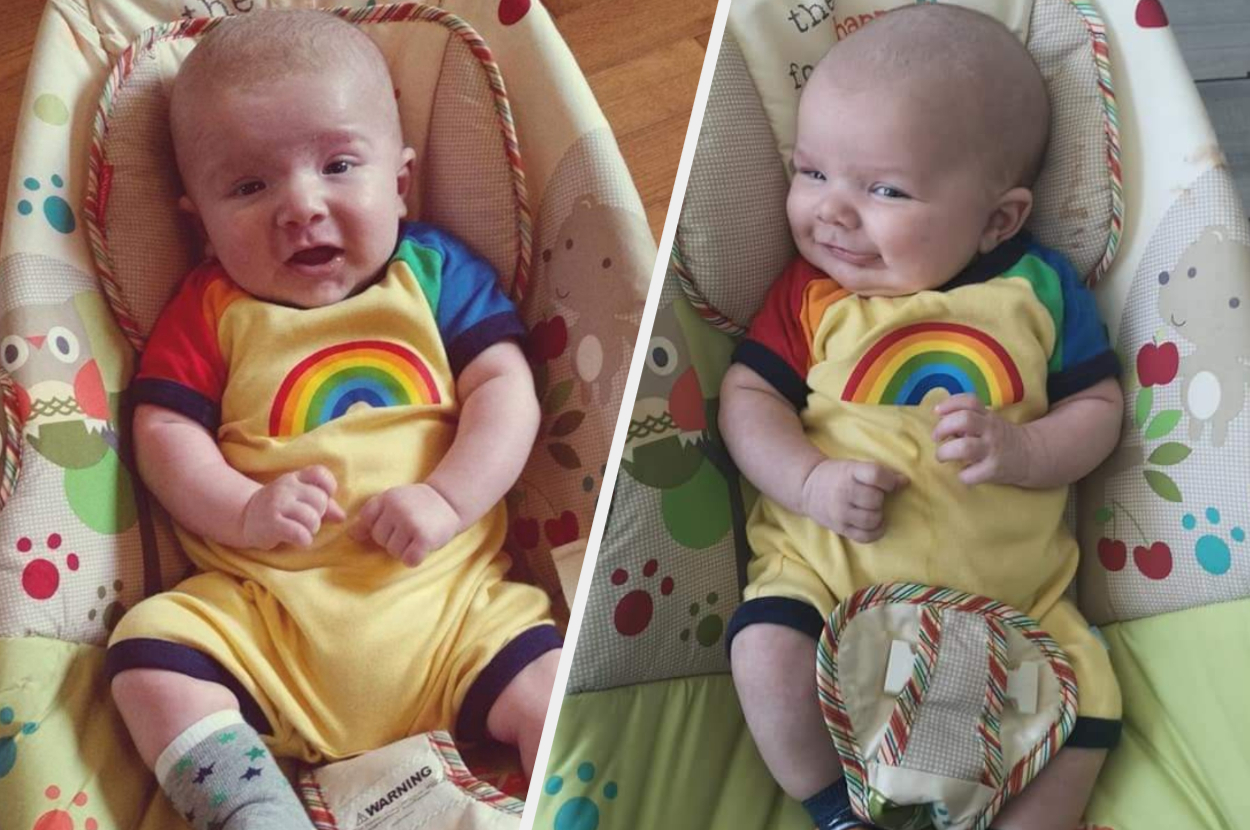
Smiling at and with you
When your baby smiles at and with you, that’s a powerful developmental milestone that fosters connection and communication. Pay attention to “social smiles.”
“Smiling is a way to bond with your child,” said Dr. Ann-Louise Lockhart, a pediatric psychologist and parent coach.
“It also helps them with their self-concept ― understanding who they are in relation to others,” she added. “It gives them reassurance that you love and care about them. It’s also a way for people to connect since so much of our communication is nonverbal and subtle.”
Eventually they will recognize themselves in the mirror and smile then as well, indicating an understanding of self.
Engaging in imaginative play
Playtime is an important part of child development, and the toddler years are when things start to evolve quickly.

“Your kid will start to play by themselves, and in their play space, objects can change and morph,” McDermott said. “Blocks can transform from one thing to another. A pencil may become a rocket. A toy car may become a submarine. Your kid is developing their literacy. This ability to imaginatively transform and maintain transformation in a creative internal narrative is the cognitive skill needed for reading.”
Kelly Oriard, a family therapist and co-founder of Slumberkins, an educational brand focused on emotional learning, said parents can get a glimpse into their child’s inner world by joining them during playtime. She noted that imaginative play fosters language development, relational interactions, problem-solving skills, and self-esteem.
“This magical milestone is such a fun one,” Oriard said. “Your child will begin to imagine and create their own little worlds for themselves and their toys. Through this milestone, children can better figure out their place in the world and their roles within their different systems. Another benefit of imaginative play is that kids can also explore their emotional identification and expression.”
Taking turns
“From ages 1-3 years, milestones can include sharing toys with friends or siblings and learning to take turns during play,” said Sanam Hafeez, a neuropsychologist.
This milestone manifests earlier than many parents expect, so they might not recognize its importance.
“Of course, we want our kids to take turns on the playground, but when your toddler rolls the ball back and forth with you ― that’s also turn-taking!” Geering said. “And it builds not just the social-emotional skills we want our kids to have, it also helps in communication, that back-and-forth part of speech.”
Saying ‘no’
Hearing “no” from your toddler can get frustrating, but Robertson explained that it is not necessarily a bad thing.
“For toddlers, saying ‘no!’ means they are discovering their independence and exercising some control,” she said. “They are figuring out they have preferences and opinions, but don’t have a lot of words or methods of expressing them. It is worth noting when they start to be able to express their feelings like that, it is a sign of identity development. ‘Me do it’ or ‘I no want broccoli’ means they understand they are an individual who can express thoughts and have some autonomy.”
Matching objects
“It’s important to understand that one skill usually builds on another,” Geering said. “For example, while parents may think of reading as a milestone, it’s actually several milestones building on one another. One very early reading skill is being able to match two objects. A later stage would be matching that object to a photo, and then to an illustration.”
The smaller steps that build up to reading are important little milestones on their own. Parents can see that their child is making progress when they learn to recognize those incremental skills.
“If you see rows of patterned scribbles or shapes that sort of resemble letters, that means they are beginning to understand communication and that markings are symbols that represent words and ideas,” Robertson added.
Asking ‘why’ questions
“When you child is about 3, they start to ask ‘why’ questions,” said John and Kyle Hattie, co-authors of “10 Steps to Develop Great Learners.”
“This is a big deal as they are trying to understand the weird world they have come into. Things are happening that they want to begin to understand, see how their thinking about the world is true or not, and become genuinely curious.”
The authors noted that it’s important for parents to help their children find answers to their queries because during this time is when their child is developing a theory of the world around them.
“Children who do not get answers to the many ‘why’ questions begin to fall behind their peers, become less trusting in the world and people around them, and later in school struggle to make meaning,” they said.
Recognizing the urge to use the bathroom
“While parents often think of potty training as one thing, it’s made up of a lot of steps along the way,” Geering said. “It starts with the brain being able to even recognize the urge to go.”
During this time, kids are also “learning to coordinate their brains and bodies,” she said, for example, when they are figuring out how to pull their pants down and back up.
Starting daycare
“Entering daycare is a big milestone for toddlers and parents,” Lockhart said. “It introduces the concept of separation from primary caregivers, socializing and connecting with other adults and peers, independent play, gross and fine motor skills, and executive functioning skills, like problem-solving.”
She acknowledged separating from your little one can be nerve-wracking for many parents, but it’s a powerful and important developmental task.
Engaging in parallel play
“A stage of social development that’s easy to miss is when babies are playing next to other babies, but not together,” Gummer said. “They may be doing something completely different, watching the other child, or perhaps copying what the other infant is doing. This is known as parallel play and it will progress into playing with others as they get older.”
She emphasized that parallel play is a big first step toward collaborative play and making their first friend.
Experiencing humor
“The first laugh or even the first time your child understands humor and cracks a real joke ― should be noted and observed with greater frequency,” Oriard said.
She explained that a child’s displays of humor are joyful moments but also important social-emotional milestones to celebrate. Take note when you see your kid “get” a joke and laugh, relish in making other people laugh, or laugh at themselves when they do something silly.
Showing empathy
“Social-emotional milestones are being able to recognize emotions in themselves and others, and demonstrate compassion,” Robertson said. “Maybe they share something with a friend who is sad or offer you a hug without prompting. This shows you that they’re developing perspective and empathy.”
Acknowledge the first time your children show concern when someone is sad or hurt. Foster this empathy by helping them identify big feelings in themselves and others.
“Empathy is such a powerful skill, and throughout your child’s life, it can help create more robust and healthier relationships with others, including peers,” Oriard said.
Developing motor skills
“As a parent, point out those small skills your kids have now that they didn’t have a few months ago,” advised Deborah Farmer Kris, a parent educator. “Zipping up their jacket, putting on their socks, using a spoon, sorting their toys. Walking, talking, reading and writing aren’t events ― they are a cumulative processes.”
Furnival added that fine motor milestones may look like anything from using scissors to holding a pencil a certain way, while gross motor milestones can be going up the stairs one foot at a time or throwing a ball.
Seeing things as right and wrong
“Another important social-emotional milestone occurs around the ages of 4-5,” Oriard said. “At this stage, children begin to understand right and wrong and begin to conceptualize things from a moral viewpoint.”
Beginning to see things as right and wrong indicates that your child’s worldview is broadening, so they are better understanding how their actions can affect others.
“While moral development doesn’t happen all at once and is fine-tuned through many years, at this age, we begin to see it burgeoning into our children’s day-to-day interactions.”
Demonstrating emotional self-regulation
In addition to recognizing and expressing emotions, showing signs of emotional self-regulation is a significant milestone.
“When a child tries ― maybe doesn’t always succeed ― but tries to calm their own emotions, that is a really important sign of a critical life skill of self-regulation, being able to control emotions and actions,” Robertson said. “This is paramount in a classroom or a boardroom.”
Practicing complex and flexible thinking
An underappreciated sign of development is when a child demonstrates an ability to hold more than one thing in their mind at once and think flexibly. Robertson believes that this shows budding executive function control.
“Executive function is the most sophisticated set of brain functions and develops into a person’s 20s,” she explained. “It’s often compared to the CEO of the mind and includes working memory, self-control, and flexible thinking. If a child can remember three-step directions, or plan ahead and follow through even when distracted, or play a game like Simon Says, they are developing those very important abilities.”
Gummer pointed to another important step in the development of logical thinking and cognitive reasoning skills.
“Until around age 7, a child will believe that a tall, thin cup holds more liquid than a short, wide cup,” she said. “This is known as conservation. It can support a child’s math skills and along with other types of logic, can help children to problem solve in many different scenarios.”
Finding success at school
Parents often fixate on report cards as the most significant marker of a child’s development in an academic setting. But Joanne Frederick Washington, a licensed mental health counselor, believes there’s much more to it than grades.
“Other milestones that may not get recognized are kids waking up on their own every morning to go to school, their achievement of going into the next grade level, no days absent in a school year, not getting suspended, or having detention in a school year,” she said.
Overcoming a challenge
Going to school or participating in sports and other activities gives kids the opportunity to overcome a challenge or persevere after making a mistake.
“When they make a mistake, the big deal is what then happens next,” John and Kyle Hattie noted. “It’s learning that errors and failure are the learner’s best friends, and they are opportunities to learn.”
Challenges force kids to develop interpersonal skills, resilience, self-awareness, creativity and confidence.
“Going from frustration to satisfaction is the goal,” said Susan G. Groner, author and founder of “The Parenting Mentor.”
“We need to allow our kids to experience the frustration in order for them to figure it out and problem solve and then feel the satisfaction.”
She emphasized enjoying your time with your child and supporting them as they grow. “Observe the little things. Maybe we call them ‘inch stones,’ she said. “Hitting markers should be fun, rather than stressful!”
This is part of a HuffPost Parents series called Enjoy The Ride. Read more here.