It was the Queen’s final starring role of her Platinum Jubilee celebrations and now her iconic double act with Paddington Bear is living on in tributes paid after her death.
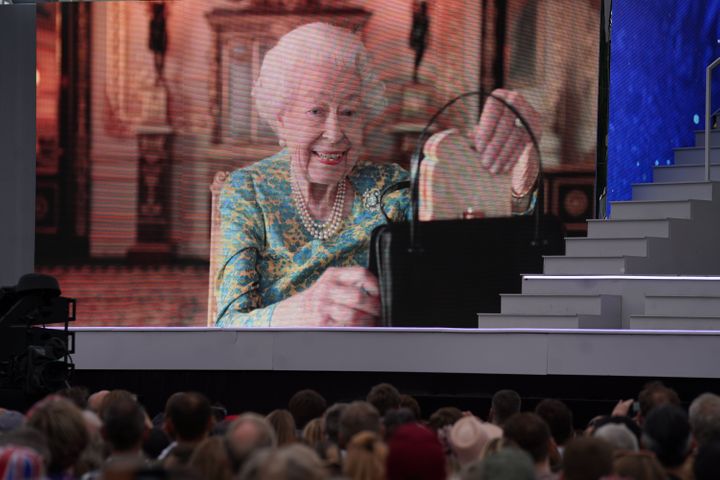
The monarch’s two-minute skit with the famous bear from Peru – another British icon – was widely judged a highlight of the Platinum Party at the Palace in June.
Advertisement
The pair were seen sitting down together for a spot of tea, with Paddington swigging straight from the spout, before offering the Queen a bite of his marmalade sandwich, the one he keeps handy, he told her, “just in case”.
“So do I,” the Queen replied, before opening her famous black handbag to reveal the very same. “I keep mine in here,” she said. “For later.”
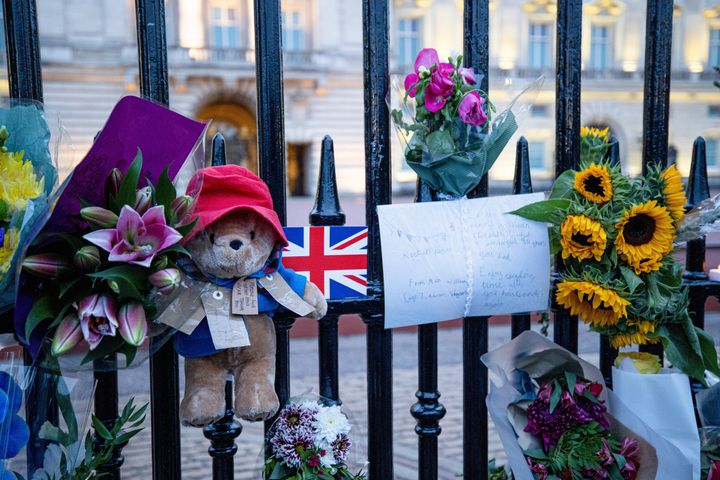
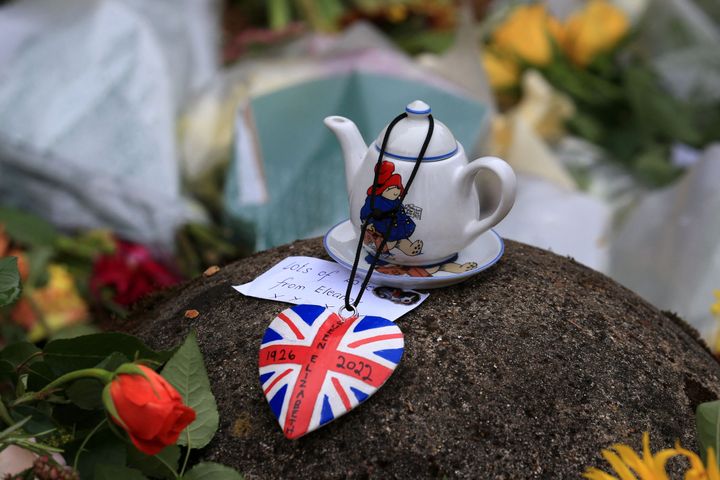
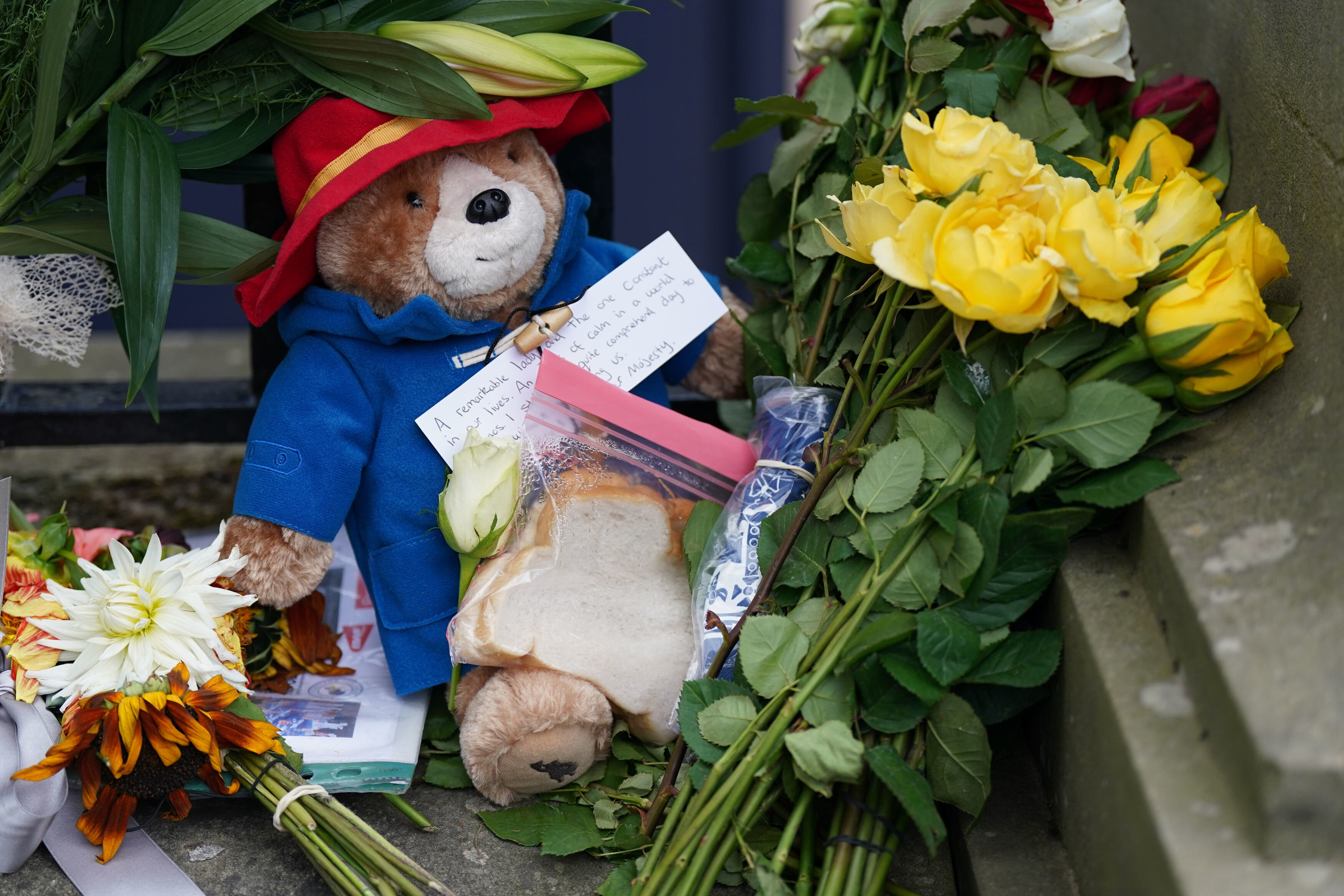
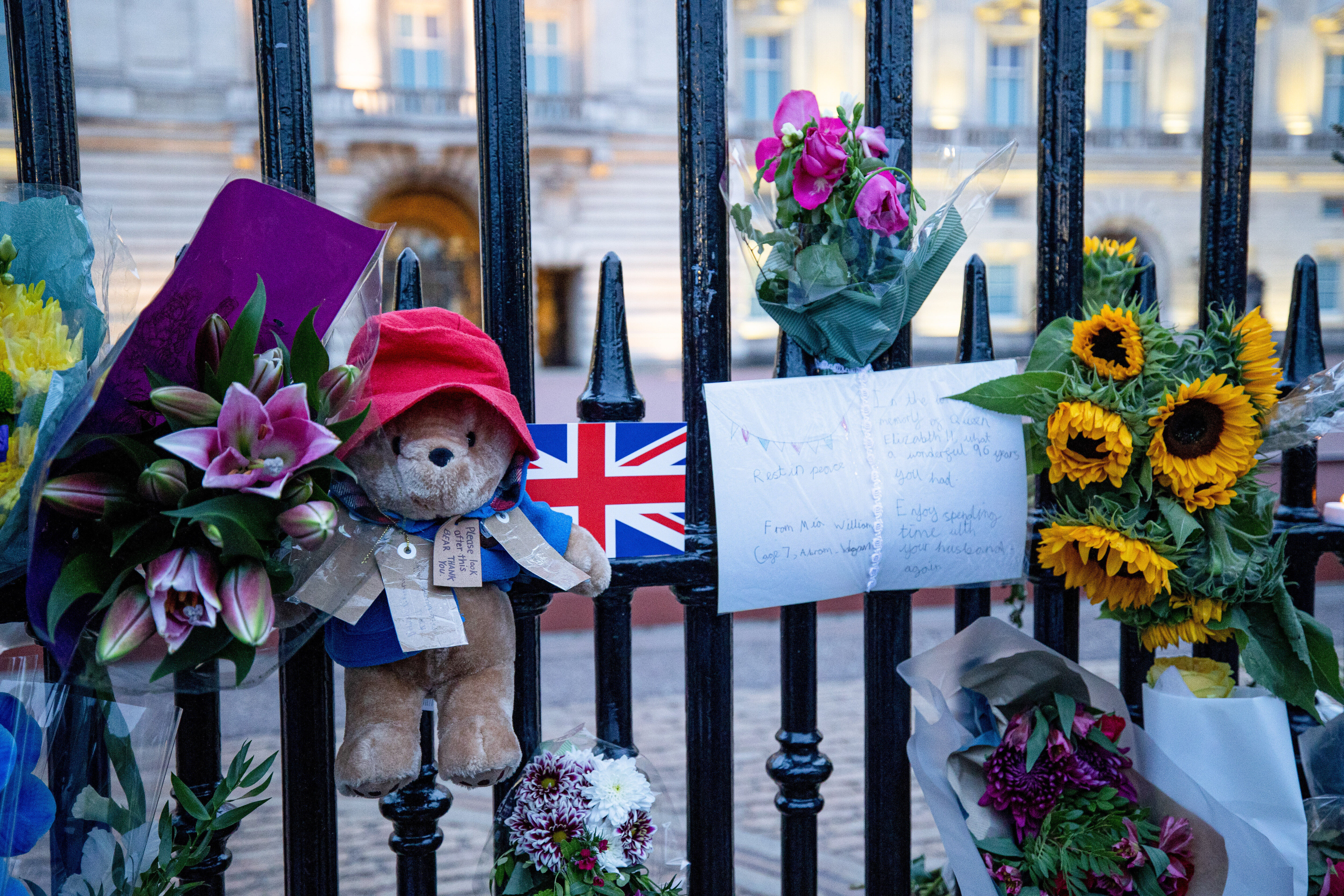
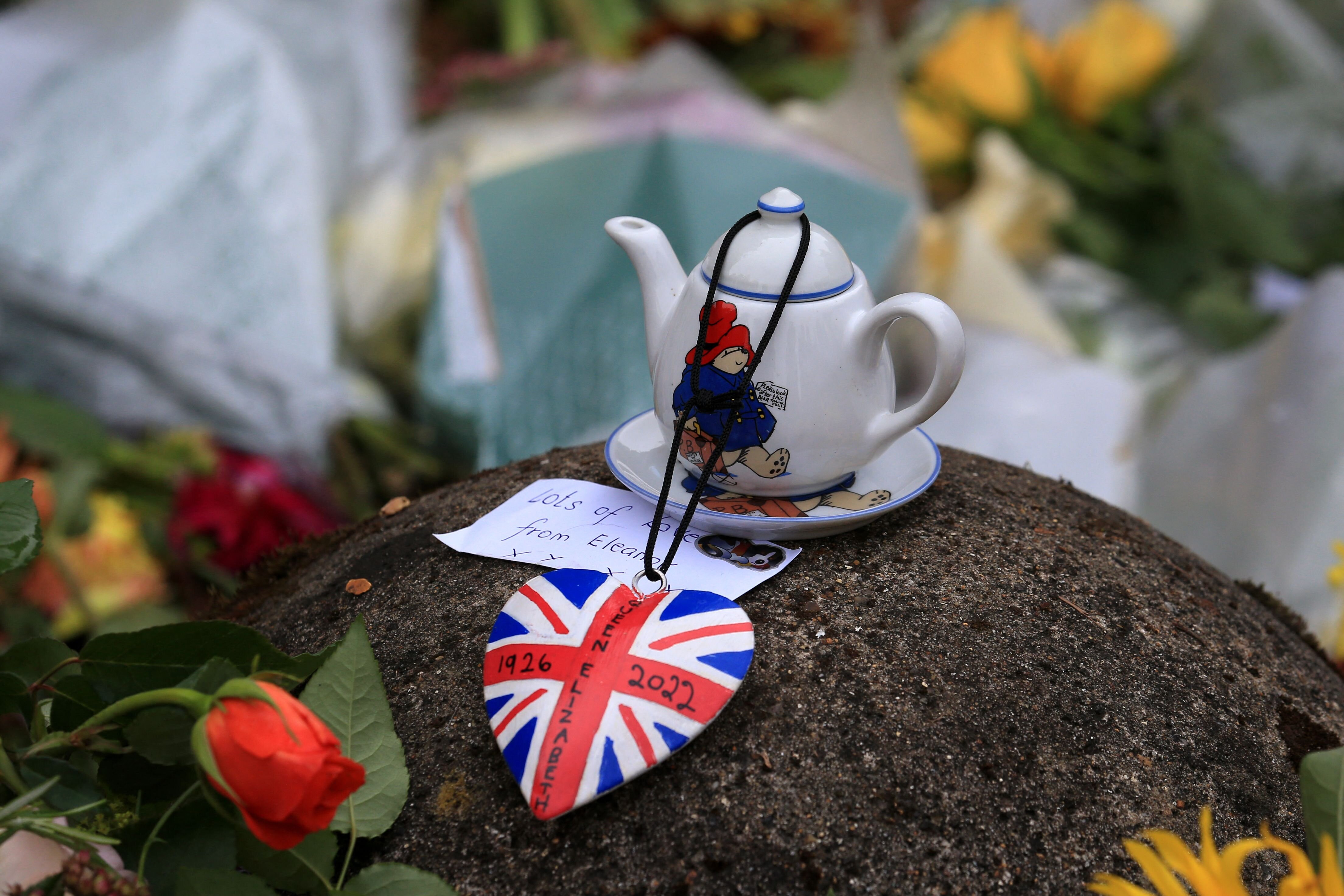
Now, mourners are leaving sandwich bags, bears and other bits of Paddington memorabilia outside Buckingham Palace, Windsor Castle, Sandringham, Holyroodehouse and other royal residences around the country.
Advertisement
SOPA Images via Getty Images
A Paddington bear with messages and flowers hangs at the gate of Buckingham Palace in London.
LINDSEY PARNABY via Getty Images
A Paddington Bear teapot is seen with floral tributes left outside the Sandringham Estate in Norfolk
STEPHANE DE SAKUTIN via Getty Images
Another Paddington Bear teddy in Green Park, near Buckingham Palace.
One well-wisher even handed a Paddington Bear directly to Prince William during his unexpected public walkabout with his wife and the Duke and Duchess of Sussex outside Windsor Castle on Saturday afternoon.
In fact, there are so many Paddingtons and sandwich bags piling up outside royal residences that The Royal Parks, which operates Green Park and St James’s Park, as well as six other royal parklands around London, has asked the public to stick to leaving flowers instead.
Advertisement
“The Royal Parks are suggesting that there are enough Paddingtons and marmalade sandwiches in the parks at the moment,” a BBC Breakfast presenter said outside Buckingham Palace on Monday morning.
“So please feel free to bring flowers, but maybe don’t bring anymore Paddingtons or marmalade sandwiches for now.”
The message echoed guidance issued on the Royal Parks website regarding floral tributes to the Queen.
“We would prefer visitors not to bring non-floral objects/artefacts such as teddy bears or balloons,” it reads. “Cards and labels will, however, be accepted and will be periodically removed by The Royal Parks’ staff and contractors for storage offsite. This process will be carried out with discretion and sensitivity.”
On Twitter, many commented on the very British nature of the situation.
Advertisement
But others have suggested that people’s time and money could be spent elsewhere, especially given the current cost of living crisis.
When the state propaganda works too well and you have mountains of uneaten sandwiches outside a literal palace while the food banks run on empty because of cost of living crisis. pic.twitter.com/0X4OMwg3ZP
The whole Paddington/marmalade sandwiches left in tribute thing feels like when acquaintances know nothing about you, but you mention you like cheese or something, and suddenly “they like cheese” becomes your whole personality.
Meanwhile, author Frank Cottrell-Boyce, who co-wrote Paddington’s Platinum Jubilee skit and also had a hand in the Queen’s unexpected cameo with James Bond at the Olympic Opening Ceremony in 2012, has been reflecting on why the meeting captured public imagination.
“It used to be said that millions of people had dreams in which they had tea with the Queen,” he wrote in the Observer. “Even our dream life is going to have to change. Watching her have tea with Paddington will have to do instead.”
Some have questioned whether the real Queen even starred in the skit, Cottrell-Boyce added.
“A conspiracy theory went round that the establishment had employed Paddington’s producers… to create a deep fake queen,” he added. “No one seemed to question the reality of the bear.”
Victoria Jones – PA Images via Getty Images
The late Queen having tea with Paddington during the Platinum Party at the Palace.
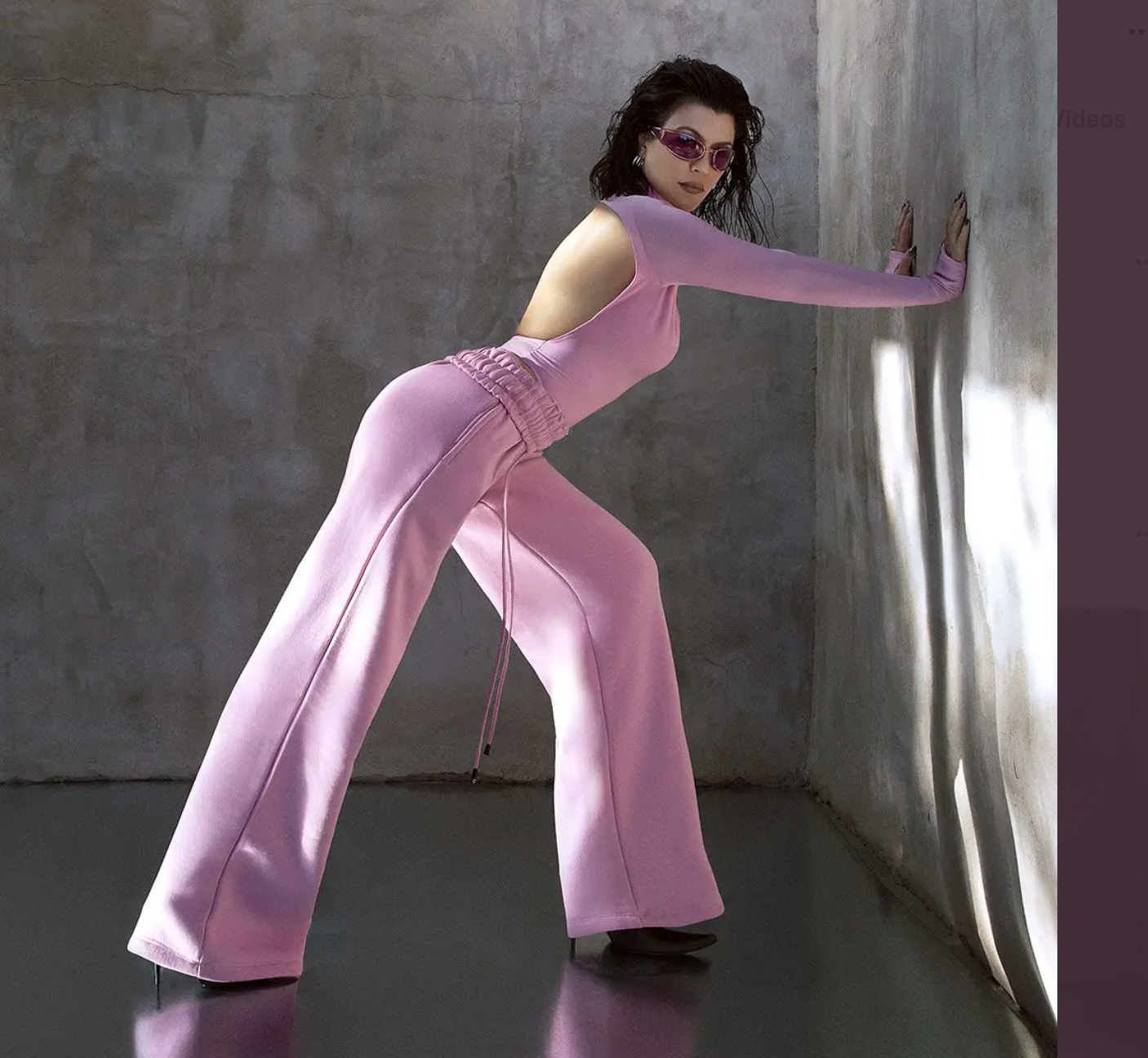
This collaboration sees the reality TV star release a new line Boohoo, which will include two 46-piece limited edition collections, the first of which will be showcased during New York Fashion Week on September 13.
Advertisement
This comes hot on the kitten heels of news that Pretty Little Thing – the fast fashion brand that’s also owned by Boohoo – has introduced an app encouraging shoppers to buy and sell second hand clothes.
Kourtney’s first Boohoo line – set to launch in the US market – ranges in price from $6 to $100 and will include items made with recycled polyester and recycled cotton, as well as two vintage-style biker jackets.
“When Boohoo first approached me to collaborate on a line, I was concerned about the effects of the fast-fashion industry on our planet,” Kourtney, 43, told WWD in an interview about the line.
“I’m grateful for the opportunity to use my platform to drive conversations that lead to ongoing change and use my voice to share actionable tips with consumers on how we can play our own part.”
Advertisement
Social media seems less than impressed by news of the collaboration, however. Echoing criticism of Pretty Little Thing’s marketplace, Boohoo’s latest announcement has been labelled by some as an act of greenwashing.
People have also queried Kardashian’s involvement, given her penchant for a private jet or two, and her family’s reputation for excess.
Boohoo’s business model is famously based on fast turnaround to meet and stoke demand, with more than 3,000 new styles added weekly to its site and some items taking just 48 hours to go on sale from idea to manufacture.
In July, the UK Competition and Markets Authority opened an investigation into whether eco-friendly claims made by various UK fast fashion chains added up – Boohoo is one of the brands under investigation, alongside Asos and Asda.
It was also hit by scandal mid-pandemic in 2020, when a series of newspaper investigations alleged that some UK workers producing clothes for Boohoo in factories in Leicester were being paid below minimum wage and working in non-Covid safe environments.
Advertisement
This led the company to severing ties with various UK suppliers, and some of its shareholders voting against big payouts for top Boohoo executives.
It’s hardly surprising, perhaps, that people have taken issue with this new collab on social media.
Kourtney isn’t exactly the most sustainable celebrity
Boohoo has hired Kourtney Kardashian as a green guru ambassador & to question whether “style and sustainability can eve mr go together”. Interesting move for a fast fashion firm still recovering from Leicester scandal & a member of a family that’s sold mass consumption pic.twitter.com/Fsoapa3Sxa
big big fast fashion conglomerate suddenly creating sustainability lines and schemes is bare cheeky. and then to appoint a kardashian as an ambassador?? that’s brazen https://t.co/nzTwypWWgJ
Fast fashion and sustainability don’t really go together
Kourtney Kardashian collab with Boohoo is not what I was expecting at all!!!! Even if it is sustainable, it’s still fast fashion and something I didn’t think she’d believe in?
A private-jetting Kardashian worth $65 million is now “sustainability ambassador” for fossil fuel fashion brand boohoo, where she’ll chat “with sustainability experts to better understand challenges and opportunities in the fashion industry.” We absolutely KANNOT. pic.twitter.com/cmI8zwB3ui
And what about the garment makers behind the new line?
Not Kourtney Kardashian releasing a “sustainable” line with boohoo, girl you have money you can turn down an offer from them and work with a brand that genuinely promotes slow fashion AND pays their garment workers ✌🏽✌🏽
Items are priced starting at $6 !! Sorry Kourtney their is no way to make a new sustainable garment to retail at $6. Sustainable means fair and honest wages for garment workers, for farmers growing the material for the fibres, or the factory worker reconstituting recycled fibre https://t.co/0EtI6PJcQn
When we reached out to Boohoo, Cheryl Chung, head of communications for the brand, responded.
“We recognise that working with Kourney is a choice a lot of people will find unusual,” she told HuffPost UK.
“Kourtney has faced a lot of criticism about her own sustainability practices. But we’re talking to a lot of sustainability experts as part of this project.”
Chung emphasised Kourtney’s huge following on Instagram –196 million followers at last count – to explain that hiring her in an ambassadorial role could influence a larger number of people to learn more about sustainability.
The brand is releasing her conversations with experts as a docuseries, available to view on YouTube.Those experts include Tim Nelson, the CEO of Hope For Justice, which works on freeing people from modern slavery around the world.
Advertisement
“We’re working with her and tackling conversations around the challenges of textile waste, the challenges of worker welfare, and how you responsibly deal with your clothes at the end of their life,” Chung said, adding that Kourtney’s conversations about massive challenges facing the fashion industry was “the most important part of the collaboration”.
Asked whether the venture was another example of greenwashing, Chung responded that in-house designers working on Kardashian’s line are concentrating on using fabrics and materials that wouldn’t harm the environment, but didn’t speak to further supply chain logistics.
“We’re not claiming to be perfect in any way but we’re categorically trying to do our best to be as honest and open and transparent,” she added.
Just like that, the last bank holiday of the season (until Christmas) has passed. Love Island has finished, we experienced two heatwaves, danced at Notting Hill Carnival and caught a tan at the beach. It looks like it’s time to slowly start putting your summer clothes away and get out your jumpers.
I know you don’t want to to think about winter just yet, so why don’t you use this time to start planning your holidays for next year?
Advertisement
It might feel too early, but if you start plotting your time now, you can get bag the best days and get 47 days off work by using only 19 days of annual leave. Imagine how you’d spend that time living your best life!
Want to find out how you can maximise your holidays next year? Keep reading.
Easter weekend 🐣
Easter Sunday falls on Sunday 9 April in 2023. If your employer closes on the weekends and bank holidays you can get a 10-day break using four days of annual leave.
Book off: April 3, 4, 5, 6
Get off: March 31 to April 10
May bank holiday 🌸
Ah, May how we love you for your multiple bank holidays. If you didn’t manage to get those days off in April then you’re in luck, because the May bank holiday is shortly after the Easter break. The first bank holiday is on May 1.
Book off: May 2, 3, 4, 5
Get off: April 31st to May 8th
The fun doesn’t stop there in May as we also have the late May bank holiday which falls on May 29.
Book off: May 30, 31, June 1, 2
Get off: May 29 to Sunday June 4
August bank holiday 🏖️
The August bank holiday is everyone’s favourite. It signifies the end of summer so we all want to make the most out of that weekend. And it’s the perfect time to book a little trip away. The 2023 August bank holiday falls on Monday 28.
Advertisement
Book off: August 29, 30, 31, September 1
Get off: August 26 to September 3
Christmas 🎄
Tis’ the season to be jolly by taking timing off to eat a dozen mince pies. Even those who don’t enjoy Christmas don’t want to work during that time. We’d all rather drink hot chocolate and snuggle up in bed. Christmas day falls on Monday 25 in 2023. You’ll also get a bank holiday on Boxing day (December 26) and New Year’s Day (January 1 2024)
Heavy rainfall returned in parts of the UK this week, which has overwhelmed the country’s Victorian sewage system.
‘Why does this impact me?’ you may ask. Well, dear reader, we’re sorry to inform you that raw sewage is being released into the sea – and it may scupper your usual bank holiday plans.
Advertisement
Over 40 beaches and swimming spots in England and Wales – mainly on the southern coast – saw pollution warnings in place after downpours followed months of little-to-no rain.
Sewage water could be seen gushing into the ocean at Bexhill Beach in East Sussex on Wednesday. Southern Water said electrical issues at a wastewater pumping station had caused the discharge. So, it’s safe to say our plans to go to the beach during the bank holiday are a little less appealing now.
Not to worry though, there are plenty of other ways you can enjoy the last weekend of August that don’t involve stomaching the stench of poo at the seaside. If you’re out of plans, keep reading.
Notting Hill Carnival
After three years, the UK’s favourite Caribbean celebration is finally back. Carnival was put on pause in 2020, along with so much else, but this year it’s back with a bang and we know it won’t disappoint. There’s music, dancing, Black joy and lots of food. And the best part of it all? It’s free!
Advertisement
Picnic in the park
You can’t go wrong with a classic picnic. Get all your friends together and go to your local park. Bring some snacks, drinks and a speaker and appreciate the outdoors. It’s warm across most of the country this weekend too, so it could be the last chance to have a picnic in the sun.
All Points East
What’s a better way to say goodbye summer than a festival? If you’re a music lover then All Points East is where you want to be. It’s running all weekend and you’ll be able to hear music from acts like Tame Impala, Disclosure and James Blake. Get your tickets here.
Edinburgh Fringe
It’s not too late to make it to Edinburgh for the Edinburgh Festival Fringe. This is the place to be if you want to experience some arts and culture this weekend. There are many, many plays and comedy gigs to choose from. Buy tickets here.
Ken Jack via Getty Images
Two performers promote their show during the Edinburgh Festival Fringe.
Cornwall’s Seal Sanctuary
In the mood to see some animals? You should head down to the seal sanctuary in Cornwall. Here you’ll find seals (naturally) and also penguins and sea lions! You’ll be happy to know their mission is all about rescuing and helping injured or distressed animals. An ideal place to go for a family day out.
Advertisement
Get some free fish and chips
Yes, you read it right, you could get some free fish and chips this weekend courtesy of Sarson’s Vinegar. With the rising cost of living affecting some of Britain’s most-loved institutions, they want to give back. To be in with a chance of a free dinner, fish and chip fans need only snap a photo of their order (complete with Sarson’s vinegar, of course) and share it to Twitter or Instagram (post or story) tagging @SarsonsUK and #SarsonsFryday. The company will choose 400 people who’ll have their meal reimbursed this bank holiday weekend.
Go to a bottomless brunch
Who doesn’t like a boozy brunch on the weekend? If you haven’t tried a bottomless brunch yet, this is the time to do it (with an extra day to get over that hangover). There are several restaurants all over the country that offer a bottomless brunch on the weekends.
If you’re in London and want to continue with the theme of carnival, head over to the The Laslett in Notting Hill for their Carnival brunch. If you’re in Manchester, head to The Pen & Pencil for a free flowing brunch or go to the Lost Cat for their bottomless brunch, which they serve everyday. For those of you in Birmingham, check out the Bristol Pear or The Lost & Found.
The Big Feastival
Love food? Love music? The Big Feastival has both, with big-name chefs leading cooking demonstrations while bands play on into the evening. There’s also a lot of street food to try. The festival is happening Friday – Sunday in the Cotswolds and tickets are still available.
Visit a different city for a day
Bored of what’s on your doorstep? Get a train or a coach ticket to a different city for a day. Why not try going to Plymouth, Southampton or Newcastle for a day? You’ll be surprised at how much fun you have.
A new book
Book lovers! If you’re looking for a recommendation for a new read to help you relax this weekend, we have plenty of suggestions on our Shopping channel. From otherworldly books to reads that have a cathartic release, you’ll find something to suit you.
Cookery (and foraging) classes
Extend your cooking skills this bank holiday by attending this bread making or pasta class. Running on August 27, the class will teach attendees the key pillars of bread-making and pupils will leave with freshly baked focaccia, milk buns, tiger bread and soda bread. Or enjoy a pasta filled class run by pasta evangelists.
If you’re more of the outdoorsy type, the Foraging, Cookery and Lunch for Two course with Totally Wild is right up your street. They have 18 different locations across the UK and they’re all about teaching you how to make delicious meals with ingredients in the countryside.
Situated in Tenby, Wales, this wildlife park is the home to several exotic and endangered animals from all over the world. They also have a bouncy castle, indoor play and a cafe that serves homemade pizzas. Take a look here.

The energy regulator Ofgem will announce another substantial increase in the energy price cap on Friday, with industry experts expecting the annual average cost to jump from the current £1,971 to £3,553.
Fuel poverty and blackouts are becoming a pressing worry for millions across the country, so the grassroots movement, Don’t Pay UK, is calling for people to boycott energy payments from October 1.
Advertisement
What would happen?
If you don’t pay your bill for 28 days, your supplier may get in touch to explain how they could disconnect your gas or electricity.
If they decide to cut you off, suppliers must offer you a chance to pay your debt through a payment plan.
What if you can’t pay off your debt?
Suppliers can apply for a warrant to enter your home and disconnect your supply if you do not reach a settlement about paying off your debt.
They should send you a notice of this, to let you know that they’re applying to court.
Citizens Advice recommends you try to come to an agreement with your supplier prior to the hearing.
It also suggests attending the court hearing even if you haven’t spoken to your supplier, as it’s still possible to come to an arrangement.
Advertisement
If the court grants the warrant, suppliers have to provide a week’s notice in writing before coming to your property and disconnecting the supply.
If your meter is outside your home, your supplier won’t need a warrant to cut you off.
Similarly, if you have a smart meter, suppliers could cut you off remotely – although they must contact you about repaying your debt first, and visit your home to check in with your personal circumstances.
However, Citizens Advice claims suppliers are more likely to fit a prepayment meter in your home than apply for a warrant.
Who can’t be disconnected?
If you are of State Pension age, your supplier cannot cut you off between October 1 and March 31 if you live alone, or you only live with other people of State Pension age (or children under 18).
Your supplier also has to offer support if someone you live with has reached State Pension age, is disabled, or has a long-term physical or mental health condition.
Advertisement
This, again, applies between October 1 and March 31.
Your supplier could set you up with a payment plan during this time.
What is the ‘vulnerability commitment’?
Most UK suppliers are also part of the Energy UK Vulnerability Commitment, which means they will not disconnect you during this six-month period if you live with a child under 16.
Any supplier who is part of this promise also won’t disconnect a household at any time of the year if you are disabled, have long-term health issues, severe financial problems or children under the age of six living with you.
But, for those who have not signed the agreement, they are not obliged to take your personal circumstances into consideration.
Citizens Advice explains that you can make a complaint against your supplier if you think they’ve disconnected you when they should not have done so.
How do you get access to energy supplies again?
You would need to contact your supplier, pay your debt, the reconnection fee and administrative costs.
Advertisement
Some suppliers may request a security deposit too, although only if you do not have a prepayment meter installed.
Once these payments have gone through, you should be reconnected within 24 hours (or within 24 hours of the next working day if they money goes through out of hours).
If this does not happen, you may be entitled to £30 compensation within 10 working days, either as credit to your account, cheque or bank transfer. Further delays will mean more £30 payments.
So, how would Don’t Pay UK work?
As rising energy bills are one of the primary reasons the UK is stuck in a cost of living crisis (while gas and oil giants are reaping huge profits), Don’t Pay UK is calling for immediate action.
It wants at least one million people to pledge not to pay their energy bills if the government does increase the energy price cap on October 1.
Advertisement
However, the campaign is discouraging anyone not on prepayment meters who could face self-disconnect if their credit runs out from getting involved.
This includes households where the energy bills are part of the rent, and for those who risk eviction if bills go unpaid.
If you’ve never had an orgasm, it’s easy to feel like your body is defective. But the reality is, there are many things that can contribute an inability to orgasm and plenty of ways to address it – it’s not hopeless!
According to Sadie Allison, a sexologist, author and founder of sex toy retailer TickleKitty, being “anorgasmic,” as it’s sometimes called, could be attributed to “inhibitions in the bedroom, cultural or religious beliefs that make it hard to mentally relax, medical conditions or taking medications, sexual hang-ups from past experiences, and relationship or intimacy issues.”
Advertisement
Past trauma, subconscious feelings of shame or fear, body discomfort, anxiety or even just lack of knowledge about anatomy can also be factors in anorgasmia.
“One of the main reasons, however, is a lack in education around sexual anatomy, arousal and response, pleasure and the clitoris,” Allison adds. “Unfortunately they don’t teach this important information in school. But the good news is, this is something that can be practiced and learned with success!”
But how exactly should you go about learning and practicing if you’ve never had an orgasm? Below, Allison and other sex therapists share their advice.
First, recognise that there’s nothing wrong with you
If you’ve never had an orgasm, it’s important to understand that you are not alone and there’s nothing wrong with you. This is a not-uncommon experience, especially for people with vulvas.
In fact, studies suggest that roughly 10% of women have never had an orgasm, and 50% do not experience orgasm during sexual intercourse.
Advertisement
“You are not broken,” says Kate Balestrieri, a sex therapist and founder of Modern Intimacy. “Orgasms and pleasure can be complex, layered, and unpredictable, especially if you have less experience with sex that you enjoy. Refrain from judging or shaming yourself if you have not yet experienced an orgasm.”
Try getting to know your body
“Most people will find their first orgasm through self pleasuring vs. with a partner,” says sex and relationship coach Keeley Rankin. “This is because being with a partner offers a whole new complex dynamic. And while potentially sexy and fun, for folks who are looking for an orgasm, it is typically more stress inducing.”
Instead, start with your own body, by yourself. Explore which zones are your hot spots and get comfortable masturbating.
“Choose a place where you feel you have privacy and make yourself comfortable,” advises Nazanin Moali, a sex therapist and host of the Sexology podcast.
She recommends building psychological arousal by reading or listening to sexually explicit or romantic content, whatever turns you on.
Advertisement
Miki Onigiri / EyeEm via Getty Images
Sex therapists recommend spending time by yourself getting to know your body.
“When you feel aroused, I recommend that you start with a body scan from head to toe and make a note of all the sensations in your body,” Moali says.
Consider gently massaging lotion all over your body. Take deep breaths in and out to release any tension.
“Start with touching and caressing your face and neck and explore different types of strokes,” she advises. “The goal for the first few times is to get to know different sensations in your body. Set the intention to get to know your body and explore it without putting any pressure. When you are ready, slowly move to your genital area and pay attention to the types of stroke that feel good.”
You can use your fingers or a vibrator or other sex toy in your exploration. Familiarise yourself with lots of different sensations.
Advertisement
Remove the focus on orgasm as the goal
“I initially take orgasm off the table as a goal,” says sex therapist and psychologist Megan Fleming. “The goal is getting back to the basics of giving and receiving pleasure. The pressure of having an orgasm as a goal is often a big part of what inhibits their arousal response.”
Rather than concentrating on having an orgasm, try to focus on the pleasure of arousal, connection with your body or your partner’s body, creativity and general enjoyment.
“Re-conceptualise your expectations for sex,” Balestrieri says. “So many people organise themselves around penetration and orgasm being the pinnacle and goal for pleasure. But that perpetuates a performative experience of sex and limits the countless other opportunities for pleasure that can increase the likelihood of an orgasm. Changing the goal from having an orgasm to experiencing pleasure and fun can paradoxically make orgasms more accessible.”
“There is no magic pill for finding an orgasm. It is often a deep dive into your own sexuality, emotional wounds, psychological blocks, beliefs, as well as learning new skills.”
– Keeley Rankin, sex and relationship coach
Get cliterate
“The sexual encounters we see depicted in film primarily depict penetrative sex,” says Zoë Ligon, a sex educator and founder of Spectrum Boutique. “And while some people can orgasm through penetration alone, the vast majority of people need external stimulation or external stimulation paired with internal stimulation in order to achieve orgasm. We as a culture ignore clitoral stimulation, as well as the time that is needed to build up arousal in order to achieve orgasm.”
Advertisement
She hopes society will continue to move away from penetrative intercourse as the standard definition of “sex” and seeks to educate people with vulvas and their partners about the importance of the clitoris – the small erogenous organ with highly sensitive nerve endings – in reaching orgasm.
“Become cliterate,” echoes Allison. “If you’re still learning where your clitoris is, or how to pleasure it, this is your starting point. The clitoris has about 8,000 nerve endings and is the main epicentre of orgasm creation. While there are other types of orgasms like G-spot, penetrative, anal, they are more advanced, so consider exploring those after you become your own clitoral expert.”
Advocate for your pleasure
When it comes to sex with a partner, good communication is crucial. Everyone is different, so don’t be shy in sharing how you like you like to be touched.
“Don’t be afraid to tell your partner what feels good and what doesn’t,” advises Kimberly Resnick Anderson, a sex therapist and assistant professor of psychiatry at UCLA School of Medicine. “You’d be surprised what a conversation about sexual preferences and fantasies can accomplish. If you are too embarrassed to talk to your partner about sex, you are missing out on an opportunity to increase your sexual satisfaction.”
Of course, the conversation can be uncomfortable, especially with a new partner, but having an open dialogue will bring you closer.
Advertisement
“Orgasm is about surrendering to the moment, to your body’s pleasure, and to another person,” says Jenni Skyler, a sex therapist and director of The Intimacy Institute. “If you are with a new partner, trust is still developing, and thus surrendering to a new person can be tricky.”
Whatever you do, don’t fake an orgasm, or stop doing it if you’ve already developed that habit.
“At times, women fake orgasms in an attempt to please their partner,” Moali says. “However, through this, you are also sending the wrong information to your partner about what works for you. Instead, focus on slowing down and getting curious about what types of touches feel good in your body. Spending more time engaging in foreplay will help you build enough arousal, thereby shortening the arousal gap between you and your partner.”
Mikhail Reshetnikov / EyeEm via Getty Images
Don’t be afraid to experiment with different sex toys, erotica and more.
Keep experimenting
Never stop trying new things, from techniques to toys. Resnick Anderson suggested vocalizing as a tip to facilitate orgasm.
“Research has shown that expressing sounds of pleasure during sex can increase capacity for orgasm,” she explains. “Women are also more likely to climax during coitus if they can control the speed, depth, and angle of penetration with positions like cowgirl or reverse cowgirl.”
Advertisement
Resnick Anderson also recommends trying different kinds of porn, like more female-friendly videos or erotic writing. Even something as simple as keeping your socks on might make you feel more comfortable and relaxed.
“Activate as many senses as possible,” she adds, noting that some people struggle to get out of their heads and into their bodies. “The more sensations one experiences at the same time, the easier it is to connect to your body. Tantalise your senses by engaging your hearing, vision, tastebuds, sense of smell, and sense of touch all at once. When our brains are busy listening, smelling, tasting, seeing, and touching, it’s easier to ignore intrusive or anxious thoughts.”
Invest in a new vibrator or other sex toys for solo or partnered sex. Try a lubricant. And pay attention to the different kinds of sensory experiences that give you pleasure, or even turn you on.
“Don’t limit yourself to what you think should turn you on, and instead give yourself permission to explore a full range of fantasies or erotic material, so you can learn what your body responds to,” Balestrieri says. “Refrain from judging yourself. Fantasies are just fantasies and do not say anything about your character. Often, fantasies give us access to an emotional or sensory experience that we can’t (and may not even want to) experience in real life. Think of fantasies and sex as play, and let yourself colour with vibrance.”
Seek professional help
If you’re concerned about your inability to orgasm, you may also consider seeking professional help.
“First and foremost, go to a sexual medicine specialist to ensure nothing physically going on – hormone issues, pelvic pain, tissue issues,” advises sex therapist and educator Nicoletta Heidegger. “Not just a regular [gynaecologist] or urologist – someone who has specialised training in sexual medicine and sexual functioning.”
Advertisement
If there are no discernible medical issues, she recommended then reaching out to a sex therapist, sex coach or sexological bodyworker to continue your journey.
There are also a number of apps, books other resources that might be useful. Heidegger recommended Come as You Are and Becoming Cliterate by Laurie Mintz. Ligon is a fan of Girls & Sex by Peggy Orenstein.
“Check out the app OMG Yes, Beducated, or Vanessa Marin’s Finishing school,” Heidegger says. “With many other topics like driving or changing a tire, we learn, and practice or take classes. There is no shame in this not coming naturally – pun intended. You may need practice, help, tools, education, and support, which is totally OK.”
It can also be helpful to talk to a mental health professional about any negative feelings or past experiences around sex.
“Address any shame you feel about sex,” Balestrieri says. “Shame – unless it’s part of your kink – is an inhibiting experience. It makes us feel small and unworthy, and when it comes to pleasure and the permission one gives themselves to feel pleasure, shame is a huge barrier to orgasm.”
Advertisement
Be patient
“I explain right away to my clients that this is often a long journey ― not to scare anyone, but to create realistic expectations for what they can expect,” Rankin said. “There is no magic pill for finding an orgasm. It is often a deep dive into your own sexuality, emotional wounds, psychological blocks, beliefs, as well as learning new skills.”
Patience is key. Be prepared to spend a lot of time with your body and try to remain relaxed and optimistic. Focus on the fun exploration and in-the-moment sensations.
“Stay positive and be patient,” Allison said. “Don’t be discouraged or feel something is wrong with you. Sometimes it could simply be a new rubbing technique or vibrator that surprises you with that special sensation, or even a new partner that brought that special something. Hang in there and enjoy as you explore and try new things. Remember, it’s a journey, not a race. And you’re so worth it!”
Sprint superstar Dina Asher-Smith has revealed the cramps she experienced in her calf earlier this week, causing her to finish last in a 100m race at the European Championships, were down to her period – and we can relate.
When asked about what happened, the 26-year-old responded: “It was just ‘girl stuff’. It’s just frustrating. It’s one of those things. It’s a shame because I’m in really good shape and I was really looking to come and run fast.”
Advertisement
True to form, a few days later she returned to the track and qualified for the 200m final.
She has now called for more research into how periods impact performance from a sports science perspective, “because it’s huge”.
“People don’t always talk about it either,” she said. “Sometimes you see girls that have been so consistent and there’s a random dip and behind the scenes they’ve been really struggling. Everybody else will go ‘What’s that? That’s random’.
“So we could just do with more funding. I feel if it was a men’s issue there would be a million different ways to combat things.”
Advertisement
We’ve all got stories like this. A colleague reveals she had her first period while sitting her GCSE exams and honestly thought she was going to die. Needless to say, she struggled to perform to the best of her ability.
I’ve had moments where the ability to do even the most basic of tasks – let alone run a race or sit an exam – have been completely obliterated by my menstrual cycle.
One memory instantly comes to mind: commuting home from work on the tube and having to get off several stops early because I was doubled over in so much pain and there were no seats available.
Hot, nauseous and unable to stand up straight, I made it to a bench on the platform and sat there for some time before my boyfriend turned up in a taxi to take me home. So yes, I tip my hat to Dina for even finishing the race.
Wherever you turn, women and people who menstruate are dealing with periods – and we agree with Dina, it’s time sports bodies invested heavily in research.
Tennis star Heather Watson previously told HuffPost UK how she quietly handles her period, which makes her feel bloated and low on energy when she’s on the court: “I really don’t think there’s much you can do when you’re on your period before a game except be strong and deal with it as best you can, because that’s what we all do on a monthly basis.”
Advertisement
She’s previously taken the contraceptive pill to delay her period during big tournaments. But even taking the pill can sometimes backfire or cause unwanted side effects.
Speaking to HuffPost UK, British synchronised swimmer Isabelle Thorpe revealed there have been a few occasions “when it’s gone wrong and I’ve bled for longer than I expected”.
British runner Eilish McColgan was also prescribed the pill after experiencing, what she described for a BBC column as, “excruciating cramps every month to the point where my body would go into a fever and start vomiting”. She recalled having a full day in bed “feeling like death” and then waking up the next day like nothing had happened.
But being on the pill made her feel “rotten,” she said, and it impacted her emotionally.
“It still fascinates me that a large majority of women struggle with their menstrual cycles every month, and yet no one seems to have the answers. Even now, the research in regards to sport, especially, is sparse,” wrote McColgan.
Dr Sarah Zipp, an expert in menstrual health and sport, and associate professor at Mount St Mary’s University, in Maryland, says we now need to see more research into the area. “The menstrual cycle has enormous impacts on physical health, performance, etc.,” she tells HuffPost UK.
“The body experiences many changes throughout the cycle, it goes beyond just coping with symptoms of menstruation. Yet we have relatively little research on the impact of menstrual cycles, which is pretty shocking given that there is sport science research into just about anything that might provide the tiniest performance advantage.”
She says the lack of research is in line with “the overall absence of research on women’s health” more broadly.
Dr Camilla Mørk Røstvik, a historian of menstruation at the University of Aberdeen and University of St Andrews, agrees “there needs to be more research into every facet of the menstrual cycle”.
“Many of us are trying to do that through, for example, the Society for Menstrual Cycle Research (established 1970), the Menstruation Research Network and more,” she says.
Advertisement
But these areas are woefully underfunded. “Asher-Smith is so right, and I’d add that we need proper funding too,” she continues.
“It’s a frustration, because there is clearly an interest amongst the public, just not amongst funding bodies or sponsors (yet).”
If you’d like to share how periods have impacted your performance in sport or at work, please tweet us: @huffpostuklife and we may include some of the tweets in this article.
Downing Street seems to be in a state of paralysis right now, with Boris Johnson on holiday just weeks before his successor is elected, and little action coming from the rest of the government despite promises to draw up new cost of living support.
Advertisement
Martin McTague, the national chair of the Federation of Small Businesses, has warned that the “toxic cocktail” of rising taxes, energy costs,inflation and shrinking economic growth means “action is needed right now”.
“The cost of living crisis can’t be solved without addressing the cost of doing business crisis,” he claimed.
So here’s a look at just some of the most recent closures which have caught local headlines across the country:
Chinese takeaway in Aberdeen
The Royal Crown Chinese takeaway in Scotland is expecting to close after its energy bill soared by £10,000.
Advertisement
Owner Martin Tang told the BBC he closed the 40-year-old shop because “every time I turn on a burner to cook something, I’m losing money. This is enough to kill off my business.”
Tearooms in Belfast
Molly Brown’s Dog Friendly Team Room is shutting in September after an electricity bill costing £4,000 for 10 weeks came in.
The owner, Richard Stewart-Brown, told BelfastLive: “As we were working to recover from being shut in lockdown, we like everyone else, discovered that our costs had just exploded and in addition to that instead of being one of seven cafes on the promenade, we are now one of 17 on the road and that doesn’t include other cafes in the town.
“The electric bill for two months and two weeks was £4,000 followed by a letter to say the prices were going up in August again and for us, as a small family run business, it was too much to handle.”
Yorkshire restaurant
Italian restaurant Santoni is closing after five years due to the £2,000 monthly energy bill expected to hit this winter.
Advertisement
Its owner Marco Di Rienzo told YorkshireLive that it was closing despite still being popular, due to the worsening cost of living crisis and soaring prices.
280-year-old inn in Bath
The Faulkland Inn near Bath, which is 280 years old, is said to be considering closure.
The landlord Andy Machen told The Guardian: “Our gas and energy bills have doubled since April and we’re facing annual fuel costs of at least £20,000, which will wipe out our profits.”
Seafood company in Watford
A caller told LBC’s Eddie Mair that his business was going to shut up shop and relocate to the Netherlands due to the energy price rises.
He said the 11 storage and distribution seafood centres he owns have to moved to avoid bankruptcy – although this means “we’re looking at 900 redundancies plus” within the UK.
This caller tells Eddie Mair of a decision to close a UK business and move it to the Netherlands as it cannot operate with 260% energy price rises.
— Simon Gosden. Esq. #fbpe 3.5% 🇪🇺🐟🇬🇧🏴☠️🦠💙 (@g_gosden) August 15, 2022
Advertisement
And there have been wider warnings about other businesses too…
Schools
The Telegraph reported that schools are considering three or four day weeks to cope with energy bills and teacher pay rises.
Marc Jordon, chief executive of a trust which runs 17 schools across Norfolk and the Midlands, said he had “heard mutterings of a three-day week to save on energy costs”.
However, a department for education spokesperson said the school week cannot be less than 32.5 hours a week.
Nurseries
The Pregnant Then Screwed campaign group claimed that nurseries have been reporting they suddenly have to close due increased food and energy costs, along with staffing issues.
Pubs
Pub owners have warned that closures are likely this winter due to rising costs and reduced consumer spending.
Advertisement
Josh Green from the British Beer and Pub Association warned PoliticsHome that there is a “particularly potent cocktail” of issues which will put places out of business.
Reports of homophobic and transphobic hate crime are rising at record rates, with charities calling the findings “deeply worrying”.
The shocking data was collected and analysed by Vice World News, who sent freedom of information requests to every police force in the UK.
Advertisement
Overall, homophobic hate crime reports have doubled in the past five years while transphobic hate crime reports have tripled.
The data reveals that police received 26,824 reports of hate crimes based on sexual orientation in 2021-22, compared to 10,003 in 2016-17 – representing an increase of 168%. The most recent reporting year saw the biggest annual increase ever recorded, at 32% in 12 months.
The rise of reports for transphobic hate crime was even higher. There were 1,292 reports of transphobic hate crime recorded in 2016-17, but 4,399 in 2021-22– a staggering increase of 59%, which is also the largest increase ever recorded.
Advertisement
Nancy Kelley, CEO of Stonewall, described the latest figures as “shocking”.
“This data is deeply worrying and shows an alarming rise in lesbian, gay, bisexual, trans and queer people being targeted because of who they are,” she said in a statement.
Advertisement
“Behind these figures are people who’s lives have been damaged by hatred and abuse. All these figures are terrible, but it is especially shocking to see a reported 59% increase in hate crime targeted towards trans people in the past five years. The constant drumbeat of anti LGBTQ+ sentiment in media and politics has a human cost.”
Some police forces told Vice World News the increase in reported incidences actually reflects “increased confidence in reporting, improvements in crime recording and a better understanding of what constitutes a hate crime”.
But Arthur Webber, a 24-year-old journalist and former council candidate from London, is not convinced by this idea.
“My partner and I have been homophobically abused on the street we live on three times so far this year,” he tells HuffPost UK.
“It makes you afraid to leave your home because what if it’s not just verbal this time? We didn’t bother reporting them because nothing happened when we reported an incident in 2021.”
Advertisement
Webber said the individual officer who initially handled their report last year seemed helpful and disclosed that she was LGBTQ+ herself, which made them feel more comfortable.
However, after taking their statements the case was taken no further, despite the incident happening on public transport with CCTV. HuffPost UK has contacted the Metropolitan Police for comment and will update this article with any response.
Hayley Speed, assistant director of services at the youth homelessness charity Akt, also believes LGBTQ+ hate crime actually goes underreported.
“What we know is that people who are experiencing homelessness are far less likely to report hate crimes directed at them,” she tells HuffPost UK.
“This is due to a series of factors that include a lack of a fixed address, lack of internet access, and in some circumstances, a lack of trust in the police. Furthermore, covid has drastically reduced any services dedicated to reporting anti LGBTQ+ hate crimes.”
Advertisement
Speed describes the latest statistics as “stark but somewhat unsurprising” and points out that people from that people from intersectional backgrounds are at risk of experiencing multiple oppressions as they deal with the threat of homelessness.
“48% of the young people we helped nationwide identified as trans, non-binary or were questioning their gender identity. In London, 69% of the young people we supported identified as black, brown or people of colour,” she says.
“These are all factors that mean that young LGBTQ+ homeless people are at an increased level of risk when it comes to anti-LGBTQ+ abuse in public.”
Similarly, Webber says the latest figures are “scary but not surprising at all”.
“More needs to be done to challenge anti-LGBT+ bigotry in the media, as it is no coincidence that such a stark rise is occurring when trans people are demonised daily by columnists and drag queens are being monstered for reading to children,” he adds. “These ideas don’t appear out of nowhere.”
Stonewall’s Nancy Kelley agreed that further action must be taken to protect LGBTQ+ people.
“As a society, we all need to do more to combat anti-LGBTQ+ violence and call out abuse, harassment and anti-LGBTQ+ sentiment wherever we see it,” she said. “But we also need a greater commitment from the police to take decisive action to follow up and prosecute these offences.”
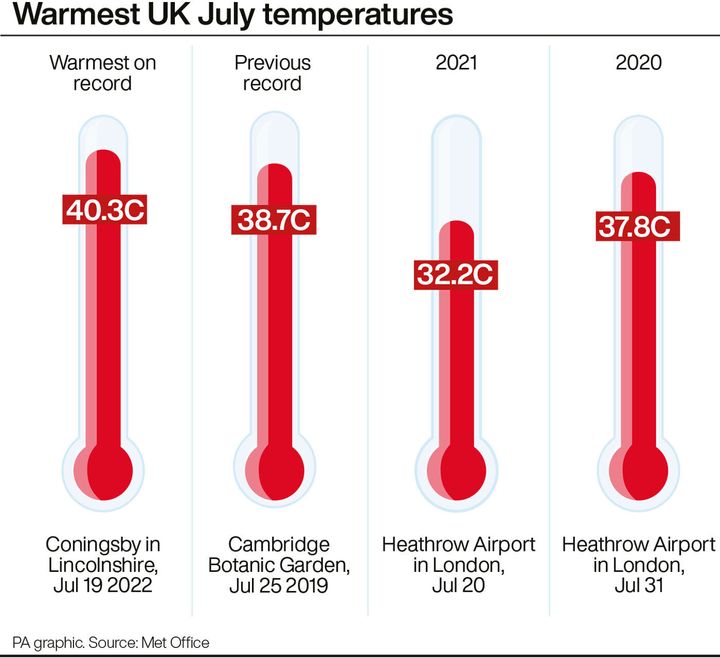
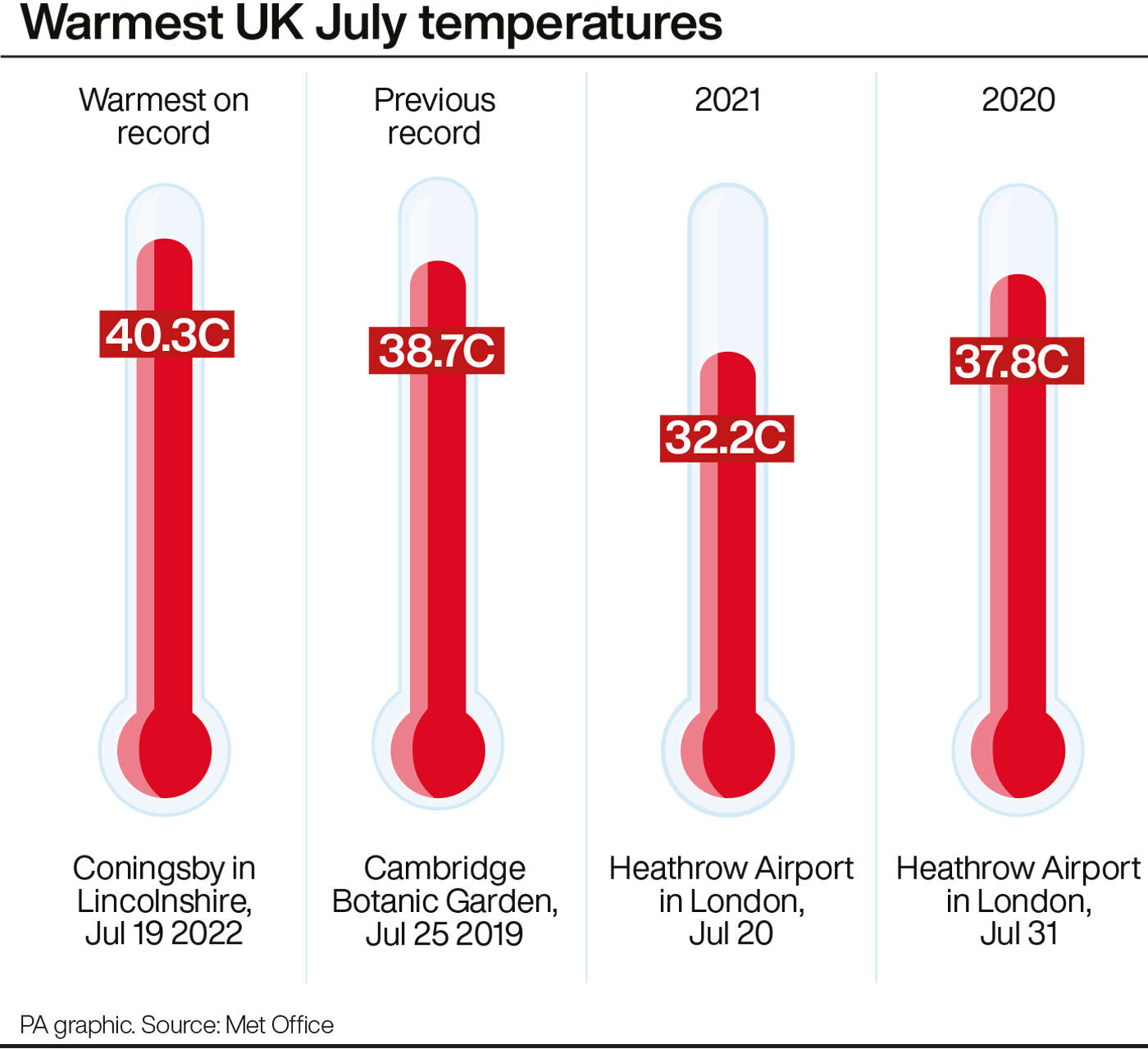
While this is obviously caused by the climate crisis, here’s everything you need to know to understand how it is really affecting our day to day lives.
PA Graphics via PA Graphics/Press Association Images
What caused the hot weather?
The extreme weather which spread across the UK in July was caused by a surge in continental air and August’s heatwave has been caused by a “stubborn area of high pressure sat over the UK”, a Met Office spokesperson told HuffPost UK.
Advertisement
A heat-health alert from the UK Health Security Agency is also still in place until 9am on Tuesday.
The heatwaves have made the UK so dry, that an official drought was declared in eight areas of England on Friday by the National Drought Group.
Welsh Water, Southern Water, and South East Water have brought in hosepipe bans too, while Yorkshire Water and Thames Water are planning to bring them in soon.
The Met Office also believes, despite the coming rain, this summer will be remembered as a particularly dry one.
The chair of the National Fire Chiefs Council, (NFCC) Mark Hardingham said: “I can’t remember a summer like this and I’ve been in the fire service 32 years. We are not going to see temperatures as hot as we saw three weeks ago but that doesn’t matter because the ground couldn’t get any drier than it already is.”
Will there be rain?
Not just rain, but storms too. Locations in Northern Ireland and Scotland are already seeing thundery skies, meaning the Met Office has issued some yellow thunderstorm warnings. Storms are expected to hit the south by Wednesday.
Advertisement
Three days of heavy rain are expected in total, potentially accompanied by hail, sweeping in an eastern direction across the country.
The Met Office expects to see at leat 50mm of rain in two or three-hour periods in a few regions, putting low-lying roads and areas next to sloping fields at risk.
But, the rain recorded from the rest of the summer in parts of southern and central England is less than a quarter of what is usually expected in a British summer.
By Thursday, high pressure will have pushed into the UK and so it will stay mostly dry.
Is this rain good or bad?
Well, there hasn’t been substantial rainfall since June in many southern regions.
But there are fears that the intense dry spell – lasting several weeks now – means the land is too dry to absorb the rainwater.
Advertisement
There could therefore be flash flooding, but the rain will do little to ease drought conditions. The thunder could could cause power cuts too.
However, rain does still reduce the threat of wildfires which have strained UK fire services over recent months.
The Met Office’s Dan Stroud said what we really need is “an extended period of light rain, an average or slightly above average autumn”, along with a winter where constant light rain recharges the ground.
Discussing the upcoming downpour, Stroud said: “It will help a little but to be honest really, it’s almost the wrong kind of rain. What we’re likely to see is some heavy, intense downpours.
“With the ground baked so dry, it’s very difficult for the ground to actually absorb the water very quickly… so what tends to happen in these circumstances is the water runs off, and we can potentially get some surface run-off issues, so some flash floods.”
Advertisement
Why is our weather changing so quickly?
Short answer: climate change.
In terms of why this week in particular seems so dramatic, meteorologist Stroud said the drastic changes stem from an alteration in air pressure.
Stroud said: “We’ve had a number of days now where we’ve had clear, strong skies and strong sunshine which has heated up the ground.
“We’ve had high pressure dominating, now we’re having low pressure dominate, so the air is becoming more unstable.
“As we’ve had some very high ground temperatures, it doesn’t actually take too much for the air to become even more unstable and for thundery showers to develop quickly.”
Heavy, thundery rain at first across Northern Ireland and Scotland this Monday morning ⛈️
Drier elsewhere, but thundery rain soon spreading from the west, feeling very warm and muggy for many 🌡️ pic.twitter.com/gVXOzUrduE
Probably not. The climate crisis is not going anywhere, and is actually getting worse, as our atmosphere continues to heat up.
Temperatures are expected to decrease to a more normal level in August, but that doesn’t mean we can’t expect similarly searing heat next summer.
As professor Hannah Cloke, a natural hazards researcher at the University of Reading told the i newspaper: “With average temperatures rising across the UK, we have to shift the definition of what ‘particularly hot’ is, otherwise that definitely becomes increasingly meaningless.”
She said the UK needs to change how we define a heatwave, as rising greenhouse gas emissions mean higher temperatures are more common now than they were over the last two decades.