‘Tradwife’ Lifestyles Are A Fantasy – I Know. I Cleaned Their Houses

When it comes to work, mums are damned if they do and damned if they don’t.

Those who work in the home (and yes, childcare and housework are very much “real” labour) often feel judged for being “spoiled,” while mums who work for a company can face professional prejudice alongside exhausting hours.

Whether they work in the home or outside of it, mothers are far more likely than fathers to shoulder the bulk of the emotional and cognitive load.

But the term “tradwife” is often used to refer to a woman who “embraces traditional gender roles” as a part of an online, “ultraconservative” performance, Merriam-Webster explains; not a regular stay-at-home mother.

A “tradwife” will often create content or speak about her role as a homemaker online, sharing the joys of not working while pocketing thousands in brand deals.

An example is Ballerina Farm, the full-scale production team behind which is overseen by Hannah Neeleman, wife of a billionaire’s son.

The cosy, “cottagecore” aesthetic of her supposedly “rustic” life is more reminiscent of Marie Antoinette’s pirouetting around her toy hamlet than it is of real-life stay-at-home-mother chaos – I know. I have cleaned for women playing into a similar fantasy.

The brand of “not working” is simply too much work for many “tradwives” to sustain

Speaking on BBC Woman’s Hour, “traditional housewife” and influencer Charlie Gray admits that she relied on au pairs – “we had three children under the age of two, and it was crazy,” she says.

I sympathise. My own mother had two sets of twins with 18 months between us – but though she did not have a job, I don’t think she’d quite qualify for “tradwife status” now, not least because paying for an au pair was out of the question.

“Tradwives” don’t just raise kids at home. Theirs is a highly stylised, highly performative (Gray confesses she doesn’t smile as much while cutting onions in real life as she does for the camera) show that relies on a level of labour most women cannot achieve alone.

When I was a cleaner (slash housekeeper, slash au-pair), I worked for women who fed into a proto-tradwife myth. I

They put on a Bree Van De Kamp-level display of homemaking skills, proving to everyone that not only did they not have to go to (paid) work, but that they were the best, the most efficient, the most perfect at not working.

Behind the scenes, I was scrubbing long past my stated hours, polishing doorknobs, cleaning up their botched attempt at focaccia (they would later buy one and fob it off as their own), deep-cleaning grout, and vacuuming sofas.

This was not always enough. Those obsessed with projecting a “picture-perfect” housewife image would encourage a more humiliating routine, using the job I needed to survive to enhance the performance of their optional work.

Once, I was tasked with laying out pre-weighed, pre-chopped ingredients so they could “make” their dinner in front of their friends, hair and clothes still immaculate (which would be fine if it was my job, but it wasn’t).

Dolly Parton says it costs a lot to look cheap. I learned it takes a lot of uncredited labour to look breezily, effortlessly “into” homemaking – work only well-off women could afford.

None of this is to insult stay-at-home parents or housewives

This is not to say these “tradwife” women didn’t work hard, or that this agonised display was not the result of internalised misogyny or double standards.

But I always think – what about the women who clean their houses? What about when they get home to a less-than-picture-perfect house and an exhausting “second shift”?

My own mum, who was on benefits, did not feel the urge to put on the show of rustic contentment that most “tradwives” do: she complained about her housework a lot, because it was hard and exhausting.

I don’t think her experience would have fit into “tradwife” content, despite technically being a homemaker first of all, because the lives of those without stacks of cash are necessarily filled with compromises, shortcuts, and stress.

Having been a part of creating even quite a low-level, pre-virality “tradwife” fantasy for others, I can assure you most of us simply cannot afford to live the preened, painstakingly “curated” lives shown to us online.

They are either a complete myth or a cleverly-positioned gawk at a very rich woman’s hobby.

The sooner we remember that, the better.
Share Button

I Tried My Best To Wreck These Hiking Shoes In Iceland. They Still Look Brand New.

We hope you love the products we recommend! All of them were independently selected by our editors. Just so you know, HuffPost UK may collect a share of sales or other compensation from the links on this page if you decide to shop from them. Oh, and FYI — prices are accurate and items in stock as of time of publication.

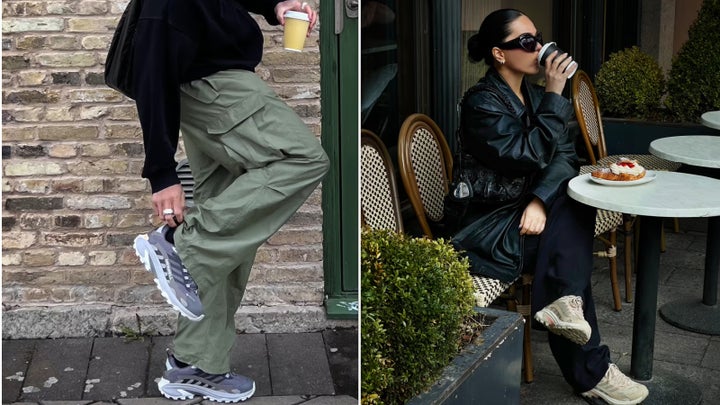
When I was asked to review hiking shoes from Merrell – a Gorpcore outdoor brand loved by the likes of Meghan Markle, Central Cee, Bradley Cooper, and Julia Fox – I knew I had to really put them through their paces.

Living in Scotland, I fortunately have plenty of trails to put hiking shoes to the test on, but with Merrell claiming the Moab Speed 2 GORE-TEX® is the ‘latest innovation in hiking’, a hike up a Munro wasn’t going to cut the mustard.

Enter the rugged, snowy and wet landscape of Iceland.

During my CityHubs excursion to Reykjavik (more on that to come), I’d be hiking up mountains, trekking through valleys to hunt the Northern Lights and stomping through ice fields. Game on, Merrell.

I boldly didn’t even break my pair of Moab Speed 2 GORE-TEX® in before starting a weekend of outdoor activities and was incredibly surprised that the shoes (which come in a both men’s and women’s version) didn’t rub or pinch at all. This makes sense, considering their FloatPro™ Foam midsole are designed for lightweight comfort that lasts – a feature that Merrell are famous for.

After doing over 40k steps everyday for three days, I was VERY grateful for their 30% increase in foam underfoot.

The hiking shoes also boast a padded collar and a special ‘bellows’ tongue that helps to keep debris out on your adventures (no annoying wee stones in your shoes here).

According to Merrell, in some very techy terms: “Lightweight FlexPlate™ technology provides torsional rigidity, lateral stability, and forefoot flexibility.”

In layman’s terms – my feet felt super secured, my ankles stable and no matter the terrain I marched through or over, at no point did I feel like a stumble was on the cards. I’ve had major reconstructive knee surgery in the past year, so I needed to feel safe. Even walking over ice I had zero worries – these shoes had serious grip.

And thank god for GORE-TEX®. We got stuck in a pretty impressive snow storm and while I was completely soaked through (yes, I maybe didn’t prepare quite well enough), my feet were bone dry. A few of our hikes saw some muddy trails and my Merrells withstood it no problem, nothing a rinse didn’t solve.

Outside of their tech specs, the Moab Speed 2 GORE-TEX® also come in a whopping 12 different colour ways and while I opted for black with white detailing, you can go for electric blue, orange hues or mustard.

There’s no arguing that Merrell’s Moab Speed 2 GORE-TEX® look pretty damn good too – you only have to look at some of the styling pictures on the site.

Okay fine, we'll take both.

Merrell UK

Okay fine, we’ll take both.

And on a personal note, one of my favourite things about the Moab Speed 2 GORE-TEX® – outside of just how damn indestructible they were – is their eco-credentials:

  • 100% recycled laces and webbing
  • 100% recycled breathable mesh lining
  • 100% recycled mesh footbed cover
  • 50% recycled removable EVA foam footbed

Shoes that are good for the environment I’m hiking through? Count me in.

Moab Speed 2 GORE-TEX®

Share Button

Think ‘Overdiagnosis’ Is A Problem? Try Getting An Autism Assessment

Neurologist Suzanne O’Sullivan recently told The Times that “overdiagnosis” is a scourge these days, including among those with suspected autism.

But do the stats bear these claims out?

The National Autistic Society says that roughly 750,000 autistic adults in the UK remain undiagnosed; the Children’s Commissioner’s 2024 report on waiting times for assessment and support for autism found wide “inequalities between the most and least advantaged children” seeking assessment.

With the latest NHS figures on diagnosis waiting times having just been released (sharing that just under 90% of those with suspected autism have had open assesment referrals incomplete for at last 13 weeks), we spoke to The National Autistic Society about why difficulties getting assessed might be more of a risk than so-called “overdiagnosis.”

“An autism diagnosis can be life-changing”

Mel Merritt, Head of Policy and Campaigns at the National Autistic Society, tells us: “The number of people waiting for an autism assessment in England has rocketed to more than 224,000 people – that’s nearly the population of Luton or Portsmouth.”

It is also a 23% increase from last year’s figures, and a 76% rise over the past two years.

“The waiting list has more than tripled since the publication of the National Autism Strategy in July 2021, despite its promise to reduce diagnosis waiting times and improve support,” Merritt continues.

This is also despite the NHS itself saying people should not have to wait for more than three months to be assessed.

“An autism diagnosis can be life-changing and in some cases lifesaving, but getting an autism assessment shouldn’t be this hard… the average wait is now over 14 months,” the spokesperson shares.

“The assessment can be the first step to really understanding people’s needs and, too often, people can’t get support without a diagnosis, although this shouldn’t be the case.

“Additionally, people shouldn’t have to pay to get the support they need for themselves or their children.”

The Children’s Commissioner’s 2024 report found that “the most disadvantaged children with neurodevelopmental conditions are most likely to
have their life course permanently altered by long wait times.

As a Guardian writer puts it, “No one is simply ‘slapping’ an autism diagnosis on anybody, at least not in the NHS.”

Endless wait lists are “traumatic”

Though there is an increased demand for assessments (especially among “previously overlooked demographics such as women and girls”), the National Autistic Society tells us there is not a corresponding supply.

And even once you pass the “traumatic” wait time, “The diagnosis process is not a simple, quick process and can involve hours of recounting traumatic experiences and focusing on perceived deficits.”

Merrit ends, “Autistic people and their families face a constant fight for support in all aspects of their lives, and this often starts with long, traumatic waits for a diagnosis.

“The Government must provide urgent funding for diagnosis services to end this worsening crisis, and make sure autistic people and their families get the support they need when they need it.”

Share Button

I Thought I’d Love Watching My Friends Get Married – Then I Saw Who Was Doing All the Work

Finally, it’s happening; the “wait until your late 20s, you’ll go to 15 weddings a year” people are being proven right.

Joy! I love love, and I consider myself privileged to be invited to anyone’s wedding (after all, they’re not cheap and are rarely easy). I adore all my friends’ partners, which is rare, and am thrilled they’re getting married.

Still, I keep noticing a trend, even among my most feminist, keenly socially active straight mates; the women are doing all the work, and the work never ends.

60% of respondents to a Wedshed poll said brides-to-be still do the lion’s share of the work. A site entry by Brides & Grooms Direct teaches a beleaguered fiancée “how to get a reluctant groom involved” in their big day.

A Redditor puts words to a sentiment I’ve heard too often from exasperated friends: “I’m probably lucky that he’s helping at all, but he truly thinks he’s putting in equal work by executing tasks that I assign.”

I knew gender roles would kick in – I just didn’t expect it to be so early

It’s no secret that self-proclaimed “liberal-minded” straight couples often fall into old-fashioned gender roles when it comes to childcare. Some of that is down to the unavoidable realities of pregnancy and birth, but a lot is thanks to chore inequality.

Though more and more of us say we think women and men should contribute equally to the household, 63% of women self-report doing most of the work at home compared to 22% of men.

I expected those bumps to show up over time. I was ready for my straight women friends to call me about unfair feeding schedules and frustrating double standards – years down the line.

But I’ve been shocked to see that all too often, the demands on women – all women, not just the bride – come as soon as the proposal is over.

A lot of the time, the bride-to-be kicks into event planning mode ASAP. The venue, the dress, the food, the guests, the music, the venue, the cake, the flowers, the clothes (both hers and his groomsmen’s) and the decor are too often seen as the “woman’s job”; fine if you like that, but beyond exhausting if you don’t.

Meanwhile, I have seen the girlfriends of groomsmen organise the boys’ stag planning sessions, the wives of best men flat-out write their speeches, and the mothers of family friends plan, dress, and organise their whole households’ timely arrival at the wedding.

I know not everyone has the same “ideal” wedding, and that some men really do go above and beyond. I’ve seen some truly delightful behaviour from my friends’ fiancés in the past.

But I’d be lying if I didn’t say I’ve been shocked by how unfair some pals, who also expected and explicitly mentioned wanting more help on the big day, have found the process.

I no longer believe in “bridezilla” tropes. I have seen too many exhausted, burnt-out friends simply snap under the sometimes huge burden of planning.

There are ways out

Wed Magazine writes that, “It’s fair to say that, traditionally, grooms have taken quite the back seat when it comes to wedding planning.”

One way out, they add, is for grooms to become proactively involved in the planning; “discuss what you both want from the day and how to utilise your respective strengths and weaknesses.”

The most equal wedding planning I’ve seen looked a lot like great household management; careful consideration of the tasks at hand, thorough respect for your partners’ time, and never slipping into “automatic gear” when it comes to assuming what your partner “should” want to do.

That can look different to everyone, and some of my friends genuinely prefer to take the helm – who am I to judge that?

But just as emotional and cognitive labour and housework still largely fall to women in straight couples, I have to admit, I’ve become pretty angry after realising how much it can affect their weddings too.

Share Button

Am I Meant To Care About The Rich List? It Gets Harder To Stomach Every Year

Oh look – the Sunday Times’ Rich List is out.

I am sure the fact that some billionaires are leaving the UK matters (though some have likely quit the UK after their “non-dom” status was removed; “non-doms” never paid UK tax on their overseas earnings anyway).

Perhaps I should have something to say about how the King’s private wealth has grown by £30 million in the last year; something other than “typical.”

I know I should be angry that, as Patriotic Millionaires UK writes, ”£772 billion, held by just 350 families, would cover the total cost of the UK’s annual healthcare spend three times over” – and I am, deeply.

But honestly? Reading the news just made me sad, then hopeless, then nauseous, then numb.

It is very, very hard to care about (or even digest) the financial lives of millionaires and billionaires when so many of us are struggling – just to benefit those exact people’s ever-growing wealth.

The list gets harder to read every year

Oxfam says that global billionaire wealth surged by $2 trillion in 2024 alone while the World Bank’s data says poverty has remained largely the same since 1990.

60% of global billionaire wealth comes from inheritance, monopolies, or cronyism, they add. In other words, Oxfam writes, the wealth of the majority of the people with the most money is “unmerited.”

It’s not just the 1%. Half of first-time buyers in the UK get help from the bank of mum and dad, estate agency Savills recently suggested.

Meanwhile, one in 10 Brits has no savings at all. The Equality Trust says that the “UK’s wealth inequality is much more severe than income inequality,” with the top 10% of households holding 43% of all wealth in 2020 while the poorest half owned just 9%.

To matter, wealth has to be relative, meaning that it is not enough for working people to earn more (though we generally aren’t) – the rich need to have proportionally less to stop hoarding the assets like real estate we need to live.

It is hard to see a way out of this mess, which is getting worse, without (as Patriotic Millionaires puts it) “properly taxing this wealth, to invest in our much-loved country.”

Instead, though, the Prime Minister seems more interested in mimicking the previous government’s most extreme anti-immigration rhetoric and slashing the benefits of ordinary people than tackling wealth inequality at its source (which, to be fair, is a trend that’s been happening for decades).

No wonder I can’t bring myself to care that billionaires are supposedly “fleeing”

Robert Watts, compiler of the Rich List, said: “Our billionaire count is down and the combined wealth of those who feature in our research is falling.” (We’re down nine – 156 to last year’s 165).

“We are also finding fewer of the world’s super-rich are coming to live in the UK,” he added.

But whether that’s down to Rachel Reeves’ policies or a vague sense that the increasingly underfunded UK is simply too grim to live in is besides the point – some debate whether billionaires are even good for our economy to begin with.

Instead of the exhausting, demoralising, and frankly bleak focus on the tiny few doing amazingly well, I’m with Patriotic Millionaires – we should “Prioritise the interests of Britain’s true wealth creators – our ordinary hardworking families, small businesses, entrepreneurs, teachers, health and other public sector workers…

“These people are the backbone of the British economy, many of whom haven’t seen a pay rise in 15 years. Our Government should treat the Rich List as the smelling salt it needs, wake up, and tax the super-rich.”

Share Button

Pilates Was Designed For Everyone – So Why Doesn’t It Feel That Way Anymore?

TikTok user @succulentaddict8′s comments about pilates have not gone down well.

“If you’re 200lbs, you shouldn’t be in a pilates class,” she said in a recent (now-deleted) video, adding, “you shouldn’t be allowed to be a pilates instructor if you have a gut.”

Though the creator has since apologised for the cruel comments in a video she has also now deleted, some creators feel the damage is done.

Personal trainer Court responded, “There are so many people on this Earth who are so fearful of going into the gym and starting their fitness journey because of people like that.”

But it’s not the first controversy about who “should” go to pilates this year.

“SkinnyTok” influencer Toni Fine suggested Black women attending the classes are doing so to get “proximity to whiteness,” despite (among a million other problems people have raised with that statement) a Black woman, Kathy Stanford Grant, having essentially introduced the activity to America.

What is it about pilates in particular that seems to evoke such strong images of exclusivity, thinness, and wealth in some people’s minds (think the ‘Pilates Princess’ archetype)?

And how did we get here from Joseph Pilates’ original mission – to provide gentle, safe exercises for all?

Joseph Pilates himself was a sickly kid

The inventor of what were once 34 “official” moves started life with various ailments like asthma, rickets, and rheumatic fever.

He became inspired by disciplines like yoga and the poses of animals like cats to work on his exercises, with which he would rehabilitate injured prisoners of war interned with him and the rest of the circus troupe he’d been a part of on the Isle of Wight in World War I.

He was later asked to train the military police in Germany, but sensing the sinister potential of the request (this was in the late 1920s), Pilates went to America instead.

There, his Universal Reformer machine and exercises (originally called “contrology”) became a hit through his books and the help of pioneers like Kathy Stanford Grant.

Slate writes that until the early ’00s, pilates classes had been a slightly “grimy,” mid-price group activity, not particularly associated in the British or American mind with one group over another.

So… how did pilates become “exclusive”?

After some very conscious rebranding from various companies, Slate adds, pilates faced an “aesthetic gentrification” similar to yoga, whose gentle flow aspirational TikTokers are now more likely to praise as “hormone-balancing.”

After COVID, costs ballooned further; a Reformer class by me costs £60 a session, or £250 a month.

But it’s not just straight-up added expenses. Vogue Business also identified the “Pilates Princess” subgroup as a “growing consumer group of affluent women, willing to invest in athleisure, wellness and beauty.”

The hashtag #pinkpilatesprincess, which took off in 2023, is linked to pricey brands like Lululemon and Alo, they add. “Brands engaging them are winning big.”

But I can’t help but feel that image largely exists online (and possibly in the £600 studios neither I nor most of us would ever venture into anyway).

A #pinkpilatesprincess video with over a million views is filled with commenters envious of the creators’ highly curated home and unrealistically pretty lifestyle; none seemed to think it reflected their reality.

In turn, I don’t pay £600 for my pilates classes. I sweat in a group of about 30 other people in a dark, definitely Reformer machine-free room at my local PureGym.

Most people are not the “snobby mean Pilates girl” you may believe is common online. Every pilates instructor I reached out to about the 200lbs comment had some variation of “WTF?” to say about the statement.

The backlash to the TikToker who first posted it has been monumental, too.

And Pilates itself, in its truest form, isn’t about excluding, competing with, or making fun of, anyone, either – the sooner we remember that, the better.

Share Button

‘I Stopped Splitting Rent With My Husband After 1 Sentence From My Mother-In-Law. Did I Overreact?

Cheating isn’t just limited to romantic partners, experts say – “financial infidelity,” or lying about or concealing money-related issues, can sting just as much.

It can take the form of fibbing about debt, secret spending, and even lying about your secret wealth.

It seems Redditor u/Hexylpuff is going through the latter struggle.

Writing to r/AITAH (Am I The Asshole Here), the 31-year-old asked: “AITAH for finding out I’ve been unknowingly paying rent to my husband and his mom for TWO YEARS?”

So, we spoke to William “Bill” London, a divorce attorney and partner at Kimura London & White LLP, about how to talk money with your spouse.

The couple have been married for two years

The original poster (OP) says she married her husband “Brian” two years ago.

The pair moved into a flat supposedly rented at a discount from a “family friend” after their wedding, and have always split bills evenly. This includes both rent and utilities.

For the poster, this costs about £530 a month (admittedly an amazing deal for a rental).

But OP says that at a barbecue recently, she overheard her mother-in-law say, “It’s nice getting rent from Brian’s place” and “how smart they were to keep it in the family.”

On confronting her husband, OP says she found out her mother-in-law owned the flat and that Brian’s name is also on the papers.

“He never told me. Just let me keep paying rent for two years like a clueless roommate,” she shares.

Apparently, he never told her because “she never asked.” Her husband said she was “overreacting” because the “rent” was so reasonable.

But the poster feels blindsided, saying, “It’s not just the money, it’s the secrecy.”

She ends: “I told him I won’t keep paying until we talk about a fair setup. Now he’s acting like I’m the problem.”

“It crosses the line from privacy to deception”

London tells HuffPost UK that financial strain ends more marriages than most of us realise.

“While every couple sets their own financial boundaries, I believe that in a marriage – especially one involving shared expenses – full financial transparency is not just healthy, it’s essential,” he adds.

In this case, the lawyer thinks that, “When a partner consciously misrepresents important fiscal information to the other, as by pretending to have non-existent housing costs, it crosses the line from privacy to deception.”

This can destroy the trust needed for a healthy marriage, he continues.

“Married couples are expected to be transparent about important financial information,” he advises.

“This doesn’t mean total merging of their finances or the disclosure of all trivial expenses, but hiding ownership of a mortgage-free property and asking a spouse to share in imaginary financial burdens is manipulative behaviour needing a direct confrontation.”

In other words, OP hit the nail on the head when she said the money isn’t the main issue – it’s about respect, trust, and honesty.

Share Button

“Tastes Like Stomach Bile And Feet” – These Are The 6 Dishes That People Think Are Overrated

I tried Dubai chocolate last week.

It was fine. Just fine. I love pistachios, I love chocolate and the combination was delicious but was it worth the £10 my friend and I spent on it? Absolutely not. I wasn’t thinking about it for days afterwards, I wasn’t in awe.

Its not like I’m hard to please, either. My favourite snack is carrot sticks dipped in hummous – we keep it real simple around here!

This kind of disappointment is common. So common, in fact, that when Reddit user Fly-Astronaut asked the /r/Cooking community what the most overrated dishes they’d tried were, over 3,000 people raced to respond.

Marry Me Chicken

Zyx-Darkshine says: “I want a divorce. I’ve moved on. I’ve been having an affair with Chicken Cacciatore anyway, but you already know that.”

CONTROVERSIAL. Marry Me Chicken, a tuscan-inspired chicken dish has been a social media sensation since as early as 2016.

Jkfromjh adds: “I made it once, it was good, but I don’t feel tempted to make it again anytime soon. TBH, the only reason I made it was because I had some heavy cream in the fridge and wanted to use it up before it went bad.

“I don’t think its revolutionary or anything, and its hard for a recipe with heavy cream, tomato, and spices to really taste bad.”

Honestly, this has just made me want it more.

Beef wellington

Listen, I love beef wellington but would I ever cook it at home? Nope. Boring.

MrEvil1979 agrees: “I mean it was nice, but not ’slaving around in the kitchen for 6 hours” nice.

“Much rather smoke meat, aka drink beer for 4 hours in the sunshine.”

Amen to that.

Baked feta and tomato pasta

Remember this pasta? It was HUGE on TikTok during lockdown. You simply filled an oven dish with tomatoes, added a block of feta and some herbs and then baked for around 20 minutes.

Once ready, the tomatoes and feta make a delicious pasta sauce. I LOVED it.

SunGlobal2744, however, did not. They say: “It was sooo tangy. I absolutely couldn’t eat it.”

8edibles adds: “Tastes like stomach bile and feet. I absolutely love all the ingredients…but prepared like that? No thanks💀”

If you feel similarly, I really recommend using Boursin in place of the feta. Delicious.

Macarons

101bees says: “They’re just okay. No right being as overpriced as they are usually.”

MissSassiFras1977 adds: “As a baker I have to agree 100%.

“I think it is more about achieving a cute, little, pain in the ass to execute cookie than anything…..”

I agree. Plus, the texture is not the one.

Chicken parmesan

Flowerfoxcanyounot says: “Chicken parmesan. It’s just dry, breaded chicken made soggy with marinara with mozzarella on top. Even if the chicken is made well and stays juicy, it’s still ruined by marinara soggy breading and cooling melted mozzarella.”

Hard. Agree.

Basic_Ask replies: “I like chicken parm, and can’t disagree with you.”

Steak

Already, I agree. I like a good steak but if one food can be called overrated, it’s this.

Previous_Bed_6586 says: “Don’t get me wrong, it’s delicious. It’s also extremely easy to make an equally delicious steak at home for a fraction of the price. I just can’t justify going to a restaurant for it.”

Share Button

Dementia Is The UK’s Leading Cause Of Death, But How Does It Actually Kill?

Dementia has been the leading cause of death in England and Wales for years now, with Dementia UK adding that more people die from dementia in the UK overall than of any other condition.

Still, a 2017 YouGov poll found that roughly half of us have no idea that dementia, which kills about 55 million people worldwide, can be a direct cause of death.

That means the dementia itself leads to their death.

So, we spoke to Simon Wheeler, Senior Knowledge Officer at Alzheimer’s Society, about how dementia actually kills.

“Dementia is a terminal condition”

Speaking to HuffPost UK, Wheeler explains: “Around 1 in 3 people born today will develop dementia. It’s the UK’s biggest killer, but many people don’t understand why.

“It shortens a person’s life by several years if they are already old, and potentially by several decades if they have young-onset dementia,” he continues.

One of the ways it does this is by diminishing a person’s ability to perform the essential skills and bodily functions that are needed to stay well.

“At first, these changes are mainly cognitive – for example, not remembering to take medicines or not being able to react to dangers around the house or outside,” Wheeler tells us.

“If they need surgery for other health problems, their dementia can make these procedures more challenging and recovery more difficult. This is why people with dementia tend to have much worse outcomes when they have to go to hospital.”

The later stages of dementia have more physical effects

“As the condition progresses to its later stages, its effects become more physical as the parts of the brain involved in eating, swallowing, moving, and communicating become severely damaged,” the expert adds.

That’s when people with dementia tend to notice physical, as well as cognitive, changes.

“They become increasingly frail,” Wheeler explains.

“Injuries and infections become more difficult to recover from. Eventually, an illness or other event happens that they can’t recover from and this is what ultimately causes the person to die.

“There is the near cause of death, such as pneumonia, and then there is the underlying condition that has resulted in the person being in such a frail and vulnerable condition – this is what dementia does.”

Early intervention still matters

More than half of those with suspected dementia wait for over a year to get a diagnosis.

But the NHS says that’s not ideal, because “an accurate early, or timely, diagnosis of dementia can have many benefits.”

These include getting the right support, getting access to treatments that can make your symptoms easier to manage and slow down the progress of the disease, and giving you more time to plan.

If you’re worried about yourself or someone close to you, speak to your GP.

You can also check your symptoms using Alzheimer’s Society’s symptom checklist or call the Dementia Support Line on 0333 150 3456.

Share Button

‘Unami Is Your Daddy’ – Home Cooks Reveal Their Secrets To Resaturant-Style Dishes

When you get into taking home cooking seriously, suddenly you are speaking about the joys of a ‘good, fresh lemon’, and having minor meltdowns over running out of onions – “but we always have onions!!”

The other thing that happens is you continue to challenge yourself. Yes, having a good meal rotation is the most important thing, but trying to reach gourmet-level is the real home cook dream.

Now, home cooks have taken to Reddit to share their ‘stupidly simple’ ingredients that have made their cooking taste more professional.

When it comes to cheese, choose quality when you can

Unsurprisingly, the cooks have a lot to say about cheese. User CompanyOther2608 says: “It’s a no-brainer, but blocks of good cheese instead of pre-grated or shredded”.

Breddy adds: “Good quality parmesan cheese.”

While Revolutionary-Bus893 changed my life saying: “I’m amazed how a few tablespoons of cream cheese can richen up sauces.”

When life gives you lemons, zest up your dishes

Sphinxyhiggins adds that they love to add lemon to spicy or savoury food, while crippledchef23 says: “I started adding lemon pepper to my spaghetti sauce and it changes things it a way I can’t describe. More tomato-y, but not acidic. Savory and deep and somehow sweet without any sugar.”

Revolutionary_Sir_76 is knocking the pineapple on pizza debate out of the park, saying: “Lemon on pizza or any kinds cheese sends me.”

As a fellow lemon fiend, I’m not writing it off.

MSG is almost always a good idea

Carpe-Bananum says: “A little MSG. Umami is your Daddy.”

If you’re not familiar, MSG (monosodium glutamate) is a flavour enhancer that’s common in Chinese cuisine but is also frequently used in tinned foods to enhance umamu flavours.

User BumblebeeNo3833 adds: “Came here to say this! MSG has made SUCH a difference in my cooking.”

Make the most of onions

Uncle_Rat_21 says: “Not really a swap, but I caramelise a bag of onions every other week or so. Add it to all kinds of things.

“Spaghetti sauce, mashed potatoes, omelettes. Made some quesadillas the other night with some leftover rotisserie chicken and some of the onions. So good!”

Dasookwat adds: “Most important one: time. take a bit more time for things to sear, onions to glaze etc.”

Joro65 advises: “In a lot of dishes, shallots, instead of onions will take it up a notch.”

Making white sauce? Add some mustard

Catfist says: “Not really a substitute, but I add a dash of mustard powder to pretty much every white sauce I make, it adds just a bit of depth and everyone seems to love it.”

Itsnotnews92 adds: “I add a dash of mustard powder to my mac and cheese. Not enough that anyone would say “this tastes like mustard,” but just enough to give it a bit of pop.”

Rcoop020 says it even works with boxed mac and cheese.

I can’t wait to try some of these.

Share Button