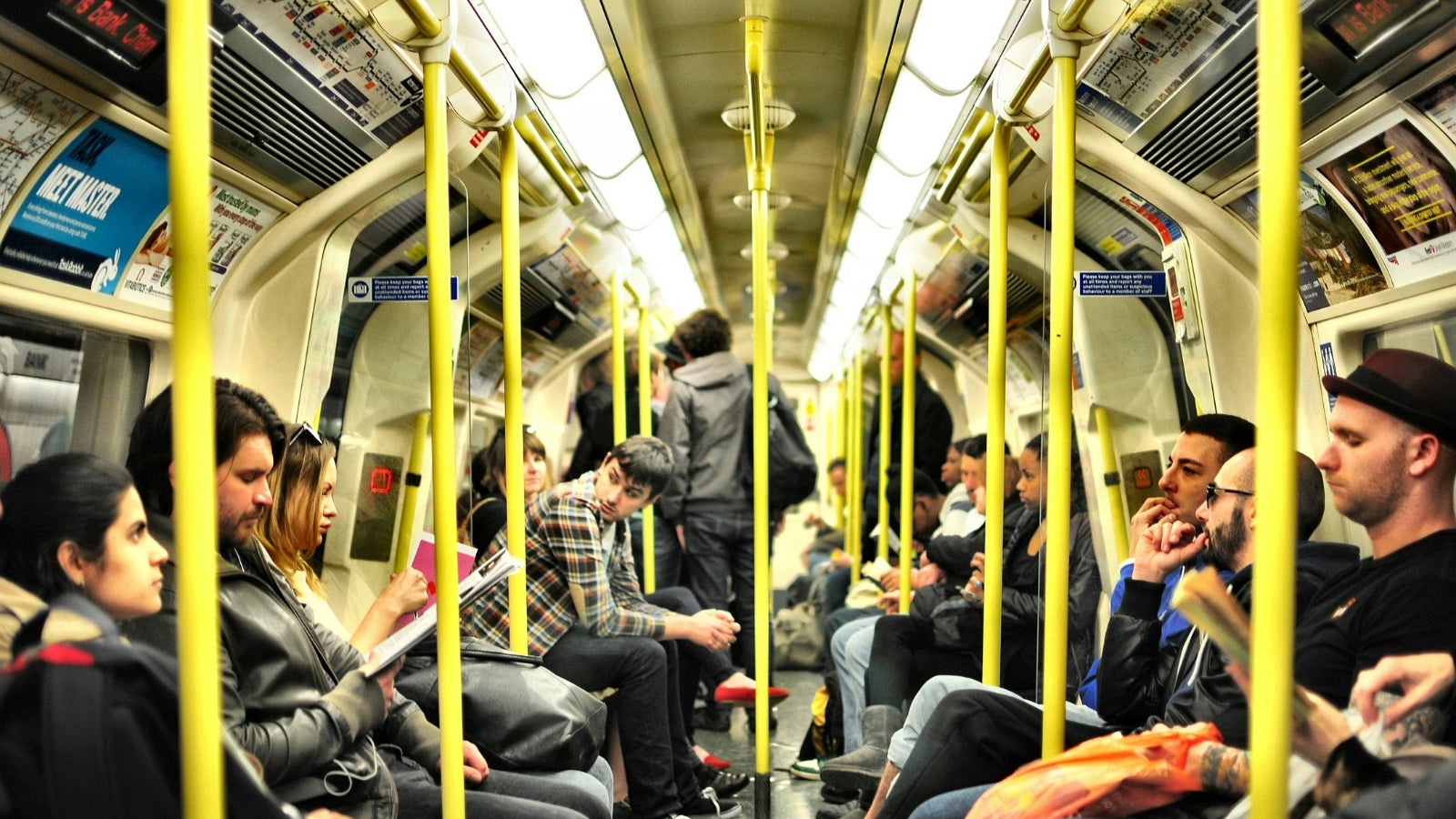
But given that almost a third of us wake up in the middle of the night at least three times a week – and that multiple friends had cited 3am as their most common early rising hour – I thought I’d ask Dr Seeta Shah from PANDA London if there’s anything “special” about that time.
Here’s what she told us…
Why do I always wake up at 3am?
“Waking up around 3am is a surprisingly common experience,” Dr Shah confirmed.
This, she said, could be down to a mixture of biological and lifestyle factors, like your body’s natural sleep cycle.
“During a typical night’s sleep, we go through multiple 90-minute cycles that include different stages of sleep, from light to deep and REM sleep,” the doctor said.
Advertisement
“Around 3am, most people are transitioning between cycles, and the sleep tends to be lighter at this point. That makes us more susceptible to waking, especially if there are external disturbances such as noise, light, temperature changes or even the need to use the loo.”
Then, she said, there’s a hormonal component. “In the early hours of the morning, the body begins to increase its production of cortisol, the ‘stress hormone,’ in preparation for waking,” she explained.
“This natural rise in cortisol, combined with a dip in melatonin (the sleep hormone), can make the body more alert and prone to waking around this time.”
Advertisement
Cortisol usually dips to a low at around midnight and slowly rises thereafter.
“If you’re feeling anxious or have an active mind, this early-morning wakefulness can quickly turn into prolonged sleeplessness,” Dr Shah told us.
How can I stop waking up at 3am?
“Lifestyle factors such as alcohol consumption, late-night screen use, inconsistent bedtimes, and even blood sugar dips can all contribute to waking at this hour,” the doctor explained.
If you suspect this may be the cause of your early morning wake-ups, consider changing your habits and seeing how it affects your kip.
Advertisement
But “if waking at 3am becomes a regular pattern, it’s worth examining both physical and mental health, as well as evening habits, to identify and address any underlying causes,” Dr Shah cautioned.
The NHS said that if poor sleep is affecting your day-to-day life and causing you distress, you should speak to your GP about it.
I still remember the backlash when it turned out that Ned Fulmer, the ex-BuzzFeeder who had been dubbed the “wife guy” of online group Try Guys, had cheated on his partner with his colleague.
Though the company have not confirmed Andy was the person in the viral video, they have written in a statement that “Our leaders are expected to set the standard in both conduct and accountability, and recently, that standard was not met.”
I have already shared that I’m not the biggest fan of how some people are engaging with the “Coldplay affair.”
Advertisement
Nor do I think that public reaction should influence a person’s professional status before an official investigation.
For instance, the company’s Senior Director of People, “identified” by TikTok detectives, has had her LinkedIn profile bombarded by commenters who think she got her promotion by hiding her boss’ romance.
The comments came despite there being absolutely no evidence that this was the case (the company has since revealed she “was not there. This is a rumour started on Twitter”).
Advertisement
This is wrong. A likely innocent woman’s professional page is now littered with potentially career-disrupting claims due to almost certainly baseless delusions of online “accountability.”
That’s the sort of perversely gleeful dogpiling I’m sure Jon Ronson’s So You’ve Been Publicly Shamed would have a field day with.
via Associated Press
Ned Fulmer
Advertisement
Lawyer Eric Kingsley, firm partner at Kingsley Szamet Employment Lawyers, told us: “Legally, the private life of an individual usually will not be cause for termination unless the private life somehow overlaps the professional environment or threatens the organisation.”
But in the case of both Fulmer and, if true, Bryon, there’s more to the story than just “bad vibes.”
“If the conduct in question involves other staff members or directly affects the workplace environment, the rationale for termination greatly changes,” the lawyer said.
“A Chief Executive Officer being involved in a romantic relationship with an employee, even more so if there exists a position of power, creates huge potential for problems of favouritism, coercion, and the risk of legal action based upon harassment or retribution,” Kingsley added.
“Even if the relationship remains voluntary, the potential can damage the morale of employees, cause intra-company disputes, or violate stated policies of the company. Some companies place explicit policies regarding intra-company relations in place in order to avoid complications.”
@instaagrace via TikTok
The pair on a kiss cam
Advertisement
Meanwhile, Thomas Roulet, a fellow and director of studies in psychology and behavioural science at King’s College, Cambridge, says that “If someone’s personal life affects their professional performance and engagement, yes, we could definitely consider HR interventions (it could be a warning or go as far as getting fired).”
The same goes if their performance and judgement are affected by the relationship, he added.
But I don’t think unfairly prying and overly moralistic internet commenters keep those rules in mind in their hunt for a perceived “bad guy” – Astronomer’s Senior Director of People is proof that many of us make the court of public opinion far too punishing, despite using inconsistent “laws.”
That misses the point; it’s all about power dynamics.
As it happens, piling on an (again, likely innocent) woman who you believe to have gotten her promotion based solely on hiding an affair without any evidence whatsoever is not exactly the best use of our collective power.
Advertisement
I fear the “reward” of firing a person armchair warriors believe to have cheated has left some to believe that their beliefs about adultery, whether grounded or not, ought to result in indiscriminate real-life action.
Personally, I don’t think that unkind quest has anything to do with accountability; we are confusing our own amateur sleuthing for genuine, professional investigation.
Just because the two might sometimes have the same result, though, does not mean it’s fair to equate them.
But this World Emoji Day, Anna Pyshna, a spokesperson for language learning app Preply, said how you show laughter over text might be another such marker.
One emoji in particular seems to be a part of the generational divide, she added.
Older people may be confused by the use of the skull emoji to mean laughter
The language app found that where previous generations might use a smiling face with tears of joy to signal laughter, younger people might prefer a skull.
“This shift has swept through social platforms like TikTok, Instagram, and X, where the skull emoji’s ironic tone matches Gen Z’s preference for dry, surreal, or exaggerated humour,” she shared.
Advertisement
“It’s a kind of emotional hyperbole, saying something’s so funny it ‘killed’ you. To older generations, that can sound dark or even offensive. But to younger users, it’s just another way to say ‘LOL.’”
Another option includes the crying face emoji, which indicates someone is laughing so hard they’re weeping.
“Emojis feel like a shared language, but their meanings evolve just like words do,” the expert continued.
Advertisement
“Emojis are an extension of how we speak, think, and joke. They’re not static, but are instead shaped by pop culture, memes, and even literature. That’s why they resonate differently depending on who’s using them.”
Death and humour are increasingly being linked in daily language, too
Preply found that the association between death and laughing has been growing in general, not just in emoji use, since the ’40s (they used Google’s Books Ngram Viewer to find these numbers).
Across Spanish, Italian, French, and English, phrases like “dying laughing” and “dead funny” have been on the rise in everyday speech in that period, it seems.
Advertisement
“For grandparents born in the 1940s, the idea of pairing death with laughter would have been unfamiliar,” Anna claimed.
“As the data shows, phrases like ‘dying of laughter’ and ‘dead funny’ were virtually nonexistent in literature during their formative years.
“This dramatic linguistic shift suggests that associating death with humour is a modern, global phenomenon and one that’s only in the past few years started influencing how we use emojis.”
The way people behave in restaurants – where they have buying power but not ultimate control – can offer significant clues about their personalities. Since a restaurant is a little microcosm of life, you can find out a lot about a person when observing how they interact with staff, experience their food and cope with any occasional hiccups in service.
If you recognise any concerning behaviours when dining out, you might want to think twice about a second date. After all, as Chris Van Dyne, founder of Cosmic Pie Pizza in Santa Fe, New Mexico said, “Restaurants are stress tests. You’ve got time limits, money on the line and the potential for little annoyances everywhere. So if someone’s rude in a restaurant, they’ll be rude in traffic, in arguments and in bed.”
While a restaurant staff endures your bad date for just a couple of hours, you might end up with that person long-term if you don’t pay attention now. Chef Jonathon Scinto warned: “Each of these behaviours is like a preview trailer for a full-length toxic personality you don’t want to co-star with.”
Advertisement
1. They play games with seating
One well-known power play occurs when it’s time to be seated, said Rick Camac, executive director of industry relations at the Institute of Culinary Education’s New York City campus. He’s owned, operated, managed and consulted at 20 restaurants and bars since 2000, so he’s well-versed on the kind of ego tripping that begins before the first course is served.
“One of the worst examples happens when someone with a party of two requests a bigger table, like a four-top, in a clearly very busy restaurant,” Camac said. When it’s obvious that every other couple in the place has been seated at a two-top, it takes a real jerk to insist on special treatment. Demands like that show just how clueless – and power-driven – your date actually is.
“There are certain people who heard somewhere that they should never accept the first table they’re offered,” he observed. “They believe it’s obviously the intention of the restaurant to give the absolute worst table to them, and refusing the table is a sign of being smarter than the staff. It’s usually a sign of insecurity, and it’s funny to watch. We just roll our eyes and give them another table.”
2. They order for you without consultation
No, we haven’t gone back in time to the 1950s, but yes, this behaviour is still happening, food service professionals said.
“I saw a man cut off his date mid-order, telling the server, ‘She’ll just get a salad with no dressing. Trust me,’” Scinto said. “You could feel her energy change. He made it about control, not care. And that just gets worse over time.”
Advertisement
Dimensions via Getty Images
Taking the initiative isn’t always as helpful as you think it might be.
Incredibly, this is something that front-of-house staff still see quite a lot. Belize Hans Polloso, who now works in tech, managed a high-end restaurant in Miami for four years, and she said that this was the most telling red flag she experienced.
“I once witnessed a man interrupt his girlfriend repeatedly when she tried to order, insisting she’d ‘enjoy the salmon more,’ despite her stating she didn’t eat fish. It signals a controlling personality who prioritises their preferences over their partner’s autonomy.”
Advertisement
3. They treat staff unprofessionally
When it comes to a classic red-flag-waver, you’ll notice that certain words just aren’t in their vocabulary.
“They never say ‘thank you,’” Scinto said. “They don’t thank the hostess, the person running food, nobody. It’s subtle, but it screams arrogance. If someone can’t give basic human respect to the team bringing their meal to life, they’ll probably struggle with gratitude in relationships, too.
“If they’re rude to staff, it shows how they view people in general,” he added. “I’ve watched a couple sit down and within five minutes, one of them is barking questions like they’re on an episode of ‘Kitchen Nightmares.’ They ask things like, ‘Is the chicken free range?’ or ’Do you know if the chef knows how to make it actually gluten-free?’But it’s not what they ask so much as how – with a tone of entitlement. When someone talks down to my staff, especially in a place that’s built on warmth and intention, that should be an automatic no-go for their dining partner, too.”
Advertisement
“I think the No. 1 way to get under my skin as a chef is to treat the front of the house staff poorly,” said chef Robert Irvine, owner of Fresh Kitchen by Robert Irvine. “In my restaurants, the staff is unified in trying their best to give the customer a great experience. If that’s falling short for reasons real or imagined, there is no world in which it’s OK to start taking it out on the servers.”
When asked why this behaviour continues to happen, Irvine said, “There’s some combination of spending money and buying into the old myth that ‘the customer is always right’ that can make people think they’re entitled to not just a good meal, but to making the employees jump through various hoops.”
Being overly brusque is one red flag, but being overly familiar is another. Many servers have horror stories of the person who ignored a date completely to flirt with them all night. And if your date starts getting handsy, you really don’t want to hang around to see what happens next. Chef Rossi, owner of New York-based The Raging Skillet and author of the memoir “The Punk Rock Queen of the Jews,” offered up a simple phrase to live by: “Never, ever, touch the staff.”
Advertisement
4. They freak out if there’s a problem
Chef John Sugimura pointed out the “toxic bitch” tendencies of the rare customer who is never satisfied.
“They’ll criticise and ridicule every aspect of their dining experience. In my head, I’m thinking, ‘Bitch, please!’ I have a lot more customers deserving of my positive energy, so this behaviour is exhausting.”
If you’re wondering which customers this type of behaviour most frequently applies to, Keane spelled it out: “Let’s be perfectly clear — 99.9% of the time it’s a guy being douchey, and it’s all ego- and entitlement-based — definitely not someone you want to date. For that .1% of red flags that remain, it’s a woman who usually pre-gamed a little too much and is just being loud or a little obnoxious. Usually, she’s nothing too hard for our staff to deal with.”
Advertisement
5. And now, for a toast… or not
“Intoxication is the most easily observable red flag, and it’s the one that probably comes up the most,” Irvine said. In addition to lapping up too much of the sauce, true jerks can establish themselves in tussles over the wine menu. A common play for the arrogant, Irvine said, is expressing “annoyance that the wine list isn’t sophisticated enough for their tastes. Their arrogance demands that they demonstrate the full depth of their knowledge, so they’ll begin lecturing a server about the proper way to do their job.”
As sommeliers can tell you, the wine list can cause all sorts of ego-related acting out. Camac noted a few things that are likely to have the staff secretly choose your date for the un-coveted title of “guy we can’t wait to see the last of.” Wine-related red flags he noted include “when the date doesn’t know how to pronounce the name of certain wines, but is still trying to come off as an ‘expert,’ when they don’t know how to properly taste good wine or when they send back perfectly good wine.”
6. They tip badly (or make you pay the whole bill)
Many people in the food service industry have seen firsthand how skinflints can ruin a good server’s night.
Advertisement
“My father was a horrifyingly bad tipper,” Rossi said. “I spent a lot of my young adulthood apologising to waiters. When I got older, I’d reach into my pocket and add $20 to the $5 he’d left, which dad thought was adequate for our family dinner for five.”
These days, Rossi has clear advice for anyone dining in a restaurant: “Unless your waiter is a serial killer, tip them properly. Actually, it might be more important to tip if they are a serial killer, because you don’t want to piss them off.”
“We overheard one guy who left no tip at all, telling his girlfriend, ‘They already get paid,’” Van Dyne said. “She looked horrified, so we slipped her a free dessert.” Another behaviour is one that Van Dyne described as “the classic credit card ghost”: “Someone pulls out their wallet, pretends to reach, then freezes. They leave their dining partner to cover everything.”
Advertisement
Your server is paying attention, and so should you.
Many relationship hurdles need to be cleared when you’re dating someone – meeting up with friends, attending work events or finally meeting the parents. But along the way, you’ll also want to pay attention during coffee dates, casual brunches or fancy nights out, and make sure that your date is treating restaurant staff the way you expect to be treated.
“If you want to know who someone really is, take them to a restaurant and watch, not just what they eat — but how they act,” Scinto said. “Because if they can’t show respect to the people feeding them, they’ll never be able to feed a relationship with the same care.”
It’s well-known that depression takes a toll on physical and mental health as feelings of isolation, loneliness, despair and low energy prevail.
One area that doesn’t get as much attention? Depression’s impact on your physical space, like your home or bedroom – but a conversation about this is starting on social media.
Folks on platforms like Instagram and TikTok are posting videos of their “depression rooms” – spaces filled with old laundry, trash, dirty dishes, takeout boxes and more that weren’t attended to when someone was feeling low. The videos show people cleaning their (or their loved ones’) “depression homes” or “depression rooms.”
Advertisement
“‘Depression room’ is this term that has entered into the pop psychology lexicon lately, and it refers to the living space of a person in the grips of a depressive episode,” said Dayton Olsen, a licensed professional counsellor with Thriveworks in Roanoke, Virginia.
“A ‘depression room’ describes a living space that has become noticeably cluttered or chaotic because the person living in it is experiencing depression,” said Kobe Campbell, a licensed clinical mental health counsellor in North Carolina.
“It’s not about laziness or lack of care, it’s a sign that the inner world has become so heavy or disorganised that maintaining the outer world feels impossible,” Campbell added.
Advertisement
There’s a clear reason “depression rooms” happen.
“The state of the room becomes a mirror of what is happening internally,” Campbell noted.
“It’s amazing what even just a brief glance into someone’s living space can say about how that person’s doing,” Olsen said. A picture – or video, in this case – speaks 1,000 words, he added.
“These awful depressive episodes, they do to a person’s living space what they do to a person. They rob them of the ability to just care for themselves, to tend to themselves and their space,” Olsen noted.
“Depression impairs executive function, which is the area of the brain that helps us plan, prioritise and follow through on tasks,” said Campbell.
Advertisement
When you’re depressed, everyday tasks and chores feel overwhelming, Campbell added.
Illustration: HuffPost; Photos: Getty
“Depression rooms” — the messy bedrooms and homes that reflect the lack of motivation that happens when someone is depressed — are trending on social media.
People who’ve dealt with depression describe it as a period of timelessness “where they can’t remember back, necessarily, to a time where they didn’t feel depressed, and they can’t imagine a future where they feel differently,” Olsen said.
“They’re just frozen in this awful emotional pain, and what that translates to so often is this difficulty to do what so many of us typically do when we’re well, which is to make small investments in our future – brushing our teeth, vacuuming, folding laundry, bathing, eating regularly, all of these things that don’t necessarily require a ton of energy or mental bandwidth but they do require looking ahead to the future and investing in that. And depression robs us of that,” Olsen explained.
Advertisement
Depression also robs folks of their energy and motivation, which can make things like doing the dishes or hanging up your clothes feel impossible.
“Depression room” cleaning is a way to break the depression feedback loop.
“When you think about psychology and mental health, there’s this feedback loop between your thoughts, your feelings and your behaviours,” explained Taisha Caldwell-Harvey, a psychologist and the founder and CEO of The Black Girl Doctor, an online therapy and wellness platform.
When your behaviour changes, and you’re no longer cleaning your bedroom or letting dishes pile up, it also influences how you think, talk to yourself and how you feel, she said.
Advertisement
“It’s all a circle, it’s all a loop, and so you might look around and say, ‘Oh, I’m gross, I’m lazy,’ and then if you say that, now you’re going to have [thoughts like] ‘I shouldn’t be doing this,’ ‘I’m a bad person,’ and that’s going to trigger emotions that are connected to that – now I’m sad, I feel guilty, I feel bad,” Caldwell-Harvey said.
If you feel bad, why would you do anything around your house? If you tell yourself you’re lazy, why would you pick up after yourself?
“It’s all a circle, it’s all a loop, and so you might look around and say, ‘Oh, I’m gross, I’m lazy,’ and then if you say that … that’s going to trigger emotions that are connected to that — now I’m sad, I feel guilty, I feel bad.”
– Taisha Caldwell-Harvey, psychologist and founder and CEO of The Black Girl Doctor
Advertisement
The clean-up depression room videos on social media are a way to break this feedback loop and make people feel better, Caldwell-Harvey said.
“Most of the times, we can’t just tell ourselves ‘feel better,’ right? The feeling [aspect] is the hardest one to try to interrupt… we usually let that one be for a minute and start with something that is an easier place, and so behaviour activation is a big one that is usually easier for people to do,” Caldwell-Harvey said.
“So, while you feel like crap, while you’re still telling yourself these negative things, you can force yourself to do a behaviour. We call it behaviour activation. And so it could be something like clean up your room, [or] it can be something as small as clean up this corner of your room,” she added.
Advertisement
If you don’t have it in you to clean your whole kitchen, set a timer for five minutes and clean for just that amount of time.
“So, you clean for five minutes, and now you think, ‘Oh, I did one small thing,’” she said. Being able to say to yourself, “I did one small thing” can lead to a tiny bit of hope and even a commitment to do five more minutes of cleanup the next day, she added.
This breaks the cycle and interrupts the pattern, she explained.
fcafotodigital via Getty Images
Depression robs folks of their motivation, which makes tasks like cleaning feel impossible.
Advertisement
You can also always use your home as a visual mental health check.
“Our environment influences our emotional health. A 2010 study published in Personality and Social Psychology Bulletin found that women who described their homes as cluttered or unfinished had higher levels of cortisol and more feelings of fatigue and depression compared to those who described their spaces as restful and restorative,” said Campbell.
“So, even small acts of tidying can help signal safety to the nervous system,” Campbell noted.
Beyond signalling safety, your home can give you a peek into your emotional and mental health, which is important as it’s hard to keep tabs on the small mental health changes that lead to big declines.
Usually, people wake up one day and feel totally depressed, but it doesn’t happen overnight, Caldwell-Harvey said. “You actually have a decline,” she said.
Advertisement
One way to keep tabs on your mental health and be aware of the decline is by using your bedroom or home as a mental health check, Caldwell-Harvey added.
“A lot of times, your environment really is telling you how you’re doing, and so it’s a good question to ask – ‘What is my environment telling me about what’s happening right now?’” she said.
If you do have a depression room, don’t be ashamed.
Depression is heavy, isolating and scary. If you have a depression room during times of low mood, that’s OK. “If you have a ‘depression room,’ you are not alone,” said Campbell.
Advertisement
“Feeling shame about it is understandable, but misplaced. Clutter isn’t a character flaw, it’s a flag signalling that you need more support than you can offer yourself,” she added.
It’s also a sign that you’re struggling and need additional care, Campbell noted.
Beyond taking a few minutes to clean your depression room, make social plans and create structure for yourself within your home, added Olsen, whether that’s waking up at the same time, logging on to work at a certain time or simply having a glass of water before bed.
And know when you need extra support.
“I always want to be really careful when we talk about stuff like this,” said Caldwell-Harvey.
While content about “depression rooms” can help people feel less alone and increase conversations about depression, “I also am really cautious that we’re not glamorising suffering, and that we’re not further stigmatising people that are in a clinical depression that needs treatment,” she said.
Advertisement
You can have symptoms of depression and not have clinical depression, Caldwell-Harvey explained. But for those with clinical depression, things like room cleaning, behaviour changes or daily mantras aren’t going to be enough to boost your mood.
If two weeks go by and you still aren’t feeling good, you may need more support, she noted.
“If you’re struggling and you are trying this stuff, and you’re just like, ‘Yeah, this ain’t doing it,’ that’s when we want you to reach out for help,” she said. “That is what therapists are for. Medication is really effective for depression – medication and talk therapy are both extremely effective for depression,” Caldwell-Harvey added.
For some people, a depression room – and depression – may be a short-lived occurrence, but for others, it’ll be a longer challenge.
Advertisement
“Cleaning your room is not going to take away grief. It might make you feel better for a minute, and that’s great if it does, but again, you probably need to talk to somebody and process it and do all the things that are going to give you the long-term relief from what you’re going through,” she said.
“Not all messy rooms are depression rooms. Not all depression shows up that way,” she added. Some depressed people have spotless homes, and some non-depressed folks have cluttered, messy spaces, Caldwell-Harvey added.
But if you know your depression room is just that, be sure to take care of yourself and be kind to yourself.
Advertisement
“The goal isn’t to flip a switch that changes you immediately. Healing requires tiny, consistent acts of kindness toward yourself, because caring for your space is caring for yourself, said Campbell.
If you know me, you’re probably tired of hearing me rattle on about my running, walking, and strength training adventures (sorry, loved ones).
That’s partly because I’m insufferable. But it’s also because I never imagined I’d get into sports – before the age of 23, I hated the idea.
Advertisement
Now, though, I worry I’ve become a victim of the same conscientiousness some research suggests might have put me off physical activity for years. Until about two months ago, I found myself skipping as many as three workouts a week – if I wasn’t giving it 100%, I reasoned, I’d better not go at all (this, despite knowing that any exercise is better for you than none).
But recently I’ve been enjoying the delights of the “crappy,” half-assed workout, and my exercise routine has never been more consistent.
I spoke to Anna Mathur, psychotherapist and author of the upcoming book The Good Decision Diary, about the joys of doing something badly instead of skipping it altogether.
Advertisement
Unrealistic goals can lead to burnout
The author told me that ambition isn’t a bad thing, but goals rooted in shame or unrealistic expectations can set you on a fast path to disappointment.
“This leads to feelings of stress, pressure, unease, burnout, etc.,” she shared.
“Lofty goals often fail because they ignore the gritty reality of life, our fluctuating energy, ever-changing resources, the unexpected curveballs, responsibilities in other areas of our lives, and our nervous system state.
“We might set out with ‘I’ll wake up at 5am and run every day’ and when we inevitably miss a day because we’re sick, exhausted or had a late night at work, we feel like we’ve failed.”
Advertisement
As someone who used to bail from my beloved jogs unless I felt I could finish a record-beating 10k, I found myself nodding at her advice.
To combat unfair and inflexible goals, be they for a new squat PR or a crochet project, the therapist sticks to what she calls “the 70% rule… if a choice feels 70% good enough, it’s probably time to act.
“Waiting for the perfect moment or plan can keep us in a state of paralysis and stop us from starting. Half-doing something (going for a 10-minute walk instead of a 45-minute workout, writing a messy journal entry instead of none at all) is often how momentum builds and we take the pressure off.”
Advertisement
I have at least 70% conviction to work out most days, and if that only leads to a 45% effort, well, so be it.
In fact, even my 10-minute walk to the gym is so much better than nothing than I realise in the moment – even if I turn around and leave once there.
How can I tell that a goal is backfiring?
A few weeks ago, I spent three days pretty much solely in bed, dreading the prospect of my newly adopted gym routine.
Advertisement
This, despite the fact that my running PR was the best it had ever been, and my squats were the heaviest I’d tried.
That’s because, Mathur cautioned, “Good decisions aren’t just about the outcome (although that’s where we’re culturally taught to focus: on the external, the deliverables, the achievements) – they’re about how they make you feel on the way there too, how you grow as you go, whether you resent the aim, burn out trying to get there.
“One sign that a goal is backfiring is when it starts creating more anxiety than momentum,” she added.
Advertisement
“Maybe it’s affecting your sleep, mood, or relationships. Maybe it’s fuelling rumination, shame, or a harsh inner critic, or you keep falling short or ‘failing.’”
Though a backfiring goal might look impressive from the outside, she continues, it might be time to reconsider or reconfigure it once it leaves you feeling disconnected from yourself.
“A good decision feels like something you can return to, that doesn’t carry that all-or-nothing, walking-on-a-tightrope quality, and is not something you’re constantly bracing against,” she ended.
Advertisement
My new, more flexible routine (if I miss my previous early-or-nothing morning slot, fine; I’ll do something a little less machine-heavy in my crammed 6pm gym) is one example, but the approach works for a far wider range of goals too.
Johns Hopkins Medicine writes that we don’t actually know why physical activity helps you snooze. It might be because working out releases “happy chemicals”, endorphins, or because it raises your body’s core temperature, they suggest.
And now, a new review has been published in the journal BMJ Evidence-Based Medicine that has named the low-impact exercise that could improve the sleep of insomniacs like me by almost two hours.
Yoga might give you two hours of extra sleep
The scientists looked at 22 previous randomised controlled trials involving over 1,300 people with insomnia.
They found that while cognitive behavioural therapy (CBT) was helpful for managing the condition, so too was exercise.
Advertisement
“Among the various modalities examined, yoga, Tai Chi, and walking or jogging appear to be particularly effective,” they wrote.
Not only did yoga improve sleep time by just under two hours on average, but it also helped participants to nod off half an hour earlier than usual.
The review found that the positive sleep effects of Tai Chi and CBT combined may last for as long as two years for people with insomnia, while those associated with aerobic activity or aerobic activity with strength training seemed to last for seven months.
Advertisement
Of the activities included in the research, though, yoga won out in sheer added minutes of kip.
The scientists encouraged more research into the topic
As we mentioned above, the relationship between sleep and exercise is still not fully understood.
Perhaps that’s why this study didn’t recommend an exact amount of yoga or time at which to do it.
“To confirm and extend these findings, future research should prioritise large-scale, high-quality RCTs with standardised intervention protocols,” they wrote in their paper.
The more data we have, the more exercise and sleep scientists can rest easy (sorry….).
All the ‘pink noise’, delayed bedtimes, and even electricity changes have helped somewhat. But I’m always on the lookout for new tips – especially those that involve minimal effort.
Advertisement
Luckily, TikToker Helena Kennedy shared one of those in a recent clip, in which she revealed tips from her psychiatrist that helped her to defeat insomnia.
One of them involved blinking for a solid minute. So, we thought we’d find out whether it works.
How can blinking help you get to sleep?
Kennedy claimed blinking fast for 60 seconds means your eyes “get tired and trick your brain into sleep mode”.
Additionally, the expert said it can help to mimic your body’s natural sleeping cues, which may help your brain to realise it’s time to switch off.
Advertisement
How else can I get to sleep?
Morning light is uniquely helpful for orienting your body clock, which some researchers suggest is more important than actual sleeping hours for feeling reset. Therefore, going on a morning walk may help to get your Circadian rhythm in order.
Some studies suggest there could be some serious benefits to “clock blocking”, or refusing to look at the time when you get up in the middle of the night (I also swear by this trick).
And in a previous interview, sleep expert Dr Nerina Ramlakhan from Oak Tree Mobility told me “there’s a form of insomnia… called ‘orthosomia’, a term for the obsession with getting a good night’s sleep”.
Advertisement
In other words, try not to panic too much about your kip; it might paradoxically hurt you more than it helps.
The big O can be hard enough to achieve at the “best” of times; 61% of men and a mere 30% of women say they finish every time they have sex.
So, the idea of a “hands-free” orgasm can sound a little far-fetched. Nonetheless, experts agree it’s certainly possible (whatever your genitalia).
Advertisement
Speaking to HuffPost UK, Dr. Tara (a professor of sexual communication, a Kinsey-certified sexologist, and resident sexpert on Celebs Go Dating) said that for her, the process was made possible through hypnosis.
“I learned that it’s possible to have an orgasm, and in some cases even multiple, full-body, convulsing orgasms, with absolutely no physical touch and no penetration,” she shared.
It’s about acceptance and relaxation, the sexologist says
Dr Tara, who went to a retreat to learn about the hands-off experience, said she was sceptical about the claim at first.
Advertisement
“As someone who is Western-educated and academically trained, this was almost impossible to believe,” she shared.
“We’re taught that physical stimulation is required for orgasm, but apparently, it’s not. You can actually feel orgasmic sensations simply through listening to someone’s voice and entering a hypnotic state.”
Hands-free masturbation, sometimes called “hypnosex,” often relies on sounds; either a recorded voice “talking you through it,” or a series of noises that create vibrations.
Advertisement
In Dr Tana’s case, she learned about the theory of “hypnosex” first, “including the stages (essentially it’s pre-talk, induction, trance work, and re-emergence).”
“The teacher explained how to guide someone into feeling deeply relaxed,” she added.
“People are a lot more suggestible when they are in the trance state. At the end of the first day, I was hypnotised by the teacher’s partner, who is both a professional dominatrix and a skilled hypnotist.
“During that session, I experienced a ton of pleasurable sensations in my body.”
The third day, she continued, was dedicated to learning to hypnotise others “and also how to be a better receiver, which is about surrendering and letting go.”
Advertisement
How can I achieve a hands-free orgasm?
“I believe this work can benefit everyone, including men (!), but especially people who’ve never had an orgasm or those healing from sexual trauma who want to explore their bodies without touch or penetration,” Dr Tara told us.
“But it’s really for anyone open-minded enough to explore what pleasure can look like when it starts in the mind.”
Listening to hypnotic tracks designed to help you achieve a hands-free orgasm, trying audio porn, or even trying an in-person hypnosis session may help.
Advertisement
Those are not the only methods, though. “Orgasmic breathing,” which Sarah Deysach, a sex educator, told Healthline involves “the deep diaphragmatic breathing used in some forms of meditation and yoga, and… taking deep, intentional breaths,” may help.
Relaxation, willingness to experiment, patience, and “letting go” are key to success, experts agree.
You might already know that overloading your washing machine drum dooms your clothesto longer-lasting dampness – but did you know it could also shorten your appliance’s lifespan?
Additionally, Lenor says we should consider shaking our clothes before bunging them into the dryer, as that helps to “extract surplus water and damp”.
Advertisement
And apparently, the temperature at which you set your washing machine matters much more than we think, according to doctor and broadcaster Dr Xand van Tulleken.
Speaking on BBC Morning Live, he said he doesn’t “see the point” in one setting in particular, as it neither kills off germs nor saves you much money.
Here’s the most “useless” washing machine temperature
Though it does “kill” germs, the doctor joked that “whatever’s happened” to garments that need that extreme a heat setting likely means they need to be binned anyway.
If your household has an infection like Norovirus, Dr Van Tulleken stated you’ll probably be best off washing on a 60°C cycle.
Then he added, “personally, I don’t see the point in 40°C… it’s too hot to be cheap, and it’s too cold to kill [germs]”.
30°C “gets the job done,” the doctor shared (Which? found that on average, switching from 40°C to 30°C saved 38% energy, or about £24 a year).
Advertisement
Personally, though, the doctor is a “20°C guy for everything” except his workout clothes.
Which? wrote that this saves 62% energy or £39 a year compared to 40°C; they recommend washing at either 20°C or 30°C where possible.
Though this may leave your washing machine drum a little less boil-wash-clean than higher temps, that’s resolved by simply running “a monthly hot maintenance wash (60°C with the machine empty and washing machine cleaner in the detergent tray)”.