‘My Daughter Couldn’t Speak Until She Was Six, But She Knew Exactly What She Wanted To Say’

In My Story, readers share their unique, life-changing experiences. This week we hear from Rachael Kent, who’s 40 and based in south Yorkshire.

When my daughter was 18 months old, she was still making baby babble noises. It was like she was trying to make sense of different things, but it was just noises that came out of her mouth. She couldn’t form words.

Freya-Rose started a preschool group at two and when I saw her in that environment with other children her age, I realised she was going to need some intervention to help her with her speech.

She was referred to speech and language therapy – we did group sessions to begin with and she tried so hard. She’d get frustrated because she knew exactly what she wanted to say, but it just didn’t come out.

As she grew up, other kids would shy away from her. They’d call her the baby because of the fact she’d make sounds like ‘ba ba ba’ all of the time, even when she was trying to talk. You could see it hurt her because she’s a very expressive child. She can’t hide anything that well.

At the park, kids would go near her but the second she opened her mouth and all these strange noises came out, you’d see them look and then move away – and she’d just be stood there. That was heartbreaking to watch.

Every now and again you’d come across another child who didn’t mind or care that she couldn’t speak and they’d go on the roundabout together.

But it got to the stage where as a parent I used to think: is it really worth taking her up to that park and watching her look so disheartened because nobody wants to talk to her?

I would always say to other parents: if they see a child like that, don’t pull your kid away from them, don’t make a big issue out of it as if they’ve got something wrong with them. Get them to ask questions because that’s how they’re going to learn and how they’re going to be more accepting of kids that are a little bit different and talk in a different way.

When Freya moved to nursery, she had another speech and language assessment and they decided they were going to come in weekly to work with her.

The nursery had to do 15-minute sessions with her every day and then we did 15-minute sessions with her at home. You can’t just rely on the actual therapist coming in, like it’s going to be some sort of magic thing. As a parent you have to put that work in too, constantly helping them. It’s got to be a team effort between everybody to keep it going.

Because she was really struggling to make herself understood, we taught her Makaton and she picked the signs up really quickly. We already knew Makaton because Freya’s older brother Alex, who’s now 21, has autism, ADHD and epilepsy – and we’d used it to communicate better with him when he was younger.

We’re very lucky Freya is a really placid child, so even when she couldn’t speak we only ever had two or three incidents where she got frustrated at other children.

But the rest of the time she would keep trying to show you over and over again – and as a parent that’s really upsetting when you find out your child’s been doing that. She’d be there with tears in her eyes, welling up, because she so desperately wanted everyone to know what she was saying.

She’d go into her own little shell: most of the time she’d play alongside other children, but not actually with them because she didn’t know how to tell them what she wanted to do.

As a parent, you do hit those low points where you think: are they ever going to get that speech or is she going to have to fumble her way through life?

She’d have several accidents at school because she couldn’t tell them she needed the toilet and she’s the sort of child that will not go unless she’s told that she can go. Or she wouldn’t do her school work – and it wasn’t because she didn’t want to, but because she couldn’t get the lid off the pen. It can bring a lot of frustration. It complicates so much when you take away someone’s speech.

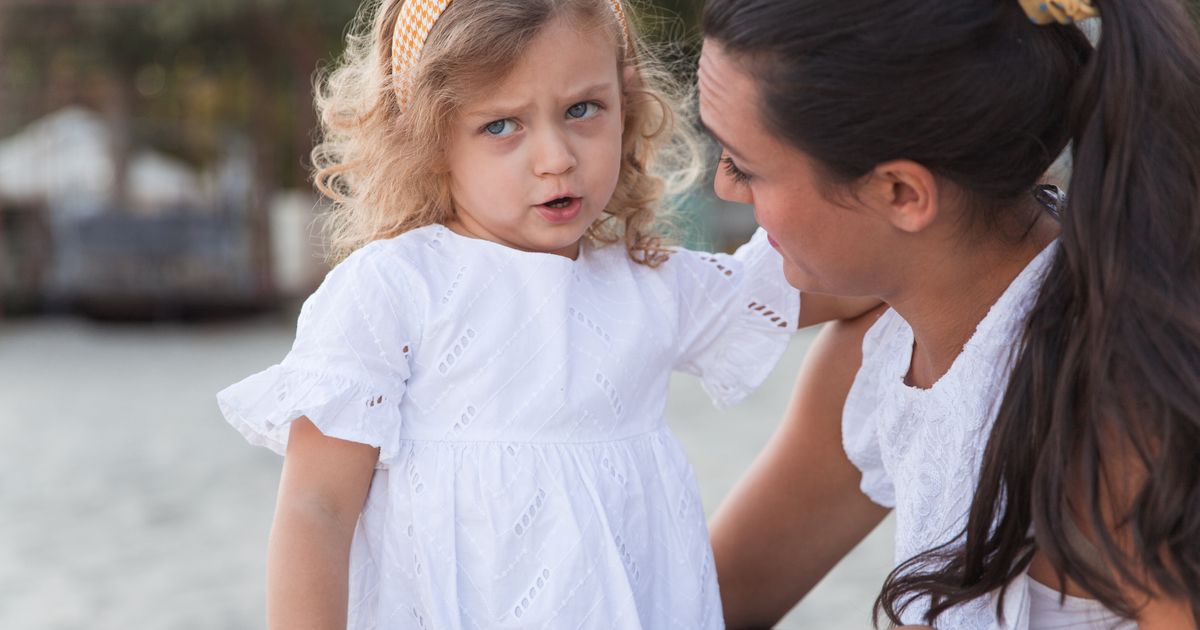
Rachael and her daughter Freya-Rose

Rachael Kent

Rachael and her daughter Freya-Rose

Freya was diagnosed with a speech sound disorder, which means she knows what she wants to say, but her brain doesn’t send the right signals for her mouth to make the movements of different sounds.

The speech and language team said about getting her into groups to try and encourage speech through social interaction. She wasn’t allowed to attend after school clubs, because they said she needed 1-2-1 support and they didn’t have the staff to facilitate it.

I’d gone to Brownies and Guides when I was younger and had adored my time with them, so I approached our local Rainbow group and explained the whole situation. They hadn’t got any experience of someone that didn’t speak, but they were willing to learn.

The first time I took her, I asked them if they wanted me to stay and they said: ‘No, let’s see how she gets on.’ I made them some visuals and gave them a crash course in the signs Freya used and we’ve never looked back.

"It was the best feeling ever."

Rachael Kent

“It was the best feeling ever.”

The third week of Rainbows she came out with the biggest grin on her face. She dragged me to the door, pointed inside and she signed to me: ‘My friends.’

It was the best feeling ever. She had the odd friend outside of school but that was more because I was friends with their parents, not because they’d chosen to come and see her. She never really said ‘that’s my friend’ until she went to Rainbows. She couldn’t wait to put her uniform on each week.

Sometimes you can take children to groups and they’ll – for want of a better word – tolerate them if they’ve got any additional needs. I had that experience with her brother at a few groups we went to when he was growing up. But Freya just 100% belongs. The other girls walk in and she gets big hugs off everyone. If she’s looking unsure, someone is always there to grab her hand and take her to where she needs to be.

When Freya was about five, a speech and language specialist worked solidly with her, in addition to us and her school doing the speech and language sessions as well, and she slowly started saying two- or three-word sentences.

We kept building on that and then by the time she was six we were getting pretty much full sentences where you recognised at least 90% of the words that she was saying.

Freya-Rose is now eight and has been diagnosed with autism, a moderate intellectual disability, and PICA – in addition to her speech sound disorder.

She’s been in Brownie’s for 12 months, after finishing Rainbows, and completed all her interest badges within six months of being there. She’s absolutely flying.

She even went away for a full weekend with them and they set an entire chalet up with symbols for fridge, bedroom, etc.

"They’ve helped her confidence grow so much."

Rachael Kent

“They’ve helped her confidence grow so much.”

She had the best time and they’ve helped her confidence grow so much – she’s gone from being that girl who would just sit and smile at everybody to someone that, when questions are asked, her hand will go up and she’ll try to answer stuff.

This week she’s narrator number five in her school nativity. I saw two of the school staff and they said: ‘Wait until you see it, make sure you’ve got tissues because we sat and cried through the entire practice when she stood up there with a microphone and said her lines.’

She’s got four pages and a couple of sentences on each page to read out. She’s not 100% clear all of the time, but compared to where she was before, it’s just amazing.

To find out more about Girlguiding and each of its four sections: Rainbows, Brownies, Guides and Rangers, visit girlguiding.org.uk.

Rachael was interviewed by Natasha Hinde and her answers were edited for length and clarity. To take part in HuffPost UK’s My Story series, email uklife@huffpost.com

Share Button

Elf On The Shelf: 7 Simple(ish) Ideas To See You Through The Week

Admittedly some parents are more into it than others, going to great lengths to build sets involving their naughty elves. Some have even created Instagram accounts devoted to the mischievous elves running riot in their homes.

Meanwhile others are a little more laidback about the whole affair.

If you’re stuck for inspiration, we’ve scoured Instagram to find some relatively simple – but still creative – elf on the shelf ideas.

1. Frying eggs

2. Mummified

3. Grating a snowman’s nose

4. Doodling on bananas

5. Watching the World Cup

6. Making snow angels

7. Causing chaos in the loo

Share Button

Ronaldo Interview: Dads Shouldn’t Feel Bad For Taking Time To Care For Kids

Cristiano Ronaldo has claimed Manchester United officials “didn’t believe” him when he needed to take time off because his baby daughter was unwell.

The footballer has opened up about life at the football club in an explosive interview with Piers Morgan, in which he also criticised the club’s football manager Erik ten Hag and accused the club of “betraying” him.

And while the timing and nature of the interview hasn’t gone down well with everyone, his comments about receiving a lack of empathy over his daughter’s illness has struck a chord with some – particularly dads.

It’s raised the question of how and why in 2022 fathers are still being made to feel bad for taking time out to care for their kids.

Ronaldo suffered a huge loss earlier this year when his son died during childbirth. His twin sister Bella survived, however when she was hospitalised with an illness, the father-of-five needed to take time out and implied in an interview with Piers Morgan on TalkTV that some at the football club were less than sympathetic about it.

“I spoke with the director of, and the president of, Manchester United and they kind of didn’t believe that something [was] going wrong, which made me feel bad,” he said.

“I am never going to change the [prioritising of the] health of my family for football… and it was something that really hurt me because they doubted my word that I struggled, especially Bella and Geo.

“We had one week in hospital because Bella had a big problem and I didn’t go to the pre-season because of that.”

Manchester United said “the club will consider its response after the full facts have been established” and told HuffPost UK that at this time, it has no further comment.

While it’s clear there’s a lot more to unpack between Ronaldo and Manchester United, the interview has prompted conversations about the way dads are treated by employers – and the need for change.

“There’s certainly a lack of sympathy when it comes to dads whereby the world of children is not really their world,” writes journalist Martin Robinson for The Book of Man.

“If something demands time out for men, that’s not really on,” he said in response to the Ronaldo interview, citing the fact two weeks paternal leave is still the standard for dads in the UK – which is barely anything when you think of what a huge life event the birth of a child is.

There are clearly still incidences where men are expected to continue working, keeping a stiff upper lip, while women care for their children at home. And that reeks of sexism.

The lack of sympathy from employers is an issue that’s cropped up when Nigel Clarke has spoken to dads through the support group he runs called Dadvengers.

When a child is ill or you’ve got a situation where a father needs to take time off work to care for their child, Clarke suggests some organisations automatically focus on it being a “childcare issue” rather than thinking about the fact the dad must actually be really worried about their child.

“They make an assumption it’s a childcare issue and why should the father be taking time from work to deal with that? which in itself is wrong,” he says.

StefaNikolic via Getty Images

He suggests it’s largely a generational thing, with older generations thinking this way much more than younger men – so some organisations are a lot more forward-thinking than others.

“Organisations, businesses and communities in general need to appreciate that the way we parent as families is changing,” he continues.

“Before it was maybe more about women taking care of their children, but nowadays it’s going to be much more shared.

“We have to acknowledge the landscape is changing – and as workplaces, as communities and people in general, we need to make changes.”

It can be immensely stressful when you need to be with your child because they’re sick and your employer is not supportive.

Steve*, 51, from Northumberland, knows this all too well. He says a former employer withdrew a promise of flexible work which, as a solo parent, caused him a lot of stress.

“They argued that I specifically wasn’t allowed to be at home with my daughter when she was off school because I was a single dad so I would be child-caring, not working,” he tells HuffPost UK.

The dad, who works in communications, believes that while what Ronaldo has said about his football club was “ill-advised”, he can see where he’s coming from as the pandemic has caused a lot of undue stress on society – and then there’s obviously the hugely traumatic ordeal of losing his child.

“We don’t think clearly when we’re depressed, sad and stressed. We don’t have enough mental capacity to concentrate on everything,” he explains.

“You can’t compartmentalise work and personal issues. It’s possible and reasonable to say that while what Ronaldo said was ill-advised, it was also understandable.”

The first part of Ronaldo’s interview will air on TalkTV on Wednesday November 16 at 8pm.

*Surname removed to provide anonymity.

Share Button

For Parents, It’s A Summer Of Hardship And Impossible Choices

We’re at the half way point of the UK summer holidays, a time that is always testing to parents’ patience and bank balances. But when it comes to keeping children happy and occupied amid the escalating cost of living crisis, many families are feeling the pinch like never before this year.

Sally Worrall, 31, has seen a drastic change in her circumstances.

“I can’t get through the month now without borrowing money,” says the Hampshire-based mum of four.

As a single parent to Chester 11, Rory, eight and twins Jenson and Molly, six, the self-employed painter and decorator says that she has to borrow money from her mother each month just to get by.

“I don’t have an extravagant lifestyle, I don’t smoke, drink, or have Sky. I have the cheapest mobile package and the most basic broadband service. But I really struggle,” she tells HuffPost UK.

“Food is especially a big thing. It’s gone up by about £50 a week for me and the children. It’s really difficult. I try not to think about it because the reality is after a shop, I’ve only got about £20 a week to live on,” says Worrall.

Even before schools broke up for the summer this year, the national poverty charity, Turn2US, warned that the financial squeeze was having a stark impact on many families in the UK.

The charity surveyed 2,730 of its service users in June and found that soaring food costs were pushing many into debt as they struggled to put food on the table. Almost half of the charity’s users reported they were left with nothing to live on each week after weekly food costs.

The survey also found that that over half of respondents planned to use the first £326 instalment of the government’s cost-of-living rescue package to help pay a debt for utility bill arrears – and with food and fuel prices only set to rise this autumn and winter, there is concern for how many will be plunged into poverty.

FatCamera via Getty Images

Michael Clarke, head of information programmes at Turn2us, said: “Every day we see more people struggling to afford life’s absolute basics as the cost-of-living continues to push millions of people onto the edge of a financial crisis.”

He added: “We are hearing from parents who are skipping meals to try and keep their children fed, or who are making impossible choices between paying rocketing energy bills or rent. This isn’t right.

“Many people using our services come to us when they are at their most desperate and we fear the worst is yet to come over the coming months.”

These statistics don’t surprise mum of two Kelly Williams, who lives in east London with her husband Marcel and six-year old son Quincy.

“It’s the world in which we now live in,” she tells HuffPost UK. “Everything has gone up and it’s simply not sustainable. I don’t understand how there is such a high rate of inflation and the salaries have not risen to coincide with that.”

Williams, who works as an accountant, added: “It’s creating a huge gap in the cost of living and people have got to find ways to survive.”

“We fear the worst is yet to come over the coming months.”

– Michael Clarke, Turn2Us charity

Certainly, it’s affecting middle-income families, too. “Since the crisis my husband and I are much more conscious of what we do now in terms of managing our money and one of the biggest changes we found was that we don’t go out as often as we used to,” says Williams.

The family are trying to change spending habits with as little impact on their son as possible. “We are both aware of how important it is to our wellbeing that we go out as a family and spend quality time together,” she says.

Williams is focused on giving Quincy a good summer holiday while staying within budget – even if that means a major juggle with work.

“I’m taking advantage of my working from home days. By being at home, I will not have to pay out any extra money to summer camps,” says Williams, who is making the most of free activities and vouchers provided by her local council.

“Picnics and play dates!” she says, citing her summer mantra. “This will just allow me to let my money stretch further.”

SolStock via Getty Images

When it comes to the food shop, Williams freely admits she’s no longer loyal to a particular supermarket and that her main quest is to get value for money.

“I’m loyal to brands, but not to supermarkets,” she tells HuffPost UK, adding that one of her biggest hacks is getting her petrol at supermarkets.

“When filling up, I tend to use supermarket petrol stations that offer loyalty rewards. Here you can transfer the reward points into vouchers for food. I’ve made huge savings by doing this,” she says.

Worrall, meanwhile, has started doing all her shopping at budget stores.

“I started shopping at B&M because it is so much cheaper than the larger supermarkets,” she says. “I’ve also had to shop at the Local Pantry.”

The Local Pantry, which operates in 70 neighbourhoods around the UK, sells on reduced items that supermarkets would normally throw in the bin. Shoppers using a branch pay £5 a trip, and receive £20 worth of food and groceries.

“Being in a single income household makes a hell of a difference to what we do when it comes to the summer holidays.”

– Catherine

“They have a coloured sticker policy,” explains Williams. “You get five red item stickers, which are meat and cheese and frozen fish. Then you get ten blue items, which is your pasta and tins of beans, etc, and toiletries. Then you get three items that are fruit, vegetables and bread.

“It’s a really good thing, but for a first world country nobody should be in this situation.”

Single parent Catherine Gilmore, who is mum to Arthur, six, says she’s been obsessing about how to stay within budget and keep her son occupied for the length of the summer holidays – and the worry starts earlier each year.

“Being in a single income household makes a hell of a difference to what we do when it comes to the summer holidays,” says the publishing assistant from Leyton, east London.

“Because of the financial squeeze, what I have had to do to ensure that Arthur gets to enjoy the summer is to save all year round, because, come July, financially it hits you hard.”

Meanwhile, hybrid worker Catherine, who preferred not to give her surname, says that in order to save money she is splitting the summer between her home in London and Derbyshire, where her mother lives.

“I get six weeks of holiday and I need to find childcare for four weeks of that time. So to keep costs down. I spend three weeks in London and then it’s up to Derbyshire for two weeks.”

Even factoring in travel costs, this hack makes life a lot easier, she says. “It’s cheaper up there, I pay between £35-£55 per week [on summer clubs] in London and in Derbyshire it’s between £20-£25 per week.”

One of the biggest problems Catherine found when looking for clubs in London was how quickly spaces got filled. In applying for cheaper camps and council-run activities, she said her son was often overlooked in favour of families in receipt of Universal Credit.

“It’s definitely is not a bad thing that families on benefits get priority, but there should be more available for middle-income families who are struggling to keep their families occupied during the summer,” she tells HuffPost UK.

Sally Worrall says she has taken advantage of similar provision in Hampshire to keep costs down and her kids occupied and happy throughout the holidays.

Her children’s school offers means-tested pupils the chance to attend a free summer camp, which runs during school hours. Each pupil enrolled on the camp is also given a free lunch and snacks throughout the day.

“I’ll only be using it three times a week to help me with food more than anything,” she says. “It also means I can work and I won’t have to worry about paying for childcare costs.”

Worrall has also been in touch with Gingerbread, a nationwide charity that offers support and help to single parent families. She says their team has been extremely helpful to families like hers, who are also struggling in the crisis.

“They have been great at bringing people together,” she says. “It has been nice to connect with families who are in similar situations. They have really great groups that you can lock in with.”

And despite all the challenges facing her family of five, she’s intent on giving her children a great summer. “I’m lucky because I live near the sea and near woodland. The days that I am not working we will spend them either on the beach or in the woods exploring and enjoying natural resources,” she says.

“We’ve just moved into a house from a flat so we will be spending a lot of time outside and taking advantage of the outdoor space. The garden is definitely a huge plus!”

Gingerbread runs a dedicated support service for single parents families – visit its website or call 0808 802 0925.

For further information on support and resources, visit the Turn2us website.

Share Button

Empowered, Indifferent, Old: This Is How Men Feel About Turning 40

“Am I where I expected to be at 40?”

This is probably not a question Prince William is asking himself as enters his fifth decade. But the Duke of Cambridge’s birthday has got us thinking about milestone ages, and why some of us place so much significance on certain numbers.

For women, approaching ‘The Big Four O’ often means discussions of fertility and the biological clock intensify (whether or not you want children and even though a woman doesn’t suddenly wake up on her birthday unable to conceive).

But what’s at the forefront of men’s minds as they approach this age? We asked a bunch of guys aged 39 and over to find out.

‘I get a lot of stick for being single still’

“I’m almost 40, single, with no permanent long-term job. I still love travelling and exploring and totally lack any sort of plan. But I’m kind of okay with that.

“At 40, you’re expected to have job security, a demonstration of some sort of career progression, where you’ve ended up with a bigger salary, a nicer suit and a nicer house.

“I get a lot of stick for being single still. All my friends are in marriages or second marriages in some cases, people say: ‘you’re not going to get sorted are you?’ Every now and then, you do question your life choices. There are always going to be periods in a 12 month calendar where you’re going to have a couple of phases of self-doubt, where you might question the way you’ve done things. You might feel a bit sorry for yourself and have a bit of a pity party. But on the whole I’m quite content with where things are – I’ve seen a lot of the world, I’ve met a lot of great people. I’ve been very, very fortunate in that sense.” – Stephen Boyd, 39, Lincolnshire

‘I was fine with turning 40, but turning 41 hit me hard’

Peter McKerry

“Turning 40 didn’t phase me, but when I turned 41 I began to obsess over the fact that my life was in a type of descent towards the inevitable end, and that my best experiences were behind me. I was also worried that if I had a child I’d have a limited amount of time to be in their life. My dad was 53 when I was born and I was teased about it at school, so I didn’t want to be an ‘old dad’.

“As it turned out I was 43 when my daughter was born so I beat him by 10 years! Now my life is all about watching her grow and develop (she’ll be three in August) and it has given me joy but also anxiety. I’m trying to live in the moment now because I don’t want to have more regrets than I already do, and I want my daughter to have the happiest and most secure childhood I can give her. So now I don’t obsess as much over my age or my past as I have a real focus on ensuring Flora is happy and loved.” – Peter McKerry, 45, Westcliff-on-Sea

‘Men get more of a free pass’

Andy Dewar

“I turn 44 this week and love it. I think 30 was more of hurdle for me psychologically, as it was the age where I felt you needed to knuckle down to some responsibilities and achievements personally and professionally, as well as resenting the fact I was no longer young and carefree. So by your 40s, you can enjoy all the new challenges and opportunities that come your way.

“There’s far more pressure on women at all ages but particularly 40s to have a great career and be a mum, I think. As far as media and peer pressure goes, men get more of a free pass. I’m lucky in the sense family and friends have never had any great competition between us to do well, some days are a grind, some days are easy. If you set yourself targets you lose sight of what’s important, which in my case is just trying to enjoy whatever it is I’m doing.” –Andy Dewar, 44, Hamilton, Scotland

‘I haven’t altered anything’

Michael Charles Grant

“I felt perfectly fine [approaching 40], with no pre-conceived thoughts of 40 being an issue and prohibiting me from what I can do physically and mentally. I look younger than my age so perhaps that played a fact in my mindset.

Has anything about being 40 surprised me? No not at all, why should it? I haven’t altered anything about my lifestyle to encompass my age or felt as if I had needed to.” – Michael Charles Grant, 40, Hertfordshire

‘Turning 40 made me re-evaluate my health and fitness’

-

″40… oh, that sounds old. Well, that was the thinking I had when I was in my mid 30s and heading towards 40. Society slots you into a category when your age starts with a four. I had just had my twin boys Alex and Lewis a few months before and dealing with them was really taxing on the mind and body. It was then also that I decided that ‘Dad Bod’ wasn’t something I liked and that I needed to do something about it. General fitness levels were poor and I found myself struggling with day to day tasks in dealing with two newborns. So I said to myself ‘Paul, you’re now 40, you’ve got the twins to think about, you don’t want two young boisterous boys growing up with a dad that can’t keep up… time to get into shape.’ It was a ‘If I don’t do this now, I never will’, moment.

“I’m in better shape now that I was in my 20s and 30s. Confident in how I look, with loads of energy for playing with the twins. My change in physique also motivated my wife to get back to the gym too, plus it has brought us closer with shared interest in fitness and just being better for our sons. Also, more body confident = more intimacy too.” – Paul McCaw, 46, Belfast Northern Ireland

‘Every decade has got better for me.’

Stu McKinlay

“Every decade has got better for me so – despite the birthday itself not feeling like a big deal – I was really excited that my 40s would continue that trend.

“My 30s were where I started to put into action the stuff that I had discovered in my 20s. I left my really great job in the public service (which I totally loved) to start my own business in brewing. My wife and I started the business, had three kids, and then moved our business and family from New Zealand to UK. It was busy beyond belief, but we were both doing things we loved. Coming up for seven years into my 40s and despite the clusterfucks of Brexit and Covid, I’m having the time of my life!

“While there’s immense privilege in being a man – and that’s something far too few men understand – I think there’s a lot of pressure on men to achieve certain things by certain ages. I’m constantly aware of how, at certain stage in my life, I feel like I’ve still not grown up. And I wonder if my parents felt the same. I do remember my dad telling me that he didn’t actually feel safe and comfortable in his life until he was in his 50s. I totally get that. I guess a part of it is kids growing up and releasing that weight of expectation around looking after them.” – Stu McKinlay, 46, London

Share Button

How Soon Is Too Soon To Become Attached To Your New Partner’s Children?

For parents dating again, figuring out when to introduce a new partner to your kids is a tricky calculus: How many months should you wait? Does the relationship feel stable and safe enough to take that step? Is your child emotionally ready to meet someone new since you split from your co-parent? What will your ex say?

The stress doesn’t end there; once the introductions have been made, you need to check in with your kids to make sure it’s all not too much, too fast, and that they’re comfortable around your new partner.

This common post-divorce dilemma has played out on a very public stage in recent months, since reality star Kim Kardashian has started dating Saturday Night Livekim comedian Pete Davidson.

Things seem to be going swimmingly for the new couple, but Kardashian’s ex, Kanye West, has expressed concern about Davidson’s relationship with his kids. (At one point West even dramatically wrote, “NO YOU WILL NEVER MEET MY CHILDREN” on an Instagram post.)

Still, photos taken recently show that Davidson has met the couple’s kids. And earlier this month, another photo popped up showing what appears to be a new tattoo for the comedian: The ink reads KNSCP, letters many fans believe stand for Kardashian’s four children with West: North, Saint, Chicago, and Psalm.

If the tattoo is real – and Davidson does have a history of getting tattoos for the women in his life, including a branding in dedication to Kardashian – it’s a showy display of commitment on his part.

Family therapists we spoke to wondered just how committed a person could be after roughly six months of dating.

“The tattoo seems more like evidence of his impulsivity rather than his genuine attachment to his girlfriend’s kids, which he could not possibly have in any substantive way after only six months,” says Virginia Gilbert, a Los Angeles-based therapist specialising in high-conflict divorce.

“I think six months is too soon to meet her kids, especially with an in-process messy divorce and Kanye being so opposed to the meeting, but everything Kim does is in the public eye, it would have been hard to keep Pete a secret, so the question is probably moot,” she added.

Kurt Smith, a family therapist in Roseville, California, who mostly works with men, says that the desire to connect deeper with your significant other by showing interest in their kids is understandable.

Ultimately, though, new partners need to recognise that it’s a delicate dance ― one that usually requires a healthy distance.

“Pete should be asking himself why that was so important for him to do at this stage of the relationship,” he says.

Since this co-parenting quandary is top of mind for many right now, we decided to ask family therapists and other experts on blended families to share the advice they’d give to parents newly dating again like Kardashian. Here’s what they say.

First off, when should introductions be made?

For divorced parents, when to introduce and involve a new partner in children’s lives is a complex question, with no “one size fits all” answer.

For some people, six months is enough; for others, a slower approach might be necessary, says Dawn O. Braithwaite, a professor of communication studies at the University of Nebraska-Lincoln.

Braithwaite has spent her career studying how families interact to create, navigate and change relationships, routines and traditions, especially in stepfamilies and chosen families.

According to her, parents need to consider the following six things before making introductions:

  • What they believe will be the future of their new relationship

  • The age of the children

  • How long it’s been since the separation or divorce

  • How well children have adjusted to changes in their family situation

  • The relationship with the co-parent

  • The interest the new partner has in meeting the kids

“While there are exceptions, most scholars have found that new partners can play a positive role in children’s lives, but that they should go slow and act as a friend for children rather than overstepping and acting in ways that are confusing or inappropriate for children,” the professor says.

“While there are exceptions, most scholars have found that new partners can play a positive role in children’s lives, but that they should go slow and act as a friend for children," said Dawn O. Braithwaite, a professor at University of Nebraska-Lincoln who studies stepfamilies.

Johnny Greig via Getty Images

“While there are exceptions, most scholars have found that new partners can play a positive role in children’s lives, but that they should go slow and act as a friend for children,” said Dawn O. Braithwaite, a professor at University of Nebraska-Lincoln who studies stepfamilies.

Meetups should be casual at first

To avoid coming on too strong or overstepping boundaries, keep those early getting-to-know-you meetups as casual as possible: Arrange a park date or meet up for a Marvel movie and pizza.

“The onus needs to be on the new partner to meet the kids where they are ― meaning you need to participate in the kinds of things they like to do,” Gilbert says. “I would also suggest postponing adult sleepovers until the kids become comfortable with the new partner.”

Remember that your relationship is not with your partner’s kids — it’s with your partner only

If you’re the parent, reinforce that you’re not a package deal – not yet, anyway.

“Maintaining this boundary is important for both partners, the health of the new relationship, and, most importantly, for the kids’ health,” Smith says.

Move too quickly and you could quickly incur the annoyance of the kids ― and the potential ire of the other parent.

“I’ve counselled divorcing parents where his new girlfriend posted pics on social media of his kids at a birthday party like they were her own and believe me, it did not go over well with the other parent,” Smith says.

“It’s hard enough bringing in new partners and blending families, so avoiding anything that could cause tension or conflict should be avoided,” he explained.

Be comfortable being an outsider for a while.

Kids in situations like this are usually grappling with competing, confusing concerns, says Amy Begel, a family therapist in private practice in New York City and author of the blog Most Human: “Will they betray their father if they have a relationship with this new guy? Will they betray their mother if they are loyal to their father and want to protect his feelings?”

That’s why it’s important to take a backseat for a bit if you’re the new partner. It may feel like a blow to the ego to be treated as marginal, or worse, an intruder, but patience during this process is crucial, Begel says.

As Jenna Korf, a stepmom and founder of StepmomHelp.com, previously told HuffPost, you’re an outsider joining an already-formed family – even if your partner and their kids eventually move into your home.

“A lot of this is unintentional, but kids automatically go to their parent,” she says. “You might be sitting right next to your partner and they won’t address you, often leaving you out of the conversation.”

If you’re the new partner, take the approach of a new friend or neighbour, not an automatic stepparent.

New partners should try to befriend the kids, but move at a pace determined by the kids, says Ron Deal, the founder of SmartStepfamilies.com and author of a number of popular books on blended families.

“In my book with Dr. Gary Chapman, Building Love Together in Blended Families, I tell stepparents it’s like making friends with a new neighbour,” Deal says. “You don’t just push your way into their house and tell them you’re their new BFF. That makes enemies.”

Instead, the stepdad and author advised, you knock and wait patiently on the doorstep.

“You may even have to talk to them through the door for a while until you find a few things you have in common. Only when they open it can you begin to connect face to face,” Deal says. “Slowly, over time, a friendship is made that stands on its own terms.”

Meeting for the first time? Keep it casual. Think: The new Marvel movie on Disney+ and pizza at home where you get a chance to talk and get to know each other.

mixetto via Getty Images

Meeting for the first time? Keep it casual. Think: The new Marvel movie on Disney+ and pizza at home where you get a chance to talk and get to know each other.

Avoid “erase and replace” messages if you’re the new partner

According to Deal, exaggerated gestures like Davidson’s tattoos send the wrong message to kids. The goal for new partners is to come across as additive rather than substitutive. The kids should feel like they’re potentially adding to the family, not getting a substitute dad or mum.

“Pete’s tattoo may sound romantic – that’s the kind of thing people do to win the affections of their dating partner – but to the children it declares, ‘You’re mine.’” Deal says. “Someone might say, but isn’t that great as well? Not necessarily to a child. In their world, it may seem like Pete is trying to ‘erase and replace’ their father.”

A child’s loyalty lies, understandably, with their biological parent, not the new stepparent. A message like that threatens their relationship with their father “may partially explain Kanye’s strong reaction and only escalates the battle between the parents,” Deal tells HuffPost.

“Here’s my rule of thumb: a new partner who tries to erase and replace a biological parent is, in fact, going to be erased and replaced themselves,” he says.

"As a general rule, it takes at least two years before a new partner can assume a traditional parenting role," said Virginia Gilbert, an LA-based therapist specializing in high-conflict divorce.

FatCamera via Getty Images

“As a general rule, it takes at least two years before a new partner can assume a traditional parenting role,” said Virginia Gilbert, an LA-based therapist specializing in high-conflict divorce.

Most kids with newly divorced parents are dealing with abandonment issues; don’t add to them

It’s awful for a child to get attached to a new partner who then disappears from their lives. If your partner is coming on too strong with the kids, Gilbert says to acknowledge that this is a tough transition for everyone and tell them you really appreciate their efforts.

Then, shift the conversation: Try to encourage them to see things from the kids’ perspective: Among other things, your kids may be feeling extra loyal to your ex or they may be experiencing grief that their parents are no longer together. They may not want to share you with a new person and they may not want someone to have control over changes in their lives.

“Your new partner needs to understand how overwhelming your relationship might feel to the kids and that their ambivalence is not about them,” Gilbert says. “If the issue is creating conflict between you and your new partner, consider seeing a therapist who can help you both make child-centred decisions.”

The big takeaway here, though, is to take things slow: “As a general rule, it takes at least two years before a new partner can assume any sort of traditional parenting role,” Gilbert says.

Share Button

What To Do If You Don’t Like Your Kid’s Friend

It’s an issue many parents will run into at one point or another: Your kid is hanging out with someone you’re not crazy about.

You might think this friend is a bad influence because of the language they use, the way they treat other kids or speak to adults, or their attitude toward school. Maybe this friend has been mean, controlling or otherwise inconsiderate toward your child.

Whatever the reason, it can be a tricky issue to navigate. Below, parenting experts offer advice on how to handle the situation.

Do some self-reflection.

First, take a little time to consider what exactly is rubbing you the wrong way about this friendship. Are your feelings warranted – or is it possible you’re bringing your own baggage to the table?

“Do you dislike the child because of your personal values, prejudice or opinion?” Amy McCready, founder of Positive Parenting Solutions and author of The Me, Me, Me Epidemic, told HuffPost. “Your child may be benefitting from this friendship or have more in common with the child than you may realise — even if you wouldn’t choose this friend for yourself.”

Or perhaps your feelings toward this friend are misplaced. You think you don’t like the kid when really, it’s the parents you have an issue with.

“In today’s charged political and social climate, parents can be faced with interacting with families that don’t align with their views,” clinical psychologist Cindy T. Graham — founder of Brighter Hope Wellness Center — told HuffPost.

Ask your kid about the friendship

Put aside your preconceived notions for a moment and have a conversation with your kid about this friend. Ask why they like hanging out with them and what they enjoy doing together. Be curious and listen to what they have to say. This requires an open heart and mind, Graham said.

“Aside from being a great opportunity to connect with your child, it gives you the chance to learn about aspects of the friend’s personality, demeanour or circumstances that you may not have previously been aware of,” she said.

“For example, sometimes kids can present as immature or standoffish when under stressful situations,” Graham continued. “Moments that trigger anxiety ― such as meeting unfamiliar adults ― can lead to behaviours that may be perceived as disrespectful.”

Try also putting yourself in the kid’s shoes. Think about the struggles they — or their family — might be facing that could be affecting their behaviour.

“Take into consideration what they may be going through or have gone through,” McCready said. “Your own kid or family may be just what this child needs!”

Get to know the friend and their parents better

Spend some time with the friend and their family — it might show you a different side of them. Go into the experience hoping to see what your child sees in them.

“It’s also helpful for the parent to be willing to get to know the family on a few different occasions,” Graham said. “This will give everyone a greater chance of getting past the initial anxieties of making a good first impression to instead get to know one another.”

Judge the behaviour, not the person

If the friend in question does something you don’t like, it’s OK to tell your child that their behaviour concerned you. But resist making accusations or assumptions about the friend’s character because of it.

“You can comment on a friend’s behaviour that you disapprove of and help your child problem-solve why that behaviour may be something they shouldn’t mimic,” McCready said. “The bottom line: Judge the behaviour, not the person.”

“Friendships that are less-than-ideal aren’t necessarily a recipe for disaster or a path to trouble.”

– Amy McCready, founder of Positive Parenting Solutions

If you think the friendship is a danger to your child, step in

There’s a difference between not being particularly fond of your kid’s friend and feeling like this person could be a true threat to your child’s safety or well-being. If it’s the latter case, you should intervene immediately, McCready said.

“If you’re concerned, set limits – without prohibiting the friendship,” she said. “Keep a close eye on behaviours and offer your home as a hang-out spot to keep your eye on the kids, or set an earlier curfew when your child is hanging out with that friend.”

Look out for negative changes in your child’s behaviour that could indicate the friendship is an unhealthy one. For your child, that might mean a worsening mood, a sudden change in their grades or withdrawing from activities they once enjoyed.

If you notice any of these signs, “then parents would want to look into the social dynamics with the friend more closely,” Graham said.

Talk about what it means to be a good friend.

Use this situation as an opportunity to have conversations about what healthy friendships look and feel like. Discuss important qualities like trust, respect and standing up for one another.

“Highlight the differences in how you feel in a healthy friendship – inspired, accepted, safe, encouraged, hopeful, versus the emotions that come from unhealthy, toxic relationships – feeling anxious, disrespected, put out, pressured to do things you don’t want to do, or like you’re constantly in competition with your friend,” McCready said.

Try to remember what it was like to be a kid yourself

It’s normal for kids and teens to go through different phases as they try to figure out who they are.

“Many kids who may have seemingly off-putting personalities are going through a phase that many of us go through,” Graham said.

Consider this: When you were younger, perhaps you weren’t always the kind of kid your friends’ parents were thrilled about, either. Keeping that in mind “could help you to be more kind towards your kids’ friends,” Graham said.

Also, remember that your kids are growing up in a different time than you did.

“Often what was once considered unacceptable can change over time,” Graham added.

Keep things in perspective

Friends come in and out of our kids’ lives. Just because these two are buddy-buddy right now doesn’t mean they’re going to be inseparable forever (even if it feels that way).

“Understand that these may not be your child’s friends for life and statistically, they probably won’t be,” McCready said. “According to a study, only one percent of friendships formed in middle school are still going strong by the 12th grade.”

Agree to disagree

It’s a fact of life: you’re not going to like everyone your kid is friends with, and that’s OK. Sometimes an “agree to disagree” approach is the best thing for the health of your relationship with your child. (As McCready pointed out, trying to forbid the friendship could create a power struggle between you and your child — one that could push them away from you and closer to this friend.)

“There is a lot to be said for social relationships that allow a child to thrive and feel supported,” Graham said. “As long as the friend isn’t having a detrimental effect on your child, it may be best to accept that you may not always like your child’s choices, including their friendships.”

And remember: Even not-great friendships can turn out to be positive learning experiences for your kid. For example, it may help them figure out which qualities they value in a friend or teach them how to set and hold boundaries.

“Friendships that are less-than-ideal aren’t necessarily a recipe for disaster or a path to trouble,” McCready said. “With your open mind and willingness to offer counsel, your kids will navigate friendships with the proper support.”

This is part of a HuffPost Parents series called Enjoy the Ride. Read more here.

Share Button

The Most Important Phrases You Should Teach Your Kid From A Young Age

As parents, we want to raise good kids — ones who are curious, confident, empathetic, resilient and respectful.

What we say to (or in front of) our children, the way we say it and the behavior we model help shape the people they’ll become.

We asked experts to share some of the most important phrases we can teach our kids from a young age. Many of them are simple yet make a “surprisingly big impact on children’s abilities to thrive,” said educational psychologist Michele Borba, author of “Thrivers: The Surprising Reasons Why Some Kids Struggle and Others Shine.”

1. “There’s no such thing as a stupid question.”

Little kids love asking questions — sometimes nonstop from the moment they open their eyes in the morning to the time their head hits the pillow at night. All that curiosity is great, but it can also be exhausting for parents and caregivers.

“Sometimes we inadvertently deflect our children’s curiosity because it can be overwhelming,” psychotherapist Mercedes Samudio, author of “Shame-Proof Parenting,” told HuffPost. “But teaching our children that there is nothing wrong with being curious and even teaching them how to seek out answers from others can be a helpful trait to cultivate in children from a young age.”

Encouraging their inquisitiveness and helping them feel confident enough to speak up when they’re unsure about something will serve them well for years to come.

2. “I got this!”

We want our kids to adopt a “growth mindset,” a term coined by Stanford psychologist Carol Dweck, which describes the belief that talent can be developed with hard work, determination and help from others. Those with a fixed mindset, however, believe their intelligence and skills are innate and therefore unlikely to be improved upon.

“When kids (or adults) are in a fixed mindset, difficulty makes them feel inadequate — their fixed ability feels deficient — and their confidence becomes shaky,” Dweck told Stanford News. “But when they are in a growth mindset, difficulty is a natural part of learning, so they are more likely to take it in stride and find new strategies that work better.”

Phrases like “I got this!” can help kids feel more confident as they attempt new and difficult things.

Maskot via Getty Images

Phrases like “I got this!” can help kids feel more confident as they attempt new and difficult things.

Borba recommends encouraging your child to use phrases like “I got this” or “I can do this” to bolster their belief in themselves when challenges arise.

“Our children must develop growth mindsets — a sense of personal efficacy or agency — especially in today’s uncertain world,” she said. “Resilient children are tenacious — they don’t stop! And they don’t wait to be rescued.”

3. “Hi, my name is X. What’s yours?”

Between schools being closed and many activities and events being canceled, the coronavirus pandemic limited kids’ opportunities to socialize with their peers. Now that things are opening up again, we can encourage kids to get back out there and introduce themselves to new people and, hey, maybe even make a new friend.

“Two years of physical distancing has caused a lot of children to be socially anxious,” she said. “They haven’t exercised their social skills — and they’re easy to learn if we model them.”

4. “It’s OK to make mistakes. Just be honest about it.”

Making mistakes is an inevitable part of life. When we teach our kids this, we send a message that messing up is only human. It’s how we handle those blunders that matters.

“Honesty is a trait many parents want to cultivate in their children, and the best way to do that is to make sure that it’s OK to make mistakes in your family,” Samudio said. “From a young age, we can teach children that the best way to develop honesty is to be supported through mistakes — which moves children away from lying to get out of trouble, because mistakes don’t bring punitive responses.”

5. “Thank you.”

Gratitude is a learned behavior. As parents, it’s our duty to help instill in our children the importance of being thankful for what we have — and expressing it. Research has shown that practicing gratitude is strongly and consistently linked with greater happiness, as well as better health and relationships.

Saying thank you often increases gratitude — “a known and simple happiness booster,” Borba said.

You might model this to your child by expressing to them how grateful you are for their thoughtful or helpful acts, said Amy McCready, founder of Positive Parenting Solutions.

“Be specific about how they made a difference for you: ‘Thank you for playing with the dog while I had my conference call. I really appreciate how you kept him occupied so I could concentrate on the meeting.’” she previously told HuffPost. “Being the recipient of gratitude will encourage your kids to want to pass it on.”

Let them also see you share your appreciation for others in your day-to-day life.

“From the cashier at the grocery store, to the dry cleaner to their teachers,” said McCready. “Your kids are watching and listening.”

6. “It’ll be OK.”

Helping our kids learn to stay optimistic through difficult times can put them in a better position to weather life’s challenges.

Language like “It’ll be OK,” “I’ll get through it” and “Things will get better” can be powerful in achieving this.

“Let’s teach kids simple statements to keep hope alive and pessimism down,” Borba said.

According to Aha! Parenting, “Research shows that optimists, who believe they can achieve success, are in fact more able to do so. They are less likely to get depressed, get fewer illnesses, have longer relationships, and live longer.”

Teach your child that they have the power to perceive setbacks any way they choose. When they’re catastrophizing, remind them that many problems are temporary and often within their power to fix — or at least improve.

This is part of a HuffPost Parents series called Enjoy the Ride. Read more here.

Share Button

This Is How Men Under 30 Really Feel About Fatherhood

Women are “delaying” motherhood, or so the headlines would lead you to believe. And yet it takes two to tango if you’re hoping to conceive naturally.

When ONS data released earlier this year revealed a record number of women do not have children by the time they reach 30, the debate that ensued was a little skewed, to say the least.

Radio hosts questioned whether it was careers, the cost of living, or a desire for post-pandemic fun that was motivating women to have children later in life. The role of men in all this barely got a look-in.

But the chat did spark an interesting conversation with a friend of mine who, despite his impending 30th birthday, revealed that nobody had ever asked him about his views on fatherhood. Ever.

And actually, it might benefit us all if guys talked about this stuff, too.

Though there is one scientific study into male attitudes on fatherhood that’s periodically bandied around, we seldom hear men talking about this topic in the media – or even everyday life.

So to redress the balance, I asked a bunch of guys under 30 to share their feelings about parenthood. Here’s what they had to say:

“Being a father is just very exciting. It’s not about having that title, but rather being proud to do the things involved, have that responsibility of caring and loving for a child. We knew there would never be a ‘perfect time’, and given we were settled and agreed on having them down the line, we didn’t want to put it off any longer. It’s still bloody terrifying, but good things usually are.” – Ben Rogers (a new father), 29, South London

“I’m getting married next year and I think some family will expect us to have children soon. Personally, I’d rather wait five or six years and travel/enjoy married life first.” – Miles, 29, Hertfordshire

“As a 23-year-old with a business that will soon be turning over six figures, the thought of having a child is something that I’ve mentally delayed even thinking about until my mid-thirties as my friends that have children have had their careers put on hold and are now struggling financially.” – Ted Lawlor, 23, South London

“To be comfortable being a dad I’d need 1) to genuinely be very much in love with the woman, and expect to happily spend the rest of my life with her 2) have a house with enough room and 3) be generally financially stable enough given childcare costs. Due to my financial situation, I was living with my parents until my mid 20s, I think it is very hard to think about having children when living in your parents’ house.” – Sam, 27, Surrey

“I definitely want to be a father one day. The newly born period doesn’t appeal – sleepless nights, nappies etc – but when they can walk and talk I think it would be great fun being a dad! I would have had no issue being a young dad if it had happened.” – Jack, 29, London

“The thought of having children right now whilst I’m not settled down is a scary thought. I feel like it’s a huge responsibility that I’m not ready for yet! I want to make my stamp on the world before I bring my children into it and that’s my main focus.” – Harry Portch, 23, Reading

“Honestly? I haven’t thought about it much yet. Maybe one day, but I don’t feel the urgency yet or anything.” – Elliot, 28, Newcastle

“I’m not sure I want to be a father. But my partner is almost a decade older than me, and it means we’re grappling with a biological clock long before I expected to. We’re sensitive people who like their quiet, and worry about being consumed by childcare and regretting it. We both grew up in tense, angry households and are wary of either losing our peace or inflicting our own stress on any children. We also hate the idea of having kids out of custom or expectation when we’re unsure if it’s for us. But the prospect of missing our chance to do it biologically – especially when all her friends are having kids – is difficult, too.” – Joe, 27, London

“I’m 24 with a very stable career in the medical industry and a girlfriend that I adore, so for me, I cannot wait to have a child! My girlfriend and I have a plan to save money specifically with the child in mind so that we’re fully prepared for the magical moment.” – Jake Hanley, 24, Kent

“The earlier I have kids, the longer I’ll be around for them and my grandkids, but the cost of living and housing means this is being pushed down the road. It’s an increasingly unrealistic reality to enjoy seeing kids and grandkids grow up through life.” – Jonny Abbott, 23, Oxfordshire

“I’m equally as terrified of not having kids as I am of having kids. Knowing men who are involuntarily childless, the pain they have gone through is indescribable. Public broodiness in men is very stigmatised so I’m not surprised men aren’t willing to talk about it. I hope that changes.” – Freddie, 27, London

*Some surnames have been omitted to offer anonymity

Share Button

NHS Start4Life Slammed For Advising Breastfeeding As A ‘Weight Loss Hack’

The NHS has been telling new mums to breastfeed in order to lose weight and get back into shape after giving birth. Yes, really.

On its Start4Life website – a programme that supposedly supports pregnant women and new mums – the health service told women about ‘seven things you might not expect when your baby’s born’.

Number seven on the list was the fact that you might look pregnant for a while after giving birth.

“It can take six weeks for your womb to go back to the size it was, and even longer to lose any extra weight,” the site said. “Breastfeeding is a great way to get your body back, as it burns around 300 calories a day, and helps your womb to shrink more quickly. Also try to eat healthily and take gentle exercise.”

The advice sparked outrage online after it was shared by London-based writer Maggy Van Eijk, who has a three-year-old daughter and is 38 weeks pregnant with a baby boy.

“Toxic AF from the NHS’s week by week pregnancy guide,” she tweeted ”[Breastfeeding] is not a weight loss tool. Your body never went anywhere – you don’t need to get it ‘back’, it’s just changing, evolving and growing and it will keep doing so until you’re deceased.”

HuffPost UK contacted the Department of Health and Social Care about the criticism and the wording on the NHS site has now been changed.

Still, it’s worth asking how something like this made it onto the NHS website in the first place.

Speaking to HuffPost UK, Van Eijk says she’s found most of the week-by-week guide helpful during pregnancy, but it was “such a shock” to see Start4Life include breastfeeding as a “weight loss hack”.

“It was such outdated language, really steeped in diet culture which new mums especially really don’t need,” she says. “I did breastfeed with my first but it was hard work and I pumped at first because I was so adamant to keep trying. The pumping and feeding became an obsession.

“Instead of letting go and opting for formula I filled my fridge and freezer with milk. Basically equating the amount I could produce with how good of a mother I was being. It wasn’t healthy and there are so many other signifiers of good parenting we should be showing new mums. Not how you feed your baby and especially not what your body looks like.”

Other women share her view, with many on Twitter pointing out that this “tip” only added to the shame some women feel if they can’t breastfeed.

Start4Life was initially a Public Health England initiative, which now falls under the UK Health Security Agency (UKHSA). Start4Life content is published on the NHS website, with NHS-branded leaflets also given to pregnant women.

HuffPost UK contacted each of the bodies, as well as the Department of Health and Social Care, for response to the criticism.

A Department of Health and Social Care spokesperson said: “The Start4Life website provides guidance and advice for new and expectant families.

“Our insight has shown that some women find this information helpful, however, we keep the wording of public health initiatives under review, and in response to some of the feedback received we have updated the website today.”

The Start4Life advice now reads: “It can take six weeks for your womb to go back to the size it was. Breastfeeding can speed this process up as it makes your womb contract. Find out more about your body after the birth on the NHS website.”

Still, the response from women is clear: new parents are already under enough pressure to be “perfect mums” and “snap back into shape” after giving birth. The language used by a publicly-funded initiative really does matter.

Keeping a tiny human alive is a huge achievement – it doesn’t matter what size you are or how many packets of biscuits you consume in the process.

Update: This article has been updated to reflect that the Start4Life website has amended its advice.

Share Button